Tag Archives: Religion
Summit Of Mount Freedom: By Michael Langford
Once upon a time in the land of fictional characters created to illustrate certain valuable lessons, there lived a woman named Liberated Sage.
Liberated Sage was one of the few people in the world who had successfully climbed to the summit of the thirty thousand foot mountain called Mount Freedom. She liked the summit so much she decided to stay there and live on the summit permanently.
Liberated Sage had read all of the books that had been written about how to climb Mount Freedom and she had read almost all of the books written about mountain climbing in general. Continue reading
Religion Divides, Love Unites: By Dr. Harsh K. Luthar
Buddhism, Hinduism, Jainism, Taoism, Christianity, and other religions and spiritual traditions use different words and concepts to describe the ultimate nature of Reality. Sometimes, the scholars and preachers from these faiths argue with each other over who is right and who is wrong. There are even strong disagreements within the same religion and spiritual tradition about the nature of God or Salvation or Heaven, etc. Continue reading
Papaji (H.W.L. Poonja): by Lisa Carneal
A friend asked me whom this Papaji is that I speak of so often. So here’s an attempt to express That in words: Continue reading
The Gospel of Jesus Decoded: Christ and Kundalini, Part 1 by Michael Bowes
Although it is referred to in many different ways the Kundalini Shakti plays a key role in all spiritual traditions. The principles are the same, the effects are the same; but the words and symbols used to express Kundalini differ. In the Judeo/Christian tradition Kundalini is known as the Holy Spirit, Living Water, Christ, the Anointing, the Word and by other terms as well.
But before exploring the details of Kundalini in the Judeo/Christian scriptures, I would like to introduce the subject by examining the authentic and original message of Jesus. Continue reading
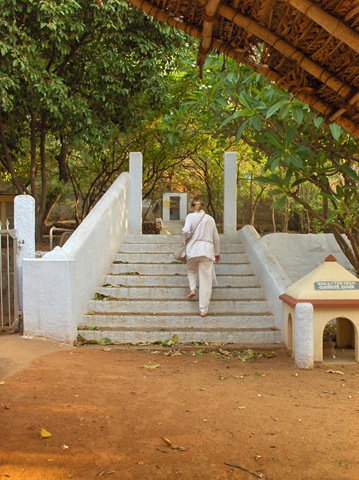
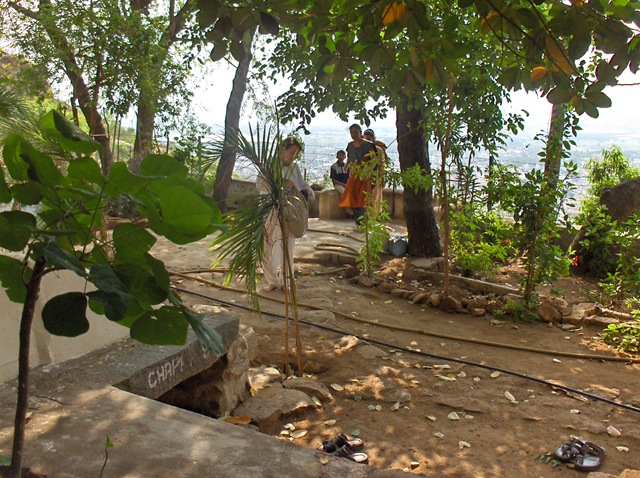
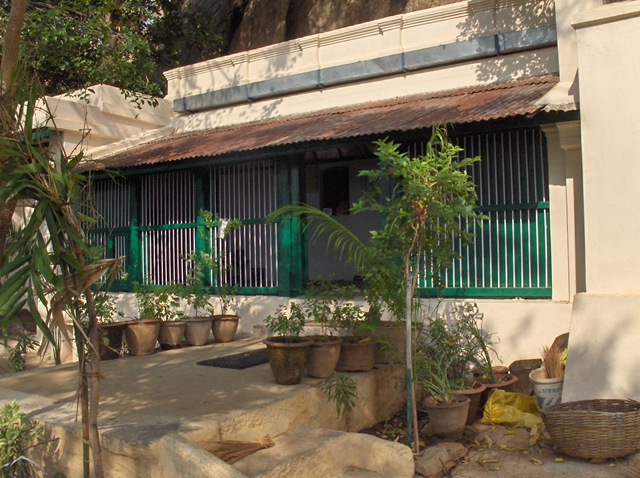
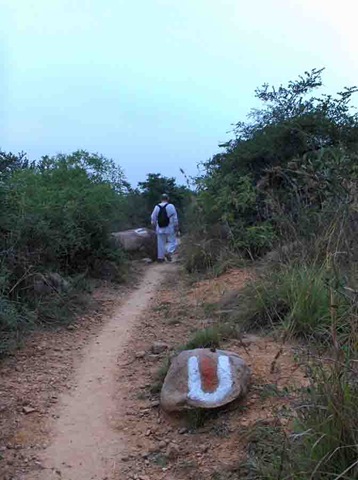
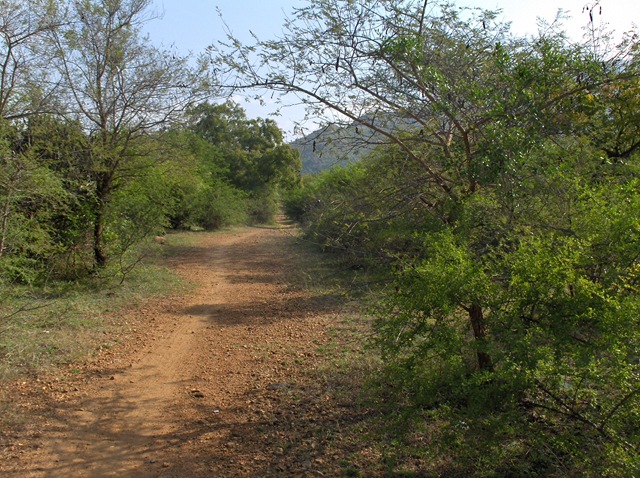
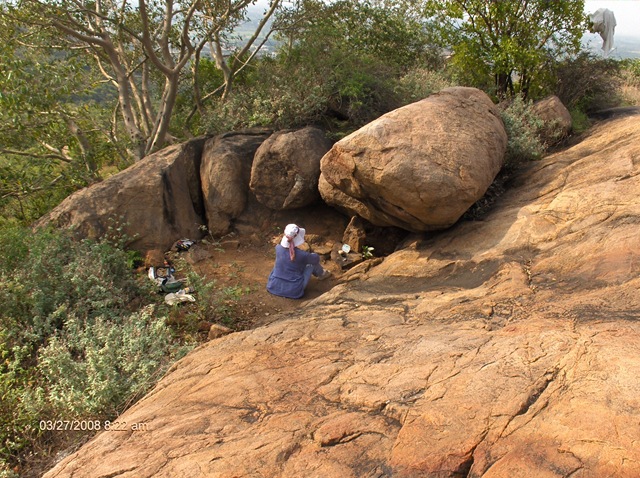
Walking up to Skandashram: By Richard Clarke
Here in Tiruvannamalai for many Westerners the focus is on Sri Ramana Maharshi and Ramanasramam. Many of these go up Arunachala to the caves where Ramana lived and taught and gave darshan.
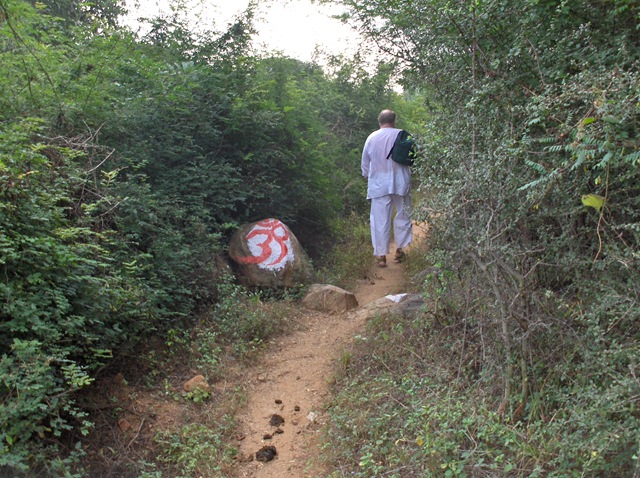
One of these caves is Skandashram. It is perhaps one mile from Ramanasramam, up a well cared-for path, up the side of the mountain.
Ramana lived at Skandashram from 1915 to 1922. This is where his mother joined him, and started preparing meals at the ashram, rather than having prepared food carried up, as had been the case since the earliest years. After the mahasamadhi of Mother, and her subsequent interment at the base of the hill, Ramana then took residence at her samadhi, the location of the present day Ramanasramam.
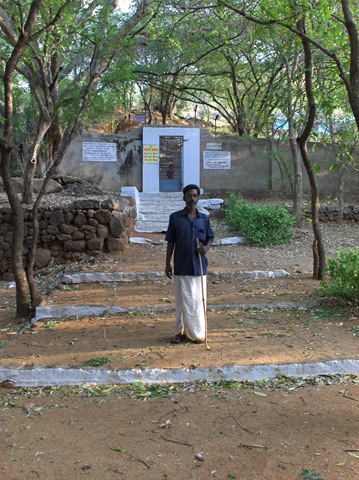
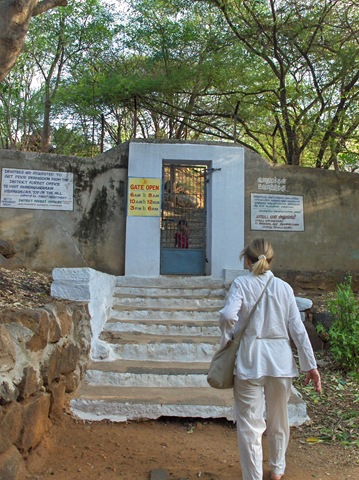
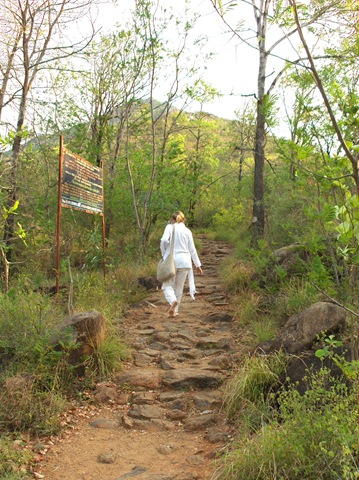
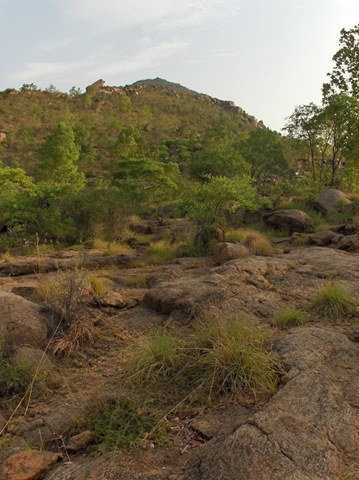
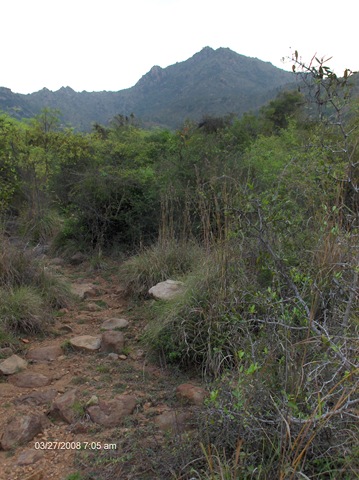
I show here photos from a recent walk up the hill to Skandashram. We started about 7:15 in the morning, before it was too hot. We left out the back gate of Ramanasramam.
Getting started
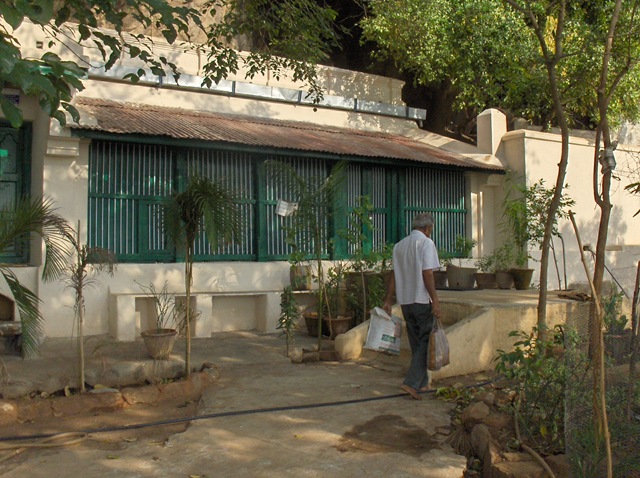
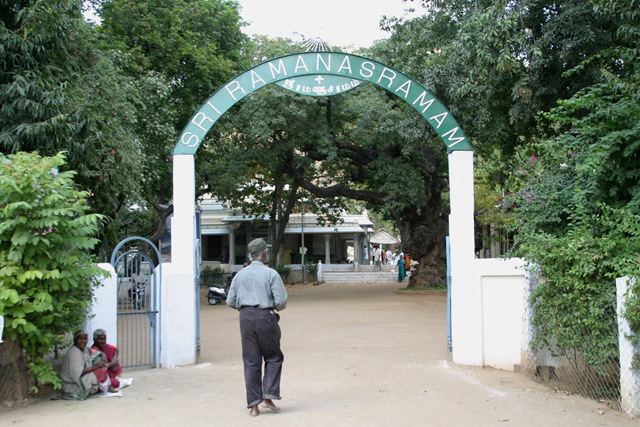
Going through Sri Ramanasramam
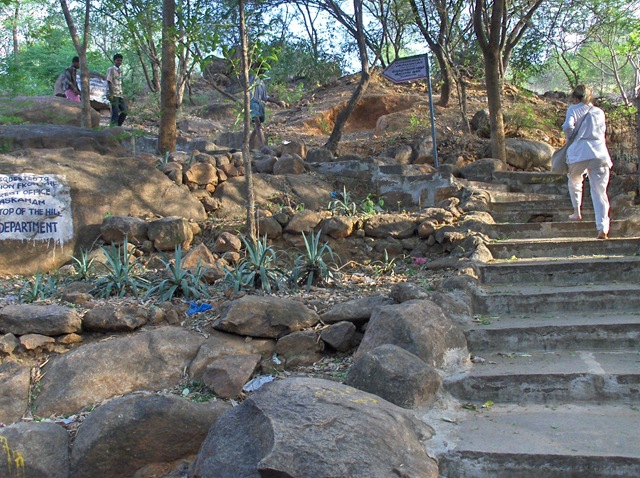
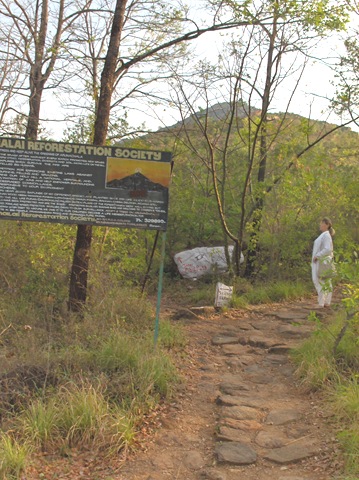
Starting up the hill
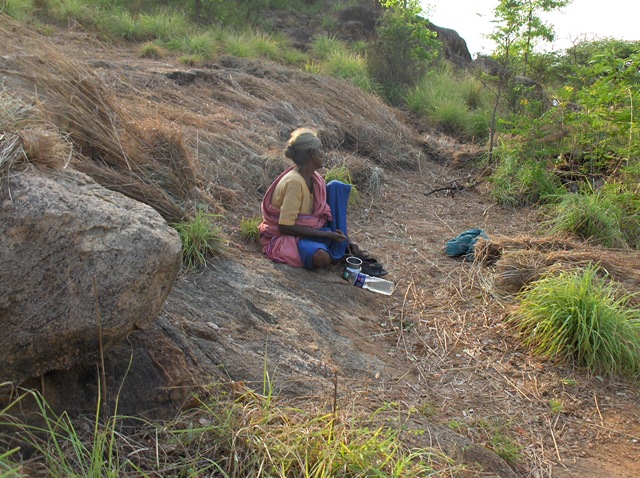
A woman working with gathered material
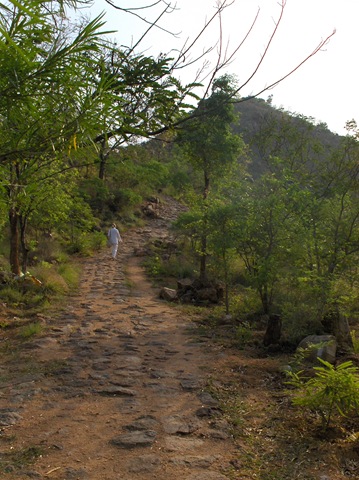
Up the path we go
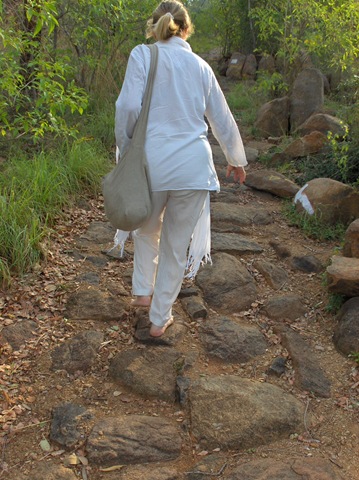
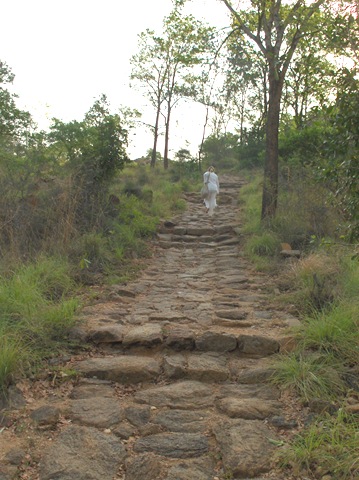
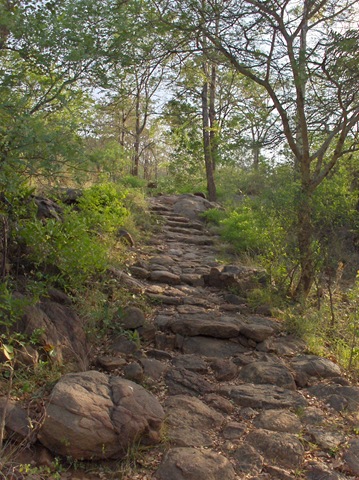
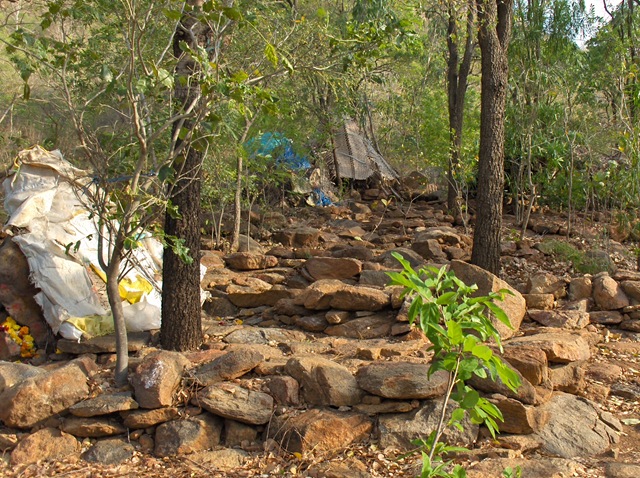
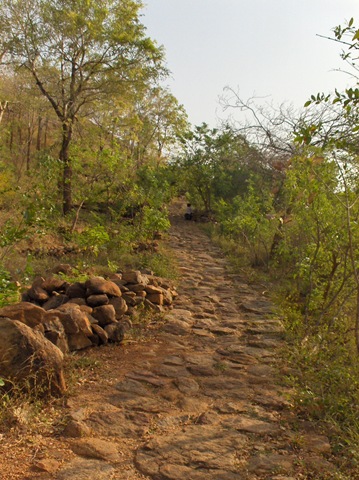
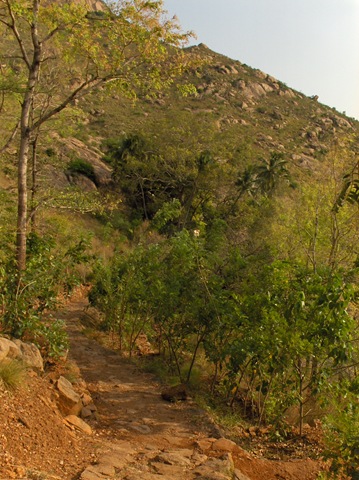
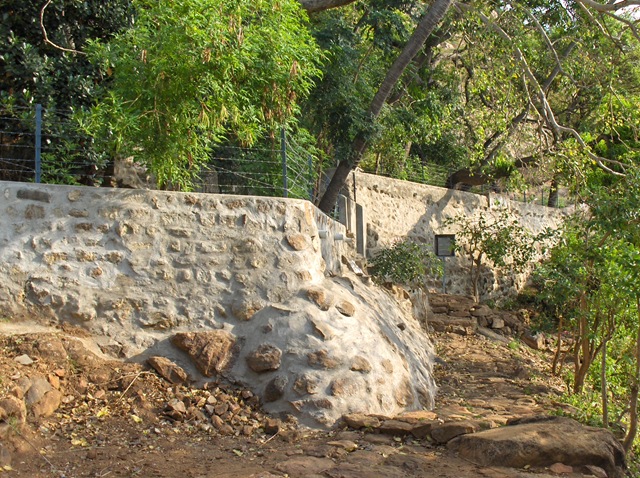
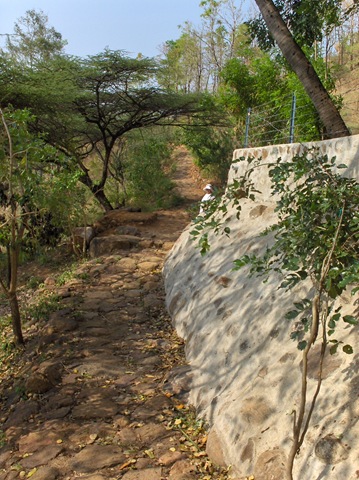
The path is ‘paved’ with stone, from Ramanasramam all the way to Skandashram, stones set into the dirt, forming a path about three feet wide. In steep areas there are steps. Someday these stones will be smooth, after 100,000’s of feet have passed over them. Each stone was carried to the path and set into the ground by unnamed workers.
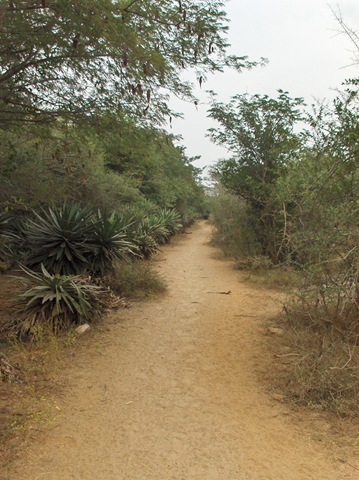
On both sides of the path you will notice tree plantings, done as part of the Arunachala reforestation project that has been going on the the last few years. Ramanasramam has increased interest in Arunachala both around the world, and in India. It is this increased interest in Arunachala that has brought this project about.
Take the right fork. To the left is an entry into the inner pradakshina path.
Up the hill
Carol is barefoot. Arunachala, the whole mountain, is considered to be a temple, and in India you take off your shoes in a temple. Many Westerners do not do this, but Carol goes barefoot on the walk to Skandashram. I do wear sandals. Carol gets more ‘punya,’ spiritual merit.
And up the hill …
Often there are people sitting and meditating here
Up the path
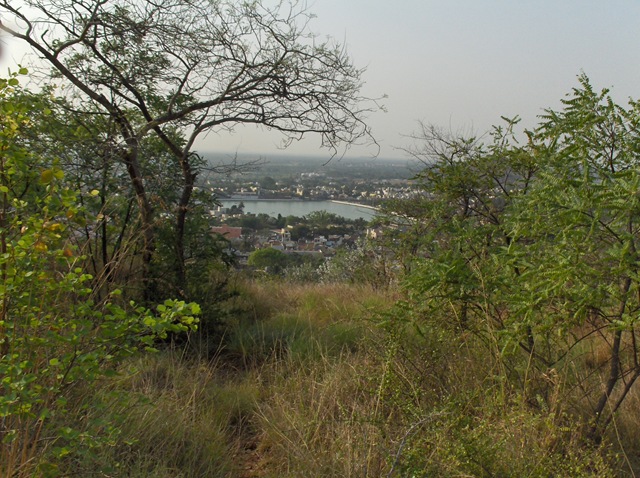
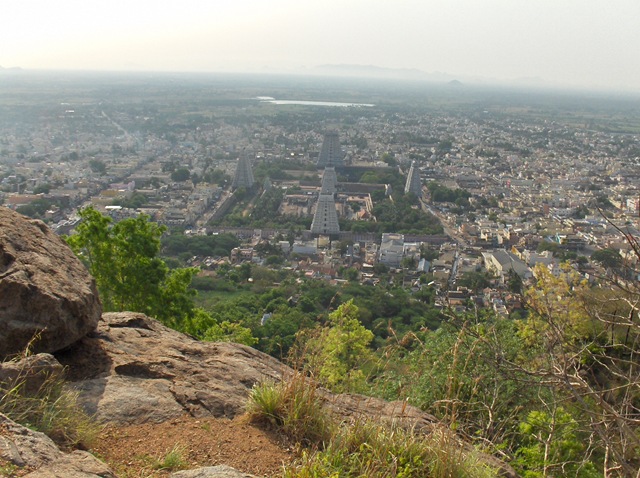
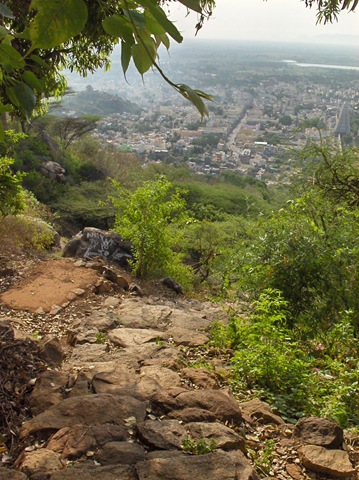
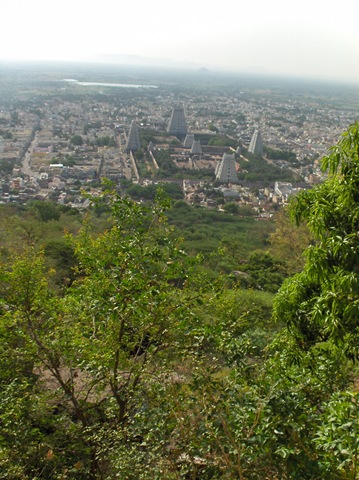
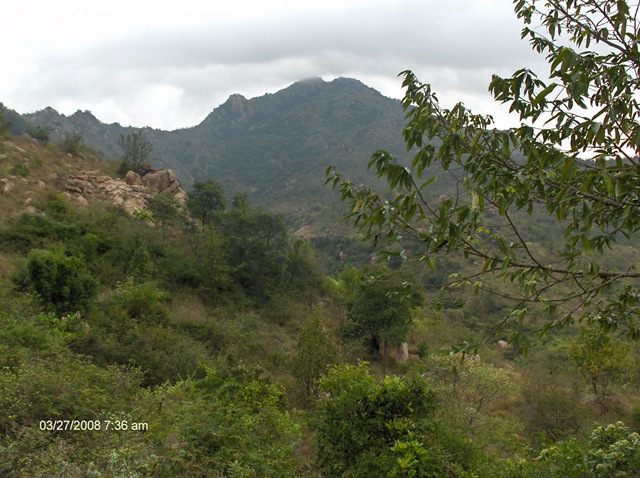
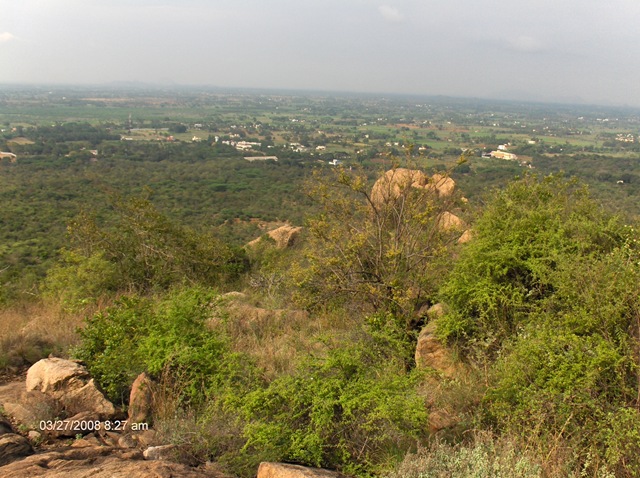
View along the way down to the city
Keep going up
A Sadhu is usually here – “Sivo Hum,” he may say
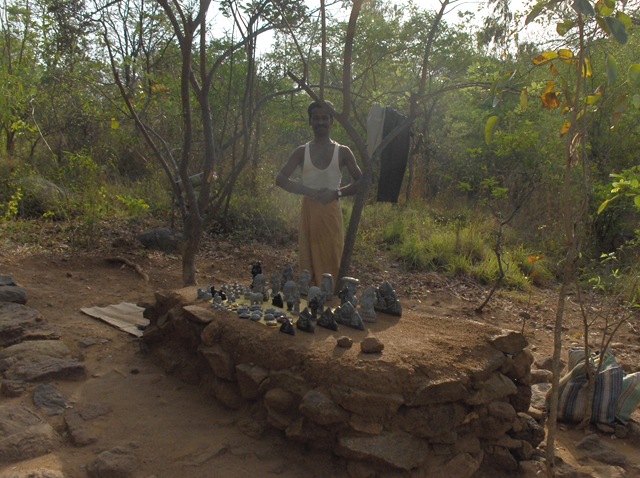
There are stone carvers along the way
Up to the top of the path
The view from the top of the path
And now to Skandashram. Skandashram is the in clump of trees in the center of the photo.
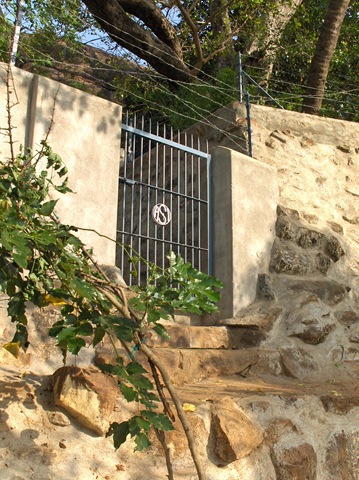
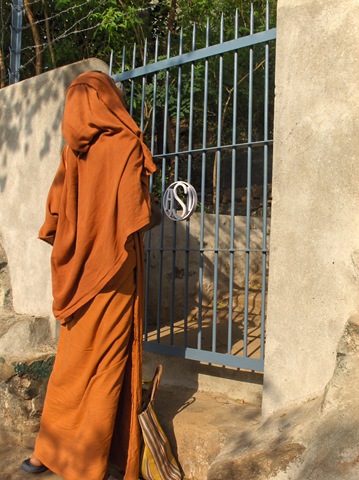
Here we are, but the gate is locked
Path down to Virapakshu Cave. It is pretty steep.
Opening the gate, walking in. The attendant unlocks the gates.
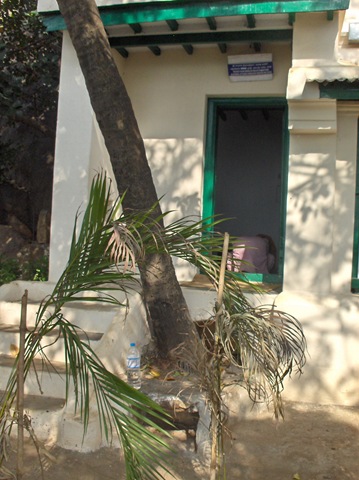
Skandashram
View from Skandashram
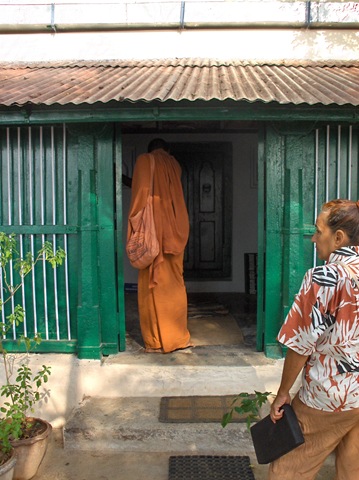
Entering Skandashram
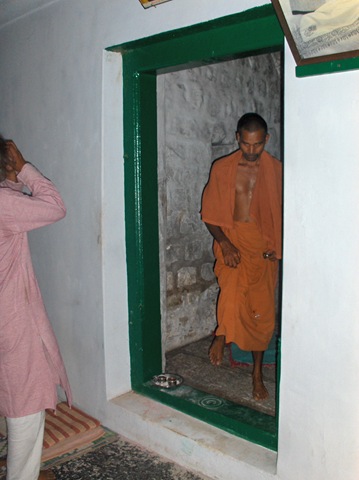
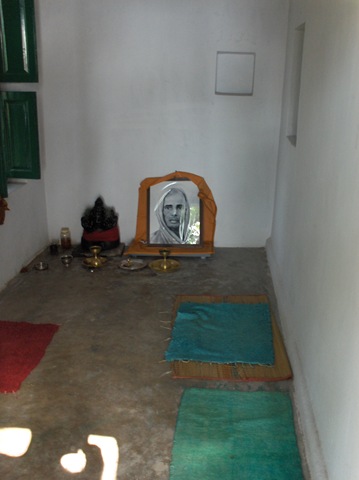
The inner chamber, with the attendant getting ready for the morning chant. This chant is wonderful to listen to. The voice is resonant, and you can hear the love for the teaching in the voice. When we go up to Skandashram, we try to get there for this morning chant. We will sit in the outer chamber, and listen to the chant and meditate, and continue the meditation after the chant is finished.
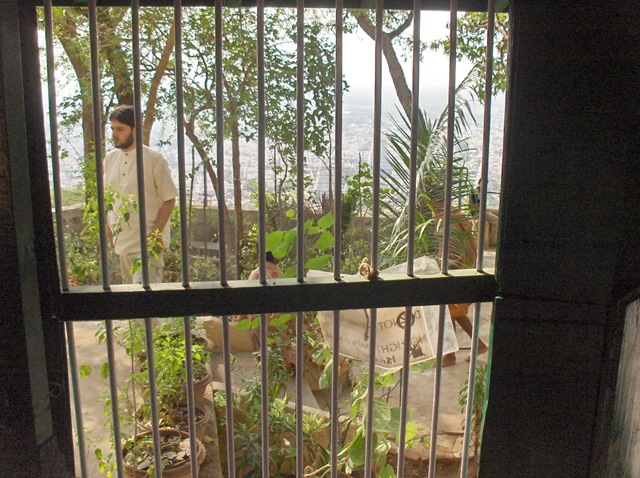
Looking out from the porch
The Mother’s Quarters
One last look around
One last look at Skandashram
Back down the path
The walk down the hill was harrowing. A tree with a bees nest had fallen, and the bees chased some people down the hill. I was one of these. A swarm of bees circled around my head, stinging the back of my head several times. I was able to brush then out of my ears and off my mouth and face without getting stung there. Finally, about halfway down the hill, they stopped following me.
This is why the photos end with the one above.
The Ribhu Gita: By Richard Clarke
Your true nature is always the undivided, nondual Brahman,
Which is a mass of Being-Consciousness-Bliss,
Motionless, ancient, still,
Eternal, without attributes,
Without confusions, without sheaths,
Without parts, without impurity,
Completely free from any illusion of duality,
Full, peerless, and the One.
From Song of Ribhu, Chapter two.
The Ribhu Gita is a spiritual text that was extensively used by Bhagavan Sri Ramana Maharshi. It was one of the first books he read after Self-Realization, one whose message clearly accorded with what he had realized within himself. For many years during his life it was read to those at Ramanasramam. It is still read at Ramanasramam today. Ramana’s use and recommendation of this text has brought it into much wider visibility among those interested in his teachings and Advaita Vedanta.
A number of teachers in the tradition of Sri Ramana have been using these translations of the Ribhu Gita in their teaching. Above is a picture of Papaji reading from the English Translation of the Sanskrit version.
The Ribhu Gita is a book that is best read aloud, a few verses at one time. It is in an ancient form designed to be chanted, and they way it is written is most conducive to reading aloud, even if one is reading it to oneself.
The Ribhu Gita presents the timeless teaching of Self Knowledge, emphasized by Advaita Vedanta. Its fundamental tenet is the identity of the Self with Brahman, a term signifying the vast Absolute. This scripture presents the teaching given by the sage, Ribhu, to Nidaga to become enlightened into his true nature.
According to Annamalai Swami, “Bhagavan often said that we should read and study the Ribhu Gita regularly. In the Ribhu Gita it is said, ‘That bhavana “I am not the body, I am not the mind, I am Brahman, I am everything” is to be repeated again and again until this becomes the natural state.”
In describing the Self or Brahman, negation is primarily used because the Self can never be an object, can never be what is perceived or conceived. By negation in the process of Self-inquiry, the ignorance of identifying ones own existence with an individual body and mind is destroyed. This “destruction” of ignorance is really not the destruction of anything real, as the false identification as an individual just consists of assumptions, ideas. What remains after this so-called destruction is not anything new. It is not something achieved. It is not a transformation. It is what has been your innermost identity all the time.
As all differences are an illusory appearance
On Brahman, which is not different from the Self,
Due to conditionings of the Self like the defect of nescience (ignorance)
And conditionings of Brahman like maya (Illusion, delusion),
One should realize, by a practice of negation,
That all appearances are not a whit different from the substratum
And one should cognize the originless, endless,
Undivided identity of the Self and Brahman.
From Song of Ribhu, Chapter One
“The text is a relentless reiteration of uncompromising Advaita―that the Supreme Brahman, ‘That,’ is all that exists and exists not, that nothing else exists, the Self is Brahman and Brahman is the Self, I am that, I am all, and That is myself. This Awareness is moksha (liberation) which is attained by the way of knowledge and the certitude I-am-Brahman,” says Dr. H Ramamoorthy, one of the co-translators, in his Translator’s Introduction to the English translation of the Sanskrit version published by The Society of Abidance in Truth in 1995.
The origins of the Ribhu Gita are uncertain. It is contained within the Sivarahasya, an ancient Sanskrit epic devoted to Siva. It has been compared to the better-known Bhagavad Gita, contained within the epic, Mahabharata. Similar dialogs between Ribhu and Nidagha on the Self and Brahman are also found within the traditional 108 Upanisads, so it appears that the origin of the Ribhu Gita dates from the Upanisadic period, generally thought to be about 600 BCE.
The Ribhu Gita exists in two forms, the traditional Sanskrit version, and a Tamil version rendered in the late 1800s by Bhikshu Sastrigal, also known as Ulagantha Swamigal. Both versions have been translated into English by Dr. H. Ramamoorthy, a Sanskrit and Tamil scholar, and Nome, a Self-Realized sage in the United States of America, who realized the Truth revealed by Sri Ramana Maharshi and the Ribhu Gita in 1974. Both books, The Ribhu Gita and The Song of Ribhu (the Sanskrit and Tamil versions of the text) have been printed by the society of Abidance in Truth (SAT) and are available from their website (www.satramana.org).
These English translations have become the basis for a widening appreciation of this ancient nondual work. Translations have been made from these English translations into a number of other languages, including Italian, and Hindi. The Song of Ribhu has also been reprinted by Sri Ramanasramam and is available from their bookstore.
In addition to these two complete translations, there have been a number of partial translations published. One is a small pamphlet, Essence of Ribhu, available by download from Sri Ramanasramam – www.sriramanamaharshi.org . The other is The Heart of the Ribhu Gita, by F Jones, Los Angeles: Dawn Horse, 1973.
Nome has been teaching Self-inquiry, as taught by Sri Ramana, for about 30 years. He gives satsangs and holds retreats at the temple of The Society of Abidance in Truth (SAT), in Santa Cruz, CA, USA. For more information go to http://www.satramana.org. He has translated and published a number of books of Advaita Vedanta that otherwise would not be available in English. Many of these translations were done in collaboration with Dr. Ramamoorthy.
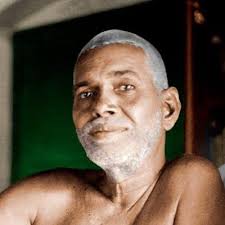
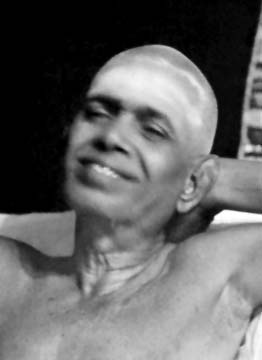
Sri Bhagavan Ramana Maharshi: By Dr. Harsh K. Luthar
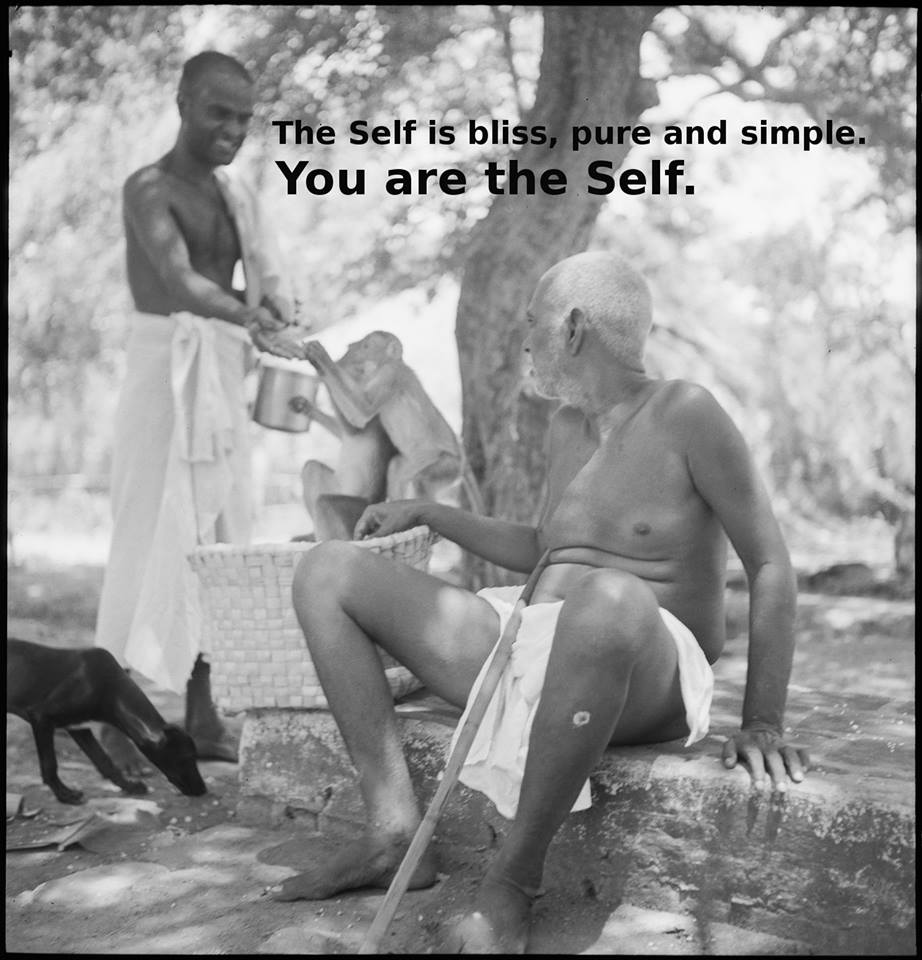
Sri Ramana used to say that just like an elephant wakes up upon seeing a lion in the dream, in the same way the devotee wakes up to his own True Reality, upon seeing the Guru in this world dream.
Once someone asked Sri Ramana how could one’s own True Guru be found. The Sage replied, “By intense meditation”. Another time Sri Ramana said that the disciple is more important than the Guru. If the disciple has faith, even a stone can serve as the Guru.
This morning, I am being visited by Dr. Lakshyan Schanzer, a well known Master Yoga Teacher and a Psychologist. Lakshyan has studied with a number of famous Gurus over the last 30 years including Swami Satchitananda, who found the community of Yogaville near Charlottesville, VA, here in the U.S. Lakshyan lived in that community for a while and also visited India to study with other teachers as well.
After Lakshyan and I talk this morning, we will go to an Indian Restaurant called “Rasoi” in Providence, RI for an “all you can eat” vegetarian lunch Buffet. I skipped breakfast in preparation for that anticipated big meal.
I should mention that Lakshyan has studied not only with the traditional Gurus but also spent time with Nisargadatta Maharaj. His account of the visit to Maharaj is on the following url.
https://luthar.com/2007/02/10/meeting-nisargadatta-maharaj-by-dr-lakshyan-schanzer/
Of course, I respect all Gurus and traditions. But my mind has naturally been inclined to Sri Ramana since I was very young. It just does not go in any other direction at all. Ammachi used to come here and many people lined up on their knees to get a hug from her. I respected these devotees but for me such things have absolutely no meaning. I accept that for others, it may be a lifetime experience. No matter how well known or famous or charismatic a Guru, I never feel any attraction other than for the person as a human being.
Sri Ramana is truly like the bright afternoon Sun at the height of the summer for the devotees. When the Sun itself is shining, one does not need candle lights to see the way.
Well, no words can be adequate. Sri Ramana’s devotees from the early 1900s to 1950 were some of the greatest saints and yogis of the day. But they were content to stay in Bhagavan’s shadow. Having found the Heart, one remains in the Heart as the Heart. No other place to go or be except where one already is and what one already is.
Namaste and love to all
Around Arunachala: By Richard Clarke
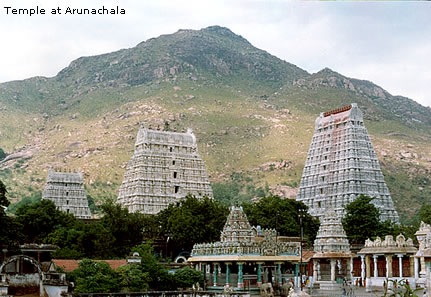
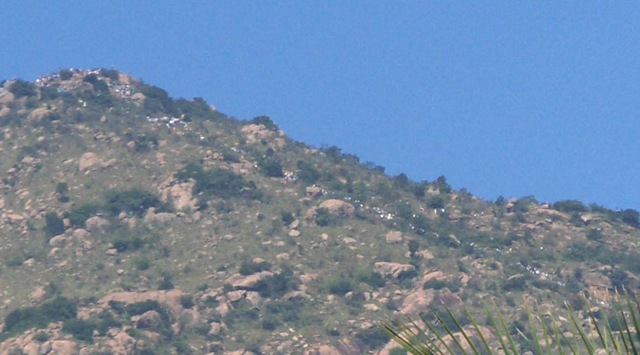
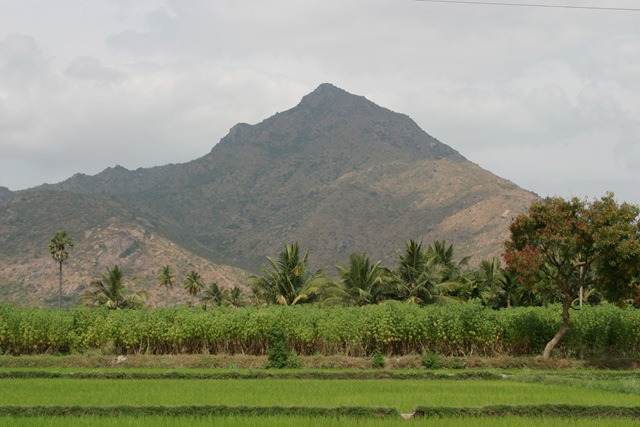
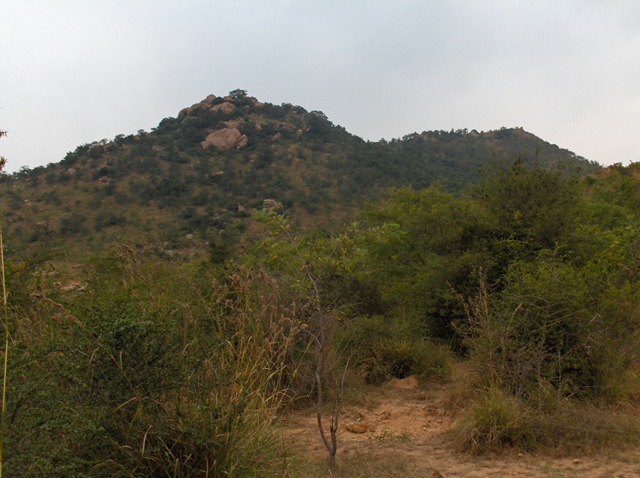
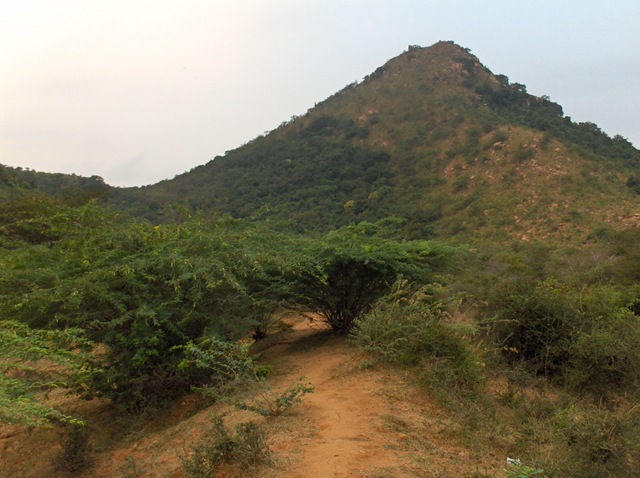
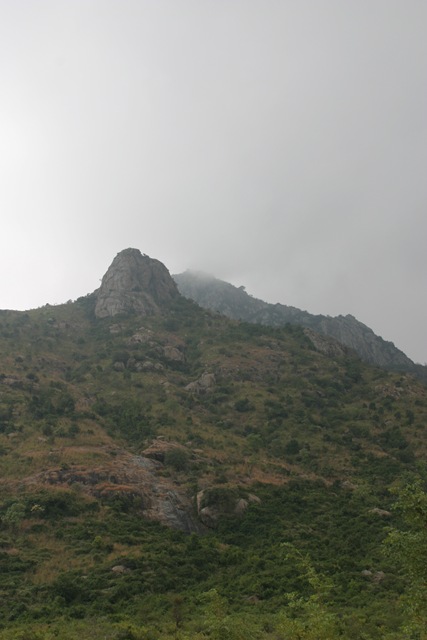
In so many ways Arunachala is the focus of our life here in Tiruvannamalai. I want to show some of the views that we live with, since many are interested in this holy mountain.
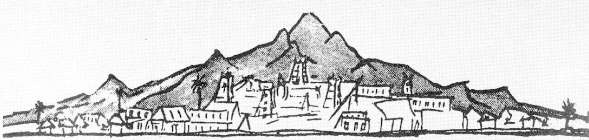
Views of Arunachala
Classic pictures
Ramana’s drawing
Arunachaleswara Temple
Arunachala from around the hill
People climbing Hill for Deepam
Arunachala Views
From Inner Path
Arunachala from ‘yenga veedu’ (our house)
Altar for Mahasivaratri
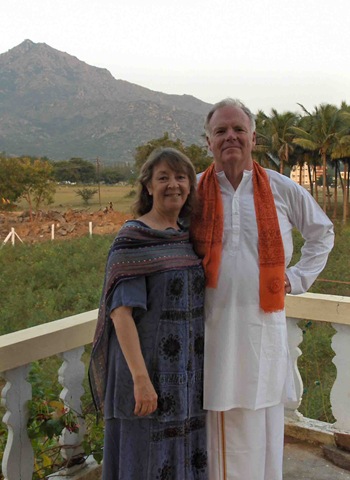
Richard and Carol
Photos walking around the hill
Sri Ramanasramam
Inner Pradakshina Path
Papaji’s Cave
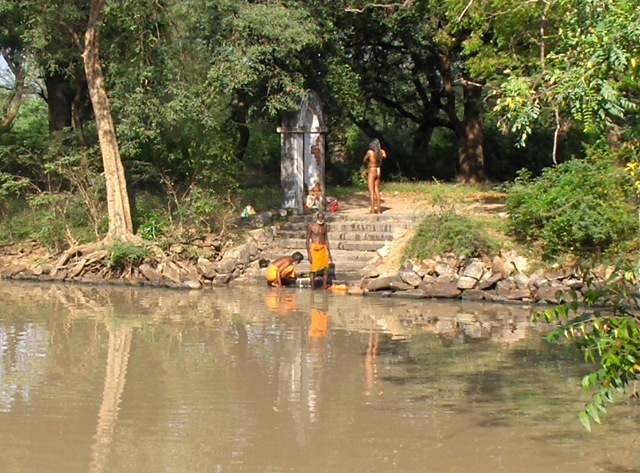
Sadhu’s and Sadhu tank
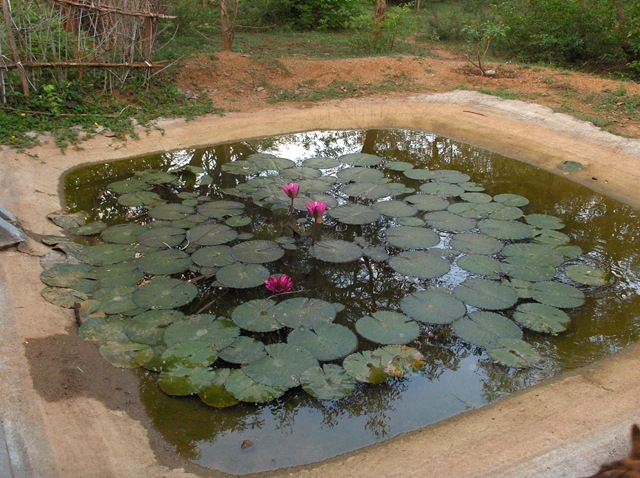
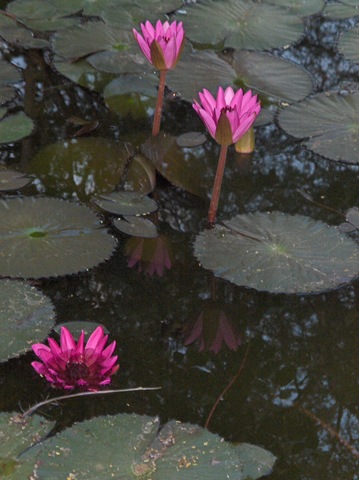
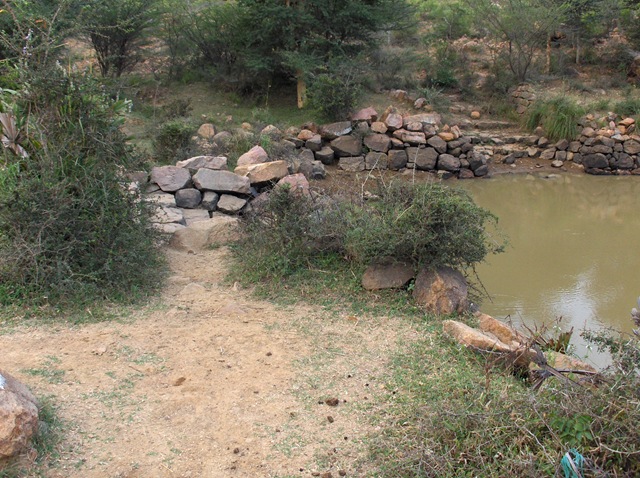
Pool at Reforestration Project
Backside of the Hill
Adi Anamalai Temple entrance
Nearing the end of the Path
Last Temple before Tiruvannamalai is re-entered, Panchamukha Shrine
Bhagavad Gita and the Sattvic Diet: By Dr. Harsh K. Luthar
Sri Ramana used to say that of all the yogic rules and regulations, the best one is taking of Sattvic foods in moderate quantities. This view is consistent with that expressed in the Bhagavad Gita, and indeed most of the Yoga Shastras.
The logic is that since food consumed has a major effect on the body and the mind, a Sattvic diet should be adhered to in order to enhance both the health of the body as well as purity, strength, and calmness of the mind. An agitated person will find it difficult to sit quietly and meditate.
A disciplined and one pointed mind is an aid to ones’ learning and education as well as having success in business and other worldly affairs. A clear, pure, and a reflective mind is, of course, essential to self-enquiry which leads to Self-Realization.
The question then becomes, “What is a Sattvic diet? What is the authority for saying that certain foods are Sattvic and lead to good health, mental clarity, poise, and spiritual advancement, while other foods do not?”
There is much yogic literature on this topic and also some disagreement among experts depending on their school of thought and background. Since most Hindus generally accept the Bhagavad Gita as the final word, I will refer to that as my primary source on the Sattvic diet.
We should keep in mind that Sri Krishna, who speaks in the Bhagavad Gita with complete spiritual authority, is also considered the model of exceptional and abundant physical health and perfect mental poise. He is depicted in the ancient writings as slim, active, energetic, graceful, and attractive.
In the Bhagavad Gita, Sri Krishna demonstrates profound insight into not just the spiritual nature, but also human nature and physical nature. By inference, Sri Krishna’s words on food and the Sattvic diet carry much weight for those who study the Bhagavad Gita.
What foods should one minimize according to the Bhagavad Gita?
In Chapter 17 (verses 8, 9, 10), Sri Krishna makes clear the type of foods to be avoided by those who seek good physical and mental health, worldly success, and progress on the spiritual path.
According to the Bhagavad Gita, foods which are too bitter, sour, salty, pungent, dry, and hot can lead to pain, distress, and disease of the body. Further, Sri Krishna says that foods cooked more than three hours before being eaten, foods which are tasteless, stale, putrid, decomposed and unclean should be avoided by spiritual aspirants and those who seek excellent physical and mental health.
What foods should be eaten according to the Bhagavad Gita?
In Bhagavad Gita, Sri Krishna states, “If one offers Me with love and devotion a leaf, a flower, fruit, or water, I will accept it:” (Bg.9.26). To me this seems to suggest that Sri Krishna is sanctioning a diet based on leaves and fruits and water as the best one for spiritual growth. I am no scholar on the Bhagavad Gita, but my liberal interpretation of this verse would be that the Sattvic diet is generally plant based and includes all or most vegetables, fruits, legumes, grains, nuts, seeds, etc.
Because Sri Krishna gave cows sacred status similar to that of a human mother and favored raw butter for personal consumption as a child, one could reasonably argue that dairy products (such as yogurt, milk, kefir, lassi, sour cream, etc.) belong to the Sattvic food category.
Many yogis hold the view, however, that dairy products can only be considered Sattvic if these are obtained respecting the cows and goats who are shown kindness, love, and humane treatment. According to the principle of Ahimsa (nonviolence), any food procured through violence to living beings cannot be considered Sattvic.
Yogic Sattvic Diets
Some yogis that I have met favor a completely raw vegetarian diet with a primary focus on sprouted grains and beans (such as Garbanzo, Blackeyed peas, etc.) along with raw fruits and vegetables. Their diet is essentially vegan and contains no animal products. However, modern science teaches us that since vitamin B12 is missing from a purely vegan diet, supplementation is necessary.
A number of medical and scholarly references can be found on this issue on the web.
Other yogis have felt that a raw vegetarian diet is too limiting and include cooked foods as well as dairy products (milk, yogurt, lassi, etc.) in their diet. This diet, known as the lacto-vegetarian diet, is probably the most wide spread among Indian Hindus and Jains.
A few well known yogis have also traditionally included not only dairy but also eggs and egg products in their otherwise vegetarian diet. This is known as the lacto-ovo vegetarian diet.
Although very few Indian yogis include any kind of fish, fowl, or meat in their food, there are exceptions. Buddhist yogis, for example Dalai Lama, do eat meat. A few Hindu yogis also eat meat pointing out that some ancient scriptures sanction meat eating for certain religious rituals.
For most Hindu and Jain yogis, however, there is no convincing argument for eating meat if one wishes to uphold the supreme principle of Ahimsa and follow the philosophy of nonviolence.
What is the best Sattvic Diet?
The general answer from my study is that foods which cause the body to gain health and for the mind to be calm and peaceful constitute the Sattvic diet. To some extent, this requires knowing the needs of one’s own body and being sensitive to the effects of various foods on our system. Foods which are very suitable and nutritious for one person may not be right for another. Common sense and wisdom are the essential ingredients to find the best Sattvic diet for yourself.
In terms of particular foods to be eaten, the yogis and sages have answered this question, but the answers have different variations. One common element of a yogic Sattvic diet is that it is primarily vegetarian. This is true at least for Hindu and Jain yogis.
Within the broad framework of vegetarianism, a number of dietary systems are possible where certain foods are included and some are excluded. In the most liberal vegetarian diets, eggs and dairy products are included. Some people include dairy in their vegetarian diet but not eggs. Some include eggs but not dairy. In the most strict vegetarian diet, eggs and milk are excluded. Supplementation through certain vitamins is needed in such diets, according to modern medical opinion.
My personal experiences
Having experimented with a variety of diets for decades, I feel that a vegetarian diet can be healthy or unhealthy depending on many factors. For example, if I am a lacto-vegetarian and eat too many pizza pieces, the feeling of discomfort is likely to follow. In fact, after experimenting with eating pizzas thousands of times in my younger days, I am fairly certain that this is indeed true. I believe this also holds if one eats bucket loads of ice cream on a frequent basis. So, is lacto-vegetarian diet healthy? It depends on how lacto you are and how often you go lacto with heavy fat and fried lacto foods!
The point is that a vegetarian diet can be either healthy or unhealthy depending on the nature of food eaten as well as the quantity of food consumed.
In Chapter 6, verse 16, Sri Krishna specifically emphasizes moderation in eating and sleeping. He states, “There is no possibility of ones’ becoming a yogi, O Arjuna, if one eats too much, or eats too little, sleeps too much or does not sleep enough.”
Clearly, overconsumption of food leads to problems and one can logically conclude that the quantity of food consumed is probably an important element in a diet being considered Sattvic.
Sattvic diet is also a matter of degree. Some diets may be very Sattvic, while others may be moderately Sattvic.
Finally, the thoughts and the emotional balance while eating the food have an effect on our system. This is why in many religions, prayers and showing of gratitude for the food being consumed is offered. This mental state while eating helps the diet become more Sattvic.
What does it all mean?
So what does it all mean and what are the lessons from Bhagavad Gita and our discussion of the Sattvic diet? Here is what I think some of the lessons are. See if you agree.
1. Whatsoever you eat, eat in moderation.
2. Educate yourself on proper nutrition, be sensitive to your body, and see what foods work for you.
3. Emphasize fresh vegetables and fruits and eat a diet which is mostly plant-based.
4. Do not eat foods which are too salty, bitter, or have gone stale and putrid.
5. Regardless of the food being eaten, eat with gratitude, prayerful attitude, and with mental poise.
6. Chew the food carefully and taste it deeply without rushing.
There are literally thousands of great sources on the web and hundreds of books in stores to help you educate yourself on the Bhagavad Gita, vegetarianism, and nutrition. Go do some research and find out for yourself!
That’s my homespun wisdom for today. Like Captain Planet used to say, “The Power is yours!”
Given below are some pictures of plant based dishes that I made keeping the principles of Sattvic food in mind. Wishing you all abundant physical, mental, and spiritual health. Namaste.


You must be logged in to post a comment.