Harsha's avatar

Wisdom Eye: The True Guru: By Dr. Harsh K. Luthar

Harsha's avatarLuthar.com

“Who is a master? He is the Self after all.” Ramana Maharshi

The company of peaceful Sages (Satsangha) and living in Ahimsa (harmlessness) is considered the primary influence that leads to Self-Realization. The forced attempts to discard various habits and conditioning and practicing different techniques to calm the mind have built in limitations. However, such methods can be pursued with benefit if one is already inclined towards these practices.

When strong inner motivation is present, one is automatically propelled towards Self-Awareness and Meditation. The fog of confusion then quickly evaporates and leads to Self-Seeing, Self-Being, Self-Realization, and Silence of the Heart.

Meditation and mind calming methods, can be effective at many different levels if practiced in the context of a clear understanding. Such practices, however, cannot by themselves end the fundamental agitation of the mind which continues at more and more subtle levels and causes suffering.

The nature of the…

View original post 1,176 more words
Harsha's avatar

Ahimsa – The Antidote to Fear: Dr. Harsh K. Luthar

Harsha's avatarLuthar.com

Bhagavan Sri Ramana used to say, “Ahimsa Param Dharma”. It means that Ahimsa (Nonviolence) is the Supreme Dharma (Duty or Principle). Sri Ramana pointed out to the devotees and yogis that in Patanjali’s Yoga Sutras, Ahimsa is named as the highest virtue above all other virtues. If we are able to understand what Ahimsa means at the deepest level, that clarity itself guides us in discovering the nature of the Self as our own Being.

Ahimsa means to be gentle with others and oneself and all of nature. Ahimsa means to be natural and aware without rushing and pushing and trying to get somewhere quickly. This applies to both the material and the spiritual world.  The mental tendency to grab and consume experiences of various types remains, even as people get on the spiritual path. There is nothing wrong with that. However, we should be aware of the tendencies that…

View original post 697 more words

Harsha's avatar

Professor and the Sage – Part 2

Professor and the Sage – Part 2

Harsha's avatarLuthar.com

Interview with Prof. N. R. Krishnamurthy Aiyer

Concluding from Part 1. Summary:

At the age 16, Professor N.R Krishnamurthy had darshan of Bhagavan Ramana. That was in 1914. Eight years later in 1922 Professor Krishnamurthy had completed his M.S. in Physics. He went and met Bhagavan again. By this time Professor Krishnamurthy was an agnostic and put a question to Bhagavan that he felt could not be answered. Bhagavan, however, answered with a counter question that transformed Professor Krishanmurthy but also created fear in him of Bhagavan. Professor Krishanamurthy did not go see Bhagavan Ramana for 12 years.  He was then a Physics Professor. Now the interview continues.
*************************************************

View original post 1,188 more words

Harsha's avatar

Spiritual Heart and Self-Realization: By Dr. Harsh K. Luthar

Spiritual Heart is an important topic in Bhagavan’s teachings and comes up again and again.

Harsha's avatarLuthar.com

Dear Harsha:

Arthur Osborne, a close devotee of Bhagavan Ramana said that while doing self-inquiry, he tried to focus on the spiritual Heart-center to the right of the chest. However, I have heard some scholars on Ramana’s teaching say that the Bhagavan did not recommend meditating on a specific location and that Arthur Osborne may have misunderstood the essential method and Bhagavan’s teaching.  Is it necessary to meditate on the Spiritual Heart center in order to become Self-Realized? Some well known people like Nisaragadatta Maharaj and Krishnamurthi never mention the Heart in the same way that Bhagavan Ramana does. What is the explanation for this?

Sincere Seekers (composite question)

View original post 793 more words

Harsha's avatar

Easy And Natural Is The Way: By Dr. Harsh K. Luthar

Harsha's avatarLuthar.com

Dear Friends,

Sahaj in Sanksrit means easy and natural.

There is saying in Hindi, “Sahaj pake so meetha hoy.”

It means that easy and natural cooking of food leads it to taste sweet.

It is something like the English saying that soup that simmers slowly or the cake that is baked slowly tastes best in the end.

These are metaphors for life. When we do something with care and love, the results are better. Sometimes we even say that, “this is a labor of love.” When we love what we do, it does not feel like work.

Everything has its nature. When we are true to our own nature, an easy authenticity takes over. Then we are not concerned about impressing others nor worried about how others are judging us.

Nature is showing us the way. Seasons are coming and going. Flowers bloom and then wither. We are breathing in…

View original post 640 more words

Harsha's avatar

Meeting Nisargadatta Maharaj: By Dr. Lakshyan Schanzer

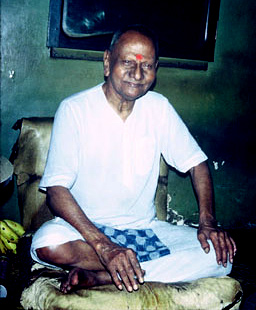
A classic and original article about meeting Nisargadatta Maharaj in 1978 by Dr. Lakshyan Schanzer. All the pictures of Nisargadatta Maharaj were taken by Dr. Schanzer. At the end, the author is shown sitting with Maharaj.

Harsha's avatarLuthar.com

By Dr. Lakshyan Schanzer

My name is Lakshyan Schanzer. I have been practicing and teaching yoga and meditation since 1971. I am also a psychologist and practice a meditative approach to psychotherapy. This is my first writing about my experiences with Nisargadatta Maharaj.

By 1978 I had been practicing and teaching for about 7 years (primarily Integral Yoga) and had reached a ‘wall’ in my practice. I was having wonderful experiences/results on a daily basis. Yet, for me, these experiences were just that; only experiences. Yes, they were important and healing ones, bringing revelations and insights into my history, release of deep feelings, or guidance about the coming day or accurate premonitions about the future.

However, as I became accustomed to ‘pushing the buttons’ that generated these experiences, I began to ask myself: “Was there any value beyond these temporary conditioning effects of regular practice? That is, if we experience…

View original post 1,525 more words

Harsha's avatar

This Nonsense Makes Perfect Sense

HKL-Lamp of the Heart

In  2001, one of my students gave me a book “The Enlightened Heart” edited by Stephen Mitchell. Looking through it this morning I came across several beautiful poems. I wanted to share one with you from Lao Tzu that speaks my heart:

Some say my teaching is nonsense.

Others call it lofty but impractical.

But to those who have looked inside themselves,

this nonsense makes perfect sense.

And those who put it into practice

this loftiness has roots that go deep.

I have just three things to teach:

Simplicity, patience, compassion.

These three are your greatest treasures.

Simple in actions and in thoughts,

you return to the source of being.

Patient with both friends and enemies

You accord with the way things are,

Compassionate towards yourself,

you reconcile all beings in the world.

Harsha's avatar

I Entered the Heart a Stranger: By Dr. Harsh K. Luthar

20130121_154812

For many years, I have been sharing the following quote on Facebook.

“I entered the Heart a stranger and saw that I myself am the Heart.”

Continue reading

Harsha's avatar

Nirvikalpa Samadhi – Two Different Perspectives: By Dr. Harsh K. Luthar

Harsh K. Luthar

Harsh K. Luthar

Question On 01/20/2000 From Gausima

I accidentally found this on the internet while searching for something else, and was wondering what type of Nirvikalpa Samadhi it was referring to and if anyone had any knowledge of this.

“once an ordinary person achieves Nirvikalpa Samadhi, he leaves the body in 21 days.”   In the Gospel of Sri Ramakrishna, on page 245, it says, “Trailanga Swami once said that because a man reasons he is conscious of multiplicity, of variety. Attaining samadhi, one gives up the body in twenty-one days. . . ” (Ramakrishna was talking to his devotees.)

Namaste,
Gasusima

Continue reading

Harsha's avatar

The Holy Task of Self-Realization: By Alan Jacobs

We must never lose sight of the Holy Task, that of Self Knowledge, or Self-Realization.

This is the main thrust of Bhagavan Ramana’s teaching. Bhagavan leaves to us to make intelligent use of our lives as we follow his teachings of self awareness and being a witness to all that is happening. Following his guidance and example, we discover the God or Guru within; the Inner Ruler, the Heart. Continue reading