
Tag Archives: Heart
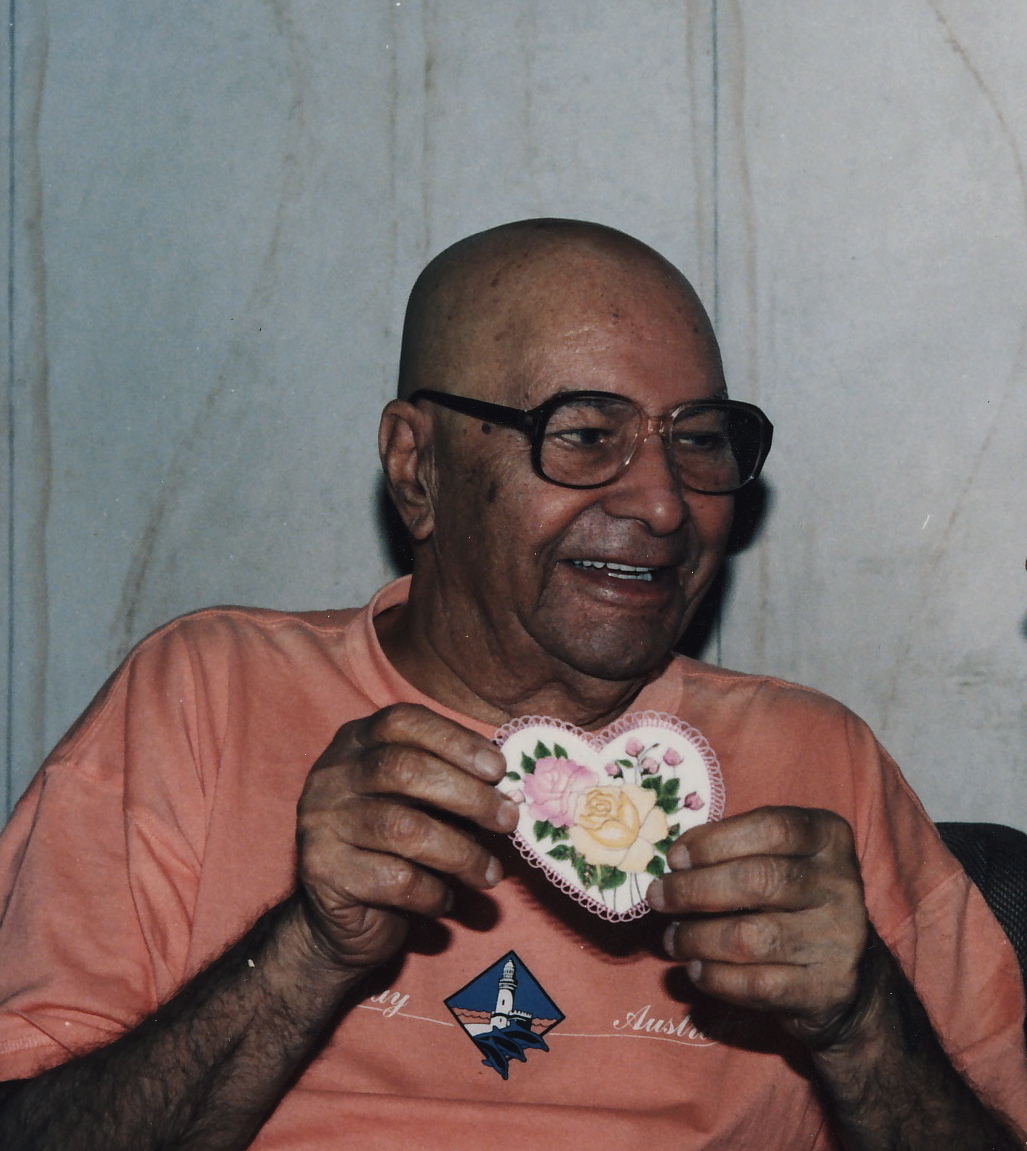
Rest In Your Heart: By Dr. Harsh K. Luthar
The True Master
A True Master does not tell you to do this or that.
Already, you are bewildered going to motivational speakers, visiting one guru after another, practicing mantras, and trying to stand on your head and put your legs behind your back.
The Master simply brings attention to your nature as “Being”, and invites you to rest in your own Heart.

Bhagavan Ramana
Dreaming the Dream by Anna Ruiz
Dreaming the Dream by Anna Ruiz Continue reading
Face of Fullness: By Dr. Harsh K. Luthar
There are no free thoughts;
the gate to freedom exists
within the eye of the I.
It may be known
when you are alone
and completely empty.
Or when lovers meet
to spend their passions
and rest in the heart. Continue reading
God’s Secret Hiding Place: By Jim Atwell
I thought God had a secret hiding place
until I opened my heart and found Love.
Now we have no place to be alone.
Much love
Jim Atwell
The True Self-Knowing: By Dr. Harsh K. Luthar
Our consciousness or self -awareness appears to manifest through the mind/body. At the same time it seems that the mind/body, ego, and indeed all and any related perceptions, only exist within our Awareness. This is a wonderful paradox to meditate on. Continue reading
Gratitude and Divine Grace

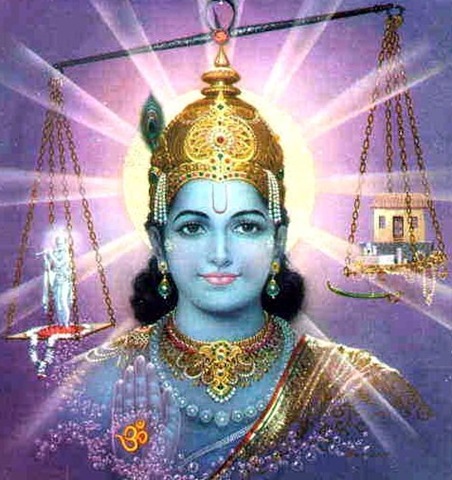

To those who worship Me alone, thinking of no other,
of those ever united, I secure what is not already possessed
and preserve what they already possess. (BG 9.22)
The story below appeared months ago prompting some discussion in the Guruvayur yahoo group in which I am a member. Today is Thanksgiving here in America, and this week we also celebrate Gita Jayanti, or the observance of the gifting of the Bhagavad Gita to the world by Shri Krishna more than five thousand years ago. As my thoughts turn to gratitude, I am reminded of this story below and the responses it produced in the Guruvayur group, and how important it is to always be grateful to the Lord for everything, knowing that He is our eternal well wisher and that everything happens for our highest good, even the things which which appear to be bad or are difficult to endure…everything means everything.
The focus of the discussion was on what should we ask of God. To what end do we pray, asking for this and pleading for that? Success in this venture, a new job, a happy marriage, a grandchild, a son or a daughter, a husband, a wife, a handsome husband, a beautiful wife, a nice house, a beautiful house, a mansion, good grades in school, a child who is a doctor or the president of the US? For what is it that we really seek, when all illusions are cast aside and maya’s veil is lifted? None of the above!!!
What should I seek from the Lord but the Lord Himself? That by His grace, I should know Him as the very Self in my heart, casting aside the shackles of the body and the solitary confinement imposed by the mind. He promises us, in the Gita, that if we are utterly devoted to Him, thinking of Him only, asking only for Him rather than of Him, He will be ours, and as such, will take care of us as needed. To understand this, to believe this, in full faith, can only be followed by complete surrender to His will, trusting that whatever happens is indeed His divine will operating to bring us out of bondage to birth and into reunion with Him.

From http://idharudharkee.blogspot.com/2009/07/what-we-should-ask-god.html
What should we ask of God?
This story from Mahabharata answers this question beautifully and categorically:
The Great War between the Pandavas and Kauravas was to begin. Arjuna, having pondered, decided to
go to Lord Krishna and ask him for help.
He went to the Lord’s abode and found him asleep.He stood respectfully at his lotus feet, with folded hands and head bowed in reverence. Duryodana, of the Kauravas, had the same idea of asking Sri Krishna’s help. He too came and, finding the Lord asleep, sat arrogantly in a chair placed at the head of Lord’s bed.
In due course, the Lord woke up. Arjuna, being at his feet, was the first person he naturally saw. As he turned to get up, the Lord’s eyes fell upon Duryodana.
The purpose of their visit was known to Him. However, he asked them what he could do for them.
Both answered that they had come to request his assistance in the ensuing war. The lord said that they had placed him in a difficult predicament by asking for the same thing. He said he could not deny either of them. He said he would offer himself, alone, without armies to one of them and to the other he would offer all his armed forces completely. He said that since his eyes had fallen on Arjuna first, he should have the first choice in the matter.
Arjuna promptly prayed to Sri Krishna that he alone should side the Pandavas.. Duryodana heaved a sigh of relief and requested Sri Krishna for all his forces. The Lord agreed to their requests.
We know who emerged victorious. The moral is “We should ask for HIM, not ask for things He can give us”
If the Lord gives us everything in the Universe but withholds Himself from us, we gain nothing. But if we seek HIM for Himself alone, we get not merely Him but all that is His, too!
abhyaasa yOga yuktEna cEtasaa naanyagaaminaa,
paramam pursham divyam yaati paarthaanucintayanMeaning:
He who with his mind disciplined through Yoga in the form of practice of meditation and thinking of nothing else, is constantly engaged in contemplation of God attains the supremely effulgent Divine Purusha (God) (sloka 8 in chapter 8 of Gita)
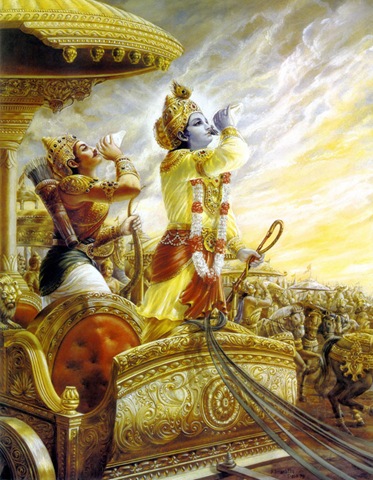

And what did Arjuna request? The Lord Himself. In his earnest bhakti, he intuited that this was the right choice and it was. When you ask for the Lord Himself, with utter devotion and humility, how can He deny you? In the Gita, He makes this promise to His devotees…
ananyaaScintayamtO maam yE janaah paryupaasatE
tEshaam nityaabhiyuktaanaam yOgakshEmam vahaamyaham. (BG 9.22)
To those who worship Me alone, thinking of no other, of those ever united, I secure what is not already possessed and preserve what they already possess.
https://luthar.com/wp-content/uploads/2009/06/bgita.pdf
But those who always worship Me with exclusive devotion, meditating on My transcendental form—to them I carry what they lack, and I preserve what they have.
http://www.bhagavad-gita.us/categories/The-Gita%3A-Chapter-9/?Page=2
Those who desire My eternal association precluding all else meditate on me with exclusive devotion; those persons I insure the uniting of their individual consciousness with Ultimate Consciousness perpetually. http://www.bhagavad-gita.org/Gita/verse-09-22.html
Yoga-kesamam, means to provide what they lack and safeguard or preserve what they have. In this context, yoga is said to mean making available what one does not have, and ksema means the preservation of what one already has. For some, the sloka is interpreted to mean those who recognize the nonduality of the Self, abiding in the Self at all times; for others, this is considered to be a promise from the Lord to take care of His devotees. If we go online, we can find countless articles claiming that the interpretation therein is the right one and that all others are missing the point, thus missing salvation itself!
For me, neither one has the right to claim the other is wrong…it can mean both, one at the level at which we exist as entities in this world of maya, or saguna, another at the level of the formless nirguna. The Lord, in His infinite mercy, prescribed numerous paths in the Gita. I am a bhakta. He is my Lord and while I know that philosophically speaking we are indeed nonseparate as it says so in the Gita and in the Vedas, as far as I am concerned, that can only be truly perceived through His Grace. So, while I am nothing but Him, on another level of worldly perception, this is known and experienced only through the operation of Divine Grace.
It is so stated in the Mukanda Upanishad 3.2.3:
nāyam ātmā pravacanena labhyo
na medhayā, na bahunā śrutena,
yam evaiṣa vṛṇute tena labhyas
tasyaiṣa ātmā vivṛṇute tanūṁ svām.
(Mukanda Upanishad 3.2.3)
This Self cannot be realized by studying the scriptures, nor through the use of reason, nor from the words of others–no matter what they say. By the grace of the Self the Self is known; the Self reveals itself. http://www.peterrussell.com/Upi/Mund.php
The Supreme Lord is not attained by reasonings or by vast intelligence, nor even by much hearing. He is attained only by one whom he Himself chooses. To such a person He manifests His own form. http://bvml.org/SBVPGM/sgt.html
And the Katha Upanishad 2.2.23:
The Self cannot be known through study of the scriptures, nor through the intellect, nor through hearing learned discourses. The Self can be attained only by those Whom the Self chooses. Verily unto them Does the Self reveal himself. http://booksandphotos.blogspot.com/2009/05/upanishads-kena-and-katha.html
This Supreme Self cannot be reached by argumentation, or by applying one’s independent brain power, or by studying many scriptures. Rather, he alone can achieve the Self whom the Self chooses to favor. To that person the Self reveals His own true, personal form. http://vedabase.net/sb/10/87/27/en1
The reason I have reproduced more than one translation of the Gita and Upanishad slokas above is that I wanted to read them in several formats for my own benefit and I also wanted to offer the reader the option of seeing it as such. So many ways of saying the same thing. And so many schools of thought want to say that their interpretation is the correct one and all others false and faulty. In the end, Divine Grace is the operational catalyst, whatever you deem its source.
So, what should we ask of God? Truly, there is no thing to be asked. There is no thing to be given. How can we give Him what is already His? All we can do is realize, through His grace alone, that we are already His, in every sense that we as mortals can conceptualize in our limited minds! Not only will He take care of everything and look after the welfare of the devotee, He will guide us if we listen. Thus, I do have a prayer…to fully surrender, to listen without fear of the consequences, no matter what He asks me to do. Where it will lead, I have no real idea and no plan of action! He is guiding the chariot now. May I sit quietly and not be a backseat driver. Chitta chora!!!



Maya, Heart, Self and Nondualism: By Pieter Schoonheim Samara
The Self, Maya, and the Heart: The Fundamentals of Non-Dualism
Maya Samara
November 28, 1993
Maya mirrored (or reflecting on itself) = ayam or “I AM”
“Who is in my temple?
Who is in my temple?
All the doors open themselves.
All the lights light themselves.
Darkness like a dark bird
Flies away, Oh flies away.”
Summary:
The concepts of the Self, Maya, and the Heart are the central themes or tenets of the Katha Upanishad and the Bhagavad Gita. Out of these and similar books (or scriptures) comes the philosophy of non-dualism or Vedanta.
Part I: Considering the concepts of Self, Maya, and Heart, as viewed from the sages
The Self:
According to the ancient sages of India, the Self is neither the body, thoughts, feelings, nor intellect, but rather all pervasive Being/Consciousness manifesting as the Heart in all beings, from which emanates the awareness of “I” and Knowledge of the Self, which includes the realization that all knowledge is in and from the subject-“I”, the seer, not the object.
“The individual self, which is Brahman mistakenly identified with Maya, experiences the gunas* which proceed from Maya. He, who has experienced Brahman directly and known it to be other than Maya and the gunas, will not be reborn, no matter how he has lived his life.” Bhagavad Gita, p. 103
“That in which the sun rises and in which it sets, that which is the source of all the powers of nature and of the senses, that which nothing can transcend – that is the immortal Self”
Katha Upanishad, p. 21
“The Self-Existent made the senses turn outward. Accordingly, man looks toward what is without, and sees not what is within. Rare is he, longing for immortality, shuts his eyes to what is without and beholds the Self.” Katha Upanishad, p. 20
Maya is the self-existent beginningless power of Brahman, the Self, which makes us imagine that the sense of “I” felt in the body and the related thoughts and feelings are the Self. In the Bhagavad Gita (P. 59), this imagining or delusion is stated like a dream:
“You dream you are the doer
You dream the action bears fruit
It is your ignorance
It is the world’s delusion
That gives you those dreams.”
“Every action is really performed by the gunas*. Man deluded by his egoism thinks ‘I am the doer.’ But he who has the true insight into the operations of the gunas and their various functions, knows that when the senses attach themselves to objects, gunas are merely attaching themselves to gunas, knowing this he does not become attached to his actions.” Bhagavad Gita, p. 47
“Maya” – The deluding potency of the Self
What I was able to grasp from this is that, as long as the mind is turned outward, the Self, which is all pervasive, is sensed only as an “I”-awareness in and limited to the body with its thoughts and impressions revolving continuously around a perceived and separate world. But when the mind is purified or made to enquire where the source of seeing, which is to say, the subject “I”, arises from, then the mind reflects the Self. The moment the Self is reflected in the mind at once the idea of subject-object and knowledge vanishes like a mirage. This vanishing is why the perceived world, the “I am the body” idea or “I am the doer” is called Maya, because the sense of being a doer in the world is apparently real to the outgoing mind, but when the Real Light of the mind is realized, the use of the mind has no more value, just as the use of the moon seen in the daylight sky of the risen sun, is of no value.
* gunas: The three gunas are: Sattva – purity; rajas – action; tamas – sloth or dullness
Page 1 of 11
Again, as long as the mind is outward bent, the individual soul takes itself for the body/mind and accumulates impressions about itself in relation to a perceived and separate world. The mind then tries to coordinate and correlate all it sees into a cohesive composite of impressions it holds to be its identity. At a certain point, though, it begins to become apparent that knowing, comprehension, understanding, or knowledge about one’s world, be it within one’s mind or apparently outside, is coming from within and is not separate, as one is otherwise conditioned to believe. This insight into how we actually know or perceive leads to the conclusion that the impressions we’ve made of the world are actually each individual’s projected idea about it, and not one universally accepted truth. The question arises, “Can these changing thoughts, impressions be all there is, all that I am, all that the world is?” The sages of the Upanishads are asked this question by those seeking permanence in their otherwise “transient” lives.
“To many it is not given to hear of the Self. Many, though they hear it, do not understand it. Wonderful is he who speaks of it. Intelligent is he who learns of it. Blessed is he, who taught by a good teacher is able to understand it” Katha Upanishad, p. 17
“Veiled in my Maya, I am not shown to many. How shall this world bewildered by delusion recognize me, who am not born and change not.” Bhagavad Gita, p. 73
“The Heart” – Hridayam
The Heart is the Self. The sages of the Upanishads, the Bhagavad Gita, and several other Gitas I found all refer constantly to the identity of the Heart and its location with the all pervading Self.
Significantly, the location of the Heart is intuited or inferred by everyone, as it is the very place we all point to when we say “I”. The realization of the Self in or as the Heart is said to sever the relationship between the Self and the out going mind forever, such that the relationship between the “I” and the thoughts and actions of the body are realized never to have been. At once, attention to the waking state of consciousness ceases, and the enquirer remains egoless, abiding in and as the Heart, observing impartially all states of consciousness as one emanation, as stated below:
“The ancient, effulgent being, the indwelling spirit, subtle, deep-hidden in the lotus of the Heart, is hard to know. But the wise man following the path of meditation, knows him and is freed alike from pleasures and pain.” Katha Upanishad, p. 17-18
“Smaller than the smallest, greater than the greatest, this Self forever dwells within the hearts of all.” Katha Upanishad, p. 18
“I am the Atman (Self) that dwells in the heart of every mortal creature. I am the beginning, the life span, and the end of all.” (Krishna to Arjuna)
Bhagavad Gita, p. 88
“The devoted dwell with Him
They know Him always
There in the Heart
Where action is not” Bhagavad Gita, p.59
“Both the individual self and the Universal Self have entered in the cave of the heart, the abode of the Most High, but the knowers of Brahman and the householders who perform the fire sacrifices see a difference between them, as between sunshine and shadow.”
Katha Upanishad, p. 19
“That being, who is the power of all powers and is born as such, who embodies himself in the elements and in them exists, and who has entered the lotus of the heart, is the immortal Self.” Katha Upanishad, p. 21
“That being, of the size of a thumb, dwells deep within the heart. He is the lord of time, past and future. Having attained him, one fears no more. He, verily, is the immortal Self.”
Katha Upanishad, p. 21
“Radiating from the lotus of the heart, there are a hundred and one nerves. One of these ascends towards the thousand petalled lotus in the brain.”
Katha Upanishad, p. 24
Page 2 of 11
These quotes state that the all pervading Self, as Brahman, is situated in the Heart, and from there light the body and the mind. To gain some clarification about the relationship between the Heart, the Self, and Maya, I’ve also quoted from the Sri Ramana Gita, which focuses on jnana or enquiry into the Self. (As an analogy, the Heart is to the body like the singularity of a Black Hole in the Universe. It represents the substratum, ground or basis behind all appearances.)
“The ‘I’-thought is said to be the root of all thoughts. In brief, that from which the ‘I’-thought” springs forth is the heart. (verse 3)
“The heart is different from the blood circulating organ. ‘Hridayam‘ stands for Hird ‘the center which sucks in everything’, and ayam, ‘this’, and it thus stands for the Self. (v 5)
The location of the Heart is on the right side of the chest, not at all on the left. The light (of awareness) flows from the heart through the sushumna (para nadi*) to Sahasrara (thousand petalled lotus in the brain). (verse 6)
“From there it flows to the entire body, and then all experiences of the world arise. Viewing them as different from the Light, one gets caught up in samsara. (verse 7)
“The Sahasrara of one who abides in the Self is nothing but pure Light. Any thought that approaches it cannot survive. (verse 8)
“The universe is nothing but the mind, and the mind is nothing but the heart. Thus, the entire story of the universe culminates in the heart. (verse 12)
“The notion that the seer is different from the seen is only in the mind. For those that abide in the Heart, the seer and the seen are one. (verse 19)
Sri Ramana Gita, Ch V, p. 26-27
It becomes apparent from reading all these Gitas that they all state that it is only due to lack of enquiry into the nature of the “I”-sense in the body and mind that the True identity of one’s self as the Self, with the all pervading, causeless, Brahman is not realizes. Once this enquiry is made the (para nadi) nerve referred to in the above quote from the Katha Upanishad, begins to resonate or pulsate “I as I” or “I, I, I, I, …” versus the constant grasping of attention to “I-this”, “I-that”, and so forth with each rising thought.
To paraphrase, when the sense of “I” becomes localized through single enquiry, the nerve referred to begins to radiate incandescently, and the whole body is outshined in a blaze of living Light, having no more separation from the all pervasive Brahman. (This is similar to matter that blazes when sucked into a Black Hole.)
In the chapter concerning the vision of God in His Universal Form, Krishna tells Arjuna, after revealing to him essentially what He, as the Self of all, Witnesses, states:
“Neither by study of the scriptures, nor by austerities, nor by alms giving, can I be seen….
But by single minded and intense devotion, that Form of Mine may be completely known, and seen, and entered into…”
Bhagavad Gita, p. 97
Krishna further states concerning the various methods of devotion that:
“Certainly, all these are noble: But the man of discrimination [between Self and not self*], I see as my very Self. For he alone loves me because I am Myself: The last and only goal of his devoted heart.” Bhagavad Gita, p. 72 [*my italics]
In the Sri Ramana Gita the points regarding this subject – the knot between the Self and the body/mind, and their final break were made in the most concisely to the point manner, as follows:
“The nexus of the body and the Self is called the granthi (knot). It is only by this connection with the Self that one is aware of the body. (verse 3)
“This body is insentient. The Self is pure awareness. The connection between the two is deduced through intellect. (verse 4)
“Enveloped by the defused light of pure awareness, the body functions. Owing to non-apprehension (of the world) in sleep, (swoon) and so on, the location of the Self has to be inferred. (verse 5)
“Even as the subtle forces like the electric current pass through visible wires, the light of awareness flows through a nadi (nerve) in the body. (verse 6)
“The effulgent light of pure awareness, taking hold of a center, lights up the entire body as the Sun illumines the world. (verse 7)
Page 3 of 11
“Owing to the diffusion of light in the body, one has experiences in the body. That center of radiation, the sages say, is the Heart. verse 8
“From the play of the forces in the body, one infers the flow of the light of awareness. The forces course through the body, each hugging their own special nadi. (verse 9)
“The particular nadi through which pure awareness flows is called sushumna*. It is also called atma nadi, para nadi, and amrita nadi. (verse 10) [*between the Heart and the brain]
“As the light pervades the entire body, one gets attached to the body, mistakes the body for the Self and regards the world as different from oneself. (verse 11)
“When the discerning one renounces attachment and the identification of himself with the body and pursues one-pointed enquiry, a churning starts in the nadis. (verse 12)
“With this churning of the nadis, the Self gets separated from the other nadis and, clinging to one nadi alone, shines forth.
“When the effulgent light of awareness shines in atma nadi alone, nothing else shines except the Self. (verse 14)
“He for whom the Atman (Self) alone shines within, without, and everywhere, as (clearly as) objects to the ignorant, is called one who has cut the nexus. (verse 16)
“When the light, withdrawn from all other nadis, dwells in one nadi alone, the bond (between awareness and the body) is sundered and the light abides as the Self. verse. 18
“Since such a one has no sense of doership, his karma, it is said, is completely destroyed. As nothing but the Self exists, no doubts arise for him. (verse 21)
“Once the knot is cut, one is never bound again. This is considered the state of power and peace supreme.” (verse 22)
Sri Ramana Gita, Ch:IX, p. 49-55
Another well known Gita is the Avadhut Gita, the only known work of the Rishi Dattatreya, who lived sometime after Krishna. Avadhut means high Renunciate or Perfected Man. To get an idea of the state of one who ever abides as his Self, with no awareness of the body, I’ve included a couple of stanzas of this Gita here, as well:
“Atman is not the Knower, Nor is It the known. It is not accessible to inference. Words cannot describe This Consciousness Absolute. The mind is lost in Its majesty. How can it be explained to thee? Space-like immortality-giving knowledge am I. (verse 11)
“I am the eternal principle. Free from attachment and aversion, free from imperfections am I, Fate and providence exist not in me. Eternally free from the sufferings of the world, Verily, space-like immortality-giving Knowledge am I. (verse 13)
“Maya is not my modification. Nor is its glamour mine. Deceit, hypocrisy, truth and untruth Have no place in me. Space-like, immortality-giving knowledge am I.” verse 18
Avadhut Gita, Ch III, p 25-27
The following are extracts from the Yoga Vashishta Sara, a condensed version of the Yoga Vashishta, the spiritual instructions of Vashishta to Rama, very similar to Krishna’s instructions to Arjuna, which also helps to get a feeling for the meaning of non-dualism:
“Nothing whatsoever is born or dies anywhere at any time. It is Brahman alone appearing illusorily in the form of the world.” Ch I: 23
“The Self is more extensive than space; it is pure, subtle, un-decaying, and auspicious. As such how could it be born and how can it die?” Ch I: 24
“O Rama, there is no intellect, no nescience, no mind and no individual soul (jiva). They are all imagined in Brahman.” Ch III: 25
“O Rama, the mind has by its own activity bound itself; when it is calm it is free.” Ch III 27
“O Rama, this enquiry into the Self of the nature “Who am I?’ is the fire which burns up the seeds of the evil tree which is the mind.” Ch V: 1
“How wonderful that in me, the infinite ocean of Consciousness, waves of jivas (individual souls) rise, sport for a while, and disappear according to their nature.” Ch VI: 8
“Knowledge is not separate from you and that which is known is not separate from knowledge. Hence there is nothing other than the Self, nothing separate (from it).” ChVIII:6
Page 4 of 11
Part II: Setting aside preconceptions and basic Western assumptions about the world
In order to be able to have some idea of what the concepts of Self, Maya, and Heart mean in relation to the philosophy of non-dualism, I’ve had to set aside several central preconceptions or basic views about life, myself and the world.
In the West we are brought up to believe, as Descartes, after locking himself in a secluded mountain chalet for two weeks, that “I think, therefore I am.” This is to say that who I am completely depends upon my thoughts in relation to my body and the impressions I make about it in relation to each specific thing (or person) in a separate world. In other words in the West, the conditioning from birth is that “I am this body and the mind’s thoughts, etc.”
This means that I am conditioned to accept my self as always viewing the world in terms of judging, comparing, categorizing, separating, distinguishing, organizing everything as something separate from me. The whole way of thinking and perceiving in the West is one of collecting empirical data, so to speak, and analyzing it in relation to other things.
Thus, the whole idea of analyzing the analyzer, seeing the seer, hearing the hearer, or simply to put aside one’s identity and attention to thoughts and things and abiding as the part that sees, in order to “enter into” a perspective that has no basis in thought related identity, seemed like an impossible task. It was a task that required believing such a view possible, that others had realized it, and to somehow discard all the “truths” or impressions I was brought up to take for granted, in order to suddenly discover that there is another point of view, which in itself may be even more valid than the one I had accepted without question before.
In the West, we have taken Descartes’ idea to its fullest extent, as the basis for all scientific study, intellectual thought, even religious belief, where everything is considered and examined as being “apart”. We take “dualism” as being obvious. Even analysis of the mind is done by considering the thought content, the emotions, the behavior, each to be categorized, codified, classified and so on. In fact, the inner mind to the Western mind is still what the non-dualist calls the out going mind. Even the Western Mystics and New Age spiritualists are categorizing planes and stages and levels of consciousness, which to the non-dualist are all experiences of the out going mind, having no relation to the Reality they try to convey. In their Reality, all this perceived world of inner thoughts, feelings and impressions and outer sensory experiences is only “Maya”, a mirage, non-existent, like a reflection in a diamond. The diamond represents the ever present rock solid reality, unchanging, while the images, however real they may feel, because of their superimposition on the jewel are only that, images.
Thus, when I am forced to consider a whole new “way” (Tao) of perceiving, requiring the consideration of an “I” without a ‘me’ or ‘mine’, I find myself experiencing a pause, a space, as it were, between thoughts. The idea that one might be able to think and act with no sense of being the thinker, the actor, the doer – that one could simply abide as impartial egoless Being, free of thought, was a completely revolutionary idea. That all action occurs by itself perfectly, required, and still requires a sense of radical turnabout in all my preconceptions.
Page 5 of 11
Part III: The Philosophy of Non-Dualism
Dualism supposes that there is a subject-“I” and an object, the individual self versus the world, man versus God, a thinker versus the thoughts he thinks, and so on. But in the philosophy of non-dualism, these are all only concepts, ideas, or imaginings, which we hold to be real, only because of attention to them as they arise in the waking consciousness. According to the philosophy of non-dualism, as soon as the Self is enquired into, these “ideas” of a separate self just vanish. The ideas of a conscious mind, subconscious mind, unconscious mind, even superconscious mind to one who has enquired into the Self, are only that, ideas (concepts-images-impressions), having no real existence, apart from attention to them in the waking state. The idea of a waking state, dream state, and deep sleep, even the idea of a fourth state beyond, impartially “Witnessing” those three, again, to the non-dualist, are only concepts or ideas of the waking mind with its need for a fixated attention, or need to identify and organize itself around some idea, to establish an identity.
The non-dualist will state that this is the nature of the outgoing mind, but that when this mind is stilled, purified, and made to enquire of its source, the Self shines forth, the True Man emerges, these ideas become ruthlessly disregarded within oneself, and one remains abiding as Self only.
When someone asks how this can be, that the entire world and all one sees and believes about it are just a fiction of the mind, the non-dualist gives the following comparison:
To paraphrase p. 5-7 of Jewel Garland of Enquiry (Vichara Mani Malai), the non-dualist will say that just as in a dream one finds one’s self to be the subject of one’s dream thinking about and relating to all sorts of persons and events over what may seem to be a long period of time, but in reality, both the subject and the objectified world one sees have all been created by the mind in the dream, so too this waking world is all a projection of the Self. The non-dualist states that we seem to believe that we are a subject seeing a world and making impressions and reactions to what we think we are seeing only due to non-enquiry into that Self. Therefore, he states, as soon as we enquire into the Self, the subject-“I”, we take ourselves to be, with all its dilemmas, and the objectified world we project our relationship with, will all just vanish, like the dream, and we remain abiding as Self only, impartially witnessing all the states and planes and levels of consciousness, unattached, unconditioned.
There seem to be 2 paths, both which lead to one path:
One path one might call a path of purification of the mind, a path of the separate soul seeking Union with its Creator. As an outset this would involve a focus on virtuous acts, involving giving, caring, and unconditioned love, with an attitude that avoids selfishly motivated acts, or acts, where one is seeking reward or advantage, as found in greed, lust or hate. This is called Karma Yoga.
These virtuous acts then lead to a giving up of desires, giving way to a sense of longing for the feeling of stillness and purity of the mind, a sense of surrender to that feeling of totally placid, thoughtlessly alert brightness, which many may call the Spirit of God, a state absolutely free from all thought. With this is said to come a feeling of neither an inside nor an outside regarding the body, of beauty/perfection- beatitude. This is called Bhakti Yoga.
The mind becomes so still or pure that when one goes to sleep, the body is seen to go to sleep, and one remains a still witness. Apparently, this purity leads to one becoming awake at, what the Western world would call, the subconscious or unconscious states. The non-dualists also have a name for this – jagat-sushupti, which means waking-sleep, or one who is awake in or to his unconscious all the time, asleep or awake. They see the world within a field of pervasive consciousness from the perspective of the atoms that form it.
Yogis approach this purification similarly, but adding various physical and mental forms of purification, such as cleaning out their intestines, stomach, and nasal passages with water and special exercises, fasting and strict vegetarian diet controls, certain postures – called asanas, postures with movement combined with breathing – called kryias, exercises in concentrating the mind – called meditation, and various types of breathing regulation – called Pranayama.
Page 6 of 11
The idea is that with breath regulation, combined with a focus on certain nerves in the spine, gradually there will come a profound stillness leading to deeper states of awareness of the unconscious mind. This process is said to have its physiological equivalent of a bio-energy (prana) withdrawing from the outer nerves to the central nerve of the spine, the yogis call sushumna, and entering at its base rising through the spinal cord, uniting the individual soul with higher planes of consciousness, until the highest state in the “thousand petalled lotus” or Sahasrara in the brain is reached, and the soul experiences the Light of a million suns. The yogis say this is Liberation.
The other approach is called the Path of Self Knowledge of the Jnani. The Jnani says that all the planes of consciousness are always already lit by the Self only. He will say that the Self is always realized, but for the idea that it is not. He will state that while some purification of the mind is necessary to bring about stillness, once the Self, which is ever awake, is enquired into, all planes of consciousness vanish like a mirage, and only Self is seen. The nerve here referred to is not the sushumna, which rises from the base of the spine to the top of the head, but the para nadi (amrita nadi) rising from the Heart to the top of the head. This para nadi, jnani’s say, is an extension of the sushumna, which yogis will eventually enter to realize the Heart, when the question dawns, “Who experiences?”
The vision of the Jnani, when the Heart knot is cut, is of a light in the nerve between the Heart (Hridayam) and the crown of the brain (Sahasrara), and that these two radiate, while a flame is seen rising through the spine and through the top of the head. He sees the world, but there is no sense of someone looking or giving attention to it. He observes without attention or interest the thoughts rising up from of the Heart, appearing in the waking consciousness, like bubbles rising from the depths of the ocean appearing on its surface. He sees the world, as the Totality of Existence, neither inside or outside, yet apart from his Self. There is no longer a sense of doer, person, or “I” localized in the body or related to the world. There is no body. The mind is severed from attention, and thinking and acting continue motivelessly by themselves. The world appears as a film in a movie, where the projected light brightens, and the picture is “outshined”. (Spiritual Instruction, p. 10) The picture is there, but only Self is seen, abiding as Self, as Heart, radiating brightness everywhere within Itself. Because thoughts and actions relate to vibrations in time, he, beyond thought, realizes himself to be forever timeless, space‑like, the Heart, the Self of all beings, the Heart of Being Itself, Consciousness Itself.
Page 7 of 11
Part IV: Could the Teachings of Christ Really Be in the Same Tradition as the Ancient sages, Krishna, and others? Are the Teachings of Christ Actually Centered in the Philosophy of Non-Dualism? Is Christ in reality the all pervasive timeless unconditioned Self, abiding as the Heart of everyone, as Consciousness Itself? If Christ IS the Truth, as He says, shouldn’t His Teachings be examined to discover Who and What That Truth is and abide as That, rather than to seek out for remedies in this world? – as in “Go first to God (“I AM”) and all things will be added unto you.” Luke 12:31
There are many passages in the New (and Old) Testament, where, when the notion of the West, that we are all separate beings, centered in our identities as thinking bodies, is put aside, one is surprised to find that most passages are apparently referring to Christ as being the Self, and likewise He speaks from the perspective of an Avadhut, or as Krishna might speak, or another sage from the non-dualist tradition.
While in the Old Testament God states the Truth as “I AM THAT I AM”, in the West we have built Christianity around Descartes’ dictum: “I think therefore I am.” From, the point of view of a non-dualist, the first two of the Ten Commandments (Ex 20: 1-7) are extremely powerful statements. So, it is no wonder that in reading the words of Christ, as a non-dualist, the statements come out as being also very powerful.
The following are several quotes about Christ as the Self, in terms that are identical to those of the ancient eastern sages:
“All things were made by him, and without him was not anything made that was made.”
John I: 3
‘In him was life, and the life was the light of men.”
John I: 4
“And the light shineth in the darkness; and the darkness comprehendeth it not.”
John I: 5
“That was the true Light, which lighteth every man that is born into this world.”
John I: 9
Basically, these are descriptions very similar to how Krishna describes himself. Here the creation is not only created by Christ, but also all creation throughout all time, as “without him was not anything made that was made”. Who Christ is said to be is Life, and that Life was the Light (Consciousness) of “every man that is born into this world.” The darkness described is the mind, which cannot know the Self, the All Knower, and cannot see the seer, which lights it.
From these quotes and the quotes to follow, we will see that Christ is defined clearly as the Self of all, and that his teachings are to redirect each listener that can “hear” him, to purify the mind, or directly to enquire into and abide as the Self, or to admonish them to take their stand in the Truth and “abide in me”, the Self. Quoting a few passages, it will become clear that these are statements from the perspective of Krishna, or an Avadhut, or someone, who, having realized their Self, no longer has a sense of “I” in relation to the body or mind, but abides as and is “Consciousness Itself”.
“No man hath ascended up to heaven, but he that came down from heaven, even the Son of man which is in heaven.”John 3: 13
Here Christ states essentially that the Self is always realized. In John 3: 14-21 Christ elaborates on this theme of the “Light” further, as do many other of his passages. When seen from the perspective of a non-dualist, His passages are intensely strong, giving no ground for alternate ideas that there may be some reality to the world or some basis to the world or some alternate “Ways” or approaches. For example:
“I am the Light of the world: he that followeth Me shall not walk in darkness, but shall have the Light of Life.” John 8: 12
One might think from reading these passages that Christ always speaks as the Atman and of the Father as Brahman, or as the Self realized being One in relation to the All pervasive and timeless Self. Just as Krishna tells Arjuna that he taught Aditia (the Sun), Christ states:
“Verily, verily, I say unto you, before Abraham was, I AM.” John 8: 58
Page 8 of 11
One can see from the way Christ always refers to the Father, as the doer of the miracles and all that He says, that regardless of His apparent actions, that He has no sense of being a doer, that all He says and does just happens, because He abides in the Father. Consider the following passage, where Jesus is speaking to the Apostles in John Ch 14:
“I am the Way, the Truth, and the Life: No man cometh to the Father but by Me. (verse 6)
If you had known me, you should have known my Father also: and from hence forth you know him and have seen him. (verse 7)
“Philip said to Jesus, ‘Lord, show us the Father, and it is sufficient for us.’ verse 8
“To which Jesus replied:
“Have I been so long with you, yet you have still not known me, Philip? He that has seen me has seen the Father; therefore, how do you say, ‘Show us the Father’? (verse 9)
“Believe you not that I am in the Father and the Father in me? The words I speak unto you I speak not of myself: but the Father that dwells in me he does the works. (verse 11)
“Believe me that I am in the Father, and the Father in me, or else believe me for the very works’ sake.” (verse 12)
Again:
“I and my Father are one.” John 10: 30
Explaining how his Truth is in fact the Truth of all, Christ states in John Ch 15:
“Abide in me, and I in you. As a branch cannot bear fruit of itself, except it abide in the vine; no more can you, except you abide in me. (verse 4)
“I am the vine, you are the branches…apart from me you can do nothing.” (verse 5)
In John Chapter 17, Christ prays to the Father on behalf of the Apostles, that He sanctify them by His Truth, and that they might be one with the Father, just as He (Jesus) is. Here, one can see that His state is always one with the Father. One is quite clear that Christ’s permanent abiding state, when He says “where I am“, is unrelated to the world. He asks:
“Father, I will that they also, whom thou has given me, be with me where I am, that they may behold my glory, which you have given me: For you have loved me from before the foundation of the world.” (verse 24)
The notion of Spirit, that He (Christ) and God (the Father) are one in Spirit also conveys the sense of the formlessness of Brahman (the Father), as well as our own Truth as spirit versus body:
“God is a Spirit, and they that worship him must worship him in spirit and in truth.”
(John 4: 24)
Apart from all Christ’s statements and parables about non-judgment (Mat Ch 7: 1-2; Luke 6: 37-42; John 8: 6-11), non-attachment (Mat 6: 40), non-anxiety (Mat 6: 25-34; Luke 12: 22-32), perpetual forgiveness (Luke 17: 4; Mat 19: 21-22; Mark 11:25), compassion (Mat 25: 34-40), humility (Mat 18: 4), and so on, which all relate to a discarding of attention to the world (“Take no thought for your life.” Mat 6: 25), probably the most profoundly direct instruction Christ gave concerning the teaching of non-dualism is from Luke 11:
“The light of the body is the eye: Therefore, when thine eye is single, your whole body will be filled with light….” (verse 34)
To a non-dualist, this is easily paraphrased as follows: The part of you that sees (the seer, one’s Self) is your true light. Therefore, if you hold the seer (subject-“I”) singly or exclusively (versus giving attention to thoughts) you will have illumination – or what some call the “enlightenment of the whole body”. This is the exact instruction of the non-dualists of the Vedanta tradition, with the same described outcome, as related above. (As if God’s First and Second Commandments weren’t clear enough in terms of having no images before the “I AM.”)
And as to the Heart: “The wise man’s heart is at his right hand, but the fool’s heart at his left.” Ecclesiastics 10: 2. And: “The pure in heart shall see God (“I AM”).” Matt 3: 8.
Page 9 of 11
Anyone in the east, coming to a similar conclusion about Christ, might call the approach of Christ the path of “sudden realization”, because his teachings are often in the form of commandments or statements giving no ground (room to maneuver). His approach permits no delays, no second chance, no outs, no remedy, no alternatives to the tribulations of the world. His way to God (the “I AM” of the Old Testament) is full of beatitudes and purity (Mat 5: 2-11), blessedness and love (Mat 6: 38-48). But those that oppose the Spirit “will never be forgiven” (Luke 12: 10, Mat 12: 32; Mark 3: 29) and “will be thrown into the outer darkness, where there is great suffering and gnashing of teeth.” (Mat 8: 12;14: 50; 22: 13; 24: 51)
In considering Christ as a non-dualist, like Krishna, or the Avadhut, the Rishis of the Upanishads, or one of the Buddhas, the approach might be stated as “radical” or “ruthless”. The reading of the New Testament requires a constant coming to terms with Christ’s life: His all knowingness of each person close or far away, now and in the future, how they will act, what will happen, when, and why; the constant ceaseless flow of power, where miracles fall from him, undirected. In the non-dualist texts, these are the powers described as God’s, to be all knowing, all powerful, and so forth. In Revelations, Ch I: 8, Christ tells John:
“I am the Alpha and the Omega, the beginning and the ending” sayeth the Lord, “which is, and which was, and which is to come, the Almighty.”
Many of the stories about Christ and the words He spoke are similar to stories we might read of Saints and sages in India, Tibet, and China, as found in “The Tibetan Book of Great Liberation” and Tibet’s Great Yogi Milarepa” by Evens-Wentz, “Autobiography of a Yogi” by Yogananda, “Ramana Maharshi and the Path of Self Knowledge” by Arthur Osborn, “The Ramayana” by Tulsidas, books about the lives of different Buddhas, or the 10 Sikh Sat (Truth) Gurus, and many other books one can find about the miraculous lives of these sages, Saints, Avatars, Jnanis, and so on. But what was special about Christ was the sense of awe-inspiring fierceness, the intensity of rock hard Reality that packed each moment, demanding … commanding perfection of everyone, now. For example:
“Be perfect as your heavenly Father is perfect.”
“I give you a commandment: Love one another.” John 15: 12, 17
“For I have not spoken of myself, but the Father which sent me, he gave me a commandment, what I should say, and what I should speak. And I know his commandment is life everlasting.” John 12: 49
As Christ repeatedly stated “If any man have ears to hear, let him hear.” Mark Ch 4: 23, again Mark 7: 16, etc.. This “hearing” is central to the entire teaching process of the non-dualist. In the “Lamp of Non-Dual Knowledge” (Advaita Bodha Deepika), Jewel Garland of Enquiry” (Vichara Mani Malai), “The Cream of Emancipation” (Kaivalya Navaneeta), “The Essence of Yoga Vashishta” (Yoga Vashishta Sara) – instructions of the Saint Vashishta to Rama, Shankara’s “Crest-Jewel of Discrimination”, and others, over and over again we see that the three necessities to realizing the Self, apart from the prerequisite of a “still mind”*, are “hearing”, “consideration”, and “perfect abiding”. Hearing is to understand the concept of the non-dual Self; “consideration”, to reflect inwardly: “From where do the thoughts arise?” or “Who sees?”, which includes a steady, even ruthless disregard of all rising thoughts, as “not this, not this,..” (“neti, neti,..”); and finally “perfect abiding” in the form of “objectless abiding as the seer” or as Ground (asraya) is to a Lightningbolt (Vajra Siddhi), until the Self flashes forth, as in “I say unto all, Watch!” Mk 13: 37. *“Stillness of mind” means “Be still and know that I am God (‘I AM’ Ex 3: 14).” (David, Ps).
Probably the best summation of the possibility, potential, or promise that Christ represents to the Western world is in his following statement from John 16: 33.
“These things I have spoken to you that in me you might have peace. In the world you shall have tribulations: But be of good cheer; I have overcome (conquered) the world.”
Page 10 of 11
Actually, not to see Christ as the personification of non-dualism is to turn all He says into demagoguery, to make him into another “zealot” of the time, the founder of a bizarre cult, of strange rituals based in fanatical superstition and myth, a revamping of paganism in monistic form. It seems quite obvious though in reading the first three parts (above) concerning Part I, the subject of the Self, Maya, and the Heart, as they relate to the philosophy of non-dualism; Part II, the nature of (Western) preconceptions that needed to be set aside in order to “enter into” the subject; and Part III, a discussion of the nature and experience of non-dualism, as a philosophical reality, that if we can “hear” Him Christ (the Vajra Siddhi Guru), ever abiding in and as the Father, may be one of the most profound Teachers of the non-dual nature of Reality and proof of its philosophy in terms of realizing the Truth of our own Reality as all pervasive Self!
Blessed am I
In freedom am I
I am the infinite
in my soul
I can find no beginning
no end
All is my Self
Page 11 of 11
What is the One Star, the Hrdayam?: By Pieter Schoonheim Samara
This Center in the Heart is that point within the body through which the Infinite Being animates the body with the light of consciousness and the sense of being, as “I.” Where the chakras can be compared to prism-like lenses of a movie projector providing interpretation of gross, subtle and spiritual images, the Heart Center is the pure light, like a self-effulgent screen, in that projector that gives the sense of identity and reality to the projected images appearing on its surface.
The Hrdayam / One Star is located in the heart itself. The physical heart is 7/8 to the left of the sternum and 1/th to the right. In that 1/8th portion is located the pacemaker or synod of the heart, which give the pulse or beat to the heart. It is the place where we point when we say “I.” In Ayurvedic medicine it is mentioned as the seat of consciousness. in the Katha Upanishad (and others), it is said to be that place from which all the nerves of the body have their origin, as well as a major nerve (the right Vegas nerve), which rind from this location to the crown center (the Sahasrara or thousand pedaled lotus).
It is not the same as the anahata chakra, which is the nexus of nerves and related glands and organs located directly behind the sternum, between the bottom of the sternum and nape of the neck.
The awakening of this Heart Center is the purpose of all religious teachings and the focus of all religious experience, where that experience relates purely to the spiritual, i.e., the purpose of yoga – to isolate the “seer” – the subject “I” through the relinquishment / dissolving of the limited idea that our identity is bound to sensations of the body and the tyranny of thoughts, impressions and images in the mind.
In the Bible: Ecclesiastics: 10:3, is stated “The wise man’s heart inclines him to the right, the fool’s to the left” In the New Testament, Christ says: “The Pure in heart shall see God (“I AM THAT I AM)”
The Hrdayam is called the One Star (Ik Tar), because it has a pulling force, like gravity, that sucks in and dissolves all thoughts and images from the mind, while at the same time, like the sun, It radiates living light that outshines all images. “Hrd” means literally “That which sucks in everything” and “ayam” – “This” and “Expansion” – together meaning the core of ones being or “Heart.” The Heart is the place out of which everything expands and is withdrawn. In terms of the realized experience, it is similar to a concept of a Black Hole, wherein one experiences the pulsing incandescent radiance of Being in the atma nadi between the Hrdayam (Heart) and Sahasrara (Crown), while attention is disengaged, so that no objects can be seen in association to the pulsing pervasive sense of “I” – felt as a radical force one might call spaghettification, as physicists describe the dissolution of particles and atoms being sucked into a Black Hole. Nothing remains, not time nor space.
In the Yoga Sutras of Patanjali there are 2 areas recommended to focus ones awareness in meditation. One of these is the crown center and the other, the self-effulgent light in the heart. While some mistakenly assume that heart means the anahata chakra, in fact, only the Hrdayam is self-effulgent. All other centers have their light from this one center, similar to the light in a movie projector (the Self), that animates (lights) the images through the lenses (chakras) onto the screen (of consciousness).
The Hrdayam is called the Solar Orb, because it is the source of being and consciousness (gravitation and light), and the Sahasrara is called the Lunar Orb, because it is the reflected consciousness in which the dimensions of the gross, subtle and spiritual universe appears.
When the sun in the heart awakens, the experience is like coming out of a stupor or amnesia. The sense of “I” – the seer, abides in Itself without attachment, clinging or attention to objects. Even attention to silence, stillness or a blank is relinquished, along with the identity to the sensations of the body and images, impressions and thoughts of the mind.
You experience a sense of single pervasiveness, timelessness, and unconditioned, uncaused being. “Nothing is separate and you cling to nothing. Everything is empty, clear, selfilluminating…” (from the 3rd Zen Patriarch: Faith Mind”)
The 2 poles of the heart (Hrdayam) and Crown (Sahasrara) blaze with light, and the nerve between (called atma, amrita or para nadi) radiates incandescently, vibrating with unstruck soundless sound. Simultaneously, you may see a flame, sometimes multi-colored, rising through the spine and the crown of the head. In Kundalini Yoga, the Mind Nerve. In Physiology, the Vagus Nerve that runs from the Spiritual Heart to the Crown.
Yoga is the union of the individual unit of consciousness with the all-pervasive universal consciousness – the infinite being. But this union is not of 2 separate things that have to be united, as the ever present Reality and Truth is that the infinite being lights each of us born in the world in the heart as the Light of our light, the “I” of our “i.”
As the mind begins to become electromagnetically still and balanced, there is an automatic inversion of the mind from outgoing reflecting images, to pure reflection of the Heart. We call this the discriminate facility (budhi), but it is the pulling force of the Heart that turns the mind inward. There is nothing outside of the Self, and when the mind reflects the Self in the Heart, there is a “hearing” – recognition (sravana/sunia), “remembrance” (manna) and “abiding” (niddidyasana) that resonates in a manner that attunes all the nerves of the body to the Heart, resulting in awareness of one’s Self as undifferentiated consciousness, where “inside – outside” simply dissolve and vanish like a mirage, “…everything is whole.” (Yogi Bhajan)
You Are What You Eat

by Swami Sadasivananda
Are we Really what we Eat?
The Need for a Vegetarian Diet!
Every one has heard the saying: “You are what you eat.” But according to the scriptures and saints of the major Eastern religions, as well as of early Christianity, a more precise reckoning of this euphemism is, in fact, a twofold statement: “You are what you think, and you think like what you eat!”
Science tells us that the food we eat is transformed into energy that fuels the physical body. Only in our recent times has science acknowledged that there is also another energy imbued within our food, of a far more subtle nature, that influences not only the physical sphere of our being, but more importantly, the mental realm of our existence. Although modern science holds the trophy for “The slowest learners on earth”, they are now admitting that the most profound and powerful effect food has on man occurs at the psychological plane of existence.
This fact is, of course, based on the Maxim of physics that all elements in existence are essentially energy, and that energy is constant. The constancy of energy is defined by its nature of being impervious to essential altercation. The energy in the beginning of a process is the same at the end of the said process. What goes in, stays in!
In terms of ingestion of digestible matter, the quality of the energy, scientifically and specifically the vibratory rate, that dominated the nature of the plant or animal that is being eaten, is directly transferred through the digestive process and into the mind of the consumer. Thus our mind, our perception, and finally our spirit become what we eat!
If the energy is heavy or inert, little can be done with it to produce the state of silence and clarity needed to reflect the truth of spirit. Certain actions darken the mind and make it thick or heavy, vibrating very slowly–sometimes seemingly not at all. On the other hand, some actions lighten the mind, making it fluid and subtle, vibrating at a very high level. It is this latter condition that is needed for attaining the state of liberation–or rather, the state that liberates the spirit from the illusion of bondage and suffering. It is really the mind that becomes liberated, but that liberation also affects the essentially ever-free spirit and sets it free from involvement with the mind. And to attain such liberation the mind must be purified and refined. Thus, vegetarian diet becomes one of the best and strongest means for its purification.
“When we realize that any physical object has all the levels which we do, namely, the physical, biomagnetic, sensory, intellectual and will bodies, we can understand the importance of the kind and quality of food we eat. For not only does the physical substance of the food become assimilated into our physical body, so also do the subtler energies become united to our inner levels. This is the teaching of the Chandogya Upanishad:
“Mind consists of food. That which is the subtle part of milk moves
upward when the milk is churned and becomes butter. In the same
manner, the subtle part of the food that is eaten moves upward and
becomes mind. Thus, mind consists of food.” 1
“It is obvious, then, that the food we eat is going to determine the quality and condition of all the levels of our being. Our food has the same levels we do, and the different energies of the food are absorbed into our corresponding levels. Therefore when we eat something, it not only affects us on all levels of our existence, it becomes those levels. In this very real sense we indeed are what we eat. In esoteric philosophy our various levels are looked upon as separate bodies through which our consciousness operates. Since those bodies are formed essentially from the food we eat, they will be conditioned by and function according to the kind of energy extracted from the food. We are very much like the child’s toy that is a series of colored rings stacked on a rod. That is, we are successive layers of subtler and subtler energy that are connected to the physical body. From these energy levels the different life processes are empowered and administered. When the energies within us are positive, they produce harmonious states of mind and behavior. But when the energies are negative, they move in a random and chaotic manner and produce negative states of mind and, consequently, negative behavior. Moreover, these toxic energies can also manifest as physical illnesses or defects. Substances that are toxic to the body–such as meat, alcohol, nicotine, and drugs–are toxic on the inner levels as well, and their ingestion poisons all our bodies by putting into them negative energies which are going to manifest in the disrupting manner just described. On the other hand, fruits, vegetables, and grains are reservoirs of pure, basic life energies that are very light and malleable. These energies are easily assimilated into all our bodies and made to take on our specific, unique life vibrations and karmic patterns.” 2
Thus, we must accept, and can on no legitimate grounds refute the facts of the twofold statement: “You are what you think, and you think like what you eat!” Therefore, it can be gleaned, from both the material as well as the spiritual viewpoint, why Sri Ramana Maharshi stressed a vegetarian diet.
Question: I have heard it said that the Maharshi set no rules of conduct or lifestyle within the Ashram that came up around him. Therefore, how can what is being said regarding a vegetarian diet be essential for spiritual attainment?
It is in fact openly stated, and recorded within several of the published core teachings at the Ashram that Bhagavan Ramana set forth only one regulation for the devotees living within the Ashram, as well as for those living outside that followed his teaching. This one rule of life regarded the maintaining of a sattvic (pure) diet.
Question: Did Bhagavan ever explain why maintaining purity of diet was important, and what constituted a sattvic or pure diet?
He did explain the reason why a vegetarian diet was, and is even to this day, maintained at all times. This discipline was central to his guidance of effective means of sublimating (uplifting) the mind and its direction towards reflection upon its True Nature. His guidance stressed an ever purer awareness or quality of mind, which paved the way towards awareness within the heart, the essential home of our Eternal Self.
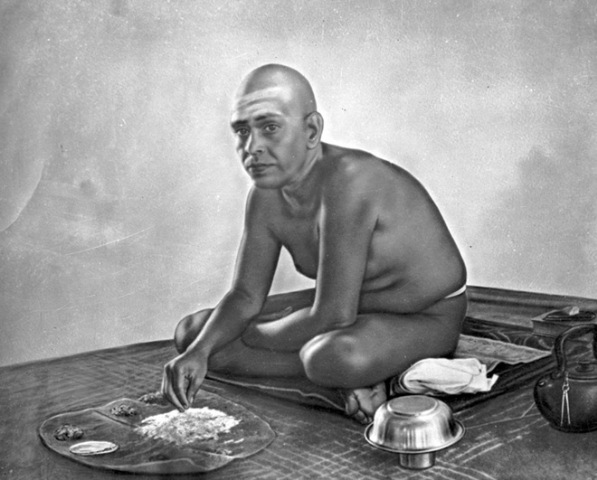
In Bhagavan’s own words we find recorded:
Devotee: What diet is prescribed for a sadhak (one engaged in spiritual practices)?
Maharshi: Sattvic food in limited quantities.
D.: What is sattvic food?
M.: Bread, fruits, vegetables, milk, etc.
D.: Some people take fish in North India. May it be done?
(The Maharshi made no answer.)
D.: We Europeans are accustomed to a particular diet; change of diet affects health and weakens the mind. Is it not necessary to keep up physical health?
M.: Quite necessary. The weaker the body the stronger the mind grows.
D.: In the absence of our usual diet our health suffers and the mind loses strength.
M.: What do you mean by strength of mind?
D.: The power to eliminate worldly attachment.
M.: The quality of food influences the mind. The mind feeds on the food consumed.
D.: Really! How can the Europeans adjust themselves to sattvic food only?
M.: (Pointing to Mr. Evans-Wentz) You have been taking our food.
Do you feel uncomfortable on that account?
Mr. Evans-Wentz: No. Because I am accustomed to it.
D.: What about those not so accustomed?
M.: Habit is only adjustment to the environment. It is the mind that matters. The fact is that the mind has been trained to think certain foods tasty and good. The food material is to be had both in vegetarian and nonvegetarian diet equally well. But the mind desires such food as it is accustomed to and considers tasty.
D.: Are there restrictions for the realised man in a similar manner?
M.: No. He is steady and not influenced by the food he takes.
D.: Is it not killing life to prepare meat diet?
M.: Ahimsa stands foremost in the code of discipline for the yogis.
D.: Even plants have life.
M.: So too the slabs you sit on!
D.: May we gradually get ourselves accustomed to vegetarian food?
M.: Yes. That is the way. 3
In this example, and as is seen throughout the teachings of Sri Ramana Maharshi, Bhagavan is stressing: “It is the mind that matters.” Furthermore, “The mind feeds on the food consumed”, and “The weaker the body the stronger the mind grows.”
In the following story, we are being shown that a pure diet will not only elevate the quality of the mind, but will also keep the body free from illness: “One afternoon at 3 o’clock, a devotee who was going to Madras gave a small tin containing some ointment and said that if that medicine was applied to Bhagavan’s legs, the pain would decrease, and that if Bhagavan would continuously use it, he would bring a dozen tins of it from Madras. Bhagavan replied, saying: “Enough. The Karpura Thailam I am using now is adequate. Why do I require such costly medicines? If diet is properly regulated, no medicine will be required. When these medicines are used, the ailment apparently disappears, but it starts again. That is because of some irregularity in diet.” 4
One of the close disciples who lived with Bhagavan, Arthur Osborne, related what the Maharshi taught him: “It should be explained for non-Hindu readers, that the practice of vegetarianism is not only out of disinclination to take life or eat flesh, though that is one reason for it; it is also because unsattvic food tends to increase animal passions and impede spiritual effort.” 5
Although the Ashram food was strictly vegetarian, Alagammal, Bhagavan’s mother, like some very devout Brahmins, went still further and considered some vegetables (i.e. onions) also unsattvic (impure). When Bhagavan would sit with the devotees in the kitchen and peel onions, Alagammal would weep bitterly. In response, Bhagavan would retort while holding up an onion: “Behold the powers of this small bulb.” She would then weep all the more loudly. Bhagavan had the final word, and would say mockingly: “Mind that onion! It is a great obstacle to Moksha (Deliverance)! It should be said here that Sri Bhagavan did not disapprove of orthodoxy in general. In this case there was excessive attachment to the forms of orthodoxy and that was what he attacked. In general he laid stress on the importance of sattvic (pure) food. He did not often give any injunctions at all concerning outer activity; his usual method was to sow the spiritual seed in the heart and leave it to shape the outer life as it grew. The injunctions came from within.” 6
1 Chandogya Upanishad, 6.5.4, 6.6.1,2,5.
2 Spiritual Benefits of a Vegetarian Diet, Swami Nirmalananda, Atmajyoti Press.
3 Talks with Sri Ramana Maharshi, recorded by Sri Munagala Venkataramiah, Sri Ramanashramam 2006, Talk 22, p. 20.
4 Letters from Sri Ramanashramam, Suri Nagamma, Sri Ramanashramam 2006, Letter #266 December1949, p. 640.
5 Ramana Maharshi and the Path of Self-Knowledge, Arthur Osborne, Sri Ramanashramam 2006, p. 82.
6 Ibid. p. 81.

Reprinted with permission of Swami Sadasivananda
To subscribe to his newsletter, go to http://www.ramanateaching.org/contact.html
For more information on Swamiji, click here: About Swami Sadasivananda
Teachings of Bhagavan Sri Ramana Maharshi web site: http://www.ramanateaching.org
Ask your question in relation to Bhagavan’s teachings, meditation and spirituality at:
http://www.ramanateaching.org/faq
 Luthar.com
You must be logged in to post a comment.