Harsha's avatar

I am not this, I am not that; who am I? – Gururaj Ananda Yogi Satsang

-This is an edited and unpublished satsang of Gururaj Ananda Yogi. If you want to watch the video of the whole satsang you can get it in Gururaj’s channel at Vimeo

Question: I am that which causes awareness to flow from the grossness of the lower mind to the un‑differentiated bliss of the superconscious.  I am not mind, but upon me the mind rests.  I do not move, yet through me all things move.  I am neither this nor that.  What am I?

Gururaj Ananda: That you are.

Who am I if I am not the mind?  Who am I if I am not the body?  What makes you presume that you are not the body and not the mind. What point of reference have you to tell you that I am not the mind and neither the body?  Show me that point of reference.

When I say to myself, “I am that I am,” who is this that I am that I am?  Who is this Brahmas mi‑‑I am Brahma?  Who is this that could say, “I and my Father are one?”  Who is this that could say that I, as the mind and body, is non‑existent?

Then what part of you is existent to make you cognize your non‑existence?  You don’t know, that is for sure.

Your mind is a reality, your body is a reality, and the spiritual self within you is a reality, but it is only the mind that could cognize its own realness which is also, at the same time, erroneous.

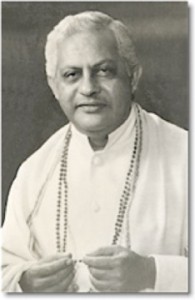
Gururaj Ananda and Cansita

You say I am this body.  Now this body has been changing so much.  I was an infant, then l grew up into adolescence, became an old man…

So this body is the same body, but over a period of time ‑‑ which you regard to be time ‑‑ has gone through various changes.  Who is that which perceives this particular form of reality?

The spirit that is within you, the Divinity that is within you, is non‑cognizable and neither would it cognize anything besides itself in its own cognition.

The mind says this is a handkerchief.  Why does the mind say this is a handkerchief?  Because my mind, or a certain recollection or experiences that has gone through me in this lifetime or even in past lifetimes, perhaps, make me cognize this to be a cloth, a piece of cloth to be used on my nose.

Now, where does this come from?  What tells you that this is a nose and that’s a handkerchief?  So you go further back to realize that my mind is saying that, then you will ask yourself what perpetuates this mind in this mold of having this particular kind of cognition?

And like that you go on and on and on until you reach a point which is zero.  Then only can you say, “I’m not the body.”  Then only can you say, “I’m not the mind.”

Look, I can touch, feel, smell, taste, go to bed and make love, go to the toilet.  Is the body then not functional?  Of course  it is functional.  Then why do I deny the body?

I deny the body because I feel within myself‑‑or rather some force is feeling within myself‑‑that I am far beyond the body and the mind.  Now, the greatest mistake that has been made‑‑or is being made by various theologies‑‑is the denial of the body and mind.  Let’s look at it from a different angle.  Do not deny this body.  Do not deny this mind.  And do not deny that which cognizes the body and the mind.

So how are you dealing with yourself, then?  We’re still going to come to the cognitive factor.  But at this moment how do you stand?  You stand in the position of saying, my body exists, my mind exists, and the cognitive factor also exists, so therefore I am existence and being existing I can deny nothing.  For I am that I am.

There is no differentation between your body and your mind and your cognitive self.  The I that cognizes the very existence of this body and this mind is thought forms which we can call the ego self that is forever trying to preserve itself in the cognitive factors of saying I am this handsome guru [comments and laughs from audience].   Who’s saying that?  That stupid ego self.

Now, what is the ego worth?  The ego is worth nothing, because it is just a formation of patterns which you have superimposed upon yourself through the various experiences that you have gone through, and that has left impressions.  And those impressions is that which we call the ego.

Now, I put my hand on this table and I remove this hand.  But an imprint is there.  The hand is not there anymore, but an impression or an imprint of the hand is existing on this table.  Get out your magnifying glass and you will see it.  What reality is there in this imprint?  Nil!

This very imprint that cognizes me as a body, this very imprint that cognizes me as a mind.  So my body and mind is totally dependent upon that imprint.  And yet, what is the reality of this imprint? Nil.  It’s an impression created through patternings of experiences.

So now if I deny this imprint, or if I do not attach value to this imprint in bringing about the recognitions of the existence of this body and this mind, then I am basing the existence of this body and this mind with something that has no substance but which has just created an impression there, presuming that this mind and this body is real.

So now, what have we done so far?  We are accepting the reality of the mind and the body, and, at the same time, we are denying the mind and the body.  Because both are true. You are not the body, yet the body; you are not the mind, yet the mind.  Then what is your reality?  And how are you going to prove this reality?

You can only prove it by inference.  Or by the very factor that reality requires no proof.  It exists because of its own existence.  The only time you can prove reality is when you have a reference point.  And where can there be any reference point as as far as Divinity is concerned.

There is consciousness and non‑consciousness.  Non‑ consciousness means you are not aware.  And conscious means that you are aware.  Now, what proof is there of awareness.  Does awareness require any proof?  Does the light burning there require any proof that it is burning?  Its very act of giving light is its own proof.

You do not need to prove anything.  Because when it comes to the highest level, you need a point of reference, and the highest level being the one, without a second, cannot have a reference point.

I exist, I exist, because I exist.  That’s all.  And because I, the real me to which I have no reference point exists, I can only refer it back to a grosser level of the mind and the body, which finds its existence in that which I cannot prove is existing.Gururaj Ananda

I’m taking the highest factor in life and bringing it down to the grossest factor and that is what I could compare things with.  But when we reach the point beyond comparison ‑‑ Beautiful word.  You’re pairing up things in comparison.  There have to be two to compare.  But what if I want to exist as I am in my full totality, then will I not lose the idea of comparing myself to anything else?  And the very moment I lose the idea of comparing myself to any subject or object, that is the very moment when I will lose the ego self, that imprint that is existing in my experience.  Or the impression of the experience.  Then where will I be?  I shall be incomparable.

I shall be the source of existence itself, which I am.  Not in reality, but in actuality.  For reality changes from day to day.  What is real to you today might be unreal to you tomorrow. You see.  But when I become actual, when I become the source and recognize that source within me, or the source recognizes itself, then I will say, let me enjoy this body.  Let me enjoy this mind, for it is a product of a collection of impressions.  And if they are there, let me make the best use of it.

Here we are fusing two factors.  The fusion lies in the fact that that which is created by impressions‑‑or maya or illusion‑‑, is brought into reality, and reality is converted into illusion.  So I make the best of both worlds.

For example, let’s see what example we can use.  Say I loved a woman very much, I was deeply involved with that woman.  Fine. And she has left me.  She has jilted me or died or whatever or jumped in the lake.  Now, is she there or is she not there?  She’s dead, we know.  But is she there or is she not there?  She is there because you think she is there.  What makes you think she is there is because those impressions, those experiences, and you are reliving something so far in the past which has no reality today, which has become an illusion.  Because she is not there.  I have developed a dependency upon her when she was there.  So what am I living on now?  On dependencies.

I am existing with a reality, which is my body and my mind.  Though in essence it is unreal, but for the moment of three score years and ten, let me do the best with it I can.  Why not. Who would deny me that right?  And why should it be denied to me? You think all these organs we have are there just for the fun of it or for the show of it?  You think I have ears and I must not hear?  Or I have eyes and I must not see?  Or a nose and not smell?  Or any other organ of my body that has been there created through an evolutionary process and not to be used.  Why should I not use every organ in this body of mine to its fullest value? Honestly and sincerely.

So these monks  say become celibate, become this and that, become this and I don’t know what all.  I say, “become yourself!”  Be yourself!

Be yourself.  How can I make myself be myself?  Ahh!  How can I make myself be myself?  And the answer to that riddle is so simple.  Do you know that beautiful hymn which I like very much, lead thou me on, kindly light, one step at a time is enough for me.  Don’t you know that beautiful hymn?

Firstly, I must admit to myself that  I’m living a fragmented life.  Part of my mind is pulling that way, part of my mind is pulling that way, part of my mind is floating up there in Chicago and another part somewhere in some heaven or some hell which has no existence in reality.

Admit to oneself that I’m fragmented.  Lead thou me on, kindly light to integration away from fragmentation.  Let me be whole.  Let me function in this life holistically.  Let me not find any more the discriminatory factors between body, mind, and spirit.  Let me regard it to be one continuum.  And this continuum, after finding through spiritual practices and meditation, when you find this continuum of yourself, mind, body, and spirit, this continuum will extend and extend and develop so much that the entire universe becomes you and you become the universe.

Existence and non‑existence, what am I going to do about it?  I’m both.  I am existing, and at the same time, the impressions which I’m existing upon is non‑existent.

So let me tell you this, that 99.999% of your problems in your mind are self‑created without any damn substance.  So that which you have created without substance… very easy way out of it‑‑pull the chain!

That is the secret of life.  Forget the past.  It is gone. Do not project yourself into the future, it might not be there. But live for this moment.  Live for this moment.  And then you’ll preserve your physical health, you’ll preserve your mental health, you’ll become integrated in mind, body and spirit, and you’ll enjoy life.  For life is joy.  So, as I always say, enjoy the joy.  Why deny yourself of that beautiful joy of this so‑ called existence when you can have fun.

What’s wrong with fun. Enjoy it.  But be honest and sincere, that’s important.

MEDITACION BARCELONA

Harsha's avatar

AUGUST SUMMER by Alan Jacobs

4451_82082183499_623773499_1895176_3431332_n

 August summer from awesome meadow sings,
I never tire from commune with my Soul,
In silent wood’s enchanted shades, where broad
Shafts of sunlight fall in full accord
Gilding leaves of green. The dusty lane’s my goal,
Which ends where the higher path begins.
The air, the fair horizon, crystal springs,
Rosy lips of dawn, which one yearns to kiss
This hem of heaven’s robe in joyful bliss.
Come! let’s gaze at gleaming stars so chaste
They shine on Mother Earth through veils with haste.
Let pine trees imparting scented breath
Waft you along to life away from death,
To sapphire streams and fields of emerald green.
Let Nature’s radiance reveal her sheen
On the solemn beauty of your furrowed brow.
True love latent in your heart, here and now,
Will ever grace this sacred, monumental hour.


6020_96980203499_623773499_2115239_393586_n
       Photos courtesy of Trina Kavanagh

Harsha's avatar

The Heart of God:The Nature of Self-Realization. By Dr. Harsh K. Luthar

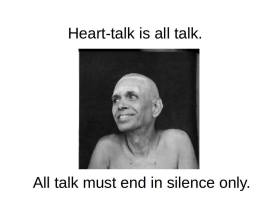
Heart Talk is All Talk

The difficulty in many of our conversations about spiritual insight is that the true understanding is not intellectual or conceptual, but absolutely direct. It is clear and direct without the medium of the mind.

Truth has never been a monopoly of a particular religion or spiritual tradition. How can it be? Some may disagree, but in my view, God does not play favorites.

We cannot make Truth our personal property but only allow the quality of Truth to overtake us and shine in us. We cannot possess God but only surrender to the Divine Will and let God take over our life.

Continue reading

Harsha's avatar

What is God’s Name? By Dr. Harsh K. Luthar

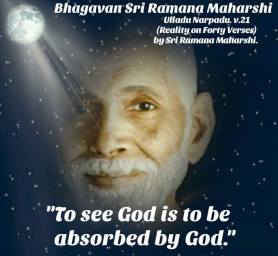
Ramana Maharshi: “I am” is the name of God. Of all the definitions of God, none is indeed so well put as the Biblical statement “I am that I am” in Exodus (Chapter 3).

Words are used in various spiritual traditions to describe God or give God a name. Many people are convinced that their religion, their scriptures, and their way of worshipping God is the best way. Sometimes people argue and and fight over God as well. 

Our conception of God is to large extent a function of where we are born and in what religion. Our mental conditioning is often so strong that we are not able to see the diversity of perspectives in various spiritual traditions. Only the mystics in different religions, who have through self-reflections and meditation, gone beyond their mental conditioning offer a unified vision of God. 

Continue reading

Harsha's avatar

Love, Heart, and Enlightenment: By Dr. Harsh K. Luthar

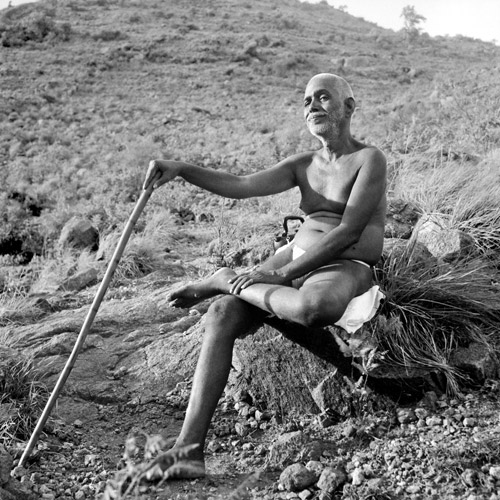
Sri Ramana Walking

Sri Ramana Walking

There is only One Heart

Sri Ramana once said that many advanced souls get liberation after reaching higher planes and that a few rare ones attain mukti (liberation) right here and now. In such cases their Prana along with mind (Kundalini Shakti) gets fully absorbed in the Spiritual Heart and the individual identity is dissolved into Brahman, the Self, the universal Heart and consciousness.

Continue reading

Harsha's avatar

The True Heart: By Dr. Harsh K. Luthar

Heart

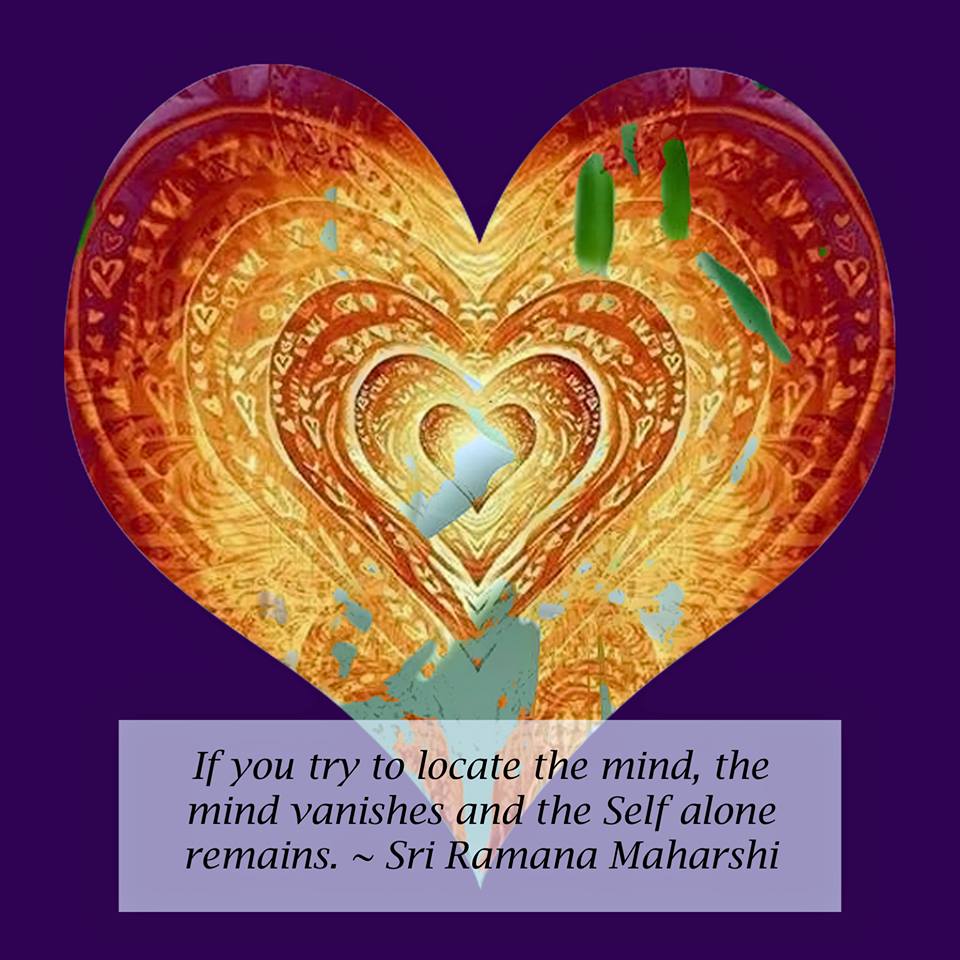
Image originally posted on the Ramana Maharshi FB Page by Cathy Ginter

Dear Friends,

In any language, the term “Heart” is unique. In Sanskrit, the “Heart” is referred to as Hridayam. Hridayam means, “Here is the Center”.

Bhagavan Sri Ramana gave a unique emphasis to the term “Heart” or “Hriydayam” in Sanskrit. He spoke about it frequently as the center of centers in which the mind must find final rest.

In ancient Eastern texts and scriptures, the Heart is talked about in the context of physical health, mental health, and also spiritual health and vitality. Even in English, we intuitively know that the word “Heart” really has multiple meanings.

If someone says to you, “You have a beautiful heart”, it does not mean that the person feels you have a very attractive physical organ beating in your chest.  No, not at all! The statement about the beauty of your heart implies that you, your personality, your essential character have a warmth and glow which others find pleasant and joyful.

When we try to deeply understand a situation, a person, or resolve a dilemma, we inquire, “What is at the heart of this situation”? We say “let us go to the heart of the matter”. We might even look in someone’s eyes and ask, “What is truly in your heart.”

If we are trying to get to the truth, we never ask anyone in a conversation, “What is truly in your stomach or what is truly in your liver?”. That would make no sense. We do not even ask, “What is in your brain?”, unless we are being sarcastic. Sometimes, we might say, “What is on your mind?” But such a statement does not have the same warmth or mean the same thing as “What is in your heart”? 

When We ask, “What is in your heart?”, it is an offer of direct and sympathetic communication. “Let us have a heart to heart talk”, signifies openness for a  mutually respectful and even a loving exchange.

The term “Heart” literally means Truth. When we want to know the Truth, we want to go to the heart of the matter. When I say to someone, “I want to speak my heart”, it means I want to speak my truth. I want to give my true feelings.

Heart means center, or core, which provides the foundation for the structure of our perceptions. The light of the Heart as consciousness reflecting off our latent tendencies (karmas) appears to give color to our thoughts, feelings, and emotions which constitute our personality.

We know and understand and give meaning to this whole universe through our Heart. Truly, to know others is cleverness, but to know your own Heart is wisdom.

The old saying, “Know thyself” means “Know your Heart”.

Through what power do we know the world? Ancient sages have said, Know “That” by which all else is known.

How do we know anything?

When we get up in the morning and open our eyes, we see the world. By what power do we see? By what power do we hear?

By what power do we know of our own existence? No one comes and tell us every morning, “Hey, you exist. This is your lucky day”.  We know we exist. This knowledge does not require external validation.

The French Philosopher Descartes said, “I think, therefore, I am”. However, the sages of Advaita stated thousand of years ago that “I Am” is prior to “thoughts”. Thinking is apriori predicated on our already being.

We know we exist and we know it with certainty. This certainty arises from the nature of the Heart.

If you have known everything but not your own Heart, you will not be fully satisfied. Something will be missing. Underlying our personality, thoughts, mental makeup, physical makeup, there is that power that allows us to be conscious of our being. Conscious of our existence. Conscious of the world of perceptions.

This power has many names in various religions. Ancients called this power simply the Heart. It is one’s own Heart, that is at the core of existence. It is one’s own Self, which shines and radiates through the medium of the mind as pure consciousness.

Knowing the Heart, one knows all hearts and minds. Everything arises from the same One Heart.

Namaste

Harsha's avatar

Diving Into The Heart: By Alan Jacobs

Alan Jacobs

(An Article published in the July Issue of The Mountain Path)

“Just as the pearl diver ties a stone to his waist ,

to the bottom of the ocean bed, and there takes the pearls,

so each one of us should be endowed with non-attachment,

dive within himself and obtain the Self-Pearl.

The first clear statement pointing to the practice of Diving Into the Heart appears in Bhagavan’s second written work entitled, Who Am I, composed in 1901. Thus my chosen quotation, from the Collected Works of Ramana Maharshi verse 19, of this seminal work, is quoted at the head of this article.
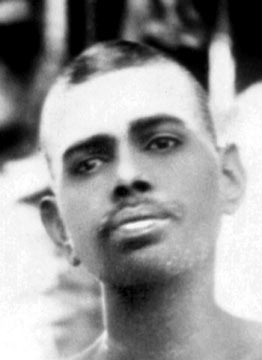
Ramana used different metaphors and phraseology to describe this practice, which forms one of the key approaches to Self Enquiry, but the metaphor of the Pearl Of Great Price pointing to Liberation is on also used by Jesus Christ and is often found in the poetry of Jaludin Rumi and the Sufi Mystics.

It is however, in the Ramana Gita that the Second Verse in Chapter Two, has become immortalized by the great Tamil Poet and Yogi, Ganapati Muni, who in 1915 was rewarded by Sri Ramana himself, with the answer which is popularly named as the Eka Sloki. Of over three Hundred verses in the Ramana Gita, all the questions and answers were transcribed by the Muni into Sanskrit verse, with the exception of this one, which was composed metrically by Bhagavan himself, in 1915, also in Sanskrit. This was his first composition in that language, rather than Tamil

There are several fine English translations of the famed Eka Sloki of Sri Bhagavan Ramana Maharshi, but I have selected the poetic metrical one used in the current edition of Bhagavan’s Collected Works on page 151, under the title The Self in the Heart where in the eighth stanza of the Supplement to the Forty Verses (1928), it was repeated by Ramana exactly as he gave it in the Ramana Gita, but now in Tamil.

IN THE INMOST CORE, THE HEART

SHINES AS BRAHMAN ALONE,

AS I-I, THE SELF AWARE.

ENTER DEEP INTO THE HEART

BY SEARCH FOR SELF, OR DIVING DEEP,

WITH BREATH UNDER CHECK.

THUS ABIDE EVER IN ATMAN.

Later, in Verse three of Chapter two, the Muni writes in 1917 “This verse is the utterance of Bhagavan Maharshi himself and is the essence of the Upanishads and Vedanta! Then in verse 47 of the Marital Garland of Letters Bhagavan himself writes ‘Oh Let me by Thy Grace, dive into Thy Self, wherein merge only those divested of their minds and thus made pure, O Arunachala.’ Further more to add to the pointers in which Sri Bhagavan obviously emphasizes this suggested practice for us, we have in the Upadesa Sarum or Thirty Verses different metaphor, but pointing to the same or similar practice. In verse 11 he writes:

“Holding the breath controls the mind

like a bird caught in a net.

Breath regulation helps absorption

In the heart.”

We shall be discussing the finer distinctions between breath control and breath regulation as I begin to look at approaches to the actual practice, but meanwhile we have the most important 28th and 29th verse in the Ulladu Narpadu or Forty Verses on Reality.

28. Controlling speech and breath, and diving deep within oneself – like one who, to find a thing that has fallen into water, dives deep down – one must seek out the source whence the aspiring ego springs.

29. Cease all talk of I and search with inward diving-mind whence the thought of I springs up. This is the way of wisdom. To think instead, I Am not this, but that Am I, is helpful in the search but it is not the search itself.

There have been numerous translations and commentaries on these two verses. The one I personally found to be most helpful was in the Sat Darshan Bhashya by K (Sri Kapali Sastriar) the respected, brilliant, and erudite, young disciple of Ganapati Muni .The original text was written in Tamil by Bhagavan but the Muni translated it into Sanskrit. He then asked Kapali, who was highly fluent in the use of the English language, Prosody, and Vedantic Philosophy, to write the commentary, and translate the verses metrically into English, thereby preserving much of the original ‘rasa’ or delight of Ramana’s own Metre. According to Kapali Sastriar’s Diaries, in his Collected Works, (published by the Aurobindo Ashram), where Kapali eventually took up residence, this text and commentary was shown to Sri Bhagavan, amended, and where necessary improved. The numeration in this translation differs as the invocatory verses were numbered one andtwo, thus the verses under discussion appear as 30 and 31.

S.S Cohen, for example makes the cogent point, in his commentary on verse 28, he writes “Deep Diving is a metaphor that implies salvaging the ego from the depths of ignorance into which it has fallen, not amateurishly, but very expertly and unremittingly, or else success will be sporadic and even doubtful”. At this point it is worthy of mention that Sri Kapali Sastriar also wrote an exhaustive commentary on the Ramana Gita, published by Ramanasramam. His Diaries vividly recount his meeting with Ramana, which took place, and the text approved after ammendation. This was composed in Sanskrit in 1941. It also includes a comprehensive commentary on the famous second verse of the second chapter, the Eka Sloki, much too long for this Essay, but well worth studying by those interested in pursuing this practice. However K’s commentary on these verse in the earlier Sat Darshan Bhashya is both long and powerful. On these verses. He makes many powerful points, and some of these I have extracted.

For example in (V 30) he writes that ‘just as one forgets all other thoughts and keeps aside all other cares, and holding breath and speech gets into the well and plunges deep to find the lost article’. This method called Plunge is suggested , and this is the real test of earnestness….. the attempt involves gathering up all one’s divided interests and dissipated energy into a concentrated effort of the whole man, of his Being in all its entirety…. V.31, then alone real quest for the Self may be said to begin…..’ It is my own opinion and that of others with whom I have discussed this important practice that Diving and Plunging are synonyms for this approach to Self Enquiry . On page 26 of this Sat Darshan Bhashya (published by Ramanasramam), in one of the introductory chapters, entitled Sadhana and Siddhi K writes “…..it throws the whole being into a consuming fire as it were, takes hold of the life breath which is lost in the bodily feeling , and separating it from the bodily grip enters it into the Heart…such is the real Jijnasa, the genuine earnest desire and search for the Self.

Before moving onto the actual approach and experience of this great practice, it is necessary to point out that there are numerous references on ‘Diving’, in the celebrated Talks with Ramana Maharshi .As these are not separately indexed I note some important ones here. In Talks 252 Page 210 he gives A full answer to the question ‘how is the mind to enter the heart?’, which is much too long to quote here, and anything taken out of context would fail to do justice to the text, and it would be preferable to look up the original. Similarly, In an answer also much too long to quote here is Talks No.616 on page 576, where there is a very long dissertation on the ’Jivanadi’ during which Bhagavan “ says ….. the seekers aim must be to drain away the vasanas from the heart and let not the reflecting medium obstruct the Light of Eternal Consciousness .This is achieved by the search for the origin of the Ego and by Diving into theHeart. This is the direct method for Self Realisation……I feel this is a key quote.

It is, however, in the recently published Padamalai, the Teachings of Ramana Maharshi recorded by Muruganar and edited and annotated by David Godman, that the richest haul for the potential ‘Pearl Fisher or Diver’ may be found. Again these are not separately indexed so I list some here. On Page 92…One’s own reality is Ananda, if you were to dive knowingly into the Atman, with the conviction born of this experience, then the state of Self would be experienced.(From The Power of the Presence Vol. 1 p.263-4.) On Page101 , No’s 50 & 51. “To whatever extent you dive with a one pointed mind within the Heart, to that extent you will experience bliss. In so doing the vexation of the clamorous and exceedingly cruel ego ghost, the mind, will perish leaving not a trace. On Page 146.No.53 ….Q. How to seek the mind? Bhagavan: “Dive within .You are now aware that the mind rises up from within. So sink within and seek. There is further comment on breath control being an aid, and where the breath sinks, the I Thought arises…when the attempt is made, it will itself take you to the goal. In Talks. No 195,Page 160.On Page 234 no.210 David Godman gives all of Muruganar’s Guru Vachaka Kovai verse 46 in which he quotes Ramana as having said “….put aside completely the extremely extensive Vedas and Agamas because their true benefit is getting established in the enquiry of diving within oneself….. On Page 232 No.18 he quotes “to whatever extent that mind-consciousness dives within, to that same extent will the bliss of the Self spring forth and reveal itself…

So we see the extent to which Sri Bhagavan repeatedly points to the importance of this practice over and over again . To cap it all we find The Eka Sloki was mounted during Bhagavan’s lifetime, obviously with his consent, above his ornate marble couch in the New Hall, where the verse is engraved in Gold Sanskrit letters on, a tablet of polished black marble . As Sri C. Sudarsanam writes “the Kavya Kanta was so overjoyed with this Eka Sloki when Bhavagan first gave it , that he proclaimed it as Ramonopanishad, Hardopanishad , and is reported as saying ‘the time for that , (a commentary on the Eka Sloki) has yet to come. I shall compose something like the Bhagavad Gita as a commentary.’ That is how the Ramana Gita with the traditional eighteen chapters, in Sanskrit poetic metre was born.

Before discussing the practice, from my own experience, and all I have read , and discussed with other Devotees, it is necessary to point out that it is only one of the different approaches to Atma Vichara, given by Sri Ramana to suit the dispositions of different seekers, according to their temperaments and maturity. Devotees who earnestly wish to practice some form of Atma Vichara find they are, as it were, ‘Initiated’ , by a strong intimation from the Sat-Guru in the Heart ,pointing to a suitable approach for them, or an approach which is the easiest for them to commence. and in some cases, even setting up the Enquiry in the Heart as a direct experience. This is obviously a great manifestation of Grace, when the Self sees that the earnest seeker is sufficiently mature enough to commence Atma Vichara.

In my own case I found it very difficult, like many western seekers, to maintain the attention needed for the Self Enquiry approach initially prescribed in ‘Who Am I’? but when I came across ‘Diving Into the Heart’ it was a revelation! as here was a radical practice I could pursue, by stopping my restless mind through breath control and regulation. I have been enjoying this form of Self Enquiry for some years and have great faith and personal evidence in its efficacy. In my enthusiasm I even composed a long Narrative Poem , published privately called ‘The Pearl Fishers’, which describes the practice. Of course Ramana’s long essay called Self Enquiry at the beginning of his Collected Works summarizes the different approaches and the necessary, optional preparatory and support practices, including regulation of the breath (verses 21-26), and in Chapter Six of the Ramana Gita, and verse 4 Chapter 2 of Spiritual Instruction. they are expanded as aids for necessary mind control.

Each practitioner of Self Enquiry will be drawn to that approach which he finds the easiest and appeals to him most. Some even have several arrows in their ‘atma vichara quiver’ with Aum as their bow. When however we come to Diving into the Heart, there is a useful treatise called ‘The Technique of Maha Yoga’ by Shri N.R.Narayana Aiyar in which he describes his own practice of Diving Into the Heart, as enjoyed by this earnest Sadhak, and first published by Ramanasramam in 1962. Briefly this short book summarises in general terms, his own experience and understanding of Self Enquiry, preparatory and support practices in the first twenty six pages .But on page 26he leads one into his own personal Sadhana of Diving Into the Heart by the key passage I have already partially quoted from Talks 616 page 576…… ‘the seekers aim should be to drain away the vasanas from the heart and let no reflection obstruct the Light of Consciousness. This is achieved by the search for the source of the ego. This is the direct method. The state free from vasanas is the primal state and eternal state of purity….’. He then quotes in Bhagavan’s description of the Locus of the Self, the famous quotation from the Supplement to the Forty Verses.

‘Two digits to the right of the centre of the chest is the Heart like a lotus bud. Breath, mind and the Light of Consciousness originate from here’.

There are many supporting passages in the Ramana Literature where Bhagavan indubitably affirms this location from his own direct experience. But we also know that Ramana stated elsewhere in Talks 403 page 378 that ‘you are the centre of Dhyana and that is the Heart. Thus a location is given with reference to the body……’even when the limbs are amputated you are there but with defective senses(adjuncts). So a centre must be admitted. That is called the Heart. The Heart is not merely the centre but the Self. Heart is only another name for the Self. Doubts only arise when you identify it with something tangible and physical…..’ However in Talks No.131 page 116 Ramana also states …’of course there is also the practice of meditation on the heart centre. It is only a practice and not investigation. Only the one who meditates on the heart can remain aware when the mind ceases to be active and remains still’ From this statement, as a practitioner of Diving or Plunging I have deduced, along with trusted and advanced Devotees in Ramanasramam and Tiruvannamalai with whom I have discussed the question, that the right side of the chest must not be seen as an object to be focused on, but merely as a doorway or portal in which one can enter to commence the search for the source of the ‘I Thought’. The point of entry may be found as the author of ‘The Technique of Maha Yoga’ writes, and Ramana also suggests , ‘watch the movement of the breath…and observe where breath rises and sinks inside the chest….’ . As in the Upadesa Sarum (and elsewhere) Bhagavan writes ‘the source of breath and mind is the same. Earnest Practitioners invariably find , as I have, that the Locus where a palpitation can sometimes be felt, is on the right side of he chest, where Sri Bhagavan himself affirms it to be.

Now regarding breath control and breath regulation, the Eka Sloki clearly states this as an option. Diving can be practiced with or without restraint of breath. We once had a Yahoo Group Discussion Group called Atma Vichara, with over two hundred subscribing members, world wide .Some reported that as soon as they approached the door-way of the heart with devotion and attention, the sacredness of the inner shrine automatically made the mind go quiet, and breath regulation was therefore unnecessary for them. Many practioners, however, especially those like myself with the usual Western rajasic restless mind, find breath restraint invaluable. Although Breath Control is summarised in ‘Self Enquiry’ from verses 21-25, it is more fully detailed by Bhagavan in his answer to the Muni and his disciples in Chapter Six of the Ramana Gita called ‘Mind Control’.

Ramana’s approach to this practice is very simple, and is not the extensive Pranayama which needs the supervision of a competent Teacher. One clear demonstration of full inhalation, retention and exhalation would be adequate . In verse five he states ‘control of life force means merely watching the course of its movement. By constant watch over its course (flow), Kumbhaka (retention) is achieved. This is an invaluable aid for calming the agitated mind at any time. In verse 6 Bhagavan, does recommend Hatha Yoga as an additional aid for those disposed towards this health giving and purificational practice, which would include some Pranayama. Many, like myself, find it is a valuable support practice for Atma Vichara. Here a competent Teacher is essential. In verse 7 we are asked to breathe out fully (Rechaka) with the necessary time required, and then fully inhale for another unit of the same time (Puraka). Then Kumbhaka or Retention may be held for four counts of the time taken for inhalation. It is during this period of holding the breath , that I finds is the best time to Plunge or Dive into the Heart by entering the portal on the right side of the chest using focussed attention, like a laser beam, from the chakra between the eye brows, to penetrate as deeply as one can, searching for the source of the ‘I Thought’, until one is forced to fully exhale, with Bhastika or diaphramtic exhalation with a guttural or hissing sound, which, more effectively, expels residual thought and vrittis.

This differs from the approach of the author of The Technique of Maha Yoga where he recommends (page 57) ‘to slowly Exhale and watch the exhalation movement in the chest. With the sinking movement in the chest dive into the Heart. Here I assume he is relying on the Pranic Force to enter the heart , with focussed attention . But I find focused attention issuing from the chakra or pineal gland, between the eye brows, far more powerful and would include the Pranic Force on exhalation as well. But obviously as in all matters of Sadhana it is for each Sadhak to find his own most effective way which is most amenable for him, guided by the Sat-Guru within his own Heart.

Another important prerequisite to this practice is given in verse three of the famed Arunachala Pancharatna or Five Gems to Arunachala where Bhagavan writes ‘He who turns inward with untroubled mind to search within where the Consciousness of ‘I’ arises, Realises the Self, and dissolves in Thee O Arunachala!’ .

Chapter Nine of the Ramana Gita in which the great Eka Sloki first appeared, has a whole explanation on the Granthi Bheedam or Knot. In verse three, Ramana states that theassociation of the Self with the Body is called the Granthi (Knot). It is my intuitive feelingthat Bhagavan’s powerful sword of Diving Into the Heart will eventually cut this identification and sever the knot . A full explanation to the Granthi Bheedham can be found in Spiritual Instruction Verse 12, Collected Works Ramanashramam Edition page 63.

Bhagavan often stated that a moderate Vegetarian Satvic Diet with milk products was a great aid in atma vichara, and there are many references to this in his ‘Talks’ where the importance of a Satvic Diet is clearly indexed. Finally there is the question of posture and here Bhagavan is very clear when he writes ‘of the eighty four main postures siddha is the most excellent’ in verse 27 section 3 of Self Enquiry. This is Siddhasana when the left heel is placed over the crotch and the right heel over that.’ Narayana Aiyer warns that this process of dedicated Diving Into the Heart may take a number of years, and this writer fully agrees from my own experience over many years. One assumes it depends on the skill employed in the practice of concentrated probing, with devotion, and the force of attention available, and the strength of the occlusions and vasanas resisting expulsion, as well as the gunas active at the time.

Obviously it will differ with each Sadhak, and no Plunge or Dive, in the search for the source of the I Thought can ever be exactly the same for anyone at any time. I find that each Dive is different in quality depending on the force of attention gathered, like an artist, when he prepares to draw an object, or a mathematician concentrating on a difficult problem, or gazing into the wick of a lit candle. In some cases one feels one strikes a wall , or sheath, and the attention cannot penetrate .But invariably one finds one can penetrate deeper and deeper until one reaches the abyss when one can go no further. Then on the exhalation a great deal of residual thought or vrittis are expelled. The more zeal , and determination one devotedly feels, that this isthe most urgent vital act and necessary effort one can make, the deeper it goes. One is immediately detached from any identification previously agitating the mind.

I find it is quite easy to commence the day with three or four dives, and then the opportunity or energy to proceed may happen another three or four times during the day. There is, however considerable Grace involved , as this practice churns the nadis, and the nervous system would be overstrained if achievement was too sudden .If their is a strain on the Nadis , Bhagavan says that with persistence all will come right in the end. This is expanded in the valuable chapter on ‘Self Enquiry Misconceptions’ in David Godman’s excellent anthology ‘Be As You Are’. Patience must be exercised for ripeness and maturity to fructify, and then Grace mercifully chooses the right moment for appropriate glimpses of the Real Self, in all its magnificence, as a forerunner to Realisation, when no further Sadhana is needed.

There is, however, from my own experience, no doubt that the practice gracefully weakens identification with troublesome thoughts whenever it is applied. Also pulsations are often felt on the right side of the chest , where a niche can be found in which one may rest for sitting in silent meditation. Again, however, every bold adventure into deep sea pearl fishing will be different, for each sadhak, and unique according to his own endeavour.

A baffling question arises, however, insofar as even when reaching the bottom ofthe abyss with concentrated attention, nothing is discovered, and the space probed seems empty. Wise, experienced devotees with whom I have discussed this question inform me that while the practice is still done from the mind, nothing should be expected. But at a certain point, after earnest and regular persistence in the practice the enquiry moves into the Heart, through Grace. Then atma vichara spontaneously arises, and one is drawn into the Heart, when the source of the I Thought may eventually be found with the necessary release. I have found this happens to me more and more, but I have not reached the stage where it becomes frequent or permanent.

Keeping in mind that one is searching for the root of the I Thought with zeal, and holding the breath, one should not expect an answer or result .The purification of latent tendencies are buried deeply in the subconscious, and what is happening can not be known by the reflected, limited, normal consciousness of the empiric mind. I am totally convinced, however, from my own experience, that Grace and effort are firmly interlinked.

This practice may be a great help for some Devotees, as it has for me. Especially for those who find other approaches too difficult because of lack of necessary yogic preparation, concentration practice, or inability to control the mind, even using Mantra Japa. There is no doubt that the implication of the Maharshi’s many repetitions of this practice, in his own writings and Talks, is of major significance. It is if our Ramana Sat-Guru appears and tells us Dive within the Heart and Realize the Self!

————————–

Note from Richard: I did a final pass at editing and formatting this article for Alan and am posting it for him. If there are any problems with the work that I did, I am sorry.

Harsha's avatar

Meditation, Self-Inquiry, and Self-Realization: By Dr. Harsh K. Luthar

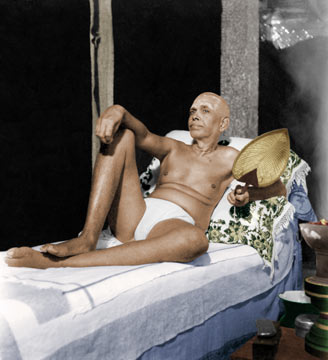
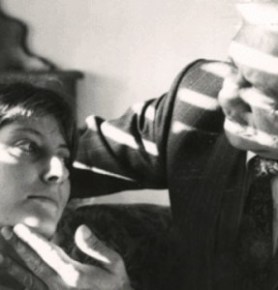
Bhagavan Ramana Reclining

Bhagavan Ramana Reclining

The distinction between Meditation and Self-Inquiry is subtle. However, in one way, understanding this difference is central to grasping the full import of teachings of the Sage of Arunachala, Sri Ramana Maharshi.

Sri Ramana used to say that meditations, affirmations, and other similar techniques presuppose the retention of the mind. To practice a mantra, visualization, pranayama, etc., requires the use and activity of the mind as an independent agent separate from the higher power. One of Sri Ramana’s favorite analogy was that asking the mind to subdue itself is like asking a thief to go ahead and capture itself. The mind will make a game of it, pretend to control itself, but will remain engaged in playing hide and seek.

Certain meditation practices no doubt have a calming and a relaxing effect. However, Sri Ramana states that in all such approaches, the mind remains dormant only temporarily. It rushes forth after sleep or meditation in its individual form when the proper stimulation presents itself. With all practices conducted with the mind, that have an object as their focus (mantra, breath, image, etc.), the seed of duality is already built in.

Someone once asked Sri Ramana whether Self-Inquiry that he advocated was also not a mental activity. If so, it must be presumed as having the same difficulty and limitation as other meditative techniques.

Sri Ramana acknowledged that Self-Inquiry also made use of the mind in initial stages. However, he held that in asking oneself the question “Who am I?” in a serious, alert, and an intense way, the mind was being concentrated and driven inwards towards its Source. This Source is not a form or a sound but the very origin from which the mind arises.

Therefore, in Self-Inquiry, the full power of attention is brought to bear upon this question, “Who am I”? This question does not have an intellectual answer. Asking it is meant for becoming aware of consciousness as existence that permeates us as our root identity. It is this feeling and sense that everyone has of themselves as “I Am”. From childhood to old age, we are aware of this sense of existence without having to give it a name.

This subtle awareness has no form. It is this self-awareness, independent of thoughts, that one has to abide in and follow to the Source. If grace allows for that, the Supreme Heart that the ancients called Sat-Chit-Ananda, reveals It Self. It is really a Self-Revelation. The Heart is recognized as one’s own identity independent of thoughts, personality, mind, etc.

Sri Ramana maintained that although Self-Inquiry required initial use of the mind, after a certain point a spontaneous power took over. The response to serious Self-Inquiry comes from within. Sri Ramana referred to this Source within as the Heart. Self-Inquiry stirred the inner power of the Heart which then became like a magnet pulling the mind within so that Self-Recognition and Self-Realization of Supreme Bliss as our nature could take place.

Namaste

Harsha's avatar

Self-Inquiry_The Science of Self-Realization: By Dr. Harsh K. Luthar

According to Advaita Vedanta, the science of Self-Realization (which we call Self-Inquiry), requires a different approach than the sciences involved in discovering the complexities of the Universe. Both approaches are similar in one way in that our consciousness with focused attention and awareness is used as an instrument of perception to gain knowledge.

Sciences involving the exploration of the universe and its laws focus the attention outside to perceived objects (time, space, matter, laws of motion, gravity, mass, etc.) to determine their nature. When attention and awareness are focused on such analysis, the relationships between various objects according to universal laws becomes clear. This is due to the inherent power of consciousness to discover and make known to itself anything that it focuses attention on. That is how sciences (Mathematics, Physics, Medicine, etc.) move forward.

However, the theoretical limit to understanding objective phenomena is always there to the extent that the observed phenomena is based on the very nature of the observer. It is not clear how precisely the relationship between the subject and the object can be determined scientifically. Philosophically, this is due to the logical difficulty of separating the subject from the object and demonstrating their independence.

Science of the Self, however, is a radical departure from the physical sciences and has a different aim. Here attention is directed inwards towards the subject and not outwards towards objects of perception. The classic methodology given by Sri Ramana for Self-Inquiry is to ask oneself with attention and inquire, “Who am I?” This is done in order to introvert the mind and drive it deeper into its source. In Self-Inquiry, the quality of consciousness itself becomes the center of attention. In this method, consciousness is not focused anywhere or on anything other than itself.

Language is not perfect but there are many ways to say this. Attention focused on attention itself is Self-Inquiry. Consciousness becoming self-focused is Self-Inquiry. Mind turning inwards to its source is Self-Inquiry. Awareness aware of itself is Self-Inquiry. All of these are variations of the same process and basically refer to the same thing. These statements indicate that one should quietly abide in one’s own sense of identity and being with full awareness.

This is not an easy notion to grasp. The Self-Inquiry methodology does not present the aspirant with an image or a sound to concentrate on. Because we are so dependent on our sense of hearing and sight even for meditation and prayer, Self-Inquiry presents a challenge. People often find it difficult to know what to focus in doing the Self-Inquiry because they associate their identity and thus consciousness strongly with the body.

This is why Sri Ramana used to say that Self-Inquiry is not for everyone to take on immediately. I have observed this phenomena carefully for a long time. People find meditation, yoga, tantra, chakras, and kundalini methods much more interesting and exciting to talk about and practice than Self-Inquiry. It is because all of these Yoga systems are directly or indirectly based on producing changes in the physical or the subtle bodies which one can experience.

Consumption of experience in some form or another is natural to all living beings. Self-Inquiry points, however, to the subject; the one who experiences. What is the nature of the one who experiences? Self-Inquiry shifts our attention from perception to the perceiver. Who is the one who perceives and experiences reality?

The practice of meditation and yoga leads the mind to temporarily withdraw the senses from objects of perception. However, internal perceptions in meditative states or Samadhi will most likely still exist. These internal perceptions may manifest in a number of ways including that of visions of angels, holy sages, the Goddess. Various spiritual and religious symbols often appear spontaneously in the mental eye of the aspirant during meditation or contemplative prayer and there may also be experiences of lucid dreaming states. So even in higher meditation states, the distinction between the subject and the objects of perception continues as we engage in and consume one experience after another.

Self-Inquiry, on the other hand, is found to be boring and irrelevant by many people because it promises them no special experience to enjoy other than being their own self. People should always do what feels natural. Nothing can be forced.

Eventually with the practice of meditation and other types of yogas, the mind becomes more subtle. The understanding of the nature of consciousness as free from outer perception (of physical objects) as well as internal perceptions (dreams, visions, other mental experiences) can then start to emerge. Once the independent nature of consciousness (free from all perceptions) is understood, one can recognize the essential quality of existence and pure being in the midst of various experiences.

When attention/awareness become self-focused, that is called Self-Inquiry. When attention lights up attention, awareness lights up awareness, consciousness lights up consciousness, Self is Realized as Sat-Chit-Ananda, the ultimate subject, the very core of being. Sri Ramana called it simply the Heart, whose nature is that of silence which is beyond all understanding.

Harsha's avatar

Lovers Love Completely: The Goddess Mystery. By Dr. Harsh K. Luthar

image

Picture of Arunachala by Gabriele Ebert

Song to the Goddess

Either let me be intoxicated
in your love completely
or put on my robes of joy
and rob me absolutely.
Judge me guilty
in the court of love
or absolve me absolutely;
find me flawed if you like
but never hold me weakly.
No middle ground is possible
for lovers who love completely! 

Love, Consciousness, and Bliss

The great sage of Arunachala, Sri Ramana Maharshi, used to say that all deep thinking people are fascinated by the nature of consciousness. The outer world of time and space is known only through ones’ own mind. Therefore, the mystery of mind and consciousness has been a magnet of attraction for philosopher, yogis, sages, and scientists. Upanishads say that one should know “That” by which all else is known.

What is “That”, which makes all else visible and known? The ancient philosophy outlined in the Upanishads, the sacred Hindu scriptures, refers to “That” as Sat-Chit-Ananda, the core of one’s being which is Absolute Bliss, Absolute Existence, Absolute Consciousness, and we can also say that it is the same as Absolute Love which makes all human love possible. Sri Ramana used to say that “Love is the actual form of God.”

For one irresistibly pulled by the hunger of Self-Knowledge that manifests in one’s own heart, the turning within to “That” Absolute Love and Bliss happens at some point. When consciousness spontaneously starts the process of scanning its own formless form, this churning results in the beauty and self-delight of awareness which underlies all manifestations of energy (Shakti).

Appearance of the Supreme Goddess

In many of the mystical traditions of Hinduism, the manifestations of this energy, resulting from consciousness becoming focused on its own nature, take the forms of Devi. Devi is the Supreme Goddess, who appears in visions and dreams of devotees according to their mental and spiritual condition to nurture, protect, bless, and guide them.

The Goddess is depicted in Hindu art in hundreds if not thousands of ways. This art is part of the Indian history, culture, and Hindu traditions. It comes from the inspired imagination of the artists and is based on the ancient stories about the Goddess and Her powers.

However, no artwork can really capture the form of the Goddess who appears in the mystic eye of the aspirant. She appears to each devotee in a unique way according to what best suits the nature and personality of the person at that time. As the yogi evolves in the spiritual path, the visionary forms of the Goddess can change along with that.

So a relationship develops between the devotee and the Goddess or the Divine Beloved. Like human relationships between lovers, it is not always easy.

Sometimes, the devotee cannot bear the separation and wants immediate union and consummation. He may even blame and question the Goddess as to why She has left him in the middle of the path after taking his hand.

Song of Despair to the Goddess

Play hide and seek
not too much longer
and risk this longing
get even stronger;
when people ask unashamedly
why your love flees from me
what honest answer can I make
and can you also say for sure
that in choosing me as your lover
you have made some grave mistake.

But the Goddess realizes that it is not time and waits for the moment to be ripe for the final liberation. Many of the love poems of mystics to the Goddess have come from this intermediate level of spiritual experiences where the Supreme Beloved appears to plays hide and seek with them.

Sri Ramana and Marital Garland of Letters

In the classic Tamil poem, “The Marital Garland of Letters” the Sage of Arunachala, Sri Ramana Maharshi, chides the Divine Beloved in some of the verses and apologizes for having done so in other verses. He begs Arunachala to fully embrace him (as the devotee) and utterly consume him in love; Because only then he will have peace.

Ramana writes:

Verse 23. “Sweet fruit within my hands, let me be mad with ecstasy, drunk with the bliss of Thy essence, Oh Arunachala!”

Verse 34. “Unless Thou embrace me, I shall melt away in tears of anguish, Oh Arunachala!”

Verse 60. “In my unloving self Thou didst create a passion for Thee; therefore forsake me not, Oh Arunachala!”

Hindu Mystical Bhakti Poetry

The love pattern of alternating between despair and ecstasy (Does She/He love me or love me not), joy and sadness (When will the Goddess/Divine Beloved visit again) is common in the poetry of many Hindu saints and mystics. Even the seeming confusion about the relationship itself, which makes the devotee beg sometimes for love and other times actually blame, chide, and command the Goddess/Divine Beloved, can be seen in some of the poems including the Marital Garland of Letters.

Although the Marital Garland of Letters by Sri Ramana is embedded in the Indian spiritual, historical, and cultural context, the symbolism of a lover who is in complete despair because of an incomplete consummation with her/his beloved is universally understood.

Summary

People who are in love with and fascinated by the mystery of consciousness have felt that mysterious pull of the Heart from within themselves. Who can really explain ways of the Divine and the different forms She/He manifests in.

What is the first step on this path of love? No one can say for sure. Was it the smile and look of a Sage, the grace of the Divine Mother, the kiss of the Goddess, or the kindness of a teacher or a friend? There must be many possibilities that make us aware of the Heart within, whose nature is Sat-Chit-Ananda, that which is the source of the ultimate bliss.

This memory once awakened brings upon the experience of pure being, and attracts the devotee to the truth of her/his own nature. This gentle pull within makes itself felt. It does not let go until the Truth of one’s own Heart is recognized, and there is nothing left to let go.

Some say that it is the Goddess Herself, who takes the devotee into the Heart and then reveals Herself as the Universal Heart. The complete identity between the devotee, the Goddess, and the Heart thus established, everything disappears. There is only that Heart of Love and Fullness, eternal consciousness completely at rest in its own nature.

Knowing That is Self-Knowledge. That is the final consummation.

I came to feed on Thee, but Thou hast fed on me; now there is peace, Oh Arunachala!” Verse 28. Marital Garland of Letters.

NOTE: Some of the verses on the Goddess in this article are from a longer poem on the Goddess by Dr. Harsh K. Luthar.

kurta