Harsha's avatar

Paradox Of The Mind: By Alan Jacobs

Paradox of the Mind: By Alan Jacobs

Harsha's avatarLuthar.com

“Oh Mind, do not waste your life in roaming outside, pursuing wonders and wallowing in enjoyments. To know the Self through grace and to abide in this way firmly in the Heart is alone worthwhile.” [1]

This relevant quotation leads us to consider that what we term ‘mind’ can be conceived as a great paradox. From one standpoint it is a benevolent friend but from another it is a malicious enemy.

View original post 1,111 more words

Harsha's avatar

Sri Ramana Maharshi’s Mother: Mahasmadhi

Bhagavan and His Mother

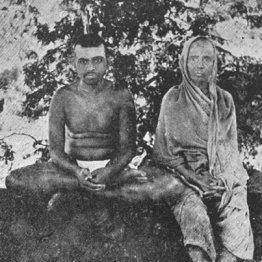
Sri Ramana’s mother lived with him in physically difficult conditions and in poverty in the caves of Arunachala. Life was hard for her due to her age as well. One day, Bhagavan Ramana’s sister came and said to their mother, “Mother, you are not well. Come, I have a comfortable house.” She refused and turning to Bhagavan told him, “I want to die only in your arms. After my death you may even throw away my body into some thorn bushes, it does not matter.”

Continue reading

Harsha's avatar

Meditation and Self-Inquiry: Part 1

Harsha's avatar

Finding Peace Within

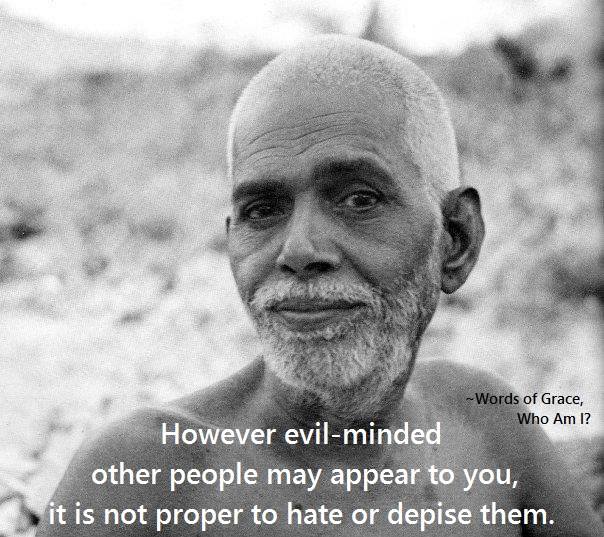
Sri Ramana on Evil

Sri Ramana and other sages have advised that one should bring awareness to any feelings of anger, hatred, revenge and remove such emotions from one’s consciousness.

Agitation of the mind due to negativity will hinder one’s own natural peace and not allow the mind to surrender to the Lord who sits in the Heart.

The ancient teaching is to witness all fluctuations of the mind without identifying with them. In this way, the mind gradually becomes still.

Note from Editor: Photo art from on John  Wassenberg’s FB page.

Harsha's avatar

You Have No Caste!

You have no caste. No duties bind you.
Formless and free,
Beyond the reach of the senses,
The witness of all things.
So be happy! ~ Ashtavakra Gita (1:5)

You have no caste

Ashtavakra Gita is a classic ancient Advaita scripture that is uttered by a great sage from a radical nondual perspective. This was one of Sri Ramana’s favorite scriptures and he used it as a teaching tool in some conversations. Photo art found on John Wassenberg fb page.

Harsha's avatar

All My Bags Are Gone: By Latha Ramanan

Harsha's avatarLuthar.com

Began the journey from the foothills
There were twists and unknown turns to take
Rough and narrow paths, unfamiliar terrains to cross

View original post 84 more words

Harsha's avatar

The Guru Came As Ramu – Part I: By Michael Bowes

Harsha's avatarLuthar.com

sri-yantra-23.gif

Michael Bowes is well known to us as an authentic and genuine and a very experienced yogi and a devotee of Sri Bhagavan Ramana. Internationally, he is well travelled and has been to India. He has visited various Ashrams and Gurus and Swamis in both the U.S. and abroad.

Michael has an uncanny ability to see to the heart of the matter and his spiritual insights pierce through the veils of sentimentality and conceptual baggage. Michael is a long term member of the HarshaSatsangh community and his presence has been a gift.

Given below is a three part story from Michael about his visit to a Swami in India. This is Part I.

************************************************************************

By Sri Michael Bowes

In the spring of 1992 I met a Swami who was making his first trip to the United States. By the time I met him he had been in the States for…

View original post 1,415 more words

Harsha's avatar

The Meaning of the Term “Ji” in the Indian Culture: By Dr. Harsh K. Luthar

At Arunachala Ashram in Canada

In the Indian culture, we sometimes add the word “ji” at the end of someone’s name to convey respect.

For example, if someone’s name is Ashok, and we want to convey warmth and respect, we call him Ashok-ji. If someone’s name is Maya, we call her Maya-ji.

However, in the Indian culture, no one will ask or demand that we add “ji” when addressing them to show respect. That would be very uncool. It would actually be humorous. It is up to us when we want to add the “ji” after the name of the person. There is no compulsion that we have to add “ji” to the name of everyone we meet and greet.

Continue reading

Harsha's avatar

Meeting Nisargadatta Maharaj: By Dr. Lakshyan Schanzer

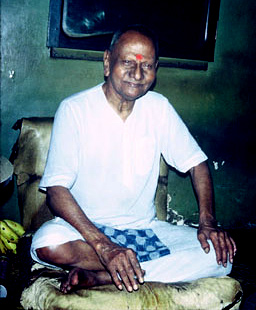
A classic and original article about meeting Nisargadatta Maharaj in 1978 by Dr. Lakshyan Schanzer. All the pictures of Nisargadatta Maharaj were taken by Dr. Schanzer. At the end, the author is shown sitting with Maharaj.

Harsha's avatarLuthar.com

By Dr. Lakshyan Schanzer

My name is Lakshyan Schanzer. I have been practicing and teaching yoga and meditation since 1971. I am also a psychologist and practice a meditative approach to psychotherapy. This is my first writing about my experiences with Nisargadatta Maharaj.

By 1978 I had been practicing and teaching for about 7 years (primarily Integral Yoga) and had reached a ‘wall’ in my practice. I was having wonderful experiences/results on a daily basis. Yet, for me, these experiences were just that; only experiences. Yes, they were important and healing ones, bringing revelations and insights into my history, release of deep feelings, or guidance about the coming day or accurate premonitions about the future.

However, as I became accustomed to ‘pushing the buttons’ that generated these experiences, I began to ask myself: “Was there any value beyond these temporary conditioning effects of regular practice? That is, if we experience…

View original post 1,525 more words

Harsha's avatar

Viswanatha Swami_ A Hidden Gem: By Murray Feldman

Viswanatha Swami

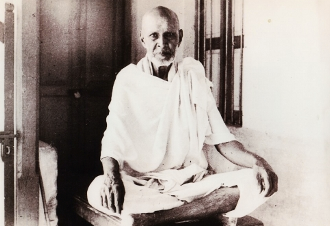
Viswanatha Swami first came to stay with Bhagavan Sri Ramana Maharshi when he was about 19 years old. His father, Ramaswamy Iyer, was a first cousin of Bhagavan.

I had the good fortune to spend considerable time with this great devotee of Ramana Maharishi from April 1976, until he became ill and passed away at 75 years of age on the 22nd November, 1979. How he came to Bhagavan has been written about elsewhere. Here I attempt to show how he exemplified, so wonderfully and devotedly the teachings of Bhagavan. Continue reading