
What is Kundalini Yoga?
As taught by Yogi Bhajan
Introduction:
Yoga has 2 aspects: By the first is meant the idea of yoking, to link the limited idea of self through purifying efforts with the Universal Consciousness. By the second is meant the realization of Union, wherein the purified individual unit of consciousness awakens to realize that it is one with the non-dual, all-pervasive Universal Consciousness.
The Purpose of Yoga:
In the spiritual text or treatise on Eight Limbs of (Ashtanga) Yoga by the ancient Sage Patanjali in the 7th Century, the third aphorism states that the purpose of Yoga is to “isolate the seer.”
In the Gospel of John, Ch 11:34, Christ tells the Apostles similarly regarding this same purpose, practice, and its result, that “The eye (the seer – one’s awareness – the subject “I”) is the Light of the body. When thine eye is single (isolated and held to without attention to images, impressions and sensations), thy whole body will be filled with Light.”
Yoga as Yoking (Aradhana):
In Kundalini Yoga, the yoking aspect comes under the term Aradhana, which means a sustained daily practice (Sadhana) through which impurities are distilled from the conscious field leaving the attachments to images impressions and sensations that make up the identity of the pervasive “I” sense with the body and mind. Through daily persistent practice, the mind comes to a zero point completely clear, empty and still, the term for which in Kundalini Yoga is called Shuniya. The result of this zero-point/emptiness of the “I” sense is the possibility that upon “hearing” that one’s sense of “I” is really derived from and not different from the Universal Consciousness, That True Self (the Atman – the pure individual unit of consciousness or Soul) recollects Itself as single pervasive Being and abides in and as Itself, effecting a radical force that pierces through and outshines the mind and body. The feeling or sense of “I” that you feel now doesn’t change, only the realization of Its True nature, which is to say who and what you really are.
Hearing, Remembrance, Abiding:
This “hearing” in Kundalini Yoga, which uses the terms from the Sikh Gurmukhi is called “sunia,” reflection or recollection by the term “Mania” and “perfect abiding” by the term “mamu kita bhau” It should be noted, however that these terms and this process of experience are used in every religion and every yoga to denote the same process and experience. In Christianity, Christ repeats these terms to explain the practical process of realization in every text. In Hinduism/Vedanta the terms are Sravana, Manana and Niddidyasana. In Buddhism the process is incorporated in the practices of Mahamudra and Dozchen. In all these, when the Truth is pointed out, this “hearing” becomes possible when a person is “pure in heart.”
By “pure in heart” is meant that the tamasic and rajasic tendencies of the mind have been overcome by the mind’s satvic essence, which radiates from the spiritual heart (Ik Tar” or One Star – a center unrelated to the heart chakra) in the reflected consciousness of the mind, when it becomes pure, i.e., in yogic terms “satvic.”
These three, tamasic, rajasic and satvic are together called the gunas, which one might call interrelated levels of force that give a sense that one is acting in and through the body and mind, even though, in Reality, only the Self is Real.
By tamasic is really meant those impressions that have through emotion or stress been deeply encoded / embedded in the physiology (molecular and cellular structure) of the body, so that impressions of the mind will trigger over and over the same chemical electric emotions and projections of those emotions on the world. This means that we chemically imprint and store impressions and then project them on the world around us, with such a force that the only people and events that come to play out our roles on this planet are those that respond to us in the same manner as we project, i.e., they have similar innate tendencies, while others drift from our world all together. In other words, based on the predispositions we have been born with, we react and form impressions, some based on strong emotion, others through persistent repetition, and we project an apparently separate world, each of us imagining intense realness to that world, based on the chemical triggers elicited in our bodies by our thoughts. Thus, the tamasic force binds our “I” sense to the body.
By rajasic is meant the activity of the mind, impelled on the one side by the chemical triggers in the bodily encoding and on the other side by the life force emanating from the Universal Consciousness that pierces through the Spiritual Heart denoting the sense of “I” through-out the nervous system, so that we think “I am the body,” and through a major nerve (mind nerve) to the brain, so that we think “I am the thoughts and impressions of the mind.” The rajasic force has a unique deluding potency that gives us the sense that “I, the body and mind, am the doer.”
Satvic then is the pure non-objective etheric consciousness that reflects the force of Intelligence rising from the Spiritual Heart, which force inclines the Soul to look inwards and recollect Its True Identity. The satvic is really the reflected force of pervasive purity emanating from the Universal Consciousness our True Self.
Yoga, as Union (Pradupati):
Thus, when the mind becomes pure, it reflects the Self in the Spiritual Heart. At once, one abides as single pervasive consciousness, without separation or differentiation, the selfeffulgent screen within which and upon which appears all the dimensions of the Universe vast and small. You stand transfigured, both Grounded as though a force of a graviton, yet radiant, like a Sun. In Kundalini Yoga the term used to describe this timeless eventuality is “One Star Spirituality.”
This realization in Kundalini Yoga is called “pradupati” or the crystallization of the Soul. But even though this realization has taken place, one’s Sadhana continues, but at a different level, until the realization is complete.
In Kundalini Yoga, the first realization, which brings you into the experience of your “Diamond Body” – clear like a diamond, i.e., “pradupati,” is called “Sat Nam,” which is the experience of one’s (pure) Self as Truth, a Truth which is beyond all notions of duality, even the ideas of a subject and object of perception, beyond conception. The final realization, wherein there is only the Universal Consciousness and there remains nothing separate is called “Whahe Guru.”
This experience is described variously in every yoga and religion. Just as Guru Nanak emerged from a cave after being drawn there to meditate for several weeks, saying, as his first words, “Sat Nam,” Christ emerged from the dessert after several weeks with his first words, similarly translated, as “I am the Truth.” In Buddhism, this experience is termed the Dharmakaya or the Embodiment of Truth. In Hinduism the experience is called “Satchitananda.”
Always keeping in Mind the Purpose of Practice:
When one practices yoga, what one keeps in mind always is an inner quest to try to “isolate the seer” to arrive at the subjugation of the mind through one means or another through which one comes to a state of non-objective awareness, a state of etheric consciousness on the belief that one will arrive at the Truth about themselves.
The nature of the Universal Consciousness is that it is like a self-effulgent pervasive screen. What we see is like a movie that we ourselves project, and due to the force we project through the thought impressions and the intensity of the chemical reactions the thoughts trigger, i.e., the gunas, we have the strong belief in the reality of what we see. But we hear, again and again, in spiritual texts and clues from events in our lives that there is something more to who and what we are.
And so, we begin a new journey, where, instead of filling our lives with outward activities, we begin a daily search and exploration to find out what it seems that we are missing.
The Universal Consciousness is similar to a Cinema, where we sit and watch a movie that is run from reel to reel on a projector that passes light through a lens through the frames of the film being projected onto a white screen. The difference is that the Universal Consciousness a multi-dimensional screen, including time and space, that lights Itself and all the images appearing, manifesting within Itself both awareness and being, or the sense of “I.”
If the Truth is that we are really not the limited scope of thoughts and impressions and body sensations, but really Consciousness Itself, then what is the cause of the delusion, amnesia, mistaken identity?
Practically speaking, the body, while a powerful vehicle for the Soul, in that it has the nervous system, the chemical power of the glandular system and the force of prana, nevertheless, operates at a conscious energy or voltage level, which bonds the Soul’s astral body to the identity with the chemically imprinted images and impressions.
The Nature of Awareness:
On the other hand, awareness with the sense of being or “I” – the seer, wherever projected, gives the feeling of life and a mild sensation of energy or voltage when directed in the body, and, when combined with thoughts that trigger the chemical electric sensations in the body, can result in very powerful feelings of life and voltage.
Therefore, the application of awareness must be the key, and if we can somehow isolate it, then we would have access to the total force inherent in that awareness.
Now what is this awareness, which is synonymous with the sense of being or “I” and the feeling of life force or prana (voltage)?
The awareness is what yogis call the Atman, while the Universal consciousness is called
Brahman. In Christian terms, the Atman, or pure sense of “I” without identity or association to images is called the Christ Consciousness or the Son, in relation to Brahman is called the Father.
To try to show the relationship between the 2 and why these 2 are really one, we can use the following analogy that was often used by mystics in the Dark Ages of Europe, before the Renaissance.
People would ask what the twinkling lights were in the sky at night (the stars). What they
were told was that at night God pulled a shroud over the planet and that on the other side of that shroud was the Infinite Light and Glory of the Father. And that within that shroud were pinpricks through which that Light shone. This answer usually satisfied.
But when people asked more the nature of this Light, they were sometimes told that within each of us is a pinprick (Star) in our Spiritual Heart, through which is projected the light of awareness that animates the body and the mind and denoted the sense of “I.”
So, when the mind is pure and reflects the Spiritual Heart, we experience ourselves being Transfigured. The mind and body fill with Light, and we abide as spatial consciousness in the Heart.
From the perspective of Kundalini Yoga practice, Yogi Bhajan provided his own experience in a poem he wrote in 1968, where he explained that in the depth of his heart the Temple of God lives, that he realized the Infinite Being in his Heart, and the Spirit of Wisdom and Truth dwelled with him. He experienced electric radiance and undifferentiated pervasive consciousness, where “inside-outside everything is whole.”
Thus, when we can pierce through the Star in our Heart, we suddenly awaken to the Truth we have always been grounded in.
And so we begin a practice of yoga.
The Pratyahar Path of Yoga:
Now there are many types of yogas, but, as we can see from the practical understanding of who and what we really are, all practices are essentially designed around a methodology for “applied awareness” and “letting go.” This is so, because we want to develop the recollection and ability to apply awareness in order to trace it back to its source without clinging to the images and sensations elicited by the application of that awareness.
Every thought has an electrical charge. When couples with impressions that elicit a chemical electric (glandular secretion) in the body, the charge is even greater. We all know about how, when we touch an electric wire, we get gripped by its shock and pulse and cannot let go unless someone hits us or tells us forcefully enough to “let go.” Disengage! Relinquish! Discard!
In the terms of the Kundalini Yoga, as Yogi Bhajan taught, most yogic and religious practices are what he termed as the Path of Pratyahar.
Pratyahar used in this way, different from the term pratyahar in the 8 limbs of Raja Yoga, such as commented on by Swami Vivekananda in the 1920s in his book “Raja Yoga,” means those practices or methods that slowly draw one into the deeper experience and source of one’s awareness through systems whereby one applies one’s awareness slowly through every part of the body, then to the major nadis and so on.
As most people know, the term “mindfulness” is a key practice in Buddhism, whether Hinayana, Mahayana or Vajrayana. It is also one of the main practices in Christian Monasteries, and was taught, for example, by St. John of the Cross, St. Francis of Assisi, etc.. It is also the basis for all hatha yoga practices, pranayamas and even martial arts. The Shao Lin Temple was started by the first Zen Patriarch, Bodhidharma, who went to China from India and taught what are now called the Kung Fu movements. Tai Chi is the same. Taoism is also the same.
There are also mental practices and meditations, including visualizations and the use of mantra, which have the intention to gradually lay down new patters with so many layers of repetition that the old patters are, so to speak, drowned out, releasing energy in the process.
Applied awareness and the generation energy/consciousness:
The idea is that, as one applies a still steady flow of awareness throughout the body, whether through sitting still, holding a posture, in movement or watching the breath and movement of prana in the body, the very directed act of applying awareness causes energy to build in that area one focuses, and that energy or voltage is remembered and retained, until eventually, through steady practice, several events begin to occur within the body. One of these is that, as the voltage increases, the frequency of that voltage becomes such that it supersedes the frequency of thoughts, so that you begin to find yourself in a pre-thought cognitive state – thought free.
As thoughts are not being produced with the prana flowing in the body, where atoms are brought together momentarily to trigger sound and images and store impressions, there builds within the still mind and empty body a kinetic or potential energy. At the same time one has spontaneous intuitions or revelations regarding stored impressions and past judgments that emerge from their vault in the subconscious, are resolved and dissolved, releasing more energy.
As this process continues, the voltage reaches a point where a kind of lightless or etheric spaciousness is experienced, where the energy or voltage that is used by the mind to focus is also superseded, and suddenly, the focusing mechanism of the mind disengages and you experience yourself as a field of pervasive consciousness and feel a gradual increasing of radiance throughout the body. With this often arises a pervading sense of perpetual forgiveness or compassion.
Pratyahar – The beginning of sensory awareness:
This feeling of radiance is the beginning of what in the 8 limbs of yoga outlined by Patanjali is called Pratyahar, or the beginning of sensory awareness that flows into the body and mind. It does not mean, necessarily that you loose consciousness of the outer senses. But it does mean that through the inner senses your awareness both within and around the body field begins to increase exponentially. From the feeling of voltage, you begin to also see spatially within and directly around the body without the subject-object focal point of a seer. Then you find that within the still pervasive radiance you are able to hear spatially, and so on.
Dhyana – The beginning of the experience of Union:
When the mind becomes pure enough that it reflects the sense of “I” as “I” in the Spiritual Heart, there arises a sense of a force of Intelligence that sucks the mind inward with a radical force, while radiating Light everywhere. In the 8 limbs of yoga, this is called Dhyana or True Meditation, because you no longer practice meditations, rather the Meditation of Self abiding remembrance pulses or reverberates soundlessly within you, both dissolving and outshining the mind and body at once, with the impalpable sensation of “I, I, I, I, I….” wherein no me versus you, this versus that, arise – no concepts al all. The mind and body fill with utter purity yogis call the “Cloud of Virtue.”
The mechanism of awareness:
Looking into the mechanism of what is happening in the body relative to the increasing voltage, as the voltage increases throughout the body, an electromagnetic pressure builds, and eventually causes the downward flowing prana, yogis call apana, which has to do with all aspects of elimination to be drawn upward to mix with the expanding pranic radiance in an area just below and behind the navel area. This area will pull up and lock automatically, causing the upward flow or voltage to be released through and along the spine. At the same time, the crown will also open and a golden radiance will flow downwards.
But it must be remembered, that in reality, this mechanism is triggered by the force of the inward flowing awareness, where the astral body and Soul is no longer is limited to the identity to the binding forces of the body (tamasic) and mind (rajasic) and is free of them (satvic), experiencing their Transfiguration. So, that what is really happening is that, with the release and expansion of awareness back to its source and natural state, the body mechanisms also open and unfold automatically.
This means that the sense of being a “doer” also dissolves.
Jnana and its predecessor Bhakti:
In yoga, the force of discrimination or Intelligence that causes the mind to invert and reflect its source purely is called Jnana or Gyan and means Self-Knowledge or True Wisdom. This force emerges suddenly, usually due to having the nature of one’s True Self pointed out, through spiritual text in a book or someone reading the text to you, or telling you in a way that elicits a the primordial memory within you, where your True Self suddenly recollects in a sensation like coming out of a stupor into clarity, or from a progressive amnesia into full recollection of who and what you are, such that a radical force of relinquishment takes hold that puts aside every and all practices, even radiance, stillness and beatitude.
But there is something that has to happen first to the Soul in the body that triggers this final event of purity, which causes the mind to surrender the last vestige of ego or the desire to cling to the thoughts and impressions of the mind and the sensations of the body. This penultimate event will usually come as a result of suddenly and inexplicably realizing that the life story about a Saint, Sage or Savior (living or historical) is True and Real. For the most part, we hear these stories told, whether the Ramayana or the various Gitas, the story of Moses and Mt. Sinai, the Gospels and Revelation of Christ, Guru Nanak, Guru Teg Bahardur, Ramakrishna, Meher Baba, Ramana Maharshi, the stories about Sakyamuni Buddha, Padmasambava Buddha, Milarepa and others in all Religions, yet to a large extent these stories appear to us like a kind of a mythology, fairy tale or “opiate for the masses.” In some practices, meditations are devised to somehow get the seeker to imprint the images of the selected Sage, Savior, Saint or Celestial Being and their pure attributes into the mind and body as a means to somehow trigger this penultimate event, again in the applied awareness and letting go methodology. But ultimately, in the process of one’s Sadhana a level of purity does manifest that tips the balance of the downward pulling forces of the body towards upward pulling, and, as the chakras from the heart to the crown begin to open, there emerges a feeling of devotion and uncaused unconditioned love of God, in whatever form, that dissolves even the idea of form. You will notice this starting to happen, when telling a story hearing it read or reading one and suddenly feeling choked up with the whole area around the heart, throat and head radiating upwards with a pervading sense of “Goodness.” Yogis call this “Bhakti.”
The result of the experience of Bhakti is that one’s practice suddenly takes on a fervor and depth of penetration and resolve that is of a caliber one had not been able to imagine before this. You suddenly and truly believe that you really are something wonderful, and that it is hidden inside you, close at hand quickly to be found. Moreover you feel the love of God drawing you inward.
What is Kundalini Yoga?
What is the Kundalini Yoga that Yogi Bhajan taught, disseminating untold volumes of information relentlessly for 35 years? And what makes it different from the above outlined Pratyahar Path?
In the Pratyahar Path, there are many practices of what are called “Kundalini Yoga,” but these have mostly to do with breath retention, and are usually only taught to very advanced students, who after many years of practice in their given methodology of sourcing the seer through practices of “applied awareness” and “letting go,” who have begun to experience the sense of etheric radiance, and the 5th limb of Raja (Ashtanga) Yoga, called Pratyahar, as mentioned above. This is because practices that suddenly release voltage into the body field, where the physiology of the body has not yet reached this stage, has no where really to go, sometimes causing physical and psychological problems.
Naturally, if one enters a retreat or Monastery and begins long periods of fasting, hours of hatha yoga exercises, and even more hours of slow channel cleansing pranayamas, while focusing on the main nadis, which yogis call the ida (to the left of the spine, pingala to the right of the spine and sushumna through the center and forward of the spine), then progress will undoubtedly be quick.
Kundalini Yoga that Yogi Bhajan taught has 2 aspects to it:
Breath repetition (Simran)
One of these is an aspect of the Pratyahar Path, with its main intent and focus of “applied awareness” and “letting go” as a foundation to the way in which all practices are done, but the aspect drawn from the Pratyahar Path side is primarily limited to long periods of slow pranayamas focused on the main nadis, what might be called the meditation on prana and its source itself. The term used in Kundalini Yoga for this practice is “sanjam” or “breath simran.”
Radiance
The other practice which predominates in Kundalini Yoga is what Yogi Bhajan calls the Laya Path, or the Practice of Radiance, the generation of which is entirely unlike and unrelated to any other yogic practice mentioned above. This Practice of Radiance, with its foundation in “applied awareness” and “letting go,” rapidly, systematically, evenly and smoothly increases the voltage throughout the body field in a manner that cannot be compared or even understood from the perspective of someone practicing the Pratyahar Path of yoga, because, unless they have experienced total body field radiance and related non-objective awareness, they have no reference.
This yoga is extremely practical and has 2 main aspects: One of these is called Tappas, which really means to generate heat, but we can call it the Yoga of Light. The other is called Jappa which has to do with the use of mantra in what we can call the Yoga of Sound. But, again, these practices, their effects and results are unrelated to those of the Pratyahar Path.
The Yoga of Light:
The Yoga of Light combines posture, movement, breath and energy locks in a unique manner to produce a desired effect, which yogis call a kriya. The effect of the posture and movement is to bring about an expanding or contracting pressure on some part or system within the body field, which in practical terms causes the blood to saturate in that area, gradually opening the capillaries and cells of the organs and systems.
With the combination of various kinds of yogic breathing techniques, which have specific purposes and effects, the blood is purified and electrified and circulates in a manner that the areas brought under pressure are able to discharge accumulated waste, sloth and chemical bonding and absorb life force (prana) and voltage.
Each exercise (or at times short combinations) has as active aspect, during which period the energy is generated, which is followed by a passive aspect, during which time, the glands secrete to support and sustain the voltage generated in the specific area. The use of internal locks (bandhas) and suspension of breath either in or out further enhances the generation and sustaining of voltage. Sets of Kundalini Yoga exercises and kriyas are put together in manners that affect a gradual and systematic penetration of every system and organ of the body to build the feeling of electric radiance or voltage.
The practice of radiance necessarily includes the practice of applied awareness and letting go, because the application and focus of awareness in the specific areas affected by the exercise generates a kind of a memory of the sensation that is then sustained by the voltage generated by the secretion of the glands.
This is similar to the way that an emotion is triggered by the focus on a thought together with a sensation, only in this case, there are no thoughts, and the practice ends with disengagement of attention, i.e., letting go, the result of which is a deepening of the awareness of the source of the seer as non-objective in nature and origin.
Radiance and voltage:
This practice of Radiance is similar to having a car battery of 6 or 12 or 24 volts, wherein you have mostly water and a thin metallic plate. When an electric charge is put on the battery, the combination of the water and plate result in stored voltage, only in the body, which is also mostly water, the potential to increase and store voltage through the secretions of the glands is unlimited.
Another way to understand this is as follows: Let’s say that someone has a house in which the electrical system – wiring and fuses – is designed to carry 110 Volts, and, in order to access better quality equipment, you set about systematically rewiring your house with a new fuse box to carry 220 volts. Then when completed, you decide to install industrial machinery and, therefore, continue on to 440 Volts. In this fashion the practice of Radiance has the same intent and purpose, i.e. to have better access to the potential inherent in the body, mind and spirit.
As mentioned above, at a certain stage the voltage begins to exceed the voltage and frequency of thoughts and exceeds the voltage of the focusing mechanism of attention in the mind, at which point the awareness becomes both spatial and non-objective. What you feel is a sort of energy vibration throughout the body field entirely at once without focusing. You realize your self as the field, not a focal point directing attention through new inner senses within or outer sense around the body.
You feel deep within the center and throughout the body a sensation of deep penetrating dissolving energy coupled with a sensation of blowing apart in the cells and atoms of the body, which in Kundalini yoga is referred to as the dissolution of the “body armor.”
The body armor is a deeply embedded impression of who we think we are, rigid and reactive to that rigidity, intractable, and yet it is like a suite we have become so accustomed to wearing that we no longer notice that it completely limits our spontaneity, creativity, fluidity, perceptions, while covering our True Nature. But then this sensation of penetrating dissolving takes hold and expansion and pervasiveness are realized to be our True Nature.
What happens in this practice is that voltage and electromagnetic mechanisms are strengthened throughout the body field in a manner that begins to emulate the sensation someone feels and experiences in the body when the force of the Self in the Spiritual Heart takes hold of the mind and sucks it inward, collapsing the body armor and blowing it apart at once. Then suddenly “impact!” The individual unit of consciousness reaches a level of pure and radiant voltage and radiance that from one perspective has so filled the astral body that it disengages from the body and mind and links to its source, the Universal Consciousness, which pervades and sustains the Universe and each of us in the Spiritual Heart, and the seemingly 2 are realized to be One. The Yoga of Union.
The Yoga of Will:
Included under the Yoga of Light is the Yoga of Will. The Will is the pure “I” sense, what some also call the Spirit. Quite often the sense of “I” is mixed with the body or the mind, so that there is a predominant feeling of the “I” sense with one or the other. The result of this is an imbalance of the mind and body, i.e., the breakdown of one’s character, personality or behavior in times of stress that can lead to mental or physical illnesses. But through certain Kundalini Yoga exercises or kriyas that are practiced for an extended period of time the imbalances or stresses are caused to come out, as the mind and body alternately resists the continuation or the practice. However, as one perseveres, at a certain point, the complaints, resistances and agitations of the mind and body subside and one feels the steady predominant sense of one’s Will prevailing.
The result of this sustained practice of the Kundalini Yoga exercise or kriya is that, as previous points of stress come up in life, the memory of the sense of Will, one’s Spirit, predominates, and the body and mind remain in balance or integrated under the Will, meaning that the Self inherent “I” sense, devoid of the vagaries and attachments to the identity with the body and/or mind, is felt to be steady, consolidated. This, in turn, gives rise to the specific awareness or cognizance of “isolating of the seer.”
The Yoga of Sound:
The use of mantra in the Laya Path practice of Radiance and Kundalini Yoga is also unrelated to the use of mantra in the Pratyahar Path. This is because, as the voltage of the body increases through the Yoga of Light, the body becomes an amplifier of sound and the nadis or energy channels in the body begin to resonate.
The effect of the increased voltage running evenly and smoothly in the body field is like having a piano, where the dull strings have been tightened, tuned and toned, or a guitar or harp or violin, so that when a sound is chanted in a particular manner, and in a correct posture, the sound is felt to vibrate throughout the body field, and in the process releases and magnifies the even balanced flow of voltage, such that a 5 to 10 minute session of mantra can generate a voltage that is geometrically greater, yet smoother, than a previous hour of the practice of powerful kriyas.
There are 2 types of mantra in Kundalini Yoga practice, generally speaking. The first is mantra, which is called Laya, combines with the use of locks, mudras, specific breathing and cadence, which will have a deeply penetrate effect that directly dissolves the encoding of thought energy patterns of stress and emotion. The second, which can be equally as powerful, is the use of mantra in kirtan, devotional singing, where the intent is to create new overriding positive patterns to overcome imbedded thought impressions, but in a manner greatly more effective than the use of mantra in the Pratyahar Path.
Kundalini Yoga Meditation:
Kundalini Yoga Meditations are uniquely designed to engage all the modes of the mind and body, so that in order to keep up or maintain the meditation one is required to apply one’s awareness at once in these diversified areas, that all relate to one effect, in terms of opening physiological systems and energy passages that relate to the experience of single pervasive awareness. Similar to the Yoga of Will, the effect of the maintenance of the meditation is that the mind and body are bought in the process to the subservience to the Spirit or Soul, which is always the source of their light and inherent sense of being (identity), but what is significant is that the practitioner becomes aware that who they really are is grounded in the flow of awareness and in the awareness Itself, as the real source of Light and Being, so that attention and interest in the mind and body field diminish and shift to and, thereby, reflect their source. It’s like a balance, wherein, by maintaining the precise balance required, something unique happens, but when you take out any component, you never achieve the balance or realize the unique experience that results from coming into that balance.
Physiologically, this balance is actually the Shakti system aligning itself in polarity with Shiva. When Yogi Bhajan speaks about polarity he says that the polarity of the balance body field is God. Thus, by Shiva is really meant God. In Sikh terms this would be Parbrahm-akal, Hindu terms Brahman, Buddhist Terms the Boddhichitta, but simply put, That Awareness, which is both single and all-pervasive, all-absorbing and infinite, that pierces through the spiritual heart (Ik Tar – One Star or Hrdayam) illumining the mind and body field, the Self of all.
As you maintain the meditation in balance, an electromagnetic force field forms that draws in and binds all the power centers creating a pillar of light, what some call the Transfiguration.
Summary:
The overall effect of the practice of Radiance is that, in the process of strengthening the nervous system and glandular systems of the body, very quickly one becomes aware of an ever deepening and expanding electric radiance throughout the body field, which leads to pervasive seeing and hearing initially in the body and gradually around the body. What is happening is that as the nadis become more radiant and luminous, they also brighten the darkness around the body, similar to turning up the voltage in a light bulb, where the incandescent filament of the light bulb first can be seen in the darkness, but then fills the darkness with light, so that within the field of consciousness around the body you begin to feel and sense and then see pervasively.
Turya, the Forth State:
Turya is the state of one’s Transcendental Consciousness at the substratum of one’s waking dreaming and deep sleep modes of mind. It’s the screen upon which these appear in relation to the body field. Within these changing modes of mind, suddenly shines forth the recognition of who you are, as single pervasive awareness, unconditioned uncaused being. This is Turya.
But this is only the beginning of the awakening process, as by awakening is really meant that one first awakens to their (transcendent) Self as this underlying substratum, meaning that you see Maya in the waking state for what it is, yet abide in a continuous state of recollection / pulsation of your True Self, and then you begin to awaken in the other modes of mind.
When this begins to emerge in your consciousness, it is the beginning of the experience of one’s awareness as awake in the sub-conscious. You’ll notice that, as the mode of mind begins to shift into sleep that the radiance throughout the body increases and you experience a dissolving of attention.
The focusing mechanism of the waking consciousness disengages and you experience your awareness pervasively, beyond thought and imaging. This is a process the body field goes through every time we fall asleep, the only difference now is that you progressively remain aware of the transition(s). This means that, as you arise into the mode of waking consciousness, you, nevertheless, remain aware of your Self, as the Forth State or substratum to all states, but also retain the awareness of the sub-conscient.
When this wakefulness of the sub-conscient emerges in the waking conscious field, it comes with the feeling of being transparent and weightless, entirely empty and utterly pure and still. The world begins to feel like a dream in which you recognize that you and the manifestation of the dream are simultaneous, i.e., not different, not separated.
This is not the same as what some people call “lucid dreaming,) where you watch the dreams unfold. It’s an experience of being at the substratum of the emerging dreams.
You abide as One with the Creator of the Dream and the Creation, and recognize and experience this both in the waking and dream sleep state. As this continues into the retention of awareness in the un-conscient, you, a pervasive field, begin also to experience luminosity or brightness, where in dark hovels you see and experience brightness, and when you look at the sun it seems dim by comparison. Whatever you say happens, and all you say dissolves karma and produces only good. Those that come within your field become pure in heart. Other intuitional abilities arise as well, emerging also more as a sense of recollection of what was always yours, not as something new. While utterly here and clear, you are empty, spatial, beyond even Oneness.
In terms of meditative practice, this transitional state between the waking and sleep state is one of the “intervals” within which one can experience the substratum of the changing modes of mind, Turya. The other intervals are between inhaling and exhaling, and between thought.
You will discover in reading the text here above, practicing and experiencing yourself the transformational effects of proper practice that the words of Christ, Buddha, Vedanta Gitas and so on all have this same inimitable quality that elicits within you the recollection by the essence within your own feeling of “I” of who and what you are, and that essence, while flashing forth, entirely grounds the outgoing mind into the unconditioned reflection of Itself. At once you relinquish all ideas and concepts of who you thought you were, and what God and the world might have been, and you in your totality pierce through the veil and abide as undifferentiated being, no thoughts, nor a thinker.
For that matter, as you read this, you might reflect back to the inimitable way that Yogi Bhajan had of describing his perception of events, people and the world, intermixed with his simultaneous precognitions, multidimensional clarity of perception, maybe best summarized by what an astrologer said of Yogi Bhajan after his passing, that for a Soul such as Yogi Bhajan, Life and Death are just different aspects his ever abiding experience of Eternal Life.
Once you come to the stage of Union or Pradupati, which are other terms that describe the Turya state, a process takes hold that you might say Meditates you. You experience a force of radical relinquishment, the Transfiguration, like being at the center of a Black Hole, yet blazing like a Sun. Yet, even though you abide in Truth, there is some remaining sense of being the doer, of Me and God and Oneness, but finally, even this Oneness has to vanish.
You feel the anahata, the soundless reverberation of the pulsing sense of “I” irradiant, pervasive and prevailing, all absorbing, yet spatial, what Yogi Bhajan refers to as “One Star Spirituality.”
When the Soul undergoes this transformation, the body manifests a certain positioning, where whether walking or sitting, the spine will automatically pull straight from within, the shoulders press back and the chest expand forward suspending the breath. The Vedanta term “Niddidyasana” is the term that expresses the state of the Soul (spirit), mind and posture in simultaneous perfect repose. Radiance emanates from the Spiritual Heart filling all the nadis, while radically disengaging attention. In terms of better understanding the technology of Kundalini Yoga, there are many Kundalini kriyas and meditations that Yogi Bhajan taught that emulate and penetrate into the physiology of this perfect repose bringing about a condition for the spontaneous manifestation of “hearing,” “recollection” and “abiding.”
In yoga practice, the isolation of the seer is the same as the realization of the Forth State. The other three are waking consciousness (jagrat), dream sleep or subconscious, and deep sleep or the unconscious (sushupti). Turya is their substratum, their support and basis, the screen upon which the other 3 play out. When one begins to have what yogis call waking-sleep or “jagratsushupti,” then one is experiencing the grounding effect of the Turya or Fourth State.
One description of the experience of Turya has been that there is no one acting, no doer. Everything is seen (Witnessed) to happen by itself. There is no inside, nor outside, no time, nor space, neither near nor far, no conditions or causes whatsoever, and yet there is seeing of your body as translucent, no longer having any sense of me, mine, nor “I.” Without attention appearing within the pervasive field of consciousness, a multi-colored flame rises within the body field through the spine and top of the head, together with an incandescent radiance between the Spiritual Heart and Crown; the knot that binds the sense of “I” to the identity with images and impressions of the mind and sensations of the body entirely sundered.
A final note regarding one’s practice:
It is important in every practice to develop the ability, tendency and understanding to “apply awareness” and “let go.” It’s important to read scripture and try to grasp for yourself how the words and lives of the Sages, Saints and Saviors that exemplify the non-dual experience apply to who you really are. Then one day, as Yogi Bhajan says, “Impact!”
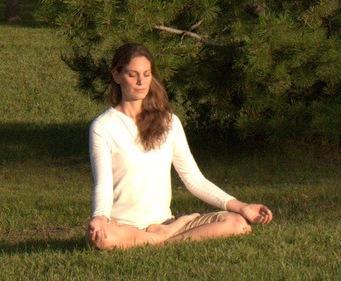
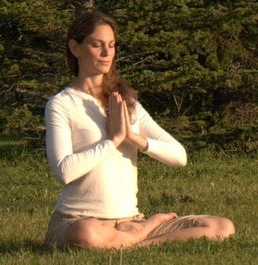
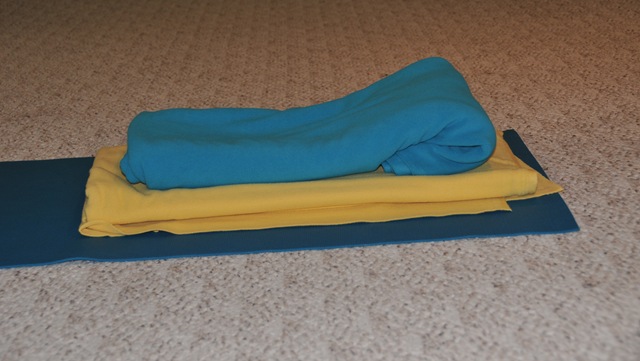
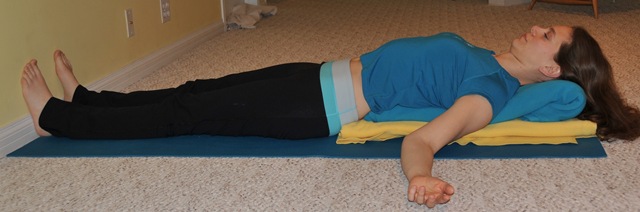
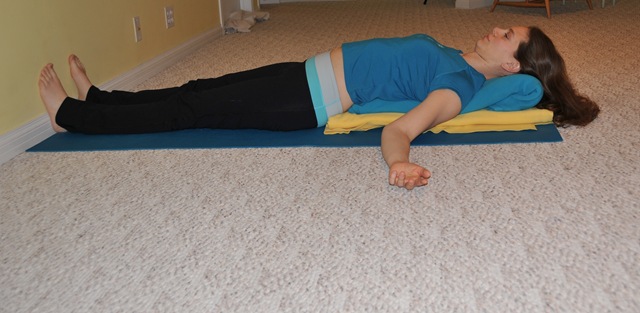
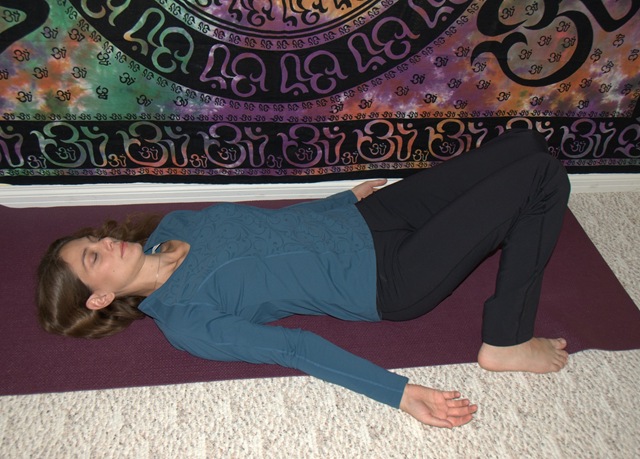

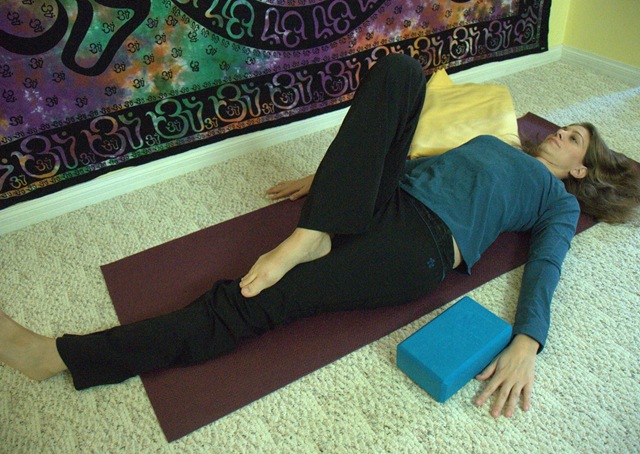
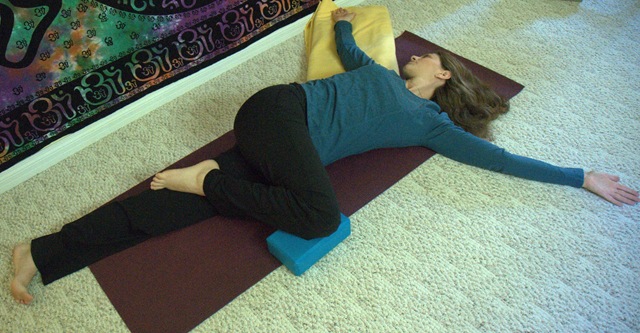
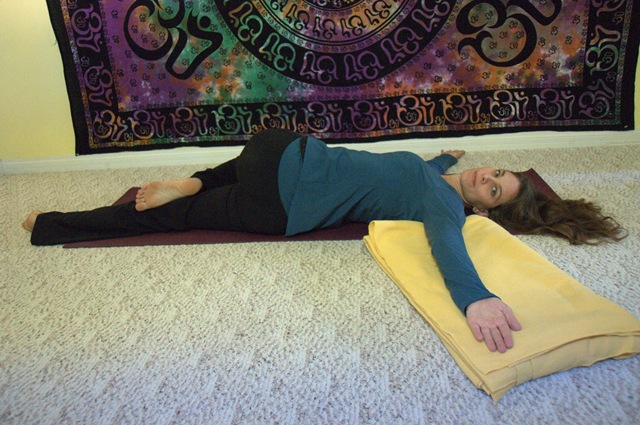
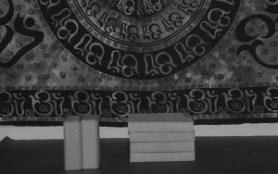
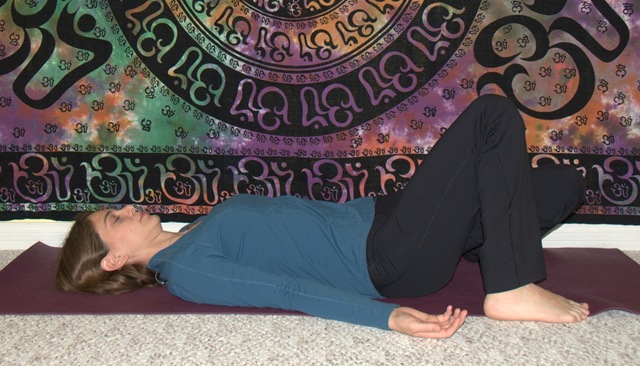
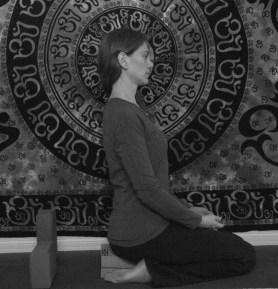 Check that there is no discomfort on your knees or hips. If there is, then adjust your height so that you are sitting on more blankets, or blocks. Take time to experiment with the amount of blocks or blankets you are using, so you are completely comfortable. If you are not comfortable in this position, follow along with steps 2 – 5 sitting in a chair.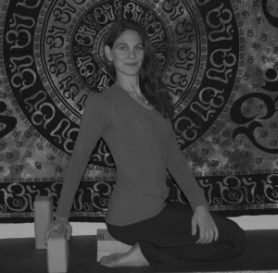
 I am starting with this post a series of articles dedicated to the teachings that




 Luthar.com
You must be logged in to post a comment.