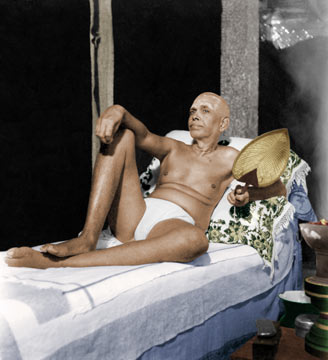
Bhagavan Ramana Reclining

Bhagavan Ramana Reclining


Picture of Arunachala by Gabriele Ebert
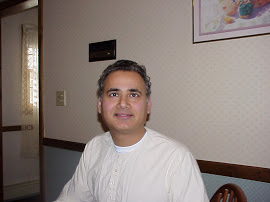
I received some excellent and thoughtful comments from Sada-Ji (Dr. K. Sadananda) on the article, “The Method of Deep Body Relaxation.” These comments with minor editing are given below. Thank you Sada-Ji.
Editor
**************************************
Comments on “Deep Body Relaxation” By Dr. K. Sadananda
Harshaiji – PraNAms
Here are some comments on your article about “Deep Body Relaxation.”
Shava Asana is always done at the end of yoga exercises as a relaxation technique.
However, I would like to add a word of caution for going from Shava to Shiva – that is lying down and doing regular meditation. There is a good reason why the Lotus Posture (Padmaasan) is universally recommended for meditation. Shava or the corpse is considered as inauspicious while Shiva means auspiciousness itself
Also, it should be kept in mind that when one is in meditation, the normal breathing process will slow down and mind becomes quiet and calm. These conditions are conducive for the mind to go to sleep easily. Hence for most meditators, sleep becomes a big hurdle to overcome. Therefore, the Shava Asana (Corpse pose lying on the floor or bed) may not be useful for meditation.
Sleep is the opposite of meditation. In meditation one attempts to stay conscious and awake. That is one of the reasons why meditation is not recommended in the night when the mind is tired, but in the early mornings when the mind is fresh and vibrant. The period around 4am in the morning is considered best for meditation (it is called brahma muhurtham in Sanskrit).
The Lotus posture insures that the person who is meditating does not fall forward. Sitting in the lotus pose is recommended so that the student is stable and firm on the ground.
Yogic texts all advise that the vertebral column and the neck be in straight line (without going into the details of kundalini aspects).
This way one can stay in meditation for any length of time – awake-vigilant and meditative. Indeed that is the state of mind in meditation to be aimed at.
As Harshaji states, one can easily go to sleep in the Shava Asana. In fact one should go to sleep in that pose thinking of the Lord.
Then one can have Yoga Nidra and blissful heavenly relaxation.
But for Vedantic inquiry, the mind has to be sharp. Our own experience is that we can read stories or popular magazines lying down. But for any serious work, we have to sit up and study. Knowledge can take place only when the mind is sharp. Then, what to talk about the subtlest knowledge about one’s own self. So the recommendation is to do meditation in the sitting pose – if you can.
If you cannot, then alternate poses are recommended.
Now the question is whether one should do meditation in a lying down pose such as Shava Asana! Of course you can do! It is like a drunkard who went to ask a priest, “Sir, can I drink while praying to God?” Priest of course said, “No. you should not drink while praying.”
The drunkard thought about this and re-framed his question and asked again, “Sir, can I pray while drinking?” “Yes of course”, said the priest. So, can one meditate while lying down? The answer is, “of course you can meditate any time and anywhere.” No problem!
Should one lie down to meditate? No, that is not advisable. Sri Krishna himself recommends sitting down and meditating in the 6th Chapter of Bhagavad Gita.
Of course for relaxation – what Harshaji says is correct.
But For a meditator, relaxation is not the goal, but it is only a by-product. Vedantic meditation requires a calm, quiet, and vigilant mind. It is a subtle inquiry within of the very essence of life itself. If relaxation becomes a goal, the meditative mind will only long for that. If the mind settles in that groove, it will not be ready to take a higher flight.
Deep Body Relaxation
I used to teach Yoga, relaxation, and meditation classes in the late 1970s in NYC to make a living. After the Hatha Yoga sequence was done, students were led through a guided deep body relaxation in Shava Asana (the corpse pose where everyone lies down and relaxes each part of the body). After teaching Yoga for many years, it seemed to me that for most students, the guided meditation while lying down was absolutely the most favorite part of the class. Many students would continue in the Shava Asana for half an hour or more after the class was over. Some became so relaxed that they would fall asleep.
Over the years, I have come to feel that the best posture for meditation is not always the Lotus posture as many Yoga traditions claim, but simply lying down in Shava Asana. The sleeping posture is universal and sets no high bar for anyone to have to overcome. Therefore, it is the perfect posture for attaining Self-Realization. In fact, we know that the Sage of Arunachala, Sri Ramana Maharshi, became Self-Realized in that posture.
Deep body relaxation can be mastered by anyone slowly and many people experience physical, mental, and spiritual benefits from it. I have personally found it to be immensely useful in a variety of ways. My own experience of the Heart, Oneness of Being, came when I was very young. I had been meditating for many hours, sitting straight in a cross-legged position, and my back was aching and so tired that I lay down to rest for a few minutes. I was not trying to relax but it was in that resting posture that this deep conscious relaxation came over me and the truth of being revealed itself with complete clarity.
The Relaxation Method
The relaxation method I use is easy. I simply bring attention to every part of the body and consciously experience it and relax it. I start with each individual toe on both feet and relax these. I also focus on the bottom of the feet and relax these. Then I focus on the upper feet and relax these. Then I come to the ankles and relax these and keep moving up to the legs and other parts of the body and so on.
Sometimes, in my teaching, I have combined this method with visualization of white light filling the different parts of the body from the head to the toes. This is a beautiful way to use the intelligence and imaginative and visual faculty of the mind to fill the body with deep relaxation and to create a sanctuary of peace for one self.
Of course, Hatha Yoga is important for many people and sitting in meditation with a straight spine has its own health and energy oriented benefits. Meditation on energy centers along the spine is facilitated by sitting straight in a cross-legged posture. It also helps in doing certain pranayama and deep breathing exercises.
For many people who cannot sit cross- legged, sitting straight on a chair with support for the elbows is helpful. There are many ways to meditate. The main thing is that one should be comfortable in one’s posture.
Sincere Practice Leads to Self-Discovery
One, who is serious about meditation and relaxation and practices it with sincerity, slowly discovers what postures and exercises are the most helpful for her/his body and mind. Each person is unique in terms of what they find useful.
Finding a good yoga teacher is much easier today than it was when I was teaching. Back in the 1970s, in the U.S. and other Western countries, Yoga was popular only in big cities like Manhattan and Los Angles among the actors and actresses and the elite. But now it has become more mainstream and one can find Yoga classes in virtually any city.
Deep body relaxation seems to be universally attractive to people, because it allows for letting go of accumulated tension. It is easy to learn and do and with practice and experience becomes natural.
(This article was originally published in HarshaSatsangh E- Magazine Volume I)
Twenty years ago, the kundalini-shakti erupted within myself. Since I didn’t have a clue about what had happened to me and I experienced some quite unpleasant side-effects of this awakening, I had to start looking for remedies in order to ease some of the discomfort. This has been a more or less ongoing process ever since and although I can’t say that all problems have disappeared, some interesting insights and experiences have been gained and that alone has made the journey very worthwhile.
The effects on the psyche, and on one’s ideas about oneself and life in general, that come about by an active kundalini are far reaching indeed, but this transformation seems to have a price attached to it. In my case I’ve been plagued by a variety of symptoms ranging from physical health problems to bouts of anxiety and depression. As a result, I’ve been led to closely observe and attempt to harmonize the innermost workings and mechanics of my mind and body using a variety of techniques and methods such as tai-chi, hatha-yoga and various types of meditation.
To Do Something, or Nothing?
As much as I agree with the advaitin conclusion about reality being One and the concept of separate personalities acting within reality being illusion, I think that the often heard claim that nothing actually needs to be done in order to realise this, will probably only be true for a small number of persons. I find that, in the case of myself at least, ( and I do believe this would apply to most people) some work on oneself using “techniques” is necessary in order to be able to experience this fundamental unity of life. The main reason appears to me to be the deeply ingrained innate patterns of body and mind that prevent a true perception of life.The experience of duality seems to be hardwired into our being by nature, so that definite changes have to take place within the perceiving mechanism of ourselves before reality becomes non-dualistic.
Doing Mantras
One spiritual discipline that seems to work on many different levels to me has been the practice of silent mantra-repetition. One of the first deeper insights or realisations came to me after I had practiced mantra-meditation for some time as taught by Transcendental Meditation or TM.
I was sitting in meditation one day, quietly repeating the mantra in thought, growing progressively calmer and relaxed as a result as the normal rush and clutter of the mind began to recede. Suddenly it hit hit me like bolt of lightning – I was inside “myself”, calmly watching the mantra repeating itself, calmly observing whatever thought-processes still passed through the mind – BUT I WASN’T THE MIND – I WAS THE OBSERVER OBSERVING THE MIND! An enormous sense of relief and gratitude welled up inside as I in one instant understood that everything that really created problems in my life was either mind or body, but that the real “I” was the silent and totally unaffected observer, calmly watching everything come and go.
This was a very profound experience since it in one instant blew the identification with the mind to bits. I had always somehow thought that I actually WAS the constant inner monologue and imagery playing themselves out and now this was shown to be not true at all in a perfectly clear way. I was actually the screen on which the mind with its movies was projected – but I wasn’t the images themselves.
I soon realised however that this was just a glimpse into the deeper reality, but not at all a permanent state of enlightened being – a lot of practice or sadhana seems to be necessary in order to shift the focus of consciousness for good, even though the awakened kundalini is a kind of automatic process in this direction.
After this, mantra practice began to intrigue me more and more, especially since I also became very sensitive to sound and music in particular. I would experience rushes of kundalini moving up the spine, followed by ecstatically blissful sensations listening to certain types of music or certain combinations of notes and harmonies.
I then began to experiment with other mantras and other methods of repetition. Whereas the TM-meditation in essence uses the mantra to really allow oneself to let go and relax completely, I found that mantra-repetition could also be used to direct and control the mind in a more active and deliberately focused manner. This is more in line with yoga as taught in the tradition of Patanjali. The aim here is the sharp one-pointedness of mind which prevents the scattering of thoughts in all directions and keeps the mind from going outwards through the senses. It seems to me that it really is this rapid movement of the mind, constantly going back and forth between the falsely perceived separateness of oneself and the equally false “outer world,” that is one of the main obstacles to just calmly resting in the unity of world and self.
Technically, what seems to happen is that the focusing of thought focuses energy and this usually leads to an increased flow of kundalini along the spine. When this burst of energy reaches the highest region of the brain, shifts in consciousness occur, spiritual insights come drifting into awareness automatically and there can be general feelings of being in tune with the All and Everything.
For this slightly different way of repeating, I try to focus with as much attention as I can on the sound and the shape of the mantra until it gradually fills out the whole space of the mind . I’ve often also done this walking outside with eyes open until sometimes the boundaries between inner world of thought and feeling and outer world of objects have more or less vanished and everything is just felt to be one big continuum with different degrees of density. If the focus is strong enough, it’s as if the whole outer universe becomes filled with the sound of the mantra as well and it can then seem as if the cosmos begins to chant back, which is quite nice.
Mantras and Side-Effects
Other interesting and spiritually useful side-effects of doing mantras over time, is that one develops an increased awareness of the shape and direction thoughts take and it becomes much easier to voluntarily direct the mind and consciously choose which thoughts to follow and which are best left to fade away by themselves. Since I firmly believe that thought determines action and ultimately the realities and life circumstances we find ourselves in, this aspect of mantra-practice is probably quite powerful, in terms of shaping the future and destiny.
A third approach to mantra-recitation that I’ve used with some results is more in line with tantric teachings which focus on the harmonising and control of the different chakras or areas of consciousness. This is also done in order to understand and streamline the physical and mental aspects of life, which manifest through the lower chakras. Mind and body in essence seem to be permutations and combinations of the 5 basic elements – ether or the space in which manifestation takes place, air, fire, water and then earth as the solid end-result. In tantra-speak all this is the Shakti side of the great universal polarity and is ruled by the kundalini. In order to experience Shiva, the silently witnessing consciousness, or the real, permanent “I” of non-duality, kundalini needs to be moved out from the lower chakras and made to unite with top area of the brain. Before that can happen in a steady and permanent manner, the chakras or in essence the elements they represent, need to be purified and strengthened. In practice, I find this to be quite demanding to say the least, but this is probably mainly due to my own shortcomings!
Mantra and Tantra
In the tantric traditions mantras have been used for this purification and as far as my humble experimentation has allowed me to see, the ancient yogis very much knew what they were doing. Reciting the mantra “Lam” at the end of the spine for instance, strengthens, energizes, opens and expands the root-chakra. Now, why is this so, why “Lam” and not any other sound ? I don’t know, but for me, taking the pragmatic approach of “if it works, use it” is the best one. Traditionally, the explanation given is that the ancient seers and rishis were given the various mantras in direct communion with the Infinite and I can go along with that. One day the science of physics will probably find out that the universe really is sound in motion and that different densities of matter correspond to different frequencies of sound. Humans, being part of the universe, will then correspondingly be found to also consist of various frequencies of sound and I believe great advances in the healing sciences will be made because of these discoveries.So, essentially, mantras can be seen to be a method of tuning the mind, body and awareness, harmonising frequencies, directing consciousness towards the light, instead of letting it scatter.
May all beings find peace and happiness.
About the Author:
Michael Hortling is currently residing in Germany. He combines mantra yoga practice with playing the guitar and creating music. As a youngster, he had a mystical experience while watching the Aurora Borealis drape itself across the Northern sky and this may have caused his energies to be like the Aurora, flowing, generously gentle and glowing brightly.
Seed Mantras
The following seed mantras are taken from the classic texts and schools of Kundalini Yoga based in Hinduism. The mantras used in Jainism and Buddhism are somewhat different. Traditionally, Kundalini Yoga in India was only practiced under the guidance of a Kundalini adept. The same advice holds today. Having a good teacher is essential in avoiding mental and physical challenges that may come with the practice of Kundalini Yoga.
LAM – the root (lessons related to the material world)
VAM – the belly (lessons related to sexuality, work and physical desire)
RAM – the solar plexus (lessons related to ego, personality, self-esteem)
YAM – the heart (lessons related to love, forgiveness and compassion)
HAM – the throat (lessons related to will and self expression)
OM – the brow (lessons related to mind, intuition, insight and wisdom)
All Sound – the crown (lessons related to spirituality) this is your quiet and all sounds around you. The sound of your being….
In my view, stress and career management are central to the lives of most people. Given below are some tips that make sense to me. Take them with good humor and make up some of your own.
1. Make friends with your Boss. Research shows that bosses can be a major source of workplace stress. According to Professor Hochwater and his doctoral students, who conducted a study on bad bosses, “Employees stuck in an abusive relationship experienced more exhaustion, job tension, nervousness, depressed mood and mistrust.”
2. Laughing can break up an otherwise negative mental state. Humor plays a big role in our seeing things in perspective. Keep a book of good jokes handy at the workplace and flip through it now and then. Make friends with funny co-workers. They are all around you. When things get difficult, go talk to them and ask them to make you laugh. You will be surprised at the comedic talent available in the workplace. From personal experience, after my most uncontrollable laughs, I have felt much better and rejuvenated afterwards.
3. Assess your skills and abilities in terms of long term goals. Enhance these further through education and training, particularly if your company is willing to pay for it. Many organizations these days pay for their employees getting an advanced degree like an MBA. Higher level of training and education will allow you take charge of your career and make you more marketable. People experience more anxiety and stress when they feel things are not in their control and that they have limited options.
4. Be alert to opportunities around you both within and outside the workplace and take advantage of them. Bite only as much as you can chew and do not say yes to too many workplace projects. It will scatter your energy and leave you exhausted. However, success in fewer and even smaller projects will give you confidence as well as an enhanced professional reputation among your co-workers.
5. Take one or two 10 minutes walks during the workday. I find short walks, or even climbing up and down the stairs several times during the day to be very useful for me. Lunch is a good time for walking. You can walk outside in the fresh air and then come back and eat a light, balanced, and nutritious lunch. I wish I could take my own advice more often! When I can though, I find that walking and deep yogic breathing can do wonders for creativity, energy level, and the general elevation of mood.
6. I find that drinking enough plain water during the workday is very helpful to me. If I drink too much tea or coffee as substitutes for water, it creates physiological symptoms of stress such as sweaty palms, increased heart rate, and just more nervous energy than I need. Students who drink too much tea and coffee before their classes risk the increased possibility of having to take a bathroom break when critical topics are being discussed.
7. Calm and center yourself through meditation and/or prayer several times a day. This is particularly helpful before important presentations and meetings. People listen better, speak more clearly, and in general communicate much more effectively when they are relaxed. If you do not have your own office and feel strange about closing your eyes publicly and just sitting quietly, then go to the bathroom, close the door, and sit there for a few minutes.
What Should Organizations Do?
Organizations should consider incorporating meditation training in their employee wellness programs. Employees who meditate regularly experience greater job satisfaction, improved job performance, are more alert and active, self confident, less irritable, more cooperative with others, and enjoy a greater level of accomplishment.
Organizations also need to be sensitive to the fact that personal problems (divorce, illness in the family, death of a loved one, or other trauma) can temporarily influence the workplace behavior of otherwise good employees. Giving leaves of absence or personals days off with pay to manage such situations can help to reduce the employee stress level.
My Personal Belief
In my view, relaxation and meditation training can be particularly helpful in coping with difficult life or workplace issues. It has been documented in a variety of research settings that meditation and prayer can lead to significant decreases in psychological distress, health complaints, insomnia, and smoking. There is a lot of good information available on stress management in the research literature as well as in popular magazines, and of course on the Internet. Like everything else, one has to be an intelligent consumer of knowledge and use common sense.
Strive and thrive! Do well, and be the best that you can be and leave the rest to the higher power.
Good luck!
Gabriele Ebert is a well known German librarian, scholar, and a painter. For information on her books and German translations, please go to the bottom of the article. Gabriele is a long term member of HarshaSatsangh and has been active in Sri Ramana groups for many years. She has served as an inspiration and a role model for all of us with her dedication to the interfaith approach to spirituality. Because Gabriele’s native tongue is German, I did some minor editing on this article and accept responsibility for any mistakes which may have occurred because of that. Fortunately, in this medium, mistakes can easily be corrected once we become aware of them. Enjoy the article. The Icons are stunning and beautiful! Thank you Gabriele for your generous sharing.
The Personal Story

Eleousa (Mother of Mercy)
It was 16 years ago that I discovered icon painting as a spiritual path. This door opened when at one Christmas eve my mother presented me with an icon of the Theothokos (Mother of God). Looking at it I was sure that I would start to paint as well. I felt drawn to painting and through it discovered a creative spiritual path.
Over the years I found different teachers for learning the technique – and later the Jesus prayer (see below).
Icons are enjoyed by many. Most of all it is wonderful if an icon can find its home in a meditation-room or prayer-edge, where it is dedicated to its original meaning.

This icon of St. John of the Cross has found its home in the prayer room of the Carmelite Monastery in Dolgellau, Wales.

“Christ the Vine” is in the meditation-room the Christian Zen-center in Eintürnen, Germany.
Icons – What Are They?

“Sad Christ”
The home of the icons is the Christian Orthodox Church. The earliest icons were painted in the 6th century in Byzantium. From there they later came to Russia and to all other Orthodox countries. Most of the earliest icons have been lost. The oldest collection of icons is found at St. Catherine’s Monastery on Sinai.
Icons play an important role in the liturgical service, and also in the public life and of course for the individual. An icon is a steady companion from the cradle to the grave.
The icons are not individual paintings but rather in the individual. These painting come through the individual by spiritual grace and in a sense the painter does not count. So icons are normally not signed to claim ownership. Outwardly, icons follow fixed patterns and change of the pattern is only possible in a rather limited way as they are real “copies” of the one reality, which represents itself in various pictures and stories.
Icons are of great help for concentration, for prayer, for awareness of the ever-presence of Christ or Mary or the Saints. They are called “Gates to Heaven” or “Windows to Eternity”. If you look at an icon in candle-light, the gold and painting shines in an unearthly magic. The faces are serene, the gestures and colors are full of meaning. The more one dives into this world, the more one becomes drawn into it and the mind becomes silent.
The Path of the Painter
“To paint and to pray are the same thing” (Balthus)

Jesus with animals
I have always felt that this kind of painting is by special grace and has something in it which can’t be compared with other types of paintings. This kind of painting is devotion and prayer – prayer with the brush, so to say. So this “doing” needs not only much outer care, but also inner care. One should not do it with a distracted or unclean mind. According to tradition it is good to have a prayer before starting. The inner attitude should be giving up the sense of doership – which reminds one of Sri Ramana’s instruction as well. It can also be seen as an exercise for just being an instrument of God, which should become a reality in all our actions.
The Jesus-prayer (also known as the Prayer of the Heart) is a short prayer, which should be continuously repeated. The words are: “Jesus Christ, Son of God, have mercy on me!”
Like the icons, it comes from the Orthodox church. The prayer also can be shortened to just the call: “Jesus Christ!” or whatever one prefers. One repeats it as often as one can. In some way it can be compared with nama-japa. It helps to silence the mind and lead it to one thought. With practice it starts to become automatic (self-doing) and sinks into the heart. Yet at each stage it always stays as a prayer in you. The Philokalia – a collection of texts on the Jesus-prayer – can be a wonderful companion on this path. It is recommended in “The Way of a Pilgrim”, which most know who practice the Prayer of the Heart.
It is not so long ago that I discovered – or better re-discovered – the Jesus-prayer when reading this book (“The Way of a Pilgrim”). I felt immediately that this is a wonderful complement to the icon-painting as well. From the tradition of the icon-painters I have found out that my main-model, the famous Russian icon painter Andrej Rubljow must have practiced it. I am sure that his icons reflect it and speak through it.
Icons Interfaith
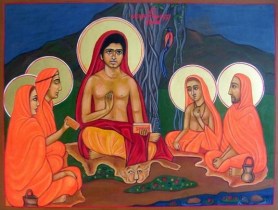
“Dakshinamurti-Ramana” – an icon dedicated to Sri Ramana Maharshi
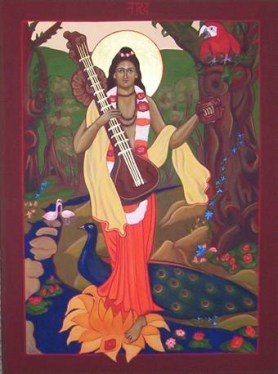
Icon of Narada
Mostly I am painting icons in the Christian tradition. Yet it happened that this Ramana-icon was painted and also some icons of Narada (the bhakti-musician). When being in Tiruvannamalai in 2003 and seeing the paintings in one of the shines of the Arunachaleswara-temple I was reminded of the icon-painting. Also there seems to be a connection to the Buddhist paintings as well. I am sure that the same thing has found its expressions in many religions.
If you would like to see more and get information about the technical side of this kind of painting you can visit:
http://icons.interfaith.googlepages.com/
Gabriele
***********
Gabriele Ebert lives in Germany and works as a librarian.
Recent Books by Gabriele Ebert are:
Ramana Maharshi: Sein Leben, Stuttgart, 2003
Sadhu Arunachala: Erinnerungen eines Sadhus, Berlin, 2004 (German transl.)
Both books are available at amazon.de and can be ordered from each German book-shop.




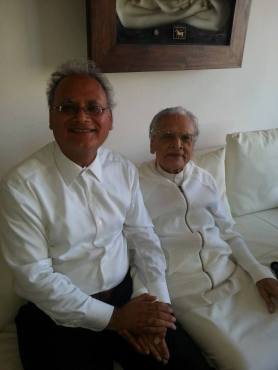
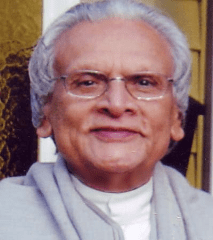
Gurudev Sri Chitrabhanu
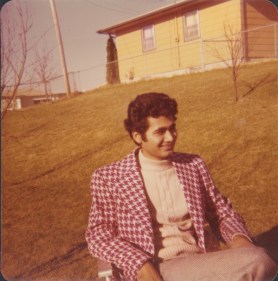
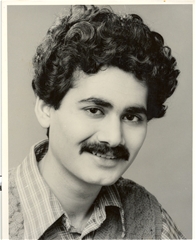
The Author at 21-22 studying With Sri Chitrabhanu-Ji
 Luthar.com
You must be logged in to post a comment.