Harsha's avatar

Speaking to Chitrabhanu-ji and Pramoda-ji: By Dr. Harsh K. Luthar

Dear Friends:

Last weekend, I had a phone conversation with my teacher Gurudev Chitrabhanu-ji and his wife Pramoda-ji. Both Gurudev Chitrabhanu-ji and Pramoda-ji are on the forefront spreading the message of Ahimsa and how the philosophy of nonviolence brings our focus on caring for all living life, human, animal, plant life, and the environment itself.

Speaking with Chitrabhanu-ji and his wife reminded me of the years I spent with my teacher at the Jain Meditation Center in NYC the late 1970s up to 1980-81.

I used to go to Jain Meditation Center to listen to Gurudev speak. Often, I would stay around after the lecture and listen to the questions asked of Gurudev.  At the end, many people got in a line to ask Gurudev more personal questions. These questions typically focused on health issues, self-improvement, meditation methods, mantras, and at times psychic phenomena. Some of the questions seemed quite far out to me.

I  was very young then and perhaps immature in some ways. I used to sit so closely to Gurudev that I could hear all the questions and answers from the people in the line who came up one by one. When someone tried to whisper the question, I leaned even closer to hear it. Once in a while, someone would give me the look. But I stayed very close so I could hear everything that Gurudev was saying. I felt as if every word of my teacher was a gem and that I did not want to miss a single thing. I did not really think about other people’s privacy. It was an open space in the hall so I felt it was not an issue. Gurudev always looked at me and smiled and never said anything either.

After the talk at the Meditation Center, I often walked Gurudev and Pramoda-ji back to their apartment. During that time, I was able to speak to my teacher freely and ask him any questions on meditation, yoga, chakras, mantras, etc. Gurudev was happy to accommodate and answer me. I learned much from what he said during those conversations and have written about some of the incidents. Those were fun times.

One time when I was walking with Gurudev, another of his students was with us. This person had serious questions about some dreams about dying that he had been having. I could not help but hear the conversation. In that particular case, however, Gurudev said to me in Hindi that he wanted me to run and get something from a store that was on the street and gave me some money. It was unusual because Gurudev and I typically spoke in English (with some sprinkling of Hindi) and he had never sent me on an errand during our walk.

I quickly surmised that Gurudev wanted privacy for this conversation. Of course, I ran to the store to get the food item and then caught up with Gurudev and the other person as they had gone a block ahead of me. By that time, they were done talking and the student was leaving. After that, Gurudev and I walked rest of the way back to Gurudev’s apartment. I bowed to my teacher and said my Namaste and walked back to the place where I could catch the subway to go home.

In those days I was completely immersed in yoga and meditation. In fact, I made my living teaching yoga at the New York Health and Racquet club in NYC in Midtown Manhattan.  Many of the famous actors, actresses, newscasters, and politicians of the 1970s who worked nearbye came to that club.

I remember Mary Tyler Moore, Hope Lange, Gracie Jones, Bella Abzug, Tom Brokaw, and some people from Saturday Night Live coming to the club. There were many others but my memory has now faded. I remember Mary Tyler Moore came to my Yoga class a couple of times. She was very respectful, it seemed to me, of Eastern philosophies and yoga. Hope Lange used to be there often during the time that I was there and she was very unassuming and congenial. I also remember Congress Woman Bella Abzug come to the club. She had a relaxed wonderful style and was easy to talk to. She seemed genuinely interested in yoga and a few times we spoke about reincarnation. She must have known Shirly MacLaine because I recall Bella mentioning her in the context of our conversations on reincarnation. This was all back in 1978-1980 time range.

Most of my free time when I was not teaching yoga at the New York Health and Racquet Club, I spent in contemplation and meditation at my house which I shared with other meditators who were also students of my teacher.

Coming back to my conversation last weekend, I spoke to Pramoda-ji first and we had a nice talk. She will be sending me some articles that she has written to be published on the Luthar.com website. In fact, I have already published one. I will have the webmaster upload another one soon.  Pramoda-ji is the President of the Jain International Meditation Center in Mumbai (Bombay). She is also on the on the Board of Directors for PETA in India (People For Ethical Treatments of Animals).  She works for the Reverence for Life Society and for Beauty without Cruelty which promote animal welfare and the vegetarian way of life worldwide. Promada-ji has also authored a number of books – Foods of Earth; Tastes of Heaven – Jain Symbols – To Light One Candle (co-authored with Clare Rosenfield) – The Book of Compassion (coauthored with Pravin K. Shah). More on Pramoda-ji can be found on the Jain Meditation website.

http://www.jainmeditation.org/pages/pramoda.html

I had a wonderful talk with Gurudev Chitrabhanu after I spoke to Pramoda-ji.  His voice was relaxed and fresh and just as I remember it all the past times that I have spoken to him. He told me that Clare Rosenfield and her husband were there visiting them at the time. Gurudev knows the closeness I feel with the Sage of Arunachala, Sri Ramana Maharshi. He mentioned his visit to Sri Ramana when he was 19 years old. That was one year before he became a Jain Monk.

During the conversation,  Gurudev Chitrabhanu recited some poetry in Hindi to me and then explained it as well several times in different ways. The essence of the poem was that the real meeting is the meeting of the minds and the body only serves as the context. His message was that whether I am able to be in someone’s physical presence is not important but it is the meeting of the minds and the Heart connection that is the most central. Sri Ramana has said exactly the same thing in one of his conversations.

Gurudev will be leaving for India soon. I will be communicating with Chitrabhanu-ji and Pramoda-ji again in the near future. Mamata-ji, Chitrabhanu-ji’s secretary, has done a wonderful job of keeping us all informed of all the different international events taking place with Gurudev and Pramoda-ji playing a leadership role.

Harsha


Harsha's avatar

HarshaSatsangh is the New Luthar.com Site

Dear Friends:

Over the summer of 2008, we were able to integrate the old HarshaSatsangh.com (Love-Yoga.com) site with the Luthar.com blog. The new blog site is hosted now on a VPS which gives more flexibility in terms of the wordpress plugins. The site is still being fine tuned and now managed by a talented webmaster. If you see any problems, please let me know.

My primary reason for moving from wordpress.com was that they were starting to show ads on the site. I did not feel comfortable with that at all.

It was not easy to move from wordpress.com. But the present site is a definite improvement in terms of design and the infrastructure. The site went down the first day when I announced it probably because of large traffic within a short time. That would have never happened at wordpress.com. So, there is this weakness. If it happens again, I may have to upgrade the VPS to the next level or think of other options. We will see. So far so good.

A number of scholars and writers will continue to contribute to the site. If you are interested in writing on any topics of interest to you, please let me know.

Enjoy.

Namaste and love to all friends in the HarshaSatsangh and  Advaitiin communities. Wait, let us broaden this to the whole world. We are the world!

Harsha

Harsha's avatar

Sri Ramana and Modern Day Gurus: By Dr. Harsh K. Luthar

I am very often asked by Sri Bhagavan’s devotees what I feel about modern day teachers and gurus.

I don’t know how to answer that question well. I do not personally know most of these teachers.

For sincere devotees of Bhagavan, I recommend that they seek company of other devotees. Sri Ramana exemplified all that is best in a living Self-Realized sage in his actions. The Sage of Arunachala was liberal, tolerant, compassionate, and for him all faiths and religions had a place and were welcomed with an open heart.

Sri Ramana lived as a recluse first but when a community formed around him, his life became public. He was in the spotlight 24 hours a day, seven days a week for over 50 years. During all this time, he lived as an ascetic and served all those who came to him and answered their questions.

The devotees know that Sri Bhagavan was so alert to everyone’s welfare and that included not just people but also animals and plants and trees in his vicinity. He refused to eat unless enough was available for everyone. I recall that when the plague came to that area of India, one of the devotees came down with it. Others wanted to leave that devotee and for Bhagavan to come with them. They assured Bhagavan that food would be periodically sent to the afflicted individual. Sri Ramana told them that they could go but he would stay with the devotee who had come down with the dreaded disease and continue to serve him.

How many modern day teachers and gurus can do that?

Like many saints, Bhagavan led a pure and spotless life.

Sometimes, people write me very moving letters detailing how they have had experiences with certain gurus thought to be enlightened who actually were very abusive. Given below is an answer I recently gave to someone after hearing their heart breaking account.

Thank you for your sharing. I am so glad to know that you came through OK what must have been some very difficult experiences and trying times in your spiritual journey. Surely Bhagavan was with you all the way.

I have known of many gurus not treating their students well and have written about it in the following article.

I know that many teachers use Sri Ramana to bolster themselves but are not able to live up to the teaching. Once someone asked Sri Ramana the fate of a false guru and those who followed that guru. Sri Ramana said, “each according to their merit.”

People should be very alert to gurus who are on power trips and abusive of others. If someone asked me for advice about any guru, I would counsel them to be patient and cautious before deciding to follow someone. Those of us who have Bhagavan as our Sat Guru have nothing to gain by following anyone else.

My teacher Chitrabhanu-ji used to visit Sri Ramana in his teenage years. Chitrabhanu-ji told me, when I was very young, to follow Sri Ramana and study the teachings of the Sage of Arunachala.

It was like magic for me. That was back in 1978 when I rediscovered my connection with Bhagavan. I have never felt the need to follow any other guru.

But each to their own. This is the way of the life and we can only wish the best for others. If someone asks me about gurus, Sri Ramana is the only one I can point to.

Yours in Bhagavan

Harsha's avatar

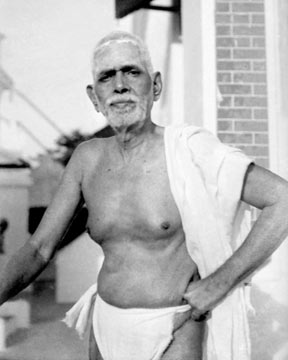
Sri Bhagavan Ramana Maharshi: By Dr. Harsh K. Luthar

You are the Self

Sri Ramana used to say that just like an elephant wakes up upon seeing a lion in the dream, in the same way the devotee wakes up to his own True Reality, upon seeing the Guru in this world dream.

Once someone asked Sri Ramana how could one’s own True Guru be found. The Sage replied, “By intense meditation”. Another time Sri Ramana said that the disciple is more important than the Guru. If the disciple has faith, even a stone can serve as the Guru.

This morning, I am being visited by Dr. Lakshyan Schanzer, a well known Master Yoga Teacher and a Psychologist. Lakshyan has studied with a number of famous Gurus over the last 30 years including Swami Satchitananda, who found the community of Yogaville near Charlottesville, VA, here in the U.S. Lakshyan lived in that community for a while and also visited India to study with other teachers as well.

After Lakshyan and I talk this morning, we will go to an Indian Restaurant called “Rasoi” in Providence, RI for an “all you can eat” vegetarian lunch Buffet. I skipped breakfast in preparation for that anticipated big meal.

I should mention that Lakshyan has studied not only with the traditional Gurus but also spent time with Nisargadatta Maharaj. His account of the visit to Maharaj is on the following url.

https://luthar.com/2007/02/10/meeting-nisargadatta-maharaj-by-dr-lakshyan-schanzer/

Of course, I respect all Gurus and traditions. But my mind has naturally been inclined to Sri Ramana since I was very young. It just does not go in any other direction at all. Ammachi used to come here and many people lined up on their knees to get a hug from her. I respected these devotees but for me such things have absolutely no meaning. I accept that for others, it may be a lifetime experience. No matter how well known or famous or charismatic a Guru, I never feel any attraction other than for the person as a human being.

Sri Ramana is truly like the bright afternoon Sun at the height of the summer for the devotees. When the Sun itself is shining, one does not need candle lights to see the way.

Well, no words can be adequate. Sri Ramana’s devotees from the early 1900s to 1950 were some of the greatest saints and yogis of the day. But they were content to stay in Bhagavan’s shadow. Having found the Heart, one remains in the Heart as the Heart. No other place to go or be except where one already is and what one already is.

Namaste and love to all

Harsha's avatar

Rajindar S. Luthar (1926-2004): By Harsh K. Luthar

The Last Summer

Yesterday was the fourth anniversary of my father Rajindar S. Luthar passing away. I think about him often. He was my guide and counselor.

Like me, my father was a professor. His area was mathematics which he loved teaching. He was also a scholar and enjoyed publishing. He founded a Math Journal called Delta which eventually merged with another journal. He was an excellent cook and enjoyed entertaining at parties. He was truly multidimensional in his views and approach to life. We talked about everything. Politics, food, men and women, money, religion, gurus, relationships, marriage, sex. No topic was off bounds.

My father was not much into visiting temples or holy places but was a staunch Hindu and exemplified all that is best and noble in Hinduism. He often had dreams of various saints, rishis, munis, and gurus and loved to describe them in minute detail to me. He told me that he dreamt about Jesus Christ as well. I asked him how he knew it was Jesus.

“I just knew”, he said, in a matter of fact way.

Throughout his life, my father was very psychic. One time when he was in America, he dreamt that someone very close to him was being electrocuted. He immediately woke up and started praying. The person in the dream was my younger four-year-old brother who had been caught in live electric wires when we (our cousins and us) were playing on the roof of my uncle’s shop in India.

That was back in 1964. From 10,000 miles away, my father had dreamt that someone he loved was in trouble and acted to send his protection and prayers. My brother was very badly burned all over his skin but miraculously survived. He gradually recovered fully and the burn marks on his body eventually disappeared.

Although he was a mathematics professor, my father enjoyed talking about philosophy and religion. He was tolerant and liberal and accepting of all people but at the same time full of humor; sometimes irreverent humor, about religion and gurus. He told me many stories about fake gurus in India. “All these gurus, pretending to be so holy and pious; they love women, sex, and money!” He would say and then have a hearty laugh.

Because I was interested in all those things having to do with yoga and meditation, my father often cautioned me about gurus when I was a teenager and suggested that I be very careful. “Many gurus even like young boys!” he said to me many times in warning. My father left no stone unturned doing his best to make me aware of the realities of life when I was young. Sometimes I thought he was way too overprotective and controlling.

When I reached 30, I started thinking that he did his duty as a father well. When I reached 40, I realized that he was much wiser than I thought. By the time he passed away, I had realized that he was a sage.

Now, I remember my father as kind and generous with smiling eyes. At times, he had a huge all consuming laughter that drew others in. I miss him every day.

Harsha's avatar

Easy And Natural Is The Way: By Dr. Harsh K. Luthar

Dear Friends,

Sahaj in Sanskrit means easy and natural.

There is saying in Hindi, “Sahaj pake so meetha hoy.”

It means that easy and natural cooking of food leads it to taste sweet.

It is something like the English saying that soup that simmers slowly or the cake that is baked slowly tastes best in the end.

These are metaphors for life. When we do something with care and love, the results are better. Sometimes we even say that, “this is a labor of love.” When we love what we do, it does not feel like work.

Everything has its nature. When we are true to our own nature, an easy authenticity takes over. Then we are not concerned about impressing others nor worried about how others are judging us.

Nature is showing us the way. Seasons are coming and going. Flowers bloom and then wither. We are breathing in and breathing out.

Easy and natural is the way. Anything else makes it appear that somewhere other than where you already are, is more attractive.

All of these teachings of self-improvement, yoga, meditation methods, breathing techniques might have some meaning to someone at some point in time. Truly these are concepts only for the mind to struggle with. The whole premise of these teachings is that you are not OK just the way you are. Ultimately, it is the most splendid nonsense.

To be easy and natural is the way.

How does one become easy and natural? How does one follow the natural path?

To be easy and natural is, well, it is to be easy and natural; and it is best because it is easy and natural.

It is so simple is it not?

What is not easy and natural will produce inner and outer conflicts. We already have enough of those. Of course, for some people making more conflicts may be easy and natural. In that case, go for it (and you can’t help it anyway).

Being easy and natural in awareness allows for the recognition of the Self, which by its very nature is easy being, natural, and wholeness of awareness aware of itself as its own bliss. There is no good way to express it.

My teacher Chitrabhanu-ji (who was a monk for 29 years) once told me that as a young monk he was very very strict with himself. “Sometimes, too much judgment and discipline can be a form of violence with oneself”, he told me.

Another time when we were talking about gurus, I mentioned many names to him and asked his views of them.

Chitrabhanu-ji knew most of the gurus personally. These included J. Krishnamurti, Swami Muktananda, Sri Chinmoy, Rajneesh (Osho), Swami Chidananda, Swami Rama, Swami Satchitananda, etc.

Those gurus whom he liked, Chitrabhanu-ji would only say, “He is a good man.”

One day Chitrabhanu-ji said to me, “You should never follow a guru.” I looked at him puzzled (because he was my guru, you see).

He smiled and said in his thick Bombay accent, “What if the guru goes crazy and tells you to do strange and crazy and weird things…” I had a good hearty laugh! He added, “that does happen you know….”.  I laughed even harder.

Well, it does happen you know.

As Sri Ramana never tired of saying,… the only true guru is your Heart, your own Self.

So wise sages tell the advanced aspirants to be perfectly natural. Make the effort, if natural. Follow a teaching if it is easy and makes sense.

If something makes no sense, there is no point in following it. So what if it is considered the supreme teaching and so on by someone well known. For all you know, what the supreme and well known people say could all be manure.

Think about it. What do they really know? How can they really know? What can anyone really and truly know?

So rest, if it feels natural to rest. Watch the spiritual parade pass by and not be moved by any teaching. Or join the parade and sing your song.

Your nature will make you act in a certain way. That is why you can be at perfect ease.

Self-remembrance, Awareness aware of itself, Self-abidance, all of these mean the same.

Easy and natural is simply being aware of one’s innate wakefulness through the winds of emotions, colors of life, and changes in scenery.

To the extent one can grasp it, simply remain aware and if you become conscious of some intangible cloud of unknowing which you cannot go through, become comfortable with it, stay with it, and breathe it in and out.

If you meditate on this and become aware, it will dawn on you with clarity. You will see.

Easy and natural is the way.

Namaste

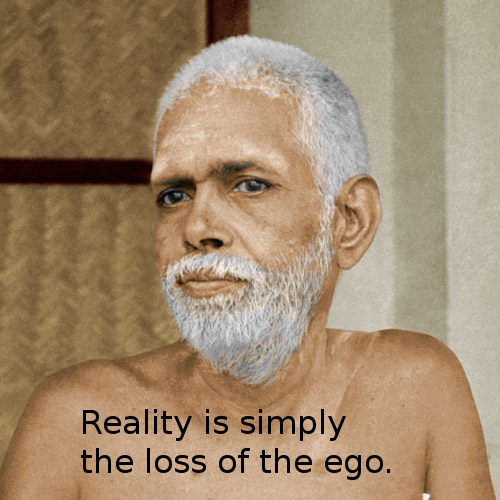
Reality is simply loss of ego - Ramana

Harsha's avatar

Bhagavad Gita and the Sattvic Diet: By Dr. Harsh K. Luthar

img_2719

Sri Ramana used to say that of all the yogic rules and regulations, the best one is taking of Sattvic foods in moderate quantities. This view is consistent with that expressed in the Bhagavad Gita, and indeed most of the Yoga Shastras.

The logic is that since food consumed has a major effect on the body and the mind, a Sattvic diet should be adhered to in order to enhance both the health of the body as well as purity, strength, and calmness of the mind. An agitated person will find it difficult to sit quietly and meditate.

A disciplined and one pointed mind is an aid to ones’ learning and education as well as having success in business and other worldly affairs. A clear, pure, and a reflective mind is, of course, essential to self-enquiry which leads to Self-Realization.

The question then becomes, “What is a Sattvic diet? What is the authority for saying that certain foods are Sattvic and lead to good health, mental clarity, poise, and spiritual advancement, while other foods do not?”

There is much yogic literature on this topic and also some disagreement among experts depending on their school of thought and background. Since most Hindus generally accept the Bhagavad Gita as the final word, I will refer to that as my primary source on the Sattvic diet.

We should keep in mind that Sri Krishna, who speaks in the Bhagavad Gita with complete spiritual authority, is also considered the model of exceptional and abundant physical health and perfect mental poise. He is depicted in the ancient writings as slim, active, energetic, graceful, and attractive.

In the Bhagavad Gita, Sri Krishna demonstrates profound insight into not just the spiritual nature, but also human nature and physical nature. By inference, Sri Krishna’s words on food and the Sattvic diet carry much weight for those who study the Bhagavad Gita.

What foods should one minimize according to the Bhagavad Gita?

In Chapter 17 (verses 8, 9, 10), Sri Krishna makes clear the type of foods to be avoided by those who seek good physical and mental health, worldly success, and progress on the spiritual path.

According to the Bhagavad Gita, foods which are too bitter, sour, salty, pungent, dry, and hot can lead to pain, distress, and disease of the body. Further, Sri Krishna says that foods cooked more than three hours before being eaten, foods which are tasteless, stale, putrid, decomposed and unclean should be avoided by spiritual aspirants and those who seek excellent physical and mental health.

What foods should be eaten according to the Bhagavad Gita?

In Bhagavad Gita, Sri Krishna states, “If one offers Me with love and devotion a leaf, a flower, fruit, or water, I will accept it:” (Bg.9.26). To me this seems to suggest that Sri Krishna is sanctioning a diet based on leaves and fruits and water as the best one for spiritual growth. I am no scholar on the Bhagavad Gita, but my liberal interpretation of this verse would be that the Sattvic diet is generally plant based and includes all or most vegetables, fruits, legumes, grains, nuts, seeds, etc.

Because Sri Krishna gave cows sacred status similar to that of a human mother and favored raw butter for personal consumption as a child, one could reasonably argue that dairy products (such as yogurt, milk, kefir, lassi, sour cream, etc.) belong to the Sattvic food category.

Many yogis hold the view, however, that dairy products can only be considered Sattvic if these are obtained respecting the cows and goats who are shown kindness, love, and humane treatment. According to the principle of Ahimsa (nonviolence), any food procured through violence to living beings cannot be considered Sattvic.

Yogic Sattvic Diets

Some yogis that I have met favor a completely raw vegetarian diet with a primary focus on sprouted grains and beans (such as Garbanzo, Blackeyed peas, etc.) along with raw fruits and vegetables. Their diet is essentially vegan and contains no animal products. However, modern science teaches us that since vitamin B12 is missing from a purely vegan diet, supplementation is necessary.

A number of medical and scholarly references can be found on this issue on the web.

Other yogis have felt that a raw vegetarian diet is too limiting and include cooked foods as well as dairy products (milk, yogurt, lassi, etc.) in their diet. This diet, known as the lacto-vegetarian diet, is probably the most wide spread among Indian Hindus and Jains.

A few well known yogis have also traditionally included not only dairy but also eggs and egg products in their otherwise vegetarian diet. This is known as the lacto-ovo vegetarian diet.

Although very few Indian yogis include any kind of fish, fowl, or meat in their food, there are exceptions. Buddhist yogis, for example Dalai Lama, do eat meat. A few Hindu yogis also eat meat pointing out that some ancient scriptures sanction meat eating for certain religious rituals.

For most Hindu and Jain yogis, however, there is no convincing argument for eating meat if one wishes to uphold the supreme principle of Ahimsa and follow the philosophy of nonviolence.

What is the best Sattvic Diet?

The general answer from my study is that foods which cause the body to gain health and for the mind to be calm and peaceful constitute the Sattvic diet. To some extent, this requires knowing the needs of one’s own body and being sensitive to the effects of various foods on our system. Foods which are very suitable and nutritious for one person may not be right for another. Common sense and wisdom are the essential ingredients to find the best Sattvic diet for yourself.

In terms of particular foods to be eaten, the yogis and sages have answered this question, but the answers have different variations. One common element of a yogic Sattvic diet is that it is primarily vegetarian. This is true at least for Hindu and Jain yogis.

Within the broad framework of vegetarianism, a number of dietary systems are possible where certain foods are included and some are excluded. In the most liberal vegetarian diets, eggs and dairy products are included. Some people include dairy in their vegetarian diet but not eggs. Some include eggs but not dairy. In the most strict vegetarian diet, eggs and milk are excluded. Supplementation through certain vitamins is needed in such diets, according to modern medical opinion.

My personal experiences

Having experimented with a variety of diets for decades, I feel that a vegetarian diet can be healthy or unhealthy depending on many factors. For example, if I am a lacto-vegetarian and eat too many pizza pieces, the feeling of discomfort is likely to follow. In fact, after experimenting with eating pizzas thousands of times in my younger days, I am fairly certain that this is indeed true. I believe this also holds if one eats bucket loads of ice cream on a frequent basis. So, is lacto-vegetarian diet healthy? It depends on how lacto you are and how often you go lacto with heavy fat and fried lacto foods!

The point is that a vegetarian diet can be either healthy or unhealthy depending on the nature of food eaten as well as the quantity of food consumed.

In Chapter 6, verse 16, Sri Krishna specifically emphasizes moderation in eating and sleeping. He states, “There is no possibility of ones’ becoming a yogi, O Arjuna, if one eats too much, or eats too little, sleeps too much or does not sleep enough.”

Clearly, overconsumption of food leads to problems and one can logically conclude that the quantity of food consumed is probably an important element in a diet being considered Sattvic.

Sattvic diet is also a matter of degree. Some diets may be very Sattvic, while others may be moderately Sattvic.

Finally, the thoughts and the emotional balance while eating the food have an effect on our system. This is why in many religions, prayers and showing of gratitude for the food being consumed is offered. This mental state while eating helps the diet become more Sattvic.

What does it all mean?

So what does it all mean and what are the lessons from Bhagavad Gita and our discussion of the Sattvic diet? Here is what I think some of the lessons are. See if you agree.

1. Whatsoever you eat, eat in moderation.

2. Educate yourself on proper nutrition, be sensitive to your body, and see what foods work for you.

3. Emphasize fresh vegetables and fruits and eat a diet which is mostly plant-based.

4. Do not eat foods which are too salty, bitter, or have gone stale and putrid.

5. Regardless of the food being eaten, eat with gratitude, prayerful attitude, and with mental poise.

6. Chew the food carefully and taste it deeply without rushing.

There are literally thousands of great sources on the web and hundreds of books in stores to help you educate yourself on the Bhagavad Gita, vegetarianism, and nutrition. Go do some research and find out for yourself!

That’s my homespun wisdom for today. Like Captain Planet used to say, “The Power is yours!”

Given below are some pictures of plant based dishes that I made keeping the principles of Sattvic food in mind. Wishing you all abundant physical, mental, and spiritual health. Namaste.

Harsha's avatar

Verizon’s XV6800: Still In The Testing Phase? By Dr. Harsh K. Luthar

By Dr. Harsh K. Luthar

On July 22, 2007 I asked the question “Where is Verizon’s XV6800”?

Given the rumors of its imminent release since December 2006, http://www.engadgetmobile.com/2006/12/22/verizon-utstarcom-xv6800-the-cdma-tytn-lives/, it is a question many Verizon subscribers who want to upgrade from their XV6700 have been asking.

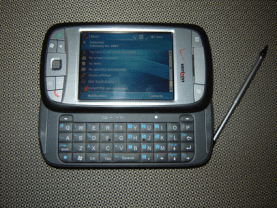
Here is an early picture claiming to be that of Verizon’s XV6800. It came out on engadgetmobile website in February of 2007 along with a second review of the XV6800 features.

image

http://www.engadgetmobile.com/2007/02/09/verizon-xv6800-in-the-flesh/

I followed up my original post on XV6700 and XV6800 by doing an analysis of the legal battle between Qualcomm and Broadcom and its potential impact on Verizon’s introduction of XV6800.

My second post ended on an optimistic note for the early release date of XV6800 based on the recent agreement between Verizon and Broadcom. The Verizon-Broadcom agreement apparently frees Verizon to offer PDA/Cell phones like the XV6800 which have a Qualcomm chip that allegedly infringes on Broadcom patents.

However, there is still no word on the XV6800 release date even after the Verizon-Broadcom agreement which should have ended the mystery.

I talked again to a Verizon’s customer service rep on July 27 on the phone and asked for information on the upcoming XV6800 which is meant to be a successor to their XV6700 model. The Verizon customer rep said that he knew nothing about any XV6800 and they usually get only one week notice before a new product comes out.

I pointed out to the rep that there had already been many discussions on the web of the XV6800 since the Christmas season of 2006 and so it was surprising that no official information is available from Verizon.

The Verizon rep was sympathetic and suggested that I go to phonescoop.com.

When I went to phonescoop.com and looked around I found this. The site has good information about the XV6800 but most of it is common knowledge by now to the XV6800 fans. The phonescoop site does not seem to mention that the XV6800 has 256 megabytes of RAM which is a substantial increase from XV6700.

The next day, on July 28, I visited a large Verizon store hoping for a face to face conversation with an experienced Verizon employee.

After about 10 minutes of waiting, a well dressed gentleman came up to me and said that he could help me. Not losing any time, I asked him whether he could tell me the release date for the XV6800 as I was waiting to buy it.

Here is the Whole Conversation about XV6800.

Luthar: I am very interested in buying the XV6800 when it comes out. Can you tell me anything about its release date.

Verizon Rep (VR): No, I can’t do that. I don’t have that information.

Luthar: Do you think it would be out in two or three weeks? Would that be a good estimate?

VR: I don’t know. I just don’t know.

Seeing that he was not denying the very existence of the XV6800, I asked, “What could be taking so long for Verizon to bring it out..”

VR: Testing. Verizon has to thoroughly test a phone before they release it. If a phone does not pass the tests, it does not get released.

Luthar: What tests, what kind of tests are done on these phones. Is this not just an upgrade from the XV6700? What new testing are they doing?

VR: Tests, tests, tests have to be done to make sure everything works…..

Luthar: OK. Does Verizon have another phone like the XV6800 with a sliding keyboard? I guess what I am asking is that whether there is another phone that I can buy that has some of the XV6800 features. Would one of the Blackberry phones be a similar phone or a close competitor for it for Verizon customers who are waiting for an upgrade to XV6800?

VR: Not really. We don’t have any other phones at this time with the sliding keyboard except the XV6700. Would you like to look at that?

Luthar: I have already looked at that and tried it out. I don’t want to get the XV6700 if the XV6800 is going to be released in a few weeks.

VR: I don’t know when that phone will be released. It could be a few months. It all depends on the testing. If a phone fails the test, it does not get released.

Luthar: A few months? There have been pictures of it all over the web since December of 2006.

VR: I can’t really tell you anything more than I have.

***********************************************

The conversation left me wondering again what the Verizon strategy is.

When Apple was getting ready to release the iPhone, a big media sensation was created that ultimately had people waiting in lines for the iPhone.

Verizon’s strategy seems to be just the opposite and there has not been any official word on the XV6800 release date at all.

For many business people and professors who use windows applications including Microsoft Outlook to synchronize to their Exchange servers at work, the XV6800 is a far superior choice to the iPhone.

Could Verizon be missing an opportunity to market the XV6800 to its customers who could potentially be switching to Sprint to get its twin the Sprint Mogul (PPC-6800)?

Time will tell what is going on behind the scenes with the Verizon XV6800 and how this fits in with the Verizon’s strategy for marketing this device which many consider to have much more utility for their work than the Apple’s iPhone.

Harsha's avatar

Verizon’s XV 6800 Mystery Solved? By Dr. Harsh K. Luthar

After thinking some more about why Verizon’s XV 6800 model has not yet made it to the stores, I did some research and realized that there is a logical reason for it. Evidently the problem seems to have now been solved by Verizon and so the XV 6800 should be available in the near future.

Here is the story, I think.

It seems that Verizon’s XV 6800 had been delayed due to the ongoing legal dispute between Qualcomm and Broadcom.

How?

The Facts Follow:

The International Trade Commission (ITC) ruled last month (June 2007) that Qualcomm’s 3G chips infringe on certain Broadcom patents.

Therefore, the ITC banned future imports of products to the US containing Qualcomm chips.

Guess what? High Tech Computer Corporation (HTC) which is the manufacturer of Verizon’s cutting edge XV 6800 and its twin the Sprint Mogul PPC-6800 powers the 6800 models with a Qualcomm chip (MSM7500)!

So, although the legal dispute over patents started with Qualcomm and Broadcom, a number of chip users of Qualcomm in the U.S. are affected including Verizon and Sprint! This explains the delay in the XV 6800. Some of the information on this can be found at the following url.

http://www.newsfactor.com/story.xhtml?story_id=020001YSTWYW

After the ITC issued its ruling to ban the import of Qualcomm chip based products that infringe on Broadcom’s patents, the reaction by Verizon was predictable and an unhappy one. Verizon and its customers would definitely be hurt severely by such a ban.

The ITC ruling was appealed to President Bush who has the right to affirm, modify, or veto the ruling within 60 days.

Verizon, however, apparently had second thoughts about waiting for President Bush to make a decision on the Qualcomm case. In a brilliant tactical move, Verizon, bypassing its partner Qualcomm, reached an agreement directly with Broadcom that would allow Verizon to sell products containing Qualcomm chips even though these chips may infringe on Broadcom patents.

The Verizon-Broadcom agreement stipulates that Verizon Wireless will pay Broadcom $6 per phone (up to $200 million) for rights to the patent in question.

http://techpolicysummit.blogs.com/tech_policy_summit/intellectual_property/index.html

This will allow Verizon to start selling their latest phones containing Qualcomm chips in the U.S. market without fear of Broadcom as Broadcom has now been paid off. In order to make Broadcom even happier, Verizon also agreed to stop helping Qualcomm to overturn the ITC ban on Qualcomm’s chips. Verizon wireless broke the story on its website last week.

http://news.vzw.com/news/2007/07/pr2007-07-19j.html

Broadcom is clearly the victor here. However, Verizon also won. For Verizon, 200 million dollars to Broadcom is a small price to continue having the dominant role in the wireless market.

Qualcomm, of course, is probably not too happy right now, although publicly they are saying that they like the Broadcom and Verizon agreement. Perhaps Qualcomm likes it because at least the products containing their chips can now be sold in the U.S. by Verizon. According to Qualcomm, serious issues of public policy and public interest still remain regarding this case and need to be addressed. At least, that’s what they say on their website.

http://www.qualcomm.com/press/releases/2007/070719_views_verizon_wireless.html

OK. That’s it and hope it makes sense. I am not sure I got everything right or covered. If there are mistakes in my connecting the dots, please let me know.

Good luck to Verizon, Qualcomm, and Broadcom. Let’s get the XV 6800 out now to the Verizon customers!

Harsha's avatar

Where is Verizon’s XV 6800? By Dr. Harsh K. Luthar

image

By Dr. Harsh K. Luthar

Reports have been coming since the 2006 Christmas/New year shopping season that Verizon was getting ready to release the successor to their popular PDA/Cellphone XV 6700.

Verizon’s XV 6700 generally got good reviews when it came out. It’s sliding keyboard and being able to connect to the web made it an early favorite for business people, professors, students, and those who want to stay at the cutting edge of technology.

image

The built in windows mobile 5.0 operating system along with Windows applications and the ability to synchronize Outlook with Microsoft Exchange are some of the attractive features of Verizon’s XV 6700.

Where is Verizon’s XV 6800?

It is now almost the end of July 2007 and I have not seen XV 6800 at any Verizon store. Verizon salespeople and those working in the customer service department have been unable to say anything about the XV 6800 since December of 2006 when the news/rumors started surfacing that its release as the successor of XV 6700 was imminent.

Sprint Mogul (PPC-6800)

Sprint, on the other hand, has released the successor to their PPC 6700. The Sprint PPC 6800 is called the Mogul.

image

See the review of the Spring Mogul at the following url.

http://gizmodo.com/gadgets/htc-brings-the-goods/the-sprint-mogul-is-here-269646.php

Verizon customers whose one or two year contract with the company has expired are left scratching their head. What should they do? Stay with Verizon’s network or jump ship. The release date for Verizon’s XV 6800 has been shrouded in mystery.

Verizon XV 6800 Release Date

About a week ago, in a casual conversation, a Verizon employee mentioned to me that the Verizon technicians or salespeople were getting some training materials on the XV 6800. If I heard correctly, perhaps Verizon is getting ready to make the big announcement.

Regardless of when the release date is for Verizon’s XV 6800, I would love to know Verizon’s strategic reasons for giving little information to customers prior to this much awaited product coming out.