Harsha's avatar

AUGUST SUMMER by Alan Jacobs

4451_82082183499_623773499_1895176_3431332_n

 August summer from awesome meadow sings,
I never tire from commune with my Soul,
In silent wood’s enchanted shades, where broad
Shafts of sunlight fall in full accord
Gilding leaves of green. The dusty lane’s my goal,
Which ends where the higher path begins.
The air, the fair horizon, crystal springs,
Rosy lips of dawn, which one yearns to kiss
This hem of heaven’s robe in joyful bliss.
Come! let’s gaze at gleaming stars so chaste
They shine on Mother Earth through veils with haste.
Let pine trees imparting scented breath
Waft you along to life away from death,
To sapphire streams and fields of emerald green.
Let Nature’s radiance reveal her sheen
On the solemn beauty of your furrowed brow.
True love latent in your heart, here and now,
Will ever grace this sacred, monumental hour.


6020_96980203499_623773499_2115239_393586_n
       Photos courtesy of Trina Kavanagh

Harsha's avatar

Gururaj Ananda Yogi

ifsu092I am starting with this post a series of articles dedicated to the teachings that Gururaj Ananda Yogi gave to his chelas during 12 years. Gururaj Ananda Yogi (birth name: Purushottam Narsinhram Valodia, 3 March 1932, Gujarat, India – died 17 May 1988, Cape Town, South Africa) was the founder of International Foundation of Spiritual Unfoldment.  Gururaj Ananda Yogi started giving satsang in his living room at his home in South Africa and during 1974 with the help of some of his disciples in South Africa started The South African Meditation Society and The International Foundation for Spiritual Unfoldment. Since that date to 1988 when he passed away he traveled around the world lecturing and had chelas in several countries, particularly Spain, USA and the UK countries he visited twice a year since he started teaching. His teachings were recorded and more than 3,000 hours of recorded material are now being edited and transcribed to be published in different media. Some of his disciples are today teachng meditation and there are centers in many parts of the world. I actually dedicate myself full time to teach meditation and maintain meditation centers in Barcelona, Asturias, Bilbao and Madrid

Knowledge

From Duality to Non-Duality

Meditacion Barcelona

Emptiness
Just emptiness
Nothing to do
Nowhere to go
Pulsating life that laughs back at
This bunch of impressions
That feel have an existence by its own
But just exist as impressions of this singled drop of water

Moment by moment, this form performs within this universal dance
And carries images to this singled drop of water
Still pictures of a film
Only existing in its own maya of mind
Clouds that hide the sun
Amazing sun that created those very same clouds

At times merging into my soul – a moment of perfection,
Vain seems my learning, and incomplete
The world’s knowledge gathered through its lifetime,
Impressions of what is, moment by moment, gathered in this singled drop of water

At this moment into timelessness, spacelessness, perfection;
Vain is all art, cults, creeds, humanity – all incomplete
Illusions! Mirages! And then that moment lapses:
The limitless becomes limited, the infinite becomes finite
The machinery of mind starts rolling in its own disturbance –
Surveying the din and tumult of the world,
All existence becomes real and time is divided;
The mind gropes in its own darkness
Real becomes the multitude stricken with pain –
All striving for wealth or fame or a dreamed “forever” prince.

A strive for perfection – the aim of all – consciously or unconsciously.
Knowledge and art and cults and creeds are not in vain
In the world of mind; toiling, striving, fathoming –
Seeking completeness from without
Images gathered reflected back in this moment of delight.

I that have tasted of infinity
Fight with my own mind at times, to loosen its bonds,
And try to seek within
For another moment of eternity

Through these series of articles I will be introducing the teachings of Gururaj Ananda Yogi from which many will be able to benefit

Namaste

Harsha's avatar

Mangal Aaratee

Unsaved_Production 1


  Mangal Aaratee Priyaa Preetam kee, Mangal Preeti Reeti Doun kee
Blessed prayer of lover and Beloved,  Blessed  is the ritual of their union

Mangal Kaanti Hansani Dasanan kee, Mangal murlee Beena Dhun kee
Blessed is the light of His swanlike splendour,  Blessed is the sweet rhythm of His flute

Mangal Banik Tribhangee Hari kee, Mangal Sevaa Sab Sahachar kee
Blessed Hari, omnipresent knower of three worlds,  Blessed friend of all devotees

 Mangal Sir Chandrikaa Mukut kee, Mangal Chabi Nainan mein At kee
Blessed is His crown made of Peacock’s feather,  Blessed is His glance enslaving my eyes

Mangal Chataa Phabee ang ang kee, Mangal Gaur Syaam Ras Rang kee
Blessed beauty of ornaments on Shyam’s body, Blessed are  Krishna’s activities

 Mangal Ali kati peyare pat kee, Mangal Chitvan Naagar nat kee
Blessed love of Sweetheart Govinda , Blessed allure of that magical Krishna

Mangal Shobhaa kamal Nain kee, Mangal Maadhuri Mridul Bain kee

Blessed is the beauty of His lotus eyes,  Blessed the soft and sweet voice of His Flute

 Mangal Vrinidaavan Mag At kee, Mangal Kreedan Jamunaa Tat kee
Blessed husband of Vrindavan’s gopis,  Blessed is His play on the river  banks of Jamuna

Mangal Charan Arun Taruvan kee, Mangal Karani Bhagati hari Jan kee
Blessed are His Feet under the Arun tree of the forest ,  Blessed Lord, remover of obstacles

 Mangal Jugal Priyaa Bhavaan kee, Mangal Shree Raadha Jeevan kee
Blessed pair of beautiful charming lovers,  Blessed Hari, who is the life of Radha


To listen to this Aaratee, click on the link…
http://www.youtube.com/watch?v=oeOEW5bJUHE

Mangala Aaratee1

Arati (also called  Aarti, ãrti, arathi) is performed in many Hindu temples first thing in the morning, and several times throughout the day, with a final arati in the evening.  Arati is also performed after services such as puja.  The word is derived from the syllables “Aa” which means towards, and “rati” which means the highest love for God.  As the devotee waves the lamp before the deity, the frame of mind should be one of surrender and devotion, a prayer to Divinity to annihilate the ego in the flames of the sacred fire such that complete surrender is achieved.

At the Chinmaya Mission temple where I worship, following the monthly group chanting of the Vishnu Sahasranama, we sing a beautiful Mangal Aaratee to Lord Krishna, which glorifies the love of the Lord for Radha and for the gopis, thus symbolically glorifying the Oneness of the Paramatma and the atma as embodied in the living jiva.  Something about this Aaratee drew me the first time I heard it even though I could not really make out the melody as a small group of devotees sang it one night.  I later found out the language was Hindi, and one afternoon I drove over to the Temple to request Swamiji to sing it for me so I could record it and learn the melody for the monthly chanting.  Like some other bhajans have done, this one took me over and I needed to take it a step further, learning it on my harmonium and memorizing the words.  Still, something was missing…I knew the general gist of the words had to do with auspiciousness and Lord Krishna and Shrimata Radarani, but I wanted more. I wanted to know what all the words meant.

So, I posted photos of my lyric sheet in the Roman transliteration as well as the Hindi devanagari script on my Facebook page, asking my FB friends if anyone there knew Hindi and might be able to help.  One of them did, Shravanji Manyan, and he was kind enough to make an effort which was a great help.  But, there were some lines which he felt he could not quite make out and so there will still some missing lines.  I knew that if the Lord wanted it to happen, He would make it happen.  In the meantime, believing that God helps those who help themselves, I resolved to bring it to a few people at the Mission who I thought might be able to help. 

Before I had to do that, I met a woman who joined into a small yoga group which meets at the Mission.  When our practice was finished for the morning, I pulled it out for my friend, Lakshmi, to ask for her help.  Then a new member of our yoga group, Pushpa, spoke up to say that she had a Masters in Hindi and would be glad to take a look. We started to go over some words, when she offered to take it home.  As a result, she sent me an in depth translation, word for word in a prose like fashion, which gave me a thorough outline of the lyrics. But this was not in the flow of the poetic beauty which graced the Hindi lines. I rewrote the translation to at least try to give it more of a poetic feel and do poetic justice to the author, unknown, who penned these beautiful lines.  Both the lyrics and the melody are hauntingly beautiful, taking you to the banks of the Jamuna River where Radha, the human soul and Krishna, Divinity gracing us in human form,  eternally re-enact the holy union of  His Divinity within the human soul.  There is a certain mystery and wonder to the dance of the lover and the Beloved.  May we all know the glories of this sacred Oneness.

ln004

 Samo’ham sarvabhooteshu na me dweshyo’sti na priyah;
Ye bhajanti tu maam bhaktyaa mayi te teshu chaapyaham
Unsaved_Production 1 

 I look upon all creatures equally,
none are less dear to Me and none more dear.
But those who worship Me with love and affection live in Me,
I come to life in them.” 

BG 9.29

 ln004

Offered with gratitude to the Lotus Feet of my Guru, Shri Krishna, and my Lord, Shri Krishna,
for His Grace in allowing me to love Him, to serve Him and to be His devotee,
and for gifting me with Swami Siddhanandaji in my life, in so many ways,
and in particular, for singing this beautiful work of art for me to learn,
for Shravanji Manyan and for Pushpaji Gairola,
both of whom generously offered their time and talent in
reviewing the lyrics and translating them for me,
and for the unknown poet who wrote this Aaratee through His Grace.
It is said that the Vedas have no author since
they derive from Divinity itself…so too with this Aaratee.


Harsha's avatar

Professor Michael Roberto’s Blog

Professor Michael Roberto is a colleague of mine at Bryant University in the Management Department.

Professor Michael Roberto

Mike has been developing an excellent blog on leadership, decision making, and competitive strategy. The url is given below.

http://michael-roberto.blogspot.com/

The blog is a valued resource for students and professors of business and the general reader interested in management and leadership issues.

Mike’s comments on the current business environment cover a broad range of topics and I find them to be very insightful and informative. Mike has written two books on the topic of leaders and leadership. His latest book is called, “Know What You Don’t Know” and is widely available through various outlets like Amazon.

Mike is a great person to talk to and very helpful to his colleagues in sharing his knowledge of teaching and learning methodologies. Mike will be part of a workshop at the Academy of Management in Chicago (August 7-11) that will teach other professors about how to start a blog and use it for educational and professional purposes.

I am very enthusiastic about finding professors and colleagues like Mike who are writing and sharing on the Internet on business and management issues. I love reading Professor Michael Roberto’s blog and highly recommend it to others.

Harsh K. Luthar

Harsha's avatar

Jai Guru Omkara

ln054

In honor of the Guru, which can only be Him
manifesting in His infinite mercy to remove the illusion of duality.

It may be external, or it may be from within,
opening the chambers of the heart and
unlocking the shackles of the mind such that nothing remains but Him,
everywhere manifesting in everything.  Chitta chora!  Chitta chora!

Steal it all and give me only one thing in return…your holy Presence. 
May I prostrate before you eternally
in gratitude for the Grace you have brought into my life.


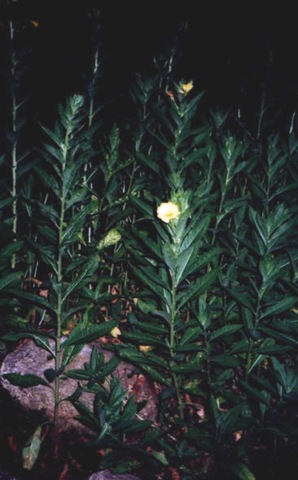
PRIMROSEw - Copy


Puja Prayer

Like a flower
In complete surrender
I come unto You

Petal by petal
In complete surrender
I come unto You

Like the primrose heralds the spring
In complete surrender
I come unto You

May my actions be right
In complete surrender
I come unto You

May I walk in thy Light
In complete surrender
I come unto You

Earth, my altar… I, my offering
In complete surrender
I come unto You

May my only reward
Be complete surrender
Unto You


 ln054


The Self manifests externally as Guru when occasion arises;
otherwise He is always within, doing the needful.
From Talks with Ramana Maharshi, 12th June, 1937 Talk 426.

To view Adi Shankaracharya’s Guru Ashtakam… 

Harsha's avatar

Caves of Arunachala – July 2009 Update

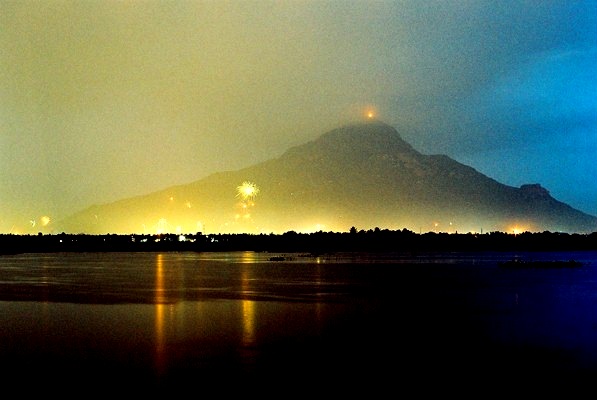
As we have been exploring Arunachala we keep finding ‘caves,’ some already widely known, and some not. A friend suggested that we write about these caves in a blog. This seems a good idea, so here it is. We can find nothing like this available now.

Our exploration of Arunachala is ongoing, and any additional caves we find will be added. In this post 1 refer to other postings where there are more photos and information about each of the caves.

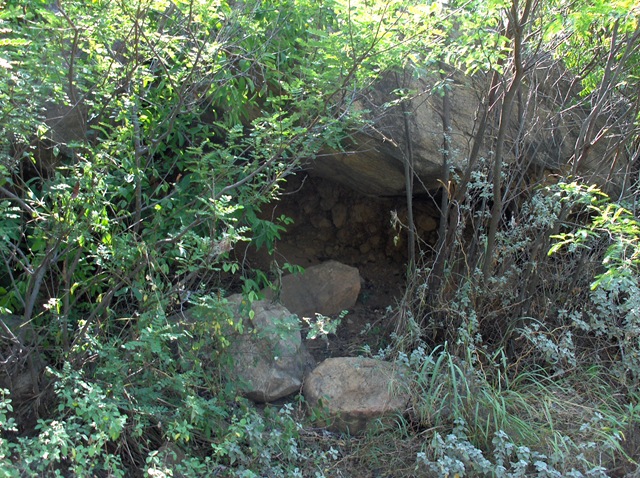
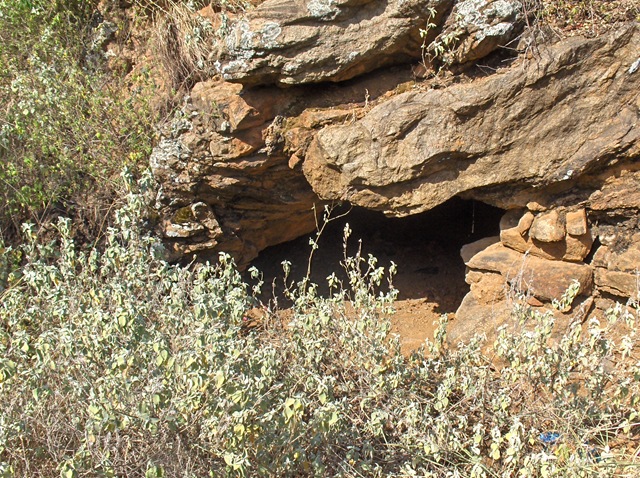
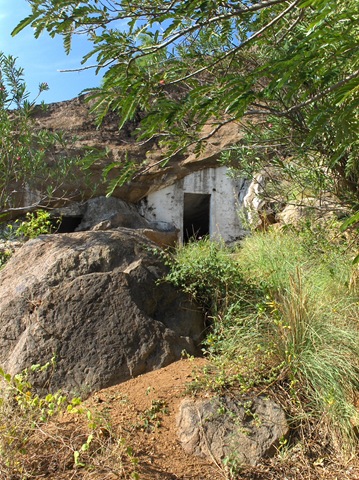
I put quotes around the first instance of ‘caves’ since what are called caves here are often nothing more than a sheltered space under a big rock. Some are natural, some have been improved, usually by building walls and adding a concrete floor. Some have been dug out under rocks.

Is some cases the individual caves already have names in common use. Most do not, and for the purposes of this listing I am calling these by names that I made up. If other caves are known, or names of caves shown are  known, let me know, so I can update this listing.

The December 2008 posting showed 18 caves. In July 2009, it now shows 23 caves. Maps, developed from GoogleEarth tm are also added that show the location of each of these caves.

Caves Associated with Sri Ramana Maharshi

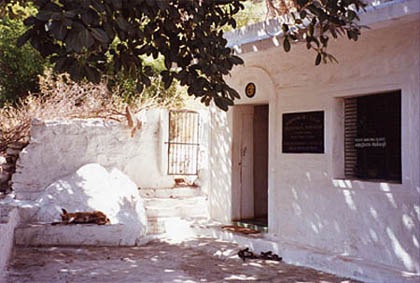
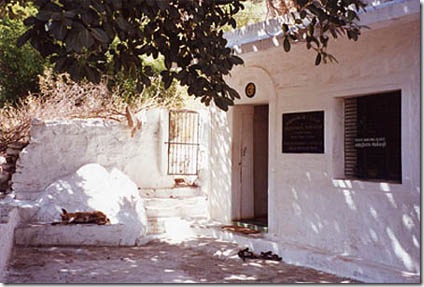
Virupaksha Cave
bhagvans_cave

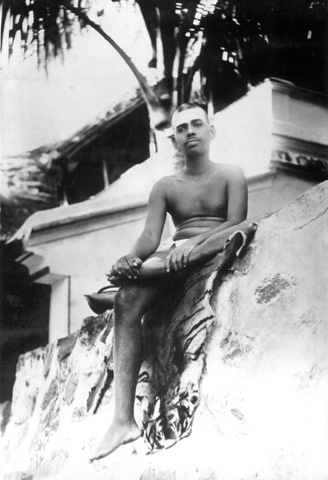
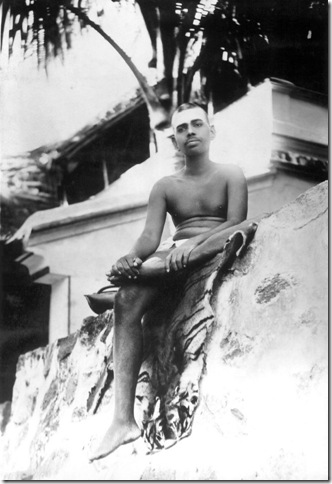
Virupaksha is, for most, deeply associated with Sri Ramana Maharshi. Ramana lived where he lived for 17 years [1899-1916].

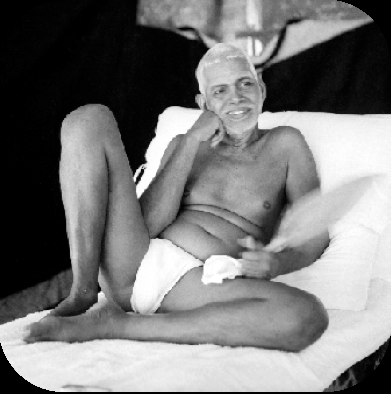
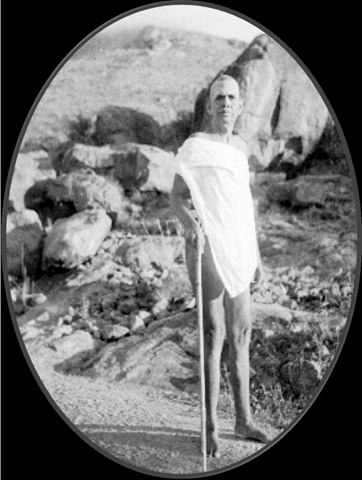
Below is a famous photo of the young Ramana at Virupaksha cave.
rest-9_1

The cave is named for a famous saint, Virupaksha, who lived in this cave in the 1500’s, around the same time as Guhai Nama Shivaya lived nearby (see below). At Virupaksha’s demise, called here ‘maha samadhi,’ it is said that his body was transformed into vibhuti (sacred ash). In the interior of this cave there is a mound in the shape of Arunachala. It is said to be made of this vibhuti.

More on Virupaksha Cave  is in this post.

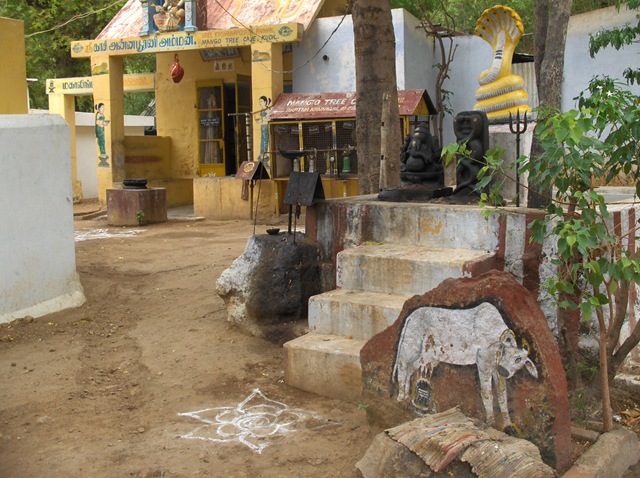
Mango Tree Cave

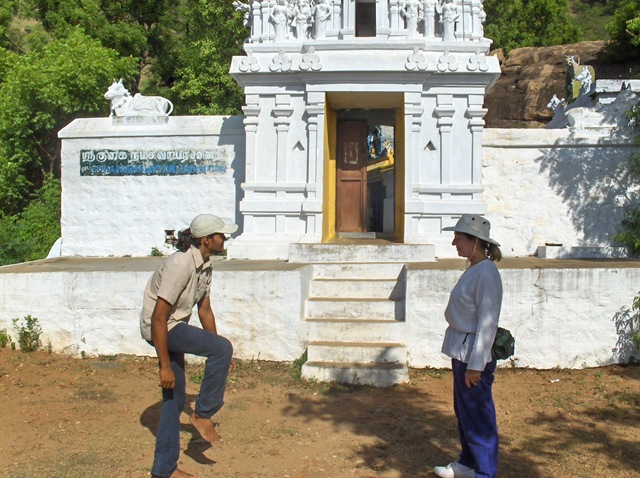
During the Virupaksha days, Sri Ramana would come down to Mango Tree Cave during the summer. It was cooler, and there was water here when there was none at Virupaksha Cave. Mango Tree Cave is on the common way up the hill to Virupaksha  Cave.
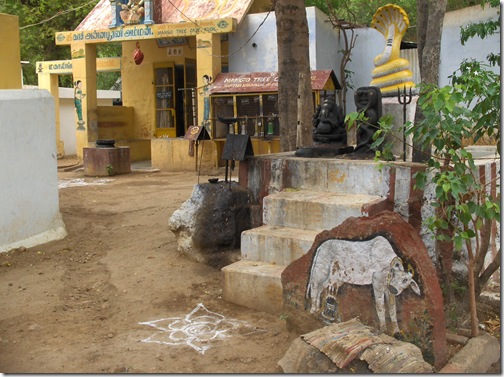
HPIM4609

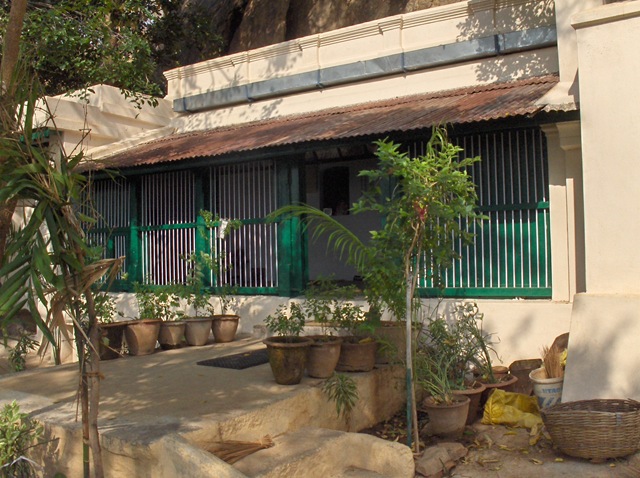
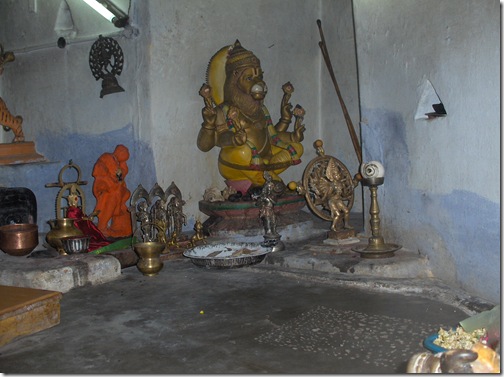
Inside the building, to the back, there is the actual cave. I think the building has been added since Ramana’s time.
HPIM4621

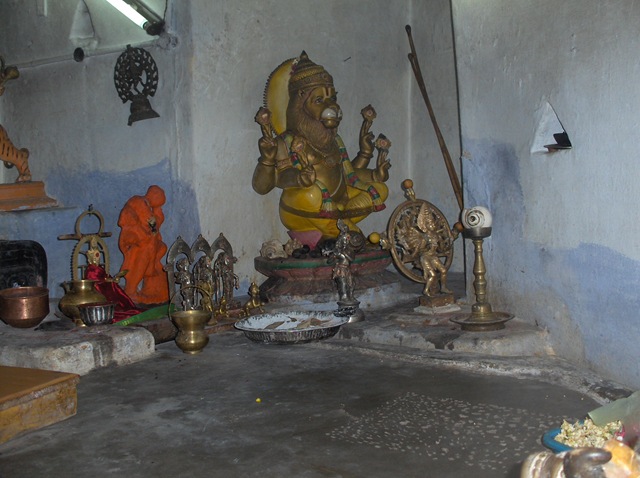
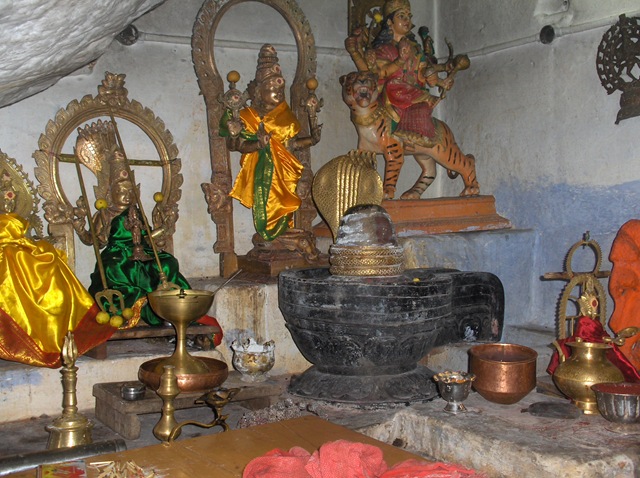
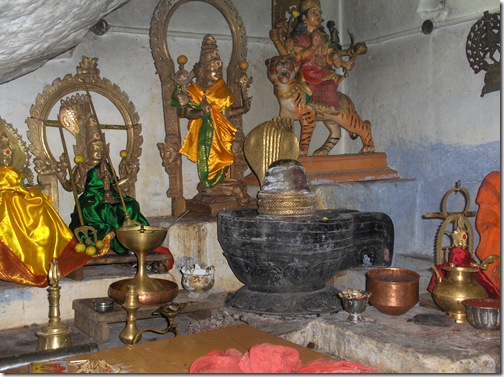
Now this small cave is filled with lingams and murtis of many gods.
HPIM4623

More on Mango Tree Cave can be round in this blog entry.  

Guhai Nama Sivaya

This is another cave in which Ramana lived in 1899. It is here that he wrote the notes which later because the pamphlet, Who am I?

A bit more on this cave is in the post New Access to Ramana Sites below Virupaksha.
HPIM4986

A short clip from Arunachala Grace Blog:

Guhai Namasivaya is known to have been born around the year AD 1548 in Karnataka to a pious Saiva couple. His spiritual nature became evident at an early age: he was virtuous in his conduct, adept at his studies and evinced no attachment to worldly matters.

He practised his system of yoga for many years and as a result of the dream guidance of Lord Mallikarjuna, the presiding deity of Sri Sailam, Guhai Namasivaya came to Arunachala and remained as a Guru, giving teachings to mature disciples who approached him.

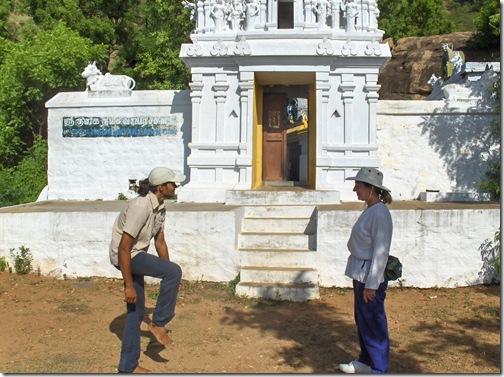
Tortoise Cave / Tortoise Rock

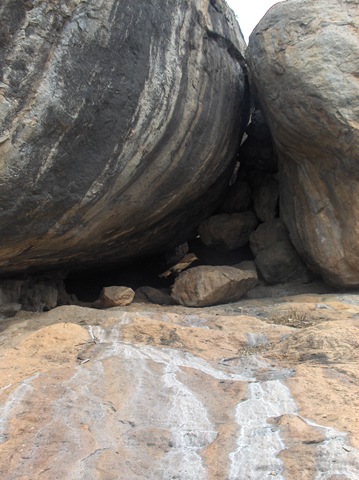
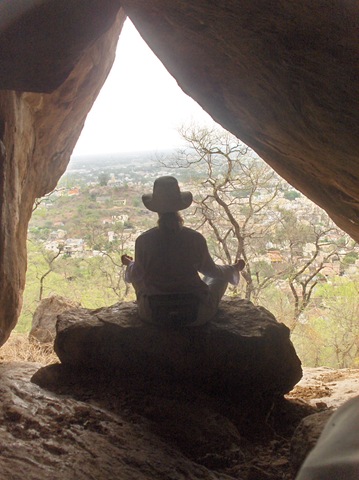
Tortoise Cave (also called Turtle Cave) was frequented by Sri Ramana during the Virupaksha days. In those days, there were few trees on Arunachala, and not many places with shade. Tortoise Cave has a good flat stone at its entrance to sit on. Here you are in the shade, and there is often a breeze.

This is also the place made famous in the story of Sri Ramana’s ‘second death experience’. This happened when Ramana stopped at Tortoise Cave / Tortoise Rock on his way back from Pachiaimman Koil. More of Tortoise Cave and Rock, and Ramana’s second death experience is in this post. More about Tortoise Cave is also  in this post.

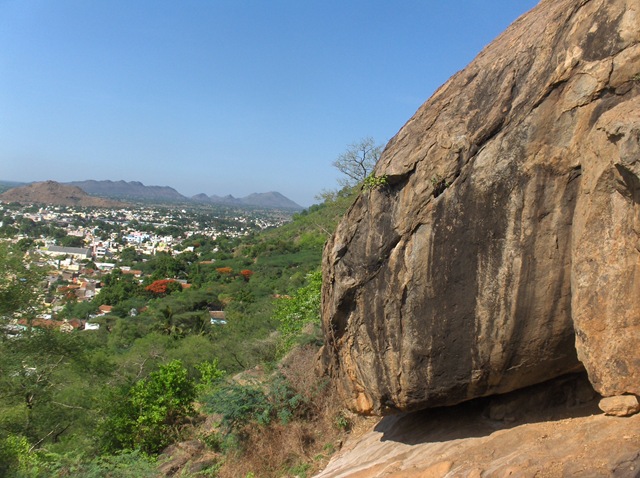
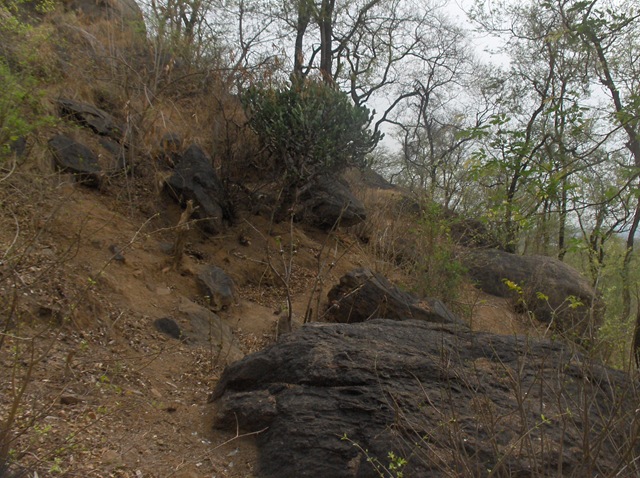
From places like Pavala Kundru, Tortoise Cave can be seen as a dark triangle up on the mountain. It is a bit of a climb to get up here. We think it is worth it. You will want to take a Mountain Guide the first time, I think.
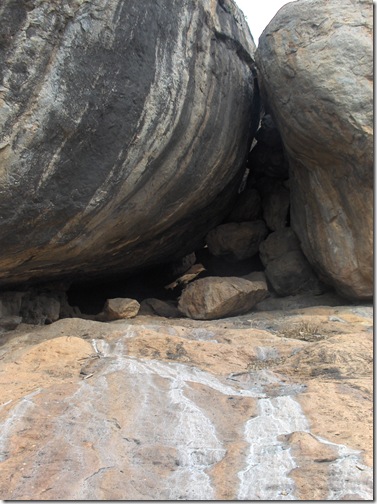
HPIM4022

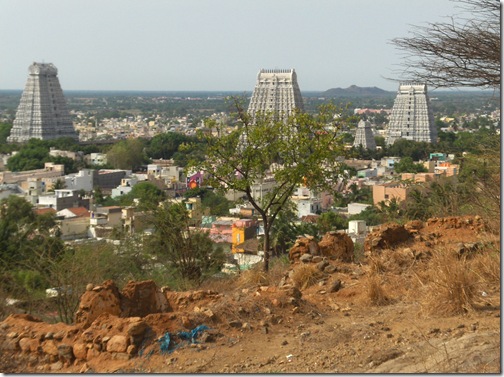
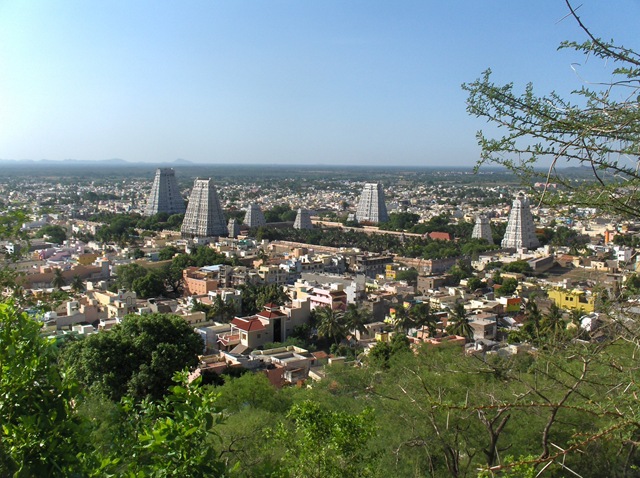
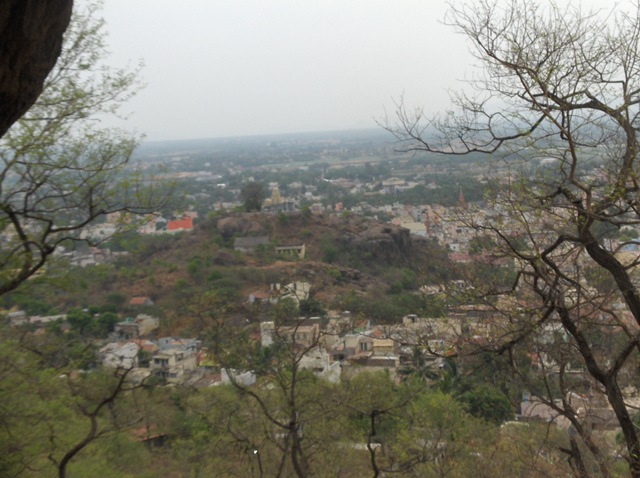
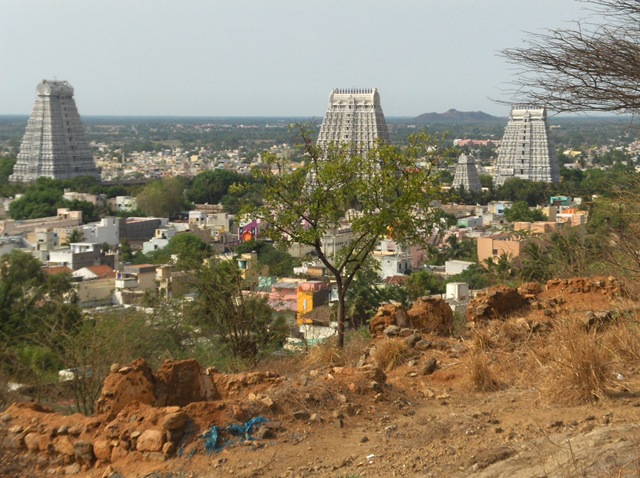
Arunachaleswara Temple for Tortoise Cave. A wonderful view.
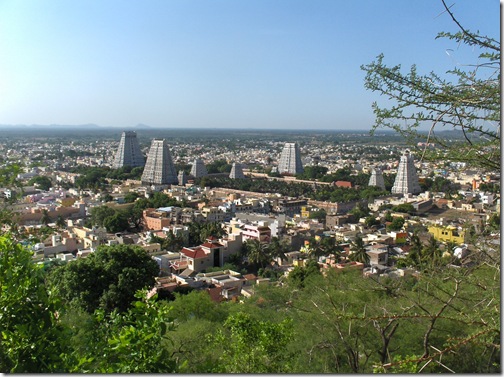
HPIM5402

This rock at the entrance of the cave is where Sri Ramana would have sat and rested. And meditated.
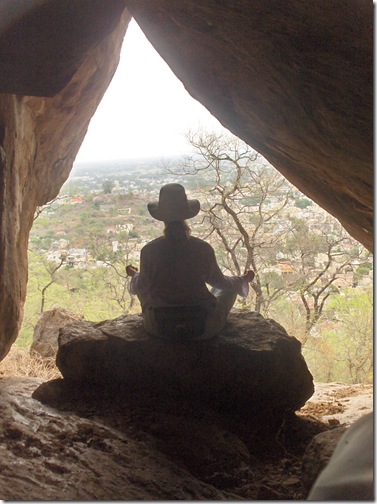
HPIM4032

Pavala Kundru can be seen toward the left.
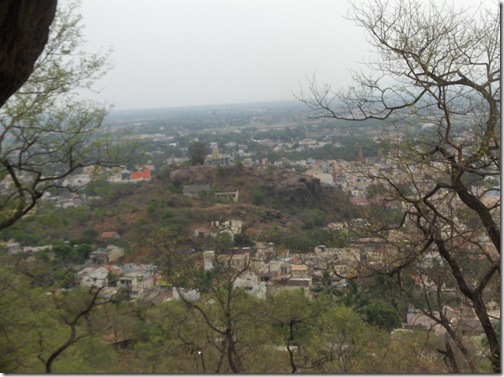
HPIM4045 

Here is a close up view of the face of the turtle on Tortoise Rock. Tiruvannamalai is in the background.
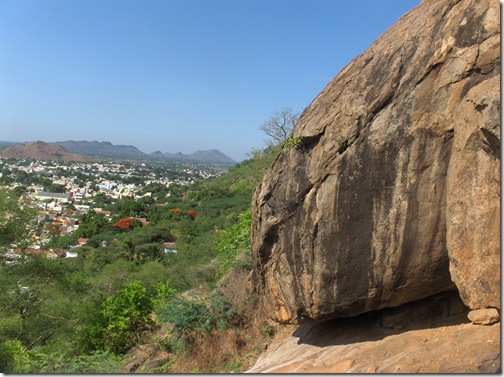
HPIM5427

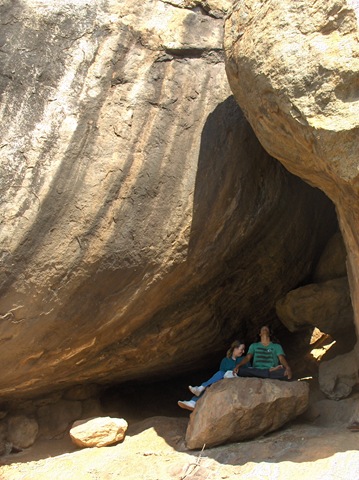
This cave is a great place to sit in the shade and meditate.
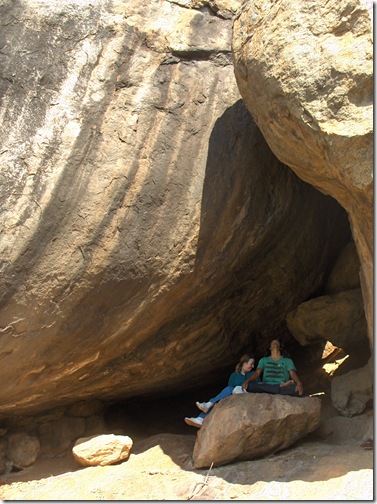
HPIM5441  

Skandashram

More on Skandashram is in the post Walking up to Skandashram.
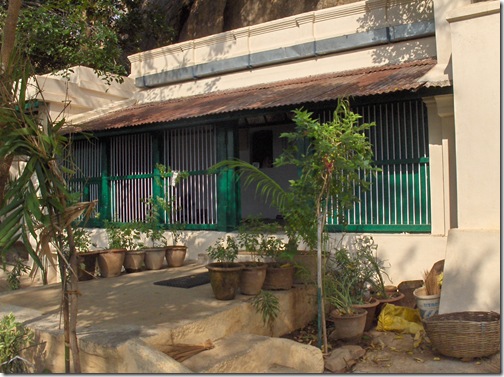
HPIM4373

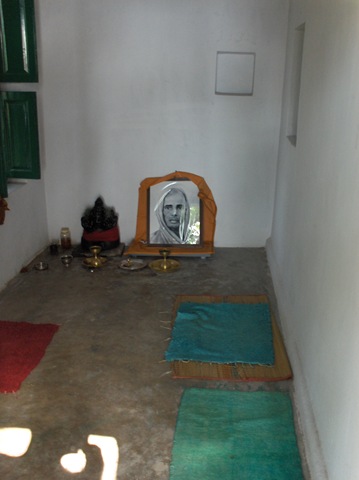
Sri Ramana lived at Skandashram from 1916 to 1922. His mother joined him during this period, and for the first time cooking was done there. This is where the mother had her maha samadhi in 1922. Her room is now a shrine.

HPIM4367

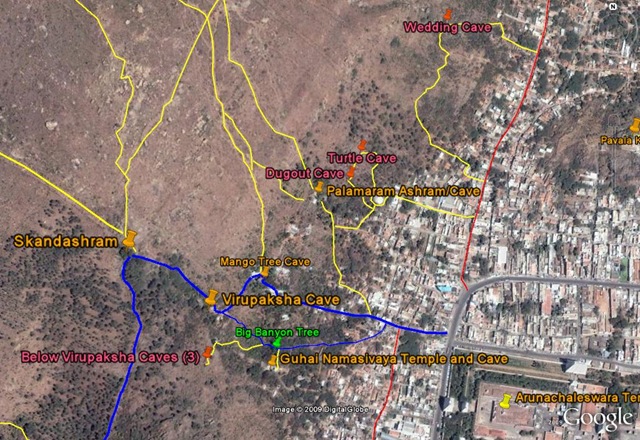
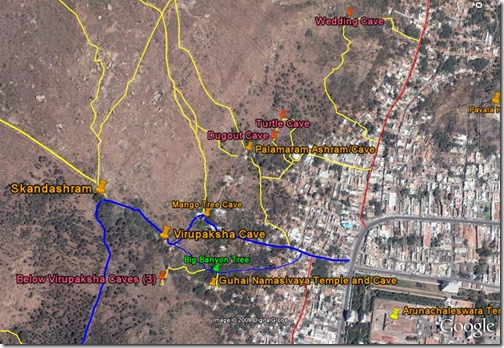
The map below shows all of the caves associated with Ramana, as well as other caves in the Virupaksha Cave area. Double click to expand.
screenhunter82

Seven Springs Caves

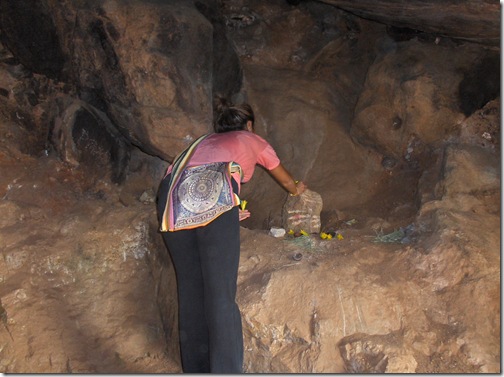
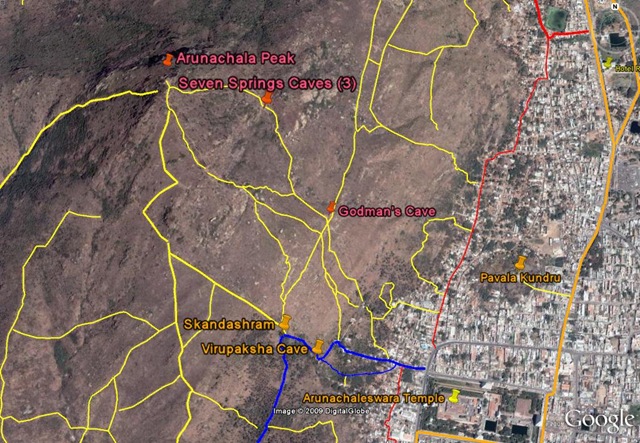
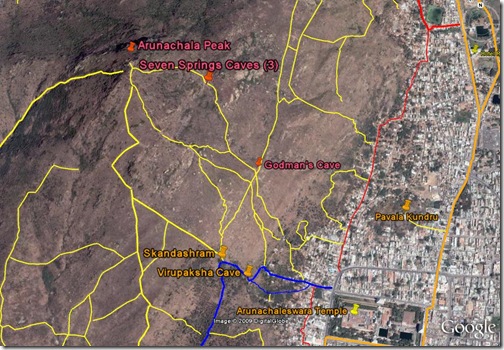
The next four caves are shown in the Seven Springs posting. They are all located on the hill above Skandashram, on one of the paths that goes to the top of the hill. Only one is associated with Ramana, the top one at Seven Springs. They are shown on this map:
screenhunter83

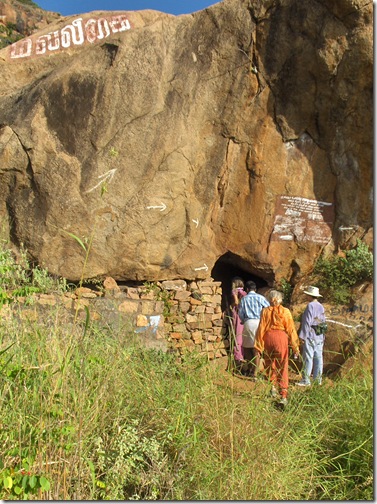
Godman’s Cave

This is a cave, said to be greatly improved by the work of David Godman in the 1980s. Maybe ten people can fit into this cave.
HPIM7886

Altar in the cave.

HPIM7891

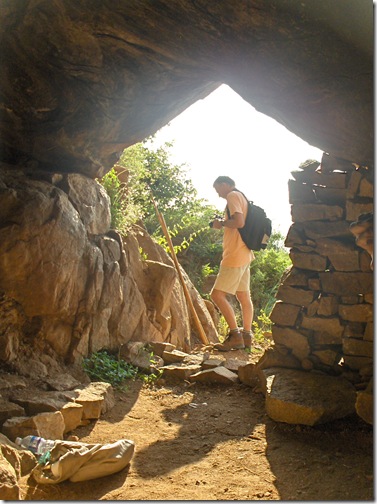
Looking out the entrance. John, the archivist at Ramanasramam, stands outside  the entrance.
HPIM7897

Seven Springs 1

This is first of three caves found at Seven Springs. There is a stone entrance built, and a good altar in the cave. Maybe four people can fit in here.

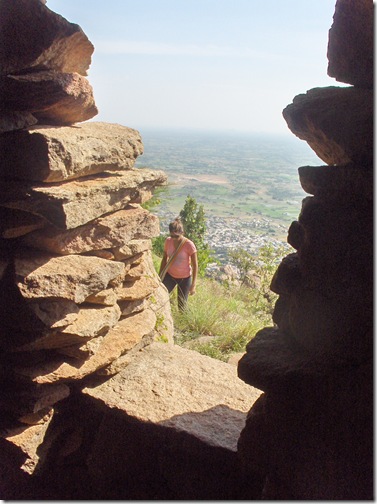
Up the hill you can see stonework.
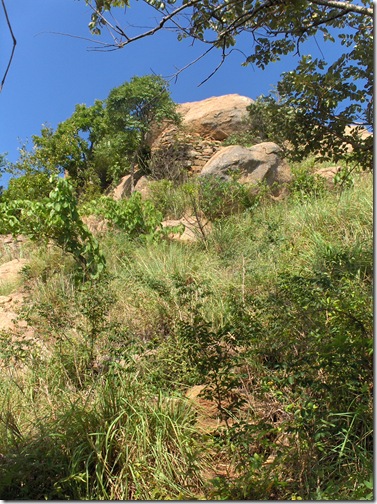
HPIM7933

The entrance, from the inside.

HPIM7953

Richard, offering incense to the altar.

HPIM7939

Carol, exiting the cave.

IMG_1702

Seven Springs 2

This is a small cave, behind Seven Springs 1. Maybe two people fit inside. Many stone and concrete improvements have been made.
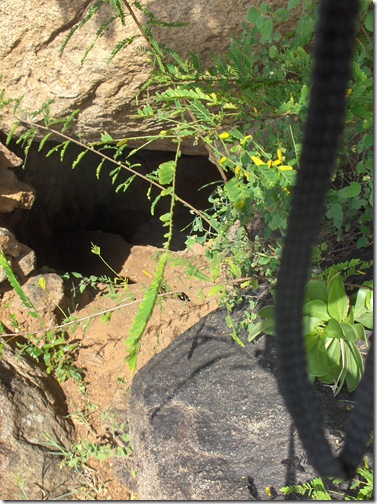
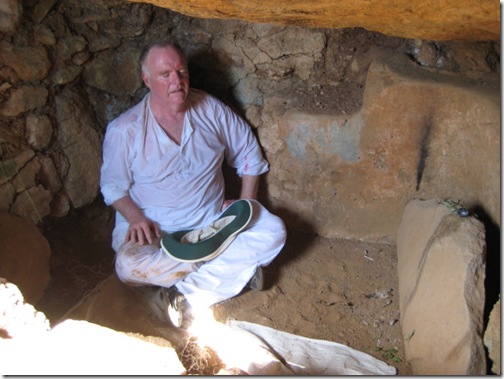
HPIM7958

Richard, meditating in the cave.

IMG_1714

Ramana’s resting cave

HPIM7988

I call it ‘Ramana’s Resting Cave’ since this is the cave that is documented in writing about Ramana where he was known to rest, while others made the climb up to the top of Arunachala.

It is in the shade all day with a nice breeze through it, and a view out through green trees.

The entrance is a bit tight, though.
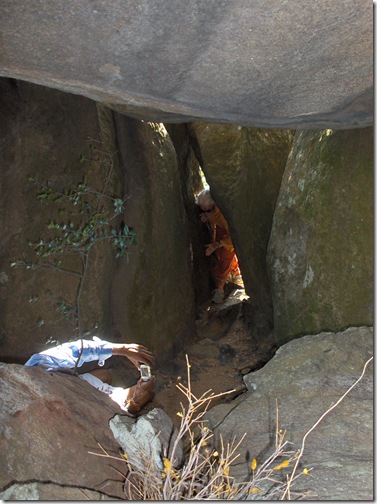
HPIM7993

Caves in Virupaksha Cave Area

(these are shown on the map at the end of the Ramana Caves section.)

Palamaram Ashram Cave

The Palamaram Ashram and is ‘generations’ old and has been run by one family for these generations. Palamaram is the Tamil word for ‘jackfruit’ (but we did not see a jackfruit tree). The guru who was most recently active here, per our mountain guide, was Palamaram Swamy, who was here for 40 years and for the last 15 years has been in the Himalayas.

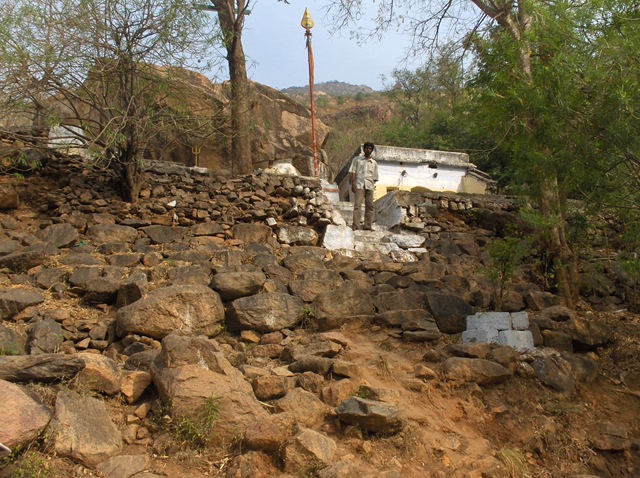
Steps lead up the the ashram. The flag pole can be seen from down the hill.
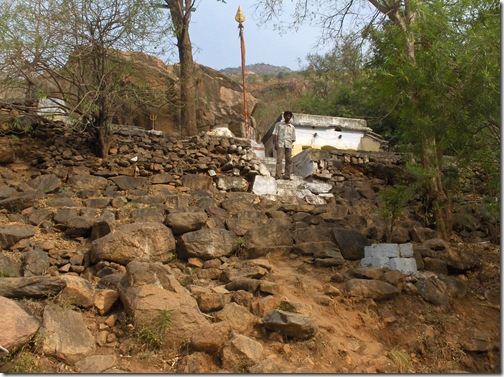
HPIM3849

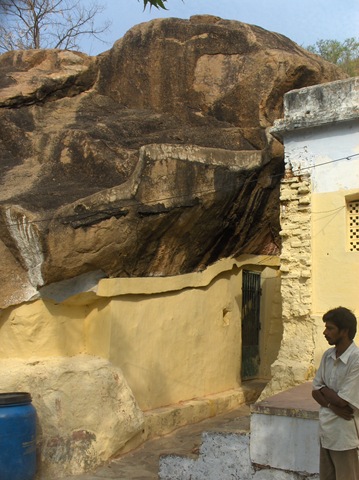
The cave is under this rock. The doors into the cave are locked, and you will have to see if you can find someone who can open them. Often you cannot find the person.
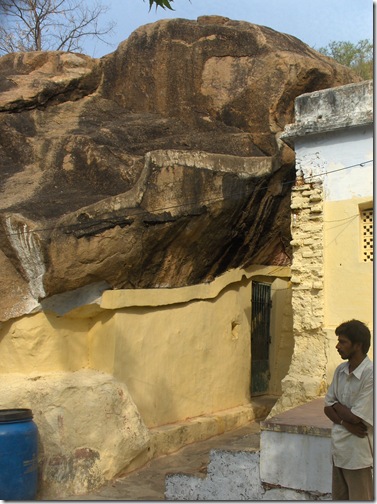
HPIM3833

For more on this place, see the Palamaram Ashram Post.

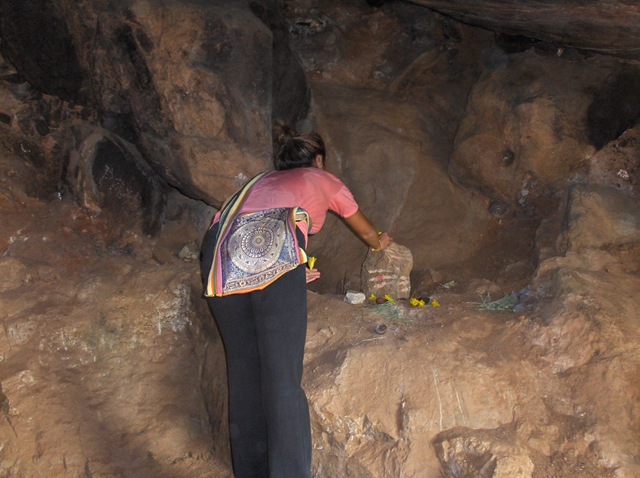
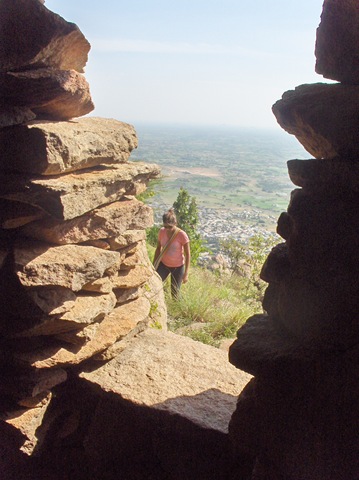
Wedding Cave

Wedding Cave is a small cave to the north of Virupaksha. It is rarely visited by westerners. We just discovered it by accident, looking for some other place.

It is at the base of the hill. You have to travel through residential areas, then up hillside trails to reach it.

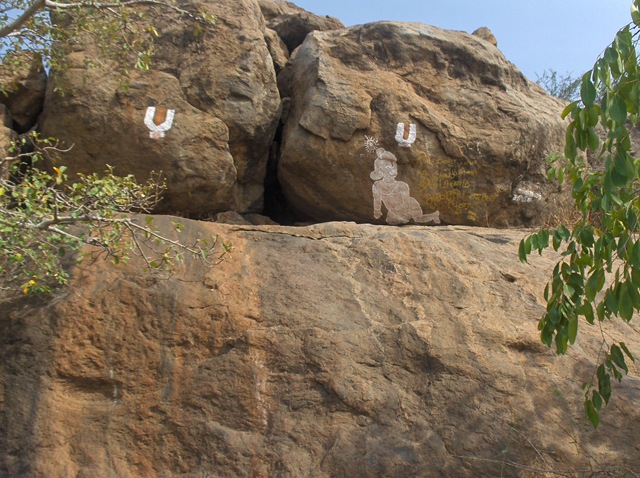
To get to the cave, you have to climb up the rock, to the right of what can be seen in this photo.
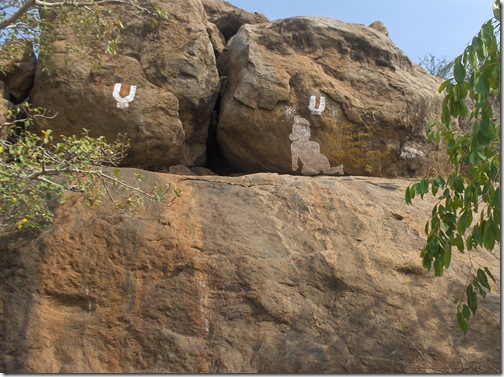
HPIM3931

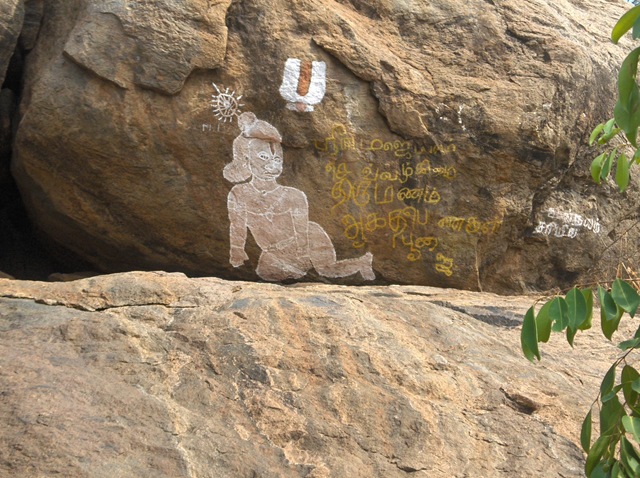
Krishna is painted on the rock, with a peacock feather on his head.
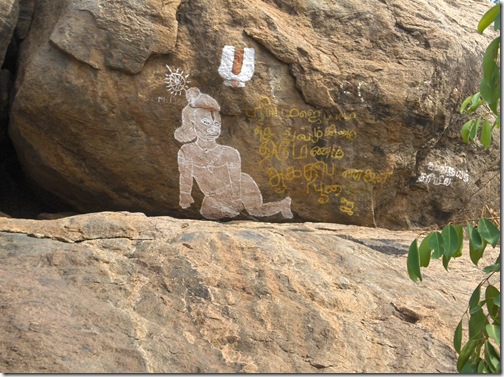
HPIM3932

A great view of Pavala Kundru can be seen from here.
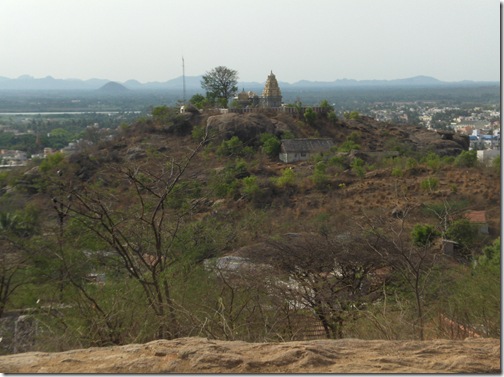
HPIM3935

Arunachaleswara Temple, too.

HPIM3937  

More is found in Wedding Cave Post.

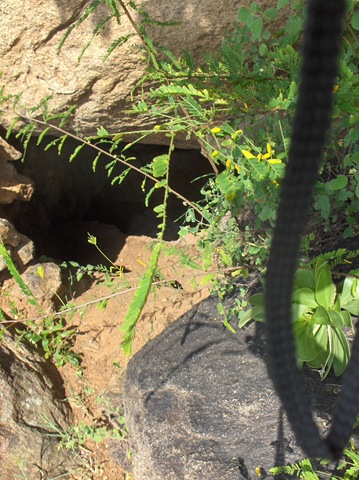
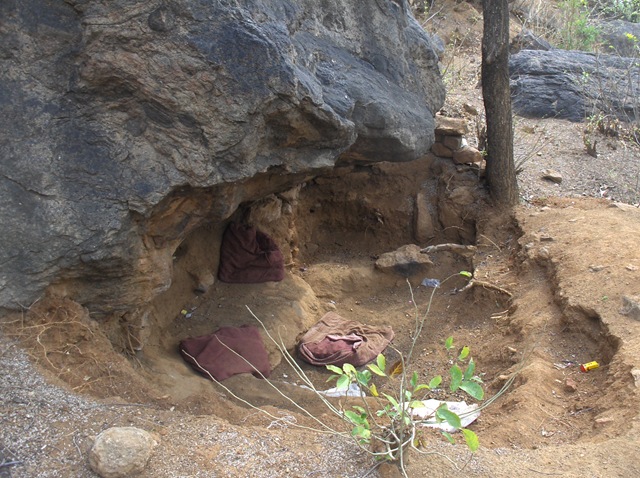
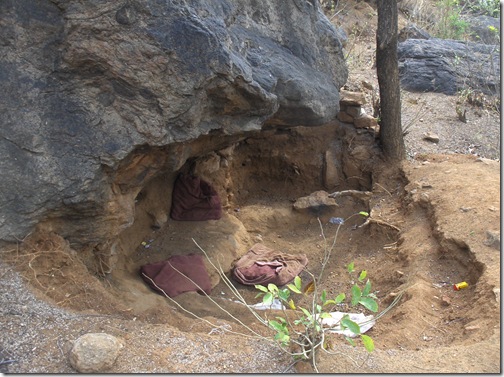
Dugout Cave

Dugout cave is a made made cave under a rock below Tortoise Cave.

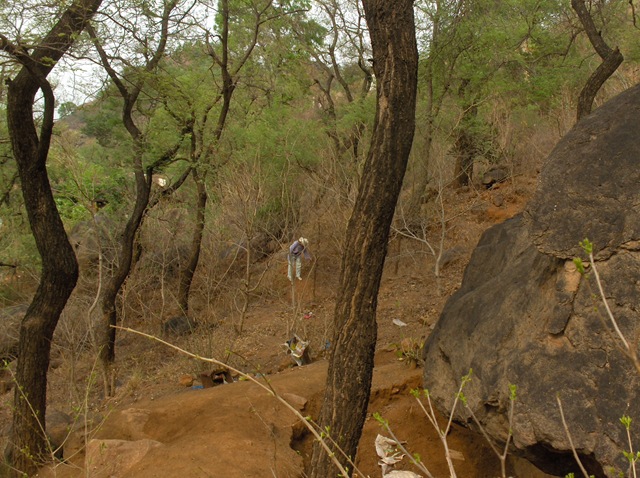
To get to it, you go through the hillside,m like  shown below.
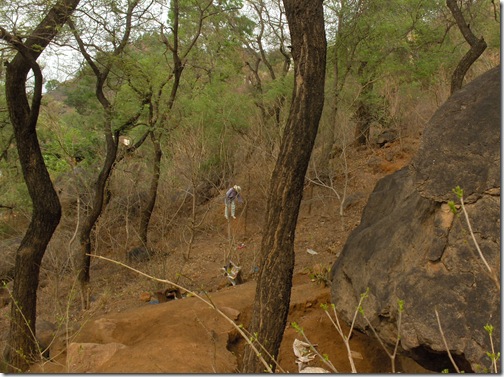
HPIM3996

A nice spot has been bug out under this rock. There are several cushions laying in the cave. Maybe there was a smaller cave, that was ‘improved’ to make a better space. I know nothing of the history of this cave.
HPIM4000

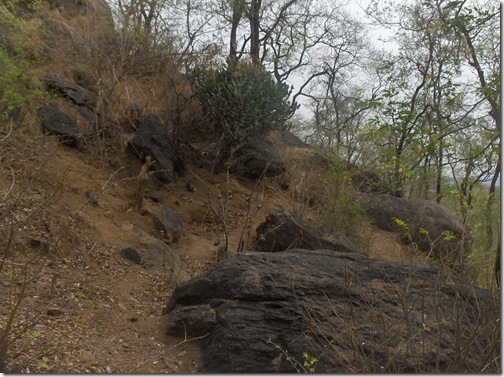
Another  photo of the terrain around this cave.
HPIM4001  

This is seen as a part of this post.

Caves below Virupaksha Cave

These caves are described in the post New Access to Ramana Sites below Virupaksha.

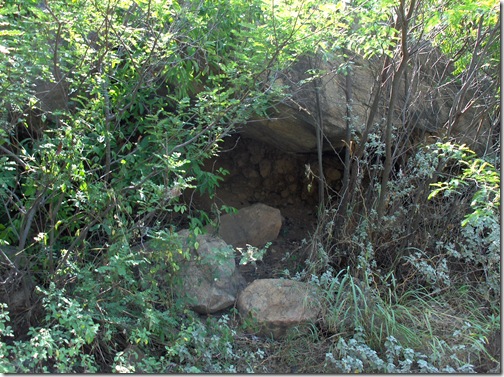
Below Virupaksha 1

This cave is big enough that one or two people can sit in it.
HPIM4991

Below Virupaksha 2

This cave is very small. One person can lie down in it.
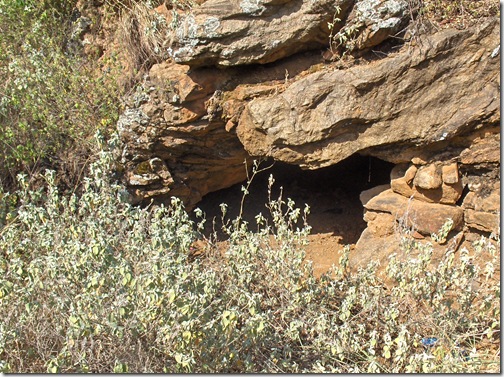
HPIM4997

Below Virupaksha 3 – Associated with Ramana?

This cave is said by local villagers to be one used by Ramana in the early days. Recently, people have built walls and a door and an altar in it.

HPIM5004

The altar.

HPIM5010

Southwest Side

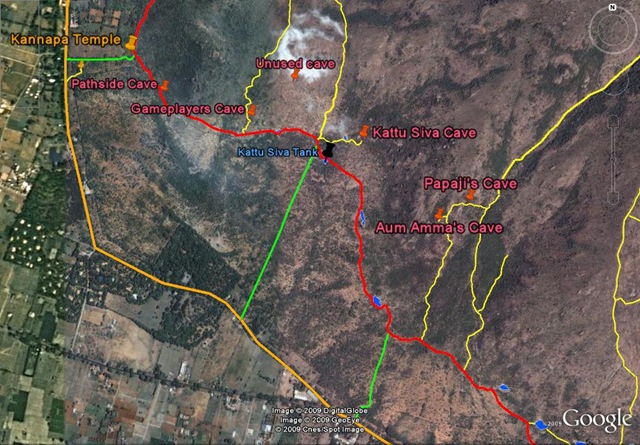
This map shows (right to left) Papaji’s Cave, Aum Amma’s Cave, Kattu Siva Cave, Unused Cave, Gameplayers Cava (Mankala Cave), and Pathside Cave.
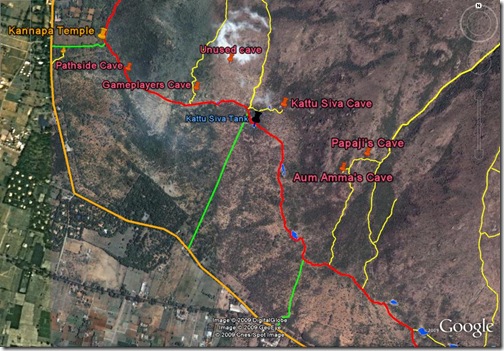
screenhunter85

Caves on Papaji’s Knoll

These caves are shown in the posts Papaji’s Cave and Aum Amma’s Cave.

Papaji’s Cave 1

The first ‘cave’ of Papaji’s is in the area where part of his ashes were scattered. This is a nice place to sit and meditate at the altar that has been set up there.

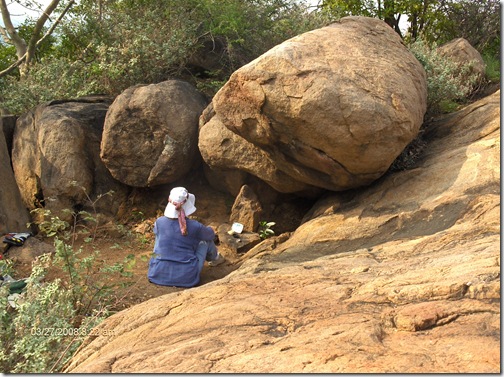
HPIM3940

HPIM3980

Papaji’s Cave 2

The next of the caves named for Papaji, and one that he is said to have lived in, is near the first cave, down the rock and a bit up the path.

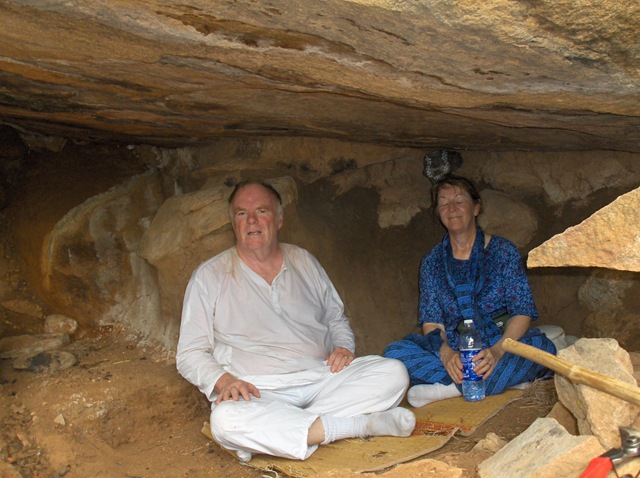
Carol enters the cave from the path.

HPIM5936

Richard and Carol, meditating in the cave.

HPIM5941

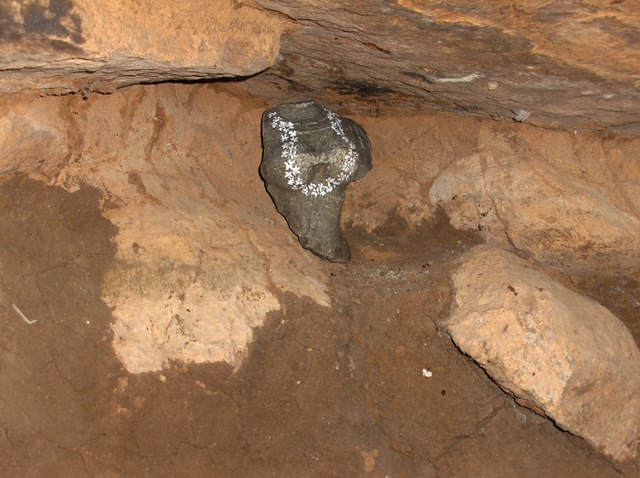
Below is part of a mother goddess statue, placed in this cave.

HPIM5944

Aum Amma’s Cave

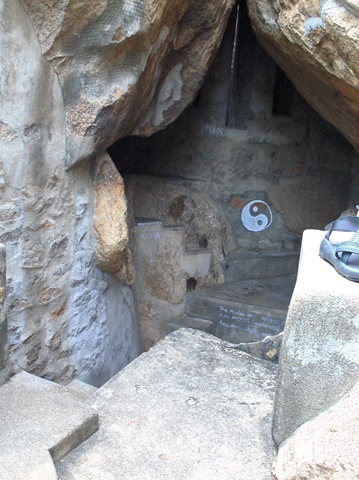
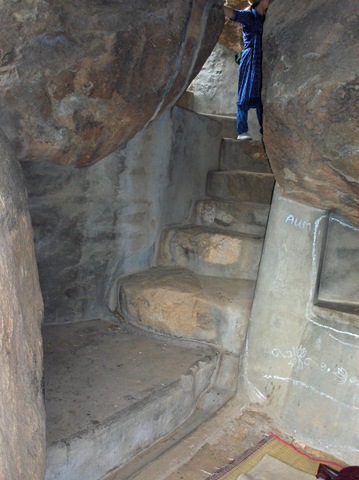
Aum Amma’s cave is the most developed of any cave we have found so far (except for those, like Virupaksha, which have had buildings constructed around them).
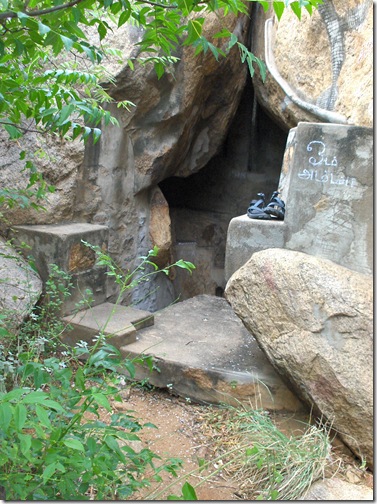
HPIM5873

Many bags of cement were carried up the hill to make these cave improvements. Aum Amma lived her for several years until just a few years ago.
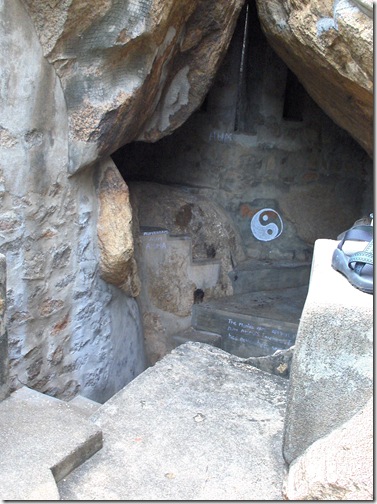
HPIM5876

Stairs lead down into a main room.

HPIM5895

There is a good view out the “window” in the main room. It looks like sometimes that people sleep in this cave, though you are not supposed to, and if you stay too long, the Forestry Department people will chase you out.
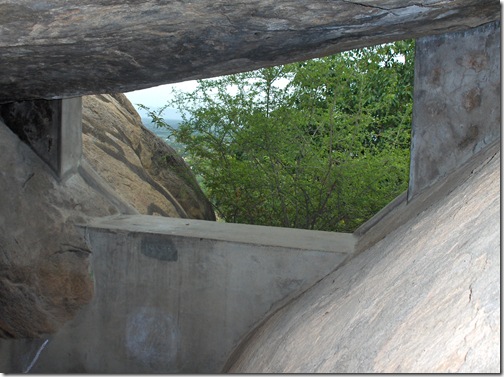
HPIM5888

Caves in Kattu Siva area

Kattu Siva Cave

This cave is shown in the post Kattu Siva Cave.

There is a nice cleared area around the cave. this is good place to come during the heat of the day. There is plenty of shade.

HPIM8655

Climbing over the rocks at the end of the clearing, a hole in the rock appears.
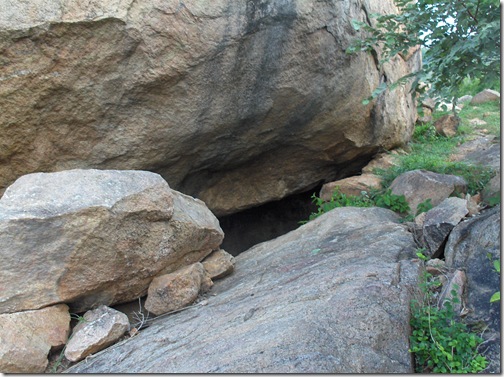
HPIM8659

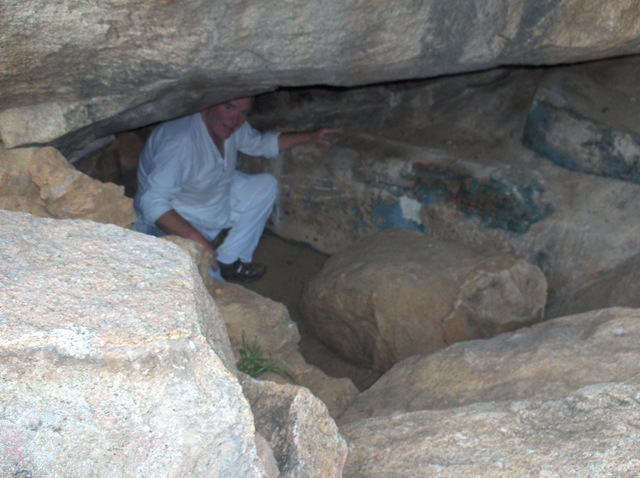
This is Kattu Siva’s cave. A big rock, in front of Richard, has fallen into the cave. Will someone be able to remove it?

HPIM8665

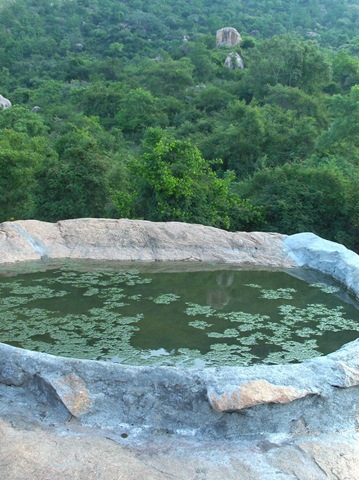
On the top of the rock over the cave, a cement water catching area was made. The photo below looks over this to the Arunachala hillside behind Kattu Siva’s cave.
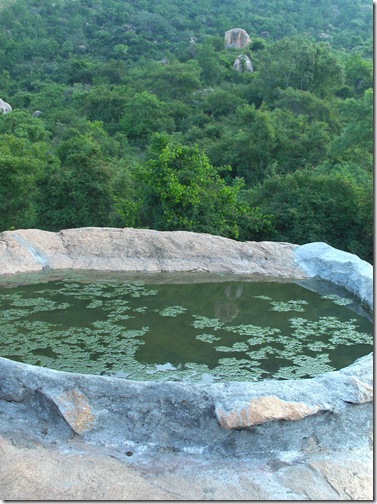
HPIM8678

Cave Above Kattu Siva Meditation Perch – Unused Cave

Related posts are: Kattu Siva Meditation Perch and Kattu Siva path Renewal – Part 1.

This is a small unused cave. Rocks need to be cleared from the floor to make a good sleeping area.

HPIM8743

Mankala Cave (or Gameplayers Cave)

This cave is shown in the post Kattu Siva path Renewal – Part 1. It is under a rock that looks like a natural lingam as you approach this cave.

HPIM8804

Cave next to Inner Path near Kannappa Temple – Pathside Cave

This cave is shown in the post Inner Path – Around Parvati Hill.

A path leads to it from the Inner Path.

HPIM9659

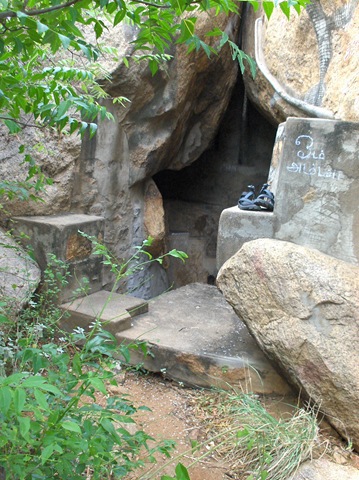
This cave was improved with a stone and cement wall in front.
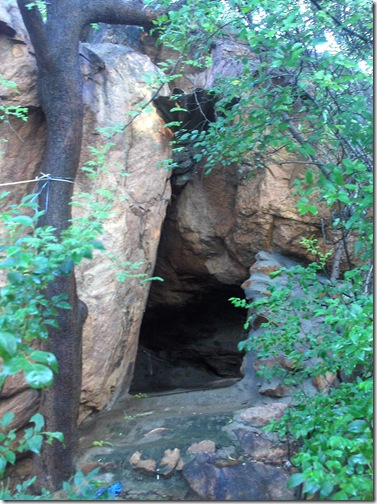
HPIM9669

A nice cement floor has been put in the cave.

HPIM9665

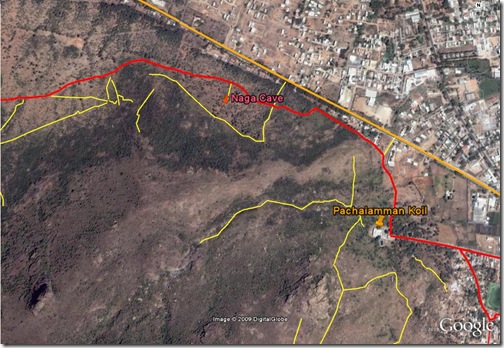
Caves on Northside  of Arunachala

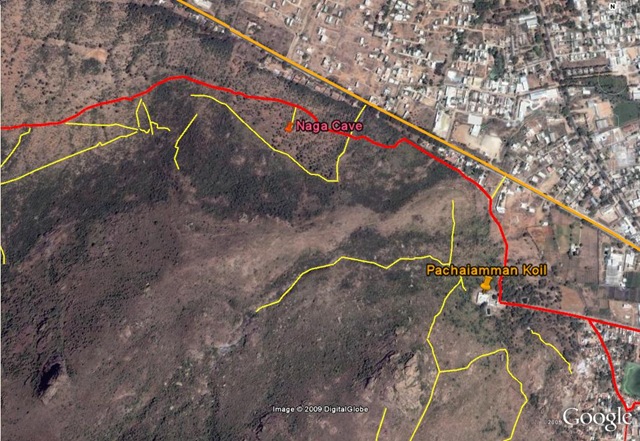
Naga Cave is shown in the map, below.
screenhunter84

Naga Cave

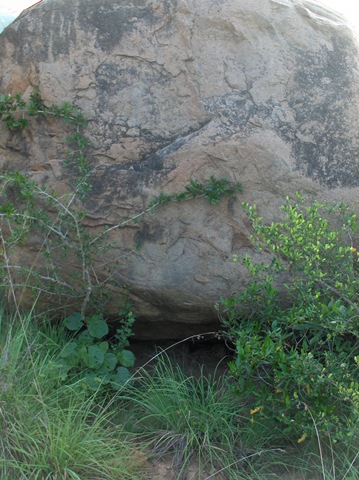
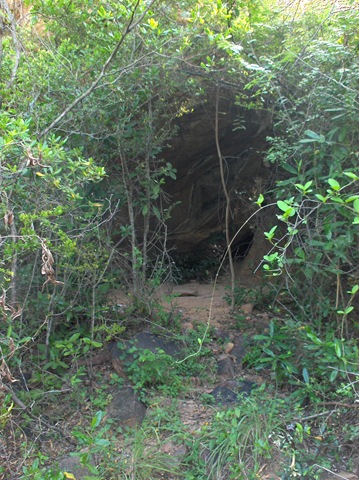
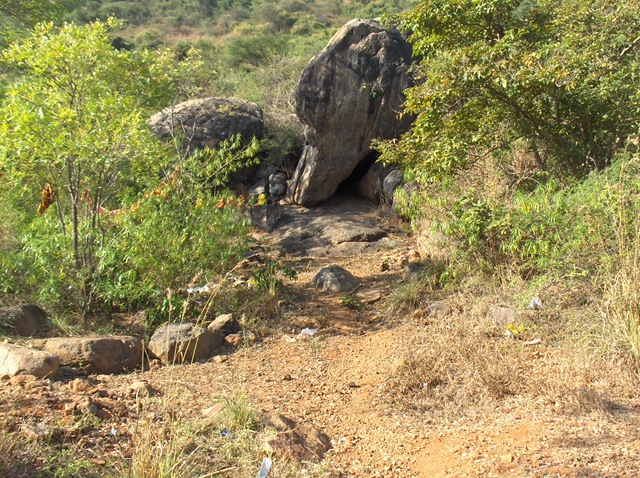
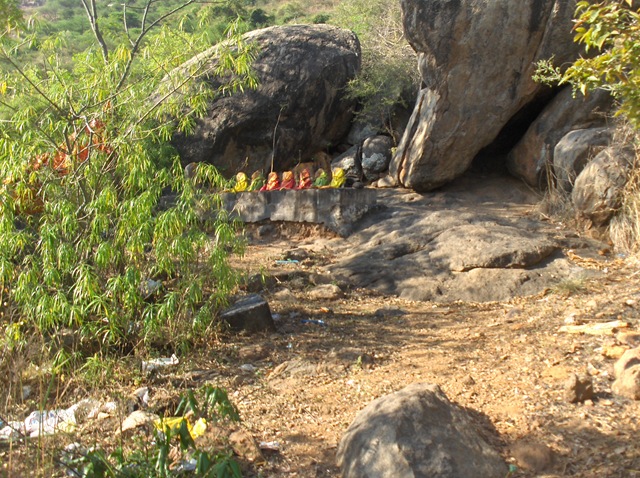
This is not too far from Pachaiamman Koil.  It is between the Inner Path and Arunachala, just barely visible from the path. You may notice a bit of color towards Arunachala.

As you approach you see a small cave.  
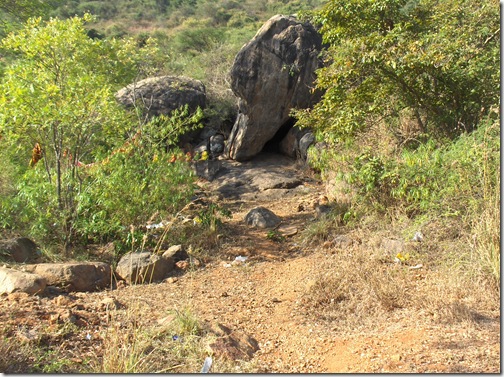
HPIM2689

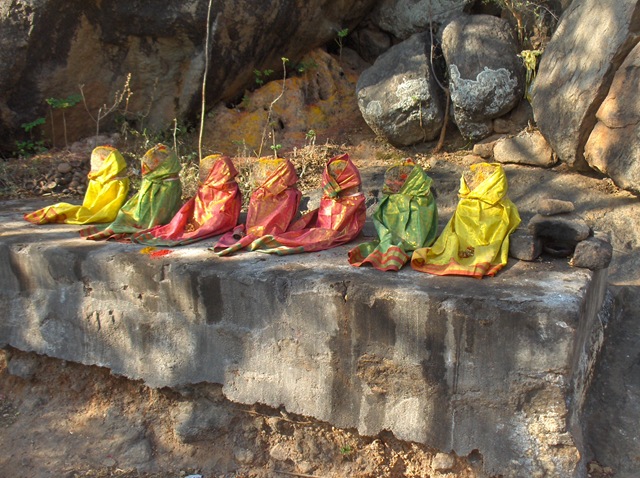
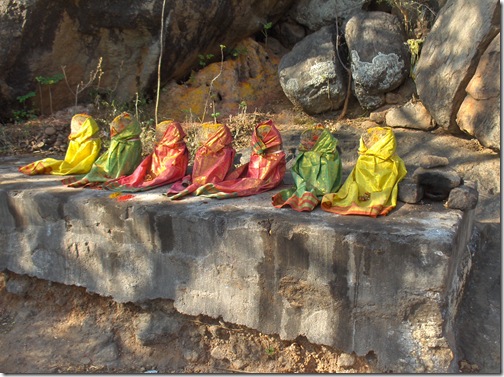
To the left is a primate altar, featuring Nagas, snake gods.
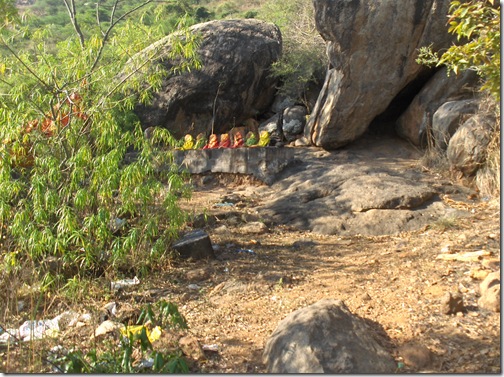
HPIM2690

The colors noticed from the path are the fine clothes that the Nagas are wearing.
HPIM2692

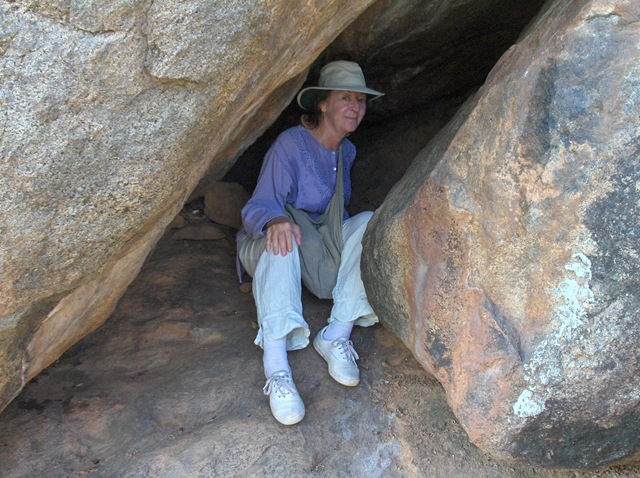
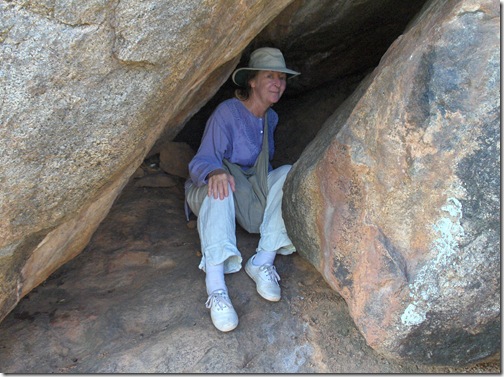
The cave is small. Only one person can sit in it. Not good for sleeping, either.
HPIM2696   

More is to be found in the Naga Cave Post. 

More caves to find, more of Arunachala to explore

I have heard of more caves. I have been told:

  • There are four caves on the hill above the Mountain of Medicine Arunachala reforestation facility.
  • There is another cave high above Papaji’s cave.
  • There are three caves on the north side.
  • There is a cave near Virupaksha occupied by a sadhu that does not like to be bothered.

What else is there? We have to explore to know more. If you know of any more caves that haven’t been listed, please let me know.

Harsha's avatar

Light From Eternal Lamps: By Swami Sadasivananda

image

“One must make the mind to bear on God”

ENTERING THE PALACE OF LIBERATION…

The One Thing Needful

“The eternal, unbroken, natural state of abiding in the Self is jnana. To abide in the Self you must love the Self. Since God is verily the Self, love of the Self is love of God; and that is bhakti. Jnana and bhakti are thus one and the same…. their purpose is to lead you to dhyana, to meditation, which ends in Self-realization.”  Maharshi’s Gospel I, The Teachings of Sri Ramana Maharshi. p. 17-18.

Sri Ramana Maharshi maintained this ancient form of instruction. The answers he gave to questions represent what has evolved in our modern times as a uniquely universal spiritual teaching that can be taken up by anyone the world over without adopting the limiting constraints of any one religious tradition. It has been said that these teachings were indeed God-given, for they began with the words of grace flowing from Sri Ramakrishna and continued with the blessing of perfection that was embodied as Bhagavan.

As did his predecessor, Bhagavan Sri Ramana Maharshi stressed practice that produces purification (removal of that fog of ignorance, the obstacles and habits of the mercurial mind which diminish our pure vision) as well as the grace of the knowledge of the Self as the eternal companions of those who would be led:

From the unreal to the Real,
From darkness to Light,
From death to Immortality!

NOTES FROM ARUNACHALA…

Devotees present with Bhagavan on this day said that a most important spiritual lesson was transmitted through the actions of Bhagavan as he held Lakshmi’s head during her final moments.

As Bhagavan was stroking Lakshmi’s head, she was gasping for breath in the final moments prior to her passing. Bhagavan, who all knew was capable of removing her pain and causing her spirit to easily exit the body, rather whispered in Lakshmi’s ear to “Tolerate the pain!”.

At a later day, Bhagavan said that, “Suffering is the way to Self-realization.” Our training within meditation prepares us to remain “steady in wisdom” even during the final trial of separation from the body.

image

“Practice is necessary, Grace is there.”
Reprinted from Swami Sadsivananda’s July newsletter.
To subscribe to his newsletter, go to http://www.ramanateaching.org/contact.html
For more information on Swamiji, click here:   About Swami Sadasivananda
Teachings of Bhagavan Sri Ramana Maharshi web site: http://www.ramanateaching.org
Ask your question in relation to Bhagavan’s teachings, meditation and spirituality at:
http://www.ramanateaching.org/faq

Harsha's avatar

A Dance Ballet on Gautama Buddha: By Vinatha-ji

Buddham Sharanam Gachaami

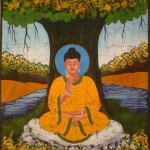
under_the_bodhi_tree_bj20

(We seek the Lotus feet of the Enlightened ‘One ‘)

A Kuchipudi DanceDrama on the Life of Gautama Buddha , the Ninth Incarnation of Lord Maha Vishnu

Who else but Smt. Mrinalini Sadananda , a renowned  Kuchipudi Dancer , an excellent Choreographer and now the Director of Kalamandapam, a Washington based Dance School , could come up with such an Enchanting Evening of Pure Dance and Melodious Music  at the Kennedy Center on June 27th, 2009 ?  This  immaculate presentation on the Life of Gautama buddha entitled ‘ Buddham Sharanam Gachaami’   was narrated within 6 Acts and 15 scenes within a time span of Two and a half hours . From Start to finish, Mrinalini and her troupe of talented men, women and children held the huge audience spellbound with their mastery over this Art Form, Kuchipudi. The spirit of dedication, devotion and discipline that Mrinalini had invested in the production of this dance drama was evident from the first scene where the artists portrayed the ten incarnations of Sri Mahavishnu to the  final Climax scene ,when  DalaiLama took center stage with his Benevolent and Compassionate presence . That was an ingenious touch in choreography for it is Dalai Lama who says ” Kindness itself is a Religion’.

It is said that  Adi shankara bhagvadapada was a Buddhist in disguise and a Mayavadi  . Can we lightheartedly parody on this and say our beloved Vishistadvaitin Mrinalini  is also a Buddhist in disguise  and Lady Maha Maya herself ? ? In her   portrayal of Mayadevi , King Shudhodana’s Royal queen and Prince Siddarth’s mother , Mrinalini  totally stepped into the character of Mayadevi and portayed all the Navarasas beautifully – Mrinalini’s excellent abinaya , immaculate footwork and graceful hand gestures were  outstanding. A  proud grandma looked like an   agile gazelle on stage when she moved all around the stage dancing her way into the hearts of an appreciative audience .

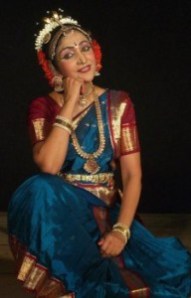
MRINALINI

Mrinalini , a Kuchipudi danseuse of Rare Charm and Exquisite Beauty

As the audience was not allowed to use video camera or any other device , i was unable to capture all this on Camera . But , i did manage to get a picture of Mrinalini off stage after the programme was over .  Here is one .

Picture 005

A Narthaki and Her Rasika ( A dancer and her fan.)

It would not be fair to give all credit to Mrinalini because a Dance Ballet’s success depends on the performance of all the participants .  I never knew ‘artistic’ talent  runs in the family . Dr. Keerthana , daughter of Mrinalini, proved that She is the wave of the Future Kuchupudi Scene in Washington DC.. Young and vivacious  Keerthana captivated the audience as Yashodhara ,  the abandoned wife of  prince Siddhartha .  Keerthana’s fluid and flexible body movements indicated that she has had wonderful  dance training from a young age .  Keertana was able to convey different moods such as love ,  Shyness, Coyness , Modesty ,  Grief , Disappointment , Detatchment , etc very effectively  on stage  with her waist movements , chest movements and eye movements . Keerthana’s role as Yashodhara and mother of young Rahul was a memorable performance for who else but a new mother and a young wife  like Keerthana could portray this role so perfectly ?

keerthana

Mrinalini’s daughter Keerthana performing the role of  sri ‘Lakshmi’ in another dance ballet

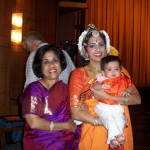
Picture 004

The three Shaktis – Adi, Keerthana and Laasya

( Iccha , Kriya and Jnana  )

The six month old granddaughter of Mrinalini appeared on stage with her mother Keerthana as Baby Rahul . It was well past 9 ‘o clock and  beyond bed time , Young  Laasya had no stage fright whatsoever and was calm , cool and collected and young Raul was so ‘still’ that you could hear his Father (young  Siddartha’s footsteps .  Only Mrinalini can perform brave feats like this .  In fact , Mrinalini put many child performers on stage in many of the scenes including the Raas lila , The Karate scene ,  the Birds and of course the dancing of Snakes . The children were from all  different age groups from infants to toddlers to pre teens and teens  and exhibited rare skill and prowess  and it is their  unique contributions which made the Show Lively , Vibrant  and Spectacular . Kamalkiran Vinjamuri , the 11 year old nephew of Mrinalini , was outstanding as the young Siddartha and Young Rahul and  was  impressive  in both roles.

How can we forget the main character Gautama buddha ? This role was performed by none other than Mrinalini’s niece,  Ramadivya Vinjamuri . Of all the Navasrasas , Karunyam ( compassion) , and Shantam ( Peace and Tranquility)   are hardest to portray  and these two expressions are best portrayed through eye movements , facial expressions and body language .  Divya came out with flying colors in all the scenes where as a Young Gautama she saved a bird from a hunter’s arrow , rescued the goat from being slaughtered at Kali’s altar , while witnessing the funeral procession of a dead man . and finally taking ‘Sanyasa’ .  Divya did not merely dance – she lived the role of Gautama buddha  and displayed the Buddha nature of compassion and kindness through her  luminous expressive eyes. This was a challenging role and Divya accepted the challenge with courage and confidence .

Divya as Gautama Buddha

Picture 008

A  Court dancer and a Mortal woman asking for Buddha’s Sangham ( Benediction)

All in all , it was an evening of Truth , Consciousness and Bliss – Sat- Chit- Ananda .  Mrinalini’s forte is her excellent choreographic skills and this was evident throughout the two and half hour performance and my favorite ones were  Scene 2 (Brindavana) , scenes 7 and 8 ( Wedding)  and scene 11 . ( Siddartha’s waking up to Reality) . Mrinalini’s choreography has sophistication , refinement and above all complexity and creativity .  The Costumes were well designed  and every dancer looked his/her part. Aniket Sidhaye , Keerthana’s husband , did a great job as a Master of Ceremonies – he had ready wit and humor and pronounced all the Sanskrit  words/names  correctly – lol:-)

This review  will not be complete if we do not mention about the excellent Live orchestra who gave wonderful support to Mrinalini and her troupe . Without a Live Orchestra and Melodious  Music ,  a dance performance is limp and lifeless. While the dance sequences were entertaining , the melodious music was enlightening.

We need to thank cultural ambassadors like Mrinalini Sadananda  who came to Washington as a young bride in 1971 and have taken a rare Art Form from a village in Andhra pradesh and has given the Art Form a new dimension by putting it on a world stage  like the Kennedy Center. Indeed, a Remarkable Achievement . Guru Vempatty Chinna Satyam has every reason to be proud of his sisya, Mrinalini.

Who  is behind the Success of Mrinalini, the dancer ?  None other than her Husband , Dr. Kuntimadi Sadanananda , well known in Washington circles as  Vedanta Teacher of Chinmaya Mission . While Sadaji is doing selfless service by preaching about Hinduism ( Santana Dharma ) to young and old alike through the platform of Chinmaya mission, his wife Mrinalini is engaGed in the task of exposing second generation immigrant Indians to HinduCulture and Art forms. Our Thanks to this Noble Couple .

Picture 007

A Vedanti and an Artharthi

What is the eternal message that comes out of this dance Ballet,   Buddham Sharanam Gachaami ? The following lines from Noble Laurette Rabindra Nath Tagore  comes to mind !

When I thought I would mould you, an image from my life for men to worship, I brought my dust and desires and all my coloured delusions and dreams.
When I asked you to mould with my life an image from your heart for you to love,
you brought your fire and force, and truth, loveliness and peace”
buddha_lotus01
Buddhahood

Srimad Bhagvad Gita ( chapter 14 , verse 20)

gunan etan atitya trin
dehi deha-samudbhavan
janma-mrityu-jara-duhkhair
vimukto ’mrtam asnute

Translation

When the embodied being is able to transcend these three modes associated with the material body, he can become free from birth, death, old age and their distresses and can enjoy nectar even in this life.

flying swans
SOHAM
Those of you who are interested in learning this rare Art Form called ‘ Kuchipudi ‘ please contact Smt. Mrinalini  at  http://kalamandapam.org/ and if you are interested in knowing about Vedanta , pl join  http://www.advaitaforum.org/

Harsha's avatar

The Self is Never Born: Bhagavad-Gita 2.20

omwllppr1 - Copy

na jaayate mriyate vaa kadaachin-
naayaM bhuutwaa bhavitaa vaa na bhuuyaH |
ajo nityaH shaashwato.ayam puraaNo
na hanyate hanyamaane shariire ||

divd1

The Self is never born, nor does It ever die;
never It came into existence nor will It cease to be –
It will not take rebirth, It is unborn, eternal and changeless;
It is timeless and is never killed when the body is killed (BG 2.20)

divd1

omwllppr1 - Copy (2) - Copy

Several Gita sources for English transliteration of the sanskrit, for English translation of the words and purport are utilized to create these Holy Gita Inspirations. It includes an eclectic yoga, as it were, among several sources, Swami Chinmayananda, Swamy Gambiranda, Prabhupada, and Swami Sivananda,  each coming from slightly different traditions, fueled by One Spirit.  If you go to the links, you can find additional articles there to enhance your appreciation and understanding of this shloka or verse from the Holy Gita.

http://sss.vn.ua/bh_g_eng.htm#Chapter%20XI

https://luthar.com/wp-content/uploads/2009/06/bgita.pdf

http://www.bhagavad-gita.org/Gita/intro.html

http://www.srimadbhagavatam.org/gita/contents.html

Harsha's avatar

Light a Fire Within the Heart: By Swami Sadasivananda

Posted by Swami Sadasivananda on his blog and reproduced here with his permission.
For more information on Swamiji, click here:   About Swami Sadasivananda

3

Prior to lighting the fire on Arunachala (said to be the heart of the universe), the arduous effort of ascending the sacred hill with all of the implements required was needful. This fact is symbolic of the effort required by us to light a fire within the heart. The Sanskrit word “sadhana”, coming from the root “sadhan – implements or tools”, actually means the way we use the tools that the masters and the scriptures have shown us by example. Without the needful preparation (sadhana), no fire will appear.
HOW DOES ONE LIGHT A FIRE WITHIN THE HEART?

Such a question of, “How to light a fire within the heart?” will only arise to one who is seeking spiritual growth. But a common error also simultaneously arises. In essence, this error is a trick of the ego, whose very life depends on being as far away from the heart as possible. So the ego says to us, “Go my dearest, visit the playground of the heart, I will help you, for I know a short-cut.” This short cut is in truth a bypass, right around the mind.

We cannot even collect the firewood; much less light a fire in a place where we have not yet found the path. We need to make the mind a guiding light, which will illumine our vision and our way towards the heart. But there are obstacles.

Bhagavan Sri Ramana Maharshi stressed practice that produces purification (removal of that fog of ignorance, the obstacles and habits of the mercurial mind which diminish our pure vision) as well as the grace of the knowledge of the Self as the eternal companions of those who would be led:
From the unreal to the Real,
From darkness to Light
From death to Immortality!

This place of the Real, the Light and Immortality is a firm stance within the heart. But first the obstacles must be removed. So Bhagavan tells us outright what is needful. The mind must first become free of restlessness. In fact it must first be transcended: “How to transcend the mind?” The Master answers: “Mind is by nature restless. Begin liberating it from restlessness: give it peace; make it free from distractions; train it to look inward; make this a habit. This is done by ignoring the external world and removing all obstacles to peace of mind.” (Reflections on Talks with Sri Ramana Maharshi, Talk 26 p. 129.)
“The obstacles that hinder realization are habits of the mind (vasanas), and the aids to realization are the teachings of the scriptures and of realized souls.” (Talks with Sri Ramana Maharshi, Talk 13, p. 5.)
The teachings of the scriptures and of realized souls tell us that meditation, daily meditation, without interruption is the way. Through meditation an awareness and recognition of the intoxicating addiction to heedlessness is brought to light together with a resolve to strive for true spiritual growth. Thus the all-knowing God begins by infusing into us the will to change and seek a pure life.
Far before we even get close to the heart, we must begin to change our habits and train our mind to look inwards. This means that we must bring about change through a determined and protracted effort to purify, and thus literally dismantle our vasanas. Yes, this not only can be done, but this must be done. Grace is our essential source of guidance that illumines our path to true ‘spirit life’. We attract the Grace of God mainly through prayer and meditation! “The quality of soul that makes it possible for man to rise to spirit life is purity…that which one wills to do, he has the power to do. Knowledge of that power is faith; and when faith moves, the soul begins its flight.” (The Aquarian Gospel of Jesus the Christ, by Levi)

The Path of Ascent through the Sky of the Heart (the mind!) We have begun; we have made a start. In the truest sense we have now set our hands to the plough. In the entire Srimad Bhagavatam Sri Krishna reveals the quintessence of His teaching in one statement:

“Shake free of sloth, and merge your mind within Me.”
(Srimad Bhagavata, Book Eleven, Uddhava Gita.)

Though we might believe that only a simple start has been made, the shaking free of slothful heedlessness is declared by God to be half the battle. We have recognized that there is a fog that clouds our vision, and obstacles (restlessness and slothfulness), that literally obscure the manifestation of the light of the Self in abode of our true consciousness; within our spiritual heart!

Regardless of whatever label we choose to call this effort, whether it be deemed purification, removal of defilement, awakening, being in oneness or even becoming still, it should be known that Bhagavan said it is “effort that instills purity” and stressed that without it the goal of lighting a fire within the heart will not be reached.

Prior to lighting a fire in the heart, we must light a fire within the mind to burn down sloth, anger, and ultimately all fear. This being done, we will have the doors of the heart flung open to reveal that God has already created a bonfire, the flames of which will be our love of Him.

       !cid_024101c3d9c0$9f1668a0$0000a398@MahaDevi

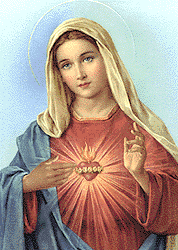
The fire within the Immaculate Heart of the Blessed Virgin Mary blazes forth to illumine the path all human souls must progress through. This became possible only through Her willingness to, like Her Son, take upon Herself the image of our likeness and endure patiently the suffering that instills spiritual perfection, signified by the sword piercing Her most pure heart. Sri Ramana Maharshi echoed this truth when asked by Paramahansa Yogananda if God could not have ordained it differently, so we would not suffer so? Bhagavan replied: “Suffering is the way to self realization.” (Talks #107) 

Teachings of Bhagavan Sri Ramana Maharshi web site: http://www.ramanateaching.org
Ask your question in relation to Bhagavan’s teachings, meditation and spirituality at:
http://www.ramanateaching.org/faq
To contact Swami Sadasivananda:
http://www.ramanateaching.org/contact.html