Harsha's avatar

PLATINUM INSURANCE

From Mira Prabhu, the mystic, yogini writer residing at Arunachala mountain in India.


Mira Prabhu's avatarmira prabhu

36e4cbc86a09d338c9b54bed3a0b98fdHow are you? I asked a friend in Manhattan. Oh, I’m just FINE, he said with a laugh—then proceeded to inform me that FINE was an anagram for Fuddled, Insecure, Neurotic and Egocentric. (Actually he used two hyphenated words for the ‘f,’ but I think I’ll leave what they are to your rich imagination.)

The fact is that almost every one of us is (or has been) fraught by a million insecurities—and who could blame us? Consider the world wars our species has endured, the concentration camps and gulags, the ugliness of misogyny and patriarchy that plague so many, in a nutshell, man’s inhumanity to man—all of which leave scars on the collective human psyche. Above all, consider our ephemeral nature, as fragile as a snowflake melting under a hot sun. No matter how big we are in the world, nothing can protect us from old age, sickness and death; yes, when Yama…

View original post 574 more words
Harsha's avatar

The Ego is Not Your Amigo – Part 2 of 2

From Mira Prabhu, the mystic writer living on the holy mountain of Arunachala.

Mira Prabhu's avatarmira prabhu

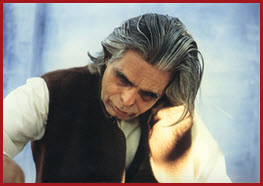
Harish Johari Harish Johari

I first began to consciously pursue the destruction of my own troublesome ego when I lived in hectic Manhattan. At the time, I had just begun to plot a novel based on eastern philosophy (Whip of the Wild God: A Novel of Tantra in Ancient India), and was engrossed in learning everything I could about Tantra and mysticism.

In the process, I met folks who tended to interpret Tantra mainly as a license to enjoy indiscriminate sex. My view was different: mainly from delving into the treasure trove of eastern philosophy at the New York Public Library, I had discovered that, etymologically speaking, the word Tantra derives from two Sanskrit words: tanoti and trayati—meaning: the explosion of consciousness. How one performs this magic is up to the individual; while couple-hood can certainly become a means of liberation, celibate tantrics often evolve fastersimply because…

View original post 638 more words

Harsha's avatar

Keep the Flame of Your Love Burning: By Dr. Harsh K. Luthar

My dearest friends, even though prejudice, hatred, violence, and wars are embedded in world history, these have never been able to completely overshadow the enormous capacity many people have demonstrated in every age, to love, to nurture, to heal, to be peacemakers, and to forgive without reservation. Even when there is darkness all around, if one candle is lit, there is potential for other candles to be lit through it. That is the beauty of the Sangha. Be that Candle. Keep the flame of your love burning, so others can learn to love through you, and the light of wisdom and compassion will guide your way.

Harsha's avatarLuthar.com

IMG_0111My Dearest and Wonderful Friends:

Thinking of all of you makes me smile with love, wonder, and gratitude.

View original post 917 more words

Harsha's avatar

Death and Self-Realization

It is the ancient teaching of sages and scriptures that our mental state at the time of death determines our next birth. If at the time of death, we fully surrender to the Lord, the Universal Being, then we merge in God and are freed from all sorrows.

We usually think of that at the time of death what we have loved and thought about during life. Hence the purest souls who have devoted their whole life to serving the God of Love merge in that Universal Love immediately at the time of death and achieve complete liberation.

Continue reading

Harsha's avatar

Sri Ramana and My Teacher Gurudev Sri Chitrabhanu-Ji: By Dr. Harsh K. Luthar

All of us come from different backgrounds, and we walk the path in our own unique way. Yet, we all have the same innermost longing to know the deepest mystery of our own nature and being. Reflectin…

Source: Sri Ramana and My Teacher Gurudev Sri Chitrabhanu-Ji: By Dr. Harsh K. Luthar

Harsha's avatar

The Root of Self-Inquiry: By Dr. Harsh K. Luthar

The ultimate Reality cannot be named. It has no name. There is no one outside of Reality to give it a name.

Harsha's avatarLuthar.com

Realized Sages such as Bhagavan Sri Ramana have indicated the experience or the state of the Self.  It is what it is.

It is the Heart of Existence, and Existence It Self.  Sri Ramana used to say that It is only Being.

You can call it what you like. Self, No-Self, Shunya, Reality. What difference can it make? The ultimate Reality cannot be named. It has no name. There is no one outside of Reality to give it a name.

Ancient sages taught that the core of our being is pure Sat-Chit-Ananda which roughly translates from Sanskrit as Existence, Knowledge/Consciousness, Bliss as One.

It is devoid of thought or doubt or conflict, but utterly complete and supreme over its domain, its domain being no other than It Self.

It is the Eternal Reality which is not conscious of anything separate from it, being Pure Consciousness Itself.

It is beyond happiness…

View original post 174 more words

Harsha's avatar

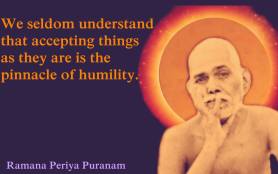
The Nature of Humility

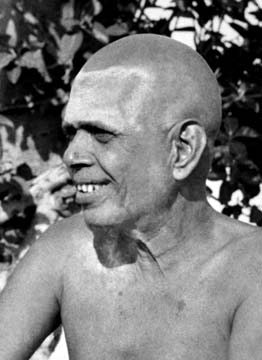
Sri Ramana’s teaching is that the ego/mind merges in the Heart in two ways.

First, we can investigate the nature of the ego and examine the sense of “I” that we naturally feel and see where it arises. To do this, one needs to still the mind and with a purified and subtle intellect trace the “I” back to its source, the Heart. This is the yogic path of Jnana.

The second approach is to simply surrender the ego/mind without reservation to the Lord and accept that it is never our will but the Lord’s will as to what happens. If this attitude of “not my will but thine my Lord” penetrates deeply into our being, then we become accepting of everything. We see that worries and anxieties associated with ego/mind do not belong to us as we have surrendered our individual identity to the Lord. This is the approach of devotion and leads to the ego/mind merging into the Heart where the Lord sits as Eternal Existence.

“If ego rises, all will rise. If the ego merges, all will merge. The more we are humble, the better it is for us”. ~ Sri Ramana in “Gems”, Chapter XIII.

Photo art in this article is from Andreas Farasitis.

Harsha's avatar

Kundalini Yoga Practice: By Pieter Schoonheim Samara

It is often said that Kundalini Yoga, as taught by Yogi Bhajan, comprises all systems of yoga. This is meant more in the sense that the result and benefits of other systems of yoga gradually and suddenly emerge into the experience of the Kundalini Yoga practitioner, such that one will notice the emergence of a deep intuition of posture and prana, and awaken to the experiences of shakti, laya, bhakti, and gyan (jnana), which emerge spontaneously into consciousness. While providing all the benefits of physical and mental health, fitness and fortitude, Kundalini Yoga is entirely different in approach, practice, technique, benefit and result than any other system of yoga. Kundalini Yoga is a Path towards direct experience of the non-dual all-pervasive and single Self.

Continue reading

Harsha's avatar

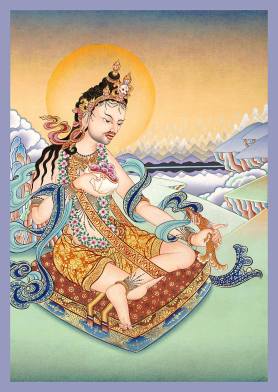
Song of Mahamudra:Tilopa

Cut the root of a tree
And the leaves will wither;
Cut the root of your mind
And Samsara falls.

The light of any lamp
Dispels in a moment
The darkness of long kalpas;
The strong light of the mind
In but a flash will burn
The veil of ignorance.

Whoever clings to mind sees not
The truth of what’s
Beyond the mind.
Whoever strives to practice Dharma
Finds not the truth of
Beyond-practice.
To know what is Beyond both mind and practice,
One should cut cleanly through the root of mind
And stare naked.
One should thus break away
From all distinctions and remain at ease.

-From Tilopa’s ‘The Song of Mahamudra’ (translated by Garma C.C. Chang).

Harsha's avatar

The minute I heard my first love story I started looking for you: Rumi

Rumi’s poetry often centers on the search for the Beloved and the union with the Beloved.

It echoes the poetry of Bhagavan Ramana and the verses Bhagavan wrote to Arunachala.

Rumi says, “The minute I heard my first love story I started looking for you”.

It was the same with Bhagavan Ramana. The minute he heard the name Arunachala, he associated it with something majestic, God Himself and started looking for it.

hindu_deity_qd15_l

The minute I heard my first love story

I started looking for you, not knowing
how blind that was.

Lovers don’t finally meet somewhere.
They’re in each other all along.

From Open Secret: Versions of Rumi, Translated by Coleman Barks / Translated by John Moyne