Harsha's avatar

Spiritual Heart and Self-Realization: By Dr. Harsh K. Luthar

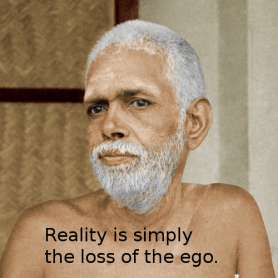
Spiritual Heart is an important topic in Bhagavan’s teachings and comes up again and again.

Harsha's avatarLuthar.com

Dear Harsha:

Arthur Osborne, a close devotee of Bhagavan Ramana said that while doing self-inquiry, he tried to focus on the spiritual Heart-center to the right of the chest. However, I have heard some scholars on Ramana’s teaching say that the Bhagavan did not recommend meditating on a specific location and that Arthur Osborne may have misunderstood the essential method and Bhagavan’s teaching.  Is it necessary to meditate on the Spiritual Heart center in order to become Self-Realized? Some well known people like Nisaragadatta Maharaj and Krishnamurthi never mention the Heart in the same way that Bhagavan Ramana does. What is the explanation for this?

Sincere Seekers (composite question)

View original post 793 more words
Harsha's avatar

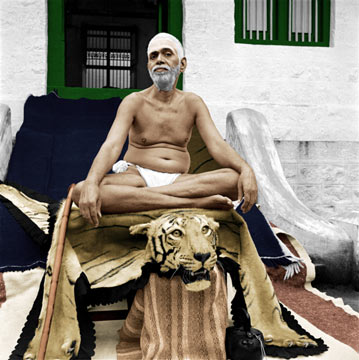
Sage of Arunachala Sri Ramana Maharshi: By Dr. Harsh K. Luthar

Harsha's avatarLuthar.com

Over a period of more than half a century, some of the greatest yogis and sages of India and even a few Shankracharyas had the good fortune to visit the Sage of Arunachala, also known as Bhagavan Sri Ramana Maharshi. The list of luminaries who sought Bhagavan’s grace over a period of 53 years would be too long to recite in this short piece.

View original post 633 more words

Harsha's avatar

The Perfect Meeting_Ramana and Ramdas

Harsha's avatarLuthar.com

Papa Ramdas swamiramdasphoto

Swami Ramdas describes how he attained the Divine Vision through the Grace of the Bhagavan Sri Ramana Maharshi. Swami Ramdas was called “Papa” by his devotees.

View original post 960 more words

Harsha's avatar

Easy And Natural Is The Way: By Dr. Harsh K. Luthar

Harsha's avatarLuthar.com

Dear Friends,

Sahaj in Sanksrit means easy and natural.

There is saying in Hindi, “Sahaj pake so meetha hoy.”

It means that easy and natural cooking of food leads it to taste sweet.

It is something like the English saying that soup that simmers slowly or the cake that is baked slowly tastes best in the end.

These are metaphors for life. When we do something with care and love, the results are better. Sometimes we even say that, “this is a labor of love.” When we love what we do, it does not feel like work.

Everything has its nature. When we are true to our own nature, an easy authenticity takes over. Then we are not concerned about impressing others nor worried about how others are judging us.

Nature is showing us the way. Seasons are coming and going. Flowers bloom and then wither. We are breathing in…

View original post 640 more words

Harsha's avatar

Meeting Nisargadatta Maharaj: By Dr. Lakshyan Schanzer

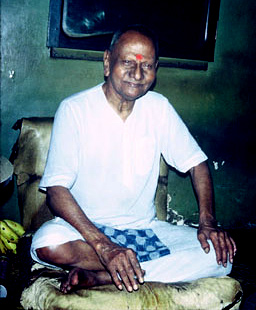
A classic and original article about meeting Nisargadatta Maharaj in 1978 by Dr. Lakshyan Schanzer. All the pictures of Nisargadatta Maharaj were taken by Dr. Schanzer. At the end, the author is shown sitting with Maharaj.

Harsha's avatarLuthar.com

By Dr. Lakshyan Schanzer

My name is Lakshyan Schanzer. I have been practicing and teaching yoga and meditation since 1971. I am also a psychologist and practice a meditative approach to psychotherapy. This is my first writing about my experiences with Nisargadatta Maharaj.

By 1978 I had been practicing and teaching for about 7 years (primarily Integral Yoga) and had reached a ‘wall’ in my practice. I was having wonderful experiences/results on a daily basis. Yet, for me, these experiences were just that; only experiences. Yes, they were important and healing ones, bringing revelations and insights into my history, release of deep feelings, or guidance about the coming day or accurate premonitions about the future.

However, as I became accustomed to ‘pushing the buttons’ that generated these experiences, I began to ask myself: “Was there any value beyond these temporary conditioning effects of regular practice? That is, if we experience…

View original post 1,525 more words

suryanarayanarajumd's avatar

Upadesa Saram Verse 4: Comments by Dr. Suryanarayana Raju

Sri-Ramana-Maharshi-3

Verse 4: kaya vang manah karyam uttamam pujanam japat chintanam krama
kaya-vak-manah: with body, speach and mind
karyam: acts
pujanam: worship
japa: chanting
chintanam: contemplation
kramat: order
uttama: better

“worship, japa, contemplation are the best activities in that order … performed respectively with body,speech and mind.” Continue reading

suryanarayanarajumd's avatar

Upadesa Saram Verse 3: Comments by Dr. Suryanarayana Raju

Sri-Ramana-Maharshi-2

Verse 3: ishvara-arpitam na ichaya kritam , chitta shodakam mukti sadhakam.

ishvararpitam: Dedicated to God.
na ichaya kritam: not desiring.
Chitta shodakam: purifies the mind
mukti sadanam: is an aid to liberation.

Dedicating the results of action to God and not desiring leads to purification of mind and this practise is an aid to liberation. Continue reading

suryanarayanarajumd's avatar

Upadesa Saram Verse 2: Comments by Dr. Suryanarayana Raju

Sri-Ramana-Maharshi

Verse2: Kriti mahodadhou patana karanam phalam ashashvatam gati nirodhakam.

kriti – maha – udau : The vast ocean of actions
patana karanam: is the cause for fall [spiritual fall]
phalam ashashvatam: The result is transient.
gati nirodhakam: acts to stop spiritual progress.

The reason for someone’s not progressing in spiritual path is getting lost in the ocean of actions. Continue reading

evankeith's avatar

My Teacher: By Dr. Evan Keith

I felt something come from under the bathroom sink onto my foot.

Like the dance of water it felt.

When I looked down, I saw you. I felt revulsion and disgust.

Is it a crime for one’s form to look so ugly to me?  Continue reading

Harsha's avatar

Viswanatha Swami_ A Hidden Gem: By Murray Feldman

Viswanatha Swami

Viswanatha Swami first came to stay with Bhagavan Sri Ramana Maharshi when he was about 19 years old. His father, Ramaswamy Iyer, was a first cousin of Bhagavan.

I had the good fortune to spend considerable time with this great devotee of Ramana Maharishi from April 1976, until he became ill and passed away at 75 years of age on the 22nd November, 1979. How he came to Bhagavan has been written about elsewhere. Here I attempt to show how he exemplified, so wonderfully and devotedly the teachings of Bhagavan. Continue reading