Harsha's avatar

The Quest_To Love Or To Be Loved: By Alx Uttermann

Giving Love To Get Love, Oh Dear!

In my early years, in life and in spiritual searching, my primary motivation in life was to be loved; there seemed to be such a lack of love, cumulatively, in my own experience, everywhere I turned. (Extreme heartbreak, depression, loss, family trauma and other factors had all contributed to this perception.) Continue reading

Harsha's avatar

It’s Simple: By Alx Uttermann

it’s simple,
this voice learning to hear itself Continue reading

Harsha's avatar

We Did Not Go To Him For Profit: By T.K. Sundaresa Iyer

Note: T.K. Sundaresa Iyer (T.K.S) met Sri Ramana in 1908 when T.K.S was only a twelve year old boy. Bhagavan, although a full blown Self-Realized sage, was also quite young and in his late 20’s. Many early devotees have described how Bhagavan by his sheer look would give them experience of the Self. However, this was not true in every case.

T.K.S’s cousin Krishnamurthy had been visiting Bhagavan Ramana  regularly and would sing songs of devotion to him. One day T.K.S asked his cousin where he went every day. Krishnamurthy told him about Ramana and said, “The Lord of the Hill Himself is sitting in human form, why don’t you come with me.” Both of them then climbed the Hill and went to Virupksha cave to visit the Sage.

Now the story in T.K.S.’s own words:

I too climbed the Hill and found Bhagavan sitting on a stone slab, with about 10 devotees around him. Each would sing a song. Bhagavan turned to me and asked, “Well, won’t you sing a song also.” One of Sundramurthy’s songs came to my mind and I sang it. It’s meaning was, “No other support have I, except thy holy feet. By holding on to them, I shall win your grace. Great men sing your praise Oh, Lord. Grant that my tongue may repeat Thy name even when my mind strays.”

“Yes. That is what must be done,” said Bhagavan, and I took it to be his teaching for me. From that time on, I went to see him regularly for several years without missing a day.

One day I wondered why I was visiting him at all. What was the use? There seemed to be no inner advancement. Going up the hill was meaningless toil. I decided to end my visits on the hill.

For one hundred days exactly I did not see Bhagavan. On the hundred and first day I could suffer no longer and I ran to Skandasramam, above Virupaksha Cave. Bhagavan saw me climbing, got up and came forward to meet me. When I fell at his feet, I could not restrain myself and burst into tears. I clung to them and would not get up.

Bhagavan pulled me up and asked: “It is over three months since I saw you. Where were you?” I told him how I thought that seeing him was of no use. “All right,” he said, “maybe it is of no use, so what? You felt the loss, did you not?”

Then I understood that we did not go to him for profit, but because away from him there was no life for us.

From “At the Feet of Bhagwan” by T.K. Sundaresa Iyer.

Harsha's avatar

Surrender and Salvation: By Voruganti Krishnayya

Voruganti Krishnayya was a great devotee of Bhagavan Sri Ramana. He has narrated many incidents that he observed while in Bhagavan’s company. The following story is one of my favorite.

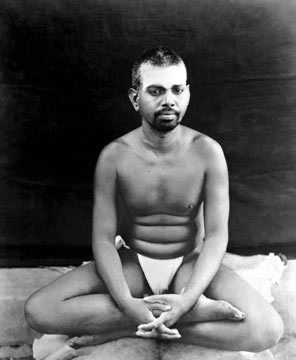
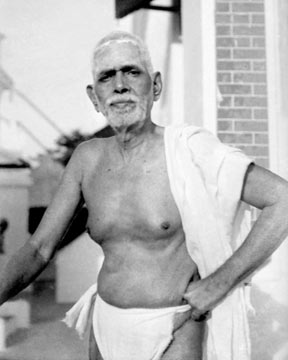
Bhagavan Ramana

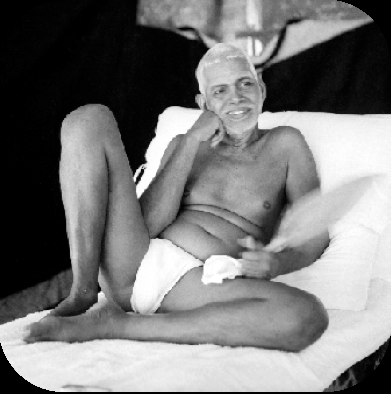
Bhagavan Ramana

Bhagavan was most tender with people who thought themselves for some reason or other to be miserable sinners and who went to him torn by repentance.

During summer evenings we used to sit in the open space near the well. We would collect in the dining hall for dinner and come back to the well. Suddenly, one day, a visitor started weeping bitterly, “I am a horrible sinner. For a long time I have been coming to your feet, but there is no change in me. Can I become pure at last? How long am I to wait? When I am here near you I am good for a time, but when I leave this place I become a beast again. You cannot imagine how bad I can be – hardly a human being. Am I to remain a sinner forever?”

Bhagavan answered: “Why do you come to me? What have I to do with you? What is there between us that you should come here and weep and cry in front of me?”

The man started moaning and crying even more, as if his heart were breaking. “All my hopes of salvation are gone. You were my last refuge and you say you have nothing to do with me! To whom shall I turn now? What am I to do? To whom am I to go?”

Bhagavan watched him for some time and said, “Am I your guru that I should be responsible for your salvation? Have I ever said that I am your master?”

“If you are not my master, then who is? And who are you, if not my master? You are my guru, you are my guardian angel, you will pity me and release me from my sins!” He started sobbing and crying again.

We all sat silent, overcome with pity. Only Bhagavan looked alert and matter-of-fact.

Bh: “If I am your guru, what are my fees? Surely you should pay me for my services.”

D: “But you won’t take anything,” cried the visitor. “What can I give you?”

Bh: “Did I ever say that I don’t take anything? And did you ever ask me what you can give me?”

D: “If you would take, then ask me. There is nothing I would not give you.”

Bh: “All right. Now I am asking. Give me. What will you give me ?”

D: “Take anything, all is yours.”

Bh: “Then give me all the good you have done in this world.”

D: “What good could I have done? I have not a single virtue to my credit.”

Bh: “You have promised to give. Now give. Don’t talk of your credit. Just give away all the good you have done in your past.”

D: “Yes, I shall give. But how does one give? Tell me how the giving is done and I shall give.”

Bh: “Say like this: ‘All the good I have done in the past I am giving away entirely to my guru. Henceforth I have no merit from it nor have I any concern with it.’ Say it with your whole heart.”

D: “All right, Swami, I am giving away to you all the good I have done so far, if I have done any, and all its good effects. I am giving it to you gladly, for you are my master and you are asking me to give it all away to you.”

Bh: “But this is not enough,” said Bhagavan sternly.

D: “I gave you all I have and all you asked me to give. I have nothing more to give.”

Bh: “No, you have. Give me all your sins.”

D: The man looked wildly at Bhagavan, terror stricken. “You do not know, Swami, what you are asking for. If you knew, you would not ask me. If you take over my sins, your body will rot and burn. You do not know me, you do not know my sins. Please do not ask me for my sins.” And he wept bitterly.

Bh: “I shall look after myself, don’t you worry about me,” said Bhagavan. “All I want from you is your sins.”

For a long time the bargain would not go through. The man refused to part with his sins. But Bhagavan was adamant.

Bh: “Either give me your sins along with your merits, or keep both and don’t think of me as your master.”

In the end the visitor’s scruples broke down and he declared: “Whatever sins I have done, they are no longer mine. All of them and their results, too, belong to Ramana.”

Bhagavan seemed to be satisfied. “From now on there is no good nor bad in you. You are just pure. Go and do nothing, neither good nor bad. Remain yourself, remain what you are.”

A great peace fell over the man and over us all. No one knows what happened to the fortunate visitor; he was never seen in the Ashrama again. He might have been in no further need of coming.

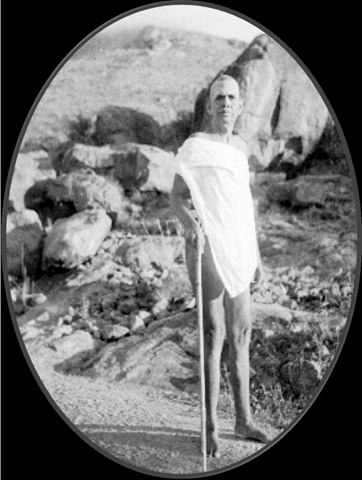
Bhagavan Ramana

Bhagavan Ramana

Harsha's avatar

The Deepest Knowing

When I was a child, the idea that I could only know “me” and not others was both strange and fascinating. It still makes me smile. What can anyone really and truly know with complete and absolute intimacy?

What is your deepest knowing? How do you know that you know?

Harsha's avatar

Who Am I? The legendry question! By Mourad Rashad

Who Am I? The legendry mystical question, the path of many sages such as Ramana, Nisargedata, Krishna Menon, Shancara …etc. All these sages followed the enquiry “who am I” to its end.

“Who am I?” is not really a question because it has no answer to it; it is unanswerable. It is a device, a process, a methodology and a meditation not a question. It is used as a mantra. When man constantly inquires internally: “Who am I? Who am I?” Man is not waiting for an answer. The mind will supply many answers; all those answers have to be rejected. The mind will say: “I” is the essence of life. “I” the eternal soul. “I” is divine,” and so on and so forth. All those answers have to be rejected: neti neti — one has to go on saying: “Neither this nor that.”

When man has denied all the possible answers that the mind can supply and devise, when the question remains absolutely unanswerable, a miracle happens: suddenly the question also disappears. When all the answers have been rejected, the question has no grounds, no supports internally to stand on any more. It simply flops, it collapses, and it disappears.

When the question also has disappeared, then man knows. But that knowing is not an answer: it is an existential experience. Nothing can be said about it, or whatever will be said will be wrong. To say anything about it is to falsify it. It is the ultimate mystery, inexpressible, indefinable. No word is adequate enough to describe it. Even the phrase “essence of life” is not adequate; even “God” is not adequate. Nothing is adequate to express it; its very nature is inexpressible.”

When Hui-k’o went to see Bodhidharma, this interchange took place;

“Peace of mind”, replied Hui-K’o.

“Show me this mind of yours”, said Bodhidharma, “and I will pacify it”.

“But when I seek my mind, I cannot find it”, was the reply.

“THERE!” said Bodhidharma, “I have pacified your mind!”

“YES!” said Hui-K’o, and laughed.

Now, what next after this revelation of knowing who you are?

Harsha's avatar

I am not this, I am not that; who am I? – Gururaj Ananda Yogi Satsang

-This is an edited and unpublished satsang of Gururaj Ananda Yogi. If you want to watch the video of the whole satsang you can get it in Gururaj’s channel at Vimeo

Question: I am that which causes awareness to flow from the grossness of the lower mind to the un‑differentiated bliss of the superconscious.  I am not mind, but upon me the mind rests.  I do not move, yet through me all things move.  I am neither this nor that.  What am I?

Gururaj Ananda: That you are.

Who am I if I am not the mind?  Who am I if I am not the body?  What makes you presume that you are not the body and not the mind. What point of reference have you to tell you that I am not the mind and neither the body?  Show me that point of reference.

When I say to myself, “I am that I am,” who is this that I am that I am?  Who is this Brahmas mi‑‑I am Brahma?  Who is this that could say, “I and my Father are one?”  Who is this that could say that I, as the mind and body, is non‑existent?

Then what part of you is existent to make you cognize your non‑existence?  You don’t know, that is for sure.

Your mind is a reality, your body is a reality, and the spiritual self within you is a reality, but it is only the mind that could cognize its own realness which is also, at the same time, erroneous.
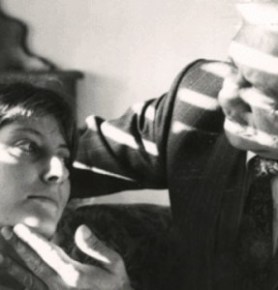
Gururaj Ananda and Cansita

You say I am this body.  Now this body has been changing so much.  I was an infant, then l grew up into adolescence, became an old man…

So this body is the same body, but over a period of time ‑‑ which you regard to be time ‑‑ has gone through various changes.  Who is that which perceives this particular form of reality?

The spirit that is within you, the Divinity that is within you, is non‑cognizable and neither would it cognize anything besides itself in its own cognition.

The mind says this is a handkerchief.  Why does the mind say this is a handkerchief?  Because my mind, or a certain recollection or experiences that has gone through me in this lifetime or even in past lifetimes, perhaps, make me cognize this to be a cloth, a piece of cloth to be used on my nose.

Now, where does this come from?  What tells you that this is a nose and that’s a handkerchief?  So you go further back to realize that my mind is saying that, then you will ask yourself what perpetuates this mind in this mold of having this particular kind of cognition?

And like that you go on and on and on until you reach a point which is zero.  Then only can you say, “I’m not the body.”  Then only can you say, “I’m not the mind.”

Look, I can touch, feel, smell, taste, go to bed and make love, go to the toilet.  Is the body then not functional?  Of course  it is functional.  Then why do I deny the body?

I deny the body because I feel within myself‑‑or rather some force is feeling within myself‑‑that I am far beyond the body and the mind.  Now, the greatest mistake that has been made‑‑or is being made by various theologies‑‑is the denial of the body and mind.  Let’s look at it from a different angle.  Do not deny this body.  Do not deny this mind.  And do not deny that which cognizes the body and the mind.

So how are you dealing with yourself, then?  We’re still going to come to the cognitive factor.  But at this moment how do you stand?  You stand in the position of saying, my body exists, my mind exists, and the cognitive factor also exists, so therefore I am existence and being existing I can deny nothing.  For I am that I am.

There is no differentation between your body and your mind and your cognitive self.  The I that cognizes the very existence of this body and this mind is thought forms which we can call the ego self that is forever trying to preserve itself in the cognitive factors of saying I am this handsome guru [comments and laughs from audience].   Who’s saying that?  That stupid ego self.

Now, what is the ego worth?  The ego is worth nothing, because it is just a formation of patterns which you have superimposed upon yourself through the various experiences that you have gone through, and that has left impressions.  And those impressions is that which we call the ego.

Now, I put my hand on this table and I remove this hand.  But an imprint is there.  The hand is not there anymore, but an impression or an imprint of the hand is existing on this table.  Get out your magnifying glass and you will see it.  What reality is there in this imprint?  Nil!

This very imprint that cognizes me as a body, this very imprint that cognizes me as a mind.  So my body and mind is totally dependent upon that imprint.  And yet, what is the reality of this imprint? Nil.  It’s an impression created through patternings of experiences.

So now if I deny this imprint, or if I do not attach value to this imprint in bringing about the recognitions of the existence of this body and this mind, then I am basing the existence of this body and this mind with something that has no substance but which has just created an impression there, presuming that this mind and this body is real.

So now, what have we done so far?  We are accepting the reality of the mind and the body, and, at the same time, we are denying the mind and the body.  Because both are true. You are not the body, yet the body; you are not the mind, yet the mind.  Then what is your reality?  And how are you going to prove this reality?

You can only prove it by inference.  Or by the very factor that reality requires no proof.  It exists because of its own existence.  The only time you can prove reality is when you have a reference point.  And where can there be any reference point as as far as Divinity is concerned.

There is consciousness and non‑consciousness.  Non‑ consciousness means you are not aware.  And conscious means that you are aware.  Now, what proof is there of awareness.  Does awareness require any proof?  Does the light burning there require any proof that it is burning?  Its very act of giving light is its own proof.

You do not need to prove anything.  Because when it comes to the highest level, you need a point of reference, and the highest level being the one, without a second, cannot have a reference point.

I exist, I exist, because I exist.  That’s all.  And because I, the real me to which I have no reference point exists, I can only refer it back to a grosser level of the mind and the body, which finds its existence in that which I cannot prove is existing.Gururaj Ananda
I’m taking the highest factor in life and bringing it down to the grossest factor and that is what I could compare things with.  But when we reach the point beyond comparison ‑‑ Beautiful word.  You’re pairing up things in comparison.  There have to be two to compare.  But what if I want to exist as I am in my full totality, then will I not lose the idea of comparing myself to anything else?  And the very moment I lose the idea of comparing myself to any subject or object, that is the very moment when I will lose the ego self, that imprint that is existing in my experience.  Or the impression of the experience.  Then where will I be?  I shall be incomparable.

I shall be the source of existence itself, which I am.  Not in reality, but in actuality.  For reality changes from day to day.  What is real to you today might be unreal to you tomorrow. You see.  But when I become actual, when I become the source and recognize that source within me, or the source recognizes itself, then I will say, let me enjoy this body.  Let me enjoy this mind, for it is a product of a collection of impressions.  And if they are there, let me make the best use of it.

Here we are fusing two factors.  The fusion lies in the fact that that which is created by impressions‑‑or maya or illusion‑‑, is brought into reality, and reality is converted into illusion.  So I make the best of both worlds.

For example, let’s see what example we can use.  Say I loved a woman very much, I was deeply involved with that woman.  Fine. And she has left me.  She has jilted me or died or whatever or jumped in the lake.  Now, is she there or is she not there?  She’s dead, we know.  But is she there or is she not there?  She is there because you think she is there.  What makes you think she is there is because those impressions, those experiences, and you are reliving something so far in the past which has no reality today, which has become an illusion.  Because she is not there.  I have developed a dependency upon her when she was there.  So what am I living on now?  On dependencies.

I am existing with a reality, which is my body and my mind.  Though in essence it is unreal, but for the moment of three score years and ten, let me do the best with it I can.  Why not. Who would deny me that right?  And why should it be denied to me? You think all these organs we have are there just for the fun of it or for the show of it?  You think I have ears and I must not hear?  Or I have eyes and I must not see?  Or a nose and not smell?  Or any other organ of my body that has been there created through an evolutionary process and not to be used.  Why should I not use every organ in this body of mine to its fullest value? Honestly and sincerely.

So these monks  say become celibate, become this and that, become this and I don’t know what all.  I say, “become yourself!”  Be yourself!

Be yourself.  How can I make myself be myself?  Ahh!  How can I make myself be myself?  And the answer to that riddle is so simple.  Do you know that beautiful hymn which I like very much, lead thou me on, kindly light, one step at a time is enough for me.  Don’t you know that beautiful hymn?

Firstly, I must admit to myself that  I’m living a fragmented life.  Part of my mind is pulling that way, part of my mind is pulling that way, part of my mind is floating up there in Chicago and another part somewhere in some heaven or some hell which has no existence in reality.

Admit to oneself that I’m fragmented.  Lead thou me on, kindly light to integration away from fragmentation.  Let me be whole.  Let me function in this life holistically.  Let me not find any more the discriminatory factors between body, mind, and spirit.  Let me regard it to be one continuum.  And this continuum, after finding through spiritual practices and meditation, when you find this continuum of yourself, mind, body, and spirit, this continuum will extend and extend and develop so much that the entire universe becomes you and you become the universe.

Existence and non‑existence, what am I going to do about it?  I’m both.  I am existing, and at the same time, the impressions which I’m existing upon is non‑existent.

So let me tell you this, that 99.999% of your problems in your mind are self‑created without any damn substance.  So that which you have created without substance… very easy way out of it‑‑pull the chain!

That is the secret of life.  Forget the past.  It is gone. Do not project yourself into the future, it might not be there. But live for this moment.  Live for this moment.  And then you’ll preserve your physical health, you’ll preserve your mental health, you’ll become integrated in mind, body and spirit, and you’ll enjoy life.  For life is joy.  So, as I always say, enjoy the joy.  Why deny yourself of that beautiful joy of this so‑ called existence when you can have fun.

What’s wrong with fun. Enjoy it.  But be honest and sincere, that’s important.

MEDITACION BARCELONA

Harsha's avatar

Light From Eternal Lamps: By Swami Sadasivananda

image

“One must make the mind to bear on God”

ENTERING THE PALACE OF LIBERATION…

The One Thing Needful

“The eternal, unbroken, natural state of abiding in the Self is jnana. To abide in the Self you must love the Self. Since God is verily the Self, love of the Self is love of God; and that is bhakti. Jnana and bhakti are thus one and the same…. their purpose is to lead you to dhyana, to meditation, which ends in Self-realization.”  Maharshi’s Gospel I, The Teachings of Sri Ramana Maharshi. p. 17-18.

Sri Ramana Maharshi maintained this ancient form of instruction. The answers he gave to questions represent what has evolved in our modern times as a uniquely universal spiritual teaching that can be taken up by anyone the world over without adopting the limiting constraints of any one religious tradition. It has been said that these teachings were indeed God-given, for they began with the words of grace flowing from Sri Ramakrishna and continued with the blessing of perfection that was embodied as Bhagavan.

As did his predecessor, Bhagavan Sri Ramana Maharshi stressed practice that produces purification (removal of that fog of ignorance, the obstacles and habits of the mercurial mind which diminish our pure vision) as well as the grace of the knowledge of the Self as the eternal companions of those who would be led:

From the unreal to the Real,
From darkness to Light,
From death to Immortality!

NOTES FROM ARUNACHALA…

Devotees present with Bhagavan on this day said that a most important spiritual lesson was transmitted through the actions of Bhagavan as he held Lakshmi’s head during her final moments.

As Bhagavan was stroking Lakshmi’s head, she was gasping for breath in the final moments prior to her passing. Bhagavan, who all knew was capable of removing her pain and causing her spirit to easily exit the body, rather whispered in Lakshmi’s ear to “Tolerate the pain!”.

At a later day, Bhagavan said that, “Suffering is the way to Self-realization.” Our training within meditation prepares us to remain “steady in wisdom” even during the final trial of separation from the body.

image

“Practice is necessary, Grace is there.”
Reprinted from Swami Sadsivananda’s July newsletter.
To subscribe to his newsletter, go to http://www.ramanateaching.org/contact.html
For more information on Swamiji, click here:   About Swami Sadasivananda
Teachings of Bhagavan Sri Ramana Maharshi web site: http://www.ramanateaching.org
Ask your question in relation to Bhagavan’s teachings, meditation and spirituality at:
http://www.ramanateaching.org/faq

Harsha's avatar

Who Is the I? Knowing Our Nature: By Dr. Harsh K. Luthar

Who Am I?

The practice of advanced yoga methods and pranayama with discipline along with meditation on the Chakras (Energy Centers in the body) leads to various mental and spiritual experiences. Sri Ramana’s teaching, however, views such yogic and meditative practices as preliminary to the real quest into the investigation of the nature of the “I”.

Visions of angels, deities, super conscious states, and various types of psychic abilities do manifest on the spiritual path.  But fascinating as such things are to the human mind, these do not resolve the fundamental question about the nature and mystery of existence.

People say, “I like this”, “I dislike this”, “I am a doctor”, “I am a professor”, “I am a psychic”, “I am a student”, “I am good”,  “I am a husband”, “I am a wife”, “I went here”, “I am strong”, “I am weak”, “I am happy”, “I am sad”, etc. The commonality in all we do and how we view our self  is this, “I”

The method of Self-Inquiry is to ask oneself “KOHUM”.  KOHUM in Sanskrit translated literally means “Who Is Me?” In English, we use the question, “Who Am I?” or Who is this “I” that is a constant reference point for us?

What is this sense of identity that engages in all these activities and has a variety of experiences, perceptions about the world and itself?

Who is the I that sees, dreams or has visions.  According to Sri Ramana, without understanding the nature of the I and resolving the mystery of existence, permanent satisfaction and peace are not gained.

It is for this reason that great sages say that one should aspire for Self-Knowledge above all else.

Everything, absolutely without exception, is transient. One is born, one grows old, one has many experiences in the world, and then one dies.

Things have a beginning and then an inevitable end. All physical and mental abilities and powers eventually fade. Psychic abilities and every kind of experience, supernatural or otherwise meets the same fate. It ends.

What remains always present is simply the sense of existence, this sense of I. The method of self-inquiry involves a focus on this I, an awareness of this awareness, until the quality of self-awareness is known as the inner essence of our existence. The words cannot fully capture this approach. It is understood only with effort and practice.

Therefore, the aspirant should with confidence maintain the inner gaze  focusing the “I” on “I”. Remaining in stillness with awareness aware of itself is the practice. Remaining with the sense of “I AM” is the practice.

It is this practice which is known as the direct path. It leads to the “I” merging into its Source. Immediately, it is seen that the Source is the Self, that the ancients called Sat-Chit-Ananda.  There are no words to describe it fully. It knows nothing else other than It Self, there being nothing else to know.

It is only this that the sages have referred to as the Supreme and the Absolute Beauty, the Core of Being that is Reality itself which sits in the heart of all beings as their support.  It is Knowledge, Existence, Bliss as one whole which animates existence and gives light and life to the mind.

Namaste

Harsha's avatar

Paradox Of The Mind: By Alan Jacobs

“Oh Mind, do not waste your life in roaming outside, pursuing wonders and wallowing in enjoyments. To know the Self through grace and to abide in this way firmly in the Heart is alone worthwhile.” [1]

This relevant quotation leads us to consider that what we term ‘mind’ can be conceived as a great paradox. From one standpoint it is a benevolent friend but from another it is a malicious enemy. Continue reading