Tag Archives: Personal Growth
Auspicious Shades by Trina Kavanagh

As I ramble on with Ramana
on sitting silent, and passing.
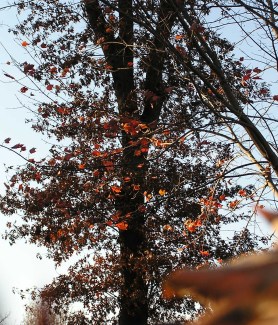
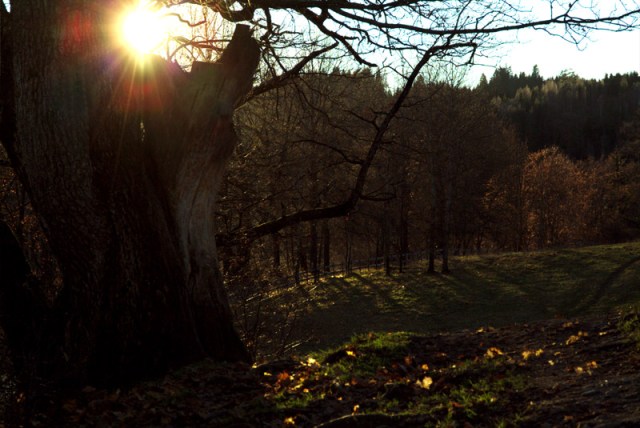
Action of auspicious shades of orange autumn leaves
attach their coloured crusty shades
to reflective rockports of realization.
On occasion, a lofty leaf within leela, stuck without sticking
releases bondage from rambling rocking walking rock.
Heart time space are collaborated and concentrated.
An unconditional comfortable compassion now remains here
and an all airy fiery appearance resides rupa.
Om. All love.

Njanappaana by Poonthanam Nambudiri-4
translation and commentary by Smt. Savitri Puram
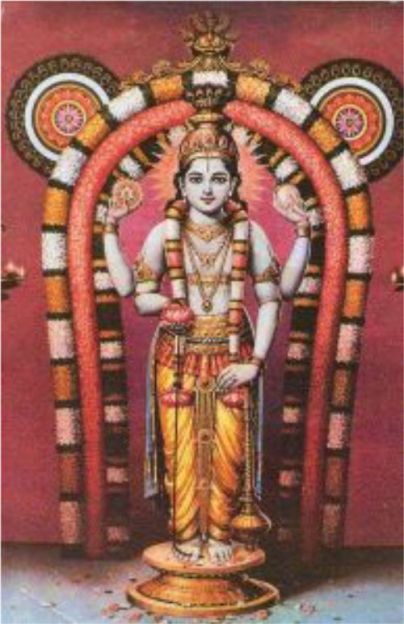
Bhagavan says : “njaanagni: sarvakarmaani bhasmasaat kuruthe”
~the fire of knowledge burns all karmaas in to ashes.

Introduction
Njanappaana can be considered as the Bhagavad Gita of Malayalees. This is a Darshanika kaavyam or philosophical poem expressed in the most simple Malayalam language for ordinary people. Poonthanam Nambudiri, an ardent devotee of Shri Guruvayurappan, transformed his unbearable sorrow from his infant son’s death into a “yogavishesham”. He used this sad experience to build his Bhakthi soudham or house of devotion and opened it for all devotees for all time. Even though the language is very simple, this njaanappana, or song of wisdom deals with the essence of all vedas and upanishads. May Bhagavan Guruvayurappan, Bhagavathy Sarswathi Devi and Sri Poonthaanam Nambudiri bless us to become wiser by going through this great Song of Wisdom!!
This is continued from Part One… https://luthar.com/njanappaana-1
Part Two https://luthar.com/njanappaana-2
Part Three https://luthar.com/njanappaana-3
Karmangalkku vilabhoomiyaakiya
Janmadesamibhoomiyarinjaalum
Karmanaasam varuthenamenkilum
Chemme mattengum saadhiyaa nirnnayam
Know (arinjaalaum) that this earth (bhoomi), our birth place or mother land (janmadesaham) is the field where we sow the seeds of all karmaas (karmangalkku vilabhoomiyaakiya). Definitely (nirnayam) it is not possible (saadhiyaa) to exhaust the residual karmaas (karmanaasham varutthenamenkilum) anywhere else other than here.
These four lines may seem to contradict the idea expressed in the previous lines. In the last stanza poet said that karmaas can be performed only on earth (there is no contradiction on this part.)and results of the karmaas are experienced in appropriate worlds like heavenly worlds or worlds of hell. Now this stanza says that “karmanaasham” or exhaustion of karmaas is possible only on earth. Let us explore what poet means by “karmanaasham” in this context.
In this context, by the word “karma” poet means residual karmaas. After death, subtle body (jeevan or soul) experiences the results of all karmaas that can be experienced by subltle body in the worlds other than earth. But some results can be experienced only by the gross body. So jeevan comes back to earth with those residual karmaas, takes an appropriate form of life in an appropriate circumstance to exhaust the remaining karmaas and to do new karmaas. Jeevan thus enjoys or suffers the results of all the residual karmaas on earth. So in the time between births, subtle body experiences the results of good and bad karmaas and during the life on earth, gross body experiences the results of remaining different set of good and bad karmaas. It is to be noted that in the time between births, subtle body does not accumulate any karmaas. Only during the life time on earth, jeevan in gross body accumulates karmaas.
Swami Sivananda says about residual karmaas: “If all Karmas bear fruit after death, there will be no cause for rebirth after life in heaven or hell or in animal bodies, because in these there is no means of virtue or vice. You need not be afraid that if any Karmas are left in store there will be no salvation, because knowledge of Self will annihilate all Karmas. Therefore it is an established conclusion that the souls descend to the earth from heaven with a remainder of works (Anusaya). After the fruits of the meritorious acts have completely been enjoyed in heaven, the remaining other set of works (good and bad) whose fruits are to be enjoyed in this world forms the Anusaya with which the souls come to the earth.” Bhagavan says : “njaanagni: sarvakarmaani bhasmasaat kuruthe” or “the fire of knowledge burn all karmaas in to ashes”.
In short, sum total of all our past lives led us to where we are now. To realize the goal of salvation, soul undertakes many many lives in gross body or physical body. Those who take responsibility for one’s karmaas and do one’s best to free from the cycle of birth and death is defined by scriptures are wise and strong willed. Those who blame others are defined as unwise and weak. How can we become wise and strong willed in this Kaliyuga? Poonthanam suggests chanting of naamam and surrendering to Bhagavaan as the best method. Chanting naamam helps us to remember Lord’s greatness continuously and from there Bhagavan takes over because He has promised in Bhagavad Gita:
Ananyaschintayanto mam ye jana: paryupasate,
Tesham nityabhiyuktanam yoga-kshamam vahamyaham
“Those devotees who think of me continuously, making me the sole object of their worship, I myself will provide for their every need and safeguard their yogakshemam.
Bhaktanmaarkkum mumukshu janangalkkum
Saktharaaya vishayee janangalkkum
Ischicheedunnathokke kodutthitum
Viswa maathaavu bhoomi siva siva
Siva! Siva! this Bhoomi Devi who is the mother of the whole universe (Viswamaathaavu bhoomi), fulfills all the wishes (Inchikkunnathokke kotukkunnu) of devotees (Bhakthanmaarkkum), people who aspire liberation or salvation (Mumukshu janangalkkum) and desire-bound materialists ( saktharraya vishayee janangalkkum) alike!
This earth fulfills the wishes of all kinds of people. It is interesting to note that Bhoomidevi lets any aspirant to advance in their chosen path. The only condition is sincere effort to reach the goal. May it be the desire to feel the presence of God everywhere and in everything, may it be the desire to attain salvation, or may it be the desire to succeed in the material life, our Mother Earth fulfills the wishes of everybody alike.
As per Shri Neelakandhan Nambisan, Poonthaanam used the word “bhakthanmaarkkum” as the first word because Bhagavan is Bhakthadaasan and devotees are more dear to him than those who desire mukthi or salvation. We have several stories to illustrate Bhagavan’s bhaktha vathsalyam or love for devotees. To make Prahlada’s words true, He took incarnation from the pillar as Narasimha, to make Bhishmaachaaryaa’s words true, He broke His own vow and took weapon in His hands, and He became the charioteer of Arjuna. Then as Paartha Sarathi he assures us through Arjuna: “na mae bhaktha: pranashyathi” , “my devotees will never perish”.
The word “Viswamatha” means the mother of the whole universe. There is one more reason to call Bhoomidevi Viswamatha. “viswam” also means Bhagavan. (Viswam Vishnu: Vashatkaara:). In one sense, Bhoomidevi is mother of Bhagavan also because all the incarnations happened in Bhoomi. So Bhagavan is Viswam and as His mother is Viswamaatha. So the name Viswamatha is apt for Bhoomidevi.
Sankaraachaaryar says ” kuputhro jaayetha kwachidapi kumaatha na bhavathi” or “there could be a bad son but never a bad mother !”. This mother of the Universe, Bhoomidevi sets an example and underlines the above statement by supporting and fulfilling the wishes of all her three types of children-bhakthaas, mumukshus and worldly people.
Were the divine naamaas “siva! siva” used to express poet’s surprise when he observed Bhoomidevi supporting the Vishayee’s worldly desires or to indicate Bhoomidevi’s apaara kaarunyam or limitless mercy towards the Vishayees? As a mother, Bhoomidevi may be letting Vishayees fulfill worldly desires for sometime in the hope that in course of time, with the satsangam of the Bhakthaas and Mumukshus, Vishayees will develop detachment towards worldly desires. A mother is an ocean of love and kindness!
Another interpretation is that the poet used these names to express Bhoomidevi’s sorrow to see how Vishayees go after never ending transient pleasures even after achieving their righteous and dhaarmic goals. This earth is karmakshethra and even after taking birth as a human on this earth, it is sad to see some one not trying to attain salvation. In kaliyuga this can be easily achieved by chanting Bhagavan’s divine names and people are still reluctant to turn their mind to the higher power. This might be another reason for Bhoomidevi’s sorrow.Those who do naamsankeerthanam are set on the path of Bhakthi and knowledge and eventually attain moksha.
Viswanaathante moolaprakrithi thaan
Prathyakshena vilangunnu bhoomiyaay
Moolaprakruthi, creation of Lord of the Universe (Viswanaathante) appears (vilangunnu) as Bhoomidevi who is visible by direct senses or direct perception (prakthyashena).
Let us explore more about creation. Bhagavan initiates creation. The first cause is Bhagavan or Viswanathan who is beginingless and endless. First effect is Moola Prakruthi. Second effect is Prakruthi which is the avyaktha or undifferentiated cosmic substance. Then comes the effect of Prakruthi, Mahat thatva. From this Ahamkaaram or feeling of “I-Ness” emerges, next is cosmic mind, five Njaanedriyas or knowing senses from mind, then five karmendriyas or working senses also from the same mind, Pancha tanmathras or five objects of njaanedriyas and finally the physical manifestation of the Pancha tanmathraas, the five visible material substances. These are called Pancha bhoothaas. Of this the last one formed is Bhoomi. First is Aakasham or space , next is Vaayu or air, third is Agni or fire, Fourth is Apa or water and then comes our Bhoomidevi ot Prithvi or earth. So we can see that Bhoomidevi is the gross and visible form (prakthyaksham) of Moola Prakruthi.
We can compare the relation between the Moola Prakrithi and Bhoomi to a mount of mud and an earthen pot made of mud. Here we can say that mud is the Moola Prakruthi and the earthen pot made out of mud is a manifestation of mud. So earthen pot can be compared to Bhoomi. Similarly all the different golden ornaments are made from the same basic substance Gold. Once you melt the ornament, it becomes the basic gold again. Likewise, before dissolution Bhoomi dissolves in water, water is evaporated by fire, fire is put out by air and air disappears in space and everything goes back and dissolves in Moola Prakruthi and in turn Moola Prakruthi dissolves in Paramaathma or Viswanathan.
Shri Nilakandhan Nambishan has given an interesting interpretation for the word “Viswanathan”. One meaning for “Vi”is bird and “swaa’ can mean a dog. So he says that name Viswanathan indicates that Bhagavan’s limitless mercy reaches the whole universe including the birds and dogs and hence undoubtedly He is the Lord of all!
Poonthaanam says that Jeevaas who took birth in this Kaliyuga on this earth as human beings are very blessed because just by chanting Bhagavan’s naamam, we can attain moksham.
Avaneethala paalanathinnallo
Avathaarangalum palathorkkumbol
Athukondu visheshicchum bhoolokam
Pathinnaallilumutthamamennallo
Veda vaadikalaaya munikalum
Vedavum bahumaanichu chollunnu
Several incarnations (avathaarangalum palathu), when you think about them (orkkumbol), are for protecting (paalanatthinallo) earth or Bhoomidevi (avaneethalam) . Because of this (athukondu), earth is considered very special (bhoolokam visheshicchum)and best (utthamam) among all fourteen worlds (pathinnaalilum). Not only munis who have the knowledge of Brahmam (veda vaadikalaaya munikalum) , but also Vedaas say this (chollunnu).
All incarnations of Bhagavan including the Poornaavathaars or incarnations with full glory, of Lord Rama and Lord Krishna happened on earth. Bhoomi got this special blessing and privilege to become the mother of Bhagavaan’s incarnations. These incarnations were to protect her from cruel, unrighteous and demonic kings. Bhagavan promised : “Whenever there is a fall in Dharma and a rise in Adharma, I manifest to protect the good, to destroy evil and establish Dharma” and kept his promise.
When ever Bhoomidevi is subjected to endless suffering at the hands of cruel and demonic people, she approaches Brahma and with Brahma and Devaas they approach Bhagavn. Bhagavan never ignored her prayers but solved her problems and took care of her with love. So Bhoomi is special for Bhagavan. Also as said in previous lines, Bhoomi is the Karma Kshethra and Karmaas can be done only by taking a physical form of life on earth. Bhoomi is special for this reason too. In addition to this, to exhaust residual karmaas from other worlds, jeevan has to take birth on earth. So Bhoomi is the divine place where you can accumulate karmaas, exhaust all results of residual karmaas and this is the only place where you can do Nishkaama karma or “actions with renunciation of fruits” and attain Moksha.
Because of all these reasons realized souls like sages and vedaas consider Bhoomi as the perfect world or the most desirable place to be born in for any living being. “Veda vaadikalaaya munikalum” can be interpreted in two ways:
1. Those who are experts in Vedaas.
2. Word Veda also means “brahmam”. So this can mean those who have realized brahmam or those who always meditate on brahmam.
The fact that Bhoomi is the best of all worlds is approved by Vedaas and great seers. It is said that even inhabitants of swarga or heaven desire to come to earth so that with Nishkaama karmam they can attain salvation. Scriptures and our ancient sages say that Naamasankeertthanam is the first step and best method to realize God in Kaliyuga.
Lavanaabudhi madhye vilangunna
Jambu dweeporu yojana lakshavum
Saptha dweepukaluntathil ethrayum
Uthamamennu vaazhthunnu pinneyum
An island called Jambu dweep with an area of one lakh yojana (one yojana is about 10 miles) stands (vilangunna) in the middle of the salty ocean (lavanaabudhi madhye) and is praised again and again (vaazhtthunnu pinneyum) as the best of all (ethrayum utthamamennu) the seven existing islands (saptha dweepukaluntathil).
There are seven islands and Jambudweepam is the best and most blessed of all islands. Other islands are Plaksha dweepam, Shaalmala dweepam, Kusa ,Krouncha, Shaaka and Pushkara dweepams. There are seven different types of oceans and Jambu dweepam is surrounded by the salty ocean. The other oceans are of sugar cane juice, wine, ghee, milk, curds and pure water. In one description, Jambudweep is not only in the middle of the salty ocean, it also forms the center island. Jambudweep is surrounded by salt water and after this body of salt water is Plaksha dweep, surrounded by an ocean of sugar cane juice. Then comes Shaalmala Dweep surrounded by an ocean of wine. Then comes Kusha dweep surrounded by an ocean of ghee Next is Krouncha dweep, surrounded by an ocean of milk. The last but one is Shaaka dweep, surrounded by an ocean of curd. The outermost and seventh dweep is Pushkara dweep which is surrounded by pure water.
There is an interesting story behind the birth of the seven seas and seven islands. The below quotation is taken from respected KVGji’s and S.N.Sastriji’s translation of Bahktharanjini interpretation of Naarayaneeyam published by Bhaktharanjini Trust.
” Puranams say that the earth is in the shape of a lotus bud in the center of which stands the mountain Mahameru or Sumeru. Once, King Priyavratha observed that the Sun God shines only on one half of the earth’s surface in the course of his circuit around Sumeru and leaves the other half in darkness. The King thought that it was not good to waste half of the day as night. Therefore he made seven circuits around earth, in his effulgent car, following the Sun at its speed determined to turn night into day. The tracks that were sunk by the fellies of the wheels of his chariot came to be the most celebrated seven oceans which divided earth in to seven islands.”
Poonthaanam glorifies Jambudweep because this island has nine regions or parts and one of them is Bharatha varsha. Bharata varsha is the best and blessed of all nine regions of Jambudweep. It is the only place where one can perform good karmaas and attain moksham. So we can even say that because of the Bharata varsham, Jambu dweep became the holiest of all islands! Poonthaanam again tells us to remember the importance of Naamasankeerthanam, especially for those who are fortunate to be born and fortunate to live in this Bharatha varsha of Jambu dweep. It is Karma Kshethra, it is Punya Bhoomi and with Nishkaama karmam one becomes Punyavaan and attains moksham
http://www.youtube.com/watch?v=vbI4Uk8fSYk&feature=player_embedded
Vegetarian Lifestyle: By Dr. Shyam Subramanian
Question from a student: As a Hindu living in the U.S., should I remain a vegetarian? If I include meat in my diet there are so many more choices in restaurant menus. Also, when I go to parties I feel awkward telling the host that I can’t eat many of their meat dishes. It is really uncomfortable. I see many of my Indian friends eating meat and fish and caviar and whatever is available and I feel they are more accepted socially in the western culture and that will help them get ahead professionally as well and make more money. As an American born in India, I feel very conflicted about this whole vegetarianism issue. There is pressure from my family to remain a vegetarian but my friends who are not vegetarians are having a better time at my college it seems.

Answer By Dr. Shyam Subramanian
Sayings of Sri RaJ Mata-Ji: By Dr. Harsh K. Luthar
Philosophy of Sri Raj Mata-Ji
Sri Raj Mata-Ji is one of my earliest spiritual advisors and counselors. Here are some of her sayings in Hindi and Punjabi that I have translated into English.
*******************************************************
Life is fleeting. Do something for yourself as well as others.
Grab some happiness when you can.
Happiness is having a caring family and cooking for them.
Happiness is having good friends and good neighbors to talk with.
Happiness is a state of mind.
Some people have everything but they are not happy. It’s a pity.
The secret to happiness is in giving.
If you serve others sincerely, you will be happy.
Nobody cares for the weak. Be strong.
You can only help and serve others if you are mentally strong.
Pray and ask God to make you strong.
If you eat too much, don’t complain afterwards.
Go take a walk after a big meal.
Take care of yourself. Nobody else can in the same way.
Make an appointment with the doctor and get a complete check-up.
Help others who need it. It will be good for you.
Give to charity whatever you can afford.
Make friends with your neighbors. Go shopping with them.
Stay active getting older and be part of a community.
Look for friends. They are looking for you.
Don’t look for perfection in others.
Life is a compromise.
You are better off than a lot of people.
Do the best you can and trust in God.
The Eruption of Kundalini-Shakti: By Michael Hortling
(This article was originally published in HarshaSatsangh E- Magazine Volume I)
Twenty years ago, the kundalini-shakti erupted within myself. Since I didn’t have a clue about what had happened to me and I experienced some quite unpleasant side-effects of this awakening, I had to start looking for remedies in order to ease some of the discomfort. This has been a more or less ongoing process ever since and although I can’t say that all problems have disappeared, some interesting insights and experiences have been gained and that alone has made the journey very worthwhile.
The effects on the psyche, and on one’s ideas about oneself and life in general, that come about by an active kundalini are far reaching indeed, but this transformation seems to have a price attached to it. In my case I’ve been plagued by a variety of symptoms ranging from physical health problems to bouts of anxiety and depression. As a result, I’ve been led to closely observe and attempt to harmonize the innermost workings and mechanics of my mind and body using a variety of techniques and methods such as tai-chi, hatha-yoga and various types of meditation.
To Do Something, or Nothing?
As much as I agree with the advaitin conclusion about reality being One and the concept of separate personalities acting within reality being illusion, I think that the often heard claim that nothing actually needs to be done in order to realise this, will probably only be true for a small number of persons. I find that, in the case of myself at least, ( and I do believe this would apply to most people) some work on oneself using “techniques” is necessary in order to be able to experience this fundamental unity of life. The main reason appears to me to be the deeply ingrained innate patterns of body and mind that prevent a true perception of life.The experience of duality seems to be hardwired into our being by nature, so that definite changes have to take place within the perceiving mechanism of ourselves before reality becomes non-dualistic.
Doing Mantras
One spiritual discipline that seems to work on many different levels to me has been the practice of silent mantra-repetition. One of the first deeper insights or realisations came to me after I had practiced mantra-meditation for some time as taught by Transcendental Meditation or TM.
I was sitting in meditation one day, quietly repeating the mantra in thought, growing progressively calmer and relaxed as a result as the normal rush and clutter of the mind began to recede. Suddenly it hit hit me like bolt of lightning – I was inside “myself”, calmly watching the mantra repeating itself, calmly observing whatever thought-processes still passed through the mind – BUT I WASN’T THE MIND – I WAS THE OBSERVER OBSERVING THE MIND! An enormous sense of relief and gratitude welled up inside as I in one instant understood that everything that really created problems in my life was either mind or body, but that the real “I” was the silent and totally unaffected observer, calmly watching everything come and go.
This was a very profound experience since it in one instant blew the identification with the mind to bits. I had always somehow thought that I actually WAS the constant inner monologue and imagery playing themselves out and now this was shown to be not true at all in a perfectly clear way. I was actually the screen on which the mind with its movies was projected – but I wasn’t the images themselves.
I soon realised however that this was just a glimpse into the deeper reality, but not at all a permanent state of enlightened being – a lot of practice or sadhana seems to be necessary in order to shift the focus of consciousness for good, even though the awakened kundalini is a kind of automatic process in this direction.
After this, mantra practice began to intrigue me more and more, especially since I also became very sensitive to sound and music in particular. I would experience rushes of kundalini moving up the spine, followed by ecstatically blissful sensations listening to certain types of music or certain combinations of notes and harmonies.
I then began to experiment with other mantras and other methods of repetition. Whereas the TM-meditation in essence uses the mantra to really allow oneself to let go and relax completely, I found that mantra-repetition could also be used to direct and control the mind in a more active and deliberately focused manner. This is more in line with yoga as taught in the tradition of Patanjali. The aim here is the sharp one-pointedness of mind which prevents the scattering of thoughts in all directions and keeps the mind from going outwards through the senses. It seems to me that it really is this rapid movement of the mind, constantly going back and forth between the falsely perceived separateness of oneself and the equally false “outer world,” that is one of the main obstacles to just calmly resting in the unity of world and self.
Technically, what seems to happen is that the focusing of thought focuses energy and this usually leads to an increased flow of kundalini along the spine. When this burst of energy reaches the highest region of the brain, shifts in consciousness occur, spiritual insights come drifting into awareness automatically and there can be general feelings of being in tune with the All and Everything.
For this slightly different way of repeating, I try to focus with as much attention as I can on the sound and the shape of the mantra until it gradually fills out the whole space of the mind . I’ve often also done this walking outside with eyes open until sometimes the boundaries between inner world of thought and feeling and outer world of objects have more or less vanished and everything is just felt to be one big continuum with different degrees of density. If the focus is strong enough, it’s as if the whole outer universe becomes filled with the sound of the mantra as well and it can then seem as if the cosmos begins to chant back, which is quite nice.
Mantras and Side-Effects
Other interesting and spiritually useful side-effects of doing mantras over time, is that one develops an increased awareness of the shape and direction thoughts take and it becomes much easier to voluntarily direct the mind and consciously choose which thoughts to follow and which are best left to fade away by themselves. Since I firmly believe that thought determines action and ultimately the realities and life circumstances we find ourselves in, this aspect of mantra-practice is probably quite powerful, in terms of shaping the future and destiny.
A third approach to mantra-recitation that I’ve used with some results is more in line with tantric teachings which focus on the harmonising and control of the different chakras or areas of consciousness. This is also done in order to understand and streamline the physical and mental aspects of life, which manifest through the lower chakras. Mind and body in essence seem to be permutations and combinations of the 5 basic elements – ether or the space in which manifestation takes place, air, fire, water and then earth as the solid end-result. In tantra-speak all this is the Shakti side of the great universal polarity and is ruled by the kundalini. In order to experience Shiva, the silently witnessing consciousness, or the real, permanent “I” of non-duality, kundalini needs to be moved out from the lower chakras and made to unite with top area of the brain. Before that can happen in a steady and permanent manner, the chakras or in essence the elements they represent, need to be purified and strengthened. In practice, I find this to be quite demanding to say the least, but this is probably mainly due to my own shortcomings!
Mantra and Tantra
In the tantric traditions mantras have been used for this purification and as far as my humble experimentation has allowed me to see, the ancient yogis very much knew what they were doing. Reciting the mantra “Lam” at the end of the spine for instance, strengthens, energizes, opens and expands the root-chakra. Now, why is this so, why “Lam” and not any other sound ? I don’t know, but for me, taking the pragmatic approach of “if it works, use it” is the best one. Traditionally, the explanation given is that the ancient seers and rishis were given the various mantras in direct communion with the Infinite and I can go along with that. One day the science of physics will probably find out that the universe really is sound in motion and that different densities of matter correspond to different frequencies of sound. Humans, being part of the universe, will then correspondingly be found to also consist of various frequencies of sound and I believe great advances in the healing sciences will be made because of these discoveries.So, essentially, mantras can be seen to be a method of tuning the mind, body and awareness, harmonising frequencies, directing consciousness towards the light, instead of letting it scatter.
May all beings find peace and happiness.
About the Author:
Michael Hortling is currently residing in Germany. He combines mantra yoga practice with playing the guitar and creating music. As a youngster, he had a mystical experience while watching the Aurora Borealis drape itself across the Northern sky and this may have caused his energies to be like the Aurora, flowing, generously gentle and glowing brightly.
Seed Mantras
The following seed mantras are taken from the classic texts and schools of Kundalini Yoga based in Hinduism. The mantras used in Jainism and Buddhism are somewhat different. Traditionally, Kundalini Yoga in India was only practiced under the guidance of a Kundalini adept. The same advice holds today. Having a good teacher is essential in avoiding mental and physical challenges that may come with the practice of Kundalini Yoga.
LAM – the root (lessons related to the material world)
VAM – the belly (lessons related to sexuality, work and physical desire)
RAM – the solar plexus (lessons related to ego, personality, self-esteem)
YAM – the heart (lessons related to love, forgiveness and compassion)
HAM – the throat (lessons related to will and self expression)
OM – the brow (lessons related to mind, intuition, insight and wisdom)
All Sound – the crown (lessons related to spirituality) this is your quiet and all sounds around you. The sound of your being….
Meeting Nisargadatta Maharaj: By Dr. Lakshyan Schanzer
My name is Lakshyan Schanzer. I have been practicing and teaching yoga and meditation since 1971. I am also a psychologist and practice a meditative approach to psychotherapy. This is my first writing about my experiences with Nisargadatta Maharaj.

By 1978 I had been practicing and teaching for about 7 years (primarily Integral Yoga) and had reached a ‘wall’ in my practice. I was having wonderful experiences/results on a daily basis. Yet, for me, these experiences were just that; only experiences. Yes, they were important and healing ones, bringing revelations and insights into my history, release of deep feelings, or guidance about the coming day or accurate premonitions about the future.
Bliss – The Source and Meaning of Life: By Michael Bowes
This article was originally written on May 9, 2006 and posted by Michael Bowes on the old HS blog.
Picture below is by long term HarshaSatsangh member Alan Larus at http://www.ferryfee.com/tree.htm

One weekend in the early 1990s, my friend Narayan and I went to Saint Louis, Missouri to visit with Swami Chetanananda. Narayan and I have known Swami since the late 1980s. On Sunday morning of that weekend we were eating breakfast with Swami and the other residents of the temple, and according to the custom there, we were all reading a portion of the newspaper.
When reading the paper, Narayan nearly always goes straight to the “funnies”.
We were all reading and eating. Swami was at the head of the table, I was to his left, and Narayan was to my left. At some point Narayan nudges me and hands me the funnies. He pointed to the “Donald Duck” comic strip.
Donald Duck was in the Himalayas searching for his guru. And there were signs posted in the mountains that said “Guru”, and then an arrow would be pointing to a certain direction. And Donald followed the signs and arrows until finally, at the top of a mountain peak sat the guru with a personal computer in front of him.
Donald Duck asked the guru, “What is the meaning of life?”
The guru didn’t answer; but the computer started printing out something that couldn’t be read on the comic strip.
The gag was that personal computers were becoming the rage, and now even the guru was using one to divine the mystic truths.
But another peculiar thing was that Narayan and I were searching for a guru and a spiritual home; and now, thanks to Donald Duck, the stage was set for that possibility.
I nudged Swami and handed him the funnies while pointing to the Donald Duck comic strip. He read it and handed it back without saying a word, and continued to eat breakfast. After breakfast Swami went to prepare for his weekly public talk. The rest of us cleaned up after the meal and relaxed until the beginning of the service.
Swami began his Sunday morning talk and I really don’t remember the topic; but near the end he announced that he was going to reveal the “Meaning of Life”. He was going to reply to the question in the funnies.
Swami started by saying, “The meaning of life is bliss.”; and the following is a very loose paraphrase of what he said to explain that statement:
There is an “ocean of bliss” that is the source, the cause and support of all that we see; And in its manifest forms that bliss is experienced as amrita, rasa, love, joy, happiness, fun, hope, peace and even as pain and suffering. Pain and suffering serve as motivation for us to find a way to return to our original state of bliss.
We were all born from bliss. We arrive in this world because one day or one night our parents engaged in a blissful activity, and as a result we were born. From that day on, all of our conscious and even subconscious activities are meant to help us either directly or indirectly to achieve bliss and happiness.
As children all we really wanted to do was play. Our true unconditioned nature is playful. But, as we start to get a little older, we are forced to go to school and we are conditioned by society to perform certain useful functions.
But bliss, happiness, satisfaction, etc. are still the primary objective of all of our behaviors. Our parents and our society force us to go to school so that we can get a job, so that we can earn money, so that we can be happy.
We marry because we believe that another person will fulfill us and make us happy. We have children because we think that will make us happy. Everything that we do is ultimately for happiness and bliss. Even so called, “selfless love” only serves to satisfy ourselves. We believe that by performing our self-ordained duties that we will be satisfied.
A short time after I heard these words from Swami, I directly experienced that “ocean of bliss”. Our own true nature is something that cannot be imagined, and it is truly inexpressible. Since then, even though I have gone through some dark times, it isn’t possible for me to worry or lose my connection to that blissful being, the “ocean of bliss” that is our own true nature. And I have a lot of fun. I can’t seem to avoid it.
I began to experience this truth because of an encounter with the “funny paper”.
Love and peace to all,
Michael Bowes
Ahimsa – The Antidote to Fear
By Dr. Harsh K. Luthar


You must be logged in to post a comment.