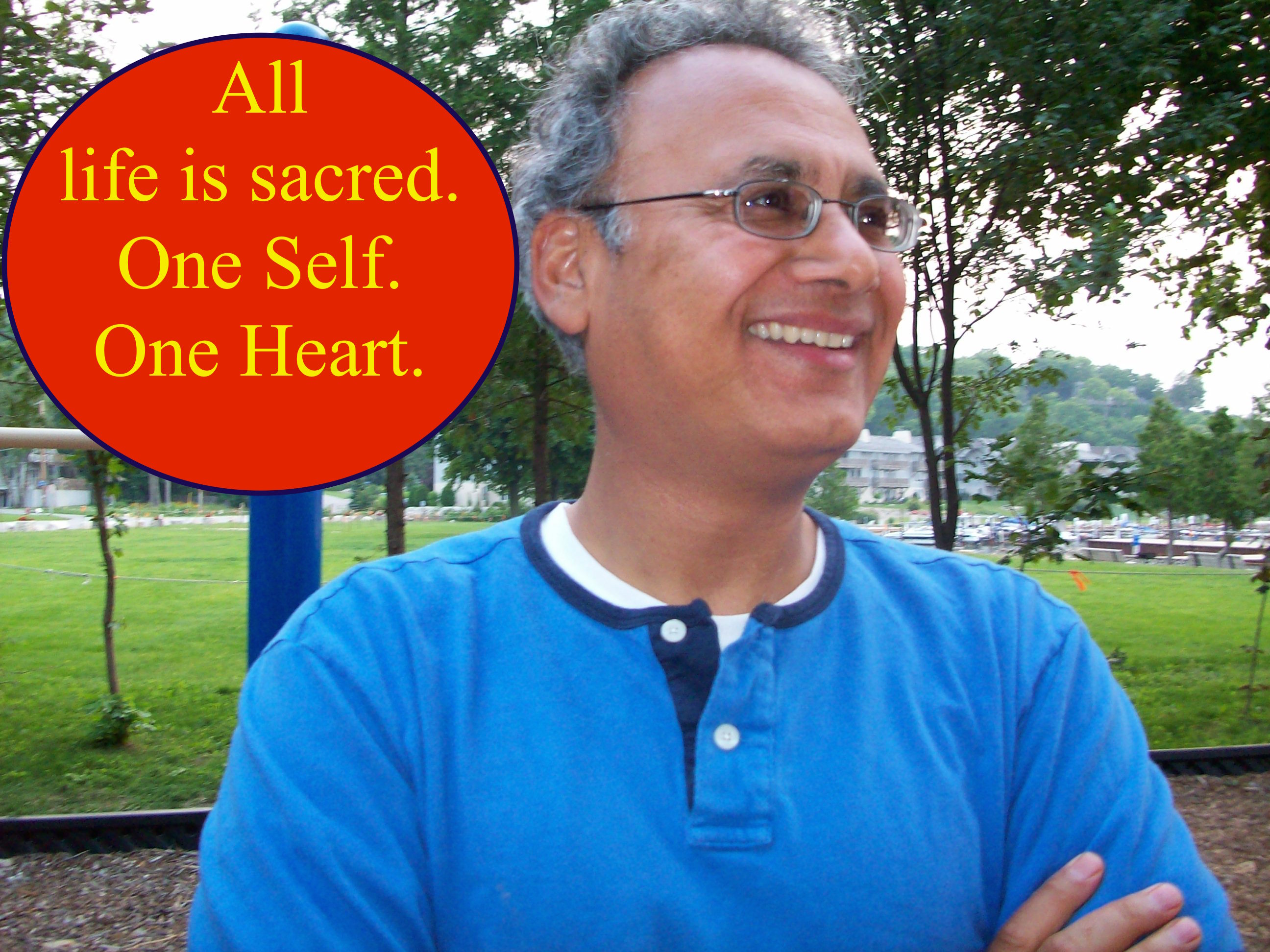

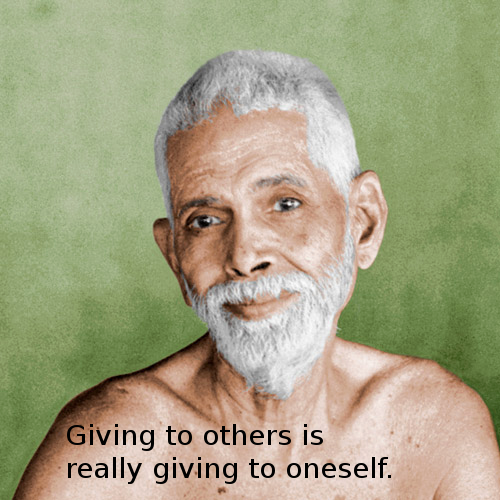
My Teacher and Sri Ramana
Gurudev Sri Chitrabhanu
View original post 1,123 more words
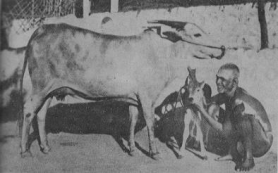
Bhagavan Sri Ramana used to say, “Ahimsa Param Dharma”. It means that Ahimsa (Nonviolence) is the Supreme Dharma (Duty or Principle). Sri Ramana pointed out to the devotees and yogis that in Patanjali’s Yoga Sutras, Ahimsa is named as the highest virtue above all other virtues. If we are able to understand what Ahimsa means at the deepest level, that clarity itself guides us in discovering the nature of the Self as our own Being.
Ahimsa means to be gentle with others and oneself and all of nature. Ahimsa means to be natural and aware without rushing and pushing and trying to get somewhere quickly. This applies to both the material and the spiritual world. The mental tendency to grab and consume experiences of various types remains, even as people get on the spiritual path. There is nothing wrong with that. However, we should be aware of the tendencies that…
View original post 697 more words
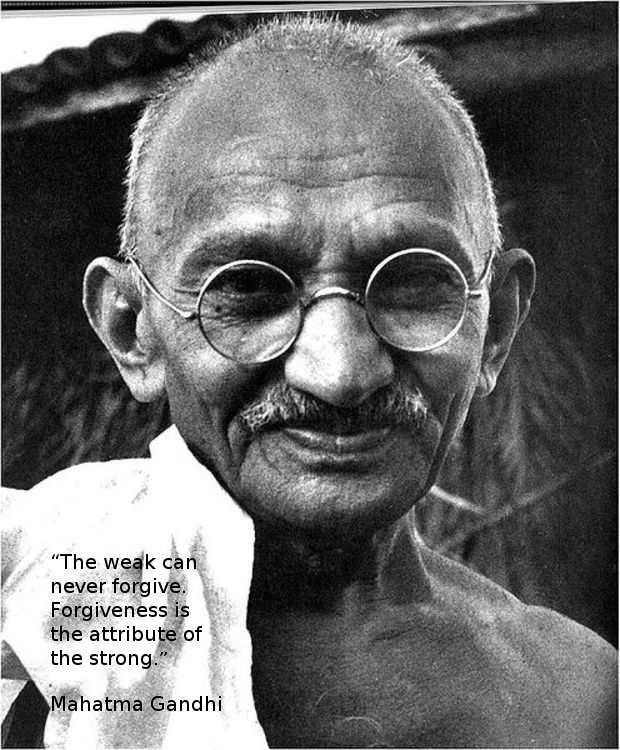

I felt something come from under the bathroom sink onto my foot.
Like the dance of water it felt.
When I looked down, I saw you. I felt revulsion and disgust.
Is it a crime for one’s form to look so ugly to me? Continue reading
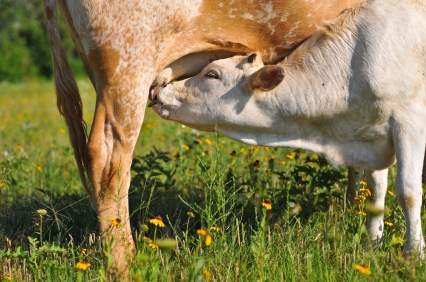
Dairy products in our current industry, worldwide,
foster the very same adverse effects as meat production and consumption, and even worse,
torture the dairy cow and her offspring repeatedly over time prior to the final slaughter.
For years, I drank milk and consumed milk products, never realizing that I had milk allergies which were causing my facial rashes and breakouts. Finally, someone suggested this to me and when I looked it up online, I was shocked to see how many allergies one can have to dairy products. This was my first step in removing dairy from my diet, for my own benefit. I was not always true to my vows and would often give in to pizza and on Halloween, would raid my sons’ candy for Snickers Bars, and on other holidays, eat the chocolate which was everywhere. In the summer months, I sometimes gave into the soft ice cream cones at the corner ice cream stand. And, usually, I broke out but thought it was worth it.
Until I saw some of the videos posted in the earlier parts of this series. When I saw how the dairy cow and her offspring are abused, I could no longer seek out dairy products in any way. But for some of us, we need to have other reasons than that, so I am including this part to highlight the unknown facts that dairy products really are not that healthy for us or our world, and can cause a multitude of environmental and physical problems. Many of us operate under the false assumption that dairy products make for healthy bones and this is being proven to be untrue in studies. The fact is that it is hard for people to give up their false belief systems if it would require them to remove dairy products from their diets. I have reproduced some excerpts below from online websites along with the link to the actual site for further reading.
Many sites will address the adverse environmental and other effects of the meat industry while including dairy products as a viable alternative to meat. An honest and intelligent assessment of the available facts cannot support such a conclusion. Dairy products in our current industry, worldwide, foster the very same adverse effects as meat production and consumption, and even worse, torture the dairy cow and her offspring repeatedly over time prior to the final slaughter. The simple indisputable fact is that by consuming dairy products or using them in worship, one is promulgating torture of these defenseless animals, and in the process, violating the foremost principle of dharmic behavior, ahimsa.
Let me add this about myself. While I now check the ingredients on everything I buy and I will not knowingly purchase anything which contains meat products or animal products or dairy products, I find it is still a challenge to determine whether there is dairy or animal product in what I eat when I am out, either in a restaurant or at a social event. If I am in doubt, and if the product is one which normally has dairy or eggs in it, I will politely decline.
When I am at temple, it is a more difficult position…I can refuse offers of yogurt or payasam or curd rice, or anything which is obviously milk based. But so many of the prasad offerings are laced with dairy or cooked in ghee that it is impossible to tell. I do still partake, asking His mercy and guidance in what I do. And I write this acknowledging that in co-writing this series, I am educating myself as I go along, making some decisions and deferring others as I ponder the solution that will work for me. I offer these writings to you, the reader, in the same spirit.
FROM PETA…
“Environmental DestructionLarge dairy farms have an enormously detrimental effect on the environment. In California, America’s top milk-producing state, manure from dairy farms has poisoned hundreds of square miles of groundwater, rivers, and streams. Each of the more than 1 million cows on the state’s dairy farms excretes 120 pounds of waste daily.(22) Overall, animals in animal factories, including dairy farms, produce 1.65 billion tons of manure each year, much of which ends up in our waterways and drinking water.(23) The Environmental Protection Agency reports that agricultural runoff is the primary cause of polluted lakes, streams, and rivers. The dairy-products industry is the primary source of smog-forming pollutants in California; a single cow emits more of these harmful gases than a car does.(24)Eighty percent of all agricultural land in the U.S. is used to raise animals for food or to grow grain to feed them—that’s almost half the total land mass of the contiguous 48 states.(25) Each cow raised by the dairy-products industry consumes as much as 50 gallons of water per day.(26)
Human Bodies Fight Cow’s Milk Besides humans (and companion animals who are fed by humans), no species drinks milk beyond infancy or drinks the milk of another species. Cow’s milk is suited to the nutritional needs of calves, who have four stomachs and gain hundreds of pounds in a matter of months, sometimes weighing more than 1,000 pounds before they are 2 years old.(27)
Cow’s milk is the number one cause of food allergies among infants and children, according to the American Gastroenterological Association.(28) Most people begin to produce less lactase, the enzyme that helps with the digestion of milk, when they are as young as 2 years old. This reduction can lead to lactose intolerance.(29) Millions of Americans are lactose intolerant, and an estimated 90 percent of Asian-Americans and 75 percent of Native- and African-Americans suffer from the condition, which can cause bloating, gas, cramps, vomiting, headaches, rashes, and asthma.(30) Studies have also found that autism and schizophrenia in children may be linked to the body’s inability to digest casein, a milk protein; symptoms of these diseases diminished or disappeared in 80 percent of the children who switched to milk-free diets.(31)
A U.K. study showed that people who suffered from irregular heartbeats, asthma, headaches, fatigue, and digestive problems “showed marked and often complete improvements in their health after cutting milk from their diets.”(32)
Calcium and Protein Myths
Although American women consume tremendous amounts of calcium, their rates of osteoporosis are among the highest in the world. Conversely, Chinese people consume half as much calcium (most of it from plant sources) and have very low incidence of the bone disease.(33) Medical studies indicate that rather than preventing the disease, milk may actually increase women’s risk of getting osteoporosis. A Harvard Nurses’ Study of more than 77,000 women ages 34 to 59 found that those who consumed two or more glasses of milk per day had higher risks of broken hips and arms than those who drank one glass or less per day.(34) T. Colin Campbell, professor of nutritional biochemistry at Cornell University, said, “The association between the intake of animal protein and fracture rates appears to be as strong as that between cigarette smoking and lung cancer.”(35)Humans can get all the protein that they need from nuts, seeds, yeast, grains, beans, and other legumes. It’s very difficult not to get enough calories from protein when you eat a healthy diet; protein deficiency (also known as kwashiorkor) is very rare in the United States and is usually only a problem for people who live in famine-stricken countries.(36) Consumption of excessive protein from dairy products, eggs, and meat has been linked to the formation of kidney stones and has been associated with colon cancer and liver cancer.(37,38) It’s also suspected that consuming too much protein puts a strain on the kidneys, which compensate by leeching calcium from the bones.(39)”
http://www.peta.org/mc/factsheet_display.asp?ID=98
FROM A PETA SPONSORED WEBPAGEHarvard School of Public Health, on the Consumption of Dairy Products (2005):
“The recommendation to drink three glasses of low-fat milk or eat three servings of other dairy products per day to prevent osteoporosis is another step in the wrong direction. … Three glasses of low-fat milk add more than 300 calories a day. This is a real issue for the millions of Americans who are trying to control their weight. What’s more, millions of Americans are lactose intolerant, and even small amounts of milk or dairy products give them stomachaches, gas, or other problems. This recommendation ignores the lack of evidence for a link between consumption of dairy products and prevention of osteoporosis. It also ignores the possible increases in risk of ovarian cancer and prostate cancer associated with dairy products.”
Cow’s milk is an inefficient food source. Cows, like humans, expend the majority of their food intake simply leading their lives. It takes a great deal of grain and other foodstuffs cycled through cows to produce a small amount of milk. And not only is milk a waste of energy and water, the production of milk is also a disastrous source of water pollution. A dairy cow produces 120 pounds of waste every day — equal to that of two dozen people, but with no toilets, sewers, or treatment plants.
In Lancaster County, Pa., manure from dairy cows is destroying the Chesapeake Bay, and in California, which produces one-fifth of the country’s total supply of milk, the manure from dairy farms has poisoned vast expanses of underground water, rivers, and streams. In the Central Valley of California, the cows produce as much excrement as a city of 21 million people, and even a smallish farm of 200 cows will produce as much nitrogen as in the sewage from a community of 5,000 to 10,000 people, according to a U.S. Senate report on animal waste.
FOR YOUR HEALTH: Dairy products are a health hazard. They contain no fiber or complex carbohydrates and are laden with saturated fat and cholesterol. They are contaminated with cow’s blood and pus and are frequently contaminated with pesticides, hormones, and antibiotics. Dairy products are linked to allergies, constipation, obesity, heart disease, cancer, and other diseases.
The late Dr. Benjamin Spock, America’s leading authority on child care, spoke out against feeding cow’s milk to children, saying it can cause anemia, allergies, and insulin-dependent diabetes and in the long term, will set kids up for obesity and heart disease, America’s number one cause of death.
And dairy products may actually cause osteoporosis, not prevent it, since their high-protein content leaches calcium from the body. Population studies, backed up by a groundbreaking Harvard study of more than 75,000 nurses, suggest that drinking milk can actually cause osteoporosis. Find out more by visiting our links page.”
http://www.milksucks.com/index2.asp
Other resources:
https://luthar.com/wp-content/uploads/2009/11/bookofcompassion2ed.doc
http://www.youtube.com/watch?v=tYpafipJyDE&feature=player_embedded
Nursing calf photo can be found at http://www.faqs.org/photo-dict/phrase/5743/calf-nursing.html

Patram pushpam phalam toyam yo me bhaktyaa prayacchati;
Tadaham bhaktyupahritamashnaami prayataatmanah.
If one offers Me with love and devotion of a leaf,
a flower, fruit or water, I will accept it with joy. BG 9.26

https://luthar.com/call-of-the-conch-introduction/
https://luthar.com/call-of-the-conch-1/
https://luthar.com/call-of-the-conch-part-2/

by Swami Sadasivananda
Are we Really what we Eat?
The Need for a Vegetarian Diet!
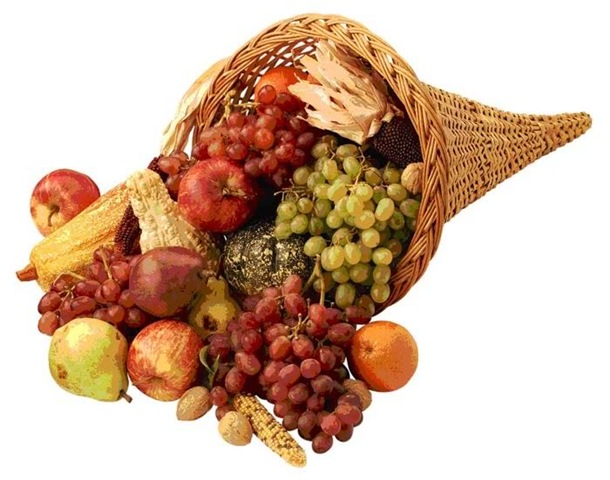
Every one has heard the saying: “You are what you eat.” But according to the scriptures and saints of the major Eastern religions, as well as of early Christianity, a more precise reckoning of this euphemism is, in fact, a twofold statement: “You are what you think, and you think like what you eat!”
Science tells us that the food we eat is transformed into energy that fuels the physical body. Only in our recent times has science acknowledged that there is also another energy imbued within our food, of a far more subtle nature, that influences not only the physical sphere of our being, but more importantly, the mental realm of our existence. Although modern science holds the trophy for “The slowest learners on earth”, they are now admitting that the most profound and powerful effect food has on man occurs at the psychological plane of existence.
This fact is, of course, based on the Maxim of physics that all elements in existence are essentially energy, and that energy is constant. The constancy of energy is defined by its nature of being impervious to essential altercation. The energy in the beginning of a process is the same at the end of the said process. What goes in, stays in!
In terms of ingestion of digestible matter, the quality of the energy, scientifically and specifically the vibratory rate, that dominated the nature of the plant or animal that is being eaten, is directly transferred through the digestive process and into the mind of the consumer. Thus our mind, our perception, and finally our spirit become what we eat!
If the energy is heavy or inert, little can be done with it to produce the state of silence and clarity needed to reflect the truth of spirit. Certain actions darken the mind and make it thick or heavy, vibrating very slowly–sometimes seemingly not at all. On the other hand, some actions lighten the mind, making it fluid and subtle, vibrating at a very high level. It is this latter condition that is needed for attaining the state of liberation–or rather, the state that liberates the spirit from the illusion of bondage and suffering. It is really the mind that becomes liberated, but that liberation also affects the essentially ever-free spirit and sets it free from involvement with the mind. And to attain such liberation the mind must be purified and refined. Thus, vegetarian diet becomes one of the best and strongest means for its purification.
“When we realize that any physical object has all the levels which we do, namely, the physical, biomagnetic, sensory, intellectual and will bodies, we can understand the importance of the kind and quality of food we eat. For not only does the physical substance of the food become assimilated into our physical body, so also do the subtler energies become united to our inner levels. This is the teaching of the Chandogya Upanishad:
“Mind consists of food. That which is the subtle part of milk moves
upward when the milk is churned and becomes butter. In the same
manner, the subtle part of the food that is eaten moves upward and
becomes mind. Thus, mind consists of food.” 1
“It is obvious, then, that the food we eat is going to determine the quality and condition of all the levels of our being. Our food has the same levels we do, and the different energies of the food are absorbed into our corresponding levels. Therefore when we eat something, it not only affects us on all levels of our existence, it becomes those levels. In this very real sense we indeed are what we eat. In esoteric philosophy our various levels are looked upon as separate bodies through which our consciousness operates. Since those bodies are formed essentially from the food we eat, they will be conditioned by and function according to the kind of energy extracted from the food. We are very much like the child’s toy that is a series of colored rings stacked on a rod. That is, we are successive layers of subtler and subtler energy that are connected to the physical body. From these energy levels the different life processes are empowered and administered. When the energies within us are positive, they produce harmonious states of mind and behavior. But when the energies are negative, they move in a random and chaotic manner and produce negative states of mind and, consequently, negative behavior. Moreover, these toxic energies can also manifest as physical illnesses or defects. Substances that are toxic to the body–such as meat, alcohol, nicotine, and drugs–are toxic on the inner levels as well, and their ingestion poisons all our bodies by putting into them negative energies which are going to manifest in the disrupting manner just described. On the other hand, fruits, vegetables, and grains are reservoirs of pure, basic life energies that are very light and malleable. These energies are easily assimilated into all our bodies and made to take on our specific, unique life vibrations and karmic patterns.” 2
Thus, we must accept, and can on no legitimate grounds refute the facts of the twofold statement: “You are what you think, and you think like what you eat!” Therefore, it can be gleaned, from both the material as well as the spiritual viewpoint, why Sri Ramana Maharshi stressed a vegetarian diet.
Question: I have heard it said that the Maharshi set no rules of conduct or lifestyle within the Ashram that came up around him. Therefore, how can what is being said regarding a vegetarian diet be essential for spiritual attainment?
It is in fact openly stated, and recorded within several of the published core teachings at the Ashram that Bhagavan Ramana set forth only one regulation for the devotees living within the Ashram, as well as for those living outside that followed his teaching. This one rule of life regarded the maintaining of a sattvic (pure) diet.
Question: Did Bhagavan ever explain why maintaining purity of diet was important, and what constituted a sattvic or pure diet?
He did explain the reason why a vegetarian diet was, and is even to this day, maintained at all times. This discipline was central to his guidance of effective means of sublimating (uplifting) the mind and its direction towards reflection upon its True Nature. His guidance stressed an ever purer awareness or quality of mind, which paved the way towards awareness within the heart, the essential home of our Eternal Self.
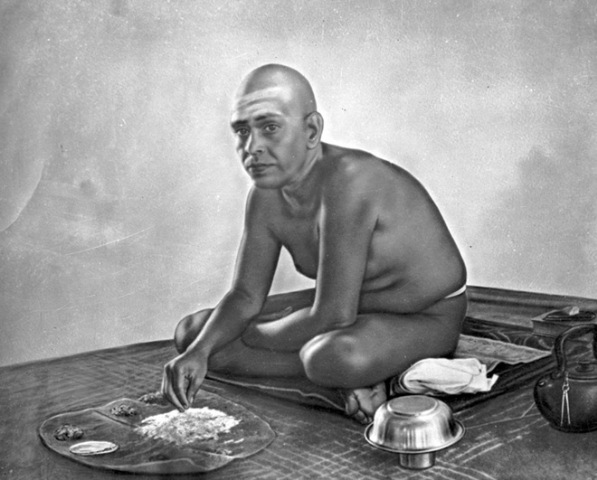
In Bhagavan’s own words we find recorded:
Devotee: What diet is prescribed for a sadhak (one engaged in spiritual practices)?
Maharshi: Sattvic food in limited quantities.
D.: What is sattvic food?
M.: Bread, fruits, vegetables, milk, etc.
D.: Some people take fish in North India. May it be done?
(The Maharshi made no answer.)
D.: We Europeans are accustomed to a particular diet; change of diet affects health and weakens the mind. Is it not necessary to keep up physical health?
M.: Quite necessary. The weaker the body the stronger the mind grows.
D.: In the absence of our usual diet our health suffers and the mind loses strength.
M.: What do you mean by strength of mind?
D.: The power to eliminate worldly attachment.
M.: The quality of food influences the mind. The mind feeds on the food consumed.
D.: Really! How can the Europeans adjust themselves to sattvic food only?
M.: (Pointing to Mr. Evans-Wentz) You have been taking our food.
Do you feel uncomfortable on that account?
Mr. Evans-Wentz: No. Because I am accustomed to it.
D.: What about those not so accustomed?
M.: Habit is only adjustment to the environment. It is the mind that matters. The fact is that the mind has been trained to think certain foods tasty and good. The food material is to be had both in vegetarian and nonvegetarian diet equally well. But the mind desires such food as it is accustomed to and considers tasty.
D.: Are there restrictions for the realised man in a similar manner?
M.: No. He is steady and not influenced by the food he takes.
D.: Is it not killing life to prepare meat diet?
M.: Ahimsa stands foremost in the code of discipline for the yogis.
D.: Even plants have life.
M.: So too the slabs you sit on!
D.: May we gradually get ourselves accustomed to vegetarian food?
M.: Yes. That is the way. 3
In this example, and as is seen throughout the teachings of Sri Ramana Maharshi, Bhagavan is stressing: “It is the mind that matters.” Furthermore, “The mind feeds on the food consumed”, and “The weaker the body the stronger the mind grows.”
In the following story, we are being shown that a pure diet will not only elevate the quality of the mind, but will also keep the body free from illness: “One afternoon at 3 o’clock, a devotee who was going to Madras gave a small tin containing some ointment and said that if that medicine was applied to Bhagavan’s legs, the pain would decrease, and that if Bhagavan would continuously use it, he would bring a dozen tins of it from Madras. Bhagavan replied, saying: “Enough. The Karpura Thailam I am using now is adequate. Why do I require such costly medicines? If diet is properly regulated, no medicine will be required. When these medicines are used, the ailment apparently disappears, but it starts again. That is because of some irregularity in diet.” 4
One of the close disciples who lived with Bhagavan, Arthur Osborne, related what the Maharshi taught him: “It should be explained for non-Hindu readers, that the practice of vegetarianism is not only out of disinclination to take life or eat flesh, though that is one reason for it; it is also because unsattvic food tends to increase animal passions and impede spiritual effort.” 5
Although the Ashram food was strictly vegetarian, Alagammal, Bhagavan’s mother, like some very devout Brahmins, went still further and considered some vegetables (i.e. onions) also unsattvic (impure). When Bhagavan would sit with the devotees in the kitchen and peel onions, Alagammal would weep bitterly. In response, Bhagavan would retort while holding up an onion: “Behold the powers of this small bulb.” She would then weep all the more loudly. Bhagavan had the final word, and would say mockingly: “Mind that onion! It is a great obstacle to Moksha (Deliverance)! It should be said here that Sri Bhagavan did not disapprove of orthodoxy in general. In this case there was excessive attachment to the forms of orthodoxy and that was what he attacked. In general he laid stress on the importance of sattvic (pure) food. He did not often give any injunctions at all concerning outer activity; his usual method was to sow the spiritual seed in the heart and leave it to shape the outer life as it grew. The injunctions came from within.” 6
1 Chandogya Upanishad, 6.5.4, 6.6.1,2,5.
2 Spiritual Benefits of a Vegetarian Diet, Swami Nirmalananda, Atmajyoti Press.
3 Talks with Sri Ramana Maharshi, recorded by Sri Munagala Venkataramiah, Sri Ramanashramam 2006, Talk 22, p. 20.
4 Letters from Sri Ramanashramam, Suri Nagamma, Sri Ramanashramam 2006, Letter #266 December1949, p. 640.
5 Ramana Maharshi and the Path of Self-Knowledge, Arthur Osborne, Sri Ramanashramam 2006, p. 82.
6 Ibid. p. 81.
Reprinted with permission of Swami Sadasivananda
To subscribe to his newsletter, go to http://www.ramanateaching.org/contact.html
For more information on Swamiji, click here: About Swami Sadasivananda
Teachings of Bhagavan Sri Ramana Maharshi web site: http://www.ramanateaching.org
Ask your question in relation to Bhagavan’s teachings, meditation and spirituality at:
http://www.ramanateaching.org/faq
WARNING: THE STILL AND VIDEO IMAGES IN THIS ARTICLE
ARE GRAPHIC DEPICTIONS OF VIOLENCE TO DAIRY COWS AND THEIR OFFSPRING.
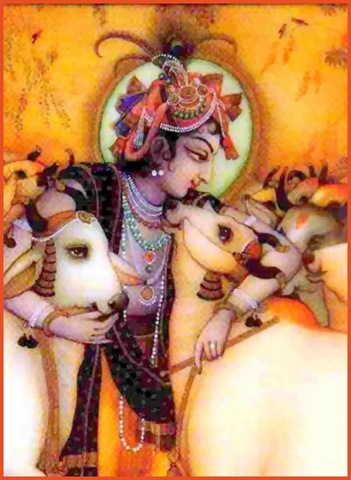
We need to realize that milk is not an “Innocent”
animal product as it is thought to be, but is a
highly violent, cruel, and immensely exploitative food.
The most important factor in cow abuse is the economic factor;
we need to realize that as long as we, the consumers
of milk and leather, continue to buy these violent products,
the exploitation of the cow and the killing of her calves
will continue to occur. ~Shri Kamlesh
“The female dairy cow spends her life confined in close quarters with other cows, being pumped with hormones calculated to produce pregnancy after pregnancy as long as she is capable of bearing calves, both to increase the population of the cows for milk and meat production and to spur the female to produce more milk. When her calves are born, they are taken from her within a few days of birth, giving rise to the grief of separation for both the mother and the child.” https://luthar.com/call-of-the-conch-1. The videos below depict the artificial insemination of the dairy cow, the birth of the calves, and the removal of the calf shortly after birth…on it’s way to either the slaughterhouse if it is male, or to its own pathetic future as a female dairy cow, soon to face the same fate as the grieving mother who gave birth to her, bearing in her heart the infant grief of separation from her mother and facing the maternal grief in the heart of a mother forced to face the loss of her child.
The motherless child…
http://www.youtube.com/watch?v=wiRxkU_opyQ&feature=player_embedded
http://www.youtube.com/watch?v=_ZrX1rTddho
http://www.youtube.com/watch?v=_kM387cI4rk&feature=player_embedded
http://www.youtube.com/watch?v=hAiIIZMKPC0&feature=player_embedded
Contrasts a dairy calf searching for his mother on a farm with undercover footage of calves at a slaughterhouse.
“Roughly 50% of the calves are male calves which are considered to be the by-products of the milk industry and do not have any value. These male calves are the most unfortunate souls of the milk industry; they are the silent sufferers in the background that no one bothers to notice. They sacrifice their lives so that we can drink the milk which was meant for them.These calves meet their deaths wherever factory farming occurs both in India and in the western world.
India.
Before mechanized farming, the male calves were highly sought after as draught animals that would till the land and become the farmer’s best friend. But with tractors taking over the role of draught animals, the male calves are useless and the farming/milk industry no longer feels it necessary to sustain them.
Due to the cultural heritage of India, where beef eating is not popular and cow killing is illegal, these calves are not slaughtered for calf-meat or “veal” as in the western countries. But since they pose no value to the farmer these calves are killed in the most horrific manner.
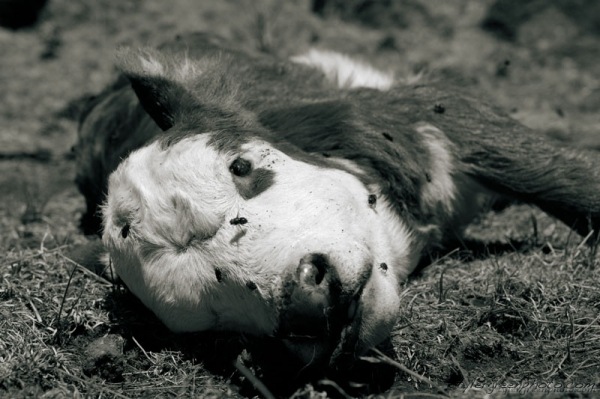
Most male calves in India are separated soon after their birth… they are strangulated to death, starved and then even buried alive in compost mounds to dispose their bodies. In some cases a stuffed animal like structure is covered with the hide of the dead calf and placed near the cow, so that she continues to give milk thinking that the stuffed doll is her living calf! Many are slaughtered in illegal slaughter houses to make fancy “calf leather” belts, purses, wrist bands etc.
Western Countries.
In the west the male calves are seen as sources of “calf-meat” or veal, which is the most perverted food any human can eat. The specialty of veal meat is that it is very tender, fatty and succulent and to achieve this, the calves are taken from their mothers immediately after birth and raised so as to deliberately induce borderline anemia.
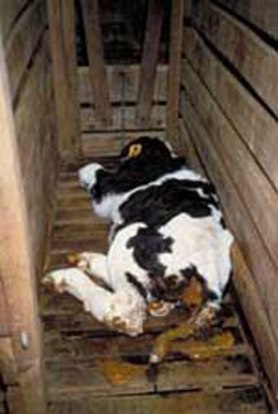
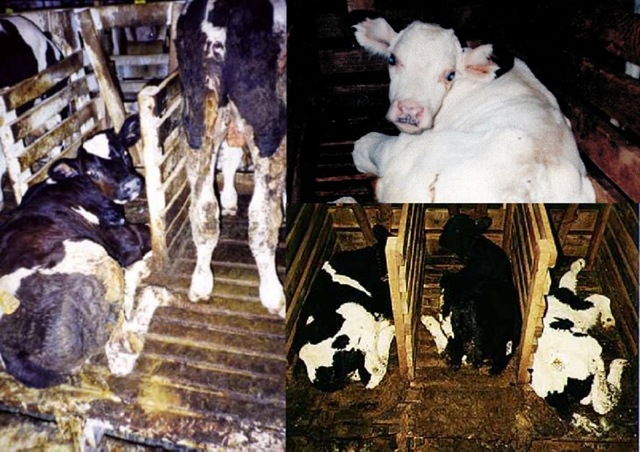
They are then confined in small cages called as veal-crates, usually measuring 2-feet-wide, in which they cannot turn around or stretch their limbs all their lives. This is done so that their flesh does not build muscle which is considered to be tough to eat. After about 3-5 months of living confined to their cages, these innocent calves are then slaughtered to satisfy humans’ perverted thirst for flesh.
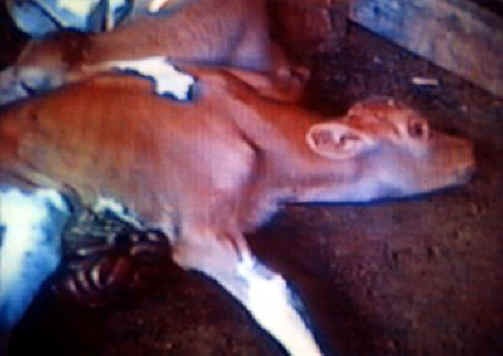
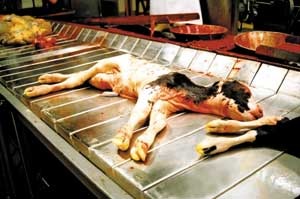
The plight of the female calves is worse, they are raised so that they can be perpetually inseminated to give us their milk for the rest of the lives. If they are so unfortunate so that they become sick or break their legs which they often do, due to being continuously pregnant they are then mercilessly slaughtered, ending as meat and leather.
It is a well known fact the cows raised for milk (Dairy cows) have to undergo much more abuse and sufferings than the cows which are raised for meat (Beef cows)”
These are NOT isolated incidents, but are in fact routine procedure to dispose the male calves as profitably as possible depending upon the location, either in India or in the west. This suffering and killings are a direct result of the milk industry, which satisfies our thirst for milk, our cravings for ice-creams, payasams and chocolates at the cost of these innocent animals.
While we enjoy our milk, the silent killings go on! ~Shri Kamlesh*
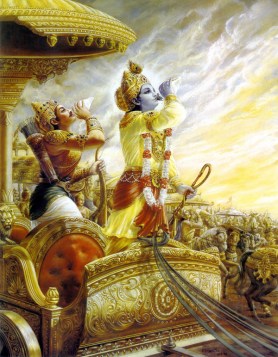
Having one’s actions grounded in ahimsa for the Lord’s creatures, all of them, calls to our spiritual conscience with the power of the sounding of the conch. The conch, held by Vishnu, the preserver, represents life. When it is sounded, it is the sound of victory, as by Krishna and Arjuna heralding the defeat of the adharmic influences in the battlefield of the mind symbolized in the Holy Gita. May the adharmic influences inherent in the dairy industry fall to the ground in defeat at the call of the conch.
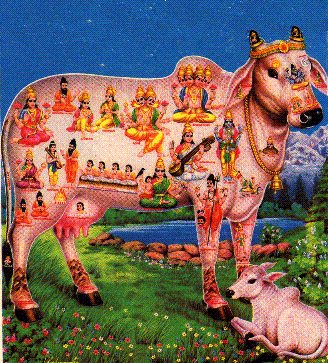 … dhenoonaamasmi kaamadhuk…
Among the cows, I am Surabhi, the wish-fulfilling cow. B.G. 10.28

https://luthar.com/call-of-the-conch-introduction
https://luthar.com/call-of-the-conch-1
*The italicized text of Part 2 in this series was written by Shri Kamlesh, who also provided many of the images used. Any edits were to context, not to content. I offer my namaskarams to him.
WARNING: THE STILL AND VIDEO IMAGES IN THIS ARTICLE
ARE GRAPHIC DEPICTIONS OF VIOLENCE TO DAIRY COWS.
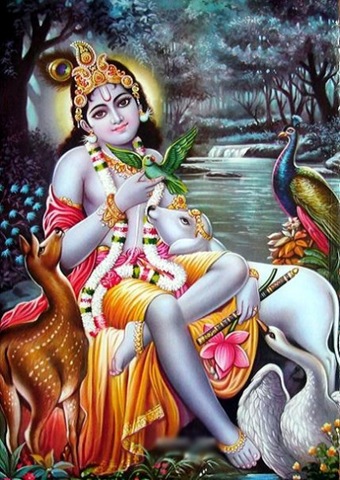


Lord Sri Krishna vividly describes the three types of foods,
Sattvic, Rajasic and Tamasic. Milk in the olden days was definitely Sattvic.
However now it is 100% Tamasic due to the abundant violence and abuse it entails.
Drinking such milk is equal to eating beef. In fact the animals raised for meat
do not have to suffer so much as these unfortunate dairy cows are made to suffer.
~Shri Kamlesh
In Patanjali’s Yoga Sutras, Ahimsa (nonviolence) is considered the first principle of the spiritual life. Ramana Maharshi, the great sage of Arunachala has clearly stated, “Ahimsa Param Dharma”. Translated this means that nonviolence is the supreme religion… My friends, in order to gain peace, one has to give peace to others. This is the universal law as described and explained by the doctrine of karma. What we give to others, we give to ourselves. If we are able to learn this lesson by heart, it will influence our actions in this world. It is not an easy lesson at all.Nonviolence is the most beautiful expression and manifestation of the unconditioned recognition of the Nature of Reality. This is our conviction. This ideal is our aspiration. As many times as we fall, we get up and stand on the foundation of nonviolence as our nature. ~Dr. Harsh K. Luthar
https://luthar.com/ahimsa-and-self-realization-by-dr-harsh-k-luthar
Can you hear her crying?
There was a time, a time when the dairy cow was nurtured and revered for her milk, when the calf came first and the human after, when she was part of the family, not part of their property. When she lived out her life with decency until the end, even after she no longer produced milk. But that time is long gone, replaced by industry production methods aimed at one goal…profit. And in that goal, all decency was lost, replaced with the torture, plunder and cruelty of the present milk farms, both here in the US and abroad.
The female dairy cow spends her life confined in close quarters with other cows, being pumped with hormones calculated to produce pregnancy after pregnancy as long as she is capable of bearing calves, both to increase the population of the cows for milk and meat production and to spur the female to produce more milk. when her calves are born, they are taken from her within a few days of birth, giving rise to the grief of separation for both the mother and the child. (This and the fate of her calves will be the subject of its own article) Her body knows no rest, either from pregnancy, the drugs used to induce pregnancy and milk production, or the milking machines which relentlessly squeeze the very life out of her, slowly and painfully. This relentless assault on her body frequently causes her to develop mastitis, an extremely painful condition of the udder, which results in blood and pus accumulating within the infection and often being expelled into the milk.
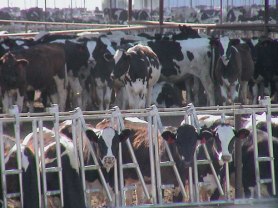
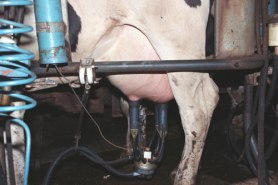
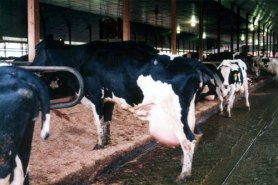
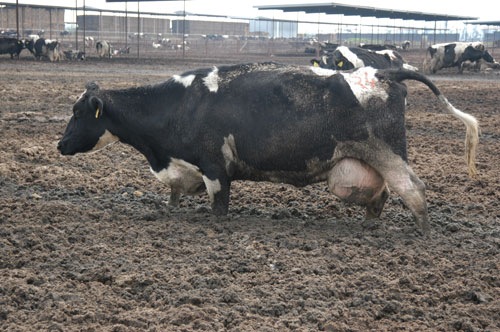
The link below graphically depicts the puncture of an inflamed udder…
http://www.youtube.com/watch?v=vqqSeO4vqcw&feature=player_embedded
Although the average life span of the cow can be in the neighborhood of 25 years, the cow in the milk farm is ready for death after approximately 4-5 years. By this time, the multiple pregnancies, coupled with the hormones and other drugs pumped into her system have taken their toll. More often than not, by this time, she can barely walk on her own, either due to excess weight gain from the drugs and/or broken bones and the condition is often referred to as a “downed cow.” This has significance in the market, as a “downed cow”, by law in most states, is not to be introduced into the slaughterhouse and the meat which is being sold to the ever willing population of meat eaters. For this is her final destination…once she is no longer useful for bearing calves or bearing milk, she is sent to the slaughterhouse to be butchered and sold as meat.
A note about organic farming is in order. Although the cow may not be confined or treated with antibiotics and other drugs, it is quite likely that she will be impregnated, separated from her offspring and slaughtered in the end.
Even as she approaches her last moments, she is prodded and abused to keep her “up” so she can “walk” past the inspectors and into the knife of the butcher. The videos in the link below show the cows being hit in the face with sticks, prodded with electric prods, chained to forklifts and dragged just to get them “on their feet.” Once on the feet, the cow is continually pushed, her tail twisted, electric shocks applied to her, anything to keep her moving and get her into the kill box, where all of this will finally come to an end, and she will be slaughtered. The link below to the Humane Society video, taken undercover at a dairy farm in California, illustrates some of this abuse…
http://lawprofessors.typepad.com/foodlaw/2008/02/horrible-dairy.html
Abuse is not limited to America…
INSIDE THE INDIAN DAIRY INDUSTRY
“The cows are cramped into these trucks, with no food, water for days these poor exhausted animals are then literally thrown from the trucks on to the ground. Many cows break their legs, and bones and cannot walk, to hoist them to the slaughter house acid is poured into their eyes and noses or their tails are broken. These abuses are wide-spread because of lax laws and corrupt officials and the demand for cheap leather products. Some how when these cows are lead to the slaughter house, the cows are literally hammered by a large hammer on their heads and after they are immobile their necks are slit so that they are bled to death. At least their miserable lives have now finally come to an end. The farmer now gets his money from the dead cow’s flesh and leather and buys a younger cow to continue the cycle.” ~Shri Kamlesh
http://www.youtube.com/watch?v=ZjYA2K7ke0E&feature=player_embedded
DOWNED COWS
The cows pictured below, either because of broken legs or other diseases affecting them due to the abuse of their bodies in the production of milk, can no longer stand on their own. They are left stranded, unable to move, even to get away from their own excrement, unable to escape the violence which awaits them as they are either “euthanized” or butchered for meat production.
Many of the images below can be located at http://www.goveg.com/photos_cows.asp
with detailed explanations of the images…
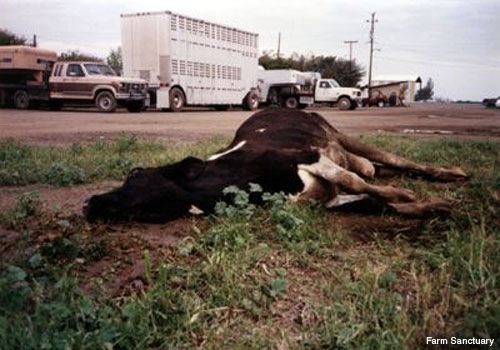
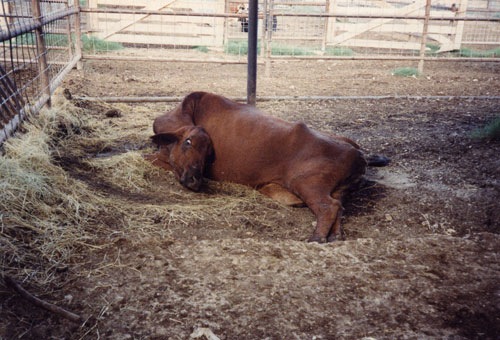
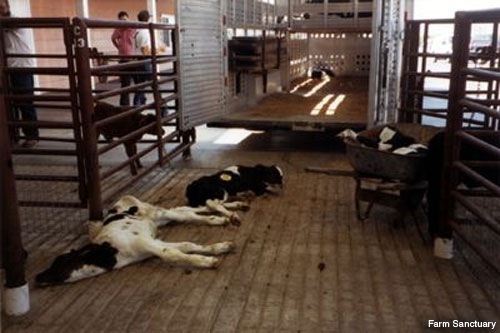
Once they are forced up, this is where they end up, along with their male counterparts…
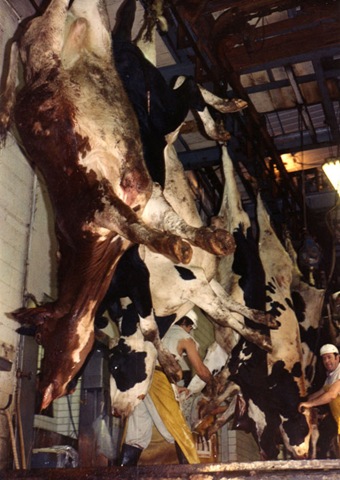
http://www.goveg.com/photos_cows.asp
Having one’s actions grounded in ahimsa for the Lord’s creatures, all of them, calls to our spiritual conscience with the power of the sounding of the conch. The conch, held by Vishnu, the preserver, represents life. When it is sounded, it is the sound of victory, as by Krishna and Arjuna heralding the defeat of the adharmic influences in the battlefield of the mind symbolized in the Holy Gita. May the adharmic influences inherent in the dairy industry fall to the ground in defeat at the call of the conch.
Matkarmakrinmatparamo madbhaktah sangavarjitah;
Nirvairah sarvabhooteshu yah sa maameti paandava.
Whoever works for Me, looking upon Me as the goal;
whoever is My devotee, free from attachments
and from antagonism to any being –
such a one shall enter into Me. (BG 11.55)


 Luthar.com
You must be logged in to post a comment.