Harsha's avatar

Aids To Self Enquiry: By Alan Jacobs

Aids To Self Enquiry: By Alan Jacobs

Harsha's avatarLuthar.com

“Those who leave the path of Self Enquiry, the way of liberation, and wander off along the myriad forest tracks, will encounter only confusion”. Bhagavan Ramana.
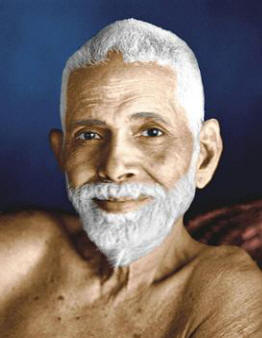
Bhagavan27

Self Enquiry is the Direct Path and Bhagavan’s great contribution for the modern age for all. 

Self Enquiry is the backbone of the main weapon in Bhagavan’s teaching for eliminating the vasanas, tendencies and vrittis, the thought forms which act as a veil and occlude your Real Self.

View original post 676 more words
Harsha's avatar

Paradox Of The Mind: By Alan Jacobs

Paradox of the Mind: By Alan Jacobs

Harsha's avatarLuthar.com

“Oh Mind, do not waste your life in roaming outside, pursuing wonders and wallowing in enjoyments. To know the Self through grace and to abide in this way firmly in the Heart is alone worthwhile.” [1]

This relevant quotation leads us to consider that what we term ‘mind’ can be conceived as a great paradox. From one standpoint it is a benevolent friend but from another it is a malicious enemy.

View original post 1,111 more words

Harsha's avatar

Karma, Reincarnation, and Suffering: By Alan Jacobs

Karma, Reincarnation, and Suffering: By Alan Jacobs

Harsha's avatarLuthar.com

There is a great deal of misery and anxiety occupying peoples’ minds these days about the suffering currently undergone on the Planet through terrorism, local armed conflicts, starvation, disease and economic depression. Many atheists and agnostics base their skepticism about the existence of God on the observation that a benign and benevolent God of Love could not possibly exist, or else he would not permit so much world suffering.

According to sages, the highest teachings of the world religions are contained in the idea that we are all “One” and that we come from the same divine source to which many names can be given. Sri Ramana used to say that, “God is the actual form of love”. So why then so much suffering in the world?  From the standpoint of our own teaching, that of the great Sage, Sri Bhagavan Ramana Maharshi, we must first understand that this plane…

View original post 735 more words

Harsha's avatar

Who Is Rama? The Doctrine Of Neti, Neti

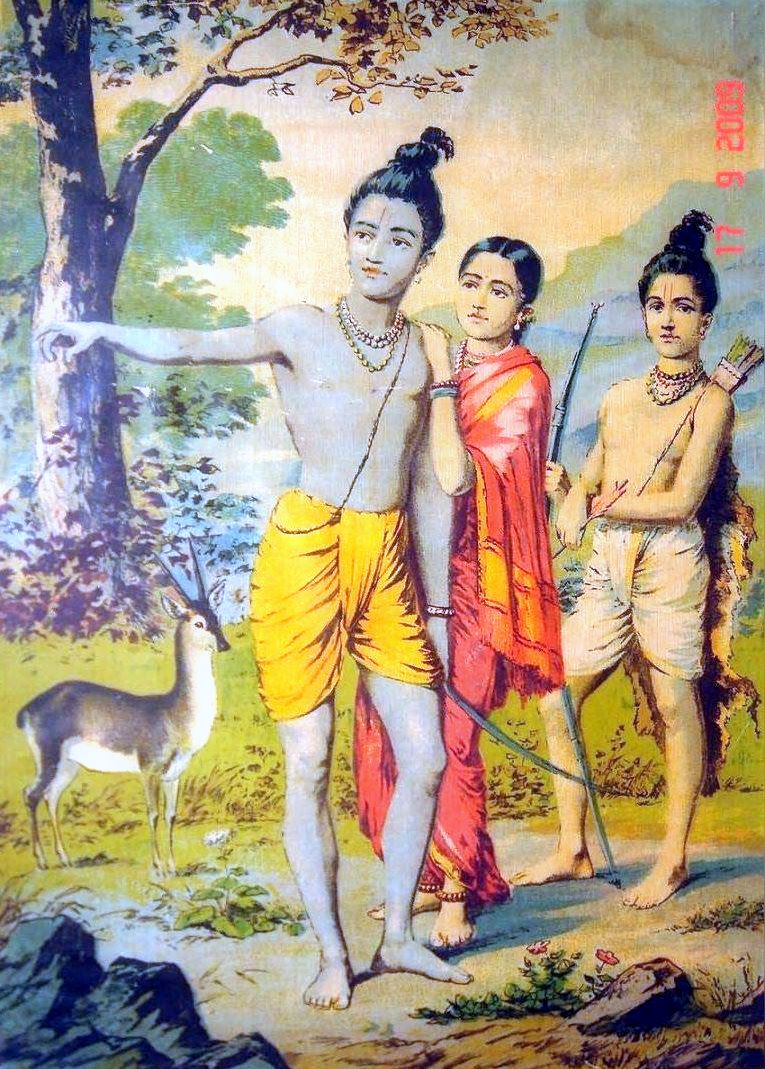
Rama_Sita-Lakshman in_forest

In order to explain the Advaitic doctrine of “Neti Neti”, Sri Ramana used to tell the story of Sita and Rama.

Prince Rama was exiled for 14 years from the kingdom to a forest by his loving father. The full story is too complex to be told here.  

When Prince Rama, obeying his father, left the kingdom of Ayodhya, his wife Sita came with him to endure the hardships of poverty and penance side by side with her husband. Rama’s younger brother Lakshman insisted on coming as well to keep them company and to protect them in the forest.

When the three reached the forest, they took off their royal clothes and sent them back via the Chariot that had brought them to the edge of the forest. They put on clothes of forest dwellers and Rishis who lived in the forest.

Continue reading

Harsha's avatar

Silence Is Most Powerful

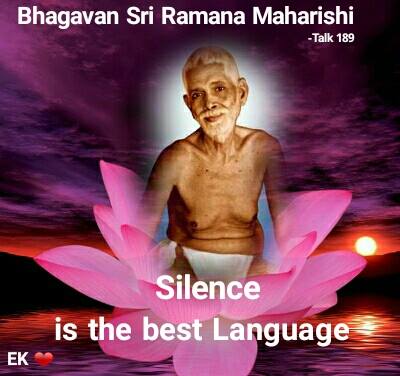
Silence is the best language

Silence and Grace are frequent topics that occur in devotee conversations with Bhagavan Sri Ramana. “Silence is most powerful” says Bhagavan in Day By Day, 9-3-46.

Bhagavan used to say that the highest spiritual teaching and transmission is given only in silence. True Silence comes when there is complete surrender to God without any reservation. There is no room for mental noise then and all is peace.

Here is an actual event narrated by T.K. Iyer where he witnessed the the power of Bhagavan’s silence.

Continue reading

Harsha's avatar

You Are The Peacemaker

By Dr. Harsh K. Luthar

Buddha


Mahavira, the Jain prophet of nonviolence and an advocate for the principle of Ahimsa (Universal Love), said 2500 years ago that all beings have the natural desire to live and thrive.

Wanting to be safe, happy, and in a nurturing community is not unique to any particular country, culture, religion, or spiritual tradition. In fact, it is not even unique to human beings. Animals, birds, sea creatures, plants and trees, and all forms of life seek safety and nurturance.

Enjoying success at the expense of others and by harming others, including nature and the environment, cannot be sustained over the long term. This is a simple but an ancient truth.

Continue reading

Harsha's avatar

Virtuous Conduct

IMG_7377

What is virtuous conduct? It is never destroying life, for killing leads to every other sin.–Tirukural, Verse 321

Many are the lovely flowers of worship offered to the Guru, but none lovelier than non-killing. Respect for life is the highest worship, the bright lamp, the sweet garland and unwavering devotion.–Tirumantiram, Verse 197.

Harsha's avatar

Heart Talk Is All Talk

Somerset Maugham, a well-known English author, was on a visit to Sri Bhagavan Ramana Maharshi.

He also went to see Maj. Chadwick in his room and there he suddenly became unconscious.

Maj. Chadwick requested Sri Bhagavan to see him.

Sri Bhagavan went into the room, took a seat and gazed on Mr. Maugham.

Mr. Maugham regained his senses and saluted Sri Bhagavan.

They remained silent and sat facing each other for nearly an hour.

Mr Maugham attempted to ask questions of Sri Bhagavan but did not (or could not) speak.

Maj.Chadwick encouraged him to ask.

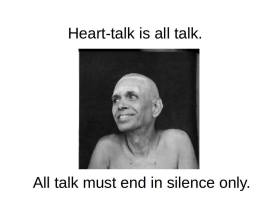
Sri Bhagavan said, “All finished. Heart-talk is all talk. All talk must end in silence only.”

They smiled and Sri Bhagavan left the room.

(From Talk 550 in “Talks with Sri Ramana Maharshi).

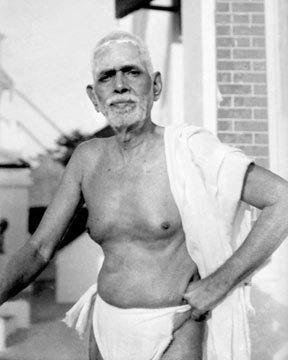
Bhagavan Ramana as a youth


Harsha's avatar

Food is Sacred

Vegan Salad with Mango pieces

Sri Ramana spent many years cooking for others at the Ashram and even gave precise instructions to those in the kitchen on cooking! He was a taskmaster and did not allow any food to be wasted.

The Upanishads remind us that food is sacred. “Food (anna) itself is Brahma” ~  Taittiriya Upanishad.

Bhagavan Ramana taught the devotees that food influences our body and mind, and should be selected with care, prepared well, and eaten in moderation.

Continue reading

Harsha's avatar

Sri Ramana Maharshi’s Mother: Mahasmadhi

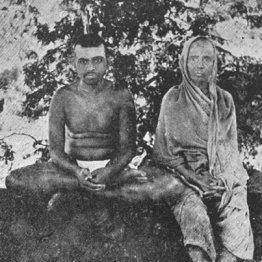
Bhagavan and His Mother

Sri Ramana’s mother lived with him in physically difficult conditions and in poverty in the caves of Arunachala. Life was hard for her due to her age as well. One day, Bhagavan Ramana’s sister came and said to their mother, “Mother, you are not well. Come, I have a comfortable house.” She refused and turning to Bhagavan told him, “I want to die only in your arms. After my death you may even throw away my body into some thorn bushes, it does not matter.”

Continue reading