Harsha's avatar

The Method For Self-Realization: By Dr. Harsh K. Luthar

Sometimes we see people debating the language and methodology of Sri Ramana’s teaching. The question is often raised, “What is the purest form of Ramana’s teaching”?

The answer is obvious. That form of the teaching is the purest, which works for you. What bring you to Self-Knowledge and Self-Realization is the highest teaching.

Sri Ramana’s teaching is very straight forward. Despite the volumes of books and hundreds of expert commentaries, the essential teaching is simple. It is all an open secret for everyone to see.

Sri Ramana always emphasized that our nature is that of pure, unstained consciousness. “Awareness is another name for you”, the Sage of Arunachala used to say. Our spirit is of the nature of unbroken awareness that continues regardless of what our physical makeup is or what mental state the mind is in (sleep, dreaming, waking). If we deeply understand this, we have arrived at the central truth of the teaching.

Sometimes the students of Advaita debate which words or terms best describe the process of inquiry. Those who know the nature of the Heart directly become indifferent to argumentation and do not quibble over trivialities.

All of these terms, self-attention, self-awareness, self-remembrance refer to the same process of the subject turning within to itself, the subject. Self-inquiry focuses the mind on its source and the result is clarity of awareness.

Awareness by its very nature is always aware of itself but it is not an object to itself. We cannot understand this except by being in the Heart of Awareness and being the Heart.

In the world of duality, Oneness can only be indicated, but it cannot be known. Oneness cannot be known in duality because it cannot be an object to itself. Oneness cannot be known in duality because it swallows up duality. To know the Oneness intimately, one has to become That and to recognize One Is That! Do you see the beauty of this paradox?

Sri Ramana used to say that there are not two selves where one self is aware of the second self. Similarly there are not two forms of awareness. However, through the duality and agency of the perceptual mind, we can say that awareness being aware of itself is a refined and a subtle form of atma vichara (Self-Inquiry).

Ultimately, even this duality, being that of the mind (that any method necessarily presumes), vanishes as One Awareness shines forth as the Self that is the Heart; that the ancients termed Sat-Chit-Ananda. Existence-Consciousness-Bliss. One whole mass without divisions.

Once Sri Ramana said the whole truth is contained in the words”Be Still”.

So if one is self-aware and still, one has grasped the method.

A quiet, peaceful, and content mind that is awake and turned within to its source has grasped the method and the process of Self-Inquiry. This process itself turns into the goal when the mind merges into the Heart for Self-Revelation.


Harsha's avatar

Path to Realization Leaves No Trace: By Dr. Harsh K. Luthar

When Paul Brunton asked Sri Ramana about when Sahaj Samadhi should be practiced, the sage said and I paraphrase….”right from the beginning….that which is the practice of the Sadhaka is the state of the Siddha.”

Continue reading

Harsha's avatar

The Root of Self-Inquiry: By Dr. Harsh K. Luthar

Realized Sages such as Bhagavan Sri Ramana have indicated the experience or the state of the Self.  It is what it is.

It is the Heart of Existence, and Existence It Self.  Sri Ramana used to say that It is only Being.

You can call it what you like. Self, No-Self, Shunya, Reality. What difference can it make? The ultimate Reality cannot be named. It has no name. There is no one outside of Reality to give it a name.

Ancient sages taught that the core of our being is pure Sat-Chit-Ananda which roughly translates from Sanskrit as Existence, Knowledge/Consciousness, Bliss as One.

It is devoid of thought or doubt or conflict, but utterly complete and supreme over its domain, its domain being no other than It Self.

It is the Eternal Reality which is not conscious of anything separate from it, being Pure Consciousness Itself.

It is beyond happiness and despair, destiny and free will, and beyond time and space.

It is beyond the different paths, philosophies, religions and conceptions of the Divine. All of these concepts are play of the mind which sees differences everywhere.

People with much confidence speak of their way, their path, and their religion. People speak of their God, their insights, their Realization, etc. This is all fine.

Self-Inquiry starts when an aspirant sincerely inquires with intensity, Who is this “I” which conceptualizes all such things.

The root question in Self-Inquiry is “Who Am I?” That is the method taught by Sri Ramana Maharshi for reflective Self-Inquiry.

Real introversion of the mind can only take place when we look directly for the source of our very existence.

The feeling and sense of “I” or “Me” that everyone has naturally, is the clue to resolving the mystery of Existence.

Where does this sense of “I Am” comes from. Looking within and following this sense to its source leads to the Knowledge of the Self.

Namaste and love to all

Harsha's avatar

You, Yourself, are This Moment: By Dr. Harsh K. Luthar

Ultimately the mystery of existence is tied to the mystery of perception. What is it that we are truly able to perceive just as it really is, without interpretation? Whatever must be given interpretation is necessarily going to be distorted.

And yet there are moments in life which require no interpretation until they are remembered.

When two lovers meet there comes a moment of pure being without interpretation. It may be in a simple embrace. When a child is held by his mother, a similar moment arises for the child.

Such moments point to or indicate the possibility which is always alive in us. Self-Realization is simply that. It is infinity caught in the moment and the moment expanded to infinity.

Whether one is sipping tea, playing chess, in meditation, with friends, family, etc., that moment is always there. It is just You.

You, yourself, are this present moment. Here and now, you are free.

Harsha's avatar

The Unreality of the World: By Alan Jacobs

The Guru Vachaka Kovai, the Garland of Guru’s sayings, is a comprehensive collection of the Maharshi’s Sayings , composed and strung together by the great Tamil Poet Muruganar.This translation is by Professor K. Swaminathan.

In Part 1 , after the invocation there is a long section called ‘The Quest’, and part 2 is entitled the Unreality Of The World, and continues from verse 63 to 70.. Verse 69 states

“The world perceived by the poor jiva

Lapsed from its own Being true,

Buried in darkness, and believing

That it is but the body, alas,

The world thus seen is non-existent;

Yes, it is indeed unreal.

The thrust of this verse, and those like it is underlined by the often quoted passage in Letters from Sri Ramanasramam, 24th August, 1946, quoted in the marvelous book Muruganar’s Padamalai, edited by David Godman. On page 283 of the Chapter entitled The Reality Of The World Appearance we read.

Bhagavan:” In the sadhak stage [the stage of being a spiritual seeker] you have got to say that the world is an illusion. There is no other way. When a man forgets he is Brahman, who is Real, permanent and omnipresent, and deludes himself into thinking that he is a body in the universe which is filled with bodies that are transitory, and labours under that delusion, you have got to remind him that the world is unreal and a delusion. Why? Because his vision which has forgotten its own Self is dwelling in the external material universe. It will not turn inwards into introspection unless you impress on him that all this external universe is unreal. When once he realizes his own Self, and also that there is nothing other than his own Self, he will come to look upon the whole universe as Brahman.”

Like very many sadhak’s I found it difficult to be convinced that the world we perceive is ‘unreal’. I realized that the concepts of space, time, and causality are inherent in the organ of cognition and create the screen of consciousness on which the world stage, actions and pictures are projected. Also that quantum physics has confirmed that what we see, feel, smell , touch and taste is not what it appears to be, but subtle energies in constant movement. But, It was not until I read the Advaita Bhoda Deepika, The Lamp of Non-Dual Knowledge, a short work, highly spoken of by Bhagavan that I followed the complete logic of this point of view.

I summarize my findings as follows, largely based and inspired by Chapter 1 of this marvelous treatise, entitled On Superimposition.

1.All is Absolute, pure, infinite Consciousness, non-dual, Supreme Intelligence, the Self-Existent Self or Brahman.

2. Maya or Illusion, the powers of veiling and projection are inherent powers in Brahman.

3.These powers manifest an apparent, but unreal Universe. Unreal because it was NOT before manifestation and will NOT BE after dissolution. Therefore it is likened to a dream in the Supreme Intelligence or Mind of Brahman. Thus the apparent Universe is but an appearance based on Brahman. It does not exist apart from Brahman. It could be termed, therefore, a confusion between the Real and the Unreal, or neither Real nor Unreal, or both Real and Unreal. In the Vedanta, the term Real is applied to the Immutable or Unchanging. The apparent world is constantly changing, in a state of flux, becoming and decaying, so it cannot be termed Real in this sense, whereas Brahman is immutable, unchanging and eternal.

4.The ignorant ‘jiva’ (the ajnani) or individual soul is reborn and dies continuously through many lifetimes, until Self Realization. It carries forward from each life the seeds of many latent tendencies from previous lives, although its True Nature is also the Absolute Pure Consciousness of Atman-Brahman. But because of the implicit Maya, projection and veiling, inherent in the Self of Pure Consciousness or Brahman, it identifies with its insentient body and creates a Universe from its latent tendencies (vasanas) through the mind, (organ of cognition, the brain and sensorial adjuncts). The mind is a wondrous power in the Self. The world it sees, composed of latent tendencies, and thoughts is therefore of the nature of a dream, even an hallucination, and may be termed ‘unreal’.

5. The latent tendencies inherent in each jiva at the time of each life, are selected by Isvara, an adjunct of Brahman, for its spiritual development. So all is benign, based on Love, essentially. This is stated By Bhagavan in answer to a question by Paul Brunton quoted in the book Conscious Immortality on Page 130 , Chapter 10.

6. The mind-body complex, personal individuality, other sentient beings, and the Universe of multiplicity, are therefore a superimposition on the Self which is now living from reflected Consciousness, mirrored by egotism and the latent vasanas.

7. Through Grace, the jiva receives the teachings of Advaita from a Jnani, and when fit, through assimilation of this Knowledge and mental purification through right intellectual discrimination, spiritual practice and devotion, he or she is shown the way to awaken from the dream of suffering and transient joy (samsara). The means are through Self Enquiry into the source of the ego, the Self and the illusory nature of the Universe.

8. At the same time one lives one life as if it was real, knowing it to be unreal, and accepting all that happens as ultimately for the best.

9. When there is an awakening from the dream of life, the transmigration of the jiva is over. The immortal Self of infinite Consciousness is Realized directly and one lives from that state of ‘sahaja’ until the mind-body falls off in death, and one is absorbed into Brahman or Infinite Consciousness, no longer a separate individual identified with its body-mind. All is the Self, and the world is seen to be Real because its substratum is now known to be Brahman.

I hope this essay, into a difficult metaphysical question may be helpful to seekers baffled by the world illusion.

Re-reading Bhagavan's Eight Stanzas to Arunachala, a marvelous poem, I came across this verse which sums up my Essay. I add it as an addition, as it seems to sum the whole question up, very succinctly.

6. Thou art Thyself, the One Being, ever aware as the Self-luminous Heart! In Thee there is a mysterious power (Shakti) which without Thee is nothing. From it proceeds the phantom of the mind emitting its latent subtle dark mists, which illumined by Thy light (of consciousness) reflected on them, appear within as thoughts whirling in the vortices of parabdha, later developing into the psychic worlds and projected outwardly as the material world transformed into concrete objects which are magnified by the outgoing senses and move about like pictures in a cinema show. Visible or invisible, oh hill of grace, without Thee they are nothing!

Alan Jacobs

Harsha's avatar

Mahasivaratri with Arunachala: By Richard Clarke

The night of March 6 – when there was no moon – was Mahasivaratri this year. This night honors Siva, seen in nonduality as Being-Consciousness absolute. It is the association with Siva that makes Arunachala such a holy mountain.

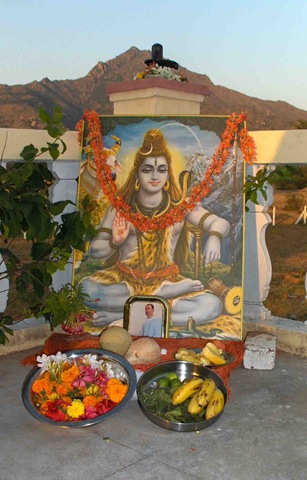
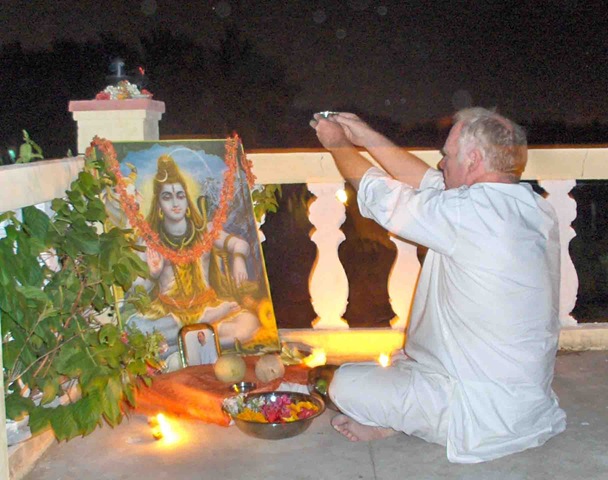
Instead of going into town to a temple, or doing pradakshina – walking around Arunachala – we decided to hold a Siva Puja at our house. Here are some photos.

The Altar set up near sun down

Mahasivaratri altar

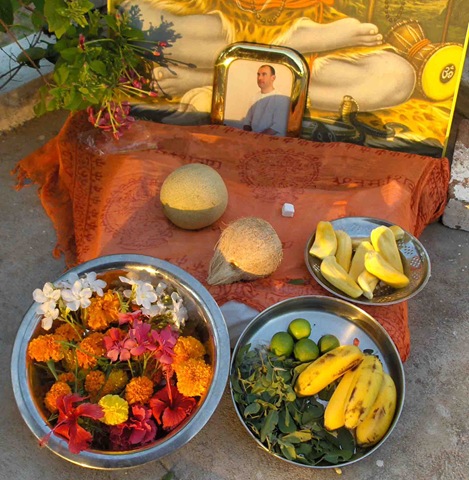
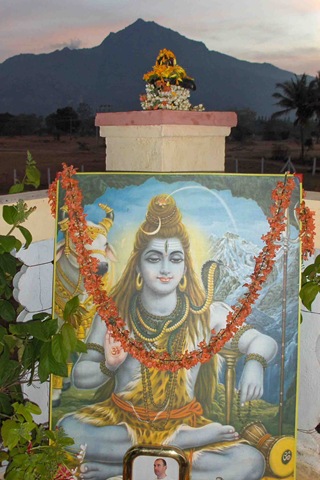
The altar has a picture of Siva, a lingam, a photo of Nome, and various puja materials.

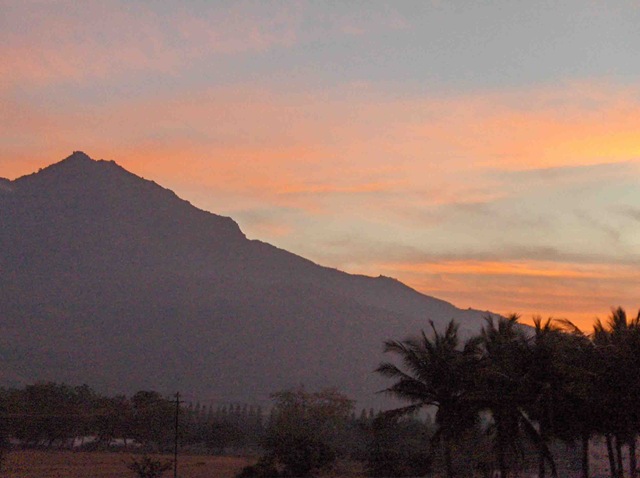
Arunachala is is the background.

Puja Materials

Puja materials

Fruit and a coconut are common offering.

For Sivaratri it is important to have Bilva leaves as an offering.

Camphor is there for later use.

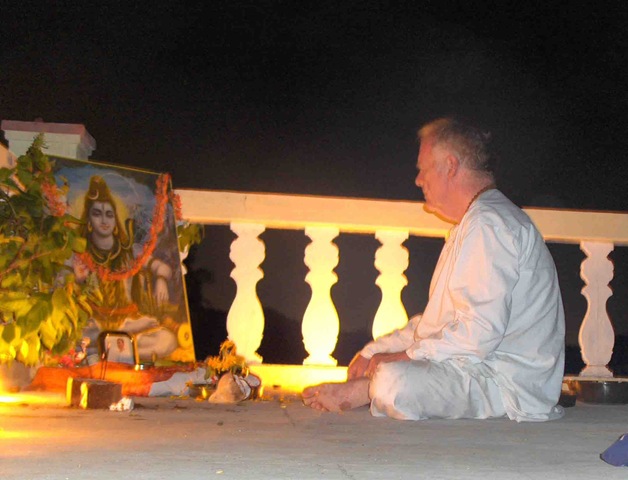
Puja at midnight

Richard at Mahasivaratri Puja

Richard is offering Puja to the Sivalingam.

Coconut milk, cows milk, ghee, bilva leaves and flower petal are offered in turn.

Richard at Puja

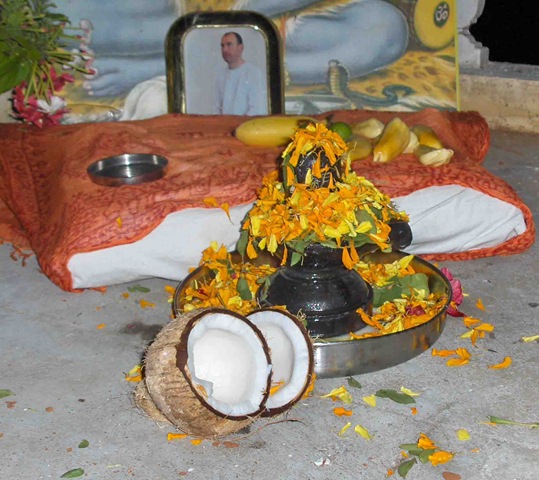
Lingam after Puja

lingam after Puja

After the Puja here is the broken coconut.

The lingam is covered with bliva leaves and flowers.

Dawn over Arunachala after Mahasivaratri night

Arunachala Sunrise after Mahasivaratri night

Richard and Carol were up most of the night, listening to recordings of chants, and spiritual discourses from their teacher, Nome.

In quiet times we meditated. For us this is a most holy night.

Altar at dawn

Mahasivaratri altar after Pjua at dawn

Here is the altar at dawn. The lingam has been put back in its usual place, and wrapped with a flower mala.

Now we will go downstairs and go to sleep. This is along night, but spiritually fulfilling.

Harsha's avatar

Easy And Natural Is The Way: By Dr. Harsh K. Luthar

Dear Friends,

Sahaj in Sanskrit means easy and natural.

There is saying in Hindi, “Sahaj pake so meetha hoy.”

It means that easy and natural cooking of food leads it to taste sweet.

It is something like the English saying that soup that simmers slowly or the cake that is baked slowly tastes best in the end.

These are metaphors for life. When we do something with care and love, the results are better. Sometimes we even say that, “this is a labor of love.” When we love what we do, it does not feel like work.

Everything has its nature. When we are true to our own nature, an easy authenticity takes over. Then we are not concerned about impressing others nor worried about how others are judging us.

Nature is showing us the way. Seasons are coming and going. Flowers bloom and then wither. We are breathing in and breathing out.

Easy and natural is the way. Anything else makes it appear that somewhere other than where you already are, is more attractive.

All of these teachings of self-improvement, yoga, meditation methods, breathing techniques might have some meaning to someone at some point in time. Truly these are concepts only for the mind to struggle with. The whole premise of these teachings is that you are not OK just the way you are. Ultimately, it is the most splendid nonsense.

To be easy and natural is the way.

How does one become easy and natural? How does one follow the natural path?

To be easy and natural is, well, it is to be easy and natural; and it is best because it is easy and natural.

It is so simple is it not?

What is not easy and natural will produce inner and outer conflicts. We already have enough of those. Of course, for some people making more conflicts may be easy and natural. In that case, go for it (and you can’t help it anyway).

Being easy and natural in awareness allows for the recognition of the Self, which by its very nature is easy being, natural, and wholeness of awareness aware of itself as its own bliss. There is no good way to express it.

My teacher Chitrabhanu-ji (who was a monk for 29 years) once told me that as a young monk he was very very strict with himself. “Sometimes, too much judgment and discipline can be a form of violence with oneself”, he told me.

Another time when we were talking about gurus, I mentioned many names to him and asked his views of them.

Chitrabhanu-ji knew most of the gurus personally. These included J. Krishnamurti, Swami Muktananda, Sri Chinmoy, Rajneesh (Osho), Swami Chidananda, Swami Rama, Swami Satchitananda, etc.

Those gurus whom he liked, Chitrabhanu-ji would only say, “He is a good man.”

One day Chitrabhanu-ji said to me, “You should never follow a guru.” I looked at him puzzled (because he was my guru, you see).

He smiled and said in his thick Bombay accent, “What if the guru goes crazy and tells you to do strange and crazy and weird things…” I had a good hearty laugh! He added, “that does happen you know….”.  I laughed even harder.

Well, it does happen you know.

As Sri Ramana never tired of saying,… the only true guru is your Heart, your own Self.

So wise sages tell the advanced aspirants to be perfectly natural. Make the effort, if natural. Follow a teaching if it is easy and makes sense.

If something makes no sense, there is no point in following it. So what if it is considered the supreme teaching and so on by someone well known. For all you know, what the supreme and well known people say could all be manure.

Think about it. What do they really know? How can they really know? What can anyone really and truly know?

So rest, if it feels natural to rest. Watch the spiritual parade pass by and not be moved by any teaching. Or join the parade and sing your song.

Your nature will make you act in a certain way. That is why you can be at perfect ease.

Self-remembrance, Awareness aware of itself, Self-abidance, all of these mean the same.

Easy and natural is simply being aware of one’s innate wakefulness through the winds of emotions, colors of life, and changes in scenery.

To the extent one can grasp it, simply remain aware and if you become conscious of some intangible cloud of unknowing which you cannot go through, become comfortable with it, stay with it, and breathe it in and out.

If you meditate on this and become aware, it will dawn on you with clarity. You will see.

Easy and natural is the way.

Namaste

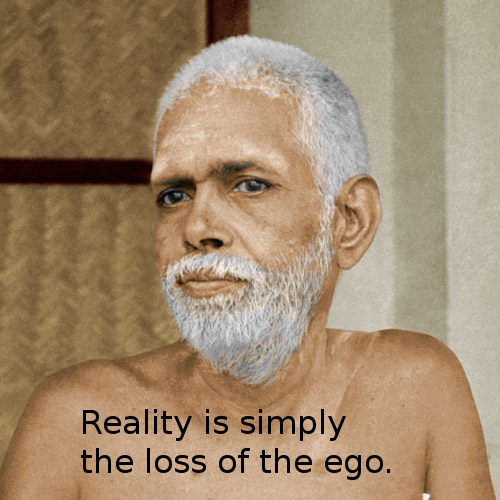
Reality is simply loss of ego - Ramana

Harsha's avatar

Moksha in Hinduism: By Dr. Shyam Subramanian

A seeker asks: In Hinduism, there is a belief in reincarnation. The idea of reincarnation is that when the body dies, I will be born again. However, we are taught to pursue Moksha (salvation) which puts an end to the cycle of birth and death. As a Hindu, why should I pursue Moksha? Is that not a permanent death forever? At least with reincarnation, I have a chance to be reborn. Perhaps I will get to meet old girl friends in my next birth and go to Las Vegas and Bombay again. But if I get Moksha, according to Hindu teachings, I will never be reborn. That is scary, is it not? Why should I then seek Moksha as stated in our scriptures? How does this idea of Moksha as salvation or liberation make any sense?

Editor’s note: Moksha in Hinduism is not viewed as permanent death but an awakening into eternal life. Moksha is essentially the recognition that one’s very nature is that of freedom and wholeness. The questioner’s presumption that his next life would be according to present desires or expectations (going to Las Vegas or Bombay with his old girlfriends) is not consistent with the doctrine of Karma. According to the doctrine of karma, the next birth is determined by a combination of actions taken in previous lives and the present life. The merits and demerits generated thus will determine future experiences of pleasures and pains. Therefore, there is no guarantee that the expectations to be with specific individuals and repeat pleasurable experiences would come to fruition in the next life. Although the seeker premises the question on a faulty understanding of the ancient teachings on karma and reincarnation, Dr. Subramanian clarifies logically the nature of Moksha and why it is considered the most worthy goal in Hinduism.

shyam

As a way of introduction, Dr. Shyam Subramanian is a professor of medicine and also well trained in the classical traditions of Vedanta. Shyam-Ji’s knowledge of Sanskrit and understanding of subtle truths of the Upanishads makes him a brilliant exponent of various Eastern philosophies and religions from a Vedantic perspective. His writing is clear and easy to follow and very helpful for the novice and the advanced students of Hindu philosophy. If any errors have crept in Shyam-Ji’s presentation due to my minor editing, these will be corrected as soon as pointed out.

Continue reading

Harsha's avatar

The Hindu Doctrine of Karma: By Dr. Sunder Hattangadi

Editor’s note: The doctrines of Karma and Reincarnation play an important role in laying the ethical foundations of conduct in Hinduism, Buddhism, and Jainism. In Bhagavad Gita, the sacred scripture of Hinduism, the path of Karma Yoga (The Yoga of Action) leading to liberation (Moksha) is laid out and explained by Sri Krishna.

In popular understanding, the term Karma can have connotations of both cause and effect. Karma can mean action and activity. It can also mean the fruit or the results of such action and activity that we have to bear. For example, ethical, noble, and selfless actions (karmas) are said to lead to good fortune in the future or in a future life. The opposite of that is true as well.

According to Hinduism, how one leads one’s life determines the mental state in the last moments. The mental atmosphere, ideas, and images occurring in the last moments of life lead to a particular type of rebirth (Bhagavad Gita, Ch. 8, verse 6).

In the article given below, Sri Sunder Hattangadi, a retired psychiatrist and a serious student of Sanskrit, discusses the concept of Karma with references to the classical scriptures of Hinduism. This piece is written at a very high level and a short bibliography is provided at the end for those interested in more information. Even though many Sanskrit terms are used in the text, Sunder-Ji provides excellent English translations to the Sanskrit verses which makes the article very readable by people of all backgrounds.

The original writing was posted by Sunder-Ji to the Advaitin list. The Advaitin list is one of the largest lists in the world to discuss the doctrine of Advaita Vedanta as taught by Adi Shankracharya. Sunder-Ji is a member and a moderator of the Advaitin list. His exceptional mastery of both English and Sanskrit make his works of great value.

I did restructure Sunder-Ji’s article a bit but not with much confidence in my judgment. If any errors have occurred, these will be corrected as soon as pointed out by Sunder-Ji and other learned members of the Advaitin list.
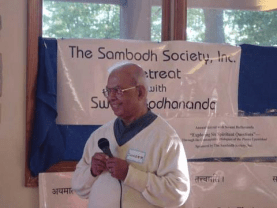
image

Sri Sunder Hattangadi

The Hindu Doctrine of Karma

Perhaps no word captures the mystery of human existence as suggestively as the word Karma. It is a word that evokes such a host of associated ideas – ethical-moral, psychological, metaphysical, and mystical – that one can easily lose one’s bearings in trying to understand it.

Krishna himself declares in Gita (4:17) – gahanA karmaNo gatiH – “hard to understand is the true nature of action”[`viShamA durj~neyA…yAthAtmyaM tattvam’]. It may be compared to exploring the Himalayan ranges to reach the peak of Kailasa, Shiva’s abode.

Simply defined, karma means action. The stem word, karman, is derived etymologically from the root verb (dhAtu) kRRi, to do, which also generates a multitude of other cognate words that are inextricably related to Karma – e.g. kartA (doer), kartavya/kArya (duty), kAraNa (cause), karaNa (instrument), and so on.

The definitions of Karma are modified by the prefixes, or adjectives, or compound words that are added to it, for example: Karmas may be described as sAtvika, rAjasika or tAmasika; nitya, naimittika; sa~nchita, kriyamANa (Agami), and prArabdha; kAmya, niShkAma; nyAyya, viparIta; shAstra-vidhanokta or avidhipUrvaka; akarma, vikarma, naiShkarmya; svabhAvaja/sahaja.

The Bhagavad-Gita, which Shankara has called `samasta-vedArtha-sAra-sa~Ngraha’ or the `epitome of the essentials of the whole Vedic teaching’ (or Spiritual Knowledge), is the incomparable vade mecum in explaining all the implications of the word Karma. It is a triune synthesis of dharma-shAstra, karma yoga-shAstra, and mokSha-shAstra. Any reader has a wide choice of verses to select in understanding this unique word. The present article is only one such selection, by no means exhaustive, and is only meant to serve as a pointer to other treasures.

Karma and Moksha: Action and Liberation

The word `karma’ yields over 300 words when associated with other prefixes and words to form compound words. The frequency of the word is relatively small in the Vedas & Upanishads, though the major portions of the Vedas (saMhita-s, brAhmaNa-s) are known as Karma-Kanda, i.e. dealing with rituals of worship. They, and the `dharma-shAstra’-s (scriptures on conduct), deal with the do’s and don’ts for the effective functioning of individuals, families, and society. The word has been repeated over a hundred times in the Gita.

The whole pursuit of Reality, the abode of Immortality (13:13) and Imperishable Bliss (5:21), is the effort to transcend the bondage or limitations caused by action. Every ego-centric action leaves an impression (vAsanA) on the mind (or chitta – the memory store-house) serving as a seed to germinate into further action, and results in consequences (karma-phala), that have to be experienced (enjoyed or suffered) in the present or subsequent life. These tendencies (vAsanA-s) can be countered by proper discipline of unselfish actions which leave impressions (saMskara-s). This wiping out of vAsanA-s (vAsanA-kShaya) itself is known as liberation (mukti).

The goal of action is to attain `actionlessness’, (naiShkarmya – Gita 3:4, 18:49). Immortality, freedom from delusion and sorrow and sin, peace, bliss, freedom from desire and anger, are the fruits of this pursuit, as attested in the following verses.

Gita 18:5, yaj~na-dAna-tapaH-karma pAvanAni manIShiNAm – purifiers of the wise.
5:11: “yogins perform action, without attachment for the purification of self.”
4:24 – “Brahman verily shall be reached by one who always sees Brahman in action.”
4:33 – “All action is comprehended in wisdom”.
4:37 – ” Wisdom-fire reduces all actions to ashes.”

Shankra Bhashya on Gita 3:16 states: ` ….till one attains the qualifications for Devotion to the knowledge of the Self, one who knows not the Self and is therefore qualified (for action only) should resort to Devotion to action as a means of attaining Devotion to knowledge.”

In Gita 4:25-32, Krishna defines the manifold yajna-s which are born of action (Bhashya: “in deed, speech and thought”, the not-Self, for the Self is actionless. If you realize that these are not my actions, I am actionless, I am unconcerned, you will be released by this right knowledge, from evil, from the bond of samsara”).

In Gita, 5:8-9, are described other actions (“seeing, hearing, touching, smelling, eating, going, sleeping, breathing, speaking, letting go, seizing, opening and closing the eyes”,) which are expressed by a truth-knower as “I do nothing at all, the senses move among the sense-objects.”

Actions, or the flux of events or changes in phenomena, happen in Prakriti (Gita 7:4) or in Kshetra (13:5-6) when applied to an individual. 3:27 – “Actions are wrought in all cases by the energies of Nature (Prakriti). One whose mind is deluded by egoism thinks `I am the doer’. ”

How does Vedanta view Karma?

Gita 18:13 – (also 2:46, 4:33) Bhashya – “all action ceases when the knowledge of the Self arises, so that Vedanta, which imparts Self-knowledge, is the `end of action’; (sA~Nkhye kRRitAnte)”.

Other References From Upanishads and Bhagavad Gita on Karma

The classical definition of karma is given in Gita 8:3: bhUtabhAvodbhavakaro visargaH karmasaj~nitaH – “The offering which causes the origin of physical beings is called action (Karma)”.

Shankara Bhashya on this is: “The sacrificial act which consists in offering cooked rice, cakes and the like to the Gods (Devatas) and which causes the origin of all creatures, is known by the term Karma; for it forms the seed as it were of all beings; it is in virtue of this act that all beings, animate and inanimate, come into existence, after passing through rain and other regions of life.”

Brihadaranyaka Upanishad, 1:6:1, states: “This Universe is formed of three entities: name, form, and action.”

Taittiriya Upanishad, 1:11:2-4, gives the guidelines – “……should you have any doubt with regard to duties or customs, you should behave in those matters just as the Brahmana-s (learned ones) do, who may happen to be there and who are able and noble thinkers, who are adept in those duties and customs, who are not directed by others, who are not cruel, and who are desirous of merit…..”

[Jaimini’s Karma Mimamsa codifies in aphorisms (3,454 in 16 chapters) the Karma Kanda (`dharma-jij~nAsA’) of the Veda-s, just as Badarayana’s Brahma Sutra-s (555 in 4 chapters) formulate the Upanishadic `brahma-jij~nAsA’ (Jnana Kanda).

Gita 3:14-15 – “From food creatures come forth; the production of food is from rain; rain comes forth from sacrifice; sacrifice is born of action; know thou that action comes from Brahman; and Brahman comes from the Imperishable. Therefore the all-pervading Brahman ever rests in sacrifice.”

Shankara Bhashya : “…Yajna or sacrifice spoken of refers to what is called `apUrva’; and this is the result of the activities of the sacrificer and his priests (ritviks) engaged in a sacrifice. These activities are enjoined in the Veda (Brahman), and the Veda comes from the Imperishable, the Paramatman, the Highest Self. Because the Veda has arisen from the Highest Self, the Akshara, the Imperishable, as the breath comes out of a man, therefore, the Veda, though all comprehending as revealing all things, ever rests in sacrifice, i.e., it treats mainly of sacrifices and the mode of their performance.”

As the reader can see, the word Karma has a rich history and heritage. A discussion of it is intimately tied to other topics such as reincarnation (rebirth) and moksha (liberation). Please review the following references for more information.

References:

http://www.sankara.iitk.ac.in/gitaindex.htm [Complete Works of
Shankara]

http://www.gitasupersite.iitk.ac.in/ [various commentaries on
Gita]

https://luthar.com/wp-content/uploads/2007/07/karma_mimansa.pdf [Jaimini
Sutra-s on Karma Mimamsa]

http://www.archive.org/details/thekarmamaimaacm00keituoft

http://www.mimamsa.org/articles/brief_introduction.html

http://www.geocities.com/profvk/gohitvip/contentsbeach11.html (waves
9&11) [by Prof.V.Krishnamurty]

http://www.hinduismtoday.com/archives/1994/2/1994-2-09.shtml

https://luthar.com/wp-content/uploads/2007/07/waystotruth.pdf [by Ananda Wood]

Back To The Truth – Dennis Waite ; 2007 Ch 2; O Books, UK

Harsha's avatar

Self-Inquiry_The Science of Self-Realization: By Dr. Harsh K. Luthar

According to Advaita Vedanta, the science of Self-Realization (which we call Self-Inquiry), requires a different approach than the sciences involved in discovering the complexities of the Universe. Both approaches are similar in one way in that our consciousness with focused attention and awareness is used as an instrument of perception to gain knowledge.

Sciences involving the exploration of the universe and its laws focus the attention outside to perceived objects (time, space, matter, laws of motion, gravity, mass, etc.) to determine their nature. When attention and awareness are focused on such analysis, the relationships between various objects according to universal laws becomes clear. This is due to the inherent power of consciousness to discover and make known to itself anything that it focuses attention on. That is how sciences (Mathematics, Physics, Medicine, etc.) move forward.

However, the theoretical limit to understanding objective phenomena is always there to the extent that the observed phenomena is based on the very nature of the observer. It is not clear how precisely the relationship between the subject and the object can be determined scientifically. Philosophically, this is due to the logical difficulty of separating the subject from the object and demonstrating their independence.

Science of the Self, however, is a radical departure from the physical sciences and has a different aim. Here attention is directed inwards towards the subject and not outwards towards objects of perception. The classic methodology given by Sri Ramana for Self-Inquiry is to ask oneself with attention and inquire, “Who am I?” This is done in order to introvert the mind and drive it deeper into its source. In Self-Inquiry, the quality of consciousness itself becomes the center of attention. In this method, consciousness is not focused anywhere or on anything other than itself.

Language is not perfect but there are many ways to say this. Attention focused on attention itself is Self-Inquiry. Consciousness becoming self-focused is Self-Inquiry. Mind turning inwards to its source is Self-Inquiry. Awareness aware of itself is Self-Inquiry. All of these are variations of the same process and basically refer to the same thing. These statements indicate that one should quietly abide in one’s own sense of identity and being with full awareness.

This is not an easy notion to grasp. The Self-Inquiry methodology does not present the aspirant with an image or a sound to concentrate on. Because we are so dependent on our sense of hearing and sight even for meditation and prayer, Self-Inquiry presents a challenge. People often find it difficult to know what to focus in doing the Self-Inquiry because they associate their identity and thus consciousness strongly with the body.

This is why Sri Ramana used to say that Self-Inquiry is not for everyone to take on immediately. I have observed this phenomena carefully for a long time. People find meditation, yoga, tantra, chakras, and kundalini methods much more interesting and exciting to talk about and practice than Self-Inquiry. It is because all of these Yoga systems are directly or indirectly based on producing changes in the physical or the subtle bodies which one can experience.

Consumption of experience in some form or another is natural to all living beings. Self-Inquiry points, however, to the subject; the one who experiences. What is the nature of the one who experiences? Self-Inquiry shifts our attention from perception to the perceiver. Who is the one who perceives and experiences reality?

The practice of meditation and yoga leads the mind to temporarily withdraw the senses from objects of perception. However, internal perceptions in meditative states or Samadhi will most likely still exist. These internal perceptions may manifest in a number of ways including that of visions of angels, holy sages, the Goddess. Various spiritual and religious symbols often appear spontaneously in the mental eye of the aspirant during meditation or contemplative prayer and there may also be experiences of lucid dreaming states. So even in higher meditation states, the distinction between the subject and the objects of perception continues as we engage in and consume one experience after another.

Self-Inquiry, on the other hand, is found to be boring and irrelevant by many people because it promises them no special experience to enjoy other than being their own self. People should always do what feels natural. Nothing can be forced.

Eventually with the practice of meditation and other types of yogas, the mind becomes more subtle. The understanding of the nature of consciousness as free from outer perception (of physical objects) as well as internal perceptions (dreams, visions, other mental experiences) can then start to emerge. Once the independent nature of consciousness (free from all perceptions) is understood, one can recognize the essential quality of existence and pure being in the midst of various experiences.

When attention/awareness become self-focused, that is called Self-Inquiry. When attention lights up attention, awareness lights up awareness, consciousness lights up consciousness, Self is Realized as Sat-Chit-Ananda, the ultimate subject, the very core of being. Sri Ramana called it simply the Heart, whose nature is that of silence which is beyond all understanding.