
Pray Some More!
Pray some more for utter oneness with God
Beauty lies in both the Sun and the Setting Continue reading

Pray Some More!
Pray some more for utter oneness with God
Beauty lies in both the Sun and the Setting Continue reading
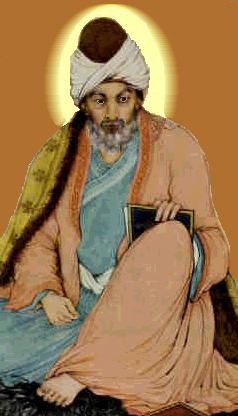
“The whole world is a marketplace for Love,
For naught that is, from Love remains remote.
The Eternal Wisdom made all things in Love.
On Love they all depend, to Love all turn.
The earth, the heavens, the sun, the moon, the stars
The center of their orbit find in Love.
By Love are all bewildered, stupefied,
Intoxicated by the Wine of Love.
From each, Love demands a mystic silence.
What do all seek so earnestly? ‘Tis Love.
Love is the subject of their inmost thoughts,
In Love no longer “Thou” and “I” exist,
For self has passed away in the Beloved.
Now will I draw aside the veil from Love,
And in the temple of mine inmost soul
Behold the Friend, Incomparable Love.
He who would know the secret of both worlds
Will find that the secret of them both is Love.”
~ Farid Ud Din Attar
consider the diamond:
the tender darkness of a fleshy soul
deep within the heart of the earth,
secure & content in the silence
of its own endless night Continue reading
Dreaming the Dream by Anna Ruiz Continue reading
AMMA
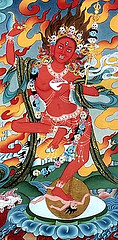
I have walked the ground where they made you, Mother
whirling with dust & wind
my mouth dry & pacing
the sound of your eternal hum in my ears
whipping my mind into you
whipping all minds into you
melting all Mind. Continue reading

it’s simple,
this voice learning to hear itself Continue reading
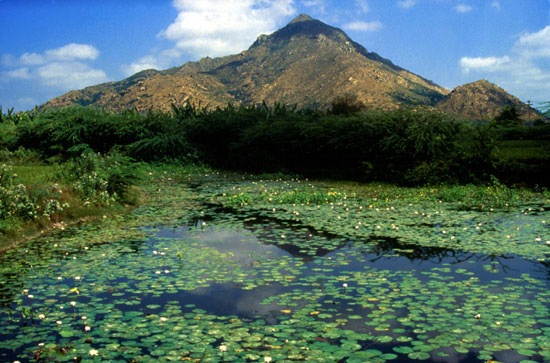
In Praise of Shri Bhagavan
by Alan Adams Jacobs
Let’s give thanks to great Lord Ramana,
For his boundless Grace and Jnana teaching;
He grants silent diksha without vain preaching,
And the precious gift of atma vichara,
His directly liberating, true sadhana.
His eternal presence is close; ever reaching
The hearts of all devotees, so breaching
Mad ego’s fortress of dark avidya.
We feel devotion through our gratitude,
For leading us out of dread samsara;
He bestows full faith, strength and fortitude,
He transmits the power of Arunachala.
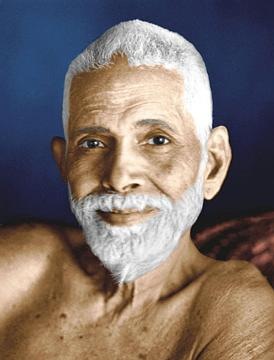
Ever our loving guardian and guide,
Deep in our hearts his lotus feet abide.
Photos courtesy of Shri Ramanaashram
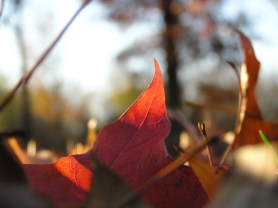
As I ramble on with Ramana
on sitting silent, and passing.
Action of auspicious shades of orange autumn leaves
attach their coloured crusty shades
to reflective rockports of realization.
On occasion, a lofty leaf within leela, stuck without sticking
releases bondage from rambling rocking walking rock.
Heart time space are collaborated and concentrated.
An unconditional comfortable compassion now remains here
and an all airy fiery appearance resides rupa.
Om. All love.
translation and commentary by Smt. Savitri Puram
Bhagavan says : “njaanagni: sarvakarmaani bhasmasaat kuruthe”
~the fire of knowledge burns all karmaas in to ashes.

Introduction
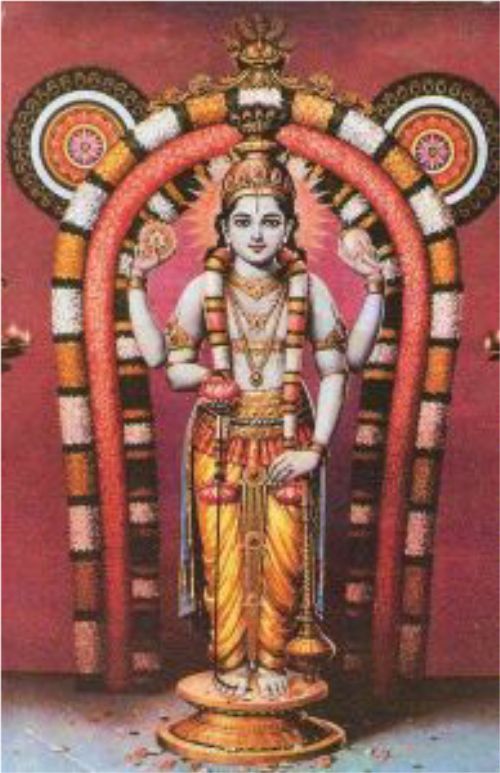
Njanappaana can be considered as the Bhagavad Gita of Malayalees. This is a Darshanika kaavyam or philosophical poem expressed in the most simple Malayalam language for ordinary people. Poonthanam Nambudiri, an ardent devotee of Shri Guruvayurappan, transformed his unbearable sorrow from his infant son’s death into a “yogavishesham”. He used this sad experience to build his Bhakthi soudham or house of devotion and opened it for all devotees for all time. Even though the language is very simple, this njaanappana, or song of wisdom deals with the essence of all vedas and upanishads. May Bhagavan Guruvayurappan, Bhagavathy Sarswathi Devi and Sri Poonthaanam Nambudiri bless us to become wiser by going through this great Song of Wisdom!!
This is continued from Part One… https://luthar.com/njanappaana-1
Part Two https://luthar.com/njanappaana-2
Part Three https://luthar.com/njanappaana-3
Karmangalkku vilabhoomiyaakiya
Janmadesamibhoomiyarinjaalum
Karmanaasam varuthenamenkilum
Chemme mattengum saadhiyaa nirnnayam
Know (arinjaalaum) that this earth (bhoomi), our birth place or mother land (janmadesaham) is the field where we sow the seeds of all karmaas (karmangalkku vilabhoomiyaakiya). Definitely (nirnayam) it is not possible (saadhiyaa) to exhaust the residual karmaas (karmanaasham varutthenamenkilum) anywhere else other than here.
These four lines may seem to contradict the idea expressed in the previous lines. In the last stanza poet said that karmaas can be performed only on earth (there is no contradiction on this part.)and results of the karmaas are experienced in appropriate worlds like heavenly worlds or worlds of hell. Now this stanza says that “karmanaasham” or exhaustion of karmaas is possible only on earth. Let us explore what poet means by “karmanaasham” in this context.
In this context, by the word “karma” poet means residual karmaas. After death, subtle body (jeevan or soul) experiences the results of all karmaas that can be experienced by subltle body in the worlds other than earth. But some results can be experienced only by the gross body. So jeevan comes back to earth with those residual karmaas, takes an appropriate form of life in an appropriate circumstance to exhaust the remaining karmaas and to do new karmaas. Jeevan thus enjoys or suffers the results of all the residual karmaas on earth. So in the time between births, subtle body experiences the results of good and bad karmaas and during the life on earth, gross body experiences the results of remaining different set of good and bad karmaas. It is to be noted that in the time between births, subtle body does not accumulate any karmaas. Only during the life time on earth, jeevan in gross body accumulates karmaas.
Swami Sivananda says about residual karmaas: “If all Karmas bear fruit after death, there will be no cause for rebirth after life in heaven or hell or in animal bodies, because in these there is no means of virtue or vice. You need not be afraid that if any Karmas are left in store there will be no salvation, because knowledge of Self will annihilate all Karmas. Therefore it is an established conclusion that the souls descend to the earth from heaven with a remainder of works (Anusaya). After the fruits of the meritorious acts have completely been enjoyed in heaven, the remaining other set of works (good and bad) whose fruits are to be enjoyed in this world forms the Anusaya with which the souls come to the earth.” Bhagavan says : “njaanagni: sarvakarmaani bhasmasaat kuruthe” or “the fire of knowledge burn all karmaas in to ashes”.
In short, sum total of all our past lives led us to where we are now. To realize the goal of salvation, soul undertakes many many lives in gross body or physical body. Those who take responsibility for one’s karmaas and do one’s best to free from the cycle of birth and death is defined by scriptures are wise and strong willed. Those who blame others are defined as unwise and weak. How can we become wise and strong willed in this Kaliyuga? Poonthanam suggests chanting of naamam and surrendering to Bhagavaan as the best method. Chanting naamam helps us to remember Lord’s greatness continuously and from there Bhagavan takes over because He has promised in Bhagavad Gita:
Ananyaschintayanto mam ye jana: paryupasate,
Tesham nityabhiyuktanam yoga-kshamam vahamyaham
“Those devotees who think of me continuously, making me the sole object of their worship, I myself will provide for their every need and safeguard their yogakshemam.
Bhaktanmaarkkum mumukshu janangalkkum
Saktharaaya vishayee janangalkkum
Ischicheedunnathokke kodutthitum
Viswa maathaavu bhoomi siva siva
Siva! Siva! this Bhoomi Devi who is the mother of the whole universe (Viswamaathaavu bhoomi), fulfills all the wishes (Inchikkunnathokke kotukkunnu) of devotees (Bhakthanmaarkkum), people who aspire liberation or salvation (Mumukshu janangalkkum) and desire-bound materialists ( saktharraya vishayee janangalkkum) alike!
This earth fulfills the wishes of all kinds of people. It is interesting to note that Bhoomidevi lets any aspirant to advance in their chosen path. The only condition is sincere effort to reach the goal. May it be the desire to feel the presence of God everywhere and in everything, may it be the desire to attain salvation, or may it be the desire to succeed in the material life, our Mother Earth fulfills the wishes of everybody alike.
As per Shri Neelakandhan Nambisan, Poonthaanam used the word “bhakthanmaarkkum” as the first word because Bhagavan is Bhakthadaasan and devotees are more dear to him than those who desire mukthi or salvation. We have several stories to illustrate Bhagavan’s bhaktha vathsalyam or love for devotees. To make Prahlada’s words true, He took incarnation from the pillar as Narasimha, to make Bhishmaachaaryaa’s words true, He broke His own vow and took weapon in His hands, and He became the charioteer of Arjuna. Then as Paartha Sarathi he assures us through Arjuna: “na mae bhaktha: pranashyathi” , “my devotees will never perish”.
The word “Viswamatha” means the mother of the whole universe. There is one more reason to call Bhoomidevi Viswamatha. “viswam” also means Bhagavan. (Viswam Vishnu: Vashatkaara:). In one sense, Bhoomidevi is mother of Bhagavan also because all the incarnations happened in Bhoomi. So Bhagavan is Viswam and as His mother is Viswamaatha. So the name Viswamatha is apt for Bhoomidevi.
Sankaraachaaryar says ” kuputhro jaayetha kwachidapi kumaatha na bhavathi” or “there could be a bad son but never a bad mother !”. This mother of the Universe, Bhoomidevi sets an example and underlines the above statement by supporting and fulfilling the wishes of all her three types of children-bhakthaas, mumukshus and worldly people.
Were the divine naamaas “siva! siva” used to express poet’s surprise when he observed Bhoomidevi supporting the Vishayee’s worldly desires or to indicate Bhoomidevi’s apaara kaarunyam or limitless mercy towards the Vishayees? As a mother, Bhoomidevi may be letting Vishayees fulfill worldly desires for sometime in the hope that in course of time, with the satsangam of the Bhakthaas and Mumukshus, Vishayees will develop detachment towards worldly desires. A mother is an ocean of love and kindness!
Another interpretation is that the poet used these names to express Bhoomidevi’s sorrow to see how Vishayees go after never ending transient pleasures even after achieving their righteous and dhaarmic goals. This earth is karmakshethra and even after taking birth as a human on this earth, it is sad to see some one not trying to attain salvation. In kaliyuga this can be easily achieved by chanting Bhagavan’s divine names and people are still reluctant to turn their mind to the higher power. This might be another reason for Bhoomidevi’s sorrow.Those who do naamsankeerthanam are set on the path of Bhakthi and knowledge and eventually attain moksha.
Viswanaathante moolaprakrithi thaan
Prathyakshena vilangunnu bhoomiyaay
Moolaprakruthi, creation of Lord of the Universe (Viswanaathante) appears (vilangunnu) as Bhoomidevi who is visible by direct senses or direct perception (prakthyashena).
Let us explore more about creation. Bhagavan initiates creation. The first cause is Bhagavan or Viswanathan who is beginingless and endless. First effect is Moola Prakruthi. Second effect is Prakruthi which is the avyaktha or undifferentiated cosmic substance. Then comes the effect of Prakruthi, Mahat thatva. From this Ahamkaaram or feeling of “I-Ness” emerges, next is cosmic mind, five Njaanedriyas or knowing senses from mind, then five karmendriyas or working senses also from the same mind, Pancha tanmathras or five objects of njaanedriyas and finally the physical manifestation of the Pancha tanmathraas, the five visible material substances. These are called Pancha bhoothaas. Of this the last one formed is Bhoomi. First is Aakasham or space , next is Vaayu or air, third is Agni or fire, Fourth is Apa or water and then comes our Bhoomidevi ot Prithvi or earth. So we can see that Bhoomidevi is the gross and visible form (prakthyaksham) of Moola Prakruthi.
We can compare the relation between the Moola Prakrithi and Bhoomi to a mount of mud and an earthen pot made of mud. Here we can say that mud is the Moola Prakruthi and the earthen pot made out of mud is a manifestation of mud. So earthen pot can be compared to Bhoomi. Similarly all the different golden ornaments are made from the same basic substance Gold. Once you melt the ornament, it becomes the basic gold again. Likewise, before dissolution Bhoomi dissolves in water, water is evaporated by fire, fire is put out by air and air disappears in space and everything goes back and dissolves in Moola Prakruthi and in turn Moola Prakruthi dissolves in Paramaathma or Viswanathan.
Shri Nilakandhan Nambishan has given an interesting interpretation for the word “Viswanathan”. One meaning for “Vi”is bird and “swaa’ can mean a dog. So he says that name Viswanathan indicates that Bhagavan’s limitless mercy reaches the whole universe including the birds and dogs and hence undoubtedly He is the Lord of all!
Poonthaanam says that Jeevaas who took birth in this Kaliyuga on this earth as human beings are very blessed because just by chanting Bhagavan’s naamam, we can attain moksham.
Avaneethala paalanathinnallo
Avathaarangalum palathorkkumbol
Athukondu visheshicchum bhoolokam
Pathinnaallilumutthamamennallo
Veda vaadikalaaya munikalum
Vedavum bahumaanichu chollunnu
Several incarnations (avathaarangalum palathu), when you think about them (orkkumbol), are for protecting (paalanatthinallo) earth or Bhoomidevi (avaneethalam) . Because of this (athukondu), earth is considered very special (bhoolokam visheshicchum)and best (utthamam) among all fourteen worlds (pathinnaalilum). Not only munis who have the knowledge of Brahmam (veda vaadikalaaya munikalum) , but also Vedaas say this (chollunnu).
All incarnations of Bhagavan including the Poornaavathaars or incarnations with full glory, of Lord Rama and Lord Krishna happened on earth. Bhoomi got this special blessing and privilege to become the mother of Bhagavaan’s incarnations. These incarnations were to protect her from cruel, unrighteous and demonic kings. Bhagavan promised : “Whenever there is a fall in Dharma and a rise in Adharma, I manifest to protect the good, to destroy evil and establish Dharma” and kept his promise.
When ever Bhoomidevi is subjected to endless suffering at the hands of cruel and demonic people, she approaches Brahma and with Brahma and Devaas they approach Bhagavn. Bhagavan never ignored her prayers but solved her problems and took care of her with love. So Bhoomi is special for Bhagavan. Also as said in previous lines, Bhoomi is the Karma Kshethra and Karmaas can be done only by taking a physical form of life on earth. Bhoomi is special for this reason too. In addition to this, to exhaust residual karmaas from other worlds, jeevan has to take birth on earth. So Bhoomi is the divine place where you can accumulate karmaas, exhaust all results of residual karmaas and this is the only place where you can do Nishkaama karma or “actions with renunciation of fruits” and attain Moksha.
Because of all these reasons realized souls like sages and vedaas consider Bhoomi as the perfect world or the most desirable place to be born in for any living being. “Veda vaadikalaaya munikalum” can be interpreted in two ways:
1. Those who are experts in Vedaas.
2. Word Veda also means “brahmam”. So this can mean those who have realized brahmam or those who always meditate on brahmam.
The fact that Bhoomi is the best of all worlds is approved by Vedaas and great seers. It is said that even inhabitants of swarga or heaven desire to come to earth so that with Nishkaama karmam they can attain salvation. Scriptures and our ancient sages say that Naamasankeertthanam is the first step and best method to realize God in Kaliyuga.
Lavanaabudhi madhye vilangunna
Jambu dweeporu yojana lakshavum
Saptha dweepukaluntathil ethrayum
Uthamamennu vaazhthunnu pinneyum
An island called Jambu dweep with an area of one lakh yojana (one yojana is about 10 miles) stands (vilangunna) in the middle of the salty ocean (lavanaabudhi madhye) and is praised again and again (vaazhtthunnu pinneyum) as the best of all (ethrayum utthamamennu) the seven existing islands (saptha dweepukaluntathil).
There are seven islands and Jambudweepam is the best and most blessed of all islands. Other islands are Plaksha dweepam, Shaalmala dweepam, Kusa ,Krouncha, Shaaka and Pushkara dweepams. There are seven different types of oceans and Jambu dweepam is surrounded by the salty ocean. The other oceans are of sugar cane juice, wine, ghee, milk, curds and pure water. In one description, Jambudweep is not only in the middle of the salty ocean, it also forms the center island. Jambudweep is surrounded by salt water and after this body of salt water is Plaksha dweep, surrounded by an ocean of sugar cane juice. Then comes Shaalmala Dweep surrounded by an ocean of wine. Then comes Kusha dweep surrounded by an ocean of ghee Next is Krouncha dweep, surrounded by an ocean of milk. The last but one is Shaaka dweep, surrounded by an ocean of curd. The outermost and seventh dweep is Pushkara dweep which is surrounded by pure water.
There is an interesting story behind the birth of the seven seas and seven islands. The below quotation is taken from respected KVGji’s and S.N.Sastriji’s translation of Bahktharanjini interpretation of Naarayaneeyam published by Bhaktharanjini Trust.
” Puranams say that the earth is in the shape of a lotus bud in the center of which stands the mountain Mahameru or Sumeru. Once, King Priyavratha observed that the Sun God shines only on one half of the earth’s surface in the course of his circuit around Sumeru and leaves the other half in darkness. The King thought that it was not good to waste half of the day as night. Therefore he made seven circuits around earth, in his effulgent car, following the Sun at its speed determined to turn night into day. The tracks that were sunk by the fellies of the wheels of his chariot came to be the most celebrated seven oceans which divided earth in to seven islands.”
Poonthaanam glorifies Jambudweep because this island has nine regions or parts and one of them is Bharatha varsha. Bharata varsha is the best and blessed of all nine regions of Jambudweep. It is the only place where one can perform good karmaas and attain moksham. So we can even say that because of the Bharata varsham, Jambu dweep became the holiest of all islands! Poonthaanam again tells us to remember the importance of Naamasankeerthanam, especially for those who are fortunate to be born and fortunate to live in this Bharatha varsha of Jambu dweep. It is Karma Kshethra, it is Punya Bhoomi and with Nishkaama karmam one becomes Punyavaan and attains moksham
http://www.youtube.com/watch?v=vbI4Uk8fSYk&feature=player_embedded
translation and commentary by Smt. Savitri Puram
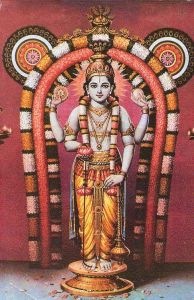
If we have a lighted lamp, we can use it to read and enjoy a book
or use it to burn and destroy the book. We have the choice
to draw the life circle with Bhagavaan and His naamam as the center
and kindness and love as radius of the circle…
Poonthaanam advises us to use the lighted lamp inside us,
lit by the Light of Lights, to walk through the path of Bhakthi and Naamasankeerthanam.

Introduction
Njanappaana can be considered as the Bhagavad Gita of Malayalees. This is a Darshanika kaavyam or philosophical poem expressed in the most simple Malayalam language for ordinary people. Poonthanam Nambudiri, an ardent devotee of Shri Guruvayurappan, transformed his unbearable sorrow from his infant son’s death into a “yogavishesham”. He used this sad experience to build his Bhakthi soudham or house of devotion and opened it for all devotees for all time. Even though the language is very simple, this njaanappana, or song of wisdom deals with the essence of all vedas and upanishads. May Bhagavan Guruvayurappan, Bhagavathy Sarswathi Devi and Sri Poonthaanam Nambudiri bless us to become wiser by going through this great Song of Wisdom!!
This is continued from Part One… https://luthar.com/njanappaana-1
Part Two https://luthar.com/njanappaana-2
Alpakarmikalaakiya naamellaam
alpakaalam kondororo janthukkal
Garbha paathrathil pukkum purappettum
Karmam kondu kalikkunnathingane
We are all (naamellaam) alpakamikal or our duration of one life to do karmaas are short (when compared to the celestial beings). Hence with the karmaas accumulated in this short period we take birth in different animal’s’ womb (kondororo janthukaal garbhapaathratthil pukkum), come out (purappettum), live for a short period (alpakaalam) and continue playing this karma-bound game (karmam kondu kalikkunnathingane)“Alpakarmikal” include all animals and human beings We are all “alpakarmikal” when compared to celestial beings because one celestial year is 365 human years. What about Brahmadevan? One day time of Brahma is one chaturyugam which is equal to 4,320,000,000 human years. Then night also is as long as the day. So one full day is 8,640, 000,000 human years. So if we multiply with 365 and then by 100 years of Brahma’s life it becomes beyond comprehension for us. So let us not go further to Paramapurusha’s time scale because Bhagavan’s one moment is Brahma’s whole life duration which is 311,040,000,000,000 human years!
We perform karmaas continuously during our short life and then take birth in different animal wombs or human wombs based on our sukrutham or dushkrutham or mixture of both.. For example, some say one cat year is equivalent to seven human years. So when born as a cat, results of the accumulated karmaas get exhausted in a short time. We believe that before getting a human birth or narajanmam, we go through millions of lives in the lower species with short durations of life. If we are born as a fire-fly (in Malayaalam, Iyyaampaatta) duration of life to exhaust karmaas is only about 21/2 hours or so. As a crocodile, it may be more than 100 years and as an elephant it may be 60 years. Also we see early deaths in all species and the only explanation for all these untimely deaths and diseases is the results of poorvajanma or previous janmaa’s karmaas. Poonthaanam expresses this numerous cycles of birth and death as a karma-bound game. Only Jeevathmaas in the form of different species of animals and humans are involved in this karma-bound game. Paramaathma is only a witness.
When we are finally blessed with a human birth, Poonthaanam advises us to use the power of discrimination bestowed on us by Lord. Only humans have the “vishesha buddhi” to change the course of our life by surrendering to God and offering all our karmaas at His Lotus feet. Continuous chanting of Bhagavaan’s auspicious names will help us not only to understand the real meaning of the famous sloka, but also to practice it in our daily life:
Kaayena vaacha manasendriyairvaa
budhyaathmanaa vaa prakruthe swabhaavaath
karomi yadyath sakalam parasmai
naaraayanaayethi samarppayaami.
Whatever I do with my body, speech, mind or with other senses of my body, or with my intellect and soul or with my innate natural tendencies I offer (dedicate) everything to Lord Narayana.
With the complete surrender or Sharanagathi, we can escape the terrible cycle of birth,death and sufferings and attain His Lotus feet. Naamasankeerthanam destorys desires and tendencies and helps us to do all karmaas with out expecting anything in return.
Narakatthil kitakkunna jeevan poy
Durithangal otungi manassinte
Paripaakavum vannu kramatthaale
Narajaathiyil vannu pirannittu
Sukrutham cheythu maelppottu poyavar
Sukhicheetunnu sathyalokattholam
Salkarmam kondu maelpottu poyavar
Swargatthinkal irunnu sukhikkunnu
Until the consequences of the the multitude of sins gets exhausted (durithangal otungi) Jeevan stays in Naraka or hell ( narkatthil kitakkunna jeevan) and when slowly mind attains maturity (kramatthaale manassinte paripaakavaum vannu) jeevan moves (poy) to take birth as human being (narajaathiyil vannu). After taking birth as humans (pirannittu), those who do sukrutham or good deeds in abundance goes all the way up ( sukrutham cheythu melpottu poyavar) to the sathyalokam (sathylokattholam) and remains there happy and peaceful (sukhiccheetunnu)( never to return and take birth again). Those who do satkarmaas go up to heaven and remain there (for sometime) enjoying the heavenly comforts.
Can we differentiate sukrutham and satkarmam? Sukrutham is the result of dhaarmic punya karmaas. In other words sukrutham is Nishkaama satkarmam or good deeds with out expecting anything in return. All actions performed with purity of mind is Sukrutham. Sukrutham is satkarmaas done for the Kalyaanam or mangalam of all. Bhagavaan assures in Gita “the doer of good (kalyaanakruth), never comes to grief” or “sukruthis never come to grief”. According to another definition Sukrutham is the results of the satkarmaas accumulated from one’s own past karmaas or sukrutham can even be passed on from ancestors.
What is satkarmam? Satkarmaas are definitely good deeds, but the purpose of action may or may not be pure and also good actions can be performed with selfish motives These satkarmaas with out purity of mind do not become Sukrutham. But the results of these satkarmaas are experienced in Swargam or heaven and when they are exhausted soul is subjected to rebirth.
Another word for sathyalokam is “yathaarthalokam” or real world and once we have realisation, no more suffering, sorrows or rebirth.
Life after death is not to punish the souls by sending them to hell or reward them by sending them to heaven. These experiences are given to remind the soul of it’s true purpose of life. Of course the soul’s journey to mukthi or salvation, or heaven or hell depends on the sukrutham or good deeds done. Experiences in heaven and hell are supposed to impart knowledge and wisdom so that when they take rebirth, they can strive to do more good deeds and attain salvation. That is why poonthaanam says about maturity of mind (manassinte paripaakam). But often Maaya masks this realisation and again jeevan goes after transient pleasures and ahdarmic deeds. But because of the Vishesha Buddhi and power of discrimination, humans have the choice to acquire good and bad karmaas. It is only in human birth jeeva gets this opportunity to go beyond the bondage of karma as a whole and attain salvation. Poonthaanam recommends Naamasankeerthanam as the most easy and enjoyable path to salvation.
In this context Njaanaaanada Saraswathi’s description about the fate of souls after death may help us to understand this better. In this book called Vedantha Vinjaanam, he compares the soul’s journey to a bouncing ball. When we throw a ball to the ground with lot of force, it bounces very high. But when it is thrown with less force it bounces only to a lower height. When it is thrown with hardly any force it hardly bounces and leaves the ground. Here the force with which we throw the ball is compared to sukrutham of the soul. After the death of the body, depending on how much sukrutham one has accumulated, soul goes to Sathylaokam, or Swargam (heaven) or chandralokam or Parjanya lokam , pithrulokam or in the vicinity of earth called prethalokam. Souls that go to Sathyalokam never returns to take janma because they have either attained saalokyam, sarropyam, saameepyam or saayujyam with Paramaathma. (In sathylokam soul can unite with paramaathma and this is Saayujyam. Souls can reside for ever in God’s abode and this is called saalokyam. Next is soul’s assumption of God’s form called Saaroopyam. Staying near to God is Saamipyam.) Poonthannam here mentions about only sathyalokam, heaven and hell. In all other worlds except Sathyalokam, soul stays until the consequences of satkarmaas or dusshkarmaas or a mixture of both are exhausted, and then with the remaining inherent vaasnaas or tendencies takes birth in an appropriate womb determined to improve oneself.
Several different explanations are given for the journey of the soul after death. Dvaitha and Advaitha school of thoughts view these differently. One group believes in attributeless or impersonal God and other group sees God as a personality endowed with glorious qualities. But Mukthi or liberation is unanimously defined as the release from the repeated cycle of birth and death. With the abundance of good deeds or sukrutham, mind becomes pure and “sama-darshanam” or Jeevathma-Parmaathma unity happens. This realization is called enlightenment and enlightened souls eventually get liberated.
Sukruthangalumokke otungumbol
Paripaakavumellolamillavar
Parichodangirunnittu bhoomiyil (jaatharrayi)
duritham cheythu chatthavar pinneppoyi
narkangalil vevvaere veezhunnu
When the results of the good karmaas are exhausted (sukruthangalokke otungumbol), souls remaining in heaven (parichotangirunnittu) are reborn on earth (bhhomiyil jaatharrayi). When their previous good and bad experiences do not impart any maturity and knowledge (paripaakavum ellolam illa-not even as much as little sesame seed), they end up doing more and more bad karmaas (duritham cheythu). Again after death (chatthavar) they suffer the consequences of their various negative karmaas in different ways or in different types of hells. (In one old version the word “jaatharaayi” is not there and with out that meaning can be interpreted in a different way. In that case, the word “parichotangirunnittu” can be for the life on earth or bhoomi itself. When the the good results of the past sukrutham experiencing in this life on Bhoomi is exhausted, with out any realisation of how transient the pleasures are, some commit more sins to end up in different hells)
In this stanza Poonthaanam explains how important is “pascchaatthaapam” or atonement. Even when we enjoy a good life here on earth, we tend to forget how blessed we are and keep hurting others in several ways. When subjected to miseries also, some people often do not realize the sins or mistakes they have committed and refuse to learn and correct themselves. Poonthaanam is talking about such people and he says that they commit more and more sins with out atonement and go through more suffering. If we realize our mistake and do “praayasccchttham” sincerely, we will not be tempted to do more sins. Famous story of the prostitute Pingala is an example for purifying one’s mind with “pascchaatthaapam”. She realized how wrong it was to sell her body for a living and later with deep atonement surrendered herself at Bhagavaa’s feet and attained Mukthi.
“Aviveka: paramaapadaam padam” is illustrated in this stanza. This means “avivekam” or lack of wise discrimination is the root cause of all miseries. When there is no maturity of mind, the power of discrimination will not be there. So instead of going after “sreyas” or what is good, we go after “preyas” or what gives pleasure. Swami Desikan describes nine steps for a spiritual aspirant and vivekam is the first step. Poonthaanam used the word “paripaakam” of the mind to indicate this vivekam or wise discrimination. Lack of Vivekam or paripaakam of mind leads us to hell by performing adhaarmic and bad deeds .
Purity of mind is very important in spiritual advancement. Only from a pure mind knowledge is emerged. With all temptations around us, it is harder to purify our mind in Kaliyuga.
Kalau kalmasha chitthaanaam
Paapadravyopajeevanam
vidhikriyaavihinaanaam
Gathir Govindakeerthanam
In Kaluyuga, mind of ordinary human beings are tainted by Kaamam, krodham, madam, moham etc (kalamsha chittham) and often end up doing adharmam (paapam) to make money (dravyam) for living (for upajeevanam). Ordinary people do not have the time or inclination to do good karmaas as prescribed in vedaas (vidhikriyaheenam). The only thing that can give relief from the sufferings of Kaliyuga is Govinda naama sankeerthanam. Bhagavaan and Bhagavaan’s naama are never separated. Naamam is called Kalpa vruksham of the earth.
Suralokathil ninnoru jeevan poi
Naraloke maheesuranaakunnu
Chandakarmangal cheythavan chaakumbol
Chandaala kulathinkal pirakkunnu
Asuranmaar suranmarayeetunnu
Amaranmaar marangal aayeetunnu
Ajam chathu gajamai pirakkunnu
Gajam chathangajavum aayeedunnu
Nari chathu naranai pirakkunnu
Naari chathutan oriyai pokunnu
Kripa koodaathe peedippicheetunna
Nripan chathu krimiyaai pirakkunnu
Eacha chathoru poocha yayeetunnu
Easwarante vilaasangalingane
A jeevan or soul from heaven or land of Devaas (suralokatthil ninnoru jeevan) is born as a Brahmin on earth (naralokatthil maheesuranaakunnu). People who do extremely cruel actions becomes “chandaala” or a member of a despised caste. Demons or Asuraas become Suraas or Devaas. People who are eternal or immortal or deathless (amaranmaar) are born as trees (marangal aayeetunnu) . A goat (ajam) is born as an elephant (gajam) and vice versa. A tiger (nari) after death is born as a human being (naran) and a woman (naari) is born as a fox (oriyaai). A king who mercilessly tortures (kripa kootaathe peedippicchitunna) his citizens takes birth as a worm (krimi). A fly is reborn as a cat and all these are Bhagavaan’s leelavilasam or playful divine drama.
After death, to experience the results of the residual karmaas, jeevan takes birth in appropriate womb. The passage of a soul from body to body is determined by the force of one’s actions, or karma. If an individual performs good deeds, the next birth will be rewarding, and if not, the person may degenerate into a lower life form. In the above lines, Poonthaanam shows several examples of the effect of karmaas on the soul when it is separated from the body after death. A jeevan from heaven comes to earth to experience the results of his residual negative karmaas. Likewise after experiencing negative results by taking birth as beings in several thousands of species, finally a tiger, for example, gets the life of a human being. Humans bestowed with the power of “wise discrimination” along with the grace of God, can perform good karmaas and advance spiritually. But when a human being resorts to unkind, hurtful, and negative actions, he will again be pushed back to be born in lower life form like a worm. Poonthaanam says: A king who mercilessly tortures (kripa kootaathe peedippicchitunna) his citizens takes birth as a worm (krimi).
There are several examples in our puraanaas to illustrate this law of karma. A good example of how an “amara” or immortal being becomes a “maram” or tree is the story of Nalakoobara and Manigriva who were the sons of Kubera, the lord of Yakshaas or the Lord of wealth. Once Nalakoobara and Manigriva were enjoying themselves playing in a lake with women. They were intoxicated and oblivious of everything around them. Sage Narada passed by the lake during this time and the ashamed ladies immediately covered their body with clothes and showed their respect to Narada with folded hands. But both Nalakoobara and Manigriva, intoxicated with pride and drinks ignored Narada Muni. Narda Muni cursed them to become “maruthu trees”. They had to remain as trees for a very long time until Krishna as Damodara came out of Gokulam and touched them with the wooden mortar.
Another example is the story of Gajendramoksham. King Indradyumana was born as a “divine elephant”. I am quoting below the words of our own respected S.N Sastriji (from the Naaraayneeyam commentary) : “The njana and devotion which he (King Indradyumnan who became an elephant by sage Agasthya’s curse) had acquired in his previous life came back to him under the stress of the suffering caused by the attack of the crocodile. He then worshipped Thee with lotus flowers plucked by his trunk, while singing continuously a great hymn addressed to the Nirguna brahmam which he had learnt in his previous life.” Even though King Indradyumna had to be born as an elephant, his residual good karmaas led him to salvation. (Also the crocodile was Huhu, a gandharvan in the previous janma.)
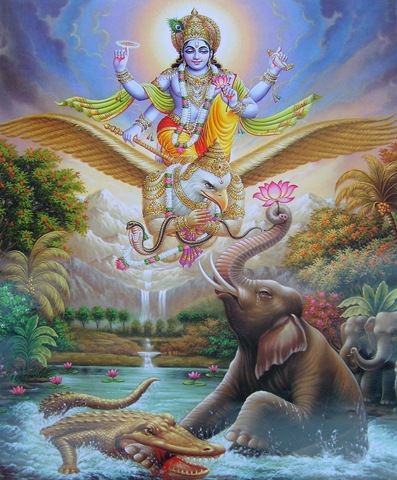
As a “Bhoktha”, the experiencer, one does not have the freedom of choice in experiencing the results of accumulated bad karmaas. (Bhagavaan and His naamam are the only solution to lessen or erase our suffering due to accumulated bad karmaas). But as a “Kartha” or doer, one has freedom of choice to some extent. If we have a lighted lamp, we can use it to read and enjoy a book or use it to burn and destroy the book. We have the choice to draw the life circle with Bhagavaan and His naamam as the center and kindness and love as radius of the circle. Also we can draw the life circle with “I” and “mine” as center and a combination of kaama,krodha,,lobha moha,mada,maasthryaadi negative qualities as radius of the circle
Poonthaanam advises us to use the lighted lamp inside us, lit by the Light of Lights, to walk through the path of Bhakthi and Naamasankeerthanam.
Keezhmelingane mandunna jeevanmaar
Bhoomiyeennathre naetunnu karmangal
Seemayillatholam pala karmangal
Bhoomiyeennathre naetunnu jeevanmaar
Angane cheythu nedi marichudan
Anya lokangal oronnil oronnil
Chennirunnu bhujikkunnu jeevanmaar
Thangal cheythoru karmangal than phalam
Odungitum athottunaal chellumbol
Udane vannu naetunnu pinneyum
Thante thante grihathinkal ninnutan
Kondu ponna dhanam kondu naamellam
Mattengaanumoredathirunnittu
Vittoonennu parayum kanakkine
These jeevaas run (mandunnu) between the lower worlds and upper worlds (keezmelingane) of the universe. But it is said (athre) that they get to do karmaas (karmangal naetunnu) only in Bhoomi. It is said that only in Bhoomi these jeevaas get to do various (pala) and limitless (seemayilaatholam) karmaas. Thus (angane) they accumulate karmaas(naeti) and after death (maricchutan) spend time (chennirunnu)in different worlds one by one (lokangal oronnil oronnil) and experience or enjoy (bhujikkunnu) the results of (good) karmaas (karmangal than phalam) done by themselves(thangal cheythoru). These experiences end (odungitum-with the exhaustion of accumulated good karmaas that can be experienced in worlds other than earth) in a little while (athottunaal chellumbol) and again (pinneyum) jeevaas come (vannu) to earth and collect (netunnu) karmaas. When a person goes to some unknown place and spends prodigiously all the money he collected and brought from his own house, can be called “vittunnunnavan”. Exactly in the same way, jevaas accumulate all the karmaas from earth and experience the results in another world.
It appears that a literal translation of some of the verses my not make much sense. Therefore, it seems appropriate to explore the metaphysical meaning that the lines convey.
In Vedanta, earth is often referred to by another name “karma-kshethra”. This name came because souls can experience the results of karmaas performed ONLY on earth and not in any of the other 13 worlds. What ever experiences any jeeva go through in any other world is the result of karmaas done on earth. If good karmaas outweigh the bad karmaas, we go to heaven, experience the results of good karmaas that can be experienced in heaven until those results are exhausted. Then it goes to hell to experience the results of bad karmaas that can be experienced in hell until those results are exhausted and comes back to earth with some residual good or bad (or both good and bad) karmaas that can be experienced only on earth. But no new accumulation of karmaas can happen in any other world. “otungeetum ottunaal chellumbol” (line 5, first part) means that the karmaas that took the soul to heaven (or hell) will be exhausted in heaven (or hell) by enjoyment (or suffering). Every action we perform is like sowing a seed. It remains vibrant and at a later time we reap the results. It is not possible for ordinary people like us to link the past karmaas and what we experience now by any reasonable method. The same karma performed with different attitude can lead us to heaven, hell, or salvation. Bhaavam is very important.
Poonthaanam has used the word “bujikkunnu” for experiencing the results. The word “bhojanam” is defined as “sukhena anubhuyathe iti bhojanam” or “what is experienced happily”. So “bhujikkunnu” may apply only for the experiences of our good karmaas. When the good karmaas that can be enjoyed in heaven are over, we come back to earth. To experience the results of different types of karmaas, our subtle body goes to different worlds and then with a gross, physical body comes to earth and experience what ever residual karmaas are left as well as to perform new karmaas and the cycle continues. The word “Vitttoonu” is a characteristic of a spendthrift. Origin of the word spendthrift is some one who has spent his accumulated wealth from predecessors or ancestors. Poonthannam compares jeevan’s enjoying the results of the accumulated karmaas from the past (from earth) to a person’s enjoying life by spending all the wealth acquired over a period of time. Just like wealth gets exhausted by spending, results of karmaas gets exhausted by experiencing. Life in heaven is not eternal, it is transient. It is interesting to note that jeevans in subtle body and gross body welcome the end of suffering, but definitely want the enjoyment of the results of good karmaas to last for ever when both are transient Only Nishkaama karmam (with out expecting anything in return) leads to eternal peace and happiness or salvation.
Since every action we perform, and every thought that comes to our mind has a result or consequence, Poonthaanam used the word “Seemayillatholam” or limitless or endless karmaas. Wheel of karma continues on and on. Nobody can remain Karma-free. There is one and only one solution to get out of the wheel of Karma and all scriptures and our great seers suggest to surrender to God and do karmaas with renunciation of the fruits of actions.. Poonthaanam gives an easy solution to develop this attitude of complete surrender -Naamasankeertthanam.
Let us chant the naamam to purify our mind with Shri Poonthaanam and other millions of devotees:
Krishna! Krishna! Mukunda! Janaardana!
Krishna! Govinda! Naaraayana! Hare!
Achyuthaananda! Govnda! Maadhavaa!
Sachindaananda! Naaraayana! Hare!
http://www.youtube.com/watch?v=vbI4Uk8fSYk&feature=player_embedded
Samasthaaparadham kshamaswa Sreekrishnaarpanamasthu
 Luthar.com
You must be logged in to post a comment.