Harsha's avatar

Mangal Aaratee

Unsaved_Production 1


  Mangal Aaratee Priyaa Preetam kee, Mangal Preeti Reeti Doun kee
Blessed prayer of lover and Beloved,  Blessed  is the ritual of their union

Mangal Kaanti Hansani Dasanan kee, Mangal murlee Beena Dhun kee
Blessed is the light of His swanlike splendour,  Blessed is the sweet rhythm of His flute

Mangal Banik Tribhangee Hari kee, Mangal Sevaa Sab Sahachar kee
Blessed Hari, omnipresent knower of three worlds,  Blessed friend of all devotees

 Mangal Sir Chandrikaa Mukut kee, Mangal Chabi Nainan mein At kee
Blessed is His crown made of Peacock’s feather,  Blessed is His glance enslaving my eyes

Mangal Chataa Phabee ang ang kee, Mangal Gaur Syaam Ras Rang kee
Blessed beauty of ornaments on Shyam’s body, Blessed are  Krishna’s activities

 Mangal Ali kati peyare pat kee, Mangal Chitvan Naagar nat kee
Blessed love of Sweetheart Govinda , Blessed allure of that magical Krishna

Mangal Shobhaa kamal Nain kee, Mangal Maadhuri Mridul Bain kee

Blessed is the beauty of His lotus eyes,  Blessed the soft and sweet voice of His Flute

 Mangal Vrinidaavan Mag At kee, Mangal Kreedan Jamunaa Tat kee
Blessed husband of Vrindavan’s gopis,  Blessed is His play on the river  banks of Jamuna

Mangal Charan Arun Taruvan kee, Mangal Karani Bhagati hari Jan kee
Blessed are His Feet under the Arun tree of the forest ,  Blessed Lord, remover of obstacles

 Mangal Jugal Priyaa Bhavaan kee, Mangal Shree Raadha Jeevan kee
Blessed pair of beautiful charming lovers,  Blessed Hari, who is the life of Radha


To listen to this Aaratee, click on the link…
http://www.youtube.com/watch?v=oeOEW5bJUHE

Mangala Aaratee1

Arati (also called  Aarti, ãrti, arathi) is performed in many Hindu temples first thing in the morning, and several times throughout the day, with a final arati in the evening.  Arati is also performed after services such as puja.  The word is derived from the syllables “Aa” which means towards, and “rati” which means the highest love for God.  As the devotee waves the lamp before the deity, the frame of mind should be one of surrender and devotion, a prayer to Divinity to annihilate the ego in the flames of the sacred fire such that complete surrender is achieved.

At the Chinmaya Mission temple where I worship, following the monthly group chanting of the Vishnu Sahasranama, we sing a beautiful Mangal Aaratee to Lord Krishna, which glorifies the love of the Lord for Radha and for the gopis, thus symbolically glorifying the Oneness of the Paramatma and the atma as embodied in the living jiva.  Something about this Aaratee drew me the first time I heard it even though I could not really make out the melody as a small group of devotees sang it one night.  I later found out the language was Hindi, and one afternoon I drove over to the Temple to request Swamiji to sing it for me so I could record it and learn the melody for the monthly chanting.  Like some other bhajans have done, this one took me over and I needed to take it a step further, learning it on my harmonium and memorizing the words.  Still, something was missing…I knew the general gist of the words had to do with auspiciousness and Lord Krishna and Shrimata Radarani, but I wanted more. I wanted to know what all the words meant.

So, I posted photos of my lyric sheet in the Roman transliteration as well as the Hindi devanagari script on my Facebook page, asking my FB friends if anyone there knew Hindi and might be able to help.  One of them did, Shravanji Manyan, and he was kind enough to make an effort which was a great help.  But, there were some lines which he felt he could not quite make out and so there will still some missing lines.  I knew that if the Lord wanted it to happen, He would make it happen.  In the meantime, believing that God helps those who help themselves, I resolved to bring it to a few people at the Mission who I thought might be able to help. 

Before I had to do that, I met a woman who joined into a small yoga group which meets at the Mission.  When our practice was finished for the morning, I pulled it out for my friend, Lakshmi, to ask for her help.  Then a new member of our yoga group, Pushpa, spoke up to say that she had a Masters in Hindi and would be glad to take a look. We started to go over some words, when she offered to take it home.  As a result, she sent me an in depth translation, word for word in a prose like fashion, which gave me a thorough outline of the lyrics. But this was not in the flow of the poetic beauty which graced the Hindi lines. I rewrote the translation to at least try to give it more of a poetic feel and do poetic justice to the author, unknown, who penned these beautiful lines.  Both the lyrics and the melody are hauntingly beautiful, taking you to the banks of the Jamuna River where Radha, the human soul and Krishna, Divinity gracing us in human form,  eternally re-enact the holy union of  His Divinity within the human soul.  There is a certain mystery and wonder to the dance of the lover and the Beloved.  May we all know the glories of this sacred Oneness.

ln004

 Samo’ham sarvabhooteshu na me dweshyo’sti na priyah;
Ye bhajanti tu maam bhaktyaa mayi te teshu chaapyaham
Unsaved_Production 1 

 I look upon all creatures equally,
none are less dear to Me and none more dear.
But those who worship Me with love and affection live in Me,
I come to life in them.” 

BG 9.29

 ln004

Offered with gratitude to the Lotus Feet of my Guru, Shri Krishna, and my Lord, Shri Krishna,
for His Grace in allowing me to love Him, to serve Him and to be His devotee,
and for gifting me with Swami Siddhanandaji in my life, in so many ways,
and in particular, for singing this beautiful work of art for me to learn,
for Shravanji Manyan and for Pushpaji Gairola,
both of whom generously offered their time and talent in
reviewing the lyrics and translating them for me,
and for the unknown poet who wrote this Aaratee through His Grace.
It is said that the Vedas have no author since
they derive from Divinity itself…so too with this Aaratee.



Harsha's avatar

Jai Guru Omkara

ln054

In honor of the Guru, which can only be Him
manifesting in His infinite mercy to remove the illusion of duality.

It may be external, or it may be from within,
opening the chambers of the heart and
unlocking the shackles of the mind such that nothing remains but Him,
everywhere manifesting in everything.  Chitta chora!  Chitta chora!

Steal it all and give me only one thing in return…your holy Presence. 
May I prostrate before you eternally
in gratitude for the Grace you have brought into my life.


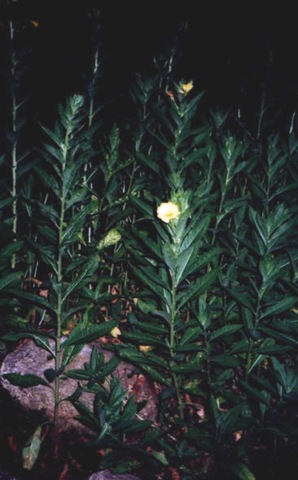
PRIMROSEw - Copy


Puja Prayer

Like a flower
In complete surrender
I come unto You

Petal by petal
In complete surrender
I come unto You

Like the primrose heralds the spring
In complete surrender
I come unto You

May my actions be right
In complete surrender
I come unto You

May I walk in thy Light
In complete surrender
I come unto You

Earth, my altar… I, my offering
In complete surrender
I come unto You

May my only reward
Be complete surrender
Unto You


 ln054


The Self manifests externally as Guru when occasion arises;
otherwise He is always within, doing the needful.
From Talks with Ramana Maharshi, 12th June, 1937 Talk 426.

To view Adi Shankaracharya’s Guru Ashtakam… 

Harsha's avatar

The Ribhu Gita: By Richard Clarke

Your true nature is always the undivided, nondual Brahman,
Which is a mass of Being-Consciousness-Bliss,
Motionless, ancient, still,
Eternal, without attributes,
Without confusions, without sheaths,
Without parts, without impurity,
Completely free from any illusion of duality,
Full, peerless, and the One.

From Song of Ribhu, Chapter two.

The Ribhu Gita is a spiritual text that was extensively used by Bhagavan Sri Ramana Maharshi. It was one of the first books he read after Self-Realization, one whose message clearly accorded with what he had realized within himself. For many years during his life it was read to those at Ramanasramam. It is still read at Ramanasramam today. Ramana’s use and recommendation of this text has brought it into much wider visibility among those interested in his teachings and Advaita Vedanta.

Papaji reading from The Ribhu Gita

A number of teachers in the tradition of Sri Ramana have been using these translations of the Ribhu Gita in their teaching. Above is a picture of Papaji reading from the English Translation of the Sanskrit version.

The Ribhu Gita is a book that is best read aloud, a few verses at one time. It is in an ancient form designed to be chanted, and they way it is written is most conducive to reading aloud, even if one is reading it to oneself.

The Ribhu Gita presents the timeless teaching of Self Knowledge, emphasized by Advaita Vedanta. Its fundamental tenet is the identity of the Self with Brahman, a term signifying the vast Absolute. This scripture presents the teaching given by the sage, Ribhu, to Nidaga to become enlightened into his true nature.

According to Annamalai Swami, “Bhagavan often said that we should read and study the Ribhu Gita regularly. In the Ribhu Gita it is said, ‘That bhavana “I am not the body, I am not the mind, I am Brahman, I am everything” is to be repeated again and again until this becomes the natural state.”

In describing the Self or Brahman, negation is primarily used because the Self can never be an object, can never be what is perceived or conceived. By negation in the process of Self-inquiry, the ignorance of identifying ones own existence with an individual body and mind is destroyed. This “destruction” of ignorance is really not the destruction of anything real, as the false identification as an individual just consists of assumptions, ideas. What remains after this so-called destruction is not anything new. It is not something achieved. It is not a transformation. It is what has been your innermost identity all the time.

As all differences are an illusory appearance
On Brahman, which is not different from the Self,
Due to conditionings of the Self like the defect of nescience (ignorance)
And conditionings of Brahman like maya (Illusion, delusion),
One should realize, by a practice of negation,
That all appearances are not a whit different from the substratum
And one should cognize the originless, endless,
Undivided identity of the Self and Brahman.

From Song of Ribhu, Chapter One

“The text is a relentless reiteration of uncompromising Advaita―that the Supreme Brahman, ‘That,’ is all that exists and exists not, that nothing else exists, the Self is Brahman and Brahman is the Self, I am that, I am all, and That is myself. This Awareness is moksha (liberation) which is attained by the way of knowledge and the certitude I-am-Brahman,” says Dr. H Ramamoorthy, one of the co-translators, in his Translator’s Introduction to the English translation of the Sanskrit version published by The Society of Abidance in Truth in 1995.

The origins of the Ribhu Gita are uncertain. It is contained within the Sivarahasya, an ancient Sanskrit epic devoted to Siva. It has been compared to the better-known Bhagavad Gita, contained within the epic, Mahabharata. Similar dialogs between Ribhu and Nidagha on the Self and Brahman are also found within the traditional 108 Upanisads, so it appears that the origin of the Ribhu Gita dates from the Upanisadic period, generally thought to be about 600 BCE.

The Ribhu Gita exists in two forms, the traditional Sanskrit version, and a Tamil version rendered in the late 1800s by Bhikshu Sastrigal, also known as Ulagantha Swamigal. Both versions have been translated into English by Dr. H. Ramamoorthy, a Sanskrit and Tamil scholar, and Nome, a Self-Realized sage in the United States of America, who realized the Truth revealed by Sri Ramana Maharshi and the Ribhu Gita in 1974. Both books, The Ribhu Gita and The Song of Ribhu (the Sanskrit and Tamil versions of the text) have been printed by the society of Abidance in Truth (SAT) and are available from their website (www.satramana.org).

These English translations have become the basis for a widening appreciation of this ancient nondual work. Translations have been made from these English translations into a number of other languages, including Italian, and Hindi. The Song of Ribhu has also been reprinted by Sri Ramanasramam and is available from their bookstore.

In addition to these two complete translations, there have been a number of partial translations published. One is a small pamphlet, Essence of Ribhu, available by download from Sri Ramanasramam – www.sriramanamaharshi.org . The other is The Heart of the Ribhu Gita, by F Jones, Los Angeles: Dawn Horse, 1973.

Nome at satsang

Nome has been teaching Self-inquiry, as taught by Sri Ramana, for about 30 years. He gives satsangs and holds retreats at the temple of The Society of Abidance in Truth (SAT), in Santa Cruz, CA, USA. For more information go to http://www.satramana.org. He has translated and published a number of books of Advaita Vedanta that otherwise would not be available in English. Many of these translations were done in collaboration with Dr. Ramamoorthy.

Harsha's avatar

Mahasivaratri with Arunachala: By Richard Clarke

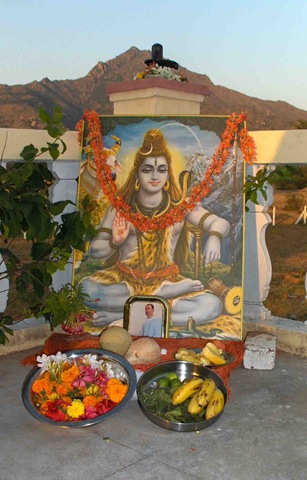
The night of March 6 – when there was no moon – was Mahasivaratri this year. This night honors Siva, seen in nonduality as Being-Consciousness absolute. It is the association with Siva that makes Arunachala such a holy mountain.

Instead of going into town to a temple, or doing pradakshina – walking around Arunachala – we decided to hold a Siva Puja at our house. Here are some photos.

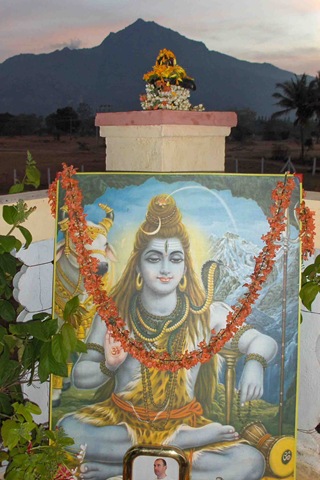
The Altar set up near sun down

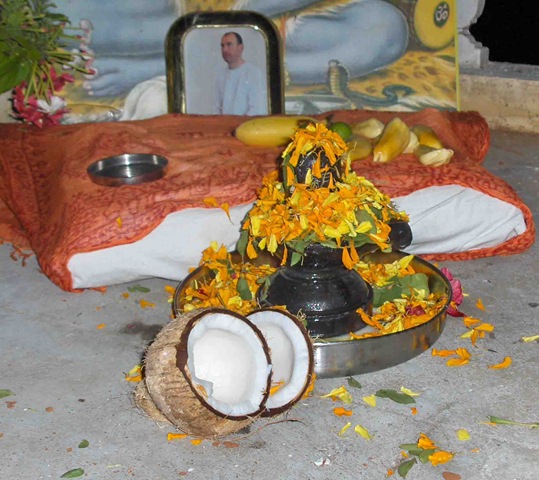
Mahasivaratri altar

The altar has a picture of Siva, a lingam, a photo of Nome, and various puja materials.

Arunachala is is the background.

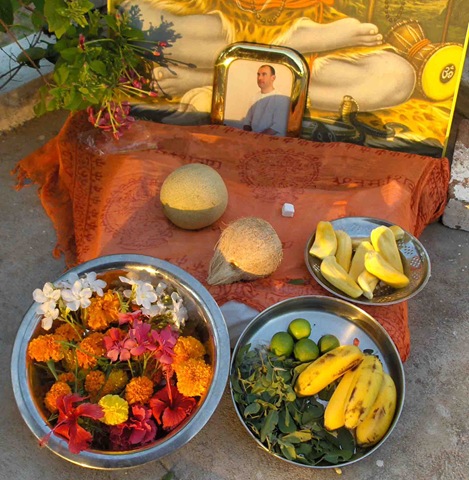
Puja Materials

Puja materials

Fruit and a coconut are common offering.

For Sivaratri it is important to have Bilva leaves as an offering.

Camphor is there for later use.

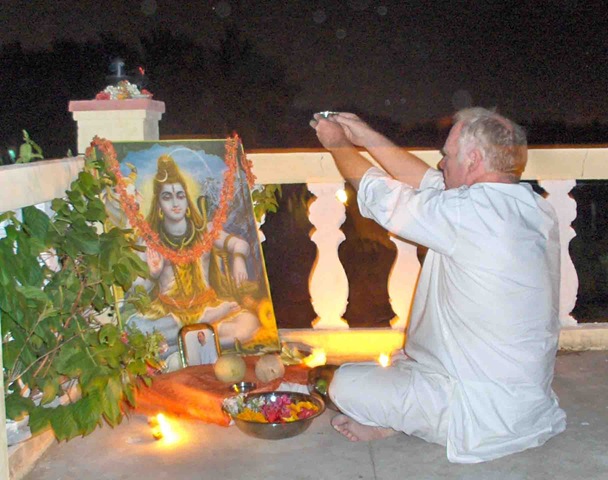
Puja at midnight

Richard at Mahasivaratri Puja

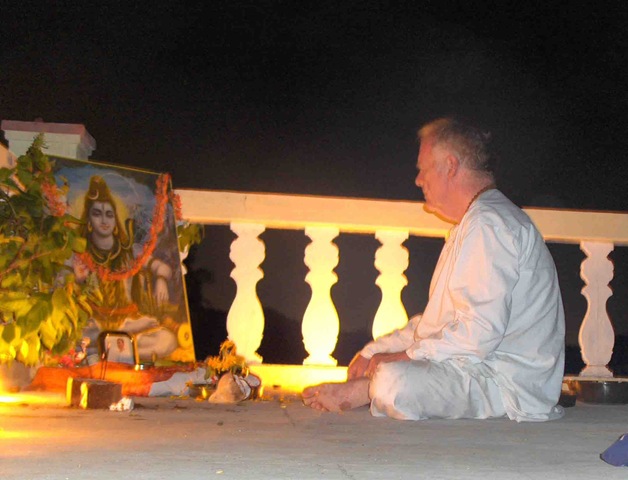
Richard is offering Puja to the Sivalingam.

Coconut milk, cows milk, ghee, bilva leaves and flower petal are offered in turn.

Richard at Puja

Lingam after Puja

lingam after Puja

After the Puja here is the broken coconut.

The lingam is covered with bliva leaves and flowers.

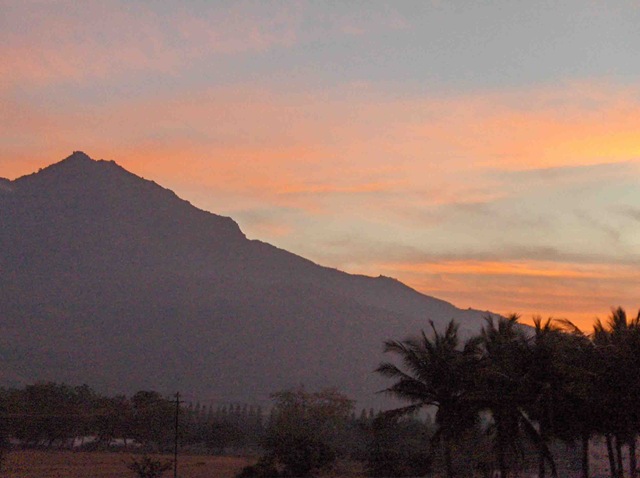
Dawn over Arunachala after Mahasivaratri night

Arunachala Sunrise after Mahasivaratri night

Richard and Carol were up most of the night, listening to recordings of chants, and spiritual discourses from their teacher, Nome.

In quiet times we meditated. For us this is a most holy night.

Altar at dawn

Mahasivaratri altar after Pjua at dawn

Here is the altar at dawn. The lingam has been put back in its usual place, and wrapped with a flower mala.

Now we will go downstairs and go to sleep. This is along night, but spiritually fulfilling.

Harsha's avatar

Easy And Natural Is The Way: By Dr. Harsh K. Luthar

Dear Friends,

Sahaj in Sanskrit means easy and natural.

There is saying in Hindi, “Sahaj pake so meetha hoy.”

It means that easy and natural cooking of food leads it to taste sweet.

It is something like the English saying that soup that simmers slowly or the cake that is baked slowly tastes best in the end.

These are metaphors for life. When we do something with care and love, the results are better. Sometimes we even say that, “this is a labor of love.” When we love what we do, it does not feel like work.

Everything has its nature. When we are true to our own nature, an easy authenticity takes over. Then we are not concerned about impressing others nor worried about how others are judging us.

Nature is showing us the way. Seasons are coming and going. Flowers bloom and then wither. We are breathing in and breathing out.

Easy and natural is the way. Anything else makes it appear that somewhere other than where you already are, is more attractive.

All of these teachings of self-improvement, yoga, meditation methods, breathing techniques might have some meaning to someone at some point in time. Truly these are concepts only for the mind to struggle with. The whole premise of these teachings is that you are not OK just the way you are. Ultimately, it is the most splendid nonsense.

To be easy and natural is the way.

How does one become easy and natural? How does one follow the natural path?

To be easy and natural is, well, it is to be easy and natural; and it is best because it is easy and natural.

It is so simple is it not?

What is not easy and natural will produce inner and outer conflicts. We already have enough of those. Of course, for some people making more conflicts may be easy and natural. In that case, go for it (and you can’t help it anyway).

Being easy and natural in awareness allows for the recognition of the Self, which by its very nature is easy being, natural, and wholeness of awareness aware of itself as its own bliss. There is no good way to express it.

My teacher Chitrabhanu-ji (who was a monk for 29 years) once told me that as a young monk he was very very strict with himself. “Sometimes, too much judgment and discipline can be a form of violence with oneself”, he told me.

Another time when we were talking about gurus, I mentioned many names to him and asked his views of them.

Chitrabhanu-ji knew most of the gurus personally. These included J. Krishnamurti, Swami Muktananda, Sri Chinmoy, Rajneesh (Osho), Swami Chidananda, Swami Rama, Swami Satchitananda, etc.

Those gurus whom he liked, Chitrabhanu-ji would only say, “He is a good man.”

One day Chitrabhanu-ji said to me, “You should never follow a guru.” I looked at him puzzled (because he was my guru, you see).

He smiled and said in his thick Bombay accent, “What if the guru goes crazy and tells you to do strange and crazy and weird things…” I had a good hearty laugh! He added, “that does happen you know….”.  I laughed even harder.

Well, it does happen you know.

As Sri Ramana never tired of saying,… the only true guru is your Heart, your own Self.

So wise sages tell the advanced aspirants to be perfectly natural. Make the effort, if natural. Follow a teaching if it is easy and makes sense.

If something makes no sense, there is no point in following it. So what if it is considered the supreme teaching and so on by someone well known. For all you know, what the supreme and well known people say could all be manure.

Think about it. What do they really know? How can they really know? What can anyone really and truly know?

So rest, if it feels natural to rest. Watch the spiritual parade pass by and not be moved by any teaching. Or join the parade and sing your song.

Your nature will make you act in a certain way. That is why you can be at perfect ease.

Self-remembrance, Awareness aware of itself, Self-abidance, all of these mean the same.

Easy and natural is simply being aware of one’s innate wakefulness through the winds of emotions, colors of life, and changes in scenery.

To the extent one can grasp it, simply remain aware and if you become conscious of some intangible cloud of unknowing which you cannot go through, become comfortable with it, stay with it, and breathe it in and out.

If you meditate on this and become aware, it will dawn on you with clarity. You will see.

Easy and natural is the way.

Namaste

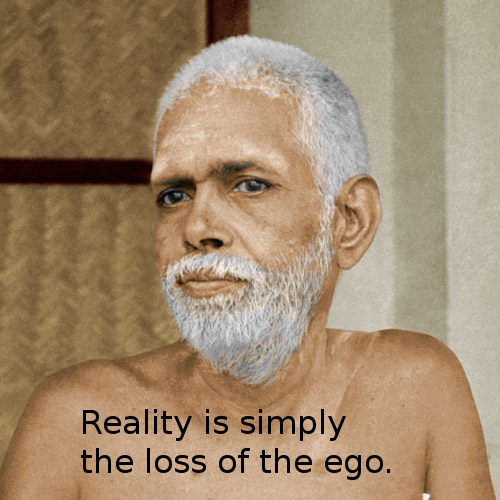
Reality is simply loss of ego - Ramana

Harsha's avatar

Self-Inquiry_The Science of Self-Realization: By Dr. Harsh K. Luthar

According to Advaita Vedanta, the science of Self-Realization (which we call Self-Inquiry), requires a different approach than the sciences involved in discovering the complexities of the Universe. Both approaches are similar in one way in that our consciousness with focused attention and awareness is used as an instrument of perception to gain knowledge.

Sciences involving the exploration of the universe and its laws focus the attention outside to perceived objects (time, space, matter, laws of motion, gravity, mass, etc.) to determine their nature. When attention and awareness are focused on such analysis, the relationships between various objects according to universal laws becomes clear. This is due to the inherent power of consciousness to discover and make known to itself anything that it focuses attention on. That is how sciences (Mathematics, Physics, Medicine, etc.) move forward.

However, the theoretical limit to understanding objective phenomena is always there to the extent that the observed phenomena is based on the very nature of the observer. It is not clear how precisely the relationship between the subject and the object can be determined scientifically. Philosophically, this is due to the logical difficulty of separating the subject from the object and demonstrating their independence.

Science of the Self, however, is a radical departure from the physical sciences and has a different aim. Here attention is directed inwards towards the subject and not outwards towards objects of perception. The classic methodology given by Sri Ramana for Self-Inquiry is to ask oneself with attention and inquire, “Who am I?” This is done in order to introvert the mind and drive it deeper into its source. In Self-Inquiry, the quality of consciousness itself becomes the center of attention. In this method, consciousness is not focused anywhere or on anything other than itself.

Language is not perfect but there are many ways to say this. Attention focused on attention itself is Self-Inquiry. Consciousness becoming self-focused is Self-Inquiry. Mind turning inwards to its source is Self-Inquiry. Awareness aware of itself is Self-Inquiry. All of these are variations of the same process and basically refer to the same thing. These statements indicate that one should quietly abide in one’s own sense of identity and being with full awareness.

This is not an easy notion to grasp. The Self-Inquiry methodology does not present the aspirant with an image or a sound to concentrate on. Because we are so dependent on our sense of hearing and sight even for meditation and prayer, Self-Inquiry presents a challenge. People often find it difficult to know what to focus in doing the Self-Inquiry because they associate their identity and thus consciousness strongly with the body.

This is why Sri Ramana used to say that Self-Inquiry is not for everyone to take on immediately. I have observed this phenomena carefully for a long time. People find meditation, yoga, tantra, chakras, and kundalini methods much more interesting and exciting to talk about and practice than Self-Inquiry. It is because all of these Yoga systems are directly or indirectly based on producing changes in the physical or the subtle bodies which one can experience.

Consumption of experience in some form or another is natural to all living beings. Self-Inquiry points, however, to the subject; the one who experiences. What is the nature of the one who experiences? Self-Inquiry shifts our attention from perception to the perceiver. Who is the one who perceives and experiences reality?

The practice of meditation and yoga leads the mind to temporarily withdraw the senses from objects of perception. However, internal perceptions in meditative states or Samadhi will most likely still exist. These internal perceptions may manifest in a number of ways including that of visions of angels, holy sages, the Goddess. Various spiritual and religious symbols often appear spontaneously in the mental eye of the aspirant during meditation or contemplative prayer and there may also be experiences of lucid dreaming states. So even in higher meditation states, the distinction between the subject and the objects of perception continues as we engage in and consume one experience after another.

Self-Inquiry, on the other hand, is found to be boring and irrelevant by many people because it promises them no special experience to enjoy other than being their own self. People should always do what feels natural. Nothing can be forced.

Eventually with the practice of meditation and other types of yogas, the mind becomes more subtle. The understanding of the nature of consciousness as free from outer perception (of physical objects) as well as internal perceptions (dreams, visions, other mental experiences) can then start to emerge. Once the independent nature of consciousness (free from all perceptions) is understood, one can recognize the essential quality of existence and pure being in the midst of various experiences.

When attention/awareness become self-focused, that is called Self-Inquiry. When attention lights up attention, awareness lights up awareness, consciousness lights up consciousness, Self is Realized as Sat-Chit-Ananda, the ultimate subject, the very core of being. Sri Ramana called it simply the Heart, whose nature is that of silence which is beyond all understanding.

Harsha's avatar

Self-Inquiry or Atma Vichara: By Dr. Harsh K. Luthar

Self-Inquiry, also known as Atma Vichara in Sanskrit, is based on a philosophy that has its origins in the ancient teachings of Advaita Vedanta. Advaita is based on the Upanishads, the Bhagavad Gita, and is found in a number of other scriptures that are considered sacred by the Hindus. Advaita means nonduality, the ultimate Oneness that pervades or underlies everything.

Essentially Advaita implies that even though there is a diversity of phenomena, it has its origins in God and that ultimately everything not only exists in God but also resolves itself into God. According to Advaitic sages, the nature of God is Sat-Chit-Ananda. Sat means Existence. It is the nature of God to Exist. Chit means Knowledge. It is the nature of God to Know. Ananda means spontaneous Joy. The nature of God is Bliss or Joy. Continue reading

Harsha's avatar

The Ordinary Mind Is The Buddha Mind: By Harsh K. Luthar, Ph.D.

Thayumanavar
Photo art found on John Wassenberg’s FB page.


As long as you are looking for and relying on saviours, buddhas, bodhisattvas, gods, gurus, and supermen, you will find it hard to stay with your ordinary everyday consciousness. It appears so fragile, unstable, conflicted, wretched, and filled with self-serving needs. It is no wonder that people get on the spiritual path and seek salvation and wish to run away from where they are and who they are.

Continue reading

Harsha's avatar

The Thin Red Line: Film and Nonduality. A Review by Berit Ellingsen

The kind of narratives that first leap to mind when thinking about film and nonduality, would be the biographical presentation of a specific teacher, his/her life teaching. The second type of story to communicate nonduality on film, would be the chronicle of a person’s discovery of nonduality and the impact this made on life. However, a movie could also be nondual in form without having nonduality as direct content or story line.

Continue reading

Harsha's avatar

That Which Is: By Harsha (Harsh K. Luthar, Ph.D.)

sun

Image courtesy of Dana Cocchiarella (2002)