Harsha's avatar

Gratitude and Divine Grace

Border_25972_217422605374_215886190374_7838220_4877663_n Border_2

   To those who worship Me alone, thinking of no other,
of those ever united, I secure what is not already possessed
and preserve what they already possess. (BG 9.22)

The story below appeared months ago prompting some discussion in the Guruvayur yahoo group in which I am a member. Today is Thanksgiving here in America, and this week we also celebrate Gita Jayanti, or the observance of the gifting of the Bhagavad Gita to the world by Shri Krishna more than five thousand years ago.  As my thoughts turn to gratitude, I am reminded of this story below and the responses it produced in the Guruvayur group, and how important it is to always be grateful to the Lord for everything, knowing that He is our eternal well wisher and that everything happens for our highest good, even the things which which appear to be bad or are difficult to endure…everything means everything.

The focus of the discussion was on what should we ask of God. To what end do we pray, asking for this and pleading for that?  Success in this venture, a new job, a happy marriage, a grandchild, a son or a daughter, a husband, a wife, a handsome husband, a beautiful wife, a nice house, a beautiful house, a mansion, good grades in school, a child who is a doctor or the president of the US?  For what is it that we really seek, when all illusions are cast aside and maya’s veil is lifted?  None of the above!!!

What should I seek from the Lord but the Lord Himself? That by His grace, I should know Him as the very Self in my heart, casting aside the shackles of the body and the solitary confinement imposed by the mind. He promises us, in the Gita, that if we are utterly devoted to Him, thinking of Him only, asking only for Him rather than of Him, He will be ours, and as such, will take care of us as needed.  To understand this, to believe this, in full faith, can only be followed by complete surrender to His will, trusting that whatever happens is indeed His divine will operating to bring us out of bondage to birth and into reunion with Him.

 Border_2
From http://idharudharkee.blogspot.com/2009/07/what-we-should-ask-god.html 

What should we ask of God?

This story from Mahabharata answers this question beautifully and categorically:

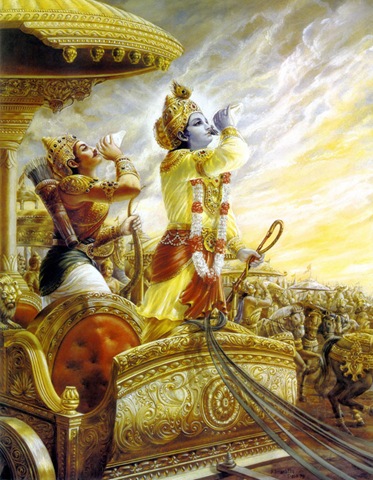
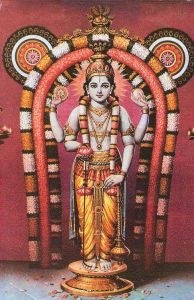
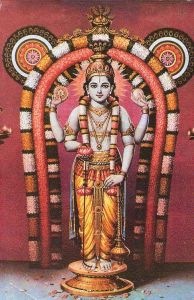
The Great War between the Pandavas and Kauravas was to begin. Arjuna, having pondered, decided to gita-101go to Lord Krishna and ask him for help.
He went to the Lord’s abode and found him asleep.

He stood respectfully at his lotus feet, with folded hands and head bowed in reverence. Duryodana, of the Kauravas, had the same idea of asking Sri Krishna’s help. He too came and, finding the Lord asleep, sat arrogantly in a chair placed at the head of Lord’s bed.

In due course, the Lord woke up. Arjuna, being at his feet, was the first person he naturally saw. As he turned to get up, the Lord’s eyes fell upon Duryodana.

The purpose of their visit was known to Him. However, he asked them what he could do for them.

Both answered that they had come to request his assistance in the ensuing war. The lord said that they had placed him in a difficult predicament by asking for the same thing. He said he could not deny either of them. He said he would offer himself, alone, without armies to one of them and to the other he would offer all his armed forces completely. He said that since his eyes had fallen on Arjuna first, he should have the first choice in the matter.

Arjuna promptly prayed to Sri Krishna that he alone should side the Pandavas.. Duryodana heaved a sigh of relief and requested Sri Krishna for all his forces. The Lord agreed to their requests.

We know who emerged victorious. The moral is “We should ask for HIM, not ask for things He can give us”

If the Lord gives us everything in the Universe but withholds Himself from us, we gain nothing. But if we seek HIM for Himself alone, we get not merely Him but all that is His, too!

abhyaasa yOga yuktEna cEtasaa naanyagaaminaa,
paramam pursham divyam yaati paarthaanucintayan

Meaning: 
He who with his mind disciplined through Yoga in the form of practice of meditation and thinking of nothing else, is constantly engaged in contemplation of God attains the supremely effulgent Divine Purusha (God)  (sloka 8 in chapter 8 of Gita)                                                                       Border_2

And what did Arjuna request?  The Lord Himself.  In his earnest bhakti, he intuited that this was the right choice and it was.  When you ask for the Lord Himself, with utter devotion and humility, how can He deny you?  In the Gita, He makes this promise to His devotees…

ananyaaScintayamtO maam yE janaah paryupaasatE
tEshaam nityaabhiyuktaanaam yOgakshEmam vahaamyaham. (BG 9.22)

To those who worship Me alone, thinking of no other, of those ever united, I secure what is not already possessed and preserve what they already possess.
https://luthar.com/wp-content/uploads/2009/06/bgita.pdf

But those who always worship Me with exclusive devotion, meditating on My transcendental form—to them I carry what they lack, and I preserve what they have. 
http://www.bhagavad-gita.us/categories/The-Gita%3A-Chapter-9/?Page=2

Those who desire My eternal association precluding all else meditate on me with exclusive devotion; those persons I insure the uniting of their individual consciousness with Ultimate Consciousness perpetually.  http://www.bhagavad-gita.org/Gita/verse-09-22.html

Yoga-kesamam, means to provide what they lack and safeguard or preserve what they have. In this context, yoga is said to mean making available what one does not have, and ksema means the preservation of what one already has.  For some, the sloka is interpreted to mean those who recognize the nonduality of the Self, abiding in the Self at all times; for others, this is considered to be a promise from the Lord to take care of His devotees. If we go online, we can find countless articles claiming that the interpretation therein is the right one and that all others are missing the point, thus missing salvation itself!

For me, neither one has the right to claim the other is wrong…it can mean both, one at the level at which we exist as entities in this world of maya, or saguna,  another at the level of the formless nirguna.  The Lord, in His infinite mercy, prescribed numerous paths in the Gita. I am a bhakta. He is my Lord and while I know that philosophically speaking we are indeed nonseparate as it says so in the Gita and in the Vedas, as far as I am concerned, that can only be truly perceived through His Grace.  So, while I am nothing but Him, on another level of worldly perception, this is known and experienced only through the operation of Divine Grace. 

It is so stated in the Mukanda Upanishad 3.2.3:

nāyam ātmā pravacanena labhyo
na medhayā, na bahunā śrutena,
yam evaiṣa vṛṇute tena labhyas
tasyaiṣa ātmā vivṛṇute tanūṁ svām.
(Mukanda Upanishad 3.2.3)

This Self cannot be realized by studying the scriptures, nor through the use of reason, nor from the words of others–no matter what they say. By the grace of the Self the Self is known; the Self reveals itself.   http://www.peterrussell.com/Upi/Mund.php

The Supreme Lord is not attained by reasonings or by vast intelligence, nor even by much hearing. He is attained only by one whom he Himself chooses. To such a person He manifests His own form.  http://bvml.org/SBVPGM/sgt.html

And the Katha Upanishad 2.2.23:

The Self cannot be known through study of the scriptures, nor through the intellect, nor through hearing learned discourses. The Self can be attained only by those Whom the Self chooses. Verily unto them Does the Self reveal himself.  http://booksandphotos.blogspot.com/2009/05/upanishads-kena-and-katha.html

This Supreme Self cannot be reached by argumentation, or by applying one’s independent brain power, or by studying many scriptures. Rather, he alone can achieve the Self whom the Self chooses to favor. To that person the Self reveals His own true, personal form.  http://vedabase.net/sb/10/87/27/en1

The reason I have reproduced more than one translation of the Gita and Upanishad slokas above is that I wanted to read them in several formats for my own benefit and I also wanted to offer the reader the option of seeing it as such. So many ways of saying the same thing.  And so many schools of thought want to say that their interpretation is the correct one and all others false and faulty.  In the end, Divine Grace is the operational catalyst, whatever you deem its source.

So, what should we ask of God? Truly, there is no thing to be asked. There is no thing to be given. How can we give Him what is already His? All we can do is realize, through His grace alone, that we are already His, in every sense that we as mortals can conceptualize in our limited minds! Not only will He take care of everything and look after the welfare of the devotee, He will guide us if we listen. Thus, I do have a prayer…to fully surrender, to listen without fear of the consequences, no matter what He asks me to do. Where it will lead, I have no real idea and no plan of action! He is guiding the chariot now. May I sit quietly and not be a backseat driver. Chitta chora!!!

 Border_2n702126689_1382369_7333 Border_2

Harsha's avatar

The Non-Doer: By Pieter Schoonheim Samara

The seer is really the substratum of both the subject and the object. The individual consciousness, when purified is discovered to be the same as the Universal All-Pervasive Consciousness, like lifting a top off a jar that shows that the air inside and outside are the same. This isolation of the seer is Yoga.

These seem to be 2 (subject and object) because attention is focused through the lens of the mind into images appearing in the mind (whether from inward takes or the impressions of the moment to moment takes on the senses).

But when the mind is purified, there arises easily an inward pulling, like a graviton into the Heart, and attention to objects dissipitates with the brightening of the inward consciousness that fills and transcends the mind and the body. (The wise man’s heart inclines him to the right. – Ecclesiastics 10:3)

Gradually, a transition occurs, where the mind is no longer used to see, rather one awakens to the Singularity of the “I as I.” There is still a world, but it just appears, not separate, without a separate self to see or know. It’s like the analogy of a color coming into the proximity of a pure and clear the diamond, which seems to reflect the color variously, yet remains within its own nature always resolute, unchanging, pure and clear.

When the Sun of the Heart rises, the Moon of the Mind is no longer necessary to see.

From the moment that This awakening emerges into the consciousness, the “I as I” pulsates and withdraws as the subject of attention.

“All is empty, clear, self illuminating with no exertion of the mind’s power.” (Faith Mind – Third Zen Patriarch)

There is no experiencer or experience, no subject nor object, no seer nor seen. For the time being, these may seem like empty words. But when inward hearing arises, these words are recognized and trigger an inward pulling.

This is the Truth the Founders of all the Religions have been saying in whatever way that those that have ears to hear might hear when the heart is pure. A pure heart means that the mind has become clear enough through any means that the pulsation of the “I as I” is heard. Then we abide simply as That, and the subject-object notion in the mind simply dissolves, having no relevance at all to the emerging Truth. The idea of an identity to images is suddenly and simply relinquished.

Theories, concepts, strategies, methods, philosophies … all just drop off, having no relevance to the continuing pulsation of the All-Pervasive Self.

The Truth resonates as soundless sound: “Infinitely large and infinitely small, no difference, for definitions have vanished and no boundaries are seen.” (Faith Mind – Third Zen Patriarch)

There needs to be some practice that purifies the mind, where the body field comes into a still luminous balance, beyond thought, wherein hearing can become possible. At the same time there needs to be an effort to hear the Truth recorded in the Scriptures of the various Religions. As the mind becomes pure and still True hearing begins to manifest in the consciousness.

The Truth of one’s being recognizes Itself and draws the mind inward to dwell in and abide as Truth.

Harsha's avatar

Avadhut – The Avadhut Gita

INTRODUCTION

The word Gita means a song. The Indian holy Scriptures were written in songs, and each was attributed to a great sage, or to an Incarnation of God, called an Avatar. The best known of the Gitas is the Bhagavad Gita. Among the Gitas the least known are the Shiva Gita, Rama Gita, Vyadha Gita, and Devi Gita. The theme of all the Gitas is the non-dualist philosophy of the Upanishads. The Bhagavad Gita came into prominence when the greatest of the Indian teachers, Schankaracharya1, wrote a commentary on it, acknowledging its great metaphysical and devotional value. Another reason for its popularity is that its teachings are universal. The beginner in metaphysics, the layman, the highest initiate, and the greatest philosophical genius can find food there for his spiritual nature.

The Avadhut Gita is a special classic which is meant for the use of those advanced students of Indian metaphysics who have learned self-control to an appreciable extent, risen above the prejudice of this or that religion, and made the ultimate Reality – Truth – their sole God; it is for those who practice detachment in daily life, and are eager to realize God at any cost. The narrow worshiper, the fanatical adherent of an exclusive creed, the one who loves anything but the highest knowledge, the megalomaniac and the egotist will find the study of this Gita brings him little satisfaction.

It is a well known classic among the high Yogis, Sannyasins2 and sincere aspirants. In the calm of the Himalayan valleys, on the banks of the holy Ganges, one often hears this Gita sung by the Yogis, Sannyasins and Brahmacharis3. The great teachers who have thrown away all books, having found everything worth knowing in their hearts, still keep this little Gita in their caves and huts.

The lower form of prayer consists of singing hymns and repeating mantrams4 in which the ultimate Reality, the secondless, all-transcending Brahman5 is conceived in terms of duality.

The higher form of prayer consists of feelingly singing of Brahman in terms of non-duality, and in the first person, “Shivoham,” I am Shiva6 (Bliss), “Aham Bramhasmi,” I am Brahman, and so forth. Our inner life is covered by those attributes of God which we repeat or of which we sing. The Avadhut Gita speaks of the ultimate reality in terms of absolute freedom.

The aim of life is to realize the Truth and to be eternally free. Purification of the heart is essential to this realization. Practice of virtue, devotion to God, pilgrimages and other religious practices, are useful only so far as they purify the heart from the taint of meum and tuum, and bring before us the great vision of Truth, which makes worldly achievements mediocre and ultimately valueless.


1 Schankaracharya was the greatest of the Indian philosophers. He lived probably in the seventh century A.D. He was perhaps the first exponent of Vedic idealism in philosophic form. He silenced all opposition to the Vedic theory of idealistic non-dualism by traveling through the length and breadth of India, and holding controversies with the learned. His commentaries on the Vedanta Sutras, the Upanishads and the Gita are an immortal monument to his genius. (Schankaracharya is said to have begun to read the Vedas at the age of three, become a sannyasin at the age of nine and realize the ultimate Reality at age sixteen, remaining, thereafter, ever abiding as the Self. He founded 10 monastic orders in a short life span of 686-718. He also wrote several books, including “Viveka Chudamani”, Crest-Jewel of Discrimination.
2 Holy Renunciate
3 Neophytes
4 A mantram is a Vedic formula, the repetition of which, according to approved rules, induces spiritual consciousness, and also psychic powers.
5 Brahman comes from the root meaning majestic, and in philosophy is applied to the Absolute, transcending all thought and feeling and all attributes, it can be spoken of rather provincially as Sat, Chit and Ananda, i.e., Existence Absolute, Intelligence Absolute Bliss Absolute.)
6 “I am Shiva” (the Destroyer aspect of the Hindu trinity, notably the destroyer of ignorance).


They create in us an undying desire to realize truth, but the direct cause of realization of God is within, is knowledge of Truth. Knowledge is the magic wand which frees the spirit of peace and Ananda from the rock of personality, covering the fearing ego into a conflagration, burning up all duality and its cause, ignorance.

The Avadhut Gita contains this knowledge in its purest form. The word Avadhut means a high Renunciate, a Mahatma7, one who has found unity with God, and lives a life of perfect freedom, uninfluenced by ignorance and its effects.

Who was this Mahatma Dattatreya, who gave this priceless gift of the Gita? There is no other writing attributed to him. When and where he lived cannot be said with certainty. To some Yogis and devotees he is an immortal, and they still see him and talk to him. In a temple, among the calm and beautiful peaks of the mountain called Girnar, a bed is made for the Mahatma daily.

It is clear that he was an historical person, and not a mythical Mahatma, and that he lived after Shri Krishna8, that is, a little over three thousand years ago. From the fact that most of his devotees live in the Bombay presidency we can infer that he lived in Western India. There are many legends about his miraculous birth and life, but they do not take us far.

There is a mention of the Avadhut in the Eleventh Book of the Shrimad Bhagavata, a great Indian classic of devotion and metaphysics, attributed to Vyasa, written in a highly poetic style in pure modern Sanskrit. The following is an extract from this book:

“Salutations to you, O Sage, Kindly tell us what Guru has given you the great knowledge which has made you perfect in wisdom, full of peace, and devoted to the good of all living beings.”

This was the reply of the Avadhut:

“One’s own Self is one’s chief Guru. By knowledge of Self alone through perception, inference and mystic communion one obtains the great bliss.”

He further said that he did not learn from one particular source, but from many teachers, each source of knowledge being his Guru. He then mentioned twenty-four special teachers. Of them, the following are worthy of note:

Water, the earth, the wind, space, the moon, the sun, the sea, and the arrow-maker.

From water he learned purity and the taste of tastelessness. “As water is sweet and pure, so is Atman9. Man should manifest sweetness and purity in his conduct. I have therefore taken water as one of my Gurus,” he said.

“Patience, forgiveness, supporting others without expectation of gratitude I have learned from my Guru, the earth.”

“The wind blows everywhere, over the flower-beds, deserts, marshes, palaces and prisons, without being attached to any of them, without preference or dislike. So, I, an Avadhut, go everywhere, scattering my blessings of peace, without being attached to anyone. My Guru, the wind, has taught me this lesson.”


7 “I am Brahman.”Mahatma, lit, great soul, a perfected man.

8 Shri Krishna – the teacher of the Bhagavat Gita, the recognized Supreme master of Indian Yoga and philosophy.

9 Atman – The Divine Self


In the all-pervading space there exist clouds, stars, planets, dust-storms, and so on, but it is not touched by any of them. So is Atman, which, pervading all bodies of men and animals, of saints, sages, kings, madmen, sinners, and paupers, is untainted by any of them. So do I feel, having learned this lesson from space, my Guru.”

“As the moon is perfect, in spite of its waning and waxing, which do not exist in it, so is Atman ever perfect, in spite of its seeming imperfections. This is what the moon, my Guru, has taught me.”

“As the sun through its rays absorbs water from the earth, only to give it back in a cool and pure form, so ought a Mahatma to take the things of the world, not for his own sake, but in order to give them back in a richer and better form. This is what my Guru, the sun, has taught me.”

“Though thousands of rivers empty themselves into the sea, yet it remains within its limits; so remains undisturbed the mind of the knower of God, though objects of all kinds pour themselves into it. Thus, the sea, my Guru, has instructed me.”

“From the arrow-maker I have learned the value of concentration. In a certain town there lived an arrow-maker, who devoted his full attention to his occupation. Once he was beating the point of an arrow, when the king and his procession went by the street. He was so attentive to his work that he knew nothing of the king’s passing, and when they asked him how he liked the music of the procession he said, ‘What procession? When did it pass?’ So ought we to concentrate on the Truth that no external object or event should disturb us.”

The teachings of Rishi Dattatreya are similar to those of Vasishtha, Loatzu, Abu Ben Adhem, and Jajaluddin Rumi. There are still many Paramahansas10, Bramacharis and Yogis who follow the path of spiritual solitude. Many such Mahatmas have been seen in the Himalayan woods, in the forests of Szechwan province of China, and near the Koyasan in Japan. They are free from the pairs of opposites11, established in Atman, and radiate peace and spiritual upliftment.

They do not shun human society, and yet they do not relish it. Of them it is said:

“Heed then no more how the body lives or goes;

Its task is done; let karma float it down;

Let one put garlands on, another kick

This frame; say naught. No praise or blame can be

Where praiser praised and blamer blamed are one.

Thus be thou calm, Sannyasin bold, and say,

OM TAT SAT OM.”

The Avadhut Gita breathes the purest spirit of Shri Schankaracharya and the sages of the Upanishads.


10 Paramahansas – Those who have realized the highest Self [and whose Sahasrara – Thousand Pedaled Lotus (the brain) is completely filled with Light

11 Pairs of opposites – such as heat and cold, love and hate, grief and joy, etc..


Chapter I

  1. By the grace of God the Brahmins above all men are inspired with the disposition to non-duality (unity of the Self with God), which relieves them of the great fear.
  2. How can I salute the Self, which is indestructible, which is all Bliss, which in Itself and by Itself pervades everything, and which is inseparable from Itself?
  3. I alone am, ever free from all taint. The world exists like a mirage within me. To whom shall I bow?
  4. Verily the one Self is all, free from differentiation and non-differentiation. Neither can it be said, “It is” nor “It is not.” What a great mystery.
  5. This is the whole substance of Vedanta; this is the essence of all knowledge, theoretical and intuitional. I am the Atman, by nature impersonal and all-pervasive.
  6. That God who is the Self in all, impersonal and changeless, like unto space, by nature purity itself, verily, verily, that I am.
  7. I am pure knowledge, imperishable, infinite. I know neither joy nor pain; whom can they touch?
  8. The actions of the mind, good and evil, the actions of the body, good and evil, the actions of the voice, good and evil, exist not in me (Atman). I am the nectar which is knowledge absolute; beyond the range of the senses I am.
  9. The mind is as space, embracing all. I am beyond mind. In Reality the mind has no independent existence.
  10. How can it be said that the Self is manifest? How can it be said that the self is limited? I alone am existence; all this objective world am I. More subtle than space itself am I.
  11. Know the Self to be infinite consciousness, self-evident, beyond destruction, enlightening all bodies equally, ever shining. In It is neither day nor night.
  12. Know Atman to be one, ever the same, changeless. How canst though say: “I am the meditator, and this is the object of meditation?” How can perfection be divided?
  13. Thou, O Atman, wast never born, nor didst thou ever die. The body was never thine. The Shruti (revealed Scriptures) has often said: “This is all Brahman.”
  14. Thou art all Brahman, free from all change, the same within and without, absolute bliss. Run not to and fro like a ghost.
  15. Neither unity nor separation exist in thee nor in me. All is Atman alone. “I” and “thou” and the world have no real being.
  16. The subtle faculties of touch, taste, smell, form and sound which constitute the world without are not thyself, nor are they within thee. Thou art the great all-transcending Reality.
  17. Birth and death exist not in the mind, not in thee, as do also bondage and liberation. Good and evil are in the mind, and not in thee. O Beloved, why dost thou cry? Name and form are neither in thee nor in me.
  18. Oh my mind, why dost thou range in delusion like a ghost? Know Atman to be above duality and be happy.
  19. Thou art the essence of knowledge, indomitable, eternal, ever free from modifications. Neither is there in thee attachment nor indifference. Let not thyself suffer from desires.
  20. All the Shrutis speak of Atman as without attributes, ever pure, imperishable, without a body, the eternal Truth. That know to be thyself.
  21. Know all forms, physical and subtle, as illusion. The Reality underlying them is eternal. By living this Truth one passes beyond birth and death.
  22. The sages call Atman the “ever-same.” By giving up attachment the mind sees neither duality nor unity.
  23. Concentration is not possible either on perishable objects, on account of their mutability, nor on Atman. “Is” and “is not” do not apply to Atman either. In Atman, freedom absolute, how is Samadhi12 possible?
  24. Birthless, pure, bodiless, equable, imperishable Atman thou knowest thyself to be. How then canst thou say: “I know Atman,” or “I know not Atman.”
  25. Thus has the Shruti spoken of Atman; “That Thou art.” Of the illusory world, born of the five physical elements, the Shruti says: “Neti, neti” (not this, not this).
  26. All this is ever pervaded by thee as Atman. In thee is neither the meditator nor the object of meditation. Why, O mind, dost thou shamelessly meditate”
  27. I know not Shiva13,
    How can I speak of Him?
    Who Shiva is I know not,
    How can I worship Him?
  28. I am Shiva, the only reality,
    Like unto space absolute is my nature.
    In me is neither unity nor variety,
    The cause of imagination also is absent in me.
  29. Free from subject and object am I,
    How can I be self-realizable?
    Endless is my nature, naught else exists.
    Truth absolute is my nature, naught else exists.
  30. Atman by nature, the supreme Reality am I,
    Neither am I slayer nor the slain
  31. On the destruction of a jar, the space therein unites with all space. In myself and Shiva I see no difference when the mind is purified.
  32. Brahman alone is, as pure consciousness. In truth there is no jar, and no jar-space, no embodied soul, nor its nature.
  33. There are no worlds, no Vedas, no Devas, no sacrifices, no castes, no family tribes, no nationalities, no smoke-path, no shining-path.
  34. Some there are that prize non-dualism, others hold to dualism. They know not the Truth, which is above both.
  35. How can the supreme Reality be described, since It is neither white nor any other colour, has no qualities such as sound, and is beyond voice and mind?
  36. “I eat,” “I give,” “I act”; such statements do not apply to Atman, which is purity, birthless and imperishable.
  37. Where the one Brahman alone is, how can it be said “this is Maya14”, or “this is not Maya”, “this is shadow” or “this is not shadow”?
  38. I am without beginning and without end. Never was I bound. By nature pure, taintless is my Self. This know I of a surety.
  39. From subtle substance (mahat) down to formed creation, there is nothing but Brahman; most clearly do I see this. Where then is the division of caste?
  40. The absolute void and its opposite, all am I everlastingly.
  41. Atman is not male or female, nor is It neuter; neither is It happiness or suffering. How dare ye pervert It?
  42. Atman is not purified by the six methods of Yoga. Absence of the mind makes It no clearer. The teachings of a Guru reveal It not. It is all purity, in Itself, by Itself.
  43. I am neither bound nor free. I am not separate from Brahman.
  44. Neither the doer nor the enjoyer of the fruits of karma am I. The pervader or the pervaded I am not.
  45. As a volume of water poured into water is inseparably united with water, so, I perceive, matter and spirit are one.
  46. Why callest thou Atman personal and impersonal. Since thou art neither bound nor free?
  47. Pure, pure thou art, without a body, unrelated to the mind, beyond maya; why art thou ashamed to declare: “I am Atman, the supreme Reality”?
  48. O my mind, why dost thou cry? Realize thy Atman, o Beloved; drink the timeless great nectar of non-duality.
  49. Knowledge born of the intellect am I not. By nature Truth eternal am I. I am perpetual immutability.
  50. Neither formless nor with form, described by the Vedas as “Not this, not this,” free from separation and unity, the true Self reigns supreme.
  51. There is no father, no mother, no kinsman, no son, no wife, no friend, no prejudice, no doctrine. Why art thou disquiet, o my mind?
  52. Why do the wise imagine the bodiless Brahman to be a body? In It there is neither day nor night, neither rising nor setting.
  53. Since the imperfections of attachment and the like are not in me, I am above the suffering of the body. Know me to be infinite, like unto space, one Atman.
  54. O my mind, my friend, many words are not needful, and the world comprehends not reason. In a word, I have told thee the essence of truth: “thou art Truth, thou art as space.”
  55. In whatever place and in whatever state the Yogi dies, his spirit is absorbed into That, as, on the destruction of the jar, the space in the jar is united with absolute space.
  56. Whether he dies conscious or in coma, in a holy temple or in the house of an untouchable, he obtains liberation, becoming the all-pervading Brahman.
  57. The Yogis regard righteousness, prosperity, desire for Paradise and liberation, and also the moving and fixed objects, as mere will-o’-the-wisps.
  58. The Avadhut in unshakable equanimity, living in the holy temple of nothingness, walks naked, knowing all to be Brahman.
  59. Where there is no “Third” or “Fourth15”, where all is known as Atman, where there is neither righteousness nor unrighteousness, how can there be either bondage or liberation?

12 Samadhi – A high state of consciousness.

13 Shiva – a name for Brahman

14 Maya is the creative power of the Lord, the means by which the phenomenal world has been brought into existence.

15 These are states of consciousness. There are waking, dreaming and dreamless sleep. The “Fourth” is the substratum of these three, also called Turya, beyond this is the absolute, beyond words and experience, Turyatita.


CHAPTER II

The Avadhut said:

  1. Hold not the immature, the credulous, the foolish, the slow, the layman and the fallen to have nothing good in them. They all teach something. Learn from them. Surely we do not give up a game although we have mastered it?
  2. Think not lightly of thy Guru should he lack letters and learning. Take the Truth he teaches and ignore the rest. Know well that a boat, painted and adorned, will carry you across the river; so also will one that is plain and simple.
  3. The higher intelligence which without effort pervades the movable and the immovable, and which by nature is all peace and consciousness, that am I.
  4. How can the one supreme consciousness which without effort rules the living and the inert and is all-pervasive, be other than I?
  5. I am more subtle than primordial substance, beyond elements and compounds, free from birth and death, above duality and unity.
  6. The modifications of the inner organ (antahkarana) have no part in me. Like bubbles rising and falling in a river, thoughts and volitions rise and disappear in the inner organ.
  7. As softness is not perceived apart from soft objects, as sweetness is not known apart from honey, as bitterness is not known apart from the Nim tree16, as fluidity and coolness are the nature of water, so the primordial form of matter called mahat17 is no other than the Self (Atman). As the rays of the sun differ not from the sun, so matter does not differ from God.
  8. How can “I” or “thou” be said of Brahman which is more subtle than mahat, free from all attributes, greater than all, above the range of mind and emotion, without medium or limitation, lord of the universe? It can neither be called static or dynamic.
  9. As space cannot be compared with another space, so Brahman being above duality, cannot be compared with any object. Brahman alone is perfection, taintless, all knowledge.
  10. It walks not on the earth, the wind cannot move It, the water cannot cover It, It stands in the midst of Light.
  11. It pervades space-time. Nothing pervades It. From limitations ever free, eternally the same, with nothing outside It and nothing within, It abides.
  12. Atman, of which the high Yogis speak, most subtle, beyond perception, without attributes, must be realized step by step, and not by sudden violence.
  13. Ever practicing Yoga18, not depending on any object, the Yogi merges his consciousness in Brahman, and becomes Brahman.
  14. There is but one antidote to the poison of passions, which beget infatuation and are highly dangerous, and that is to return to the state of Atman. Atman is unapproachable by the emotions, is ever formless and independent.
  15. Hidden in the realm of eternal consciousness lies the world’s cause, which is prakriti. Within this cause is Brahman. The husk of a coconut is the world, the pulp is prakriti, and the sweet cool water encased in the pulp is Brahman.
  16. Like the full moon is Atman. See It in all. Duality is the product of defective vision. As there is only one moon so there is only one Atman in all.
  17. No duality can touch the conception of Brahman, because It is all-pervasive. The wise who teach this acquire boundless patience, and their disciples can never be too thankful to them.
  18. The talented as well as the witless attain the state of desirelessness by knowing the mystery of Atman, through the grace of their spiritual teacher.
  19. This transcendent state of consciousness (Nirvana) is reached by those who are free from attachment and aversion, ever engaged in doing good to all living beings, whose knowledge is firmly rooted, and who are patient.
  20. The Yogi is merged in the divine after leaving the body, as the jar-space is merged in cosmic space on the destruction of the jar.
  21. The statement that the future condition is determined by the state of the thoughts at death is made of the uninitiated, not the initiated.
  22. The knower of Brahman may leave his body in a holy place, or in the house of an untouchable, he is absorbed into Brahman.
  23. When a Yogi has realized Atman, which is his true Self, birthless and beyond the range of the mind and emotions, then the karmas19 no longer touch him. He may perform the rituals or leave them. To him it is all one.
  24. Atman realized is the master of creation, eternal, indestructible, formless, without dimensions, absolutely independent, without pleasure or pain, full of all powers.
  25. The wise discover that Atman is not seen either by the study of the Vedas, by initiations, by shaving the head, or by being a Guru or chela (an approved disciple). Nor is it seen through postures.
  26. That God, Atman, by whose power the whole universe is born, in which it abides and to which it finally returns like bubbles and waves in the sea, is realized by the wise.
  27. Atman, which the wise realize, is not the aim of control of breath (pranayama) nor of the postures of Hatha Yoga20. In It there is neither knowledge nor ignorance.
  28. There is neither unity nor duality in Atman, nor unity-duality, neither smallness nor greatness, neither emptiness nor fullness. All these exist in the mind, and the mind is not Atman.
  29. The teacher cannot teach Atman; the disciple cannot learn it.

16 Nim tree – a tropical Indian tree whose leaves have an extremely bitter taste.

17 Mahat – Cosmic Mind.

18 Yoga – Practice of mind control, detachment and meditation.

19 Karma – Actions and their consequences.

20 The methods of Hatha Yoga, the Yoga of physical austerities and exercises.


CHAPTER III

  1. How shall I worship that Atman great
    Which is neither personal nor impersonal.
    Taintless, above love and aversion, uncreated,
    All pervasive, of the form of the universe,
    Having no attributes, yet not attributeless
    That all-bliss Shiva, my Self.
  2. How shall I bow down to mine own Self
    In my own Self and by my Self?
    I have no colours, white or yellow;
    Eternal Shiva am I.
  3. I am rootless, and without root,
    Free from smoke, and smokeless am I,
    Without a lamp, and lightless am I,
    Equanimity am I, like a sun ever risen.
  4. How can I name the passionless, desireless One
    As having desires? The Absolute cannot
    Be described in terms of conditions;
    How can I speak of myself?
    I am neither with an essence,
    Nor am I without an essence.
    Space-like all equanimity am I.
  5. How shall I say that non-duality
    Is all this creation, or that, or that?
    Even if it be duality, then too I cannot
    Attribute creation or dissolution to It.
    How can the Eternal, the All
    Be expressed in any way?
    Space-like, all-bliss am I.
  6. Neither gross nor subtle is my Atman;
    It comes not, and It goes not;
    Without a beginning and without an end;
    Neither higher nor lower is It;
    That Truth absolute, space-like,
    Immortality-giving knowledge am I.
  7. Know well that all the senses
    Are as space, and so also their objects.
    Know that the One is taintless,
    The One is neither bound nor free.
    That all-pervasive ever-blissful Shiva,
    Immortality-giving knowledge am I.
  8. The knowledge of the Self, hard to obtain,
    Which is experienced, is not Atman;
    The object of meditation,
    Hard to concentrate upon, is not Atman;
    That which is near, and that which is far, far away,
    Is not Atman. Space-like, all-bliss
    Shiva am I, Shiva am I.
  9. Without karma am I, I burn up karmas;
    Without pain am I, I burn up sufferings;
    Bodiless, homeless am I, and yet I burn up these,
    All equanimity, space-like am I.
  10. The seed of the plant of the world exists not in me,
    Contentment and pleasures exist not in me;
    Bondage and ignorance are not in me;
    Space-like, absolute Shiva am I.
  11. Atman is not the Knower
    Nor is It the known.
    It is not accessible to inference.
    Words cannot describe
    This Consciousness Absolute.
    The mind is lost in Its majesty.
    How can It be explained to thee?
    Space-like immortality-giving knowledge am I.
  12. There is no separation and no unity in It.
    Neither is It inner nor outer.
    It is Truth transcendental.
    It cannot be said “It was all before.”
    Verily nothing exists but Atman.
    And that space-like immortality-giving
    Knowledge am I.
  13. I am the eternal principle.
    Free from attachment and aversion,
    Free from imperfections am I,
    Fate and providence exist not in me.
    Eternally free from the sufferings of the world,
    Verily, space-like immortality-giving
    Knowledge am I.
  14. As the three states of consciousness
    Exist not in Atman,
    How can It be the Fourth?
    Free from past, present and future
    How can the cardinal points exist in IT?
    Eternal peace, space-like transcendental
    Truth am I.
  15. Neither father nor mother have I,
    Neither wife nor child.
    Birth and death I do not know.
    The mind is not my own.
    Eternal peace, space-like transcendental
    Peace am I.
  16. Devas and Gods, like Indra and Brahma,
    Have no place in Atman.
    Neither Paradise nor Heaven exist in Atman.
    The one taintless transcendental Truth am I.
  17. The saying of the Shruti “not this, not this”
    Does not apply to Atman.
    How can it be said “When all is subtracted
    Atman alone remains”?
    It is symbolical but not a symbol;
    Yet even this cannot be said of Atman.
    Space-like, the water of immortality am I.
  18. Maya is not my modification.
    Nor is its glamour mine.
    Deceit and hypocrisy, truth and untruth
    Have no place in me.
    Space-like, immortality-giving knowledge am I.

CHAPTER IV

  1. Nothing can be added or taken away from the Universal Consciousness. It cannot be invoked or worshipped with flowers and leaves. Meditations and Mantrams cannot reach It. How could It be worshipped as Shiva for in It there are neither distinctions nor unity?
  2. In the One there is neither bondage nor salvation, neither purity nor impurity. From union and separation the One is free. That space-like Truth am I.
  3. As in reality I am Nirvana, thoughts as to the reality and unreality of the world trouble me not at all.
  4. Eternally free from the taint of ignorance as I am, knowledge or illusion never had birth in me. How can I say whether I am bound or free?
  5. Neither sin nor virtue ever existed in me; by nature I am Nirvana. Neither the worshiper nor the worshipped am I. No instructions and no rituals are there for me. Knowledge also am I not. By nature I am Nirvana.
  6. Taintless Nirvana am I; I am neither the comprehender nor the comprehended. Neither the cause nor the effect exist in me.
  7. Neither am I a body, nor am I bodiless. The buddhi21, the mind and the senses are not mine. How can I talk of attachment and detachment, since I am taintless Nirvana?
  8. In me exist not birth, death, purity, impurity, poison or the water of immortality. Verily I am free even from the taint of Nirvana. I cannot speak of the “Third” or the “Fourth”.
  9. Neither a fool nor a pundit am I, neither silent nor of many words; how can I speak of reasoning or argument since I am free even from the taint of Nirvana?
  10. Giving up all meditations, all good and evil karma, drinking the water of immortality, the heros know that I from the taint of Nirvana am free.
  11. No ritualist injunction is binding on me; mind, the seat of anxieties, does not exist in me. Far, far from me also is egotism. Space-like, immortality-giving knowledge absolute am I.
  12. I cannot say whether the world is nothingness or if it is partly real and partly unreal, or, if like a flowing river though ever changing, it is in fact real as a whole. Space-like immortality-giving knowledge absolute am I.
  13. There is not the least shadow of name or form in the Infinite, nor is there unity or diversity in me. O my shameless mind, why createst thou a confusion? Space-like immortality-giving knowledge absolute am I.
  14. O my friend, there is no cause for disquietude since thou art not the body. Thou art imperishable and eternal, then why criest thou? Rest in peace. Space-like, immortality-giving knowledge absolute am I.
  15. Why art thou troubled, O friend, since avarice, lust, attachment, are not in thee? Space-like, immortality-giving knowledge absolute am I.
  16. Why this craving for power, O companion, when in truth wealth is not thine. “Mine” and “thine” are not in thee.
  17. In thy heart there is no meditator, there is no Samadhi, nor is there any possibility of meditation in Atman. Time and causation never existed in thee.
  18. I have told the, o disciple, the essence of Truth. There is no “thou” nor “I”, no world, no Guru, or disciple. Know that by nature I am freedom absolute. I am transcendental Truth.
  19. When Atman, the absolute existence, alone is, and It is I, then where is transcendental Truth, where is bliss, where is knowledge, secular or spiritual?
  20. Unknown to fire, water and earth, motionless, all-pervasive as space, knowledge absolute know thy Atman to be.
  21. Renounce, renounce the world, and also renounce renunciation, and even give up the absence of renunciation. By nature all-pervasive as space, knowledge absolute art thou.

CHAPTER V

  1. The syllable OM spoken is the essence of the lower and the higher knowledge. It is Brahman, space-like. There is neither existence nor non-existence in this world. Brahman is ever free from duality.
  2. Thou art that Atman of which the Shruti says, “Tat Twam Asi22.” Know that thou art free from maya. Cry not, o mind, verily thou art all.
  3. There is neither higher nor lower in thee. Thou pervadest all equally, and there is neither inner nor outer. Then why mournest thou, O mind? All, all is Brahman.
  4. Neither that which is imagined, nor the imagination exist in thee; know that cause and effect touch thee not. Free from words and all expressions art thou, eternally the same. O mind, cry not.
  5. To know that there is neither higher nor lower in Atman is Samadhi; to know that Atman is ever free from time and space is Samadhi. Cry not, O mind, all is Brahman.
  6. As there is no jar, there is no jar space. As there is no jiva body, no conditioning medium23, there is no jiva. The cause and effect which produce conditions do not exist in Atman. Why then dost thou cry, O my mind?
  7. It is all one whether we live in a hut in retirement, or in a house with many kinfolk, for Atman is free from the multitude as from solitude. Free also is It from knowledge, theoretical and practical, Atman being All, O my mind, cry not.

22 Tat Twam Asi – That thou Art.

23 The conditioning of consciousness to form the individual soul (jiva) encased in the human body is compared to the apparent enclosure of space in a jar. As jars do not really limit space, so the conditioning medium of body and mind cannot limit Atman.


CHAPTER VI

  1. The whole universe is a projection of the mind; therefore it is a mode of the mind. The true nature of the mind is bliss, and when the mind is stilled, bliss absolute is revealed.
  2. Consciousness absolute, being unknowable by the mind, how can speech explain it?
  3. The Self is free from day and night, and therefore the conception of its pilgrimage in time and space is no true one.
  4. No sun illumines Atman; the fire and the moon cannot shine therein. It is not equanimity or even desirelessness; how then can action exist in it?
  5. Neither can it be said that It is to be known by the absence of action. It is neither within or without. It is naught but bliss absolute.
  6. How can it be said that It is the first or that It is the last, since It is neither element or compound, nor emptiness nor fullness? Eternal, ever the same, the essence of all is Shiva.
  7. The statement that Atman is describable or indescribable cannot stand. Neither is It the knower nor the known. It cannot be imagined or defined. How can we say that It has a mind or any of the senses?
  8. Space, time, water, fire, earth, constituting the world, are a mere mirage. In truth the One, imperishable, ever blissful, alone exists. There is neither cloud nor water in It.
  9. As there is no possibility of birth and death in It, so no conception of duty nor dereliction of duty can be applied to It. That undifferentiated, eternal, all-pervasive Shiva alone is.
  10. The modifications of primordial matter and of individualized consciousness are in the realm of cause and effect. When there is eternal all-pervasive Shiva alone, how can there be matter or spirit therein?
  11. There is in It no suffering, and no possibility of suffering, because It is free from all attributes.
  12. There is no duality in It. How can there be age, or youth, or childhood in that One eternal principle?
  13. Atman is dependent on nothing and is unlimited. The law of cause and effect touches It not. How can the buddhi, which operates only in duality, and which is perishable, discern It?
  14. It grasps not, nor is It grasped. It is not born nor does It bring forth. We can only say that in It there is no destruction.
  15. In Atman there is neither manhood nor womanhood, because such conceptions cannot exist in eternity.
  16. There is no pleasure in It, and no faculty of enjoying pleasure, since It is free from such defects as attachment. Equally free from doubts and suffering, one and eternal is Shiva; thus the conception of “I” and “mine” do not apply to It.
  17. Neither is there Brahman in It, nor the absence of Brahman. Since It alone exists and is eternity, it must follow that It is free from pain, and also from freedom from pain.
  18. There is no gain and there is no loss. Infatuation and worldly wisdom have no place therein. When the eternal consciousness alone exists, how can discrimination or wisdom, or any such thing be contained in It?
  19. In It there is no “thou” and no “I”, therefore family and caste exist not therein. It is neither true nor untrue. Neither is It of this world nor of the next. How then can one pray to It?
  20. Illusory is the connection of the learner and the teacher. Teaching and contemplation, when thus beheld, are not admissible. “Verily, I am Shiva.” This alone is the whole Truth. How then can I pray to It, or worship It?
  21. The body itself is imagined in Atman, as is the whole universe. Atman is free from all differentiations. Then since I am Shiva, there can be no idea of prayer or worship.
  22. Consciousness absolute has no body. It cannot be said that It is without a body or attributes. All that can be said is that It is bliss absolute, and that bliss am I. This is the height of worship, and this is the culmination of all prayer.
  23. The Avadhut who has realized this mystery of all mysteries, and has risen to the state of unceasing and perfect bliss, moves about in the crowds unconcerned, radiating bliss and higher knowledge.
  24. He is clothed in a habit of old and worn. He walks in a path that is free from religious merit or sin. He lives in the temple of absolute emptiness. His soul is naked, and free from all taints and modifications of maya.
  25. The Avadhut has no ideal, neither strives he after the attainment of an ideal. Having lost his identity in Atman, free from the limitations of maya, free also from the perfections of Yoga, thus walks the Avadhut. He argues with no one, he is not concerned with any object or person.
  26. Free from the snares of expectations and hopes, he has cast off the worn-out garments of purity, righteousness, and all ideals. His path is free from any such consideration. It can only be said about him that he is purity absolute, and is far, far above the clouds of maya and ignorance.
  27. He has no such thoughts as “I am not in the body,” or “I am not the body.” He has no aversion, attachment or infatuation towards any object or person. Pure as space he walks, immersed in the immaculate bliss of his natural state.
  28. The Avadhut may be compared to immeasurable space. He is eternity. In him is neither purity nor impurity. There is no variety nor unity in him; no bondage nor absence of bondage.
  29. Free from separation and union, free from enjoyment or absence of enjoyment, he moves calm and unhurried through the world. Having given up all activity of the mind, he is in his normal state of indescribable bliss.
  30. Atman, with which the Avadhut has found natural unity, is limitless and inconceivable. It is unknowable by the mind. It is neither a part nor is It divided. It cannot be said, “So far is its province and no farther.” Verily, it is hard to describe and hard to obtain.
  31. The Avadhut is not concerned with the things of the world, because the natural state of Self-realization renders all else insignificant. Death and birth have no meaning; he meditates not, neither does he worship.
  32. All this world is a magic show, like a mirage in the desert. Concentrated bliss, alone and secondless, is Shiva and that is the Avadhut.
  33. The wise man strives not for anything, not even for Dharma24 or liberation. He is free from all actions and movements, and also from desire and renunciation.
  34. What do they, the pundits, know of him? Even the Vedas cannot speak of him perfectly. That bliss absolute, ever indestructible, but a source of bliss to all, is the Avadhut.

24 The law of unity and righteousness.


CHAPTER VII

  1. When as a pilgrim, I began to journey towards Thee, then my little notions of all-pervasiveness of Atman died.
  2. When my mind began to meditate on Thee, it lost all interest in objects. When my tongue began to praise Thee it lost the power of praising others. I forgot my three great sins.
  3. He whose buddhi is no longer attracted towards desires and pleasures, whose nature has become joyful and compassionate, he who, even in his heart, has no idea of possessions, who is ever peaceful and most temperate in all things and is not moved by any happenings and events – that Muni25 takes refuge in Atman. Ever watchful, solemn as the ocean and full of patience.
  4. He who has conquered the feelings of pleasure, wrath, avarice, attachment, vanity and aversion, this one is peace itself, and free from all pride.
  5. Efficient in his undertakings, full of compassion is the sadhu26; he gives pity to all, has enmity towards no one.
  6. He bears patiently heat and cold, seeing the one Self enlightening all bodies. He walks solitary as a rhinoceros27. He has become an ocean of Truth and is ever engaged in the work of mercy. Such is the Avadhut, free from birth and death.
  7. The knowers of God will know the meaning of the word AVADHUT by the four letters which form it, A, V, Dh, T.
  8. A stands for freedom from the snares of hopes and expectations, pure in the beginning, in the middle and the end, merged in Self-bliss.
  9. V stands for the rooting out of all desires after pleasure, subtle or material, and for life in the present as all-sufficient, the present being eternity.
  10. Dh is the physical body, covered with dirt and dust, but with the mind ever pure, and the heart ever still, above contemplation and meditation.
  11. T is the unceasing contemplation of the eternal Truth, and indifference to the activities of the mind and senses. It also bespeaks freedom from egoism and pride.
  12. Woe to them that give up this knowledge of the wisdom of Atman, which in itself constitutes eternal freedom and joy throughout all worlds, and turn to the realms of limited pleasure and of ignorance.
  13. Those who are desirous of acquiring this eternal bliss and of communicating it to others through their teaching, must give up all sensuous pleasures, more especially those which arise from sex union.
  14. The body is made up of impure elements, of blood, flesh, bones and the like. Woe to those who are attached to it, and indifferent to the ever blissful Atman.
  15. There are three kinds of wine, produced from syrup, grain and honey. But there is a fourth, the darkest of all, the wine of sex, which has intoxicated the whole world.
  16. When the mind is uncontrolled, then the body, which is the object of affection to the ignorant, also suffers, and when the mind is controlled, then the body also remains in good estate.
  17. Wherefore, all ye lovers of wisdom, protect your minds from feelings of pleasure, and engage them in spiritual wisdom.
  18. This is the song of the great Dattatreya Avadhut. Those who read it and hear it with respectful attention, they are not reborn on this earth.

25 Muni – A sage.

26 Sadhu – A holy man.

27 In the East the rhinoceros is a symbol of detachment, solemnity and peace.


“Blessed am I; in freedom am I.

I am the infinite in my soul;

I can find no beginning, no end.

All is my Self……………..”

Harsha's avatar

ADVAITA BODHA DEEPIKA

Contents
Foreword
Introductory
Chapter –
I. On Superimposition
II. Apavada – The Removal of Superimposition
III. Sadhana – The Means of Accomplishment
IV. Sravana – Hearing
V. Manana – Reflection
VI. Vasanaksaya – the Annihilation of Latencies
VII. Saksatkara – Realisation
VIII. Manolaya – The Extinction of the Mind
Appendix
Index

On Superimposition

25. D: All the Sastras proclaim that this samsar is the handiwork of Maya but you
say it is of Ignorance. How are the two statements to be reconciled?
M: This Ignorance is called by different names, such as Maya, Pradhana, Avyatka
(the unmanifest), Avidya, Nature, Darkness and so on. Therefore the samsar is but
the result of Ignorance.

26. D: How does this Ignorance project the samsar?
M: Ignorance has two aspects: Veiling and Projection (Avarana – Viksepa). From
these arises the samsar. Veiling functions in two ways. In the one we say “It is
not” and in the other “It does not shine forth”.

27 – 28 D: Please explain this.
M: In a discourse between a master and a student, although the sage teaches that
there is only the non-dual Reality the ignorant man thinks “What can be non-dual
Reality? No. It cannot be”. As a result of beginningless veiling, though taught, the
teaching is disregarded and the old ideas persist. Such indifference is the first
aspect of veiling.

29 – 30 Next, with the help of sacred books and gracious master he unaccountably
but sincerely believes in the non-dual Real, yet he cannot probe deep but remains
superficial and says “The Reality does not shine forth”. Here is knowledge
knowing that It does not shine forth yet the illusion of ignorance persists. This
illusion that It does not shine forth, is the second aspect of veiling.

31 – 32 D: What is Projection?
M: Though he is the unchanging, formless, Supreme, Blissful, non-dual Self, the
man thinks of himself as the body with hands and legs, the doer and experiencer;
objectively see this man and that man, this thing and that thing, and is deluded.
This delusion of perceiving the external universe on the non-dual Reality
enveloped by it is Projection. This is Superimposition.

Apavada

3 – 4 To avoid confusion, everything in the world can be considered by analysing
its individual characteristics under the categories; cause, nature, effect, limit and
fruit. But the transcendental Reality being non-dual is beyond all these whereas
all else, from Maya onwards, being wrongly seen on It, are subject to the above
analysis.

18 – 20 D: What is the ‘effect’ of Maya?
M: It consists in presenting the illusion of the jiva, Isvara and jagat on the nondual
substratum of Brahman, by virtue of its veiling and projecting powers.
D: How?
M: As soon as the power lying dormant shows forth as mind, the latencies of the
mind sprout forth and grow up like trees which together form the universe. The
mind sports with its latencies; they rise up as thoughts and materialise as this
universe, which is thus only a dream vision. The jivas and Isvara being its
contents are as illusory as this day-dream.
D: Please explain their illusory character.
M: The world is an object and seen as the result of the sport of mind. The jivas
and Isvara are contained in it. Parts can be only as real as the whole. Suppose the
universe is painted in colours on a wall. The jivas and Isvara will be figures in the
painting. The figures can be only as real as the painting itself.

30 – 32 D: What is the limit of Maya?
M: It is the knowledge resulting from an enquiry into the sense of the Mahavakya.
Because Maya is Ignorance, and Ignorance subsists on non-enquiry. When nonenquiry
gives place to enquiry, right knowledge results and puts an end to
Ignorance.

39. D: What is the ‘fruit’ of Maya?
M: That it fruitlessly vanishes into nothing, is the fruit. A hare’s horn is mere
sound having no significance. So it is with Maya, mere sound without any
meaning. Realised sages have found it so.

Sadhana

17. D: Now that samsar has fallen to the lot of the Self, how can it be got rid of?
M: With complete stillness of mind, samsar will disappear root and branch.
Otherwise there will be no end to samsar, even in millions of aeons
(Kaplakotikala).

19. D: The scriptures declare that only Knowledge can do it. How then do you say
that stillness of the mind puts an end to samsar?
M: What is variously described as Knowledge, Liberation etc., in the scriptures, is
but stillness of mind.

29 – 30 D: How can the mind be made still?
M: Only by Sankhya. Sankhya is the process of enquiry coupled with knowledge.
The realised sages declare that the mind has its root in non-enquiry and perishes
by an informed enquiry.
D: Please explain this process.
M: This consists of sravana, manana, nidhidhyasana and samadhi, i.e., hearing,
reasoning, meditation and Blissful Peace, as mentioned in the scriptures. Only this
can make the mind still.

131 – 133. Similarly by enquiry, the mind readily gains peace and samadhi.
D: What is this enquiry?
M: After hearing from the Guru about the nature of the Self which in the sastras is
spoken of as Brahman or Being-Knowledge-Bliss, to gain a clear indirect
knowledge, then according to upadesa and by intelligent reasoning to enquire and
find out the Self which is Pure Knowledge, and the nonself which is then directly
to experience them as different from each other, later on by meditation to
extinguish all that is objective, and to absorb into the Self the residual mind left
over as non-dual, ends in the direct experience of Supreme Bliss. Here it has been
described in brief, but the sastras deal with it elaborately.

134. This chapter on Sadhana has dealt with these two means, Enquiry and Yoga,
for making the mind still. According to his merits an intelligent seeker should
practice either of them.

Sravana

8 – 10. To hear the Supreme Truth, reflect and meditate on it, and to remain in
Samadhi form together the enquiry into the Self. They have for their ’cause’
(Hetu) the aforesaid four sadhanas, namely, discernment, desirelessness,
tranquillity, and desire to be liberated. Which of these is essential for which part
of enquiry will be mentioned in its appropriate place. Here we shall deal with
sravana.

68. D: What is the “effect” of this Sravana?
M: It destroys that veiling part of ignorance which hitherto made one think
“Where is this non-dual Self? Nowhere”. To destroy this ignorant conclusion of
the non-existence of the non-dual Self is its “effect”.

69 – 70 D: What is the “fruit” of sravana?
M: When once for all the non-belief in the non-duality of Being is destroyed, no
sacred text or tricky argument can make the seeker deviate from his faith. All
obstructions to his faith thus removed, he remains steady in his indirect
knowledge of non-dual Being. This is the “fruit” of sravana.

77. Here ends the chapter on Sravana. The student who reads this carefully will
gain indirect knowledge. In order to experience directly, he will seek to know the
nature of manasa or reflection.

Manana

2. M: Always to direct the thought with subtle reasoning upon the non-dual Self
that is now known indirectly, is called reflection.

3 -4 D: Please tell me its ’cause’, ‘nature’, ‘effect’, ‘limit’ and ‘fruit’.
M: Discernment of the real from the unreal is its ’cause’; enquiry into the Truth of
the non-dual Self is its ‘nature’; to tear off that veiling aspect of Ignorance which
makes one say “It does not shine forth” is its ‘effect’; the non-recrudescence of this
veiling is its ‘limit’; and direct experience is its ‘fruit’. So say the sages.

26. D: What is this direct experience?
M: Just as one can clearly distinguish the sun from the cloud hiding it, so also
when one can distinguish the Self from the ego, it is direct experience. This is the
“fruit” of reflection.

55 – 56 Inasmuch as Brahman is impartite, perfect Wholeness, the witness being
Brahman must also be impartite, perfect Wholeness. Therefore it is established
that the Self is One unbroken Bliss.
D: What is the ‘fruit’ of this knowledge?
M: To reject the five sheaths and names and forms of objects as something
inexpressible, only superimposed on the Reality, illusory, to practice that the
substratum, i.e., Brahman of Being-Knowledge-Bliss is the Self and to realise It
as ‘I am Brahman’ with the resulting Supreme Bliss of being the Brahman is the
‘fruit’ of this knowledge. Here ends the chapter on Reflection.

57. The wise student who carefully reads and practises it can realise himself as
Brahman i.e., Being-Knowledge-Bliss.

Vasanaksaya

7. Wise son, now that you have known what need be known from them, you
should efface the impressions left by your studies.
D: What constitutes these impressions?
M: It is the inclination of the mind always to study vedantic literature, to
understand, the meanings of the texts, to commit them to memory and constantly
be thinking of them. Since this inclination obstructs meditation, a wise man must
overcome it with every effort. Next the latencies connected with the world
(lokavasana) must be eliminated.

8. D: What are these latencies?
M: To think, this is my country, this is my family pedigree and this is the
tradition. Should any one praise or censure any of these, the reactions of the mind
denote the latencies connected with the world. Give them up. Later on, give up
the latencies connected with the body also, (dehavasana).

9 – 13. D: How can this be overcome?
M: By looking with disgust upon all enjoyments as on vomit or excreta and
developing dispassion for them, this can be overcome.
Dispassion is the only remedy for this mad craving. After this, the mind must be
cleared of the six passions, namely, lust, anger, greed, delution, pride and
jealousy.
D: How can this be done?
M: By (maitri, karuna, mudita and upekssha) friendship with the holy,
compassion for the afflicted, rejoicing in the joy of the virtuous and being
indifferent to the shortcomings of the sinful.
Next must be effected the latencies connected with the objects of the senses
(vishaya vasana) such as sound etc. These latencies are the running of the senses
such as hearing etc., after their objects.

23 – 25 This practice is to remain non-dual, solid Being-Knowledge-Bliss,
untainted and free from thoughts of reality or unreality, ignorance or its illusory
effects, and internal or external differentiation. This is accomplished by a constant
practice of modeless (nirvikalpa) samadhi. Here remains the experience of
Brahman only.

Saksatkara

2. D: Master, now that I have gained direct knowledge by enquiry and my task is
finished why should I meditate further and to what end?
8. M: How does this affect the fact? Whether you have known it or not, the
witness ever remains Brahman. Your knowledge of the fact has not made
Brahman of the witness. Whether the poor beggar knew it or not, the king in the
fort was the emperor. His knowledge did not make an emperor of the king in the
fort. Now that you have known the witness to be Brahman, what has happened to
you? Tell me. There can be no change in you.

17 – 18 M: ‘I am Brahman’ means that, after discarding the I – conceit, only the
residual being or the pure consciousness that is left over can be Brahman – It is
absurd to say that, without discarding but retaining the individuality, the jiva, on
seeing Brahman but not becoming Brahman, can know himself as Brahman. A
poor beggar must first cease to be beggar and obtain rule over a state in order to
know himself as king.

24. A devotee on uniting with the Lord of his devotion remains blissful, so also
the jiva on emerging as Brahman wonders how all along being only Brahman he
was moving about as a helpless being imagining a world, god and individuals,
asks himself what became of all those fancies and how he now remaining all
alone as Being-Knowledge-Bliss free from any differentiation, internal or
external, certainly experiences the Supreme Bliss of Brahman. Thus realisation is
possible for the jiva only on the complete destruction of the mind and not
otherwise.

Manonasa

34. D: How can the mind be extinguished?
M: To forget everything is the ultimate means. But for thought, the world does not
arise. Do not think and it will not arise. When nothing arises in the mind, the mind
itself is lost. Therefore do not think of anything, forget all. This is the best way to
kill the mind.

40. Now my wise son, follow this advice, cease thinking anything but Brahman.
By this practice your mind will be extinct; you will forget all and remain as pure
Brahman.

41. He who studies this chapter and follows the instructions contained therein,
will soon be Brahman Itself!

http://www.ramana-maharshi.org/
http://www.ramana-maharshi.org/Ancient_Texts_Page

Harsha's avatar

The Heart of the Ribhu Gita

Inhering in the Undifferentiated And Non-Dual Reality

Preface:

“The ego or separate soul is a concept. God, the world, the mind desires, action, sorrow and all other things are all concepts”.

Bhagavan Sri Ramana Maharshi, a famous Sage of modern India, attributed unique value to this lucid exposition of Supreme Truth. He often referred to it in his talks with devotees and seekers, and he is reported to have said that is one repeatedly read Chapter 26 of the Ribhu Gita one could pass spontaneously into samadhi, or the natural state of Self-realization.

The Ribhu Gita, literally “Ribhu’s Song”, is Part Six of the Shiva Rahasya, a legendary mystical text of India. The whole of the Ribhu Gita is said to represent the teaching given to the Sage Ribhu by God himself in the form of Lord Shiva, the formless aspect of the Divine activity, in whom all beings and things are always already absorbed. The Sage in turn gave the teaching to his reluctant disciple Nidagha.


THE HEART OF THE RIBHU GITA

  1. I shall now expound to you the method of inhering in the All-inclusive and undifferentiated Reality. This teaching is secret and difficult to understand even with the help of the various Scriptures. Even celestial beings and practitioners of spiritual discipline who hold it dear acquire it only with great difficulty. Follow what I say and, inhering in Reality, be happy.
  2. My son! Realized sages say that absolute inherence in Reality means becoming one with the immutable, tranquil, non-dual Absolute Supreme Being which is Existence-Consciousness-Bliss and the Self of all, and making the wandering mind one with it like the proverbial milk and water, absolutely free from all concepts.
  3. When one scrutinizes this variety of manifestation one realizes that it does not really exist and that everything is the undifferentiated Absolute Supreme Being which is not different from the Self and oneself. Let this knowledge become firm with you by constant practice. Then, discarding everything, become one with the Supreme Absolute Reality and, remaining as that, be happy.
  4. Abide as That which does not, when scrutinized, show any duality in the form of these various objects or the least trace of cause and effect, That in which, when the mind is absorbed in It, there is not fear of duality at all – and be always happy, unshakable and free the fear arising from duality.
  5. Abide as That in which there are neither thoughts nor fancies, neither peace nor self-control, neither the mind nor the intellect, neither confusion nor certainly, neither being nor non-being, and no perception of duality – and be always happy, unshakable and absolutely free from the fear arising from duality.
  6. Abide as That in which there is neither any defect nor good quality, neither pleasure nor pain, neither thought nor silence, neither misery nor austerities practiced for getting rid of misery, no “I-am-the-body” idea, no objects of perception whatsoever – and be always happy, free from all traces of thought.
  7. Abide as That in which there is no work, physical, mental, verbal or of any other kind, neither sin nor virtue, neither attachment nor its consequences – and be always happy, free from all traces of thought.
  8. Abide as That in which there are neither thoughts nor a thinker, neither the arising nor the preservation nor the dissolution of the world, nothing whatsoever at any time – and be always happy, free from all traces of thought.
  9. Abide as That in which there is neither the Self-limiting Power of Illusion nor its effects, neither knowledge nor ignorance, neither separate soul nor Lord of Creation, neither being nor non-being, neither world nor God – and be always happy, free from all traces of thought.
  10. Abide as That in which there are no gods and their worship, none of the three Divine aspects of Creator, Preserver and Destroyer or meditation on them no Supreme Formless God nor meditation on Him – and be always happy, without the least trace of thought.
  11. Abide as That in which there is neither maturing bondage to the way of good works nor searching devotion to the Divine nor self-knowing wisdom, no fruit of action to be enjoyed, no supreme state separate from it, no means of attainment or object to be attained and be always happy, free from all traces of though.
  12. Abide as That in which there is neither body nor senses nor vital forces, neither mind nor intellect nor fancy, neither ego nor ignorance, nor anyone who identifies himself with them, neither the macrocosm nor the microcosm and be always happy, free from all traces of thought.
  13. Abide as That in which there is neither desire nor anger, neither greed nor delusion, neither ill-will nor pride, no impurities of mind and no false notions of bondage and liberation – and be always happy, free from all traces of thought.
  14. Abide as That in which there is no beginning or end, no top or bottom or middle, no holy place or god, no gifts or pious acts, no time or space, no objects of perception – and be always happy, free from all traces of thought.
  15. Abide as That in which there is no discrimination between the real and the unreal, no absence of desire, no possession of virtues, o yearning for liberation, no competent Master or disciple, no steady knowledge, no realized stage, no liberation while alive or after death, nothing whatsoever at any time – and be always happy free from all traces of thought.
  16. Abide as That in which there are no Holy Scriptures or sacred books, no one who thinks, no objection or answer to it, no theory to be established, no theory to be rejected, nothing other than one Self – and be always happy, free from the least trace of thought.
  17. Abide as That in which there is no debate, no success or failure, no word or its meaning, no speech, no difference between the soul and the Supreme Being, none of the manifold causes and consequences – and be always happy, without the least trace of thought.
  18. Abide as That in which there is no need for listening, reflecting and practicing, no meditation to be practiced, no differences of sameness, otherness or internal contradictions, no words or their meanings – and be always happy, free from the least trace of thought.
  19. Abide as That in which there are no fears of hell, no joys of heaven, no worlds of the Creator God or the other Gods, nor any object to be gained from them, no other world, no universe of any kind – and be always happy, without the least trace of thought.
  20. Abide as That in which there is nothing of the elements nor even an iota of their derivatives, no sense of “I” or “mind”, no fantasies of the mind, no blemish of attachment, no concept whatsoever – and be always happy, without the least trace of the thought.
  21. Abide as That in which there are none of the three kinds of bodies (gross physical, subtle internal, or formless and most subtle), dreaming and sleeping), none of the three kinds of souls (those who are fully prepared to advance spiritually, those who are not fully prepared, and those who are not prepared at all), none of the three kinds afflictions (those of the body, those caused by the elements, and those caused by subtle beings and powers), none of the five functional layers of being (gross physical, vital, emotional-psychic, mental, and that of formless bliss), no one to identify himself with them – and be always happy, without the least trace of thought.
  22. Abide as That in which there is no sentient object, no power to hide Reality, no difference of any kind, no power of projecting unreal objects, no power of any other kind, no false notion about the world – and be always happy, without the least trace of thought.
  23. Abide as That in which there are no sense organs or anyone to use the, That in which transcendent bliss is experienced, That which is absolutely immediate, That by realizing and attaining which one becomes immortal, That by becoming which one does not return to this cycle of births and deaths – and be always happy, without the least trace of thought.
  24. Abide as That, on realizing and experiencing the bliss of which, all joys appear to be the joys of That, That which, when clearly known to be oneself, shows there is nothing apart from oneself, and, knowing which, all kinds of separate souls become liberated – and be always happy, without the least trace of thought.
  25. Abide as That, on realizing which to be oneself, there is nothing else to be known, everything becomes already known and every purpose accomplished – and be always happy, without the least trace of thought.
  26. Abide as That which is attained easily when one is convinced that one is not different from the Supreme Absolute, That which results, when that conviction becomes firm, in the experience of the Supreme Bliss of the Real, That which produces a sense of incomparable and complete satisfaction when the mind is absorbed in It – and be always happy, without the least trace of thought.
  27. Abide as That which leads to the complete cessation of misery when the mind is absorbed in It, and the extinction of all ideas of “I”, “you” and “another,” and the disappearance of al differences – and be always happy, without the least trace of thought.
  28. Abide as That in which, when the mind is absorbed in It, one remains without a second, nothing other than oneself is seen to exist and incomparable bliss is experienced – and be always happy, without the least trace of thought.
  29. Abide as That which is undifferentiated Existence, undifferentiated Consciousness, undifferentiated Bliss, absolutely non-dual, the undifferentiated Absolute Reality – and with the firm conviction that you are That, be always happy.
  30. Abide as That which is “I” as well as “you” as well as everyone else, is the basis of all, is one without anything else whatsoever, is extremely pure, the undifferentiated Whole – and with the firm conviction that you are That, be always happy.
  31. Abide as That in which there are no concepts or anything else whatsoever, the ego ceases to exist, all desires disappear, the mind becomes extinct and all confusions come to an end – and with the firm conviction that you are That, be always happy.
  32. Abide as That in which there is no awareness of the body, or the various functions of manifest existence, no perception of objects, That in which the mind is dead, the soul become one with the Reality, thoughts dissolved and even one’s convictions no longer hold – and with the firm conviction that you are That, be always happy.
  33. Abide as That in which there is no longer any meditative spiritual practice or ignorance or knowledge or activities of any kind, that which is the Supreme Reality – and with the firm conviction that you are That, be always happy.
  34. Abide as That in which, when one is completely merged with It, one experiences pure bliss, never experiences misery, sees nothing, does not take birth again, never thinks oneself to be a separate individual, becomes the Supreme Being and with the conviction that you are That, be always happy.
  35. Abide as That which is truly the Supreme Absolute Reality, the Supreme Formless God, the absolutely pure Being, the Supreme State, Absolute Consciousness, the Supreme Truth – and with the conviction that you are That, be always happy.
  36. Abide as That which is the absolutely pure Supreme Being, absolute Bliss, the supremely subtle Being, the Self-Effulgent, non-dual and undifferentiated One – and with the conviction that you are That, be always happy.
  37. Abide as That which is absolute Truth, supreme Tranquility, eternal Being, absolutely attributeless, the Self, the absolutely undifferentiated Supreme Being – and with the conviction that you are That, be always happy.
  38. Abide as That which is everything from the experiential point of view and nothing from the absolute point of view, Existence – Consciousness-Bliss, always tranquil, with nothing separate from It, the self-existent Being –and with the conviction that you are That be always happy.
  39. I have thus, O Nidagha, clearly explained to you the state of being one with the Supreme Being. By constantly thinking that you are the undifferentiated Supreme Being you can attain that state and enjoy constant bliss. There after, having become the Supreme Absolute Reality, you will never experience the misery that comes from identification with birth and death.
  40. “Everything is the Supreme Being, which is Existence-Consciousness-Bliss, and I am That” By constantly cultivating this pure thought, get rid of impure thoughts. Then, my son, discarding even that thought and always inhering in the State of Fullness, you will become the non-dual and undifferentiated Supreme Being and attain liberation.
  41. Pure and impure thoughts are a feature of the mind. There are no wandering thoughts in the Supreme Being. Therefore, abide as That and, free from the pure and impure thoughts of the mind, remain still like a stone or a log of wood. You will then be always happy.
  42. By constantly thinking of the undifferentiated Supreme Being and forgetting thereby all thoughts, including the thought of the Supreme Being, you will become the all-comprehensive Supreme Being. Even a great sinner who hears and understands this teaching will get rid of all his sins and become the undifferentiated Supreme Being.
  43. The endless textbooks of spiritual instruction have already prescribed meditation for attaining purity of mind. In order that those who have become pure in mind may easily attain liberation and, realizing that they are absolute and boundless Bliss, remain still like a stone in the undifferentiated and all-comprehensive Supreme Formless God, the nature of this immaculate state has been expounded by me.
  44. Therefore, attaining purity of mind by constantly thinking that everything that is known is the Supreme Being and that Supreme Being is oneself, and thereafter abiding in the state of complete identity with the Absolute Reality, liberation can be attained here and now. I have spoken the truth. In this manner, Sage Ribhu expounded the true and full state of being to Nidagha.
  45. When one is convinced that one is always That which is Existence-Consciousness-Bliss and abides as That in a state of complete identity, one casts off the unreal bondage of identification with birth and death and attains liberation. This is the significance of the highly blissful mood and dance of our Supreme and undifferentiated Gold.
Harsha's avatar

You Are What You Eat

cornucopia


by Swami Sadasivananda

Are we Really what we Eat?
The Need for a Vegetarian Diet!

Every one has heard the saying: “You are what you eat.” But according to the scriptures and saints of the major Eastern religions, as well as of early Christianity, a more precise reckoning of this euphemism is, in fact, a twofold statement: “You are what you think, and you think like what you eat!”

Science tells us that the food we eat is transformed into energy that fuels the physical body. Only in our recent times has science acknowledged that there is also another energy imbued within our food, of a far more subtle nature, that influences not only the physical sphere of our being, but more importantly, the mental realm of our existence. Although modern science holds the trophy for “The slowest learners on earth”, they are now admitting that the most profound and powerful effect food has on man occurs at the psychological plane of existence.

This fact is, of course, based on the Maxim of physics that all elements in existence are essentially energy, and that energy is constant. The constancy of energy is defined by its nature of being impervious to essential altercation. The energy in the beginning of a process is the same at the end of the said process. What goes in, stays in!

In terms of ingestion of digestible matter, the quality of the energy, scientifically and specifically the vibratory rate, that dominated the nature of the plant or animal that is being eaten, is directly transferred through the digestive process and into the mind of the consumer. Thus our mind, our perception, and finally our spirit become what we eat!

If the energy is heavy or inert, little can be done with it to produce the state of silence and clarity needed to reflect the truth of spirit. Certain actions darken the mind and make it thick or heavy, vibrating very slowly–sometimes seemingly not at all. On the other hand, some actions lighten the mind, making it fluid and subtle, vibrating at a very high level. It is this latter condition that is needed for attaining the state of liberation–or rather, the state that liberates the spirit from the illusion of bondage and suffering. It is really the mind that becomes liberated, but that liberation also affects the essentially ever-free spirit and sets it free from involvement with the mind. And to attain such liberation the mind must be purified and refined. Thus, vegetarian diet becomes one of the best and strongest means for its purification.

“When we realize that any physical object has all the levels which we do, namely, the physical, biomagnetic, sensory, intellectual and will bodies, we can understand the importance of the kind and quality of food we eat. For not only does the physical substance of the food become assimilated into our physical body, so also do the subtler energies become united to our inner levels. This is the teaching of the Chandogya Upanishad:

“Mind consists of food. That which is the subtle part of milk moves
upward when the milk is churned and becomes butter. In the same
manner, the subtle part of the food that is eaten moves upward and
becomes mind. Thus, mind consists of food.” 1

“It is obvious, then, that the food we eat is going to determine the quality and condition of all the levels of our being. Our food has the same levels we do, and the different energies of the food are absorbed into our corresponding levels. Therefore when we eat something, it not only affects us on all levels of our existence, it becomes those levels. In this very real sense we indeed are what we eat. In esoteric philosophy our various levels are looked upon as separate bodies through which our consciousness operates. Since those bodies are formed essentially from the food we eat, they will be conditioned by and function according to the kind of energy extracted from the food. We are very much like the child’s toy that is a series of colored rings stacked on a rod. That is, we are successive layers of subtler and subtler energy that are connected to the physical body. From these energy levels the different life  processes are empowered and administered. When the energies within us are positive, they produce harmonious states of mind and behavior. But when the energies are negative, they move in a random and chaotic manner and produce negative states of mind and, consequently, negative behavior. Moreover, these toxic energies can also manifest as physical illnesses or defects. Substances that are toxic to the body–such as meat, alcohol, nicotine, and drugs–are toxic on the inner levels as well, and their ingestion poisons all our bodies by putting into them negative energies which are going to manifest in the disrupting manner just described. On the other hand, fruits, vegetables, and grains are reservoirs of pure, basic life energies that are very light and malleable. These energies are easily assimilated into all our bodies and made to take on our specific, unique life vibrations and karmic patterns.” 2

Thus, we must accept, and can on no legitimate grounds refute the facts of the twofold statement: “You are what you think, and you think like what you eat!”  Therefore, it can be gleaned, from both the material as well as the spiritual viewpoint, why Sri Ramana Maharshi stressed a vegetarian diet.

Question: I have heard it said that the Maharshi set no rules of conduct or lifestyle within the Ashram that came up around him. Therefore, how can what is being said regarding a vegetarian diet be essential for spiritual attainment?

It is in fact openly stated, and recorded within several of the published core teachings at the Ashram that Bhagavan Ramana set forth only one regulation for the devotees living within the Ashram, as well as for those living outside that followed his teaching. This one rule of life regarded the maintaining of a sattvic (pure) diet.

Question: Did Bhagavan ever explain why maintaining purity of diet was important, and what constituted a sattvic or pure diet?

He did explain the reason why a vegetarian diet was, and is even to this day, maintained at all times. This discipline was central to his guidance of effective means of sublimating (uplifting) the mind and its direction towards reflection upon its True Nature. His guidance stressed an ever purer awareness or quality of mind, which paved the way towards awareness within the heart, the essential home of our Eternal Self.

Bhagavaneating

 In Bhagavan’s own words we find recorded:

Devotee: What diet is prescribed for a sadhak (one engaged in spiritual practices)?
Maharshi: Sattvic food in limited quantities.
D.: What is sattvic food?
M.: Bread, fruits, vegetables, milk, etc.
D.: Some people take fish in North India. May it be done?
(The Maharshi made no answer.)
D.: We Europeans are accustomed to a particular diet; change of diet affects health and weakens the mind. Is it not necessary to keep up physical health?
M.: Quite necessary. The weaker the body the stronger the mind grows.
D.: In the absence of our usual diet our health suffers and the mind loses strength.
M.: What do you mean by strength of mind?
D.: The power to eliminate worldly attachment.
M.: The quality of food influences the mind. The mind feeds on the food consumed.
D.: Really! How can the Europeans adjust themselves to sattvic food only?
M.: (Pointing to Mr. Evans-Wentz) You have been taking our food.
Do you feel uncomfortable on that account?
Mr. Evans-Wentz: No. Because I am accustomed to it.
D.: What about those not so accustomed?
M.: Habit is only adjustment to the environment. It is the mind that matters. The fact is that the mind has been trained to think certain foods tasty and good. The food material is to be had both in vegetarian and nonvegetarian diet equally well. But the mind desires such food as it is accustomed to and considers tasty.
D.: Are there restrictions for the realised man in a similar manner?
M.: No. He is steady and not influenced by the food he takes.
D.: Is it not killing life to prepare meat diet?
M.: Ahimsa stands foremost in the code of discipline for the yogis.
D.: Even plants have life.
M.: So too the slabs you sit on!
D.: May we gradually get ourselves accustomed to vegetarian food?
M.: Yes. That is the way. 3

In this example, and as is seen throughout the teachings of Sri Ramana Maharshi, Bhagavan is stressing: “It is the mind that matters.” Furthermore, “The mind feeds on the food consumed”, and “The weaker the body the stronger the mind grows.”

In the following story, we are being shown that a pure diet will not only elevate the quality of the mind, but will also keep the body free from illness: “One afternoon at 3 o’clock, a devotee who was going to Madras gave a small tin containing some ointment and said that if that medicine was applied to Bhagavan’s legs, the pain would decrease, and that if Bhagavan would continuously use it, he would bring a dozen tins of it from Madras. Bhagavan replied, saying: “Enough. The Karpura Thailam I am using now is adequate. Why do I require such costly medicines? If diet is properly regulated, no medicine will be required. When these medicines are used, the ailment apparently disappears, but it starts again. That is because of some irregularity in diet.” 4

One of the close disciples who lived with Bhagavan, Arthur Osborne, related what the Maharshi taught him: “It should be explained for non-Hindu readers, that the practice of vegetarianism is not only out of disinclination to take life or eat flesh, though that is one reason for it; it is also because unsattvic food tends to increase animal passions and impede spiritual effort.” 5

Although the Ashram food was strictly vegetarian, Alagammal, Bhagavan’s mother, like some very devout Brahmins, went still further and considered some vegetables (i.e. onions) also unsattvic (impure). When Bhagavan would sit with the devotees in the kitchen and peel onions, Alagammal would weep bitterly. In response, Bhagavan would retort while holding up an onion: “Behold the powers of this small bulb.” She would then weep all the more loudly. Bhagavan had the final word, and would say mockingly: “Mind that onion! It is a great obstacle to Moksha (Deliverance)! It should be said here that Sri Bhagavan did not disapprove of orthodoxy in general. In this case there was excessive attachment to the forms of orthodoxy and that was what he attacked. In general he laid stress on the importance of sattvic (pure) food. He did not often give any injunctions at all concerning outer activity; his usual method was to sow the spiritual seed in the heart and leave it to shape the outer life as it grew. The injunctions came from within.” 6

1 Chandogya Upanishad, 6.5.4, 6.6.1,2,5.
2 Spiritual Benefits of a Vegetarian Diet, Swami Nirmalananda, Atmajyoti Press.
3 Talks with Sri Ramana Maharshi, recorded by Sri Munagala Venkataramiah, Sri Ramanashramam 2006, Talk 22, p. 20.
4 Letters from Sri Ramanashramam, Suri Nagamma, Sri Ramanashramam 2006, Letter #266 December1949, p. 640.
5 Ramana Maharshi and the Path of Self-Knowledge, Arthur Osborne, Sri Ramanashramam 2006, p. 82.
6 Ibid. p. 81.

cornucopia - Copy

Reprinted  with permission of Swami Sadasivananda
To subscribe to his newsletter, go to http://www.ramanateaching.org/contact.html
For more information on Swamiji, click here:   About Swami Sadasivananda
Teachings of Bhagavan Sri Ramana Maharshi web site: http://www.ramanateaching.org
Ask your question in relation to Bhagavan’s teachings, meditation and spirituality at:
http://www.ramanateaching.org/faq

Harsha's avatar

Njanappaana by Poonthaanam Nambudiri-2

translation and commentary by Smt. Savitri Puram 

duzvdh4anypjffvi_D0_guruvayurappa

Krishna! Krishna! Mukunda! Janaardana!
Krishna! Govinda! Naarayana! Hare!
Achyuthaananda! Govinda! Maadhava! 
Sachidaananda! Naarayana! Hare!

boarder

Introduction

Njanappaana can be considered as the Bhagavad Gita of Malayalees. This is a Darshanika kaavyam or philosophical poem expressed in the most simple Malayalam language for ordinary people. Poonthanam Nambudiri, an ardent devotee of Shri Guruvayurappan, transformed his unbearable sorrow from his infant son’s death into a “yogavishesham”. He used this sad experience to build his Bhakthi soudham or house of devotion and opened it for all devotees for all time. Even though the language is very simple, this njaanappana, or song of wisdom deals with the essence of all vedas and upanishads. May Bhagavan Guruvayurappan, Bhagavathy Sarswathi Devi and Sri Poonthaanam Nambudiri bless us to become wiser by going through this great Song of Wisdom!!

This is continued from Part One… https://luthar.com/njanappaana-1

boarder

 Chuzhannitunna samsaara chakratthil
Uzhannitum namukkarinjeetuvaan
Arivulla mahatthukkal undoru
Paramaartham arul cheythirikkunnu
Eluthaayittu mukthi labhippaanaay
Chevi thannithu kelppin ellaavarum

We are restlessly moving (uzhannitum) up and down in this rotating (chuzhannitunna) wheel of material world (samsaara chkratthil). For us to know (namukkarinjituvaan), great njaanis( arivulla mahatthukkal) have preached (arul chythirikkunnu) the paramaartham (Supreme truth). All of you listen to this (kelppin ellaavarum) because to attain salvation (mukthi labhipaanaay) easily (eluthaayittu) God has given you the sravanaedriyam or ears (chevi thannithu). The meaning of “chevi thannithu” can also be taken as “give your ears” or listen to what Mhaathmaas told us.

Getting human life is rare and even after getting human life, very few people are blessed to pursue the spiritual path. But great sages of the past realized this pitiable condition of ordinary souls and have prescribed easy ways to know the Supreme Truth. One of the easiest method for Kaliyuga suggested by them is Naamasankeerthanam. Since this is the opinion of self-realized bhakthaas, Bhagavan Himself approves this method and tells in Bhagavad Gita: “yajnaanaam japayajnosmi” or Among all the sacrifices, sadhanas, austerities or forms of tapas, I am represented by japa” and thus supporting the words of Mahaathmaas.

(Bhagavan always supports Bhakthaas. When Poothaanam once read Amaraprabhu as Maraprabhu while chanting Vishnusahasra naamam, a few Sanskrit scholars made fun of him. Bhagavan could not take his dear devotee’s grief and told from the sanctum sanctorum : “I am Amara prabhu as well as Maraprabhu, meaning I am also the lord of trees or in Malayalam maram”.)

We are all going up and down on the wheel of material world rotating with extreme speed and it is very difficult to escape from that. But once we know the Supreme Truth, we will be relieved from the samsaarachakra. This Brahma jnanam is possible by sincerely chanting the auspicious names of God because Naamam or names of Lord are even greater than Naami or Lord Himself.  Hanumanji had to just chant Raama naamam to cross the ocean where as Lord Raama had to construct the bridge to cross the ocean to Lanka!

Also as explained in the previous lines [https://luthar.com/njanappana-1 ], anybody can chant naamam anytime and anywhere. So Poonthaanam is asking us to listen carefully to what Mahaathmaas have told us about Supreme Truth. Like sravanedriyam or ears can be used for hearing the greatness of Lord, all other indriyaas should be used for the purpose of serving God. Sankarrachaaryar also gives this idea in a very beautiful sloka in Soundarya Lahari:

JapO jalpa: shilpam sakalam api mudraa-virachanaa
Gathi: praadakshiNya-kramanam ashanady aahuthi-vidhi:
PraNaama: samvesha: sukham akhilam aathmaarpaNa -drushaa
Saparyaa paryaya: thava bhavathu yan mae vilasitham

Let my spoken words become manthras, let all my hand gestures become mudraas, let all my steps become circumambulation or pradakhinam to you, let my lying down to sleep become prostration to you, let the food I consume be an offering to the sacred fire lit for you, let what ever I do become a worship to you. 

Nammeyokkeyum bandhicha saadahanam
Karmam ennariyendathu mumbinaal

First and foremost (mumbinaal), we should know (ariyendathu) that karmam is the thing (saadhanam) that binds (bandhiccha) all of us (naameyokkeyum) to this world.

Even before telling us more about the easiest path for salvation, poet starts with the big word : “Karma” and how we are all bound in the cycle of birth and death by karma. Both good and bad karmaas are binding and hence we have to know what is the root cause for making us do karmaas and eradicate the root cause. In this context, an example of a burning stick is appropriate. If we move a burning stick in a circle, a burning circle will seem to appear. In reality (understanding the reality is njaanam) the circular movement of the stick causes the illusion. Likewise the wheel of time is moving with very high speed dragging us along with it and forcing us to do good as well as bad karmaas with ego (or feeling of “I am the doer). This causes the illusion of bondage. So we have to have the njaanam or knowledge to go beyond this illusion or Maya to escape from the bondage. Also the famous example of seeing a rope and misunderstanding it as a snake is appropriate. Until we know that it is only a rope, we will be scared and stressed. What will lead us to this knowledge of Brahmam? Continuous remembrance of Lord through Naamasankeerthanam will help us to detach us from the karma-bound cycle and lead us to Njaanam and moksham. 

Law of Karma is a law of justice and it is straight forward, impartial and inescapable. The only thing that can nullify the effects of Karma is Bhagavan’s grace. Bhagavan’s blessings loosen the tightly bound law of Karma and makes the otherwise impossible escape possible for us. In Kaliyuga the easiest way to obtain Bhagavan’s blessings and grace is naamasnakeerthanam. 

In Mahabharatha, Sahadeva advises his elder elder brother Yudhishtira on the subject of Karma. He says that when ever we do Karmaas with the feeling of “I am the doer” or “mine (two letter sanskrit word “mama”) those karmaas lead us to the cycle of birth and death. But when we do karmaas thinking that we are not the doer, the results of the karmaas also will not be ours. This feeling is called “I am not the doer” or not mine (in Sanskrit, it is expressed in three letters “na mama”). Karmaas performed with this attitude are not binding and and free us from the eternal cycle of birth and death. Again, how can we develop this attitude in Kaliyuga? Poonthanam assures us along with Bhagavan that Nammasankeerthanam will eventually give us this “na mama” attitude and lead us to njaanam and moksham.

How can we forget to mention Shankaraachaaryar’s lines

punarapi jananam punarapi maranam
punarapi jananii jathare shayanam
iha samsaare bahudustaare
kripayaa apaare paahi muraare

Born again, death again, birth again to stay in the mother’s womb! It is indeed hard to cross this boundless ocean of samsara. Oh Murari! Save me through Thy mercy.


Munnam ikkanda viswam aseshavum
Onnaayulloru jyothi swaroopamaay
Onnum chennangu thannodu pattaathe
Onnilum chennu thaanum valayaathe
Onnonnaayi ninakkum janangalkku
Onnukondariyaavunna vasthuvaay
Onnilum urakkaattha janagalku
Onnu kondum thiriyaatha vasthuvaay
Onnu pole onnillaathe ullathil
Onnaayulloru jeeva swaroopamaay
Ninnavan thanne viswam chamachu pol,
Moonnum onnil adangunnu pinneyum

During pralaya or dissolution (word “munnam” refers to pralayam) this whole world (viswam asheshavaum) becomes the one and only one (onnayulloru) jyothi swaroopam or parama thejopunjam. This jyothiswaroopam is only a witness, this is neither attached to anything in this world (line four) nor let anything in the world get attached to this (line 3). Those Jnaanis and Bhakthaas (predominantly of saatwic and raajasic nature) who try to figure out one by one (onnonnaayi ninakkum janangalkku) using “nethi, nethi” process or “not this, not this” process, perceive “It” as one thing through which everything is known (onukondariyaavunna vasthuvaay). For those people whose minds are restless, fickle and out of control (onnilum urakkaattha janangalkku -predominantly of Thaamasic nature) “It” cannot be comprehended or understood by any means (onnukondum thiriyaattha vasthuvaay). Outwardly each and every being is different (oonu pole onnillaathe), but the spirit or jeeva swaroopam in all  beings are the same (ullatthil onnaayulloru jeevaswaroopamaay). The same jeeva swaroopam that exists in everything (ninnavan thanne) created the whole universe (viswam chamacchupol) and “It” again (pinneyum) contains all the three . (moonnum onnil adangunnu)

During pralaya or dissolution, everything is merged in Lord and nothing remains except the parama jyothi swaroopam or light of lights (or paramaathma chaithanyam). This is compared to the disappearance of stars and moon at sunrise. Likewise, the whole universe including the sun, moon, stars and all planets dissolve and become part of that great Jyothi swaroopam. One of the prayers we chant during aarathi or deepaaraadhana expresses the same idea:

Na thathra suryo bhathi, na chandratharakam
nema viddhutho bhanthi kuthoyamagni
Thameva bhantham anubhaathi sarvam,
thasya bhasa sarvamidham vibhathi.

“There the sun does not shine, nor the moon nor the stars; these lightnings also do not shine – how then (can) this earthly fire? Verily, everything shines after Him reflecting His glory. This whole world is illuminated with His light.”

But this light of lights is “Anaadimadhyaantham” or beginningless,middleless and endless. At the end of the dissolution phase, each individual soul again takes birth depending on the accumulated karmaas. These individual souls with accumulated karmaas do not get salvation during dissolution, but just remain hidden in Easwara Chaithanyam and then take birth again to experience the results of their good and bad karmaas.

These lines specifically explains how Bhagavan is not tainted by our karmaas. Even when we disappear into the jyothi swaroopam, that jyothi swaroopam remains unaffected. So our sorrows and happiness do not affect Bhagavan and Bhagavan is not responsible for our sorrows and happiness. Our experiences are the direct results of our own karmaas. Then how does Bhagavan help us? When we realize that the jyothi swaroopam with in all of us is the same as the paramaathmachaithanyam, all our actions become an offering to the Light of Lights, “mama or mine” attitude disappears, and “na mama or not mine” attitude arises. But only in a pure mind this realization happens and in Kaliyuga, Nammasnakeerthanam is the most practical method to attain purity of mind.

“Onnukondariyaavunna vasthu” indicates that for ordinary people like us, Brahmam can be known only through the path of Bhakthi. Bhakthi leads to Njaanam. Little Prahlaada believed that everything existing was Naarayana swaroopam and when he told his father that God is omnipresent, Lord did come out from the lifeless pillar to protect Him. Gopikaas were ordinary housewives and just because of their intense and blind devotion to the Lord of Vrindavan they attained Jnaanam and moksham. Fickle minded ordinary people who are distracted every moment with the the various temptations of life cannot comprehend the greatness of Bhagavan. First the aasuric or thaamasic or demonic characteristics of our mind has to be reduced by the constant remembrance of Lord and the power of Naamam will elevate ourselves to purer and purer levels.

Last line talks about the number three. This three can refer to several things: Prakrutthi, mahatthathvam, Ahamkaaram or  Satva Gunam, Rajo Gunam, Thamo Gunam or Brahma, Vishnu, Maheswaran or  three worlds. At the time of dissolution, everything merges into the paramachaithanyam and this explains the transient nature of everything we see or feel in this world. Poonthanam explains this to develop an attitude of detachment in our mind and hence perform Nishnkaama karmam and attain the Lotus Feet of Lord by chanting His names.

Onnu kondu chamachoru viswatthil
Moonnayittulla karmangalokkeyum
Punya karmangal paapa karmangalum
Punya paapangal misramaam karmavum
Moonu jaathi niroopichu kaanumbol
Moonnu kondum thalakkunna jeevane

In this universe (virtually) created (chamachoru viswatthil) by our own Avidya or ignorance (here “onnu kondu” means “due to avidya or ignorance”), all karmaas (karmangalokkeyum) can be divided into three categories ( moonnaayittulla). They are namely Punya karmaas, Paapa karmaas and Punya-Paapa-misra karmaas. (lines 2 and 3) When we think (niroopicchu kaanumbol) about the above three types of karmaas (moonnu jaathi), we can see that jeevaathma (jeevane) is bound (thalakkunnu) by all three types of karmaas (moonnu kondum)..

Just like the moon is lit by the reflected light of the Sun, we are alive by the chaithanyam or light lit by the Light of Lights, Paramachaithanyam. A person who is ignorant of the fact that sun’ light causes the moon-light, thinks that it is moon’s own light. Similarly, this whole universe is not different from the paramaathma chaithanyam itself and with our inability to comprehend this and internalize the truth, we do three types of karmaas with “ahambhaavam” or feeling of “I and mine” and these sakaama karmaas (result oriented actions) bind us to the eternal cycle of birth and death. It is difficult to exactly differentiate punya karmaas and paapa karmaas. Some of them can be labelled with out any doubt. But, some of the karmaas can be classified only according to the context.That is why Poonthaanam mentions about the third type called mixed karmaas.

There is a small story to illustrate this point. Once a very pious sage was resting in his hermitage in the forest. A just and righteous King followed by a group of robbers entered the forest. King was running about one mile ahead of the robbers and turned east near the sage’s hermitage. (Hermitage was in junction near a river and one can go in any direction from there). While running, he specifically told the sage not to disclose which way he ran to the robbers following him. As expected robbers came and asked the sage about the direction in which the King ran. This sage who had never spoken untruth in his life did not want to say a lie to the robbers. He could have either said “I do not know” or to save the King’s life he could have even said  “west or south or north”. Instead he told them “east” to save his sathyavratham or vow of truth. Later he had to experience the negative results of his paapa karma because in that particular context, saying the truth was not a punya karma or dharmam. By saying an untruth he would have saved the life of a righteous king and his country. But he cared more for his own vow of truth than saving the life of a just and righteous King. Because of his selfishness, even though he told the truth, it became a paapa karmam.

Since all the three types of karmaas binds us, only destruction of all karmaas can free us from bondage. But it is impossible for ordinary people to live with out doing any karmaas. There is not even a moment when we are not doing karma either by body, by words or by thoughts. So the only solution is to do karmaas with renunciation of the fruits action which is called Nishkaamakarmam. Bhagavan says in Bhagavad Gita;

yasya sarve samarambha:
kama-sankalpa varjitha:
jnanagni dagdha karmanam
tam ahu: panditham budha:

He, all whose undertakings in this world are free from the bondage of expectation, who has sacrificed all the results of his actions in the fire of knowledge is a pandithan or scholar -so says intelligent people or (great seers)

Even though all these philosophical concepts are mind boggling to ordinary people like us, Poonthanam assures that Naamasnakeerthanam will clear our mind and help us to develop an attitude of surrender and intense devotion. Then Bhagavan takes over and assures us : Na mae bhaktha pranashyathi- my devotees will never perish. Bhagavan’s grace will lead us from Rakthi —> Bhakthi—-> Mukthi.

Ponnin changala onnipparanjathil
onnirumbu kondennathre bhedangal
Randinaalumeduthu panichaiytha
Changalayallo misramaam karmavum

Bondage comes from three types of karmaas and one string (changala) formed as a result of satkarmaas or punyakarmaas or good deeds is made of Gold (ponnin), another one (onnu) formed as a result of paapa karmaas or negative karmaas or dushkarmaas is made of Iron (irumbu) and the third  string ( formed as a result of the mixture of the above two types of karmaas-misrakarmam) is made of a mixture of both Gold and Iron (randinaalumeduthu pani cheytha).

Even though Gold and Iron are different metals with entirely different properties, when they are used for tying or binding some one it hardly makes any difference for the bound victim. The word “changala” and “thalakkuka” are usually used for chaining elephants. By using these words, Poonthanam brings out the fact that breaking the strings of bondage is as difficult for us as it is for an elephant to break it’s thick Iron chain. But with lot of effort, sometimes elephants do break and run to freedom. So with continuous and sincere effort human beings blessed with the power of discrimination, can break all three binding chains. Even people with predominantly satva gunaas find it hard to break the bondage effortlessly. As long as their satkarmmas are result oriented, they will not be freed from the cycle of birth and death.  They live to enjoy the results of satkarmaas, again do satkarmaas to be born again and again. Only renunciation of the fruits of action can break the bondage for Punyaatmaas (great souls), Paapis (sinned souls) and those punyaathma-paapaathma combination souls . The only difference is that when we do Paapa karmaas we are subjected to negative experiences and punya karmaas yield positive experiences and mixture of both will give both positive and negative experiences. But eternal freedom from this cycle calls for Nishkaama karmam.

Even if a cage is made of Gold, a bird sees it only as a cage in which it is trapped. It does not enjoy the beauty of Gold. It only wants freedom. Likewise our souls crave for eternal freedom to join the Parmaathma. Because of the avidya or ignorance, jeevathma goes after transient pleasures and with egoistic actions accumulates all three types of karmaas. Poonthaanam advises us to do naamasnkeerthanam which  removes ignorance and makes us realize that we are trapped in this eternal cycle of birth and death. Naamam persuades us to strive with the determination and force of a “matthagajam” or mad elephant to break this chain of bondage. Poet assures that this force to break the chain can be derived from chanting Lord’s name. By the power of Naamajapam even an athiest (who does not believe in God or in prayers) goes through different stages of Bhakthi or devotion and reach the highest state of Uttama Bhaktha or perfect devotee. A Bhaagavatotthama ( the highest type of devotee ) is one who sees the glory of Bahgavan in all animate and inanimate beings, and also perceives all beings as dwelling in Him. So all his karmaas become an offering to God and practically becomes a Jeevanmuktha. Then he discards the body when the results of the accumulated karmaas are exhausted and merges with the Paramaathma.

Where does God live? Bhagavan says to Narada:

Naham vasami vaikunte na yogi hrudaye ravau
Mad bhaktha: yatra gayanti tatra thishtami narada.

“I dwell not in Vaikundha, not in the hearts of yogis, nor in the Sun, I live where my devotees sing my glory and divine names.” 

Brahmaavaadiyaay eecchayirumbolam
karmabaddhanmaar ennatharinjaalum
Bhuvanangale srishtikkayennathu
Bhuvanaantha pralayam kazhivolam
Karmapaasatthe lamkhikkayennathu
Brahmaavinnumeluthalla nirnayam
Dikpaalakanmaarum avvannam ororo
Dikku thorum thalachu kitakkunnu

Know the fact that (ennatharinjaalum) starting from Brahamadevan and other devaas (Brahmaavaadiyaay) to flies and ants (eeccha irumbolum), all of God’s creation are bound by Karma (karmabaddhanmaarr). Creation of universe (bhuvanangale srushtikkayennathu) continues until the dissolution or pralayam of the universe (bhuvanaantha pralayam) is completed (kazhivolam). That means it is definitely (nirnayam) not easy (eluthalla) even for Brahmadevan (Brahmaavinu) to break (lamkhikkayennathu) the binding thread of karma (karmapaashatthe). In the same way (avvannam) eight devaas ruling the eight zones or quarters of the universe also (dikpaalakanmaarum) are lying bound (thalacchu kitakkunnu) in their own directions (dikku thorum).

In these lines, poet says that there is no body (it literally means any jeevaathma dwelling in any type of body) in this world who is not bound by Karmaas. Even Brahmadevan dwelling in a body continuously does srushti or creation and then of course Vishnu Bhagavan has to maintain the universe and Mahadevan has to take care of annihilation. When Dharma declines, Vishnu Bhagavan incarnates in different forms, perform necessary karmaas with out attachment and goes back to Swadhaamam or home discarding the body used temporarily. Only the Nirguna Brahmam or Paramajyothi swaroopam, who is only a witness of all these, is free of this bondage of Karma. But thrimurthis (Brahma-Vishnu-Maheswara) know that they are none other than the Brahmam and they are neither attached to the karmaas or the fruits of their karmaas. Because of their knowledge of the essence of srushti-sthithi-samhaaram (creation, maintenance and annihilation) they do not experience the uncertainties of life like other demigods or mortal human beings. They just perform karmaas with out attachment. (Vaikundhavaasi, ananthashaayi Vishnu Bhagavan and Bhagavaan’s all incarnations are not Jeevathmaa occupying a body, but Paramaathma Himself. With apaara kaarunyam or ocean of mercy, that Paramachaithanyam is letting us worship in any form (sagunam) we prefer. Even though in incarnations, Bhagavaan discards the body after the purpose of incarnation, He would appear before us in any form we worship because He is eternal with form and with out form. In one of the stories, He even takes the form of a “male buffalo” to please his devotee. Bhagavaan appeared as the minister Mangaattacchan to save Poonthaanam from robbers!)

Even Thrimurhis (Brahma, Vishnu and Shiva) do not break the chain of Karmam. So where do we stand?  By their actions, Thrimurthis are demonstrating this truth to the world. The word “Nirnayam” indicates that to destroy the karmaas each and every individual should strive. In the spiritual world there is no proxy and each person should take responsibility for their own advancement. A Guru or satsangam can help to initiate one’s effort and the rest is in each inividual’s sincere effort.  Above all of these, we need Bhagavaan’s blessings every moment and Poonthaanam’s only solution in this Kaliyuga is chanting of naamam. It is interesting to note that Poonthaanam used the words “thalacchu kitakkunnu” for the eight devaas who rule the eight directions. Dikpaalakaas are not as detached to the karmaas as Brahmadevan or in other words they are not Brahmajnaanis and hence they are helplessly lying bound in the eight directions.  Ordinary human beings are far inferior to this dikpaalakaas. To elevate ourselves from the Maanava state to Maadhava stage, Poonthanam recommends Naamasankeerthanam. In Bhagavatam, Sri Shuka Maharshi tells King Parikshit:

Kalair dosha nidhe rajan astihyeko mahaan gunaan
Kirtanaad eva krishnasya mukta sanga: param vrajet

My dear King, although Kali-yuga is an ocean of faults, there is still one good quality about this age:  Simply by chanting  Hari keerthana, one can become free from material bondage and attain salvation.

Shankarrachaaryar’s explanation on the importance of Naamajapam is very interesting. He says Naama japam gives us mukthi or salvation faster than any other form of worship or prayer because of two main reasons:

1. It is very simple and can be done by anybody, anywhere and anytime. No restrictions have to be followed.

2. Second one is the most important reason. We are not asking God for any favours or special blessings or anything in particular when we worship with naamasankeerthanam. We only glorify God with His auspicious names and try to continuously remember His divine form. Naamasankeerthanam promotes Nishkaama Bhakthi which leads us to salvation or mukthi. 

So let us chant along with Suka Muni, Shri Shankarrachaaryar, Poonthaanam Nambudiri and millions of devotees: 

Krishna! Krishna! Mukunda! Janaardana!
Krishna! Govinda! Naarayana! Hare!
Achyuthaananda! Govinda! Maadhava! 
Sachidaananda! Naarayana! Hare!

boarder

Samasthaaparaadham kshamaswa.

Sreekrishnaarpanamasthu.

Harsha's avatar

Njanappaana by Poonthaanam Numidiri-1

 
translation and commentary by Smt. Savitri Puram 

      duzvdh4anypjffvi_D0_guruvayurappa

Krishna! Krishna! Mukunda! Janaardana!
Krishna! Govinda! Naarayana! Hare!
Achyuthaananda! Govinda! Maadhava! 
Sachidaananda! Naarayana! Hare!

Introduction

Njanappaana can be considered as the Bhagavad Gita of Malayalees. This is a Darshanika kaavyam or philosophical poem expressed in the most simple Malayalam language for ordinary people. Poonthanam Nambudiri, an ardent devotee of Shri Guruvayurappan, transformed his unbearable sorrow from his infant son’s death into a “yogavishesham”. He used this sad experience to build his Bhakthi soudham or house of devotion and opened it for all devotees for all time. Even though the language is very simple, this njaanappana, or song of wisdom deals with the essence of all vedas and upanishads. May Bhagavan Guruvayurappan, Bhagavathy Sarswathi Devi and Sri Poonthaanam Nambudiri bless us to become wiser by going through this great Song of Wisdom!!boarder

Gurunaadhan thuNa chaika santhatham thirunaamangal naavinmel eppozhum
Piriyaatheyirikkanam nammude nara janmam saphalamaakkiduvaan

May my Gurunathan help me (thuna chaika) to keep the auspicious names of Lord continuously on my tongue (naavinmel eppozhum) and to make this human life (narajanmam) meaningful and fruitful!(saphalamaakkituvaan).

The only way to to make the human life fruitful and meaningful is to constantly chant the auspicious names of Lord. So, the poet is seeking the blessings of his Gurunaathan to help him retain the naamam on his tongue for ever. Who is Poonthanam’s Guru?  He is considering Guruvayurappan as his Guru because Lord is both the remover of the darkness of Anjaanam or avidya (Guru) and the protector and saviour of all (Naathan). After innumerable births in lower species,we finally got narajanmam in Kaliyuga. Kalisantharanopanishad and many other scriptures reinforce the importance of naamasankeerthanam in Kaliyuga. Naamasankeerthanam can be done any time anywhere.

Innaleyolam enthennarinjeela Ini naaleyum enthennarinjeela
Innikkanda thadikku vinaashavum Inna neramennaethumarinjeela

We really do not know what happened until yesterday or what would happen tomorrow. Neither we know when this body we see today will perish.

When we look at the literal meaning, we may feel like responding: “I know what happened until yesterday and I can roughly guess what will happen in the coming days. I am hail and healthy and unless I get into an accident or so I should be able to live many more years”.

Poonthaanam is putting his forefinger on his nose with an expression of “what a pity?” because he meant much more than the literal meaning of yesterday, tomorrow and our present body. He persuades us to think deep about the uncertainty of life. Yesterday and today also means previous janmaas and future janmaas. We do not know about our previous janmaas or good and bad karmaas we have accumulated. A great part of our good and bad experiences in this janma is the direct result of our past karmaas. We cannot undo the sins or suffering by anything other than sincere prayers. Bhagavaan is the only one who can change the results of our praarabdha karmaas and in Kaliyuga, naamasankeerthanam pleases Bhagavan more than anything. We do not know what is in store for us tomorrow. How can we make sure that our future is in safe hands? Only by offering ourselves in His strong and kind hands. Then what about today? At present we live in this body and the moment jeevathma leaves the body, it becomes lifeless like a log of wood. We have absolutely no idea when that will happen. Here Poonthaanam used the word “thati” for body to specifically tell us that body is like a log of wood or worse than a log of wood when it is lifeless. A dead body that is not preserved starts deteriorating in a few hours where as a log of wood may remain intact for several months or even years. Poonthaanam advises us to think deep about these truths and use every moment available to worship Lord with naamams. Chaitanya Mahaprabhu also said that there are no hard and fast rules for chanting naamaas. Anytime one can chant and under any circumstances one is allowed to chant. “Shuchir va ashuchir va sarva avasthaasu sarvada” meaning in any condition clean (purified) or dirty (impure) one can chant the auspicious names of Lord.

Kandukandangirikkum janangale  Kandillennu varuthunnathum bhavaan
Randu naalu dinam kondorutthane Thandiletti nadathunnathum bhavaan
Maalika mukaleriya mannante Tholil maaraappu kettunnathum bhavaan

If Bhagavan wishes, those people whom we see today may disappear (may be dead) by tomorrow. Again if Bhagavan decides, with in a few days (two or four days) a healthy man’s dead body may be carried to the funeral pyre. In the same way, by God’s wish, a king sitting in a palace (maalika) can become a beggar with a dirty bag (maaraappu) hanging from his shoulders (tholil).

Poonthaanam explains how transient is our life, wealth, poverty, sorrows and everything that we see in this world. A man walking and having fun this moment can embrace death the next moment. Everything is Lord’s wish! In Kerala, usually a dead body is tied to a wooden ladder or a piece of long wood and carried by relatives (normally by sons) to the funeral pyre. However hail and healthy one may be, when the time decided by Lord approaches, chaitanyam or jeevan disappears leaving the dead body to be carried to the funeral pyre. It can happen any time, in one day, two days or four days (randu naalu dinam kondoruthane). Here Poonthanam used the word “mannan” for king (mannante) because “mannan” also means “drushtan” or “aviveki”. He advises that those people who have money and power should have the vivekam to use both dharmically remembering that they came to this world with nothing and would go from this world with nothing. Bhagavan can take it any moment from anybody.

By Lord Krishna’s blessings, Kuchela or Sudama became wealthy overnight. What about Ravana? He lost everything that he held dear and finally he lost his life too at the hands of Lord Rama. Even if we are destined to go through sufferings due to our past karmaas, surrendering to Lord will lessen the negative effects and lead us to Satgathi. “Bagavan says in Gita: “na hi kalyaanakruth kashchid durgathim thaatha gacchathi” meaning “If you do good, it will definitely lead you to satgathi or protect you from any harm”. Poonthaanam tells this truth from his own experience of the tragic and sudden death  of his infant son.

I have heard several versions of the story. But the following is the one I heard from my parents. Poonthaanam’s son was 5 months old and anna praasham (giving rice for the first time is called “choroonu” in Malayalam and usually it is done either the 5th month or 7th month ) ceremony was fixed. He invited several relatives and that morning after feeding the baby his wife made a bed in the room next to the hall where the ceremony was to be conducted. Usually there will be an entrance to that room from the kitchen also. Baby was sleeping and his wife was busy with all the preparations. It was morning and one namboothiri lady finished her bath and put the wet clothes in the same room where the baby was sleeping. That room was dark even during day time and she did not see the baby and unfortunately wet clothes were put on the baby’s face. ( I can very well believe this because in my house, there is a room on the north side called Vatakkini which is very dark even in day time. So when our parents told us this story, we listened with tears in our eyes and we felt it could happen in any Nambudiri house.) Then the next lady came after bath and seeing the wet clothes in a corner she also put hers on the top of it. One after another a few ladies unknowingly put wet clothes on  and around the baby. Nobody noticed and it was about muhurttham time and Poonthaanam asked his wife to bring the baby. She was shocked to see what happened to her helpless baby and we can imagine the rest.

This sorrow gave birth to Njanappana and Poonthaanam advises us to realize the uncertainty of everything in this world and persuades us to think of God by continuous chanting of His auspicious names.

Kandaal ottariyunnu chilarithu Kandaalum thiriyaa chilarkkethumae
Kandathonnumae sathyam allennathu Mumbe kandangariyunnithu chilar

Some people see this truth, understand it or internalize the truth. But some people cannot comprehend the truth even when they see it everyday. But there are some others who know that all that they see are not real and it is all Maaya.

Here Poonthaanam divides humans into three categories. Utthama purushaas (or wise people or perfect human beings) are able to understand the transient nature of this world. People like Shankaraacharyar, Sreeraamakrishna Paramahasar are examples who belong to this category. Then there are Madhyama purushaas (or reasonably wise people) who understand it when they themselves or people near, dear and around them experience the ups and downs of life. Then the third category of people known as Adhama Purushaas (people with low level of wisdom) do not understand or even do not have the attitude to think more about it even if they or their beloved ones go through the negative as well as the positive experiences including successes, death, suffering and disease. Yudhishtira Maharaj says to the Yaksha who asks ” what is the biggest wonder in the world?”

Even though everybody who is born embraces death eventually, the living people refuse to believe that death will eventually embrace them also. What is more surprising than this? Even though we see it everyday we live as if death is only for somebody else.

Again Poonthanam indirectly tells us that only with Bhagavan’s blessings we can have this vivekam or power of discrimination. So we should pray Bhagavan to include us in that category of few people (the word “chilar” indicates that these kind of people are rare) who are capable of seeing the truth. In this Kaliyuga, the most doable form of worship is naamasnakeerthanam and he encourages everybody to chant auspicious names to purify our mind and elevate ourselves from the state of Adhama Purushas to the state of Uttama Purushas.

Palarkkum ariyenam ennittallo
Pala jaathi parayunnu saasthrangal

Many people (palarkkum) want to know (ariyenam)about all these (including the power of discrimination of human beings, about the mystery of God, how to go beyond Maya and attain salvation etc) and hence so many saasthraas (saathrangal) tells (parayunnu) about or explain these subjects in so many different ways (pala jaathi).

Which saasthra or which philosophy appeals to each one depends on each individual’s nature, attitude and circumstances. Some people like certain approach whereas others like a totally different approach. Saathraas contain so many different philosophies to satisfy the varied interests of ordinary people. Just like we all choose different professions or jobs for the sole purpose of survival, different people accept different saasthraas to advance spiritually and increase the awareness of parmaathma chaithanyam or God. There are Vaishnavaas, Shaivaas, Shaaktheyaas or another group who worship all 33 million gods alike etc. Goal is the same and only paths are different. There is a saying that “vitthamaeva param nrunaam janmaachaarakalodaya:” meaning people choose different ways and methods for the sole purpose of acquiring wealth.

Outwardly each and every philosophy may appear different, but once the essence is understood, the differences slowly disappear and all the paths unite to become one path. The word Saasthraas (saathrangal) is used because they advise to follow certain restrictions and rules to advance smoothly in the spiritual path. How is it possible to choose the right path and who will guide us through? Poonthanam has only one solution: chant the auspicious names of God and He will guide us through the right path.

Karmathiladhikaari janangalkku
Karma saasthrangalundu palavidham
Saankhya saasthrangal yogangal enniva
Sankhyayillyathu nilkkatte sarvavum

For those people (janangalkku) who are authorized to do karmaas like yaaga or yanja, homam, poojaas etc (karmaathil adikaari- it can even mean those who desire to do karmaas or those who are entrusted with the duty of performing karmaas) several different (palavidham) karma saashtraas are available (karma saasthrangalundu). Saankhya saasthra, yoga saasthra etc are among the innumerable or countless(sankhyayillya) saasthraas available. But for the time being, let us keep aside ( nilkkatte) all of them (athu sarvavum)

Just like the diversity of the world and its inhabitants, saasthraas also are diverse. Different types of yanjaas, poojaas, and homams are described very clearly in many scriptures. Initially even though devotees perform them with some specific desire, as the Bhakthi bhaavam matures, Bhagavan’s blessings help them to do Nishkaama karma or do karma with out expecting anything in return. There is a small conversation between Jabali Muni and a vartthaka or business man called Thulaadhaara. Even though Jabaali Muni was an embodiment of kindness, he was proud of his achievements and considered himself as the greatest Dharmishttan. Then he heard an ‘ashareeri” or wise words from God to visit Thulaadhaara. He visited him and Thulaadhaara explains to him how we all should do our swadharmam with out expecting anything in return. Thulaadhaara told him that Yanjaas and poojaas are done to show our gratitude to God, Forefathers, Rishis and other Maahaathmaas for what blessings they  have already bestowed on us. Renunciation of the results of the karma is nishkaama karma  and Nishkaama karma purifies our mind. God’s chaithanyam gets reflected only in pure minds.

Maharshi Kapila’s Saankhya philosophy regards Universe as consisting of two eternal realities Purusha and Prakriti. Pathanjali Maharshi’s yoga saasthra describes different types of yogas like Hatha yoga, Raja Yoga etc. They all lead one to the knowledge of Brahmam, but those paths are very difficult and with out an able Guru (in every sense of the word) it is impossible to follow those paths. But in this Kaliyuga, Bhaktha Kavi Poonthaanam advises us to set aside those difficult paths (which are as sharp and dangerous as the edge of a razor) and follow the most simple and enjoyable path of Bhakthi or devotion. What is the first and final step in the path of devotion? Naamasankeerthanam. Bhakthi starts with Naamam and ends with Naamam. It is for ordinary people as well as for self realized souls. No question of whether you are authorized, whether you have enough knowledge to pursue or whether you have the right comes into question in this way of worshipping Lord. Anybody can do naamajapam, anytime, anywhere. 


Krishna! Krishna! Mukunda! Janaardana!
Krishna! Govinda! Naarayana! Hare!
Achyuthaananda! Govinda! Maadhava! 
Sachidaananda! Naarayana! Hare!

Part One…To be continued…

boarder

Harsha's avatar

I am not this, I am not that; who am I? – Gururaj Ananda Yogi Satsang

-This is an edited and unpublished satsang of Gururaj Ananda Yogi. If you want to watch the video of the whole satsang you can get it in Gururaj’s channel at Vimeo

Question: I am that which causes awareness to flow from the grossness of the lower mind to the un‑differentiated bliss of the superconscious.  I am not mind, but upon me the mind rests.  I do not move, yet through me all things move.  I am neither this nor that.  What am I?

Gururaj Ananda: That you are.

Who am I if I am not the mind?  Who am I if I am not the body?  What makes you presume that you are not the body and not the mind. What point of reference have you to tell you that I am not the mind and neither the body?  Show me that point of reference.

When I say to myself, “I am that I am,” who is this that I am that I am?  Who is this Brahmas mi‑‑I am Brahma?  Who is this that could say, “I and my Father are one?”  Who is this that could say that I, as the mind and body, is non‑existent?

Then what part of you is existent to make you cognize your non‑existence?  You don’t know, that is for sure.

Your mind is a reality, your body is a reality, and the spiritual self within you is a reality, but it is only the mind that could cognize its own realness which is also, at the same time, erroneous.

Gururaj Ananda and Cansita

You say I am this body.  Now this body has been changing so much.  I was an infant, then l grew up into adolescence, became an old man…

So this body is the same body, but over a period of time ‑‑ which you regard to be time ‑‑ has gone through various changes.  Who is that which perceives this particular form of reality?

The spirit that is within you, the Divinity that is within you, is non‑cognizable and neither would it cognize anything besides itself in its own cognition.

The mind says this is a handkerchief.  Why does the mind say this is a handkerchief?  Because my mind, or a certain recollection or experiences that has gone through me in this lifetime or even in past lifetimes, perhaps, make me cognize this to be a cloth, a piece of cloth to be used on my nose.

Now, where does this come from?  What tells you that this is a nose and that’s a handkerchief?  So you go further back to realize that my mind is saying that, then you will ask yourself what perpetuates this mind in this mold of having this particular kind of cognition?

And like that you go on and on and on until you reach a point which is zero.  Then only can you say, “I’m not the body.”  Then only can you say, “I’m not the mind.”

Look, I can touch, feel, smell, taste, go to bed and make love, go to the toilet.  Is the body then not functional?  Of course  it is functional.  Then why do I deny the body?

I deny the body because I feel within myself‑‑or rather some force is feeling within myself‑‑that I am far beyond the body and the mind.  Now, the greatest mistake that has been made‑‑or is being made by various theologies‑‑is the denial of the body and mind.  Let’s look at it from a different angle.  Do not deny this body.  Do not deny this mind.  And do not deny that which cognizes the body and the mind.

So how are you dealing with yourself, then?  We’re still going to come to the cognitive factor.  But at this moment how do you stand?  You stand in the position of saying, my body exists, my mind exists, and the cognitive factor also exists, so therefore I am existence and being existing I can deny nothing.  For I am that I am.

There is no differentation between your body and your mind and your cognitive self.  The I that cognizes the very existence of this body and this mind is thought forms which we can call the ego self that is forever trying to preserve itself in the cognitive factors of saying I am this handsome guru [comments and laughs from audience].   Who’s saying that?  That stupid ego self.

Now, what is the ego worth?  The ego is worth nothing, because it is just a formation of patterns which you have superimposed upon yourself through the various experiences that you have gone through, and that has left impressions.  And those impressions is that which we call the ego.

Now, I put my hand on this table and I remove this hand.  But an imprint is there.  The hand is not there anymore, but an impression or an imprint of the hand is existing on this table.  Get out your magnifying glass and you will see it.  What reality is there in this imprint?  Nil!

This very imprint that cognizes me as a body, this very imprint that cognizes me as a mind.  So my body and mind is totally dependent upon that imprint.  And yet, what is the reality of this imprint? Nil.  It’s an impression created through patternings of experiences.

So now if I deny this imprint, or if I do not attach value to this imprint in bringing about the recognitions of the existence of this body and this mind, then I am basing the existence of this body and this mind with something that has no substance but which has just created an impression there, presuming that this mind and this body is real.

So now, what have we done so far?  We are accepting the reality of the mind and the body, and, at the same time, we are denying the mind and the body.  Because both are true. You are not the body, yet the body; you are not the mind, yet the mind.  Then what is your reality?  And how are you going to prove this reality?

You can only prove it by inference.  Or by the very factor that reality requires no proof.  It exists because of its own existence.  The only time you can prove reality is when you have a reference point.  And where can there be any reference point as as far as Divinity is concerned.

There is consciousness and non‑consciousness.  Non‑ consciousness means you are not aware.  And conscious means that you are aware.  Now, what proof is there of awareness.  Does awareness require any proof?  Does the light burning there require any proof that it is burning?  Its very act of giving light is its own proof.

You do not need to prove anything.  Because when it comes to the highest level, you need a point of reference, and the highest level being the one, without a second, cannot have a reference point.

I exist, I exist, because I exist.  That’s all.  And because I, the real me to which I have no reference point exists, I can only refer it back to a grosser level of the mind and the body, which finds its existence in that which I cannot prove is existing.Gururaj Ananda

I’m taking the highest factor in life and bringing it down to the grossest factor and that is what I could compare things with.  But when we reach the point beyond comparison ‑‑ Beautiful word.  You’re pairing up things in comparison.  There have to be two to compare.  But what if I want to exist as I am in my full totality, then will I not lose the idea of comparing myself to anything else?  And the very moment I lose the idea of comparing myself to any subject or object, that is the very moment when I will lose the ego self, that imprint that is existing in my experience.  Or the impression of the experience.  Then where will I be?  I shall be incomparable.

I shall be the source of existence itself, which I am.  Not in reality, but in actuality.  For reality changes from day to day.  What is real to you today might be unreal to you tomorrow. You see.  But when I become actual, when I become the source and recognize that source within me, or the source recognizes itself, then I will say, let me enjoy this body.  Let me enjoy this mind, for it is a product of a collection of impressions.  And if they are there, let me make the best use of it.

Here we are fusing two factors.  The fusion lies in the fact that that which is created by impressions‑‑or maya or illusion‑‑, is brought into reality, and reality is converted into illusion.  So I make the best of both worlds.

For example, let’s see what example we can use.  Say I loved a woman very much, I was deeply involved with that woman.  Fine. And she has left me.  She has jilted me or died or whatever or jumped in the lake.  Now, is she there or is she not there?  She’s dead, we know.  But is she there or is she not there?  She is there because you think she is there.  What makes you think she is there is because those impressions, those experiences, and you are reliving something so far in the past which has no reality today, which has become an illusion.  Because she is not there.  I have developed a dependency upon her when she was there.  So what am I living on now?  On dependencies.

I am existing with a reality, which is my body and my mind.  Though in essence it is unreal, but for the moment of three score years and ten, let me do the best with it I can.  Why not. Who would deny me that right?  And why should it be denied to me? You think all these organs we have are there just for the fun of it or for the show of it?  You think I have ears and I must not hear?  Or I have eyes and I must not see?  Or a nose and not smell?  Or any other organ of my body that has been there created through an evolutionary process and not to be used.  Why should I not use every organ in this body of mine to its fullest value? Honestly and sincerely.

So these monks  say become celibate, become this and that, become this and I don’t know what all.  I say, “become yourself!”  Be yourself!

Be yourself.  How can I make myself be myself?  Ahh!  How can I make myself be myself?  And the answer to that riddle is so simple.  Do you know that beautiful hymn which I like very much, lead thou me on, kindly light, one step at a time is enough for me.  Don’t you know that beautiful hymn?

Firstly, I must admit to myself that  I’m living a fragmented life.  Part of my mind is pulling that way, part of my mind is pulling that way, part of my mind is floating up there in Chicago and another part somewhere in some heaven or some hell which has no existence in reality.

Admit to oneself that I’m fragmented.  Lead thou me on, kindly light to integration away from fragmentation.  Let me be whole.  Let me function in this life holistically.  Let me not find any more the discriminatory factors between body, mind, and spirit.  Let me regard it to be one continuum.  And this continuum, after finding through spiritual practices and meditation, when you find this continuum of yourself, mind, body, and spirit, this continuum will extend and extend and develop so much that the entire universe becomes you and you become the universe.

Existence and non‑existence, what am I going to do about it?  I’m both.  I am existing, and at the same time, the impressions which I’m existing upon is non‑existent.

So let me tell you this, that 99.999% of your problems in your mind are self‑created without any damn substance.  So that which you have created without substance… very easy way out of it‑‑pull the chain!

That is the secret of life.  Forget the past.  It is gone. Do not project yourself into the future, it might not be there. But live for this moment.  Live for this moment.  And then you’ll preserve your physical health, you’ll preserve your mental health, you’ll become integrated in mind, body and spirit, and you’ll enjoy life.  For life is joy.  So, as I always say, enjoy the joy.  Why deny yourself of that beautiful joy of this so‑ called existence when you can have fun.

What’s wrong with fun. Enjoy it.  But be honest and sincere, that’s important.

MEDITACION BARCELONA

Harsha's avatar

Gururaj Ananda Yogi

ifsu092I am starting with this post a series of articles dedicated to the teachings that Gururaj Ananda Yogi gave to his chelas during 12 years. Gururaj Ananda Yogi (birth name: Purushottam Narsinhram Valodia, 3 March 1932, Gujarat, India – died 17 May 1988, Cape Town, South Africa) was the founder of International Foundation of Spiritual Unfoldment.  Gururaj Ananda Yogi started giving satsang in his living room at his home in South Africa and during 1974 with the help of some of his disciples in South Africa started The South African Meditation Society and The International Foundation for Spiritual Unfoldment. Since that date to 1988 when he passed away he traveled around the world lecturing and had chelas in several countries, particularly Spain, USA and the UK countries he visited twice a year since he started teaching. His teachings were recorded and more than 3,000 hours of recorded material are now being edited and transcribed to be published in different media. Some of his disciples are today teachng meditation and there are centers in many parts of the world. I actually dedicate myself full time to teach meditation and maintain meditation centers in Barcelona, Asturias, Bilbao and Madrid

Knowledge

From Duality to Non-Duality

Meditacion Barcelona

Emptiness
Just emptiness
Nothing to do
Nowhere to go
Pulsating life that laughs back at
This bunch of impressions
That feel have an existence by its own
But just exist as impressions of this singled drop of water

Moment by moment, this form performs within this universal dance
And carries images to this singled drop of water
Still pictures of a film
Only existing in its own maya of mind
Clouds that hide the sun
Amazing sun that created those very same clouds

At times merging into my soul – a moment of perfection,
Vain seems my learning, and incomplete
The world’s knowledge gathered through its lifetime,
Impressions of what is, moment by moment, gathered in this singled drop of water

At this moment into timelessness, spacelessness, perfection;
Vain is all art, cults, creeds, humanity – all incomplete
Illusions! Mirages! And then that moment lapses:
The limitless becomes limited, the infinite becomes finite
The machinery of mind starts rolling in its own disturbance –
Surveying the din and tumult of the world,
All existence becomes real and time is divided;
The mind gropes in its own darkness
Real becomes the multitude stricken with pain –
All striving for wealth or fame or a dreamed “forever” prince.

A strive for perfection – the aim of all – consciously or unconsciously.
Knowledge and art and cults and creeds are not in vain
In the world of mind; toiling, striving, fathoming –
Seeking completeness from without
Images gathered reflected back in this moment of delight.

I that have tasted of infinity
Fight with my own mind at times, to loosen its bonds,
And try to seek within
For another moment of eternity

Through these series of articles I will be introducing the teachings of Gururaj Ananda Yogi from which many will be able to benefit

Namaste