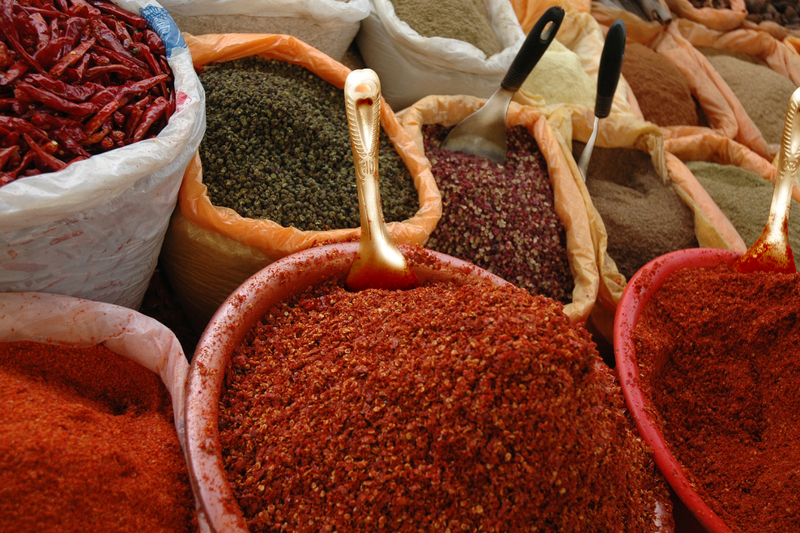
Would one be correct in thinking that designing an herbal formula is simply a matter of blending a few herbs together? Not quite correct. With your permission, I will endeavor to enlighten you on this point. Devising an herbal formula is a complex process which requires much more than thinking symptomatically and merely blending herbs together. It’s sort of like cooking. A meal is not just ingredients put together; it rather involves a touch of art and skill. Continue reading
Category Archives: HEALTH & NUTRITION
Chinese Herbs Formulas – a story of a legacy that became history: by Dr Damiana Corca
Chinese Medicine is still relatively new for some people in US and sometimes I come up against the skeptic’s question: does Chinese Medicine work? I don’t quite understand those energy pathways and then those Chinese Herbs, and how would I know that this kind of medicine is trustworthy. My husband always says that he loves skeptical people, just because he can see how people’s reticent attitude is revolutionized after sampling the benefits of Chinese medicine – there is no need for explanation, as the results speak for themselves. However, before getting to the treatment proper, I like to tell a story to the patients that pose such questions. Continue reading
Eating Healthier Just Got Easier by Dr Damiana Corca
When it comes to food, today’s market offers products that are probably tastier than they have ever been. How can it be different? The food industry of today is a business above all, even when it comes to whole food stores industry. Continue reading
Spiritual Nutrition: By Cyndi Dodick
Why consume food, why breath unless is draws us closer to the Divine? More and more it is revealed to me that everything we do is a form of nutrition. The food we choose to eat will either bring us closer, or carry us away from the Divine. The company we keep, the books we read, the music we choose, our daily routines are all opportunities to collect sparks of the Divine. Every action we select becomes a part of the quest for God Mergence or Deveikut if we stay connected to the Creator. Balancing the desires that detour the journey is a daily task. Some days the battle feels like standing in opposition to a hurricane/gale force wind and other days, there’s is just a gentle breeze blowing, yet always there is wind against my skin. Continue reading
Chinese Herbs in a Nutshell by Dr Damiana Corca
If you know a few things about Chinese herbs, then the title might give you a giggle as you well know that not even the tip of the iceberg can be touched in a few hundred words article. Well, I’m fully aware of that! So, let’s think of this as an intro to the magic kingdom of Chinese herbs. They have changed my life with their wisdom and healing powers, and I think I owe it to them, myself and you to share some facts that might surprise you more than you’ve ever thought.
First of all, did you know that the phrase Chinese herbs does not necessarily imply that those herbs originate from China, but rather that they are applied through Chinese Medicine concepts? So, here we have our old friend Dandelion – if we call it Pu Gong Ying, it becomes a Chinese herb. True, many of the herbs used in Chinese Medicine today are coming from China and other Oriental countries, but in reality, over the past thousands of years, plants have migrated from a continent to another by different means. Take, for instance, licorice – Gan Cao in Chinese – which is one of the most commonly used herbs for over 2000 years. Does that make it Chinese? Not really, since the Greeks and the Romans have also used licorice since ancient times.
Chinese Herbal Medicine has about 2500 years of written history. However, increased herbal usage dates back at least 5000 years. You might say so what? What has this got to do with me? Maybe people have used herbs since the beginning of humankind. What if I tell you that Chinese Medicine has between 30.000 and 40.000 books written before the turn of the century with thousands additional articles and books written only in the past few years. Of course, Chinese Medicine is more than Chinese Herbs; it also incorporates Acupuncture, tuina (Chinese massage), qi gong, tai chi and nutrition. Continue reading
Do I Hear Bubbles? By Dr Damiana Corca
I think I couldn’t find a better topic to begin with in 2010 than something as vital as the air we breathe – WATER. When your habit changes from drinking only 1 or 2 cups of water every day, I guarantee you will feel as though you have been reborn or washed on the inside – both spiritually and physically. And if you don’t quite get the spiritual part, then the increased bowel movements might let you know for sure that something is being cleansed
Everybody is talking of how good water is for you and how you should have at least 8 cups of water per day. In the rush of the day, between working, taking care of the kids, cooking and coping with life, you find yourself at 10 PM having ingested nothing more than the rushed cup of water that replaced your breakfast. Should you go ahead and pour down your throat the remaining 7 cups until you feel like fish could live into your belly? I’d say that is not the way to go about it. I have heard this so many times that it has become my second nature to talk about the simple Rule of Four.
You only need to remember 4 times a day to drink water and thankfully there are no strict hours. Two times you have to remember is morning and evening; right upon wakening drink 2 cups of water and as early as you can remember before sleeping but after dinner, have another 2 cups of water. Here we go, 4 cups down! The rest of the cups are simply split by half, 2 cups anytime between breakfast and lunch and another 2 between lunch and dinner. See how simple it is? You can also carry a bottle of water and sip throughout the day if that feels easier, but if you have a hard time remembering to keep drinking, the Rule of Four should always do the trick. Oh, let me give you a tip! Do no drink more than a few sips of water anytime during eating and 20 minutes before or after eating. This would only make the digestion process longer and even induce bloating. Continue reading
Bliss yoga: By Christine Wushke
This style of yoga was inspired by a tantric dance called the Tan Da Va. When I was first introduced to this dance I was told that part of the dance training was to sit and watch a stick of incense burn. After a few hours of watching the smoke rise and spiral, one begins to get in touch with the intuitive flow or a natural instinctive movement. Bliss yoga is movement that comes from an inner naturalness. There is an ancient wisdom within your body waiting to unfold and flow like the rising smoke of lit incense. When it is given space to flow it becomes a beautiful expression of your unique wisdom inherent within. Bliss yoga can be described as the poetry of yoga: rules are not important and expression is everything.
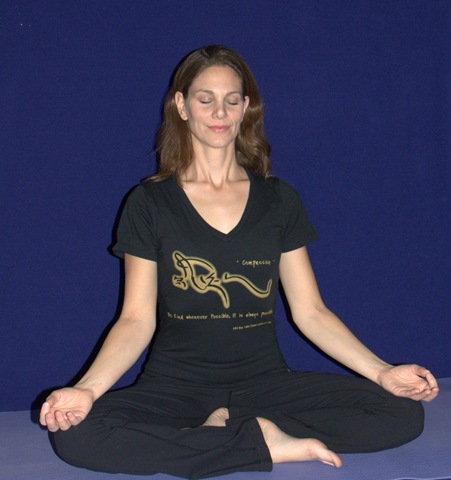
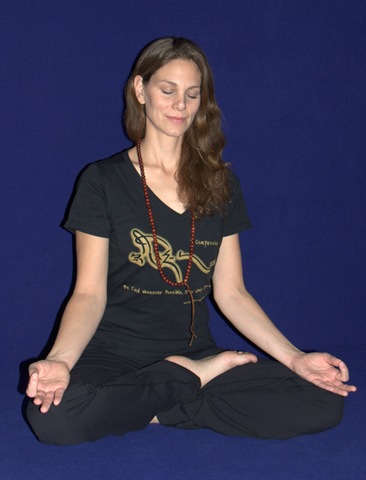
1. Sit on the floor with the legs crossed; if you find this position to be uncomfortable, sit in an alternative position or in a chair.
2. Close your eyes and let your awareness move inward. Be aware of your sit bones in contact with the floor or chair.
3. Take a moment to inwardly honor the deep wisdom and intelligence inherent within the body.
4. Imagine that just below your tailbone a stick of incense is burning and the smoke is rising up the spine. Set your imagination free: see the smoke spiralling, or moving straight up. There is no wrong way to do the practice; it is about allowing what is and making room for your intuition to take the lead.
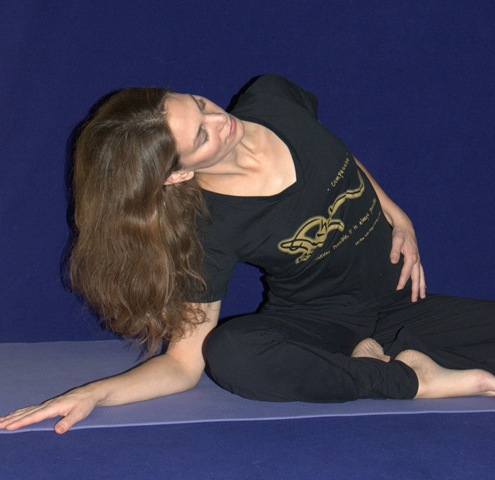
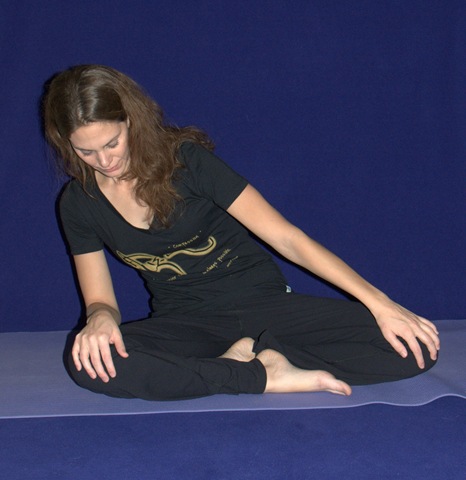
5. Slowly allow your torso to move side-to-side, forward and back. Allow the movement to come from the inside out–allow the inner wisdom to be the mover, not the mind. Get creative, stretch forward and back, side to side. Allow your movement to be intuitive.
6. Hold each stretch for as long as desired.
7. When you feel intuitively ready to finish moving, let the body slowly unwind and return to sitting quietly.
8. As the body comes into stillness become aware of the movement or aliveness of prana (life force energy) inside the body.
9. Enjoy the effects of heightened awareness for a few minutes or longer.
Benefits: Loosens and releases the sacrum. Relaxes the muscles of the pelvis, and lower back. Massages and oxygenates the back of the pelvis. Increases flexibility in the abductor, and adductor muscles in the thighs. Increases body awareness aiding in a healthier and more loving relationship with your body. Increases prana (energy) in the body. Deepens your spiritual practice.
If you enjoyed this article and would like to find out more about the writings of Christine click here.
© written and modeled by Christine Wushke, Photo’s by Dianne Wushke.
Christine Wushke is a certified yoga and meditation teacher with over 15 years of experience. Her aim is to create a sacred space for students to effortlessly find the presence of stillness and an inner silence. Christine’s mission is to raise consciousness on the planet by empowering people to realize their own Divinity and to uncover a deep peace within. Christine is committed to assisting you in your journey, and helping you to realize directly for yourself the truth of what you are, and the stillness of truth within. In addition to her yoga and meditation training, Christine is also a registered massage therapist. In the past two years she has studied extensively in the spiritual tradition of Advaita Vedanta. Her teaching style is largely influenced by Iyengar yoga, and the nondual tradition of Advaita.
www.journeytolight.net
www.innerlightyoga.blogspot.com
Call of the Conch-3-Not for Human Consumption: By Joyce Sweinberg
Dairy products in our current industry, worldwide,
foster the very same adverse effects as meat production and consumption, and even worse,
torture the dairy cow and her offspring repeatedly over time prior to the final slaughter.
For years, I drank milk and consumed milk products, never realizing that I had milk allergies which were causing my facial rashes and breakouts. Finally, someone suggested this to me and when I looked it up online, I was shocked to see how many allergies one can have to dairy products. This was my first step in removing dairy from my diet, for my own benefit. I was not always true to my vows and would often give in to pizza and on Halloween, would raid my sons’ candy for Snickers Bars, and on other holidays, eat the chocolate which was everywhere. In the summer months, I sometimes gave into the soft ice cream cones at the corner ice cream stand. And, usually, I broke out but thought it was worth it.
Until I saw some of the videos posted in the earlier parts of this series. When I saw how the dairy cow and her offspring are abused, I could no longer seek out dairy products in any way. But for some of us, we need to have other reasons than that, so I am including this part to highlight the unknown facts that dairy products really are not that healthy for us or our world, and can cause a multitude of environmental and physical problems. Many of us operate under the false assumption that dairy products make for healthy bones and this is being proven to be untrue in studies. The fact is that it is hard for people to give up their false belief systems if it would require them to remove dairy products from their diets. I have reproduced some excerpts below from online websites along with the link to the actual site for further reading.
Many sites will address the adverse environmental and other effects of the meat industry while including dairy products as a viable alternative to meat. An honest and intelligent assessment of the available facts cannot support such a conclusion. Dairy products in our current industry, worldwide, foster the very same adverse effects as meat production and consumption, and even worse, torture the dairy cow and her offspring repeatedly over time prior to the final slaughter. The simple indisputable fact is that by consuming dairy products or using them in worship, one is promulgating torture of these defenseless animals, and in the process, violating the foremost principle of dharmic behavior, ahimsa.
Let me add this about myself. While I now check the ingredients on everything I buy and I will not knowingly purchase anything which contains meat products or animal products or dairy products, I find it is still a challenge to determine whether there is dairy or animal product in what I eat when I am out, either in a restaurant or at a social event. If I am in doubt, and if the product is one which normally has dairy or eggs in it, I will politely decline.
When I am at temple, it is a more difficult position…I can refuse offers of yogurt or payasam or curd rice, or anything which is obviously milk based. But so many of the prasad offerings are laced with dairy or cooked in ghee that it is impossible to tell. I do still partake, asking His mercy and guidance in what I do. And I write this acknowledging that in co-writing this series, I am educating myself as I go along, making some decisions and deferring others as I ponder the solution that will work for me. I offer these writings to you, the reader, in the same spirit.
FROM PETA…
“Environmental DestructionLarge dairy farms have an enormously detrimental effect on the environment. In California, America’s top milk-producing state, manure from dairy farms has poisoned hundreds of square miles of groundwater, rivers, and streams. Each of the more than 1 million cows on the state’s dairy farms excretes 120 pounds of waste daily.(22) Overall, animals in animal factories, including dairy farms, produce 1.65 billion tons of manure each year, much of which ends up in our waterways and drinking water.(23) The Environmental Protection Agency reports that agricultural runoff is the primary cause of polluted lakes, streams, and rivers. The dairy-products industry is the primary source of smog-forming pollutants in California; a single cow emits more of these harmful gases than a car does.(24)Eighty percent of all agricultural land in the U.S. is used to raise animals for food or to grow grain to feed them—that’s almost half the total land mass of the contiguous 48 states.(25) Each cow raised by the dairy-products industry consumes as much as 50 gallons of water per day.(26)
Human Bodies Fight Cow’s Milk Besides humans (and companion animals who are fed by humans), no species drinks milk beyond infancy or drinks the milk of another species. Cow’s milk is suited to the nutritional needs of calves, who have four stomachs and gain hundreds of pounds in a matter of months, sometimes weighing more than 1,000 pounds before they are 2 years old.(27)
Cow’s milk is the number one cause of food allergies among infants and children, according to the American Gastroenterological Association.(28) Most people begin to produce less lactase, the enzyme that helps with the digestion of milk, when they are as young as 2 years old. This reduction can lead to lactose intolerance.(29) Millions of Americans are lactose intolerant, and an estimated 90 percent of Asian-Americans and 75 percent of Native- and African-Americans suffer from the condition, which can cause bloating, gas, cramps, vomiting, headaches, rashes, and asthma.(30) Studies have also found that autism and schizophrenia in children may be linked to the body’s inability to digest casein, a milk protein; symptoms of these diseases diminished or disappeared in 80 percent of the children who switched to milk-free diets.(31)
A U.K. study showed that people who suffered from irregular heartbeats, asthma, headaches, fatigue, and digestive problems “showed marked and often complete improvements in their health after cutting milk from their diets.”(32)
Calcium and Protein Myths
Although American women consume tremendous amounts of calcium, their rates of osteoporosis are among the highest in the world. Conversely, Chinese people consume half as much calcium (most of it from plant sources) and have very low incidence of the bone disease.(33) Medical studies indicate that rather than preventing the disease, milk may actually increase women’s risk of getting osteoporosis. A Harvard Nurses’ Study of more than 77,000 women ages 34 to 59 found that those who consumed two or more glasses of milk per day had higher risks of broken hips and arms than those who drank one glass or less per day.(34) T. Colin Campbell, professor of nutritional biochemistry at Cornell University, said, “The association between the intake of animal protein and fracture rates appears to be as strong as that between cigarette smoking and lung cancer.”(35)Humans can get all the protein that they need from nuts, seeds, yeast, grains, beans, and other legumes. It’s very difficult not to get enough calories from protein when you eat a healthy diet; protein deficiency (also known as kwashiorkor) is very rare in the United States and is usually only a problem for people who live in famine-stricken countries.(36) Consumption of excessive protein from dairy products, eggs, and meat has been linked to the formation of kidney stones and has been associated with colon cancer and liver cancer.(37,38) It’s also suspected that consuming too much protein puts a strain on the kidneys, which compensate by leeching calcium from the bones.(39)”
http://www.peta.org/mc/factsheet_display.asp?ID=98
FROM A PETA SPONSORED WEBPAGEHarvard School of Public Health, on the Consumption of Dairy Products (2005):
“The recommendation to drink three glasses of low-fat milk or eat three servings of other dairy products per day to prevent osteoporosis is another step in the wrong direction. … Three glasses of low-fat milk add more than 300 calories a day. This is a real issue for the millions of Americans who are trying to control their weight. What’s more, millions of Americans are lactose intolerant, and even small amounts of milk or dairy products give them stomachaches, gas, or other problems. This recommendation ignores the lack of evidence for a link between consumption of dairy products and prevention of osteoporosis. It also ignores the possible increases in risk of ovarian cancer and prostate cancer associated with dairy products.”
Cow’s milk is an inefficient food source. Cows, like humans, expend the majority of their food intake simply leading their lives. It takes a great deal of grain and other foodstuffs cycled through cows to produce a small amount of milk. And not only is milk a waste of energy and water, the production of milk is also a disastrous source of water pollution. A dairy cow produces 120 pounds of waste every day — equal to that of two dozen people, but with no toilets, sewers, or treatment plants.
In Lancaster County, Pa., manure from dairy cows is destroying the Chesapeake Bay, and in California, which produces one-fifth of the country’s total supply of milk, the manure from dairy farms has poisoned vast expanses of underground water, rivers, and streams. In the Central Valley of California, the cows produce as much excrement as a city of 21 million people, and even a smallish farm of 200 cows will produce as much nitrogen as in the sewage from a community of 5,000 to 10,000 people, according to a U.S. Senate report on animal waste.
FOR YOUR HEALTH: Dairy products are a health hazard. They contain no fiber or complex carbohydrates and are laden with saturated fat and cholesterol. They are contaminated with cow’s blood and pus and are frequently contaminated with pesticides, hormones, and antibiotics. Dairy products are linked to allergies, constipation, obesity, heart disease, cancer, and other diseases.
The late Dr. Benjamin Spock, America’s leading authority on child care, spoke out against feeding cow’s milk to children, saying it can cause anemia, allergies, and insulin-dependent diabetes and in the long term, will set kids up for obesity and heart disease, America’s number one cause of death.
And dairy products may actually cause osteoporosis, not prevent it, since their high-protein content leaches calcium from the body. Population studies, backed up by a groundbreaking Harvard study of more than 75,000 nurses, suggest that drinking milk can actually cause osteoporosis. Find out more by visiting our links page.”
http://www.milksucks.com/index2.asp
Other resources:
https://luthar.com/wp-content/uploads/2009/11/bookofcompassion2ed.doc
http://www.youtube.com/watch?v=tYpafipJyDE&feature=player_embedded
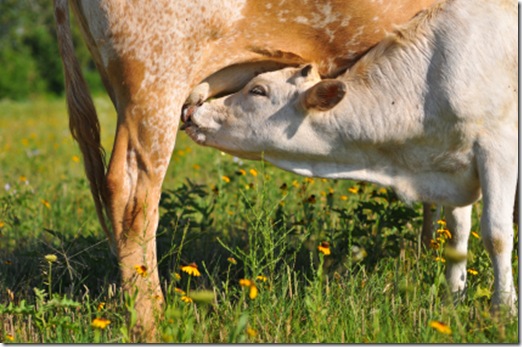
Nursing calf photo can be found at http://www.faqs.org/photo-dict/phrase/5743/calf-nursing.html
![]()
Patram pushpam phalam toyam yo me bhaktyaa prayacchati;
Tadaham bhaktyupahritamashnaami prayataatmanah.
If one offers Me with love and devotion of a leaf,
a flower, fruit or water, I will accept it with joy. BG 9.26

https://luthar.com/call-of-the-conch-introduction/
https://luthar.com/call-of-the-conch-1/
https://luthar.com/call-of-the-conch-part-2/
Alternate Nostril Breath Meditation
Alternate nostril breath meditation
This practice of pranayama is wonderful for bringing about a feeling of balance and well being. Because the nostrils are said to connect to our male and female energy channels, when we focus on the nostril, we balance and purify that corresponding channel of energy. The regular practice of alternate nostril breathing is said to help us experience the feeling of being beyond the polarity of male and female and into the non dual Reality of oneness. Practice this when you are feeling scattered or unfocused, and you will be amazed at the results.
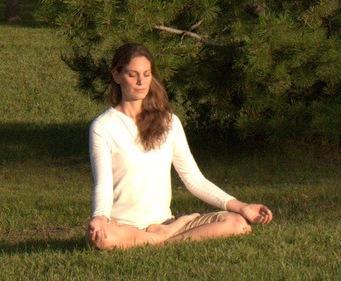
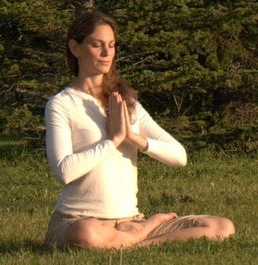
1. Find a position where you can be comfortable, relaxed, and free of any distractions, then settle into your posture
2. Allow the body to relax completely, especially your abdomen.
3. Notice how a relaxed abdomen naturally brings about a deepening and softening of the breath.
4. Allow the abdomen to relax more and more with each breath. As you let the abdomen soften, and the breath to deepen; start to become evermore aware of the feeling of nourishment in the breath. Be aware of the sensation of the body being nourished by the breath.
5. Allow your breath to flow as naturally and as freely possible; as if the breath is taking on a life of its own, moving from a deep inner intelligence and knowing.
6. As you are enjoying the feeling of a deep intuitive breathing and the feeling of nourishment within the breath, start to become aware of the sensation of air moving in the nostrils.
7. Become aware of the feeling inside the nostrils as well as the quality and movement of air. Notice how the air is cooler and drier as you breathe in. Notice the warmth of the air on your exhales.
8. Take about 10 breaths to concentrate on the feeling of the air moving in the nostrils, and the feeling of the body being nourished by the breath. As you are doing so, see if you can detect which nostril feels more open or expanded. (this is your active nostril)
9. Start to focus on your active nostril only. Breathe as if you are breathing through just that one nostril. Focus on the feeling of the air moving on that one side. Focus on this for about 30 seconds, or 10 breaths.
10. When it feels natural to switch sides, start to focus on the movement of air on the other side (the passive nostril). Focus on the feeling of the air moving inside the passive nostril. Focus on this for about 30 seconds, or 10 breaths. You may find this side more challenging to concentrate on, yet eventually it will begin to feel as if it is opening and expanding to be the same as the other side.
11. The final phase of this exercise is to imagine that you are breathing into a third nostril that runs from the tip of the nose to the center of the forehead. Inhale and move your awareness from the tip of the nose to center of the forehead and exhale from the center of the forehead to the tip of the nose. Stay with this for about 10 breaths.
12. Go back to breathing into the belly and focusing once again on the feeling of being nourished by the breath.
13. Stay with the belly breathing as long as you are comfortable and enjoy the feeling of balance and wellbeing.
If you enjoyed this meditation you can purchase Christine’s meditation CD in stores, by download, or by clicking here. Listen to sample.
© written and modeled by Christine Wushke, Photo’s by Dianne Wushke.
Christine Wushke is a certified yoga and meditation teacher with over 15 years of experience. Her aim is to create a sacred space for students to effortlessly find the presence of stillness and an inner silence. Christine’s mission is to raise consciousness on the planet by empowering people to realize their own Divinity and to uncover a deep peace within. Christine is committed to assisting you in your journey, and helping you to realize directly for yourself the truth of what you are, and the stillness of truth within. In addition to her yoga and meditation training, Christine is also a registered massage therapist. In the past two years she has studied extensively in the spiritual tradition of Advaita Vedanta. Her teaching style is largely influenced by Iyengar yoga, and the nondual tradition of Advaita.
www.journeytolight.net
www.innerlightyoga.blogspot.com
Belly Breathing
The yogic word for breathing practice is “Pranayama”. The word “prana” means life force energy, and the word “yama” means to expand. Pranayama is a practice for increasing energy, and aliveness in the body.
One of the favorite practices of pranayama at Journey to light yoga studio, is called “Belly breathing”. Belly breathing is a great way to slow down the breathing and deepen your connection to the prana in the breath. It is very relaxing, deeply nourishing, and often therapeutic for stress and anxiety. Set aside 10 – 15 min for this practice, in a place where you can be free from all distractions. I hope you return to your day relaxed, refreshed, and nourished.
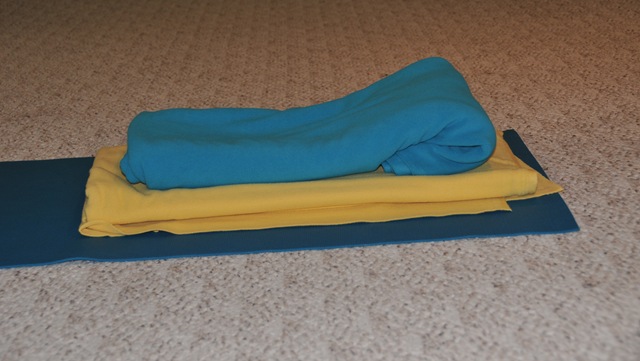
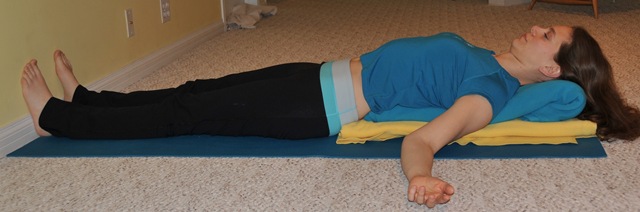
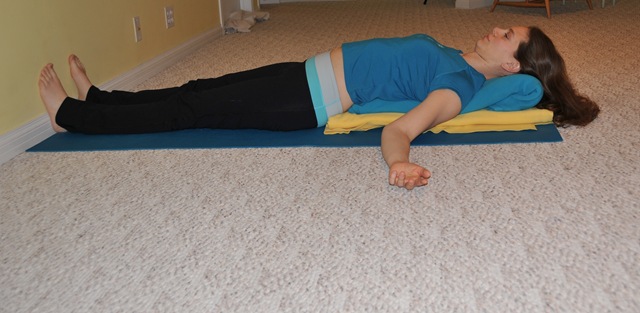
1. Take 2 folded blankets, and stagger them, so one is on top of the other, and the top blanket is pulled about 2 inches back. Fold the top blanket under at the other end, to make a pillow.
2. Lay on your back with the base of the spine touching the bottom blanket. Let your shoulders roll under and open the front of the chest.
3. Start by relaxing into the pose, and allowing the body to completely sink into the blankets.
Notice your breath. Imagine that your breath is like a drop of Prana (energy) and all around you there is an infinite ocean of Prana, and nourishment. Allow your inhalations to be a drinking in of this nourishment.
Allow your exhalations to be dissolving breaths, as if drops of water are diffusing into the infinite ocean of Prana, and nourishment all around you. Inhale nourishing, exhale dissolving. Imagine that the supply of nourishment all around you is limitless.
4. Begin to focus your attention on your lower abdomen. Breathe in and allow the lower abdomen to lightly inflate, as if you were blowing up a balloon of energy just below the belly button. Stay with the belly breathing for at least 10 min, focusing on breathing deep into the lower belly.
Benefits ~ Strengthens the parasympathetic nervous system. increases relaxation, increases oxygenation of blood, improved mental clarity, and emotionally uplifting. Therapeutic for anxiety and stress.
Christine Wushke is a yoga and meditation teacher with over 15 years of experience. Her aim is to create a sacred space for students to effortlessly find the presence of stillness and an inner silence. Christine’s mission is to raise consciousness on the planet by empowering people to realize their own Divinity and to uncover a deep peace within. Christine is committed to assisting you in your journey, and helping you to realize directly for yourself the truth of what you are, and the stillness of truth within.
Christine’s meditations, and yoga articles will guide you to deepen your understanding of the wisdom within this ancient practice and experience the spiritual elements of yoga.
www.innerlightyoga.blogspot.com
www.journeytolight.net
If you enjoyed this meditation you can purchase Christine’s meditation CD in stores, by download, or by clicking here. Listen to sample.
You must be logged in to post a comment.