Harsha's avatar

Examining One’s Mind

We are elated and happy when things go our way.

We are sad and depressed when reality unfolds differently than our expectations.

How pitiful is our lot my friends, thrown about here and there with the changing winds!

Everyday, the world, as perceived via the mind invites us to ride the roller coaster of emotions fueled by fear, anxiety, anger, and hatred.

A Sage centered in the Heart of Love is always indifferent to such an invitation.

How truly fortunate to come into the orbit of Sages who give the purest teachings of Ahimsa (nonviolence) and Self-Realization.

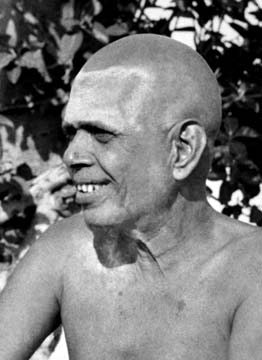
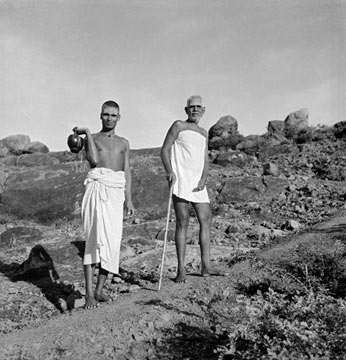
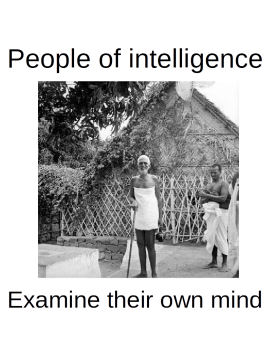
Bhagavan Ramana used to say, “Wise people examine their own minds.”


Harsha's avatar

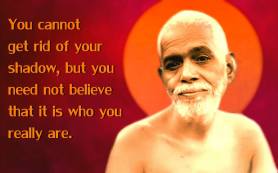
You Are Not Your Shadow

Sri Ramana used to say that wherever we go, our mind follows. We cannot escape our troubled mind riddled with endless concerns, anxieties, and fears. Even if we run away to a forest or some holy place or sanctuary, the mind is still with us.

Truly, the conflicted and conditioned mind is like our shadow.

Continue reading

Harsha's avatar

Meaning of the term “Satsang”

If one gains company of pure hearted, good people in life, one gains everything. In yogic psychology, such an association is known as “Satsang”.

At a practical level, Satsang refers to Spiritual Fellowship or company of others on the spiritual path. Satsang is a Sanskrit term and is made of two words, “Sat” and “Sang”.

Sat means “Truth”. Sat also means “Essence”. Sat also means “Existence”. Sang means to “Be With” or “Embraced By” or “In Company of”.

Combining Sat and Sang, we get Satsang, which means “In the company of or embraced by Truth or the Universal Existence”. 

it-will-be-ok-in-the-end

Harsha's avatar

PLATINUM INSURANCE

From Mira Prabhu, the mystic, yogini writer residing at Arunachala mountain in India.

Mira Prabhu's avatarmira prabhu

36e4cbc86a09d338c9b54bed3a0b98fdHow are you? I asked a friend in Manhattan. Oh, I’m just FINE, he said with a laugh—then proceeded to inform me that FINE was an anagram for Fuddled, Insecure, Neurotic and Egocentric. (Actually he used two hyphenated words for the ‘f,’ but I think I’ll leave what they are to your rich imagination.)

The fact is that almost every one of us is (or has been) fraught by a million insecurities—and who could blame us? Consider the world wars our species has endured, the concentration camps and gulags, the ugliness of misogyny and patriarchy that plague so many, in a nutshell, man’s inhumanity to man—all of which leave scars on the collective human psyche. Above all, consider our ephemeral nature, as fragile as a snowflake melting under a hot sun. No matter how big we are in the world, nothing can protect us from old age, sickness and death; yes, when Yama…
View original post 574 more words

Harsha's avatar

Death and Self-Realization

It is the ancient teaching of sages and scriptures that our mental state at the time of death determines our next birth. If at the time of death, we fully surrender to the Lord, the Universal Being, then we merge in God and are freed from all sorrows.

We usually think of that at the time of death what we have loved and thought about during life. Hence the purest souls who have devoted their whole life to serving the God of Love merge in that Universal Love immediately at the time of death and achieve complete liberation.

Continue reading

Harsha's avatar

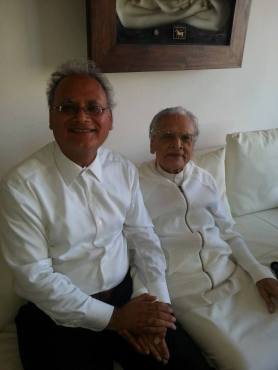
Sri Ramana and My Teacher Gurudev Sri Chitrabhanu-Ji: By Dr. Harsh K. Luthar

All of us come from different backgrounds, and we walk the path in our own unique way. Yet, we all have the same innermost longing to know the deepest mystery of our own nature and being. Reflectin…

Source: Sri Ramana and My Teacher Gurudev Sri Chitrabhanu-Ji: By Dr. Harsh K. Luthar

Harsha's avatar

The Root of Self-Inquiry: By Dr. Harsh K. Luthar

The ultimate Reality cannot be named. It has no name. There is no one outside of Reality to give it a name.

Harsha's avatarLuthar.com

Realized Sages such as Bhagavan Sri Ramana have indicated the experience or the state of the Self.  It is what it is.

It is the Heart of Existence, and Existence It Self.  Sri Ramana used to say that It is only Being.

You can call it what you like. Self, No-Self, Shunya, Reality. What difference can it make? The ultimate Reality cannot be named. It has no name. There is no one outside of Reality to give it a name.

Ancient sages taught that the core of our being is pure Sat-Chit-Ananda which roughly translates from Sanskrit as Existence, Knowledge/Consciousness, Bliss as One.

It is devoid of thought or doubt or conflict, but utterly complete and supreme over its domain, its domain being no other than It Self.

It is the Eternal Reality which is not conscious of anything separate from it, being Pure Consciousness Itself.

It is beyond happiness…

View original post 174 more words

Harsha's avatar

The Nature of Humility

Sri Ramana’s teaching is that the ego/mind merges in the Heart in two ways.

First, we can investigate the nature of the ego and examine the sense of “I” that we naturally feel and see where it arises. To do this, one needs to still the mind and with a purified and subtle intellect trace the “I” back to its source, the Heart. This is the yogic path of Jnana.

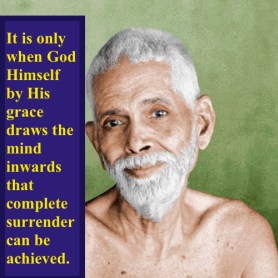
The second approach is to simply surrender the ego/mind without reservation to the Lord and accept that it is never our will but the Lord’s will as to what happens. If this attitude of “not my will but thine my Lord” penetrates deeply into our being, then we become accepting of everything. We see that worries and anxieties associated with ego/mind do not belong to us as we have surrendered our individual identity to the Lord. This is the approach of devotion and leads to the ego/mind merging into the Heart where the Lord sits as Eternal Existence.

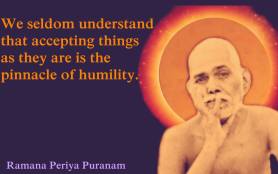
“If ego rises, all will rise. If the ego merges, all will merge. The more we are humble, the better it is for us”. ~ Sri Ramana in “Gems”, Chapter XIII.

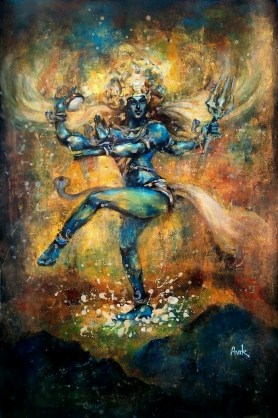
Photo art in this article is from Andreas Farasitis.

Harsha's avatar

The Nature of Enlightenment in Advaita

Dear Harsha: In many Eastern traditions it is believed that once a person is fully Self-Realized or Enlightened, he or she attains complete perfection and becomes omniscient and all knowing about three periods of time (past, present, and the future) anywhere in the entire universe. What would be Sri Ramana Maharshi’s view on this? Was Sri Ramana really all knowing and perfect in every way?

Harsha's avatarLuthar.com

Dear Harsha:

In many Eastern traditions it is believed that once a person is fully Self-Realized or Enlightened, he or she attains complete perfection and becomes omniscient and all knowing about three periods of time (past, present, and the future) anywhere in the entire universe. What would be Sri Ramana Maharshi’s view on this? Was Sri Ramana really all knowing and perfect in every way?
_______

View original post 420 more words

Harsha's avatar

The Nature of Now

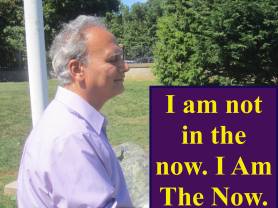
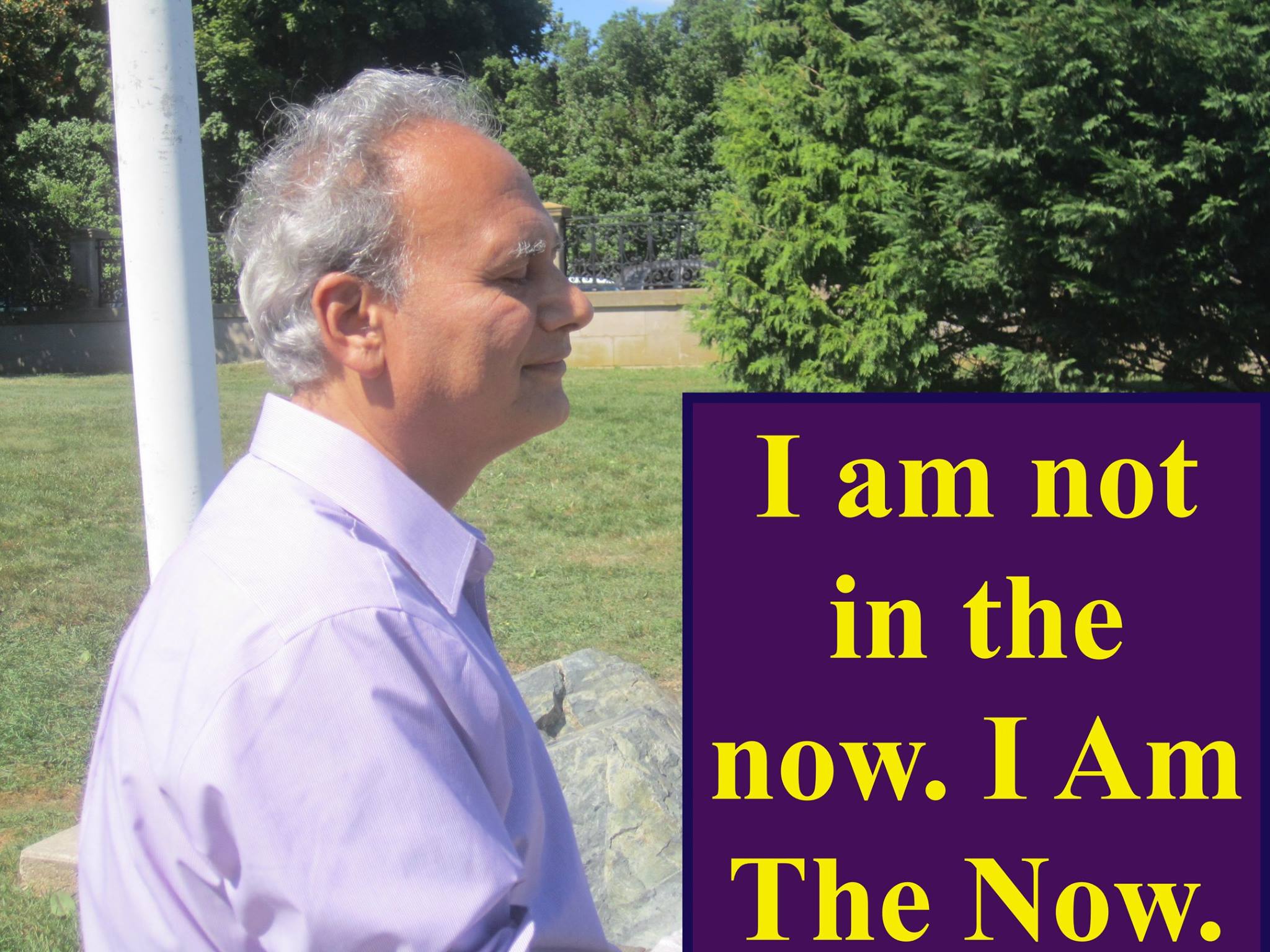
Our very nature is that of presence. We are not in the present. We are the present.

Harsha's avatarLuthar.com

Without a calm mind, one cannot experience the ultimate reality, the underlying oneness, as one’s own Self.

Spiritual practices (prayer, meditation, deep breathing, yoga) have value because they remove the agitation of the mind.

A peaceful mind, steady in awareness, can understand the purest teaching at the most subtle level.

Therefore the practical advice of the sages is to not bother anyone and not be bothered by others.

To reach the highest state and to know one’s own Heart as the Self, one has to become absolutely indifferent to both external and internal perceptions.

i-am-the-now

View original post