Harsha's avatar

ARUNACHALA, NOT ABRACADABRA

Mira Prabhu sharing and sending her greetings from Arunachala. ❤

Mira Prabhu's avatarmira prabhu

dfa1c558daeba093bd582958cc97f9a1“Why don’t you teach an analytical meditation at my learning center?” a woman asked me. It was a bright morning in Rishikesh, and while I loved my new apartment with its spectacular view of the Himalayas, my heart was heavy with confusion about the future. I did not like the commercialization of this ancient city, nor the sharks I encountered, mostly wealthy urban businessmen who had bought up all the apartments in my enclave for ‘investment’ purposes and appeared to have few ethics.

“All right,” I agreed, albeit reluctantly; perhaps it would do me good to teach the Seven Flavors of Samsara, an analytical meditation on the nature of relative reality that I had learned from a powerful guru, and which I occasionally shared with those perplexed about the nature of reality—particularly those  who agonized over why bad things happened to good people and vice versa.

View original post 879 more words
Harsha's avatar

Two Great Truths of Absolute and Relative Reality

By Mira Prabhu who is both an amazing and insightful Yogini as well as a very gifted writer. ❤

Mira Prabhu's avatarmira prabhu

SHIVA AND SHAKTI TANTRA

In my volatile teens, I was struck by the poignant beauty of an ancient metaphor (contained within the Mundaka Upanishad) that speaks of two birds perched on the branch of a tree: one bird eats the fruit of the tree while the other watches.

The first bird represents the individual self/soul; distracted by the fruits (signifying sensual pleasures), she forgets her lord and lover and tries to enjoy the fruit independent of him. (This separating amnesia is known in Sanskrit as maha-maya or enthrallment; it results in the plunge of the individual into the ephemeral realm of birth and death.) As for the second bird, it is an aspect of the Divine/Self that rests in every heart—and which remains forever constant even as the individual soul is bedazzled by the material world.

This teaching implies that it is ignorance of our true nature that creates a vicious cycle: the individual, being blinded by the illusion of existing as a separate…

View original post 613 more words

Harsha's avatar

Dattatreya’s 24 Gurus and His Brilliant View

Dattatreya

Mira Prabhu's avatarmira prabhu

SHIVA IN BLACK AND WHITE 2Dattatreya blows my mind with the daring way he lived his life and the transcendent wisdom that emerged as a result. The word Datta means “given”—for it is said the Divine Trinity (Brahma, Vishnu and Shiva) “gave” one aspect of themselves in the form of a son to the sages Atri and Anasuya; Atreya was added on to his name, to indicate he was the son of Atri.

Born roughly 4000 years ago in an age when Veda and Tantra had once again fused, Dattatreya left home early, in search of the Absolute, roaming naked in the areas in and around Mysore, Maharashtra and Gujarat. Usually depicted with three heads, symbolizing Brahma, Vishnu and Shiva; past, present, and future; and the three states of consciousness: waking, dreaming, and dreamless sleep, he is shown sitting in meditation beside his shakti (mate) beneath the wish-fulfilling tree; in front of him is a fire pit, and around him are…

View original post 697 more words

Harsha's avatar

Yoga And Advaita: By Dr. Harsh K. Luthar

Yoga and Advaita

Harsha's avatarLuthar.com

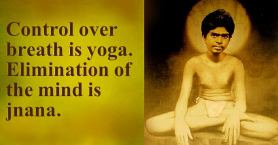
Yoga and breath Jnana and mind

These questions came up some years ago. My responses are included. (Photo art above is from Andreas Farasitis).

Question: Is the way and goal of Patanjali’s Yoga and  Sri Sankara’s Advaita Vedanta the same?

View original post 413 more words

Harsha's avatar

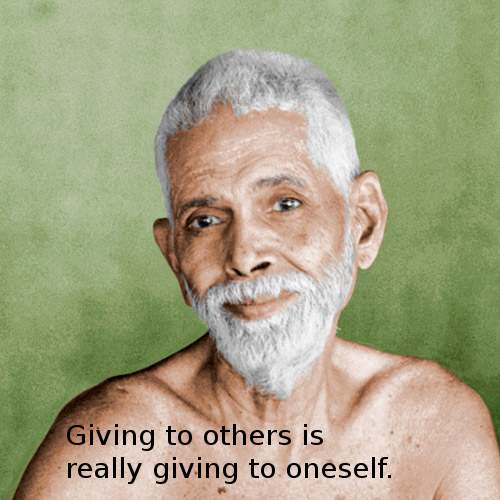
Giving to others is really giving to oneself ~ Sri Ramana

Giving to others is really giving to oneself. ~ Sri Ramana

Harsha's avatarLuthar.com

10411038_10152864969229631_6807191050676103993_n

Bhagavan says, “Giving to others is really giving to oneself.” Bhagavan continues, “If one knows this truth, would one ever remain without giving?” (See Chapter XIII “Gems from Bhagavan.” Bhagavan here states the fundamental truth of reality at every level.

View original post 238 more words

Harsha's avatar

Sunday Homespun Wisdom – 2: By Dr. Harsh K. Luthar

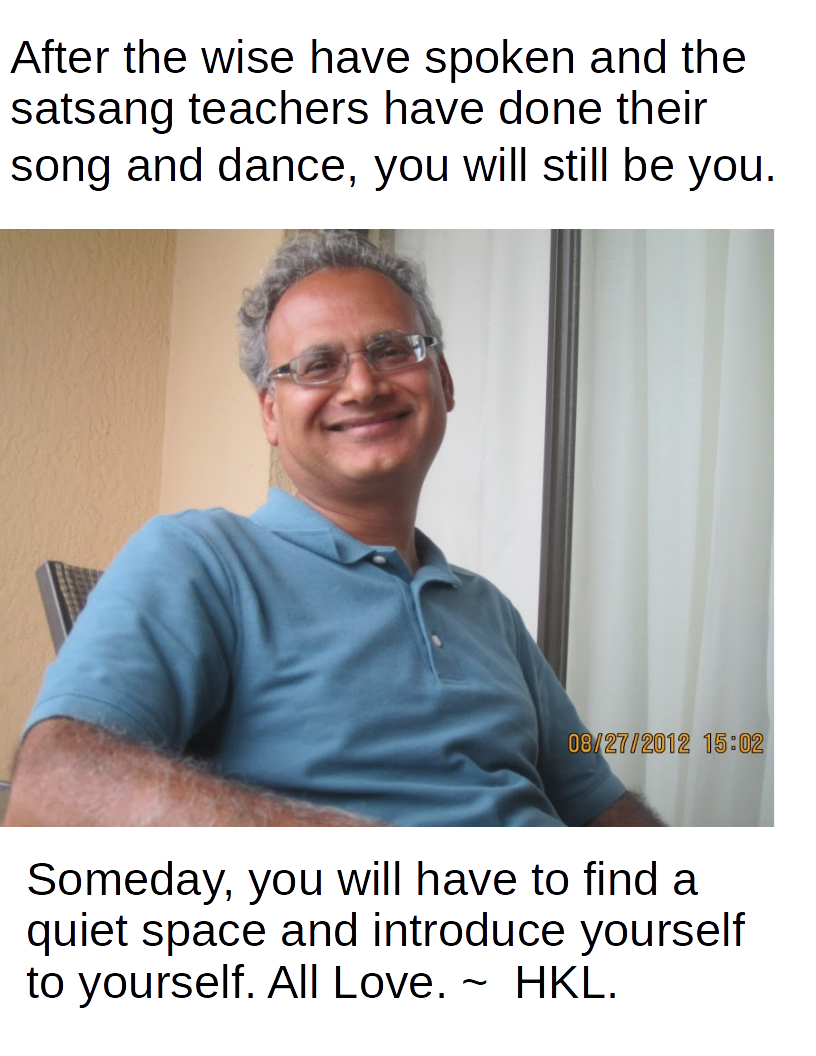
You will always be you!

Harsha's avatarLuthar.com

After the wise men have spoken

View original post

Harsha's avatar

Paradox Of The Mind: By Alan Jacobs

Paradox of the Mind: By Alan Jacobs

Harsha's avatarLuthar.com

“Oh Mind, do not waste your life in roaming outside, pursuing wonders and wallowing in enjoyments. To know the Self through grace and to abide in this way firmly in the Heart is alone worthwhile.” [1]

This relevant quotation leads us to consider that what we term ‘mind’ can be conceived as a great paradox. From one standpoint it is a benevolent friend but from another it is a malicious enemy.

View original post 1,111 more words

Harsha's avatar

Karma, Reincarnation, and Suffering: By Alan Jacobs

Karma, Reincarnation, and Suffering: By Alan Jacobs

Harsha's avatarLuthar.com

There is a great deal of misery and anxiety occupying peoples’ minds these days about the suffering currently undergone on the Planet through terrorism, local armed conflicts, starvation, disease and economic depression. Many atheists and agnostics base their skepticism about the existence of God on the observation that a benign and benevolent God of Love could not possibly exist, or else he would not permit so much world suffering.

According to sages, the highest teachings of the world religions are contained in the idea that we are all “One” and that we come from the same divine source to which many names can be given. Sri Ramana used to say that, “God is the actual form of love”. So why then so much suffering in the world?  From the standpoint of our own teaching, that of the great Sage, Sri Bhagavan Ramana Maharshi, we must first understand that this plane…

View original post 735 more words

Harsha's avatar

Who Is Rama? The Doctrine Of Neti, Neti

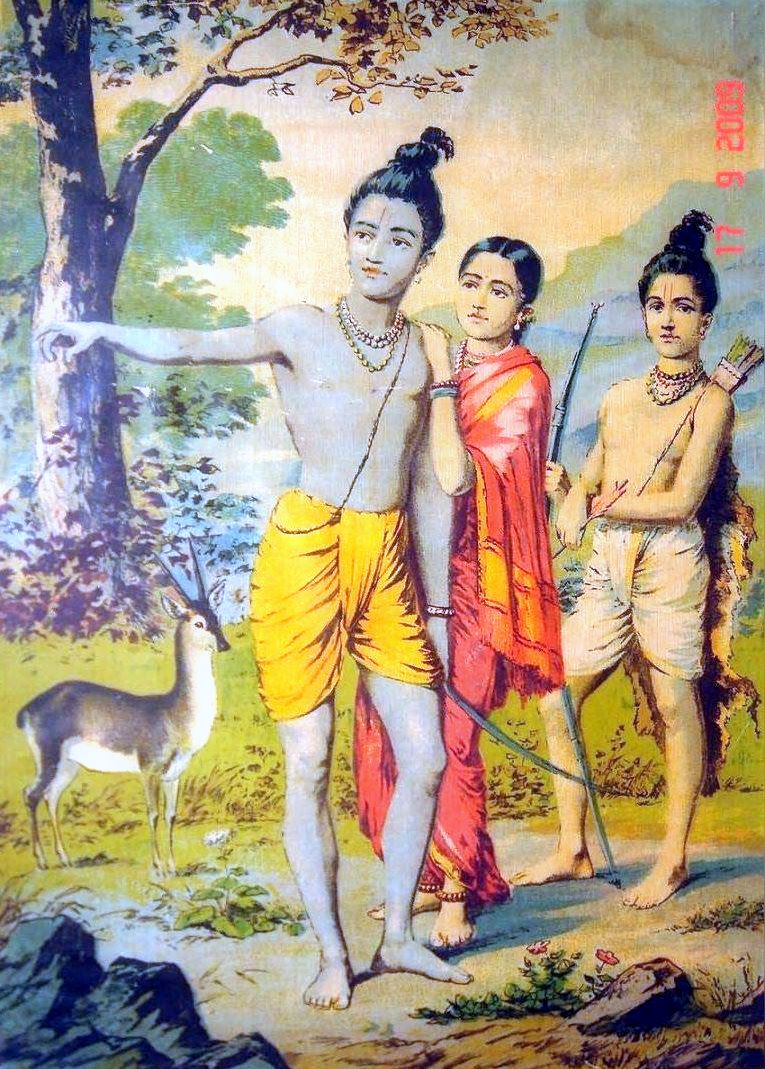
Rama_Sita-Lakshman in_forest

In order to explain the Advaitic doctrine of “Neti Neti”, Sri Ramana used to tell the story of Sita and Rama.

Prince Rama was exiled for 14 years from the kingdom to a forest by his loving father. The full story is too complex to be told here.  

When Prince Rama, obeying his father, left the kingdom of Ayodhya, his wife Sita came with him to endure the hardships of poverty and penance side by side with her husband. Rama’s younger brother Lakshman insisted on coming as well to keep them company and to protect them in the forest.

When the three reached the forest, they took off their royal clothes and sent them back via the Chariot that had brought them to the edge of the forest. They put on clothes of forest dwellers and Rishis who lived in the forest.

Continue reading

Harsha's avatar

Silence Is Most Powerful

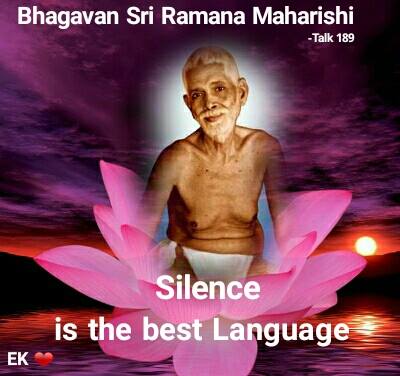
Silence is the best language

Silence and Grace are frequent topics that occur in devotee conversations with Bhagavan Sri Ramana. “Silence is most powerful” says Bhagavan in Day By Day, 9-3-46.

Bhagavan used to say that the highest spiritual teaching and transmission is given only in silence. True Silence comes when there is complete surrender to God without any reservation. There is no room for mental noise then and all is peace.

Here is an actual event narrated by T.K. Iyer where he witnessed the the power of Bhagavan’s silence.

Continue reading