

Ultimately the mystery of existence is tied to the mystery of perception. What is it that we are truly able to perceive without interpretation? Continue reading
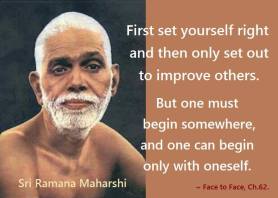
The photo art above is from John Wassenberg FB page.
____________________________________
Bhagavan Ramana Maharshi
by Alan Adams Jacobs
Boundless Bliss flooded the Heart of Beauteous Mother Earth,
A Sage came as Ramana to save us, he took a human birth. Continue reading
translation and commentary by Smt. Savitri Puram
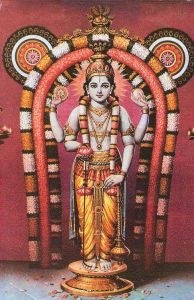
Krishna! Krishna! Mukunda! Janaardana!
Krishna! Govinda! Naarayana! Hare!
Achyuthaananda! Govinda! Maadhava!
Sachidaananda! Naarayana! Hare!

Introduction
Njanappaana can be considered as the Bhagavad Gita of Malayalees. This is a Darshanika kaavyam or philosophical poem expressed in the most simple Malayalam language for ordinary people. Poonthanam Nambudiri, an ardent devotee of Shri Guruvayurappan, transformed his unbearable sorrow from his infant son’s death into a “yogavishesham”. He used this sad experience to build his Bhakthi soudham or house of devotion and opened it for all devotees for all time. Even though the language is very simple, this njaanappana, or song of wisdom deals with the essence of all vedas and upanishads. May Bhagavan Guruvayurappan, Bhagavathy Sarswathi Devi and Sri Poonthaanam Nambudiri bless us to become wiser by going through this great Song of Wisdom!!
This is continued from Part One… https://luthar.com/njanappaana-1
Chuzhannitunna samsaara chakratthil
Uzhannitum namukkarinjeetuvaan
Arivulla mahatthukkal undoru
Paramaartham arul cheythirikkunnu
Eluthaayittu mukthi labhippaanaay
Chevi thannithu kelppin ellaavarum
We are restlessly moving (uzhannitum) up and down in this rotating (chuzhannitunna) wheel of material world (samsaara chkratthil). For us to know (namukkarinjituvaan), great njaanis( arivulla mahatthukkal) have preached (arul chythirikkunnu) the paramaartham (Supreme truth). All of you listen to this (kelppin ellaavarum) because to attain salvation (mukthi labhipaanaay) easily (eluthaayittu) God has given you the sravanaedriyam or ears (chevi thannithu). The meaning of “chevi thannithu” can also be taken as “give your ears” or listen to what Mhaathmaas told us.
Getting human life is rare and even after getting human life, very few people are blessed to pursue the spiritual path. But great sages of the past realized this pitiable condition of ordinary souls and have prescribed easy ways to know the Supreme Truth. One of the easiest method for Kaliyuga suggested by them is Naamasankeerthanam. Since this is the opinion of self-realized bhakthaas, Bhagavan Himself approves this method and tells in Bhagavad Gita: “yajnaanaam japayajnosmi” or Among all the sacrifices, sadhanas, austerities or forms of tapas, I am represented by japa” and thus supporting the words of Mahaathmaas.
(Bhagavan always supports Bhakthaas. When Poothaanam once read Amaraprabhu as Maraprabhu while chanting Vishnusahasra naamam, a few Sanskrit scholars made fun of him. Bhagavan could not take his dear devotee’s grief and told from the sanctum sanctorum : “I am Amara prabhu as well as Maraprabhu, meaning I am also the lord of trees or in Malayalam maram”.)
We are all going up and down on the wheel of material world rotating with extreme speed and it is very difficult to escape from that. But once we know the Supreme Truth, we will be relieved from the samsaarachakra. This Brahma jnanam is possible by sincerely chanting the auspicious names of God because Naamam or names of Lord are even greater than Naami or Lord Himself. Hanumanji had to just chant Raama naamam to cross the ocean where as Lord Raama had to construct the bridge to cross the ocean to Lanka!
Also as explained in the previous lines [https://luthar.com/njanappana-1 ], anybody can chant naamam anytime and anywhere. So Poonthaanam is asking us to listen carefully to what Mahaathmaas have told us about Supreme Truth. Like sravanedriyam or ears can be used for hearing the greatness of Lord, all other indriyaas should be used for the purpose of serving God. Sankarrachaaryar also gives this idea in a very beautiful sloka in Soundarya Lahari:
JapO jalpa: shilpam sakalam api mudraa-virachanaa
Gathi: praadakshiNya-kramanam ashanady aahuthi-vidhi:
PraNaama: samvesha: sukham akhilam aathmaarpaNa -drushaa
Saparyaa paryaya: thava bhavathu yan mae vilasitham
Let my spoken words become manthras, let all my hand gestures become mudraas, let all my steps become circumambulation or pradakhinam to you, let my lying down to sleep become prostration to you, let the food I consume be an offering to the sacred fire lit for you, let what ever I do become a worship to you.
Nammeyokkeyum bandhicha saadahanam
Karmam ennariyendathu mumbinaal
First and foremost (mumbinaal), we should know (ariyendathu) that karmam is the thing (saadhanam) that binds (bandhiccha) all of us (naameyokkeyum) to this world.
Even before telling us more about the easiest path for salvation, poet starts with the big word : “Karma” and how we are all bound in the cycle of birth and death by karma. Both good and bad karmaas are binding and hence we have to know what is the root cause for making us do karmaas and eradicate the root cause. In this context, an example of a burning stick is appropriate. If we move a burning stick in a circle, a burning circle will seem to appear. In reality (understanding the reality is njaanam) the circular movement of the stick causes the illusion. Likewise the wheel of time is moving with very high speed dragging us along with it and forcing us to do good as well as bad karmaas with ego (or feeling of “I am the doer). This causes the illusion of bondage. So we have to have the njaanam or knowledge to go beyond this illusion or Maya to escape from the bondage. Also the famous example of seeing a rope and misunderstanding it as a snake is appropriate. Until we know that it is only a rope, we will be scared and stressed. What will lead us to this knowledge of Brahmam? Continuous remembrance of Lord through Naamasankeerthanam will help us to detach us from the karma-bound cycle and lead us to Njaanam and moksham.
Law of Karma is a law of justice and it is straight forward, impartial and inescapable. The only thing that can nullify the effects of Karma is Bhagavan’s grace. Bhagavan’s blessings loosen the tightly bound law of Karma and makes the otherwise impossible escape possible for us. In Kaliyuga the easiest way to obtain Bhagavan’s blessings and grace is naamasnakeerthanam.
In Mahabharatha, Sahadeva advises his elder elder brother Yudhishtira on the subject of Karma. He says that when ever we do Karmaas with the feeling of “I am the doer” or “mine (two letter sanskrit word “mama”) those karmaas lead us to the cycle of birth and death. But when we do karmaas thinking that we are not the doer, the results of the karmaas also will not be ours. This feeling is called “I am not the doer” or not mine (in Sanskrit, it is expressed in three letters “na mama”). Karmaas performed with this attitude are not binding and and free us from the eternal cycle of birth and death. Again, how can we develop this attitude in Kaliyuga? Poonthanam assures us along with Bhagavan that Nammasankeerthanam will eventually give us this “na mama” attitude and lead us to njaanam and moksham.
How can we forget to mention Shankaraachaaryar’s lines
punarapi jananam punarapi maranam
punarapi jananii jathare shayanam
iha samsaare bahudustaare
kripayaa apaare paahi muraare
Born again, death again, birth again to stay in the mother’s womb! It is indeed hard to cross this boundless ocean of samsara. Oh Murari! Save me through Thy mercy.
Munnam ikkanda viswam aseshavum
Onnaayulloru jyothi swaroopamaay
Onnum chennangu thannodu pattaathe
Onnilum chennu thaanum valayaathe
Onnonnaayi ninakkum janangalkku
Onnukondariyaavunna vasthuvaay
Onnilum urakkaattha janagalku
Onnu kondum thiriyaatha vasthuvaay
Onnu pole onnillaathe ullathil
Onnaayulloru jeeva swaroopamaay
Ninnavan thanne viswam chamachu pol,
Moonnum onnil adangunnu pinneyum
During pralaya or dissolution (word “munnam” refers to pralayam) this whole world (viswam asheshavaum) becomes the one and only one (onnayulloru) jyothi swaroopam or parama thejopunjam. This jyothiswaroopam is only a witness, this is neither attached to anything in this world (line four) nor let anything in the world get attached to this (line 3). Those Jnaanis and Bhakthaas (predominantly of saatwic and raajasic nature) who try to figure out one by one (onnonnaayi ninakkum janangalkku) using “nethi, nethi” process or “not this, not this” process, perceive “It” as one thing through which everything is known (onukondariyaavunna vasthuvaay). For those people whose minds are restless, fickle and out of control (onnilum urakkaattha janangalkku -predominantly of Thaamasic nature) “It” cannot be comprehended or understood by any means (onnukondum thiriyaattha vasthuvaay). Outwardly each and every being is different (oonu pole onnillaathe), but the spirit or jeeva swaroopam in all beings are the same (ullatthil onnaayulloru jeevaswaroopamaay). The same jeeva swaroopam that exists in everything (ninnavan thanne) created the whole universe (viswam chamacchupol) and “It” again (pinneyum) contains all the three . (moonnum onnil adangunnu)
During pralaya or dissolution, everything is merged in Lord and nothing remains except the parama jyothi swaroopam or light of lights (or paramaathma chaithanyam). This is compared to the disappearance of stars and moon at sunrise. Likewise, the whole universe including the sun, moon, stars and all planets dissolve and become part of that great Jyothi swaroopam. One of the prayers we chant during aarathi or deepaaraadhana expresses the same idea:
Na thathra suryo bhathi, na chandratharakam
nema viddhutho bhanthi kuthoyamagni
Thameva bhantham anubhaathi sarvam,
thasya bhasa sarvamidham vibhathi.
“There the sun does not shine, nor the moon nor the stars; these lightnings also do not shine – how then (can) this earthly fire? Verily, everything shines after Him reflecting His glory. This whole world is illuminated with His light.”
But this light of lights is “Anaadimadhyaantham” or beginningless,middleless and endless. At the end of the dissolution phase, each individual soul again takes birth depending on the accumulated karmaas. These individual souls with accumulated karmaas do not get salvation during dissolution, but just remain hidden in Easwara Chaithanyam and then take birth again to experience the results of their good and bad karmaas.
These lines specifically explains how Bhagavan is not tainted by our karmaas. Even when we disappear into the jyothi swaroopam, that jyothi swaroopam remains unaffected. So our sorrows and happiness do not affect Bhagavan and Bhagavan is not responsible for our sorrows and happiness. Our experiences are the direct results of our own karmaas. Then how does Bhagavan help us? When we realize that the jyothi swaroopam with in all of us is the same as the paramaathmachaithanyam, all our actions become an offering to the Light of Lights, “mama or mine” attitude disappears, and “na mama or not mine” attitude arises. But only in a pure mind this realization happens and in Kaliyuga, Nammasnakeerthanam is the most practical method to attain purity of mind.
“Onnukondariyaavunna vasthu” indicates that for ordinary people like us, Brahmam can be known only through the path of Bhakthi. Bhakthi leads to Njaanam. Little Prahlaada believed that everything existing was Naarayana swaroopam and when he told his father that God is omnipresent, Lord did come out from the lifeless pillar to protect Him. Gopikaas were ordinary housewives and just because of their intense and blind devotion to the Lord of Vrindavan they attained Jnaanam and moksham. Fickle minded ordinary people who are distracted every moment with the the various temptations of life cannot comprehend the greatness of Bhagavan. First the aasuric or thaamasic or demonic characteristics of our mind has to be reduced by the constant remembrance of Lord and the power of Naamam will elevate ourselves to purer and purer levels.
Last line talks about the number three. This three can refer to several things: Prakrutthi, mahatthathvam, Ahamkaaram or Satva Gunam, Rajo Gunam, Thamo Gunam or Brahma, Vishnu, Maheswaran or three worlds. At the time of dissolution, everything merges into the paramachaithanyam and this explains the transient nature of everything we see or feel in this world. Poonthanam explains this to develop an attitude of detachment in our mind and hence perform Nishnkaama karmam and attain the Lotus Feet of Lord by chanting His names.
Onnu kondu chamachoru viswatthil
Moonnayittulla karmangalokkeyum
Punya karmangal paapa karmangalum
Punya paapangal misramaam karmavum
Moonu jaathi niroopichu kaanumbol
Moonnu kondum thalakkunna jeevane
In this universe (virtually) created (chamachoru viswatthil) by our own Avidya or ignorance (here “onnu kondu” means “due to avidya or ignorance”), all karmaas (karmangalokkeyum) can be divided into three categories ( moonnaayittulla). They are namely Punya karmaas, Paapa karmaas and Punya-Paapa-misra karmaas. (lines 2 and 3) When we think (niroopicchu kaanumbol) about the above three types of karmaas (moonnu jaathi), we can see that jeevaathma (jeevane) is bound (thalakkunnu) by all three types of karmaas (moonnu kondum)..
Just like the moon is lit by the reflected light of the Sun, we are alive by the chaithanyam or light lit by the Light of Lights, Paramachaithanyam. A person who is ignorant of the fact that sun’ light causes the moon-light, thinks that it is moon’s own light. Similarly, this whole universe is not different from the paramaathma chaithanyam itself and with our inability to comprehend this and internalize the truth, we do three types of karmaas with “ahambhaavam” or feeling of “I and mine” and these sakaama karmaas (result oriented actions) bind us to the eternal cycle of birth and death. It is difficult to exactly differentiate punya karmaas and paapa karmaas. Some of them can be labelled with out any doubt. But, some of the karmaas can be classified only according to the context.That is why Poonthaanam mentions about the third type called mixed karmaas.
There is a small story to illustrate this point. Once a very pious sage was resting in his hermitage in the forest. A just and righteous King followed by a group of robbers entered the forest. King was running about one mile ahead of the robbers and turned east near the sage’s hermitage. (Hermitage was in junction near a river and one can go in any direction from there). While running, he specifically told the sage not to disclose which way he ran to the robbers following him. As expected robbers came and asked the sage about the direction in which the King ran. This sage who had never spoken untruth in his life did not want to say a lie to the robbers. He could have either said “I do not know” or to save the King’s life he could have even said “west or south or north”. Instead he told them “east” to save his sathyavratham or vow of truth. Later he had to experience the negative results of his paapa karma because in that particular context, saying the truth was not a punya karma or dharmam. By saying an untruth he would have saved the life of a righteous king and his country. But he cared more for his own vow of truth than saving the life of a just and righteous King. Because of his selfishness, even though he told the truth, it became a paapa karmam.
Since all the three types of karmaas binds us, only destruction of all karmaas can free us from bondage. But it is impossible for ordinary people to live with out doing any karmaas. There is not even a moment when we are not doing karma either by body, by words or by thoughts. So the only solution is to do karmaas with renunciation of the fruits action which is called Nishkaamakarmam. Bhagavan says in Bhagavad Gita;
yasya sarve samarambha:
kama-sankalpa varjitha:
jnanagni dagdha karmanam
tam ahu: panditham budha:
He, all whose undertakings in this world are free from the bondage of expectation, who has sacrificed all the results of his actions in the fire of knowledge is a pandithan or scholar -so says intelligent people or (great seers)
Even though all these philosophical concepts are mind boggling to ordinary people like us, Poonthanam assures that Naamasnakeerthanam will clear our mind and help us to develop an attitude of surrender and intense devotion. Then Bhagavan takes over and assures us : Na mae bhaktha pranashyathi- my devotees will never perish. Bhagavan’s grace will lead us from Rakthi —> Bhakthi—-> Mukthi.
Ponnin changala onnipparanjathil
onnirumbu kondennathre bhedangal
Randinaalumeduthu panichaiytha
Changalayallo misramaam karmavum
Bondage comes from three types of karmaas and one string (changala) formed as a result of satkarmaas or punyakarmaas or good deeds is made of Gold (ponnin), another one (onnu) formed as a result of paapa karmaas or negative karmaas or dushkarmaas is made of Iron (irumbu) and the third string ( formed as a result of the mixture of the above two types of karmaas-misrakarmam) is made of a mixture of both Gold and Iron (randinaalumeduthu pani cheytha).
Even though Gold and Iron are different metals with entirely different properties, when they are used for tying or binding some one it hardly makes any difference for the bound victim. The word “changala” and “thalakkuka” are usually used for chaining elephants. By using these words, Poonthanam brings out the fact that breaking the strings of bondage is as difficult for us as it is for an elephant to break it’s thick Iron chain. But with lot of effort, sometimes elephants do break and run to freedom. So with continuous and sincere effort human beings blessed with the power of discrimination, can break all three binding chains. Even people with predominantly satva gunaas find it hard to break the bondage effortlessly. As long as their satkarmmas are result oriented, they will not be freed from the cycle of birth and death. They live to enjoy the results of satkarmaas, again do satkarmaas to be born again and again. Only renunciation of the fruits of action can break the bondage for Punyaatmaas (great souls), Paapis (sinned souls) and those punyaathma-paapaathma combination souls . The only difference is that when we do Paapa karmaas we are subjected to negative experiences and punya karmaas yield positive experiences and mixture of both will give both positive and negative experiences. But eternal freedom from this cycle calls for Nishkaama karmam.
Even if a cage is made of Gold, a bird sees it only as a cage in which it is trapped. It does not enjoy the beauty of Gold. It only wants freedom. Likewise our souls crave for eternal freedom to join the Parmaathma. Because of the avidya or ignorance, jeevathma goes after transient pleasures and with egoistic actions accumulates all three types of karmaas. Poonthaanam advises us to do naamasnkeerthanam which removes ignorance and makes us realize that we are trapped in this eternal cycle of birth and death. Naamam persuades us to strive with the determination and force of a “matthagajam” or mad elephant to break this chain of bondage. Poet assures that this force to break the chain can be derived from chanting Lord’s name. By the power of Naamajapam even an athiest (who does not believe in God or in prayers) goes through different stages of Bhakthi or devotion and reach the highest state of Uttama Bhaktha or perfect devotee. A Bhaagavatotthama ( the highest type of devotee ) is one who sees the glory of Bahgavan in all animate and inanimate beings, and also perceives all beings as dwelling in Him. So all his karmaas become an offering to God and practically becomes a Jeevanmuktha. Then he discards the body when the results of the accumulated karmaas are exhausted and merges with the Paramaathma.
Where does God live? Bhagavan says to Narada:
Naham vasami vaikunte na yogi hrudaye ravau
Mad bhaktha: yatra gayanti tatra thishtami narada.
“I dwell not in Vaikundha, not in the hearts of yogis, nor in the Sun, I live where my devotees sing my glory and divine names.”
Brahmaavaadiyaay eecchayirumbolam
karmabaddhanmaar ennatharinjaalum
Bhuvanangale srishtikkayennathu
Bhuvanaantha pralayam kazhivolam
Karmapaasatthe lamkhikkayennathu
Brahmaavinnumeluthalla nirnayam
Dikpaalakanmaarum avvannam ororo
Dikku thorum thalachu kitakkunnu
Know the fact that (ennatharinjaalum) starting from Brahamadevan and other devaas (Brahmaavaadiyaay) to flies and ants (eeccha irumbolum), all of God’s creation are bound by Karma (karmabaddhanmaarr). Creation of universe (bhuvanangale srushtikkayennathu) continues until the dissolution or pralayam of the universe (bhuvanaantha pralayam) is completed (kazhivolam). That means it is definitely (nirnayam) not easy (eluthalla) even for Brahmadevan (Brahmaavinu) to break (lamkhikkayennathu) the binding thread of karma (karmapaashatthe). In the same way (avvannam) eight devaas ruling the eight zones or quarters of the universe also (dikpaalakanmaarum) are lying bound (thalacchu kitakkunnu) in their own directions (dikku thorum).
In these lines, poet says that there is no body (it literally means any jeevaathma dwelling in any type of body) in this world who is not bound by Karmaas. Even Brahmadevan dwelling in a body continuously does srushti or creation and then of course Vishnu Bhagavan has to maintain the universe and Mahadevan has to take care of annihilation. When Dharma declines, Vishnu Bhagavan incarnates in different forms, perform necessary karmaas with out attachment and goes back to Swadhaamam or home discarding the body used temporarily. Only the Nirguna Brahmam or Paramajyothi swaroopam, who is only a witness of all these, is free of this bondage of Karma. But thrimurthis (Brahma-Vishnu-Maheswara) know that they are none other than the Brahmam and they are neither attached to the karmaas or the fruits of their karmaas. Because of their knowledge of the essence of srushti-sthithi-samhaaram (creation, maintenance and annihilation) they do not experience the uncertainties of life like other demigods or mortal human beings. They just perform karmaas with out attachment. (Vaikundhavaasi, ananthashaayi Vishnu Bhagavan and Bhagavaan’s all incarnations are not Jeevathmaa occupying a body, but Paramaathma Himself. With apaara kaarunyam or ocean of mercy, that Paramachaithanyam is letting us worship in any form (sagunam) we prefer. Even though in incarnations, Bhagavaan discards the body after the purpose of incarnation, He would appear before us in any form we worship because He is eternal with form and with out form. In one of the stories, He even takes the form of a “male buffalo” to please his devotee. Bhagavaan appeared as the minister Mangaattacchan to save Poonthaanam from robbers!)
Even Thrimurhis (Brahma, Vishnu and Shiva) do not break the chain of Karmam. So where do we stand? By their actions, Thrimurthis are demonstrating this truth to the world. The word “Nirnayam” indicates that to destroy the karmaas each and every individual should strive. In the spiritual world there is no proxy and each person should take responsibility for their own advancement. A Guru or satsangam can help to initiate one’s effort and the rest is in each inividual’s sincere effort. Above all of these, we need Bhagavaan’s blessings every moment and Poonthaanam’s only solution in this Kaliyuga is chanting of naamam. It is interesting to note that Poonthaanam used the words “thalacchu kitakkunnu” for the eight devaas who rule the eight directions. Dikpaalakaas are not as detached to the karmaas as Brahmadevan or in other words they are not Brahmajnaanis and hence they are helplessly lying bound in the eight directions. Ordinary human beings are far inferior to this dikpaalakaas. To elevate ourselves from the Maanava state to Maadhava stage, Poonthanam recommends Naamasankeerthanam. In Bhagavatam, Sri Shuka Maharshi tells King Parikshit:
Kalair dosha nidhe rajan astihyeko mahaan gunaan
Kirtanaad eva krishnasya mukta sanga: param vrajet
My dear King, although Kali-yuga is an ocean of faults, there is still one good quality about this age: Simply by chanting Hari keerthana, one can become free from material bondage and attain salvation.
Shankarrachaaryar’s explanation on the importance of Naamajapam is very interesting. He says Naama japam gives us mukthi or salvation faster than any other form of worship or prayer because of two main reasons:
1. It is very simple and can be done by anybody, anywhere and anytime. No restrictions have to be followed.
2. Second one is the most important reason. We are not asking God for any favours or special blessings or anything in particular when we worship with naamasankeerthanam. We only glorify God with His auspicious names and try to continuously remember His divine form. Naamasankeerthanam promotes Nishkaama Bhakthi which leads us to salvation or mukthi.
So let us chant along with Suka Muni, Shri Shankarrachaaryar, Poonthaanam Nambudiri and millions of devotees:
Krishna! Krishna! Mukunda! Janaardana!
Krishna! Govinda! Naarayana! Hare!
Achyuthaananda! Govinda! Maadhava!
Sachidaananda! Naarayana! Hare!
Samasthaaparaadham kshamaswa.
Sreekrishnaarpanamasthu.
When I was a child, the idea that I could only know “me” and not others was both strange and fascinating. It still makes me smile. What can anyone really and truly know with complete and absolute intimacy?
What is your deepest knowing? How do you know that you know?
Who Am I? The legendry mystical question, the path of many sages such as Ramana, Nisargedata, Krishna Menon, Shancara …etc. All these sages followed the enquiry “who am I” to its end.
“Who am I?” is not really a question because it has no answer to it; it is unanswerable. It is a device, a process, a methodology and a meditation not a question. It is used as a mantra. When man constantly inquires internally: “Who am I? Who am I?” Man is not waiting for an answer. The mind will supply many answers; all those answers have to be rejected. The mind will say: “I” is the essence of life. “I” the eternal soul. “I” is divine,” and so on and so forth. All those answers have to be rejected: neti neti — one has to go on saying: “Neither this nor that.”
When man has denied all the possible answers that the mind can supply and devise, when the question remains absolutely unanswerable, a miracle happens: suddenly the question also disappears. When all the answers have been rejected, the question has no grounds, no supports internally to stand on any more. It simply flops, it collapses, and it disappears.
When the question also has disappeared, then man knows. But that knowing is not an answer: it is an existential experience. Nothing can be said about it, or whatever will be said will be wrong. To say anything about it is to falsify it. It is the ultimate mystery, inexpressible, indefinable. No word is adequate enough to describe it. Even the phrase “essence of life” is not adequate; even “God” is not adequate. Nothing is adequate to express it; its very nature is inexpressible.”
When Hui-k’o went to see Bodhidharma, this interchange took place;
“Peace of mind”, replied Hui-K’o.
“Show me this mind of yours”, said Bodhidharma, “and I will pacify it”.
“But when I seek my mind, I cannot find it”, was the reply.
“THERE!” said Bodhidharma, “I have pacified your mind!”
“YES!” said Hui-K’o, and laughed.
Now, what next after this revelation of knowing who you are?
ULLADU NAARPADU
(Reality in Forty Verses)
The famous Vedantic poem in Tamil by Bhagavan Ramana Maharishi
(consisting of two preliminary verses called Mangalam,
40 verses which form the main text ,
and another 40 verses called the Appendix)
Detailed Commentary in Tamil by Lakshmana Sharma,
adapted into English by Profvk
(Continued from ULLADU NAARPADU – Verse No.10 &11
See Post#48287 Of Harsha Satsangh
For the first post in this series see #47923)
Lakshmana Sharma’s Introduction to Verse No.12
If both Ignorance and Knowledge are gone, then what remains must be a void. Is it so? – is the question that arises. What so remains is not a void. The Consciousness that is the Nature of the Atman is what remains. This is the content of this verse. The Self-Realisation where there is neither knowledge nor ignorance is what is known as the (ultimate) Knowledge Supreme. It is the nature of the Atman; it is not a quality or attribute of Atman – so says this verse.
Verse No.12
aRivu aRiyAmaiyum aRRathu aRivAme;
aRiyum athu uNmai aRivu AhAthu.
aRithaRku aRivittaRku anniyam inRAy avirvathAl,
tAn aRivu Ahum; paazh anRu, aRi.
Translation (Lakshmana Sharma)
Know that that alone is true knowledge, in which there is neither knowledge nor ignorance; the (so-called) knowledge of objects, understand, is not at all true knowledge. The Real Self shines always alone, with neither things for Him to know, nor persons to know Him; therefore He is only Consciousness; do not think He is non-being.
Translation (Prof. K. Swaminathan)
True Knowledge is being devoid of knowledge as well as ignorance of objects. Knowledge of objects is not true knowledge. Since the Self shines self-luminous, with nothing else for It to know, with nothing else to know It, the Self is Knowledge. Nescience It is not.
Translation (Osborne)
That alone is true Knowledge which is neither knowledge nor ignorance. What is known is not true Knowledge. Since the Self shines with nothing else to know or to make known, It alone is Knowledge. It is not a void.
Word by Word
aRivAme: (True) Knowledge
aRRathu : (is) devoid of
aRivu: Knowledge
aRiyAmaiyum : and Ignorance.
aRiyum athu : What knows
AhAthu: will not be
uNmai aRivu: True Knowledge.
avirvathAL : Because it shines
inRAy: without (the necessity of the presence of)
anniyam: a distinct object
aRithaRku: for (either) to know
aRivittaRku: (or) to be known,
tAN : the Real Self
Ahum: is
aRivu: Consciousness (True Knowledge)
pAzh anRu: (It) is not a non-being or void.
aRi: Know (this).
Commentary (in Tamil) by Lakshmana Sharma.
‘Self Realisation is the only True Knowledge; all else is just Ignorance’ –this thought has already been said in Verse No. 10. The same thing is being reconfirmed here for emphasis. Knowledge and Ignorance subsist only when the Ego has its sway on samsAra. In the turIya there is only Pure Knowledge that is unmixed with Ignorance and which has no relationship with Ignorance. Therein there is no duality of knowledge and ignorance, nor there is the triad of knower, knowledge and the known.So there is no concept of ‘difference’ there. But the common knowledge-triad is full of concepts of difference and so is in relationship with Ignorance. Therefore it is nothing but Ignorance, says the second line of this verse.
One might ask: Why do Knowledge and Ignorance both get destroyed in turIya? Why not Ignorance alone meet with destruction and Knowledge survive? The knowledge that is being spoken of in this question is itself nothing but Ignorance – we have mentioned this already. The reason that both Knowledge and Ignorance do get destroyed in turIya is that the latter is the state of mokshha; there is no second thing there. This is what has been said in the third and fourth line of this verse. There is nothing distinct from the Supreme and so there is no question of the Supreme ‘knowing’ anything. So the knowledge that is spoken of in the knowledge-triad is not there in the Atman. Again in order that It, the Atman, may be shown to exist as the ‘known’ (an object of knowledge), there has to be a distinct intelligence other than the Atman. There is no such. Actually this truth was what was already meant through the second meaning of the very first line of Mangalam – 1: ‘What sense distinct from It makes explicit what exists as Real Consciousness? The Atman does not shine by an ‘outside’ something, but shines by its own self-effulgence, which is its natural state of Pure Knowledge. So it is not inert and by that very fact thre is no Ignorance there. It is the Complete totality which has neither ignorance nor the opposite of it.
By this very fact of Self-effulgence, it follows that the Atman’s very nature is the shine of True Knowledge. This is the conclusion of all Vedanta and this is stated here by the words “tAn aRivu Ahum” (The Real Self is Consciousness).
There are those who do not understand that what exists as Absolute reality is the Knowledge-Supreme and that whatever appears in the world is the mithyA that has as its support (adhishhTAnam) this Knowledge-Supreme. These are the ones who complain that the Atman is equivalent to a void. To guard against this pitfall of delusion, Bhagavan says “Understand that this is not a void”. What makes all this world exist, by what shine all this shines, that cannot be a void.
Those who believe that the Atman is a void, would consider the experience of the material bliss of the heavenly world as most desirable. They do not know the true nature of happiness. The heavenly bliss of happiness in the other world has many faults, and further, it has an end. So it cannot be permanent Bliss. On the other hand the Bliss that comes from Self Realisation has none of these faults and it is infinite.
Now we can understand what it means to say ‘Self-Knowledge’. It may mean two things: ‘Knowledge of Self’ and ‘Knowledge that is Self’. The first meaning implies the knowledge that knows the Self. But this will make the Self an object that is known or is to be known. In other words the Self becomes an object of knowledge and the knowledge that knows it as distinct from it. But the Self is non-dual and we already mentioned that it does not afford the triad of knower-knowledge-known. Thus the first meaning is to be discarded. The second meaning which says the Self itself is Knowledge indicates that the Self is of the nature of Knowledge. This is what Bhagavan says by the words ‘tAn aRivu Ahum’. Thus it follows that it is wrong to say either that we do not now know the Self or that we will one day know the Self. ‘Knowing the Self’ can only mean ‘Being the Self’. In fact this meaning will be made explicit in Verse No. 33.
(To be continued in Verse No. 13)
PraNAms to all advaitins.
PraNAms to Bhagavan Ramana Maharishi.
profvk
Your true nature is always the undivided, nondual Brahman,
Which is a mass of Being-Consciousness-Bliss,
Motionless, ancient, still,
Eternal, without attributes,
Without confusions, without sheaths,
Without parts, without impurity,
Completely free from any illusion of duality,
Full, peerless, and the One.
From Song of Ribhu, Chapter two.
The Ribhu Gita is a spiritual text that was extensively used by Bhagavan Sri Ramana Maharshi. It was one of the first books he read after Self-Realization, one whose message clearly accorded with what he had realized within himself. For many years during his life it was read to those at Ramanasramam. It is still read at Ramanasramam today. Ramana’s use and recommendation of this text has brought it into much wider visibility among those interested in his teachings and Advaita Vedanta.

A number of teachers in the tradition of Sri Ramana have been using these translations of the Ribhu Gita in their teaching. Above is a picture of Papaji reading from the English Translation of the Sanskrit version.
The Ribhu Gita is a book that is best read aloud, a few verses at one time. It is in an ancient form designed to be chanted, and they way it is written is most conducive to reading aloud, even if one is reading it to oneself.
The Ribhu Gita presents the timeless teaching of Self Knowledge, emphasized by Advaita Vedanta. Its fundamental tenet is the identity of the Self with Brahman, a term signifying the vast Absolute. This scripture presents the teaching given by the sage, Ribhu, to Nidaga to become enlightened into his true nature.
According to Annamalai Swami, “Bhagavan often said that we should read and study the Ribhu Gita regularly. In the Ribhu Gita it is said, ‘That bhavana “I am not the body, I am not the mind, I am Brahman, I am everything” is to be repeated again and again until this becomes the natural state.”
In describing the Self or Brahman, negation is primarily used because the Self can never be an object, can never be what is perceived or conceived. By negation in the process of Self-inquiry, the ignorance of identifying ones own existence with an individual body and mind is destroyed. This “destruction” of ignorance is really not the destruction of anything real, as the false identification as an individual just consists of assumptions, ideas. What remains after this so-called destruction is not anything new. It is not something achieved. It is not a transformation. It is what has been your innermost identity all the time.
As all differences are an illusory appearance
On Brahman, which is not different from the Self,
Due to conditionings of the Self like the defect of nescience (ignorance)
And conditionings of Brahman like maya (Illusion, delusion),
One should realize, by a practice of negation,
That all appearances are not a whit different from the substratum
And one should cognize the originless, endless,
Undivided identity of the Self and Brahman.
From Song of Ribhu, Chapter One
“The text is a relentless reiteration of uncompromising Advaita―that the Supreme Brahman, ‘That,’ is all that exists and exists not, that nothing else exists, the Self is Brahman and Brahman is the Self, I am that, I am all, and That is myself. This Awareness is moksha (liberation) which is attained by the way of knowledge and the certitude I-am-Brahman,” says Dr. H Ramamoorthy, one of the co-translators, in his Translator’s Introduction to the English translation of the Sanskrit version published by The Society of Abidance in Truth in 1995.
The origins of the Ribhu Gita are uncertain. It is contained within the Sivarahasya, an ancient Sanskrit epic devoted to Siva. It has been compared to the better-known Bhagavad Gita, contained within the epic, Mahabharata. Similar dialogs between Ribhu and Nidagha on the Self and Brahman are also found within the traditional 108 Upanisads, so it appears that the origin of the Ribhu Gita dates from the Upanisadic period, generally thought to be about 600 BCE.
The Ribhu Gita exists in two forms, the traditional Sanskrit version, and a Tamil version rendered in the late 1800s by Bhikshu Sastrigal, also known as Ulagantha Swamigal. Both versions have been translated into English by Dr. H. Ramamoorthy, a Sanskrit and Tamil scholar, and Nome, a Self-Realized sage in the United States of America, who realized the Truth revealed by Sri Ramana Maharshi and the Ribhu Gita in 1974. Both books, The Ribhu Gita and The Song of Ribhu (the Sanskrit and Tamil versions of the text) have been printed by the society of Abidance in Truth (SAT) and are available from their website (www.satramana.org).
These English translations have become the basis for a widening appreciation of this ancient nondual work. Translations have been made from these English translations into a number of other languages, including Italian, and Hindi. The Song of Ribhu has also been reprinted by Sri Ramanasramam and is available from their bookstore.
In addition to these two complete translations, there have been a number of partial translations published. One is a small pamphlet, Essence of Ribhu, available by download from Sri Ramanasramam – www.sriramanamaharshi.org . The other is The Heart of the Ribhu Gita, by F Jones, Los Angeles: Dawn Horse, 1973.

Nome has been teaching Self-inquiry, as taught by Sri Ramana, for about 30 years. He gives satsangs and holds retreats at the temple of The Society of Abidance in Truth (SAT), in Santa Cruz, CA, USA. For more information go to http://www.satramana.org. He has translated and published a number of books of Advaita Vedanta that otherwise would not be available in English. Many of these translations were done in collaboration with Dr. Ramamoorthy.
 Luthar.com
You must be logged in to post a comment.