Harsha's avatar

The Path to Enlightenment: By Dr. Harsh K. Luthar

docimage138

A Popular Dichotomy

A popular dichotomy has emerged about Enlightenment in the West since the 1970s between the schools of “gradual enlightenment” and “instant enlightenment”. Some of this can probably be traced back to Poonja ji’s and Nisargadatta Maharaj’s disciples returning to the west in the 1970s and 1980s from India and bringing their understanding of Advaita Vedanta with them as given to them by their teachers. However, because many of these students deviate from traditional Advaita as taught in the classic lineage of Adi Shankracharya, they are referred to as neo-advaitins.

Given this thesis and antithesis between the gradual path and the direct path, I address the following question:

It is said that there are two approaches to the Truth of Being or Reality which some call Enlightenment or Self-Realization. A gradual path and a direct path. What is the truth of it? Are their really two paths? If not, which approach is the correct one? What road should a seeker of truth take?

First we look at the two paths and what these are about.

The Gradual Path

In the gradual path, one engages in meditation and other spiritual practices and disciplines, refines and purifies the mind over time, and is able to rise above the body limitations in ecstatic and trance states.

At some point, the mind beholds the divine directly or is able to surrender itself and be absorbed in the divine. Most yoga paths in various Eastern traditions fall into this category. One can check the ancient Patanjali’s Yoga Sutras for reference.

Such schools of thought are also common to Hinduism, Buddhism, Jainism, and other religions as well. In these traditions, personal prayers, effort, and practice to reach the supreme divine is emphasized and considered vital to success on the spiritual path.

Criticism of the Gradual Path

The yogic paths and meditative approaches based on effort are criticized by the proponents of the direct path (the neo-advaitins) as being misguided.

The advocates of the direct path point out that since Advaita Vedanta states that the Self is always realized, expending effort to find it, is itself counterproductive. Their essential position is that since any effort towards enlightenment is based on ignorance, it cannot lead to true understanding or Enlightenment.

If I were to frame the objection of the neo-advaitin to the gradual path in the form of a question, it would be this: ” How can spiritual effort based on the false assumption of ignorance lead to the Truth of Reality?”.

Logically, It is a quite a beautiful and a powerful assertion.


Criticism of the Direct Path

On the other hand, the “direct path students and teachers” are viewed by many traditional yogis and practitioners of meditation as deluded individuals who at best have convinced themselves due to the power of sheer ignorance that they are enlightened. Such self-deception in the long run is bound to prove frustrating and disappointing to themselves as well as those unfortunate enough to fall for their hype of “Instant Enlightenment”.

Many traditional practitioners also claim that the “direct path teachers” tend to be on power trips and underneath the facade of their “Enlightenment” lies the basic human nature of greed and the hunger for power and the usual sexual and financial exploitation of those who follow them. They point to numerous examples of this happening in various spiritual communities and satsangh circles.

Unfortunately, the traditional practitioners and gurus are also not free from such issues. So neither can win the argument on the ground of excessive purity in behavior and conduct.

Support for Both Schools of Thought Exists

Such criticisms and counter-criticisms that the practitioners of two schools hurl toward each other all appear to have some degree of validity. Both schools also have their own particular strengths. An integrative understanding can lead one to relax one’s position on such matters.

In the direct path, the insight or the revelation is sudden like thunder. Truth of the Self appears as lightning and illuminates one’s being in a flash. The ignorance drops away as if it never was and one is at ease with one’s nature. Buddhists call it the Original Face, the Buddha mind, or the Buddha nature. Hindus and Jains call it Atma Jnana, Kevala Jnana, or Moksha.

There are various examples of this particular mode of thought in Hinduism and other religions as well. In this approach, for many, the Grace of God or Guru becomes the focal point on the spiritual path and the role of personal effort is downplayed. Support for this is found in the Upanishads (sacred scriptures of Hindus) where we see statements like, “Self reveals Itself to whom It chooses.” For reference, see the Katha Upanishad, where Yama, the Lord of Death, explains to Nachiketa,” The Self cannot be known through the study of scriptures, nor through intellect nor through hearing learned discourses. It can be attained only by those whom the Self chooses.”

On the other hand, in many schools of Hinduism, the emphasis is on works and on spiritual practices such as meditation, pranayama, fasting, etc. Similarly, in Jainism, the spiritual aspirant must bravely work out his/her karma (destiny) in this world following the path of forgiveness, compassion, and nonviolence. This was demonstrated over 2600 years ago by the Tirthankara Bhagavan Mahavira who bore physical and mental hardships with a feeling of amity and nonviolence towards all living beings. Eventually, as his karma dropped, the heavy burden of his soul becomes lighter and led to Self-Realization and Kevala Jnana (Which Jains view as Omniscience).

We see that in Jainism, the actual working out of karma through indifference to suffering, doing good deeds and by cultivating universal love for all beings is emphasized. The same is true in most schools of Hinduism. Even in Buddhism, originally Buddha taught the doctrine of effort and walking the spiritual path with care and compassion. Buddha’s last words to his students are said to be, “Work out your salvation with diligence.” Essentially, Buddha was saying to his students that after receiving his teachings, it was up to them to walk the path and attain their Buddha nature.

Where is the Truth in this Forest?

So then where lies the Truth of Enlightenment? Is the Truth of Realization achieved through walking the path gradually and carefully while engaging in spiritual practices? Or is Realization attained suddenly through a Zen like Satori or when the Zen master does something strange and shocking as depicted in many Zen stories. Can Realization really come unannounced knocking at the door as was the case with Sri Ramana Maharshi?

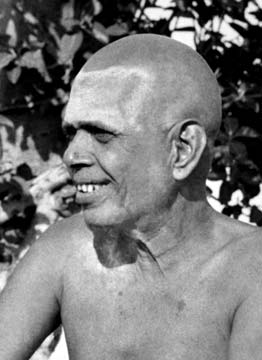
Sri Ramana, the great sage of Arunachala, has simultaneously endorsed both perspectives and said that the Truth of the Self is indeed simple and within everyone’s grasp. We simply mix the underlying feeling of “I AM” which is there in all of us (and always the same from childhood to old age) with the circumstances of our life, and the ever changing currents and patterns of our mood and personality.

The self-feeling of existence, the “I AM” which animates our life and consciousness and gives light to identity becomes invisible and goes in the background as we become captivated with our perceptions and invest in our daily relationships. That is only according to nature, and one is meant to engage in these things.

All relationships inevitably end. Even when we love someone dearly and they love us, eventually we are separated through circumstances, old age, or illness. If someone is married for 50 years, there is no guarantee that they will make it another year or another 10 years. In due time, one person will pass away due to old age or illness or another cause.

Coming together and separating are the nature of life. Underlying all these events and relationships is the silent presence of “I AM”. If we are paying attention we can feel it. In our quiet moments it comes upon us and we can stay with it. The truth is so simple and ordinary and that is why we take it for granted. If we remain with this self-feeling of existence, the stainless “I AM” free from the contents of the mind, we can come to see the value and beauty of it. It is only pure being. Our own being.

The Role of Spiritual Effort

The spiritual effort needed in terms of meditation and inquiry, to make the mind subtle and to refine the intellect so that this simplicity of being can be grasped with immediacy and certainty, should not be dismissed.

If some people do not need such efforts and can recognize the truth of their being immediately by hearing someone restate or paraphrase what the ancient sages have said, that is wonderful indeed. It shows that their mind already had requisite subtlety, depth, and maturity.

The Sense of Being I AM: The Open Secret

If there is a deep sense of quiet within, it can be like a mirror and we can see the image of “I AM” reflected in the mind. I am reminded of that passage where God said to Moses, “I AM That I AM”. I am not a scholar or religious expert but sometimes it seems to me that this is a symbolic message telling us to pay attention to the “I AM” within because it is God sitting in our own being and Heart saying, “Here I AM, I AM, Come to Me”.

It is said that man (woman) was made in the image of God. If the nature or identity of God can be described best as “I AM THAT I AM” it stands to reason that the nature of Man (Woman) is also similar. Our essential nature can be captured by this feeling we all have; the simple feeling of being-existing, free from conflicts, “I AM”. According to Advaita, this “I AM” within us is the link to God. Prayer, meditation, contemplation all make us reflect on this sense of being within us.

The Sahaj State

The state of the Self is natural. Easy and natural because the Self remains as It Self. It is devoid of sorrow and has nothing to attain being whole and complete and what the Advaita scriptures refer to as One without a second. Sages called this Realization the Sahaj state.

Sahaj in Sanskrit means easy and natural. That which requires no effort is Sahaj. To understand the Sahaj state of the Self, we can start and reflect on our body and see what is natural to it. What is easy and natural differs among people. Some people are able to sit in the lotus posture in an easy and natural way (see the picture of this young woman at www.harshasatsangh.com sitting in the lotus posture).

However, the lotus posture is not easy and natural for everyone. For most people, to sit like that would hurt their knees and ankles and is very uncomfortable. God did not say to Moses, “Here I Am, sitting in the Lotus Posture.” God only said, “I AM THAT I AM”. The feeling of “I AM” within us is independent of posture. Physical postures pertain only to the body and not to the spirit.

What is Natural Differs Among People

In life and on the spiritual path we have to see what is easy and natural for us. For some, walking is easy and natural and such people practice their prayers, mantras, and pranayama taking a morning stroll. Others are not satisfied unless they lift very heavy weights and scream “Oh God”, “Oh God”, and breathe rapidly and heavily. This is their form of being natural. For such people becoming very muscular becomes natural. If you were to tell weight lifters to take it easy and just take a nice walk every morning, they would not agree to it. They like to have big muscles and low body fat. That is natural for them but not for everyone.

In Bhagavad Gita, Sri Krishna tells Arjuna that actions and paths of people differ according to their natural inclinations and therefore one should follow one’s own Dharma not someone else’s. In other words, we need not seek or follow someone’s path because it may not be natural for us. We should be natural, authentic, and true to our self. Without it, there would be inner conflict which is not conducive to being quiet and meditative.

 What Path Should One Follow?
Gradual or Direct or Just Stay Home

In this essay, I have suggested that the philosophies and perspectives of the gradual or the direct path are not inherently meaningful. Their truth lies only in being teaching tools. Words and concepts such as the “direct path” and the “gradual path” are meant to point at the truth but they are not themselves the truth. The Truth must reveal itself to us in our own Heart.

Therefore, one should not be rigid about which notion is correct or more important or higher than the other. Asking whether the direct path is better than the gradual, one misses the point. The real question is, “What feels natural to you and makes sense?”

Being rigid in one’s view, one misses the obvious. Both the notion of “direct” and “gradual” depend on each other for meaning and have no basis in the Reality of the Self.

According to Advaita Vedanta, the Self Always Is. It cannot be seen by “another” directly. Neither is it approached by “another” gradually. Self Reveals It Self Alone to ItSelf. To understand it in plain English, you can say to yourself, “I am always going to Me. And Here I Am.” Just stay with that.

You Are the Self.

Harsha's avatar

Sri Ramana and My Teacher Gurudev Sri Chitrabhanu-Ji: By Dr. Harsh K. Luthar

All of us come from different backgrounds, and we walk the path in our own unique way. Yet, we all have the same innermost longing to know the deepest mystery of our own nature and being. Reflecting on the purest teachings of the Self and on the nature of Ahimsa as nonmovement of the mind, we are bound to have experiences and openings in our consciousness.

When my teacher, Gurudev Sri Chitrabhanu-ji visited Sri Ramana, he was just a teenager. Chitrabhanu-Ji became a Jain monk in 1942 at the age of 20. Prior to that, he was searching and visiting different saints in the various traditions of India and asking them questions about the spiritual path and how to become Self-Realized.

Gurudev Sri Chitrabhanu

Chitrabhanu-Ji told me that of all the saints and sages he visited in India in his teen years, a few were unforgettable and stood out to him. Sri Ramana was one of them.

When I was 22 and studying with Chitrabhanu-Ji, he saw me carrying books of different spiritual teachers for my reading pleasure. He asked to see these books and thumbed through them. He knew most of the authors personally. Swami Rama of Himalayan Institute had come to our meditation center. One time I saw Swami Chidananda, the disciple of Swami Sivananda of Rishikesh, when he came to visit my teacher. Swami Chidananda was very thin even then and was leading a very pure and ascetic life.

After looking through my books, Chitrabhanu-Ji told me that I should read the dialogues with Ramana Maharshi and study his teaching. That is how I was led to Sri Ramana. Of course, after I read the classic, “Talks with Sri Ramana Maharshi”, it was indeed like magic and I knew deep in my heart that this was my way.

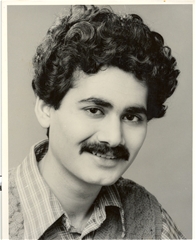
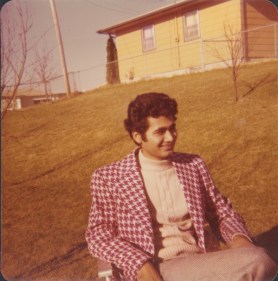
The Author at 21-22 studying With Sri Chitrabhanu-Ji

Going back to Chitrabhanu-Ji, he wanted to know the meaning of life at a very young age. He had lost his mother, his sister, and then his girl friend and so the world did not seem so attractive to him even at a young age. He wanted to know the mystery of life and death and what is beyond. In that quest, he started visiting many saints and sadhus and also visited Sri Ramana.

Continue reading

Harsha's avatar

What Is Meditation? By Dr. Harsh K. Luthar

The Art Of Doing Nothing

IMG_0141


My Dear Friends,

You have heard many things about meditation and perhaps there are questions in your mind about it. Today, there is no shortage of information on any topic having to do with meditation and yoga. There are literally thousands of books on meditation and yoga and self-help techniques. If you go on the Internet and put in a few key words, you will come across many views on meditation.

Some people equate repeating a mantra with meditation. Others say that if you focus on the in-going and out-going breath, that is meditation. There are people who believe that you must be able to sit cross-legged in the lotus position with a straight spine in order to meditate effectively.

Having meditated since early childhood, I can assure you that this is not true. Inviting aches and pains by sitting in a lotus position will not lead to a peaceful mind. Meditation, after all, is about relaxation and peace. Having peace, or recognizing the peace within, is meditation. What takes us away from being peaceful cannot be meditation. Whatever brings us peace is meditation.

Avoidance Of Stillness

It is my experience that people like to keep busy. In today’s world, being busy is considered a very high virtue. We want to keep busy and be productive in some way. Otherwise, we feel we are wasting time and feel guilty. Certainly, being active is a good thing and allows us to make a living and maintain relationships in the world.

Even Sri Krishna says to Arjuna in the Bhagavad Gita that one cannot avoid action. One is compelled to act according to one’s nature under the force of circumstances. That is the universal law of Karma.

But we have to understand the nature of action and our relationship to it. This is why Sri Krishna advises Arjuna to act according to his duty and dharma but without any expectation for any fruits of action. Our expectations undermine our peace when they do not come to fruition. Right conduct, according to one’s best understanding and judgement, brings peace. Therefore, it brings us to meditation.

Mental Experiments

Ancient Yogic and Advaitic sages gave methods and taught us to conduct mental experiments to find the nature of truth. These mental experiments can indirectly help us recognize the Pure Being within our center as our own Heart.

The techniques of meditation, such as mantra, chanting, yoga, pranayama, breath-awareness, etc., are simply mental and physical experiments. These practices start us on a journey with the potential for personal and spiritual growth.

However, real meditation is beyond visionary experiences and is the discovery of peace within. To reach there, we have to be quiet and learn the art of stillness. Once we know how to be still while doing nothing, we can carry this stillness into our actions as well. But first, we must discover the nature of this inner peace; and to do that we have to learn the art of doing nothing.

Are You Able To Do Nothing?

Are you able to do nothing? Absolutely nothing! The art of meditation is learned by seeing the value of doing nothing. If you can sit very still and quiet without mental disturbance, you have already come a long way towards the experience of meditation.

It is only a rare person that enjoys doing nothing. Doing nothing is not as easy as it may sound. Try it sometimes. Just sit on the sofa. Don’t go to sleep. Stay awake and think about nothing in particular.

You will soon find your mind racing here and there, thinking about your girl friend, your boy friend, your boss, your co-workers, your business, your friends, your family, tofu, pizza, chocolate… the sky is the limit!

The Mind Is A Monkey And A Donkey!

Yogic sages have compared the human mind to a monkey. Just like the monkey cannot be quiet and must be restlessly hopping here and there, so it is with the mind. It is the nature of the mind to be either brooding about the past (regrets, mistakes, guilt, lost opportunities, the roads not taken) or fantasizing about what the future will bring.

The burden of carrying the past and the future in this present moment is heavy. But the mind, like a donkey, gets used to carrying this load and plods along.

However, the mind that is always lost in memories (past) or hopes (the future) misses the most delicious feast of all that is taking place in the present.

The eternal reality, we can call it Self, Sat-Chit-Anand, God, the Supreme Being, the Supreme Goddess, Paramatman, Brahman, the Great Void, or the Kingdom of Heaven, always exists and is shining in the present right before our very eyes.

The Divine mystery is recognized when the mind is calm and awake and free from anger, hatred, and greed and thus not subjected to the pulls of the past and the future. This is why all major religions encourage human beings to be good and kind and compassionate. These virtues serve as the building blocks for the spiritual life because they remove the agitation of the mind.

Why Meditation Techniques Do Not Always Work

IMG_8889


Meditation techniques are fully effective only in a mind that already has some understanding and maturity. So really, laying the foundation or the groundwork for meditation is more important than the practice of meditation. Just like a seed grows naturally on fertile ground, meditation happens spontaneously in a reflective and a quiet mind.

When the mind is ready and ripe, meditation works and self-inquiry is fruitful in a short time.

When the mind is restless, anxious, and troubled, meditation becomes a forced activity and is not always helpful. At such times, one should take a walk, practice deep breathing, or go for running or do push-ups and other exercises. Those are more useful than meditation when the mind is not ready to be calm.

Pranayama, involving deep rhythmic breathing, is an ancient yogic method that can serve to calm and sedate the mind in a natural way. According to Hatha Yoga Pradipika and other classic yogic texts, one first has to master proper breathing in order to progress to meditation. This is the commonly held belief in the school of Hatha Yoga. However, the path of Jnana Yoga does not emphasize breathing exercises or Hatha Yoga Mudras and Kriyas and considers these to be irrelevant to Self-Knowledge.

Advanced Pranayama practices involving breath retention or awakening of Kundalini Shakti can be found in many yogic texts and modern books. However, these should be learned very cautiously from an experienced practitioner of pranayama.

Laying The Foundation For Meditation

In order to advance in meditation and learn it in depth, we have to understand the nature of the mind and learn to be alert and watchful of its activities. It is this constant watching, that is the key method behind all the techniques of meditation. A form of this is what Buddhist calls, “Mindfulness”. Jains call it Upa Yoga (Yoga of Awareness), Hindus refer to it as the “Inquiry into the Self” or Self-Remembrance.

A spiritual seeker is watchful.

The essence of this watchfulness is that with the mind one watches the mind.

If meditation is going to take place, if this recognition of Pure Being with clarity is to be gained, an inner silence must ensue. One cannot see one’s image clearly in the water, when the water is full of waves. In a still pool, our image is reflected and can easily be recognized. Similarly, in a still mind, we can see the nature of our being.

This inner watchfulness, the observer being aware of the observer, this self-inquiry can occur in a ripe mind that is calm, content, and ready.

We Are Dancing For Others!

The difficulty is that our minds are noisy. This is the nature of the mind that goes outward only. It is overcome by sensory experiences and is unable to see its origin. The worldly chatter overshadows and muffles the subtle divine music that is playing.

Friends, sometimes I think, we are dancing to the drum of other people’s expectations, which we have internalized.

There is no end to this dance. This dance has a stronger hold on us than rock and roll or disco or rap music. It keeps us hopping all our life doing this and doing that or achieving this and achieving that. Ultimately, it is exhausting.

Whole world guru


The whole life slips away in the blink of an eye as we keep busy in “doing” this dance making sure that the movement of our steps have the approval of others. We forget to “Be” who we are.

To Be Still is the true meditation. Meditation is simply Pure Being.

The art of recognizing yourself as Pure Being is meditation. Pure Being is Self-Awareness or Awareness.

A Powerful Intervention: Conduct This Experiment

The state of meditation is simple. The methods and techniques and the philosophy behind it are very complicated. That is why thousands of books are written on such things. But the aim of meditation is simply peace. Peaceful Awareness. Meditation is easy to understand. It is being peaceful without expectations.

Conduct the following experiment with being peaceful without expectations. Tell yourself this: “For the next one minute, I am not going to worry about anything and be bothered.”

Try to be free of all inner and outer conflicts for one minute. Give yourself this one minute as a holiday gift!

This is a powerful intervention. Can you be free from inner conflict for one minute? See what hinders your attitude to be worry free for one minute. If you can be peaceful and free from anxiety for one minute then you can do it for two minutes and then more.

To Be With Yourself

So dear friends, find some time to simply “Be” with yourself. To just “Be” is an amazing experience of the present moment. See what thoughts come to your mind. When you sit quietly, many visual images and thought patterns start emerging from the subconscious. This is referred to as “Surfacing” and it happens when your relax and your mind is at ease and free of tension.

If you remain awake and pay attention, you can gain insight into your own mind. These insights will teach you to not attach yourself to things that do not bring you peace. You will come to see that your nature is that of Pure Being which is associated with the many thoughts in your mind and yet is independent of these.

Sri Ramana Maharshi, the great Indian Sage of Arunachala, gave forth this method of reflective Self-Inquiry, that focuses on the question, “Who Am I?”

This investigation, when done with understanding and sincerity, brings us to the state of Being that is free from thoughts. This inquiry is really at the heart of the philosophy of Advaita Vedanta.

Always Be Gentle With Yourself

If you are not able to sit quietly right away and be completely still for even one minute, do not worry about it at all. The reason it is difficult for us to sit quietly and do nothing is because often there are wounds inside which we would rather not become aware of or deal with.

The process of living life can be very very painful and stressful. Over the years, we put temporary bandages on our hurtful experiences, which for a short time dull the pain.

My teacher Chitrabhanu-Ji taught me that when we try to relax and meditate, our anxieties and fears and past suffering sometimes bubble up from the unconscious. So we have to be alert and to accept and let these things go so we can renew ourselves and be fresh.

The ancient Yogic Sages of thousands of years ago left us with great works on the nature of human suffering and how to alleviate it. Sometimes when I read the Bhagavad Gita or Patanjali’s yoga sutras, Tao Te Ching, Buddha’s path or Mahavir’s philosophy of reverence for life and Ahimsa, I marvel at the depth of the insights contained in these.

The great Yogis of the past 5000 years have been really great psychologists who knew the nature of the human condition. They deeply understood what happens when spiritual seekers try to get insights into their mind and provided a path and guidance on how to walk it with the help of teachers and fellow students.

The Notion Of The Sangha

In India, some people meditate in Ashrams or in communities. The notion of a Sangha (community of spiritual seekers) is important. In such a community, meditation is easier, because people are able to encourage each other and share each other’s pain and burdens. When our mental or physical suffering is intense, we are not able to meditate. People turn to alcohol or drugs to numb themselves so that they do not feel their own suffering. This, however, cannot lead to any permanent solution and satisfaction. Indeed, it can weaken the body and the mind and makes matters worse.

Being part of a vibrant spiritual community, or to just be in the company of good people who care about one another, can exercise a protective influence on you.

As a general rule, in order to advance in meditation, you should keep the company of good people who allow you to be who you are.

I studied with Chitrabhanu-Ji who is one of the key figures in 20th and 21st century Jainism. Chitrabhanu-Ji, before he became a Jain monk, was part of Mahatma Gandhi’s movement to free India from the British through the peaceful means of Ahimsa (Nonviolence).

Ahimsa is the cardinal principle in Jainism. Chitrabhanu-Ji taught me that a mind becomes fully fit for meditation and Self-Realization through the practice of reverence for all life and amity towards all beings.

A genuine spiritual community has to be completely dedicated to the principle of Ahimsa in thought and action and be committed to alleviating suffering among all living beings. A teacher or a guru who does not understand or practice the principle of Ahimsa and is abusive to his or her students should be avoided. Such people are on power trips only and have their own problems to deal with.


Having A Personal Philosophy

20150724_174004

It is good to become aware of and think about fundamental life issues at any age, but particularly so if you are young. It allows one to develop a personal philosophy that helps to structure and interpret different experiences and put things into their proper perspective.

It is important to sit quietly and spend time with yourself in order to have an understanding of your own nature. Whatever philosophy one adopts, the following general rules are helpful in remaining calm and healthy.

Ten Tips From Yogic Texts And Sages

1. Eat nutritious foods that suit your constitution in moderate quantities (My New Year’s Resolution!)

2. Walk every day if possible (My Second New Year’s Resolution!).

3. Avoid people who are manipulative, loud, obnoxious, and destructive if at all possible.

4. Keep company of people who are pleasant, easy going, cheerful, and supportive.

5. Remain silent when you have the urge to be sarcastic or make fun of someone.

6. Help people who are in need within your capacity.

7. Take the time to be alone everyday and be with yourself.

8. Never give into peer pressure to drink or do drugs or go to wild parties (Tame and sober get together with good friends and Satsang with fun singing and chanting is OK!).

9. Develop confidence in your own ability to do what you need to do.

10. Engage in introspection at the end of the day. Mentally wishing everyone well, always go to bed with a clean slate.

20151016_141056


Even A Little Effort Helps!

Friends, even a little right effort is never wasted. Every journey must start with the first step. The journey that takes you inside your own Self is the most wondrous journey you can ever take as it reveals the mystery of existence itself. Start from this very moment and enjoy the wonders of your own nature and the sparkling reality that has been smiling and shining on you for the whole of eternity.

Chin Mudra - Jnana Mudra

Harsha's avatar

Self, Shakti, Heart, and Enlightenment in Advaita: By Dr. Harsh K. Luthar

Often on the spiritual path, the topics of best postures, best techniques of meditation, best behaviors conducive to spiritual growth, best gurus, etc., come up. All of these questions are appropriate to their time and circumstances.  Such questions were frequently put to Bhagavan Ramana.

Underlying all such questions is the fundamental theme or inquiry as to what constitutes superior spiritual practice that will lead to improvement in one’s mental and physical conditions and finally to Self-Realization or Enlightenment. From this perspective, Self-Realization is viewed as an attainment. It is something that is achieved by an individual by making the right effort. This approach in its methodology is not too different than that of a talented world class athlete, who after having trained rigorously, wins a gold medal at the Olympics.

This point of view emphasizes the need to focus the mind in order for it to expand and evolve to higher levels. Spiritual practices based on this foundation, involve meditating in a particular posture, concentrating on chakras, raising the kundalini shakti, practicing mantras, deep breathing, and doing pranayama exercises.

The Yoga paths explicitly incorporate the idea of controlling and developing the mind to gain entry into Samadhi and Super-conscious states. Most religions have this philosophy at their core; that without hard work one does not succeed either in life or in knowing God.

The General Spiritual Path Model

Buddha is supposed to have said to his disciples as he was dying, “Work out your salvation with diligence.” He meant that you have to personally work it out and attain Nirvana by right conduct, right practice, right meditation, etc.

The same principle is present in Jainism and most of the schools of thought in Hinduism. In Jainism, one attains to Moksha through one’s own individual efforts. In Hinduism, one achieves Moksha by God’s Grace. However, in most schools of Hinduism, one only benefits fully from God’s Grace, when one has made the right effort on the spiritual path by following one’s Dharma and by meditating on the nature of the Self.

Although it is a complex topic, the general spiritual model that we have before us is this: There is a spiritual path, there is the goal of Enlightenment or Self-Realization, and you have to expend much effort, and walk on the path for a long time in order to reach the destination. While you are walking, you may even have to go through the “dark night of the soul” a few times, because there are so many temptations along the way and things can sometimes appear hopeless and quite depressing.

So not only is there the possibility of tripping and falling due to worldly obstacles, but one also may give up on the whole idea of Liberation, Salvation, Enlightenment, Nirvana, Moksha, and/or getting to Heaven. Indeed many on the spiritual path do end up concluding that there is no meaning in life or the spiritual aspiration at all and kick themselves for missing out on the pleasures of their youth by having rejected the philosophy of “Eat, Drink, and be Merry” prematurely.

However, experienced sages know that what practices or behaviors will be helpful to the seeker on the spiritual path seems to depend on one’s conditioning, physiology, culture, background, etc. Although there is a general framework on how to pursue one’s aspiration for Enlightenment or Self-Realization, the truth is that one has to make the path as one walks on it because each individual is unique. Therefore, the view of “Eat, Drink, and be Merry”, within reason and in moderation, may be fully compatible with the spiritual life. It is the overall context that has to be understood.

The Self-Knowledge of a Sage

For the one abiding spontaneously and inherently in the Self-Truth of Reality, questions of methods, techniques, and practices, and the path become moot. When clarity of Self arises, any technique may be practiced and any path may be walked or one may give up all techniques and paths. For such a person, the Self-Attention itself absorbs attention regardless of where it is focused outwardly. The essential element in this understanding is the Recognition by Awareness of its Innate Wakefulness. Awareness is always self-aware by its very nature.

When awareness remains pure and spontaneously self-focused (perpetually in communion with itself), the subtle duality between awareness/attention (as Pure I AM) and its Source is seen to be illusory.

Then even the witness disappears, there being nothing to witness. The “I AM” disappears having nothing to point to. Spontaneously with the I AM Awareness/Shakti merging in its Source, the Self is Recognized. The Self Recognizes It Self by It Self and Through It Self as its own Source. It Sees and Recognizes that It has Always Been the Source. That It Is the Eternal Source, the causeless cause.

This is the Supreme Beauty of the Heart. It absorbs the Shakti, and along with it the Mind, thus swallowing time and space.

How can one speak of this Silence? The Silence that transcends all understanding and knowledge can only be indicated indirectly.

Great sages like Sri Ramana Maharshi never tire of pointing out that, —That Which is Real and Absolute Always Exists and is not absent even now—. How can Reality, whether one calls it God, Consciousness, Absolute, Nirvana, Moksha, Kingdom of Heaven, or by some other name be present at one time and absent at another? Perfection, by its nature, cannot be more perfect sometimes but not others. The approach and method of Advaita is based on this implicit axiom.

The Method of Advaita

The ever-present and eternal existence of our fundamental reality, whatever label we give it (Self-Nature, Buddha-Nature, Original Face, God, Goddess, God Consciousness, Pure Consciousness, Supreme Consciousness) must be here and now in this very moment. Otherwise, it is not Perfect!

This is the fundamental insight and conviction of the path of Advaita and the Advaitic sages. Therefore, we have to grasp the present by simply being present to it. This is the method of Advaita.

How is this done? In this way:

This present ordinary awareness, that you experience, you should notice it and then hold on to it. It is subtle and yet so ordinary. That is why we miss it. No matter how ordinary a baby looks to others, to the mother it is special. She adores her baby and to her it is the most lovely and wonderful child in the world. That is the attitude one must have towards one’s ordinary present awareness.

Like a mother holds on firmly to her child in all conditions, one should keep this ordinary self-awareness in the center of one’s consciousness knowing it to be special. The Supreme Reality It Self is hidden in it. It cannot be anywhere outside of it. If the Supreme Reality is somewhere outside of our ordinary consciousness, it is not perfect. Therefore, we can confidently look for perfection in our ordinariness, our ordinary consciousness.

Finding God in the Heart

There is a Christian saying that “Man is made in the image of God”. There is deep meaning in that. In the Bhagavad Gita, Sri Krishna says to Arjuna, “I am in the Heart of all.” We find such expressions in many of the religions of the world and in major works of different spiritual traditions.

On the path of Advaita, through our present ordinary awareness, we become, or more accurately, recognize our True and Ever-Present Image in the Heart. Advaita goes one step further and states that indeed the illusion of separation between the Individual soul and God lasts only as long as God is not recognized as the Center of our Being, sitting in the Heart as the Heart.

This is the Heart, that the ancients called Sat-Chit-Ananda. Existence, Consciousness, Bliss. The Supreme Self. It is beyond thoughts and concepts. Time and Space do not touch it.

As Sri Ramana has said, — that which is real is ever present—. We have to see what is present right now in this very moment. If we become quiet, we are able to feel our ordinary awareness, the sense of “I Am” as being present in this moment. That is the seed. If we water it and give it food, it grows and the Reality reveals it Self from within.

Editor’s Note:  The Feature Picture depicts photo art of brother Eden Kailash on his fb page.

Harsha's avatar

Sri Ramana Maharshi: By Dr. Harsh K. Luthar

By Dr. Harsh K. Luthar

On occasion, I am asked to give more information about Ramana Maharshi and the various dialogues and talks people had with him as well as other information about the sage. It can be found by going to the link below. It is the official page of Sri Ramanasramam in India. It is a treasure house of free books and newsletters and stories and dialogues with the sage.

http://www.ramana-maharshi.org/

Harsha's avatar

Self-Inquiry or Atma Vichara: By Dr. Harsh K. Luthar

Self-Inquiry, also known as Atma Vichara in Sanskrit, is based on a philosophy that has its origins in the ancient teachings of Advaita Vedanta. Advaita is based on the Upanishads, the Bhagavad Gita, and is found in a number of other scriptures that are considered sacred by the Hindus. Advaita means nonduality, the ultimate Oneness that pervades or underlies everything.

Essentially Advaita implies that even though there is a diversity of phenomena, it has its origins in God and that ultimately everything not only exists in God but also resolves itself into God. According to Advaitic sages, the nature of God is Sat-Chit-Ananda. Sat means Existence. It is the nature of God to Exist. Chit means Knowledge. It is the nature of God to Know. Ananda means spontaneous Joy. The nature of God is Bliss or Joy. Continue reading

Harsha's avatar

Picture of Bhagavan: By Alan Larus

1

A strange visit
on Holy Saturday.

Talking about this and that.
( I never imagined
I would lift you into your chair )

In this world
of coming and going,
arriving
after I had gone,
Below the mountain,
on the long way home.

And here I am
in this backwards play
knowing I did nothing
( for it )
to be so.

When I was 17 years old I went to my teacher for the first time. I had been reading several books and discussed yoga with two friends of mine.

She asked me what I wanted to learn, and I said Pranayama. She asked why and I referred to something from a book.

So she gave me a long lesson on discipline and hard work, telling me she was quite sure I did not have what it would take. I felt very uncomfortable and just wanted her to finish so I could leave.

Then I saw a picture on the table behind her. I did not know who was smiling so alive inside the silver frame, but I knew I had walked through the right door.

2

Alan Larus “I live in Norway and work with database programming. When I have the time I walk in the mountains, forests and along the sea. I also listen to music and read and write a little poetry and take pictures.”

Harsha's avatar

Shakti and Self, Yoga and Jnana, The Open Secret: By Dr. Harsh K. Luthar

falls

Those who are advanced on the path of yoga and have broken the three granthis along the sushumna through intense meditation, often have a good understanding of the nature of Kundalini Shakti and its movements.

Continue reading

Harsha's avatar

Find A Photo Of Any Great Saint And Be The Light In His Eyes: By Joyce Short

1

I have been wondering about how the emulation of Ramana Maharshi can in any way be practical. Anyone who wishes to respond to this question is invited to give hard evidence direct from their own life. I’m talking about jobs, family, fights with the spouse. I’m not talking about a review of what Ramana Maharshi said.”

Continue reading

Harsha's avatar

Stories of Sri Ramana Maharshi

This page contains selected links to stories or articles about Sri Ramana Maharshi. Some appear in prior issues of Harshasatsangh Magazine and others are reprinted
with permission of Ramanaashram.

Continue reading