
Tag Archives: Nonduality
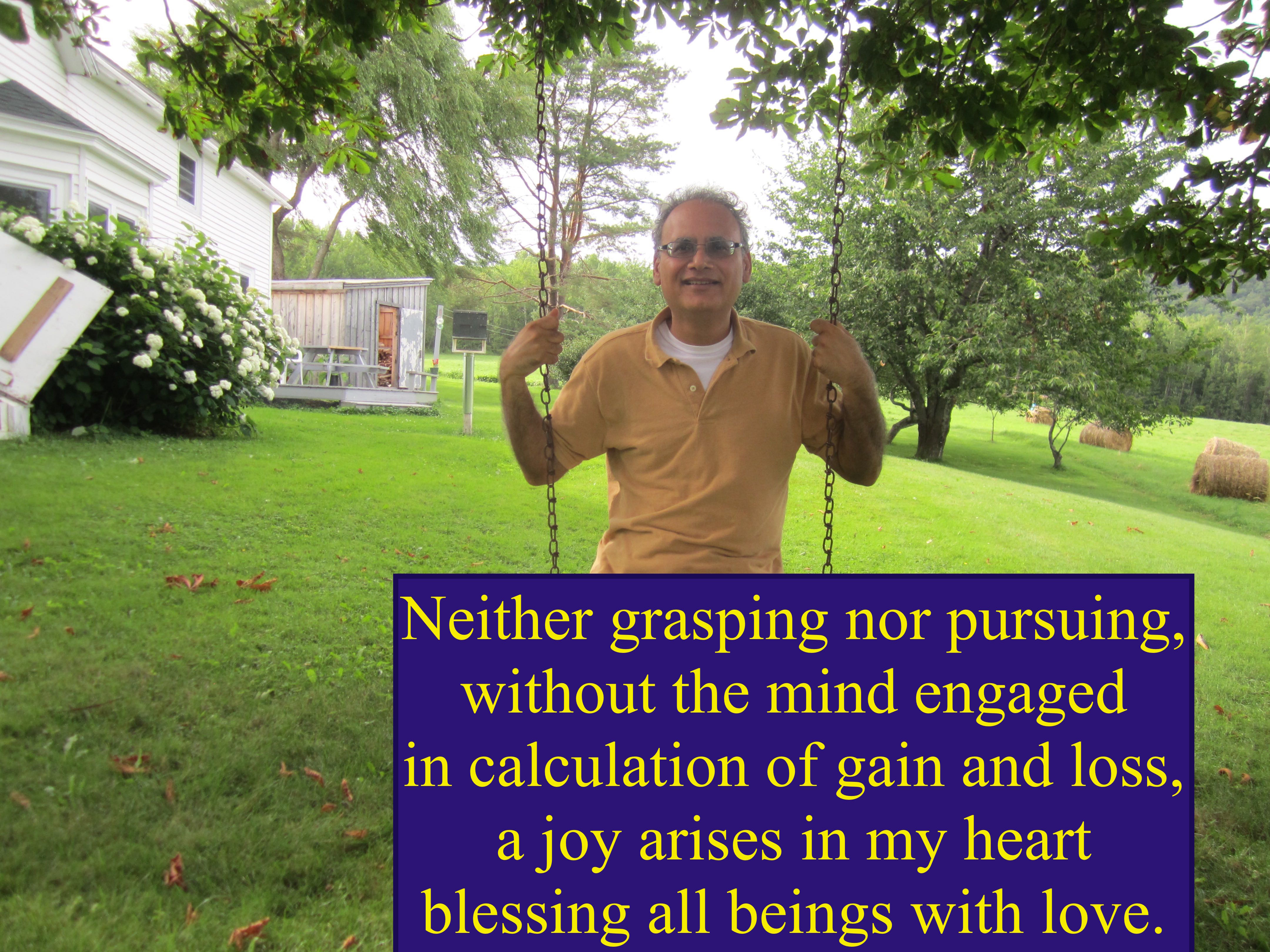
All Life Is Sacred
Ahimsa (Nonviolence) is listed as the highest principle among all others in the ancient Patanjali’s Yoga Sutras of Maharishi Patanajali.
Indeed, it is the universal declaration of sages in all spiritual traditions that one should not harm other living beings as the same life energy permeates everyone.
All beings love life, want to be happy, and thrive. According to the law of karma, what one gives to others, one gets as well. Therefore, the secret to happiness is simply to support others in finding their joy.
Namaste.
You Have No Caste!
You have no caste. No duties bind you.
Formless and free,
Beyond the reach of the senses,
The witness of all things.
So be happy! ~ Ashtavakra Gita (1:5)
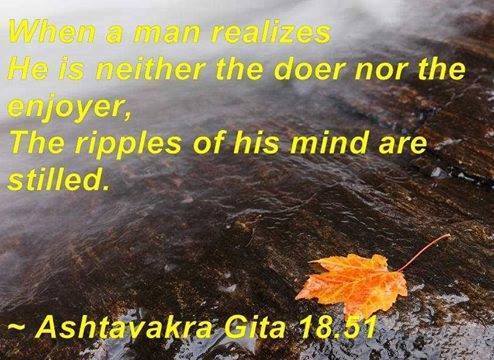
Ashtavakra Gita is a classic ancient Advaita scripture that is uttered by a great sage from a radical nondual perspective. This was one of Sri Ramana’s favorite scriptures and he used it as a teaching tool in some conversations. Photo art found on John Wassenberg fb page.
Enter the Heart
When you enter the Heart, you become the Heart. That is the true silence.
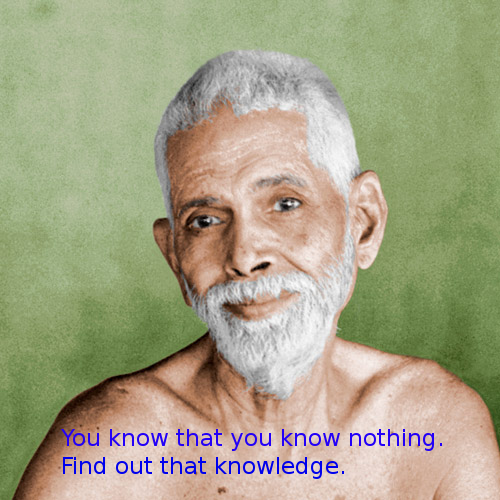
A man asked the Maharshi to say something to him. When asked what the man wanted to know, he said that he knew nothing and wanted to hear something from the Maharshi. Bhagavan then said to the man, “You know that you know nothing. Find out that knowledge.” (See Talk 12 in “Talks with Sri Ramana Maharshi).
Bhagavan used to say that the only direct knowledge we have is that “I Exist”. All other knowledge is via inference. Hence the Self-Inquiry, “Who Am I?” was advised by Bhagavan as the primary spiritual practice.
The Glow Of Contentment
I have left all my practices, and words of the wise
now sound like noises in the city at lunch time.
On entering the heart of awareness, I saw that
joy is simply the glow of contentment devoid of longing. ~ HKL

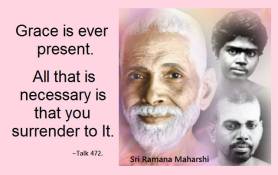
Sri Ramana Maharshi in the picture above.
Your Nature is Peace and Happiness ~ Sri Ramana

Sri Ramana says, “Your Nature is Peace and Happiness.” This quote as well as the quotes in the picture are from Sri Ramana speaking in Talk 462 in “Talks with Sri Ramana Maharshi”. Photo art is from John Wassenberg fb page. Bhagavan is saying that happiness and joy are our very nature and revealed when we turn our mind within and inquire as to the original source of the mind.
Tilopa’s “The Song of Mahamudra”
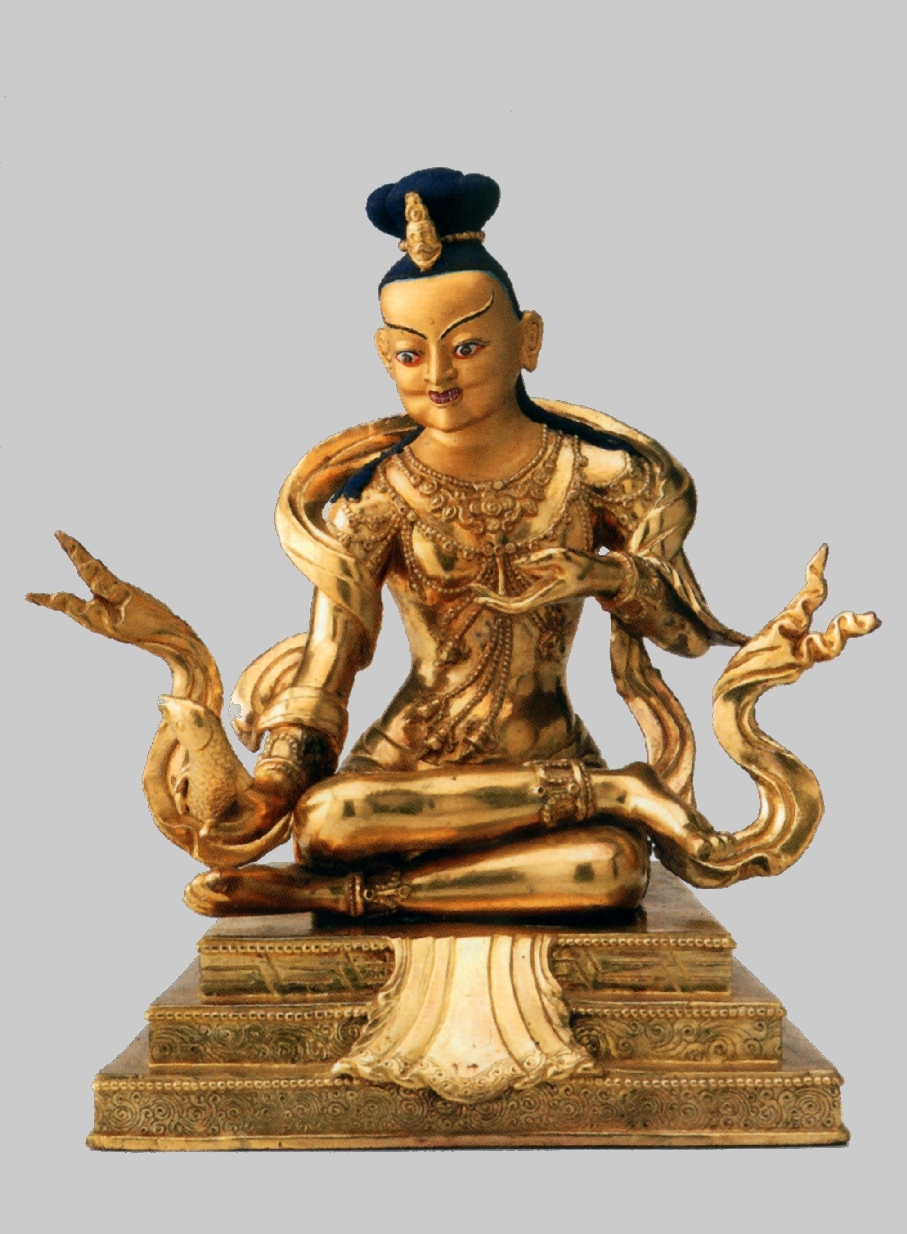
Cut the root of a tree
And the leaves will wither;
Cut the root of your mind
And Samsara falls.
Essential Teachings of Bhagavan Sri Ramana Maharshi

In the following extract from Gems from Bhagavan, we are reminded of the essence of Bhagavan Ramana’s teaching and inspired to realize the True Self.
View original post 714 more words
What is Saguna and Nirguna Brahman? By Dr. Harsh K. Luthar
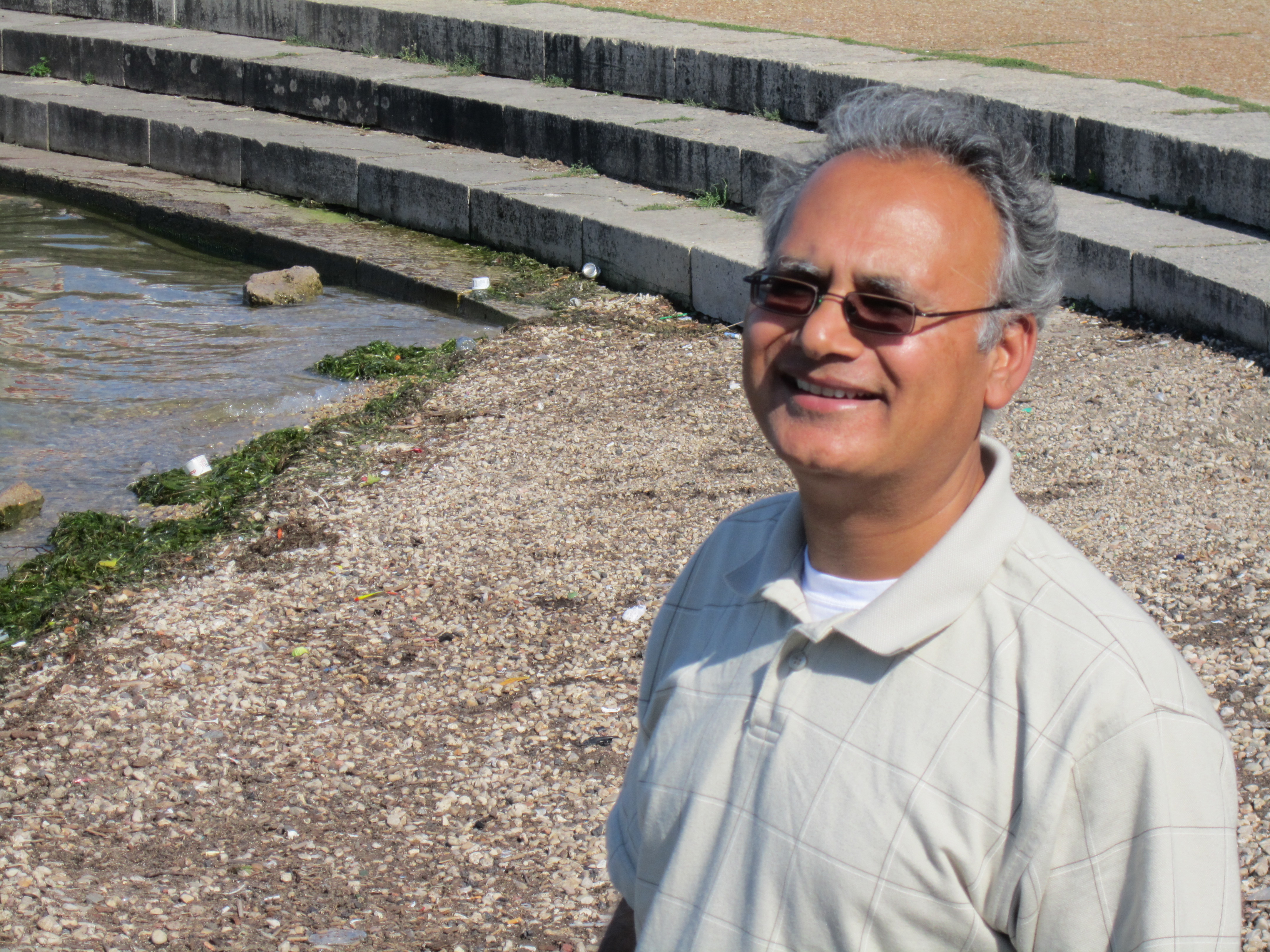
Questioner: What is meant in Hinduism by “Saguna Brahman” and how is that different from “Nirguna Brahman”
Answer: The term Saguna means “with attributes”. The term “Saguna Brahman” implies that God has a name and form and other attributes. Many Savikalpa Samadhis give rise to the (living) form of the Ishta Devata. Ishta Devta is one’s favored way of visualizing the divine. It might be Krishna, Jesus, Rama, the Goddess or some other Deity of choice.
Nirguna means “without attributes”. The term “Nirguna Brahman” implies that God as the Absolute Spirit and Pure Consciousness has no name and form or attributes. Nirvikalpa Samadhi reveals the Nirguna nature of the Self.
There are a number of books on Hinduism that discuss Saguna and Nirguna Brahman. Classic yoga texts like Patanjali’s yoga sutras explain various types of Samadhi states. All of such concepts and topics of discussion can also be found in…
View original post 162 more words
Thoughts Change But Not You ~ Sri Ramana Maharshi
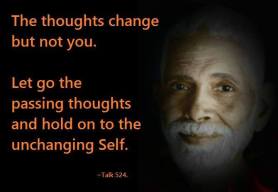
- Photo art from John Wassenberg’s fb page.

 Luthar.com
You must be logged in to post a comment.