Harsha's avatar

Arunachala – New Access to Ramana Sites Below Virupaksha Cave: By Richard Clarke

A group of local Tiruvannamalai people have organized themselves and are doing wonderful work to clean up, repair and open up an area on Arunachala that is near to the popular Sri Ramana Maharshi sites of Virupaksha Cave and Skandanasram.

They have organized as a part of “Global Watch Trust.” You can see more about this organization at http://www.globalwatchtrust.com. This site is not yet updated to include this project.

In this area, this project is cleaning trash, clearing brush, repairing and improving paths, planting, and building benches and meditation areas. It improves access to Guhai Namashivaya Shrine and an ancient Ganesh shrine, and provides a way to reach three hillside caves that are said by local villagers to have been frequented by Sri Ramana. The Trust has been given permission to do this work by The Forest Authority, Arunachaleshwar Temple and Sri Ramanasramam.

The Approach

To get to this area, start like you are going to Virupaksha Cave. Below shows where this ‘road’ meets the street, at the northeast corner of Arunachaleshwar Temple.

HPIM4973

Walk up the road until you see, to the left, this street. Notice the blue Global Watch Trust sign on the wall.

HPIM4976

Continue walking up the hill.

HPIM4977

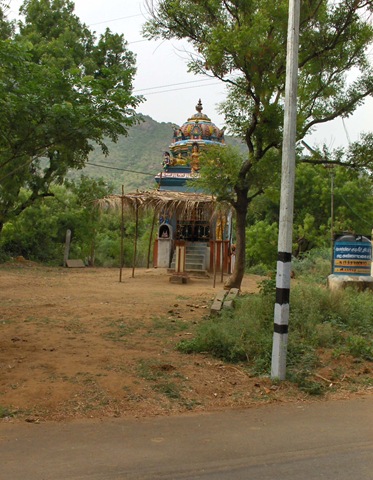
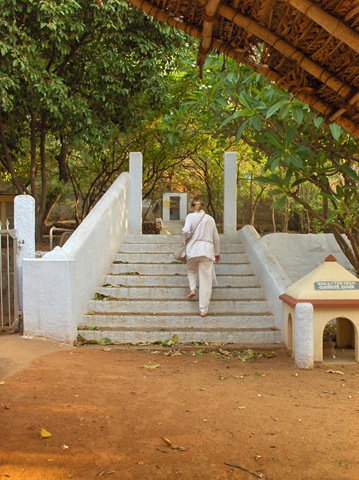
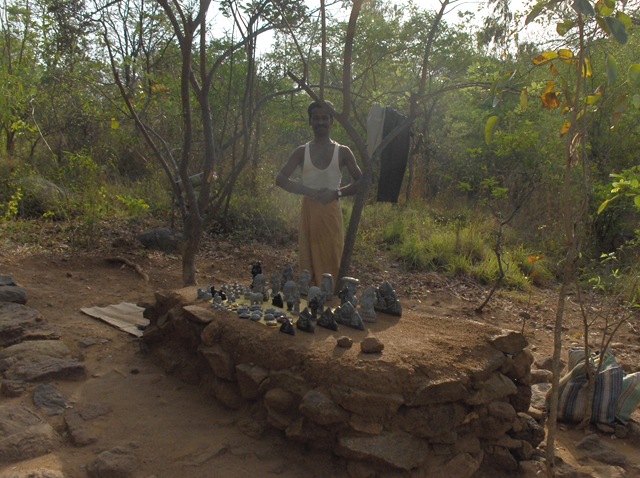
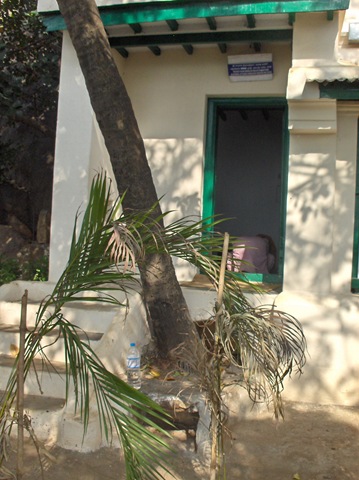
Here they have made a small shrine at the base of a tree.

HPIM4979

Entering the area of the Project

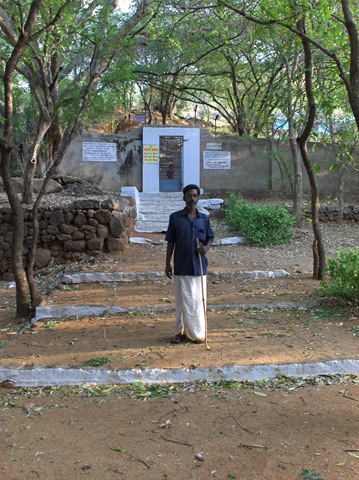
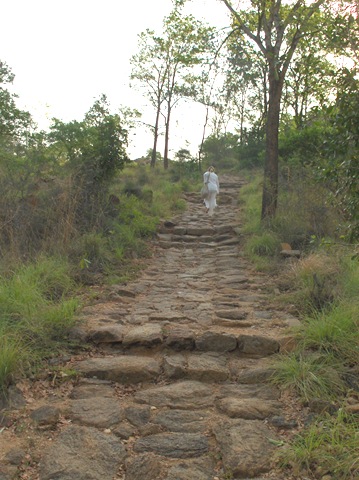
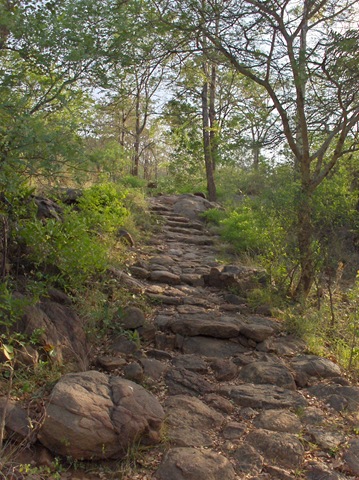
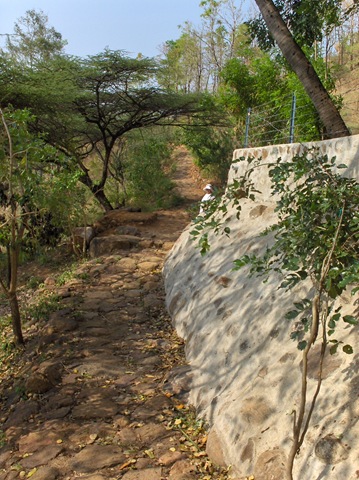
Part of the work done is to clean up trash and clear brush away from the paths. This path is marked with stone borders and shows the effects of trash and brush removal. Keep walking up this path.

HPIM4980

When you get the this banyan tree, this is the ‘hub’ for the improved paths that access the various caves and shrines on this part of the hill.

IF you look closely you will see a man reclining on a branch of the Banyan tree. This is one of the key people behind all the activity, a young man who grew up around this part of the hill, Saravan. I think this project is largely Saravan’s vision. Saravan guided us through this area and showed us the work that had been done.

HPIM4983

To Guhai Namashivaya Shrine

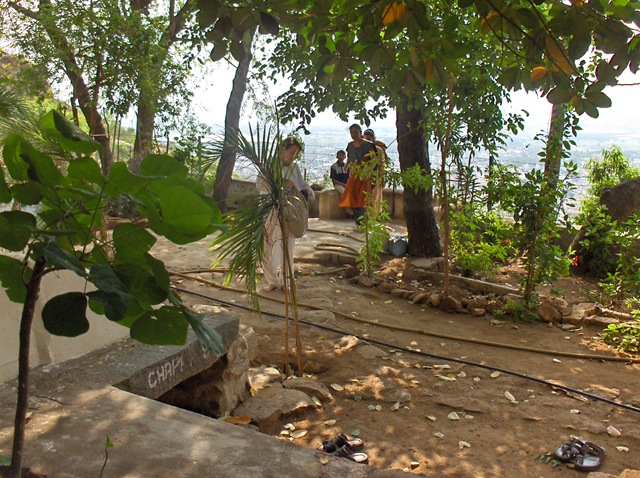
Turn left at the Banyan tree, and take this new path just a few meters to go to Guhai Namashivaya Shrine. I am told this shrine is about 500 years old.

HPIM4984

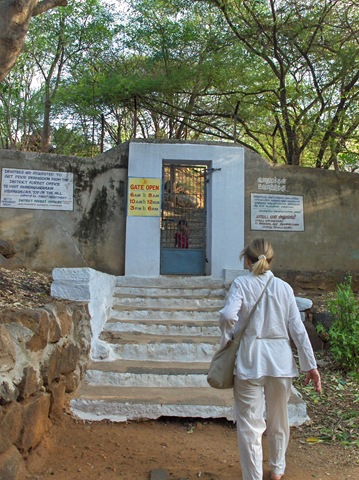
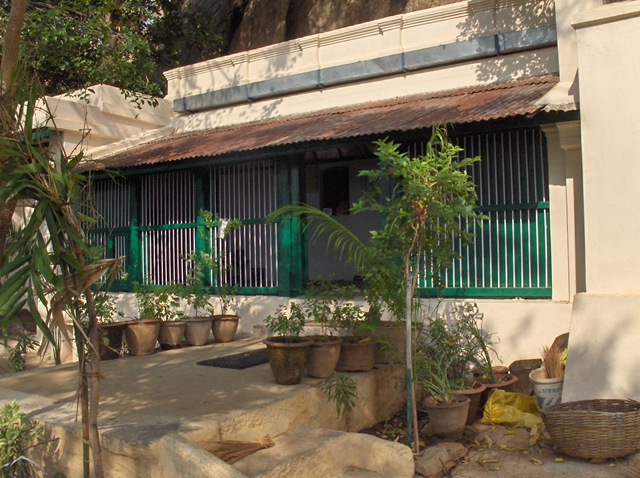
Here are Saravan and my wife, Carol, outside Guhai Namashiva Shrine. This shrine is an important locale in the history of Sri Ramana Maharshi. This is where he provided answers to questions on slips of paper that became the second of his small books, “Who am I?” This is probably the best known of Ramana’s works.

More information can be found about Guhai Namashivaya at http://www.arunachalasamudra.org/guhainamasivaya.html

HPIM4985

Up to the Caves

Returning to the Banyan tree, looking up the hill, to the right, outside this photo, is the stone path to Virupaksha cave. Directly up the hill is the path to the caves.

When finished, this area will have a nice stone path in the middle, surrounded by flowers and planting on both sides. There will be benches to sit and meditate and to enjoy this place.

HPIM4988

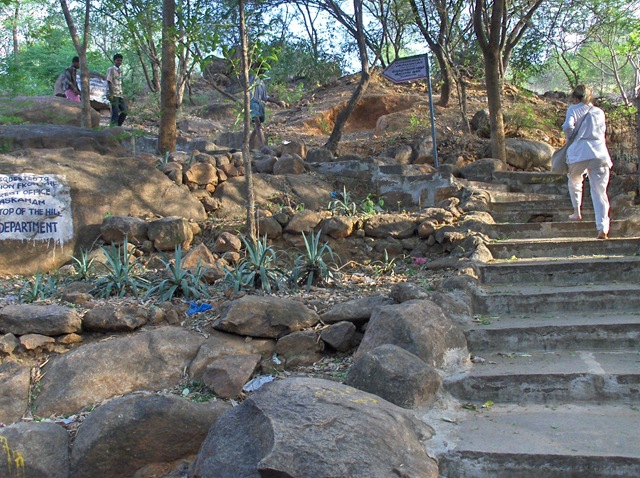
Take the path to caves and a part of the hill that is mainly unseen by visitors.

HPIM4989

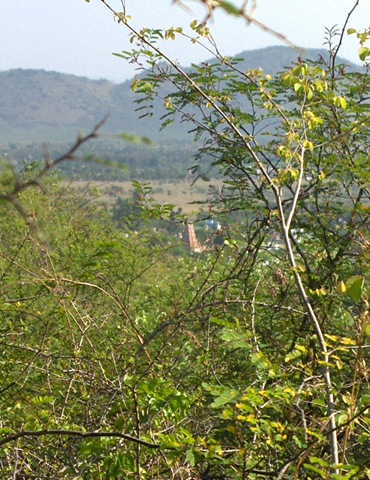
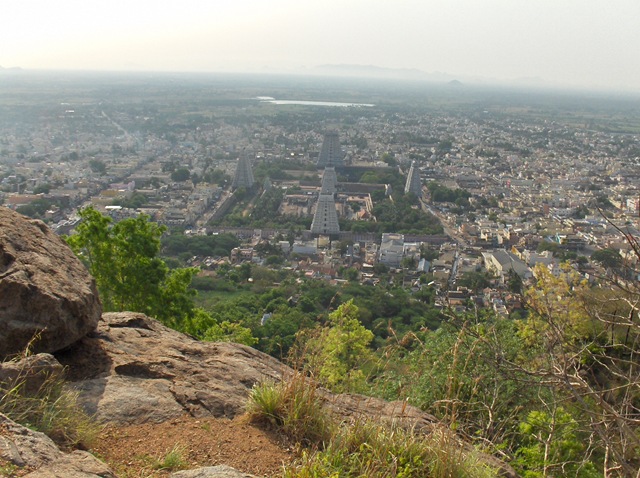
Looking from the path, Arunachaleshwar Temple can be seen, with gopurams rising above the trees.

HPIM4990

One of the Caves

On the path, we pass by a small cave, big enough for perhaps two or three people to sit in.

HPIM4991

Old Ganesh Shrine

The next feature is an old Ganesh shrine, with this water tank. This shrine has been vandalized and the Ganesh idol taken. The Global Watch Trust plans to replace this idol.

HPIM4994

Here you can see the back of the shrine and the tank.

HPIM4995

Another small cave near the Ganesh Shrine. This cave is big enough for a person to lie down and sleep, but not big enough to stand up.

HPIM4997

Up the hill to the best of the caves

Climbing further up the path we will get to the crown jewel (I think) of this area.

I would recommend good shoes or sandals and strong legs for the next part of the journey. The path is a bit steep in a couple of places.

Below Carol and Sarsvan are crossing a rock face. Note that they each have clippers in their hands, to work on a bit more brush cutting on the path.

HPIM4998

As the path gets higher, the view of Arunachaleshwar Temple is breathtaking. I think the big rock in the midground is a part of Guhai Namashivaya Shrine.

HPIM5000

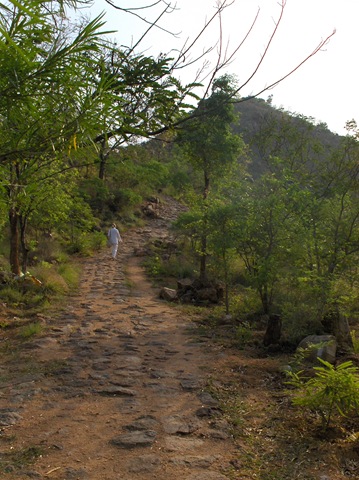
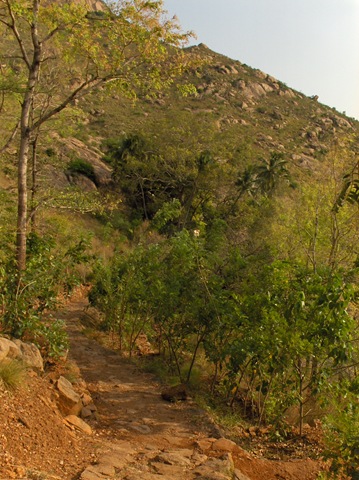
The path continues up the hill. Here it is dirt and pretty easy walking. After this there is a section up through more rocks. This is the only section that I think is tricky. The biggest trick right now is that there is a place where the path goes up the hill and to the left. Take the left. This is not presently marked. Hopefully, this will be done.

Some of this path is a ‘fire road’ up the hill.

HPIM5001

Now the cave entrance is visible.

I think this cave is a special place. The people who live on the hill below here say that Ramana stayed in this cave, I guess during what are generally known as the ‘Virupaksha days.’

We have been here just two times and already it is one of our favorite places on Arunachala.

HPIM5004

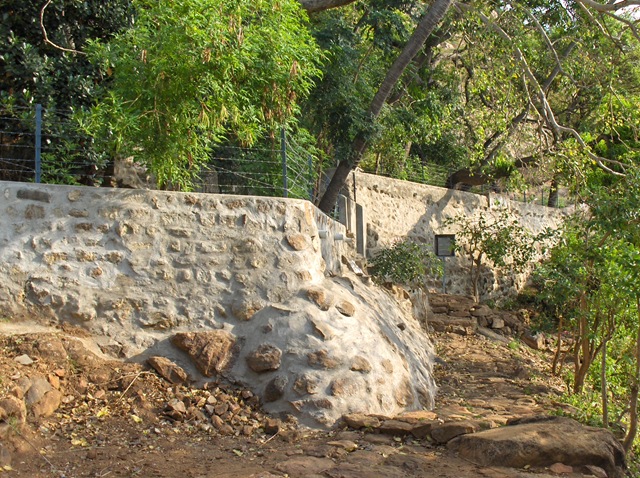
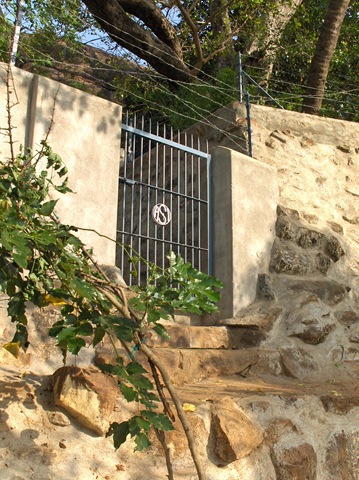
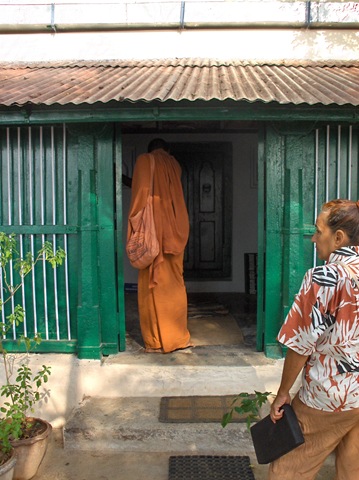
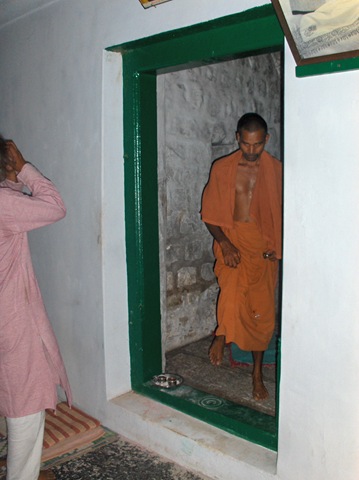
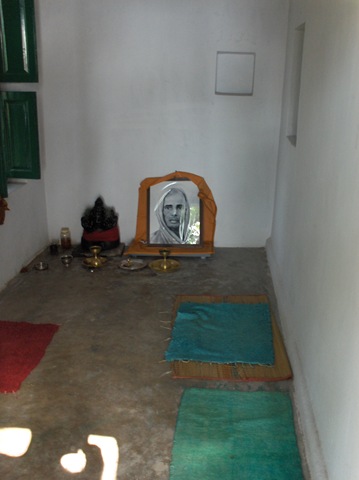
Here is the cave entrance. Saravan and a helper, over the last few months, have put in the concrete walls, floors and benches, and painted them. Flowing water has left stains that make the walls look older than they are.

HPIM5006

Behind me on the path, Saravan and Carol have pruning clippers and are cutting back brush from the path.

HPIM5015

View from the Cave

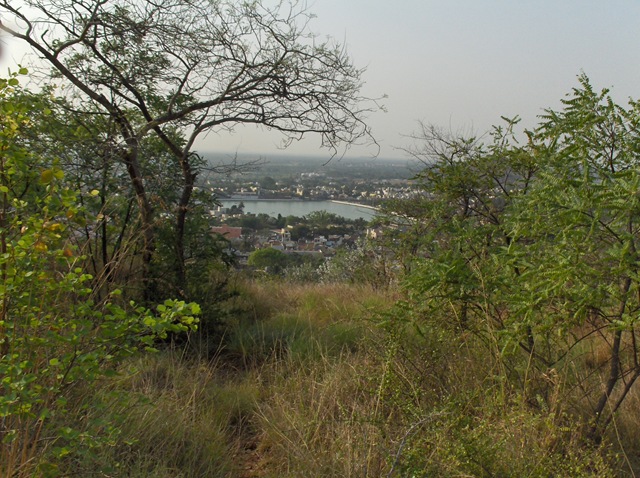
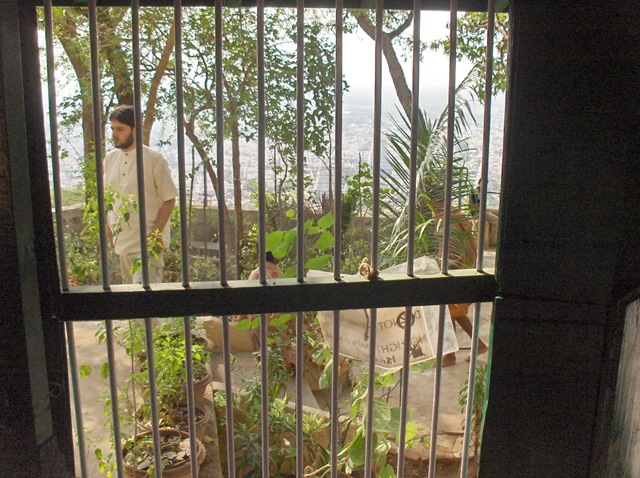
Here we are looking east from the Cave across Tiruvannamalai.

HPIM5013

Arunachaleshwar Temple view.

HPIM5007

Looking up from the cave, we see Arunachala. If you look closely maybe you can see about 3/4 up the photo, on the right, a coconut palm. This is Skandanasram.

If you look closely in the foreground, you will see red oleander flowers. Saravan planted these bushes three years ago. These flowers are used as puja flowers, and he wanted them to be available for those who use this cave for worship.

HPIM5019

In the Cave

In the cave, an oil lamp has been lighted.

HPIM5010

Carol sits in the cave, meditating.

We think this is one of the special places on this hill. Peaceful and serene, it is a great place to open your heart to Arunachala.

HPIM5020

Working on the Mountain – Global Watch Trust

Community Development

The first part of this project was a vision from Saravan as to what could be done in this area, with encouragement from the founder of Global Watch Trust, Sathya. Together they put together a plan and a team to clean up and enhance this part of the Arunachala hill to properly respect the sacred heritage that is here.

An important part of the process has been involving the villagers who live on this part of the hill. This started with a ceremony and a ‘gifting.’ School notebooks were gifted to the children in an evening ceremony that included the local villagers. The purpose of this was to educate the villagers on the importance of this area so they might not use it as a trash dump, and to enlist their help in the work to clean up the hill.

Below is a photo of the books that were to be gifted, and the team from Global Watch Trust.

HPIM0433

Here the gifting is being done. Many locals are gathered together here.

HPIM0470

As work started, local officials came to the group. Each interaction was similar, starting with “What are you doing?” and “No, you cannot do this.” After some discussion, permission was granted. First were officials from Arunachaleshwar Temple, then the Forest Authority, the Sri Ramanasramam.

The Crew

One big part of the effort was done with a crew consisting of local volunteers and the Global Watch Trust team, shown below. Together they worked to do the major cleanup of the hillside.

our team

So much cleaning and clearing to do

For many years this area has been used for trash. The first thing needed was to clean up the trash.

cleaning the right side on 16th started

DSC_0199

Brush has overgrown the paths and area around the Banyan tree. All this needs to be cut away, and cuttings disposed of.

cleaning the bush. so no more littering on here planting will be done soon by morning

While the brush cutting is going on, a part of the team gathers to discuss the details of path repair for this area.

pathway repair discussion

More trash to be cleaned.

pathway rightside cornerplastic team two on the right side

The path cleaned and cleared, ready for repair

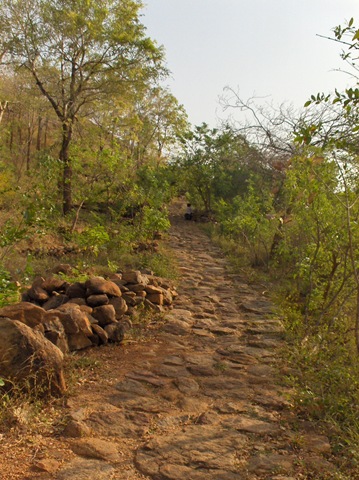
Here is the approach path with trash cleaned and brush cleared. Now work must be done to repair the path.

before pathway repaired

Clearing around the Banyan Tree

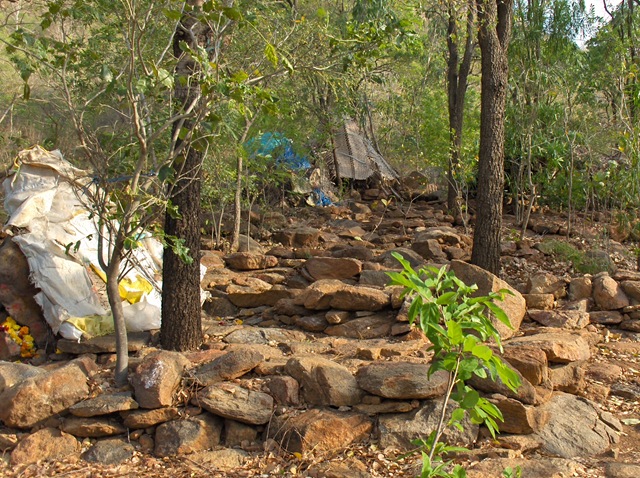
The ancient Banyan tree is to the left, with rocks built up at its base. In the surrounding area, brush and small trees have grown up, crowding each other for space and sun. They need to be cut back so the area can be opened up and a new path built.

DSC_0197

Here they are clearing brush from the base of the Banyan tree.

DSC_0200

Results of the Team’s work

The path is repaired

Here is a part of the path shown above that needed repair. Now it is easy and pleasant walking.

DSC_0211

Standing proudly by Old Tree

Saravan stands by the Banyan tree. Now it is cleaned up, brush cut back, trash picked up, etc.

HPIM4871

What has been shown here is just a part of the job. to continue the job, Global Watch Trust has been sponsoring a small team to work with Saravan to continue with the path building, planting, and improving these areas by adding cement benches to sit and meditate, etc.

There is a need for financial support

Work has stopped for now. Global Watch Trust needs to find people who are able to provide some support for this work.

Global Watch Trust has funded the effort that you see in these pages out of their own funds. Those funds have run out, and for work to continue donations are needed. Evan small donations are a big help. Rs 1000 ($25 or 15 Euros) pays for one day’s work on the project. 40 days work have been done so far, and so much has been accomplished.

If you are able to help, donations can be made through the Global Watch Trust web site. Go to http://www.globalwatchtrust.com/ and click the ‘donate’ button. Credit Cards and PayPal are accepted. Also they ask, until their site is updated, that you also send an email to ceo@levicent.com and let them know that this donation is to be used for the Arunachala Hill project.
Harsha's avatar

Song of Ribhu, Chapter 14 – Inquiring Into the Undivided Nature: By Richard Clarke

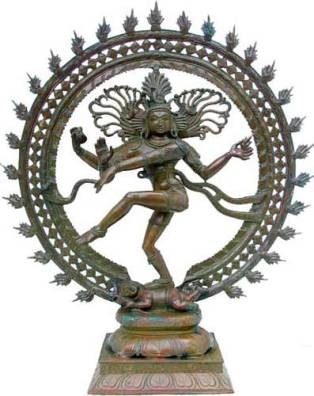
Siva Nataraj

1

Listen, in this exposition,

To the gist of the secret of all the settled conclusions.

There is not duality or nonduality, which are talked about.

Only the peaceful Brahman is ever existent.

Brahman, which is the One that exists

Without defect, always, everywhere, is you and I.

All are of the nature of that Supreme Brahman.

Hence, you should start inquiring into this.

2

I am ever of the nature of the Supreme Brahman.

I am ever of the nature of the Supreme Siva.

I am ever of the nature of the Supreme Self.

I am ever of the nature that is higher than the highest.

I am ever of the nature that is pure.

I am ever of the nature that is perfectly full.

I am ever of the nature of the undivided Supreme.

Inquire steadfastly into this every day.

3

I am ever the imperishable Existence.

I am ever the shining Consciousness.

I am ever the peerless Bless.

I am ever the one undivided essence.

I am ever the all pervasive.

I am ever the One that is all.

I am ever the undivided Supreme Brahman.

Inquire steadfastly into this every day.

4

I am ever the Supreme denoted by the word “That.”

I am ever the Supreme denoted by the word “you.”

I am ever the Supreme denoted by the word “are.”

I am ever the one undivided essence.

I am ever the innermost of all.

I am ever the exterior of all.

I am ever the undivided Supreme Brahman.

Inquire steadfastly into this every day.

5

I am ever of the nature of the eternal.

I am ever of the nature of the attributeless.

I am ever of the nature of the taintless.

I am ever of the nature of the sheathless.

I am ever of the nature of the partless.

I am ever of the nature of the unafflicted.

I am ever of the nature of the all-pervasive Supreme.

Inquire steadfastly into this every day.

6

I am ever of the nature of the infinite.

I am ever of the nature of the undecaying.

I am ever of the nature of the imperishable.

I am ever of the nature of the blissful.

I am ever of the nature of liberation.

I am ever of the nature of the liberator.

I am ever of the nature of the undivided Supreme.

Inquire steadfastly into this every day.

7

I am of the nature of the cause of all.

I am of the nature that is completely full.

I am of the nature of all the individuals and the Supreme.

I am of the nature that is not even an atom.

I am of the nature of the ever peaceful.

I am ever of the nature of the One.

I am of the nature of the undivided Supreme.

Inquire steadfastly into this every day.

8

I am of the nature of all activity.

I am of the nature of the doer of all.

I am of the nature of the protector of all.

I am of the nature of the destroyer of all.

I am ever of the nature that is not anything.

I am of the nature that is established as myself.

I am ever of the nature of the undivided Absolute.

Inquire steadfastly into this every day.

9.

I am of the nature of all the elements.

I am of the nature of the composites of all elements.

I am of the nature of the witness of all.

I am of the nature of the evidence of all.

I am of the nature that has nothing ever apart from it.

I am ever of the nature of nonduality.

I am of the nature of the undivided Absolute.

Inquire steadfastly into this every day.

10

I am ever of the nature of “you.”

I am ever of the nature of “I.”

I am ever of the nature of others.

I am ever of the nature of the Self of all.

I am ever of the nature of the motionless.

I am ever of the nature of the connectionless Supreme.

I am ever of the nature of the undivided Absolute.

Inquire steadfastly into this every day.

11

I am ever of the nature of full of Consciousness.

I am ever of the nature of a mass of Consciousness.

I am ever of the nature of Consciousness alone.

I am ever of the nature clothed in Consciousness.

I am ever of the nature of the space of Consciousness.

I am ever of the nature of Consciousness.

I am ever of the nature of Consciousness-Brahman.

Inquire steadfastly into this every day.

12

I am of the nature of the substratum of all.

I am of the nature of the form of all.

I am of the nature that has not an atom apart from it.

I am of the nature that is only myself.

I am ever of the nature of the bodiless.

I am of the nature of the pure space.

I am of the nature of the pure Supreme Brahman.

Inquire steadfastly into this every day.

13

I am of the nature of the Guru of all.

I am also of the nature of all the disciples.

I am of the nature of all the means.

I am also of the nature of all the ends.

I am of the nature of all the Vedanta.

I am of the nature of what is to be comprehended through them.

I am of the nature of the pure Supreme Brahman.

Inquire steadfastly into this every day.

14

I am ever of the nature of the ancient.

I am ever of the nature of the complete.

I am ever of the nature of the imperishable.

I am ever of the nature of the indestructible.

I am ever of the nature of That which alone is.

I am ever of the nature of the sorrowless.

I am ever of the nature of the Supreme Brahman.

Inquire steadfastly into this every day.

15

I am ever of the nature of the undivided, Supreme God.

I am ever of the nature of the blemishless Supreme Knowledge.

I am ever of the nature of the Supreme Existence.

I am ever of the nature of the Supreme Bliss.

I am ever of the nature of the Supreme Light.

I am ever of the nature of the Supreme Abode.

I am ever of the nature of the Supreme Brahman.

Inquire steadfastly into this every day.

16

I am of the nature of the innermost of all.

I am ever of the nature of the Self of all.

I am of the nature of the all-auspicious.

I am of the nature that has not an atom of impurity.

I am of the nature of the supreme fourth state.

I am of the supreme nature transcending the fourth state.

I am ever of the nature of the Supreme Brahman.

Inquire steadfastly into this every day.

17

I transcend all time.

I transcend all space.

I transcend all objects.

I ever transcend everything.

I am of the nature that has not an atom of conceit.

I am of the nature that has not an atom of attachment.

I am of the nature of the immaculate Supreme Brahman.

Inquire steadfastly into this every day.

18

I am ever of the nature of Existence alone.

I am ever of the nature of Consciousness alone.

I am ever of the nature of only the good.

I am ever of the nature of the middle path.

I am ever of the nature of the nondual.

I am of the nature of the Self of all.

I am ever of the nature of the Supreme Brahman.

Inquire steadfastly into this every day.

19

I am ever the unfading Bliss.

I am all pervasive and motionless.

I am ever volitionless.

I am the Supreme and cannot be comprehended by anything.

I am ever without intellect and such.

I am ever the abode that transcends the intellect.
I am ever the Supreme Brahman.

Inquire steadfastly into this every day.

20

I am of the nature that is without an atom of delusion.

I am of the nature that has no attributes of illusion.

I am of the nature that is that is without mind or such.

I am of the nature that is without desire or such.

I am of the nature that is without form or such.

I am of the nature that is without any modifications of these.

I am of the nature of the immaculate Supreme Brahman.

Inquire steadfastly into this every day.

21

I am of the nature without any waker and others.

I am of the nature without waking and such.

I am of the nature of the Knowledge of the fourth state.

I am of the nature of the Supreme Siva.

I am of the nature that is defectless.

I am of the nature of Consciousness, devoid of worldly misery.

I am ever of the nature of the Supreme Brahman.

Inquire steadfastly into this every day.

22

I am ever of the nature of the Lord.

I am ever of the nature of Supreme Knowledge.

I am ever of the nature of the all pervasive.

I am ever of the nature of empirical knowledge.

I am ever of the nature of being all.

I am of the nature of Existence-Consciousness-Bliss.

I am ever of the nature of the Supreme Brahman.

Inquire steadfastly into this every day.

23

I am ever Brahman, the taintless.

I am ever Brahman, the partless.

I am ever Brahman, the afflictionless.

I am ever Brahman, the pure.

I am ever Brahman, the attributeless.

I am ever Brahman, the peerless.

I am ever the pure Supreme.

Inquire steadfastly into this every day.

24

I am the world with all names and forms.

I am of the nature of the substratum of all.

I am the front, the back, the sides, the top, and the bottom.

I am of the nature of the undivided Knowledge.

I am of the nature of the Bliss that is myself

Without an atom apart from it.
I am ever of the nature of the undivided Supreme.

Inquire steadfastly into this every day.

25

I am of the rare nature unattainable by the ignorant,

Who have no Knowledge of the Self.

I am of the nature of the Supreme, easily attainable

By those with Knowledge of the Self.

I am of the nature of the Supreme,

The all pervasive, undivided Space of Consciousness.

I am of the nature of the pure Supreme Brahman.

Inquire steadfastly into this every day.

26

I am ever of the nature of the undivided Absolute,

Without the sextet of modifications. (birth, growth, death, etc.)

I am ever of the nature of the undivided Absolute,

Without bondage and ever free.

I am ever of the nature of the complete Bliss,

Remaining undisturbed.

I am ever of the nature of the Supreme Brahman.

Inquire steadfastly into this every day.

27

I am ever of the nature of the peaceful Brahman,

Without a trace of sankalpa (fixed idea, concept, volition) or delusion.

I am ever of the nature of the Supreme Brahman,

The undivided Light without day or night.
I am ever of the nature of the undivided Supreme Bliss,

With an atom of an ego or such.
I am ever of the nature of the Supreme Brahman.

Inquire steadfastly into this every day.

28

I am ever of the nature of the Supreme Brahman,

The undivided Knowledge without an ego.

It is the ego that is ever the misery of worldly existence.

The great Truth is that there is no ego

And that these is not an atom apart from me.

I am the undivided, complete, and full.

I am ever the Supreme Brahman.

Inquire steadfastly into this every day.

29

You are “I”; I am “I”; all else that is, is “I.”

There is no doubt about this.

Without any duality, be continuously immersed in the meditation

That the pure “I” is the Supreme Brahman.

There is no delusion, no consequences of delusion,

And no difference of any kind whatever-nothing at all.

I am the Supreme Brahman.

Inquire steadfastly into this every day.

30

Without me, there is nothing that is the meaning for the term “That.”

Without me, there is nothing that is the meaning for the term “you.”

Without me, there is nothing that is the meaning for the term “are.”

Without me, there is nothing undivided.

Without me, there is no reality or unreality.

Without me, there is no intelligence or insentience.

Without me, there is not a thing, ever.

Be ever immersed in the meditation that I am Brahman.

31

Without me, there is no difference as “this man.”

Without me, there is no difference as “this woman.”

Without me, there is no difference as “this thing.”

Without me, there is no difference as “that thing.”

Without me, there is no difference such as “is here.”

Without me, there is no difference such as “is not here.”

Without me, there is not an atom of difference.

Be ever immersed in the meditation that I am Brahman.

32

What is seen as “this” is Brahman only.

What is seen as myself is Brahman only.

What is seen as “that” is Brahman only.

What is seen as manifold is Brahman only.

What is seen as stable is Brahman only.

What is seen as unstable is Brahman only.

Whatever is looked at as “What is this?” is Brahman alone.

Be ever immersed in the meditation that I am That.

33

The primal ignorance is Brahman alone.

The emerging thought is Brahman alone.

The body with a form is Brahman alone.

The individual senses are Brahman alone.

Time and space Brahman alone.

All things that are seen are Brahman alone.

All is only Brahman, the abode, and that is myself.

Be ever immersed in the meditation that I am That.

34

Space and other elements are Brahman alone.

All that pertains to nature is Brahman alone.

What is thought of as “I,” “I” is Brahman alone.

What is thought of as “not I” is Brahman alone.

What are thought of as “you” and “I” are Brahman alone.

All thoughts are Brahman alone.

The originless Brahman alone is real, that That is myself.

Be steadfastly immersed in this inquiry.

35

There is no such things as the words or the sentences they constitute.

There is not Gita or other treatises or their authors.

There is none of the unreal world or jiva-s.

There is no Iswara who bestows desired things.

The Supreme Brahman, which is drossless, attributeless,

Timeless, blemishless, intersticeless, all pervasive, and motionless, is all.

I am that Brahman.

Be steadfastly immersed in this inquiry.

36

I am Brahman; I am Brahman; I, indeed am all.

I am Brahman; I am all.

Daily and continuously be immersed in this inquiry

Until this mode of “I am Brahman” becomes stabilized.

After this “I am Brahman” bhava (conviction) is stabilized,

Cast this off, too, and, becoming Brahman,

Be established changeless

In the undivided, blissful Experience.

37

Those who sincerely practice (the Knowledge)

That I am the Supreme Brahman—

Of the nature of the eternal, partless, delusionless, taintless,

Afflictionless, blemishless, motionless, ancient mass of Bless,

The Reality, the utterly peaceful Consciousness—

Will have the awareness of Nonduality

And thereby become the undivided Supreme.

There is no doubt of this.

38

Hence, until all differentiation disappears, one should always remain

In this beneficent bhava (conviction)

That all is Brahman

And I am, indeed, that Supreme Brahman—

With love, with ardor, and without differences

Until all uncertainty and confusion disappear totally—

And, unmindful of anything else,

Be in repose in Bliss.

39

In this exposition thus given to me by the Supreme Siva,

The4re is not an atom of doubt.

It is the Truth, the Truth. There is no doubt about it.

Whoever listens to this, and understand this—even once—

Will be liberated and become

The one Supreme Brahman.

I have graciously told you this true meaning,

Which is extremely rare to find anywhere.

40

Son! Only those who

Smeared with holy ashes,

Decked with rudraksha, and devoted to Siva,

Are ever in meditation upon the Supreme Siva

Will be rid of the sorrowful bondage of worldly existence

And become of the nature of that one Supreme Siva.

This the great sage Ribhu explained to Nidagha

The mediation of Oneness.

41

It is the perfectly full form of our Lord in a state of joyous dance that tells

Of the meditation that the wonderful beings that appear, the mysterious world that appears as if dual, and the ancient Lord (Isvara) who is eulogized

Are all the perfectly full Absolute and nothing apart,

And I am ever that Absolute; I am all.

______________________________________________________________

For more on the Ribhu Gita, go to

Copyright: SAT 2000 – www.satramana.org

Published by SAT – http://store.satramana.org/

Also Published by Ramanasramam and available in the bookstore.

Harsha's avatar

Arunachala Pradakshina – June 2008 Full Moon – Part One: By Richard Clarke

After walking ’round Arunachala in April in the moonlight, amidst a crowd said to be 1.5 million people, we celebrated THIS month’s full moon by walking around in the morning. We found this to be much more harmonious, and easier to take pictures than during the crowded night walk.

Shown below are photos taken June 18, 2008. They are all on the ‘Pradakshina road,’ from the junction with Bangalore (Chengam) Road to where this road meets the main road back into Tiruvannamalai, so from the viewpoint of Arunachala, from the South West, to the North West sides of Arunachala.

I have tried to put in names of temples, shrines, etc. I am unsure of the spelling of some of them, so if there are errors, let me know and I will correct them.

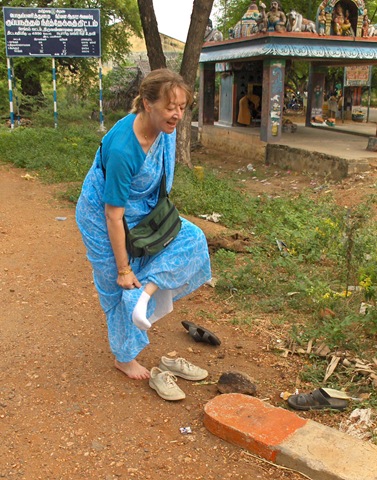
Carol Getting Ready – Removing her shoes

It is the tradition that Arunachala is a temple, and the path around the temple, for good punya (merit) should always be walked barefoot. IF you look closely you will see that most Indians do this. Carol frequently walks barefoot, as she can. I still hold more to shoes or sandals. Even with this, I have had several blisters and foot sores that caused restricted activity for a while as they healed.

HPIM4782

Jyoti Vinayaka Shrine

This shrine is right at the intersection of Bangalore Road and Pradakshina road.

HPIM4783

Carol is getting blessed by the priest.

HPIM4786

Along the way

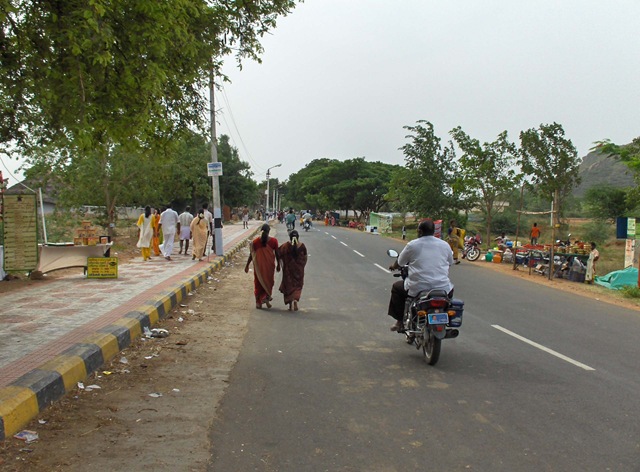
Much of the road is lined with vendors and stalls. There were still many people making pradakshina this morning. In the photo below there is a group of young women walking. You can tell they they are young because they are wearing ‘punjabi’ or ‘salwar’ suits, instead of saris, which is what are worn by most Indian women.

HPIM4787

Here is Richard. Note the vibuthi, placed on my forehead by the same priest that blessed Carol.

HPIM4788

Another Temple

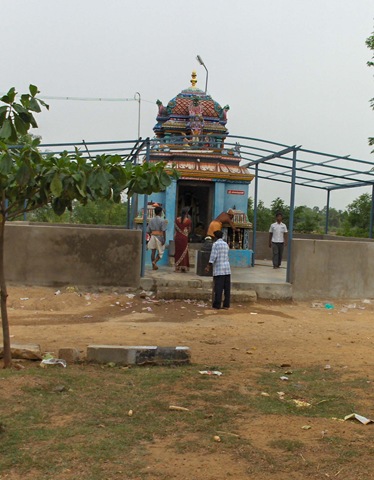
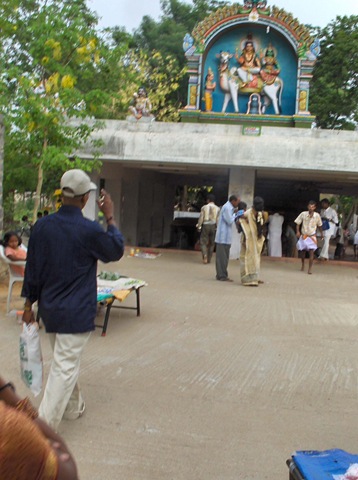
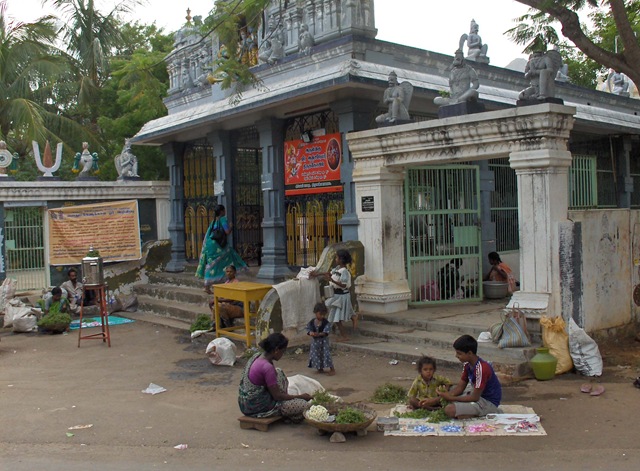
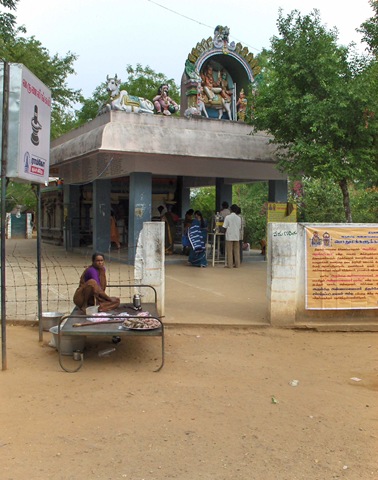
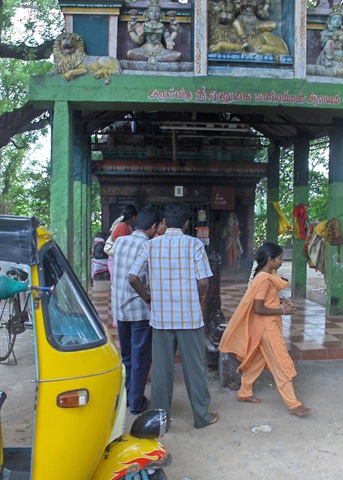
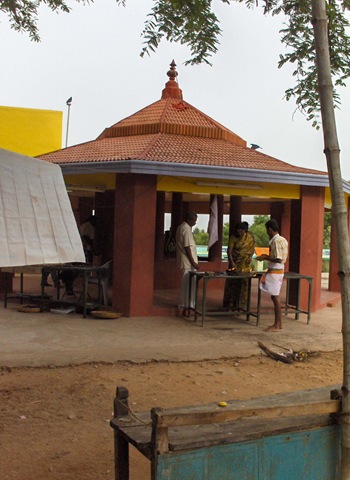
I am not sure of the name of this shrine. To its left is a big building that says it is a ‘Free marriage hall.’ I believe they let sadhus sleep there overnight.

HPIM4798

Om Namo Sivaya

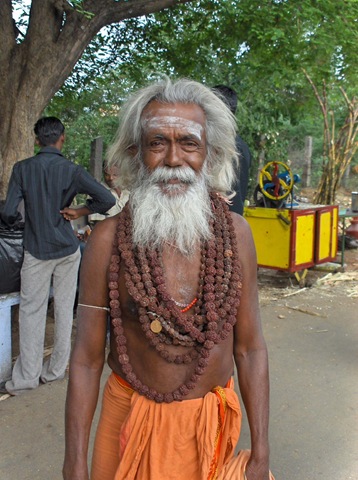
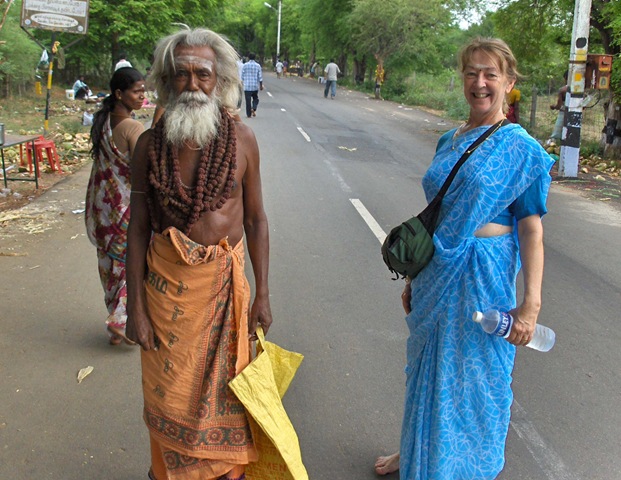
We often meet this sadhu in the morning when we go up the trail to get to the Inner Path. This goes past what we call the Sadhu Tank. I think this is called “Kattu Shiva Hermitage” on some maps. Usually he gives a big smile and says “Om namo Sivaya” as we pass on the trail. This morning he was out on the road, on his way back to “the tank.” We walked together for a bit.

HPIM4800

Here he is with Carol. He put on his Siva dhoti for the picture instead of the plain saffron one.

HPIM4801

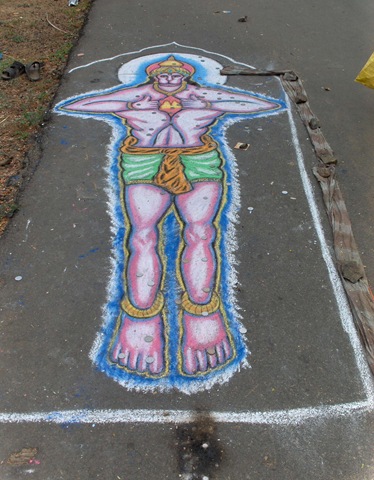
Chalk figure of Hanuman

Note that the artist put cloth boundaries on the pavement, trying to prevent walk-overs.

HPIM4803

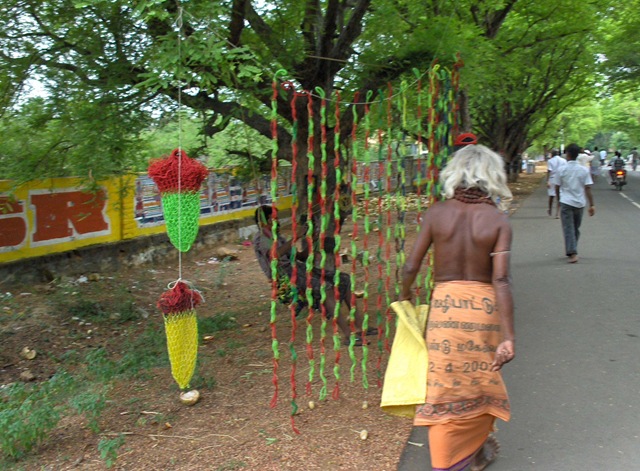
Selling Hammocks

It took some time before we know what the red and green strings were, hanging in this photo. They are hammocks!

HPIM4804

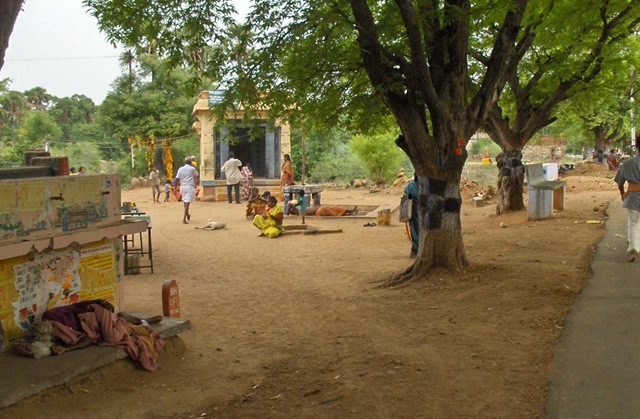
Dourvaas Nama Siva Shrine

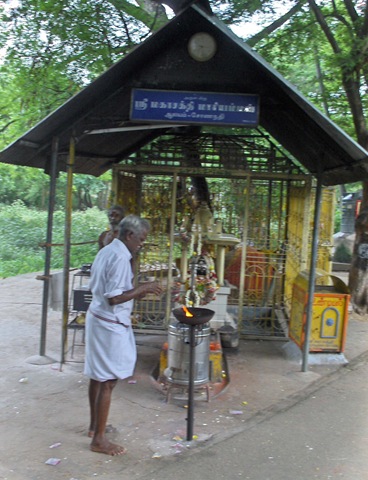
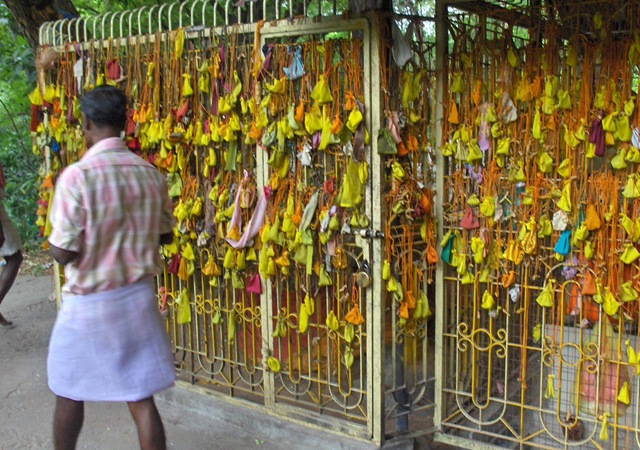
Here they usually used to ask us for ’20 Rupees’ for a “wish bag” to tie on a tree behind the shrine. These wish bags are a common feature in a temple. For example, when a woman wants a child, she will tie a bag onto a tree at a nearby temple.

This is right across the road from where we usually go onto the trail to the Inner Path. This is described in the posting

.

HPIM4805

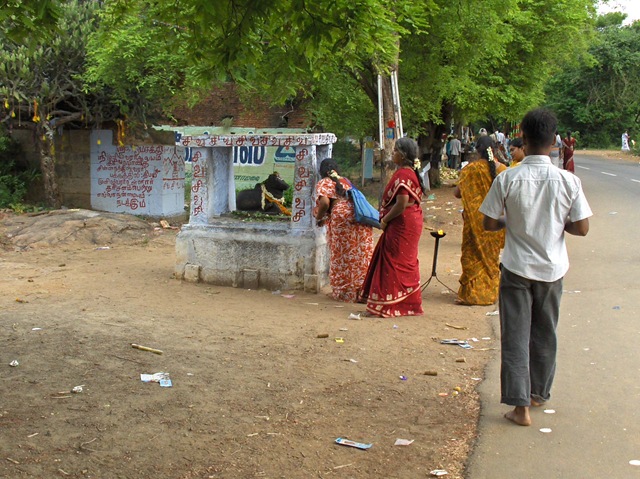
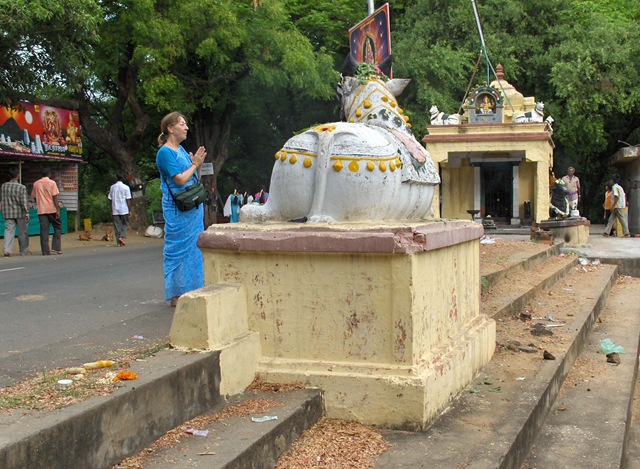
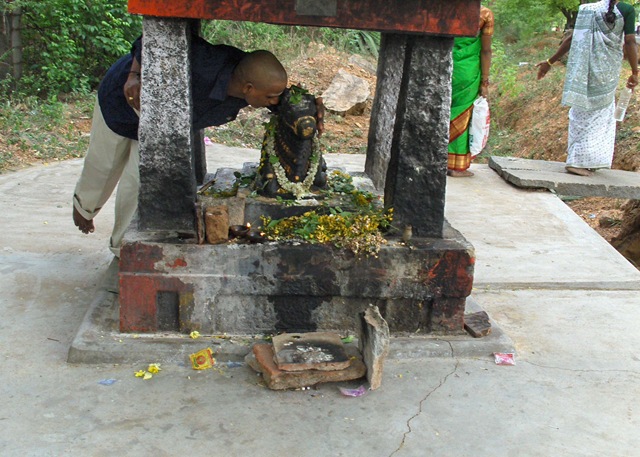
One of many Nandis

There are many Nandis along the road. Nandi the Bull is Siva’s attendant and gate keeper. In a temple, Nandi will face the lingam. Around Arunachala, most face the mountain.

Women visit images of Nandi, bringing floral offerings, and touch the stone. Their prayers are usually for fertility.

HPIM4808

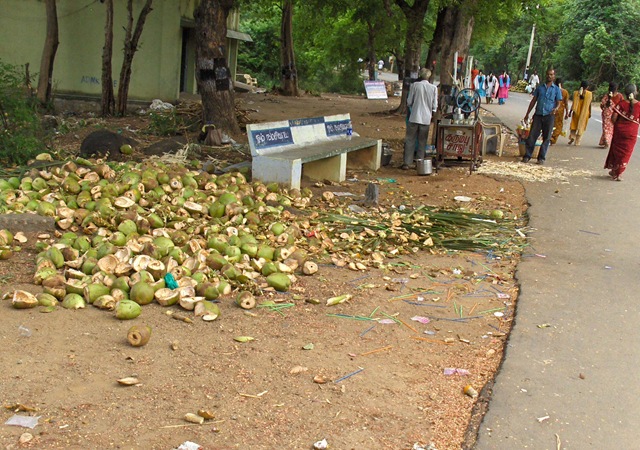
Clean-up after Full Moon night

Empty coconuts, after a night of drinking coconut juice. Cleaning up after the full moon night is an issue. Some vendors do this with care. Many do not. And many of the people will throw trash anywhere.

HPIM4809

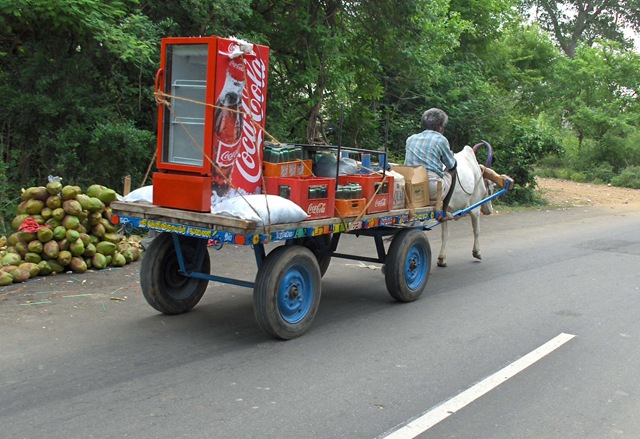
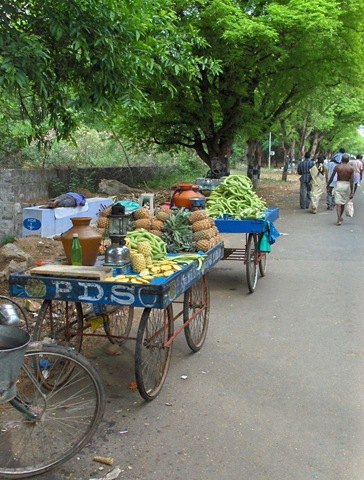
Supplies from a drink stand, going back on a bullock cart.

HPIM4811

Another Nandi, by Soma Tirtam (Soma Tank)

HPIM4814

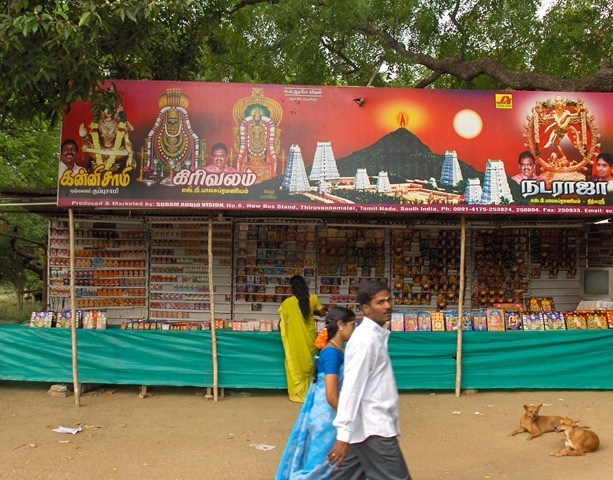
CD and DVD stand

Across from Soma Tirtam. There are a number of these stands, usually blasting out some Siva chant or song.

HPIM4816

Mahashakti Shrine, covered with ‘wish bags’

HPIM4823 HPIM4825

Sadhus

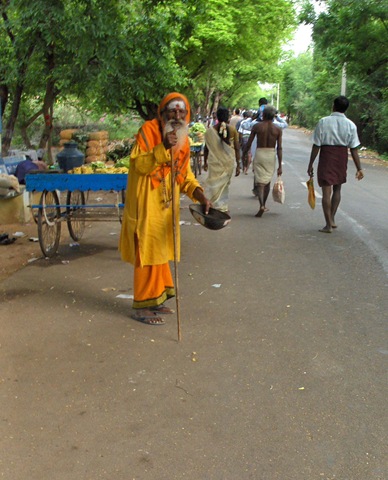
Sadhu with begging bowl

HPIM4827

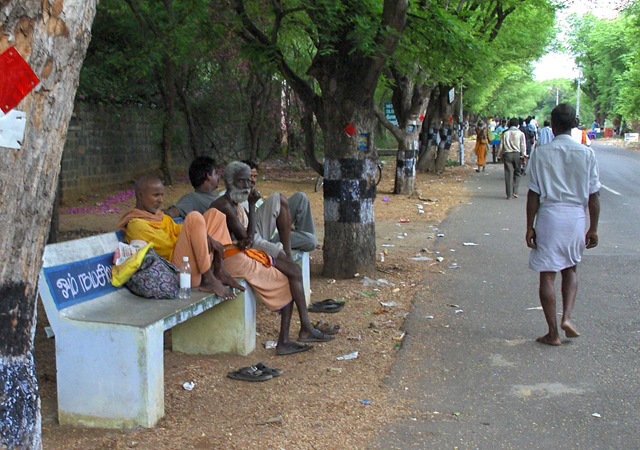
Sitting on bench

HPIM4830

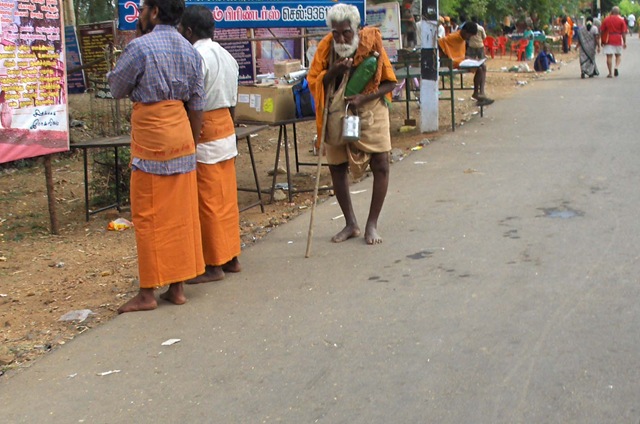
Elderly Sadhu. Just walking seems like a big task.

HPIM4858

Vendors

HPIM4828

Man whispering secrets into Nandi’s ear

He spent some time whispering to Nandi. Must have had a lot of wishes.

HPIM4832

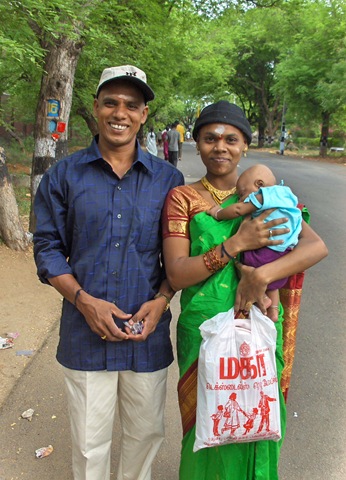
Babies

Young couple with babe in arms. Mother says proudly, “38 days old.” They were very pleased to be taking their new baby on pradakshina around Arunachala.

HPIM4835

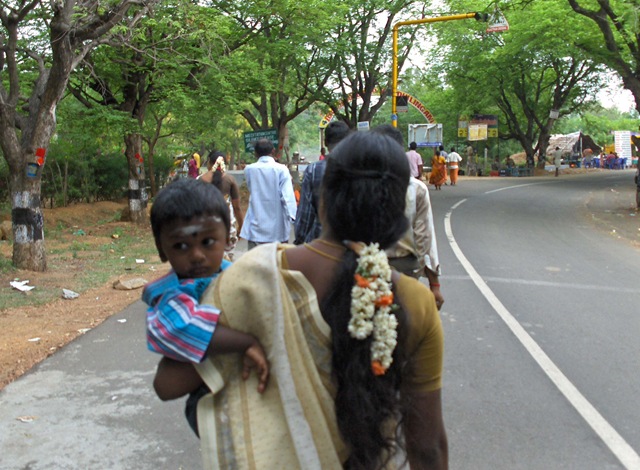
Another baby watching the first baby. You see many babies in the arms of their parents, being carried around the mountain.

HPIM4837

One of the nine Lingams, Nirudhi Shrine

HPIM4839

Carol getting blessed

HPIM4844

Sadhu taking morning bath in Nirudhi Tank

HPIM4847

More vendors

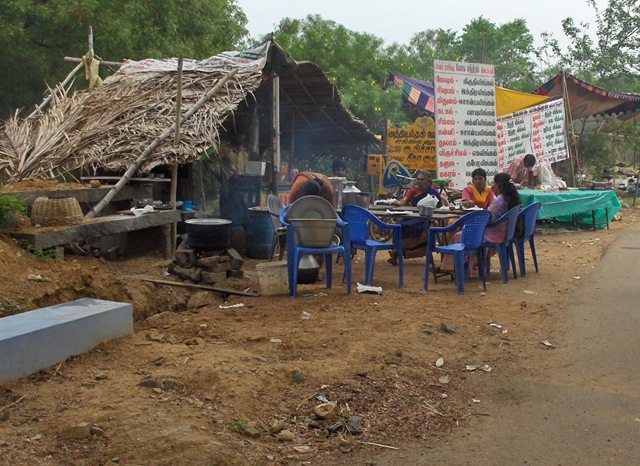
Food stand with thatched roof

HPIM4848

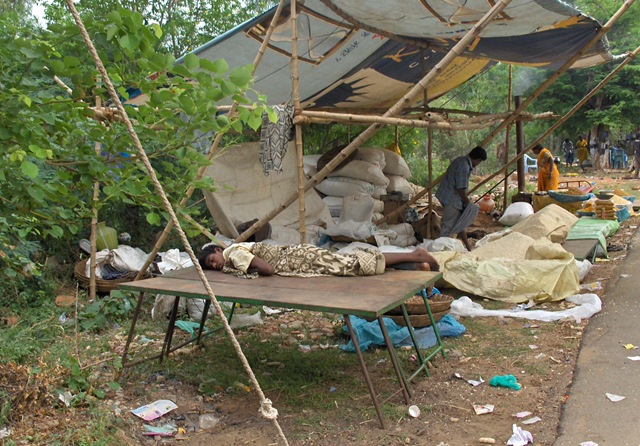
Man sleeping on table after a long night

HPIM4849

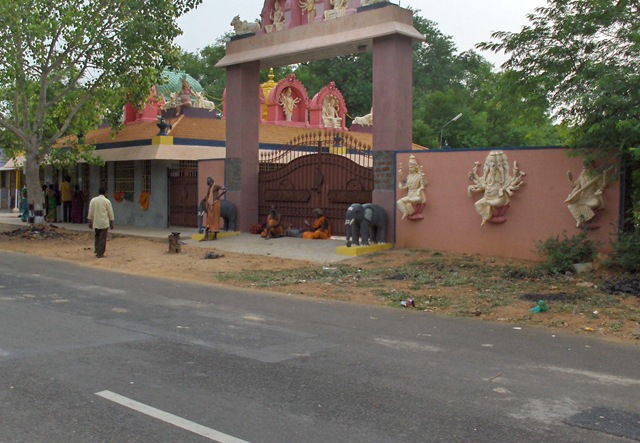
Vallalar Temple with Sadhus

Vallalar Temple features the Nine Planets

HPIM4852

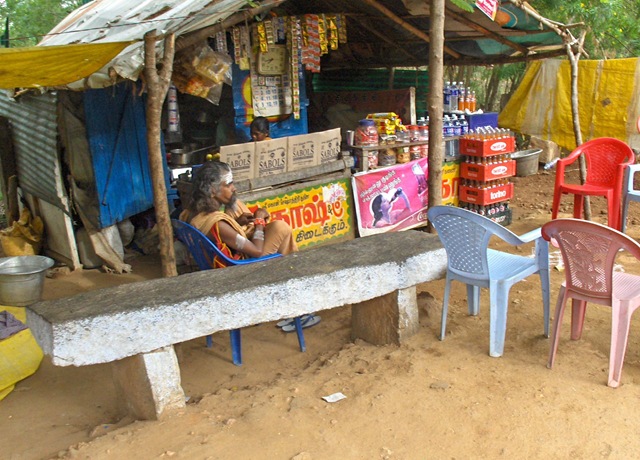
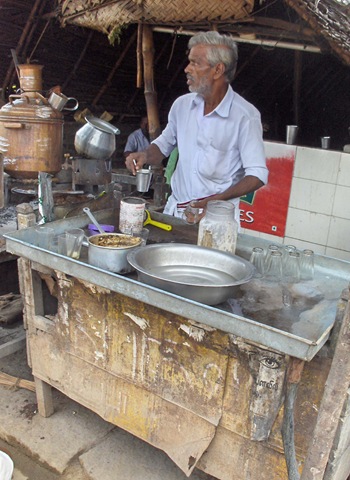
Sadhu in tea stand

HPIM4856

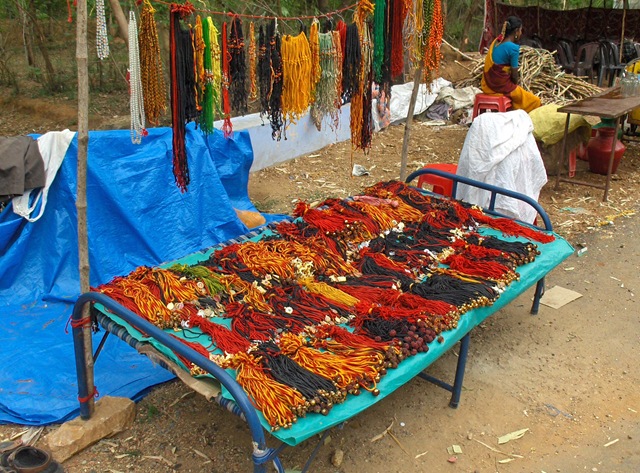
Brightly colored Rudraksha pendants

HPIM4857

For the rest of this article, go to

Harsha's avatar

Arunachala Pradakshina – June 2008 Full Moon – Part Two: By Richard Clarke

More Temples

Unnamalai Amman Mandapam. The green objects on each pillar are frogs.

HPIM4861

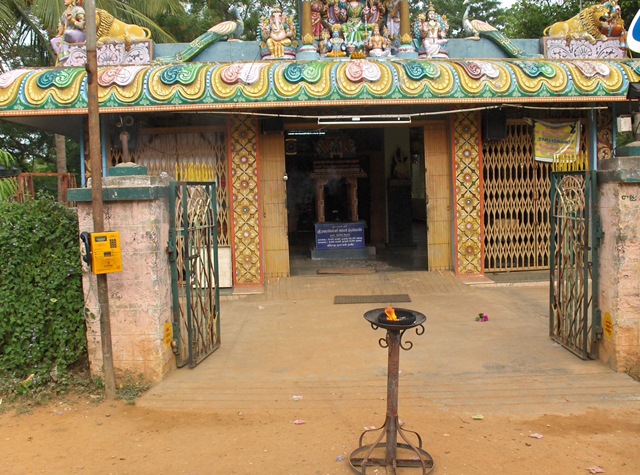
New temple, I do not know the name.

HPIM4864

Hanuman Temple

HPIM4865

More Sadhus sitting on bench

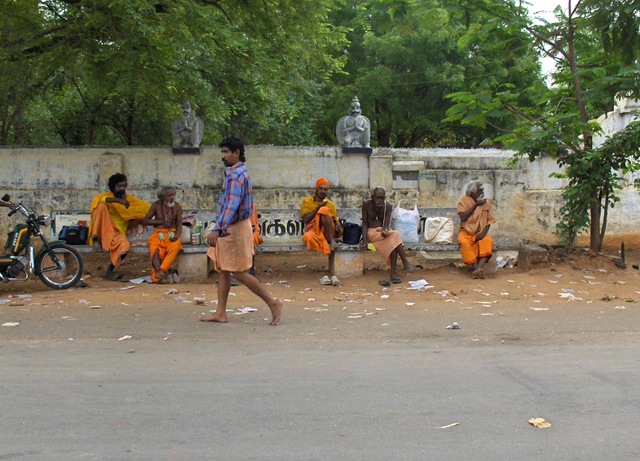
This is how I saw most sadhus today, sitting by the roadside on a bench watching all the people going by.

HPIM4867

Another Nandi

HPIM4872

More Temples

Palani Andavar Temple

HPIM4874

Paramansa Nityananda Peedam, with 1008 Lingams

HPIM4876

Ancient Shrine, near Echo Temple

HPIM4883

Raja Rajeshwari Temple, opposite Kannapar ShrineHPIM4877

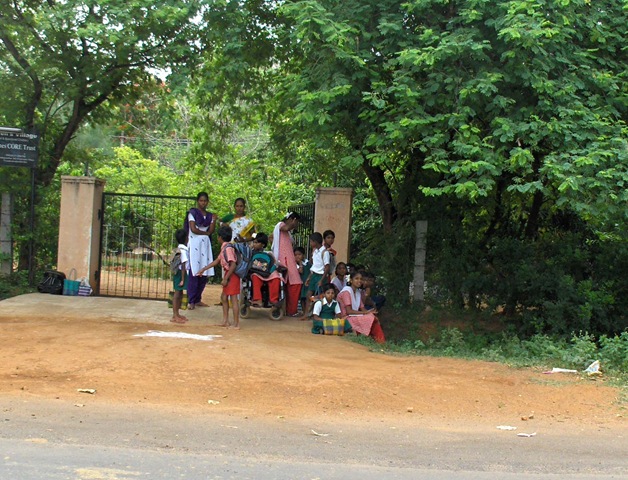
Waiting to go to School

Though Full Moon night is a big event, with people traveling from all over India to participate, for the local children, life goes on as usual. Here there is a group. I guess they are waiting for a bus. Different schools have different colored uniforms. The older girls wear ‘punjabi’ or salwar suits. Younger girls wear things like the little girl in the front right, a shirt and a dress (she has a white shirt under a tunic).

HPIM4885

Roadside Altar

If you look closely you will see, on the tines of the tridents, bangle bracelets that have been left behind as an offering by earnest women passing by this altar.

HPIM4888

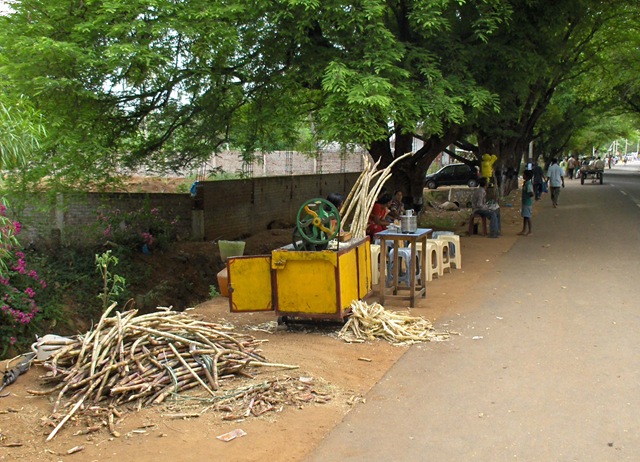
Sugarcane Juice Stand

These sugarcane stands are common here. They will crush the sugarcane and give you a glass of cane juice, for a nice sugar lift.

HPIM4889

Building Another Ashram: Babuji Guru, associated with Sai Baba

I wonder if more temples and such are needed along the road. Still they are still building more. This will be another Ashram.

HPIM4890

Village woman sitting by house

Village life goes on, unfazed by all the people walking past.

HPIM4891

The Feet of Sri Ram to worship

You will see these feet carvings in many places. Once, when we were walking in the forest near the Sadhu Tank, we came across a flat rock, with feet like this carved in the rock.

HPIM4893

Arunachala from the road

Parvati hill is to the right, The Elephant in the center.

HPIM4894

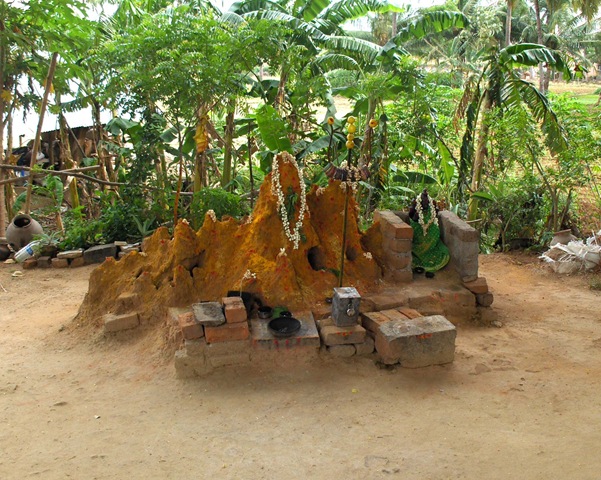
Altar made around Ant Hill

HPIM4895

Another of the Nine Lingams – Varuna Lingam

HPIM4896

Fruit Juice Stand

Note the boys in the back posing for the picture.

HPIM4897

Into Adi Anamalai Village

Adi Anamalai Temple is to the right, not visible from the road.

HPIM4899

Making our coffee at a Tea Stand. We sat for a bit and had Indian Milk Coffee to energize us for the rest of the walk.

HPIM4901

Kaliyama Temple, opposite Manikkacachakar Shrine

Notice the tables with ceramic statues and other items to sell to the walkers.

HPIM4902

Looking into the shrine.

HPIM4903

On the other side of the shrine were food vendors. And the tree that is usually associated with each temple. This tree is where local people will perform part of the Shraddha ceremony, after a person dies. See Indian Village 13-day ceremony for more on this.

HPIM4905

Another Ant Hill Altar

HPIM4908

More Temples

I don’t know the name for this. Arunachala is behind the temple.

HPIM4909

These horses are often seen associated with a temple. I am not sure of the significance. Perhaps someone can tell me.

HPIM4910

Vayu Lingam (Gas Lingam). The meaning of two of the lingam names was given to me be a friend. I am not sure of the significance of “Gas lingam.”

HPIM4912

The One and Only Deathless Art Center

This is a small store we saw where the road to Kanji intersects the Pradakshina Road.

HPIM4914

Views from the road

This stretch has few temples and vendors.

HPIM4915

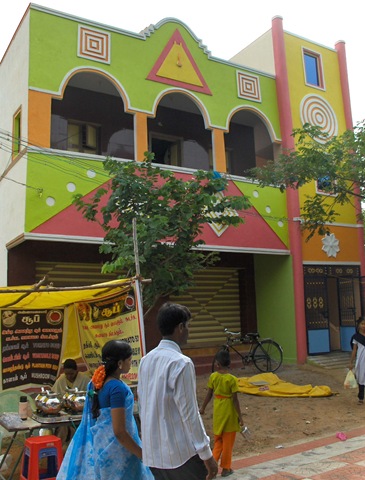
Here is an attractively painted building. You can see how the Indians love color. HPIM4919

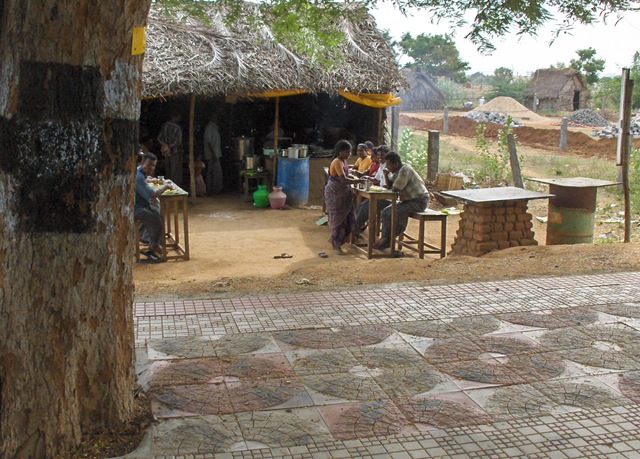
People having breakfast at a food stand beside the roadway.

HPIM4920

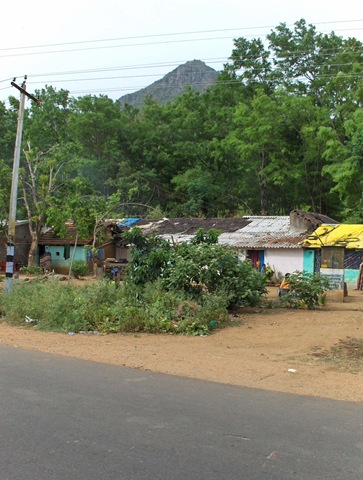
Small houses line the street in this section. Arunachala is behind them.

HPIM4922

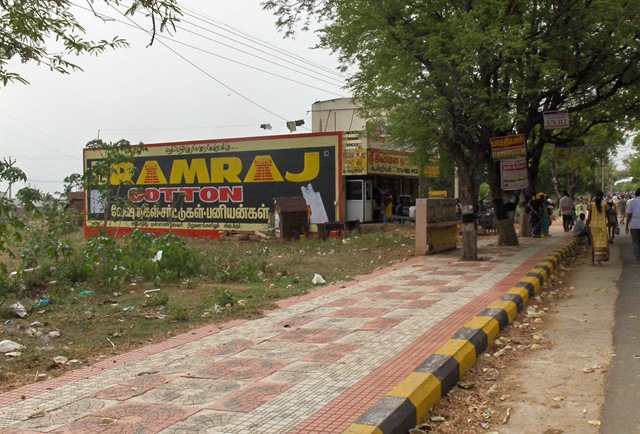
This brightly painted sign for Ramraj cotton underclothes is painted on many roadside buildings. Also you will see similar signs for Poomer underclothes and cottons.

HPIM4924

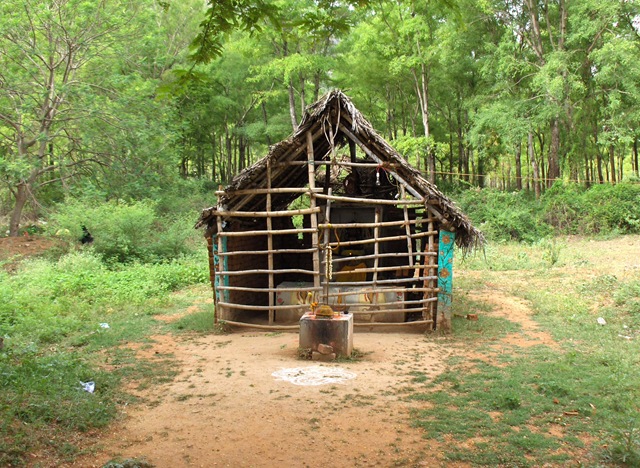
Small rustic roadside Temple

There is a photo of this lit up at night in

HPIM4926

Chandra Lingam

Chandra Lingam, now with a tree growing from it.

HPIM4927

One more of the nine Lingams – Kubera Lingam

This is the money lingam, per my friend.

HPIM4928

In front of the lingam is a camphor fire. People will put their hands into the camphor smoke and use this smoke the bless themselves, drawing it to their face and head. They will also bring more camphor pellets and add them to the fire, so that it stays lit for all to use. Vendors sell camphor all along the Pradakshina route.

This is as far as we got on foot this day. This is maybe 1 KM from the junction where the road to Velore comes into Tiruvannamalai. One of my heels felt like it was ready to blister, so we hailed an autorickshaw, and went to RamaKrishna Hotel for a great India Breakfast and Indian Milk coffee. Then back to home.

Harsha's avatar

North side of Arunachala – Under the loving gaze of The Elephant: By Richard Clarke

We are starting to explore the North side of the holy hill. One thing we look for is an ‘Inner Inner Path’ that is closer to the base of Arunachala. On all sides of Arunachala there are many paths, foot trails and animal paths. We have been gradually exploring the mountain, using what we can find from these paths.

Earlier this week we took the

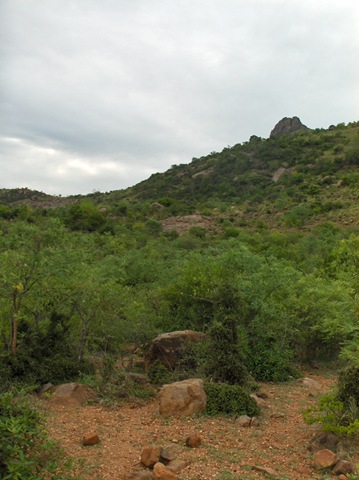
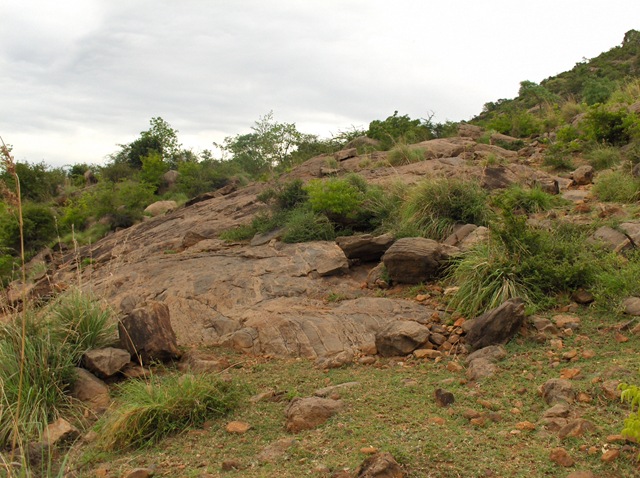
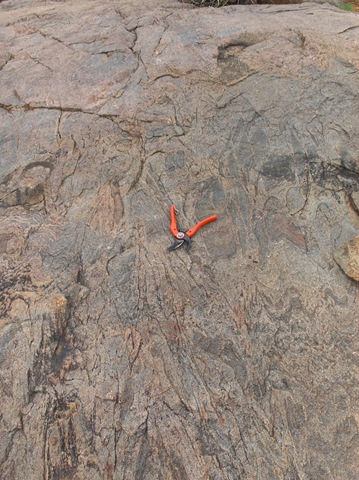
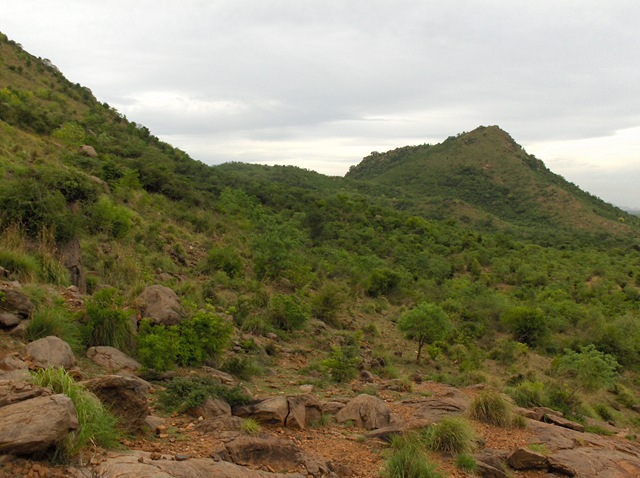
and started exploring the area between what we call ‘the Basin’ and the hill. We found a bit of what could be the ‘Inner Inner Path,’ and started round the mountain. Soon we found a big rock formation that climbed up the base of the hill. We went up this rock and found a wonderful view of the area North of Arunachala and Adi Anamalai. When we left, my new pruning clippers remained behind, on the rock where I placed them when I sat down to rest.

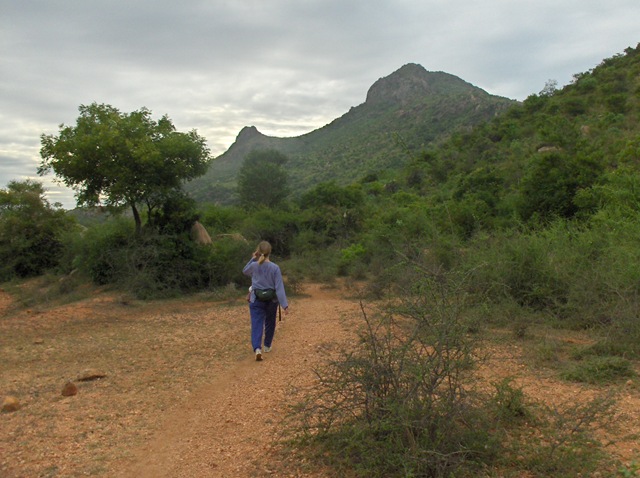
Today we went back to see if the clippers were still there – and with our camera. Here are some photos we took ‘Under the loving gaze of The Elephant. The Elephant is the move visible structure on the North side of Arunachala.

The Elephant from the Inner Path, North of the Hill, ‘Parvati.’

HPIM4639

My wife, Carol, is walking ahead, with The Elephant on the mountain in the background. You can see the head and trunk on the hill.

The Frog Pond

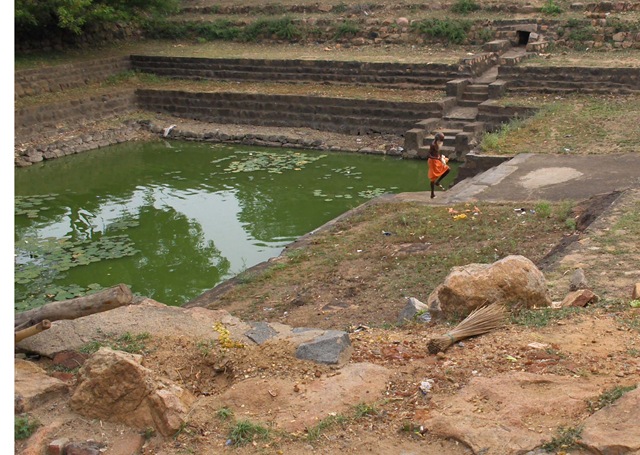
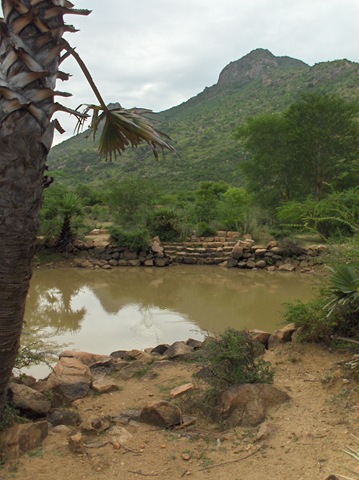
At the end of Parvati there is a small tank we call ‘The Frog Pond.’ There is usually water and frogs in it. I dried out towards the end of May. Since then rains have filled it again, but I don’t see the frogs yet.

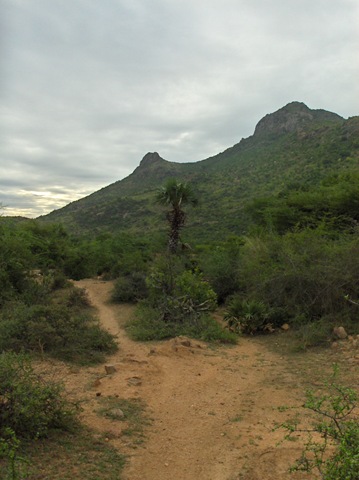
Approaching the Frog Pond, you may notice a small palm. I use this as a land mark, since I can see it from up the trail before we arrive at the Frog Pond.

HPIM4647

The Frog Pond is a place where often people walking the Inner Path will sit a rest a bit. Notice stone steps on the other side of the photo below. There are a couple of sets of steps. We usually sit on the steps at the South end of the pond. There is shade there in the mornings when we pass by.

HPIM4648

We will sit a bit, drink some water, and maybe read a few verses from ‘The Song of Ribhu’ before proceeding on our walk.

To and across the Basin

Today we would head to ‘the Basin’ and cross it to find the same set of paths we used earlier in the week. We are heading out from the Frog Pond. If you look closely you can see an earthen berm, with trees growing from it. This is what collects water in the basin.

HPIM4652

Looking across the Basin:

HPIM4654

Sometimes this is filled with water. In this dry season there is just a small pond, to the left of this photo.

We are going to the trees on the right of the photo aboive. That is one place where the path was easy to find.

Below is the path, we took the second, higher path. There are many places to explore here. There are several big rocks that push through the trees. These interest me. I know that there will be great places to meditate at some of them.

HPIM4656

Today we walked through the woods …

HPIM4659

And started to see the rock structure on the mountain. IN the photo below you can see a grey path of rock in the center of the photo. This is the rock.

HPIM4662

Up a rock on the North side of the hill

At the base of the rock. the rock is maybe 10 – 20 meters high, certainly high enough to get a grand view of the surrounding area.

HPIM4663

And at the top of the rock, there were my pruning clippers, still there two days later.

HPIM4664

The view from the rock on the North side of Arunachala

Back towards Parvati Hill

HPIM4666

towards the Frog Pond and the North side of Parvati

HPIM4670

Adi Anamalai (enlarged to see the detail)

Adi Anamalai 2

Up Arunachala. More places to explore some other day

HPIM4674

Looking North. Note Adi Anamalai to the left in the photo.

HPIM4679

Postscript

Today we did not explore more. We just headed back to the Inner Path to finish the mornings walk.

After the path section I call ‘The Elephant’ is another section where maybe 20 years ago many trees were planted in rows on both sides of the Inner Path. I call this section ‘The Trees.’ IN this section there is a picturesque area with big rocks. Here is a photo of Carol sitting here.

HPIM4686

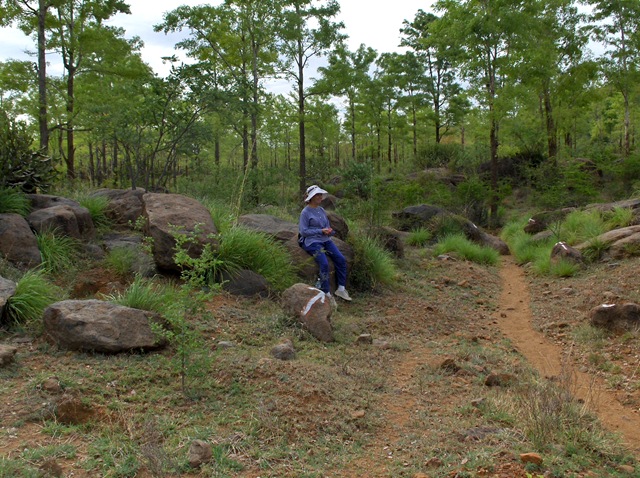
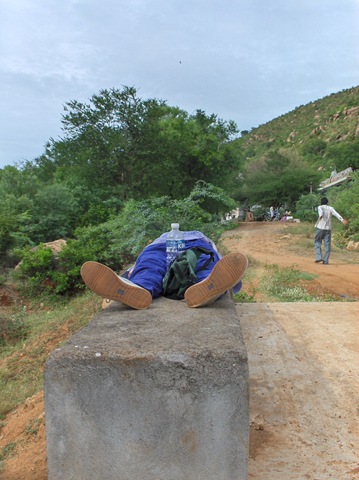
Tired today . Further on the trail, near Panchamuka Shrine, Carol and I were very tired. Carol rested a bit before going on. Here she is in a yoga position, Savasana.

HPIM4688

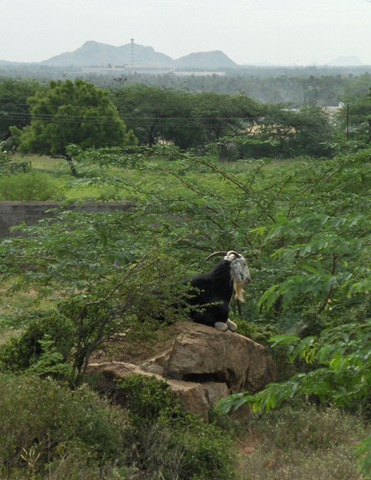
A goat on a Rock

As we walked on the road down the hill from the Shrine, there was a goat again, sitting on a rock.

goat

From here we walked to the RamaKrishna Hotel and had breakfast of dosas and vadas, and Indian Milk Coffee. Then we called Rajan, our auto-rickshaw driver for a ride the rest of the way around the hill, and back home.

Harsha's avatar

Working on a path across Arunachala: By Richard Clarke

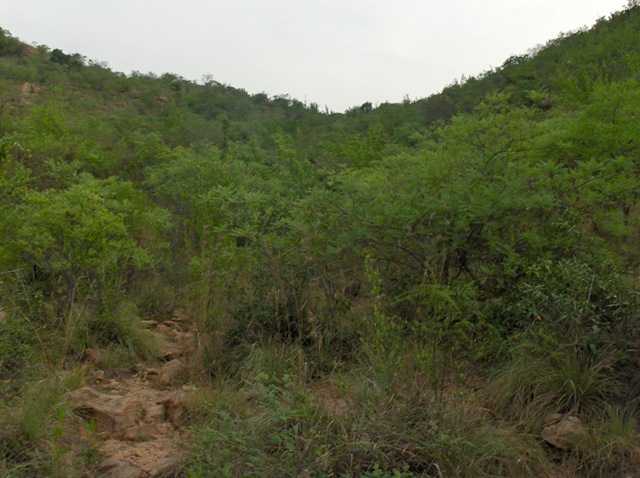
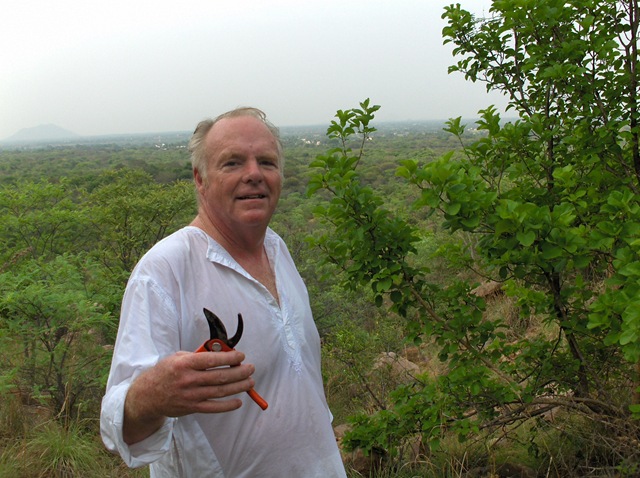
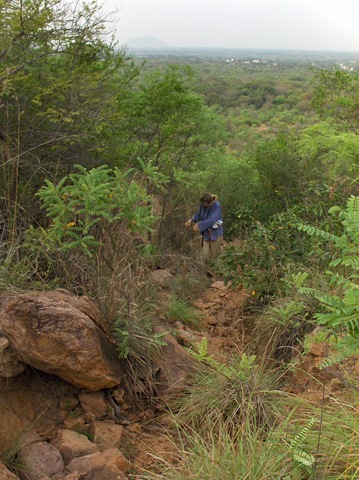
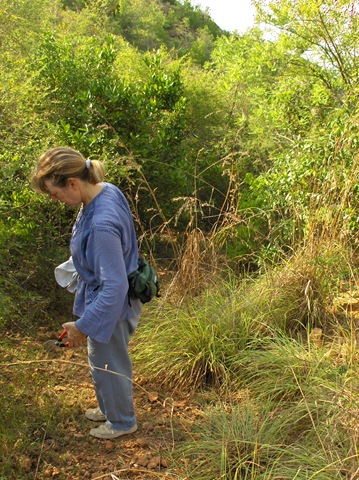
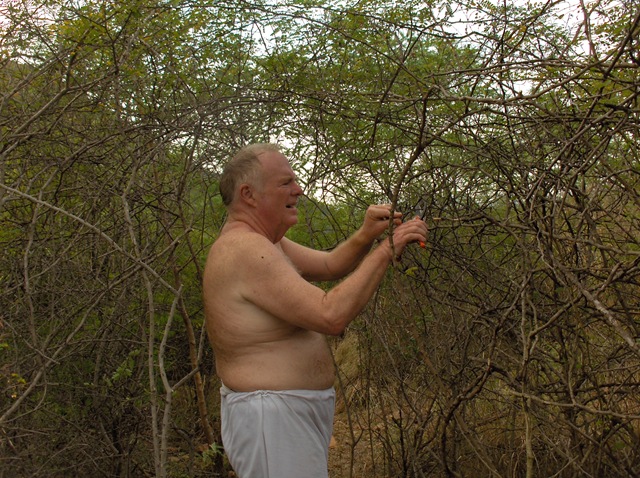
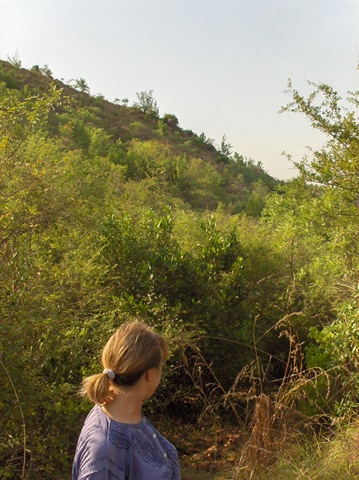
We usually start walking along the southwest side of Arunachala where we live. Looking at the mountain, we thought that a shortcut across a low pass might be possible. We first walked to the area, and found part of a path up the pass. We forced our way up to the top that day, but did so by pushing our way through brush and bushes, many of which were various thorn bushes. Recently we had some garden pruning shears sent to us from the USA, and so we spent a few days trying to make this path more walkable.

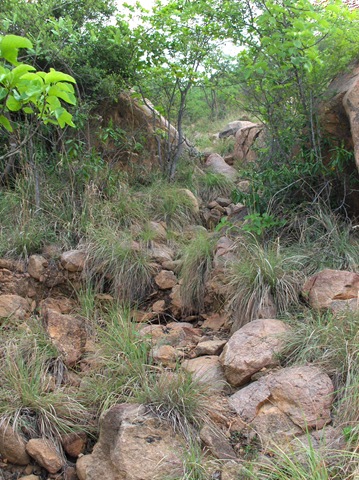
After the work was done, we can now walk more easily to the top of the pass and on to the other side of the Hill. Much of the ‘path’ up a is a dry creek bed, so water cascades down the path when it rains. For anyone might be interested in trying our path, here is a warning: Parts of it could be difficult if your legs, knees and ankles are not in good condition.

Orientation to the path

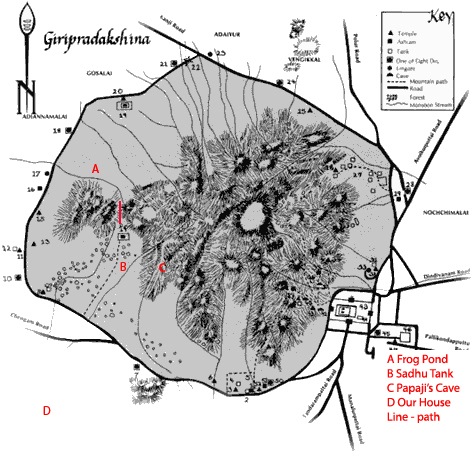
Here is an Arunachala map where I have shown in red some of what we see.

Arunachala with new trail and markers

Sri Ramanasramam is at the bottom of the map, the south side of Arunachala. The Inner Path is not shown on this map, just the Outer Path. Marked in red letters are the approximate locations of our house, Papaji’s Cave, and a couple of water tanks we regularly see. The approximate route of the path over the mountain is indicated by the vertical red line above letter B.

The main part of Arunachala is to the right of our path. The section of the mountain to the left of the red line is known as Parvati. Between Arunachala and Parvati, there is a small hill that joins them. You can see this from our roof, below. Our path is on the right side of the hill, the lowest of the two passes.

HPIM4141

Early morning start

This is May, the hottest month of the year. We start early. This day it about 6:30 and the sun is rising over Arunachala.

HPIM4184

Turn off Pradakshina Road to the path that leads to Reforestation Station

We walk across Bangalore Road to the Pradakshina Road. We turn off the Pradakshina Road toward the Inner Path across from a small temple where they sell wish bags that can be hung on the temple wishing tree. They want Rs 20 from Westerners.

HPIM4187

The sign shown below is one other landmark for this path.

HPIM2332

Up the path towards the mountain

HPIM4191 HPIM4193

Past the Sadhu Tank

Sadhus sleep at this tank, and in the early morning they wash themselves and their clothes. Often you will see a saffron dhoti stretched out, drying in the sun.

HPIM4194 sadhusg

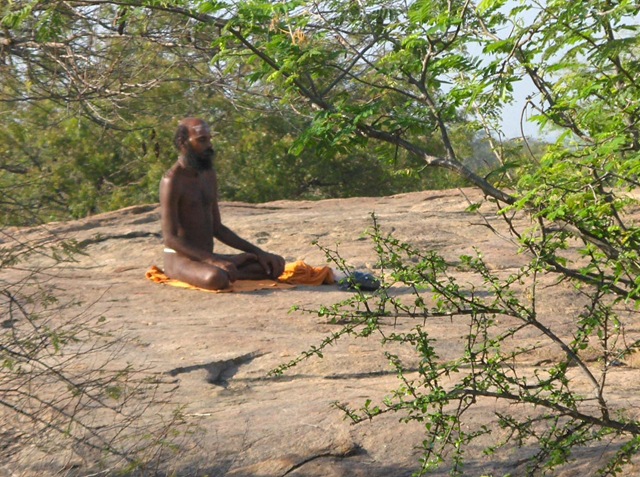
There are other places near here where you can see the sadhus meditating in the morning.

sitting sadhu

To the Reforestation Station

HPIM4196 HPIM4199

Turn right and walk towards the mountain

HPIM4201

Take the left branch of the path

HPIM4202 HPIM4203 HPIM4205

During part of this section, it is not always clear where the path is. Just keep going uphill, generally following the creek bed. For the most part, the path goes to the right of the creek, then up the creek bed where it gets steeper.

The path goes up the creek bed

HPIM4207 HPIM4211

Much cutting to prune back many thorn bushes

Carol and Richard get much work, clearing back brush, and especially thorns. Many different kind of thorn bushes, some quite nasty. It is also getting hotter. If your look closely you will see that my shirt is soaking wet by now.

HPIM4214 HPIM4216HPIM4402

Richard cutting a path through thorn bushes

HPIM4576

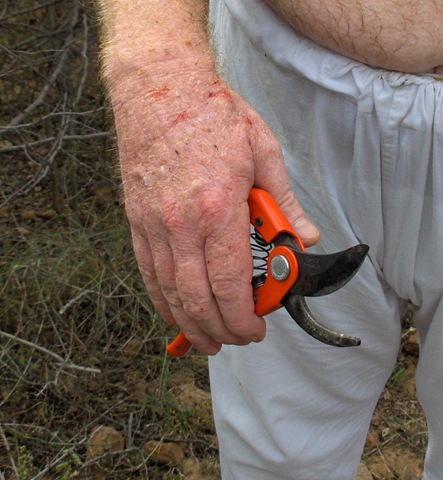
There are many bloody spots from the thorns. They fight back.

HPIM4578 hand

At the top of the pass

While at the level of the pass, one cannot really get much of a view.

Below we are looking at the side of Arunachala.

HPIM4404

Adi Anamalai seen from top of the pass

This photo shows the view of Adi Anamalai through the brush that surrounds the path leading down the other side of the hill. This path is much better than the one we came up. If you take it and bear left, it will take you to the ‘Frog Pond.’ I am not sure where you will go if you bear right. We will find this out another day.

HPIM4416adi amalai

The View from the Ridgeline

We found another path going towards Parvati that took us higher where we could see in all directions. This was up the ridgeline.

Climbing up to the ridgeline towards Parvati, one can get a wondrous panoramic view of both sides of Arunachala.

Looking back towards Tiruvannamalai

HPIM4422

Looking to the Inner Path, as it progresses past ‘The Elephant’

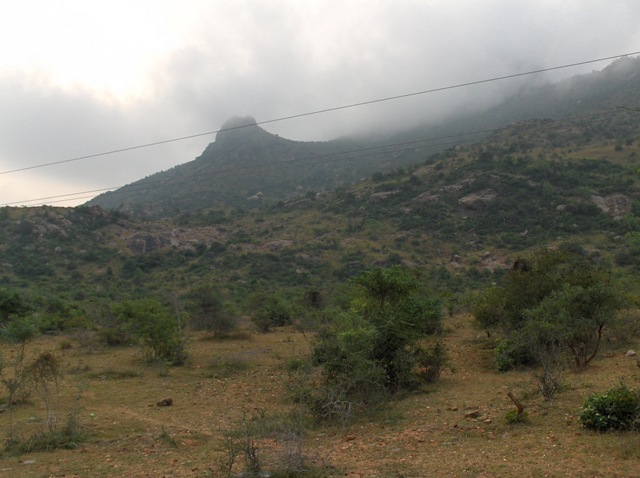
The locals call a structure on Arunachala that is east of Adi Anamalai ‘The Elephant.’ The is a main structure on this side of the hill, and it does look like the head and trunk of an elephant.

Below is the best picture I have so far of the Elephant. Here you can just make out the structure to the left that is the end of the trunk of The Elephant. the rest of the head is obscured by clouds.

HPIM2364

Soon I want to explore around the big rocks that are at the bottom of this hill, pushing through the trees in this photo.

HPIM4426

Harsha's avatar

Walking up to Skandashram: By Richard Clarke

Here in Tiruvannamalai for many Westerners the focus is on Sri Ramana Maharshi and Ramanasramam. Many of these go up Arunachala to the caves where Ramana lived and taught and gave darshan.

One of these caves is Skandashram. It is perhaps one mile from Ramanasramam, up a well cared-for path, up the side of the mountain.

Ramana lived at Skandashram from 1915 to 1922. This is where his mother joined him, and started preparing meals at the ashram, rather than having prepared food carried up, as had been the case since the earliest years. After the mahasamadhi of Mother, and her subsequent interment at the base of the hill, Ramana then took residence at her samadhi, the location of the present day Ramanasramam.

I show here photos from a recent walk up the hill to Skandashram. We started about 7:15 in the morning, before it was too hot. We left out the back gate of Ramanasramam.

Getting started

Going through Sri Ramanasramam

Carol walking through Ramanasramam to path to Skandashram One of the guides who accompany newcomers The gate from Ramanasramam

Starting up the hill

Starting on the path

A woman working with gathered material

Village woman collecting plants

Up the path we go

Starting to climb up the path

The path is ‘paved’ with stone, from Ramanasramam all the way to Skandashram, stones set into the dirt, forming a path about three feet wide. In steep areas there are steps. Someday these stones will be smooth, after 100,000’s of feet have passed over them. Each stone was carried to the path and set into the ground by unnamed workers.

On both sides of the path you will notice tree plantings, done as part of the Arunachala reforestation project that has been going on the the last few years. Ramanasramam has increased interest in Arunachala both around the world, and in India. It is this increased interest in Arunachala that has brought this project about.

Take the right fork. To the left is an entry into the inner pradakshina path.

The path forfs, Skandashram to the right

Up the hill

Carol is barefoot. Arunachala, the whole mountain, is considered to be a temple, and in India you take off your shoes in a temple. Many Westerners do not do this, but Carol goes barefoot on the walk to Skandashram. I do wear sandals. Carol gets more ‘punya,’ spiritual merit.

Carol walks barefoot up the path

And up the hill …

Climbing stairs here

Often there are people sitting and meditating here

To the  left, a place to sit and meditate

Up the path

Up the path

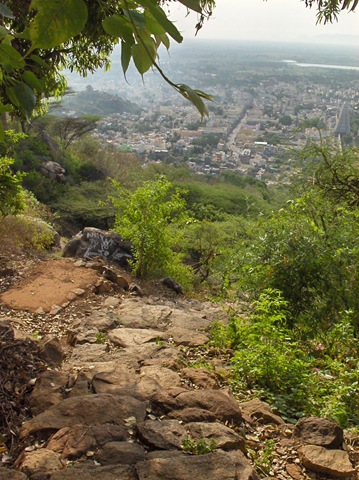
View along the way down to the city

View to the right of the path

Keep going up

The path keeps going up

A Sadhu is usually here – “Sivo Hum,” he may say

Sadhu's spot

There are stone carvers along the way

Stone carver

Up to the top of the path

Up to the top

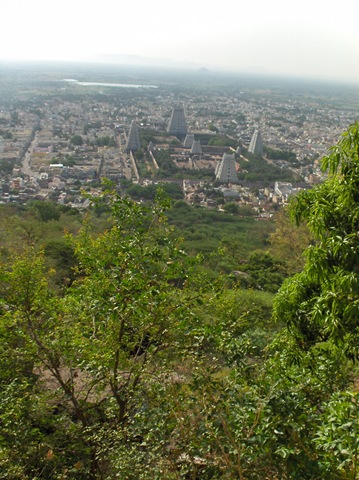
The view from the top of the path

View from the top - Aranachaleswara Temple

And now to Skandashram. Skandashram is the in clump of trees in the center of the photo.

Final leg of the path

Here we are, but the gate is locked

Skandashram Skandashram gate

Path down to Virapakshu Cave. It is pretty steep.

Aranachaleswara Temple from Skandashram

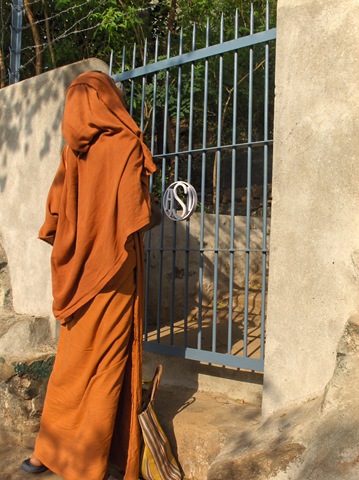
Opening the gate, walking in. The attendant unlocks the gates.

Opening the gate Entering Skandashram grounds

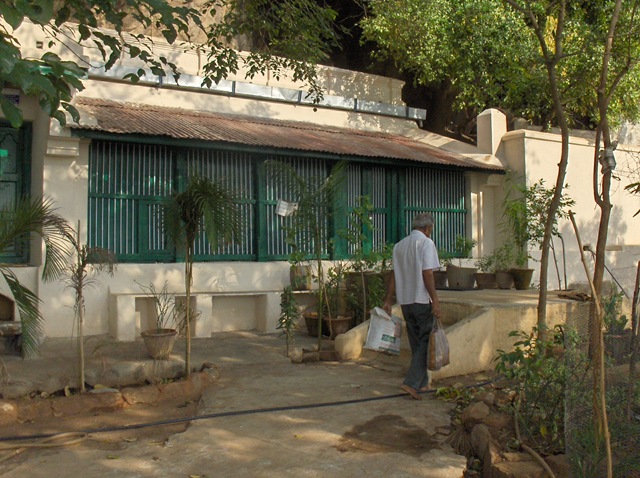
Skandashram

Skandashram

View from Skandashram

HPIM4355

Entering Skandashram

Entering Skandashram

The inner chamber, with the attendant getting ready for the morning chant. This chant is wonderful to listen to. The voice is resonant, and you can hear the love for the teaching in the voice. When we go up to Skandashram, we try to get there for this morning chant. We will sit in the outer chamber, and listen to the chant and meditate, and continue the meditation after the chant is finished.

Innter chamber

Looking out from the porch

Looking out

The Mother’s Quarters

Mother's room Altar in Mother's room

One last look around

Skandashram grounds

One last look at Skandashram

Skandashram

Back down the path

Path back to Ramanasramam

The walk down the hill was harrowing. A tree with a bees nest had fallen, and the bees chased some people down the hill. I was one of these. A swarm of bees circled around my head, stinging the back of my head several times. I was able to brush then out of my ears and off my mouth and face without getting stung there. Finally, about halfway down the hill, they stopped following me.

This is why the photos end with the one above.

Harsha's avatar

Sri Ramana’s Teaching and Western Neo-Advaita: By Alan Jacobs

Advaita and Western Neo-Advaita-A Study
By Alan Jacobs

‘If the blind lead the blind
both shall fall into the ditch.’
(Matt. 15:14,15) Continue reading

Harsha's avatar

Sri Ramana and Modern Day Gurus: By Dr. Harsh K. Luthar

I am very often asked by Sri Bhagavan’s devotees what I feel about modern day teachers and gurus.

I don’t know how to answer that question well. I do not personally know most of these teachers.

For sincere devotees of Bhagavan, I recommend that they seek company of other devotees. Sri Ramana exemplified all that is best in a living Self-Realized sage in his actions. The Sage of Arunachala was liberal, tolerant, compassionate, and for him all faiths and religions had a place and were welcomed with an open heart.

Sri Ramana lived as a recluse first but when a community formed around him, his life became public. He was in the spotlight 24 hours a day, seven days a week for over 50 years. During all this time, he lived as an ascetic and served all those who came to him and answered their questions.

The devotees know that Sri Bhagavan was so alert to everyone’s welfare and that included not just people but also animals and plants and trees in his vicinity. He refused to eat unless enough was available for everyone. I recall that when the plague came to that area of India, one of the devotees came down with it. Others wanted to leave that devotee and for Bhagavan to come with them. They assured Bhagavan that food would be periodically sent to the afflicted individual. Sri Ramana told them that they could go but he would stay with the devotee who had come down with the dreaded disease and continue to serve him.

How many modern day teachers and gurus can do that?

Like many saints, Bhagavan led a pure and spotless life.

Sometimes, people write me very moving letters detailing how they have had experiences with certain gurus thought to be enlightened who actually were very abusive. Given below is an answer I recently gave to someone after hearing their heart breaking account.

Thank you for your sharing. I am so glad to know that you came through OK what must have been some very difficult experiences and trying times in your spiritual journey. Surely Bhagavan was with you all the way.

I have known of many gurus not treating their students well and have written about it in the following article.

I know that many teachers use Sri Ramana to bolster themselves but are not able to live up to the teaching. Once someone asked Sri Ramana the fate of a false guru and those who followed that guru. Sri Ramana said, “each according to their merit.”

People should be very alert to gurus who are on power trips and abusive of others. If someone asked me for advice about any guru, I would counsel them to be patient and cautious before deciding to follow someone. Those of us who have Bhagavan as our Sat Guru have nothing to gain by following anyone else.

My teacher Chitrabhanu-ji used to visit Sri Ramana in his teenage years. Chitrabhanu-ji told me, when I was very young, to follow Sri Ramana and study the teachings of the Sage of Arunachala.

It was like magic for me. That was back in 1978 when I rediscovered my connection with Bhagavan. I have never felt the need to follow any other guru.

But each to their own. This is the way of the life and we can only wish the best for others. If someone asks me about gurus, Sri Ramana is the only one I can point to.

Yours in Bhagavan

Harsha's avatar

The Ribhu Gita: By Richard Clarke

Your true nature is always the undivided, nondual Brahman,
Which is a mass of Being-Consciousness-Bliss,
Motionless, ancient, still,
Eternal, without attributes,
Without confusions, without sheaths,
Without parts, without impurity,
Completely free from any illusion of duality,
Full, peerless, and the One.

From Song of Ribhu, Chapter two.

The Ribhu Gita is a spiritual text that was extensively used by Bhagavan Sri Ramana Maharshi. It was one of the first books he read after Self-Realization, one whose message clearly accorded with what he had realized within himself. For many years during his life it was read to those at Ramanasramam. It is still read at Ramanasramam today. Ramana’s use and recommendation of this text has brought it into much wider visibility among those interested in his teachings and Advaita Vedanta.

Papaji reading from The Ribhu Gita

A number of teachers in the tradition of Sri Ramana have been using these translations of the Ribhu Gita in their teaching. Above is a picture of Papaji reading from the English Translation of the Sanskrit version.

The Ribhu Gita is a book that is best read aloud, a few verses at one time. It is in an ancient form designed to be chanted, and they way it is written is most conducive to reading aloud, even if one is reading it to oneself.

The Ribhu Gita presents the timeless teaching of Self Knowledge, emphasized by Advaita Vedanta. Its fundamental tenet is the identity of the Self with Brahman, a term signifying the vast Absolute. This scripture presents the teaching given by the sage, Ribhu, to Nidaga to become enlightened into his true nature.

According to Annamalai Swami, “Bhagavan often said that we should read and study the Ribhu Gita regularly. In the Ribhu Gita it is said, ‘That bhavana “I am not the body, I am not the mind, I am Brahman, I am everything” is to be repeated again and again until this becomes the natural state.”

In describing the Self or Brahman, negation is primarily used because the Self can never be an object, can never be what is perceived or conceived. By negation in the process of Self-inquiry, the ignorance of identifying ones own existence with an individual body and mind is destroyed. This “destruction” of ignorance is really not the destruction of anything real, as the false identification as an individual just consists of assumptions, ideas. What remains after this so-called destruction is not anything new. It is not something achieved. It is not a transformation. It is what has been your innermost identity all the time.

As all differences are an illusory appearance
On Brahman, which is not different from the Self,
Due to conditionings of the Self like the defect of nescience (ignorance)
And conditionings of Brahman like maya (Illusion, delusion),
One should realize, by a practice of negation,
That all appearances are not a whit different from the substratum
And one should cognize the originless, endless,
Undivided identity of the Self and Brahman.

From Song of Ribhu, Chapter One

“The text is a relentless reiteration of uncompromising Advaita―that the Supreme Brahman, ‘That,’ is all that exists and exists not, that nothing else exists, the Self is Brahman and Brahman is the Self, I am that, I am all, and That is myself. This Awareness is moksha (liberation) which is attained by the way of knowledge and the certitude I-am-Brahman,” says Dr. H Ramamoorthy, one of the co-translators, in his Translator’s Introduction to the English translation of the Sanskrit version published by The Society of Abidance in Truth in 1995.

The origins of the Ribhu Gita are uncertain. It is contained within the Sivarahasya, an ancient Sanskrit epic devoted to Siva. It has been compared to the better-known Bhagavad Gita, contained within the epic, Mahabharata. Similar dialogs between Ribhu and Nidagha on the Self and Brahman are also found within the traditional 108 Upanisads, so it appears that the origin of the Ribhu Gita dates from the Upanisadic period, generally thought to be about 600 BCE.

The Ribhu Gita exists in two forms, the traditional Sanskrit version, and a Tamil version rendered in the late 1800s by Bhikshu Sastrigal, also known as Ulagantha Swamigal. Both versions have been translated into English by Dr. H. Ramamoorthy, a Sanskrit and Tamil scholar, and Nome, a Self-Realized sage in the United States of America, who realized the Truth revealed by Sri Ramana Maharshi and the Ribhu Gita in 1974. Both books, The Ribhu Gita and The Song of Ribhu (the Sanskrit and Tamil versions of the text) have been printed by the society of Abidance in Truth (SAT) and are available from their website (www.satramana.org).

These English translations have become the basis for a widening appreciation of this ancient nondual work. Translations have been made from these English translations into a number of other languages, including Italian, and Hindi. The Song of Ribhu has also been reprinted by Sri Ramanasramam and is available from their bookstore.

In addition to these two complete translations, there have been a number of partial translations published. One is a small pamphlet, Essence of Ribhu, available by download from Sri Ramanasramam – www.sriramanamaharshi.org . The other is The Heart of the Ribhu Gita, by F Jones, Los Angeles: Dawn Horse, 1973.

Nome at satsang

Nome has been teaching Self-inquiry, as taught by Sri Ramana, for about 30 years. He gives satsangs and holds retreats at the temple of The Society of Abidance in Truth (SAT), in Santa Cruz, CA, USA. For more information go to http://www.satramana.org. He has translated and published a number of books of Advaita Vedanta that otherwise would not be available in English. Many of these translations were done in collaboration with Dr. Ramamoorthy.