The Place of Wisdom,
Where Men may Meet their God

Now, in the early morning, Jesus came again to teach and heal. A light not comprehended shown about, as though some mighty spirit overshadowed Him. Continue reading

The Place of Wisdom,
Where Men may Meet their God
Now, in the early morning, Jesus came again to teach and heal. A light not comprehended shown about, as though some mighty spirit overshadowed Him. Continue reading
translation and commentary by Smt. Savitri Puram

“Neither I live in vaikunTha nor in the hearts of yOgi.
I am indeed there where my bhaktas are singing (my praises).”

Introduction
Njanappaana can be considered as the Bhagavad Gita of Malayalees. This is a Darshanika kaavyam or philosophical poem expressed in the most simple Malayalam language for ordinary people. Poonthanam Nambudiri, an ardent devotee of Shri Guruvayurappan, transformed his unbearable sorrow from his infant son’s death into a “yogavishesham”. He used this sad experience to build his Bhakthi soudham or house of devotion and opened it for all devotees for all time. Even though the language is very simple, this njaanappana, or song of wisdom deals with the essence of all vedas and upanishads. May Bhagavan Guruvayurappan, Bhagavathy Sarswathi Devi and Sri Poonthaanam Nambudiri bless us to become wiser by going through this great Song of Wisdom!!
This is continued from
Part One: https://luthar.com/njanappaana-1
Part Two: https://luthar.com/njanappaana-2
Part Three: https://luthar.com/njanappaana-3
Part Four: https://luthar.com/njanappaana-4th/
Part Five: https://luthar.com/njanappaana-5/
Athu chinthichu mattulla lokangal
Pathimoonnilumulla janangalum
Mattu dweepukalaarilumullorum
Mattu khandangalettilumullorum
Mattu moonnu yugangalilullorum
Mukti thangalkku saadhyamallaykayaal
Kalikaalthe, bhaaratha khandathe
Kalithaadaram kaivananageedunnu
Thinking about that (athu chinthicchu) (truth about Bhaaratham)) all the living souls in the other thirteen worlds (lokangal pathimmunnilulla janangalum), those who are living in the other 6 islands (mattu dweepukalil aarilumullorum), those who are living in the other eight continents (mattu khandangalettilumullorum) and all who lived in the other three yugaas (mattu moonu yugangalilullorum), realizing that salvation is not possible for them (mukthi thangalkku saadhyamallaaykayaal), pay respect both to Bhaaratha and the Kalikaala or Kaliyuga with folded hands (kalikaalatthe, bharathakhanadathe kalithaadaram kaivanangunnu).
What does “athu chinthicchu” or “thinking about that” mean? In the 27th Stanza poet reminds us: “Everybody should remember that this place known as Bhaaratham is such an important place. Out of the four yugaas, Kaliyugam is the best to attain salvation.” So thinking about these two factors, all the souls lived outside Bhaaratha varsha and all who lived in the other three yugaas paid respect to this auspicious time and this auspicious land.
Other thirteen lokaas or worlds are :1. Sathya lokam 2. Thapolokam 3. Janalokam 4. Maharlokam 5. swarlokam 6. Bhuvarlokam 7. Athalam 8. Vithalam 9. Suthalam 10. Thalaathalam 11. Mahathalam 12. Rasathalam 13. Paathaalam. The first six worlds are above Earth and the last seven are below earth.
Other six islands or dweepams are Plaksha dweepam, Shaalmala dweepam, Kusa ,Krouncha, Shaaka and Pushkara dweepams.
Other six continents or regions are 1. Ilavrita Region 2. Bhadrasva Region 3.Harivarsha Region 4.Kethumaala Region 5. Ramyaka Region 6. Hiranmaya Region 7. Kuru Region 8. Kimpurusha Region.
Other three yugas are 1. Krutha yuga 2. Thretha yuga 3. Dwapara yuga.
Why all of them think that salvation is not possible or “mukthi saadhyamallaykayaal” in their time and place? Scriptures depict Dharmam as a bull or “vrusham”, and it has four legs in Krutha yuga (chathushpaadam). They are : Tapa, Soucha, Daya, Sathya or Religious austerity, Purity, Compassion and Truth respectively. In Krutha yuga people had all these qualities and Dharma was completely stable. All people were saathwic or pious and only through severe penance one could realize god.
In Thretha, people have only three qualities except Tapa. Dharma was somewhat stable on three legs. One has to strive less than Krutha Yuga, but had to observe strict purity of mind and body along with compassion and truthfulness. They had to perform difficult yanjnaas and distribute their possessions with kindness. In Dwapara yuga people have only Daya and Sathya and Dharma had to balance with effort to survive on two legs. In this yuga also it was much harder to attain salvation than in Kaliyuga. They had to do Yaagaas like Raajasooyam, poojaas using different manthras and thanthras etc.
In Kaliyuga, only one leg is there for Dharma which is Sathya, and it is trembling insecurely on one leg. Kali encouraged by falsehood tries to destabilize the bull called Dharma.
So why do they think that they cannot attain salvation ? They can actually attain salvation in any yuga. But the effort is many many times the effort or yathnam that one has to make in Kaliyuga. When compared to how effortless it is in Kaliyuga, they feel that it is impossible to get salvation in other yugaas. “Not possible” really do not mean that it is not possible but means that practically it is much harder to attain salvation. So they all desire to be born in Kaliyuga in Bhaaratha so that they can get salvation just by chanting Bhagava’s naamam. In other yugaas so much penance has to be done, so many Yanjnaas have to be performed along with daana (giving away ) and purity of mind and body has to be strictly observed. But in Kaliyuga, naamasankeerhtanam can be done anytime, anywhere, clean or unclean, knowingly or unknowingly and one can attain salvation by the power of Naamam.
If we are truthful, Kali cannot do anything to us and Naamasankeerthanam helps us to be truthful and strong. Leading a dharmic life we can easily progress in our spiritual path by chanting namam and eventually attain salvation. But negative temptations are all around us and it is hard to resist those. But once we step on the ladder of Naamasankeerthanam, our upward journey to merge with Bhagavaan becomes safe and trouble free with the blessings of Naami (one who bears the naamam).
Athil vannoru pullaayittenkilum
Ithukaalam janichukonteeduvaan
Yogyatha varutheetuvaan thakkoru
Bhaagyam poraathe poyallo daivame!
Bhaaratha khandathinkal pirannoru
Maanusharkkum kalikkum namaskaaram
They (people who are in other worlds) think: Oh God! (Daivame!) (we) are not lucky enough (thakkoru bhaagyam poraathe poyallo) to be qualified (yogyatha varuttheetuvaan) to be born even as a blade of grass (pullaayittenkilum) in that land (athil or in Bhaaratham), in this time (ithukaalam or Kaliyugam), (we) do namaskaaram to both the people who are born in Bhaaratha varsha (bhaaratha khandathinkal pirannoru manushyarkkum) and to Kali himslef(kalikkum).
Here word “athil” indicates Bhaaratham and “ithukaalam” indicates Kaliyugam. Calling God “Daivame” indirectly shows their sorrow and they wish that at least in their next birth, they will be fortunate to be born in Bhaaratha. Brahma Vaiavarttha Purana says: “satajanma tapa: puto janmedam Bhaarate labhet” means “after performing austerities for hundreds of births, one is born in Bhaarahta Varsha”. So poet is indirectly telling us that even after getting a human birth in Bhaaratha, it is really unfortunate for some one to forget God and waste his life going after material pleasures. In Kaliyuga Bhaaratha, attaining salvation is as easy as chanting divine naamaas.
What is the use of being born as a blade of grass? Sometimes even a blade of grass that is growing near sajjanaas may get a chance to hear divine names of Bhagavaan and may be born as a pious human being and eventually attain salvation. There is a story about Poonthanam himself. There were two jack fruit trees in the poet’s back yard and those trees were very fortunate to hear Namasankeerthanam and Bhagavatha paaraynam (reading) by Poonthanam for several years.
Once Poonthanam wanted to write about Vaikundham (Vishnu Bhagavan’s eternal abode) and he was worried how he could realistically describe Vaikundham when he had not actually seen it. That night Bhagavan gave him a real vision of Vaikundham and in that vision or dream two resident devotees of Vaikundham showed special hospitality with lot of affection. They told him that they were the jack fruit trees in his back yard which broke and fell a few days ago due to severe wind and rain. Since they were lucky to have satsangam with Poonthaanam for several years, they attained salvation. Poonthaanam was very surprised to see that even trees can get salvation by listening to Naama sankeerthanam and stories of Bhagavaan. This story justifies the desire of the people in other worlds to be at least born as a blade of grass in Kaliyuga Bhaaratha.
People in the other worlds not only wish to be born here but they actually bow with respect and folded hands to all who are born here. Poet is telling this to us to remind how lucky we are and we should start naamsankeerthanam with utmost devotion with out a moment’s delay. God has blessed us to be born in Kaliyuga Bhaaratha and (even if we are not born in Bhaaratha,) Namasankeerthanam will purify our mind and satsangam will elevate us to higher states of spirituality.
Ennellam pukazhtheedunnu mattullor
Ennathathenthinu naam paranjeedunnu?
Kaalaminnu kaliyugamallayo
Bhaarathamipradeshavumallayo
Nammalellam naranmaarumallayo
Chemme nannai niroopippenellarum
Hari naamangalillathe pokayo
Narakangalil pedi kurakayo
Naavu koodaathe janmamathaakayo
Namukkinni vinaasamillaykayo
Kashtam kashtam! Niroopanam koodaathe
Chuttu thinnunnu janmam pazhuthe naam!
Why should we tell that others are praising us like this? (first two lines ) Don’t we know that this kaalam is Kaliyugam, this land is Bhaaratham and we are all human beings? (lines three, four and five) Are we short of Hari’s or Bhagavan’s names? Are we not afraid of different types of hells? Are we born with out tongue in this janma? Do we believe that we will never be perished? (line seven, eight, nine and ten) We all should think about this in detail (chemme nannai niroopippinellaarum- line six). Alas! alas! (kashtam! Kashtam!) with out proper contemplation (niroopanam kootaathe) we are wasting our lives in vain (last line).
In this stanza poet blames us for wasting our precious lives by going after transient pleasures. He asks: what is the use of saying over and over again about how people in the other worlds praise us? We do not deserve any respect from anybody unless we live up to the expectations of those people and our own mother land. They pay respect to us thinking that we are fortunate to be born in this punya karmakshethra and we will make use of the great opportunity God bestowed on us.
Poet is wondering what is wrong with all of us! We are intelligent enough to know from the scriptures that this is Kaliyuga and it is easy to attain salvation in Kaliiyuga Bhaaratha just by doing Naamasankeerthanam. Kali Santharanopanishad tells us explicitly that in Kaliyuga only Naamasankeerthanam is the solution to all problems. (“Kalau naasthyeva naasthyeva naasthyeva gathiranyadha”) Why are we hesitating to chant Naamas? Is there any shortage of divine names? Vishnu shasranaamam has thousand names and we can choose any one that appeals to our mind. We can choose the simple “Rama” namam or a complicated one like “Vishvaksena”. Are we not afraid of the sufferings in the hell? If we are not afraid of hell, we should not desire heaven also. We should have “samabhaavana” or we should see both sukham (happiness) and dukham (sorrow) alike. Are we not afraid of the fruits of bad karmaas? Bad Karmaas will only give rise to suffering. Why are we going deep into the samsaara (materialism) by sowing wrong seeds and still expect to reap good fruits?
Why is the tongue that is used for non-stop talking become hesitant to chant divine names of Bhagavan? We act as if we do not have tongue when it comes to Naamasankeerthanam. We are shy to chant loudly because of the powerful ego. But don’t we have the power of discrimination (bestowed on us by Lord) to know that once namasankeerthanam is started, power of naamam will easily take over the power of ego and our mind will get purified. Do we think that our body is eternal? If we realize how uncertain our life is and if we contemplate how helpless we are when death comes and knocks on our door, we should not waste not even one moment of our life. He sympathizes with those people who completely forget about this truth and wastes their life going after transient material pleasures with out ever turning their mind towards God.
In this context, let us remember what Sage Narada asked Bhagavan and Bhagavaan’s reply. Sage Narada asked Lord where His permanent abode was. Is it Vaikundham? Is it Golokam? Is it Bhoomi? Bhagavan said: “Naham vasami Vaikundhe, Na yogi hrudaye ravau, Math bhaktha: yathra gaayanthi thathra thishtaami Narada” – he would not reside in Vaikunta, the celestial abode, nor in the hearts of great tapasvis [sages], nor permeate in the Solar system, but would stand in attention wherever His devotees do sing His name [sankeertanam].

Bhaktha Mirabai says:”This treasure of Bhagavaan’s naamam, none can rob, this treasure does not reduce if you draw from it, and in fact, it grows at a compound rate”
Ethra janmam prayaasappettikkaalam
Athra vannu pirannu sukruthathaal
Ethra janmam malathil kazhinjathum
Ethra janmam jalathil kazhinjathum
Ethra janmangal mannil kazhinjathum
Ethra janmam marangalai ninnathum
Ethra janmam marichu nadannathum
Ethra janmam parannu natannathum
Ethra janmam mrugangal pashukkalai
Marthya janmathin mumbe kazhichu naam
How many previous lives (Ethra janmam) we struggled (prayaasappettittu) to be born in this time(ikkaalam) and because of the good deeds done in the past ((sukruthangal) we are born here (athravannu pirannu). How many lives we would have spent in human and animal excretions, how many lives we would have spent in water (line three and four), how many lives we would have spent in mud, how many lives we would have spent as trees (lines five and six), how many times we died, how many lives we would have spent flying in the sky as a bird (lines seven and eight), how many lives we would have spent as cows and other animals before we took birth as a human being (lines nine and ten)?
The word “ikkaalam” or “this time” refers to Kaliyuga and word “athra” indicates Bhaaratham. First line says that only after several lives of suffering and struggle one gets the opportunity to be born in this Kaliyuga. Birth in Kaliyuga is considered to be very near “Moksha praapthi” or getting salvation because even the mere chanting of naamam leads us to moksham. Poet also says that only good deeds performed in the past make one eligible to be born in Bhaaratham. Even the inhabitants of heaven want to be born in Kaliyuga Bhaaratha so that they can free themselves from the repeated cycle of birth and death by performing “Nishkaama Karma” or karmaas with renunciation of results. Results of the accumulated good karmaas and bad karmaas that can be experienced by the subtle body are experienced in heavens and hells respectively. So, to take birth in Bhaaratha, one should have accumulated some good deeds in the previous janmaas, results of which can only be experienced by a human body born in Bhaaratha. So poet says that it is a very unique opportunity to get a life in Kaliyuga in Bhaaratha.
Before getting here, we do not know how many lives we lived as amoebas, worms and small insects in animal and human excretions. After that we may have promoted to the state of inhabitants of water. Even there, as a small fish we would have lived with fear of larger fishes. Then we might have spent miserable lives in mud in constant fear of being consumed by birds and other larger and cruel animals. Afterwards, we might have spent lives as trees suffering rain and shine and heat and cold. How many times our subtle body would have experienced the time lapse between one death and next birth? That time might have been filled with horrifying experiences in the hell owing to the sins committed. Who knows how many lives we would have spent as animals knowing nothing better than “animal instinct’?
It is interesting to note the effect of fall from human life when compared to the effect of fall or going backward from lives of lower species. Let us take the example of a high rise building with, say, 40 storeys. Imagine fortieth storey is where Jeevathma merges with Parmaathma.
Imagine that we climbed the first two stories and we happen to fall. The impact and momentum of the fall will be less than the fall from any higher stories of the building or in other words, the impact will be directly proportional to the height of the building. Scriptures say that in the spiritual world also the effect of the fall from highest species, human beings are much more serious than falling from other species. The reason is that human beings are blessed with the power of discrimination or vivekam and animal species are guided only by instincts. Other living beings like trees also have no choice other than following the commands of Prakruthi or Nature. When we choose wrong direction deliberately ignoring our ever guiding conscience, repercussions are disastrous. Animals are just experiencing the results of the past karmaas and after exhausting those through several janmaas in different species and kinds, finally gets the chance to be born as a human being. Poet says that human life is so precious and sought after by souls in all other worlds that we should cherish every moment of our life and devote it for knowing God by any prescribed method. In Kaliyuga the prescribed method is Naamasankeerthanam.
In this context, it is appropriate to remember the one sloka from Mukundamala to reinforce the importance of Shri Poonthaanam’s advice.
Aashcahryam etaddhi manushyaloke
Sudhaam parithyajya visham pibanthi
Naamani Naaraayna gocharaani
Thyaktvanya vaacha: kuhaka: pathanthi
“The greatest wonder in human society is this: People reject the life-giving nectar of Bhagavaan’s names and instead drink poison by speaking about everything else”.
Ethrayum panippettingu maathaavin
Garbha paathrahil veenatharinjaalum
Pathu maasam vayattil kazhinju poy
Pathu pantheeraandunniyaayittum poy
Thannethaanabhimaanichu pinnedam
Thannethaanariyaathe kazhiyunnu
Please understand or know (arinjaalum) that after a lot of struggle and effort (ethrayum panippettingu), finally we come or end up in a human mother’s womb (garbhapaathratthil veenathu). Ten months we survive in her womb (patthu maasam vyattil kazhinju poy) and about ten to twelve years we spend in childhood (patthu pantheerantuunniyaayyittum poy) . Rest of the life (pinnedam) we live identifying the body as “I” (thannetthaanabhimaanichu) (separate from Paramaathma) and with out really knowing who we are (thannethaanariyaathe kazhiyunnu).
As explained in the previous stanza, after spending several janmaas in different animal forms, a soul gets a unique chance to be born as a human and takes birth in a mother’s womb. It is said that the baby in the womb remembers all the previous janmas. During the ten months of pregnancy, the baby is trapped inside the womb with no space to move around and during that time it contemplates about his existence and promises God to lead a life completely surrendering to Him when he gets out of the womb. But during of the trauma of birth, memory of the previous janmaas are completely wiped out and the baby becomes a slave of Maya. Here the poet says “patthumaasam vayattil kazhinju poy” and this indicates that even though the child remembered and took decision to lead a detached life with attachment only to God, all the good intentions were lost during his arrival on earth.So poet describes that as a waste of time or loss of time.
Then the next ten to twelve years are spent as a playful child. Here also the word “poy” at the end of line four indicates the loss of his childhood years doing nothing to move towards God. When the baby is born he forgets about all the sufferings of the past janmaas and then starts building attachment to material things and relations influenced by the parents. Each day baby gets attached more and more to the people and things around him. If the parents do not teach him to think of God and surrender to God in the form of prayers, then the unfortunate child will never get a chance to remember or follow what he had promised God when he was in the womb. Swami Vivekananda stresses the importance of parent’s role in reminding the children, their hidden love and attachment for God through daily prayers. So parents can lessen the loss of precious time as a child by giving them the faith in God which they will carry all through their life. This faith in God and love of God given during the childhood years will help them to use their precious time as adults in youth and old age more effectively to advance spiritually amidst their other material commitments.
Fifth line says that the rest of the life we live with terrible ego with out the real knowledge of who we are. So in our youth, we forget ourselves and take credit for all the success we meet with and blame others for every failures we encounter. So youth also is lost with out any contemplation about our own existence and we go after transient material pleasures. When one spends almost all of one’s life with out ever thinking of a higher power who controls everything in the universe, at the fag end of life one gets depressed and confused by the material world. Because of the lack of training of the mind to think and surrender to God, we get lost in the material world. Thus the most precious human life we obtained after a lot of struggle is wasted, ready to repeat the never ending cycle of birth and death. Poet says that God gives us a chance to escape from this and it is unfortunate that we are not making use of the golden opportunity given to us.
I happened to read an explanation by an unknown author about the word “soham” and ego and I would like to share that in this context. What does “soham” mean?
It is split as sa: + aham He or That + I
Sa: means He, That or God and Ham means “I”.
“It is the identification or dissolution of the ego with “that” or God. “I” merges with God or Easwara of the Vedas, Brahman of the Upanishads or Bhagavaan of the puraanaas. The meaning of the phrase might be expressed as follows: “I” am obviously not this body because the physical constituents of the body are changing every moment. Ultimately, the body dies. Atman the soul or self never dies – it is “That”. “That” is Absolute Reality. It is the witness of all, it is what the mind does through the body. This self is always on the path of progression, which is the consciousness. This is called spiritual awareness. ”
Poet says that we live all our life and die with out this spiritual awareness “soham”. That is the meaning of the last line. What is the method to know ourselves or to identify ourselves with Parmaathma for materialistic people like us in Kaliyuga? Poonthaanam has one and only one solution: Naamasankeerthanam. This solution is easily accessible to all sadhakaas or yearning devotees and can be practised anywhere at anytime . One does not need any initiation or training.
(During praanaayaamam some people say “so” while inhaling and “ham” while exhaling. While inhaling we take God or God’s power as prraanavayu and leave out ahamkaaram or I while exhaling. This happens 21,600 times a day and that means we are welcoming God and driving out ego that many times- Saibaba
http://www.youtube.com/watch?v=vbI4Uk8fSYk&feature=player_embedded


This is in continuation of a Journey of the Soul – I
That is how it comes about that in scientific terms, one cannot prove that energy. What can be proven is only that which has motion. Yet motion is such that at the moment you view it, it changes, and you do not have a true picture of that motion at its most subtle level. That is why we know so little, from laboratory experiments, of the mind. Yet a whole vast range of the mind, over 90 percent, exists which is unexplored. As technology develops, there will be instruments or certain inventions which will probe a bit deeper into the mind. The 10 percent, explored, can become 15, 20 or 30 percent. But we want to know here and know the entirety of the mind, and the mind, being so involved in itself, cannot know itself.
When you are involved in a problem, an emotional problem, you cannot think straight because you are involved. But if you separate yourself from the machinations of the mind, you can view the mind from a different perspective altogether. That is why we have counselors, so that when you are in a rut (someone told me the other day, a rut is nothing else but a coffin with both ends open), you can go to a counselor who can view the subject or the problem objectively, because he is not emotionally involved. Many times people involved in a business deal will say, “let me sleep on this” That means that at this moment I am so involved in this problem that I need to let my mind rest. Tomorrow I shall look at the proposition with a rested mind, more objectively. In this process what travels from point to point is nothing else but the mind.
Now, where can the mind travel to? That is the other question. We have said that the spirit within a human being, or the spirit which pervades the universe, is omnipresent. If the manifestor is omnipresent, then its manifestation must be omnipresent too. Where is there a place for the mind to go? What happens is this: There is just a shifting of energies in the mind. Because there is contraction and expansion going on all the time in the universe, polarities are created. You lift the weight from this side of the scale, and you add some weight on the other side of the scale. The pendulum is forever swinging from one end to the other, and that is happening in the universe. That is what is known as contraction and expension. So the mind goes from nowhere to nowhere, while the energies are just shifting.
Through spiritual practices, we are also working with energies. We are also activating energies, but activating grosser energies and very systematically leading those grosser energies toward the more and more subtle energies which are in the mind. The mind has the conscious level, various strata of the subconscious level, and the superconscious level. All this falls under manifestation, and all manifestation is relative. It is relative to the Absolute.
 Within the confines of this whole scheme of things, relativity has its gradations: The conscious mind, which is gross; the subconscious mind, including the various subtler levels of the subconscious mind (psychiatrists and psychologists only delve 10-15 percent into the subconscious layers) and beyond that vast subconscious field, the superconscious mind. So we start with the subconscious mind and lead it gently through the layers of the subconscious to the superconscious until we experience the finest, subtlest relative. When we experience that, we can safely say that we have the universe in the palm of our hand.
So there lies the movement from grossness to its subtler levels; yet it is standing still. All the movement in the ocean you see is surface movement. Really speaking, the ocean is not moving. It is there. So, if we think of movement and that which lies between the area of Silence to Silence, nothing has moved. Silence reamains the same and the superimposition remains the same. So, traveler, where do you come from and where are you going to? Nowhere.
It is all here and now. Of course, there are the theories of reincarnation and karma and “reap what you sow.” They also are true at certain levels. But in reality, a person moves nowhere, and the apparent movement is only the mind experiencing itself at its subtler and subtler levels. That is the greatest illusion: By thinking that I move, I sit still.
For the mind to experience the subtler states, various forms of evolution are necessary, and this evolution from very gross matter to the present stage of humanity has taken millions of years, proceeding through various forms. Yet the substance of all those forms is not different. The substance that makes up the vegetable kingdom is the same substance that makes up the animal kingdom, which is the same substance that makes up the human kingdom. In essence, the substance remains the same. What is this body? It is nothing but food.
These very same substances, assuming different shapes and forms are given names. This table and I are not at all different from each other; we are of the same substance. This table is at a grosser level, and I, having developed the power of thought, am at a more subtle level. That’s the only difference. This table cannot think, the animal cannot think, but I can think; it is just a matter of degree, not of difference in substance. The molecular and atomic structural framework of this table is the same that structures me. The great illusion is accentuated in human beings, because people have reached that certain evolutionary stage where they are thinking.
The great illusion comes about because a person thinks that he thinks, while he is not really thinking. The less a person thinks, the more he experiences. The very process of thought, if wrongly used, can be the wall between the changing unreality and the unchanging reality. That does not mean that we need to destroy the mind – the mind is a great instrument and is to be used.
A sharp knife given to a delinquent boy can be dangerous. But the same sharp instrument in the hands of a surgeon can help perform an operation. So the mind has to be consciously directed. The power and force of the entire universe is contained in the mind, but it has to be directed.
If the mind tries to direct itself, then many things can happen, including misdirection, because the instrument is trying to work upon itself. So we use meditation and spiritual practices to go deep to the superconscious level, which is the closest to the manifestor. We let those subtler energies remodify the thought patterns of the conscious mind, for the conscious mind is a conditioned mind, and we’ve got to use a subtler force to be able to repattern and overcome the conditionings of the conscious mind.
Most of our troubles are of the conscious level. These are in turn pushed forth from the subconscious level. The left hemisphere of the brain, which is said to control thinking, analysis, verbalizing, and symbolizing, is connected to, not apart from, the right hemisphere of the brain, the part that is said to be a link to the intutive ability and the universal mind. Through meditation and spiritual practices we enliven this connection, first in the organ of the brain, and then in its subtler layer, which we call the mind, it’s subtler self. The entirety of the mind has been grossified into the organ called the brain to give us the individuality that we have. Of this brain, three pounds in weight, containing twelve billion cells, we use only one millionth part.
So, by activating the right hemisphere, we are energizing the left hemisphere, and therefore there is greater clarity of thought, greater concentration, and greater one-pointedness: and all these qualities plus others make one’s life successful. Not only we are using the energies of the left hemisphere, but, as a result of spiritual practices, we are also drawing upon the intuitive level. If we combine the analytical with the intuitional, how much more forceful our actions become, how much more truthful our thinking becomes. In this way we are led to right thought and right action.
So after practice, over a period of time, the mind gradually starts functioning in a spontaneous manner, to do that which is right. Then thinking is not necessary; you just do. You would, for example, come to a fork in the road, and you would just ver spontaneously take the right road. Your analytical mind will not tell you why or how you did it.
What is working is that intuitional level, which fulfills your every need, not your every want. With “want” the left hemisphere comes into play: “I want a million pounds, I want a 50-room mansion, I want this, and I want that.” That kind of analysis leads only to ego-boosting.
Now, all this exists within the framework of the traveling from Silence to Silence. This is the motion that is created. When that which we are calling the left hemisphere dominates us, we are enmeshed in our ego-selves, which know only this: me and mine.
If the mind is empowered by what we are calling the right hemisphere, the intuitional level which has its roots in the core’s of one personality, which we also call the heart, then “me” and “mine” disappears and it is “thee” and “thine.” For the core of the human personality, though outwardly seeming individualized, also exists in its universilezed form. So what happens to a person is this: He can exist as an individual and yet at the same time be universal, for he has now realized, through his spiritual sadhana , how vast he is. When this happens, a person, being divine, recognizes and experiences this Divinity.
to be continued in Journey of the Soul – III
Soon coming.

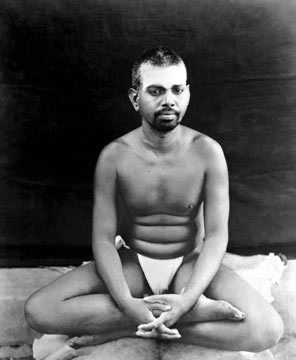
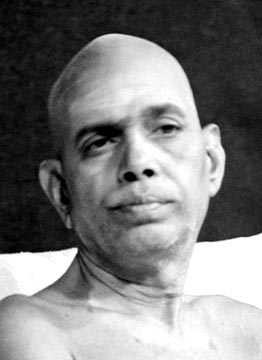
Bhagavan Ramana

Bhagavan Ramana
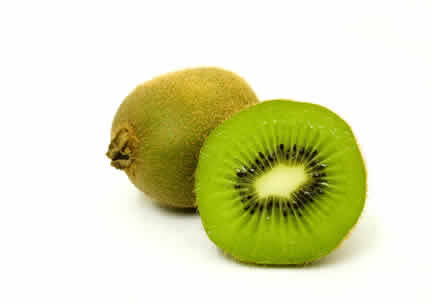
I held the luscious kiwi in my hand,
as if I held an emerald,
a glorious gemstone —
a gift handed by the great Khans
in ancient China.
I like to call it by its many names:
actinidia arguta or tara vine,
zespr, yangtao or gooseberry
like the Chinese.
The tiny brown and golden ochre colored bristles
give the kiwi a distinct earthy look
from a glance.
Upon looking deeper,
beyond the greenish umber thatch
of bristle & peach-like fuzz,
beyond the hardy oval-shaped exterior
of the egg-like fruit,
beyond the rough, rugged skin
of the treasured gem
are non-kiwi elements too:
sunshine, rain, soil,
compost, air, and time.
Looking deeply,
a slight indent of the hairy skin;
a small patch
to the side of the kiwi
bruised,
mushy,
shriveled,
squishy.
On one side, the kiwi has already begun
to decompose. On the other, the kiwi is ripe,
& resilient to every pull,
every stretch,
every indentation.
In the words of Thich Nhat Hahn
Both sides “inter-are.”
Measuring only 1 1/14 inches long
with 3/4 diameter,
the kiwi looks insignificant in size.
But its real beauty lies hidden
underneath the furry thatch,
underneath the mysterious disguise,
underneath the crowning of glory.
I take a sharp paring knife to slice off the top,
slowly peeling the ends and sides one at a time.
A delicate scissure reveals brilliant green flesh,
the color of lime green,
a beautiful green, the color of coriander,
the color of fresh mint.
On the surface, a colorless crystalline substance
coating the slick, velvet, malleable
hairless green flesh.
Digging deeper, a golden center
ringed by dark tiny purple seeds,
aligned in a row, all surrounding
an almond white core.
With a spoon, the fragrant innards are scooped,
eaten raw, like any citrus-flavored melon
first a sour, pungent, bitter taste,
then tangy, acidic and mouth-watering.
Allowing the lush whole melt into the mouth,
the tart candy, like compost,
transforms into delicacy.
Gururaj Ananda Yogi used to speak in his satsangs about the path of unfoldment, to emphasize the fact that there is no development, the soul is completely developed, there is just an unfolding. But in this path, that goes from Silence to Silence: What is traveling? Have we traveled a path or have we not traveled at all. And if it has been a journey: Who experiences this journey?
We “know” that the spirit of the human being, or the universal spirit, is omnipresent. It has nowhere to go and nowhere to come from. It just is. So what journeys? Is it really and experience, or is it an illusion? Even if it is an illusion, then how is illusion experienced? All illusion or delusion is just a counterpart of reality, as it’s own “non-existence” exists within that It that we call reality.
We come from nowhere and we are going nowhere, but just give a little space between the “w” and the “h”. You are now here and that is the important factor to recognize in practical life. Nevertheless, the mind has a habit of inquiring.

IFSU Flag
The mind is conditioned through the process of evolution into going through various stages whereby it gains these experiences. Who gains the experiences? The mind gains the experiences.
A HUMAN BEING HAS THE CAPACITY TO EXPERIENCE THE ENTIRETY OF THE UNIVERSE; THE SPIRIT CANNOT
So, the experiences having been gained by the mind, of the mind, and from the mind bring us to a simple idea: There is nothing outside the mind. The human mind is as vast as the entire universe, and if you individualize it, it only means that you are viewing one bubble in a vast pond. And that bubble has no separate existence from the pond. A human being has the capacity within himself to experience, with the mind, the entirety of the universe; while the spirit remains aloof, for the spirit cannot experience this journey. Therefore we say, “From Silence we proceed, and we return to Silence.” It means that the mind that has been manifested, as fragrance is from a flower, goes through this journey, be it illusion or not, and then finds itself at total “at-one-ment” with the spirit. That is the journey, so in reality there has been no journey.
But the mind assumes that this is a journey, that there is a journey. What are the reasons for this? The spirit just is, while the mind travels thinks it is traveling from here to there. From the beginning of the present cycle of this universe there is a manifestation, wrongly called creation, because creation requires a will behind, while manifestation is just an emanation. It is the nature of the manifestor to manifest, like it is the nature of a flower to give off fragrance, but there is no will involved. The powers in the manifestation are known in sanskrit as the three gunas, tamas rajas and satvas. It is this interaction between darkness and light that operates in the manifestation of this universe, which is the Universal Mind also.
THE MIND CREATES EXPERIENCE
The entire mind, or the universe, is nothing else but a propulsion which seemingly goes forth in our concept of linear time and space. In the third dimension that we exist in, we find this movement proceeding from A to B, while beyond the mind there is no space and no time. Like Blake said, “Eternity in an hour”, we would rather say, in a moment.
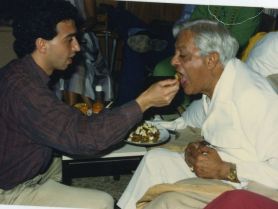
Gururaj Ananda Yogi and Raman in Cyprus
In this process put forth through manifestation in which the three gunas operate, the mind feels itself traveling. Why does it feel itself traveling; why does itself feel mixed up in the process of evolution? In this process of contraction and expansion generated by the three gunas, matter and it’s various atomic structures is always in motion. The mind enmeshed in this process of contraction and expansion thinks it is moving.
If you watch a wave in the ocean, you think the wave is coming from a distance and going to the shore. This is not so. There is a rhythm in the ocean created by currents where each wave is bobbing up and down where it is, and the next then bobs up and down, and so on so forth giving us the illusion that the wave is moving from that end to the shore. Likewise there is the flux of the universe, the perpetual motion that perpetuates itself, within itself, by itself, because its nature is motion. What we are trying to find is that which is silent behind all the motion: for that which is motion cannot be silent, and that which is silent can have no motion. Very simple.
The mind because it has the ability to act and interact within its own components, becomes more and more complex, and it is this very complexity that adds onto the motion of the mind. The mind creates the experience, and the mind itself is the experiencer, for the eternal spirit within humanity is beyond all experience of motion or anything else. It just is. Here it is a question of a superimposition.
Heat rises from the sun. The sun does not intentionally create the heat: it is the nature of the sun to give off heat. Similarly, that eternal energy, in its very silent form, first manifests itself as mind.
When mind assumes this motion, it also finds a direction, and this direction is what we term as will- Divine Will. Because there was Divine Will, all this you observe, including our individual wills, has come about.
This is very true from from the theological point of view and the philosophical point of view. But from the mystical point of view, this truth assumes a totally different approach: In the manifestation which one could call Divine Will , the Will itself becomes the individual mind. Here there is no differentiation between mind and will. Ordinarily it is the directed activity of an individual mind, which is self-created, that is called will.
When manifestation occurs, this divine force, in the process of manifestation, has to grossify itself in the form of matter, or grosser energies. From the subtlest level of that silent energy, ever inaccessible like in limits in mathematics, this divine force assumes the form of activated energy, and the more that energy is activated, the grosser and grosser it becomes. This is why science today can neither reach nor explain the entire structure of atoms. Scientists talk of sub atomic matter and sub-sub atomic matter, but when coming to experimental experience it will be impossible to capture the nature of that energy, as the very test-tube they are using is made of the same energy in which they are trying to trap it in.
What can be proven is only that which has motion. Yet motion is such that at the moment you view it, it changes, and viewer in it’s own changing cannot have a true picture of that motion at its most subtlest level. That is why we know so little, from laboratory experiments, of the mind. (to be continued…)
In Praise of Shri Bhagavan
by Alan Adams Jacobs
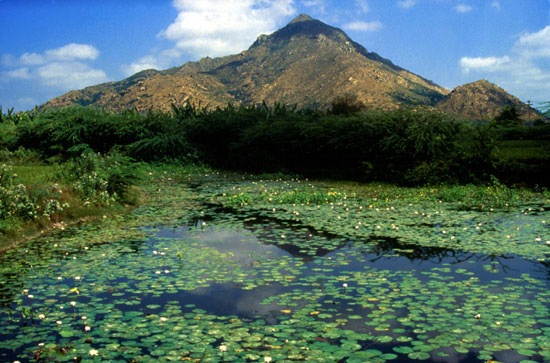
Let’s give thanks to great Lord Ramana,
For his boundless Grace and Jnana teaching;
He grants silent diksha without vain preaching,
And the precious gift of atma vichara,
His directly liberating, true sadhana.
His eternal presence is close; ever reaching
The hearts of all devotees, so breaching
Mad ego’s fortress of dark avidya.
We feel devotion through our gratitude,
For leading us out of dread samsara;
He bestows full faith, strength and fortitude,
He transmits the power of Arunachala.
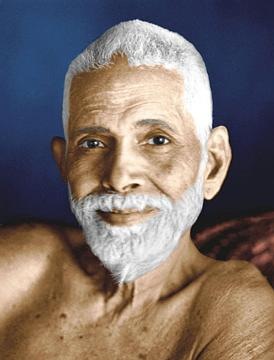
Ever our loving guardian and guide,
Deep in our hearts his lotus feet abide.
Photos courtesy of Shri Ramanaashram

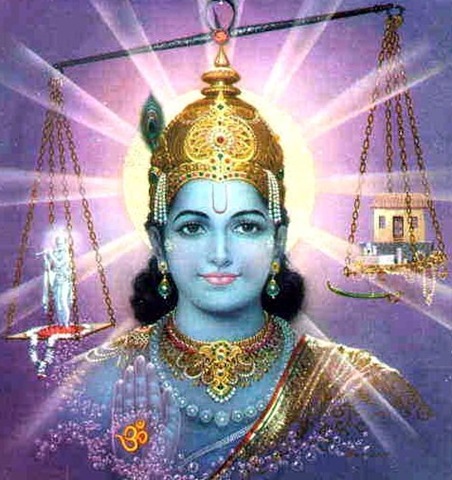

To those who worship Me alone, thinking of no other,
of those ever united, I secure what is not already possessed
and preserve what they already possess. (BG 9.22)
The story below appeared months ago prompting some discussion in the Guruvayur yahoo group in which I am a member. Today is Thanksgiving here in America, and this week we also celebrate Gita Jayanti, or the observance of the gifting of the Bhagavad Gita to the world by Shri Krishna more than five thousand years ago. As my thoughts turn to gratitude, I am reminded of this story below and the responses it produced in the Guruvayur group, and how important it is to always be grateful to the Lord for everything, knowing that He is our eternal well wisher and that everything happens for our highest good, even the things which which appear to be bad or are difficult to endure…everything means everything.
The focus of the discussion was on what should we ask of God. To what end do we pray, asking for this and pleading for that? Success in this venture, a new job, a happy marriage, a grandchild, a son or a daughter, a husband, a wife, a handsome husband, a beautiful wife, a nice house, a beautiful house, a mansion, good grades in school, a child who is a doctor or the president of the US? For what is it that we really seek, when all illusions are cast aside and maya’s veil is lifted? None of the above!!!
What should I seek from the Lord but the Lord Himself? That by His grace, I should know Him as the very Self in my heart, casting aside the shackles of the body and the solitary confinement imposed by the mind. He promises us, in the Gita, that if we are utterly devoted to Him, thinking of Him only, asking only for Him rather than of Him, He will be ours, and as such, will take care of us as needed. To understand this, to believe this, in full faith, can only be followed by complete surrender to His will, trusting that whatever happens is indeed His divine will operating to bring us out of bondage to birth and into reunion with Him.

From http://idharudharkee.blogspot.com/2009/07/what-we-should-ask-god.html
What should we ask of God?
This story from Mahabharata answers this question beautifully and categorically:
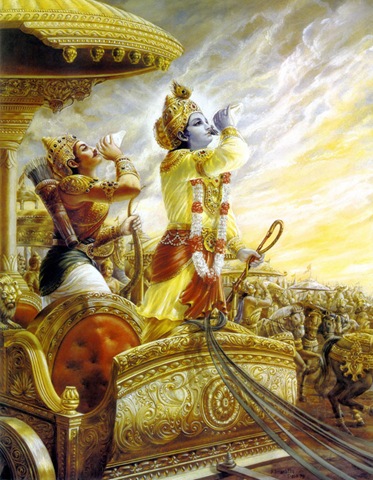
The Great War between the Pandavas and Kauravas was to begin. Arjuna, having pondered, decided to
go to Lord Krishna and ask him for help.
He went to the Lord’s abode and found him asleep.He stood respectfully at his lotus feet, with folded hands and head bowed in reverence. Duryodana, of the Kauravas, had the same idea of asking Sri Krishna’s help. He too came and, finding the Lord asleep, sat arrogantly in a chair placed at the head of Lord’s bed.
In due course, the Lord woke up. Arjuna, being at his feet, was the first person he naturally saw. As he turned to get up, the Lord’s eyes fell upon Duryodana.
The purpose of their visit was known to Him. However, he asked them what he could do for them.
Both answered that they had come to request his assistance in the ensuing war. The lord said that they had placed him in a difficult predicament by asking for the same thing. He said he could not deny either of them. He said he would offer himself, alone, without armies to one of them and to the other he would offer all his armed forces completely. He said that since his eyes had fallen on Arjuna first, he should have the first choice in the matter.
Arjuna promptly prayed to Sri Krishna that he alone should side the Pandavas.. Duryodana heaved a sigh of relief and requested Sri Krishna for all his forces. The Lord agreed to their requests.
We know who emerged victorious. The moral is “We should ask for HIM, not ask for things He can give us”
If the Lord gives us everything in the Universe but withholds Himself from us, we gain nothing. But if we seek HIM for Himself alone, we get not merely Him but all that is His, too!
abhyaasa yOga yuktEna cEtasaa naanyagaaminaa,
paramam pursham divyam yaati paarthaanucintayanMeaning:
He who with his mind disciplined through Yoga in the form of practice of meditation and thinking of nothing else, is constantly engaged in contemplation of God attains the supremely effulgent Divine Purusha (God) (sloka 8 in chapter 8 of Gita)
And what did Arjuna request? The Lord Himself. In his earnest bhakti, he intuited that this was the right choice and it was. When you ask for the Lord Himself, with utter devotion and humility, how can He deny you? In the Gita, He makes this promise to His devotees…
ananyaaScintayamtO maam yE janaah paryupaasatE
tEshaam nityaabhiyuktaanaam yOgakshEmam vahaamyaham. (BG 9.22)
To those who worship Me alone, thinking of no other, of those ever united, I secure what is not already possessed and preserve what they already possess.
https://luthar.com/wp-content/uploads/2009/06/bgita.pdf
But those who always worship Me with exclusive devotion, meditating on My transcendental form—to them I carry what they lack, and I preserve what they have.
http://www.bhagavad-gita.us/categories/The-Gita%3A-Chapter-9/?Page=2
Those who desire My eternal association precluding all else meditate on me with exclusive devotion; those persons I insure the uniting of their individual consciousness with Ultimate Consciousness perpetually. http://www.bhagavad-gita.org/Gita/verse-09-22.html
Yoga-kesamam, means to provide what they lack and safeguard or preserve what they have. In this context, yoga is said to mean making available what one does not have, and ksema means the preservation of what one already has. For some, the sloka is interpreted to mean those who recognize the nonduality of the Self, abiding in the Self at all times; for others, this is considered to be a promise from the Lord to take care of His devotees. If we go online, we can find countless articles claiming that the interpretation therein is the right one and that all others are missing the point, thus missing salvation itself!
For me, neither one has the right to claim the other is wrong…it can mean both, one at the level at which we exist as entities in this world of maya, or saguna, another at the level of the formless nirguna. The Lord, in His infinite mercy, prescribed numerous paths in the Gita. I am a bhakta. He is my Lord and while I know that philosophically speaking we are indeed nonseparate as it says so in the Gita and in the Vedas, as far as I am concerned, that can only be truly perceived through His Grace. So, while I am nothing but Him, on another level of worldly perception, this is known and experienced only through the operation of Divine Grace.
It is so stated in the Mukanda Upanishad 3.2.3:
nāyam ātmā pravacanena labhyo
na medhayā, na bahunā śrutena,
yam evaiṣa vṛṇute tena labhyas
tasyaiṣa ātmā vivṛṇute tanūṁ svām.
(Mukanda Upanishad 3.2.3)
This Self cannot be realized by studying the scriptures, nor through the use of reason, nor from the words of others–no matter what they say. By the grace of the Self the Self is known; the Self reveals itself. http://www.peterrussell.com/Upi/Mund.php
The Supreme Lord is not attained by reasonings or by vast intelligence, nor even by much hearing. He is attained only by one whom he Himself chooses. To such a person He manifests His own form. http://bvml.org/SBVPGM/sgt.html
And the Katha Upanishad 2.2.23:
The Self cannot be known through study of the scriptures, nor through the intellect, nor through hearing learned discourses. The Self can be attained only by those Whom the Self chooses. Verily unto them Does the Self reveal himself. http://booksandphotos.blogspot.com/2009/05/upanishads-kena-and-katha.html
This Supreme Self cannot be reached by argumentation, or by applying one’s independent brain power, or by studying many scriptures. Rather, he alone can achieve the Self whom the Self chooses to favor. To that person the Self reveals His own true, personal form. http://vedabase.net/sb/10/87/27/en1
The reason I have reproduced more than one translation of the Gita and Upanishad slokas above is that I wanted to read them in several formats for my own benefit and I also wanted to offer the reader the option of seeing it as such. So many ways of saying the same thing. And so many schools of thought want to say that their interpretation is the correct one and all others false and faulty. In the end, Divine Grace is the operational catalyst, whatever you deem its source.
So, what should we ask of God? Truly, there is no thing to be asked. There is no thing to be given. How can we give Him what is already His? All we can do is realize, through His grace alone, that we are already His, in every sense that we as mortals can conceptualize in our limited minds! Not only will He take care of everything and look after the welfare of the devotee, He will guide us if we listen. Thus, I do have a prayer…to fully surrender, to listen without fear of the consequences, no matter what He asks me to do. Where it will lead, I have no real idea and no plan of action! He is guiding the chariot now. May I sit quietly and not be a backseat driver. Chitta chora!!!




 Luthar.com

You must be logged in to post a comment.