evankeith's avatar

Thanksgiving When I Was A Child: By Dr. Evan Keith

Image

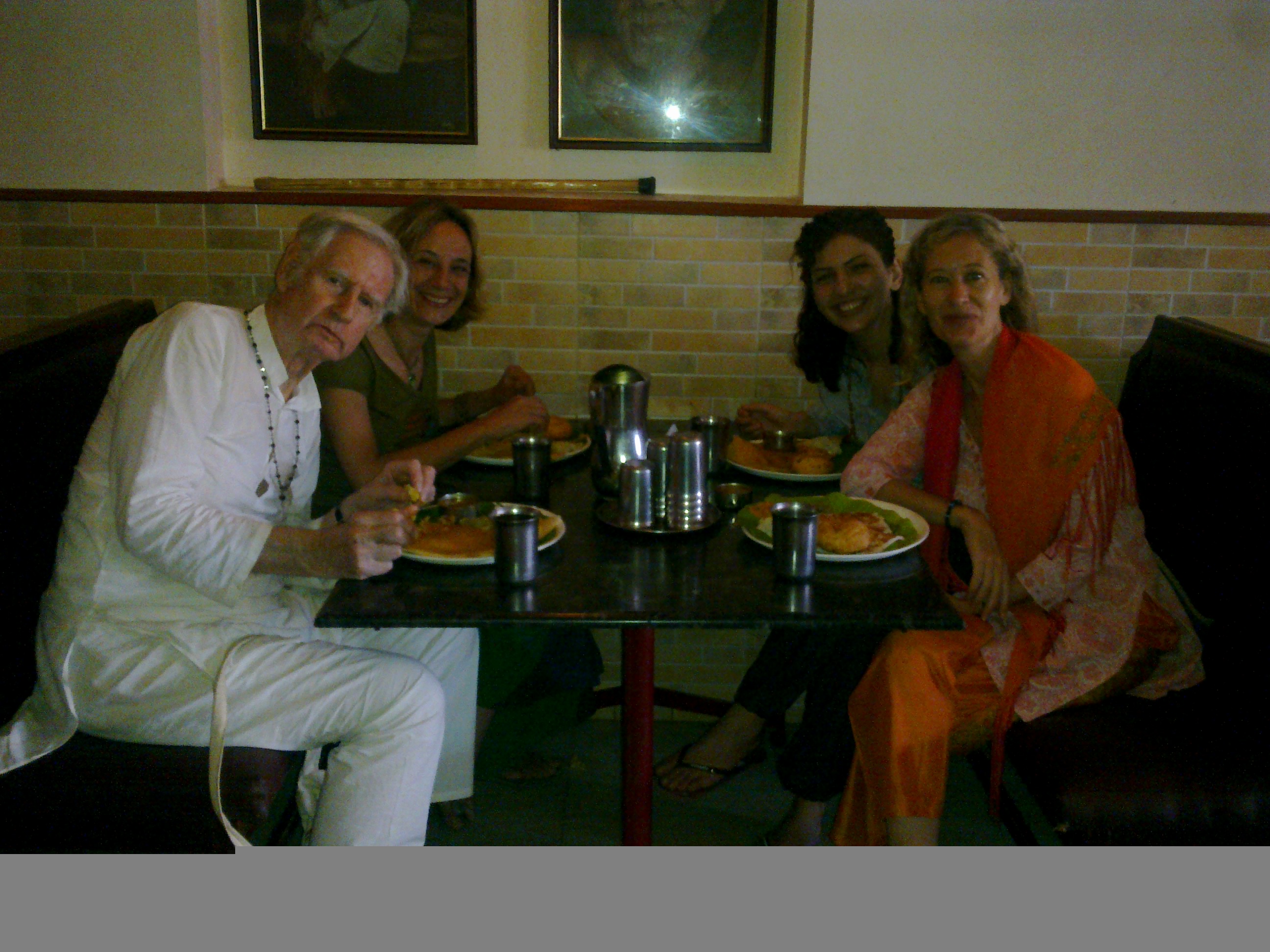
Recently, on United States’ Day of Thanksgiving, my mind remembered in my childhood when my family’s celebration of this holiday changed significantly for some years. When I was small, my mother would spend hours in the kitchen every Thanksgiving morning to prepare the requisite feast of a big whole cooked turkey along with many side dishes, which together were meant to represent the food that was eaten at the “First Thanksgiving” celebrated by about fifty Pilgrims, along with almost one-hundred Native Americans, after their first harvest in the New World in 1621. Although I did not notice at the time, I think my mom did not like being separated from her husband and three sons while she worked for hours in the kitchen. However, I do remember enjoying the fanciness of the feast at least as much as its delicious flavors. Continue reading

Harsha's avatar

The Tale of Two Pens: By Chhaganlal Yogi

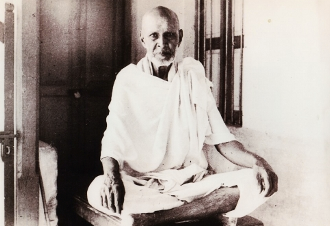
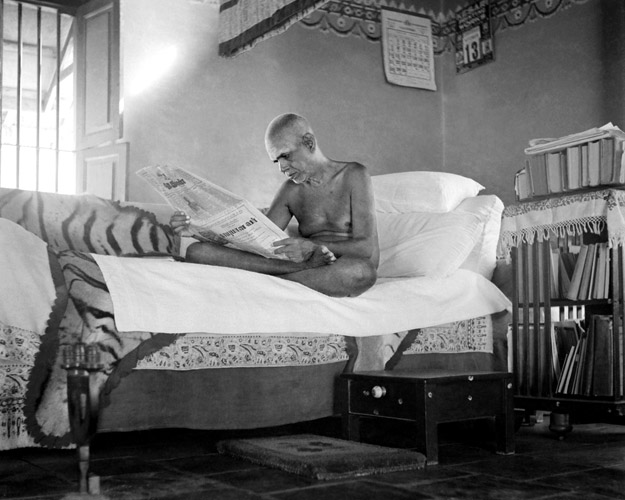
Sri Ramana reading

Sri Ramana reading

Sri Bhagavan generally used two fountain pens: one contained blue ink, the other, red. Both of these pens were quite old and looked, to me at least, worn out. One day the top cover of the red-ink pen cracked, so a devotee took it to town to have it repaired. It was gone for several days. During this period Sri Bhagavan reverted to an old-fashioned nib pen which had to be dipped in an ink pot of red ink. Since this seemed to cause him some inconvenience, I decided to get him a new pen. I wrote to a friend in Bombay and asked him to send one immediately. A few days later the pen arrived by post. I went straight to Sri Bhagavan and handed over the unopened parcel containing the pen. Continue reading

Harsha's avatar

Viswanatha Swami_ A Hidden Gem: By Murray Feldman

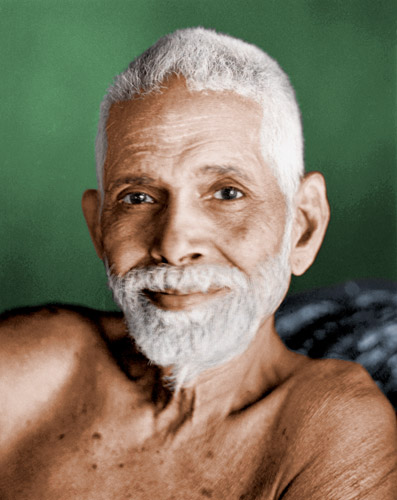
Viswanatha Swami

Viswanatha Swami first came to stay with Bhagavan Sri Ramana Maharshi when he was about 19 years old. His father, Ramaswamy Iyer, was a first cousin of Bhagavan.

I had the good fortune to spend considerable time with this great devotee of Ramana Maharishi from April 1976, until he became ill and passed away at 75 years of age on the 22nd November, 1979. How he came to Bhagavan has been written about elsewhere. Here I attempt to show how he exemplified, so wonderfully and devotedly the teachings of Bhagavan. Continue reading

evankeith's avatar

In the Jaws of the Beloved Tiger: By Dr. Evan Keith

Image

I do not know when I first learned of Bhagavan Sri Ramana Maharshi. I know that at most he was little more than a name to me before my eighteenth birthday and only in the last year has he become of central importance to me. In fact, now I think of Bhagavan as my Guru. Bhagavan never did formal initiation of anyone as a devotee and never even referred to anyone as being or not being his devotee. Nevertheless, he sometimes mentioned that most people needed a guru to overcome their ancient tendencies and “realize” the Self. Sometimes Bhagavan would allude to the Self, itself, or in particular the mountain Arunachala as having been his Guru. In this respect, Bhagavan Ramana is my Sadguru and I am His devotee. Continue reading

suryanarayanarajumd's avatar

Upadesa Saram Verse 1: Comments by Dr. Suryanarayana Raju

c_clo_08


Verse1: kartur agyaya prapyathe phalam. karma kim param? karma tat jadam.

Meaning of the words.

kartur: The ordainer of results. God.
agyaya: as per His orders.
prapyathe phalam: The results are obtained.
karma : the actions
kim param : Are they supreme ? [Meaning is the law of karma the ultimate ? Who is the one who makes it happen then? ]
karma tat jadam: Actions are jadam, dead lifeless entities.

English translation of Verse 1:

“Action is insentient. Action is not the ultimate reality so action per se has no ability to confer the fruit of action. Fruit of action occurs according to the whim of the ultimate reality which is usually called God.”

Comments by Dr. Raju:

In his classic work Upadesa Saram (Spiritual Instructions) Bhagavan is questioning the idea of doership in the first verse itself. Bhagawan explains in the first verse why the individual performing the action is not the doer. Continue reading

Harsha's avatar

I Entered the Heart a Stranger: By Dr. Harsh K. Luthar

20130121_154812

For many years, I have been sharing the following quote on Facebook.

“I entered the Heart a stranger and saw that I myself am the Heart.”

Continue reading

Harsha's avatar

The Spiritual Secret Of Western Classical Music: By Alan Jacobs

Alan Jacobs

To a degree music is rooted in Nature, that is in bird song, the babbling brook, waves breaking on the sea shore, the rustle of leaves in trees, and certain animal sounds. In man, as part of nature there is the desire to dance and sing when happy.

Continue reading

Harsha's avatar

All Is Brahman: By Alan Jacobs

Alan-ji at Arunachala with devotees

What does the word Brahman actually mean? Sri Alan Jacobs responds below:

Sages say that it is ‘beyond verbal description’, but as a pointer they postulate Sat Chit Ananda which means Reality-Consciousness-Bliss. Brahman is not a God but an Almighty Great Power. It is the substrate of ‘All and Everything’, which means it contains the whole universe and holds it altogether. Brahman has two agents or adjuncts. First of all is Ishvara or Almighty God and Maya its delusionary power.

Continue reading

Harsha's avatar

The Enlightenment Business: Wisdom For Sale

By Dr. Harsh K. Luthar

Dr. Luthar listening to a presentation

Religion and spirituality today are a big business. Generally the spiritual teachers, preachers, gurus, and the so-called enlightened masters of the day are really motivational speakers and self-styled self-help experts who engage in entrepreneurial ventures for financial and commercial success.  Every year people spend billions of dollars buying the books, CDs, and self-help programs offered by such teachers.

Continue reading

Harsha's avatar

Nirvikalpa Samadhi – Two Different Perspectives: By Dr. Harsh K. Luthar

Harsh K. Luthar

Harsh K. Luthar

Question On 01/20/2000 From Gausima

I accidentally found this on the internet while searching for something else, and was wondering what type of Nirvikalpa Samadhi it was referring to and if anyone had any knowledge of this.

“once an ordinary person achieves Nirvikalpa Samadhi, he leaves the body in 21 days.”   In the Gospel of Sri Ramakrishna, on page 245, it says, “Trailanga Swami once said that because a man reasons he is conscious of multiplicity, of variety. Attaining samadhi, one gives up the body in twenty-one days. . . ” (Ramakrishna was talking to his devotees.)

Namaste,
Gasusima

Continue reading