Harsha's avatar

Food is Sacred

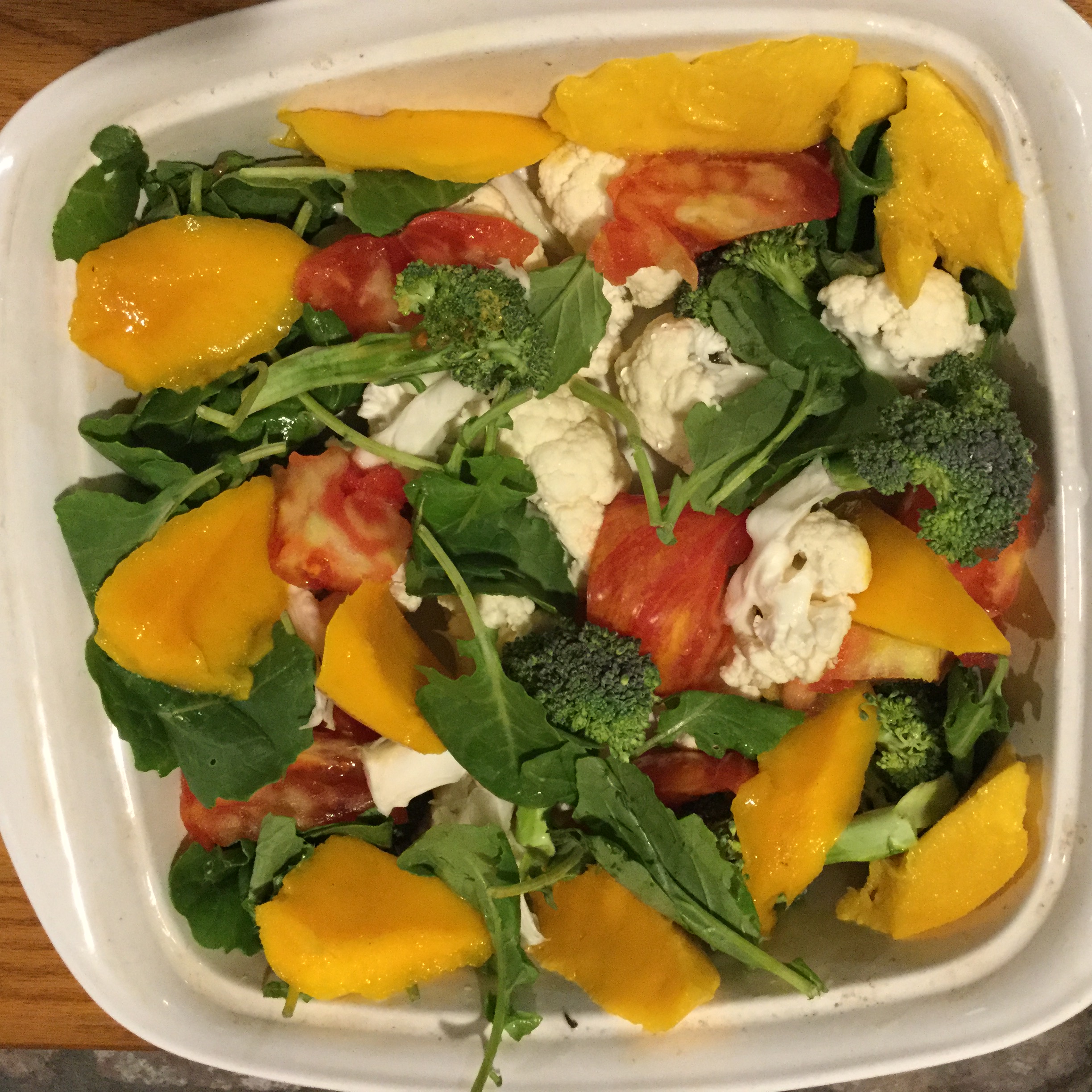
Vegan Salad with Mango pieces

Sri Ramana spent many years cooking for others at the Ashram and even gave precise instructions to those in the kitchen on cooking! He was a taskmaster and did not allow any food to be wasted.

The Upanishads remind us that food is sacred. “Food (anna) itself is Brahma” ~  Taittiriya Upanishad.

Bhagavan Ramana taught the devotees that food influences our body and mind, and should be selected with care, prepared well, and eaten in moderation.

Continue reading

Harsha's avatar

Sri Ramana Maharshi’s Mother: Mahasmadhi

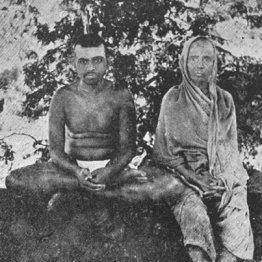
Bhagavan and His Mother

Sri Ramana’s mother lived with him in physically difficult conditions and in poverty in the caves of Arunachala. Life was hard for her due to her age as well. One day, Bhagavan Ramana’s sister came and said to their mother, “Mother, you are not well. Come, I have a comfortable house.” She refused and turning to Bhagavan told him, “I want to die only in your arms. After my death you may even throw away my body into some thorn bushes, it does not matter.”

Continue reading

Harsha's avatar

People of intelligence examine their own mind! ~ Sri Ramana
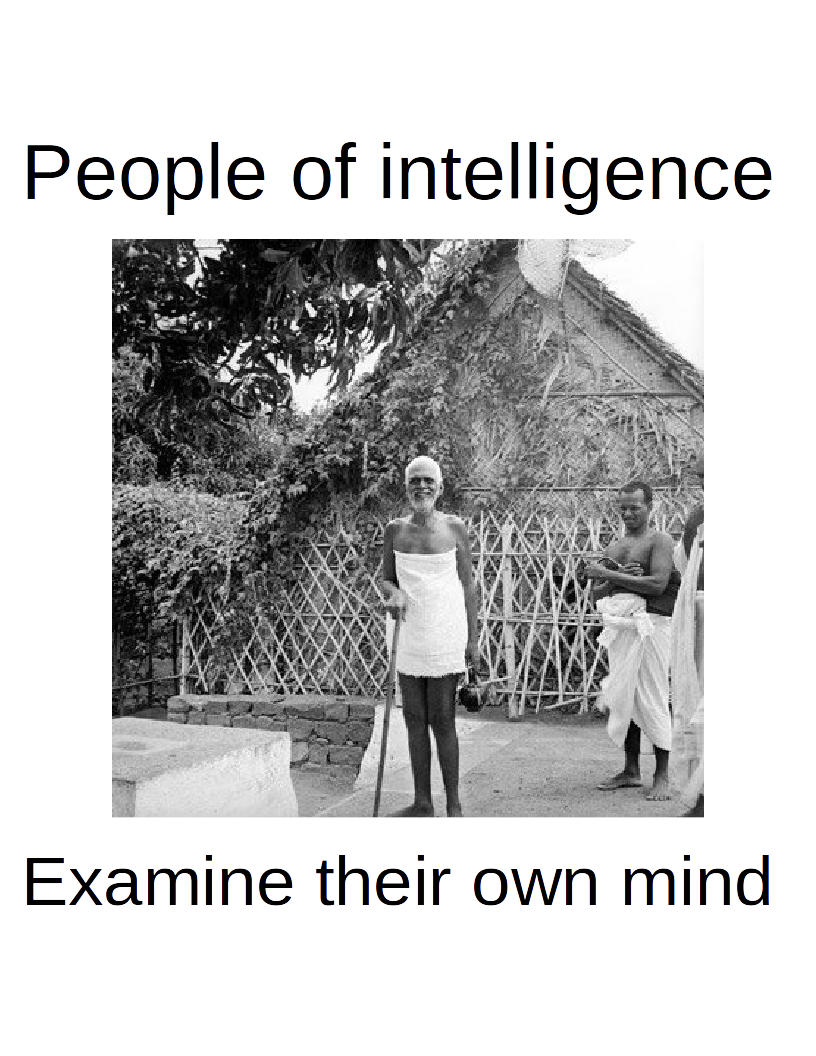
People of intelligence examine their own mind! ~ Sri Ramana

Harsha's avatarLuthar.com

People of intelligence examine their own minds

This quote can be found in the “Letters from Ramanasramam” ~13th August, 1946. In this simple comment made in the conversation, Bhagavan teaches us that intelligent and reflective aspirants focus their energy in scanning their own mind and consciousness. It is only by carefully examining the mind, one realizes the ultimate nature of perception.

View original post 144 more words

Harsha's avatar

Some Similarities between Jnana Yoga and Kundalini Yoga: by Vib “Vibri” Ribbon

Some Similarities between Jnana Yoga and Kundalini Yoga:

Harsha's avatarLuthar.com

Kundalini Yoga

Kundalini-Shakti is in traditional Indian spiritual sources described as the energy that propels man to liberation. Thus, awakening this energy in the body(mind) of the practitioner is central in some liberation teachings, most notably, the Kundalini Yoga systems and the Tantra Yoga systems. As the energy moves in the central channel in the body from its resting place and source in the Muladhara Chakra to the Sahasrara Chakra, and enlivens the passive element of the mind, liberation is said to ensue.

View original post 828 more words

Harsha's avatar

The Method For Self-Realization: By Dr. Harsh K. Luthar

The Method for Self-Realization

Harsha's avatarLuthar.com

Sometimes we see people debating the language and methodology of Sri Ramana’s teaching. The question is often raised, “What is the purest form of Ramana’s teaching”?

The answer is obvious. That form of the teaching is the purest, which works for you. What bring you to Self-Knowledge and Self-Realization is the highest teaching.

Sri Ramana’s teaching is very straight forward. Despite the volumes of books and hundreds of expert commentaries, the essential teaching is simple. It is all an open secret for everyone to see.

Sri Ramana always emphasized that our nature is that of pure, unstained consciousness. “Awareness is another name for you”, the Sage of Arunachala used to say. Our spirit is of the nature of unbroken awareness that continues regardless of what our physical makeup is or what mental state the mind is in (sleep, dreaming, waking). If we deeply understand this, we have arrived at the…

View original post 334 more words

Harsha's avatar

I Entered the Heart a Stranger: By Dr. Harsh K. Luthar

The Experience of the Heart.

Harsha's avatarLuthar.com

20130121_154812

For many years, I have been sharing the following quote on Facebook.

“I entered the Heart a stranger and saw that I myself am the Heart.”

View original post 757 more words

Harsha's avatar

God Looks After You Unasked! Said Bhagavan Ramana Maharshi

Harsha's avatarLuthar.com

Selected portion of A Devotee’s remembrance. Shantammal speaks of Bhagavan Sri Ramana Maharshi.

One of the visitors was leaving the Ashram. He stood before Bhagavan with folded hands and prayed: “I am going far away. I do not know when I shall be coming back, and if at all I shall be allowed to see your holy face again in this life. I am so much less fortunate than those who have the benefit of your constant presence. How can you help me, a sinner in a distant corner of the world, unless you think of me? I implore you, give me a place in your mind.”

View original post 172 more words

Harsha's avatar

Kundalini Shakti in the West: By Dr. Harsh K. Luthar

Kundalini Yoga in the West

Harsha's avatarLuthar.com

The notion of Kundalini Shakti is at the heart of yoga and is embedded in virtually all Eastern traditions regardless of the name or label that is given. If we carefully examine any school of yoga, tantra, or various traditions (Shakti, Shaivite, Kashmiri Shaivism), there will usually be some descriptions of Hatha Yoga, Pranayama, Kriyas, Mudras, Mantras, and different types of meditations on the Chakras (energy centers).

In the Shakti traditions, detailed descriptions are given of the various aspects of the visions of the Goddess that arise in meditation. Even in the school of Advaita Vedanta, which does not depend on the practices associated with Shakti Yoga, we see that the great scholar/saint Adi Shankracharya has written hymns to the Goddess who represents Shakti, the divine power.

View original post 779 more words

evankeith's avatar

In the Jaws of the Beloved Tiger: By Dr. Evan Keith

Image

I do not know when I first learned of Bhagavan Sri Ramana Maharshi. I know that at most he was little more than a name to me before my eighteenth birthday and only in the last year has he become of central importance to me. In fact, now I think of Bhagavan as my Guru. Bhagavan never did formal initiation of anyone as a devotee and never even referred to anyone as being or not being his devotee. Nevertheless, he sometimes mentioned that most people needed a guru to overcome their ancient tendencies and “realize” the Self. Sometimes Bhagavan would allude to the Self, itself, or in particular the mountain Arunachala as having been his Guru. In this respect, Bhagavan Ramana is my Sadguru and I am His devotee. Continue reading

Harsha's avatar

Nirvikalpa Samadhi – Two Different Perspectives: By Dr. Harsh K. Luthar

Harsh K. Luthar

Harsh K. Luthar

Question On 01/20/2000 From Gausima

I accidentally found this on the internet while searching for something else, and was wondering what type of Nirvikalpa Samadhi it was referring to and if anyone had any knowledge of this.

“once an ordinary person achieves Nirvikalpa Samadhi, he leaves the body in 21 days.”   In the Gospel of Sri Ramakrishna, on page 245, it says, “Trailanga Swami once said that because a man reasons he is conscious of multiplicity, of variety. Attaining samadhi, one gives up the body in twenty-one days. . . ” (Ramakrishna was talking to his devotees.)

Namaste,
Gasusima

Continue reading