

Harsh K. Luthar
 Editor’s note:
 Cleansing our body inside out has become essential nowadays. The high level of pollution and the increased electro-magnetic activity in the atmosphere, hectic professional agendas and endless lists of preservatives in our food, contribute to increase the level of stress in our system. By stress, I don’t only mean high nervosity or anxiety but an imbalanced state that creates blocks and ultimately disease. Additional to a healthy lifestyle routine, anyone who has ever experienced a detox program agrees that helps to clear not only the body, getting rid of any excess weight, to restore and optimize our energy level, but clears the mind as well, bringing more focus and an overall sense of ultimate sense of well-being. Then our outlook on life changes drastically, a more positive approach of life is possible which is rule number 1 to prevent depression and an optimum healthy life.
But is this just a modern, trendy “must do” during intermediate seasons?… Certainly not. From ancient traditions spring detox has always been a universal concept.
Years ago, when I first experienced Ayurveda at Soukya Holistic Center in Karnataka-India, I ‘ve been told by my physician, world-renowned Ayurvedic Doctor Isaac Mathai, that the monsoon season usually starting in May, is actually the best period for a Panchakarma: a complete 5 step mind-body detox program which ideally lasts for 7, 14, 21 or 28 days (the duration of a Moon cycle and a cell renewal cycle by the ways…). He explained that the rainfalls actually support the cleansing/detox provided to a patient according to their Dosha type (biological “moods”). I also believe that people feel more positive and refreshed inside out because of the negative ions generated by rainfalls.

Ghulum (bath attendant) providing a customer with 2 Ayurvedic procedures.
In Panchakarma, a combination of different techniques are used to remove stored toxins in the body which contribute to sap our immune system. Purgation is usually processed with clarified butter (ghee) to remove impurities from the colon or water for a nasya (instillation through nostrils). Blood letting is also used to renew the red blood cells in the body.
Specific massages, like daily Abhayangas (4 hand massage) bring back balance and harmony to the body and to the Chakra system. The Shirhodara (3rd eye cleansing and my favorite…) do wonder on quieting the mind, increases awareness and heal migraine and Parkinson. Goodbye anger, sadness, grudges or lingering guilt, they will all be swept out… It’s important to remember that while a imbalanced diet can obviously affect the body directly, negative thoughts are actually number 1 enemies to harmony and good health.
Meditation and yoga programs can be added to these medical techniques: a combination of postures (Asanas) with Mudras, breathing techniques (Pranayama) and Mantras, are powerful tools to unburden the body and mind.

It is interesting to mention that this period of spring cleaning corresponds as well to some religious and non religious practices found in different traditions. For example, according to the bible, spring is time for the Jewish community to get rid of all the “hametz” during the pre-Passover time: every single dust or crumb has to disappear from the house before the celebration of “Pessah”, liberation.
In Feng shui, spring is also an important time for a making up; what to keep, what to give, what to get rid of… In this ancient Chinese concept, old, useless items represent blockages for a fluent energy flow in the house, but also for the inner world (body system), and for the mind: any type of clutter, within the body and/ or in the environment has to be cleared to avoid disease.
Mother Earth, in her infinite abundance and generosity offers us everything to achieve this detox: plants, vegetables, essential oils, specific spices like curcuma and cinnamon among many others are on the top list of the “natural cleaning team” in Ayurvedic medicine. Aditionnal to the digestive system, a Panchakarma detox program will also support several other channels of elimination in our body: lungs, kidneys, skin, and lymphatic system, all your body will be thankful for this renewal. It goes without saying that a Panchakarma has to be done by a physician specialized in Ayurveda.
Wether using ancient wisdom tools, planning a retreat in a traditional medicine clinic, or indulge yourself in a modern SPA resort, it’s time to find your ultimate place for detox and enjoy your rebirth!
Rita Minassian
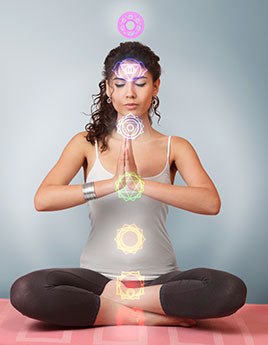
The chakras energy centers, a Sanskrit word for « wheel » or « disk », are the keys to reach Enlightenment. Through their meaning, colors, symbols, we can embrace the whole history of humanity starting from its root toward its supreme realization we’re all walking toward.
The Mulhadara chakra (or root chakra) located at the base of the spine is the chakra of our fundation: it refers to our survival instincts, self preservation and security. During prehistoric ages, people’s first occupation was struggling to survive. All their activities were about eating, finding a grotto to protect themselves from dangerous animal’s attack or bad weather, and when the moment came, to protect their precious source of fire.
Middle ages and Renaissance period were the theater of conquerors around the world. Crusaders or conquistadors were fighting to conquer territories like Holly land and south America in tremendous violence, while other one were competing for the power of a royal throne and wealth, killing or raping people without guilt.
Through centuries, humanity progressed to Svadhistana, our second orange chakra just below the navel. It connects us to others through feeling, desire, sensation, and movement. It represents our capability to exchange and interconnect with the others. This need lead people to the sexual freedom in the 70’s: Woodstock and the use of the orange color during this period of time was the tangible representation of that desire to free the energy of Svadhistana chakra.
During the 80’s, we entered the Manipura chakra Era. This yellow solar plexus chakra represents, ego, identity and is oriented to self-definition. Time came for women who wanted some more recognition in society to adopt a “male look” through ties and shoulder pads on fashion at that time, businesswomen were becoming more and more numerous in companies, where self progression was motivating each step of corporate associates, male and female. Ambition, self realization in a materialistic way: people just worked to achieve some personal goals through one rule, “Me first” …
Have you noticed how purple color overflowed fashion this year? For who knows the chakra color system it is surprising to talk about purple color instead of Anahata’s beautiful emerald green color… But shifting from Manipura to Anahata, from ego to heart and Love, to generosity, non judgment, non violence, we need a lot of transformation and spirituality which is actually the symbol of purple color. Purple was also present during the 70’s when desire to enter the “New age” through a new spirituality was emerging. Anahata is a crossroads chakra, it’s very exigent and very simple at the same time: with loving ourselves and being in Peace, we allow ourselves to Love Unconditionally.
Anahata is also the “filter” for the Kundalini energy that climbs up from one chakra to another one and to transform it into a subtle compassionate energy and reach Vishudha chakra through the narrow space of our neck. Thanks to the filter of Anahata, this blue communication chakra, we will express our thoughts in a compassionate way.
This energy full of kindness will continue its path until arriving to Ajna chakra, or the 3rd eye chakra in the middle of the eyebrows (pituitary gland). It’s the place where our Yin and Yang energies meet: we then become more aware of our being and of our Universe. Ajna is the seat of our 6th sense that sees intuitively. Through it, we can use our insight and psychic skills. Nowadays, we can see more and more children around us with very strong intuitive skills and large consciousness: some schools are aware of this phenomenon and accompany them with adapted programs. Some of them are known as “indigo children” because of the indigo color of their Aura, similar to Ajna chakra.
Finally, the run of the Kundalini energy will finally end to our crown chakra: Sahasrara and its “1000 petals” tinted in marvelous colors like purple (spirituality) white (purity) gold and silver (usually related to Guides and Angels)…
These numerous “receptors” connect us to our Higher Self, to our Guides and to Upper Forces. When everybody will reach the level of Sahasrara through a rich Spiritual life (which is not necessarily a religious life) people will access to wisdom, all-knowing, and bliss. That moment of pure Enlightenment will give us the opportunity to live in Harmony, at least…
The good news is that our evolution is rapidly increasing in the last decades than it used to be at the beginning of humanity, and hopefully our complete awakening will arrive quickly.
Each progress we make in our personal path toward Enlightenment is a help for our kinds: the more numerous we will be to raise our vibratory frequency, the better it is for the collective unconscious and our planet. From 1952 to 1958, in the island of Koshima in Japan, scientists established a theory which is called “The 100th Monkey”: the scientists trained monkeys to wash their sweet potatoes before eating them. After a certain number of monkeys trained, the scientists noticed that the monkeys on Takasakiyama island, a neighbor island of Koshima, started to wash their food also without being trained for it or having any connections with the trained monkeys … This experience shows us how the energy of a group can have effect on other ones attitude…
Everything that happens in this world finds its Source into upper world and upper force, using them for humanity’s Enlightenment is the choice we have through our free will. Like the lotus flower and its root in ooze becomes a beautiful flower with the help of the sunrays, such is human being and humanity in a holistic state: grounded into earth but push by a thirst for Light and Upper Forces to be able to grow…
OM MANI PADME HUM, this post is dedicated to the 7 billions of Lotus jewels around our beautiful planet walking toward Light.
Rita Minassian
 Luthar.com
You must be logged in to post a comment.