
I fell in love
I fell in a well
I fell in a well of love.
I splashed all about
trying to get out
out of the well of love.
Terror seized me
came this thought;
All is lost!
Tried to swim out
heard myself shout
Help!
A drowning man
gasped for breath
close seemed death.
I wildly thrashed around
in the well of love
and in time got out
safe and sound.
Cold and shaken
lost in thought
dripping from head to toe;
was not sure
if the battle fought
had been with a friend or foe.
Still, shivering body
sought no shelter
with no other place to go
stood quietly into the night
until the sunrise
brought its warmth and glow.
Then I missed love
and circled
the well of love.
Looked inside
but could not tell
how deep it was.
I felt its call
the well of love
thus grew my sorrow and pain.
I could not help it
so I jumped in
the well of love again.
Now, water water everywhere
all thought has ceased to be
and everywhere I stare
my love’s face is what I see.
Yes, water water everywhere
not a single sound is made
I did drown in the well of love
and only love remained.


“Because, whatever noble persons do, others follow. Whatever standard they set up, the world follows.”
(3.21) Bhagavad Gita
A version of this paper was presented at the 2005 Academy of Management Meetings in Hawaii under the title: Transformational Leadership and Self-Awareness in Hinduism: A Role Model for Creating Adaptive Organizations. It was part of an Academy of Management Symposium entitled Leadership for Adaptive Organizations: Models from the Christian, Hindu and Buddhist Traditions-Spiritual Leadership. Krishna images can be found throughout the Internet, including the site http://www.vishvarupa.com/vishnu-krishna.html and http://www.krishna.com. All images reproduced here in the spirit of fair use. http://www.law.cornell.edu/uscode/17/.
We have given acknowledgement of photographers and artists to the best of our ability. Please contact us if you feel we have missed an acknowledgement.
ABSTRACT
Charismatic leadership behavior of Krishna is examined in the Hindu epic Mahabharata just prior to the start of the Mahabharata war. Using modern theories of leadership, it is suggested that Krishna’s leadership style fits both the servant-leader and the transformational models of leadership based on situational contingencies. This approach adds to the stream of literature wherein scholars have examined the leadership of various historical religious figures including Jesus of Nazareth, Nehemiah, and Mahatma Gandhi and have analyzed the implications of spiritual leadership for modern life and organizations. The paper initiates an important stream of literature since no one has yet looked at Krishna’s leadership style from the modern perspective of transformational and servant-leader models.
In this paper, I look at one of the major characters in the Hindu epic Mahabharata, namely Krishna, and analyze the leadership behavior of Krishna to see how it fits the modern management thoughts on transformational and servant-leadership models. Taking this approach is consistent with recent literature wherein scholars have examined the leadership of Jesus of Nazareth (Sendjyaa and Sarros, 2002), the leadership of Nehemiah (Maciarello, 2003), and in general explored the characteristics of spiritual leadership (Cavanaugh, 1999; Covey, 1996) and its implications for modern life and organizations.
The sociologist Max Weber (1947) conceptualized a leader as a charismatic personality whose exercise of power was rooted in the followers identifying with the leader and their strong belief in him or her as an authority. According to scholars, charismatic leaders have extraordinary characteristics which allow them to inspire their followers and gain their commitment to shared ideals and a common vision (Conger & Kanungo, 1998; Hellriegel, Slocum, and & Woodman, 2001; Smith, Montago, & Kuzmenko, 2004). In suggesting the importance of the charismatic leadership as a root model, Graham (1991) reasoned that charismatic leadership lays the conceptual foundation for understanding transformational (Burns, 1978) and servant-leader models (Greenleaf, 1977) as both of these are inspirational and moral in nature. Similarly, Farling, Stone, and Winston (1999), have concluded that the notion of transformational leadership and servant leadership have a fundamental commonality to them.
This is the first paper looking at Krishna’s charismatic leadership and how it manifested in Krishna’s playing the role of a transformative servant-leader before and during the Mahabharata war. Although the charismatic leadership of many religious leaders and prophets and even Jesus of Nazareth has been examined (Barnes, 1978), Krishna has been left out of this analysis by modern western scholars. The reasons for this are unclear, although it is possible that many traditional western scholars have viewed Krishna as a fictional character and, like Barnes (1978), tend to focus on a contemporary figure like Gandhi as being a more representative leader of Hinduism.

However, hundreds of millions of Hindus view Krishna as being quite real and historical; exactly in the same way that Christians view Jesus to be a real and historical figure. Further, Indian scholars such as Raghavan (1969), a mathematician and an astronomer, have conducted analysis on the large number of detailed astronomical references (the relative positions of planets, the stars, the sun, and the moon in the sky) found in the Mahabharata literature and have argued that the strong internal consistency of these data from the ancient skies establishes the historicity of Mahabharata and places the Mahabharata war as having occurred around 3067 B.C.
B. N. Narahari Achar (2003), a Professor of physics at the University of Memphis, used the astronomical references in Mahabharata and experimented with various simulations employing very sophisticated tools of modern technology. Using a variety of planetarium software programs (such as Skymap Pro and Red Shift) that allow the exact picture of the sky for any given day and time from any part of the earth to be recreated (from 4000 B.C.E to 8000 C.E), Achar came to the same conclusion that Raghavan had arrived at earlier. Based on various streams of evidence, a significant number of Indian scholars believe that Mahabharata war is historical in nature and actually took place around 3000 B.C. (The IGNCA Newsletter 2003 Vol. I (January – February).
Krishna’s place in Hinduism
Hinduism is a broad umbrella for many different schools of philosophy and religious thought. The common bond among Hindus is that they all accept the central truths proclaimed by the Vedas and the Bhagavad Gita. However, interpretations of these truths diverge depending on the lens of the particular Hindu tradition under which these truths are viewed. It is in the Bhagavad Gita that Krishna speaks to Arjuna about the meaning of life and how to attain the goal of life. The term “Bhagavad Gita” translates literally into English as “The Song of God”. The Bhagavad Gita is sometimes called the fifth Veda, and it is embedded in the epic civil war of Mahabharata.
The Mahabharata war was a battle between two dynasties of princes (Pandavas and Kauravas) who were cousins (Kane,1958; Pusalker, 1996). The father of Pandavas, Pandu, who had been the king, had died when his sons were still young. The kingdom, thereafter was looked after by his brother Dhritrashtra (who had been blind since childhood), until it could be passed on to the rightful inheritors, the Pandavas. However, Dhritrashtra’s sons, the Kauravas, schemed to have the Pandavas killed so that the entire kingdom would fall into their hands. When the many methods and plans employed over the years to destroy the Pandavas failed, the issue came to a head and the dispute between Pandavas and Kauravas became open. With various neighboring Kings choosing either one side or the other, the conflict escalated into a major national battle for the control of Bharata (the old name for India). Krishna played a critical leadership role in attempting to stop the war. Having failed in diplomacy, Krishna took the role of the charioteer for Arjuna in the Mahabharta war.
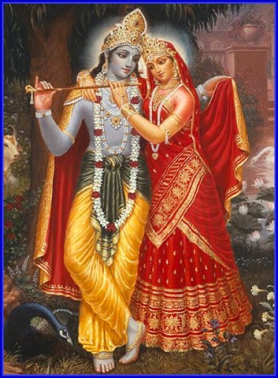
While the scholarly debate on the historicity of Mahabharata and the date it started is likely to continue, for most Hindus, the reality of Krishna has never been in question. Indeed, stories about Krishna as a mischievous child, a playful boy, a young man, a lover, a friend, and a warrior, who became the ruler of Dwarka in Western India, have captivated the Indian imagination since time immemorial. Krishna could be well described by Max Weber’s notion of ‘charisma.’ Weber defined charisma as a special quality in the personality of the leader by which he, “…is set apart from ordinary men and treated as endowed with supernatural, superhuman, or at least specifically exceptional qualities.” (1947: 48).
In Hinduism throughout the ages, Krishna has remained as the clearest example of one of the most charismatic and transformational leaders who with his great power of intuition adapted himself to every situation and inspired his followers to do their duty and achieve the goals and objectives that had been set forth. We see Krishna taking a variety of leadership roles both before and during the Mahabharata war. The two most prominent roles Krishna takes are that of a servant-leader and the transformational leader.
Krishna as a Servant-Leader
In the servant-leader model, the goal of leadership is viewed primarily as service. Servant-leaders take into account the interests of those they lead and put the interests of the followers above their own self-interest. Servant-leaders facilitate the growth and development of their followers, promote community, share power and resources, and provide the support needed to help achieve the goals that lead to the common good of individuals and the community as a whole (Greenleaf, 1977; Spears and Lawrence, 2002). In the context of this perspective, we see that Krishna meets the criteria of a servant-leader.
The following background of Krishna helps us to assess this aspect of his leadership style.

Krishna’s reputation was well established by the time of the Mahabharata war and he was revered and adored by the people he ruled along with his older brother Balarama in the city of Dwarka. Krishna and Balarama were known as the protectors of the weak and helpless in society. In particular, Krishna had great reverence for Brahmins and the Rishis (religious monks and spiritual scholars and teachers) and enjoyed helping and serving them in a variety of ways to facilitate their spiritual practices.
Krishna himself had gone through a formal religious training period with his spiritual teacher and understood the importance of maintaining age old traditions. Therefore, he had little tolerance for those who harassed the Rishis and the Brahmins in any way. Many of Krishna’s fights had evolved from attempting to protect the innocent from harm. Both Krishna and his brother Balarama were known to be superb warriors who had been through many battles. Krishna’s enemies, for good reason, had a great fear of him, although Krishna never fought without a just cause and often patiently waited to determine if aggressive action was necessary.
The Mahabharata fight between Pandavas and Kauravas posed a dilemma for Krishna and his brother Balarama as Krishna and Balarama were related to both the Pandava princes and the Kaurava princes. Krishna knew that the leader of Kaurava princes, Duryodhana, was a wicked person who had relentlessly pursued the Pandavas for years to have them killed so that Pandavas would have no claim to the throne.
The Pandavas were still alive and well due to the protection Krishna had secretly extended them through a variety of means. The Pandavas had great love for Krishna and the five Pandavas brothers and their families were dear to Krishna as well. In particular, Arjuna, one of the Pandava brothers was Krishna’s best friend since his youth. He was also married to Krishna’s sister Subhadra. Arjuna is a supreme archer and a major character in both the Mahabharata and the Bhagavad Gita. Krishna and Arjuna are inseparable during the Mahabharat war as Krishna takes the role of his charioteer and counselor.
Krishna Acts as a Diplomat
In order to avert the Mahabharata War, Krishna, although himself the ruler of the kingdom of Dwaraka, took the humble role of a mediator and negotiator to try to bring peace to the community. The Mahabharata epic details Krishna’s activities and the crucial role he played as a diplomat by attempting to achieve a last minute negotiated settlement in the conflict between Pandavas and Kauravas.
Here we see Krishna in his characteristic role of the servant-leader, not exercising his authority and power which he had in abundance, but instead trying to broker a peace by listening to both sides, empathizing with their suffering, attempting to persuade them to peace, offering them consolation and healing for the past wrongs that they may have suffered.
Even though Krishna knew the Kaurava princes to be wicked, he left no stone unturned and made a special visit to the Kaurava kingdom to speak with them and get them to agree to some minimal rights of property and conditions of fairness for the Pandavas.
In the modern management leadership literature, the servant-leader model has been recognized as important by Greenleaf (1977) and many authors have viewed this style of leadership as having a moral and a spiritual dimension (Wicks, 2002). Spears (1998), based on Greenleaf’s writings, identified ten major attributes of servant leadership that included, listening, empathy, healing, awareness, persuasion, conceptualization, foresight, stewardship, commitment to growth of people, and building community.
Several writers such as Covey (1996) and others have added more attributes including, vision, integrity, empowerment, teaching, etc., and with minor variations in the terms used, these are generally consistent with Greenleaf’s original conceptualization of the servant-leader. In the Mahabharata epic, we see Krishna engage in most of these activities in his role as a mediator and peace maker in attempting to negotiate a fair settlement between the Pandavas and Kauravas so that a civil war and the resulting bloodshed can be avoided.
Krishna’s choice to serve Arjuna as his Charioteer
When all of Krishna’s diplomacy to avert the war fails, due essentially to the evil intentions of the Kaurava princes and their oldest brother and leader Duryodhana, war becomes unavoidable and is forced upon the Pandavas. The war preparations now start in earnest and within about a month’s time, both sides have built camps and colonies to support their respective armies with weaponry, food, and places of rest and shelter in the Kurukshetra field where the battle takes place.
With the civil war being imminent, Krishna’s older brother, Balarama, decides not participate in a war where there is family on both sides and leaves the area going on a religious pilgrimage. Krishna, however, when asked by his Pandava cousin Arjuna, who is also his best friend, to be by his side in the war, feels duty bound to take the side of righteousness and justice and agrees. But he does so on the condition that he, Krishna, will not take an active part in the war and engage in battle and spill any blood.

Instead, Krishna offers to serve Arjuna and be his charioteer in the battles of the Mahabharata war. Normally, it would not be common for a great King like Krishna to play a support role for another in battle. However, by becoming Arjuna’s charioteer in the war, Krishna actively takes on and embraces the support role and demonstrates that an act of service for a just cause is, in fact, an act of leadership.
The Starting Scene of Bhagavad Gita
Krishna and Arjuna have been through many experiences together and are about the same age at the start of the Mahabharata war, both being in their mid forties (derived from Raghvan, 1969; and Achar, 2003). As the appointed hour of the war gets closer, the two massive armies face each other and conch shells are being blown on both sides. Arjuna asks Krishna, now his charioteer, to take their chariot in the middle of the two armies so that Arjuna can have a good look at the opposing army and its leaders.
Krishna then drives the chariot between the two armies and stops in the middle. Arjuna starts to carefully observe the great warriors on the opposing side, all of whom he knows well.
As Arjuna looks at his foes on the other side, he experiences a deep life crisis and along with it panic, anxiety, and confusion. Arjuna’s body starts trembling and his mouth goes dry.
Arjuna sees his cousins, uncles, and even his revered teacher Dronacharya and great grandfather Bishma, all on the other side of the war, duty bound to their evil leader Duryodhana and ready to do battle with Arjuna and his Pandava brothers.
While the oldest member of the family, his great grandfather, is on the opposing side, one of the youngest warriors of Mahabharata is on the side of Arjuna, and it is his own son Abhimanyu. Abhimanyu is 16, a talented and brave fighter who has just gotten married and unknown to him, his wife is pregnant.
Abhimanyu, simply by being around his father Arjuna, watching him and listening to him, and practicing with him is on his way to becoming a great warrior himself. Abhimanyu is full of strength and confidence that is natural to youth.
Arjuna, however, is concerned that he has not had time to complete his son’s training in the art of war strategy and the tactics of survival within enemy formations. But now there is no more time left for training and to prepare. The great war is upon them.
All of a sudden, the horrific reality of what is about to happen overwhelms Arjuna and he is thrown into great sorrow at the prospect of death and destruction of families on both sides. He understands that the ground of Kurukshetra will be turning red with the blood of warriors who will leave behind their weeping widows and children.
This is what battles bring and Arjuna has seen it all before. Perhaps the words of his oldest brother Yudhishtara and his reservations regarding this war haunt him. “Even though we are duty bound by our caste as warriors to conduct this battle, everyone should remember that war is evil in any form. To the dead, victory and defeat are the same,” Yudhishtara had said to his brothers with great sadness.
Now the Mahabharata war is about to ensue, and Arjuna, the supreme archer and veteran of many battles, experiences deep uncertainty and questions whether this is the right thing to do.
The following verses from the first chapter of Bhagavad Gita describe Arjuna’s mental state (Translations by Dr. Ramanand Prasad).
Arjuna was overcome with great compassion and sorrowfully said:
O Krishna, seeing my kinsmen standing with a desire to fight (1.28), my limbs fail and my mouth becomes dry. My body quivers and my hairs stand on end (1.29).The bow, Gaandeeva, slips from my hand and my skin intensely burns. My head turns, I am unable to stand steady and, O Krishna, I see bad omens. I see no use of killing my kinsmen in battle (1.30-31).
I desire neither victory nor pleasure nor kingdom, O Krishna. What is the use of the kingdom, or enjoyment, or even life, O Krishna? (1.32).
Because all those for whom we desire kingdom, enjoyments and pleasures, are standing here for the battle, giving up their lives and wealth (1.33).
Teachers, uncles, sons, grandfathers, maternal uncles, fathers-in-law, grandsons, brothers-in-law, and other relatives (1.34).
I do not wish to kill them, who are also about to kill, even for the sovereignty of the three worlds, let alone for this earthly kingdom, O Krishna (1.35).
O Lord Krishna, what pleasure shall we find in killing the sons of Dhritaraashtra? Upon killing these felons we shall incur sin only (1.36).
Therefore, we should not kill our brothers, the sons of Dhritaraashtra. How can we be happy after killing our kinsmen, O Krishna? (1.37).
Though they, blinded by greed, do not see evil in the destruction of the family, or sin in being treacherous to friends (1.38).
Why shouldn’t we, who clearly see evil in the destruction of the family, think about turning away from this sin, O Krishna? (1.39).
With the destruction of the family, the eternal family traditions are destroyed, and immorality prevails due to the destruction of family traditions. (1.40)
Indeed, how does one fight evil without becoming evil? How does one fight a wicked enemy, who is intent on destruction, without becoming wicked? This is the most difficult and an age old question for humanity.
Arjuna puts it bluntly when he asks Krishna, “Though our enemies blinded by greed do not see evil in the destruction of the family, or sin in being treacherous to friends, why shouldn’t we, who clearly see evil in the destruction of the family, think about turning away from this sin, O Krishna?”
Arjuna, whose arrows have always found their mark in the past, now lays down his bow and tells Krishna that he would prefer to be slain not resisting rather than kill his cousins, uncles, and relatives on the other side, many of whom he admires, respects, and loves no matter how wicked and evil their leaders are.
We all understand that this is a natural reaction in the given context. However, in light of current scientific information, Arjuna’s question acquires a modern relevance. Scientists now tell us that all persons alive today had common ancestors. Somewhere in our deep biological evolutionary past, there is a super great grandmother that we all share. So, if we view all human beings, regardless of their nationality, religion, color, race, and ethnicity as part of our larger family, we must also understand that when nations conduct wars against each other, it is essentially distant cousins who have to battle and either kill or be killed.
The dilemma of Arjuna is not new. Arjuna admits to Krishna that he is very confused and asks for his guidance.
Krishna as a Transformational Servant-Leader
 Given the unexpected change in the mood of Arjuna, it falls upon Krishna, acting as his charioteer, to counsel him. Sensing the critical urgency of the situation, with the opposing side getting ready to strike, Krishna with his immensely charismatic personality immediately transforms himself into an authority who speaks with power and conviction to inspire Arjuna to do his just and righteous duty.
Modern leadership literature documents the association between crisis and manifestation of charisma in political leaders (House, Spangler, and Woycke, 1991). Scholars have reasoned that a crisis allows charismatic leaders with the opportunity to display their personality to a fuller extent (Bryman, 1993) and an uncertain situation enhances the leader’s ability to appear charismatic. Seen in this context, acting as a charismatic transformational leader, Krishna inspires Arjuna to have a new vision of life and empowers him to act according to his Dharma (duty) as a warrior.
Krishna does this by focusing on the immediate psychological needs of Arjuna in order to bring him out of his sorrow and confusion and offers himself (Krishna) as a role model whose ideal conduct is worth emulating. Krishna’s approach is consistent with the classic strategy of transformational leadership (Smith et al., 2004), using which, leaders are able to uplift their followers and enable them to share and follow a powerful vision of the future.
We can examine in depth Krishna’s response to Arjuna using the four components of transformational leadership behavior that are mentioned in the modern literature as idealized influence, inspirational motivation, intellectual stimulation, and individualized consideration (Bass, 1985, 1996; Bass & Avolio, 1994a, 1994b). Krishna’s goal is to pick up Arjuna’s spirits by explaining to him the nature of life, death, and the immortal spirit, and the way to overcome mental obstacles that stand in the way of doing his duty.
Given below are a few sample verses from the Bhagavad Gita to demonstrate Krishna’s use of the four behaviors commonly accepted as belonging to the realm of transformational leadership.
1. Individualized Consideration: In the following verses, we see Krishna addressing Arjuna’s personal duty as a warrior and advising him what he needs to do to achieve his goals. Specifically, Krishna points out that Arjuna, given his background as a warrior prince, cannot shirk from a battle that is just and righteous. The words used are meant to remind Arjuna that his people are depending on him to protect them from harm, and if Arjuna now retreats, there will be chaos and very serious consequences undermining his past achievements, reputation, and hindering his future potential and growth as a warrior and a person.
Krishna says to Arjuna:
If you will not fight this righteous war, then you will fail in your duty, lose your reputation, and incur sin (2.33)
The great warriors will think that you have retreated from the battle out of fear. Those who have greatly esteemed you will lose respect for you (2.35).
Your enemies will speak many unmentionable words and scorn your ability. What could be more painful than this? (2.36).
Further, as part of his individualized consideration for Arjuna, Krishna later advises Arjuna that he can develop his potentially divine nature and become an evolved soul by doing his duty as a warrior without attachment to whether it will bear fruit or not.
Krishna states:
Treating pleasure and pain, gain and loss, victory and defeat alike, engage yourself in your duty. By doing your duty this way you will not incur sin (2.38).
You have jurisdiction over your respective duty only, but no control or claim over the results. The fruits of work should not be your motive. You should never be inactive (2.47).
Therefore, always perform your duty efficiently and without attachment to the results, because by doing work without attachment one attains the Supreme. (3.19).
2. Intellectual Stimulation: Another component of transformational leadership is for the leader to open the followers up to new ideas and different ways of understanding so the followers can integrate this new knowledge into their behaviors and actions. Krishna demonstrates this approach in the following selected verses when he explains to Arjuna the nature of life and death of the body and the eternal nature of the Atma (Soul – Self -Spirit).
Krishna states:
You grieve for those who are not worthy of grief, and yet speak the words of wisdom. The wise grieve neither for the living nor for the dead (2.11).
There was never a time when I, you, or these kings did not exist; nor shall we ever cease to exist in the future (2.12).
The Atma is neither born nor does it die at any time, nor having been it will cease to exist again. It is unborn, eternal, permanent, and primeval. The Atma is not destroyed when the body is destroyed (2.20).
O Arjuna, how can a person who knows that the Atma is indestructible, eternal, unborn, and imperishable, kill anyone or cause anyone to be killed? (2.21).
Just as a person puts on new garments after discarding the old ones, similarly Atma acquires new bodies after casting away the old bodies (2.22).
Weapons do not cut this Atma, fire does not burn it, water does not make it wet, and the wind does not make it dry (2.23).
3. Idealized Influence: In this aspect of transformational leadership, the leader offers himself/herself as the ideal role model whose high ethical and moral conduct is worth emulating. We see Krishna use this approach in the following verses emphasizing that although he, Krishna, needs nothing and has nothing to obtain, yet he still does not give up action and does his duty to set an example to others.
Krishna states:
Because, whatever noble persons do, others follow. Whatever standard they set up, the world follows (3.21).
O Arjuna, there is nothing in the three worlds (earth, heaven, and the upper regions) that should be done by Me, nor there is anything unattained that I should obtain, yet I engage in action (3.22).
Because, if I do not engage in action relentlessly, O Arjuna, people would follow My path in every way (3.23).
These worlds would perish if I do not work, and I shall be the cause of confusion and destruction of all these people (3.24).
As the ignorant work, O Arjuna, with attachment (to the fruits of work), so the wise should work without attachment, for the welfare of the society (3.25).
Works do not bind Me, because I have no desire for the fruits of work. The one who understands this truth is (also) not bound by Karma. (4.14).
4. Inspirational Motivation: The last essential facet of transformational leadership is the ability to inspire and energize the followers to act on the shared vision of the leader and empower the followers with the ability to carry it out. The next few verses are examples of Krishna’s inspirational motivation and the divine touch that removes Arjuna’s confusion about the right course of action.
Krishna states:
Both you and I have taken many births. I remember them all, O Arjuna, but you do not remember (4.05).
Whenever there is a decline of Dharma and the rise of Adharma, O Arjuna, then I manifest (or incarnate) Myself. I incarnate from time to time for protecting the good, for transforming the wicked, and for establishing Dharma, the world order (4.07-08).
Dedicating all works to Me in a spiritual frame of mind, free from desire, attachment, and mental grief, do your duty (3.30).
Those who always practice this teaching of Mine, with faith and free from cavil, are freed from the bondage of Karma (3.31).
O Arjuna, I am the Atma abiding in the heart of all beings. I am also the beginning, the middle, and the end of all beings (10.20).
The Supreme Lord said: O Arjuna, behold My hundreds and thousands of multifarious divine forms of different colors and shapes. (11.05).
Therefore, you get up and attain glory. Conquer your enemies and enjoy a prosperous kingdom. All these (warriors) have already been destroyed by Me. You are only an instrument, O Arjuna (11.33).
After Krishna had explained many mysteries to Arjuna he asked:
O Arjuna, did you listen to this with single-minded attention? Has your delusion born of ignorance been destroyed? (18.72).Arjuna answered: By Your grace my delusion is destroyed, I have gained knowledge, my confusion (with regard to body and Atma) is dispelled and I shall obey your command (18.73).
Arjuna then went on to lead his armies into the battle that has become known as the Mahabharata war, with Krishna acting as his charioteer and guide.
A ferocious and a hellish battle followed in which large numbers of armies were destroyed on both sides.
Arjuna’s worst nightmare came true when his son Abhimanyu, trapped behind a cunning enemy formation, lost his life fighting valiantly while Arjuna was preoccupied in a different field of battle and unable to reach him in time.
After experiencing the insanity and destruction that war brings to both sides, Arjuna, along with his Pandava brothers, with the counseling and support of Krishna, were victorious. Yudhishtara, the oldest Pandava prince, with some convincing from his brothers and Krishna, reluctantly took over the reigns of the new kingdom.
Conclusion
In this paper, I examined the charismatic leadership behavior of Krishna just prior to the start of the Mahabharata war to demonstrate that it fits both the servant-leader and the transformational model of leadership. This approach adds to the stream of literature wherein scholars have examined the leadership of various historical religious figures (Barnes, 1978) including Jesus of Nazareth (Sendjyaa and Sarros, 2002) and Nehemiah (Maciarello, 2003). With the growing general trend to explore the characteristics of spiritual leadership (Cavanaugh, 1999; Covey, 1996) and its implications for modern life and organizations, the paper fills a gap in the literature because no one has looked at Krishna’s role in Mahabharata in the context of modern leadership theories.
Many scholars who have analyzed both the servant-leader model and the transformational model have suggested that these models have many common elements as they are both rooted in theories of charismatic leadership and are moral and inspirational in nature (Graham, 1991; Farling et al., 1999; Smith et al., 2004).
An examination of Krishna’s leadership in Mahabharata shows that Krishna as a charismatic leader was able to potentially adapt and shift between the servant-leader and transformational leadership styles based on situational contingencies, and that this led to successful outcomes. The possibility that such adaptability can be developed by charismatic leaders in organizations would have implications for organizational survivability and prosperity and should be explored by scholars in the future.

References
Achar, B.N. (2003). Date of the Mahabharata war based on Simulations using Planetarium Software.
Barnes (1978). Charisma and religious leadership: An historical Analysis. Journal for the Scientific Study of Religion, 17 (1): 1-18.
Bass, B. M. (1996). New paradigm of leadership: an inquiry into transformational leadership Alexandria, VA: U.S. Army Research Institute for the Behavioral and Social Sciences.
Bass, B.M., Avolio, B.J. (1988). Transformational leadership, Charisma, and beyond. In Hunt, J.G., Baliga, B.R., Dachler, H.P., Schriesheim, C.A. (Eds.). Emerging Leadership vistas, (pp. 29-49). Lexington, MA: Lexington Books.
Bass B. M., Avolio B. J. (Eds.). (1994a). Improving organizational effectiveness through transformational leadership. Thousand Oaks, CA: Sage Publications.
Bass, B. M.; Avolio, B. J., (1994b). Transformational leadership and organizational culture. International Journal of Public Administration, 17(3/4), 541-552.
Burns, J.M. (1978). Leadership. New York: Harper & Row.
Cavanagh, GF. (1999), “Spirituality for managers: context and critique”, Journal of Organizational Change Management, Vol. 12 No. 3, pp. 45-53.
Conger, J.A., Kanungo, R. N. (1998). Charismatic leadership in organizations. Thousand Oaks, CA: Sage publications.
Covey, S. R. (1996). Three roles of the leader in the new paradigm. In Hesselbein, F., Goldsmith, M., & Beckhard, R. (Eds.), The leader of the future (149-159). San Francisco: Jossey-Bass.
Farling, M.L., Stone, A.G., & Winston, B.E. (1999). Servant Leadership: Setting the stage for empirical research. The Journal of Leadership Studies, 6 (1/2), 49-72.
Graham, J.W. (1991). Servant leadership in organizations: Inspirational and moral. Leadership Quarterly, 2 (2), 105-119.
Greenleaf, R.K. (1977). Servant leadership: A journey into the nature of legitimate power and greatness. Mahwah, NJ: Paulist Press.
Hellriegel, D., Slocum, J. , Woodman, R. (2001). Organizational Behavior (9th Edition). Cincinnati: South Western.
IGNCA Newsletter 2003 Vol. I January – February. (http://ignca.nic.in/nl002503.htm)
Kane, P. V., History of Dharmasastra, BORI, (Poona, 1958) Vol. III.
Maciariello, J. (2003). Lessons in leadership and management from Nehemiah. Theology Today, 60: 397-407.
Prasad, Ramanand, The Bhagavad Gita (1988), American Gita Society, Freemont CA; http://eawc.evansville.edu/anthology/gita.htm
Pusalker, A. D., “Traditional History from the earliest Time to the Accession of Parikshit”, in The Vedic Age, Majumdar, R. C., Pusalker, A. D., and Majumdar, A. K. (ed.) Bharatiya Vidya Bhavan, (Mumbai, 1996)
Raghavan, K. S., The Date of the Mahabharata War, Srirangam Printers, (Srinivasanagar, 1969).
Sendjaya, S. and Sarros, J.C. (2002). Servant leadership: It’s origin, development, and application in organizations. Journal of Leadership & Organizational Studies. Vol. 9, Iss. 2; p. 57.
Smith, B.N. Montagno, R.V. Kuzmenko, T.N. (2004). Transformational and Servant Leadership: Content and Contextual Comparisons. Journal of Leadership & Organizational Studies. Vol. 10, Iss. 4; pg. 80, 12 pgs
Spears, L.C. (Ed.). (1998). Insights on leadership: Service, stewardship, spirit, and servant leadership. New York: John Wiley & Sons.
Spears, L.C. (1998). Creating caring leadership for the 21st century. The Non-for-Profit CEO, 5 (9), 1-3.
Spears, L.C., Lawrence, M. (Eds.). (2002). Focus on leadership: Servant leadership for the 21st century. New York: John Wiley & Sons.
Weber, M. The theory of social and economic organization (Translated by A.M. Henderson and T. Parsons). New York: The Free Press, 1947.
Wicks, J. (2002). Table for Six Billion Please. In Spears, L.C., Lawrence, M. (Eds.). Focus on leadership: Servant leadership for the 21st century (pp. 269-283). New York: John Wiley & Sons.
Yukl, G. (1999). An evaluative essay on current conceptions of effective leadership. European Journal of Work & Organizational Psychology, 8(1), 33-48.
Please note that there are numerous translations of The Bhagavad Gita, many of which can be found on the Internet in addition to that of Dr. Prasad cited herein. See also http://en.wikipedia.org/wiki/Bhagavad_Gita; http://www.gitasupersite.iitk.ac.in/

Michael Bowes is well known to us as an authentic and genuine and a very experienced yogi and a devotee of Sri Bhagavan Ramana. Internationally, he is well travelled and has been to India. He has visited various Ashrams and Gurus and Swamis in both the U.S. and abroad.
Michael has an uncanny ability to see to the heart of the matter and his spiritual insights pierce through the veils of sentimentality and conceptual baggage. Michael is a long term member of the HarshaSatsangh community and his presence has been a gift.
Given below is the second part of a three part story from Michael about his visit to a Swami in India. This is Part II.
You can see Part I at the following link.
https://luthar.com/2006/01/page/2/
************************************************************************
By Sri Michael Bowes
Many persons would love to meet their guru. Imagine meeting a Swami of the Shankara Order who was exuding peace, love, and siddhis. Imagine an unknown Swami who, on his first trip to the West attracted a very large following in a very short time. Many persons were convinced that the Swami was an exceptional spiritual beacon. A letter came inviting me to India.
Thinking that I had met a true guru, a person who seemed to be surrounded by mystical events, I traveled to the other side of the earth to be with him in India. But after being there for a short time, and through the grace of the guru, I had already become wary.
The Ashram was situated on a quiet, peaceful farm in South India. The farm was owned by Govindan and his family. There was Mother, his wife, and there were daughter and son. I never got their names – they were Mother and daughter and son.
Govindan had a nice room with a bed and a desk and some chairs. There was a ceiling fan and he had a water purifier there. I would often go there and visit. Mother lived in the kitchen. She slept on a mat on the bare concrete floor. I never did find out where daughter and son slept; but I think that it might have been in the cowshed.
Mother and daughter cooked for us on a wood fire. Sometimes there were many persons there. The food was great. In part one, I mentioned that Govindan, and Shyam and I went to Ramana Ashrama and some other locations; but before we did, I wanted to give Mother a small gift. I also wanted to give something to daughter. I had already given a significant sum to Govindan because they were feeding me and giving me a nice place to stay.
Mother didn’t want to take the money, so I had to leave it on the floor in the kitchen. I also left some money for daughter and then Govindan, Shyam and I left for Tamil Nadu. A couple days after our return, and after the grace of Ramu, the Swami’s attendant called me to his room. Swami was just finishing the morning puja when I walked in. Mother and daughter were there along with some others.
The Swami welcomed me and I paid my respects to all. Mother and daughter were standing and the Swami was seated near the shrine. Swami said, “Mother has something to tell you.” I looked at Mother and her eyes revealed the depth of her emotion. The Swami spoke and said, “Mother wants you to know that she used the money that you gave her and bought these earrings. I have blessed these earrings, and Mother wants me to give these earrings to you and then she wants you to hand the earrings to her.”
I was overjoyed. The Swami placed these teeney, tiny, gold and diamond earrings on a flower, and handed them to me. Then I handed the flower with the earrings to Mother. Mother put them in her ears immediately and she was nearly shining. Daughter had bought a gold nose-pin with her money and so the same process was repeated for daughter. She also seemed quite happy. It was fun for me.
Then Swami said, “Mother has something else to tell you.” I looked at Mother and it seemed that she was about to cry. Swami said, “Mother wants you to know that no one has ever done such a wonderful thing for her. Mother says that men have always cursed her and abused her. Mother says that this is the best thing that has ever happened to her.”
I was stunned. I looked at Mother and I’ll never forget the look on her face. Suddenly I realized – they don’t say her name. She lives on the concrete floor in this primitive kitchen. She and daughter don’t even eat with us. She got this little bit of money and she wants me to know that this is the most wonderful thing that has ever happened to her. I was shocked. I could barely believe this. I can’t begin to explain how I felt.
As everyone was leaving, the Swami asked me to stay. I was really, really sad. I sat down next to him and he said: “Michael, don’t give these people anymore money.” If you want to give someone money, give it to me.”
My very limited patience began to wear thin. I tried to explain that I had given Mother and daughter just a little bit of money and that I gave money to Govindan because he had built a room and was feeding me and everything. Swami said, “Govindan is a retired railway station master. He gets Rupees 1800 every month. Don’t give them any money. If you want to give money, give it to me.” He went on to say that he had some kind of trust set up and that he already had $700 and that everything was all worked out. I told him that I understood, bowed and left the room. I knew that I needed to get away from this Swami; but I couldn’t go home just yet…

Michael Bowes is well known to us as an authentic and genuine and a very experienced yogi and a devotee of Sri Bhagavan Ramana. Internationally, he is well travelled and has been to India. He has visited various Ashrams and Gurus and Swamis in both the U.S. and abroad.
Michael has an uncanny ability to see to the heart of the matter and his spiritual insights pierce through the veils of sentimentality and conceptual baggage. Michael is a long term member of the HarshaSatsangh community and his presence has been a gift.
Given below is a three part story from Michael about his visit to a Swami in India. This is Part I.
************************************************************************
By Sri Michael Bowes
In the spring of 1992 I met a Swami who was making his first trip to the United States. By the time I met him he had been in the States for about two months and had already developed quite a following. It was easy to understand why so many people were following him because wherever he was many unusual things would occur. I myself witnessed several mystical events.
In late June he returned to India and several of us wanted to go there to see him. About a year later, I received a letter from the Swami. I knew that he had been living an itinerant life, often moving from one place to another; but the letter stated that he had established an ashram in the countryside of South India and he invited me to come and spend some time. I began making arrangements and in early October of 1994 I was on my way.
I landed in Madras where I was going to spend about a week before going to the Swami’s ashram in the interior. And even though I had many Indian friends who had given me a lot of advice about negotiating my way through this foreign culture, I soon realized that nothing could have prepared me for what I encountered. I was truly shocked by the situation.
Anytime I left my hotel room I was besieged by beggars, scam artists, rickshaw wallas, lepers, guides and touts. No matter what I did, I couldn’t seem to make any of them happy. If I paid an outrageous amount to a rickshaw walla to try to help, they responded by begging for more. The hassles and troubles went on and on and on.
I decided that I needed to get out of Madras earlier than planned and I called my contact in the interior. I explained what was happening and he told me to take the train to the town that was closest to the ashram. The hassles continued; but in a couple of days I was on the train to the interior.
I was greeted at the train station by my contact. His name was Shyam. He had a car and driver and we went to the ashram that was on a farm owned by a wonderful old man named Govindan and his family. It was a beautiful, peaceful place and they had just built a new room for me. They showed me my room and then we ate.
It was a tremendous relief to be there with these kind and gentle people. I had arrived earlier than planned and the Swami wasn’t there; but he was coming in a few days. While we were waiting for the Swami, we decided to take a trip and we went to Ramana Ashram, Aurobindo Ashram, and Auroville. It was a great trip and I wasn’t nearly as hassled because I was always surrounded by three or four Indians.
When we returned to the farm, the Swami was there and it was really great to see him. We talked and he gave me some instructions and I just settled into the daily routine. Govindan had built a small temple, complete with a tank and flower gardens. Every day we would arise and Govindan would go around the farm picking flowers for his morning puja (worship). The Swami also performed a very elaborate morning puja in his room. I didn’t talk to the Swami much. He was a man of few words. He didn’t even eat with us. But I would visit with him a little every day.
After a few days the word spread that an American was staying at the ashram and people started coming from all around to see me. On some days there were people lined up outside of my door to talk to me. They were curious about a lot of things. Primarily they wanted to know how to make money. But they also wanted to know how they could move to America, or they wanted to know how to sell goods in America. Some of them just wanted to talk to an American. And occasionally someone would ask about how to reach God-realization.
I couldn’t help them with any of that; but I listened and talked and generally found everyone to be quite pleasant. One day a whole group of children came and they couldn’t speak any English; but they had brought me a gift of some peanuts and they just hung out with me staring and laughing and giggling. They were very sweet.
About the time that the crowds of people thinned out, a new visitor, a starving dog arrived. A medium sized, starving black dog parked himself outside my door and didn’t leave for a couple of days. Govindan had three dogs and the Swami had a dog; but this dog didn’t hang out with the other dogs. Somehow this dog must have known that I was a Westerner and he must have thought that I could help him. But actually, he was there to help me.
When I would leave the room he would just lay there and look at me, and when I would come back – there he was. He would never leave and he was in very bad shape. His condition was very distressing. But he never bothered me. He never tried to come into the room. He just hung out at my door like a statue. His condition was so bad that I had to do something. So I told Govindan that a starving dog was hanging out at my door and that it was disturbing to me. Govindan laughed and said, “That’s not a starving dog. That is Ramu. He’s a dog from the village.”
I said that Ramu looked like he was starving to me and I told Govindan that I was going to talk to the Swami about using his car to go to a nearby large town to buy dog food for him.
I found the Swami and I asked him to come to see Ramu. I showed the dog to him and asked if he would allow his driver to take me to town to buy food for the dog.
The Swami said, “This dog is not starving”.
I said, “How can you say the dog isn’t starving? Just look at him you can see every bone in his body”.
The Swami said, “If the dog is starving then it is his karma to starve.”
“If the dog’s karma caused him to starve, then it is my karma to feed him”, I said.
The Swami relented and allowed his driver to take me to town. Shyam and Govindan went with me. I scoured the town for dog food. I found out that they didn’t really sell dog food; but I managed to find three big boxes of dog biscuits that were made of very nutritious ingredients. By the time we got back to the ashram, dinner was being served. I grabbed a few dog biscuits out of the box, left the rest in the car, ran to my room and gave them to Ramu. Then I ate supper.
After I ate, I went to get the dog biscuits out of the car; but they weren’t there anymore. I asked Govindan what happened to the dog biscuits and he said that the Swami had taken them and put them in his own room. I was dumb struck. The Swami had taken the dog biscuits – what kind of deal was that? His dog was nice and fat. They fed his dog every day like a king and yet he had appropriated the dog biscuits that I had bought for Ramu.
I was not happy. But it was too late that night to do anything about the situation, so I went to my room to meditate and sleep.
When I got to my room Ramu was gone. In fact, I never saw Ramu again. I guess it was a good thing because I didn’t have to confront the Swami about the dog biscuits. I didn’t need them anymore because Ramu was gone. This whole incident began to show me what the Swami was really like. I thought that it was very strange that Ramu should have come and gone in such a mysterious way. Why did he come and hang out at my door? And why did he just suddenly leave? I came to believe that the guru had come in the form of Ramu to begin to unmask the Swami. But I can assure you that it was only the beginning of the unmasking…..
To be continued……….
Love to all,
Michael
_of_shak36.jpg?w=278)
A mountain side afire,
Crimsonness aflame,
Seated Mother drowned in your thought,
The flame of forest I am.
A perineal flow of molten lava
That weaves serpent-like,
Breathing heat and fire alike,
That is how You begin
Raising Your head
Answering the call,
The call of my Immortality!
Thunder claps aloud,
Lightning streaks the skies,
It rains on the peaks
Setting rivers in rage,
Down abdominal foothills.
Mother, I am
A deluge
Of joy nonpareil,
Electric, ecstatic.
That is how you move,
Answering the call,
The call of my Immortality!
The earth splits apart
To show her mines
Of dazzling gold and gems.
Mother, I am
Your red robe sprinkled
With golden dots,
Covering the navel
That upholds
Creation from dust to stars.
That is how you smile
Answering the call,
The call of my Immortality!
Heart beats a rhythm,
As sanguine turns
The skies around
Into vastness unbound.
Rosy redness I am.
Where I borrow the hue,
There you are,
Humbling the damsel dawn
In her blushful sheen,
Answering the call,
The call of my Immortality!
Air sings your glory,
Tunnels of light awake,
Up the bronchial paths,
As sounds of music play,
Distant anklets clank.
A sky of quiet I am,
Drowned in a joyous brood
That the breeze soothes
Into sky-like evanescence.
That is your ascent,
Answering the call,
The call of my Immortality!
A temple zooms upward,
As space stands aghast,
Time loses her support,
Events come to naught,
A boundless beauty dawns
On the temple heart.
There You are!
Mother of all!
Seated on a matchless throne,
Fondling the strings
Of my being on your lap,
To play an eternal note,
Answering the call,
The call of my Immortality!
Galaxies in spate
Glitter the crown
That adorns a forehead
Where countless skies
Find at last their resting place.
Light-years without a count
Lose their way,
Listening to an immortal lullaby,
And seeking their essence
In the moist eyes,
Oceans of kindness.
Mother, You are
Seated on the Lotus
Of a thousand petals,
All crimson red,
Like a sunset
That human eyes
Have never ever beheld.
There You are! Mother!
My own Immortality!
Vanquished distance cries,
With time undone,
In the ocean
Of your magnificence
Of unsurpassed shine.
Unwanted are the eyes
To know it all
In me the fullest thing,
For You are the One,
Brittle mortality beheld
So far with a wrinkled mind
And blinded eyes,
As it did a distant star
In the wilderness of the skies.
With your ascent now made,
You have never been
Other than the unknowing me.
Mindless, formless here I burn,
A speck of camphor at your Feet,
In an endless flame
That never can be
Other than You, my Immortality.
Image can be found at www.vishvarupa.com
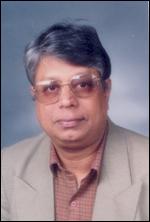
Mr. Madathil Rajendran Nair was born in 1946. He is currently stationed in the Middle East working as a PRO for an Oil Company. Mr. Nair is a prolific contributor to Yahoo Group Advaitin on Vedanta and a Moderator of the Group. He often writes at other Yahoo Groups too, which focus on spirituality. He dabbles with poetry in English and Malayalam, his native tongue, but has no published works yet.
Note: Perineal = Of the perineum corresponding to the first cakrA

‘If the blind lead the blind
both shall fall into the ditch.’
(Matt. 15:14,15)
We must be grateful to Dennis Waite and his excellent book, with its appendix, for sharply bringing this whole question to our attention. There can be no doubt that Dennis Waite’s ‘The Book Of One’ is a worthy introduction to the Ancient Teaching of Advaita. In a clear and erudite manner he summarizes the main points of this Great Philosophy and Spiritual Teaching. The book is in Sections with subsidiary chapters elucidating the chief principles. The Main Section Titles are as follows: The Unreal, The Spiritual Path, and the Real. The subsidiary 18 chapters within these Sections cover, amongst others, such topics as What I Am Not, the Nature of Man, What We Think We Can Know, Meditation, Appearance and Reality, Consciousness, the Nature of Self, Realisation, and the Direct Path.
Dennis Waite is a respected member of the Ramana Foundation UK, and there are many useful references to the Maharshi’s Teachings in the text. He has studied the subject for over fifteen years and has a working knowledge of Sanskrit. The book is definitely to be recommended for those who need a succinct overview to the whole Teaching in one medium size volume. It is easy to read and surveys the philosophy competently in an even handed way. This part of the book can well be regarded as a sound and valuable introduction to the whole field.
There is, however, a long Appendix of 24 pages packed with information on current Western Advaita Organisations, International Internet Sites, and a Reading List. This part of the book and the names contained in it raises an interesting and perplexing question of what exactly is happening to the hallowed and revered Teaching of Advaita in the Western World?
Many firm devotees of Sri Ramana Maharshi now rightly term this Western phenomenon as ‘Neo-Advaita’. The term is carefully selected because ‘neo’ means ‘a new or revived form’. And this new form is not the Classical Advaita which we understand to have been taught by both of the Great Self Realised Sages, Adi Shankara and Ramana Maharshi. It can even be termed ‘pseudo’ because, by presenting the teaching in a highly attenuated form, it might be described as purporting to be Advaita, but not in effect actually being so, in the fullest sense of the word. In this watering down of the essential truths in a palatable style made acceptable and attractive to the contemporary western mind, their teaching is misleading .
Let us examine this thesis in more detail. There are a great many so-called Advaita or Non-Dual Teachers both in Europe, America and Australasia. Dennis Waite lists numerous organisations, Internet sites, and modern books, many of which fall under this category. New teachers calling themselves ‘Awakened’ appear frequently. They are often long standing ex-students of the late Raj Neesh, or people who visited Lucknow with H.L.Poonja.
Obviously, styles, personalities, emphases, delineations, and content vary considerably. But there are enough common threads to identify this tendency as ‘Neo-Advaita’. First of all, the teaching are mainly presented by question and answer at meetings called ‘Satsangs’. The teacher invites questions, and then answers them in his or her own particular way. There is no overview of the basic Advaita principles. So those who attend are left with no full understanding of the complete bases on which the Teaching stands. One is dependent on what is said there and then; after many visits, which have to be paid for, one may appreciate what the self-appointed teacher is attempting to ‘put over’. The books they have published are in the main just edited transcripts of these ‘satsangs’, and are also often incomplete.
There is no doubt that many of these men and women in most cases are attractive, talented, gifted communicators. They often have a certain charisma and an intelligent quick wit. They handle concepts from an intellectual standpoint with dexterity and are often entertaining in an idiosyncratic way. Many seekers develop a psychological dependency on one favourite teacher; others move from one to another hoping to pick up some truth which will help them in their quest. But these satsangs tend to be fragmented, so many teachers and meetings need to be visited and this can lead to confusion. There is generally a lack of experiential understanding of the Real Self and its Power as deep, silent, unconditional love. When the vasanas are strong and rajistic even such rare glimpses may not happen at all.
Stated briefly, what has happened is that an advanced teaching pointer, normally give to the Sadhak by a fully Self Realised Guru, Jivan Mukta or Jnani, has been taken over as the preliminary step and is now given ‘piecemeal’ to any new adept. The suggestion that no further effort is necessary is only stated when the Sadhak has reached the point where effort is no longer possible .The mark of the true Guru is that peace, Love and Silence are palpably felt in his presence. What Neo-Advaita gives in fact boils down to the seductive formula that ”there is nothing you can do or need to do, all you have to know is that there is no one there.”
That the mind is a bundle of thoughts ,and that there is no entity called ‘me’ is ancient Upanishadic teaching, and not a new revelation as some purport. Paradoxically, and for a reason difficult to explain, all of the leading International Neo-Advaita teachers have themselves engaged in spiritual practices of one kind or another, sometimes over a long period, then they deny this necessity to their pupils.
The suggestion by the Neo-Advaitins that effort builds up the Ego giving it a sense of pride in its ability to meditate is only true in a small number of eccentric cases. In fact, the effort of developing one pointedness leading to Self Enquiry in order to discover the source of the ‘phantom me’, the root of all thoughts and feelings, actually undermines this recalcitrant ‘egotistical ghost’. Effort can give some modicum of necessary mind control, and one pointed attention. By sidelining Self Enquiry and treating it as an idea rather than a practice along with Devotion and the support practices for Self Enquiry, the student is left in a comfortable conceptual mental zone where it is stated cosily that ‘there is nothing to do and nowhere to go’. One can park in this space forever, coming once a month and paying for another satsang, hoping Grace will descend. It is like trying to win a major lottery prize, without ever having bought the ticket of turning deeply and persistently inward and enquiring into the source of the ‘phantom me’. Friendships are often made and a lifestyle developed which is psychologically rewarding. Retreats and intensives are held.
The charge is made that effort is trying to ‘get something’ and therefore suspect as coming from the ‘me’. In fact, the ‘ghost of the me’ doesn’t really exist as an entity. The notion of ‘the false me’ is very powerfully fuelled subconsciously by the selfish-will and compounded by the vital force. It has to be diligently enquired into to be destroyed. The Maharshi says emphatically that our only freedom as an ajnani is to turn inwards. It is not trying ‘to get something.’ It is rather trying to ‘get rid of something’, the sense of separation, i.e. identification with the thoughts, mind, and feelings. Otherwise, there is a permanent occlusion, the Granthi Knot, permanently screening off the tremendous power of the Real Self, which is the Absolute Unborn Deathless Consciousness, God, Unconditional Love, Dynamic Silence, and Oneness. Instead, the Neo-Advaitin pupil merely basks in his or her Reflected Consciousness, designated as follows: ‘All there is, is perfect, whatever manifests.’ The clear distinction between Absolute and Relative consciousness is not made, and possibly may not even be known about.
To summarise, the main Neo-Advaitin fallacy ignores the fact that there is an occlusion or veiling formed by the vasanas, samskaras, bodily sheaths and vrittis, and there is a Granthi Knot forming an identification between Self and mind which has to be severed . If this were not the case then the whole of humanity would be living from Absolute Consciousness. As it is, humanity still lives from Reflected Consciousness, including the Neo-Advaitin Teacher with his or her active vasanas, still identified with the mind. In effect Neo-Advaita gives the ego licence, without attenuation, to live on under the justification of a seductive, hedonistic argument.
The Maharshi’s remedy to this whole trap is persistent effective Self Enquiry, and/or Complete Unconditional Surrender of the ‘phantom ego’ to Self or God, until the Granthi Knot is severed, the Vasanas, Samskaras and Vrittis come out, and are rendered harmless like a burned out rope. Support practices and directions are given for those who find Self Enquiry too difficult to commence. Partial surrender is possible for all, leading to total surrender through Grace consequent on efforts made through earnest one pointedness. In his foundation Essay, Self Enquiry {Collected Works}, Bhagavan clearly draws a diagram which shows how the Ego, composed of thoughts, bodily sheaths, and tendencies, forms a mirrorisation which reflects Pure Absolute Consciousness through the door of the senses onto the world as Reflected Consciousness.
The Neo-Advaitin often says somewhat wryly that Awakening is actually very ordinary and nothing special. Obviously it will appear ‘grey’ if vasanas are still active. How can living in Sahaja Samahdi and from Absolute Consciousness with unconditional love, great peace and dynamic silence abounding, be called ‘ordinary’ ? For the Neo-Advaitin teacher, there is a process of cleverly intellectually deconstructing the ‘sense of doership’ or the ‘false sense of me’ or ‘phantom ego’ which can, if performed intensively, lead to an experience, usually temporary, that there is ‘nobody there’ and even making the sense of doership temporarily disfunctional. This is then termed as ‘ an awakening has happened’ or some such hyperbole and the aspirant rests content and may even develop a desire to teach the same technique to others. The subtle part of the ego believes itself to be ‘enlightened’ but the vasanas are still active, so the awakening is conceptual, and possibly imagined, rather like the ‘born again’ experience in evangelical Christianity. No Jnani ever claims to be Enlightened. It remains for others to recognise his qualities. To say ‘I am enlightened’ is a contradiction as the I which would make such an assertion is the ‘I’ which has to be destroyed before Enlightenment can happen.
The Neo-Advaita teacher is still talking from the mind in reflected Consciousness not from the ‘no mind’. To claim to have awakened others prematurely in this tentative way then becomes further proof of a teacher’s ability. This builds up a false sense of expectation in the mind of the naive and gullible adherents that they may become awakened too, if they are lucky. This then becomes a vocation, and in many cases a very successful means of earning a livelihood. Pupils gravitate to the teacher with this kind of agenda which confirms what he or she wants to believe, that no effort is needed. The result is that the Teacher, still living from the ordinary mind, with vasanas active, can never go back on the promise that he is ‘awakened’ and therefore forfeit the right to teach. That the vasanas have been accumulated and consolidated in previous ‘life dreams’ is not examined, and if raised, the teachings about ‘samsara’ , ‘maya’ , jiva, karma and re-birth, are often considered too metaphysical to explain or grasp. They are invariably dismissed as old superstitions. Teaching from the ‘no mindstate’ or ‘silence of the Sage’ can never happen while the powerful vasanas are active. They have to die down and become harmless, and this means self-enquiry and surrender, until the mind, through Grace, when the Real Self recognises the Jiva with a one pointed mind, has fully turned inwards. The nervous system has been prepared and The Self then draws the mind into the fully opened Heart. This is Self Realisation.
Many of the teachers claim Ramana Maharshi as their lineage, often displaying his photo prestigiously, but are not at all erudite in his Teaching. Often the Teaching is stripped of its devotional content. Some merely pass over him and are content to be the sole authority. To give ‘satsang’ in Arunachala gives some Teachers added credence. How has this fundamental fallacy come about? Why is it so attractive to mostly young contemporary Westerners, that they are content to by-pass Self Enquiry, Devotion and the Surrender of the ‘false self’ or ‘ego’ to the Real Self or God, and so hand over all the cares and responsibilities of their lives, with great faith, before entering the spiritual life?
This advanced teaching of ‘no effort needed’ drawn from advanced Advaita and Cha’an Buddhism [the Sudden Awakening School] has slipped in as the fundamental Neo-Advaita pointer. It is then easy for the radically skeptical Western mind to accept this lazy way in our micro wave culture of wanting instant gratification now, instead of having to work at studying the Teachings of the great Sources of the contemporary Advaita Renaissance, Sri Bhagavan Ramana Maharshi, Adi Shankara and other great Sages. Nor do they need to develop some power of attention and concentration. Nor does Hindu terminology have to be understood, and the traditional language assimilated even in translation. This demands study and effort. The making of an effort can arise without a sense of personal doership just as one makes efforts in life spontaneously when needed, from the vital energy. It is said that we are utterly helpless and there is nothing we can do, but this ignores the All powerful Self and the Grace which starts to flow as a response to the initial and persistent effort of Self Enquiry and Surrender. The idea that this ‘awakening’ may not be immediate does not appeal to the current desire for materialistic instant satisfaction. Hedonism, without pain, dominates Western culture, religious values are at a low ebb, and a humanistic teaching is much more appealing.
Besides it lets the Teacher off the hook. He can dispense with advising on Sadhana altogether. Peace and quiet is preferable to Sadhana as the prerequisite for Enlightenment. This has a therapeutic value. In addition the idea of a ‘living Teacher ‘is appealing. It is not understood that the Supreme Guru, the Jivan Mukti who has left the body, is still available both in the Heart as the Sat-Guru within or as Absolute Consciousness, the Deathless Unborn Self, beyond the mind. But to reach the Sat-Guru inwardly needs the effort of turning inwards and this is not a popular word to use, although effort is applicable in every other walk of life. The Neo-Advaitins claim there is no one there to make any effort. This is absurd. The energy for the wish for liberation arises and the intelligent part of the ‘phantom ego’ begins Self Enquiry and its support practices leading to one pointedness. If there was no one there to make effort, how does any work get achieved on this planet at all? Self Enquiry needs preparation, as David Frawley has pointed out in his excellent books on Advaita and articles in the Mountain Path. Self Enquiry may not yield an immediate perceivable result. It commences a graceful process of removing the obstacle of obscuration to the Realisation of the Real Self. To borrow metaphors from the Gospels, the Kingdom of Heaven within is the pearl of great price. It has to be earned by earnest enquiry and surrender. The real purpose of Life in this birth is not merely to enjoy oneself in sensual pleasure but to summon the necessary effort to remove the phantom ego’s sense of separation and identification with the mind, thoughts feelings and body. “If the blind lead the blind both shall fall into the ditch.” It is truly a marvel of Maya that some Neo-Advaita teachers can state personal views which suggest that their knowledge is more profound than that of the Maharshi.
It must be said that this Essay is a generalisation based on visiting the many Neo-Advaita teachers who come to or are resident in London, and seeing videos of others in the USA and elsewhere. My criticisms do not apply equally to all. Each one has his or her own emphases, angularities, and delineations, but the basic thrust of my reservations are generally applicable.
However, Neo-Advaita, no matter how faulty and incomplete, has a distinct advantage. It can serve as an introduction to the true Advaita Teaching. Flawed as Neo-Advaita may be, it undermines ‘the phantom ego’ intellectually at least, after several satsangs. At its best it is a partial surrender , but without full devotional content, and therefore cannot lead to total surrender when the mental occlusion is absorbed in the Heart . One can only accept that the Neo-Advaitin movement with its proliferating teachers and burgeoning web sites is here to stay, although some have prophesised that the tide is beginning to turn and that many are now beginning to earnestly enquire into Ramana’s Teaching. Nevertheless, Neo-Advaita is a necessary part of ‘what is’ and as an aspect of the divine plan has its place as a preliminary introduction. It is therefore a valid, if imperfect stepping stone, for those who are ready and mature enough to walk on to true Advaita, instead of just reclining half way up the Mount Arunachala.
Allow Sri Bhagavan to have the last word on this question….”There must be human effort to discard them [vasanas]….how could God be expected to be favourable towards you without your striving for it'” [Letters pg 151].
Life is a pure flame, and we live
by an invisible Sun within us.
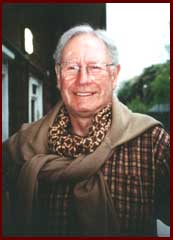
Alan Jacobs is Chairman of the Ramana Maharshi Foundation UK , A Moderator of Ramana Maharshi and Atma Vichara at Yahoo Groups, author of The Bhagavad Gita a Poetic Transcreation and The Principal Upanishads A Poetic Transcreation . He is also a professional Life Coach. You can find his website at www.creativelifecoaching.org
This article published with permission from The Mountain Path.
Image of entrance to Virupaksha Cave courtesy of Gabriele Ebert.

A few years ago, I had a damaged heart and was about to have a stent implanted during cardiac catheterization. At the time I was enrolled in a study of a new treatment to prevent arteries from closing up after surgery (as they so often tend to do) at Mass General Hospital. The new process used a tiny probe with a tiny laser threaded into the heart to do this.
I did a lot of research about heart damage and treatment options and alternatives to the surgery before agreeing to participate. I learned that not a lot of research had been done using women, and the statistics showed that successful outcomes for women were significantly worse than those for men.
Men experience heart symptoms at a younger age than do women, and when women have symptoms, they are often of a different sort. Doctors often don’t consider heart disease when women’s symptoms first occur, which means that women are often initially given the wrong diagnosis and the wrong treatment.
While our spiritual heart is infinite in size, and boundless, women’s physical hearts are significantly smaller than men’s (unless they have become enlarged from disease). The surgical instruments have been designed for use on the larger male hearts and circulatory system, and that may also have a bearing on the poorer outcomes for women and children.
Before concluding that the surgery was necessary, the doctors did many tests – from EKG to echocardiogram to thallium nuclear imaging (cardiac SPECT) to stress tests (which they had to stop when abnormal EKG signs showed up), and others over a period of many weeks. The assorted tests were done by different doctors – not just from one medical practice – and they all showed significant artery damage (and a small valve problem).The language on the results of the thallium SPECT scan used the word “massive” to describe the effects of the blockage. All the doctors interpreting the tests agreed that surgery was necessary. I obtained second and third and fourth opinions.
So there I was – the research showed worse outcomes for women and a significant chance that even with a stent the artery would close up again and it would need to be removed and replaced in time – sometimes as early as 6 months. And the research also showed that an inadequate amount of information was available on women’s heart disease and treatment because most of the research had been done on men. And there I was, with all of these Harvard doctors saying there was no choice for me but to have the surgery. And there I was reading about the possible complications – the worst being an adverse cardiac event, a euphemism for sudden death in the consent forms to enroll for the test of the new procedure.
For me, the decision was pretty straightforward – I decided to go ahead and participate in the experimental trial of the cardiac cath with laser light, despite the risks.
Why?
It was an opportunity to serve other women. It was an opportunity to contribute whatever my heart would tell them to the body of research into heart disease… to do “something” about the fact that the bulk of the research involves the male heart by adding my heart to their studies.
I remember the first time I saw a laser demonstration years ago. One night, I watched as they aimed a laser beam from a big laser in our high school parking lot out across the highway to a target on a hill a mile away. And now they are aiming laser beams from within the arteries of our hearts, using the focused light to heal.
I did a quick search on BrainBoost to find out when lasers were invented. What I found was this:
“1958: Arthur L. Schawlow and Charles H. Townes invent the laser, then publish “Infrared and Optical Masers” in the American Physical Society’s Physical Review. The paper describes the basic principles of the laser, initiating this new scientific field.”
In 1958, lasers were considered “a new scientific field”, and now they are accepted, taken for granted and used widely. Before1958, if someone said that one day doctors could thread a wire with a healing light beam from an incision in your groin up into your heart … would anyone have believed them?
About the outcome of that cardiac adventure? I am still here. In fact, I have a healthy heart – only a couple of electrical problems, but no coronary artery disease today.
And this is a true story:
The day of the surgery, I was all prepped and waiting my turn there on the gurney in the catacombs underneath Mass General, electrodes all over, watching the EKG monitor and the pattern of the green lines and meditating to maintain calm. I was focusing on the idea of “the incredible healingness of light” – it had been a sort of mantra I used for a couple of weeks before then, and I had written about it in my journal letters.
After a while, an intense heat erupted from deep within and I could feel an enormous glowing in my chest, around my heart. There was a profound flushing sensation unlike any I have experienced before or since and my skin from my face to my torso turned bright red, as though I had been exposed to direct sunlight for hours and had a bad sunburn.
The doctors and nurses gathered around and looked at my skin so red and so hot and said “no surgery for you” until whatever is going on stops. That was in the morning. They kept me there and watched. And I kept on with the mantra.
By around 3:30 that afternoon, my skin color was back to normal and they again prepped me for the procedure and wheeled me into the OR. They turned on the overhead monitor – like an old fashioned black and white CRT for a computer – so I could watch. They gave me some morphine for the pain but no sedation. They injected a dye so the circulatory system inside the heart could be seen and then threaded the guide wire up into my heart from a tiny incision in my groin. I watched the wire snaking it’s way up through my upper chest and then into my heart.
And there on the overhead monitor, the two doctors and I saw it at the same time – a healthy heart… no blockages at all, no clogged arteries.
There are things that I have experienced in life that I believe show traces of the hand of God and the beauty and mystery of the universe. Giving birth to my daughter. The sense of connection with “all that is” that I have known standing on the hill watching meteors. Staring eye to eye with that beautiful grey heron last month. And looking inside my own beating heart on that monitor…
So what happened? How could a heart which was diagnosed with a massive blockage suddenly appear healthy and whole? Was the initial diagnosis wrong? We’ve all looked at this.
The fact is that ALL of the standard diagnostic tests pointed to the same thing. It would be easy to say it was a misdiagnosis if one or two of the tests were wrong, but what are the odds that ALL of them were wrong?
The fact is that ALL of the tests were performed over a series of several weeks. If they had all been performed at around the same time, maybe some sort of transient condition had happened and then resolved itself. But what are the odds that separate tests performed over an extended time period and consistently reflecting the same results are ALL wrong?
The fact is that ALL of the tests were performed by different physicians at different facilities and none of them had been informed of the results of any of the other tests by their colleagues, so they could not have been influenced by each other’s diagnoses. My primary care doctor coordinated the assorted tests. What are the odds that doctors at different facilities working independently came up with the same results and they were ALL wrong?
The doctors never did come up with an explanation for how they ALL could have been mistaken. I don’t think they were mistaken, myself. I saw the test results – the EKG strips while they were being done and also afterwards. I saw the images from the echocardiogram. I saw the pics from the nuclear SPECT test. And so did all the doctors afterwards. What we saw there appeared to be real and present.
What do I think explained the suddenly healthy state of my heart? I think it is this: “the incredible healingness of light.”

joyce know_mystery is an activist and poet and nature photographer. She is a contributing editor to NDHighlights, and some of her poetry and photos can be found on the Deep_Well forum. She is frequently in residence on the HolyGeek forum, home of Spiritual Computing. She has been a practitioner of Vipassana meditation since the early 80s and experienced a profound epiphany in 1983. An admitted astronomy geek, she has said about watching meteor showers “I’m a sucker for the moon and the stars…At moments like that, I’m inevitably drawn to thoughts of people throughout the ages staring heavenward at the mystery unfolding. I feel irrevocably connected with the universe in a way more profound than any religious experience inside any church building.” She lives near Boston, where she works in publishing and talks with the herons and hawks and other things with wings.
Photographs courtesy of Joyce Sweinberg
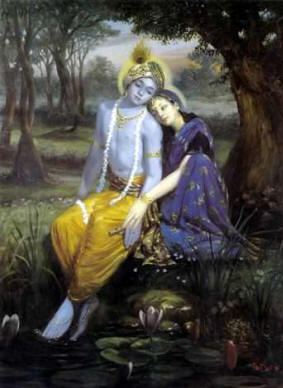 The fervent devotion to Krishna of the celebrated milk-maids (Gopis or Gopikas) of Brindavan, and particularly of RadhA the most prominent of them all, is the best example of mAdhura-bhakti (Devotion through Love) for all time. There is a large variety of legends and representations of this bhakti in painting and sculpture that spreads through every part of India. The first poetic expression of the RadhA-Krishna story was in the Gita-GovindaM of Jayadeva (12th century A.D.). The principal character in that poem is RadhA, the beloved of Krishna. She spoke no word except prayer. She moved no step except towards Krishna. She saw and heard only Krishna. She spoke only of Him, to Him, for Him, whoever might be in her vicinity. Krishna filled her heart entirely. This magnificent poem is held in high respect and is sung all over India particularly in congregatory singing of Bhajans, the singers often reaching heights of ecstasy. This lyrical extravaganza of Jayadeva is delightful poetry without inhibitions. It is at the very center of religious poetry in the Bhakti tradition, though it may be considered erotic from a Victorian viewpoint. It is venerated as God’s own writing. The singing and dancing associated with this poem are so absorbing not only in its music and rhythm but also in its lyric that describes the love-sport of Radha and Krishna.
What is the origin or source of all this? Is it Jayadeva’s imagination, fancy or invention? No. It all goes back to Shrimad BhagavataM of Vyasa. In the tenth skanda of Bhagavatam, there are five chapters (#s 29 to 33) known as ‘RAsa-panchAdhyAyi’. These five chapters describe the Raas LeelA of Krishna with the Gopis of Brindavan. But wait, before we come to that, we must tune our minds the right way in order to appreciate it all.
So let us go back to the famous story of Krishna’s theft of the clothes of the Gopis while they were bathing in the river. (Bhagavatam, Skanda X, Ch.22). It looks like an immoral story, with a child of six as the central figure. It is spoken of as though he were a full-grown man, insulting the modesty of women. Look at Annie Besant’s handling of this story. She writes:
‘The Gopis were Rishis, and the Lord Supreme as a babe is teaching them a lesson. But there is more than that. There is a profound occult lesson behind the story. When the Soul is approaching the Supreme Lord at one great stage of initiation, it has to pass through a great ordeal. Stripped of everything on which it has hitherto relied, stripped of everything that is not its inner self, deprived of all external aid, of all external protection, of all external covering, the soul itself, in its own inherent life, must stand naked and alone, with nothing to rely on save the life of the Self within it. If it flinches before the ordeal, if it clings to anything to which it has hitherto looked for help, if in the supreme hour, it cries out for friend or help, or even the Guru himself, the soul fails in that ordeal. Naked and alone it must go forth, with absolutely none to aid it save the divinity within itself. And it is that nakedness of the soul as it approaches the supreme goal, that is told of in that story’.
This defence of the conceptual fabric of Hindu spirituality is important for the proper understanding of the Raas LeelA of Krishna. In addition, there is another perspective that should never be missed in any discussion of the Raas LeelA. It is the divinity of Krishna himself.
The first description of His birth comes to us from the pen of Vyasa himself in his famous Bhagavatam. It was on that Ashtami day after Shravan Poornima, when the moon was in the asterism Rohini that Krishna was born in that famous prison of Kamsa of Mathura. According to the hair-raising description of that birth in the Shrimad Bhagavatam, tenth canto, third chapter, it was in the dense darkness of that fateful night, the Lord appeared – mark the word, appeared, not born – as an unusual child from the womb of Devaki, just like the moon rising on the eastern horizon! Oh, what a sight it was! Continues the BhagavataM: (X – 3 -9,10):
“tam-adbhutaM bAlakam-ambujekshhaNaM
catur-bhujaM shankha-gadAry-udAyudhaM /
shrIvatsa-lakshhmaM gala-shobhi-kaustubhaM
pItAmbaraM sAndra-payoda-saubhagaM //
mahArha-vaiDUrya-kirITa-kuNDala-
tvishhA parishhvakta-sahasra-kuntalaM /
uddAma-kAnchy-angada-kankaNAdibhiH
virAjamAnaM vasudeva aikshhata” //

meaning, Vasudeva saw that wonderful child with four hands, holding a conch, a mace, a chakra and a lotus; with Srivatsa emblem on His chest; with Kaustubha gem on the neck; with cloth of golden hue; as beautiful as the blue water-filled cloud; with dense hair flowing around amidst the adornments of crown and ear-rings radiant with precious gems; and excellently brilliant with bracelets around the hip and arms.
Either you believe in all this or you don’t. If you don’t believe in all this then Raas LeelA of Krishna is also a fiction in the imagination of Vyasa and there is nothing more to discuss except some poetry in the literature. If you believe in all this, then Raas-LeelA of Krishna should also be believed to be true. Not only should it be believed to be a true happening but you also get a justification for it. So when doubts arise as to the good or bad of Raas LeelA, remember, you have accepted that the birth of Krishna in the above manner is true and that means Krishna is the all-powerful Absolute Divine.
A discussion of Raas-LeelA thinking that Krishna was an ordinary person like you and me is a misnomer and a non-issue. We shall not enter the discussion of Raas-LeelA that way. We shall only discuss Raas-LeelA, with the full conviction that Krishna is the Absolute Transcendental Divinity that is omnipresent, omniscient and omnipotent. Lacking this conviction we would have denied ourselves the fundamental eligibility to discuss Raas LeelA, and more so the prerequisites to be able to appreciate it.
Now let us come to the actual story part. Remember Krishna was a ten-year old boy at that time. Probably even less. The Gopis of Brindavan did a month-long Katyayani vrata. The purpose: To get Lord Krishna as their husband (pati, in Sanskrit). The vrata itself was a very complicated one: Bathing in the Yamuna at daybreak, making an image of the Goddess Parvati with sand on the river bank and worshipping Her with all the formalities. It was at the end of this month-long worship, the incident (as described earlier) of the robbing of their clothes by the Lord happened. The Lord chastised them that they had no business to bathe naked in the river, particularly when they were supposed to be engaged in this Katyayani vrata. After telling them that his treatment of them was in punishment of their misbehaviour, he gave them back their clothes; but also promised them that very soon their desire for sporting with the Lord, for which they did the Katyayani vrata, would be fulfilled. And in this context, he makes a very important statement which is significant for our understanding of the Ras Leela:
‘In the case of whomsoever that has turned their minds towards Me, the desire or lust that thereby arises in them would not result in bad, just as a fried or baked seed would not sprout again’ (X -22 – 26):
na may-yAveshita-dhiyAM kAmaH kAmAya kalpate /
bharjitA kathitA dhAnA prAyo bIjAya neshhyate //Note: Recall that all books of Vedanta tell us how a man of wisdom (Brahma-jnAni) has no karma chasing him, because they are like a fried seed in his case and it will not sprout!
The night of that fulfillment arrived in the autumn following. The requisites for the divine play were all created by Him by His mAyA. “yogamAyAm-upAshritaH” (resorting to His yoga-mAyA) says the text (10-29-1). On that moonlit night, His melodious note on His flute, played in the woodlands adjoining the Yamuna, went all the way to the ears of the gopis and enraptured them. It pleasantly distracted every one and everything from normal activity and enchanted them to revel in ecstasy. Even shrubs and trees, flowers and leaves, birds and animals ‘stood enchanted’ with that rapturous divine musical rendering.
No sooner the Gopis heard the music of His flute, than they were all captivated by the symphony of joy that emanated from it. They came from all sides to the spot where He was playing the flute. Some were milking their cows, some were serving food to their husbands, some were keeping busy with their cosmetics, some were cleaning their houses, — but all of them dropped their work just where it was and ran towards Krishna. Their husbands, brothers and parents did try to stop them but of no avail. The minds of the Gopis had been lured away by the music of the flute and by the thought of Lord Krishna and they forgot all about themselves.
Some of the gopis, however, could not manage to get out of their houses, and instead they remained home with eyes closed, meditating upon Him in pure love. For these gopis the intolerable separation from their beloved caused an intense agony that burned away all impious karma (“tIvra-pApa-dhutA-shubhAH” – X-29-10). By meditating upon Him they realized His embrace, and the ecstasy they then felt exhausted their material piety. Although Lord Krishna is the Supreme Soul, these girls simply thought of Him as their lover and associated with Him in that intimate mood. Thus their karmic bondage was nullified and they abandoned, as it were, their gross material bodies.
At this point, King Parikshit asks a pertinent question to Sage Suka who is narrating the story: O sage, the gopis knew Krishna only as their lover, not as the Supreme Absolute Truth. So how could these girls, their minds caught up in the waves of worldly love, free themselves from material attachment? And the Rishi replies: Since even Sisupala, who hated Krishna, achieved perfection, then what to speak of the Lord’s dear devotees. The Supreme Lord is inexhaustible and immeasurable, and He is untouched by Prakrti because He is its controller. His personal appearance in this world is meant for bestowing the highest benefit on humanity. Persons who constantly direct their lust, anger, fear, protective affection, feeling of impersonal oneness or friendship toward Lord Hari are sure to become absorbed in thought of Him. You should not be so astonished, Oh King, because you are the unique one who had the benefit of seeing His beatific presence even while you were in your mother’s womb. (X-29-13 to 16).
Krishna saw them all coming, and when they had gathered, he told them to go back. He waved them back saying that their first duty was in their home with their husbands and relatives. He says: “I know you have ties of attachment for Me. It is but proper. All creatures in the world will find delight in Me (‘prIyante mayi jantavaH’ : X-29-23). But your duty is elsewhere. For a woman from a respectable family, petty adulterous affairs are always condemned. They bar her from heaven, ruin her reputation and bring her difficulty and fear”. And He ends this sermon by making a famous declaration (X-29-27) which He himself repeats later:
shravaNAt darshanAt dhyAnAt mayi bhAvo’nukIrtanAt /
na tathA sannikarshheNa pratiyAta tato gRhAn // meaning,“Transcendental love for Me arises by the devotional processes of hearing about Me, seeing My Deity form, meditating on Me and faithfully chanting My glories. The same result is not achieved by mere physical proximity. So please go back to your homes”.
But the Gopis don’t listen. To his argument that their duty is to their husbands and families, they reply that He is the pati, the husband of the entire world and therefore of them all, and so their first duty is to Him. “Not only that, Oh Lord, our minds which were all along with our families and our work have now been totally captivated by You. Our hands and feet are not ours. Our minds are not ours. They are all yours. They refuse to do any work which is not directed at You. So don’t throw us back. Deign to accept us as your servants”. And they were steadfast in this determination. Seeing their steadfastness, Krishna decided to please them.
iti viklavitaM tAsAM shrutvA yogeshvareshvaraH /
Prahasya sadayaM gopIH AtmArAmo’pyarIramat // X-29-42Smiling upon hearing these despondent words from the gopîs, Lord Krishna, the supreme master of all masters of mystic yoga, mercifully satisfied them, although He is Himself Self-satisfied.
He was Himself AtmArAma, that is One who is fulfilled in Himself, by Himself for Himself. He has nothing to obtain which He does not already have. (cf. nAnavAptam-avAptavyam, … Gita III-22). When He thus moved in intimate terms with the Gopis, very soon they thought highly of themselves. They thought they were the greatest women on Earth. And the Lord became aware of their pride and arrogant thought, and intending to bless them with the right kind of spirituality, immediately vanished!
And then begins a long wailing and searching, by the Gopis. They could not stand this separation from the Lord. They lose their head and become really mad for Him. This is called the experience of ‘viraha’, separation. It is said by all exponenets of bhakti that the highest form of bhakti is the experience of this viraha from the Lord. We think we are all very devoted to God. But do we feel the pangs of separation from Him as the gopis felt?
People say God does not take the offering we give Him ; but do we offer it the way Sabari offered Him? [ “lok kahte hai bhagwAn khAte nahiM; kyA haM shabarI kI taraH khilAte haim?” ].
People say that God does not come to our rescue; but do we call Him with that conviction and pangs of anxiety that was characteristic of Draupadi’s call? [ “lok kahte hai bhagwAn Ate nahiM; kyA haM draupadI kI taraH bulAte haiM?”].
People say that God does not bless us; but do we love Him with that intensity of Radha’s love? [“lok kahte hai bhagwaan prasAd karte nahiM; kyA ham rAdhA kI tarah pyAr karte haiM?”].
To continue our story. The Gopis keep roaming about in the woods, searching for Him. In the process of this roaming, they identify the footsteps of their Lord and try to follow those footsteps. Lo and behold! They do not find their Lord but they find one more pair of footsteps side by side with the Lord’s footsteps! And they look at it carefully. They recognize it as a woman’s footsteps. Their jealousy knows no bounds. How come!
One of their own group, has found it possible to be with the Lord and is now enjoying the privilege of His company all alone! What a supreme fortunate circumstance for her! She must be the most beloved of Krishna among all of them!
On the other hand that single gopi who was with Krishna had an interesting experience. She certainly enjoys the company of the Lord, all alone. But that very enjoyment puffs up her head and she tries to aspire for more of the Lord than the others. Instead of walking up along with the Lord, she suggests to Him that He may carry her on His shoulders, and to her great satisfaction the Lord agrees to do that. He says “Alright, get up on my shoulders” and he poses for her. But when she attempts to climb up on His shoulders, He is no more there – He has vanished! That was the end of her puffed up pride! And the rest of the company joins her now and together they all search for the Lord.
Incidentally, this single gopi is perhaps the Radha of later literature. The name Radha does not occur in the Bhagavatam.
When finally the moon went behind the clouds and there was no more moonlight, they all returned to their starting place and spent their time talking about Krishna. Their minds absorbed in thoughts of Him, they conversed about Him, acted out His pastimes and felt themselves filled with His presence. They no more remembered their homes as they loudly sang the glories of Krishna’s transcendental qualities: The shloka which says this, namely,
tan-manaskAs-tad-AlApAs-tad-viceshhTAs-tad-AtmikAH /
tad-guNAn-eva gAyantyaH nAtmAgArANi sasmaruH // X-30-43is one of the most famous quotes from Shrimad Bhagavatam, because it characterises the supreme prema-bhakti of the Gopis. It is considered to be at the apex of all bhakti forms. In fact, it reflects exactly what Krishna himself describes in the Gita (V-17):
tad-buddhayas-tad-AtmAnas-tan-nishhTAs-tat-parAyaNAH /
gacchanty-apunar-AvRttiM jnAna-nirdhUta-kalmashhAH //
meaning,Those who have their intellect absorbed in That, whose Self is That, who are steadfast in That, who have That as their supreme Goal-they attain the state of non-returning, their dirt having been removed by Knowledge.
This kind of total absorption in God is the ultimate in Bhakti. That is why the Gopis are cited as the supreme example of self-effacing bhakti. There have been several types of devotees all over time and all over the world. But the Lord values only such selfless bhakti. The bhakti of the gopis is unique in all of history, because, they did not achieve that kind of superlative approbation from the Lord by any of the usual means of spiritual living, namely, charity, ritual sacrifice, ritualistic vrata, religious discipline, penance, philosophical speculation, or yogic practice. None of these they had. None of these can give that kind of union with the Lord as the constant mental association with Him that they did have. (Narayaneeyam: 94-10):
aikyaM te
dAna-homa-vrata-niyama-tapas-sAnkhya-yogair-durApaM
tvat-sangenaiva gopyaH kila sukRti-tamAH
prApur-Ananda-sAndraM /
bhakteSh-vanyeShu bhUas-svapi bahu-manuShe bhaktim-eva
tvam-AsAM
tan-me tvad-bhaktim-eva dRDaya hara gadAn kRShNa
vAtAlayesha //meaning,That state of supremely blissful union with Thee, which is difficult to obtain through (disciplines like) charity, (ritual) sacrifices, observance of vows, self-control, austerities, knowledge (sAnkhya), and yoga, was attained by the blessed gopikas of Brindavan, through just personal attachment to Thee as their own beloved. Numerous are Thy other devotees, but it is this loving personal devotion of the gopikas that has received Thy highest appreciation. Therefore Oh Krishna, Oh Lord of Guruvayoor, May Thou strengthen devotion in me and destroy my ailments.
In fact this underscores the importance of personal involvement with the Lord in intimate terms, from the heart of hearts. All the formalities of our religious observances pale into insignificance before such a personal relationship with God. Whatever we may do, we must strive to see that this innate feeling of love for the Lord becomes the undercurrent. This is the only thing He asks from us. More than intellectual understanding of the various nuances of scriptures and philosophy, what He expects from us is this self-negating love for Him and all that stands for Him, namely, the universe. One may recall here Gita IX – 34:
manmanA bhava madbhakto madyAjI mAM namaskuru /
mAmevaiShyasi yuktvaivaM AtmAnaM mat-parAyaNaH //meaning, Saturate your mind with me; be devoted to me; work for me; bow down to me; having thus united your whole self with me, taking me as the supreme Goal, you shall come unto me. This self-negating love has been defined by Narada in his bhakti-sutra, as follows (Sutra 54):
guNa-rahitaM kAmanA-rahitaM pratikShaNa-vardhamAnaM
avicchinnaM sUkShma-taram anubhava-rUpaM.Meaning, (This pure love is) without attributes, without the poison of desire, every moment increasing, unbroken, subtlest, and of the nature of sheer immediate experience. In fact almost every exponent of bhakti says the same thing.
Let us come back to the story. The Gopis, having lost track of Krishna in the physical world, spend their time now singing about Him in all ecstasy. This singing as told in 18 delightful verses of Shrimad Bhagavatam is called “gopikA-gItaM”. It is chapter 31 of Skanda 10. In traditional India these 18 verses are usually taught to young girls for them to obtain the fullest grace of God, particularly with respect to their marriage. Jayadeva’s Gita Govindam derives inspiration from this. Let us see just three shlokas out of the 18. In the practical performance of the dance of gopikA-gItaM it is common to use the word ‘kRshhNa’ repeatedly to keep the beat:
jayati te’dhikaM (kRshhNa) janmanA vrajaH
shrayata indirA (kRshhNa) shashvad-atra hi /
dayita dRshyatAM (kRshhNa) dikshhu tAvakAH
tvayi dhRtAsavaH (kRshhNa) tvAM vicinvate // (X-31-1)O beloved, Your birth in the land of Vraja has made it exceedingly glorious, and thus Indirâ, the goddess of fortune, always resides here. It is only for Your sake that we, Your devoted servants, maintain our lives. We have been searching everywhere for You, so please show Yourself to us.
na khalu gopikA (kRshhNa) nandano bhavAn
akhila-dehinAM (kRshhNa) antar-Atma-dRk /
vikhanasArthito (kRshhNa) vishva-guptaye
sakha udeyivAn (kRshhNa) sAtvatAm kule // (X-31-4)You are not actually the son of the gopî Yas’odâ, O friend, but rather the indwelling witness in the hearts of all embodied souls. Because Lord Brahmâ prayed for You to come and protect the universe, You have now appeared in the Sâtvata dynasty.
tava kathAmRtaM (kRshhNa) tapta-jIvanaM
kavibhir-IDitaM (kRshhNa) kalmashhApahaM /
shravaNa-mangaLaM (kRshhNa) shrImad-AtataM
bhuvi gRNanti te (kRshhNa) bhuridA janAH // (X-31-9)The nectar of Your words and the descriptions of Your activities are the life and soul of those suffering in this material world. These narrations, transmitted by learned sages, eradicate one’s sinful reactions and bestow good fortune upon whoever hears them. They are filled with spiritual power. Certainly those who spread the message of Godhead must have been munificent.
At the end of it all, Krishna reappears. The Gopis are agog with excitement. It was as if their lives returned to them (“tanvaH prANaM iva AgataM” X-32-3). All the varieties of human emotions that can arise at such an event are described here without inhibitions. It is a no-holds-barred description. At the end of it all, Krishna, whose seat is in the hearts of great yogis, now sits encircled by these gopis on an elevated sand dune on the bank of Kalindi, lit up splendidly by the abundant autumnal moonlight and starts talking with them in very intimate terms. It is said that each gopi had the feet of the Lord on her lap.
Mark this statement. Here starts the full sway of the mAyA of the Lord. There were at least a hundred gopis. In fact the numbers that are mentioned in the Bhagavatam will make our heads reel. Anyway there were several of them. If each one had the feet of the Lord on her lap, and if each one was having the feeling that the Lord was talking to herself with His feet on her lap, the Lord must have replicated himself as many times as there were gopis there. This point is mentioned when the actual Raas Leela starts, but even here the magic of the mAyA has started!Now Krishna starts talking. In fact they have raised an important question for Him to answer. Some people reciprocate the affection only of those who are affectionate toward them, while others show affection even to those who are indifferent or inimical. And yet others will not show affection toward anyone. Dear Krishna, please properly explain this matter to us.(X-32-16), say the Gopis. And He explains very patiently, in shlokas 17 to 22:
So-called friends who show affection for each other only to benefit themselves are actually selfish. They have no true friendship, nor are they following the true principles of religion. Indeed, if they did not expect benefit for themselves, they would not reciprocate. Some people are genuinely merciful or, like parents, naturally affectionate. Such persons, who devotedly serve even those who fail to reciprocate with them, are following the true, faultless path of religion, and they are true well-wishers.
Some people, being spiritually self-satisfied, do not reciprocate others’ affection because they want to avoid entanglement in mundane dealings. Other persons do not reciprocate simply out of envy or arrogance. And still others fail to reciprocate because they are materially satisfied and thus uninterested in new material
opportunities.I do understand that simply for My sake you had rejected the authority of worldly opinion, of the Vedas and of your relatives. But I acted as I did only to increase your attachment to Me. Even when I removed Myself from your sight by suddenly disappearing, I never stopped loving you.
Therefore, My beloved gopîs, please do not harbor any bad feelings toward Me, your beloved. I will not be able to repay My debt for your spotless service, even within a lifetime of Brahmâ.
(na pâraye ‘ham niravadya-samyujâm
sva-sâdhu-krityam vibudhâyushâpi vah) X-32-22Your connection with Me is beyond reproach. You have worshiped Me, cutting off all domestic ties, which are difficult to break. Therefore please let your own glorious deeds be your compensation.
This passage speaks volumes about the love of the gopis towards Krishna and how he acknowledged it. It is the charter that gives the universally glorified sanctity to the spotless Krishna-Bhakti of the Gopis. Great devotees are not great because they call themselves so (if at all), but because the Lord calls them great!
And now begins the Raas LeelA, the most enchanting of all His leelAs. They all linked their arms together and thought they were encircling Him. But actually between each pair of gopis there was a Krishna. Each Gopi felt the left hand of Krishna on her right shoulder and the right hand of Krishna on her left shoulder. She was thinking therefore that Krishna was dancing in front of her, facing her with His hands on her shoulders. But what was happening was that she had one Krishna on her left and another Krishna on her right! The yogeshvara that Krishna was, he had enveloped the entire assembly of Gopis in His mAyA and their minds were not their own now. They thought whatever He wanted them to think! But they all enjoyed an eternal bliss in the play of Raas LeelA! There were actually three such plays.
One in water (‘jala-kRIDA), one in the woods (‘vana-kRIDA’) and one on open ground (‘sthala-kRIDA’). The night itself got extended because the elements had all halted. Heaven and Nature watched this magnificent divine romantic dance of the several Krishnas with the several Gopis. And the beauty of it all was, that, back home, in every house of the gopis, the gopi’s husband did not miss his wife; as far as he knew she was there with him!. The whole world was in trance, as it were! That was the greatness of the Raas dance!
Well, let us come down to terra firma. When this whole thing had been narrated by Suka, King Parikshit asks the most relevant question: “Well, let me take it that Krishna had nothing to achieve, because He is always self-fulfilled. But what he did does not appear to be ethical, from any worldly angle. Why, then, did he do that? Should He not set the right example?” (X-33 – 27 to 29).
Note that Parikshit’s question is not the question we ourselves raised at the beginning of this article. We said that we shall not be discussing this issue if it had the assumption that Krishna was an ordinary human being. King Parikshit postulates his acceptance of the divinity of Krishna. But his question is: Why does the Lord set a bad example for mankind?
And Suka answers: (X – 33 -30 to 38): The status of Ishvara is not harmed by any apparently audacious transgression of morality we may see in Him, for He is just like fire, that devours everything fed into it and remains unpolluted. We ordinary people should never imitate the behavior of such ruling personalities, even mentally. If out of foolishness an ordinary person does imitate such behaviour, he will simply destroy himself, just as a person who is not Rudra would destroy himself if he tried to drink an ocean of poison. It is the words of Ishvara which we should follow, not those of His actions which are inconsistent with those words. When these great persons who are free from false ego act piously in this world, they have no selfish motives to fulfill, and even when they act in apparent contradiction to the laws of piety, they are not subject to sinful reactions. How, then, could the Lord of all created beings have any connection with the piety and impiety that affect His subject creatures?
Material activities never entangle even the devotees of the Supreme Lord, who are fully satisfied by serving the dust of His lotus feet. Nor do material activities entangle those intelligent sages who have freed themselves from the bondage of all fruitive reactions by the fact that they have disassociated themselves with their body, mind intellect. Then, how could there be any question of bondage for the Lord Himself, who assumes His transcendental forms according to His own sweet will?
The Actionlessness of the Lord is well-known from his statements in the Gita:
By Me was created the four varNas, in accordance with their GuNas and karma. Know Me as its doer and know Me also as the imperishable non-doer. (Gita IV-13)
Those works do not bind Me. I sit, indifferent as it were, unattached to those actions. (Gita IX – 9)
In fact Actionlessness is a central concept in the understanding of the actions of a man of wisdom (brahma-jnAni). The nAhaM kartA (I-am-not-the-doer) attitude is the core of all of Krishna’s advice to Arjuna. For more on this, go to http://www.geocities.com/profvk/livehappily_11.html
He who lives as the sAkshhI (overseeing witness) within the gopîs and their husbands, and indeed within all embodied living beings, assumes forms in this world to enjoy transcendental pastimes. When the Lord assumes a humanlike
body to show mercy to His devotees, He engages in such pastimes as will attract those who hear about them to become dedicated to Him.For us, devotees of Krishna, we are told by Suka himself, that those who listen to these stories of this great Raas LeelA of Krishna, will not only become great devotees of the Lord, but would be able to conquer the ingrained lust in the human psyche!
LokAs samastAs sukhino bhavantu.

Raadhe Krishna!
It is said that Raadha was given a promise by the Lord
that for all time to come, Her name (Radha’s) would be taken first
before His own (Krishna’s) is taken!!
Artwork courtesy of
The Bhaktivedanta Book Trust International, Inc.
www.krishna.com
Prof. V. Krishnamurthy M.A. of Madras University and Ph.D, of Annamalai University, is an ex-Director of K.K. Birla Academy, New Delhi. Formerly he was Dy. Director and Prof. of Mathematics at Birla Institute of Technology and Science, Pilani for two decades. While at Pilani he was one of the top-ranking academic administrators who were responsible for the multifarious academic reforms for which BITS is now well known. His wide and varied interests in teaching and research include assignments at the University of Illinois, Urbana, Ill., U.S.A. and University of Delaware, Newark, DE., U.S.A. His mathematical research contributions are in the areas of Functional Analysis, Topology, Combinatorics and Mathematics Education. He has been President of the Indian Mathematical Society, President of the Mathematics Section of the Indian Science Congress Association, Executive Chairman of Association of Mathematics Teachers of India, and National Lecturer and National Fellow of the University Grants Commission. He has been Leader of the Indian team for the International Mathematical Olympiad, held at Bombay in 1996. His books in Mathematics include: Combinatorics: Theory and Applications; Introduction to Linear Algebra (jointly with two others); The Culture, Excitement and Relevance of Mathematics; Challenge & Thrill of Pre-College Mathematics (jointly with three others)and, The Clock of the Night Sky. and What is Mathematics? – An explanation through two Puzzles (In Tamil).
Prof. Krishnamurthy was also trained systematically in the traditional Hindu scriptures by his father Sri R.Viswanatha Sastrigal, a scholarly exponent who was himself a living example of the ideal Hindu way of life. Prof. Krishnamurthy has given several successful lectures on Hinduism, the Ramayana, the Gita, the Upanishads, and Srimad Bhagavatam to Indian and American audiences. His expositions are known for their precision, clarity and an irresistible appeal to the modern mind. His books on religion include: Essentials of Hinduism; Hinduism for the next Generation; and, The Ten Commandments of Hinduism. He has also authored a series of 18 poster-size charts on Hinduism, entitled SADHARMA (= Sanatana Dharma Ratna Mala). These are unusual expositions with visual support, on the concepts ideals and traditions of the Hindu way of life, presented by an incisive scientific mind in a totally novel manner never before tried by any exponent of religion formally or informally.
A number of writings of his on Religion and Philosophy are on the web at http://www.geocities.com/profvk/ entitled: Science and Spirituality and Gems from the Ocean of Hindu Thought, Vision and Practice .
His recent books on religion are Kannan sorpadi vaazhvdeppadi (in Tamil) with an appendix on Dhruva-Stuti – An Upanishad Capsule (Published by Alliance Co., Mylapore, Chennai) and Science and Spirituality – A Vedanta Perception (Published by Bharatiya Vidya Bhavan).
“Live Happily the Gita Way – An Advaitic approach” is under publication.
He was given the Distinguished Service Award by the Mathematics Association of India in 1995, the Seva Ratna award by the Centenarian Trust, Chennai, in 1996, and the Vocational Service Award for Exemplary Contributions Education by the Rotary Clubs of Guindy and Chennai Samudra in September 2001.

Human life is a precious gift that is best utilized for the search of the sublime, the good, the beautiful, and the eternal reality which is joy itself. Such words may appear trite to some, true to some, and irrelevant to still others. Certainly, in the middle of the ups and downs of daily living it is easy to become cynical and bitter about the world around us. We have all endured loss in one form or another and there is no one who has not experienced some shock or tragedy at some point in his or her life. If you listen to the T.V. news even a few times a week, it seems like the whole world is caught in a whirlpool of suffering. There are endless disputes and wars going on. Human beings are fighting, torturing, or killing each other in the name of religion, God, race, territory, politics, or just because of their inflated egos which have driven them crazy.


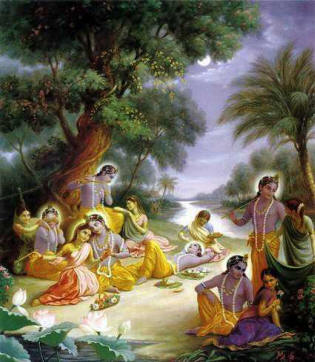


 Luthar.com
You must be logged in to post a comment.