Harsha's avatar

Can an animal attain Self-Realization?

Birth as a Human

Bhagavan Ramana generally went along with the Hindu orthodox traditions and rarely contradicted them. But there were several notable exceptions.

One exception involved his own mother who lived with him despite the fact that Bhagavan was a Sadhu, a renunciate.

The second exception involved animals around him whom Bhagavan gave equality with human beings.

Once Bhagavan said, “It is not true that birth as a man is necessarily the highest, and that one must attain realisation only from being a man. Even an animal can attain Self-realisation”. (‘Day by Day with Bhagavan’ 2-9-46)

Harsha's avatar

Dattatreya’s 24 Gurus and His Brilliant View

Dattatreya

Mira Prabhu's avatarmira prabhu

SHIVA IN BLACK AND WHITE 2Dattatreya blows my mind with the daring way he lived his life and the transcendent wisdom that emerged as a result. The word Datta means “given”—for it is said the Divine Trinity (Brahma, Vishnu and Shiva) “gave” one aspect of themselves in the form of a son to the sages Atri and Anasuya; Atreya was added on to his name, to indicate he was the son of Atri.

Born roughly 4000 years ago in an age when Veda and Tantra had once again fused, Dattatreya left home early, in search of the Absolute, roaming naked in the areas in and around Mysore, Maharashtra and Gujarat. Usually depicted with three heads, symbolizing Brahma, Vishnu and Shiva; past, present, and future; and the three states of consciousness: waking, dreaming, and dreamless sleep, he is shown sitting in meditation beside his shakti (mate) beneath the wish-fulfilling tree; in front of him is a fire pit, and around him are…

View original post 697 more words
Harsha's avatar

LIFE IS A DREAM: By Alan Jacobs

Life is a Dream: By Alan Jacobs

Harsha's avatarLuthar.com

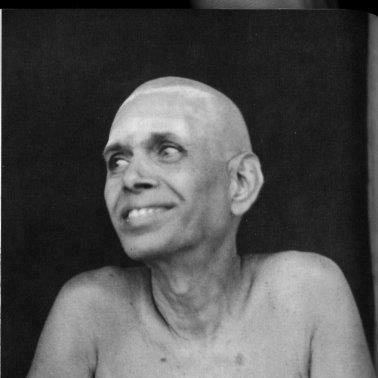
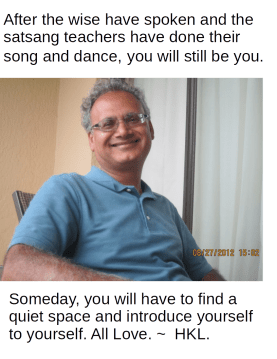
Bhagavan's smile Bhagavan’s smile

“To know that the world is a dreamlike illusion. Know that all of the following are a dreamlike illusion. The world, the body, the universe, all dimensions, time and all events, motions and actions”. ~ Sri Ramana Maharshi

215. “The world appears distinctly only in wakefulness and dream with concepts filled. In concept-free, all empty sleep, one sees no world; so then conceptual is… the world’s whole substance.”

Taken from Step Two of The Seven Steps to Awakening. All of the Ramana quotes in The Seven Steps to Awakening are taken from K. Swaminathan’s English translation of The Garland of Guru’s Sayings.

View original post 885 more words

Harsha's avatar

Who Is Rama? The Doctrine Of Neti, Neti

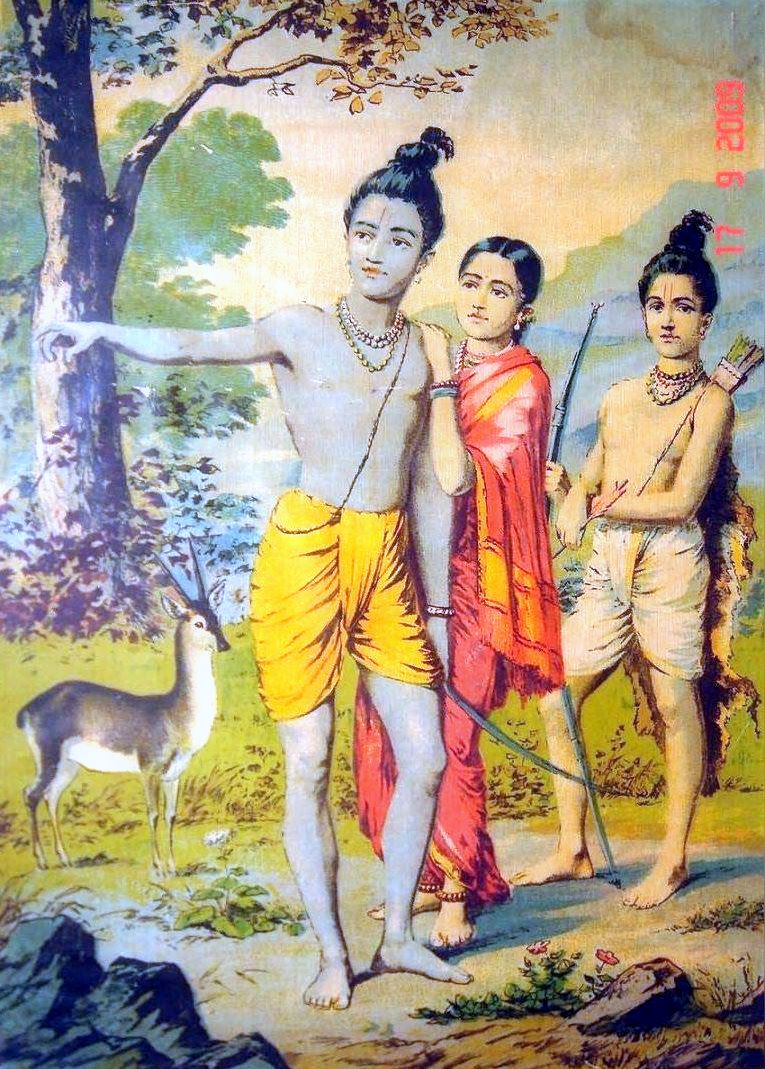
Rama_Sita-Lakshman in_forest

In order to explain the Advaitic doctrine of “Neti Neti”, Sri Ramana used to tell the story of Sita and Rama.

Prince Rama was exiled for 14 years from the kingdom to a forest by his loving father. The full story is too complex to be told here.  

When Prince Rama, obeying his father, left the kingdom of Ayodhya, his wife Sita came with him to endure the hardships of poverty and penance side by side with her husband. Rama’s younger brother Lakshman insisted on coming as well to keep them company and to protect them in the forest.

When the three reached the forest, they took off their royal clothes and sent them back via the Chariot that had brought them to the edge of the forest. They put on clothes of forest dwellers and Rishis who lived in the forest.

Continue reading

evankeith's avatar

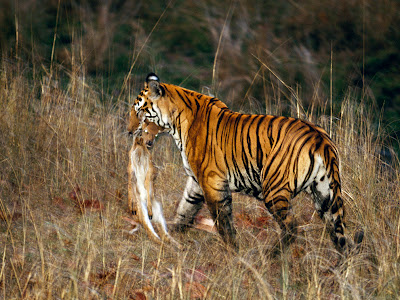
In the Jaws of the Beloved Tiger: By Dr. Evan Keith

Image

I do not know when I first learned of Bhagavan Sri Ramana Maharshi. I know that at most he was little more than a name to me before my eighteenth birthday and only in the last year has he become of central importance to me. In fact, now I think of Bhagavan as my Guru. Bhagavan never did formal initiation of anyone as a devotee and never even referred to anyone as being or not being his devotee. Nevertheless, he sometimes mentioned that most people needed a guru to overcome their ancient tendencies and “realize” the Self. Sometimes Bhagavan would allude to the Self, itself, or in particular the mountain Arunachala as having been his Guru. In this respect, Bhagavan Ramana is my Sadguru and I am His devotee. Continue reading

Harsha's avatar

Nirvikalpa Samadhi – Two Different Perspectives: By Dr. Harsh K. Luthar

Harsh K. Luthar

Harsh K. Luthar

Question On 01/20/2000 From Gausima

I accidentally found this on the internet while searching for something else, and was wondering what type of Nirvikalpa Samadhi it was referring to and if anyone had any knowledge of this.

“once an ordinary person achieves Nirvikalpa Samadhi, he leaves the body in 21 days.”   In the Gospel of Sri Ramakrishna, on page 245, it says, “Trailanga Swami once said that because a man reasons he is conscious of multiplicity, of variety. Attaining samadhi, one gives up the body in twenty-one days. . . ” (Ramakrishna was talking to his devotees.)

Namaste,
Gasusima

Continue reading

Harsha's avatar

The Maharshi’s Advice to Poonja-Ji

Editor’s note:

As you read this personal account by Poonja-ji, keep in mind the background and the context of the times of the year 1947 as India was getting ready to be split into two countries. Continue reading

Harsha's avatar

The Heart of God:The Nature of Self-Realization. By Dr. Harsh K. Luthar

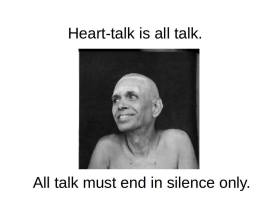
Heart Talk is All Talk

The difficulty in many of our conversations about spiritual insight is that the true understanding is not intellectual or conceptual, but absolutely direct. It is clear and direct without the medium of the mind.

Truth has never been a monopoly of a particular religion or spiritual tradition. How can it be? Some may disagree, but in my view, God does not play favorites.

We cannot make Truth our personal property but only allow the quality of Truth to overtake us and shine in us. We cannot possess God but only surrender to the Divine Will and let God take over our life.

Continue reading

Harsha's avatar

Yoga And Advaita: By Dr. Harsh K. Luthar

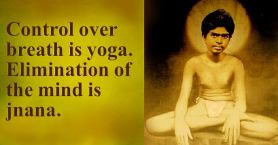
Yoga and breath Jnana and mind

These questions came up some years ago. My responses are included. (Photo art above is from Andreas Farsatis).

Question: Is the way and goal of Patanjali’s Yoga and  Sri Sankara’s Advaita Vedanta the same?

Continue reading