Harsha's avatar

Jai Guru Omkara

ln054

In honor of the Guru, which can only be Him
manifesting in His infinite mercy to remove the illusion of duality.

It may be external, or it may be from within,
opening the chambers of the heart and
unlocking the shackles of the mind such that nothing remains but Him,
everywhere manifesting in everything.  Chitta chora!  Chitta chora!

Steal it all and give me only one thing in return…your holy Presence. 
May I prostrate before you eternally
in gratitude for the Grace you have brought into my life.


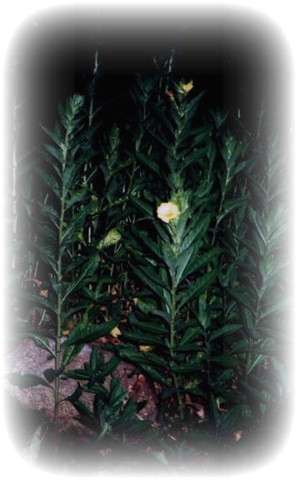
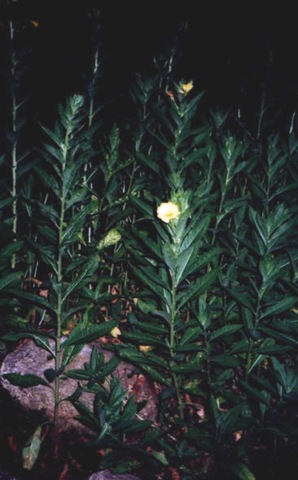
PRIMROSEw - Copy


Puja Prayer

Like a flower
In complete surrender
I come unto You

Petal by petal
In complete surrender
I come unto You

Like the primrose heralds the spring
In complete surrender
I come unto You

May my actions be right
In complete surrender
I come unto You

May I walk in thy Light
In complete surrender
I come unto You

Earth, my altar… I, my offering
In complete surrender
I come unto You

May my only reward
Be complete surrender
Unto You


 ln054


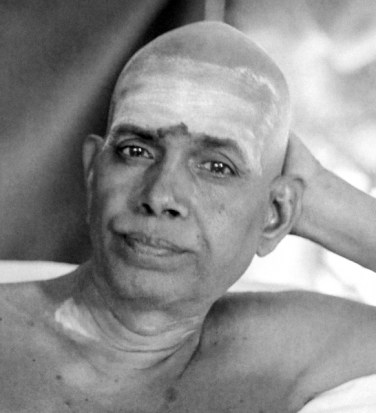
The Self manifests externally as Guru when occasion arises;
otherwise He is always within, doing the needful.
From Talks with Ramana Maharshi, 12th June, 1937 Talk 426.

To view Adi Shankaracharya’s Guru Ashtakam… 

Harsha's avatar

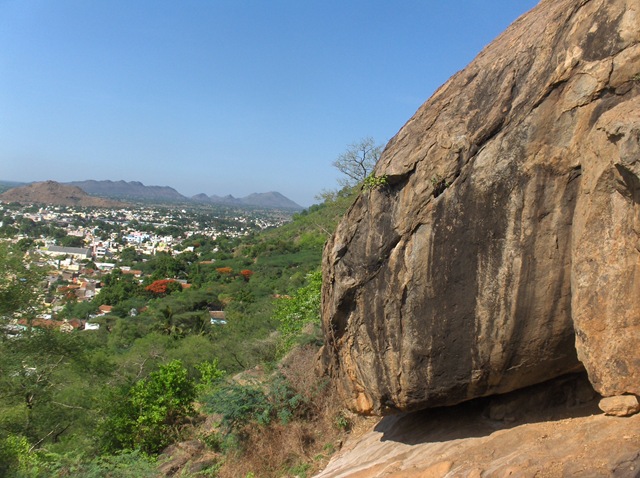
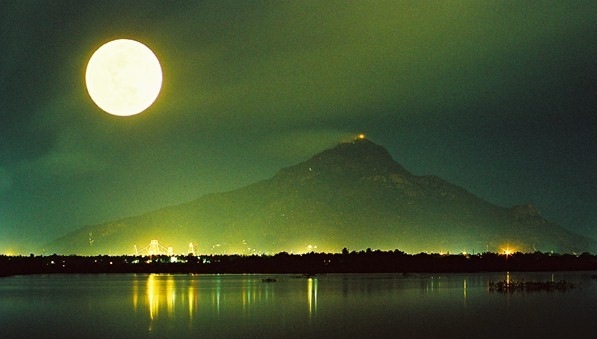
Caves of Arunachala – July 2009 Update

As we have been exploring Arunachala we keep finding ‘caves,’ some already widely known, and some not. A friend suggested that we write about these caves in a blog. This seems a good idea, so here it is. We can find nothing like this available now.

Our exploration of Arunachala is ongoing, and any additional caves we find will be added. In this post 1 refer to other postings where there are more photos and information about each of the caves.

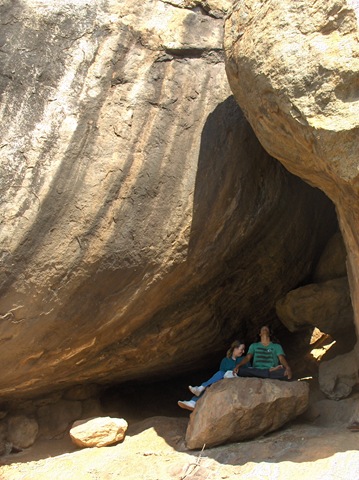
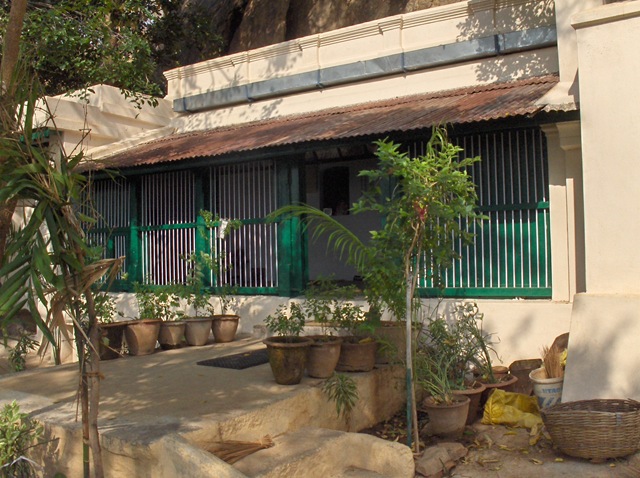
I put quotes around the first instance of ‘caves’ since what are called caves here are often nothing more than a sheltered space under a big rock. Some are natural, some have been improved, usually by building walls and adding a concrete floor. Some have been dug out under rocks.

Is some cases the individual caves already have names in common use. Most do not, and for the purposes of this listing I am calling these by names that I made up. If other caves are known, or names of caves shown are  known, let me know, so I can update this listing.

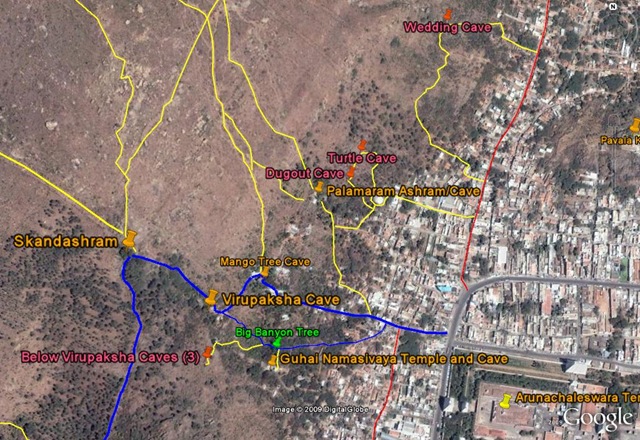
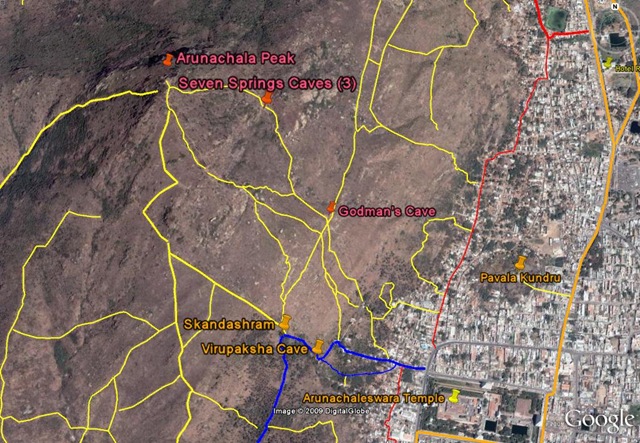
The December 2008 posting showed 18 caves. In July 2009, it now shows 23 caves. Maps, developed from GoogleEarth tm are also added that show the location of each of these caves.

Caves Associated with Sri Ramana Maharshi

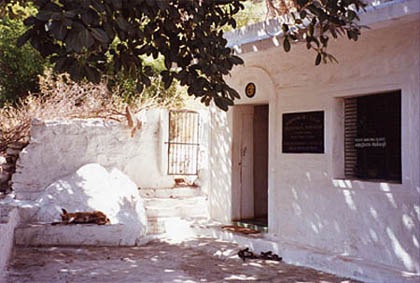
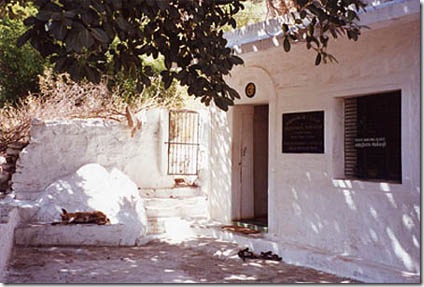
Virupaksha Cave
bhagvans_cave

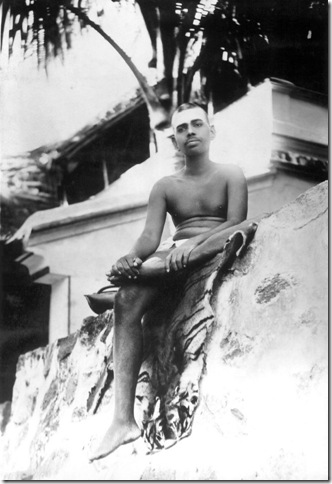
Virupaksha is, for most, deeply associated with Sri Ramana Maharshi. Ramana lived where he lived for 17 years [1899-1916].

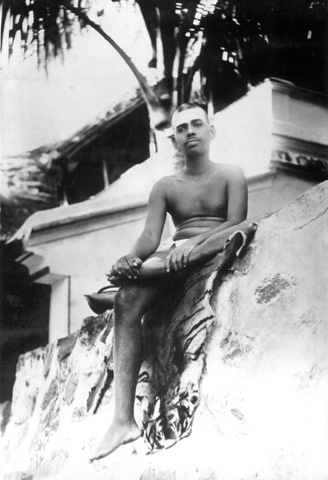
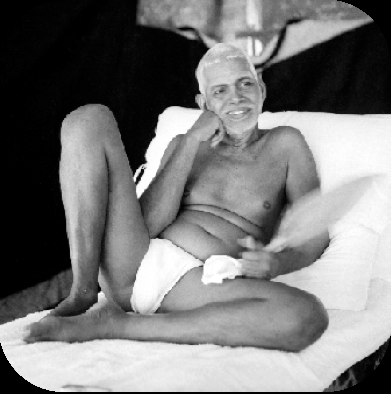
Below is a famous photo of the young Ramana at Virupaksha cave.
rest-9_1

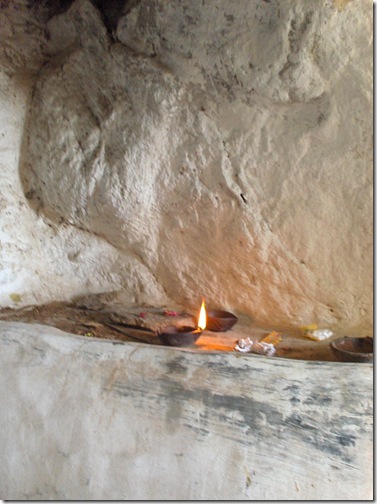
The cave is named for a famous saint, Virupaksha, who lived in this cave in the 1500’s, around the same time as Guhai Nama Shivaya lived nearby (see below). At Virupaksha’s demise, called here ‘maha samadhi,’ it is said that his body was transformed into vibhuti (sacred ash). In the interior of this cave there is a mound in the shape of Arunachala. It is said to be made of this vibhuti.

More on Virupaksha Cave  is in this post.

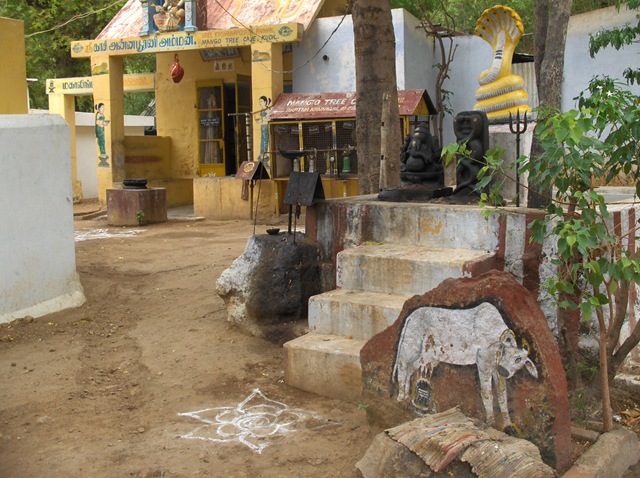
Mango Tree Cave

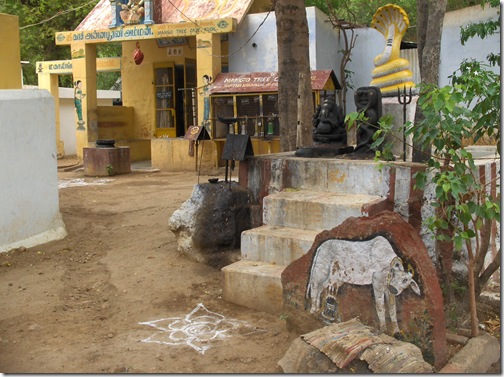
During the Virupaksha days, Sri Ramana would come down to Mango Tree Cave during the summer. It was cooler, and there was water here when there was none at Virupaksha Cave. Mango Tree Cave is on the common way up the hill to Virupaksha  Cave.
HPIM4609

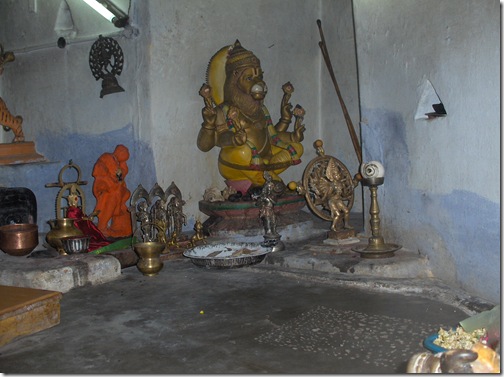
Inside the building, to the back, there is the actual cave. I think the building has been added since Ramana’s time.
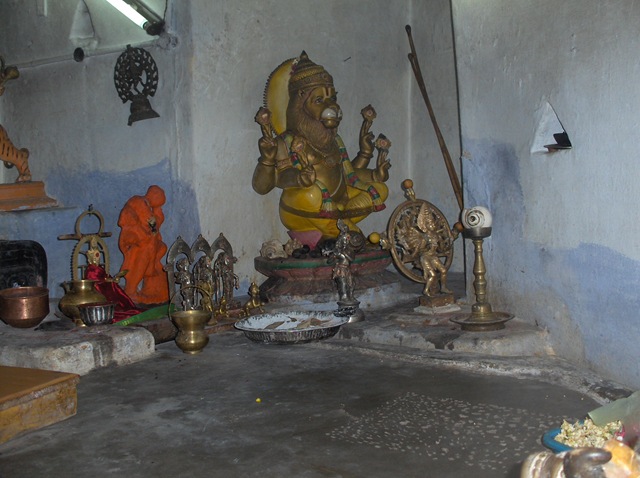
HPIM4621

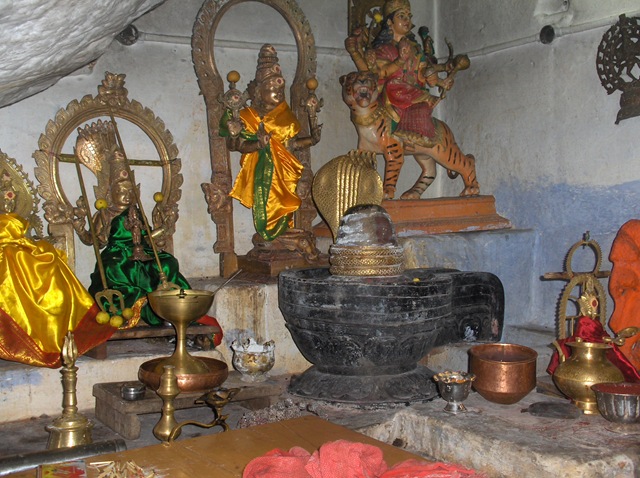
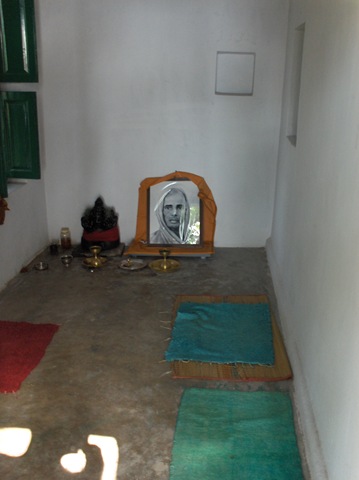
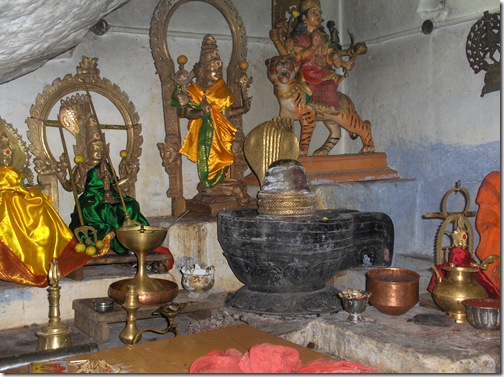
Now this small cave is filled with lingams and murtis of many gods.
HPIM4623

More on Mango Tree Cave can be round in this blog entry.  

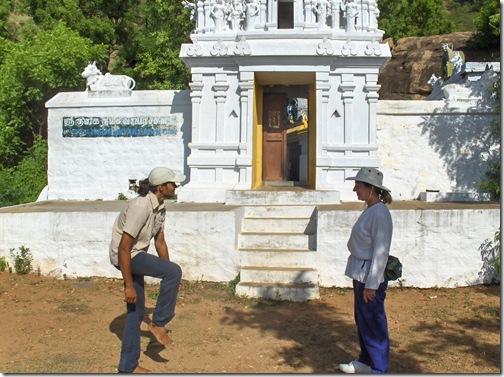
Guhai Nama Sivaya

This is another cave in which Ramana lived in 1899. It is here that he wrote the notes which later because the pamphlet, Who am I?

A bit more on this cave is in the post New Access to Ramana Sites below Virupaksha.
HPIM4986

A short clip from Arunachala Grace Blog:

Guhai Namasivaya is known to have been born around the year AD 1548 in Karnataka to a pious Saiva couple. His spiritual nature became evident at an early age: he was virtuous in his conduct, adept at his studies and evinced no attachment to worldly matters.

He practised his system of yoga for many years and as a result of the dream guidance of Lord Mallikarjuna, the presiding deity of Sri Sailam, Guhai Namasivaya came to Arunachala and remained as a Guru, giving teachings to mature disciples who approached him.

Tortoise Cave / Tortoise Rock

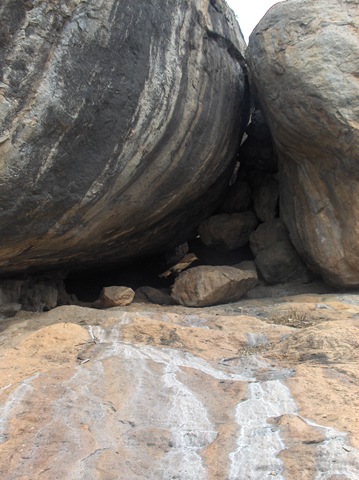
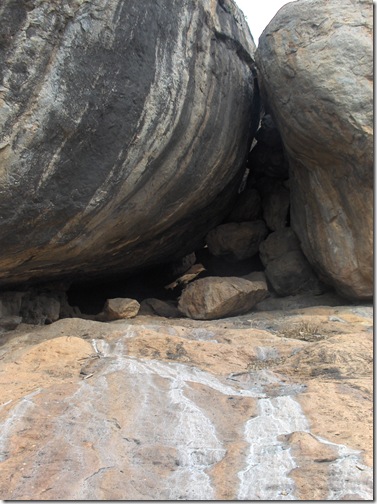
Tortoise Cave (also called Turtle Cave) was frequented by Sri Ramana during the Virupaksha days. In those days, there were few trees on Arunachala, and not many places with shade. Tortoise Cave has a good flat stone at its entrance to sit on. Here you are in the shade, and there is often a breeze.

This is also the place made famous in the story of Sri Ramana’s ‘second death experience’. This happened when Ramana stopped at Tortoise Cave / Tortoise Rock on his way back from Pachiaimman Koil. More of Tortoise Cave and Rock, and Ramana’s second death experience is in this post. More about Tortoise Cave is also  in this post.

From places like Pavala Kundru, Tortoise Cave can be seen as a dark triangle up on the mountain. It is a bit of a climb to get up here. We think it is worth it. You will want to take a Mountain Guide the first time, I think.
HPIM4022

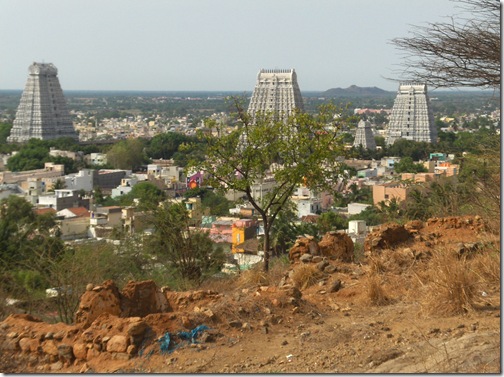
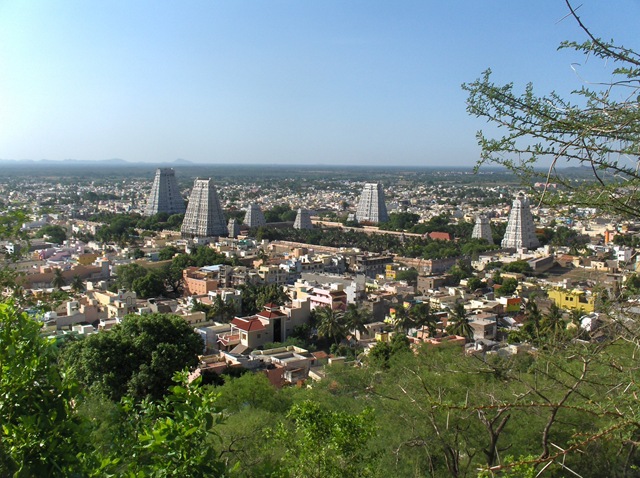
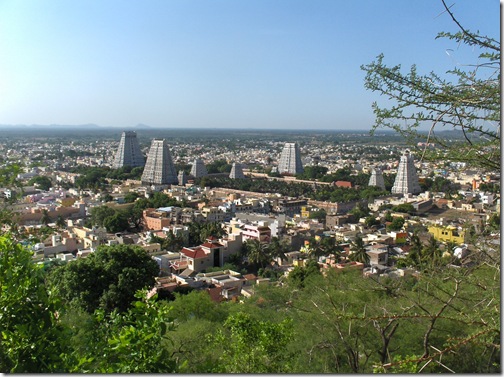
Arunachaleswara Temple for Tortoise Cave. A wonderful view.
HPIM5402

This rock at the entrance of the cave is where Sri Ramana would have sat and rested. And meditated.
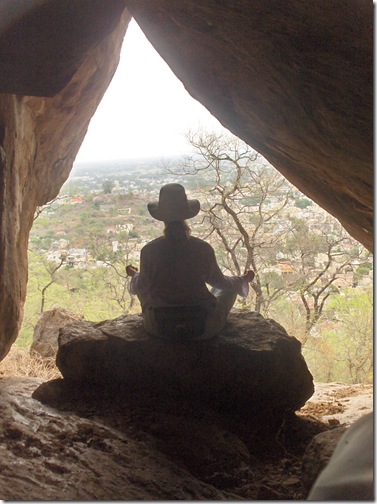
HPIM4032

Pavala Kundru can be seen toward the left.
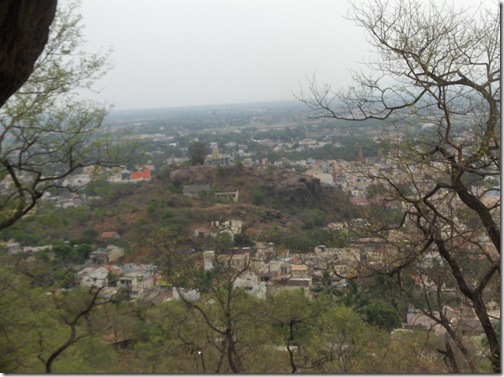
HPIM4045 

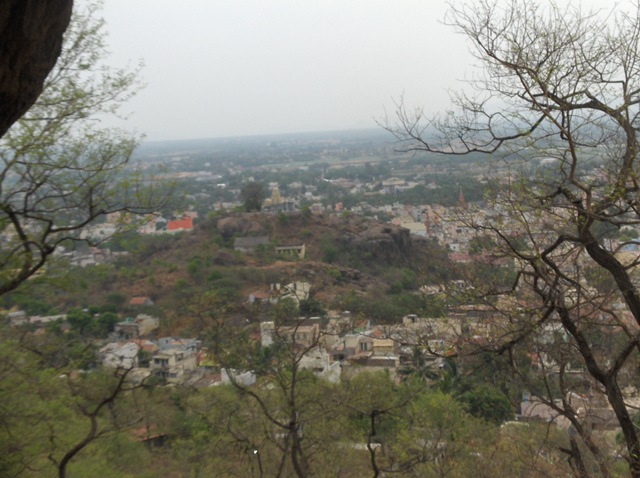
Here is a close up view of the face of the turtle on Tortoise Rock. Tiruvannamalai is in the background.
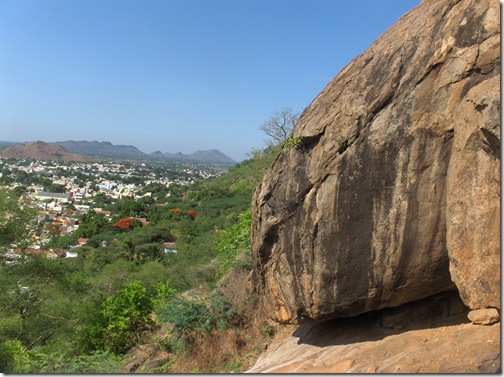
HPIM5427

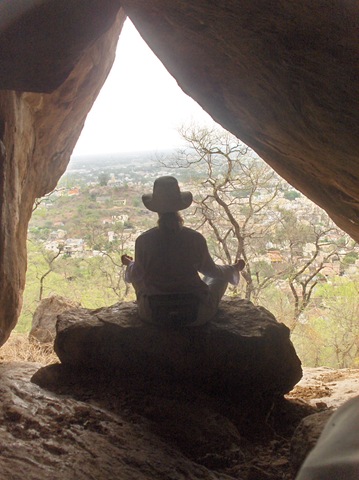
This cave is a great place to sit in the shade and meditate.
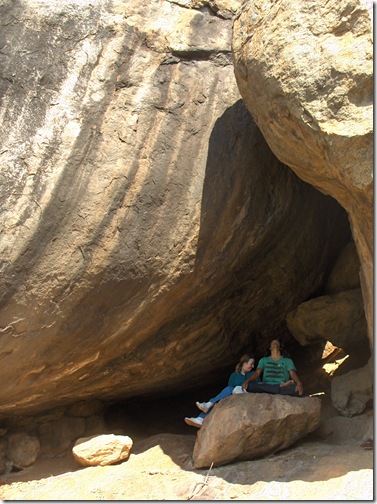
HPIM5441  

Skandashram

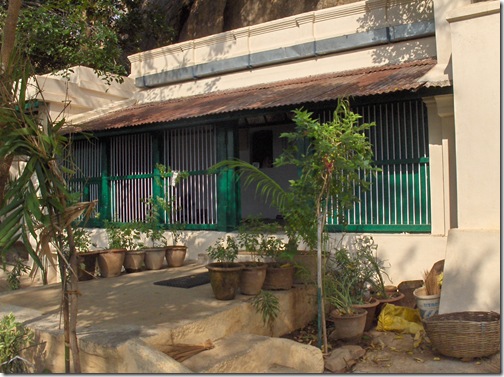
More on Skandashram is in the post Walking up to Skandashram.
HPIM4373

Sri Ramana lived at Skandashram from 1916 to 1922. His mother joined him during this period, and for the first time cooking was done there. This is where the mother had her maha samadhi in 1922. Her room is now a shrine.

HPIM4367

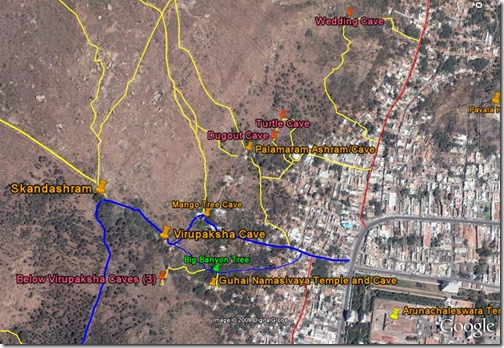
The map below shows all of the caves associated with Ramana, as well as other caves in the Virupaksha Cave area. Double click to expand.
screenhunter82

Seven Springs Caves

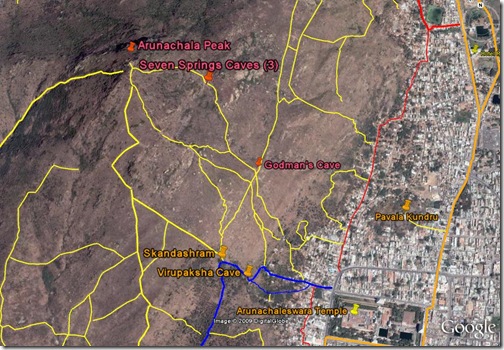
The next four caves are shown in the Seven Springs posting. They are all located on the hill above Skandashram, on one of the paths that goes to the top of the hill. Only one is associated with Ramana, the top one at Seven Springs. They are shown on this map:
screenhunter83

Godman’s Cave

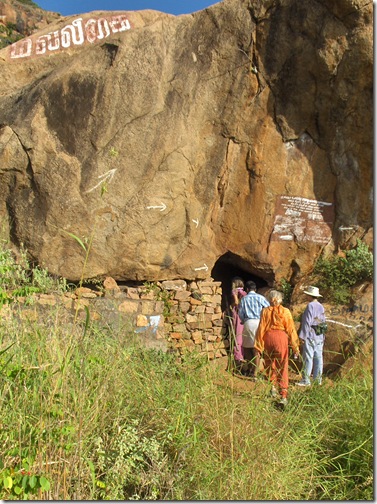
This is a cave, said to be greatly improved by the work of David Godman in the 1980s. Maybe ten people can fit into this cave.
HPIM7886

Altar in the cave.

HPIM7891

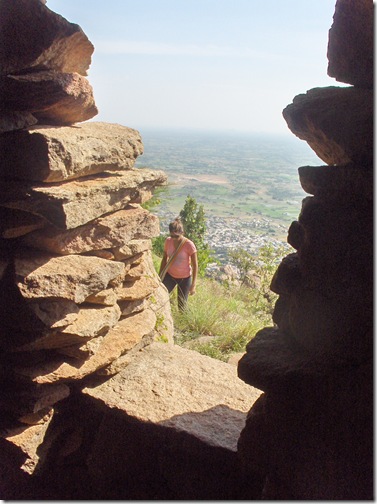
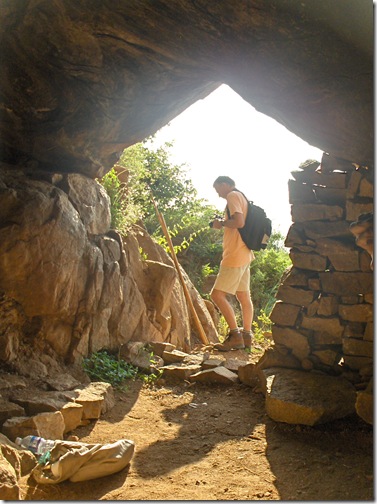
Looking out the entrance. John, the archivist at Ramanasramam, stands outside  the entrance.
HPIM7897

Seven Springs 1

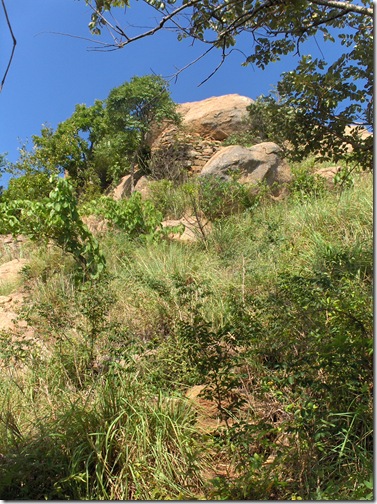
This is first of three caves found at Seven Springs. There is a stone entrance built, and a good altar in the cave. Maybe four people can fit in here.

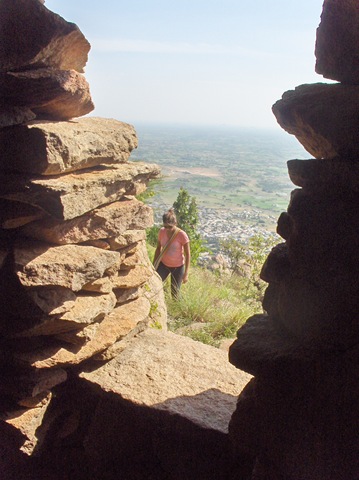
Up the hill you can see stonework.
HPIM7933

The entrance, from the inside.

HPIM7953

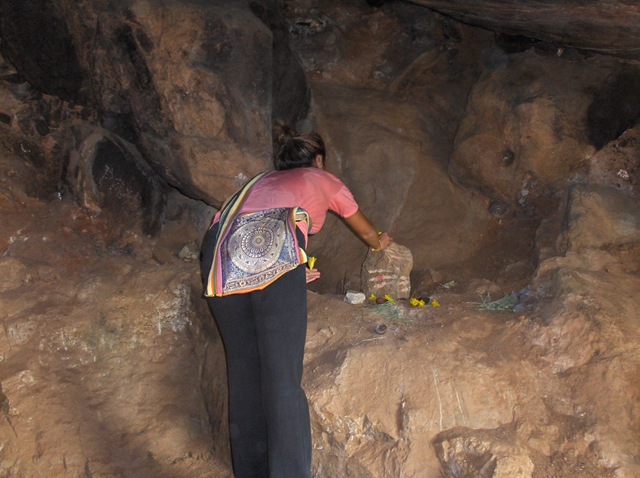
Richard, offering incense to the altar.

HPIM7939

Carol, exiting the cave.

IMG_1702

Seven Springs 2

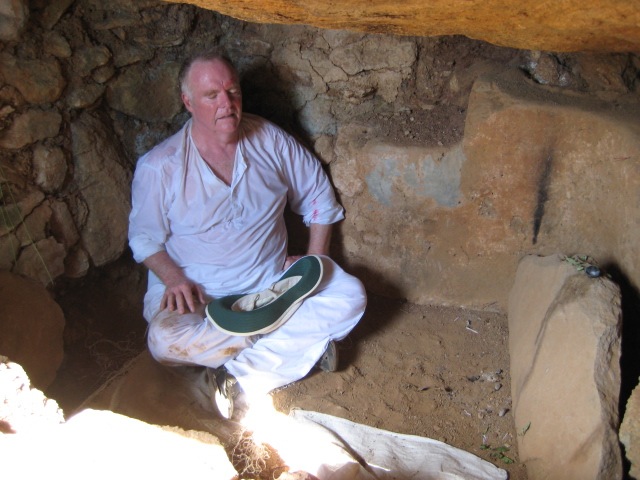
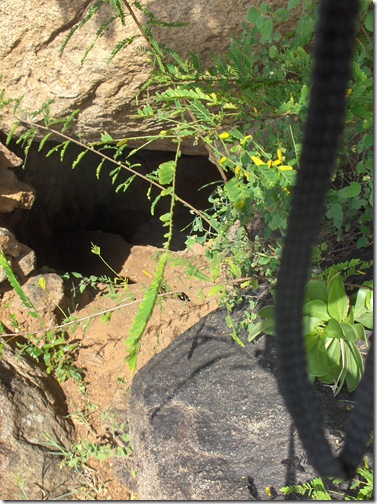
This is a small cave, behind Seven Springs 1. Maybe two people fit inside. Many stone and concrete improvements have been made.
HPIM7958

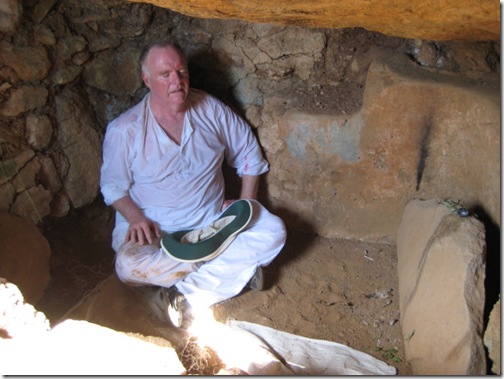
Richard, meditating in the cave.

IMG_1714

Ramana’s resting cave

HPIM7988

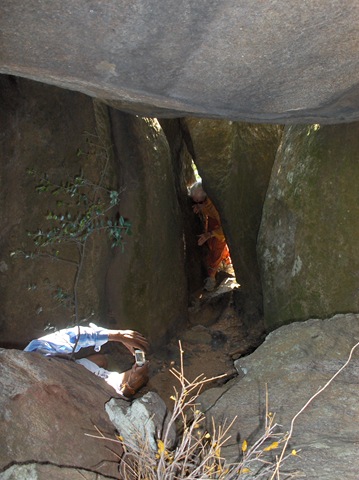
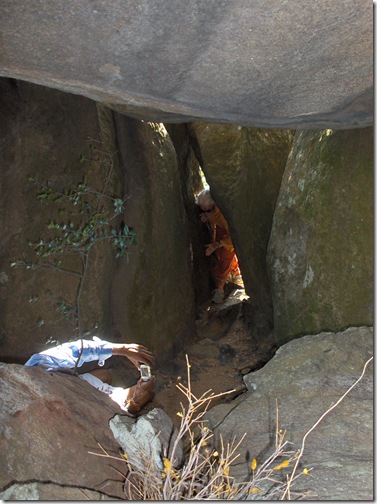
I call it ‘Ramana’s Resting Cave’ since this is the cave that is documented in writing about Ramana where he was known to rest, while others made the climb up to the top of Arunachala.

It is in the shade all day with a nice breeze through it, and a view out through green trees.

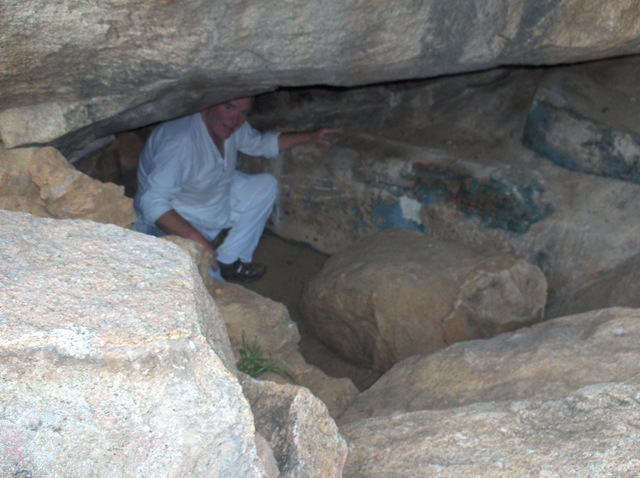
The entrance is a bit tight, though.
HPIM7993

Caves in Virupaksha Cave Area

(these are shown on the map at the end of the Ramana Caves section.)

Palamaram Ashram Cave

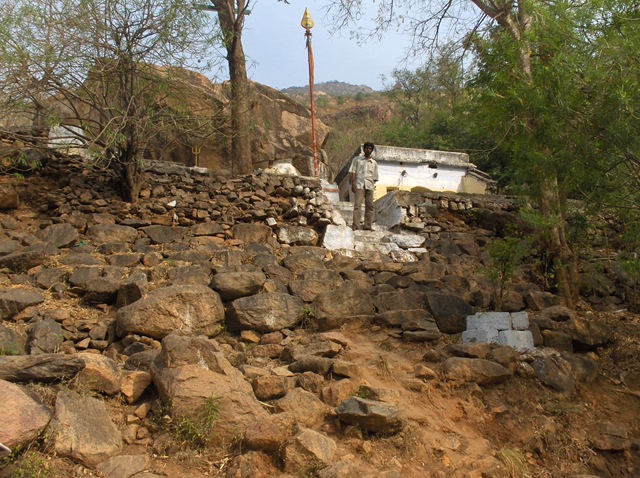
The Palamaram Ashram and is ‘generations’ old and has been run by one family for these generations. Palamaram is the Tamil word for ‘jackfruit’ (but we did not see a jackfruit tree). The guru who was most recently active here, per our mountain guide, was Palamaram Swamy, who was here for 40 years and for the last 15 years has been in the Himalayas.

Steps lead up the the ashram. The flag pole can be seen from down the hill.
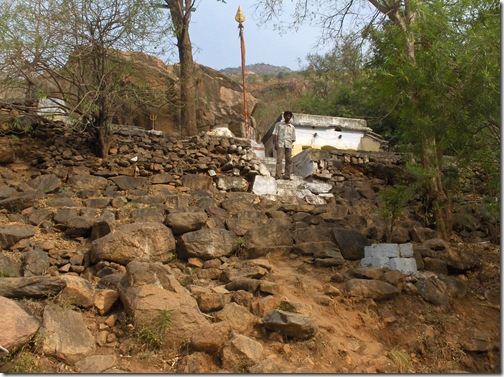
HPIM3849

The cave is under this rock. The doors into the cave are locked, and you will have to see if you can find someone who can open them. Often you cannot find the person.
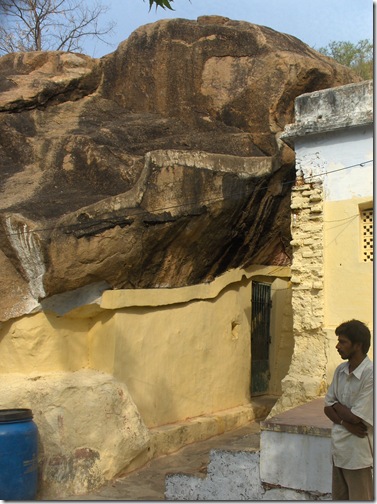
HPIM3833

For more on this place, see the Palamaram Ashram Post.

Wedding Cave

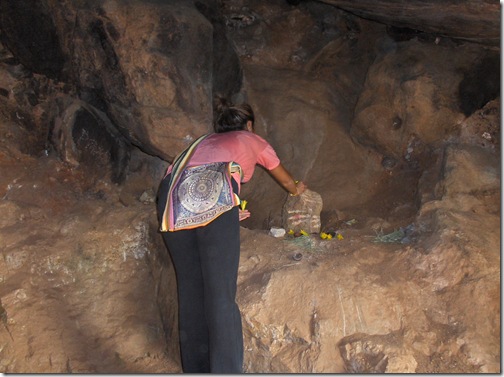
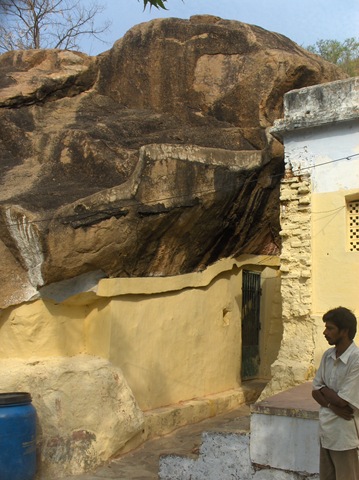
Wedding Cave is a small cave to the north of Virupaksha. It is rarely visited by westerners. We just discovered it by accident, looking for some other place.

It is at the base of the hill. You have to travel through residential areas, then up hillside trails to reach it.

To get to the cave, you have to climb up the rock, to the right of what can be seen in this photo.
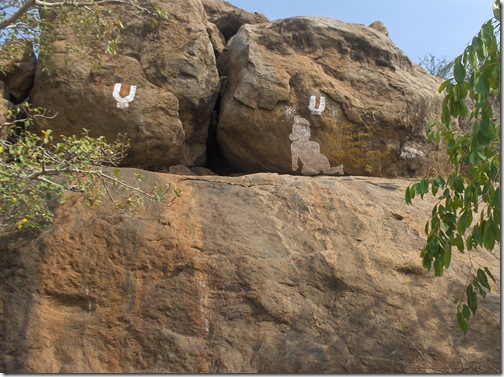
HPIM3931

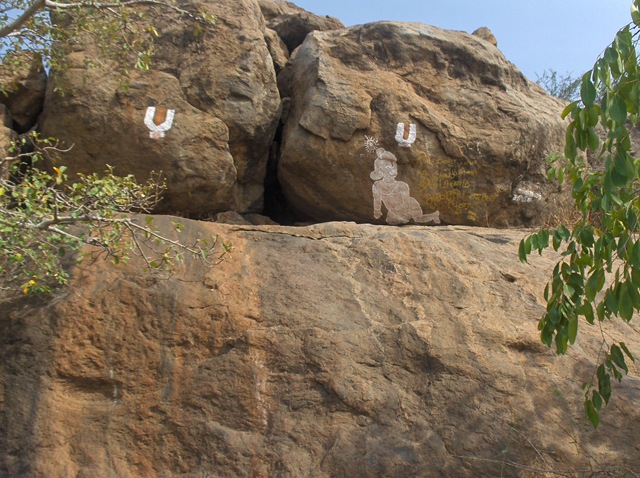
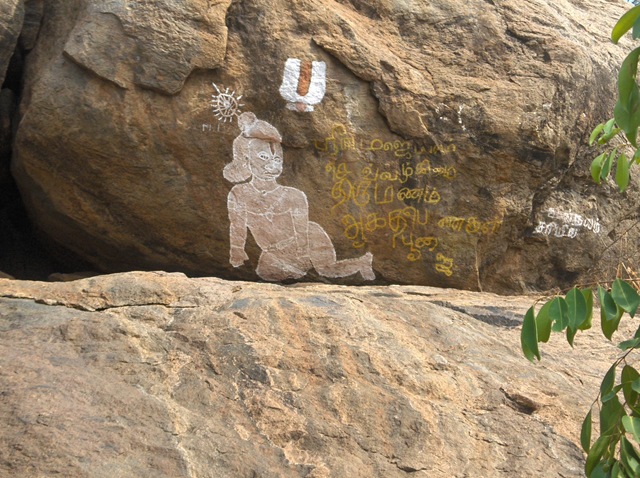
Krishna is painted on the rock, with a peacock feather on his head.
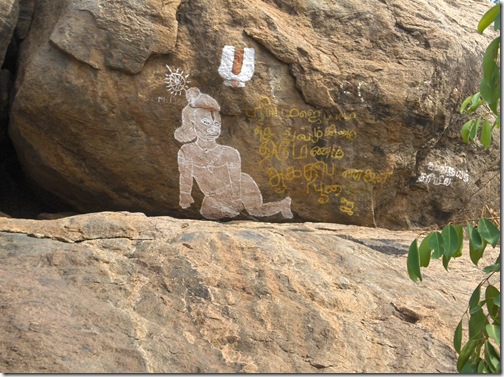
HPIM3932

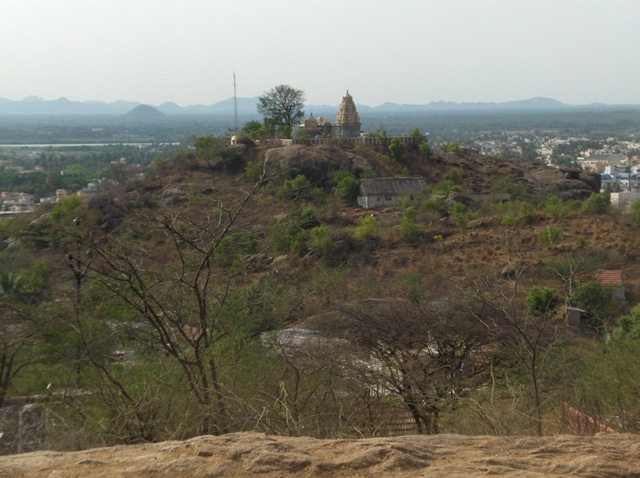
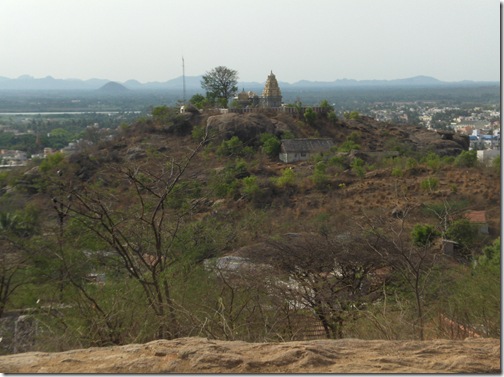
A great view of Pavala Kundru can be seen from here.
HPIM3935

Arunachaleswara Temple, too.

HPIM3937  

More is found in Wedding Cave Post.

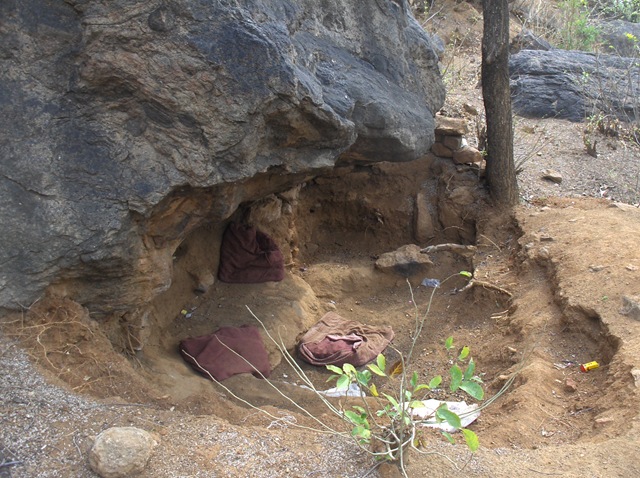
Dugout Cave

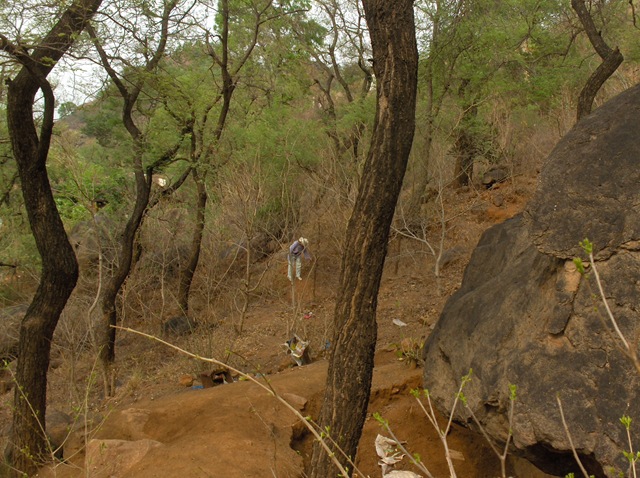
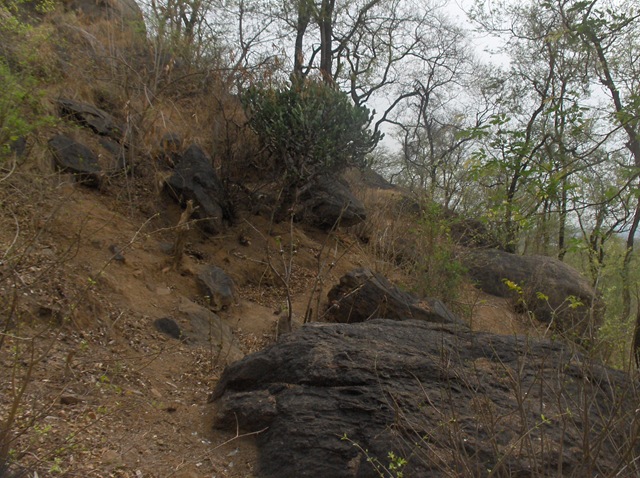
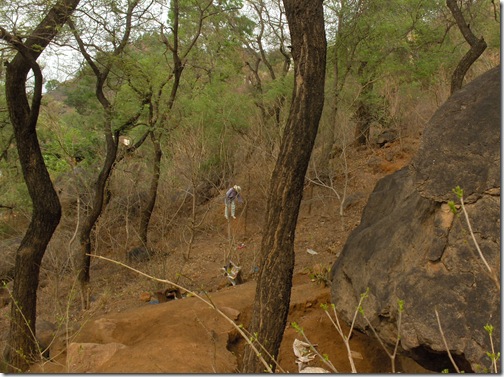
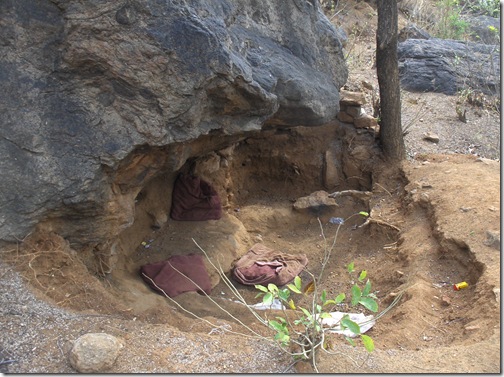
Dugout cave is a made made cave under a rock below Tortoise Cave.

To get to it, you go through the hillside,m like  shown below.
HPIM3996

A nice spot has been bug out under this rock. There are several cushions laying in the cave. Maybe there was a smaller cave, that was ‘improved’ to make a better space. I know nothing of the history of this cave.
HPIM4000

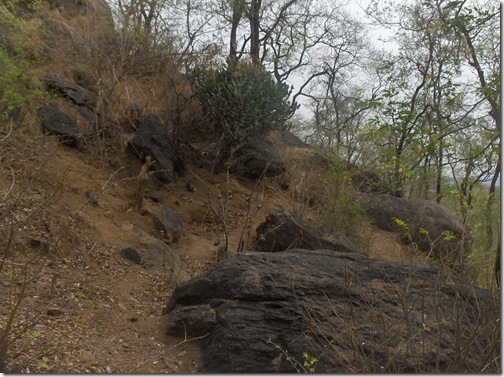
Another  photo of the terrain around this cave.
HPIM4001  

This is seen as a part of this post.

Caves below Virupaksha Cave

These caves are described in the post New Access to Ramana Sites below Virupaksha.

Below Virupaksha 1

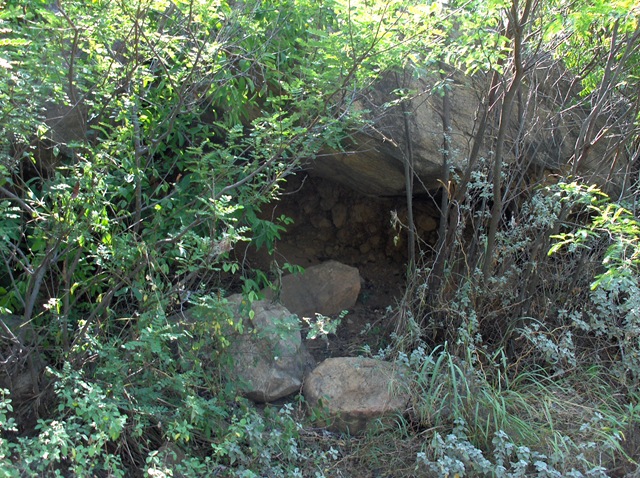
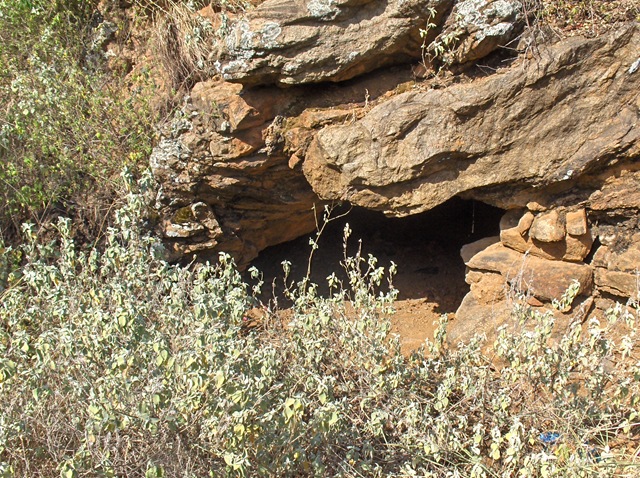
This cave is big enough that one or two people can sit in it.
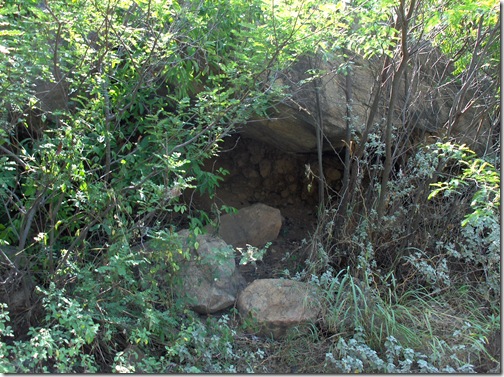
HPIM4991

Below Virupaksha 2

This cave is very small. One person can lie down in it.
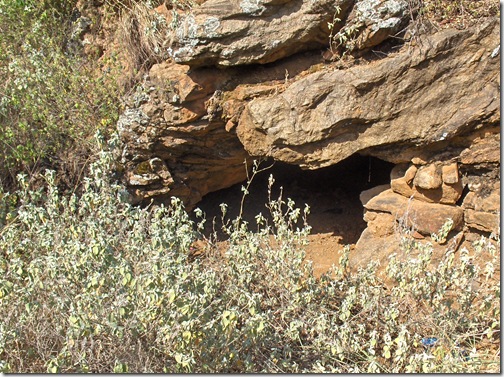
HPIM4997

Below Virupaksha 3 – Associated with Ramana?

This cave is said by local villagers to be one used by Ramana in the early days. Recently, people have built walls and a door and an altar in it.

HPIM5004

The altar.

HPIM5010

Southwest Side

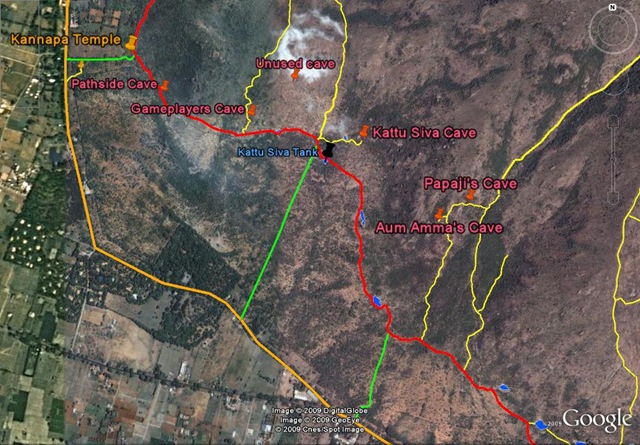
This map shows (right to left) Papaji’s Cave, Aum Amma’s Cave, Kattu Siva Cave, Unused Cave, Gameplayers Cava (Mankala Cave), and Pathside Cave.
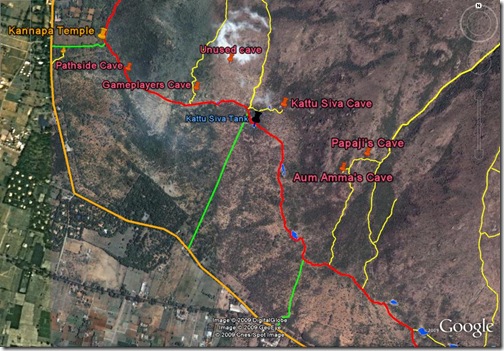
screenhunter85

Caves on Papaji’s Knoll

These caves are shown in the posts Papaji’s Cave and Aum Amma’s Cave.

Papaji’s Cave 1

The first ‘cave’ of Papaji’s is in the area where part of his ashes were scattered. This is a nice place to sit and meditate at the altar that has been set up there.

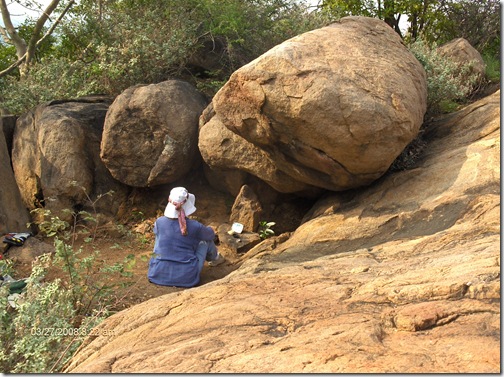
HPIM3940

HPIM3980

Papaji’s Cave 2

The next of the caves named for Papaji, and one that he is said to have lived in, is near the first cave, down the rock and a bit up the path.

Carol enters the cave from the path.

HPIM5936

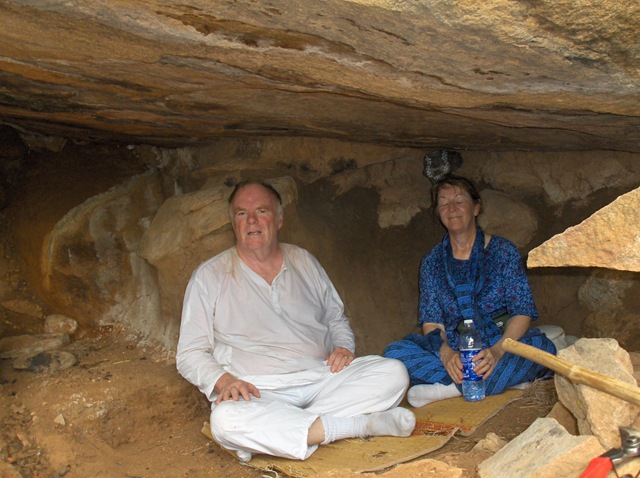
Richard and Carol, meditating in the cave.

HPIM5941

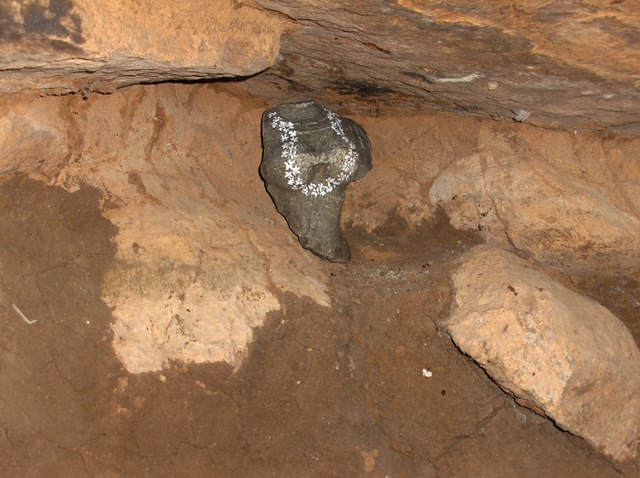
Below is part of a mother goddess statue, placed in this cave.

HPIM5944

Aum Amma’s Cave

Aum Amma’s cave is the most developed of any cave we have found so far (except for those, like Virupaksha, which have had buildings constructed around them).
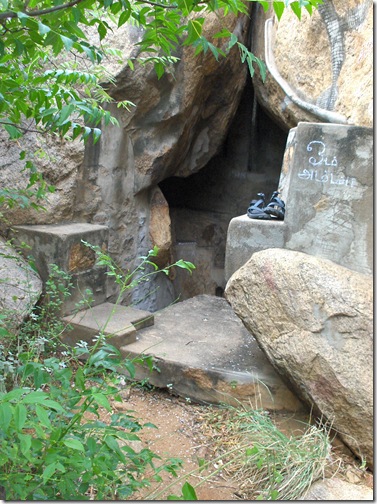
HPIM5873

Many bags of cement were carried up the hill to make these cave improvements. Aum Amma lived her for several years until just a few years ago.
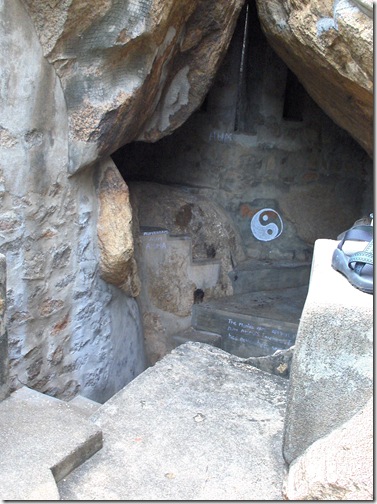
HPIM5876

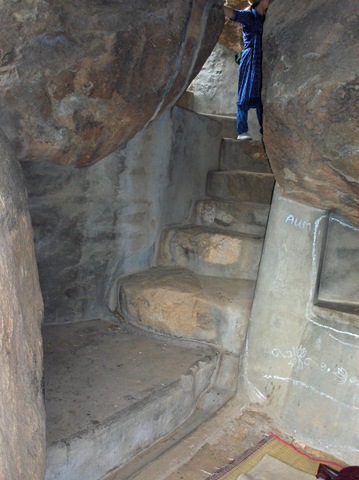
Stairs lead down into a main room.

HPIM5895

There is a good view out the “window” in the main room. It looks like sometimes that people sleep in this cave, though you are not supposed to, and if you stay too long, the Forestry Department people will chase you out.
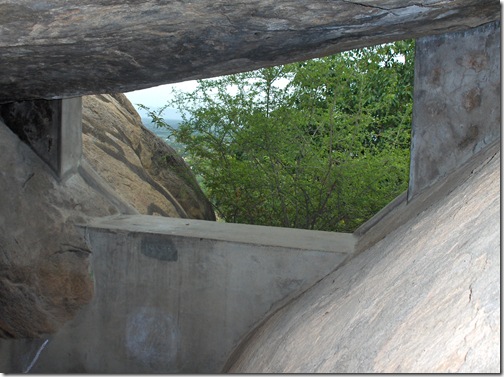
HPIM5888

Caves in Kattu Siva area

Kattu Siva Cave

This cave is shown in the post Kattu Siva Cave.

There is a nice cleared area around the cave. this is good place to come during the heat of the day. There is plenty of shade.

HPIM8655

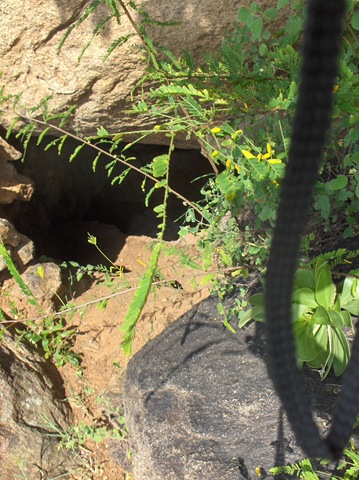
Climbing over the rocks at the end of the clearing, a hole in the rock appears.
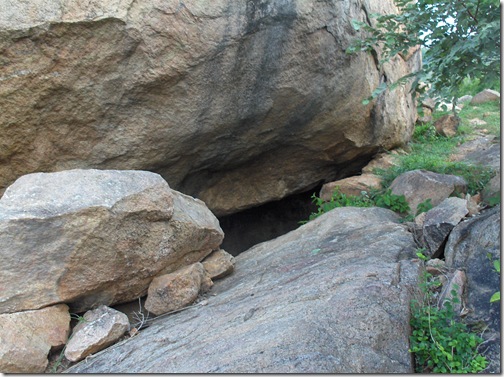
HPIM8659

This is Kattu Siva’s cave. A big rock, in front of Richard, has fallen into the cave. Will someone be able to remove it?

HPIM8665

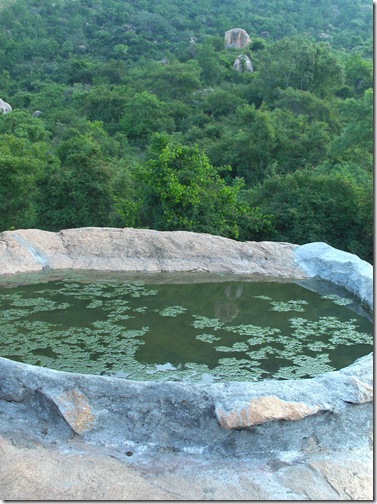
On the top of the rock over the cave, a cement water catching area was made. The photo below looks over this to the Arunachala hillside behind Kattu Siva’s cave.
HPIM8678

Cave Above Kattu Siva Meditation Perch – Unused Cave

Related posts are: Kattu Siva Meditation Perch and Kattu Siva path Renewal – Part 1.

This is a small unused cave. Rocks need to be cleared from the floor to make a good sleeping area.

HPIM8743

Mankala Cave (or Gameplayers Cave)

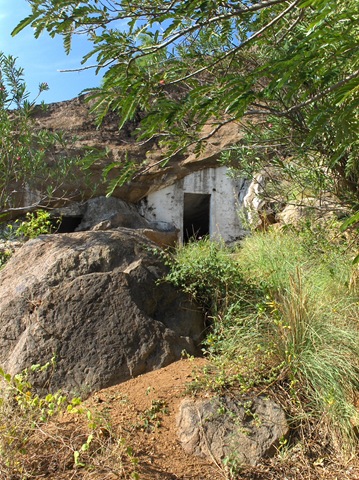
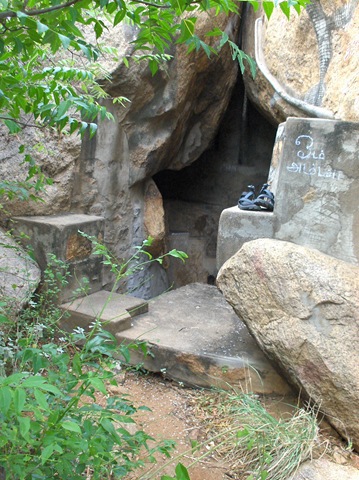
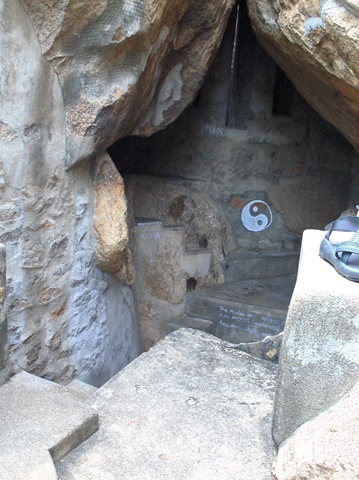
This cave is shown in the post Kattu Siva path Renewal – Part 1. It is under a rock that looks like a natural lingam as you approach this cave.

HPIM8804

Cave next to Inner Path near Kannappa Temple – Pathside Cave

This cave is shown in the post Inner Path – Around Parvati Hill.

A path leads to it from the Inner Path.

HPIM9659

This cave was improved with a stone and cement wall in front.
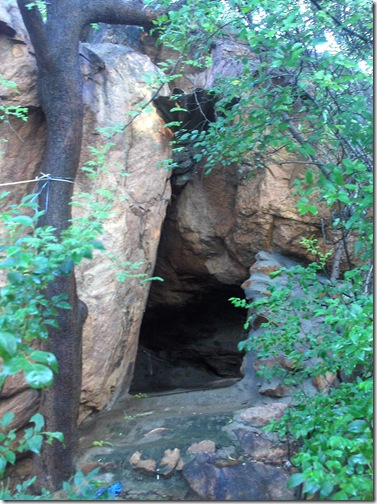
HPIM9669

A nice cement floor has been put in the cave.

HPIM9665

Caves on Northside  of Arunachala

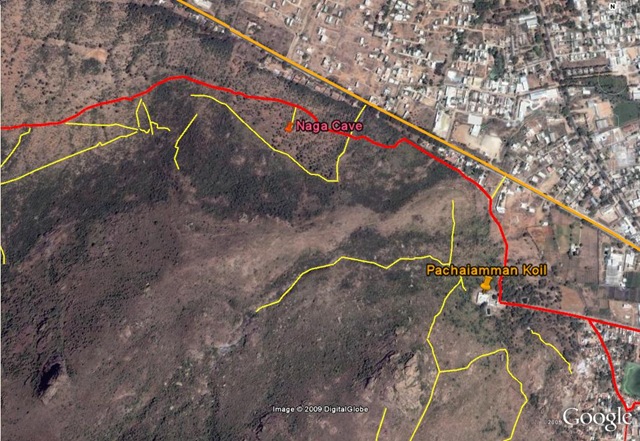
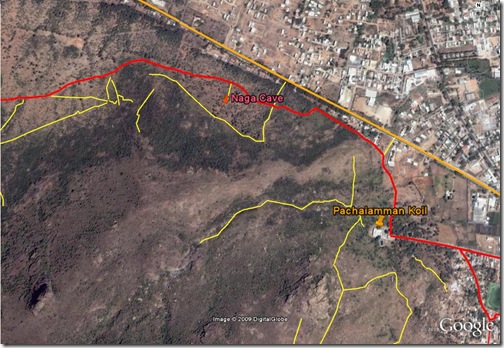
Naga Cave is shown in the map, below.
screenhunter84

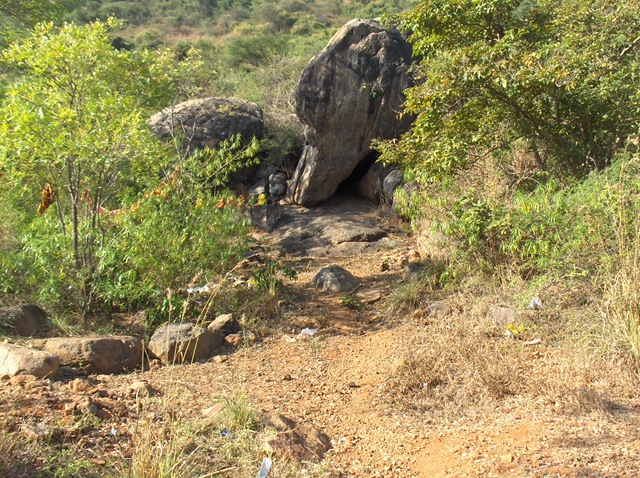
Naga Cave

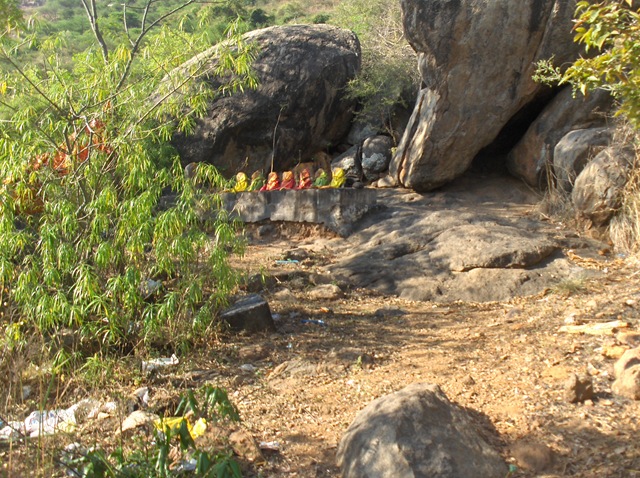
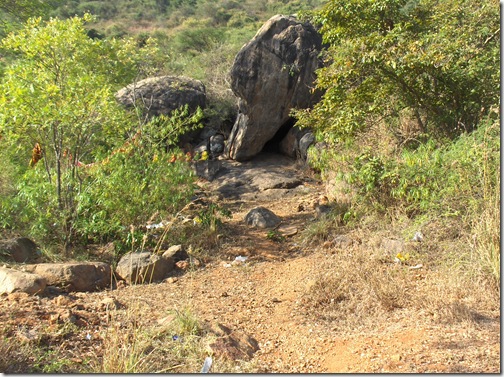
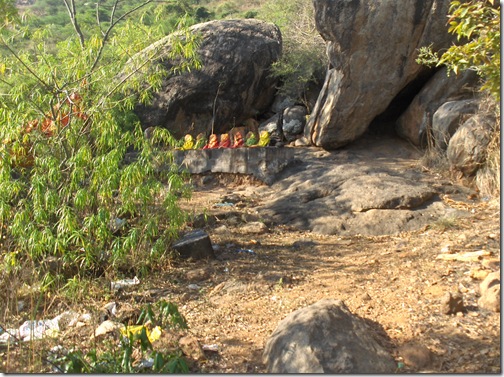
This is not too far from Pachaiamman Koil.  It is between the Inner Path and Arunachala, just barely visible from the path. You may notice a bit of color towards Arunachala.

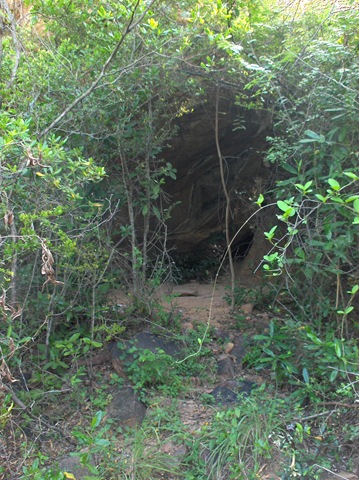
As you approach you see a small cave.  
HPIM2689

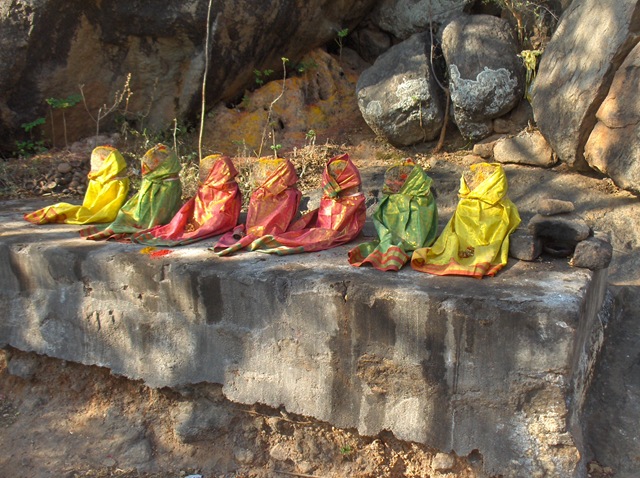
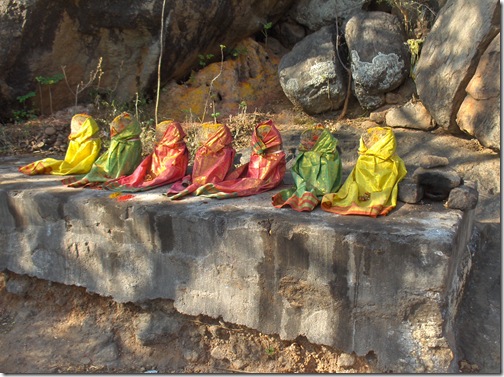
To the left is a primate altar, featuring Nagas, snake gods.
HPIM2690

The colors noticed from the path are the fine clothes that the Nagas are wearing.
HPIM2692

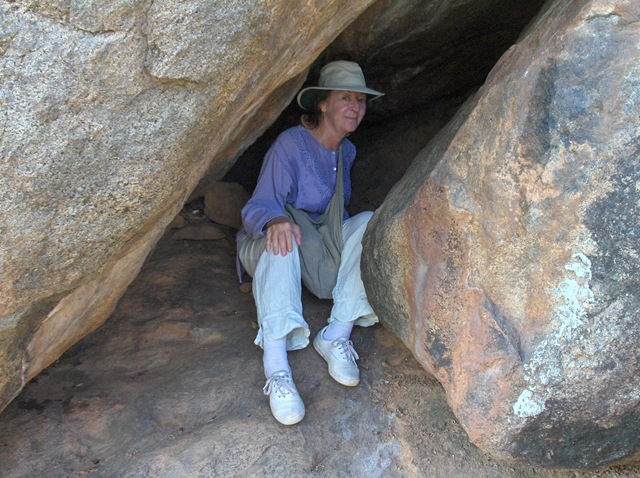
The cave is small. Only one person can sit in it. Not good for sleeping, either.
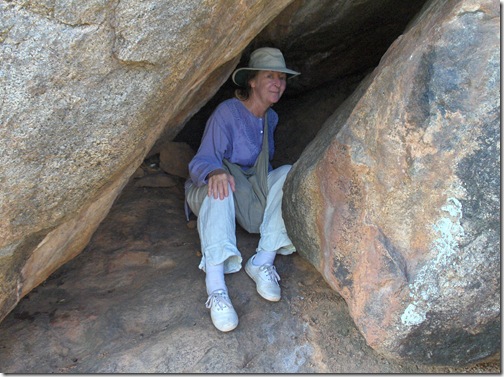
HPIM2696   

More is to be found in the Naga Cave Post. 

More caves to find, more of Arunachala to explore

I have heard of more caves. I have been told:

  • There are four caves on the hill above the Mountain of Medicine Arunachala reforestation facility.
  • There is another cave high above Papaji’s cave.
  • There are three caves on the north side.
  • There is a cave near Virupaksha occupied by a sadhu that does not like to be bothered.

What else is there? We have to explore to know more. If you know of any more caves that haven’t been listed, please let me know.


Harsha's avatar

Light From Eternal Lamps: By Swami Sadasivananda

image

“One must make the mind to bear on God”

ENTERING THE PALACE OF LIBERATION…

The One Thing Needful

“The eternal, unbroken, natural state of abiding in the Self is jnana. To abide in the Self you must love the Self. Since God is verily the Self, love of the Self is love of God; and that is bhakti. Jnana and bhakti are thus one and the same…. their purpose is to lead you to dhyana, to meditation, which ends in Self-realization.”  Maharshi’s Gospel I, The Teachings of Sri Ramana Maharshi. p. 17-18.

Sri Ramana Maharshi maintained this ancient form of instruction. The answers he gave to questions represent what has evolved in our modern times as a uniquely universal spiritual teaching that can be taken up by anyone the world over without adopting the limiting constraints of any one religious tradition. It has been said that these teachings were indeed God-given, for they began with the words of grace flowing from Sri Ramakrishna and continued with the blessing of perfection that was embodied as Bhagavan.

As did his predecessor, Bhagavan Sri Ramana Maharshi stressed practice that produces purification (removal of that fog of ignorance, the obstacles and habits of the mercurial mind which diminish our pure vision) as well as the grace of the knowledge of the Self as the eternal companions of those who would be led:

From the unreal to the Real,
From darkness to Light,
From death to Immortality!

NOTES FROM ARUNACHALA…

Devotees present with Bhagavan on this day said that a most important spiritual lesson was transmitted through the actions of Bhagavan as he held Lakshmi’s head during her final moments.

As Bhagavan was stroking Lakshmi’s head, she was gasping for breath in the final moments prior to her passing. Bhagavan, who all knew was capable of removing her pain and causing her spirit to easily exit the body, rather whispered in Lakshmi’s ear to “Tolerate the pain!”.

At a later day, Bhagavan said that, “Suffering is the way to Self-realization.” Our training within meditation prepares us to remain “steady in wisdom” even during the final trial of separation from the body.

image

“Practice is necessary, Grace is there.”
Reprinted from Swami Sadsivananda’s July newsletter.
To subscribe to his newsletter, go to http://www.ramanateaching.org/contact.html
For more information on Swamiji, click here:   About Swami Sadasivananda
Teachings of Bhagavan Sri Ramana Maharshi web site: http://www.ramanateaching.org
Ask your question in relation to Bhagavan’s teachings, meditation and spirituality at:
http://www.ramanateaching.org/faq

Harsha's avatar

The Self is Never Born: Bhagavad-Gita 2.20

omwllppr1 - Copy

na jaayate mriyate vaa kadaachin-
naayaM bhuutwaa bhavitaa vaa na bhuuyaH |
ajo nityaH shaashwato.ayam puraaNo
na hanyate hanyamaane shariire ||

divd1

The Self is never born, nor does It ever die;
never It came into existence nor will It cease to be –
It will not take rebirth, It is unborn, eternal and changeless;
It is timeless and is never killed when the body is killed (BG 2.20)

divd1

omwllppr1 - Copy (2) - Copy

Several Gita sources for English transliteration of the sanskrit, for English translation of the words and purport are utilized to create these Holy Gita Inspirations. It includes an eclectic yoga, as it were, among several sources, Swami Chinmayananda, Swamy Gambiranda, Prabhupada, and Swami Sivananda,  each coming from slightly different traditions, fueled by One Spirit.  If you go to the links, you can find additional articles there to enhance your appreciation and understanding of this shloka or verse from the Holy Gita.

http://sss.vn.ua/bh_g_eng.htm#Chapter%20XI

https://luthar.com/wp-content/uploads/2009/06/bgita.pdf

http://www.bhagavad-gita.org/Gita/intro.html

http://www.srimadbhagavatam.org/gita/contents.html

Harsha's avatar

Light a Fire Within the Heart: By Swami Sadasivananda

Posted by Swami Sadasivananda on his blog and reproduced here with his permission.
For more information on Swamiji, click here:   About Swami Sadasivananda

3

Prior to lighting the fire on Arunachala (said to be the heart of the universe), the arduous effort of ascending the sacred hill with all of the implements required was needful. This fact is symbolic of the effort required by us to light a fire within the heart. The Sanskrit word “sadhana”, coming from the root “sadhan – implements or tools”, actually means the way we use the tools that the masters and the scriptures have shown us by example. Without the needful preparation (sadhana), no fire will appear.

HOW DOES ONE LIGHT A FIRE WITHIN THE HEART?

Such a question of, “How to light a fire within the heart?” will only arise to one who is seeking spiritual growth. But a common error also simultaneously arises. In essence, this error is a trick of the ego, whose very life depends on being as far away from the heart as possible. So the ego says to us, “Go my dearest, visit the playground of the heart, I will help you, for I know a short-cut.” This short cut is in truth a bypass, right around the mind.

We cannot even collect the firewood; much less light a fire in a place where we have not yet found the path. We need to make the mind a guiding light, which will illumine our vision and our way towards the heart. But there are obstacles.

Bhagavan Sri Ramana Maharshi stressed practice that produces purification (removal of that fog of ignorance, the obstacles and habits of the mercurial mind which diminish our pure vision) as well as the grace of the knowledge of the Self as the eternal companions of those who would be led:

From the unreal to the Real,
From darkness to Light
From death to Immortality!

This place of the Real, the Light and Immortality is a firm stance within the heart. But first the obstacles must be removed. So Bhagavan tells us outright what is needful. The mind must first become free of restlessness. In fact it must first be transcended: “How to transcend the mind?” The Master answers: “Mind is by nature restless. Begin liberating it from restlessness: give it peace; make it free from distractions; train it to look inward; make this a habit. This is done by ignoring the external world and removing all obstacles to peace of mind.” (Reflections on Talks with Sri Ramana Maharshi, Talk 26 p. 129.)

“The obstacles that hinder realization are habits of the mind (vasanas), and the aids to realization are the teachings of the scriptures and of realized souls.” (Talks with Sri Ramana Maharshi, Talk 13, p. 5.)

The teachings of the scriptures and of realized souls tell us that meditation, daily meditation, without interruption is the way. Through meditation an awareness and recognition of the intoxicating addiction to heedlessness is brought to light together with a resolve to strive for true spiritual growth. Thus the all-knowing God begins by infusing into us the will to change and seek a pure life.

Far before we even get close to the heart, we must begin to change our habits and train our mind to look inwards. This means that we must bring about change through a determined and protracted effort to purify, and thus literally dismantle our vasanas. Yes, this not only can be done, but this must be done. Grace is our essential source of guidance that illumines our path to true ‘spirit life’. We attract the Grace of God mainly through prayer and meditation! “The quality of soul that makes it possible for man to rise to spirit life is purity…that which one wills to do, he has the power to do. Knowledge of that power is faith; and when faith moves, the soul begins its flight.” (The Aquarian Gospel of Jesus the Christ, by Levi)

The Path of Ascent through the Sky of the Heart (the mind!) We have begun; we have made a start. In the truest sense we have now set our hands to the plough. In the entire Srimad Bhagavatam Sri Krishna reveals the quintessence of His teaching in one statement:

“Shake free of sloth, and merge your mind within Me.”
(Srimad Bhagavata, Book Eleven, Uddhava Gita.)

Though we might believe that only a simple start has been made, the shaking free of slothful heedlessness is declared by God to be half the battle. We have recognized that there is a fog that clouds our vision, and obstacles (restlessness and slothfulness), that literally obscure the manifestation of the light of the Self in abode of our true consciousness; within our spiritual heart!

Regardless of whatever label we choose to call this effort, whether it be deemed purification, removal of defilement, awakening, being in oneness or even becoming still, it should be known that Bhagavan said it is “effort that instills purity” and stressed that without it the goal of lighting a fire within the heart will not be reached.

Prior to lighting a fire in the heart, we must light a fire within the mind to burn down sloth, anger, and ultimately all fear. This being done, we will have the doors of the heart flung open to reveal that God has already created a bonfire, the flames of which will be our love of Him.

       !cid_024101c3d9c0$9f1668a0$0000a398@MahaDevi

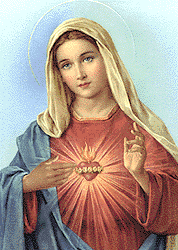
The fire within the Immaculate Heart of the Blessed Virgin Mary blazes forth to illumine the path all human souls must progress through. This became possible only through Her willingness to, like Her Son, take upon Herself the image of our likeness and endure patiently the suffering that instills spiritual perfection, signified by the sword piercing Her most pure heart. Sri Ramana Maharshi echoed this truth when asked by Paramahansa Yogananda if God could not have ordained it differently, so we would not suffer so? Bhagavan replied: “Suffering is the way to self realization.” (Talks #107) 

Teachings of Bhagavan Sri Ramana Maharshi web site: http://www.ramanateaching.org
Ask your question in relation to Bhagavan’s teachings, meditation and spirituality at:
http://www.ramanateaching.org/faq
To contact Swami Sadasivananda:
http://www.ramanateaching.org/contact.html


Harsha's avatar

Pushpanjali – A Floral Tribute – 2

The Offering Of Floral Garlands to
Deities in Ritualistic Worship – Part -2

vishnu-small

Sri Anantasayanam Padmanabha Swami
with his eternal consort , Sri Lakshmi devi

Shanta Karam Bhujaga Shayanam
Padmanabham Suresham
Vishvadharam Gagana Sadrsham
Megha Varam Shubhangam
Lakshmi Kantam Kamala Nayanam
Yogibhir Dhyana Gamyam
Vande Vishnum Bhava Bhaya Haram
Sarva Lokaiaka Natham

I worship that Lord Vishnu who has a peaceful body (postures); who rests on Sheshanaga (the mighty serpant – cobra); who has a lotus in his navel, who is the base of the world, who is like the sky; who has a colour like cloud, who is the lord of Lakshmi (wealth); who has eyes like lotus; who is seen by yogis in their meditation; who is the remover of all the differences and who is the only Lord of all the three Lokas (Worlds), I worship such Lord Vishnu.
Listen to this slokam at http://www.youtube.com/watch?v=Z6OtCervaAs

Puja to Lord Vishnu

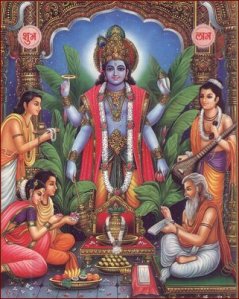
Lord Vishnu is fond of Alankaram – being dressed in resplendent silks and wearing  Gold Ornaments . Thus , the popular saying – Alankara Priyo Vishnoh and Abhisekha Priyo Shambuh! So Lord Shiva is pleased with simple Abisekha  and  Sri Maha Vishnu is fond of ostentatious pageantry.

Here is a picture of Lord Vishnu dressed in the best of Silks , wearing Gold Ornaments and wearing  flower garlands. Sri Vishnu is fond of Lotus Garlands  but is equally pleased if offered Tulasi Garlands.  For Tulasi Devi is none other than Sri Lakshmi Devi.  Sri Lakshmi Devi lives in the heart of Sri Vishnu. That is why one of the names of Sri Vishnu is “Sree Nivasa” ( In whose heart Sree Devi resides )

vishnu3

The Four- Armed Shriman Narayana

Why is the best of the best offered to Lord Vishnu?  This is because Sri Vishnu is called ‘Bhagwan’ – the root word Bhaga means Fortune,   Prosperity etc .

Vishnu Purana (6.5.79)describes Bhagvan thus :
aiśvaryasya samagrasya vīryasya yaśasaḥ śriyaḥ
jñāna-vairāgyayoś caiva ṣannāḥ bhaga itīṇganā

Maha Vishnu has six opulences – Riches, Potency, Fame, Beauty,  Knowledge, and  Detachment!  The meaning of offering everything to Lord Vishnu is that nothing really belongs to us. What we offer to Bhagwan is what really is His to begin with.

The very first verse of Isa Upanishad emphasizes this:

Om Isavasyam-Idam Sarvam
yat-kimcha Jagatyam-Jagat
Tena Tyaktena Bhunjeethha
ma Gridhah Kasyasvid-dhaman

The Lord inhabits all this (that is perceivable)–whatever moves in this moving universe. Therefore by renunciation, you can enjoy all things. Do not covet any one’s wealth. So, Hindus always say ‘offer Tan, Man and Dhan – Body, Mind and Wealth to the Lord!

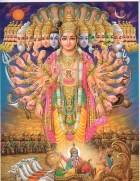
viraata-rupa3

Viraat Rupa – The Cosmic Manifestation of Lord Vishnu

sahasra SIrshA Purusha:  |  sahasrAksha: sahasra pAt  |
sa bhUmim vishvato vRtvA  | atyatishTad daSAngulam  ||
Thousand head has Purusha
Thousands of  eyes has he
Thousands of legs has He
He is manifested in the earth and all through the universe.He stands beyond the count of ten fingers.

In Sri Vaishnavism , nine modes of Worship are highly recommended !
They are called Nava Vidhis

  • 1) Sravanam- Listening to the names of Lord Vishnu and reading Vishnu Purana , Srimad Bbhagvatam , Padma puranas etc.
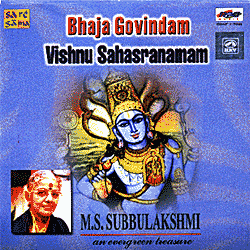
    2) Kirtanam – Singing God’s praise and reciting His name. Reciting the 1000 names of Lord Vishnu. (Vishnu Sahasaranama )
    3) Vishnum smaranam- Always Meditaing on the name and form of Lord Vishnu.
    4) Pada Sevanam -. To do service at Lord Vishnu’s Feet
    5) Archanam -Archana or offering flowers to Lord Vishnu
    6)Vandanam – To do namaskar or paying obeisance to Lord Vishnu
    7) Dasyam- To do service to Lord Vishnu
    8. Sakhyam -To Look Upon Lord Vishnu as A friend
    9) Atma Nivedanam – To surrender everything to Sri Vishnu including one’s Self .
    ..

visnu1b4

Worshipping  The Lotus Feet of Sri Vishnu

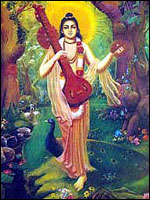
narada02-35


Sage Narada

yallabdhva pumaan siddho bhavathi amritho bhavathi triptho bhavathi

That by attaining which a person attains perfection, immortality and contentment, that is pure devotion or bhakthi. (Narada bhakthi sutra , chapter 1 , verse 4)

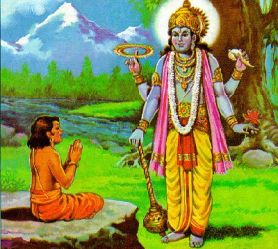
Bhakta Dhruva,
meditating on Shri Vasudeva

dhruva3

“Om Namo Bhagvate Vasudevaya”

prahlada1

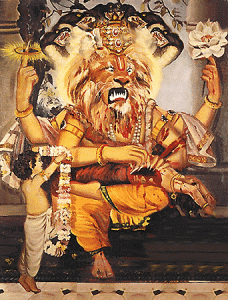
Bhakta Prahlada  garlanding Lord Narasimha deva
( an avatar of Lord Vishnu)  after the lord killed
the demon king  Hiranyakashyapu , a  Non-believer

Prahlada varadam, srresam, daithyeswara vidharinam,
Sri nrusimham mahaveeram namami runa mukthaye.

God who was kind to Prahlada,
The lord of Lakshmi and he who ripped apart the king of demons,
Oh Narasimha who is a great warrior,
I salute you to get rid of my debts

vishnu-shasaranamam

gita

geyam gItA nAma sahasram
dhyeyam shrIpati rUpamajashram
neyam sajjana sange cittam
deyam dInajanAya ca vittam

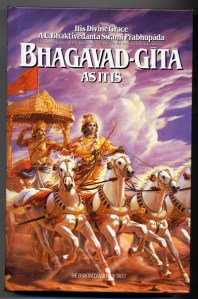
The Bhagavatgita and the Vishnu  Sahasranama should be sung;
the form of the lord of Lakshmi ( Vishnu) should be always
meditated on;
the mind should be led to the company of the good;
and wealth should be distributed among the indigent.

Please listen to the recitation of 1000 names of Sri Vishnu at
http://www.youtube.com/watch?v=61oLpfSywSk&feature=related&pos=0

vishnu10

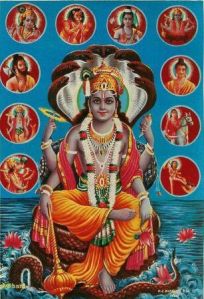
Dasa Avataara of Sri Maha Vishnu

  • vedan uddharate jaganti vahate bhu-golam udbibhrate
    daityam darayate balim chalayate ksatra-ksayam kurvate
    paulastyam jayate halam kalayate karunyam atanvate
    mlecchan murchayate dasakrti-krte krsnaya tubhyam namah

    O Lord Krsna, I offer my obeisances unto You, who appear in the forms of these ten incarnations. In the form of Matsya You rescue the Vedas, and as Kurma You bear the Mandara Mountain on Your back. As Varaha You lift the earth with Your tusk, and in the form of Narasimha You tear open the chest of the daitya Hiranyakasipu. In the form of Vamana You trick the daitya king Bali by asking him for only three steps of land, and then You take away the whole universe from him by expanding Your steps. As Parasurama You slay all of thewicked kshatriyas, and as Ramachandra You conquer the rakshasa king Ravana. In the form of Balarama You carry a plow with which You subdue the wicked and draw toward You the River Yamuna. As Lord Buddha You show compassion toward all the living beings suffering in this world and a the end of the Kali-yuga You appear as Kalki to bewilder the mlecchas

OM Namo Narayana

Harsha's avatar

Pilgrim Finds Friends on the Path: By Alan Adam Jacobs

shak36

1.  MOTHER DIVINE

Our Mother Divine lifts her sacred cup,
She pours pellucid, precious, potent balm,
Curing, healing, lifting pilgrim’s spirit up.

With power of Love, perfect, peaceful, calm,
She holds poor palsied pilgrim in her palm,
And plies him with pure nectar, honey sweet,

So pouring from her silver grail a potion warm,
To soothe all cares and salve his blistered feet,
With Love’s ointment: oh, perfect Paraclete!

2.  WHITE KNIGHT

Feeling his fiery steed between his knees,
He watches restless spirit’s breathing flow;
The stallion settles and he reins with ease.

Now tamed, he canters where he wants to go,
To Himalayan summits crowned with snow,
A pure white splendour glowing bright in light,

Above dark turmoil of dormant worlds below.
He arrives at awesome Selfhood, blazing bright,
Sun burst of splendour, ends soul’s dark night.
Now, White Knight hoists on high his pointed lance,
To joust with Death, a fierce Titanic tilt.
As he mounts his steed in martial prance

He strikes hard at dragon, up to the hilt,
To end all dark sorrow, fear and guilt.
Free from sense of doership, an act replete

With holy knowledge, a temple truly built
To worship God, he kneels to kiss the feet
Of Death’s slayer; such a sacred blessed feat.

3.  GOD LOVE SOLDIER

Wielding his spear of sharpest concentration,
The God-love soldier plunges its silver blade,
With mighty force of lucid sheer attention,

Deep into the dragon’s heart. Unafraid,
Delivering the coup de grace, vile ego’s laid!
Well honed with dispassionate discrimination,

Whetted with ardent zeal, no wavering shade
Of cowardice, his steel, with keen anticipation,
Slays his wayward mind of Self alienation.

4.  ARCHER

He twangs the bow of Self-Enquiry, to enter
A sharp arrow of clearly aimed insight,
Zinging to the bull’s eye of Truth at centre.

Dispelling all doubts in error free flight,
He finds Love, a beckoning beacon light,
Glowing within his inner cave of heart.

Such marksmanship is God-Warriors right,
To win this vision, the true martial art,
Holy war, waged ‘til soul and body part.

5. AQUARIUS

Water bearer draws deep from Rachel’s well,
A jar of truth for pilgrim’s thirst to slake.
Raising the cup he hears the temple bell

Which calls him home to pray and penance make
To God, whom he adores for His own dear sake
Alone, and free from lust for selfish boon.

His love showers rain of grace, and fills the lake
Where sails the white swan of devotion, soon
To glow beneath the golden harvest Moon.

6. PRIMORDIAL SAGE

Primordial Sage, in silence, takes his seat,
Emitting waves of God-like love to those
Who sit surrendered at his lotus feet.

His mystic vision’s sure, and truly knows
The sure destruction of all disciples’ woes,
That halt the climb to Self’s most blissful place.

His merciful love abundantly flows,
Ever granting pilgrim power to trace
His own Self ablaze, in a sea of grace.

7. BOLD PILGRIM

So bold pilgrim ascends the mountain path,
His friends are unconditional faith and trust.
Gentle compassion rains, a healing bath

Of grace, cleansing his feet of mundane dust,
Freeing him from greed, ego, anger, lust.
Fearless he walks, awakened, to his goal,

Unattached, discriminating, and so just,
‘Til attaining consummation with the Whole,
He finds, hidden deep at heart, Eternal Soul!

shak36

.

Harsha's avatar

Removing the Dross from the Mind in Meditation: By Swami Sadasivananda

Posted by Swami Sadasivananda on his blog and reproduced here with his permission.
For more information on Swamiji, click here:   About Swami Sadasivananda

2

Fiery Gem, shining in all directions,
do Thou burn up my dross, Oh Arunachala!”
Five Hymns to Arunachala

In Talks, Sri Ramana Maharshi is being questioned concerning how to remove the obstacles (dross) within meditation.
D.: Impurities of limitation, ignorance and desire (anava, mayika, and kamya) place obstacles in the way of meditation. How to conquer them?
M.: Not to be swayed by them.
D.: Grace is necessary.
M.: Yes, Grace is both the beginning and the end. Introversion (meditation) is due to Grace: Perseverance is Grace; and Realization is Grace.

divd1

“Significance of Om, unrivalled — unsurpassed!
Who can comprehend Thee, Oh Arunachala?”
Five Hymns to Arunachala


“The purport of prescribing meditation on the pranava (OM) is this. The Pranava is Omkara…the advaita-mantra which is the essence of all mantras such as Panchakshara. In order to get at this true significance, one should meditate on the Pranava. This is meditation which is of the nature of devotion consisting in reflection on the truth of the Self. The fruition of this process is samadhi which yields release moksha  [liberation from all aspects of mental dross, ed. note], which is the state of unsurpassable bliss.” (Collected Works of Ramana Maharshi, 6th edition, Self Enquiry #28 p. 23-24)

divd1
Further in Talks #59, Bhagavan teaches us:
D.: Was Visvamitra a rishi?
M.: When contaminated [dross produced by excessive worldly attachment, ed. addition] he was not a rishi.
D.: Can he become a rishi even afterwards?
M.: Yes. By proper bhakti he could become a good rishi. Repentance and prayer will set him right.
D.: With all your penance for so many years what have you got?
M.: I have got what need be got. I see what need be seen.
D.: Can all see the same?
M.: I see only just what all do. It is immanent in all.
D.: Is this the way for seeing It?
M.: Method may be anything. From whatever directions the pilgrims may foregather, they must enter the Kaaba only by one route (passage) or all gather only to enter the Kaaba.
D.: Please tell me two upadesas on the way to salvation as known by you.
M.: What upadesa do I know? Everything is upadesa. Worship of God is the only upadesa.
india0061

divd1

Harsha's avatar

About Swami Sadasivananda

Sadasivananda

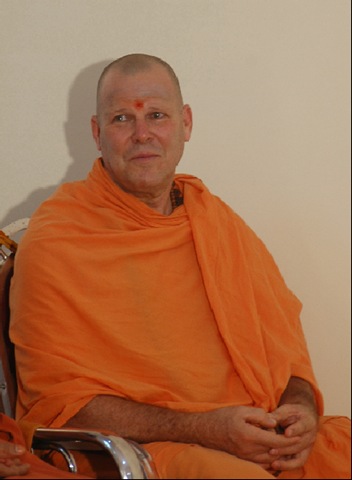
Sometime in early 2009, Alan Jacobs posted his first note to the Harshasatsangh group authored by Swami Sadasivananda.  In it Alan mentioned that Swamiji was available privately to answer any questions people might have, which I thought was quite generous of him, as time is such a limited commodity for most people, even those who populate the spiritual egroups.  Alan then followed this note with the first in a three part series on Surrender written by Swamiji, and I was touched by his combination of wisdom and wit, and his compassionate nature.   Since then, he forwarded a number of his articles to us and I began posting them to the blog with his permission not long afterwards. ( I do take the liberty of changing the format and the photos, but his words remain his. ) I look forward to them, because they are uplifting and sincere, and reach out to the reader with an honest clarity of expression. I always feel uplifted after I have read something he has written.  And I always feel as if he has included everyone…no student left behind!   His bio is below…

Swamiji was born in Florida in 1950. He studied comparative religion at a University in Colorado. He visited Sri  Ramanashramam in 1971. From that Darshan of Arunachala he determined to take Sanyas.In 1974 he received initiation in the disciple lineage of Puri Sankaracharya. He visited Anandamayi Ma’s Ashram while she was still alive and received the golden touch of this Joy-Permeated Mother, and remained under her guidance until her passing. He was there for thirty years giving service and practicing sadhana. Since then he has been living in Tiruvannamalai and is a frequent visitor to Ramanasramam where he is available, and gives advice to questioners. He has made a thorough study of Bhagavan’s teachings as well as those of Sri Ramakrishna.

Swami has also completed a new book regarding Bhagavan’s teachings on “Practical Sadhana” that isto be published by Sri Ramanashramam this spring. This book, as well as a great deal of additional works by direct disciples of Bhagavan including various other aspects of spiritual instructions are  posted on a website that is maintained by the Swami.

Harsha's avatar

Are You Letting God In? by Swami Sadasivananda

As posted by Swami Sadasivananda on his blog   http://www.ramanateaching.org/

0310_Linga_Pooja_0190

There is one mystical understanding of life that runs through the very core of all major religions. This is the belief, and to many the cherished experience, that our sojourn on earth is not true life. These most ancient scriptures and Masters teach that everything appearing to us here is a mere appearance, behind which we should penetrate, or that it is only a forecourt of the true world, a forecourt which we should cross without paying much attention to.

    Hidden within these very scriptures, though obscured through individual bias or misinterpretation, is a profound truth that utterly refutes this belief. The Vedas, and their essential distillation given in the Bhagavad Gita, the Holy Bible, the Torah, and the Koran definitively proclaim that what a man does here and now with holy intent is no less important, no less true – being a terrestrial indeed, but non the less a factual, link with Divine Being – than the life in the world to come.

    Unfortunately, there is a universal acceptance that the highest gift of grace bestowed upon mankind is a “One way ticket to heaven”. Some call it “salvation”, some say “realization”, some “awakening”. In our modern era this ticket is on sale – being reduced to just a fleeting thought of “oneness” while ferociously consuming whatever is in reach with the righteous indignation permitted within “the present moment”.

    One hallmark of a real spiritual aspirant is an acute awareness of active evolution. Yes, “religion” does mean moving into purity and union through change and improvement.  Although a higher world is perceived, it is erroneous to conclude that we are separated and severed from it. When the day of even partial attainment dawns, we begin to experience that the two worlds are essentially one and shall in fact become one.

    In their true essence, the two worlds are one. They only have, as it were, moved apart. But they shall again become one, as they are in their true essence. Man was created for the purpose of unifying the two worlds. He contributes towards this unity by holy living, in relationship to the world in which he has been set, at the place on which he stands.

    How is it then true that when we suffer in our attempts to live a holy life we are told that such is a gift of grace? Sri Ramana Maharshi declared, with seeming sternness, to Paramahansa Yogananda (in Talks #107), that: “Suffering is the way to Self-Realization.” The Masters of all religions, upon seeing the great misery among the needy, raise their heads and cry out to us and say: “Let us draw God into the world, and all need will be quenched!”

    But is this possible, to draw God into this world? Is this not an arrogant, presumptuous idea?

    The advent of God, His actual gracious Presence, abides within the law that He Himself created and abides by. This law consists precisely in this, that God wants to let Himself be “won” by man, that He places Himself, so to speak, into man’s hands. God wants to come into this world factually, never being satisfied to remain a theory or at best an illusive and flighty “friend in need”. God wants to come to this world, but he wants to come to it through man. This is the mystery of our existence, the superhuman chance of mankind!

    The Masters and their scriptures entice us with the perplexing question: “ Where then is the dwelling of God?” The human mind really does not waiver with the passing of centuries. Therefore the answer to this question from ancient to modern man is: “What a thing to ask! Is not the whole world full of the glory of God? We are then perplexed when the these very saints reply:
                             “God dwells wherever man lets Him in!”

    This is the ultimate purpose; to let God in. But we can let Him in only where we really stand, where we live, where we live a true life. If we maintain holy intercourse with the little world entrusted to us, if we help the holy spiritual substance to accomplish itself in that section of Creation in which we are living, then we are establishing, in this our place, a dwelling for the Divine Presence.
____________________________
Some of the ideas expressed in this article are paraphrased excerpts from the writings of Martin Buber.

rr19