Harsha's avatar

Is The World An Illusion? By Alan Jacobs

Unreality of the World

The Guru Vachaka Kovai, the Garland of Guru’s sayings, is a comprehensive collection of the Maharshi’s Sayings, composed and strung together by the great Tamil Poet Muruganar.This translation is by Professor K.Swaminathan.

In Part 1, after the invocation there is a long section called ‘The Quest’, and part 2 is entitled the Unreality Of The World, and continues from verse 63 to 70.. Verse 69 states

The world perceived by the poor jiva

Lapsed from its own Being true,

Buried in darkness, and believing

That it is but the body, alas,

The world thus seen is non-existent;

Yes, it is indeed unreal.

The thrust of this verse, and those like it is underlined by the often quoted passage in Letters from Sri Ramanasramam, 24th August, 1946, quoted in the marvelous book Muruganar’s Padamalai, edited by David Godman.  On page 283 of the Chapter entitled The Reality Of The World Appearance we read.

Bhagavan:” In the sadhak stage [the stage of being a spiritual seeker] you have got to say that the world is an illusion. There is no other way. When a man forgets he is Brahman, who is Real, permanent and omnipresent, and deludes himself into thinking that he is a body in the universe which is filled with bodies that are transitory, and labours under that delusion, you have got to remind him that the world is unreal and a delusion. Why? Because his vision which has forgotten its own Self is dwelling in the external material universe. It will not turn inwards into introspection unless you impress on him that all this external universe is unreal. When once he realises his own Self, and also that there is nothing other than his own Self, he will come to look upon the whole universe as Brahman.”

Like very many sadhak’s I found it difficult to be convinced that the world we perceive is ‘unreal’. I realised that the concepts of space, time, and causality are inherent in the organ ofcognition and create the screen of consciousness on which the world stage, actions and pictures are projected.Also that quantum physics has confirmed that what we see, feel, smell , touch and taste is not what it appears to be, but subtle energies in constant movement. But, It was not until I read the Advaita Bhoda Deepika, The Lamp of Non-Dual Knowledge, a short work, highly spoken of by Bhagavan that I followed the complete logic of this point of view.

I summarise my findings as follows, largely based and inspired by Chapter 1 of this marvellous treatise, entitled On Superimposition.

1. All is Absolute, pure, infinite Consciousness, non-dual, Supreme Intelligence, the Self-Existent Self or Brahman.

2. Maya or Illusion, the powers of veiling and projection are inherent powers in Brahman.

3. These powers manifest an apparent, but unreal Universe. Unreal because it was NOT before manifestation and will NOT BE after dissolution. Therefore it is likened to a dream in the Supreme Intelligence or Mind of Brahman. Thus the apparent Universe is but an appearance based on Brahman. It does not exist apart from Brahman. It could be termed, therefore, a confusion between the Real and the Unreal, or neither Real nor Unreal, or both Real and Unreal. In the Vedanta, the term Real is applied to the Immutable or Unchanging. The apparent world is constantly changing, in a state of flux, becoming and decaying, so it cannot be termed Real in this sense, whereas Brahman is immutable, unchanging and eternal.

4. The ignorant ‘jiva’ (the ajnani) or individual soul is reborn and dies continuously through many lifetimes, until Self Realisation. It carries forward from each life the seeds of many latent tendencies from previous lives, although its True Nature is also the Absolute Pure Consciousness of Atman-Brahman. But because of the implicit Maya, projection and veiling, inherent in the Self of Pure Consciousness or Brahman, it identifies with its insentient body and creates a Universe from its latent tendencies (vasanas) through the mind, (organ of cognition, the brain and sensorial adjuncts). The mind is a wondrous power in the Self. The world it sees, composed of latent tendencies , and thoughts is therefore of the nature of a dream, even an hallucination, and may be termed ‘unreal’.

5. The latent tendencies inherent in each jiva at the time of each life, are selected by Isvara, an adjunct of Brahman, for its spiritual development. So all is benign, based on Love, essentially. This is stated By Bhagavan in answer to a question by Paul Brunton quoted in the book Conscious Immortality on Page 130 , Chapter 10.

6. The mind-body complex, personal individuality, other sentient beings, and the Universe of multiplicity, are therefore a superimposition on the Self which is now living from reflected Consciousness, mirrored by egotism and the latent vasanas.

7. Through Grace, the jiva receives the teachings of Advaita from a Jnani, and when fit, through assimilation of this Knowledge and mental purification through right intellectual discrimination, spiritual practice and devotion, he or she is shown the way to awaken from the dream of suffering and transient joy (samsara). The means are through Self Enquiry into the source of the ego, the Self and the illusory nature of the Universe.

8.At the same time one lives one life as if it was real, knowing it to be unreal, and accepting all that happens as ultimately for the best.

9. When there is an awakening from the dream of life, the transmigration of the jiva is over. The immortal Self of infinite Consciousness is Realised directly and one lives from that state of ‘sahaja’ until the mind-body falls off in death, and one is absorbed into Brahman or Infinite Consciousness, no longer a separate individual identified with its body-mind. All is the Self, and the world is seen to be Real because its substratum is now known to be Brahman.

I hope this essay, into a difficult metaphysical question may be helpful to seekers baffled by the world illusion.

Final comments:

Re-reading Bhagavan’s Eight Stanzas to Arunachala, a marvelous poem, I came across this verse which sums up my Essay. I add it as an addition, as it seems to sum the whole question up, very succinctly.

6. Thou art Thyself, the One Being, ever aware as the Self-luminous

Heart! In Thee there is a mysterious power (Shakti) which without Thee is nothing. From it proceeds the phantom of the mind

emitting its latent subtle dark mists, which illumined by Thy light (of consciousness)

reflected on them, appear within as thoughts whirling in the vortexes

of prarabdha, later developing into the psychic worlds and projected

outwardly as the material world transformed into concrete objects which are

magnified by the outgoing senses and move about like pictures in a  cinema show.

Visible or invisible, oh hill of grace, without Thee they are nothing!

Alan Jacobs

Harsha's avatar

2014 New Year Message From Dr. Harsh K. Luthar

Dear Friends,

Humanity stands at the crossroads of destiny. Amidst wars and conflict on this planet, along with poverty, disease, and changes in the environment leading to global warming, the way ahead is not clear to me. Is it clear to you? If so, please share your views.

Our heroes in the past have tended to be warriors, kings, conquerors, entrepreneurs, innovators, inventors, who through their power of imagination, genius, organization, cleverness, and ingenuity were able to succeed beyond measure and attain personal empires, fortunes, and glories.  I ask you all to consider that perhaps we need different types of heroes if human evolution is to find its rightful purpose and survive. Our heroes, out of necessity now, have to be those with a long term vision of peace. Our heroes have to be the Peace Makers. Without them, the very survival of humanity is at stake.

I read somewhere that in the 19th century, over 19 million people died in armed conflict. In the 20th century, probably due to more sophisticated weapons and technology, almost 110 million people died in wars. Now we are in the 21st century. One wonders what will happen in this century to us, our loved ones, our children,  grandchildren, sisters, brothers, neighbors,  friends, and the human family in general?

Will our wisdom finally catch up with our knowledge, cunning, technology, ruthlessness, and the ability to destroy each other along with the planet? Or are we helpless in face of the human condition where gross self-interest, violence, and vengeance are the rules for individuals, groups, and nations.  Even the environment and the various species of plants, animals, and sea creatures have not been spared from the tendency of humans to violate.

A careful analysis of human violence no longer involves simply evaluating a moral issue. This reflection is important because the answers we come up with and the way we operationalize and implement these will impact the long term future of humanity it self.

Violence means to violate. To impose one’s will on another is a form of violence. Violence, of course, is part of all nature. Some violence is even essential for survival.  However, excessive and unnecessary violence breeds fear, resentment, anger, and rage. It is not a recipe for any type of realistic peace among human beings.  A strong person, group, organization, and even a nation can always attain a temporary victory.  But such a victory generally comes with lasting consequences of worry, fear, anxiety, and retaliation. Violence and Peace can never stay in the same house together.

Is violence so genetically embedded in humanity that, even knowing better, we are simply unable to overcome it? Is the destruction of humanity inevitable because of our helplessness in face of our root instincts?  I shudder at the thought of this possibility. What comforts me in such moments are the Peace Makers and the way they lived their lives. You know who they are. You have heard of them.  We have read their stories. Possibly, if we are very lucky, we might have run into one at some point in our life. Buddha, Jesus, Mahavir, Gandhi, St. Francis of Assisi, Bishop Tutu, Mother Theresa…there must be thousands of such heroes. It does give me some hope that there have been human beings who somehow were able to rise above the instinct to survive and lived their lives for others.

It seems to me that the path shown by the Peace Makers throughout history contains the seeds for survival of humanity. Embracing Ahimsa as the engine of human evolution has now become essential.  The supreme principle and the cardinal rule of the spiritual life has always had its foundation in the ancient philosophy of Ahimsa or nonviolence. This principle can no longer be limited to the spiritual life and must be broadened to include all aspects of life and creative endeavors such as business, politics, and world affairs. In fact, we have no choice but to do that.

The energy of consciousness, projected through the mind, is responsible for evolution of humanity through breakthroughs in technology and improved understanding of how the physical and subtle laws of the universe function. However, without Ahimsa (nonviolence) as the basic foundation of our thinking, the power of the mind can easily turn into a destructive force with the possibility of undermining human civilization.

Without truly understanding the nature of our interdependence with each other as human beings regardless of country, race, religion; and without realizing that we share with the plants, animals, water, air, and all living beings, this common desire to flourish, Ahimsa as a philosophy is difficult to understand and embrace.

Mahavira, the Jain prophet of nonviolence, said 2500 years ago that all beings have the natural desire to live and survive. Wanting to be safe, happy, and in a nurturing community is not unique to any particular country, culture, religion, or spiritual tradition. In fact, it is not even unique to human beings. Enjoying success at the expense of others including nature and the environment cannot be sustained. This is a simple but an ancient truth. According to the law of karma, if we wish to be happy, we should respect all life as sacred and minimize any type of violence to the extent we can.

Dr. Martin Luther King said in one of his sermons:

“Human progress is neither automatic nor inevitable. We are faced now with the fact that tomorrow is today. We are confronted with the fierce urgency of now. In this unfolding conundrum of life and history there is such a thing as being too late…We may cry out desperately for time to pause in her passage, but time is deaf to every plea and rushes on. Over the bleached bones and jumbled residues of numerous civilizations are written the pathetic words: Too late.” (Martin Luther King Jr. ‘Where do we go from here: chaos or community’).

My friends, prejudice, hatred, and incomprehensible violence are part of humanity. Still many individuals in every age, country, religion, and culture have been able to demonstrate the innate capacity of human beings to love, to nurture, to heal, to be peacemakers, and to forgive without reservation.

Like two lovers who are inseparable, Ahimsa and wisdom go hand in hand. Both point to the precious nature of all life and the sacredness of the present moment. Be that present moment and let compassion guide your way. You are the Peace Maker.

Harsha's avatar

Love, Heart, and Enlightenment: By Dr. Harsh K. Luthar

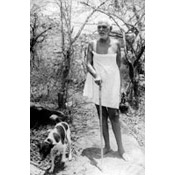
Sri Ramana Walking

Sri Ramana Walking

There is only One Heart

Sri Ramana once said that many advanced souls get liberation after reaching higher planes and that a few rare ones attain mukti (liberation) right here and now. In such cases their Prana along with mind (Kundalini Shakti) gets fully absorbed in the Spiritual Heart and the individual identity is dissolved into Brahman, the Self, the universal Heart and consciousness.

Continue reading

Harsha's avatar

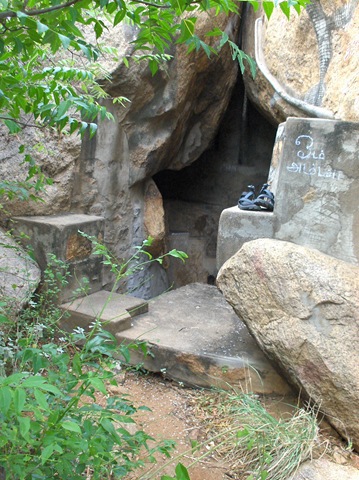
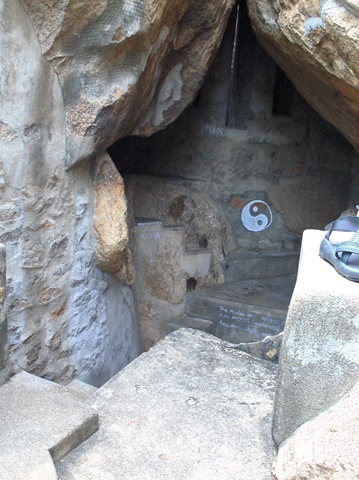
Caves of Arunachala

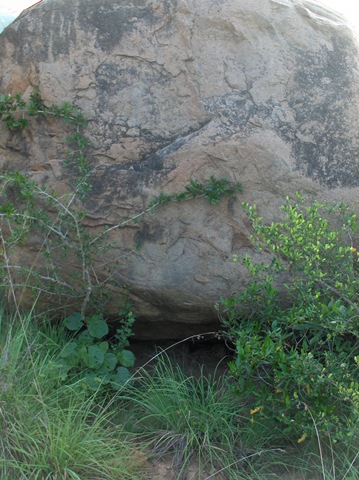
As we have been exploring Arunachala we keep finding ‘caves,’ some already widely known, and some not. A friend suggested that we put this onto the blog. This seems a good idea, and this is the first attempt in so doing. We can find nothing like this available now.

Our exploration of Arunachala is ongoing, and any more caves we find will be added to this. I will often refer to other postings where there may be more photos and information about specific caves.

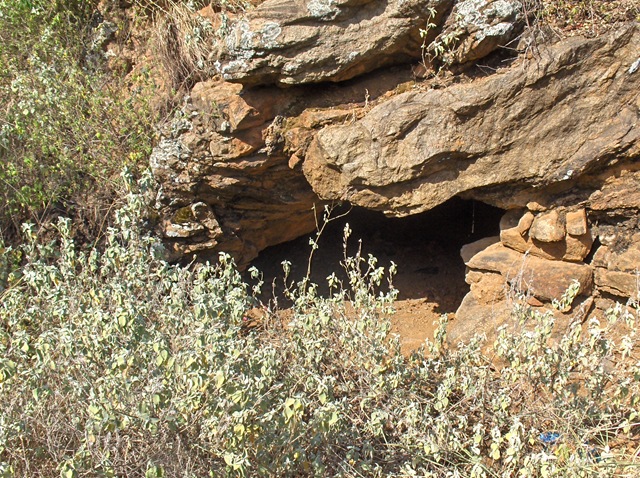
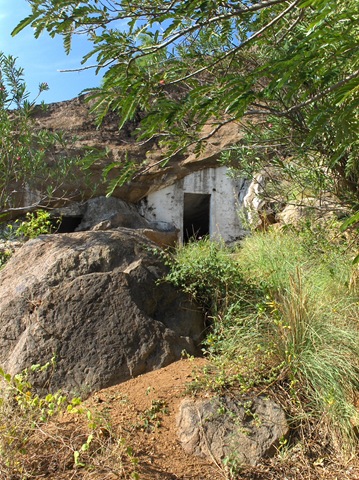
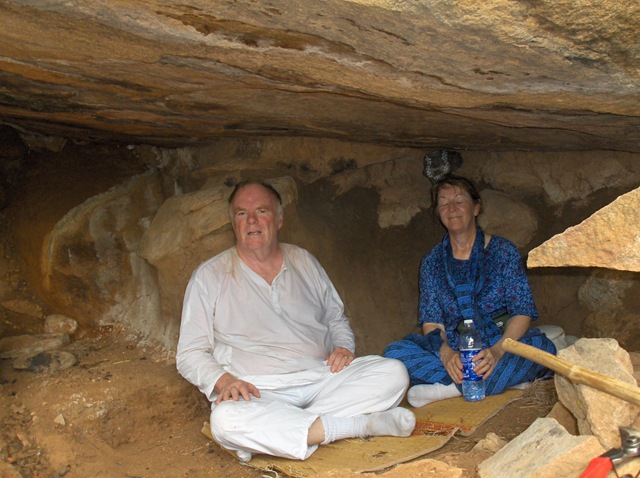
I put quotes around the first instance of ‘caves’ since what are called caves here are often nothing more than a sheltered space under a big rock.

Is some cases the individual caves already have names in common use. Most do not, and for the purposes of this listing I am calling these by names that I made up. If other caves are known, or names of caves shows are  known, I ask that you let me know, and I will update this listing.

Caves Associated with Sri Ramana Maharshi

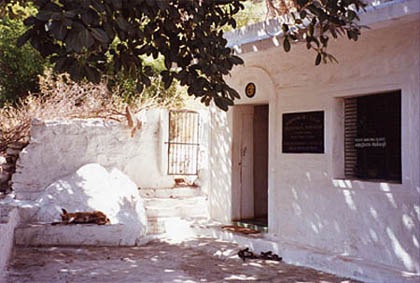
Virupaksha Cave

bhagvans_cave

Virupaksha is, for most, deeply associated with Sri Ramana Maharshi. Ramana lived where he lived for 17 years [1899-1916].

Below is a famous photo of the young Ramana at Virupaksha cave.

rest-9_1

The cave is named for a famous saint, Virupaksha, who lived in this cave in the 1500’s, around the same time as Guhai Nama Shivaya lived nearby (see below). At Virupaksha’s demise, called here ‘maha samadhi,’ it is said that his body was transformed into vibhuti (sacred ash). In the interior of this cave there is a mound in the shape of Arunachala. It is said to be made of this vibhuti.

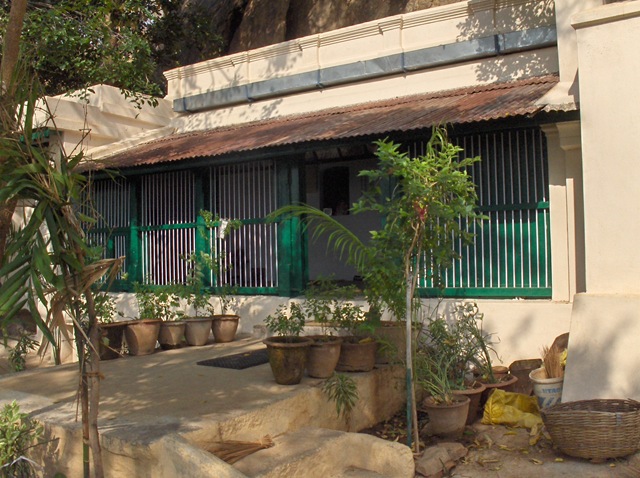
Skandashram

More on Skandashram is in the post Walking up to Skandashram.

HPIM4373

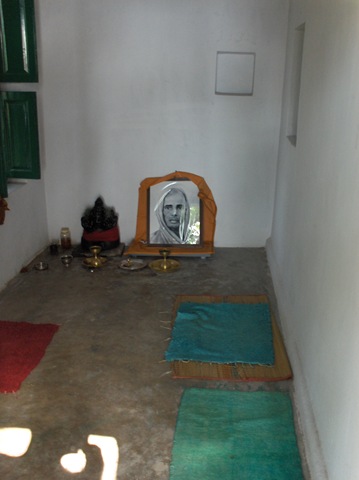
Sri Ramana lived at Skandashram from 1916 to 1922. His mother joined him during this period, and for the first time cooking was done there. This is where the mother had her maha samadhi in 1922. Her room is now a shrine.

HPIM4367

Mango Tree Cave

Sri Ramana lived here during the summer during the Virupaksha days. I do not yet have a photo. This will be added soon.

Guhai Nama Sivaya

This is another cave in which Ramana lived in 1899. It is here that he wrote the notes which later because the pamphlet, Who am I?

A bit more on this cave is in the post New Access to Ramana Sites below Virupaksha.

HPIM4986

A short clip from Arunachala Grace Blog:

Guhai Namasivaya is known to have been born around the year AD 1548 in Karnataka to a pious Saiva couple. His spiritual nature became evident at an early age: he was virtuous in his conduct, adept at his studies and evinced no attachment to worldly matters.

He practised his system of yoga for many years and as a result of the dream guidance of Lord Mallikarjuna, the presiding deity of Sri Sailam, Guhai Namasivaya came to Arunachala and remained as a Guru, giving teachings to mature disciples who approached him.

Seven Springs Caves

The next four caves are shown in the Seven Springs posting. They are all located on the hill above Skandashram, one of the paths that goes to the top of the hill.

Godman’s Cave

This is a cave, said to be greatly improved by the work of David Godman in the 1980s. Maybe ten people can fit into this cave.

HPIM7886

Altar in the cave.

HPIM7891

Looking out the entrance. John, the archivist at Ramanasramam, stands outside  the entrance.

HPIM7897

Seven Springs 1

This is first of three caves found at Seven Springs. There is a stone entrance built, and a good altar in the cave. Maybe four people can fit in here.

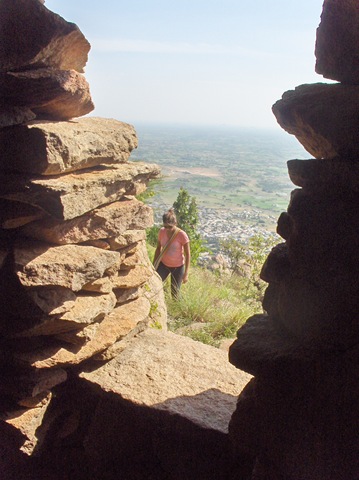
Up the hill you can see stonework.

HPIM7933

The entrance, from the inside.

HPIM7953

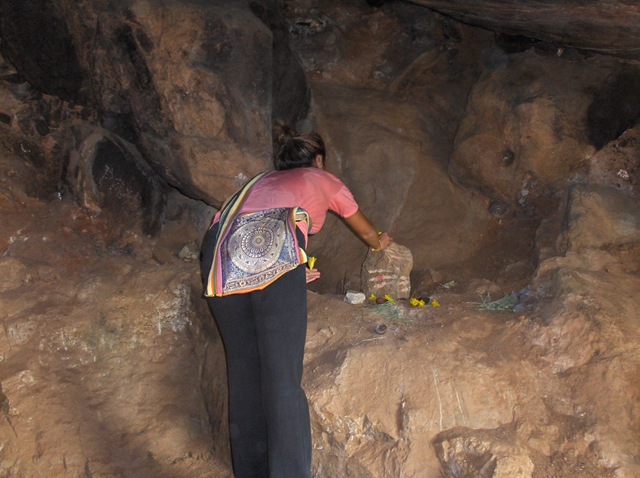
Richard, offering incense to the altar.

HPIM7939

Carol, exiting the cave.

IMG_1702

Seven Springs 2

This is a small cave, behind Seven Springs 1. Maybe two people fit inside. Many stone and concrete improvements have been made.

HPIM7958

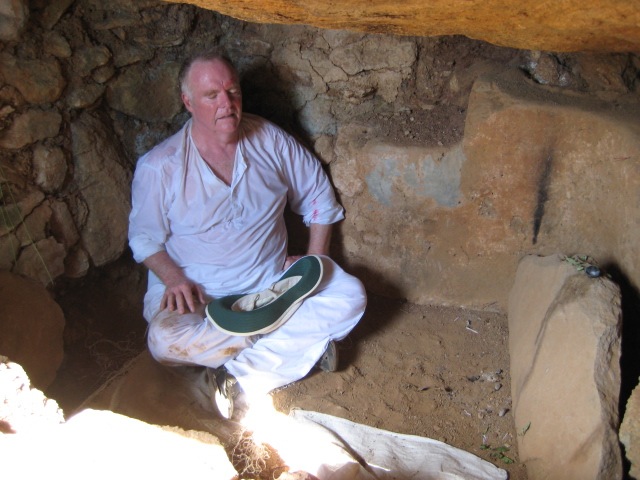
Richard, meditating in the cave.

IMG_1714

Ramana’s resting cave

HPIM7988

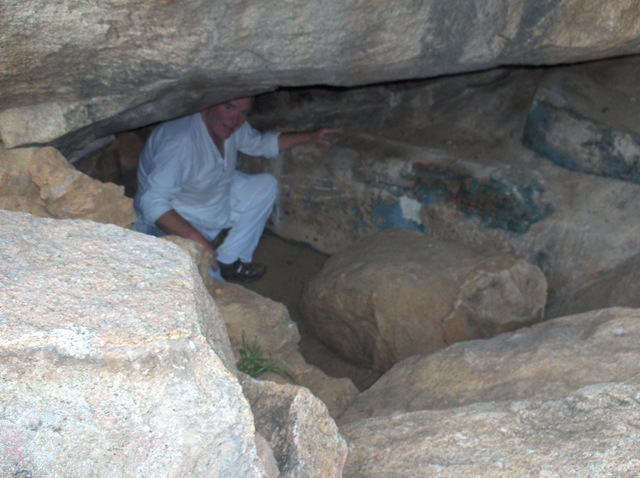
I call it ‘Ramana’s Resting Cave’ since this is the cave that is documented in writing about Ramana where he was known to rest, while others made the climb up to the top of Arunachala.

It is in the shade all day with a nice breeze through it, and a view out through green trees.

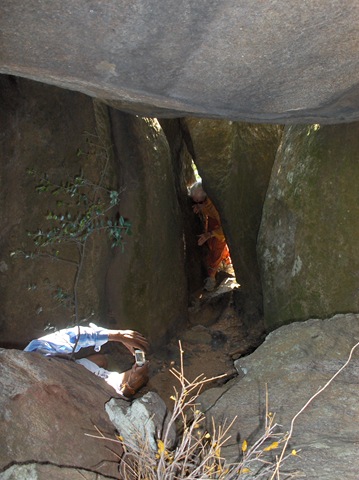
The entrance is a bit tight, though.

HPIM7993

Caves below Virupaksha Cave

These caves are described in the post New Access to Ramana Sites below Virupaksha.

Below Virupaksha 1

This cave is big enough that one or two people can sit in it.

HPIM4991

Below Virupaksha 2

This cave is very small. One person can lie down in it.

HPIM4997

Below Virupaksha 3 – Associated with Ramana?

This cave is said by local villagers to be one used by Ramana in the early days. Recently, people have built walls and a door and an altar in it.

HPIM5004

The altar.

HPIM5010

Caves on Papaji’s Knoll

These caves are shown in the posts Papaji’s Cave and Aum Amma’s Cave.

Papaji’s Cave 1

The first ‘cave’ of Papaji’s is in the area where part of his ashes were scattered. This is a nice place to sit and meditate at the altar that has been set up there.

HPIM3940

HPIM3980

Papaji’s Cave 2

The next of the caves named for Papaji, and one that he is said to have lived in, is near the first cave, down the rock and a bit up the path.

Carol enters the cave from the path.

HPIM5936

Richard and Carol, meditating in the cave.

HPIM5941

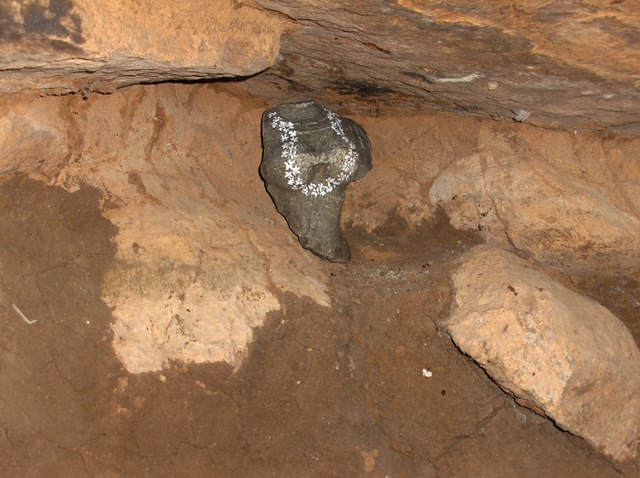
Below is part of a mother goddess statue, placed in this cave.

HPIM5944

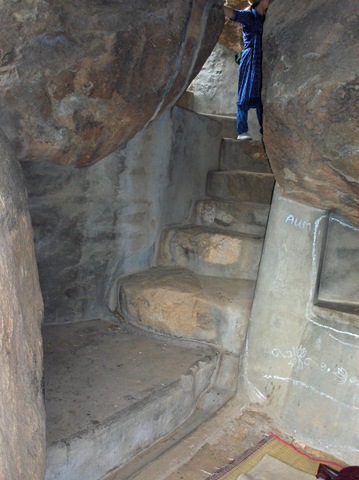
Aum Amma’s Cave

Aum Amma’s cave is the most developed of any cave we have found so far (except for those, like Virupaksha, which have had buildings constructed around them).

HPIM5873

Many bags of cement were carried up the hill to make these cave improvements. Aum Amma lived her for several years until just a few years ago.

HPIM5876

Stairs lead down into a main room.

HPIM5895

There is a good view out the “window” in the main room. It looks like sometimes that people sleep in this cave, though you are not supposed to, and if you stay too long, the Forestry Department people will chase you out.

HPIM5888

Caves in Kattu Siva area

Kattu Siva Cave

This cave is shown in the post Kattu Siva Cave.

There is a nice cleared area around the cave. this is good place to come during the heat of the day. There is plenty of shade.

HPIM8655

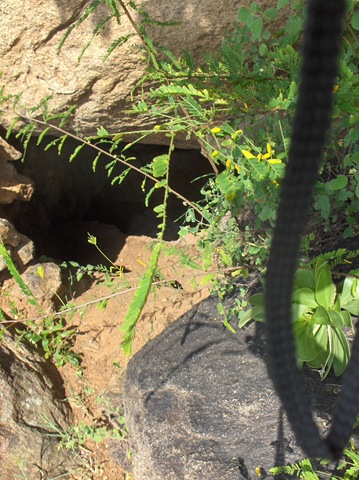
Climbing over the rocks at the end of the clearing, a hole in the rock appears.

HPIM8659

This is Kattu Siva’s cave. A big rock, in front of Richard, has fallen into the cave. Will someone be able to remove it?

HPIM8665

On the top of the rock over the cave, a cement water catching area was made. The photo below looks over this to the Arunachala hillside behind Kattu Siva’s cave.

HPIM8678

Cave Above Kattu Siva Meditation Perch

Related posts are: Kattu Siva Meditation Perch and Kattu Siva path Renewal – Part 1.

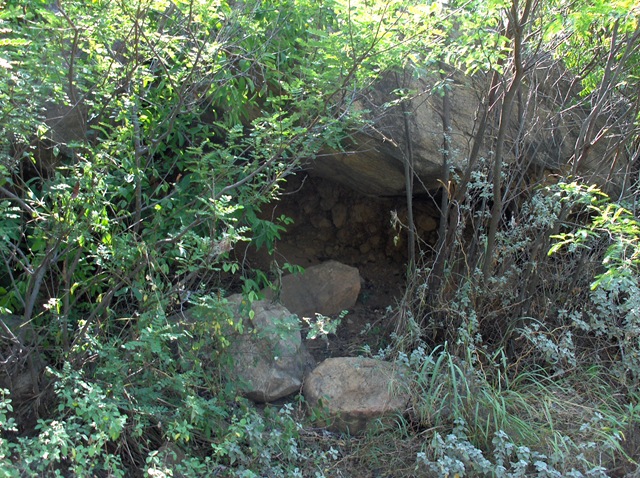
This is a small unused cave. Rocks need to be cleared from the floor to make a good sleeping area.

HPIM8743

Mankala Cave

This cave is shown in the post Kattu Siva path Renewal – Part 1. It is under a rock that looks like a natural lingam as you approach this cave.

HPIM8804

Cave next to Inner Path near Kannapar Temple

This cave is shown in the post Inner Path – Around Parvati Hill.

A path leads to it from the Inner Path.

HPIM9659

This cave was improved with a stone and cement wall in front.

HPIM9669

A nice cement floor has been put in the cave.

HPIM9665

More caves to find, more of Arunachala to explore

I have heard of more caves. I have been told:

  • There are four caves on the hill above the Mountain of Medicine Arunachala reforestation facility.
  • There is another cave high above Papaji’s cave.
  • There are three caves on the north side.
  • There is a cave near Virupaksha occupied by a sadhu that does not like to be bothered.

What else is there? We have to explore to know more. If you know of any more caves that haven’t been listed, please let me know.

Harsha's avatar

Pomegranate For Your Skin: By Dr. Jeanette Jacknin

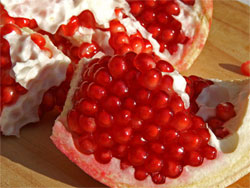
300px-pomegranateEach year cosmeceutical companies and consumers alike search for the next big thing in anti-aging discoveries.  This year, with everyone going “green” and searching for natural ingredients, pomegranate definitely is “in” in the anti-aging cosmeceutical industry. Dr. Carl Thornfeldt, MD in his March 2008 article in the Journal of Cosmetic Dermatology states “Mucocutaneous inflammation as the final common pathway of many systemic and mucocutaneous diseases including extrinsic aging has been established at the molecular and cellular levels.”[1]  Pomegranate has known antioxidant and anti-inflammatory activity and has been documented in double-blind clinical trials to significantly improve signs of skin aging. Of the over 8000 known antioxidant ingredients, pomegranate is 1 in less than 20 have been incorporated into topical formulations which have been documented in human clinical trials to reverse signs of aging of the skin.

The status of the Pomegranate goes back as far as the history of agriculture itself, 10,000 years. Allusions to the pomegranate are readily found in the oldest cultures of the Indus Valley, ancient China, and classical Greece, as well as in the Old Testament. It has a long history of medicinal use, with the peel well regarded for its astringent use.

Anthocyanins account for the red-purple color of the pomegranate’s skin, flesh, and seed. More importantly, pomegranate juice made from squeezing the whole fruit is a rich source of punicalagin, a large polyphenol antioxidant. Pomegranate seeds are a good source of punicic acid, similar to conjugated linoleic acid.

Research has shown that the physiological effects of pomegranate juice constituents are remarkable in their preventive potential against two of the major chronic diseases of aging – heart disease and cancer. There is evidence of the pomegranate’s impact on heart disease, including its ability to enhance nitric oxide production in endothelial cells.[2]

There is also significant antiproliferative effects attributed to the pomegranate [3] in battling several breast cancer[4] and prostate cancer[5], and it has been shown to retard tumor growth in animals. One can also hypothesize that pomegranate juice may work the same way on skin cells.

In a study carried out at the University of Michigan Medical School, aqueous fractions prepared from pomegranate peel, fermented juice and lipophilic fractions of the pomegranate were examined for effects on human epidermal and dermal cell function.

Pomegranate seed oil was shown to stimulate epidermal call proliferation, and a mild thickening of the epidermis was observed!  In contrast, pomegranate peel extract stimulated type I procollagen synthesis by dermal fibroblasts, These results indicate the potential of pomegranate fractions for facilitating skin repair by promoting regeneration of the dermis and epidermis.[6]

Three oral supplements containing a pomegranate mix have been documented in double-blind clinical trials to effectively improve signs of aging. Additionally, pomegranate demonstrated efficacy in improving signs of extrinsic skin aging in open label trials when topical and oral administration were combined. [7]

In Jan 2008 Dr. Seeram reported his study which applied 4 tests of antioxidant potency of polyphenol-rich beverages available in the marketplace. Pomegranate juice had the greatest antioxidant potency composite index among the 12 beverages tested and was at least 20% greater than any of the other 11 beverages tested.

In Navindra Seeram’s comparative study published in the Journal of Agricultural Food Chemisty, he demonstrated that the antioxidant potency and total polyphenol content were consistently greatest in pomegranate juice as compared to apple juice, acai juice, black cherry juice, red wine, blueberry juice, cranberry juice, Concord grape juice, orange juice, black tea, green tea, and white tea capacity.  Although in vitro antioxidant potency does not prove in vivo biological activity, there is also consistent clinical evidence of antioxidant potency for the most potent beverages including pomegranate juice. [8]

Thus, it would be surprising if many cosmeceutical companies don’t add pomegranate to their mix of anti-aging ingredients, with its clinically proven anti-inflammatory, anti-oxidant, and anti-aging properties.

1.  Carl R Thornfeldt, MDFAAD, “Chronic inflammation is etiology of
extrinsic aging,” Journal of Cosmetic Dermatology 7(1), 78-82, March
2008

2. De Nigris F et al. “Beneficial effects of pomegranate juice on
oxidation-sensitive genes and endothelial nitric oxide synthase
activity at sites of perturbed shear stress.” Proc Natl Acad Sci USA.
102, 13:4896-901, 2005, http://www.pnas.org

3.  Seeram NP et al. ” In vitro antiproliferative, apoptotoic and
antioxidant activities of punicalagin, ellagic acid, and a total
pomegranate tannin extract are enhanced in combination with other
polyphenols as found in pomegranate juice.” J Nutr Biochem. 16,
6:360-7, 2005. http://www.elsevier.com/locate/nutbio

4. Mehta Re, Lansky EP. “Breast cancer chemopreventive properties of
pomegranate ( Punica granatum) fruit extracts in a mouse mammary organ
culture.” Eur J Cancer Prev.13, 4:345-8, 2004.

5. Lansky EP el al. “Pomegranate ( Pumica granatum) pure chemicals show
possible synergistic inhibition of human PC-3 prostate cancer cell
invasion across Matrigel.” Invest New Drugs.23, 2:121-2, 2005.

6. Aslam, MN, Lansky EP, et al. “Pomegranate as a cosmeceutical source:
pomegranate fractions promote proliferation and procollagen synethsis
and inhibit matrix metalloproteinase-1 production in human skin cells,
J Ethnopharmacol , 20,103(3): 311-318, 2006.

7. Carl R. Thornberg, “Cosmeceuticals containing herbs: fact, fiction
and future,” Dermatol Surg.31(72):873-80, Jul 2005

8. Navindra Seeram, [My paper] “Comparison of antioxidant potency of
commonly consumed polyphenol-rich beverages in the United States.” J
Agric Food Chem.56(4):1415-22, Feb 2008

dr-jacknin-250Board-certified Dermatologist Dr. Jeanette Jacknin has distinguished herself as a well-respected physician and author whose passion is nutricosmeceuticals and holistic dermatology.

Dr. Jacknin’s credentials are many and start with the medical degree she earned from Medical College of Virginia in 1983. There she completed her Dermatology Residency and served as Chief Resident. Dr. Jacknin’s education and vast experience have led her to become a published author of the classic book, Smart Medicine for Your Skin, published by Penguin Putnam in 2001. For easy access, the book is now published in e-Book format, at http://www.drjacknin.com for instant download on the internet.

In addition, Dr. Jacknin has contributed to an abundance of articles published in numerous high profile magazines, such as Alternative Medicine, Body and Soul, Better Homes and Gardens, Reader’s Digest, Men’s Health, Natural Health, Shape, and Women’s World Magazine.  She is a regular contributor to In Cosmeceuticals, Natural Solutions, Carefair.com and AZSpaGirls.com. She has been featured on radio programs like: Health Talk, The Deborah Ray Show and the Wealth of Health Nutrition Hour.

To find out more about Dr. Jacknin and her skin care philosophy and products, please visit her website.

www.JJMDskincare.com.

Harsha's avatar

Yoga And Advaita: By Dr. Harsh K. Luthar

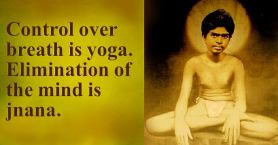
Yoga and breath Jnana and mind

These questions came up some years ago. My responses are included. (Photo art above is from Andreas Farsatis).

Question: Is the way and goal of Patanjali’s Yoga and  Sri Sankara’s Advaita Vedanta the same?

Continue reading

Harsha's avatar

Lotus Land: By Madathil Rajendran Nair

LOTUS LAND

India is a lotus land,
In full bloom, all white and red.
We begin our days
Saluting the Lord of the Day,
Who rises holding a white lotus
On a chariot of seven horses.

Our Goddesses of Word and Wealth
Are seated on lotuses,
One white and the other red
Oh, ours is land of lotuses.

We beat our chest
And say “I, I, I am the best”,
Our Sage says:
“That “I” is not you,
Look underneath
What you beat,
There is a lotus,
Lotus of the heart,
Your sacred retreat,
The divine habitat.”.

India is a lotus land,
In full bloom, all white and red.
I was a boy in teens
In my native Kerala,
A land full of ponds,
Who once swam a silver pool
In the early morning sun
To pluck a lotus
For his blushful girlfriend.

His feet got caught
In the mesh underneath,
In the netty knottiness
Of intricate roots.
He struggled hard to extricate
Himself in anguish and panic.

For the first time in life
Fear of death he tasted.
Lotuses all around
Looked and smiled,
They gave him hope
And enthused him to fight.
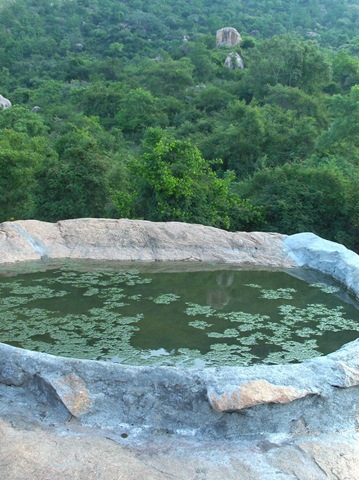
When at last the Lord
Helped him back to land
To hand the flower to the anxious lass,
He saw bees in her lashes
Hovering over red lotuses –
Her blushful cheeks,
And forgot all about
The struggle just bygone

Swinging to and fro,
Between pain and smile,
He grew up to learn
About the six circles
Of the Kundalini.
Each one was a lotus again
Of different number of petals,
The last one on the crown
In full bloom with thousand leaves
Where his Ma resides
As his resplendent Self.

And when he slept
He knew he was a pond
Of countless lotuses,
In full bloom, all white and red –
A body of shining water
With blossoms smiling all over.

Oh India is a lotus land,
In full bloom, all white and red,
Listening to the lullaby of the stars.

Madathil Rajendran Nair

Harsha's avatar

Advaitic Mananam on Gita shloka 2:12 & 2:13: By V. Subrahmanian

ShrIgurubhyo namaH

Advaitic Mananam on Gita shloka 2:12 & 2:13

With a Critique of Dvaita Remarks

Continue reading

Harsha's avatar

Advaita-Vedanta and Sri Ramana: By Dr. Harsh K. Luthar

Advaita is a Sanskrit term and means “not two”. It refers to the philosophy of nondualism. There is a lot of literature on Advaita Vedanta that can be found in any good library and, of course, the Internet.
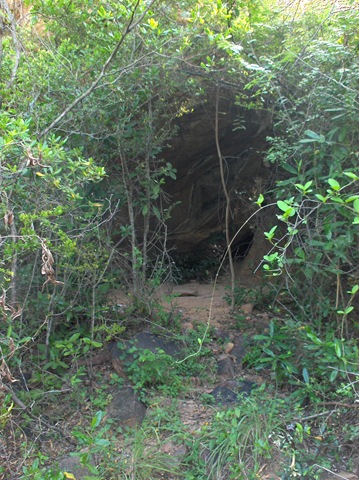
Excellent and reliable information on classical Advaita-Vedanta and the saints associated with that tradition can be found at the following links.

Continue reading

Harsha's avatar

Summary of the Bhagavad Gita, Chapter 12: By Dr. Ram Chandran

Gita Chapter 12: The Path of Devotion to God Realization

The path of devotion communicated during the conversation between Sri Arjuna and Lord Krishna is highlighted by providing answer to the following key questions:

(1) Should One Worship a Personal or an Impersonal God?

(2) What are the four Paths to God Realization explained in this chapter?

(3) Why Karma-Yoga is recommended to be the Best Starting Point for God Realization?

(4) What are the Key Attributes of a Devotee that we can gather from this Chapter?

(5) Finally why One Should Sincerely Strive to develop Divine Qualities?

Arjuna asked: Which of these has the best knowledge of yoga; those ever-steadfast devotees who wor­ship personal aspect, or impersonal aspect (the formless Absolute)?

Lord Krishna said – “I consider the best yogis to be those ever steadfast devotees who worship with supreme faith by fixing their mind on Me as their personal God.”

This is a restatement of what He said in chapter 6, verse 47. True devotion is defined as the highest order of love for God. True devotion is motiveless intense love of God to attain Him. It is seeking God’s grace and serving with love and dedication to please Him . Thus, devotion is doing one’s duty as an offering to the Lord with love of God in one’s heart.

It should be also understood that devotion is granted by the grace of God. A loving relationship with God is easily developed through a personal God. The faithful followers of Rama, Krishna, Moses, Buddha, Christ, and Muhammad are considered the steadfast devotees. All spiritual practices in the absence of steadfast devotion will become useless. The pearl of Self-knowledge is born on the nucleus of faith and devo­tion only.

What Lord Krishna has said with respect to those who worship the impersonal God? He assures that they also attain Me who worship the unchangeable, the inexplicable, the invisible, the omnipresent, the inconceivable, the unchanging, the immov­able, and the formless. Their worship of the impersonal God come in the form of change in their attitude to life by restraining all the senses, even-minded behavior under all circumstances by en­gaging in the welfare of all creatures. A person who is competent to worship the formless aspect of God must have a complete mastery over the senses, be tranquil under all circumstances, and be engaged in the welfare of all creatures.

Lord Krishna implicitly points out that worshiping the personal God is relatively easier than worshiping the impersonal God. One must be free from body-feeling and be established in the feeling of the existence of the Self alone, if one wants to succeed in worship of formless Absolute. One becomes free from the bodily conception of life when one is fully purified and acts solely for the Supreme Lord. Attainment of such a state is not possible for the average human being, but only for advanced souls. Therefore, the natural course for the ordinary seeker is to worship God with a form. Thus the method of worship depends on the individual. One should find out for oneself which method suits one best. It is quite fruitless to ask a child to worship a formless God, whereas a sage sees God in every form and does not need a statue or even a picture of God for worship.

At the starting point there are likely differences between these two approaches to the worship of God. But those practice with steadfast devotion the differences get melted away. Then there will be no real difference between the two paths. – the path of devotion to a personal God and the path of Self-knowledge of the impersonal God – as they attain full spiritual maturity. In the highest stage of realization they merge and become one. The personal and the impersonal, the physical form and the transcendental form, are the two sides of the coin of ultimate Reality. A per­son must learn to focus the mind with the one and only thought on a personal God with a form. After succeeding therein by fixing their mind, their mind get purified and they are able to transcendent all attachments to names and forms. The highest lib­eration is possible only by realization of God as the very Self in all beings, and it comes only through maturity of devo­tion to the personal God and by His grace.

Four Paths to God

First is the path of meditation (See Chapter 6 for greater details) for the contemplative mind. Thinking of a chosen form of God all the time is different from worshiping that form, but both practices are the same in quality and effect. In other words, contemplation is also a form of worship. If you are unable to focus your mind steadily on Me then long to at­tain Me by practice of any other spiritual discipline; such as a ritual, or deity worship that suits you. (12.09).

Second is the path of ritual, prayer, and devotional worship recommended for people who are emotional, have more faith but less reasoning and intellect (See also 9.32). Constantly contemplate and concentrate your mind on God, using symbols or mental pictures of a personal God as an aid to develop devotion. If you are unable even to do any spiritual discipline, then dedicate all your work to Me, or do your duty just for Me. You shall attain perfection by doing your prescribed duty for Me – without any selfish motive – just as an instrument to serve and please Me. (12.10)

Third is the path of transcendental knowledge or renunciation, acquired through contemplation and scriptural study for people who have realized the truth that we are only divine instruments. Lord Himself guides every endeavor of the person who works for the good of humanity, and success comes to a person who dedicates his or her life to the service of God. If you are unable to dedicate your work to Me, then just surrender unto My will and renounce the attachment to, and the anxiety for, the fruits of all work by learning to accept all results with equanimity as God’s grace. (12.11).

The fourth is the path of Karma Yoga, the selfless service to humanity, discussed in Chapter 3, for householders who cannot renounce worldly activity and work full-time for God, as discussed in verse 12.10, above. The main thrust of verses 12.08-11 is that one must establish some relationship with the Lord; such as the progenitor, fa­ther, mother, beloved, child, savior, guru, master, helper, guest, friend, and even an enemy. Karma Yoga, or the renunciation of the selfish attachment to fruits of work, is not a method of last resort; as it may appear from verse 12.11.

Karma Yoga is the Best Way

The transcendental knowledge of scriptures is better than mere ritualistic practice; meditation is better than scriptural knowledge; renunciation of selfish attachment to the fruits of work (KarmaYoga) is better than meditation; because peace immediately follows renunciation of selfish motives. (See more on renunciation in 18.02, and 18.09) When one’s knowledge of God increases, all Karma is gradually eliminated because one who is situated in knowledge thinks he or she is not the doer but an instrument working at the pleasure of the creator. Such an action in God-consciousness becomes devotion ¾ free from any Karmic bondage. Thus, there is no sharp demarcation between the paths of selfless service, spiritual knowledge, and devotion.

What are the Key Attributes of a Devotee?

One is dear to Me who does not hate any creature, who is friendly and compassion­ate, free from the notion of “I” and “my”, even-minded in pain and pleasure, forgiving; and who is ever content, who has subdued the mind, whose re­solve is firm, whose mind and intellect are engaged in dwelling upon Me, and who is devoted to Me. (12.13-14) To attain oneness with God, one has to become per­fect like Him by cultivating moral virtues. Virtues and discipline are two sure means of devotion. A list of forty virtues and values are provided through verses 12.13 to 12.19 by describing the qualities of an ideal devotee, or a Self-realized person. The true devotee is fully committed to these forty noble qualities. It should be pointed out the true devotion implies “COMMITMENT” without “ATTACHMENT.”

One is also dear to Me who is free from joy, envy, fear and anxiety and does not agitate others and also not agitated by them. (12.15)

One who is desireless, pure, wise, impartial, and free from anxiety; who has renounced the doership in all undertakings – such a devotee is dear to Me. (12.16)

One who neither rejoices nor grieves, neither likes nor dislikes, who has renounced both the good and the evil, and is full of devotion is also dear to Me. (12.17)

One who remains the same towards friend or foe, in honor or dis­grace, in heat or cold, in pleasure or pain; who is free from attach­ment; who is indifferent to censure or praise; who is quiet, and content with whatever one has, unattached to a place, a country, or a house; who is tranquil, and full of devotion, that person is dear to Me. (12.18-19)

It is said that divine Controllers with their exalted qualities, such as the knowledge of God, wisdom, renunciation, detachment, and equanimity, always reside in the inner psyche of a pure devotee. Thus, perfect devotees who have renounced affinity for the world and its objects and have love for God are rewarded by the Lord with divine qualities. They are dear to the Lord.

What about those who are imperfect, but trying sincerely for perfection? Lord Krishna answers this question in the very the next verse suggesting that One Should Sincerely Strive to Develop Divine Qualities:

But those faithful devotees are very dear to Me who set Me as their supreme goal and follow — or just sincerely strive to develop — the above mentioned nectar of (forty) moral values. (12.20)

One may not have all the virtues, but a sincere effort to develop virtues is most appreciated by the Lord. Thus the one who strives is very dear to the Lord. The higher class of devotees do not desire anything, including salvation from the Lord, ex­cept for the boon to permanently be at the lotus feet of a personal God, birth after birth. Lower class devotees use God as a ser­vant to fulfill their material demands and desires. The development of unswerving love and devotion to the lotus feet of the Lord is the ultimate aim of all spiritual discipline and meri­torious deeds as well as the goal of human birth. A true devotee con­siders oneself the servant, the Lord as the master, and the entire creation as His body.

The path of devotion is a better path for most people, but Devotion does not develop without a combination of personal effort, faith, and the grace of God. Nine techniques for cultivating devotion which is an intense love for God as a personal Being – based on Tulasi Ramayana are:

(1) The company of the holy and wise,

(2) Listening and reading the glories and stories of Lord’s incarnations in the religious scriptures,

(3) Seva or serving God through service to the needy, the saints, and society,

(4) Congregational chanting and singing of the glories of God,

(5) Repeating the Lord’s name and mantra with firm faith,

(6) Discipline, con­trol over the six senses, and detachment,

(7) Seeing your personal God everywhere and in everything,

(8) Contentment and lack of greed as well as overlooking others’ faults, and

(9) Simplicity, lack of anger, jealousy, and hatred.

The best thing a person should do is to develop love of God. Lord Rama said that one needs to follow any one of the above methods with faith to develop love of God and become a devotee.

Good company of saints and sages is a very powerful tool for God-realization. It is said that friendship, discussions, dealings, and marriage should be with equals or those who are better than oneself, not with persons of lower level of intellect (MB 5.13.117).

A person is known by the company he or she keeps. According to most saints and sages, the path of devotion is very simple and easy to perform. One can begin by simply chanting a personal mantra or any holy name of God. There is no restriction on the correct time or place for chanting the holy name of God. The process of devotional service consists of one or more of the following practices: Hearing discourses, chanting the holy name of God, remembering and contemplating God, worshipping Him, praying to Him, serving God and humanity, and surrendering to His will.

The four inter-connected paths of yoga discussed in the first twelve chapters of the Gita may be summarized as follows:

The practice of Karma Yoga leads to purification of the mind from the stain of selfishness that paves the way for knowledge of God to be revealed. Knowledge develops into devotional love of God. Constant thinking of God, the object of our love due to devotion, is called meditation and contemplation that eventually lead to enlightenment and salvation.

Is there Only One Right Way to God?

Lord Krishna has been talking about both manifest and unmanifest aspects of God in the previous chapters (See for example 9.4 and 9.5). Arjuna’s question has been answered in great detail in this chapter, but people still argue that one method of worship or certain religious practices are better than others. Such persons will continue to argue and will be only able to understand half the truth.

From what is presented in Chapter 12, it is clear that the method of worship depends on the nature of the individual. The person or the person’s guru should find out which path will be most suitable for the individual, depending on the person’s temperament. To force his or her own method of worship on other people is the greatest disservice a guru can do to disciples. The most important thing is to develop faith in and love of God. God has the power to manifest before a devotee in any form, regardless of the devotee’s chosen form of worship. What has worked for one may not work for all, so what makes you think your method is universal? There was no need for the Lord to discuss different paths of yoga if there was one path for all. If the chosen path of spiritual discipline does not give one peace or God-realization, then it must be understood that one is not practicing correctly or the path is not right for the individual. It should be kept in mind that a drop of water, no matter what route it takes, will eventually reach the ocean.

Note: It should be pointed out that the recipes presented in this chapter are quite useful for cooks who want to prepare tasty meals for seekers who like the flavors of Dwaita or Visistadwaita or Advaita! That may explain why this chapter is well-liked by the followers of different schools of thought.