Harsha's avatar

Basic Kundalini Yoga Breathing: By Pieter Schoonheim Samara

Contents:
PART 1: STARTING A KY CLASS
PART 2: HOW TO DO LONG DEEP BREATHING?
PART 3: HOW TO DO BREATH OF FIRE?

In our classes here in Bangkok, before we even start the class with Ong Namo Guru Dev Namo we always practice several types of Long Deep Breathing (LDB) and Breath of Fire (BF). Quite often students come to the class somewhat disjointed, frazzled, tense, agitated, our of since, so that a few Long Deep Breaths followed by Breath of Fire will make the blood alkali, sooth and charge the nerves and steady and balance the electromagnetic field and the mind. While some may wait to teach the various locks for a later class, we teach the locks as part of the breathing before every class, because the locks regulate and direct the flow energy/consciousness (prana). Even a very light set done with correct breathing can be so powerful that it is important that the locks are learned and applied from the beginning.

The set is comprised of the opening salutation / mantra. Here we usually do the long Ong Namo version, in which each of the 5 sounds are made with a single deep breath, after 3 to 5 repetitions we inhale hold the breath and pull the root lock (Mul Bhand), then slowly relax the breath. This often puts many of the students into an electromagnetic grip that gradually subsides and dissipates through the body and mind. The mind is now perfectly still and prepared to simply watch the Kundalini Yoga exercises without thought or inclination of being the “doer.” We call this approach “Applied Awareness.”

Then to the specified set with rest periods after every KY exercise or Kriya or after 2 or 3  short KY exercises. Maybe because of all the KY classes taught in gymnasiums, where people come for a workout, KY classes have tended to become more of an aerobics of one to the next to the next without a break or very little break. But the rest period in KY is as important as the exercise period. When the breathing is understood and done properly during a KY exercise,
blood saturates into the area and nerve/energy channels that the KY exercise puts under an expanding or contracting pressure. After a few minutes the capillaries open and relax under the pressure and the clean vibrant fresh (molecular) air, brought in from the lungs to the heart and out through the arteries, fills the cells with oxygen, hydrogen, nitrogen and the other elements of the air, and accumulated waste and gasses is removed and discharged through the
veins to the heart and out through the lungs. During the exercise, the cells of the glands and organs and nerves of the body become pranicly charged, and the body needs to have a rest period to assimilate, process, store and balance the energy. Glands secrete and vitalize the blood, and these various types of pranic energies need to flow throughout the body to be assimilated and stabilized within the magnetic field.

During this relaxation period, students will become aware of and feel and experience for themselves the flow of prana, which is missed if one goes from one KY exercise to the next without some break. Not only this, but due to this allowing of the prana to flow and balance, the electric charge in the nerves and organs becomes much stronger and deeper with each successive exercise.

Sometime we joke here about the level of electrocution one felt during and after a set and meditation, because with this resting period, the prana is allowed to accumulate and in the process; it permeates every part of the body to a saturation point. Spiritual and psychic centers open by themselves and deep intuitions rise into the consciousness. Yogi Bhajan relates many wonderful benefits to the practice of certain sets, kriyas and meditations, but, if the practice is not done correctly, these benefits will not accrue.

When we go to sleep, the energy in the body increases filling the body with light. This light then withdraws into the ida and pingala, then into the sushumna and to the brain and down to the spiritual heart (not the heart chakra) where the prana merges in infinite undifferentiated light, and the body and mind are restored.

With the practice of KY, where the rest periods are included, the student begins to become aware of this pranic flow, such that it begins to become a natural expanding experience from KY class to KY class. You begin to become consciously aware of the levels of energy/consciousness that we formerly lost consciousness to when falling asleep.

In Reality the body – the Universe, in all its dimensions is bathed in and appears within the Infinite Field of Awareness of Light – always. With the practice of KY this Light emerges into the student’s consciousness until the grip of the thoughts and sensations and impressions of the mind dissolves and we say Truthfully, “I am Light.”

The KY set is usually followed by a Laya chant (mantra) and/or meditation. The KY set creates the effect of an amplification of the electromagnetic field, which is often felt as some kind of etheric pranic pressure. This pressure is released and resonates with a tremendous power throughout the chakras and spiritual centers, including the aura. The effect is often so powerful that one feels as though the sun has appeared in the spiritual heart, penetrating from behind the veil of the mind suffusing everything with Light.

The end of the set and meditation is necessarily followed by an extended period of relaxation – 10 minutes or longer. It’s like entering a new program into a computer and the computer needs to reboot for the new programming to take effect.

This whole process of reprogramming is to bring the awareness to the point where it no longer reflects the old images, but reflects it’s single Self. It’s as though through this “programming” process, the individual PC is linked to the universal Server, and in the process we become linked “yoked” to and unified with everything, not just as an idea but as a living continuous experience.

After some time the students are brought back from their yoga nidra (yogic sleep) with a few deep breaths, then rotating ankles and wrists, then rubbing the palms of the hands together and soles of the feet together, followed by taking hold of the knees and rocking forward and back the spine. Then, sitting up cross legged for a minute. This is followed by raising the arms straight out at 60o with the tips of the fingers curled in (not the fist), thumbs up and feeling the prana flowing in the spine, through the top of the head, through the heart and arms and around the body’s magnetic field. Then Breath of Fire for 2 to 3 minutes. Inhale hold 30 seconds, then, still holding the breath, put the thumbs together over the top of the head. Then making tight fists and pressing the thumbs together with some pressure about 4 inches before the forehead, while leaning forwards slightly and bringing the prana to the third eye (Ajna chakra). Then relax the arms and meditate for a while.

The class is finished by chanting long Sat Nam, which is to place the palms together at the sternum level, inhale deeply, chant “Saaaa…t, Nam,” where the “aaaa..” continued until the breath is nearly finished, and ending with “t… Nam” This is repeated several times as the students are made aware of the sound of the “sss” and “aaaa” vibrating through the spine and throughout the body.

Then everyone inhales, pulls the root lock (Mul Bhand), holds the breath suspended in the chest for 30 or more seconds, then slowly exhales. Some may feel an electromagnetic gripping in the posture, as the mind becomes perfectly placid and pervasive.

Many students will continue to stay and remain unmoving, engulfed in meditation in that etherically still pervasive pranic state, watching the flow of prana, free of any thoughts or inclinations.

After, we have Yogi Tea.

One question that might be asked. If this is what the students experience, what does the teacher experience. Something quite extraordinary happens to the teacher. Before the KY class, while beginning to think about the set and meditation, the teacher will feel the flow of prana related to the KY exercises as he/she goes through them.

When the teacher sits before the class, a liquid light flows up through the body filling the teacher’s mind, like a stream of polarized etheric energy. The teacher’s mind becomes very still and he/she seems to lead the class from an intuitive space. Become a KY teacher and see what happens.

PART 2: HOW TO DO LONG DEEP BREATHING?

Just a brief explanation of what happens physiologically when practicing Kundalini Yoga exercises and kriyas.

The once side of the heart receives the vitalized blood from the lungs, then pumps the blood out through the arteries to the capillaries of the organs and to their cells. The cells take in the vitality from the blood and discharge toxins, waste and gasses, which travel back up through the veins to another chamber of the heart, which pumps the blood through the lungs, where the impurities are discharged and vital air recharged into the blood, and so on. This process is explained in detail in various Kundalini Yoga Manuals, as it reveals a key to how and what Kundalini Yoga is all about and provides the understanding of why these Kundalini Yoga sets and kriyas combined with proper breathing are so effective.

The postures and movements create an expanding or contracting pressure on certain areas of the body that causes the blood to saturate the organs and glands, which with the nerves expand under the pressure opening more and more to the vitality of the blood.

To vitalize the blood, it is necessary that the lower part of the lungs, where most of the blood
sacks are, is expanded.

The diaphragm comes down behind the ribs and wraps under, below the lungs. When you expand your breathing downward, the lower part of the diaphragm expands downward and out pushing against the abdominal muscles. Pressing the diaphragm down, you should feel the sense of its distention all the way below the navel and to the sides above the pelvis as the abdomen comes out. The abdominals remain relaxed, as the diaphragm does the breathing.

In a long deep breath, while expanding your breath downward, the diaphragm will naturally expand and distend forward. First you feel the expansion of the air filling the lower lungs higher and higher until there is a sense of suspension that continues to lifting the rib cage from the lower solar plexus area to the shoulder clavicular area, without the slightest exertion of the muscles of the rib cage.

As an assistance to this experience of the diaphragm, you sit cross-legged on the floor with the spine straight, hands resting on the knees, breath in consciously expanding and compacting the air downward to the lowest part of the lungs. As the air is filling in, you press your hands inward against the knees towards the hips and slightly downward. This causes the spine to arch forward and rib cage to open and lift without any exertion of the muscles in the
ribs. (Try it.)

As you continue to inhale, pressing the air downward, the middle and upper parts of the lungs will become completely full. Then bring the shoulders back and exhale compressing all the air out of the lungs from the top downward, so that the lower ribs (solar plexus) and abdomen (the Kandal, behind the navel area) contract. This is one long deep breath. It can be done easily and smoothly or with force and power.

Either way, it is the diaphragm which generates the expansion and contraction of the lungs. You can feel the extension of the diaphragm when you breath inward slightly and suspend the breath, which gives a unique sensation without reference to inhaling or exhaling or holding.

With this kind of breathing the blood’s chemistry changes dramatically with a few breaths.Before we start a Kundalini Yoga class, we will take several long deep breath, maybe 10 or 20 in different sitting positions, as a means to cleans the energy channels, such as the ida and pingala, charge the nerves so they resonate and clear the mind of distracting thoughts. In this way the mantra dedicating one’s practice at the start of the class will have its full effect.

For example, try this to cleans the channels before a class: Sitting straight, as mentioned above, you stretch up your left arm straight beside the left ear, palms facing inwards. Then you raise your right arm, with the right thumb covering the right nostril fingers pointed straight up like antenna. Then begin long deep breathing, stretching the left arm up so that pressure is always felt in the armpits and upward reaching arm. This also opens all the vertebra along the peripheral nerves on the left side of the spine, allowing blood to saturate this entire area. Continue long deep breaths 10 to 20 times (or more), then inhale deeply and
completely, hold the breath by pressing the shoulders back and suspending the breath forward in the chest, turn the eyes towards the top of the head, tongue pressing the pallet, pull the root lock expanding the chest, and hold for 30 seconds (or more) without strain.

During this breathing and while you hold the breath, with a slight attention, you will feel the ida nadi or moon nerve (that cools the body), an energy channel from the point between the eyebrows (left lobe of the pituitary) up over the left side of the top of the head and down the back of the left side of the neck and left side of the spine to the base of the spine. You may even be able to consciously follow the flow of energy in and down the energy channel as you
inhale and up and out, as you exhale, which draws in and deepens the mind into a penetrating stillness.

Then, keeping the left arm straight, slowly exhale through the left nostril, and after few moments gently lower your arms and hands back to the knees.
Sitting straight, you will feel an electric current along this ida nadi, that will become stronger as you sit, while stilling the mind.

After a minute or 2, begin the same breath on the opposite side, which will cleans the pingala nadi, or sun nerve (heats the body), an energy channel from the point between the eyebrows (right lobe of the pituitary) up over the right side of the top of the head and down the back of the right side of the neck and right side of the spine to the base of the spine.

When you notice how this simple Kundalini Yoga exercise has this dramatic effect, even for many students very first class, then you also realize and understand that this same purification process occurs in every Kundalini Yoga exercise, kriya and meditation, as it relates to the creation of a pressure on the glands, organs and nerves, where such pressure causes the blood to saturated the area under pressure.

You will feel your life force, and as the glands purify and secrete, vitalizing the blood, the electric feeling will deepen and become almost liquid and pervasive.
There are several types of pranayamas combined with certain angles, mudras, pressures that generate a similar effect.

Even though we are not aware of it, the body field generates and is in the midst of tremendous levels of energy. The sounds and images we hear and see in the mind are the creation of the movement of atoms that vibrate on a molecular level.

The same energy that powers the atom, forms and binds the molecules to create the cells of  the body and regulate the entire continuous manifestation of the body and mind as a constant single intelligent support and substratum.

As we continue to practice Kundalini Yoga, gradually the cells charge and we begin to become aware of this energy as consciousness. The yogis refer to prana as an intelligent force of light that begins to become brighter and more pervasive than the typical firing of actionreaction thought patters, emotions and moods.
We find ourselves no longer gripped by the identity to these inherent tendencies, and we begin to feel and become aware of ourselves as this intelligent pervasive light. The body seems to become spacelike – transparent and free, like a light in a projector, turned up to become brighter, as it passes through the reel to reel ongoing movie of impressions and drama, appearing on a screen that fades to white.

Over time, especially if one remembers to relax between Kundalini Yoga exercises to allow the body to readjust to the discharging of waste and recharging of the cells, and the balancing of the glands, organs and nerves, the energy levels deepen to the point where the encoded patters of the mind in all the cells and molecules of the body field are outshined, and you feel the pervasive light shining through you from within, between and behind the atoms of the body. All this to say that, if one practices the Kundalini Yoga exercises and Kriyas, Laya chants and meditations with still watching awareness; if one practices the long deep breathing, as outlined herein with the energy locks (Bhandas) when required, the outturned mind will egin to reflect the single pervasive Living Light penetrating from the core of Being, and you will recognize yourself as That.

Once one is able to do Long Deep Breathing, which is to say, to feel the complete expansion an contraction of the diaphragm and lungs without the need to feel that the abdominals or ribs are involved in the breathing process, then the Breath of Fire comes naturally and easily.
More on the Breath of Fire later ….

PART 3: HOW TO DO BREATH OF FIRE?

The main thing for breath of fire is that it is done properly, using the whole length of the diaphragm going evenly in with pressure on the navel and solar plexus, and out, where the lower, middle and upper areas of the diaphragm project out.

To feel the inhalation aspect of the outward distending diaphragm, you might want to try to sniff some air in and feeling it through the lungs evenly, suspend the breath, as though you were still inhaling, but without the continuation of the filling of the upper clavicular area, as with LDB.

You should feel a sensation all along the diaphragm, that may even be felt in the face, brow and crown, like a radiation. Then compress the diaphragm inwards, without squeezing the air out completely, as with LDB or, moreso, kapalabati at the navel and solar plexus.

After doing this sniffing in, suspension and contracting back a few times, so that you can feel the length and breadth of the diaphragm and like one side of a board that opens evenly in a bellows, begin to expand and contract the diaphragm rhythmically, then begin to add more speed and power to the breath, evenly expanding and contracting.

Often people will do the breath of fire using just the upper area of the diaphragm, and even try to use the rib cage and shoulders to act as a pumping mechanism, or they may focus on just moving the navel, or they may mistakenly pump the navel with an inward force, relaxing the breath on the inhale, similar to kapalabati. None of these is correct or a substitute for breath of fire done, as described above with the even full length of the diaphragm expanding and contracting rhythmically with increasing power.

The speed and power of the breath of fire depends on the capacity and development of the student / practitioner. Some may take quite some time to get it right, others will get it right from the beginning. Others will get it right, but it will take time to be able to do the breath with speed and power.

All this to say that so long as you are aware that everyone is doing the breath properly, the rhythm power and speed are up to the practitioner’s capability. It’s better to do it right and develop the right breathing habit than do it wrong, and not receive the full benefit of the leverage that breath of fire brings to the kundalini yoga exercise, set, kriya, meditation.

In our classes here in Bangkok, we start the classes first with an exercise in long deep breathing, which also assists in discovering the fill length and capacity of the diaphragm and then we do an exercise, variations as described above, in breath of fire.

As these 2 pranayamas are the prerequisite for gaining the full benefit of kundalini yoga exercises and full vibratory effect of mantras, we practice these first. It also brings the mind into a clear state of awareness, as the blood becomes alkali with the long deep breathing exercise, and electric from the breath of fire. With the mind still and clear, it becomes much easier to watch the flow of awareness towards the movements and positions in each kundalini yoga exercise and link that awareness (which is the universal consciousness pervading and shining within each of us) to the breath, which in turn further amplifies the flow of (cosmic)
energy into the areas of the body put under pressure by the posture, movement or position of the exercise, or kriya, so that you begin to feel the radiance and flow of prana throughout the body and through the arc-line and aura…. merging with the all-pervasive consciousness.

At the end of the exercise in long deep breathing and breath of fire, inhale deeply and hold the breath. The root lock and neck lock should be applied, as when you do these pranayamas correctly, there will be a great flow of energy prana circulating throughout the nervous, circulatory and glandular systems, and the locks channel the energy into nerves and centers that are able to carry a higher voltage easily, namely the ida, pingala and sushumna.

As you know, root lock is the tightening or pulling in of the anus and sex organs to lock the anal sphincter muscles, while pulling in on the navel (arching forward the lower spine), which creates a triangulation effect in the area between the navel and 4th vertebra, called the Kandal, which regulates the energy in the body. From the Kandal, the energy will automatically flow to the base of the spine and upwards through the spine. In the beginning people don’t feel this flow, but after a while the energy awareness is strong enough that you do feel it naturally.

The neck lock involves pressing the shoulders back and the chest forward, which converts the inhalation holding the breath to a suspension of the breath, in particular when you also bring the chin back slightly and extend the neck upwards by sensing the atlas and axis (top 2 vertebra) and pulling them back and up with a slight pressure, keeping the head straight. If you do this properly, the suspended breath will circulate, flow downward to the root lock and circulate easily up the spine towards and through the brow point and crown. Just a note that the pulling in of the chin and pulling back and up of the atlas and axis is slight, not forceful as we sometimes see a soldier at attention. When the neck lock is done in this way, you will also feel the shoulders, which you have pressed back, also arch back and seem to lock downwards. Try it and you will see what is meant here, and feel the difference, if you haven’t been practicing root lock and neck lock in this way.

These locks are important to assist in the easy smooth flow of the prana that is generated and released when you do long deep breathing and breath of fire properly as a pranayama on its own or in any position, asana or movement, or with any meditation or chanting of mantras, where the release of vibratory energy can be even greater.

When the electromagnetic field becomes balanced and strong, the lower spine will arch forward pulling from within, the chest will come forward with an inward pushing pressure, and the root lock and neck lock will pull into place with a magnetic sensation automatically, and the whole body will fill with light.

While this is a long answer to a simple question, it is important from the outset of kundalini yoga sets, kriyas and meditations, to breath properly and execute the locks properly.

One other area of importance, is that as the energy is so much greater, when you practice properly, it is even more important to be sure that between each pranayama or kundalini yoga exercise that you wait, pause and let the energy make it’s complete release in the pressured areas related to the exercise, and then completely circulate so that the glands can secrete, nerves settle with the restabilizing of the prana and the magnetic field balance. Then you will also receive and experience the full intended benefit of the kriya and set and meditation you practice. The difference of effect from pausing between exercises and not, is enormous. You will feel the whole body radiating terrifically. Many students, including the teacher, will want to stay on long after the class and meditate in the deepening stillness that by itself draws you into the seer, until you suddenly realize your Self as the screen upon which and within which everything appears.
Harsha's avatar

Breath of Fire (Bastrika and Kapalabati)

https://luthar.com/kundalini-yoga/

Just a note, Breath of Fire is not Bastrika. It is also not Kapalabati.

Hopefully, the descriptions here below and in the weblink above will help bring some understanding to the proper practice of these pranayamas, so that all may have the maximum benefit of their use by themselves or in combination with Kundalini Yoga postures and movements.

It’s important to note that Kundalini Yoga, as taught by Yogi Bhajan is not at all like other yogas or even Kundalini Yoga involving the transmission of energy of a yogi. When one begins the Kundalini Yoga Sadhana as taught by Yogi Bhajan, a relentless process begin that takes you inexorably through all the stages to abide in your True Identity (Sat Nam).

Bastrika in hatha yoga and raja yoga practice is primarily meant to establish a rhythm to the breath with the purpose to make the mind subtle and steady. The diaphragm moves evenly, smoothly, lightly, and in rapid rhythm in and out. In the process, the tendency towards erratic moods and changing thought patterns is subdued.

There are a number of ways to come into Breath of Fire. If one has practiced Bastrika correctly then it should not be difficult to shift from Bastrika to Breath of Fire: If you’re doing Bastrika the right way, as described here above, then it is easy to shift gears, so to speak and come into Breath of Fire simply by taking a slightly deeper breath and pumping with that, evenly, but with slightly more force from the Navel and solar plexus. As you ratchet up the power of the breath from Bastrika to Breath of Fire, at each stage, watch through the body that the muscles of the shoulders and neck are relaxed, that the chest and rib cage muscles are relaxed, that the sides, lower back and abdominals are relaxed. Feel the flow and come mentally in connection with the expanding electricity/voltage. Once you feel at ease in the motion and power level of the rhythmic movement of the diaphragm and the expansion / contraction of the navel and solar plexus, then take the volume of the breath to be pumped up another notch by taking a slightly deeper breath and pumping the navel and solar plexus with that.

In Bastrika, like Breath of Fire, you should have the feeling of the air or prana down to the navel, through the solar plexus and all the way up behind the sternum and chest cavity without using the muscles of the ribcage or shoulders at all.

Many people think that by contracting and expanding the navel that no air should come into the chest cavity, while practicing Breath of Fire, but this is a mistake.

When one comes into the Breath of Fire with full power, after a while it will seem that the whole room, not just the body, is filling with lightning bolts, and yet within yourself you will feel at ease. Within 5 minutes the entire blood stream will be purified and alkali. You will feel a sense of alertness and electric clarity  spreading through the body evenly and smoothly. And in the process tensions that bind and grip the mind will simply dissolve. The neck and throat areas will open. The center of the head will open and you will have the feeling that you’re on the top of a mountain viewing the panorama with a crystal blue sky above you. (A clear day inEspanola)

Then you inhale and hold the breath. With this flow of energy swirling through the body, it’s important that you know how to hold the breath at the end of a session of Breath of Fire, whether sitting in easy pose or from a posture or movement. In easy pose, you expand the lungs from the very bottom, feeling the downward pressure through the navel to the solar plexus, then continuing to breathe downward, with your hands on your knees, you pull and expand the ribcage forward and press down with the hands against the knees to cause the upper part of the ribs to lift. This will enable you to fill the lungs entirely from the bottom, to the top and every area between.

Then you pull the shoulders back, chest forwards, pull the root lock, press the lower spine forwards (the spine remains straight) and you will feel a sensation of the breath suspending, as the energy flow presses from the spine through all the frontal chakras through the heart, throat, forehead and crown. Then exhale and squeeze the breath out until the sides compress and the area below and between the navel and 4th vertebra contracts upwards creating an electromagnetic sensation in the Kundal. Repeat this (inhale hold/suspend, exhale contract suspend) a few times, then relax the breath. You may feel a swirling sensation in the area just below the navel, a sensation of a flow of electricity from this area (Kandal) to the 4th vertebra and an electric sensation from the base of the spine through the crown. Then just wait! Wait a few minutes for the glands to secrete and support the electric flow, so that the electric flow deepens. This results in the conversion of bindu to ojas, where you develop a ground of basic voltage and with each Kundalini Yoga exercise, kriya, mantra and meditation the ground of energy consciousness deepens and expands.

Kapalabati is a special type of pranayama that is also not Breath of Fire, although one often sees Breath of Fire described in yoga books as being Kapalabati. In Kapalabati, the air in the lungs is entirely expelled and squeezed / out by contracting the diaphragm inwards together with the navel and solar plexus in a way that you feel the area between the navel and 4th vertebra contracting upward, as though you are effecting a root lock, but without actually pulling the
anus and sex organs. The basic practice of this pranayama can be done sitting crosslegged in easy pose or sitting on the heels in rock pose. When you exhale you also press the hands down on the knees to effect a complete contraction of the diaphragm. There is no inhalation involved, only exhalation with a force that in the process of squeezing the air out, the abdomen and sides between the hips and ribs are compressed inwards and the ribs are compressed inwards. Thus, when you release the internal contraction, the abdomen and ribs spring back to a relaxed state and the air naturally is drawn back into the lungs without effort.

Kapalabati is performed with a rhythmic breath, forceful on the exhalation and contraction, no force on the inward flow of air. The effect is to completely squeeze the impurities from the blood steam, as the lungs are compressed to the deepest part where most of the blood sacks are located. At the same time the entire bronchial system is purified. All the tensions in the abdominal and chest areas are also wringed out of the body.

A typical set of Kapalabati in Kundalini Yoga practice might be as follows:

You begin by inhaling and exhaling, breathing in deeply and completely, then exhaling squeezing the breath out completely, 5 breaths. Then begin Kapalabati for 3 to 5 minutes, followed again with 5 more breaths, then one more round of Kapalabati, followed by 5 more breaths. At the end of the last breath inhale deeply, pull the root lock, press the lower vertebra forward, press the shoulders back and down, bring the chin in slightly, and project the flow of energy up through the spine and through the passage through the crown and through the third eye (forehead). Then exhale and pull all the locks (Mahabhanda) holding the breath out. Inhale relax.

A milder version of Kapalabati is used in kriyas and mantras and meditations where you chant “har” repeatedly, while exhaling and compressing the navel inwards, the diaphragm upwards. Another example is the mantra:
“Eh Ong Kar-ah, Sata Nam-ah, Siri Wha-ah, He Guru” where on each “ah” sound you contract inward, as though doing Kapalabati, releasing to allow the air to flow inwards.

After Kapalabati, one might also do a set of Sat Kriya, because, when you make the sound “Sat,” pulling the root lock and compressing the navel inward, the diaphragm goes inward and upwards together with the shoulders and arms as the palms are pressed together, bringing the flow of energy up to nourish the glands in the brain, which in turn opens the tenth gate in the crown.

Again to affect the greatest benefit of Sat Kriya, you will find that after Kapalabati, when you squeeze with the sound “Sat” the diaphragm is compressed similar to Kapalabati. So that when you release air flows in allowing you to chant the sound “Nam” and then continue with “Sat.” In a Sat Kriya series following a set of Kapalabati, the nadi system including the circulatory system, nervous system and meridians will be so energized and free flowing with prana, that the sound of the mantra – Sat Nam – will begin to vibrate powerfully throughout and around the body, even generating a kind of subtle blissful energy that will have the effect that you will want to continue on with Sat Kriya for some time.

Hopefully, from the above descriptions of Bastrika and Kapalabati in relation to Breath of Fire, as well as the weblink, these three types of pranayamas will be well understood, as well that Breath of Fire is neither of the other 2.

Proper understanding and practice of the different pranayamas, in particular Long Deep Breathing and Breath of Fire, leads to gaining the maximum benefit in the shortest time with the least problems in Kundalini Yoga Sadhana – the Radiant Road to Reality, through which all the knots (granthis) that seem to bind one’s idea of identity to the reflected consciousness if the mind in the Sacred Centers of the Kandal, the Sahasrara and 10th Gate, and the One Star (Hrdayam) – are sundered.

Harsha's avatar

Do you consider yourself a disciple? Do you have a Master? By Mourad Rashad

Do you consider yourself a disciple? Do you have a master?

Nowadays, many humans who study the way do not look for a master, just out of pure conceit, simple ego. Why? It is very hard for the ego to acknowledge in himself that there is some one who knows better. The way to the Divine cannot be without a Master. You have to admit to yourself, that there is at least one human, who knows better. 

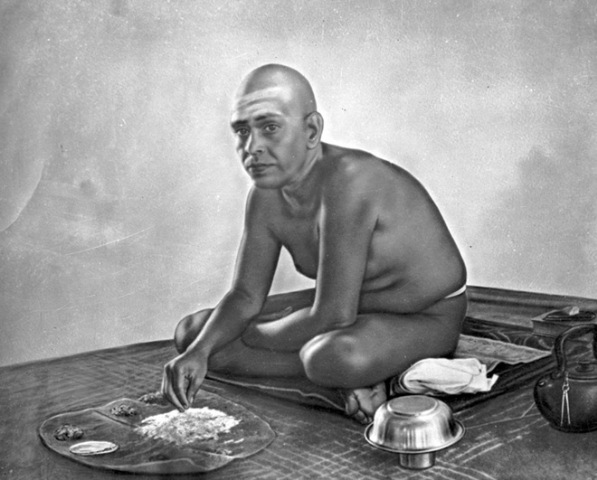
Primarily, I have to be ready to accept a Master, before choosing him. Many go to Masters, remain near them for years and never become enlightened; why? They were not ready; they offered resistance to the Master. Another meets his Master only once -in his whole life- and he becomes enlightened, why? He was ready and offered no resistance to his Master. That what happened to Sri Atmananda, who met his Master only once.

What is the meaning that the disciple is ready? As I see it, the disciple would have come to an understanding that HE IS IGNORANT AND ALL HIS KNOWLEDGE IS WRONG, and I NEED TO DO SOMETHING ABOUT THIS, this is the gateway to the path of knowledge or understanding. The other gateway is when the disciple knows fully well that he is a great sinner and the NEED TO REPENT BECOMES IMMENANT FROM THE AGONY OF BEING A SINNER; this is the gateway of love or Bahakti.

Now, one has to be either, otherwise, he is not yet ready. When one is ready in either way -way of knowledge or way of love- the whole existence will direct him to a Master. A Master that will accept him as his disciple. When one is not yet ready, he has to prepare himself to become ready, the preparation entails, reading, meditating, giving alms, visiting Masters to keep the truth alive in his heart…etc.

This preparation might take years, until you are ready. Do you choose the Master? Or does the Master accept you? Nowadays, anyone can travel and visit this Master or that Master all over the world, but does that make you a disciple to that Master? 

Now, suppose you are ready, you might have access to many well known approved Masters, but which one is Your Master? Who is the Master that will benefit you until enlightenment and establishment?

A beautiful Sufi story: A man thought to himself: I need a Sufi Master to tell me what to do so that I can enter Paradise.  He looked for a Sufi Master; after great struggle he found Libnani -a famous Sufi Master at that time. The man went to meet him and this interchange took place:

Man: I wish to learn, the way to Paradise. Will you teach me?

Libnani: I do not feel that you know how to learn.

Man: Can you teach me how to learn?

Libnani: Can you learn how to let me teach you?

Now, you are ready. Who will say that you are ready; definitely not you.  When a Master accepts you to become his intimate disciple that means you are ready.

Harsha's avatar

Njanappaana by Poonthanam Nambudiri-3

translation and commentary by Smt. Savitri Puram
 duzvdh4anypjffvi_D0_guruvayurappa
If we have a lighted lamp, we can use it to read and enjoy a book
or use it to burn and destroy the book. We have the choice
to draw the life circle with Bhagavaan and His naamam as the center
and kindness and love as radius of the circle…
Poonthaanam advises us to use the lighted lamp inside us,
lit by the Light of Lights, to walk through the path of Bhakthi and Naamasankeerthanam. 

boarder

Introduction

Njanappaana can be considered as the Bhagavad Gita of Malayalees. This is a Darshanika kaavyam or philosophical poem expressed in the most simple Malayalam language for ordinary people. Poonthanam Nambudiri, an ardent devotee of Shri Guruvayurappan, transformed his unbearable sorrow from his infant son’s death into a “yogavishesham”. He used this sad experience to build his Bhakthi soudham or house of devotion and opened it for all devotees for all time. Even though the language is very simple, this njaanappana, or song of wisdom deals with the essence of all vedas and upanishads. May Bhagavan Guruvayurappan, Bhagavathy Sarswathi Devi and Sri Poonthaanam Nambudiri bless us to become wiser by going through this great Song of Wisdom!!

This is continued from Part One… https://luthar.com/njanappaana-1 
                                          Part Two  https://luthar.com/njanappaana-2

   boarder

Alpakarmikalaakiya naamellaam
alpakaalam kondororo janthukkal
Garbha paathrathil pukkum purappettum
Karmam kondu kalikkunnathingane

We are all (naamellaam) alpakamikal or our duration of one life to do karmaas are short (when compared to the celestial beings). Hence with the karmaas accumulated in this short period we take birth in different animal’s’ womb (kondororo janthukaal garbhapaathratthil pukkum), come out (purappettum), live for a short period (alpakaalam) and continue playing this karma-bound game (karmam kondu kalikkunnathingane)“Alpakarmikal” include all animals and human beings We are all “alpakarmikal” when compared to celestial beings because one celestial year is 365 human years. What about Brahmadevan? One day time of Brahma is one chaturyugam which is equal to 4,320,000,000 human years. Then night also is as long as the day. So one full day is 8,640, 000,000 human years. So if we multiply with 365 and then by 100 years of Brahma’s life it becomes beyond comprehension for us. So let us not go further to Paramapurusha’s time scale because Bhagavan’s one moment is Brahma’s whole life duration which is 311,040,000,000,000 human years!

We perform karmaas continuously during our short life and then take birth in different animal wombs or human wombs based on our sukrutham or  dushkrutham or mixture of both.. For example, some say one cat year is equivalent to seven human years. So when born as a cat, results of the accumulated karmaas get exhausted in a short time. We believe that before getting a human birth or narajanmam, we go through millions of lives in the lower species with short durations of life. If we are born as a fire-fly (in Malayaalam, Iyyaampaatta) duration of life to exhaust karmaas is only about 21/2 hours or so. As a crocodile, it may be more than 100 years and as an elephant it may be 60 years. Also we see early deaths in all species and the only explanation for all these untimely deaths and diseases is the results of poorvajanma or previous janmaa’s karmaas. Poonthaanam expresses this numerous cycles of birth and death as a karma-bound game. Only Jeevathmaas in the form of different species of animals and humans are involved in this karma-bound game. Paramaathma is only a witness.

When we are finally blessed with a human birth, Poonthaanam advises us to use the power of discrimination bestowed on us by Lord. Only humans have the “vishesha buddhi” to change the course of our life by surrendering to God and offering all our karmaas at His Lotus feet. Continuous chanting of Bhagavaan’s auspicious names will help us not only to understand the real meaning of the famous sloka, but also to practice it in our daily life: 

Kaayena vaacha manasendriyairvaa
budhyaathmanaa vaa prakruthe swabhaavaath
karomi yadyath sakalam parasmai
naaraayanaayethi samarppayaami.

Whatever I do with my body, speech, mind or with other senses of my body, or with my intellect and soul or with my innate natural tendencies I offer (dedicate) everything to Lord Narayana.

With the complete surrender or Sharanagathi, we can escape the terrible cycle of birth,death and sufferings and attain His Lotus feet. Naamasankeerthanam destorys desires and tendencies and helps us to do all karmaas with out expecting anything in return.

 Narakatthil kitakkunna jeevan poy
Durithangal otungi manassinte
Paripaakavum vannu kramatthaale
Narajaathiyil vannu pirannittu
Sukrutham cheythu maelppottu poyavar
Sukhicheetunnu sathyalokattholam
Salkarmam kondu maelpottu poyavar
Swargatthinkal irunnu sukhikkunnu

 Until the consequences of the the multitude of sins gets exhausted (durithangal otungi) Jeevan stays in Naraka or hell ( narkatthil kitakkunna jeevan) and when slowly mind attains maturity (kramatthaale manassinte paripaakavaum vannu) jeevan moves (poy) to take birth as human being (narajaathiyil vannu). After taking birth as humans (pirannittu), those who do sukrutham or good deeds in abundance goes all the way up ( sukrutham cheythu melpottu poyavar) to the sathyalokam (sathylokattholam) and remains there happy and peaceful (sukhiccheetunnu)( never to return and take birth again). Those who do satkarmaas go up to heaven and remain there (for sometime) enjoying the heavenly comforts.

Can we differentiate sukrutham and satkarmam? Sukrutham is the result of dhaarmic punya karmaas. In other words sukrutham is Nishkaama satkarmam or good deeds with out expecting anything in return. All actions performed with purity of mind is Sukrutham. Sukrutham is satkarmaas done for the Kalyaanam or mangalam of all. Bhagavaan assures in Gita “the doer of good (kalyaanakruth), never comes to grief” or “sukruthis never come to grief”. According to another definition Sukrutham is the results of the satkarmaas accumulated from one’s own past karmaas or sukrutham can even be passed on from ancestors.

What is satkarmam? Satkarmaas are definitely good deeds, but the purpose of action may or may not be pure and also good actions can be performed with selfish motives These satkarmaas with out purity of mind do not become Sukrutham. But the results of these satkarmaas are experienced in Swargam or heaven and when they are exhausted soul is subjected to rebirth.

Another word for sathyalokam is “yathaarthalokam” or real world and once we have realisation, no more suffering, sorrows or rebirth.

Life after death is not to punish the souls by sending them to hell or reward them by sending them to heaven. These experiences are given to remind the soul of it’s true purpose of life. Of course the soul’s journey to mukthi or salvation, or heaven or hell depends on the sukrutham or good deeds done. Experiences in heaven and hell are supposed to impart knowledge and wisdom so that when they take rebirth, they can strive to do more good deeds and attain salvation. That is why poonthaanam says about maturity of mind (manassinte paripaakam). But often Maaya masks this realisation and again jeevan goes after transient pleasures and ahdarmic deeds. But because of the Vishesha Buddhi and power of discrimination, humans have the choice to acquire good and bad karmaas. It is only in human birth jeeva gets this opportunity to go beyond the bondage of karma as a whole and attain salvation. Poonthaanam recommends Naamasankeerthanam as the most easy and enjoyable path to salvation.

In this context Njaanaaanada Saraswathi’s description about the fate of souls after death may help us to understand this better. In this book called Vedantha Vinjaanam, he compares the soul’s journey to a bouncing ball. When  we throw a ball to the ground with lot of force, it bounces very high. But when it is thrown with less force it bounces only to a lower height. When it is thrown with hardly any force it hardly bounces and leaves the ground. Here the force with which we throw the ball is compared to sukrutham of the soul. After the death of the body, depending on how much sukrutham one has accumulated, soul goes to Sathylaokam, or Swargam (heaven) or chandralokam or Parjanya lokam , pithrulokam or in the vicinity of earth called prethalokam. Souls that go to Sathyalokam never returns to take janma because they have either attained saalokyam, sarropyam, saameepyam or saayujyam with Paramaathma. (In sathylokam soul can unite with paramaathma and this is Saayujyam. Souls can reside for ever in God’s abode and this is called saalokyam. Next is soul’s assumption of God’s form called Saaroopyam. Staying near to God is Saamipyam.) Poonthannam here mentions about only sathyalokam, heaven and hell. In all other worlds except Sathyalokam, soul stays until the consequences of satkarmaas or dusshkarmaas or a mixture of both are exhausted, and then with the remaining inherent vaasnaas or tendencies takes birth in an appropriate womb determined to improve oneself.

Several different explanations are given for the journey of the soul after death. Dvaitha and Advaitha school of thoughts view these differently. One group believes in attributeless or impersonal God and other group sees God as a personality endowed with glorious qualities. But Mukthi or liberation is unanimously defined as the release from the repeated cycle of birth and death. With the abundance of good deeds or sukrutham, mind becomes pure and “sama-darshanam” or Jeevathma-Parmaathma unity happens. This realization is called enlightenment and enlightened souls eventually get liberated.

Sukruthangalumokke otungumbol
Paripaakavumellolamillavar
Parichodangirunnittu bhoomiyil (jaatharrayi)
duritham cheythu chatthavar pinneppoyi
narkangalil vevvaere veezhunnu

When the results of the good karmaas are exhausted (sukruthangalokke otungumbol), souls remaining in heaven (parichotangirunnittu) are reborn on earth (bhhomiyil jaatharrayi). When their previous good and bad experiences do not impart any maturity and knowledge (paripaakavum ellolam illa-not even as much as little sesame seed), they end up doing more and more bad karmaas (duritham cheythu). Again after death (chatthavar) they suffer the consequences of their various negative karmaas in different ways or in different types of hells. (In one old version the word “jaatharaayi” is not there and with out that meaning can be interpreted in a different way. In that case, the word “parichotangirunnittu” can be for the life on earth or bhoomi itself. When the  the good results of the past sukrutham experiencing in this life on Bhoomi is exhausted, with out any realisation of how transient the pleasures are, some commit more sins to end up in different hells)

In this stanza Poonthaanam explains how important is “pascchaatthaapam” or atonement. Even when we enjoy a good life here on earth, we tend to forget how blessed we are and keep hurting others in several ways. When subjected to miseries also, some people often do not realize the sins or mistakes they have committed and refuse to learn and correct themselves. Poonthaanam is talking about such people and he says that they commit more and more sins with out atonement and go through more suffering. If we realize our mistake and do “praayasccchttham” sincerely, we will not be tempted to do more sins. Famous story of the prostitute Pingala is an example for purifying one’s mind with “pascchaatthaapam”. She realized how wrong it was to sell her body for a living and later with deep atonement surrendered herself at Bhagavaa’s feet and attained Mukthi.

“Aviveka: paramaapadaam padam” is illustrated in this stanza. This means “avivekam” or lack of wise discrimination is the root cause of all miseries. When there is no maturity of mind, the power of discrimination will not be there. So instead of going after “sreyas” or what is good, we go after “preyas” or what gives pleasure. Swami Desikan describes nine steps for a spiritual aspirant and vivekam is the first step. Poonthaanam used the word “paripaakam” of the mind to indicate this vivekam or wise discrimination. Lack of Vivekam or paripaakam of mind leads us to hell by performing adhaarmic and bad deeds .

Purity of mind is very important in spiritual advancement. Only from a pure mind knowledge is emerged. With all temptations around us, it is harder to purify our mind in Kaliyuga.

Kalau kalmasha chitthaanaam
Paapadravyopajeevanam
vidhikriyaavihinaanaam
Gathir Govindakeerthanam

In Kaluyuga, mind of ordinary human beings are tainted by Kaamam, krodham, madam, moham etc (kalamsha chittham) and often end up doing adharmam (paapam) to make money (dravyam) for living (for upajeevanam). Ordinary people do not have the time or inclination to do good karmaas as prescribed in vedaas (vidhikriyaheenam). The only thing that can give relief from the sufferings of Kaliyuga is Govinda naama sankeerthanam. Bhagavaan and Bhagavaan’s naama are never separated. Naamam is called Kalpa vruksham of the earth.

Suralokathil ninnoru jeevan poi
Naraloke maheesuranaakunnu
Chandakarmangal cheythavan chaakumbol
Chandaala kulathinkal pirakkunnu
Asuranmaar suranmarayeetunnu
Amaranmaar marangal aayeetunnu
Ajam chathu gajamai pirakkunnu
Gajam chathangajavum aayeedunnu
Nari chathu naranai pirakkunnu
Naari chathutan oriyai pokunnu
Kripa koodaathe peedippicheetunna
Nripan chathu krimiyaai pirakkunnu
Eacha chathoru poocha yayeetunnu
Easwarante vilaasangalingane

A jeevan or soul from heaven or land of Devaas (suralokatthil ninnoru jeevan) is born as a Brahmin on earth (naralokatthil maheesuranaakunnu). People who do extremely cruel actions becomes “chandaala” or a member of a despised caste. Demons or Asuraas become Suraas or Devaas. People who are eternal or immortal or deathless (amaranmaar) are born as trees (marangal aayeetunnu) . A goat (ajam) is born as an elephant (gajam) and vice versa. A tiger (nari) after death is born as a human being (naran) and a  woman (naari) is born as a fox (oriyaai). A king who mercilessly tortures (kripa kootaathe peedippicchitunna) his citizens takes birth as a worm (krimi). A fly is reborn as a cat and all these are Bhagavaan’s leelavilasam or playful divine drama.

After death, to experience the results of the residual karmaas, jeevan takes birth in appropriate womb. The passage of a soul from body to body is determined by the force of one’s actions, or karma. If an individual performs good deeds, the next birth will be rewarding, and if not, the person may degenerate into a lower life form. In the above lines, Poonthaanam shows several examples of the effect of karmaas on the soul when it is separated from the body after death. A jeevan from heaven comes to earth to experience the results of his residual negative karmaas. Likewise after experiencing negative results by taking birth as beings in several thousands of species, finally a tiger, for example,  gets the life of a human being. Humans bestowed with the power of “wise discrimination” along with the grace of God,  can perform good karmaas and advance spiritually. But when a human being resorts to unkind, hurtful, and negative actions, he will again be pushed back to be born in lower life form like a worm. Poonthaanam says:  A king who mercilessly tortures (kripa kootaathe peedippicchitunna) his citizens takes birth as a worm (krimi).

There are several examples in our puraanaas to illustrate this law of karma. A good example of how an “amara” or immortal being becomes a “maram” or tree is the story of Nalakoobara and Manigriva who were the sons of Kubera, the lord of Yakshaas or the Lord of wealth. Once Nalakoobara and Manigriva were enjoying themselves playing in a lake with women. They were intoxicated and oblivious of everything around them. Sage Narada passed by the lake during this time and the ashamed ladies immediately covered their body with clothes and showed their respect to Narada with folded hands. But both Nalakoobara and Manigriva, intoxicated with pride and drinks ignored Narada Muni. Narda Muni cursed them to become “maruthu trees”. They had to remain as trees for a very long time until Krishna as Damodara came out of Gokulam and touched them with the wooden mortar.

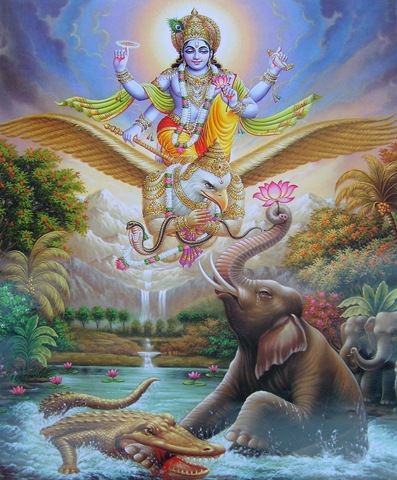
Another example is the story of Gajendramoksham. King Indradyumana was born as a “divine elephant”. I am quoting below the words of our own respected S.N Sastriji (from the Naaraayneeyam commentary) : “The njana and devotion which he (King Indradyumnan who became an elephant by sage Agasthya’s curse) had acquired in his previous life came back to him under the stress of the suffering caused by the attack of the crocodile. He then worshipped Thee with lotus flowers plucked by his trunk, while singing continuously a great hymn addressed to the Nirguna brahmam which he had learnt in his previous life.” Even though King Indradyumna had to be born as an elephant, his residual good karmaas led him to salvation. (Also the crocodile was Huhu, a gandharvan in the previous janma.)

Vishnu_Gajendra_Moksham

As a “Bhoktha”, the experiencer, one does not have the freedom of choice in experiencing the results of accumulated bad karmaas. (Bhagavaan and His naamam are the only solution to lessen or erase our suffering due to accumulated bad karmaas). But as a “Kartha” or doer, one has freedom of choice to some extent. If we have a lighted lamp, we can use it to read and enjoy a book or use it to burn and destroy the book. We have the choice to draw the life circle with Bhagavaan and His naamam as the center and kindness and love as radius of the circle. Also we can draw the life circle with “I” and “mine” as center and a combination of  kaama,krodha,,lobha moha,mada,maasthryaadi  negative qualities as radius of the circle

Poonthaanam advises us to use the lighted lamp inside us, lit by the Light of Lights, to walk through the path of Bhakthi and Naamasankeerthanam. 

Keezhmelingane mandunna jeevanmaar
Bhoomiyeennathre naetunnu karmangal
Seemayillatholam pala karmangal
Bhoomiyeennathre naetunnu jeevanmaar
Angane cheythu nedi marichudan
Anya lokangal oronnil oronnil
Chennirunnu bhujikkunnu jeevanmaar
Thangal cheythoru karmangal than phalam
Odungitum athottunaal chellumbol
Udane vannu naetunnu pinneyum
Thante thante grihathinkal ninnutan
Kondu ponna dhanam kondu naamellam
Mattengaanumoredathirunnittu
Vittoonennu parayum kanakkine

These jeevaas run (mandunnu) between the lower worlds and upper worlds (keezmelingane) of the universe. But it is said (athre) that they get to do karmaas (karmangal naetunnu) only in Bhoomi. It is said that only in Bhoomi these jeevaas get to do various (pala) and limitless (seemayilaatholam) karmaas. Thus (angane) they accumulate karmaas(naeti) and after death (maricchutan) spend time (chennirunnu)in different worlds one by one (lokangal oronnil oronnil) and experience or enjoy (bhujikkunnu) the results of (good) karmaas (karmangal than phalam) done by themselves(thangal cheythoru). These experiences end (odungitum-with the exhaustion of accumulated good karmaas that can be experienced in worlds other than earth) in a little while (athottunaal chellumbol) and again (pinneyum) jeevaas come (vannu) to earth and collect (netunnu) karmaas. When a person goes to some unknown place and spends prodigiously all the money he collected and brought from his own house, can be called “vittunnunnavan”. Exactly in the same way, jevaas accumulate all the karmaas from earth and experience the results in another world.

It appears that a literal translation of some of the verses my not make much sense. Therefore, it seems appropriate to explore the metaphysical meaning that the lines convey.

In Vedanta, earth is often referred to by another name “karma-kshethra”. This name came because souls can experience the results of karmaas performed ONLY on earth and not in any of the other 13 worlds. What ever experiences any jeeva go through in any other world is the result of karmaas done on earth. If good karmaas outweigh the bad karmaas, we go to heaven, experience the results of good karmaas that can be experienced in heaven until those results are exhausted. Then it goes to hell to experience the results of bad karmaas that can be experienced in hell until those results are exhausted and comes back to earth with some residual good or bad (or both good and bad) karmaas that can be experienced only on earth. But no new accumulation of karmaas can happen in any other world. “otungeetum ottunaal chellumbol” (line 5, first part) means that the karmaas that took the soul to heaven (or hell) will be exhausted in heaven (or hell) by enjoyment (or suffering). Every action we perform is like sowing a seed. It remains vibrant and at a later time we reap the results. It is not possible for ordinary people like us to link the past karmaas and what we experience now by any reasonable method. The same karma performed with different attitude can lead us to heaven, hell, or salvation. Bhaavam is very important.

Poonthaanam has used the word “bujikkunnu” for experiencing the results. The word “bhojanam” is defined as “sukhena anubhuyathe iti bhojanam” or “what is experienced happily”. So “bhujikkunnu” may apply only for the experiences of our good karmaas. When the good karmaas that can be enjoyed in heaven are over, we come back to earth. To experience the results of different types of karmaas, our subtle body goes to different worlds and then with a gross, physical body comes to earth and experience what ever residual karmaas are left as well as to perform new karmaas and the cycle continues. The word “Vitttoonu” is a characteristic of a spendthrift. Origin of the word spendthrift is some one who has spent his accumulated wealth from predecessors or ancestors. Poonthannam compares jeevan’s enjoying the results of the accumulated karmaas from the past (from earth) to a person’s enjoying life by spending all the wealth acquired over a period of time. Just like wealth gets exhausted by spending, results of karmaas gets exhausted by experiencing. Life in heaven is not eternal, it is transient. It is interesting to note that jeevans in subtle body and gross body welcome the end of suffering, but definitely want the enjoyment of the results of good karmaas to last for ever when both are transient Only Nishkaama karmam (with out expecting anything in return) leads to eternal peace and happiness or salvation.

Since every action we perform, and every thought that comes to our mind has a result or consequence, Poonthaanam used the word “Seemayillatholam” or limitless or endless karmaas. Wheel of karma continues on and on. Nobody can remain Karma-free. There is one and only one solution to get out of the wheel of Karma and all scriptures and our great seers suggest to surrender to God and do karmaas with renunciation of the fruits of actions.. Poonthaanam gives an easy solution to develop this attitude of complete surrender -Naamasankeertthanam.

Let us chant the naamam to purify our mind with Shri Poonthaanam and other millions of devotees:

Krishna! Krishna! Mukunda! Janaardana!
Krishna! Govinda! Naaraayana! Hare!
Achyuthaananda! Govnda! Maadhavaa!
Sachindaananda! Naaraayana! Hare!


 http://www.youtube.com/watch?v=vbI4Uk8fSYk&feature=player_embedded

 boarder

Samasthaaparadham kshamaswa  Sreekrishnaarpanamasthu

Harsha's avatar

Alternate Nostril Breath Meditation

Alternate nostril breath meditation

This practice of pranayama is wonderful for bringing about a feeling of balance and well being. Because the nostrils are said to connect to our male and female energy channels, when we focus on the nostril, we balance and purify that corresponding channel of energy. The regular practice of alternate nostril breathing is said to help us experience the feeling of being beyond the polarity of male and female and into the non dual Reality of oneness.  Practice this when you are feeling scattered or unfocused, and you will be amazed at the results.

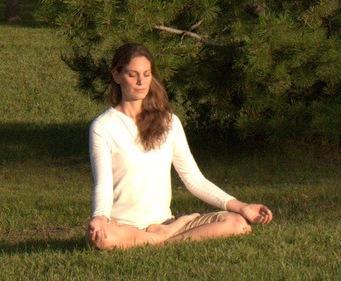
meditating 41. Find a position where you can be comfortable, relaxed, and free of any distractions, then settle into your posture

2. Allow the body to relax completely, especially your abdomen.

3. Notice how a relaxed abdomen naturally brings about a deepening and softening of the breath.

4.  Allow the abdomen to relax more and more with each breath. As you let the abdomen soften, and the breath to deepen; start to become evermore aware of the feeling of nourishment in the breath. Be aware of the sensation of the body being nourished by the breath.

5. Allow your breath to flow as naturally and as freely possible; as if the breath is taking on a life of its own, moving from a deep inner intelligence and knowing.

6. As you are enjoying the feeling of a deep intuitive breathing and the feeling of nourishment within the breath, start to become aware of the sensation of air moving in the nostrils.

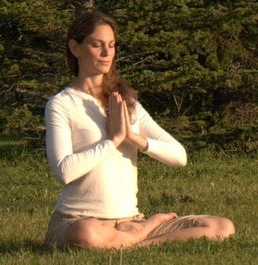
alternate nostril breathing 27. Become aware of the feeling inside the nostrils as well as the quality and movement of air. Notice how the air is cooler and drier as you breathe in. Notice the warmth of the air on your exhales.

8. Take about 10 breaths to concentrate on the feeling of the air moving in the nostrils, and the feeling of the body being nourished by the breath. As you are doing so, see if you can detect which nostril feels more open or expanded. (this is your active nostril)

9. Start to focus on your active nostril only. Breathe as if you are breathing through just that one nostril. Focus on the feeling of the air moving on that one side. Focus on this for about 30 seconds, or 10 breaths.

10. When it feels natural to switch sides, start to focus on the movement of air on the other side (the passive nostril). Focus on the feeling of the air moving inside the passive nostril. Focus on this for about 30 seconds, or 10 breaths. You may find this side more challenging to concentrate on, yet eventually it will begin to feel as if it is opening and expanding to be the same as the other side.

11. The final phase of this exercise is to imagine that you are breathing into a third nostril that runs from the tip of the nose to the center of the forehead. Inhale and move your awareness from the tip of the nose to center of the forehead and exhale from the center of the forehead to the tip of the nose. Stay with this for about 10 breaths.

12. Go back to breathing into the belly and focusing once again on the feeling of being nourished by the breath.

13.    Stay with the belly breathing as long as you are comfortable and enjoy the feeling of balance and wellbeing.

If you enjoyed this meditation you can purchase Christine’s meditation CD in stores, by download, or by clicking here. Listen to sample.

© written and modeled by Christine Wushke, Photo’s by Dianne Wushke.

Christine Wushke is a certified yoga and meditation teacher with over 15 years of experience. Her aim is to create a sacred space for students to effortlessly find the presence of stillness and an inner silence. Christine’s mission is to raise consciousness on the planet by empowering people to realize their own Divinity and to uncover a deep peace within. Christine is committed to assisting you in your journey, and helping you to realize directly for yourself the truth of what you are, and the stillness of truth within. In addition to her yoga and meditation training, Christine is also a registered massage therapist. In the past two years she has studied extensively in the spiritual tradition of Advaita Vedanta. Her teaching style is largely influenced by Iyengar yoga, and the nondual tradition of Advaita.
www.journeytolight.net
www.innerlightyoga.blogspot.com
Harsha's avatar

Belly Breathing

The yogic word for breathing practice is “Pranayama”. The word “prana” means life force energy, and the word “yama” means to expand. Pranayama is a practice for increasing energy, and aliveness in the body.

One of the favorite practices of pranayama at Journey to light yoga studio, is called “Belly breathing”. Belly breathing is a great way to slow down the breathing and deepen your connection to the prana in the breath. It is very relaxing, deeply nourishing, and often therapeutic for stress and anxiety. Set aside 10 – 15 min for this practice, in a place where you can be free from all distractions.  I hope you return to your day relaxed, refreshed, and nourished.

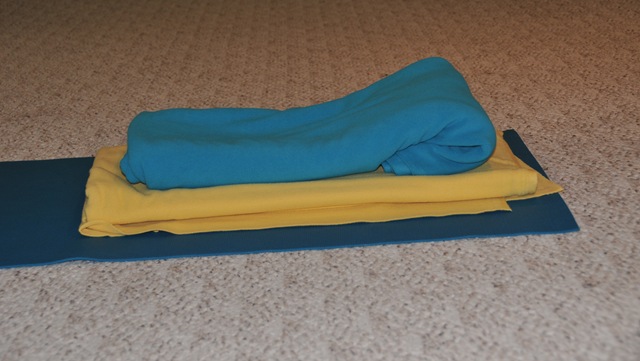
belly breath props

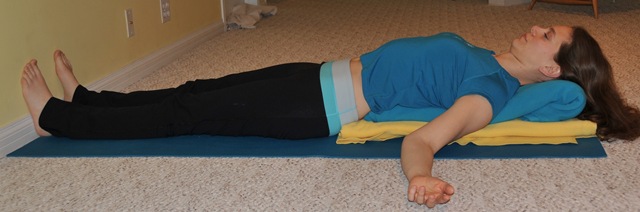
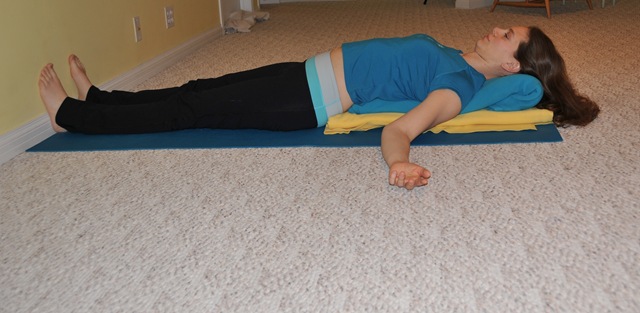
1. Take 2 folded blankets, and stagger them, so one is on top of the other, and the top blanket is pulled about 2 inches back. Fold the top blanket under at the other end, to make a pillow.

2. Lay on your back with the base of the spine touching the bottom blanket. Let your shoulders roll under and open the front of the chest.

pranayama 3. Start by relaxing into the pose, and allowing the body to completely sink into the blankets.

Notice your breath. Imagine that your breath is like a drop of Prana (energy) and all around you there is an infinite ocean of Prana, and nourishment. Allow your inhalations to be a drinking in of this nourishment.

Allow your exhalations to be dissolving breaths, as if drops of water are diffusing into the infinite ocean of Prana, and nourishment all around you. Inhale nourishing, exhale dissolving. Imagine that the supply of nourishment all around you is limitless.

belly breathing 4. Begin to focus your attention on your lower abdomen. Breathe in and allow the lower abdomen to lightly inflate, as if you were blowing up a balloon of energy just below the belly button. Stay with the belly breathing for at least 10 min, focusing on breathing deep into the lower belly.

Benefits ~ Strengthens the parasympathetic nervous system.  increases relaxation, increases oxygenation of  blood, improved mental clarity, and emotionally uplifting. Therapeutic for anxiety and stress.

Christine Wushke is a yoga and meditation teacher with over 15 years of experience. Her aim is to create a sacred space for students to effortlessly find the presence of stillness and an inner silence. Christine’s mission is to raise consciousness on the planet by empowering people to realize their own Divinity and to uncover a deep peace within. Christine is committed to assisting you in your journey, and helping you to realize directly for yourself the truth of what you are, and the stillness of truth within.

Christine’s meditations, and yoga articles will guide you to deepen your understanding of the wisdom within this ancient practice and experience the spiritual elements of yoga.

www.innerlightyoga.blogspot.com
www.journeytolight.net

If you enjoyed this meditation you can purchase Christine’s meditation CD in stores, by download, or by clicking here. Listen to sample.

Harsha's avatar

Sacral releasing Pose

Sacral releasing Pose

This pose is amazing for releasing and opening the sacrum. In spiritual tradition of yoga, it is said that the kundalini Shakti energy lies dormant like a coiled snake sitting at the base of the spine. When we do certain meditations or yoga poses, it is said that we can awaken this dormant energy and activate a spiritual energy to begin its journey up the spinal column and up into the brain.  Please use caution and mindfulness in this pose if you have herniated disks, or arthritis in the spine.

sacrum 1

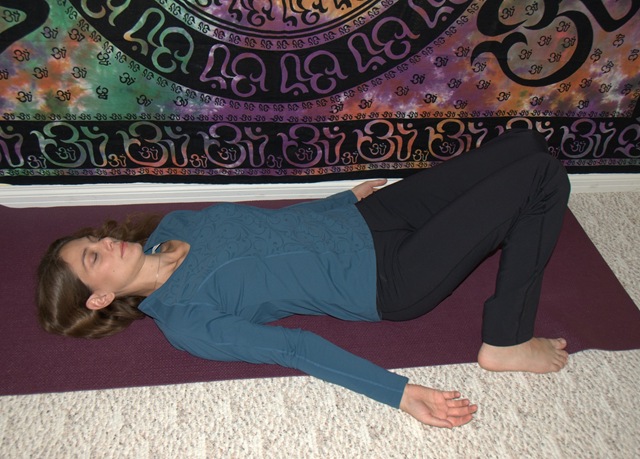
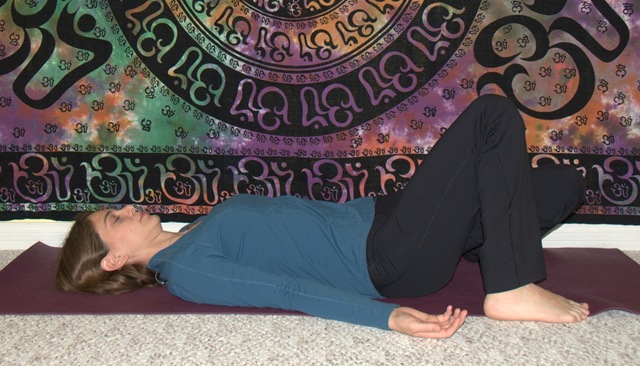
1. Lay on your back with your knees bent. Bring your knees together and your feet about shoulder width apart.

2. Lift your pelvis slightly and move your tailbone toward your heels. Flatten the small of your back to the floor. (Or as flat as it will go)

3. Let your knees lean into each other, letting them also pull forward. (let this movement be natural, and not forced). Let the lower back relax as much as you can.

4. Hold this position for at least 30 seconds, allowing the muscles in your legs, and pelvis to relax.

sacrum opener

5. Bring your awareness into your sacrum. Imagine that you are breathing light, energy and nourishment into your sacrum. Imagine that you are drawing that nourishment all the way up your spine and into your brain.

6. Start to bring your knees down toward the floor, one at a time. Stretching the inner thigh.

7. As you bring your knee toward the floor, let the pelvis rock from side to side massaging the back of your pelvis. Continue to imagine that you are drawing nourishment and light into your sacrum, and allowing it to flow all the way up your spine. Use the rocking action of the pelvis to increase the amount of energy flowing into the sacrum and up the spine.

8. Return to position #1, and rest for another 30 seconds or longer.

Benefits ~ Loosens and releases the sacrum. Relaxes the muscles of the pelvis, and lower back. Massages and Oxygenates the back of the pelvis. Increases flexibility in the abductor, and adductor muscles in the thighs.

© written and modeled by Christine Wushke, Photo’s by Dianne Wushke.

Christine Wushke is a certified yoga and meditation teacher with over 15 years of experience. Her aim is to create a sacred space for students to effortlessly find the presence of stillness and an inner silence. Christine’s mission is to raise consciousness on the planet by empowering people to realize their own Divinity and to uncover a deep peace within. Christine is committed to assisting you in your journey, and helping you to realize directly for yourself the truth of what you are, and the stillness of truth within. In addition to her yoga and meditation training, Christine is also a registered massage therapist. In the past two years she has studied extensively in the spiritual tradition of Advaita Vedanta. Her teaching style is largely influenced by Iyengar yoga, and the nondual tradition of Advaita.

www.journeytolight.net

www.innerlightyoga.blogspot.com

Harsha's avatar

Spinal Nourishing Pose

Spinal Nourishing Pose

This is one of my favourite twisting poses. It is very relaxing and can be done by most people at any fitness level or age. Let yourself relax into the pose and bring attention into your spine. Let your whole spinal column be enlivened by the effects of the pose as well as your attention. It is not recommended to do this pose if you have just finished a meal, or are pregnant. Use caution if you have degenerated disks or arthritis in the spine or hips.

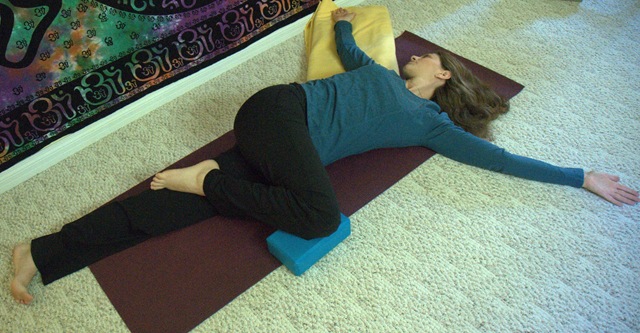
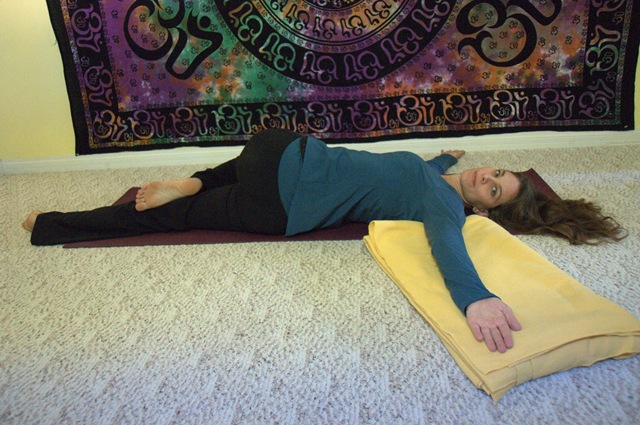
reclining twist part 1

You will need some blankets, pillows, or yoga blocks for this pose.

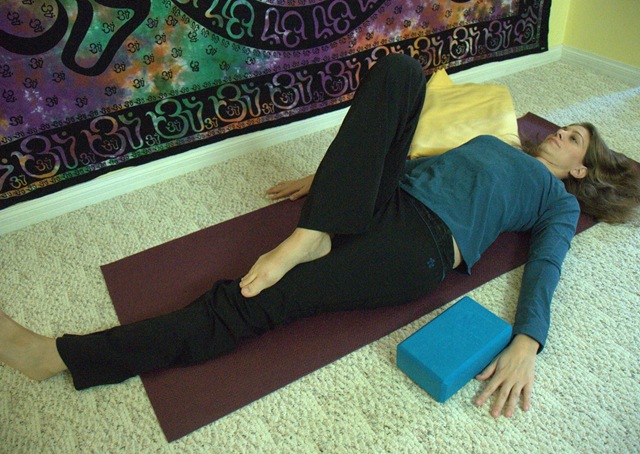
1. Lay on your back with your block or pillow on you left side near your hip and your blanket near your right shoulder.

2. Bend your right knee and bring the sole of your foot onto your left knee. Roll onto your left side bringing your knee down onto your block. (you may need to adjust the height of the block or pillow so it feels comfortable.)

3. Bring your right arm over to the right until your arm is resting on your blanket. You may have to adjust the angle of your hip in order to place the arm in a comfortable position. Use as many blankets under the arm as you need so the position is very comfortable. Turn your head and look over your right shoulder.

reclining twist part 2

4. Check that there is equal weight on both the right knee as well as the right shoulder. You may need to fine tune your pose a bit and experiment with your props in order to find that balance.

5. You should be feeling the stretch in your hips, back, and shoulders. Take care to keep the movement of your neck soft and relaxed.

reclining twist part 3

6. Once you feel comfortable in the pose allow yourself to
relax, let your arm sink into the blanket and your knee sink into the block. Breathe into your back and spine as if you are drawing nourishment into your back muscles from the energy in your breath. Also breathe into your spine and feel the prana from your breath enliven the spinal column.

7. Hold the pose for about 1 min to each side, or until you feel the stretch diminish.

Benefits~ increases flexibility to the spine, and back muscles. Opens the shoulders, chest, and hips, mobilizes the pelvis and sacrum, strengthens the parasympathetic nervous system, releases stress and emotional tension. Detoxifies internal organs. Improves bowl function.

© written and modeled by Christine Wushke, Photo’s by Dianne Wushke.

www.journeytolight.net

www.innerlightyoga.blogspot.com

Harsha's avatar

This Is How Jesus Used To Drink: By Dr. Harsh K. Luthar

The first time I came to the U.S. with my mother and brothers was in 1965. I was 9 years old. We joined my father who was then teaching Mathematics at Colby College in Waterville, Maine.

We lived very close to Colby College. There was a Roman Catholic Grade School there. My father knew the Priest and the Nuns who ran it and liked them very much. The Priest lived next to our house and he and my father talked often. Within a few days of our arriving, me and my brothers were enrolled in that school.

It was a huge change going from Punjab, India to Maine, U.S.A.  My  brothers and myself did not speak English. We did not even understand it much. For example, it took me a few days to realize that at my school, “Rest Room” referred to the bathroom and not a place to go rest and take a nap in the afternoon if you were tired.

The saving grace in all the adjustment was that I had the most wonderful Nuns as teachers. I especially remember the Mother Superior. I think we called her the Holy Mother. There was something extraordinary peaceful about her. She was full of grace, kindness, and a quiet dignity in all her words and actions.

After we had been in Waterville for a few weeks, the Holy Mother along with the Sister Nun came over to our house. The Nuns spoke to my father. My father said to my mother and us that the Mother Superior and the Sister wanted to take us to a movie. We all readily agreed.

The Mother Superior and the Sister took us to see “The Sound of Music”.  It had just come out. That was the first American Movie I ever saw.  I did not fully understand the movie at the time but really enjoyed the songs in it. After the movie and some food, the Nuns drove us back. I was singing in the car that very catchy tune in the movie, “You are sixteen, I am seventeen….”. The Nuns and my mother were talking . My brothers were smiling.

In my first month, I had a lot of difficulty drinking water from the water bubbler in my school. I had never seen anything like a water bubbler before. I would squeeze and turn the knob and the water would spring up towards me and go into my nose.  I did not know the method of how to get the water to jump in my mouth and somehow suck on it and gulp it down.

The water would at times spring up and go into my mouth but then go right out before I could drink it. Children in the U.S. grow up with drinking water from the bubbler. However, for me it was a formidable challenge. I was used to the Indian style of drinking water with cupped palms. 

One day, in between classes, I was engaged in my usual struggle to get a drink from the bubbler. I was really thirsty and so my efforts were unusually strong. But no matter how I tried, I was not able to get the water to fall perfectly in my mouth and gulp it down. Finally, in desperation, I squeezed and turned the knob with one hand and tried to get the water to come to the palm of my other hand and drink it. It was messy. While I did manage to get a few drops of water in my mouth, the rest spilled on my shirt.

A small crowd of students now started to gather around the water fountain watching me.

The Holy Mother saw what was happening and came over. She said to me that she would turn the knob on the water bubbler and I could drink the water. So with the Holy Mother holding the knob and turning it, I put my cupped palms together to hold the incoming water.  After my cupped palms were full, I drank the water in the traditional Indian way.  This had to be repeated many times because I was very thirsty.

Mother Superior continued holding the knob and I kept drinking the water with my palms until my thirst was quenched. After a couple of minutes, I finished. All this time, the Holy Mother was looking at me intently to make sure that I was fully satisfied.

As she took her hand off the knob of the water bubbler, the Holy Mother said in her gentle and most dignified way, “This is how Jesus used to drink water.”

The crowd around the bubbler then dispersed and we all went to our respective classes.

Harsha's avatar

You Are What You Eat

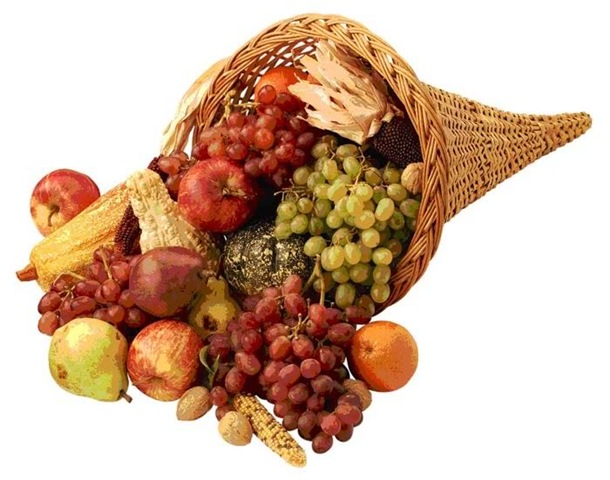
cornucopia


by Swami Sadasivananda

Are we Really what we Eat?
The Need for a Vegetarian Diet!

Every one has heard the saying: “You are what you eat.” But according to the scriptures and saints of the major Eastern religions, as well as of early Christianity, a more precise reckoning of this euphemism is, in fact, a twofold statement: “You are what you think, and you think like what you eat!”

Science tells us that the food we eat is transformed into energy that fuels the physical body. Only in our recent times has science acknowledged that there is also another energy imbued within our food, of a far more subtle nature, that influences not only the physical sphere of our being, but more importantly, the mental realm of our existence. Although modern science holds the trophy for “The slowest learners on earth”, they are now admitting that the most profound and powerful effect food has on man occurs at the psychological plane of existence.

This fact is, of course, based on the Maxim of physics that all elements in existence are essentially energy, and that energy is constant. The constancy of energy is defined by its nature of being impervious to essential altercation. The energy in the beginning of a process is the same at the end of the said process. What goes in, stays in!

In terms of ingestion of digestible matter, the quality of the energy, scientifically and specifically the vibratory rate, that dominated the nature of the plant or animal that is being eaten, is directly transferred through the digestive process and into the mind of the consumer. Thus our mind, our perception, and finally our spirit become what we eat!

If the energy is heavy or inert, little can be done with it to produce the state of silence and clarity needed to reflect the truth of spirit. Certain actions darken the mind and make it thick or heavy, vibrating very slowly–sometimes seemingly not at all. On the other hand, some actions lighten the mind, making it fluid and subtle, vibrating at a very high level. It is this latter condition that is needed for attaining the state of liberation–or rather, the state that liberates the spirit from the illusion of bondage and suffering. It is really the mind that becomes liberated, but that liberation also affects the essentially ever-free spirit and sets it free from involvement with the mind. And to attain such liberation the mind must be purified and refined. Thus, vegetarian diet becomes one of the best and strongest means for its purification.

“When we realize that any physical object has all the levels which we do, namely, the physical, biomagnetic, sensory, intellectual and will bodies, we can understand the importance of the kind and quality of food we eat. For not only does the physical substance of the food become assimilated into our physical body, so also do the subtler energies become united to our inner levels. This is the teaching of the Chandogya Upanishad:

“Mind consists of food. That which is the subtle part of milk moves
upward when the milk is churned and becomes butter. In the same
manner, the subtle part of the food that is eaten moves upward and
becomes mind. Thus, mind consists of food.” 1

“It is obvious, then, that the food we eat is going to determine the quality and condition of all the levels of our being. Our food has the same levels we do, and the different energies of the food are absorbed into our corresponding levels. Therefore when we eat something, it not only affects us on all levels of our existence, it becomes those levels. In this very real sense we indeed are what we eat. In esoteric philosophy our various levels are looked upon as separate bodies through which our consciousness operates. Since those bodies are formed essentially from the food we eat, they will be conditioned by and function according to the kind of energy extracted from the food. We are very much like the child’s toy that is a series of colored rings stacked on a rod. That is, we are successive layers of subtler and subtler energy that are connected to the physical body. From these energy levels the different life  processes are empowered and administered. When the energies within us are positive, they produce harmonious states of mind and behavior. But when the energies are negative, they move in a random and chaotic manner and produce negative states of mind and, consequently, negative behavior. Moreover, these toxic energies can also manifest as physical illnesses or defects. Substances that are toxic to the body–such as meat, alcohol, nicotine, and drugs–are toxic on the inner levels as well, and their ingestion poisons all our bodies by putting into them negative energies which are going to manifest in the disrupting manner just described. On the other hand, fruits, vegetables, and grains are reservoirs of pure, basic life energies that are very light and malleable. These energies are easily assimilated into all our bodies and made to take on our specific, unique life vibrations and karmic patterns.” 2

Thus, we must accept, and can on no legitimate grounds refute the facts of the twofold statement: “You are what you think, and you think like what you eat!”  Therefore, it can be gleaned, from both the material as well as the spiritual viewpoint, why Sri Ramana Maharshi stressed a vegetarian diet.

Question: I have heard it said that the Maharshi set no rules of conduct or lifestyle within the Ashram that came up around him. Therefore, how can what is being said regarding a vegetarian diet be essential for spiritual attainment?

It is in fact openly stated, and recorded within several of the published core teachings at the Ashram that Bhagavan Ramana set forth only one regulation for the devotees living within the Ashram, as well as for those living outside that followed his teaching. This one rule of life regarded the maintaining of a sattvic (pure) diet.

Question: Did Bhagavan ever explain why maintaining purity of diet was important, and what constituted a sattvic or pure diet?

He did explain the reason why a vegetarian diet was, and is even to this day, maintained at all times. This discipline was central to his guidance of effective means of sublimating (uplifting) the mind and its direction towards reflection upon its True Nature. His guidance stressed an ever purer awareness or quality of mind, which paved the way towards awareness within the heart, the essential home of our Eternal Self.

Bhagavaneating

 In Bhagavan’s own words we find recorded:

Devotee: What diet is prescribed for a sadhak (one engaged in spiritual practices)?
Maharshi: Sattvic food in limited quantities.
D.: What is sattvic food?
M.: Bread, fruits, vegetables, milk, etc.
D.: Some people take fish in North India. May it be done?
(The Maharshi made no answer.)
D.: We Europeans are accustomed to a particular diet; change of diet affects health and weakens the mind. Is it not necessary to keep up physical health?
M.: Quite necessary. The weaker the body the stronger the mind grows.
D.: In the absence of our usual diet our health suffers and the mind loses strength.
M.: What do you mean by strength of mind?
D.: The power to eliminate worldly attachment.
M.: The quality of food influences the mind. The mind feeds on the food consumed.
D.: Really! How can the Europeans adjust themselves to sattvic food only?
M.: (Pointing to Mr. Evans-Wentz) You have been taking our food.
Do you feel uncomfortable on that account?
Mr. Evans-Wentz: No. Because I am accustomed to it.
D.: What about those not so accustomed?
M.: Habit is only adjustment to the environment. It is the mind that matters. The fact is that the mind has been trained to think certain foods tasty and good. The food material is to be had both in vegetarian and nonvegetarian diet equally well. But the mind desires such food as it is accustomed to and considers tasty.
D.: Are there restrictions for the realised man in a similar manner?
M.: No. He is steady and not influenced by the food he takes.
D.: Is it not killing life to prepare meat diet?
M.: Ahimsa stands foremost in the code of discipline for the yogis.
D.: Even plants have life.
M.: So too the slabs you sit on!
D.: May we gradually get ourselves accustomed to vegetarian food?
M.: Yes. That is the way. 3

In this example, and as is seen throughout the teachings of Sri Ramana Maharshi, Bhagavan is stressing: “It is the mind that matters.” Furthermore, “The mind feeds on the food consumed”, and “The weaker the body the stronger the mind grows.”

In the following story, we are being shown that a pure diet will not only elevate the quality of the mind, but will also keep the body free from illness: “One afternoon at 3 o’clock, a devotee who was going to Madras gave a small tin containing some ointment and said that if that medicine was applied to Bhagavan’s legs, the pain would decrease, and that if Bhagavan would continuously use it, he would bring a dozen tins of it from Madras. Bhagavan replied, saying: “Enough. The Karpura Thailam I am using now is adequate. Why do I require such costly medicines? If diet is properly regulated, no medicine will be required. When these medicines are used, the ailment apparently disappears, but it starts again. That is because of some irregularity in diet.” 4

One of the close disciples who lived with Bhagavan, Arthur Osborne, related what the Maharshi taught him: “It should be explained for non-Hindu readers, that the practice of vegetarianism is not only out of disinclination to take life or eat flesh, though that is one reason for it; it is also because unsattvic food tends to increase animal passions and impede spiritual effort.” 5

Although the Ashram food was strictly vegetarian, Alagammal, Bhagavan’s mother, like some very devout Brahmins, went still further and considered some vegetables (i.e. onions) also unsattvic (impure). When Bhagavan would sit with the devotees in the kitchen and peel onions, Alagammal would weep bitterly. In response, Bhagavan would retort while holding up an onion: “Behold the powers of this small bulb.” She would then weep all the more loudly. Bhagavan had the final word, and would say mockingly: “Mind that onion! It is a great obstacle to Moksha (Deliverance)! It should be said here that Sri Bhagavan did not disapprove of orthodoxy in general. In this case there was excessive attachment to the forms of orthodoxy and that was what he attacked. In general he laid stress on the importance of sattvic (pure) food. He did not often give any injunctions at all concerning outer activity; his usual method was to sow the spiritual seed in the heart and leave it to shape the outer life as it grew. The injunctions came from within.” 6

1 Chandogya Upanishad, 6.5.4, 6.6.1,2,5.
2 Spiritual Benefits of a Vegetarian Diet, Swami Nirmalananda, Atmajyoti Press.
3 Talks with Sri Ramana Maharshi, recorded by Sri Munagala Venkataramiah, Sri Ramanashramam 2006, Talk 22, p. 20.
4 Letters from Sri Ramanashramam, Suri Nagamma, Sri Ramanashramam 2006, Letter #266 December1949, p. 640.
5 Ramana Maharshi and the Path of Self-Knowledge, Arthur Osborne, Sri Ramanashramam 2006, p. 82.
6 Ibid. p. 81.

cornucopia - Copy

Reprinted  with permission of Swami Sadasivananda
To subscribe to his newsletter, go to http://www.ramanateaching.org/contact.html
For more information on Swamiji, click here:   About Swami Sadasivananda
Teachings of Bhagavan Sri Ramana Maharshi web site: http://www.ramanateaching.org
Ask your question in relation to Bhagavan’s teachings, meditation and spirituality at:
http://www.ramanateaching.org/faq