Harsha's avatar

Wisdom Eye: The True Guru: By Dr. Harsh K. Luthar

Harsha's avatarLuthar.com

“Who is a master? He is the Self after all.” Ramana Maharshi

The company of peaceful Sages (Satsangha) and living in Ahimsa (harmlessness) is considered the primary influence that leads to Self-Realization. The forced attempts to discard various habits and conditioning and practicing different techniques to calm the mind have built in limitations. However, such methods can be pursued with benefit if one is already inclined towards these practices.

When strong inner motivation is present, one is automatically propelled towards Self-Awareness and Meditation. The fog of confusion then quickly evaporates and leads to Self-Seeing, Self-Being, Self-Realization, and Silence of the Heart.

Meditation and mind calming methods, can be effective at many different levels if practiced in the context of a clear understanding. Such practices, however, cannot by themselves end the fundamental agitation of the mind which continues at more and more subtle levels and causes suffering.

The nature of the…

View original post 1,176 more words

Harsha's avatar

Ahimsa – The Antidote to Fear: Dr. Harsh K. Luthar

Harsha's avatarLuthar.com

Bhagavan Sri Ramana used to say, “Ahimsa Param Dharma”. It means that Ahimsa (Nonviolence) is the Supreme Dharma (Duty or Principle). Sri Ramana pointed out to the devotees and yogis that in Patanjali’s Yoga Sutras, Ahimsa is named as the highest virtue above all other virtues. If we are able to understand what Ahimsa means at the deepest level, that clarity itself guides us in discovering the nature of the Self as our own Being.

Ahimsa means to be gentle with others and oneself and all of nature. Ahimsa means to be natural and aware without rushing and pushing and trying to get somewhere quickly. This applies to both the material and the spiritual world.  The mental tendency to grab and consume experiences of various types remains, even as people get on the spiritual path. There is nothing wrong with that. However, we should be aware of the tendencies that…

View original post 697 more words

evankeith's avatar

The Significance of a Reference when Posting a Quote of Bhagavan Ramana: By Dr. Evan Keith

I am fortunate to be a member of the family of sincere devotees of Bhagavan Sri Ramana Maharshi in which we share our heart-melting love for Bhagavan with each other. Not only are we siblings in Bhagavan, but more than that Bhagavan is found inside everyone of us as the true Self.

Since every word Bhagavan spoke was an utterance from God appearing as a man, every submission of Bhagavan’s words is an act of Bhakti and is an aid to anyone who reads it. To me there are three important reasons that we provide a reference for every quote by Bhagavan that we share by posting online: Continue reading

Harsha's avatar

Recommended Books for Teachings of Sri Ramana Maharshi: By Dr. Harsh K. Luthar

Why Worry

Dear Friends:

The most frequent question that I am asked, especially from newcomers to Bhagavan Ramana’s teachings, is: “What books do you recommend for studying the teachings of Sri Ramana Maharshi”?

Here is my answer. Please keep in mind that everyone has their favorite sources for Bhagavan Ramana’s teachings and I am simply sharing mine. In addition, my attempt is to keep the list of recommended sources small for the most practical benefit of people just getting introduced to Bhagavan’s teachings. So there is an element of subjectivity here. However, I am happy to add to this list as Bhagavan devotees give me feedback as to what sources they would personally recommend.

Continue reading

Harsha's avatar

What Is Enlightenment? By Dr. Harsh K. Luthar

Harsha's avatarLuthar.com

What Is Enlightenment?

“The state we call realization is simply being oneself, not knowing anything or becoming anything. If one has realized, he is that which alone is, and which alone has always been. He cannot describe that state. He can only be That.”  Bhagavan Sri Ramana Maharshi

What is Enlightenment? Did you know that it is simply the state of being your self. Does this sound too simple to you?

There is so much talk about Enlightenment these days. Gurus, teachers, self-help experts, and personal development specialists go on talking about the wonders of Enlightenment. Well why not? They are selling something, a vague but an attractive idea of bliss and happiness; and there are plenty of buyers.

My friends, where is the glamor in being one’s own Self?

That is all what Enlightenment is. But we run from this simplicity.

There are many extraordinary Samadhis, visions, and powerful…

View original post 136 more words

Harsha's avatar

The Meaning of the Term “Ji” in the Indian Culture: By Dr. Harsh K. Luthar

At Arunachala Ashram in Canada

In the Indian culture, we sometimes add the word “ji” at the end of someone’s name to convey respect.

For example, if someone’s name is Ashok, and we want to convey warmth and respect, we call him Ashok-ji. If someone’s name is Maya, we call her Maya-ji.

However, in the Indian culture, no one will ask or demand that we add “ji” when addressing them to show respect. That would be very uncool. It would actually be humorous. It is up to us when we want to add the “ji” after the name of the person. There is no compulsion that we have to add “ji” to the name of everyone we meet and greet.

Continue reading

Harsha's avatar

Understanding Bhagavan Ramana’s Teachings: By Alan Jacobs

Harsha's avatarLuthar.com


Introduction

In his seminal Crest Jewel of Discrimination, the Self-realized philosopher, Shankara, spoke of the three high gifts bestowed through the grace of God. Firstly, to be born in a human body, secondly, to aspire to liberation, and thirdly, to be associated with a great sage.

View original post 844 more words

Harsha's avatar

The Gospel of Jesus Decoded: Christ and Kundalini, Part 1 by Michael Bowes

Harsha's avatarLuthar.com

Although it is referred to in many different ways the Kundalini Shakti plays a key role in all spiritual traditions.  The principles are the same, the effects are the same; but the words and symbols used to express Kundalini differ.  In the Judeo/Christian tradition Kundalini is known as the Holy Spirit, Living Water, Christ, the Anointing, the Word and by other terms as well.

But before exploring the details of Kundalini in the Judeo/Christian scriptures, I would like to introduce the subject by examining the authentic and original message of Jesus. 

View original post 3,108 more words

Harsha's avatar

Shakti: Power of the Goddess: By Dr. Harsh K. Luthar

Harsha's avatarLuthar.com

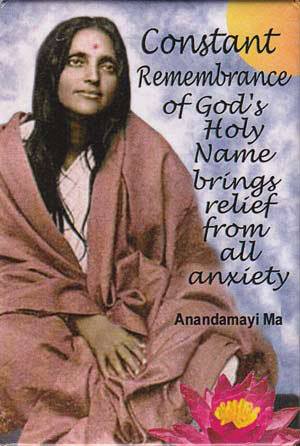
Sri Ma Anandmayi

Gopi Krishna’s emphasis on Kundalini as a biological evolutionary force is a very limited view of the great Shakti.

Shakti is the fundamental Spiritual Principle and Force which has physical, mental, and psychic manifestations. These manifestations cannot indicate or capture the depth of this Great Power. Its ultimate nature is only realized when the Shakti completes its Journey to the end and reveals the deepest mystery of existence and the Self is Recognized.

Yes, the Shakti is Maha Sarswati, the Goddess of Wisdom. She makes one a poet, a scholar, and an orator. She bestows high intelligence. She is the teacher in both the earthly and subtle psychic realms.

View original post 103 more words

Harsha's avatar

All Is Brahman: By Alan Jacobs

Harsha's avatarLuthar.com

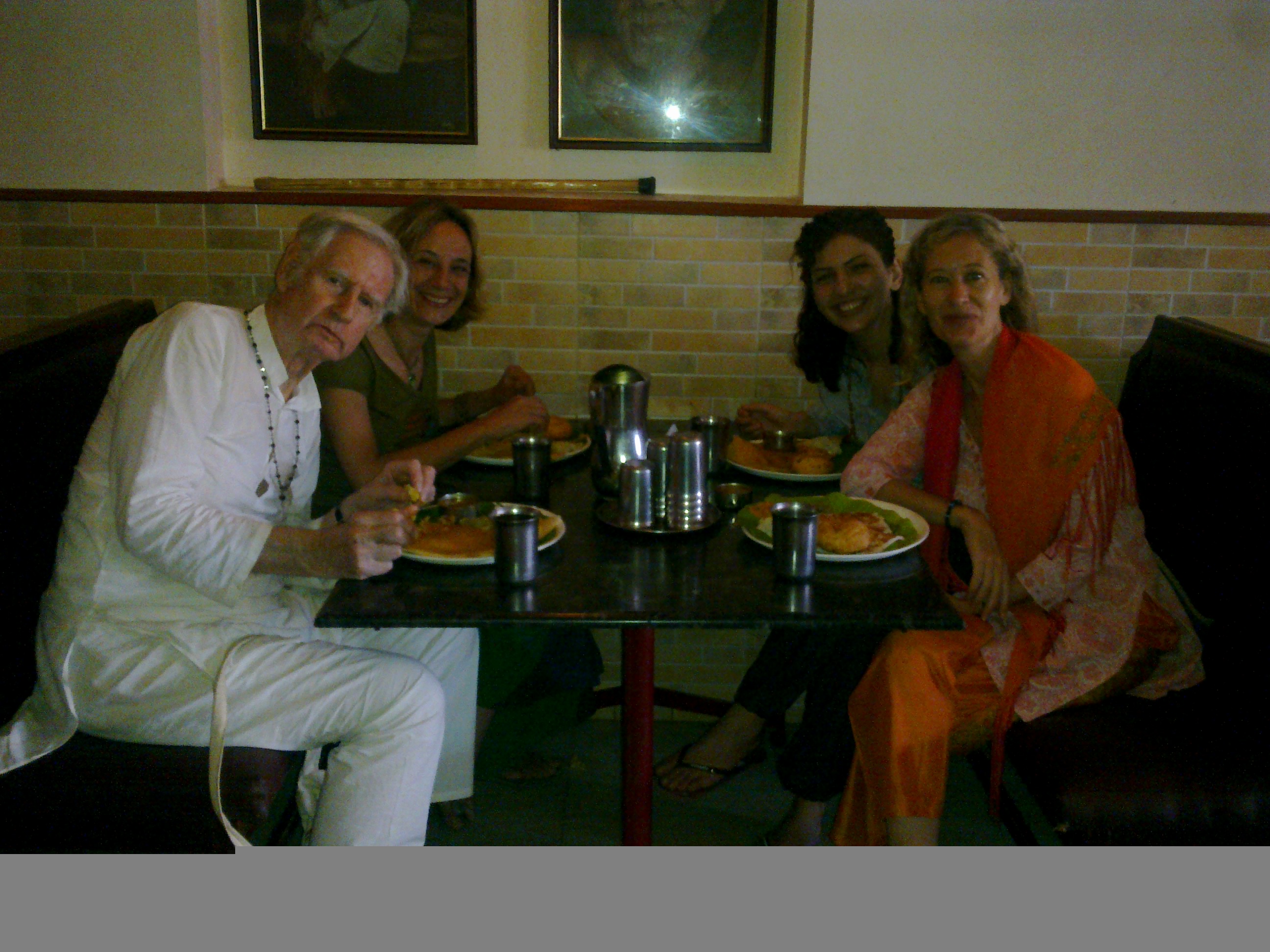
Alan-ji at Arunachala with devotees

What does the word Brahman actually mean?

Sages say that it is ‘beyond verbal description’, but as a pointer they postulate Sat Chit Ananda which means Reality-Consciousness-Bliss. Brahman is not a God but an Almighty Great Power. It is the substrate of ‘All and Everything’, which means it contains the whole universe and holds it altogether. Brahman has two agents or adjuncts. First of all is Ishvara or Almighty God and Maya its delusionary power.

View original post 1,135 more words