Harsha's avatar

Rajindar S. Luthar (1926-2004): By Harsh K. Luthar

The Last Summer

Yesterday was the fourth anniversary of my father Rajindar S. Luthar passing away. I think about him often. He was my guide and counselor.

Like me, my father was a professor. His area was mathematics which he loved teaching. He was also a scholar and enjoyed publishing. He founded a Math Journal called Delta which eventually merged with another journal. He was an excellent cook and enjoyed entertaining at parties. He was truly multidimensional in his views and approach to life. We talked about everything. Politics, food, men and women, money, religion, gurus, relationships, marriage, sex. No topic was off bounds.

My father was not much into visiting temples or holy places but was a staunch Hindu and exemplified all that is best and noble in Hinduism. He often had dreams of various saints, rishis, munis, and gurus and loved to describe them in minute detail to me. He told me that he dreamt about Jesus Christ as well. I asked him how he knew it was Jesus.

“I just knew”, he said, in a matter of fact way.

Throughout his life, my father was very psychic. One time when he was in America, he dreamt that someone very close to him was being electrocuted. He immediately woke up and started praying. The person in the dream was my younger four-year-old brother who had been caught in live electric wires when we (our cousins and us) were playing on the roof of my uncle’s shop in India.

That was back in 1964. From 10,000 miles away, my father had dreamt that someone he loved was in trouble and acted to send his protection and prayers. My brother was very badly burned all over his skin but miraculously survived. He gradually recovered fully and the burn marks on his body eventually disappeared.

Although he was a mathematics professor, my father enjoyed talking about philosophy and religion. He was tolerant and liberal and accepting of all people but at the same time full of humor; sometimes irreverent humor, about religion and gurus. He told me many stories about fake gurus in India. “All these gurus, pretending to be so holy and pious; they love women, sex, and money!” He would say and then have a hearty laugh.

Because I was interested in all those things having to do with yoga and meditation, my father often cautioned me about gurus when I was a teenager and suggested that I be very careful. “Many gurus even like young boys!” he said to me many times in warning. My father left no stone unturned doing his best to make me aware of the realities of life when I was young. Sometimes I thought he was way too overprotective and controlling.

When I reached 30, I started thinking that he did his duty as a father well. When I reached 40, I realized that he was much wiser than I thought. By the time he passed away, I had realized that he was a sage.

Now, I remember my father as kind and generous with smiling eyes. At times, he had a huge all consuming laughter that drew others in. I miss him every day.

Harsha's avatar

Easy And Natural Is The Way: By Dr. Harsh K. Luthar

Dear Friends,

Sahaj in Sanskrit means easy and natural.

There is saying in Hindi, “Sahaj pake so meetha hoy.”

It means that easy and natural cooking of food leads it to taste sweet.

It is something like the English saying that soup that simmers slowly or the cake that is baked slowly tastes best in the end.

These are metaphors for life. When we do something with care and love, the results are better. Sometimes we even say that, “this is a labor of love.” When we love what we do, it does not feel like work.

Everything has its nature. When we are true to our own nature, an easy authenticity takes over. Then we are not concerned about impressing others nor worried about how others are judging us.

Nature is showing us the way. Seasons are coming and going. Flowers bloom and then wither. We are breathing in and breathing out.

Easy and natural is the way. Anything else makes it appear that somewhere other than where you already are, is more attractive.

All of these teachings of self-improvement, yoga, meditation methods, breathing techniques might have some meaning to someone at some point in time. Truly these are concepts only for the mind to struggle with. The whole premise of these teachings is that you are not OK just the way you are. Ultimately, it is the most splendid nonsense.

To be easy and natural is the way.

How does one become easy and natural? How does one follow the natural path?

To be easy and natural is, well, it is to be easy and natural; and it is best because it is easy and natural.

It is so simple is it not?

What is not easy and natural will produce inner and outer conflicts. We already have enough of those. Of course, for some people making more conflicts may be easy and natural. In that case, go for it (and you can’t help it anyway).

Being easy and natural in awareness allows for the recognition of the Self, which by its very nature is easy being, natural, and wholeness of awareness aware of itself as its own bliss. There is no good way to express it.

My teacher Chitrabhanu-ji (who was a monk for 29 years) once told me that as a young monk he was very very strict with himself. “Sometimes, too much judgment and discipline can be a form of violence with oneself”, he told me.

Another time when we were talking about gurus, I mentioned many names to him and asked his views of them.

Chitrabhanu-ji knew most of the gurus personally. These included J. Krishnamurti, Swami Muktananda, Sri Chinmoy, Rajneesh (Osho), Swami Chidananda, Swami Rama, Swami Satchitananda, etc.

Those gurus whom he liked, Chitrabhanu-ji would only say, “He is a good man.”

One day Chitrabhanu-ji said to me, “You should never follow a guru.” I looked at him puzzled (because he was my guru, you see).

He smiled and said in his thick Bombay accent, “What if the guru goes crazy and tells you to do strange and crazy and weird things…” I had a good hearty laugh! He added, “that does happen you know….”.  I laughed even harder.

Well, it does happen you know.

As Sri Ramana never tired of saying,… the only true guru is your Heart, your own Self.

So wise sages tell the advanced aspirants to be perfectly natural. Make the effort, if natural. Follow a teaching if it is easy and makes sense.

If something makes no sense, there is no point in following it. So what if it is considered the supreme teaching and so on by someone well known. For all you know, what the supreme and well known people say could all be manure.

Think about it. What do they really know? How can they really know? What can anyone really and truly know?

So rest, if it feels natural to rest. Watch the spiritual parade pass by and not be moved by any teaching. Or join the parade and sing your song.

Your nature will make you act in a certain way. That is why you can be at perfect ease.

Self-remembrance, Awareness aware of itself, Self-abidance, all of these mean the same.

Easy and natural is simply being aware of one’s innate wakefulness through the winds of emotions, colors of life, and changes in scenery.

To the extent one can grasp it, simply remain aware and if you become conscious of some intangible cloud of unknowing which you cannot go through, become comfortable with it, stay with it, and breathe it in and out.

If you meditate on this and become aware, it will dawn on you with clarity. You will see.

Easy and natural is the way.

Namaste

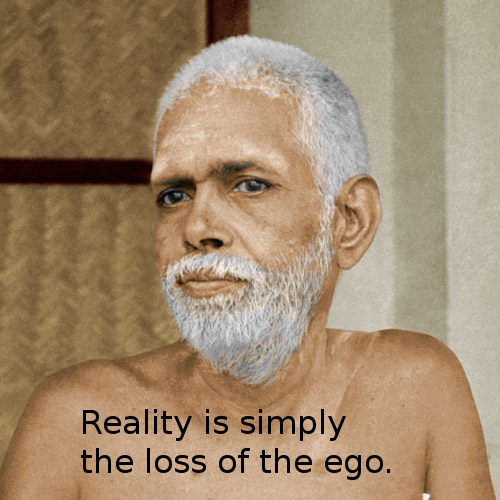
Reality is simply loss of ego - Ramana

Harsha's avatar

Underdog and Sweet Polly Purebred: By Dr. Harsh K. Luthar

(Pictures in this article come from www.toontracker.com/totaltv/underdog.htm)

Underdog and Sweet Polly Purebred

Do you remember that cartoon show “Underdog”? You might have watched it as a kid in the 1960s and early 1970s. Underdog was a “humble and lovable Shoeshine Boy” who had a secret identity.

image

Whenever there was a serious world crisis or threat to the city, Underdog would turn into a superhero after taking a special vitamin pill from the secret compartment in his watch.

Underdog had a girlfriend named Sweet Polly Purebred. Sweet Polly was sweet on Underdog. Sweet Polly was a reporter, who seemed to get into trouble with the bad guys in every show. When in crisis mode, she would yell, help, help, help, Underdog, help. Sometimes Sweet Polly would actually sing despondently when Underdog was late in arriving. “Oh where, oh where has my Underdog gone?”

Underdog was probably the best boyfriend Sweet Polly Purebred ever had. No matter how far away and how deeply engrossed in shining shoes of his customers, Underdog could always hear Sweet Polly calling out his name. The “humble and lovable Shoeshine Boy” would slip into a phone booth and emerge as the champion of justice and protector of Sweet Polly. Underdog had super sensitive hearing, at least when it came to Sweet Polly. No doubt this would have resulted in a happy marriage if they had ever tied the knot. Underdog would often say, “When Polly’s in trouble I am not slow, it’s Hip, Hip, Hip and away I go !”

image

Underdog always came to Sweet Polly’s rescue, yelling, “Never fear, Underdog is here!” Sometimes Underdog took his time and Sweet Polly had to yell help for a long time. This was not easy on our ears as kids. But we hung on. We strongly suspected that Underdog would indeed arrive at some point.

When Underdog finally came, it was a great consolation. We did not really want Sweet Polly to get roughed up by the bad guys. Unfortunately, Underdog was no muscle dog. He had a small chest and a big belly. He was a heart attack waiting to happen according to modern medical standards on waist to chest ratio (which were probably not well known when the show started in the 1960s). In fact, Underdog often became exhausted within a few minutes in his fight with the bad guys and looked for his vitamin pill to get his vitality back. Not being able to locate the magical nutrition pill in time posed a serious problem to Underdog’s health.

It was awful to watch and we were full of tears as Sweet Polly looked for Underdog’s backup energy pill in her purse while Underdog was beaten to a pulp by the bad guys. Sweet Polly always found the needed vitality tablet for Underdog at the last minute, but not before giving everyone the distinct impression that she was very disorganized.

The magic pill, once found, was a life giving elixir. As soon as Underdog put it in his mouth, the effect was immediate. The vitality pill always seemed to bypass Underdog’s digestive system and go straight into his muscles. Typically Underdog swallowed the pill in one gulp and regained his energy the next instant. Then he would beat the surprised bad guys quickly before the show ended. Underdog always saved the day including, of course, Sweet Polly.

image

I was recently thinking that in real life, some people are like Underdog (who don’t have a Sweet Polly), and some are like Sweet Polly (but without their own personal Underdog).

Sometimes we want to act as saviors to people who do not wish to be saved. Other times, we need desperately to be saved but no one except mom seems interested in the job. That perfect match of being the savior and being saved that Underdog and Sweet Polly had is seldom achieved for most people. Underdog and Sweet Polly were made for each other.

We certainly lack that magic vitamin pill that Underdog had in the secret compartment of his watch. But even for Underdog, the effect of the magic vitamin pill was only temporary. He had to keep taking those pills to maintain superhero status.

One wonders where Underdog got his supply and the money to pay for those pills. After all, he could not have made much as a shoeshine boy. Perhaps he got big tips from his customers. Maybe Underdog had really good health insurance and there was low co-pay for those very strong vitality pills.

I wish that there had been some closure to the Underdog show. Underdog could have proposed to Sweet Polly Purebred in the final season of the show. If Underdog was too shy to do it, maybe Sweet Polly could have proposed to Underdog. Given the number of times Underdog saved her, that’s the least Sweet Polly could do.

It would have been nice to have a big wedding for Underdog and Sweet Polly Purebred at the end of the final season. I can just see Sweet Polly saying to Underdog before they went off on their honeymoon, “Underdog darling, make sure to pack some extra energy pills for the next two weeks.”

Maybe there will be an Underdog movie which will show that Underdog and Sweet Polly Purebred got married and lived happily ever after. If they did it right, the Underdog movie would be blockbuster!

Underdog and related characters are © 1997 GBPC, a subsidiary of Golden Books Family Entertainment.

Harsha's avatar

A Dedication to My Father on His 70th Birthday: By Harsh K. Luthar

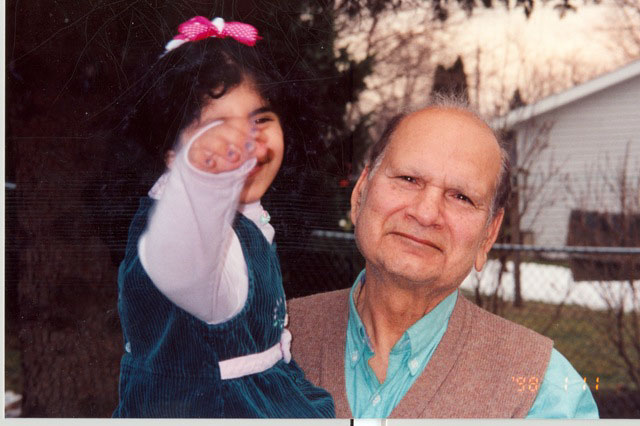
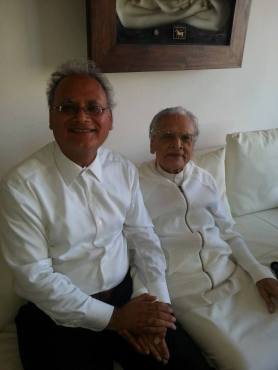
My father was my protector and best friend. I wrote the following in 1996 when my Father turned 70 as a dedication to him. The picture is of him at 72 holding my daughter. It was taken in the summer of 1998.

The last wonderful summer my father and I spent together was in 2003. Several months later in November of 2003 he fell ill. After that I was only able to see him at the hospital. My father passed away in early 2004 at the age of 78. I think of him everyday.
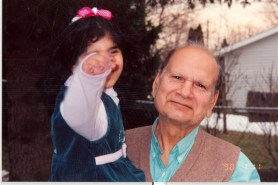
Summer time with my Father – 1998

A Dedication to My Father on His 70th Birthday in 1996

My father was a mathematics professor. He is now retired. I saw him spend countless hours writing papers and constructing new math problems. He involved the whole family in helping him with an undergraduate math journal, Delta, that he had founded, and of which he was both the editor and the publisher. It was too much work for one man, but my father persisted in doing the impossible for years. Delta later merged with the Mathematics Magazine issued by the Mathematics Association of America. We were all happy when that happened!

My father spent a lot of his evenings grading math exams. This used to irritate my mother. “Must you spend so much time reading student exams? Give them a grade and get it over with,” she would say. He usually replied, “What do you think I teach, sociology or philosophy? Can I just read the first and the last line and give a grade!” Then he would laugh heartily feeling he had uttered a profound truth.

My father actually loves the humanities but is of the opinion that everyone should have concrete skills to earn a living. He never hesitated to express his views to me and others about education. Once, in order to demonstrate the superiority of learning math over other disciplines he said to his colleague who taught astronomy the following: “If our students know math and statistics they can get a job at the plant (he was referring to the local GM Plant). If they take astronomy and don’t get a job what will they do? How will they eat? Maybe they can go to your house and you can all watch the stars together on an empty stomach!” My father thought what he had said was quite funny, although the astronomy professor did not. The following poem is dedicated to my father.

PROFESSORS DON’T GROW OLD

Professors don’t grow old

they just grade away

like a master jeweler

who has to differentiate

between precious rubies and stones

who with a heavy heart sings

and then has to part

with diamond rings

that must end up on

someone else’s finger.

Professors don’t grow old

they just grade away

like a gardener who

asks the birds to stay

in the nest he has made

so they can rest in the shade

of the tree of wisdom

carefully pruned

standing in the luscious grass

only to see them fly away.

Cool breezes and the

fresh waters of knowledge

is what we received

in the college

that was my father’s heart.

Yes, professors don’t grow old

they just grade away

and then slowly fade away

to pictures on the walls

leaving nothing behind

but the touch of ideas

given with humor and kindness

and their smiling eyes

bubbling forever in our mind.

Harsha's avatar

Icon Painting As A Spiritual Path: By Gabriele Ebert

Gabriele Ebert is a well known German librarian, scholar, and a painter. For information on her books and German translations, please go to the bottom of the article. Gabriele is a long term member of HarshaSatsangh and has been active in Sri Ramana groups for many years. She has served as an inspiration and a role model for all of us with her dedication to the interfaith approach to spirituality. Because Gabriele’s native tongue is German, I did some minor editing on this article and accept responsibility for any mistakes which may have occurred because of that. Fortunately, in this medium, mistakes can easily be corrected once we become aware of them. Enjoy the article. The Icons are stunning and beautiful! Thank you Gabriele for your generous sharing.

The Personal Story

Eleousa (Mother of Mercy)

It was 16 years ago that I discovered icon painting as a spiritual path. This door opened when at one Christmas eve my mother presented me with an icon of the Theothokos (Mother of God). Looking at it I was sure that I would start to paint as well. I felt drawn to painting and through it discovered a creative spiritual path.

Over the years I found different teachers for learning the technique – and later the Jesus prayer (see below).

Icons are enjoyed by many. Most of all it is wonderful if an icon can find its home in a meditation-room or prayer-edge, where it is dedicated to its original meaning.
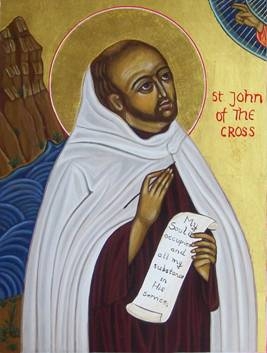
This icon of St. John of the Cross has found its home in the prayer room of the Carmelite Monastery in Dolgellau, Wales.
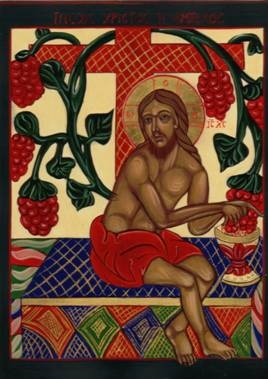
Christ the Vine” is in the meditation-room the Christian Zen-center in Eintürnen, Germany.

Icons – What Are They?
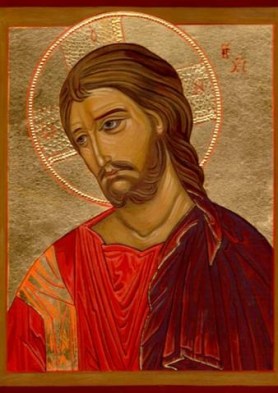
“Sad Christ”

The home of the icons is the Christian Orthodox Church. The earliest icons were painted in the 6th century in Byzantium. From there they later came to Russia and to all other Orthodox countries. Most of the earliest icons have been lost. The oldest collection of icons is found at St. Catherine’s Monastery on Sinai.

Icons play an important role in the liturgical service, and also in the public life and of course for the individual. An icon is a steady companion from the cradle to the grave.

The icons are not individual paintings but rather in the individual. These painting come through the individual by spiritual grace and in a sense the painter does not count. So icons are normally not signed to claim ownership. Outwardly, icons follow fixed patterns and change of the pattern is only possible in a rather limited way as they are real “copies” of the one reality, which represents itself in various pictures and stories.

Icons are of great help for concentration, for prayer, for awareness of the ever-presence of Christ or Mary or the Saints. They are called “Gates to Heaven” or “Windows to Eternity”. If you look at an icon in candle-light, the gold and painting shines in an unearthly magic. The faces are serene, the gestures and colors are full of meaning. The more one dives into this world, the more one becomes drawn into it and the mind becomes silent.

The Path of the Painter

“To paint and to pray are the same thing” (Balthus)

Jesus with animals

I have always felt that this kind of painting is by special grace and has something in it which can’t be compared with other types of paintings. This kind of painting is devotion and prayer – prayer with the brush, so to say. So this “doing” needs not only much outer care, but also inner care. One should not do it with a distracted or unclean mind. According to tradition it is good to have a prayer before starting. The inner attitude should be giving up the sense of doership – which reminds one of Sri Ramana’s instruction as well. It can also be seen as an exercise for just being an instrument of God, which should become a reality in all our actions.

The Jesus-prayer (also known as the Prayer of the Heart) is a short prayer, which should be continuously repeated. The words are: “Jesus Christ, Son of God, have mercy on me!”

Like the icons, it comes from the Orthodox church. The prayer also can be shortened to just the call: “Jesus Christ!” or whatever one prefers. One repeats it as often as one can. In some way it can be compared with nama-japa. It helps to silence the mind and lead it to one thought. With practice it starts to become automatic (self-doing) and sinks into the heart. Yet at each stage it always stays as a prayer in you. The Philokalia – a collection of texts on the Jesus-prayer – can be a wonderful companion on this path. It is recommended in “The Way of a Pilgrim”, which most know who practice the Prayer of the Heart.

It is not so long ago that I discovered – or better re-discovered – the Jesus-prayer when reading this book (“The Way of a Pilgrim”). I felt immediately that this is a wonderful complement to the icon-painting as well. From the tradition of the icon-painters I have found out that my main-model, the famous Russian icon painter Andrej Rubljow must have practiced it. I am sure that his icons reflect it and speak through it.

Icons Interfaith
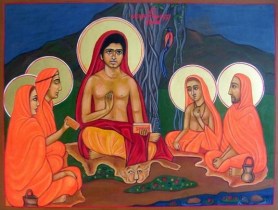
“Dakshinamurti-Ramana” – an icon dedicated to Sri Ramana Maharshi
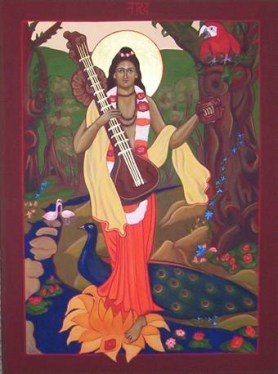
Icon of Narada

Mostly I am painting icons in the Christian tradition. Yet it happened that this Ramana-icon was painted and also some icons of Narada (the bhakti-musician). When being in Tiruvannamalai in 2003 and seeing the paintings in one of the shines of the Arunachaleswara-temple I was reminded of the icon-painting. Also there seems to be a connection to the Buddhist paintings as well. I am sure that the same thing has found its expressions in many religions.

If you would like to see more and get information about the technical side of this kind of painting you can visit:

http://icons.interfaith.googlepages.com/

Gabriele

***********

Gabriele Ebert lives in Germany and works as a librarian.

Recent Books by Gabriele Ebert are:

Ramana Maharshi: Sein Leben, Stuttgart, 2003

Sadhu Arunachala: Erinnerungen eines Sadhus, Berlin, 2004 (German transl.)

Both books are available at amazon.de and can be ordered from each German book-shop.
Harsha's avatar

Sri Ramana and My Teacher Gurudev Sri Chitrabhanu-Ji: By Dr. Harsh K. Luthar

All of us come from different backgrounds, and we walk the path in our own unique way. Yet, we all have the same innermost longing to know the deepest mystery of our own nature and being. Reflecting on the purest teachings of the Self and on the nature of Ahimsa as nonmovement of the mind, we are bound to have experiences and openings in our consciousness.

When my teacher, Gurudev Sri Chitrabhanu-ji visited Sri Ramana, he was just a teenager. Chitrabhanu-Ji became a Jain monk in 1942 at the age of 20. Prior to that, he was searching and visiting different saints in the various traditions of India and asking them questions about the spiritual path and how to become Self-Realized.

Gurudev Sri Chitrabhanu

Chitrabhanu-Ji told me that of all the saints and sages he visited in India in his teen years, a few were unforgettable and stood out to him. Sri Ramana was one of them.

When I was 22 and studying with Chitrabhanu-Ji, he saw me carrying books of different spiritual teachers for my reading pleasure. He asked to see these books and thumbed through them. He knew most of the authors personally. Swami Rama of Himalayan Institute had come to our meditation center. One time I saw Swami Chidananda, the disciple of Swami Sivananda of Rishikesh, when he came to visit my teacher. Swami Chidananda was very thin even then and was leading a very pure and ascetic life.

After looking through my books, Chitrabhanu-Ji told me that I should read the dialogues with Ramana Maharshi and study his teaching. That is how I was led to Sri Ramana. Of course, after I read the classic, “Talks with Sri Ramana Maharshi”, it was indeed like magic and I knew deep in my heart that this was my way.

The Author at 21-22 studying With Sri Chitrabhanu-Ji
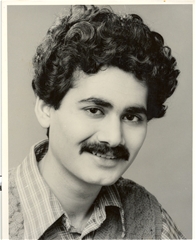
Going back to Chitrabhanu-Ji, he wanted to know the meaning of life at a very young age. He had lost his mother, his sister, and then his girl friend and so the world did not seem so attractive to him even at a young age. He wanted to know the mystery of life and death and what is beyond. In that quest, he started visiting many saints and sadhus and also visited Sri Ramana.

Continue reading

Harsha's avatar

What Is Meditation? By Dr. Harsh K. Luthar

The Art Of Doing Nothing

IMG_0141


My Dear Friends,

You have heard many things about meditation and perhaps there are questions in your mind about it. Today, there is no shortage of information on any topic having to do with meditation and yoga. There are literally thousands of books on meditation and yoga and self-help techniques. If you go on the Internet and put in a few key words, you will come across many views on meditation.

Some people equate repeating a mantra with meditation. Others say that if you focus on the in-going and out-going breath, that is meditation. There are people who believe that you must be able to sit cross-legged in the lotus position with a straight spine in order to meditate effectively.

Having meditated since early childhood, I can assure you that this is not true. Inviting aches and pains by sitting in a lotus position will not lead to a peaceful mind. Meditation, after all, is about relaxation and peace. Having peace, or recognizing the peace within, is meditation. What takes us away from being peaceful cannot be meditation. Whatever brings us peace is meditation.

Avoidance Of Stillness

It is my experience that people like to keep busy. In today’s world, being busy is considered a very high virtue. We want to keep busy and be productive in some way. Otherwise, we feel we are wasting time and feel guilty. Certainly, being active is a good thing and allows us to make a living and maintain relationships in the world.

Even Sri Krishna says to Arjuna in the Bhagavad Gita that one cannot avoid action. One is compelled to act according to one’s nature under the force of circumstances. That is the universal law of Karma.

But we have to understand the nature of action and our relationship to it. This is why Sri Krishna advises Arjuna to act according to his duty and dharma but without any expectation for any fruits of action. Our expectations undermine our peace when they do not come to fruition. Right conduct, according to one’s best understanding and judgement, brings peace. Therefore, it brings us to meditation.

Mental Experiments

Ancient Yogic and Advaitic sages gave methods and taught us to conduct mental experiments to find the nature of truth. These mental experiments can indirectly help us recognize the Pure Being within our center as our own Heart.

The techniques of meditation, such as mantra, chanting, yoga, pranayama, breath-awareness, etc., are simply mental and physical experiments. These practices start us on a journey with the potential for personal and spiritual growth.

However, real meditation is beyond visionary experiences and is the discovery of peace within. To reach there, we have to be quiet and learn the art of stillness. Once we know how to be still while doing nothing, we can carry this stillness into our actions as well. But first, we must discover the nature of this inner peace; and to do that we have to learn the art of doing nothing.

Are You Able To Do Nothing?

Are you able to do nothing? Absolutely nothing! The art of meditation is learned by seeing the value of doing nothing. If you can sit very still and quiet without mental disturbance, you have already come a long way towards the experience of meditation.

It is only a rare person that enjoys doing nothing. Doing nothing is not as easy as it may sound. Try it sometimes. Just sit on the sofa. Don’t go to sleep. Stay awake and think about nothing in particular.

You will soon find your mind racing here and there, thinking about your girl friend, your boy friend, your boss, your co-workers, your business, your friends, your family, tofu, pizza, chocolate… the sky is the limit!

The Mind Is A Monkey And A Donkey!

Yogic sages have compared the human mind to a monkey. Just like the monkey cannot be quiet and must be restlessly hopping here and there, so it is with the mind. It is the nature of the mind to be either brooding about the past (regrets, mistakes, guilt, lost opportunities, the roads not taken) or fantasizing about what the future will bring.

The burden of carrying the past and the future in this present moment is heavy. But the mind, like a donkey, gets used to carrying this load and plods along.

However, the mind that is always lost in memories (past) or hopes (the future) misses the most delicious feast of all that is taking place in the present.

The eternal reality, we can call it Self, Sat-Chit-Anand, God, the Supreme Being, the Supreme Goddess, Paramatman, Brahman, the Great Void, or the Kingdom of Heaven, always exists and is shining in the present right before our very eyes.

The Divine mystery is recognized when the mind is calm and awake and free from anger, hatred, and greed and thus not subjected to the pulls of the past and the future. This is why all major religions encourage human beings to be good and kind and compassionate. These virtues serve as the building blocks for the spiritual life because they remove the agitation of the mind.

Why Meditation Techniques Do Not Always Work

IMG_8889


Meditation techniques are fully effective only in a mind that already has some understanding and maturity. So really, laying the foundation or the groundwork for meditation is more important than the practice of meditation. Just like a seed grows naturally on fertile ground, meditation happens spontaneously in a reflective and a quiet mind.

When the mind is ready and ripe, meditation works and self-inquiry is fruitful in a short time.

When the mind is restless, anxious, and troubled, meditation becomes a forced activity and is not always helpful. At such times, one should take a walk, practice deep breathing, or go for running or do push-ups and other exercises. Those are more useful than meditation when the mind is not ready to be calm.

Pranayama, involving deep rhythmic breathing, is an ancient yogic method that can serve to calm and sedate the mind in a natural way. According to Hatha Yoga Pradipika and other classic yogic texts, one first has to master proper breathing in order to progress to meditation. This is the commonly held belief in the school of Hatha Yoga. However, the path of Jnana Yoga does not emphasize breathing exercises or Hatha Yoga Mudras and Kriyas and considers these to be irrelevant to Self-Knowledge.

Advanced Pranayama practices involving breath retention or awakening of Kundalini Shakti can be found in many yogic texts and modern books. However, these should be learned very cautiously from an experienced practitioner of pranayama.

Laying The Foundation For Meditation

In order to advance in meditation and learn it in depth, we have to understand the nature of the mind and learn to be alert and watchful of its activities. It is this constant watching, that is the key method behind all the techniques of meditation. A form of this is what Buddhist calls, “Mindfulness”. Jains call it Upa Yoga (Yoga of Awareness), Hindus refer to it as the “Inquiry into the Self” or Self-Remembrance.

A spiritual seeker is watchful.

The essence of this watchfulness is that with the mind one watches the mind.

If meditation is going to take place, if this recognition of Pure Being with clarity is to be gained, an inner silence must ensue. One cannot see one’s image clearly in the water, when the water is full of waves. In a still pool, our image is reflected and can easily be recognized. Similarly, in a still mind, we can see the nature of our being.

This inner watchfulness, the observer being aware of the observer, this self-inquiry can occur in a ripe mind that is calm, content, and ready.

We Are Dancing For Others!

The difficulty is that our minds are noisy. This is the nature of the mind that goes outward only. It is overcome by sensory experiences and is unable to see its origin. The worldly chatter overshadows and muffles the subtle divine music that is playing.

Friends, sometimes I think, we are dancing to the drum of other people’s expectations, which we have internalized.

There is no end to this dance. This dance has a stronger hold on us than rock and roll or disco or rap music. It keeps us hopping all our life doing this and doing that or achieving this and achieving that. Ultimately, it is exhausting.

Whole world guru


The whole life slips away in the blink of an eye as we keep busy in “doing” this dance making sure that the movement of our steps have the approval of others. We forget to “Be” who we are.

To Be Still is the true meditation. Meditation is simply Pure Being.

The art of recognizing yourself as Pure Being is meditation. Pure Being is Self-Awareness or Awareness.

A Powerful Intervention: Conduct This Experiment

The state of meditation is simple. The methods and techniques and the philosophy behind it are very complicated. That is why thousands of books are written on such things. But the aim of meditation is simply peace. Peaceful Awareness. Meditation is easy to understand. It is being peaceful without expectations.

Conduct the following experiment with being peaceful without expectations. Tell yourself this: “For the next one minute, I am not going to worry about anything and be bothered.”

Try to be free of all inner and outer conflicts for one minute. Give yourself this one minute as a holiday gift!

This is a powerful intervention. Can you be free from inner conflict for one minute? See what hinders your attitude to be worry free for one minute. If you can be peaceful and free from anxiety for one minute then you can do it for two minutes and then more.

To Be With Yourself

So dear friends, find some time to simply “Be” with yourself. To just “Be” is an amazing experience of the present moment. See what thoughts come to your mind. When you sit quietly, many visual images and thought patterns start emerging from the subconscious. This is referred to as “Surfacing” and it happens when your relax and your mind is at ease and free of tension.

If you remain awake and pay attention, you can gain insight into your own mind. These insights will teach you to not attach yourself to things that do not bring you peace. You will come to see that your nature is that of Pure Being which is associated with the many thoughts in your mind and yet is independent of these.

Sri Ramana Maharshi, the great Indian Sage of Arunachala, gave forth this method of reflective Self-Inquiry, that focuses on the question, “Who Am I?”

This investigation, when done with understanding and sincerity, brings us to the state of Being that is free from thoughts. This inquiry is really at the heart of the philosophy of Advaita Vedanta.

Always Be Gentle With Yourself

If you are not able to sit quietly right away and be completely still for even one minute, do not worry about it at all. The reason it is difficult for us to sit quietly and do nothing is because often there are wounds inside which we would rather not become aware of or deal with.

The process of living life can be very very painful and stressful. Over the years, we put temporary bandages on our hurtful experiences, which for a short time dull the pain.

My teacher Chitrabhanu-Ji taught me that when we try to relax and meditate, our anxieties and fears and past suffering sometimes bubble up from the unconscious. So we have to be alert and to accept and let these things go so we can renew ourselves and be fresh.

The ancient Yogic Sages of thousands of years ago left us with great works on the nature of human suffering and how to alleviate it. Sometimes when I read the Bhagavad Gita or Patanjali’s yoga sutras, Tao Te Ching, Buddha’s path or Mahavir’s philosophy of reverence for life and Ahimsa, I marvel at the depth of the insights contained in these.

The great Yogis of the past 5000 years have been really great psychologists who knew the nature of the human condition. They deeply understood what happens when spiritual seekers try to get insights into their mind and provided a path and guidance on how to walk it with the help of teachers and fellow students.

The Notion Of The Sangha

In India, some people meditate in Ashrams or in communities. The notion of a Sangha (community of spiritual seekers) is important. In such a community, meditation is easier, because people are able to encourage each other and share each other’s pain and burdens. When our mental or physical suffering is intense, we are not able to meditate. People turn to alcohol or drugs to numb themselves so that they do not feel their own suffering. This, however, cannot lead to any permanent solution and satisfaction. Indeed, it can weaken the body and the mind and makes matters worse.

Being part of a vibrant spiritual community, or to just be in the company of good people who care about one another, can exercise a protective influence on you.

As a general rule, in order to advance in meditation, you should keep the company of good people who allow you to be who you are.

I studied with Chitrabhanu-Ji who is one of the key figures in 20th and 21st century Jainism. Chitrabhanu-Ji, before he became a Jain monk, was part of Mahatma Gandhi’s movement to free India from the British through the peaceful means of Ahimsa (Nonviolence).

Ahimsa is the cardinal principle in Jainism. Chitrabhanu-Ji taught me that a mind becomes fully fit for meditation and Self-Realization through the practice of reverence for all life and amity towards all beings.

A genuine spiritual community has to be completely dedicated to the principle of Ahimsa in thought and action and be committed to alleviating suffering among all living beings. A teacher or a guru who does not understand or practice the principle of Ahimsa and is abusive to his or her students should be avoided. Such people are on power trips only and have their own problems to deal with.


Having A Personal Philosophy

20150724_174004

It is good to become aware of and think about fundamental life issues at any age, but particularly so if you are young. It allows one to develop a personal philosophy that helps to structure and interpret different experiences and put things into their proper perspective.

It is important to sit quietly and spend time with yourself in order to have an understanding of your own nature. Whatever philosophy one adopts, the following general rules are helpful in remaining calm and healthy.

Ten Tips From Yogic Texts And Sages

1. Eat nutritious foods that suit your constitution in moderate quantities (My New Year’s Resolution!)

2. Walk every day if possible (My Second New Year’s Resolution!).

3. Avoid people who are manipulative, loud, obnoxious, and destructive if at all possible.

4. Keep company of people who are pleasant, easy going, cheerful, and supportive.

5. Remain silent when you have the urge to be sarcastic or make fun of someone.

6. Help people who are in need within your capacity.

7. Take the time to be alone everyday and be with yourself.

8. Never give into peer pressure to drink or do drugs or go to wild parties (Tame and sober get together with good friends and Satsang with fun singing and chanting is OK!).

9. Develop confidence in your own ability to do what you need to do.

10. Engage in introspection at the end of the day. Mentally wishing everyone well, always go to bed with a clean slate.

20151016_141056


Even A Little Effort Helps!

Friends, even a little right effort is never wasted. Every journey must start with the first step. The journey that takes you inside your own Self is the most wondrous journey you can ever take as it reveals the mystery of existence itself. Start from this very moment and enjoy the wonders of your own nature and the sparkling reality that has been smiling and shining on you for the whole of eternity.

Chin Mudra - Jnana Mudra

Harsha's avatar

Kundalini Shakti in the West: By Dr. Harsh K. Luthar

The notion of Kundalini Shakti is at the heart of yoga and is embedded in virtually all Eastern traditions regardless of the name or label that is given. If we carefully examine any school of yoga, tantra, or various traditions (Shakti, Shaivite, Kashmiri Shaivism), there will usually be some descriptions of Hatha Yoga, Pranayama, Kriyas, Mudras, Mantras, and different types of meditations on the Chakras (energy centers).

In the Shakti traditions, detailed descriptions are given of the various aspects of the visions of the Goddess that arise in meditation. Even in the school of Advaita Vedanta, which does not depend on the practices associated with Shakti Yoga, we see that the great scholar/saint Adi Shankracharya has written hymns to the Goddess who represents Shakti, the divine power.

Continue reading

Harsha's avatar

Ahimsa – The Antidote to Fear

By Dr. Harsh K. Luthar

Bhagavan Sri Ramana used to say, “Ahimsa Param Dharma”. It means that Ahimsa (Nonviolence) is the Supreme Dharma (Duty or Principle). Sri Ramana pointed out to the devotees and yogis that in Patanjali’s Yoga Sutras, Ahimsa is named as the highest virtue above all other virtues. If we are able to understand what Ahimsa means at the deepest level, that clarity itself guides us in discovering the nature of the Self as our own Being.

Continue reading

Harsha's avatar

Rest in Beauty: By Dr. Harsh K. Luthar

IMG_0867

Rest in beauty
awaken in love.

Myself, yourself
we rise like waves.

Splash and play
on the banks of life.

Sign our names
on this lovely sand
and then back again.

Ocean calls.

This embrace has no beginning or end.