Harsha's avatar

Auspicious Shades by Trina Kavanagh

 Park 017

As I ramble on with Ramana
on sitting silent, and passing.
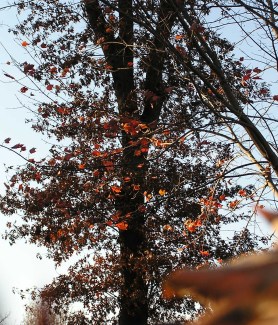
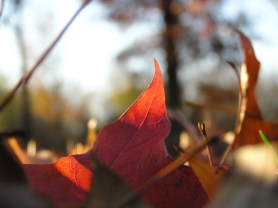
Action of auspicious shades of orange autumn leaves
attach their coloured crusty shades
to reflective rockports of realization.

On occasion, a lofty leaf within leela, stuck without sticking
releases bondage from rambling rocking walking rock.
Heart time space are collaborated and concentrated.
An unconditional comfortable compassion now remains here
and an all airy fiery appearance resides rupa.

Om. All love.

 Park 021

Harsha's avatar

This Is How Jesus Used To Drink: By Dr. Harsh K. Luthar

The first time I came to the U.S. with my mother and brothers was in 1965. I was 9 years old. We joined my father who was then teaching Mathematics at Colby College in Waterville, Maine.

We lived very close to Colby College. There was a Roman Catholic Grade School there. My father knew the Priest and the Nuns who ran it and liked them very much. The Priest lived next to our house and he and my father talked often. Within a few days of our arriving, me and my brothers were enrolled in that school.

It was a huge change going from Punjab, India to Maine, U.S.A.  My  brothers and myself did not speak English. We did not even understand it much. For example, it took me a few days to realize that at my school, “Rest Room” referred to the bathroom and not a place to go rest and take a nap in the afternoon if you were tired.

The saving grace in all the adjustment was that I had the most wonderful Nuns as teachers. I especially remember the Mother Superior. I think we called her the Holy Mother. There was something extraordinary peaceful about her. She was full of grace, kindness, and a quiet dignity in all her words and actions.

After we had been in Waterville for a few weeks, the Holy Mother along with the Sister Nun came over to our house. The Nuns spoke to my father. My father said to my mother and us that the Mother Superior and the Sister wanted to take us to a movie. We all readily agreed.

The Mother Superior and the Sister took us to see “The Sound of Music”.  It had just come out. That was the first American Movie I ever saw.  I did not fully understand the movie at the time but really enjoyed the songs in it. After the movie and some food, the Nuns drove us back. I was singing in the car that very catchy tune in the movie, “You are sixteen, I am seventeen….”. The Nuns and my mother were talking . My brothers were smiling.

In my first month, I had a lot of difficulty drinking water from the water bubbler in my school. I had never seen anything like a water bubbler before. I would squeeze and turn the knob and the water would spring up towards me and go into my nose.  I did not know the method of how to get the water to jump in my mouth and somehow suck on it and gulp it down.

The water would at times spring up and go into my mouth but then go right out before I could drink it. Children in the U.S. grow up with drinking water from the bubbler. However, for me it was a formidable challenge. I was used to the Indian style of drinking water with cupped palms. 

One day, in between classes, I was engaged in my usual struggle to get a drink from the bubbler. I was really thirsty and so my efforts were unusually strong. But no matter how I tried, I was not able to get the water to fall perfectly in my mouth and gulp it down. Finally, in desperation, I squeezed and turned the knob with one hand and tried to get the water to come to the palm of my other hand and drink it. It was messy. While I did manage to get a few drops of water in my mouth, the rest spilled on my shirt.

A small crowd of students now started to gather around the water fountain watching me.

The Holy Mother saw what was happening and came over. She said to me that she would turn the knob on the water bubbler and I could drink the water. So with the Holy Mother holding the knob and turning it, I put my cupped palms together to hold the incoming water.  After my cupped palms were full, I drank the water in the traditional Indian way.  This had to be repeated many times because I was very thirsty.

Mother Superior continued holding the knob and I kept drinking the water with my palms until my thirst was quenched. After a couple of minutes, I finished. All this time, the Holy Mother was looking at me intently to make sure that I was fully satisfied.

As she took her hand off the knob of the water bubbler, the Holy Mother said in her gentle and most dignified way, “This is how Jesus used to drink water.”

The crowd around the bubbler then dispersed and we all went to our respective classes.

Harsha's avatar

What is Saguna and Nirguna Brahman? By Dr. Harsh K. Luthar

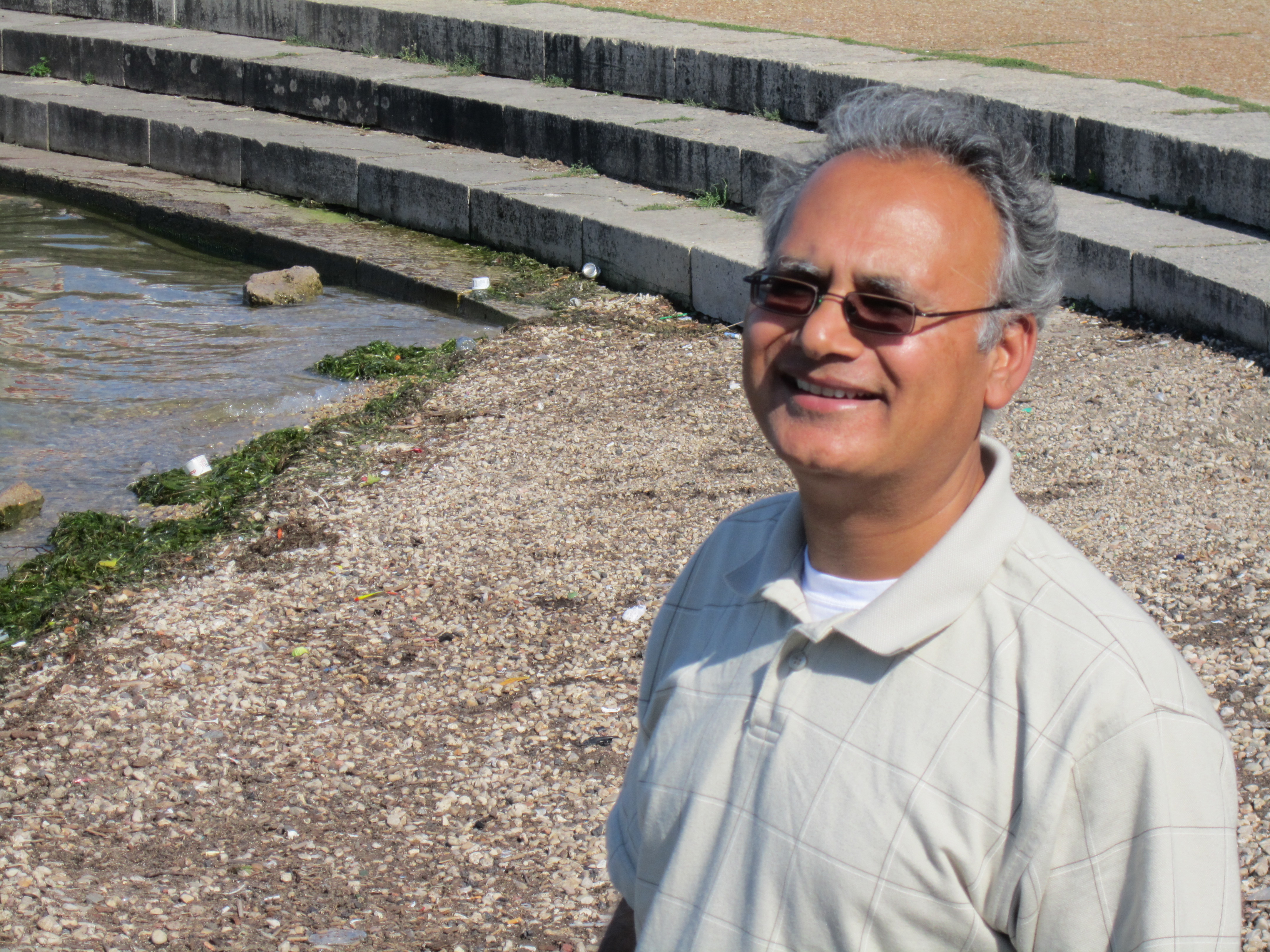
Harsh K. Luthar in Madison, WI

Questioner: What is meant in Hinduism by “Saguna Brahman” and how is that different from “Nirguna Brahman”

Answer: The term Saguna means “with attributes”. The term “Saguna Brahman” implies that God has a name and form and other attributes. Many Savikalpa Samadhis give rise to the (living) form of the Ishta Devata. Ishta Devta is one’s favored way of visualizing the divine. It might be Krishna, Jesus, Rama, the Goddess or some other Deity of choice.

Nirguna means “without attributes”. The term “Nirguna Brahman” implies that God as the Absolute Spirit and Pure Consciousness has no name and form or attributes. Nirvikalpa Samadhi reveals the Nirguna nature of the Self.

There are a number of books on Hinduism that discuss Saguna and Nirguna Brahman. Classic yoga texts like Patanjali’s yoga sutras explain various types of Samadhi states. All of such concepts and topics of discussion can also be found in the conversations Sri Ramana had with various visitors, scholars, and yogis for over 50 years.

The book I recommend for the devotees of Sri Ramana is “Talks with Ramana Maharshi” as it gives the context of the conversations and the flavor of the essential teaching of Sri Ramana. “Day by Day with Bhagavan” capturing the Ashram atmosphere in the 1940s is very good as well. In addition, the recollections of various devotees given in many books are quite good.

One sees that Sri Ramana was very flexible and open to people who came with a sincere desire for self-knowledge. A person’s religion, philosophy, background, race, all of that, made no difference to him. In his acceptance of all, even the monkeys and squirrels and animals who were always around him, Sri Ramana emanated a perpetual aura of kindness.

Those interested in Advaita Vedanta and Self-Realization will find the teachings of Sri Ramana Maharshi to be very helpful.

Namaste and Love to all

Harsha's avatar

What is God’s Name? By Dr. Harsh K. Luthar

Ramana Maharshi: “I am” is the name of God. Of all the definitions of God, none is indeed so well put as the Biblical statement “I am that I am” in Exodus (Chapter 3).

Words are used in various spiritual traditions to describe God or give God a name. Many people are convinced that their religion, their scriptures, and their way of worshipping God is the best way. Sometimes people argue and and fight over God as well. 

Our conception of God is to large extent a function of where we are born and in what religion. Our mental conditioning is often so strong that we are not able to see the diversity of perspectives in various spiritual traditions. Only the mystics in different religions, who have through self-reflections and meditation, gone beyond their mental conditioning offer a unified vision of God. 

Continue reading

Harsha's avatar

2014 New Year Message From Dr. Harsh K. Luthar

Dear Friends,

Humanity stands at the crossroads of destiny. Amidst wars and conflict on this planet, along with poverty, disease, and changes in the environment leading to global warming, the way ahead is not clear to me. Is it clear to you? If so, please share your views.

Our heroes in the past have tended to be warriors, kings, conquerors, entrepreneurs, innovators, inventors, who through their power of imagination, genius, organization, cleverness, and ingenuity were able to succeed beyond measure and attain personal empires, fortunes, and glories.  I ask you all to consider that perhaps we need different types of heroes if human evolution is to find its rightful purpose and survive. Our heroes, out of necessity now, have to be those with a long term vision of peace. Our heroes have to be the Peace Makers. Without them, the very survival of humanity is at stake.

I read somewhere that in the 19th century, over 19 million people died in armed conflict. In the 20th century, probably due to more sophisticated weapons and technology, almost 110 million people died in wars. Now we are in the 21st century. One wonders what will happen in this century to us, our loved ones, our children,  grandchildren, sisters, brothers, neighbors,  friends, and the human family in general?

Will our wisdom finally catch up with our knowledge, cunning, technology, ruthlessness, and the ability to destroy each other along with the planet? Or are we helpless in face of the human condition where gross self-interest, violence, and vengeance are the rules for individuals, groups, and nations.  Even the environment and the various species of plants, animals, and sea creatures have not been spared from the tendency of humans to violate.

A careful analysis of human violence no longer involves simply evaluating a moral issue. This reflection is important because the answers we come up with and the way we operationalize and implement these will impact the long term future of humanity it self.

Violence means to violate. To impose one’s will on another is a form of violence. Violence, of course, is part of all nature. Some violence is even essential for survival.  However, excessive and unnecessary violence breeds fear, resentment, anger, and rage. It is not a recipe for any type of realistic peace among human beings.  A strong person, group, organization, and even a nation can always attain a temporary victory.  But such a victory generally comes with lasting consequences of worry, fear, anxiety, and retaliation. Violence and Peace can never stay in the same house together.

Is violence so genetically embedded in humanity that, even knowing better, we are simply unable to overcome it? Is the destruction of humanity inevitable because of our helplessness in face of our root instincts?  I shudder at the thought of this possibility. What comforts me in such moments are the Peace Makers and the way they lived their lives. You know who they are. You have heard of them.  We have read their stories. Possibly, if we are very lucky, we might have run into one at some point in our life. Buddha, Jesus, Mahavir, Gandhi, St. Francis of Assisi, Bishop Tutu, Mother Theresa…there must be thousands of such heroes. It does give me some hope that there have been human beings who somehow were able to rise above the instinct to survive and lived their lives for others.

It seems to me that the path shown by the Peace Makers throughout history contains the seeds for survival of humanity. Embracing Ahimsa as the engine of human evolution has now become essential.  The supreme principle and the cardinal rule of the spiritual life has always had its foundation in the ancient philosophy of Ahimsa or nonviolence. This principle can no longer be limited to the spiritual life and must be broadened to include all aspects of life and creative endeavors such as business, politics, and world affairs. In fact, we have no choice but to do that.

The energy of consciousness, projected through the mind, is responsible for evolution of humanity through breakthroughs in technology and improved understanding of how the physical and subtle laws of the universe function. However, without Ahimsa (nonviolence) as the basic foundation of our thinking, the power of the mind can easily turn into a destructive force with the possibility of undermining human civilization.

Without truly understanding the nature of our interdependence with each other as human beings regardless of country, race, religion; and without realizing that we share with the plants, animals, water, air, and all living beings, this common desire to flourish, Ahimsa as a philosophy is difficult to understand and embrace.

Mahavira, the Jain prophet of nonviolence, said 2500 years ago that all beings have the natural desire to live and survive. Wanting to be safe, happy, and in a nurturing community is not unique to any particular country, culture, religion, or spiritual tradition. In fact, it is not even unique to human beings. Enjoying success at the expense of others including nature and the environment cannot be sustained. This is a simple but an ancient truth. According to the law of karma, if we wish to be happy, we should respect all life as sacred and minimize any type of violence to the extent we can.

Dr. Martin Luther King said in one of his sermons:

“Human progress is neither automatic nor inevitable. We are faced now with the fact that tomorrow is today. We are confronted with the fierce urgency of now. In this unfolding conundrum of life and history there is such a thing as being too late…We may cry out desperately for time to pause in her passage, but time is deaf to every plea and rushes on. Over the bleached bones and jumbled residues of numerous civilizations are written the pathetic words: Too late.” (Martin Luther King Jr. ‘Where do we go from here: chaos or community’).

My friends, prejudice, hatred, and incomprehensible violence are part of humanity. Still many individuals in every age, country, religion, and culture have been able to demonstrate the innate capacity of human beings to love, to nurture, to heal, to be peacemakers, and to forgive without reservation.

Like two lovers who are inseparable, Ahimsa and wisdom go hand in hand. Both point to the precious nature of all life and the sacredness of the present moment. Be that present moment and let compassion guide your way. You are the Peace Maker.

Harsha's avatar

Love, Heart, and Enlightenment: By Dr. Harsh K. Luthar

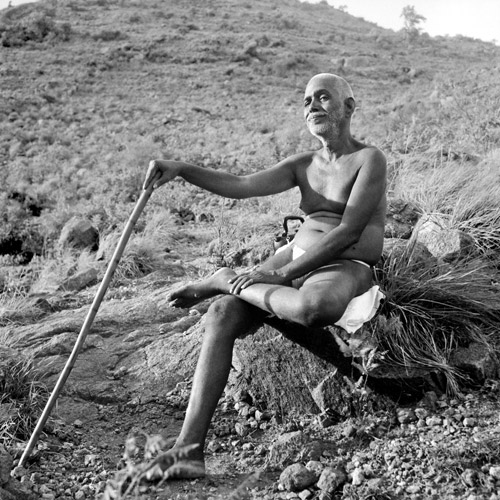
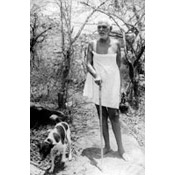
Sri Ramana Walking

Sri Ramana Walking

There is only One Heart

Sri Ramana once said that many advanced souls get liberation after reaching higher planes and that a few rare ones attain mukti (liberation) right here and now. In such cases their Prana along with mind (Kundalini Shakti) gets fully absorbed in the Spiritual Heart and the individual identity is dissolved into Brahman, the Self, the universal Heart and consciousness.

Continue reading

Harsha's avatar

Mic’s Visit to India and Meeting Poonja-ji

Papaji_1

Dear Friends,

When the HarshaSatsangh yahoo group started in January 1999, about a hundred or so people joined in the first few months. Here is a post of introduction that came to the group from Mic about his going to India and meeting Poonja-ji (also known as Papa-ji). Poonja-ji visited Sri Ramana and considered Ramana his Sat-Guru.

I don’t know where Mic is now, but his letter has stayed with me over all these years and I wanted to share it with you. I have only made minor edits in his letter to retain the original flavor of Mic’s vital spirit that comes through his words.

Harsha
**************************************
Hello all,

A brief introduction. My name is Mic, though most of my friends here call me Mohan. Advaita found its way in my heart as my heart in the summer of 91.

While wandering India, by chance I encountered Sri Poonjaji, a disciple of Bhagavan Ramana Mahrishi. I stayed with Poonja-ji and the small gathering there for two months. It was a time of great joy, intensity, revelation, and incomprehensible silence.

I mostly recall the great stillness. The presence of this man, Poonja-ji. In this dirty town of swirling dust storms and buildings swimming in the heat before me.

At night candles cast a golden hue upon the Indian markets, dancing in the buzz of bicycle songs and branches of lush red lychees being sold on the dusty streets.

The silence. The torrential flow of humanity, pulsing through the hot polluted streets, watermelon stalls.

The astonishing passion of seekers at Poonja-ji’s house. It was like the sweetness of sugarcane juice. It was the end of seeking itself in the embrace of the always so.

Like many there with Poonja-ji, I had also walked other roads in my search.

I had come to India on a Buddhist yatra, with plans to finish the journey in a Thai monastery. Yet relaxing into this resplendent heart of being, the seeking and the struggle fell.  The seeker and the story melted away as monsoon rains of India drenched me in joy.

And I finally saw the True heart of advaita, as my own.

Leaving India, with the blessings of the mountain, I felt almost drunk on the ringing clarity of these words from the Tripura Rahasya;

” Know yourself as Pure Consciousness, the unaffected witness of the phenomenal world.”

Integrating this with a world that demands commitment and authenticity, I meet with surrender and an open heart.

Some days I struggle, some days I sing. The devotion I feel to Shakti I know is but a reflection within consciousness of this love.

The silence.

And it is in this love I am earthed in freedom, and can play out my role in the theater of this world in peace.

Warm regards,
Mohan (Mic)


Harsha's avatar

Speaking to Chitrabhanu-ji and Pramoda-ji: By Dr. Harsh K. Luthar

Dear Friends:

Last weekend, I had a phone conversation with my teacher Gurudev Chitrabhanu-ji and his wife Pramoda-ji. Both Gurudev Chitrabhanu-ji and Pramoda-ji are on the forefront spreading the message of Ahimsa and how the philosophy of nonviolence brings our focus on caring for all living life, human, animal, plant life, and the environment itself.

Speaking with Chitrabhanu-ji and his wife reminded me of the years I spent with my teacher at the Jain Meditation Center in NYC the late 1970s up to 1980-81.

I used to go to Jain Meditation Center to listen to Gurudev speak. Often, I would stay around after the lecture and listen to the questions asked of Gurudev.  At the end, many people got in a line to ask Gurudev more personal questions. These questions typically focused on health issues, self-improvement, meditation methods, mantras, and at times psychic phenomena. Some of the questions seemed quite far out to me.

I  was very young then and perhaps immature in some ways. I used to sit so closely to Gurudev that I could hear all the questions and answers from the people in the line who came up one by one. When someone tried to whisper the question, I leaned even closer to hear it. Once in a while, someone would give me the look. But I stayed very close so I could hear everything that Gurudev was saying. I felt as if every word of my teacher was a gem and that I did not want to miss a single thing. I did not really think about other people’s privacy. It was an open space in the hall so I felt it was not an issue. Gurudev always looked at me and smiled and never said anything either.

After the talk at the Meditation Center, I often walked Gurudev and Pramoda-ji back to their apartment. During that time, I was able to speak to my teacher freely and ask him any questions on meditation, yoga, chakras, mantras, etc. Gurudev was happy to accommodate and answer me. I learned much from what he said during those conversations and have written about some of the incidents. Those were fun times.

One time when I was walking with Gurudev, another of his students was with us. This person had serious questions about some dreams about dying that he had been having. I could not help but hear the conversation. In that particular case, however, Gurudev said to me in Hindi that he wanted me to run and get something from a store that was on the street and gave me some money. It was unusual because Gurudev and I typically spoke in English (with some sprinkling of Hindi) and he had never sent me on an errand during our walk.

I quickly surmised that Gurudev wanted privacy for this conversation. Of course, I ran to the store to get the food item and then caught up with Gurudev and the other person as they had gone a block ahead of me. By that time, they were done talking and the student was leaving. After that, Gurudev and I walked rest of the way back to Gurudev’s apartment. I bowed to my teacher and said my Namaste and walked back to the place where I could catch the subway to go home.

In those days I was completely immersed in yoga and meditation. In fact, I made my living teaching yoga at the New York Health and Racquet club in NYC in Midtown Manhattan.  Many of the famous actors, actresses, newscasters, and politicians of the 1970s who worked nearbye came to that club.

I remember Mary Tyler Moore, Hope Lange, Gracie Jones, Bella Abzug, Tom Brokaw, and some people from Saturday Night Live coming to the club. There were many others but my memory has now faded. I remember Mary Tyler Moore came to my Yoga class a couple of times. She was very respectful, it seemed to me, of Eastern philosophies and yoga. Hope Lange used to be there often during the time that I was there and she was very unassuming and congenial. I also remember Congress Woman Bella Abzug come to the club. She had a relaxed wonderful style and was easy to talk to. She seemed genuinely interested in yoga and a few times we spoke about reincarnation. She must have known Shirly MacLaine because I recall Bella mentioning her in the context of our conversations on reincarnation. This was all back in 1978-1980 time range.

Most of my free time when I was not teaching yoga at the New York Health and Racquet Club, I spent in contemplation and meditation at my house which I shared with other meditators who were also students of my teacher.

Coming back to my conversation last weekend, I spoke to Pramoda-ji first and we had a nice talk. She will be sending me some articles that she has written to be published on the Luthar.com website. In fact, I have already published one. I will have the webmaster upload another one soon.  Pramoda-ji is the President of the Jain International Meditation Center in Mumbai (Bombay). She is also on the on the Board of Directors for PETA in India (People For Ethical Treatments of Animals).  She works for the Reverence for Life Society and for Beauty without Cruelty which promote animal welfare and the vegetarian way of life worldwide. Promada-ji has also authored a number of books – Foods of Earth; Tastes of Heaven – Jain Symbols – To Light One Candle (co-authored with Clare Rosenfield) – The Book of Compassion (coauthored with Pravin K. Shah). More on Pramoda-ji can be found on the Jain Meditation website.

http://www.jainmeditation.org/pages/pramoda.html

I had a wonderful talk with Gurudev Chitrabhanu after I spoke to Pramoda-ji.  His voice was relaxed and fresh and just as I remember it all the past times that I have spoken to him. He told me that Clare Rosenfield and her husband were there visiting them at the time. Gurudev knows the closeness I feel with the Sage of Arunachala, Sri Ramana Maharshi. He mentioned his visit to Sri Ramana when he was 19 years old. That was one year before he became a Jain Monk.

During the conversation,  Gurudev Chitrabhanu recited some poetry in Hindi to me and then explained it as well several times in different ways. The essence of the poem was that the real meeting is the meeting of the minds and the body only serves as the context. His message was that whether I am able to be in someone’s physical presence is not important but it is the meeting of the minds and the Heart connection that is the most central. Sri Ramana has said exactly the same thing in one of his conversations.

Gurudev will be leaving for India soon. I will be communicating with Chitrabhanu-ji and Pramoda-ji again in the near future. Mamata-ji, Chitrabhanu-ji’s secretary, has done a wonderful job of keeping us all informed of all the different international events taking place with Gurudev and Pramoda-ji playing a leadership role.

Harsha


Harsha's avatar

HarshaSatsangh is the New Luthar.com Site

Dear Friends:

Over the summer of 2008, we were able to integrate the old HarshaSatsangh.com (Love-Yoga.com) site with the Luthar.com blog. The new blog site is hosted now on a VPS which gives more flexibility in terms of the wordpress plugins. The site is still being fine tuned and now managed by a talented webmaster. If you see any problems, please let me know.

My primary reason for moving from wordpress.com was that they were starting to show ads on the site. I did not feel comfortable with that at all.

It was not easy to move from wordpress.com. But the present site is a definite improvement in terms of design and the infrastructure. The site went down the first day when I announced it probably because of large traffic within a short time. That would have never happened at wordpress.com. So, there is this weakness. If it happens again, I may have to upgrade the VPS to the next level or think of other options. We will see. So far so good.

A number of scholars and writers will continue to contribute to the site. If you are interested in writing on any topics of interest to you, please let me know.

Enjoy.

Namaste and love to all friends in the HarshaSatsangh and  Advaitiin communities. Wait, let us broaden this to the whole world. We are the world!

Harsha

Harsha's avatar

Why are there Ads on my WordPress Site?: By Dr. Harsh K. Luthar

By Dr. Harsh K. Luthar

I looked at my blog from another computer where I was not logged on. I was shocked to see ads on my wordpress blog. Really awful ads for things I would never endorse. I did not notice these before. Evidently, these ads appear at random based on some keywords.

I pay for space on wordpress.com. So why are there ads on this space. Are there any solutions to this other than moving my blog to another host? Can I pay WordPress not to put ads on my blog?

UPDATE (August 15, 2008): I moved the blog to a private server to have more control over it. We are still using wordpress but no longer hosted on wordpress.com. This was a tough decision because I really admire the folks at wordpress.com and wanted to stay there. When wordpress.com offers more flexibility and VIP hosting for a reasonable price, I will consider moving this blog back there. I don’t know why it is taking them so long to pick up on this obvious demand from paying customers that is out there for wordpress.com premium hosting.  Anyway, that is how it is.