Harsha's avatar

Ramana and the Untouchable Family: By K.S.S. (Ramanadasa)

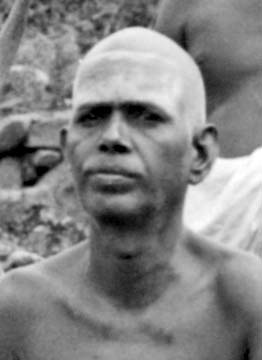
Bhagavan with Lakshmi

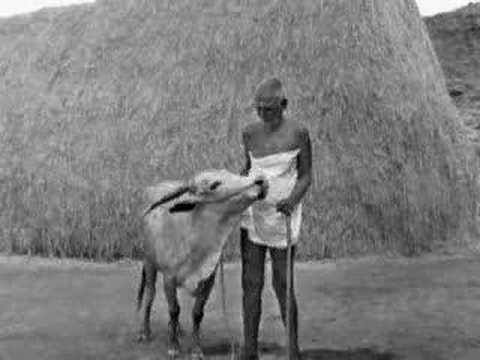
When Bhagavan Ramana was living at Skandasramam, I was once alone with him, sitting on the steps leading up to the Asramam. A man came to the gate with his family and stopped there and called out to me.

I went to see what this man wanted. The man asked me to go and ask the Swami (Bhagavan Ramana) whether he and his family could approach Bhagavan and receive his Darshan (Darshan means to be in presence of the Divine or a great saint).

I was surprised at the request and asked the man, “Why do you ask permission?”

He replied, “We are Untouchables.” Continue reading

Harsha's avatar

Bhagavan Ramana Explains the Four Paths

Given Below Bhagavan Ramana explains the paths for spiritual growth. These include the paths of Jnana (Self-Inquiry), Yoga (breath control) , Bhakti (devotion), and Karma (selfless actions). Note that Bhagavan starts with Inquiry first and then suggests the other paths for those who find inquiry difficult. Continue reading
Harsha's avatar

Is Heart the Seat of the Self? By Dr. Harsh K. Luthar

Dear Harsha,

What is the authority on which Ramana Maharshi says that the Heart is the seat of the Self or that is where the Self is realized. Sri Ramana also says at times that the Self is not physical and beyond the body. It seems like a contradiction. If the Self is the Universal Self and is everywhere, how can it be found in a physical location in the human body. This point is not clear to me. Why do we even need to talk about the Heart? Is it just not another concept that causes confusion.

Seeker Continue reading

Harsha's avatar

Spiritual Heart and Self-Realization: By Dr. Harsh K. Luthar

Dear Harsha:

Arthur Osborne, a close devotee of Bhagavan Ramana said that while doing self-inquiry, he tried to focus on the spiritual Heart-center to the right of the chest. However, I have heard some scholars on Ramana’s teaching say that the Bhagavan did not recommend meditating on a specific location and that Arthur Osborne may have misunderstood the essential method and Bhagavan’s teaching.  Is it necessary to meditate on the Spiritual Heart center in order to become Self-Realized? Some well known people like Nisaragadatta Maharaj and Krishnamurthi never mention the Heart in the same way that Bhagavan Ramana does. What is the explanation for this?

Sincere Seekers (composite question)

Continue reading

Harsha's avatar

What is the Heart?

Dear Harsha

You seem to attach a unique meaning to the word “Heart” (e.g. “the depth of the Heart”, “the Original Face is the Heart”). Please forgive my ignorance by asking you: what does the term Heart really refer to? Thank you for your enlightening answer!

A.L.S Continue reading

Harsha's avatar

How do I Meditate?

How do I meditate…

the breath, the color, or the name?

He (Master) says “It’s all the same

Like branches of a tree

Just go deep in self and you shall be free” Continue reading

Harsha's avatar

Rama’s Cry on Abduction of Sita: By Dr. Harsh K. Luthar

Beloved

Do not despair

Wherever you are

The sun, the moon

and the stars in the skies

have offered to become my eyes

so I never lose sight of you. Continue reading
Harsha's avatar

Is Learning Sanskrit Required for Self-Realization?

Dear Harsha,

In my reading on the web, I often come across Sanskrit words that I don’t understand. Some of my friends are learning Sanskrit. Is learning Sanskrit necessary to make progress on the spiritual path and for Self-Realization? What are Sri Ramana’s views on this.

Curious Seeker

Continue reading

Harsha's avatar

What Is Sadhana? By Dr. Harsh K. Luthar

Dear Harsha,

I have come across the Sanskrit term “Sadhana” in many articles on Eastern spirituality. What is the true meaning of “Sadhana” and what is the goal?

A Seeker Continue reading

Harsha's avatar

What is the meaning of Supreme?

Dear Harsha,

I have a very specific question about the quote from Ramana Maharshi’s talks with Paul Brunton. He says “By repeated practice one can become accustomed to turning inwards and finding the Self. One must always and constantly make an effort, until one has permanently realized. Once the effort ceases, the state becomes natural and the Supreme takes possession of the person with an unbroken current. Until it has become permanently natural and your habitual state, know that you have not realized the Self, only glimpsed it. ”

My question is about this word “Supreme.” I find this word also in Nisargadatta and I am wondering if it is an unsatisfactory attempt by the translator to translate some term, or if it is accurate. I mean, why not translate it as “the Self” or “I Am” or “God” ? My best guess is that it is a placeholder word for what is ineffable and inexpressible but within the possibilities of experience.

Curious to hear yours or anyone’s thoughts on this.

David Continue reading