Harsha's avatar

North side of Arunachala – Under the loving gaze of The Elephant: By Richard Clarke

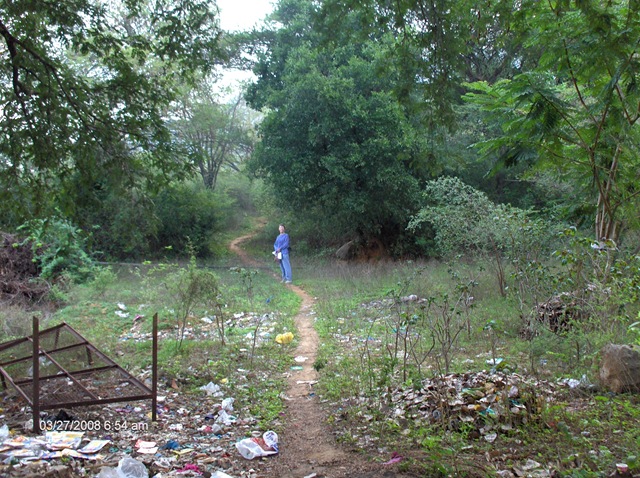
We are starting to explore the North side of the holy hill. One thing we look for is an ‘Inner Inner Path’ that is closer to the base of Arunachala. On all sides of Arunachala there are many paths, foot trails and animal paths. We have been gradually exploring the mountain, using what we can find from these paths.

Earlier this week we took the

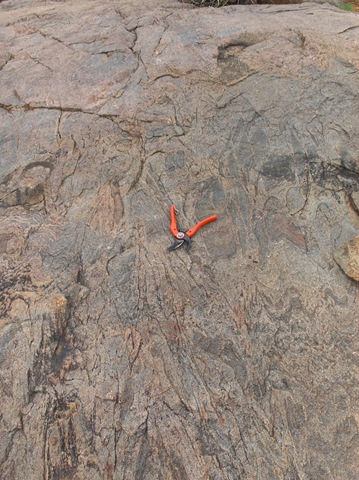
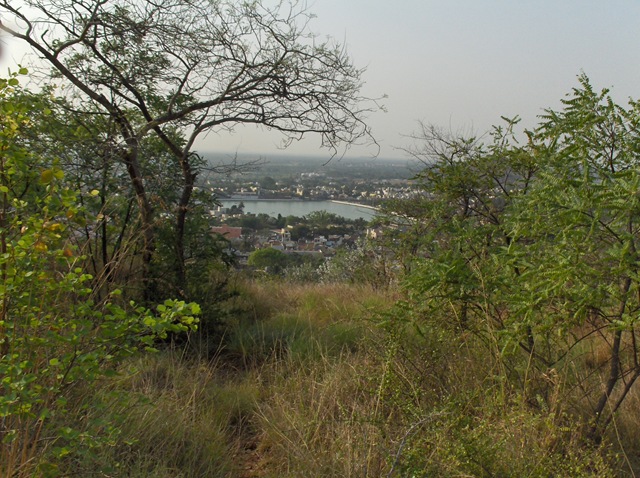
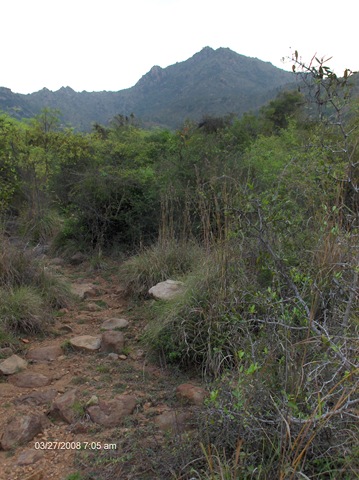
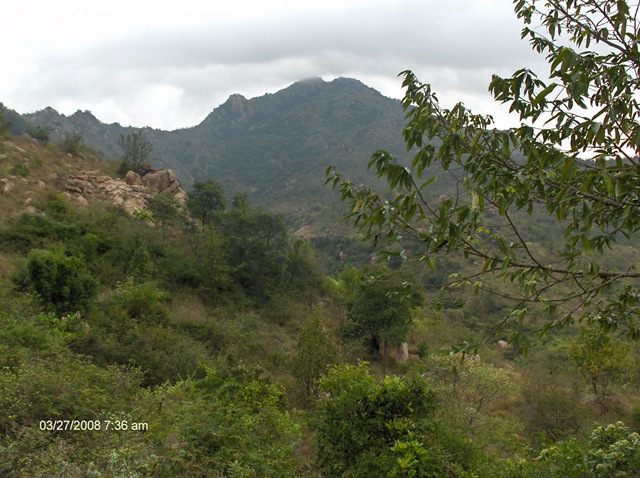
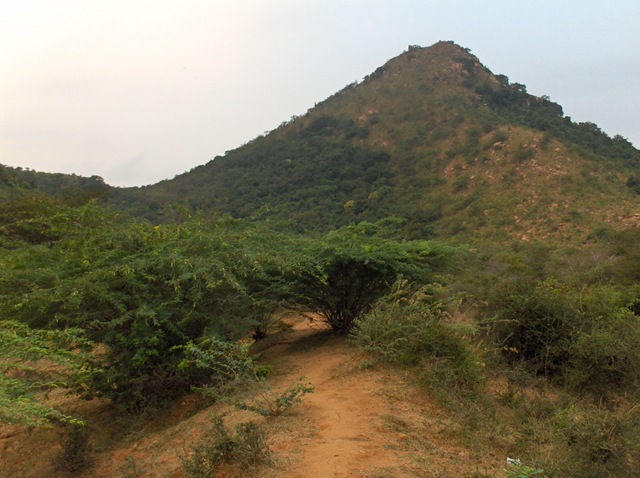
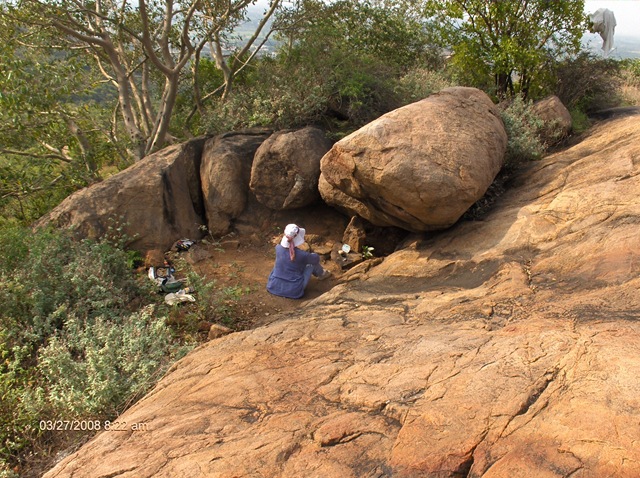
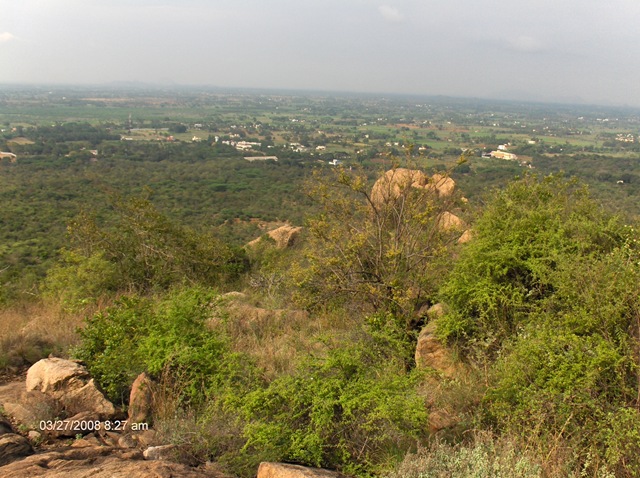
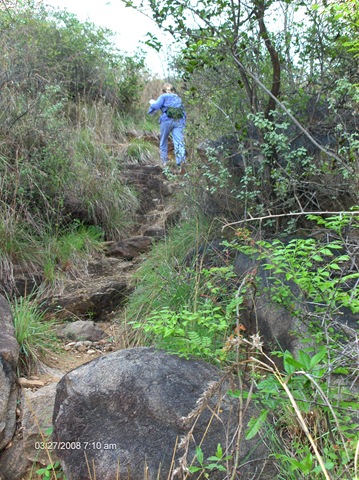
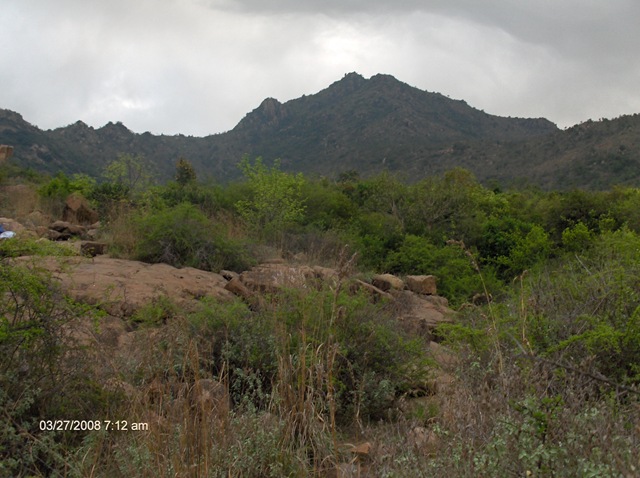
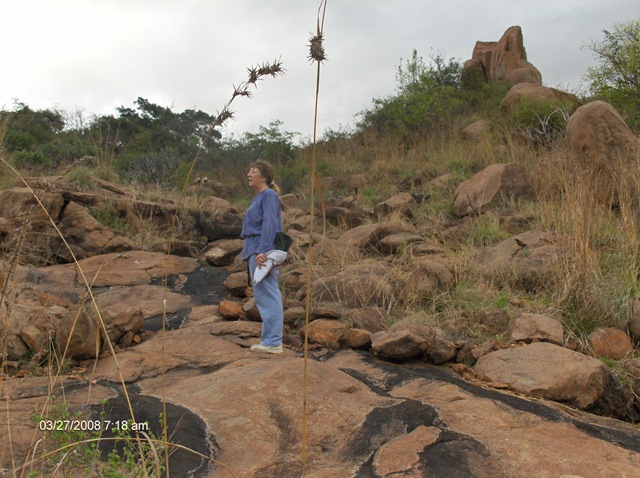
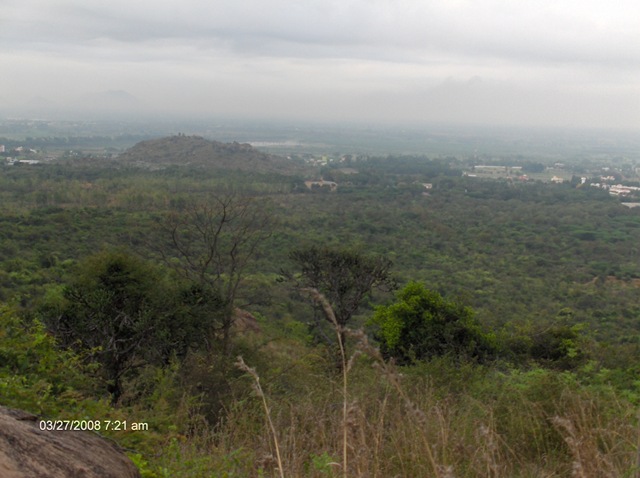
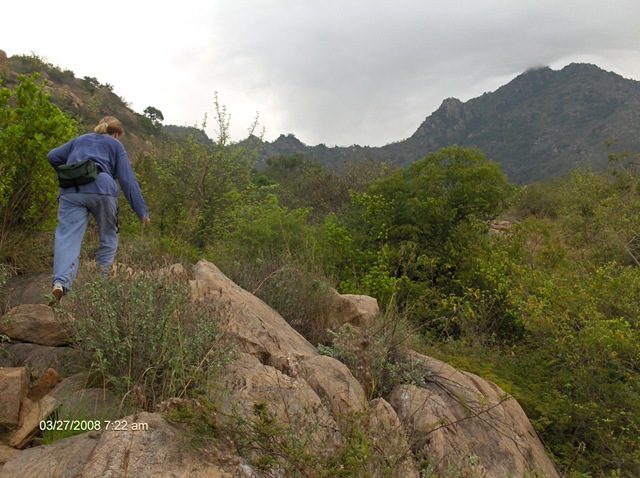
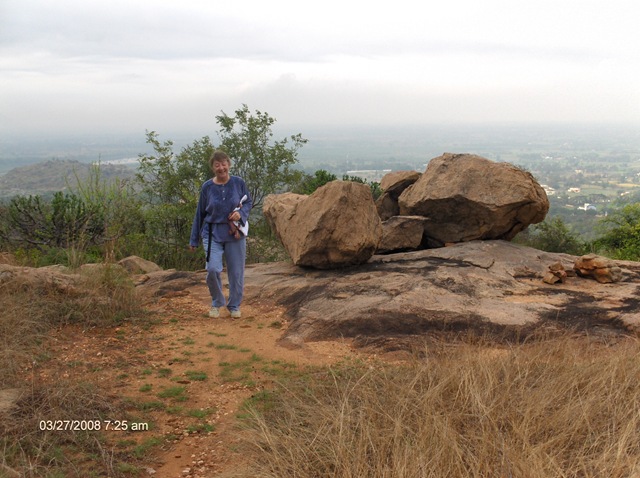
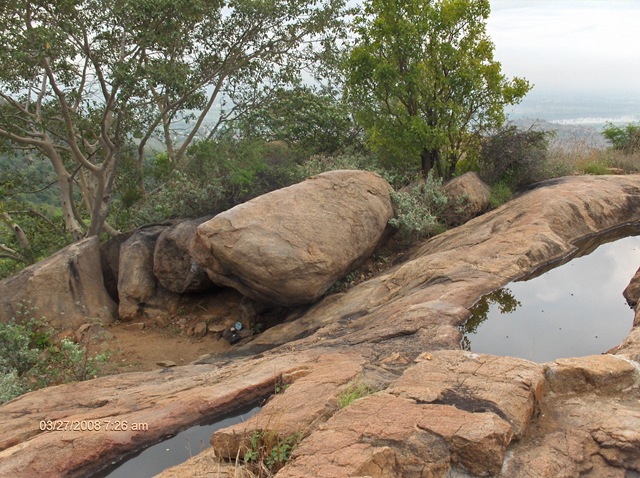
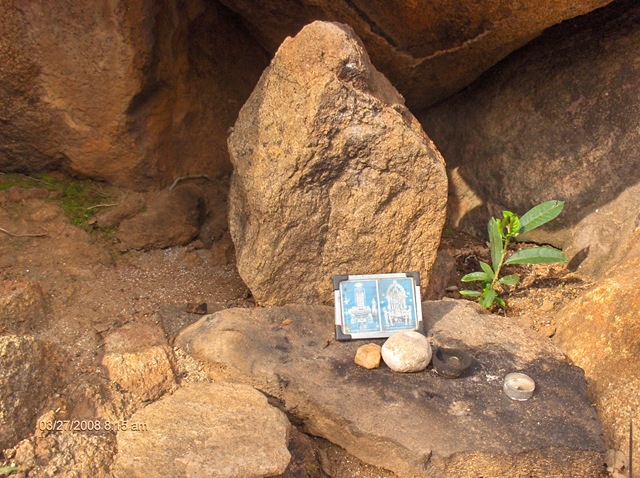
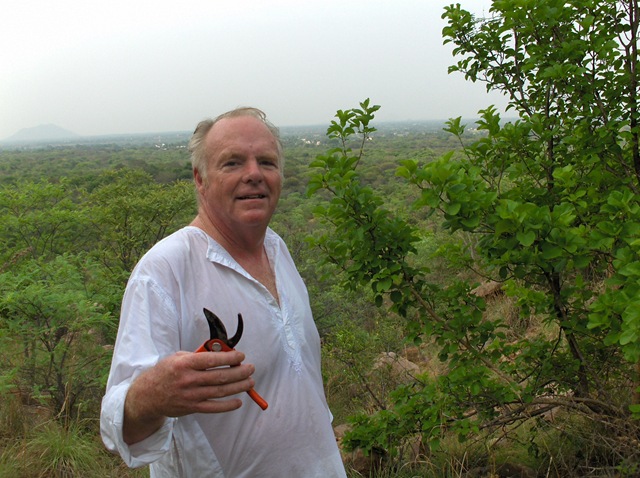
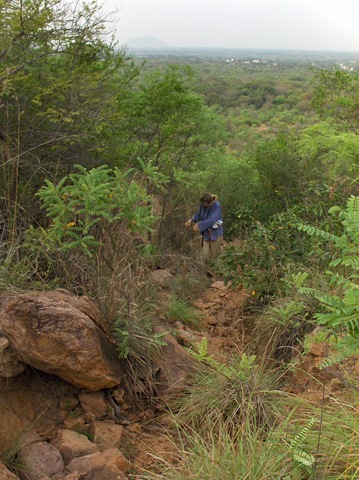
and started exploring the area between what we call ‘the Basin’ and the hill. We found a bit of what could be the ‘Inner Inner Path,’ and started round the mountain. Soon we found a big rock formation that climbed up the base of the hill. We went up this rock and found a wonderful view of the area North of Arunachala and Adi Anamalai. When we left, my new pruning clippers remained behind, on the rock where I placed them when I sat down to rest.

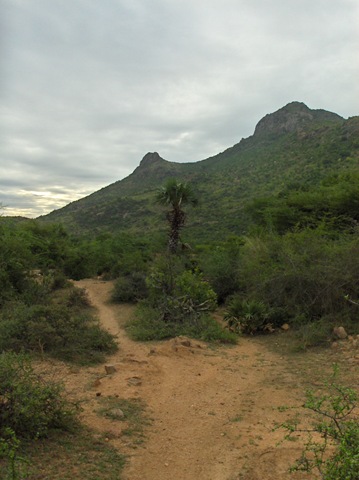
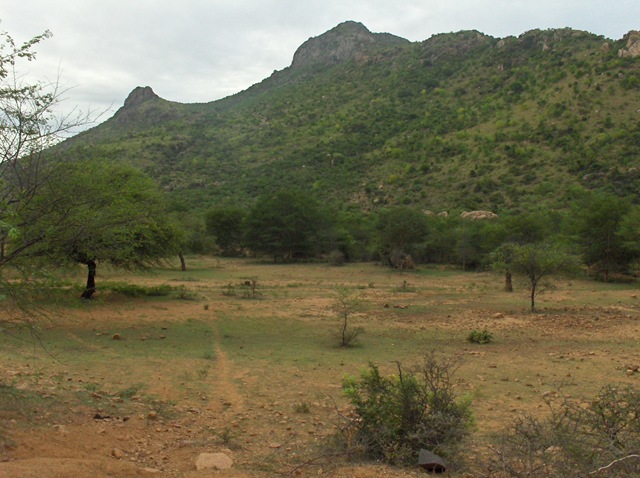
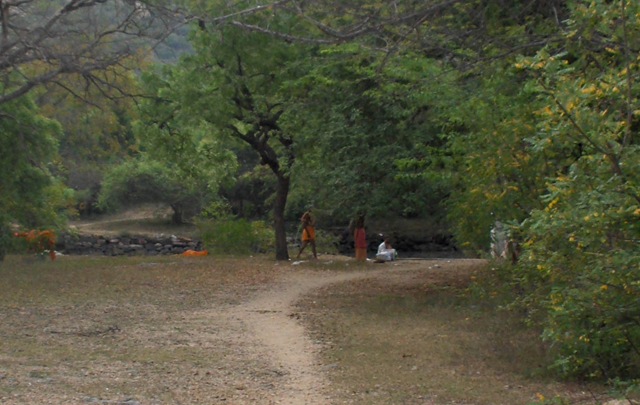
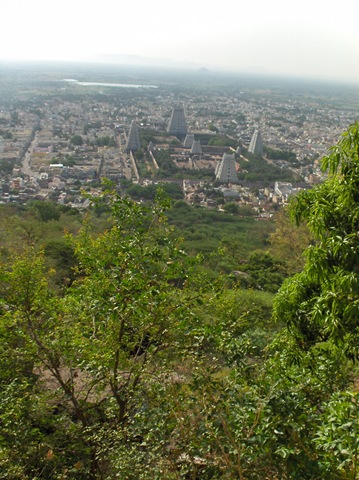
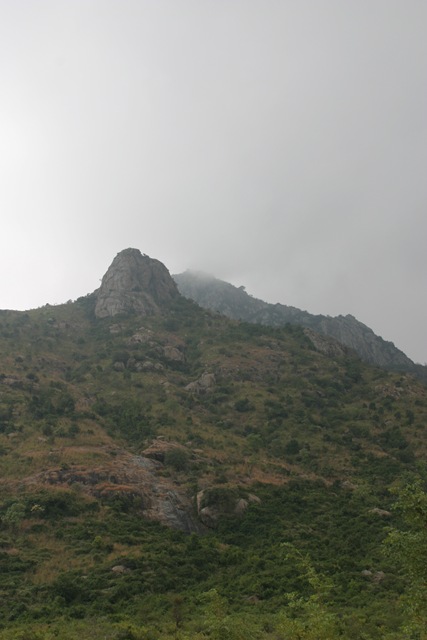
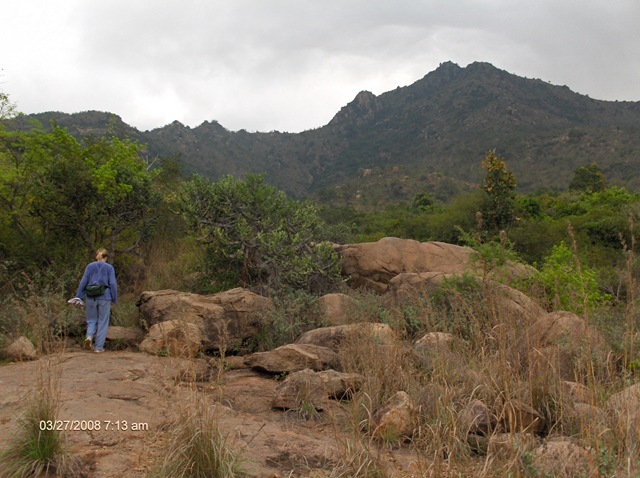
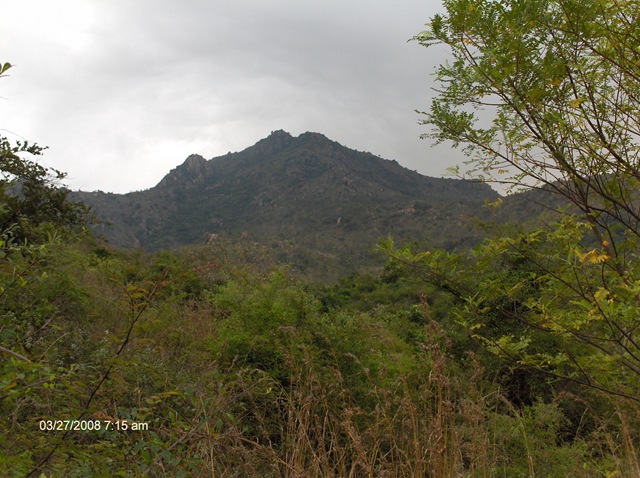
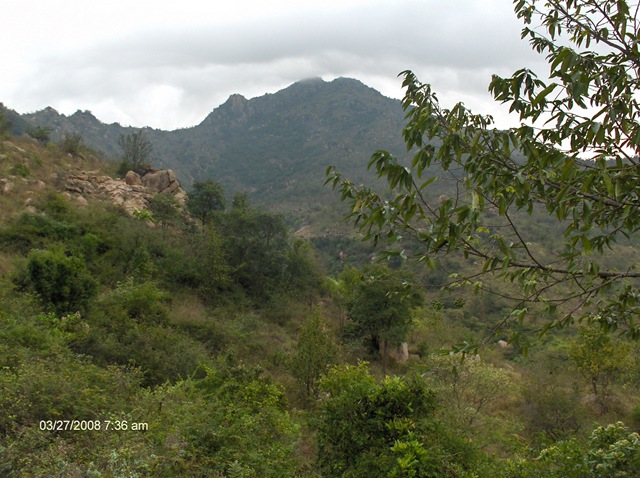
Today we went back to see if the clippers were still there – and with our camera. Here are some photos we took ‘Under the loving gaze of The Elephant. The Elephant is the move visible structure on the North side of Arunachala.

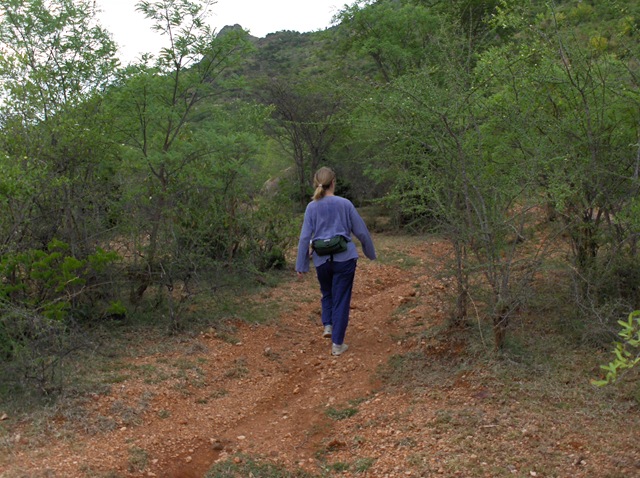
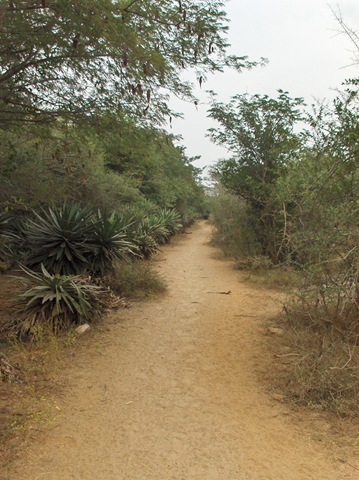
The Elephant from the Inner Path, North of the Hill, ‘Parvati.’

HPIM4639

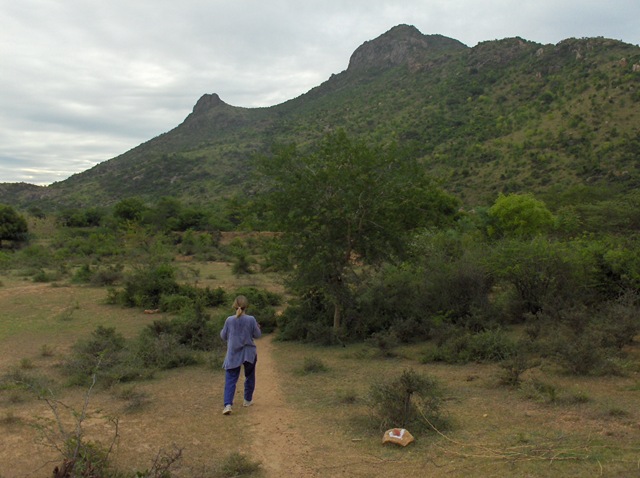
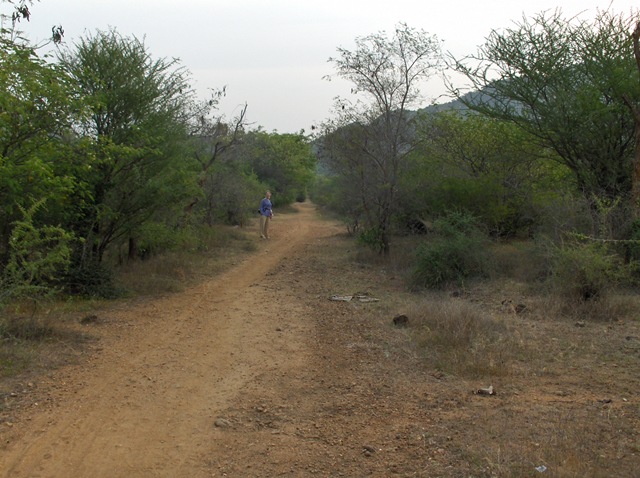
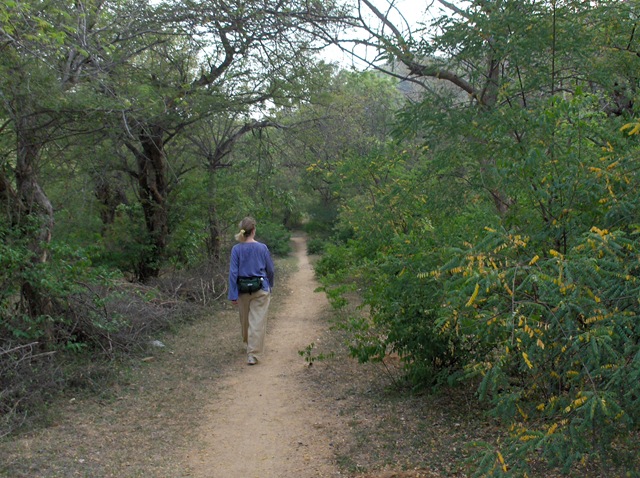
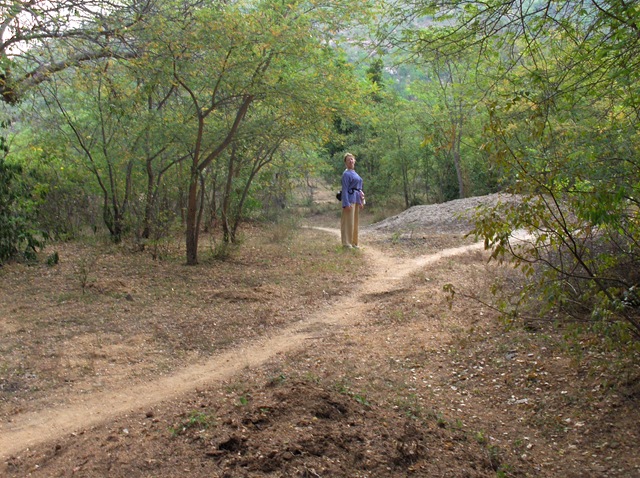
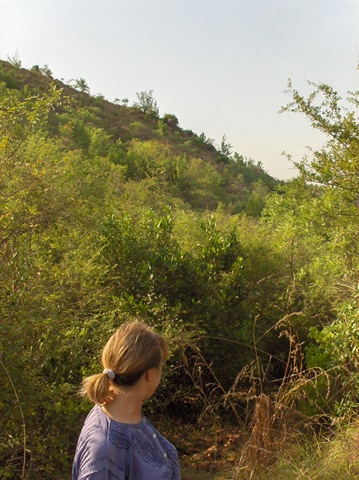
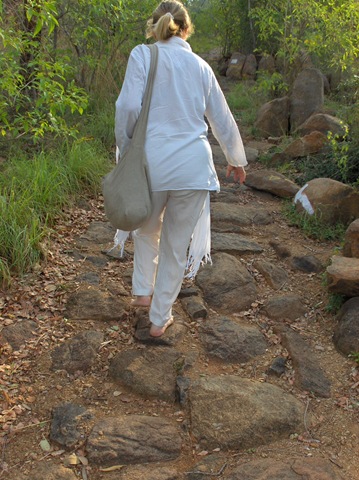
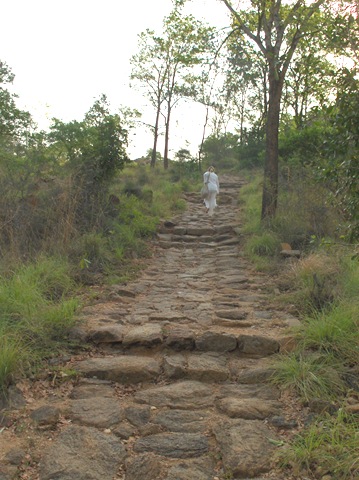
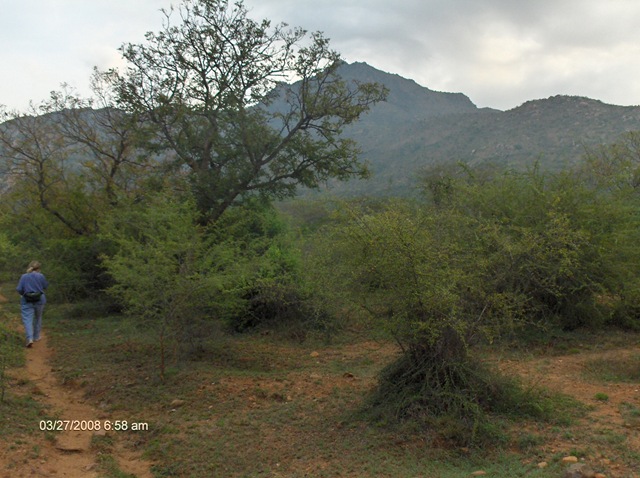
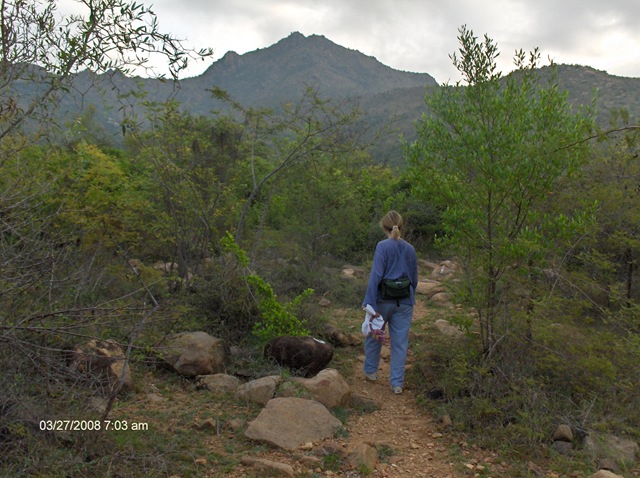
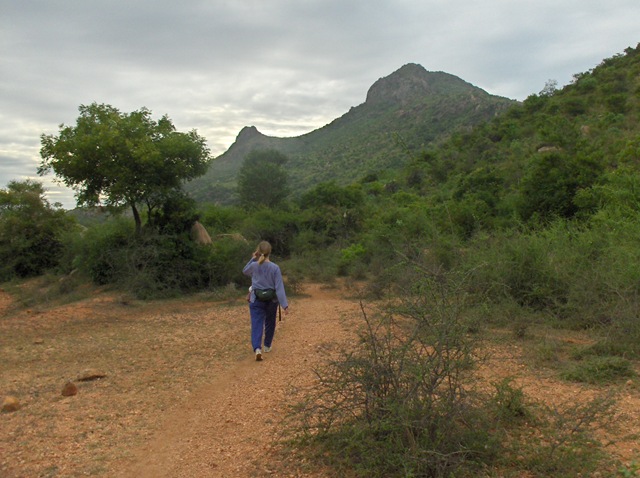
My wife, Carol, is walking ahead, with The Elephant on the mountain in the background. You can see the head and trunk on the hill.

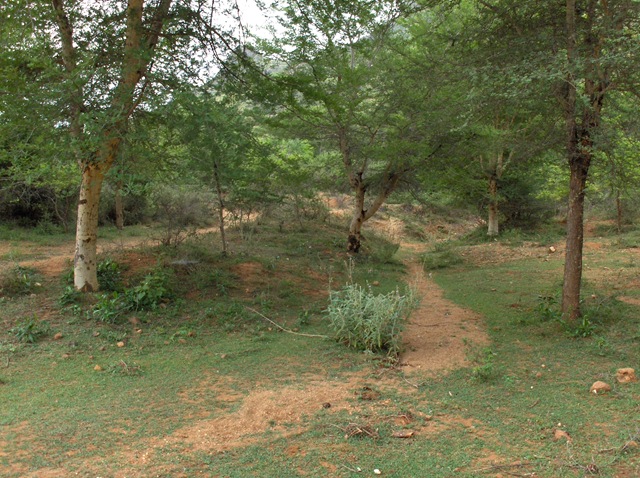
The Frog Pond

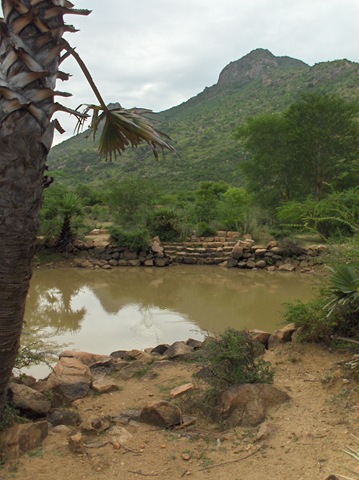
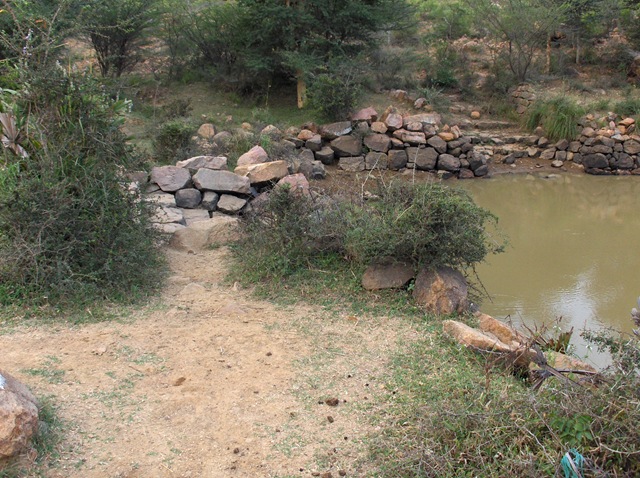
At the end of Parvati there is a small tank we call ‘The Frog Pond.’ There is usually water and frogs in it. I dried out towards the end of May. Since then rains have filled it again, but I don’t see the frogs yet.

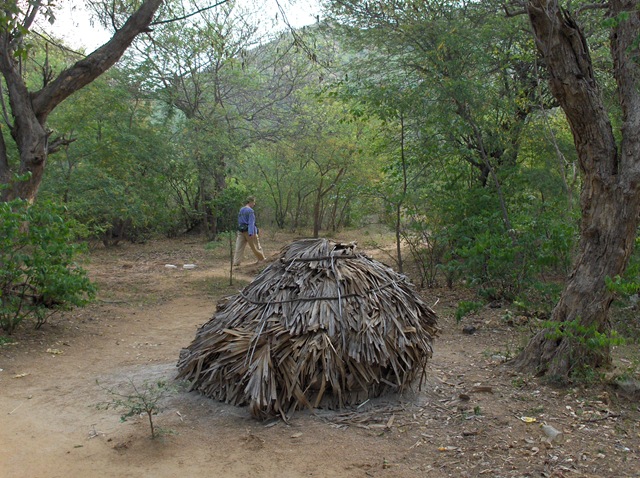
Approaching the Frog Pond, you may notice a small palm. I use this as a land mark, since I can see it from up the trail before we arrive at the Frog Pond.

HPIM4647

The Frog Pond is a place where often people walking the Inner Path will sit a rest a bit. Notice stone steps on the other side of the photo below. There are a couple of sets of steps. We usually sit on the steps at the South end of the pond. There is shade there in the mornings when we pass by.

HPIM4648

We will sit a bit, drink some water, and maybe read a few verses from ‘The Song of Ribhu’ before proceeding on our walk.

To and across the Basin

Today we would head to ‘the Basin’ and cross it to find the same set of paths we used earlier in the week. We are heading out from the Frog Pond. If you look closely you can see an earthen berm, with trees growing from it. This is what collects water in the basin.

HPIM4652

Looking across the Basin:

HPIM4654

Sometimes this is filled with water. In this dry season there is just a small pond, to the left of this photo.

We are going to the trees on the right of the photo aboive. That is one place where the path was easy to find.

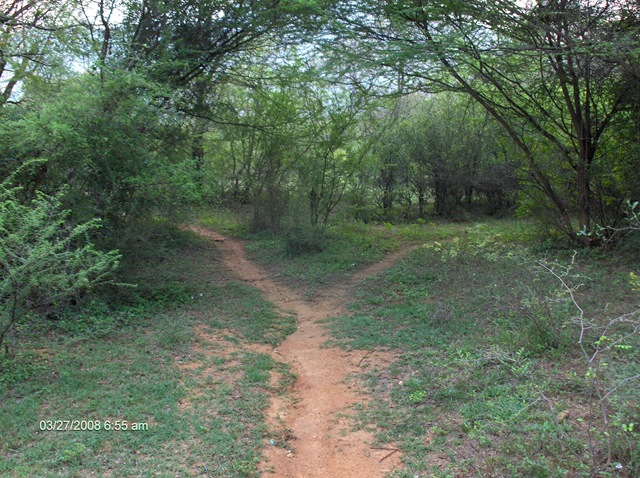
Below is the path, we took the second, higher path. There are many places to explore here. There are several big rocks that push through the trees. These interest me. I know that there will be great places to meditate at some of them.

HPIM4656

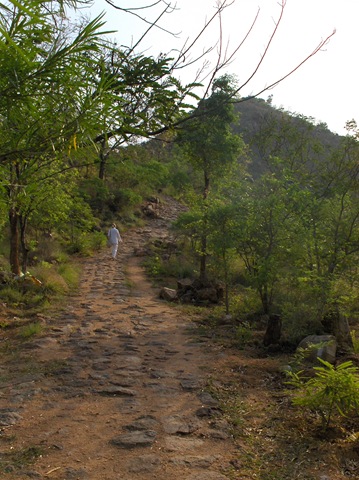
Today we walked through the woods …

HPIM4659

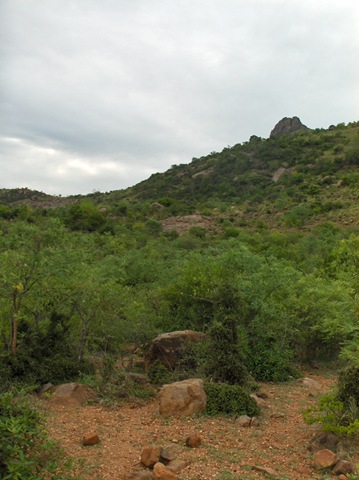
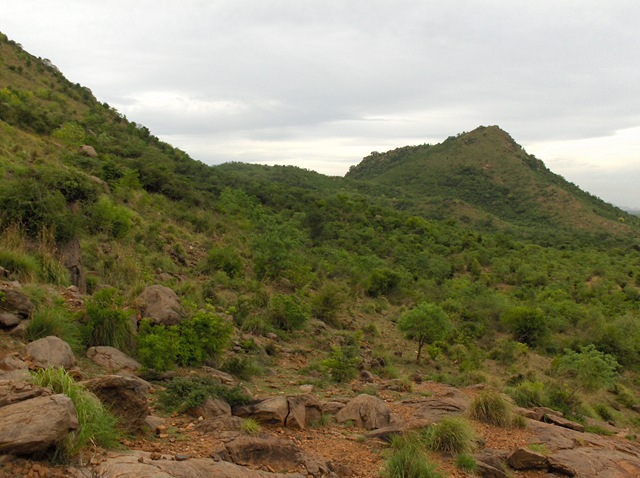
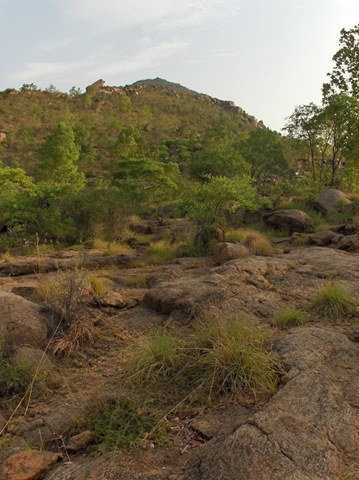
And started to see the rock structure on the mountain. IN the photo below you can see a grey path of rock in the center of the photo. This is the rock.

HPIM4662

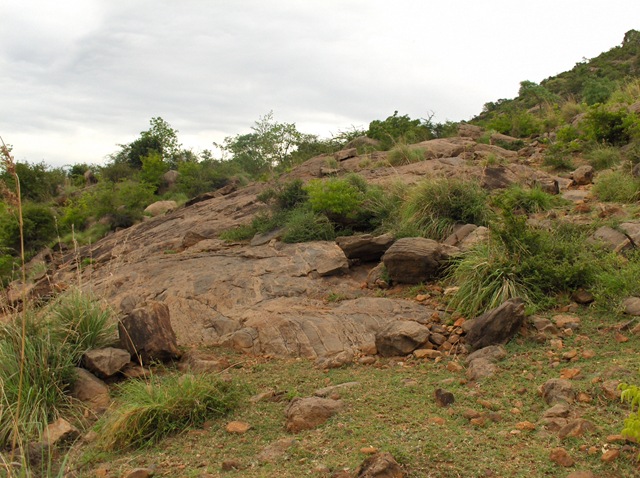
Up a rock on the North side of the hill

At the base of the rock. the rock is maybe 10 – 20 meters high, certainly high enough to get a grand view of the surrounding area.

HPIM4663

And at the top of the rock, there were my pruning clippers, still there two days later.

HPIM4664

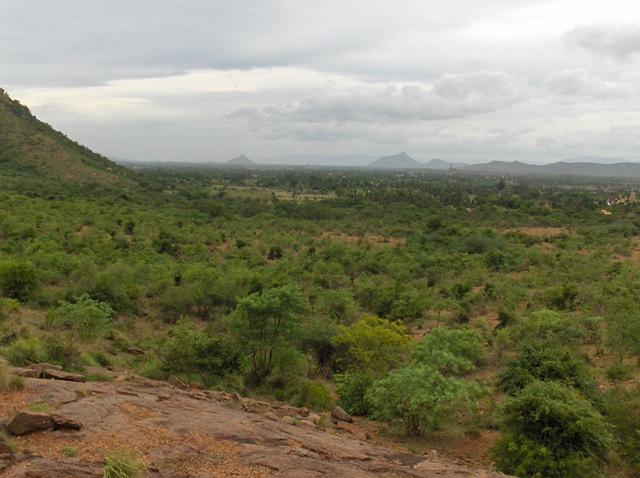
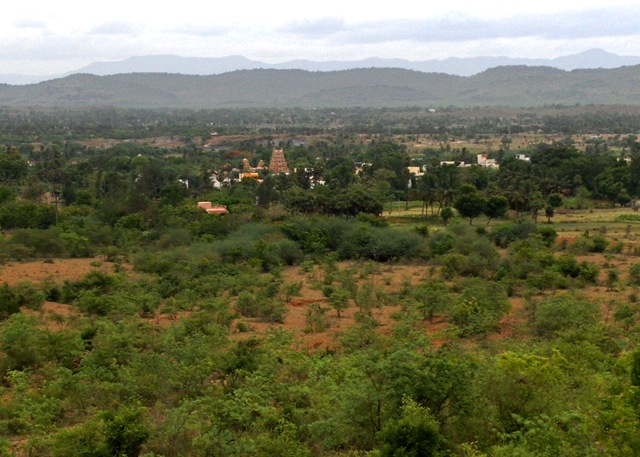
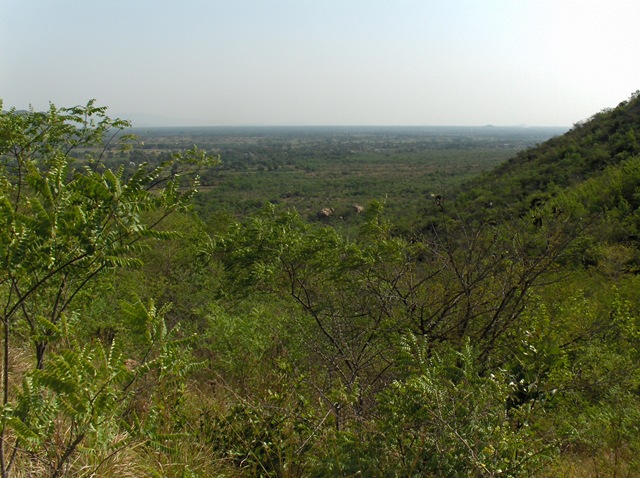
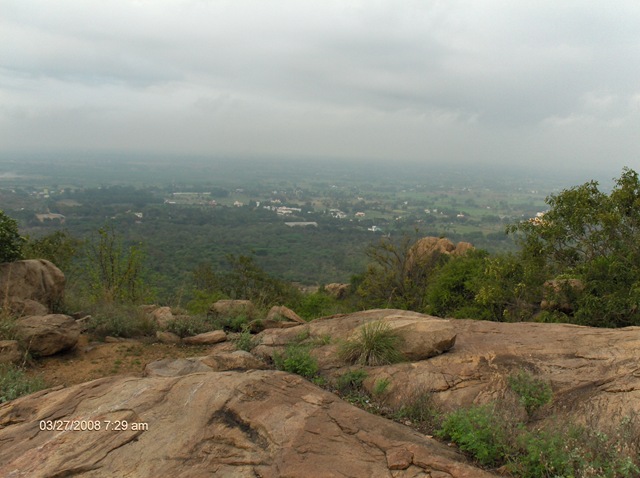
The view from the rock on the North side of Arunachala

Back towards Parvati Hill

HPIM4666

towards the Frog Pond and the North side of Parvati

HPIM4670

Adi Anamalai (enlarged to see the detail)

Adi Anamalai 2

Up Arunachala. More places to explore some other day

HPIM4674

Looking North. Note Adi Anamalai to the left in the photo.

HPIM4679

Postscript

Today we did not explore more. We just headed back to the Inner Path to finish the mornings walk.

After the path section I call ‘The Elephant’ is another section where maybe 20 years ago many trees were planted in rows on both sides of the Inner Path. I call this section ‘The Trees.’ IN this section there is a picturesque area with big rocks. Here is a photo of Carol sitting here.

HPIM4686

Tired today . Further on the trail, near Panchamuka Shrine, Carol and I were very tired. Carol rested a bit before going on. Here she is in a yoga position, Savasana.

HPIM4688

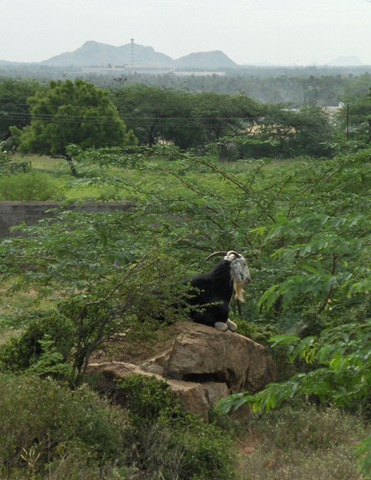
A goat on a Rock

As we walked on the road down the hill from the Shrine, there was a goat again, sitting on a rock.

goat

From here we walked to the RamaKrishna Hotel and had breakfast of dosas and vadas, and Indian Milk Coffee. Then we called Rajan, our auto-rickshaw driver for a ride the rest of the way around the hill, and back home.

Harsha's avatar

Working on a path across Arunachala: By Richard Clarke

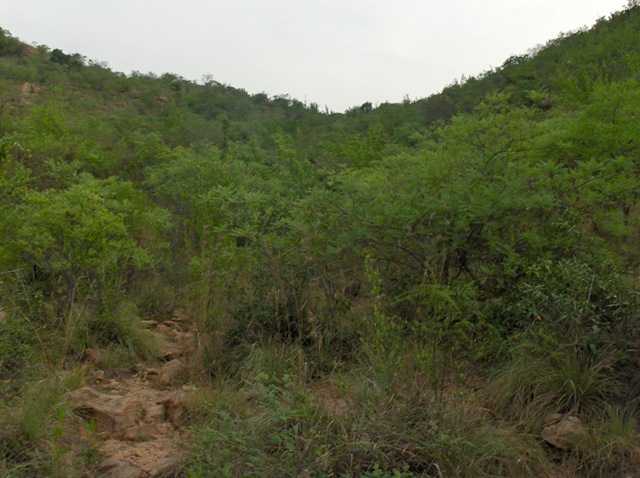
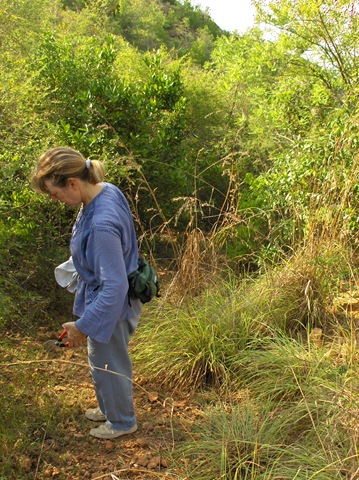
We usually start walking along the southwest side of Arunachala where we live. Looking at the mountain, we thought that a shortcut across a low pass might be possible. We first walked to the area, and found part of a path up the pass. We forced our way up to the top that day, but did so by pushing our way through brush and bushes, many of which were various thorn bushes. Recently we had some garden pruning shears sent to us from the USA, and so we spent a few days trying to make this path more walkable.

After the work was done, we can now walk more easily to the top of the pass and on to the other side of the Hill. Much of the ‘path’ up a is a dry creek bed, so water cascades down the path when it rains. For anyone might be interested in trying our path, here is a warning: Parts of it could be difficult if your legs, knees and ankles are not in good condition.

Orientation to the path

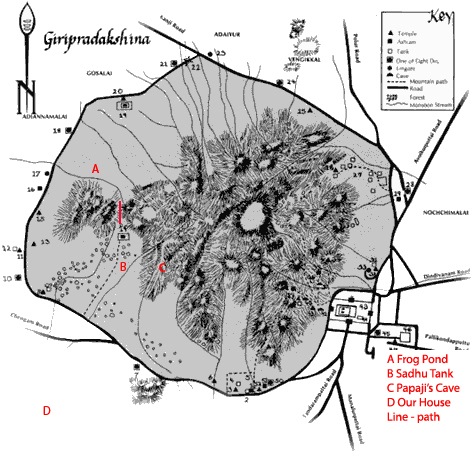
Here is an Arunachala map where I have shown in red some of what we see.

Arunachala with new trail and markers

Sri Ramanasramam is at the bottom of the map, the south side of Arunachala. The Inner Path is not shown on this map, just the Outer Path. Marked in red letters are the approximate locations of our house, Papaji’s Cave, and a couple of water tanks we regularly see. The approximate route of the path over the mountain is indicated by the vertical red line above letter B.

The main part of Arunachala is to the right of our path. The section of the mountain to the left of the red line is known as Parvati. Between Arunachala and Parvati, there is a small hill that joins them. You can see this from our roof, below. Our path is on the right side of the hill, the lowest of the two passes.

HPIM4141

Early morning start

This is May, the hottest month of the year. We start early. This day it about 6:30 and the sun is rising over Arunachala.

HPIM4184

Turn off Pradakshina Road to the path that leads to Reforestation Station

We walk across Bangalore Road to the Pradakshina Road. We turn off the Pradakshina Road toward the Inner Path across from a small temple where they sell wish bags that can be hung on the temple wishing tree. They want Rs 20 from Westerners.

HPIM4187

The sign shown below is one other landmark for this path.

HPIM2332

Up the path towards the mountain

HPIM4191 HPIM4193

Past the Sadhu Tank

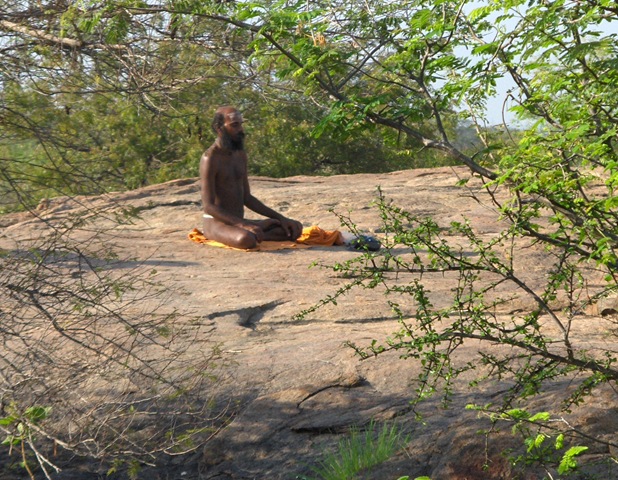
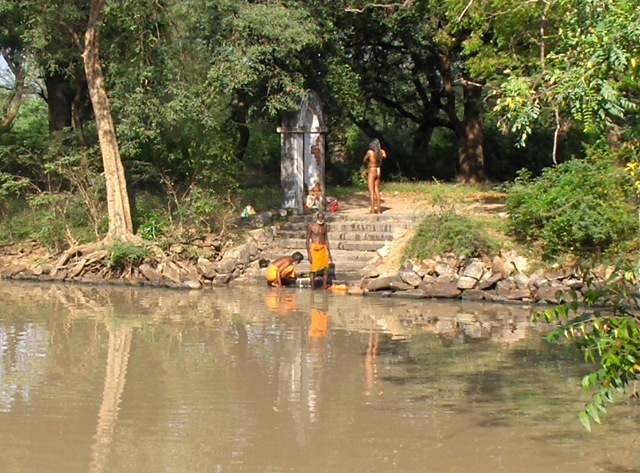
Sadhus sleep at this tank, and in the early morning they wash themselves and their clothes. Often you will see a saffron dhoti stretched out, drying in the sun.

HPIM4194 sadhusg

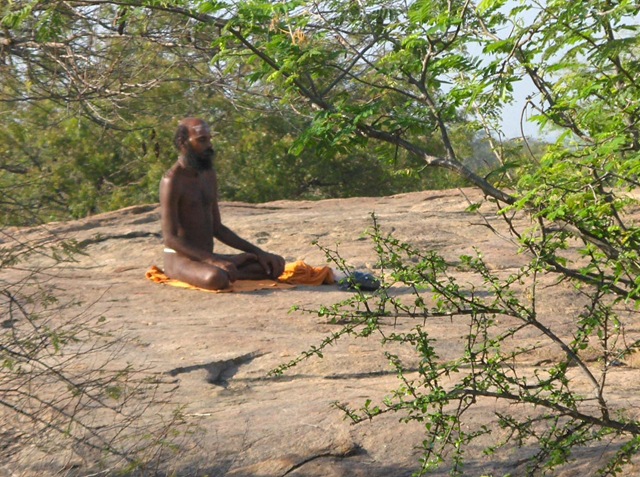
There are other places near here where you can see the sadhus meditating in the morning.

sitting sadhu

To the Reforestation Station

HPIM4196 HPIM4199

Turn right and walk towards the mountain

HPIM4201

Take the left branch of the path

HPIM4202 HPIM4203 HPIM4205

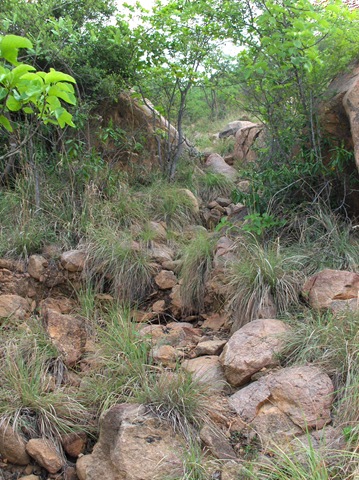
During part of this section, it is not always clear where the path is. Just keep going uphill, generally following the creek bed. For the most part, the path goes to the right of the creek, then up the creek bed where it gets steeper.

The path goes up the creek bed

HPIM4207 HPIM4211

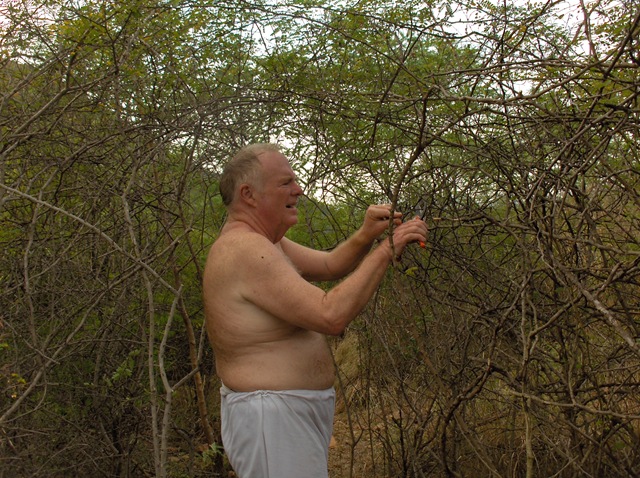
Much cutting to prune back many thorn bushes

Carol and Richard get much work, clearing back brush, and especially thorns. Many different kind of thorn bushes, some quite nasty. It is also getting hotter. If your look closely you will see that my shirt is soaking wet by now.

HPIM4214 HPIM4216HPIM4402

Richard cutting a path through thorn bushes

HPIM4576

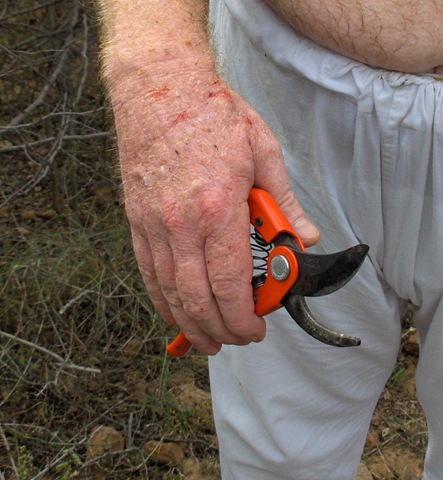
There are many bloody spots from the thorns. They fight back.

HPIM4578 hand

At the top of the pass

While at the level of the pass, one cannot really get much of a view.

Below we are looking at the side of Arunachala.

HPIM4404

Adi Anamalai seen from top of the pass

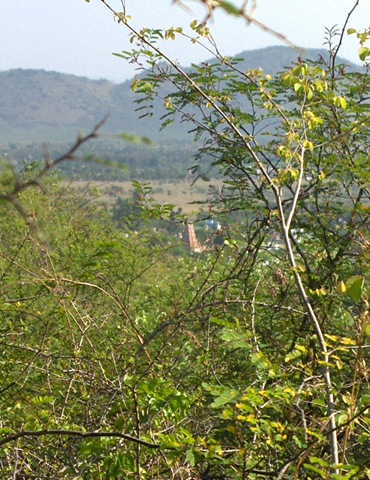
This photo shows the view of Adi Anamalai through the brush that surrounds the path leading down the other side of the hill. This path is much better than the one we came up. If you take it and bear left, it will take you to the ‘Frog Pond.’ I am not sure where you will go if you bear right. We will find this out another day.

HPIM4416adi amalai

The View from the Ridgeline

We found another path going towards Parvati that took us higher where we could see in all directions. This was up the ridgeline.

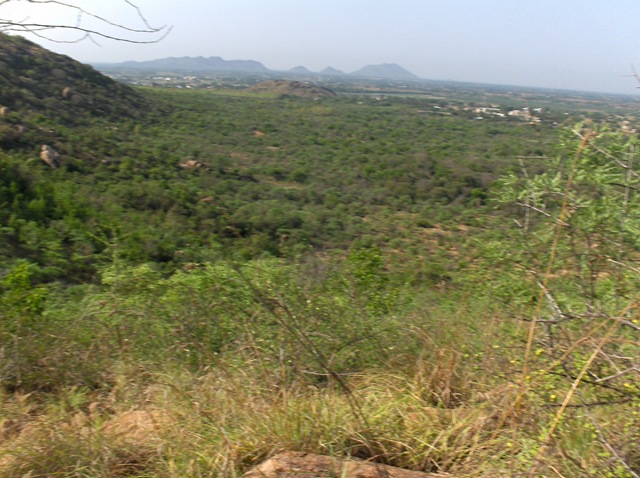
Climbing up to the ridgeline towards Parvati, one can get a wondrous panoramic view of both sides of Arunachala.

Looking back towards Tiruvannamalai

HPIM4422

Looking to the Inner Path, as it progresses past ‘The Elephant’

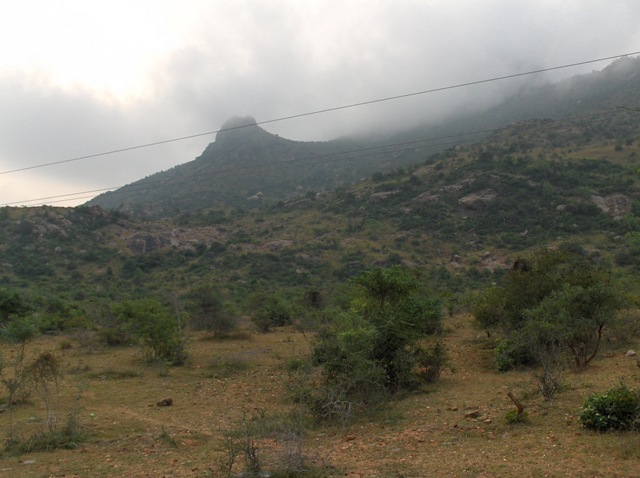
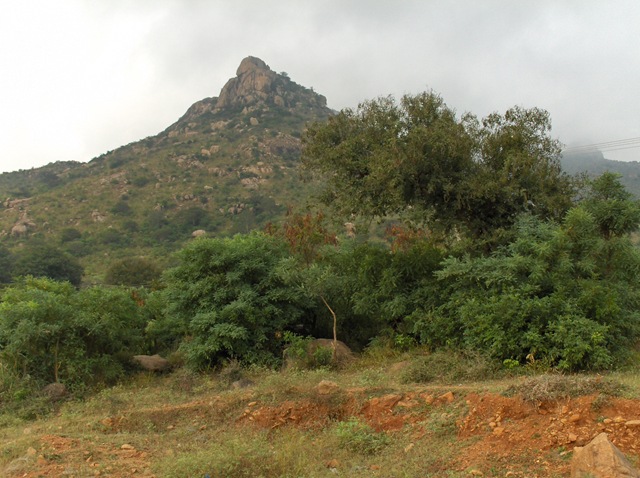
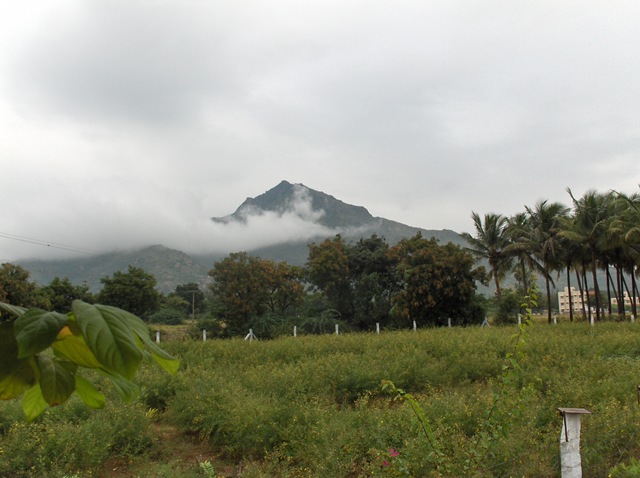
The locals call a structure on Arunachala that is east of Adi Anamalai ‘The Elephant.’ The is a main structure on this side of the hill, and it does look like the head and trunk of an elephant.

Below is the best picture I have so far of the Elephant. Here you can just make out the structure to the left that is the end of the trunk of The Elephant. the rest of the head is obscured by clouds.

HPIM2364

Soon I want to explore around the big rocks that are at the bottom of this hill, pushing through the trees in this photo.

HPIM4426

Harsha's avatar

Walking up to Skandashram: By Richard Clarke

Here in Tiruvannamalai for many Westerners the focus is on Sri Ramana Maharshi and Ramanasramam. Many of these go up Arunachala to the caves where Ramana lived and taught and gave darshan.

One of these caves is Skandashram. It is perhaps one mile from Ramanasramam, up a well cared-for path, up the side of the mountain.

Ramana lived at Skandashram from 1915 to 1922. This is where his mother joined him, and started preparing meals at the ashram, rather than having prepared food carried up, as had been the case since the earliest years. After the mahasamadhi of Mother, and her subsequent interment at the base of the hill, Ramana then took residence at her samadhi, the location of the present day Ramanasramam.

I show here photos from a recent walk up the hill to Skandashram. We started about 7:15 in the morning, before it was too hot. We left out the back gate of Ramanasramam.

Getting started

Going through Sri Ramanasramam

Carol walking through Ramanasramam to path to Skandashram One of the guides who accompany newcomers The gate from Ramanasramam

Starting up the hill

Starting on the path

A woman working with gathered material

Village woman collecting plants

Up the path we go

Starting to climb up the path

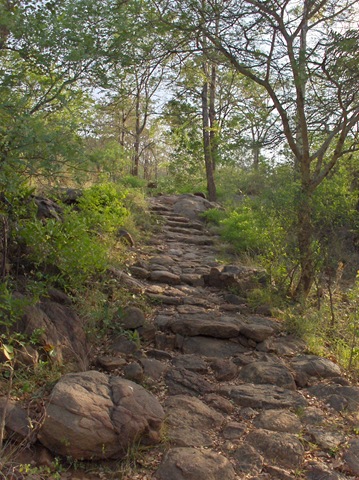
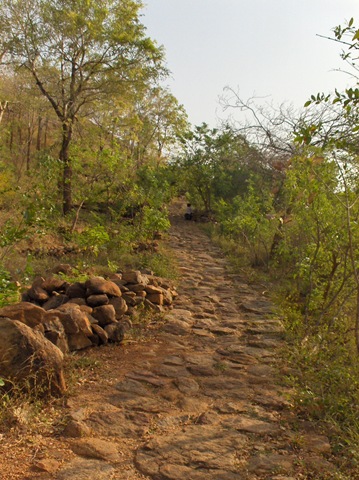
The path is ‘paved’ with stone, from Ramanasramam all the way to Skandashram, stones set into the dirt, forming a path about three feet wide. In steep areas there are steps. Someday these stones will be smooth, after 100,000’s of feet have passed over them. Each stone was carried to the path and set into the ground by unnamed workers.

On both sides of the path you will notice tree plantings, done as part of the Arunachala reforestation project that has been going on the the last few years. Ramanasramam has increased interest in Arunachala both around the world, and in India. It is this increased interest in Arunachala that has brought this project about.

Take the right fork. To the left is an entry into the inner pradakshina path.

The path forfs, Skandashram to the right

Up the hill

Carol is barefoot. Arunachala, the whole mountain, is considered to be a temple, and in India you take off your shoes in a temple. Many Westerners do not do this, but Carol goes barefoot on the walk to Skandashram. I do wear sandals. Carol gets more ‘punya,’ spiritual merit.

Carol walks barefoot up the path

And up the hill …

Climbing stairs here

Often there are people sitting and meditating here

To the  left, a place to sit and meditate

Up the path

Up the path

View along the way down to the city

View to the right of the path

Keep going up

The path keeps going up

A Sadhu is usually here – “Sivo Hum,” he may say

Sadhu's spot

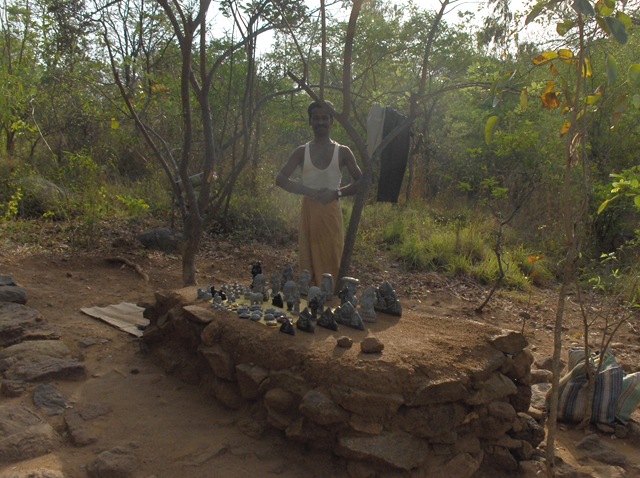
There are stone carvers along the way

Stone carver

Up to the top of the path

Up to the top

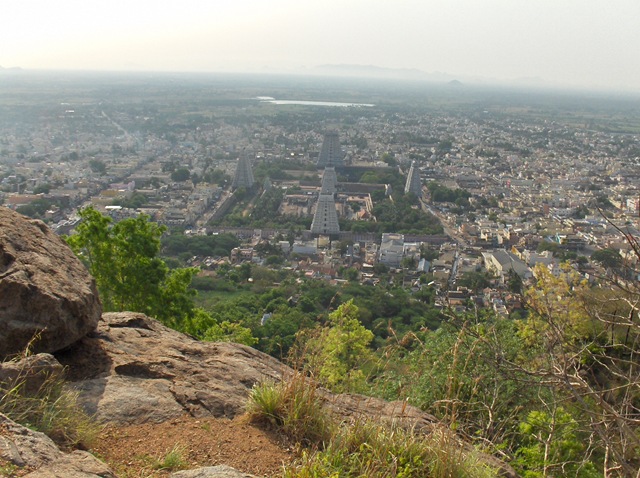
The view from the top of the path

View from the top - Aranachaleswara Temple

And now to Skandashram. Skandashram is the in clump of trees in the center of the photo.

Final leg of the path

Here we are, but the gate is locked

Skandashram Skandashram gate

Path down to Virapakshu Cave. It is pretty steep.

Aranachaleswara Temple from Skandashram

Opening the gate, walking in. The attendant unlocks the gates.

Opening the gate Entering Skandashram grounds

Skandashram

Skandashram

View from Skandashram

HPIM4355

Entering Skandashram

Entering Skandashram

The inner chamber, with the attendant getting ready for the morning chant. This chant is wonderful to listen to. The voice is resonant, and you can hear the love for the teaching in the voice. When we go up to Skandashram, we try to get there for this morning chant. We will sit in the outer chamber, and listen to the chant and meditate, and continue the meditation after the chant is finished.

Innter chamber

Looking out from the porch

Looking out

The Mother’s Quarters

Mother's room Altar in Mother's room

One last look around

Skandashram grounds

One last look at Skandashram

Skandashram

Back down the path

Path back to Ramanasramam

The walk down the hill was harrowing. A tree with a bees nest had fallen, and the bees chased some people down the hill. I was one of these. A swarm of bees circled around my head, stinging the back of my head several times. I was able to brush then out of my ears and off my mouth and face without getting stung there. Finally, about halfway down the hill, they stopped following me.

This is why the photos end with the one above.

Harsha's avatar

The Ribhu Gita: By Richard Clarke

Your true nature is always the undivided, nondual Brahman,
Which is a mass of Being-Consciousness-Bliss,
Motionless, ancient, still,
Eternal, without attributes,
Without confusions, without sheaths,
Without parts, without impurity,
Completely free from any illusion of duality,
Full, peerless, and the One.

From Song of Ribhu, Chapter two.

The Ribhu Gita is a spiritual text that was extensively used by Bhagavan Sri Ramana Maharshi. It was one of the first books he read after Self-Realization, one whose message clearly accorded with what he had realized within himself. For many years during his life it was read to those at Ramanasramam. It is still read at Ramanasramam today. Ramana’s use and recommendation of this text has brought it into much wider visibility among those interested in his teachings and Advaita Vedanta.

Papaji reading from The Ribhu Gita

A number of teachers in the tradition of Sri Ramana have been using these translations of the Ribhu Gita in their teaching. Above is a picture of Papaji reading from the English Translation of the Sanskrit version.

The Ribhu Gita is a book that is best read aloud, a few verses at one time. It is in an ancient form designed to be chanted, and they way it is written is most conducive to reading aloud, even if one is reading it to oneself.

The Ribhu Gita presents the timeless teaching of Self Knowledge, emphasized by Advaita Vedanta. Its fundamental tenet is the identity of the Self with Brahman, a term signifying the vast Absolute. This scripture presents the teaching given by the sage, Ribhu, to Nidaga to become enlightened into his true nature.

According to Annamalai Swami, “Bhagavan often said that we should read and study the Ribhu Gita regularly. In the Ribhu Gita it is said, ‘That bhavana “I am not the body, I am not the mind, I am Brahman, I am everything” is to be repeated again and again until this becomes the natural state.”

In describing the Self or Brahman, negation is primarily used because the Self can never be an object, can never be what is perceived or conceived. By negation in the process of Self-inquiry, the ignorance of identifying ones own existence with an individual body and mind is destroyed. This “destruction” of ignorance is really not the destruction of anything real, as the false identification as an individual just consists of assumptions, ideas. What remains after this so-called destruction is not anything new. It is not something achieved. It is not a transformation. It is what has been your innermost identity all the time.

As all differences are an illusory appearance
On Brahman, which is not different from the Self,
Due to conditionings of the Self like the defect of nescience (ignorance)
And conditionings of Brahman like maya (Illusion, delusion),
One should realize, by a practice of negation,
That all appearances are not a whit different from the substratum
And one should cognize the originless, endless,
Undivided identity of the Self and Brahman.

From Song of Ribhu, Chapter One

“The text is a relentless reiteration of uncompromising Advaita―that the Supreme Brahman, ‘That,’ is all that exists and exists not, that nothing else exists, the Self is Brahman and Brahman is the Self, I am that, I am all, and That is myself. This Awareness is moksha (liberation) which is attained by the way of knowledge and the certitude I-am-Brahman,” says Dr. H Ramamoorthy, one of the co-translators, in his Translator’s Introduction to the English translation of the Sanskrit version published by The Society of Abidance in Truth in 1995.

The origins of the Ribhu Gita are uncertain. It is contained within the Sivarahasya, an ancient Sanskrit epic devoted to Siva. It has been compared to the better-known Bhagavad Gita, contained within the epic, Mahabharata. Similar dialogs between Ribhu and Nidagha on the Self and Brahman are also found within the traditional 108 Upanisads, so it appears that the origin of the Ribhu Gita dates from the Upanisadic period, generally thought to be about 600 BCE.

The Ribhu Gita exists in two forms, the traditional Sanskrit version, and a Tamil version rendered in the late 1800s by Bhikshu Sastrigal, also known as Ulagantha Swamigal. Both versions have been translated into English by Dr. H. Ramamoorthy, a Sanskrit and Tamil scholar, and Nome, a Self-Realized sage in the United States of America, who realized the Truth revealed by Sri Ramana Maharshi and the Ribhu Gita in 1974. Both books, The Ribhu Gita and The Song of Ribhu (the Sanskrit and Tamil versions of the text) have been printed by the society of Abidance in Truth (SAT) and are available from their website (www.satramana.org).

These English translations have become the basis for a widening appreciation of this ancient nondual work. Translations have been made from these English translations into a number of other languages, including Italian, and Hindi. The Song of Ribhu has also been reprinted by Sri Ramanasramam and is available from their bookstore.

In addition to these two complete translations, there have been a number of partial translations published. One is a small pamphlet, Essence of Ribhu, available by download from Sri Ramanasramam – www.sriramanamaharshi.org . The other is The Heart of the Ribhu Gita, by F Jones, Los Angeles: Dawn Horse, 1973.

Nome at satsang

Nome has been teaching Self-inquiry, as taught by Sri Ramana, for about 30 years. He gives satsangs and holds retreats at the temple of The Society of Abidance in Truth (SAT), in Santa Cruz, CA, USA. For more information go to http://www.satramana.org. He has translated and published a number of books of Advaita Vedanta that otherwise would not be available in English. Many of these translations were done in collaboration with Dr. Ramamoorthy.

Harsha's avatar

Impressions from Full Moon night pradakshina around Arunachala – April 19, 2008: By Richard Clarke

Saturday night was full moon night again, this time special due to the Tamil New Year. Carol and I had not done pradakshina around Arunachala on such nights and had planned to do so this night.

We have been preparing. This is a big effort for aging Westerner bodies. From our house, Brindavanam, it is between 9 and 10 miles to circuit Arunachala. For the last two weeks we had been doing ‘half pradakshinas’ (about 5 miles from our house along the inner path to the Ramakrishna hotel, where we would stop, get breakfast – vadas and dosa, and Indian milk coffee – then take an auto-rickshaw the rest of the way home. To get ready we have been walking about 25 miles a week on Arunachala, either around it or up and down to one or another of the caves and meditation spots.

It is April now, and the summer heat is starting. Saturday at our house it was 38 C (100 F). When we left about 6:15 PM it had not cooled off much.

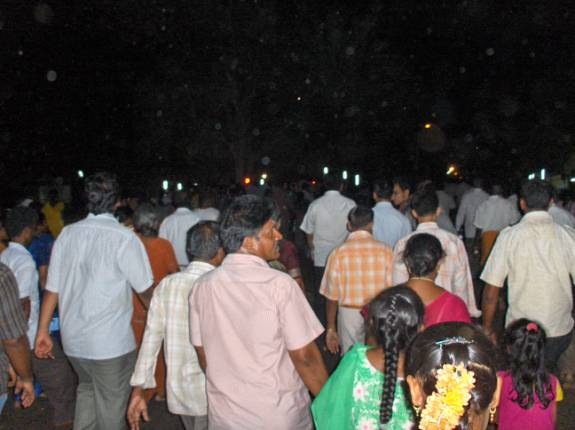
We walked out to Bangalore Road, west of where the pradakshina roads turn round the holy hill. The road used for pradakshina is blocked off from traffic, and traffic is rerouted for this night. When we got to Bangalore Road we saw many busses parked along the road, and thousands of people streaming towards the pradakshina route. The foot traffic was light, we found out in a few minutes – only maybe 5 or 6 abreast taking only half the road.

We joined the pradakshina crowd about 2 miles into the route many take. It is common to start at Arunachaleswara Temple, in the center of Tiruvannamalai. We joined after the route has left Tiru and is starting around Arunachala to the West of town.

Since this was a big night there was a big crowd. We heard crowd estimates of 10 – 15 lakhs (1 to 1.5 million people) – this in a city of about 100,000. When we joined the route the road was packed, maybe 10 or 12 abreast and taking up all the (recently widened) road. To get a sizing of this number of people, in the US there is each year a ‘Super Bowl’ championship of American Football. This gets many 70,000. For European football (soccer in the US) the best teams, like Manchester United gets crowds of maybe 75,000. Lesser teams get maybe 20,000. So the crowd is like 15 or 20 Super Bowls or Manchester United matches.

Visitors commonly take busses here. When they arrive they start the walk. When they are finished, they may eat by the bus then get back on the bus and sleep on the drive back home.

We saw men, women, children, lovers, families, babies asleep being carried over the shoulder and being passed from Dad to Mom along the route. There were small groups of young women walking without parental supervision and human chains of young men, each holding the shoulders of the man in front, pushing their way through the crowd, chanting Siva chants. Many people walked holding hands or in some way staying connected to the people in their group.

People walking pradakshina

Though we were walking at night, the road was mostly well lit, lit up from all the roadside shops and temple that line the route. Most of the ‘shops’ were temporary, built from poles and erected just for the one day. They supplied everything you can imagine. This included drinking water, green coconuts (for drinking), fruit juice stands, soda stands, food stands, spiritual picture stands, toys, clothes, women’s bags, jewelry (mainly the bracelets that almost all Indian women always wear and color-coordinate with their sarees or salwar suits) food staples like rice and lentils, and many more. I even noticed a motorbike display, showing the latest models. Sometimes it had a bit of the feel of a Western trade show, with all the vendor booths showing off their wares. .

Occasionally there was no light and the crowd was illumined just by the moonlight. I liked this the best.

In the crush of the crowd the walking was not easy. One could not set up a stride and keep it up. People pushed their way past you, crossed the road in front of you, and there was a surprising number of bicycles, motorbikes, and even a few cars and vans going the other way. We were almost hit by an unlighted bike crossing the road against traffic in the dark. Often the most aggressive at pushing their way past us were women.

Though the purpose of the walk is spiritual, it seemed that many making the walk were not really doing so with this approach. We passed many temples. Some walkers were going in. Many were not. Some were chanting as they walked. Most were not. Some were paying attention to Arunachala as they walked. Most were not. Most were talking with the group they came with. Many were chatting on cell phones.

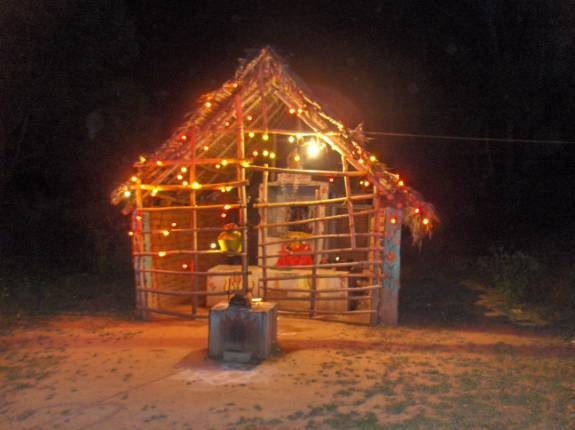
Small simple altar, after Adi Annamalai

Here is a photo of a small, simple temple altar to the side of the road after we passed Adi Annamalai. All the others had many people. This just sat a bit away from the road, lit but mainly unvisited. It looked homemade.

I could track our progress by the changing face of Arunachala as we walked. From our walks on the inner path, I now pretty well know were we are by the view presented by the holy hill. We start on the west side and see the view from our house, the mountain, and to the left side, the hill called Parvati. As we walk then we pass Parvati, then the ‘knob’ (whose name I do not know) that I associate with the Adi Annamalai Temple on the backside of the hill. Then we pass the forest to the right that marks the end of the inner path. This means that we are nearing the road back into Tiruvannamalai.

Finally we walk the three miles through town, passing Arunachaleswara, then Ramanasramam. We stopped at a restaurant, Usha’s just before we came to Ramanasramam, to sit and get a bite to eat. I am so tired by now I can barely take the steps, and much of this body hurts, the lower back, hips, legs and feet all hurt, some parts more than others. To keep going I have to think of near term objectives – it is just one block to Ramanasramam, I can make it one more block – like this I was able to make the last couple of miles.

Emerging from Usha’s, now it is about 11 PM. Though late at night, it still must be 90 or 95 F, still surprisingly hot. The crowd we are with is mainly a new group, just starting out. We thought the road was crowded before, but now there seems to be almost twice as many people. The road is packed from side to side with so many people that the pace has slowed to about half of what it was before. At one point, right before Bangalore split off from the pradakshina route, the crowd actually came to a standstill, too many people to even move.

Finally we could turn off the pradakshina road and continue walking without all the crowds the last half mile back to our house. I can make it to the light, I can make it to the corner, I can see our house, I can make it past the guest house, I can make it across the field, I can make it to our gate, I can make it to our house! In the house, we will fill the shower bucket and wash off all the sweat and grime from the night. My feet are just about as dirty as I have ever seen them. We got to bed around midnight.

I got up about 4:30 this morning and went up to the rooftop to be with Arunachala and meditate. In our usually quiet country location, there was still much noise from the road. I think a lot of this noise was horns of busses, trying to make their way out, to start back home. And in the dirt road in front of our house, there were, even at 5 AM, many rickshaws (which usually we do not see at all) which were, I guess, carrying walkers too tired to go further, back to their busses.

Harsha's avatar

Around Arunachala: By Richard Clarke

In so many ways Arunachala is the focus of our life here in Tiruvannamalai. I want to show some of the views that we live with, since many are interested in this holy mountain.

Views of Arunachala

Classic pictures

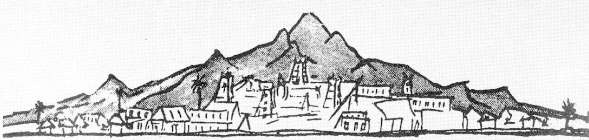
Ramana’s drawing

Arunachala drawn bySri Ramana

Arunachaleswara Temple

Arunachaleswara Temple  and Arunachala

Arunachala from around the hill

People climbing Hill for Deepam

Up the hill

Arunachala Views

IMG_0077

From Inner Path

HPIM2338 HPIM3872 HPIM3950 HPIM2359 IMG_0149 HPIM2407

Arunachala from ‘yenga veedu’ (our house)

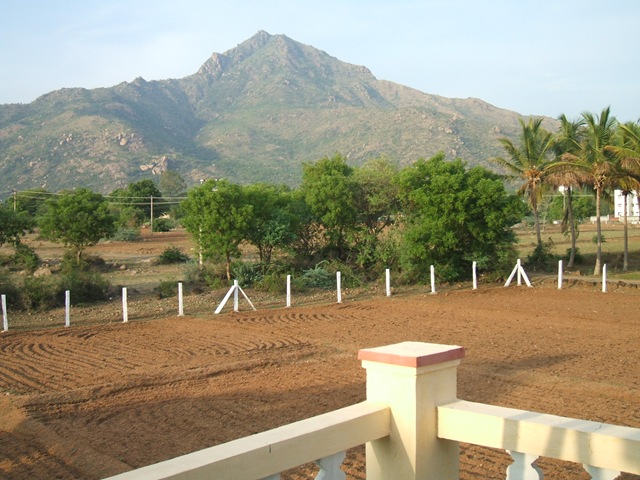
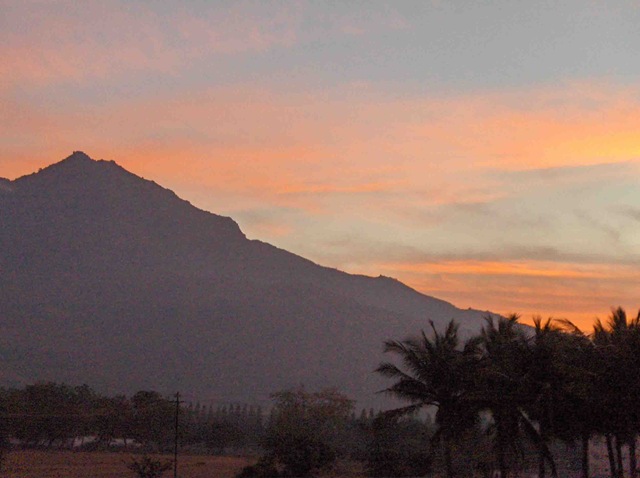
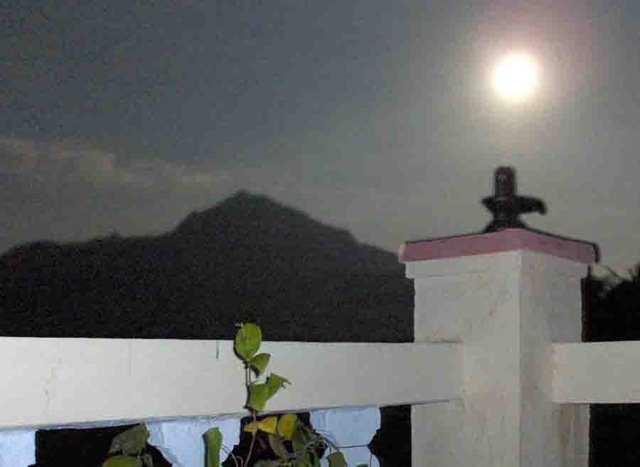
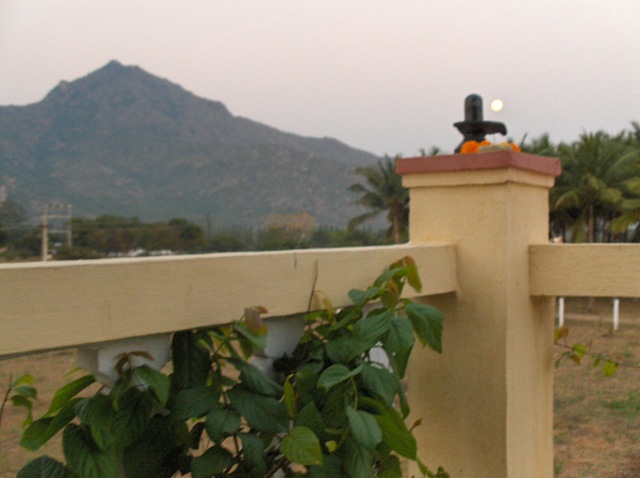
Arunachala from Brindavanam Arunachala Sunrise after Mahasivaratri night arunachala moonrise Arunachala in early morning light Full moonrise Arunachala behind the  cloud

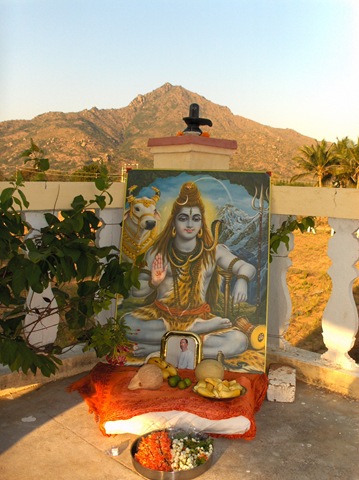
Altar for Mahasivaratri

Mahasivaratri altar

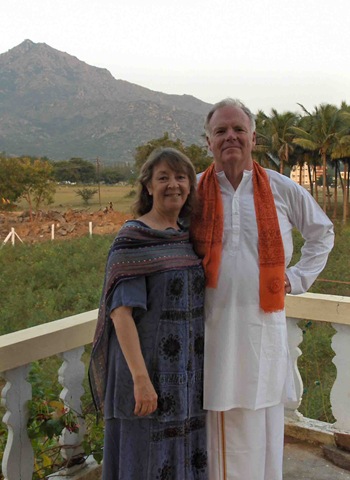
Richard and Carol

Richard and Carol on Richard 64th Birthday

Photos walking around the hill

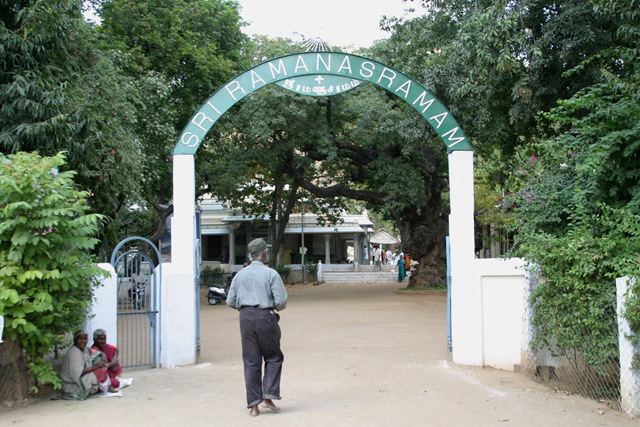
Sri Ramanasramam

Sri Ramanasramam entrance Inside  Ramanasramam

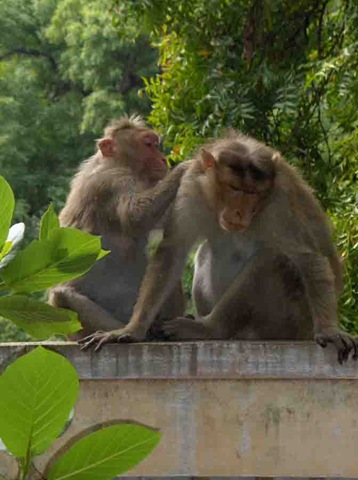
monkeys grooming each other

Inner Pradakshina Path

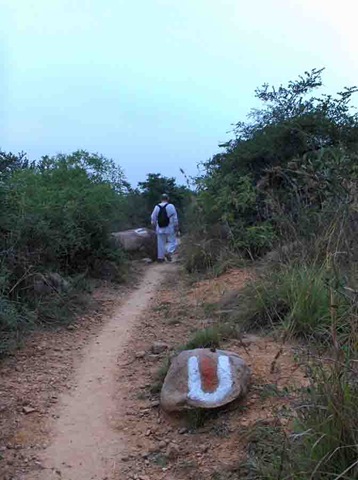
pradakshina trail Trail to Pradakshina Path

Papaji’s Cave

Carol medidtating at Papaji's cave Looking down from Papaji's cave

Sadhu’s and Sadhu tank

Sadhu meditating Sadhu at tank Sadhus washing at Sadhu tank Carol by outside altar

Pool at Reforestration Project

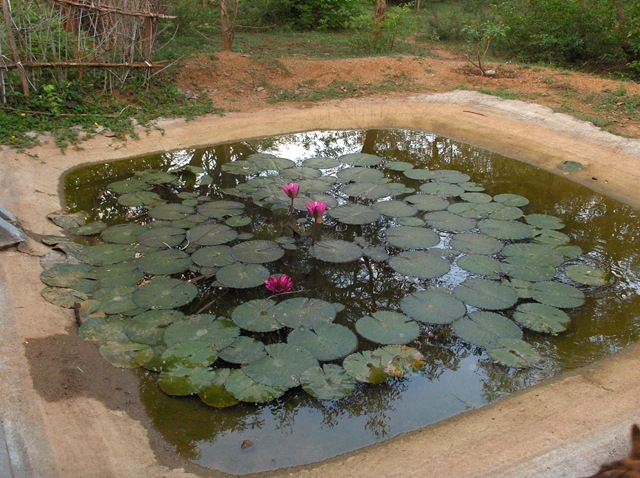
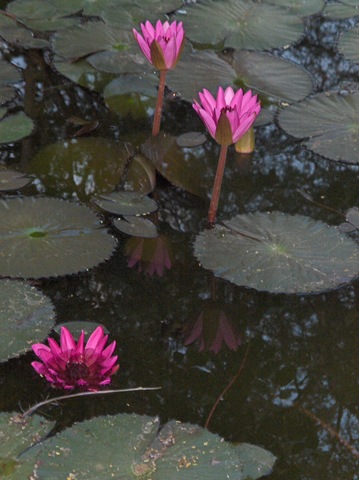
Water lily pondWater lilles

Backside of the Hill

Start of path on backsideFrog tank, on backside

Adi Anamalai Temple entrance

Adi Anamalai

Nearing the end of the Path

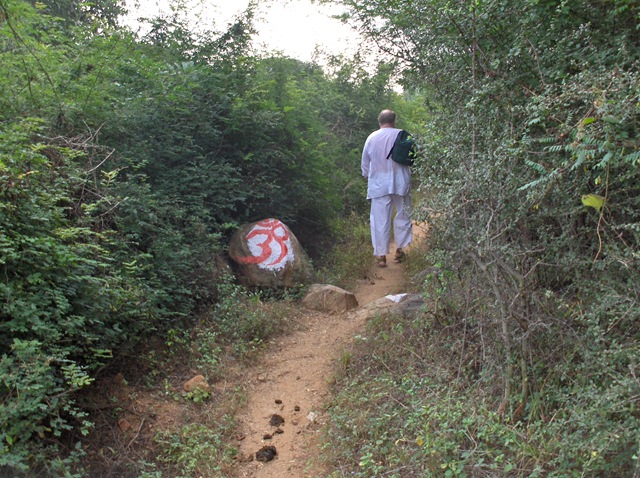
Old reforestration Om on the path, nearing the end

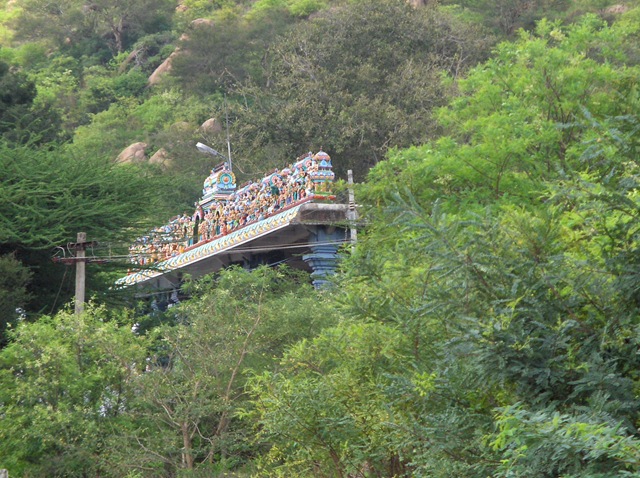
Last Temple before Tiruvannamalai is re-entered, Panchamukha Shrine

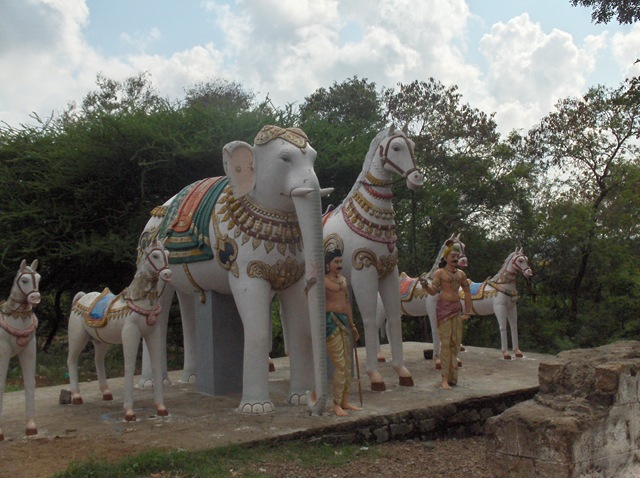
Temple through the trees orses and elephant ready to ride

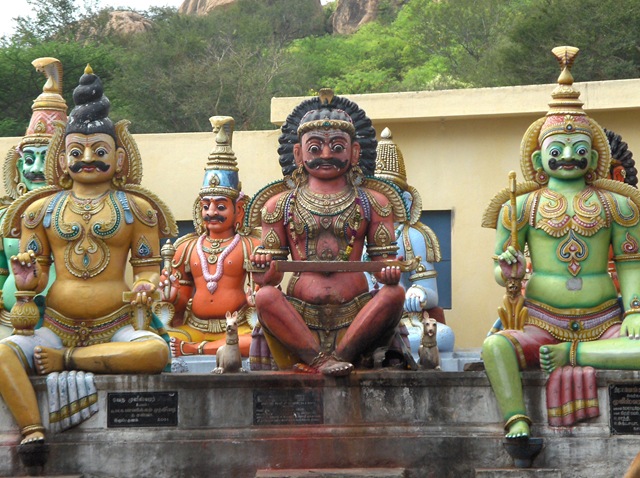
Gods and demons

Harsha's avatar

Papaji’s cave – half way to the top of Arunachala: By Richard Clarke

We explore Arunachala frequently. We walk from ‘yenga veedu’ (our house) to the mountain. I wanted to live on the SW side of the mountain because the forested area at the base of the hill interested me, as does this side of Arunachala.

The pictures here are from a walk we took this week from our house up to Papaji’s cave. It takes about 30 minutes to get to the side path off the inner pradakshina path, then another 30 minutes up the hill.

Nandi by road Carol on path Take path to left Carol on path, Arunachala in background

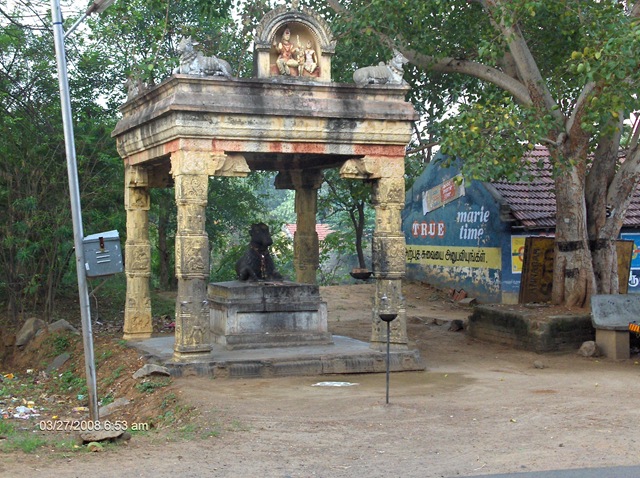
To get to the path from where we live, we walk out to Bangalore Road and then walk in towards Tiruvannamalai. Just before where the pradakshina road turns off of Bangalore Road there is a Nandi, shown above, pointing to Arunachala. On the other side of the road is where the path starts. Follow the trail to the left.

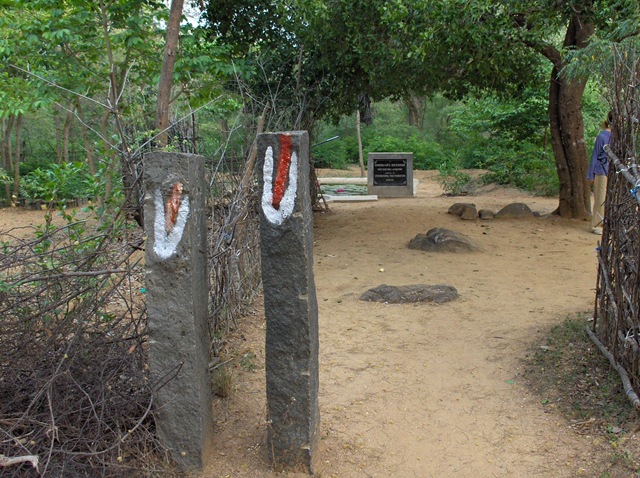
Everywhere here, Arunachala dominates the horizon. Carol, my wife, is shown above walking up the path with Arunachala in the background. Notice the trees by the path here. They were planted long ago, I guess as shelter for this access path. This path is marked with ‘trail markers’ for the pradakshina path (A white ‘cup’ holding a red ‘flame’).

Here is inner path, turn right Walking inner path

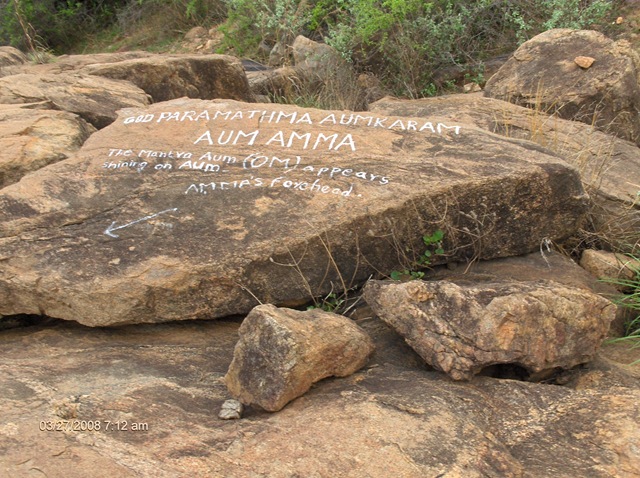
Look for the OM Or the Om Amma and Arrow Up the path to the mountain

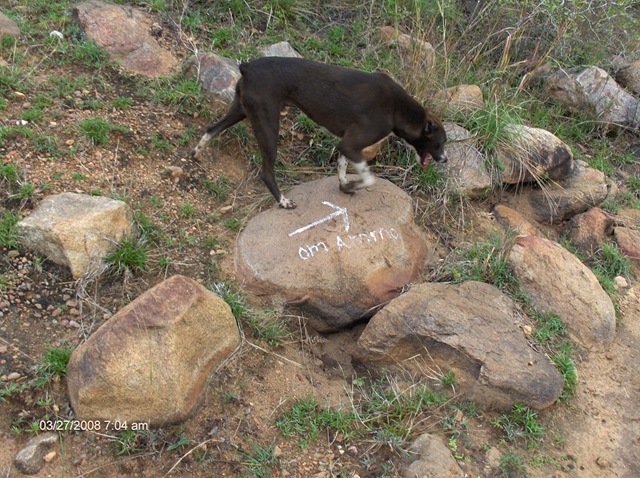
When we get to the inner path, we turn right and go against the usual clockwise pradakshina direction for a few hundred feet until we see the Om marker on a rock. We then turn left towards the mountain. Where this path starts there is another Om Amma mark with an arrow.

Om Amma is a local woman, quite old now, who lived in a cave on the hill close to the cave where Papaji stayed for some time. She is said to have a natural Om symbol on her forehead. People would climb up this path in order to get to her for her darshan. Now some people have moved her down the hill to a location near AHAM’s ashram. She is still available at least once a week at her “new place.” It is said that she does not respond in any normal kind of way, and often does not take any notice of other people. Locals feel that she is somehow ‘touched by God.’

Sometimes the path is steep Arunachala from path

From here the trail gets more difficult, but is still pretty easy to walk and climb up. As always, Arunachala forms the background (and the foreground and is Reality itself).

We made  it! (this far anyway) Note about Aum Amma

UP the path Another view  of Arunachala

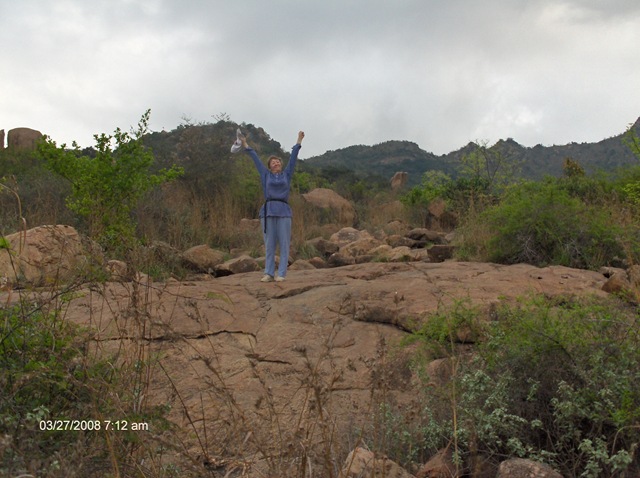
About half way to Papaji’s cave starts one of several sections where you walk up over big rocks. On the first of these, where Carol is signifying, “I did it” there is more painting on a rock about Aum Amma. And as always Arunachala stands as the substrate to all.

Over rocks we go Looking from the mountain, SW C;imbing over more rocks We are very close, now past Aum Amma's cave

Up the hill we go. You can see from the hill back into area West of Tiruvannamalai around Perimpakkam Road. Now we are getting close to Papaji’s “cave.”

Here is Papaji's cave Altar

Meditating at Papji's cave Meditating at Papji's cave

We climb over one more big rock and there, past two small pools of water that are labeled in white paint, ‘drinking water’, we can see the ‘cave.’ It is small, not really what most people would call a cave, just a sheltered space beneath a rock.

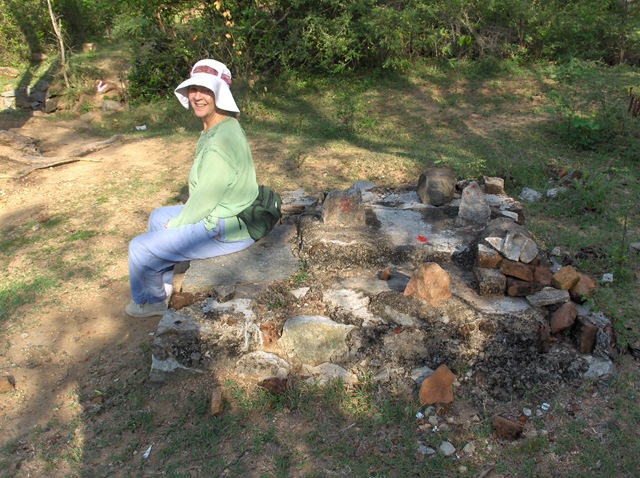
An altar has been created there out of rocks from the hillside. There are a few things on the alter, as well as a ghee lamp and a burnt out candle. Sometimes you see flowers draped over the altar. Not today though.

This is a very good place to sit and meditate. Carol and I both take advantage of this.

Arunachala from Papaji's cave

Here is Arunachala from Papaji’s cave.

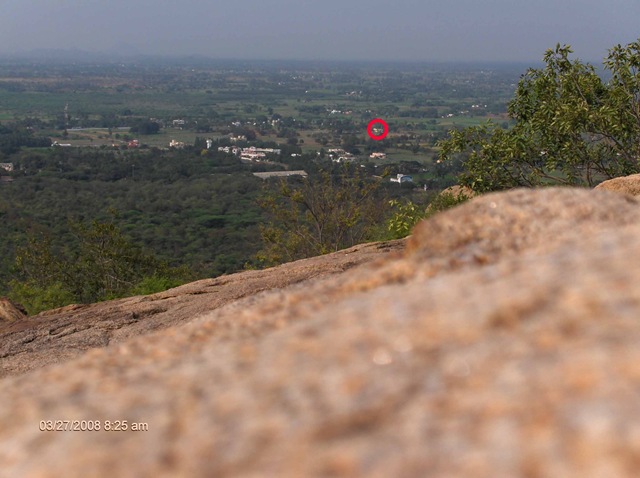
Looking back to Perimbakkam Road See our house? Yenga veedu

Looking down from here, one can see the surrounding area. And in the red circle is ‘yenga veedu’, our house.

Arunachala from Papaji's cave area

One last look at Arunachala, and we make our way down the path.

Walking home we usually stop at ‘The three star hotel’ (Aruna Annai??) and have a cup of Indian Coffee ). Often there are other Westerners here and we will chat with them a bit. Then the short walk home.

Harsha's avatar

To Nanagaru’s Ashram: By Richard Clarke

This is from my wife, Carol Johnson. This is from an email she sent her adult children. Carol Johnson

Ho hum, just another ordinary day in Tiru. We got up really early, 5am, to walk to see Nanagaru, one of the spiritual teachers who maintains an ashram here and comes several times a year. We have a friend who is a devotee of Nanagaru, and was certain that we would find his darshan meaningful. Now, Nome has been my teacher for many years, and after coming to Tiruvannamalai I realize that Arunachala is the Guru of us all. But, they say that it is good for an aspirant to keep company with jnanis, Self-realized beings, so I’ll always want to sit with masters like Nanagaru.

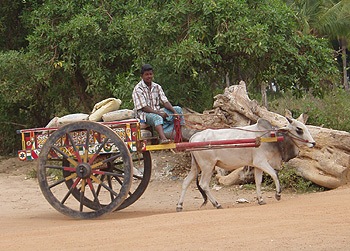
It was dark when we started out, a little difficult to walk up our dirt-and-rock road, but we made it to the paved “main” road with no difficulty, not even having to negotiate the barks of the four dogs who live between our house and the road. Soon after we arrived on the road, a bullock cart stopped and asked if we wanted a ride. The cart was piled with large, stuffed burlap bags, so simply hopping on wasn’t possible. The driver pulled me up to his level “at the helm,” and I climbed over the sacks from there. Richard followed me. I made my way to the back of the cart and dangled my legs over, but the driver said something that meant that wasn’t safe. I climbed back to the center of the pile of lumpy sacks.

So here we are at 5:45 in the morning, dawn breaking, and we’re riding down the road pulled by two bony male cattle who had to be constantly prodded by the driver, who talked to them, made clicking sounds, touched a stick to them, and, oddly, kept cupping his hands under their anuses, goosing them on.

Typical Bullock Cart

When he let us off he said “Arunachalam,” which is code around here for “give me some money.” Richard gave him a 10-rupee note, worth about a quarter, which is a lot to give for an Arunachalam request. We walked down the side road that our driver, Rajan, told us to take, but got stymied by an apparent dead end near a brick “factory.” (The way bricks are made is that the clay is molded and dried, then the pieces are stacked up into an eight-foot cube. Pieces of wood are inserted into the center of the cube, set on fire, and the bricks are fired from the inside.) Some people saw us and waved us toward the right direction. After crossing a ditch and a field, we found Nanagaru’s ashram.

We were pointed to the rooftop meeting space, where we joined a group of about 60, mostly older Indian women, seated on the floor. Nanagaru was just being seated on a plastic chair in front of the group.

He’s quite old, and looked slightly shaky. He sat in silence, looking towards the mountain, which seemed very close. He said something to a young man sitting at his feet, and the man started to shake and cry, I thought, although his back was to me. This guy is pretty powerful, I thought, to cause the young man to react like that. Reminded me of those “Christian” spiritual teachers on TV in the States, where they approach a follower and the follower falls down in a swoon. Then Nanna Garu seemed to be shaking slightly. Turns out the man at his feet was giving Nanna Garu a foot massage, and the shaking was from the  vigorous effort.

Nanagaru

The massage stopped, and a woman up front stood and gestured to a certain western woman to come forward and sit at Nanagaru’s feet. The woman seemed surprised, but she went there. No fainting or swooning for her, but she sat silently facing the Master. The Master, meanwhile, stayed silent, looked around the group several times, and then said to the woman, in English, that she should go around the mountain at 3 o’clock today. She didn’t reply, and he said no more to her.

More silence, more looking at the mountain, and I could see clearly that Nanagaru had forgotten to put his teeth in. We sat like this for a while, then he stood up, gestured a pranam to the group, and was escorted down the stairs. It was a very peaceful session. Richard remarked that he was surprised that we had been sitting for an hour, a phenomenon that happens when one’s meditation is deep. I agreed that the time went by quickly, but I suspect that I would have been way more rapt sitting on a chair on MY rooftop looking at my real guru, Arunachala.

Down in the courtyard of the ashram they had metal dispensers for coffee and chai. Having the ever-scrumptious sweetened Indian milk coffee did give me a taste of nirvana, though, and it completed the peaceful experience of being with a Master. We walked back home, pleasantly spiritual, as always. And, as I write, the day is still young!

Harsha's avatar

Indian Village 13-day ceremony: By Richard Clarke

The ceremony – Shraddha

After a death in India, the body is cremated or buried usually within one day of the death. Then a few days later an elaborate ceremony is performed, called shraddha. The details of this vary by location and caste. In Tamil Nadu the number of days after the death that this is done depends on the age of the person. The idea is that the atma (soul) takes longer to free itself from the home and family the longer the person lives. During the time between the death and this ceremony, the household where the person died is considered unclean. The residents cannot cook food, etc. In part these ceremonies are seen as contributing to the merit of the deceased, but they also pacify the soul so that it will not linger in this world as a ghost but will pass through the realm of Yama, the god of death.

The ceremony marks the time when the atma is released to what comes next.

This posting shows the 13 day ceremony for a village woman who was 55 years old, widowed, with two sons and a daughter. The funeral was shown in an earlier posting.

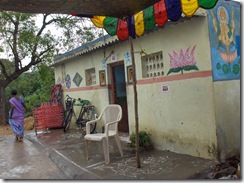
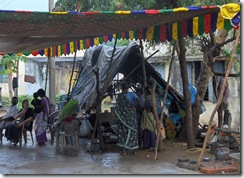
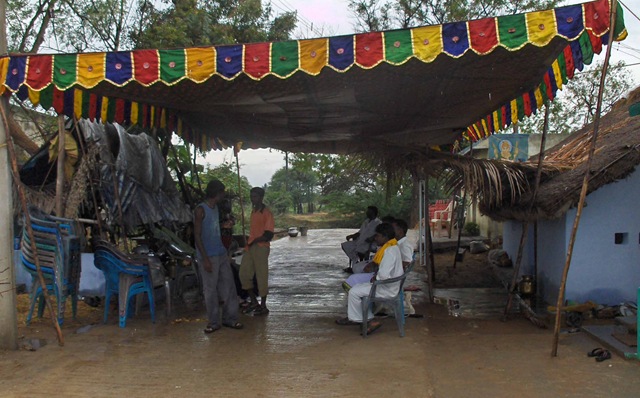
The mother’s house – the location
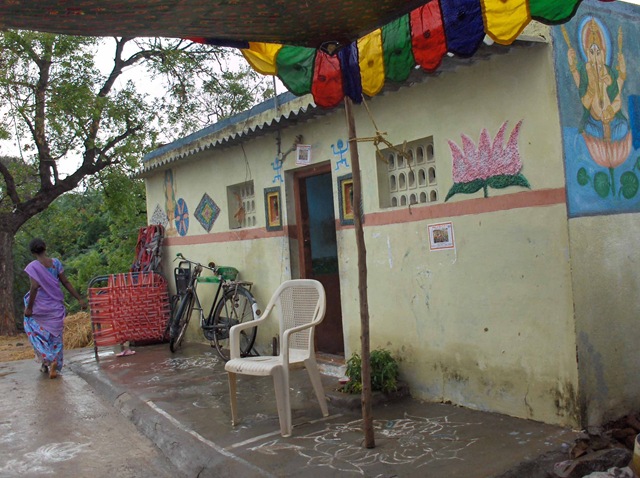
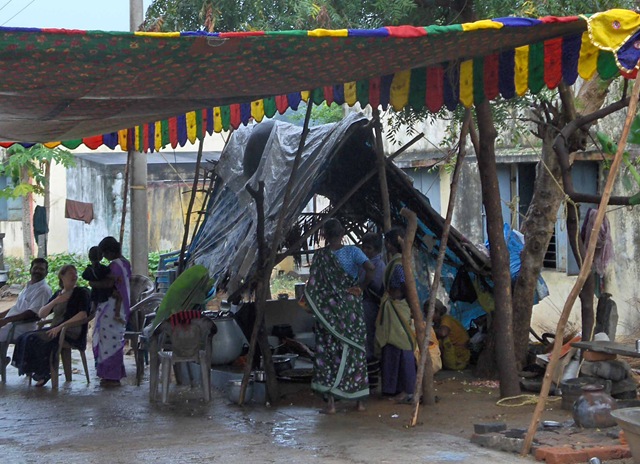
The awning set up in front of Mother's house 2A house in the village

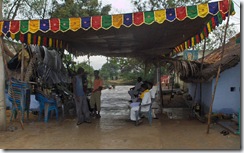
In the village street, a canopy is set up in front of Mother’s house (to the right). Another village house is shown in the picture on the right.

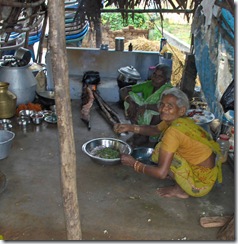
Village women gather and cook
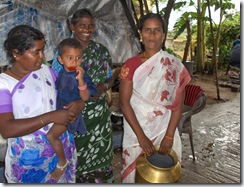
Village women

Cooking area in the villageWomen cooking

Village women are gathered to cook. These will not be residents of the household of the dead mother, since these are considered as still ‘unclean,’ so cannot be involved with food preparation.

Views from the village
Arunachala from village

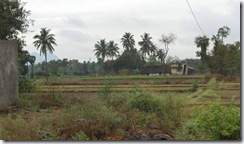
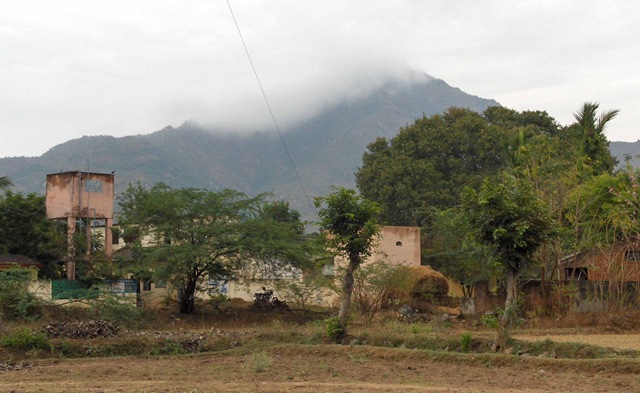
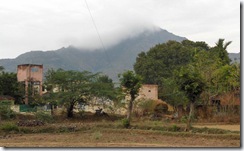
Here is Arunachala from the village
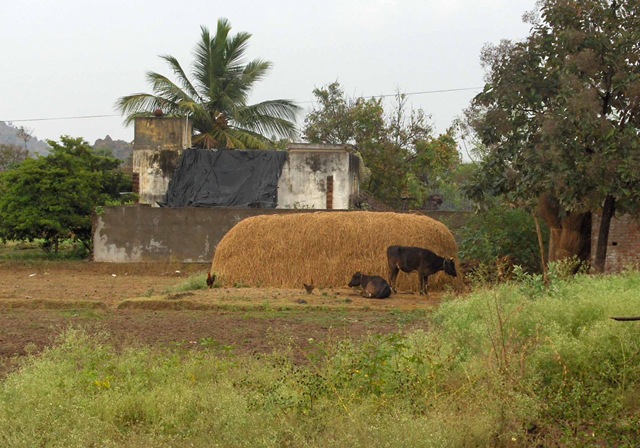
View from village - haystack and cowsView from village

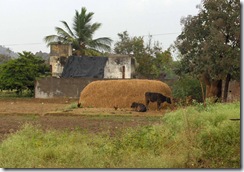
Surrounding the village are fields where rice, coconuts and ‘groundnuts’ (peanuts) are grown, and cows and goats forage.

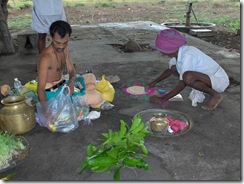
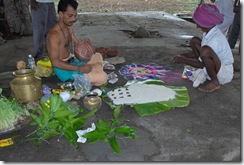
Puja in Mother’s house
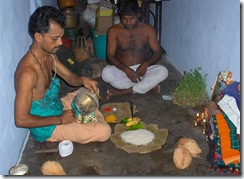
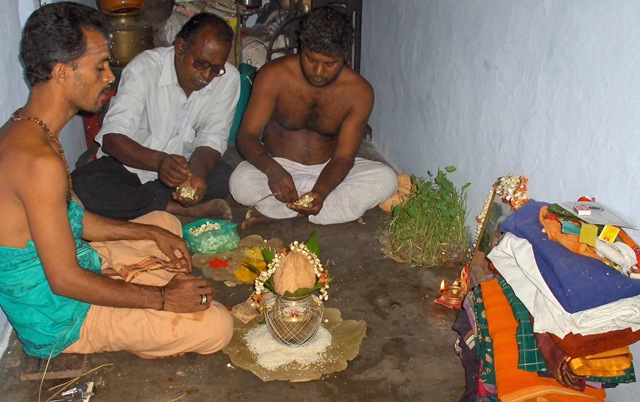
Preparing items for puja at village templePreparing for mother's pjuaMother's pjua - casting flowers on the altarMother's puja started

Mother's puja - offering camphor to picture of motherPriest blessing the crowd

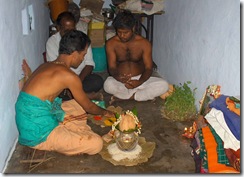
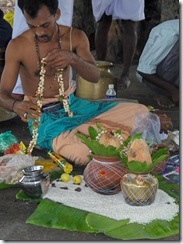
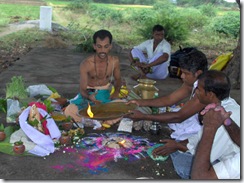
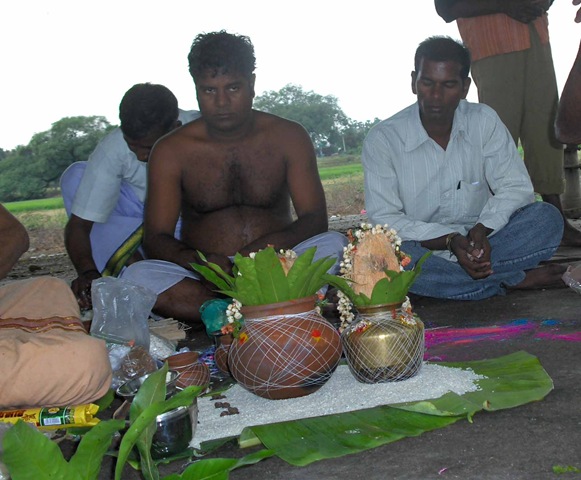
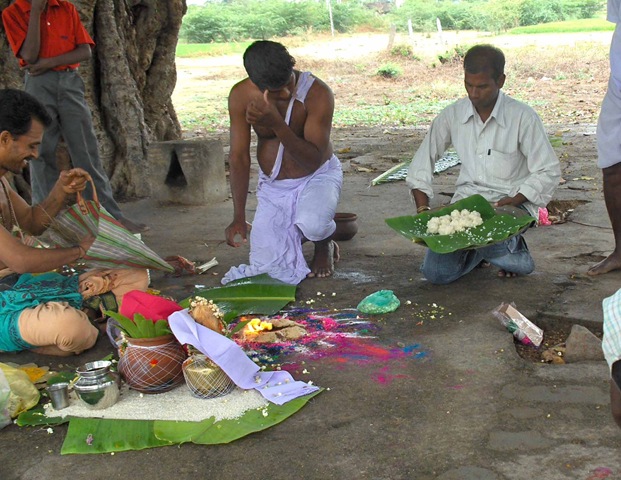
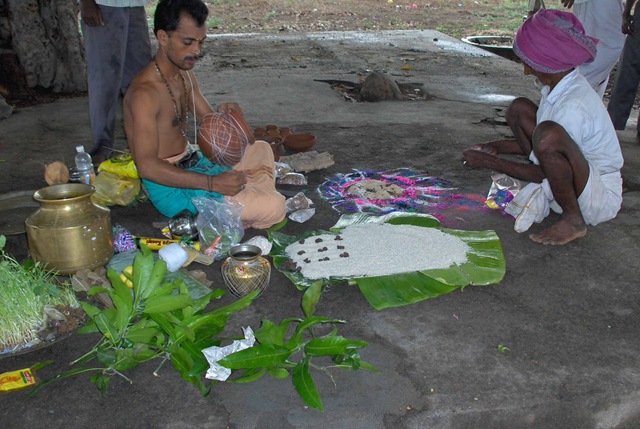
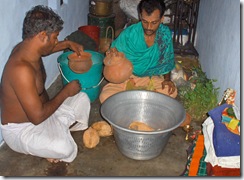
First a puja is offered for Mother inside her house. The Brahmin priest builds an altar, starting with a banana leaf, then a bed of uncooked rice. He prepares a pot by winding string around it, then placing water in it. Leave are put in the pot, then a coconut. The coconut is decorated with flowers. The first son, “Anna,” and another male relative start the puja. They will offer flowers by tossing them to the altar, and then Anna offers camphor to the altar, then to his mother.

When this is concluded the priest will take the water in the pot, which has now been consecrated by the puja and so is holy water, and ‘bless’ the people with the water.

Procession to village temple
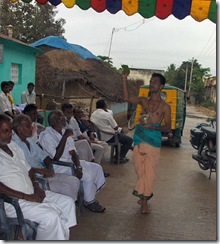
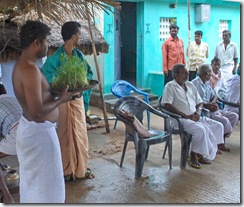
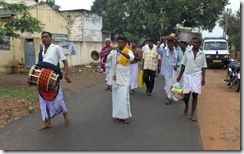
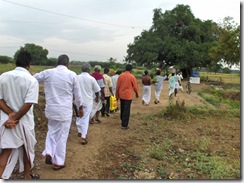
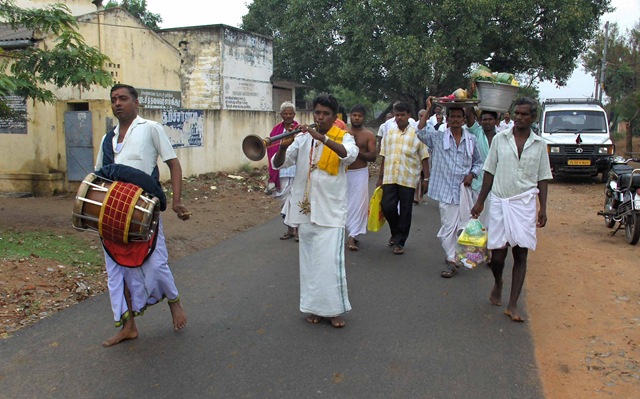
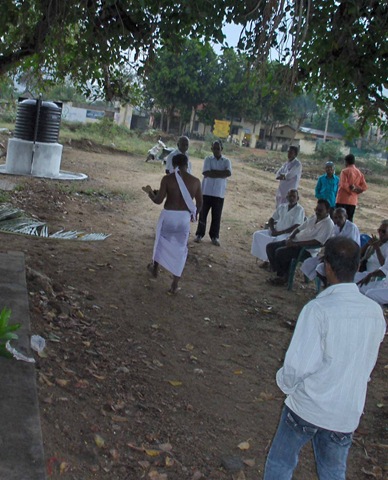
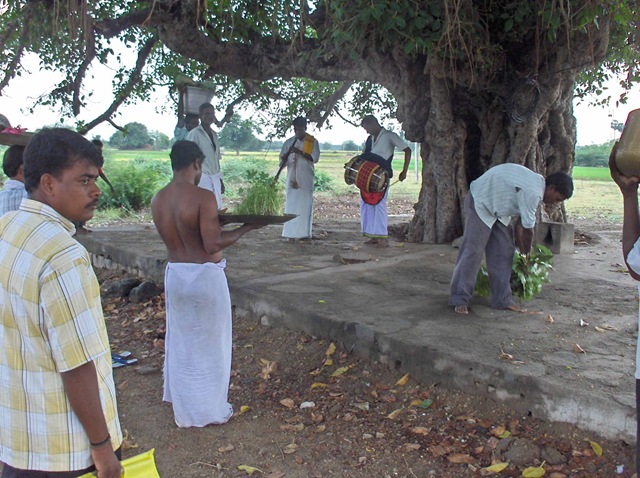
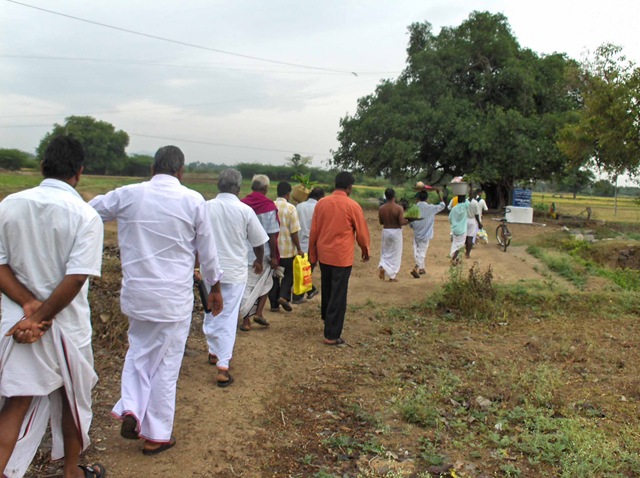
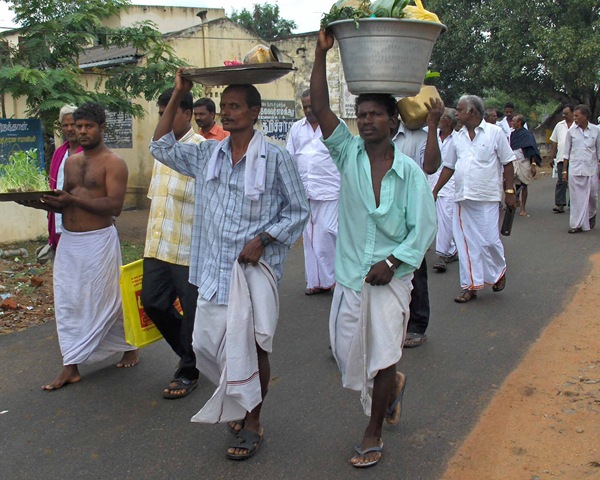
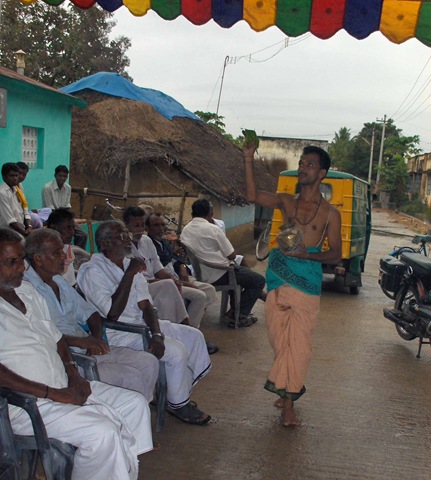
Drum and reed getting ready to walk to village templeOldest son leading the walk to the vaillage templeWalking through the villageCarrying puja items to village templeApproaching village temple At village temple

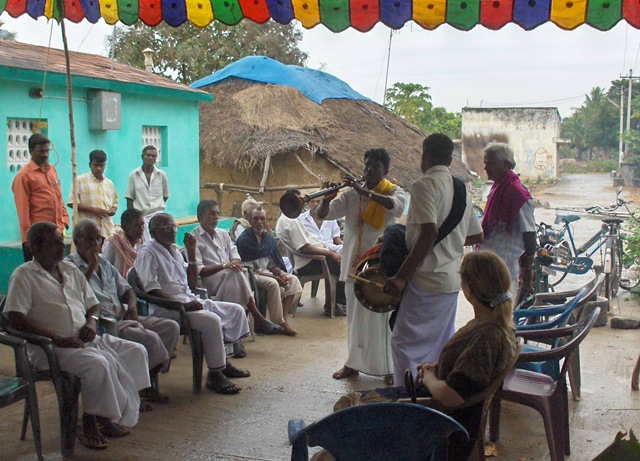
This ceremony requires different music than the drumming of the first day. A horn and drum create different sounds and rhythms than previously. The the musicians start playing and the village men, with male relatives of Mother, go in procession to the village temple, carrying the puja items that will be used there. Anna carries young plants that will be planted at the site of Mother’s ashes.

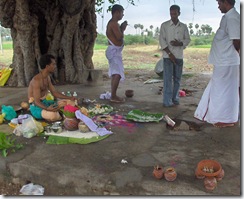
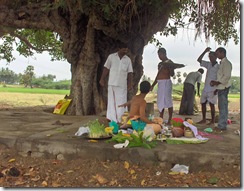
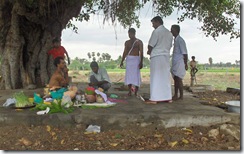
This is a small village with no walled temple. Rather there is an outside shrine, not shown here, with the tree and platform next two it. These ceremonies are usually preformed under a tree, in a special place in Hindu temples.

This simple temple and tree-temple are hundreds of years old.

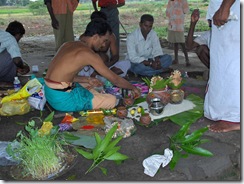
Preparing for the Tree-Temple puja
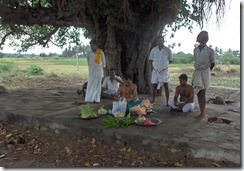
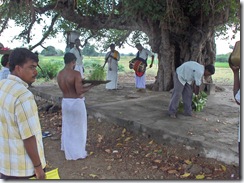
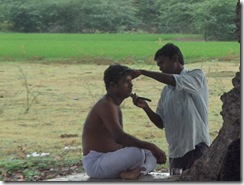
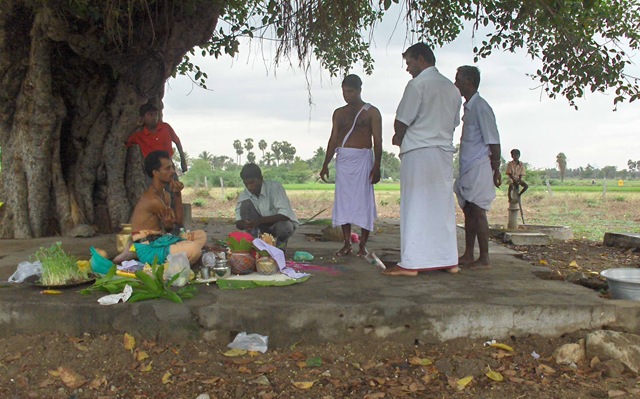
Setting up for puja at templeEldest son getting shavedSetting up for puja at temple 2Setting up for puja at temple 4

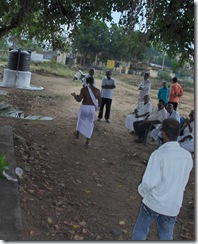
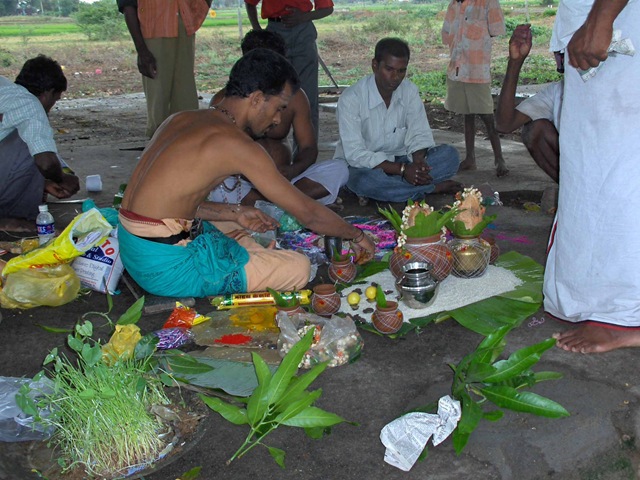
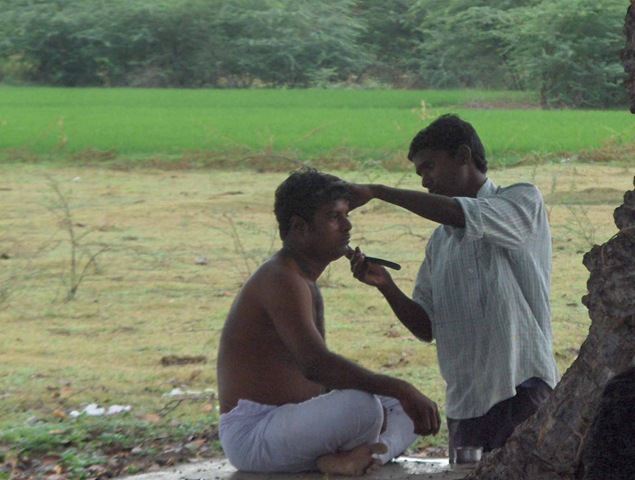
Now preparations for the puja begins. Anna is shaved of all facial hair. He has not shaved since the death of his mother. The priest and a villager work together to lay out the puja items. The specific items used depend first on whether it was a man or a woman, and if a woman, depending on whether her husband survives her, or she is a widow. This is a puja is for a widow.

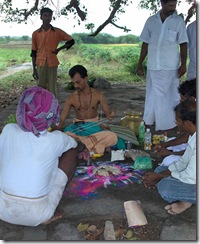
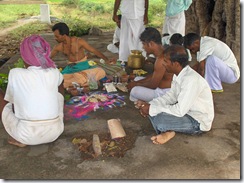
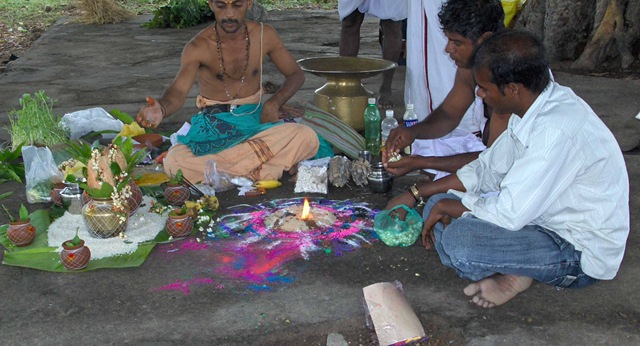
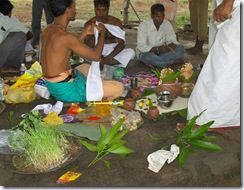
Preparation of puja altar with shrines for two gods
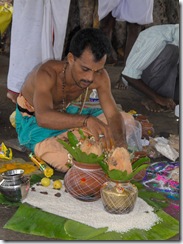
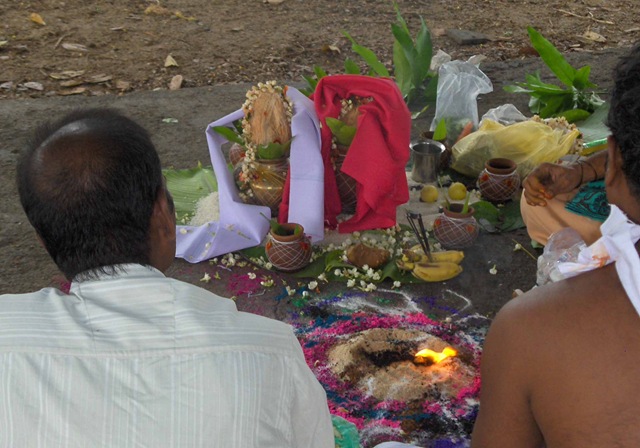
Set up of puja altarSet up of puja altar 2Set up of puja altar 3Set up of puja altar 4

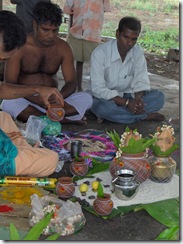
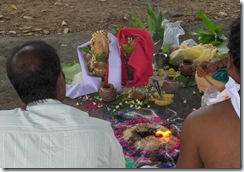
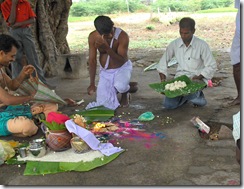
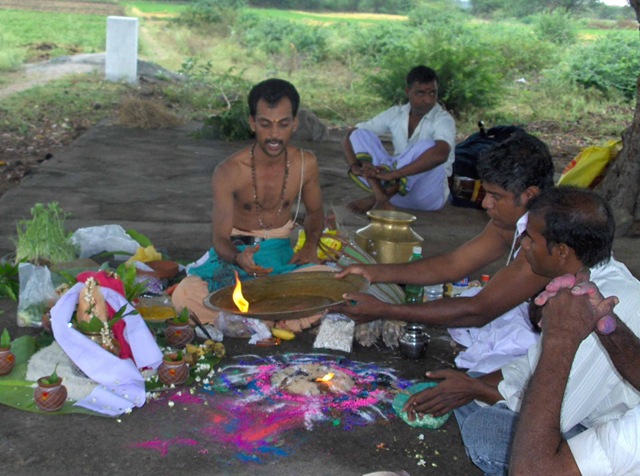
The priest builds the puja alter. As before, it starts with banana leaves and a bed of rice. Water again is put into pots, then leaves and a coconut. The ‘gods’ symbolized by coconuts are also decorated with flowers.

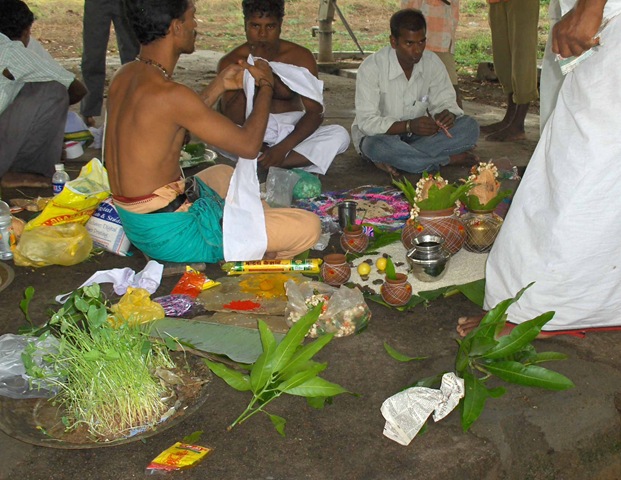
Preparing eldest son for puja
Working on the cloth strip for eldest sonPreparing string for eldest son

Now since these were not to top two castes (who do not wear the Sacred Thread) then the priest makes one for Anna and puts it over his right shoulder.

There are different methods of wearing the Sacred Thread at different occasions. While performing an auspicious ceremony one should be Upaviti, that is, the Sacred Thread should hang from one’s left shoulder. At the performance of some inauspicious ceremony one should be Prachnaviti, that is, the Sacred Thread should hang from the right shoulder; and at times it is called Niviti when the Sacred Thread is worn around the neck like a garland.

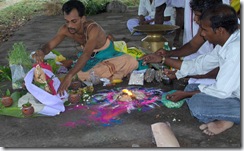
The Puja
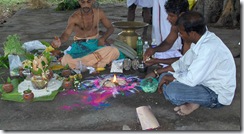
Offering flowers to altarTemple puja 1Dressing the altar gods with dhotisOffering camphor to altarGods fully dressed

Now Anna performs the puja, again offering flowers and camphor. The the ‘gods’ are dressed up in dhotis.

Preparing the coconut frond
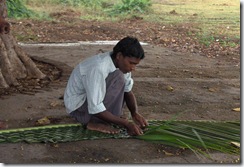
weaving coconut frond

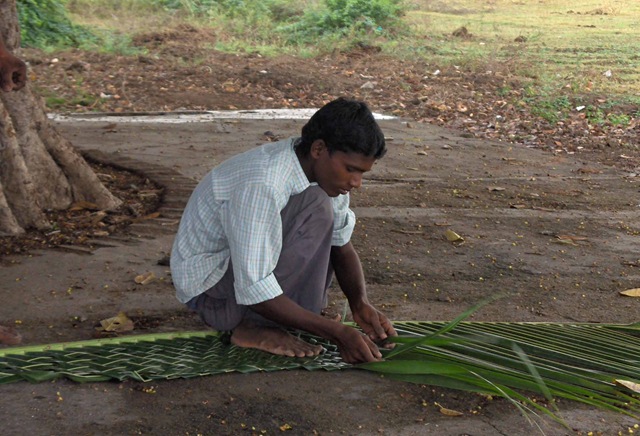
While the puja is going on, a man takes a half of a coconut frond and starts weaving it together to make the triangular structure that will later be used to offer favorites foods to Mother.

Ashes and Booma, Earth Mother
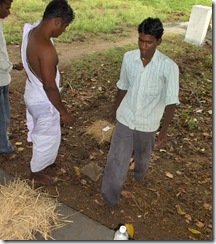
Getting ready for cremationCremation with both sons attendingCarrying ashesCarrying ashes to tank

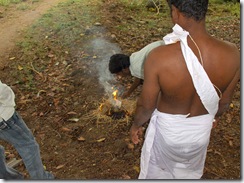
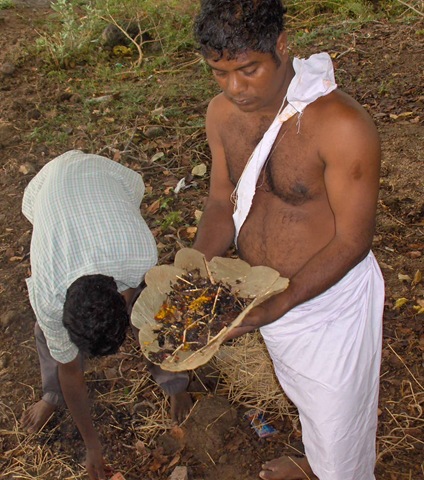
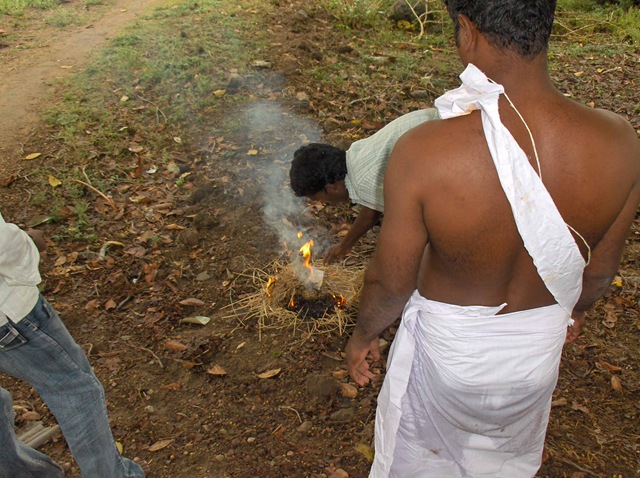
Then a small symbolic white cloth, set into a wooden frame, is placed on a bed of dry plant material on the ground, and burnt. This invokes Booma, Earth Mother. These ashes resulting from this burning are mixed with other holy materials, and carried by Anna to a nearby tank.
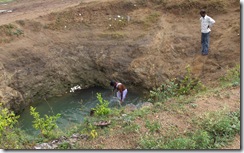
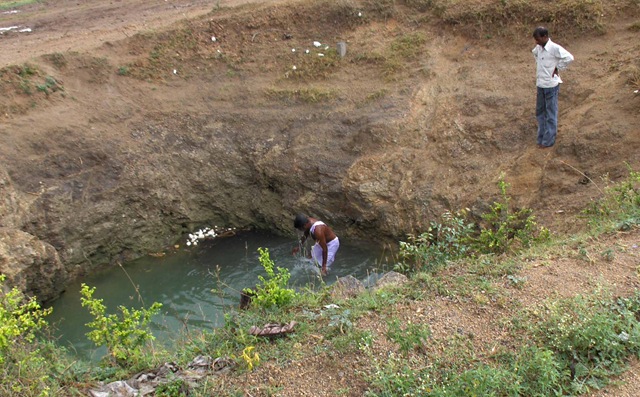
PUtting ashes into waterElsest son fully submerged

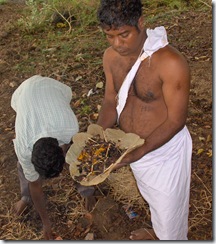
Anna then enters the tank and disperses the ashes into the water. He then submerges himself fully into the water to wash away the impurity that has been his since he lit his mother’s cremation pyre. The second son stands by.

Rice Balls – Pindas
Back from the tankPreparing rice ballsEldest son doing circle pranams Taking rice balls to the crows

The sons returned to the priest. Balls of rice and Mother’s favorite foods have been prepared. One ball represents mother. It is broken, and merged it into the ancestors. This process, known as Sapindikarana marks the end of mother’s journey. After this, the anna makes a pranam and turns in a circle (honoring the world). Both sons are led into the nearby field by a village elder, who yells “kaa kaa,” to call the crows. The rice is left in the field for the crows.

The village women join the ceremony

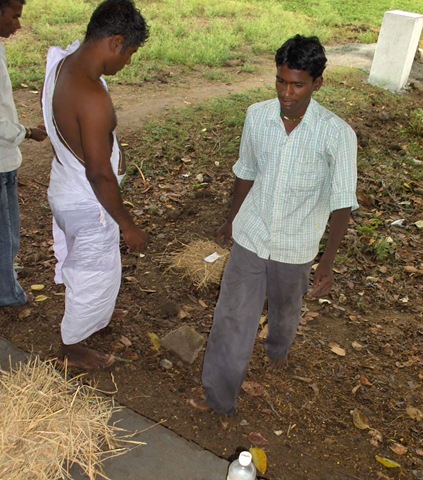
After the sons went into the field with the rice for the crows, the village women joined the men at the tree temple. A different ‘altar’ was set up with small inverted ceramic pots holding up a bowl. There were two pots, containing honey and milk, with sticks in them. Some men and women would dip sticks into the pots and then offer these into the bowl. When this was finished, the sons and the priest came over to the bowl for further puja. The sons sat, and the priest placed their outreached hands, with the younger son’s hand above the elder son’s, which was in turn above the bowl. The priest then poured various things, such as water, milk, turmeric, and kum kum, through their hands into the bowl.

Ceremonial meal for the deceased mother

Then it seemed like a ceremonial meal was offered to the mother. While the puja was going on, a man was weaving a coconut fronds. He formed these into a triangular structure, and put it on the ground in front of the tree-temple. Puja items were put into it, and about six banana leaf plates loaded with food were put in front of this. The sons offered camphor to it, and then they (and a few others) walked pradakshina, circling this structure three times.

Rice flour balls

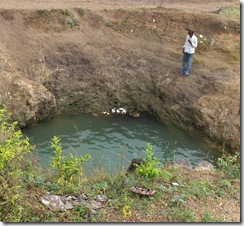
Then the priest formed a roll of flour dough and cut it into six pieces. He put dabs of turmeric and kum kum on top of 3 balls, and the sons combined each of these with the other three, forming three larger balls. Then there was the final trip to the water tank. This time both sons, as well as the daughter and another woman, got into the tank and immersed themselves, and the dough balls were offered and dissolved in the water. The ‘celebrants’ climbed out the steep rock walls of the tank, and then returned to the area under the tree temple.

Gifts for the family

The last act was gift giving by the relatives and villagers. This is needed since the children are not, per custom, allowed to buy any new clothes for themselves for the next year, the period of mourning. Nor will they celebrate the normal festivals, etc. during this period. People offered gifts of clothing and money to the sons and daughter. They gave them to the priest, stating their names, and the priest in turn blessed them by dabbing them with kum kum and then giving them to the sons and daughter. While the sons and the daughter were taking off their old clothes on putting on the new, gifts were being offered in turn to other family members.

Everyone is given a special meal

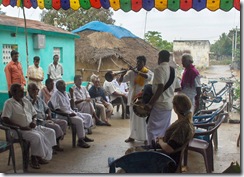
After this, everyone walked back to the village and sat under the canopy and ate the meal that had been prepared all morning by the village women. It was a pretty typical South India lunch, served on a banana leaf. Rice and sambar, fritters, rasam and buttermilk, with a small serving of sour lemon pickle. Since this was a special occasion several side dishes were also given, none of which I could identify.

The men were seated and fed first. Since my wife is a westerner she was allowed to eat with me and the men. After the men finished eating, the tables were cleared of the banana leaves and the women were able to sit and eat.

Harsha's avatar

Indian Village Funeral: By Richard Clarke

Last week in the village in which we live a woman died. She was the mother of a man we work with Ramesh, in the Quality of Life Trust. That afternoon we heard the drums, typical of such funerals, and Ramesh called us and asked us to join him. We walked about two hundred meters to the village and spent the next few hours there. We asked for permission to take photos, and some of these are in this article.

Coming into the village, under the awning is mother's body

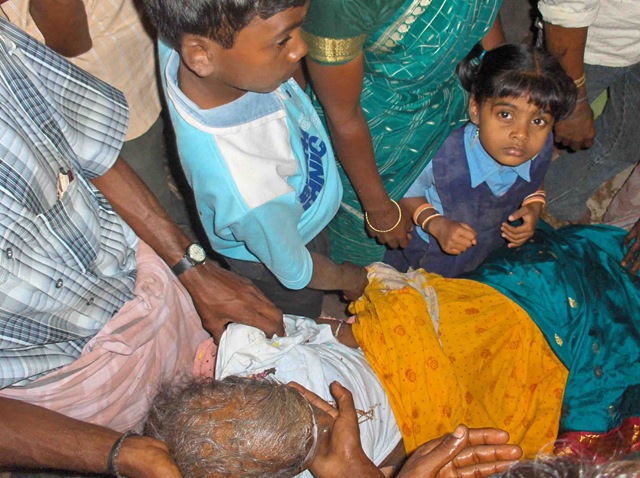
As we enter the village we see people gathered under an awning. The mother’s body is in the center of the group on her bed. People are gathered around the body grieving and paying respect.

Remesh - center

Ramesh is sitting with the men. He’s in the middle.

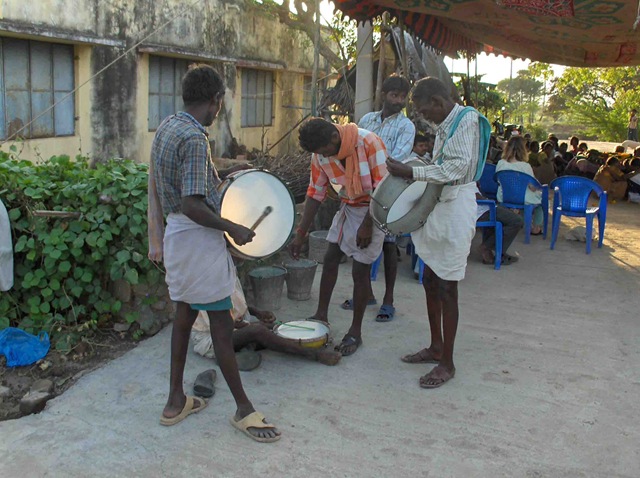
Village drummers

Drummers are important to the funeral. Their music announces the death to the village. After the drums start, people come from up to one km away to join in the ceremonies.

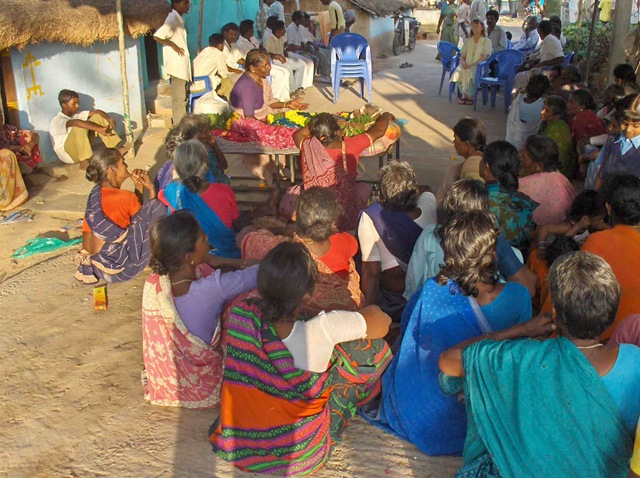
Gathered around mother - women on one side, men on the other

Often the sexes are separated. Here naturally the women and men seem to select different areas to sit.

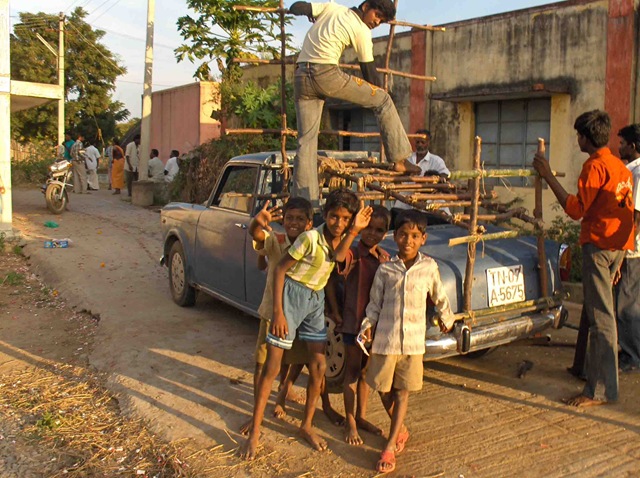
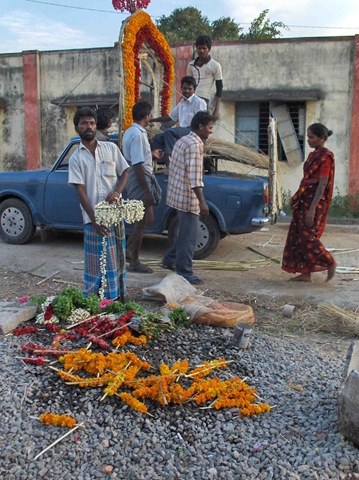
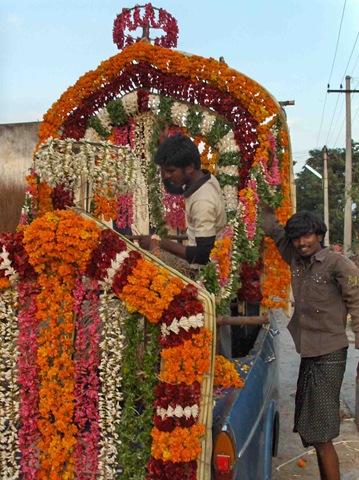
Decorating the car - building the wood frame

Much of the activity of the afternoon was in preparing the car that would take Mother to the crematorium. First a wood frame is built.

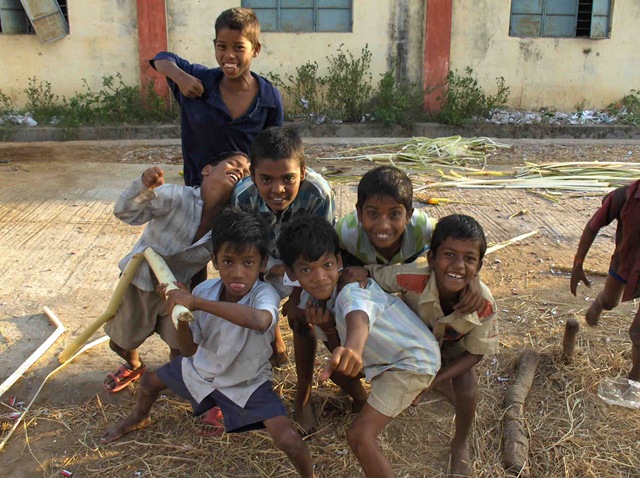
Village boys posing for a picture

The village boys seeing the camera naturally want to pose for a picture. Here they are looking tough. We’ll make some prints of this photo and give one to each boy.

Decorating the car getting started

They have started to decorate the car. Notice in the foreground bamboo sticks covered with flowers. These are bent and inserted into the frame for decoration.

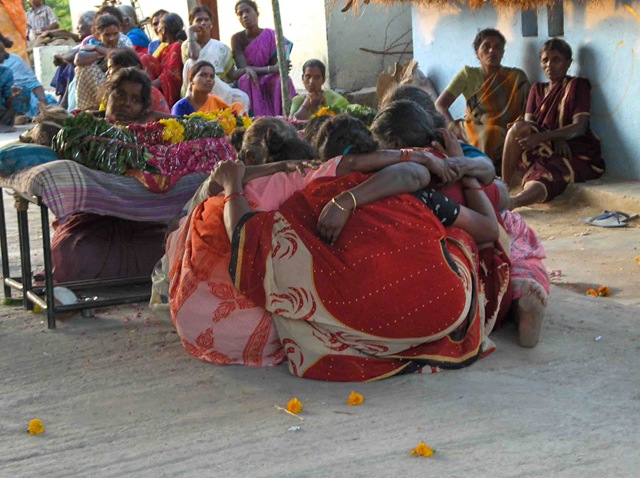
Woman joined together in mourning

The woman, grieving, would approach each other and stand and beat their chest in a gesture of mourning. Then they would get into a group hug circle and sink down into a squat. They would moan and cry together, swaying back and forth. This death was particularly painful to the village women. Mother was only in her mid fifties, young to die, even for an Indian village woman. She had had a hard life – her husband died 15 years before and she had to support the kids without much help from anyone. Somehow she was able to send at least one of her boys, Ramesh, through college. Ramesh said that she was very sad though, due to her deep poverty, and especially do to the fact than none of her children were married, and she had no grandchildren.
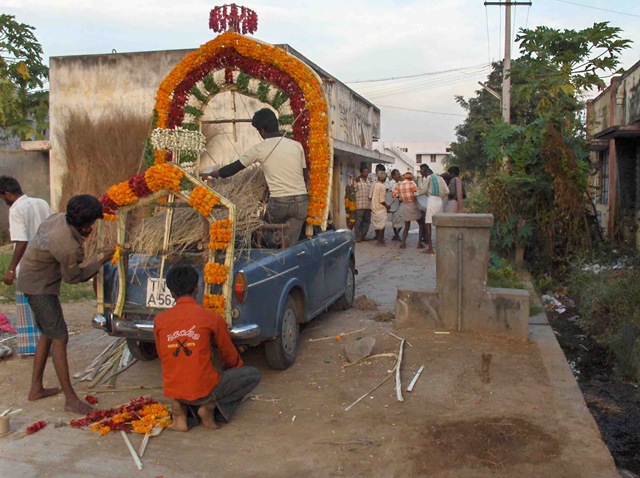
Decorating the car - working on the back

The villagers are working on the decorations for the car. Here they are bending the flower-sticks and inserting them into the frame on the back of the car.

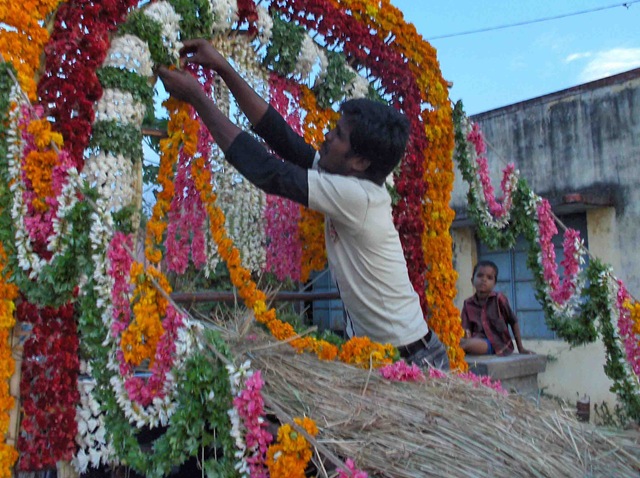
Decorating the car

Now they are adding the flower malas to the central frame on the car.

decorating the car - neraly done

Decorations are nearly done.

Villager dancing to the drums as people carry puja materials

As new people join the funeral the drummers escort them in, and ‘drum them’ into the group. Here a man is dancing as people bring puja items into the funeral.

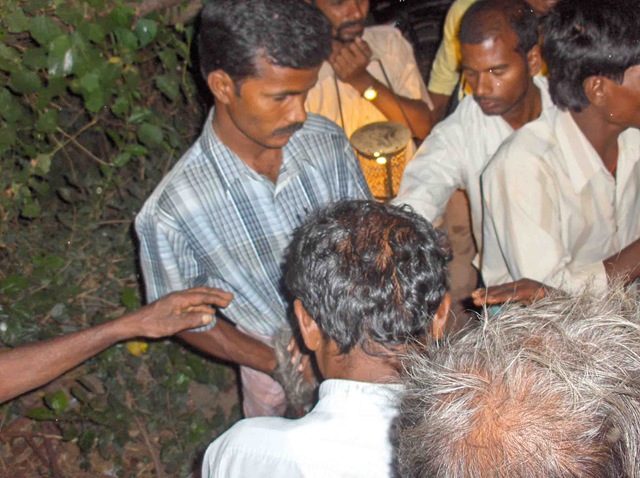
Preparing the body

Now they start to prepare Mother’s body. They will clean up the body, re-dress her in a fine sari, then perform puja, before placing her body on the decorated cart.
Ramesh helping prepare his mother's body

Ramesh (second from left) is here helping prepare his mother.
Getting puja items ready, needed to prepare the body

The men are getting some puja items ready.

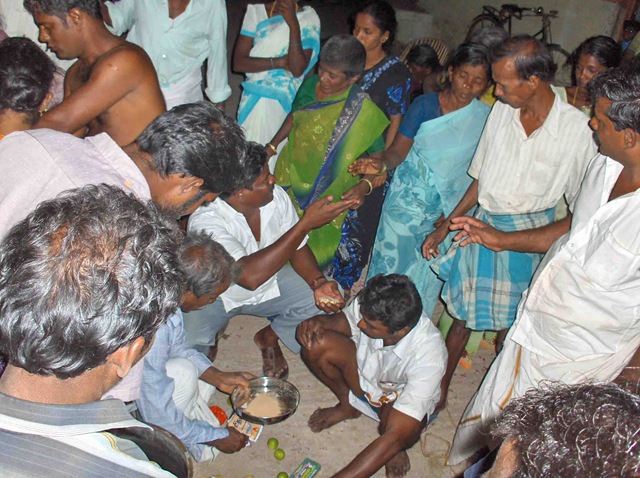
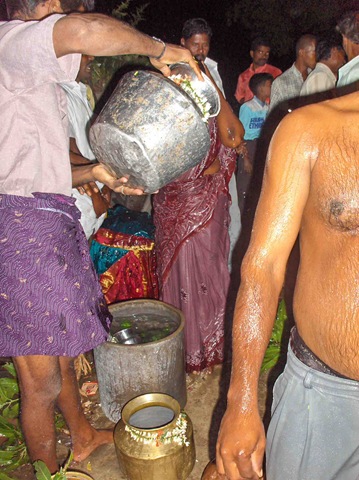
Pouring water to use in preparing the body

Water for the puja is being poured. This was not only sprinkled onto mother, but onto the people in the crowd. They especially sought out Mother’s three children and made sure they got pretty wet.
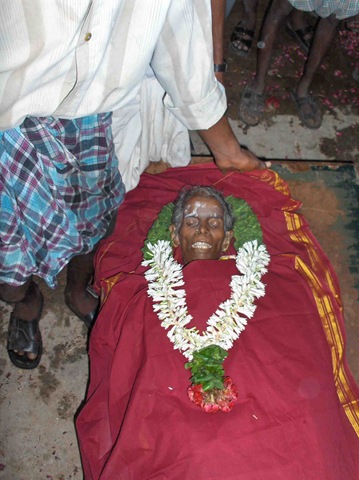
Mother's body fully prepared

Now Mother is fully prepared. Such loving care was taken in this preparation. And this was something that almost everyone in the village took part in. Very much this was a village ceremony, not just something done by the family.
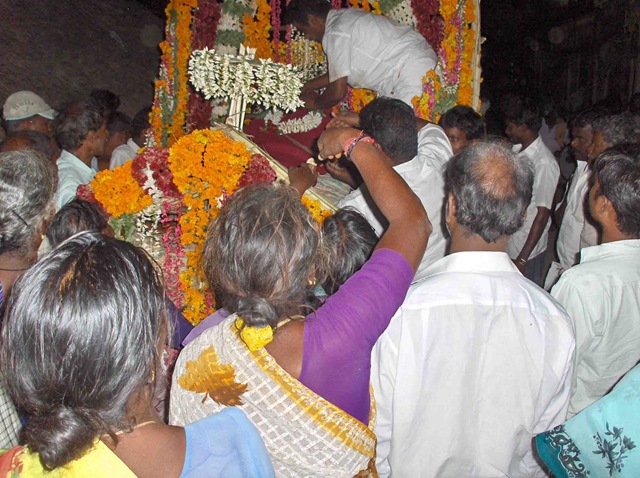
Carrying mother to the car

Mother was then carried to the car. I took part in this. She seemed so tiny, so light. She had been ill with cancer, supposedly, and stopped eating three months ago. Ramesh and his two siblings had taken her to several doctors for cures, and, as a last resort, took her to a “miracle shrine” when the doctors didn’t improve her health.

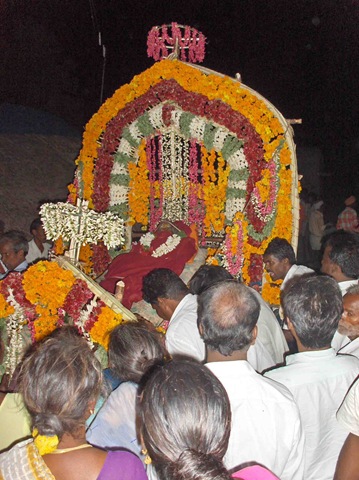
Going to crematorium

Now the car is off to the crematorium. The drummers will lead the way, then the car and the mourners.