Harsha's avatar

Nirvikalpa Samadhi and Self-Knowledge: By Dr. Harsh K. Luthar

Harsha's avatarLuthar.com

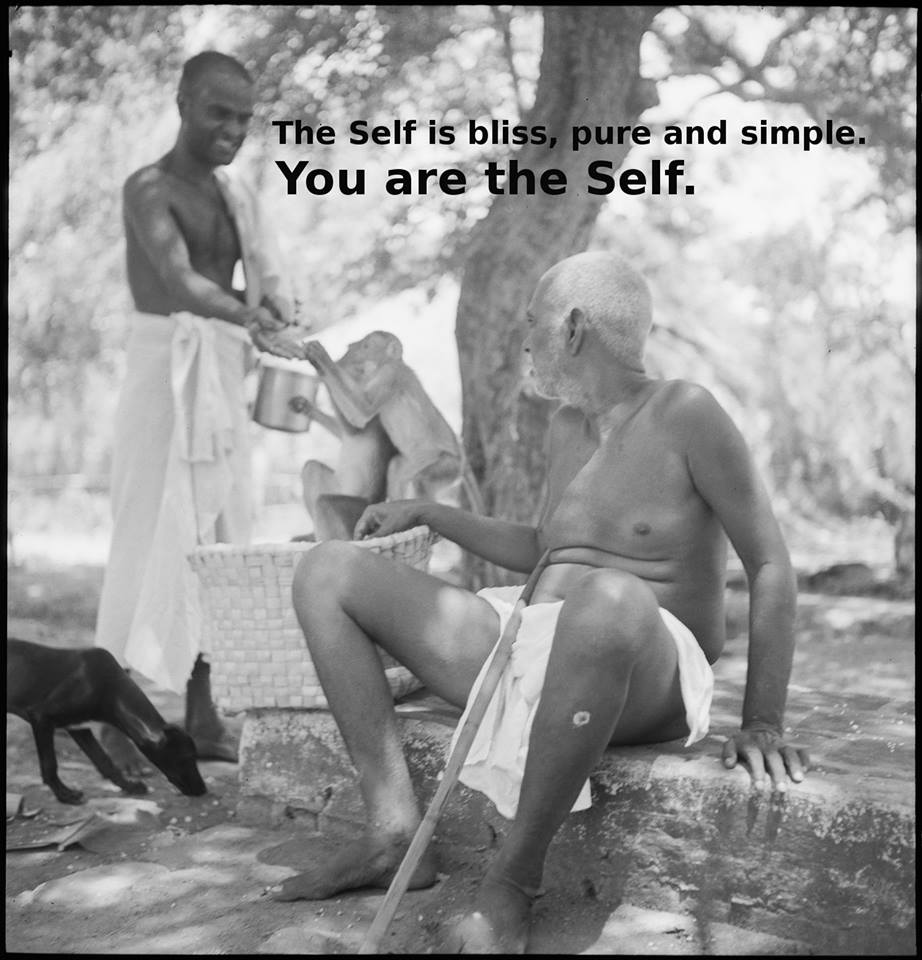
You are the Self

Sometimes people say that Nirvikalpa Samadhi is a state where there is no knower and known. That is really a half-truth. To capture the essence of Nirvikalpa Samadhi, it is better to say that in Nirvikalpa the KNOWER and the KNOWN are IDENTICAL. It is only pure consciousness that by which its very nature is self-revealing and self-knowing.

Nirvikalpa in Sanskrit means “without thought or doubt or mental modification”. It is the absence of mental modification and presence of fullness of consciousness in Nirvikalpa Samadhi which allows for the clear recognition of the Self.

Self is both the Knower and the Known, the Seer and the Seen, without any duality.  Self, being one without a second, is always self-knowing. There is no “other” for it to know. That is why we refer to the Self as Nirvikalpa. The reference to Nirvikalpa implies the nondual nature of the Self.

View original post 274 more words
Harsha's avatar

Ramana: Not Your Traveling Satsang Guru

Harsha's avatarLuthar.com

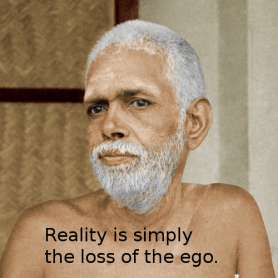
Bhagavan Ramana

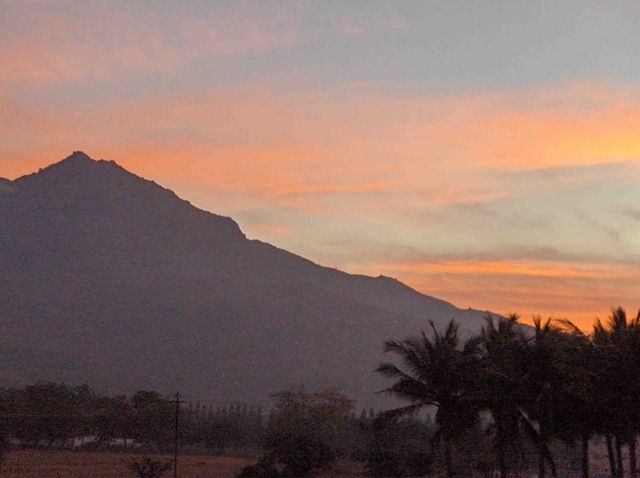
Sri Ramana was immensely attracted to the mountain Arunachala in the South of India. Arunachala has been the home of many ancient and modern Yogis, Siddhas, and Sages, and carries a great mystique.

Once Ramana got to Arunachala around the age of 17, there was no leaving. He stayed in that area for the next 53 years until his death in 1950.

That is why Ramana is called the Sage of Arunachala (and not the traveling Satsang guy).

Given below is Sri Ramana’s comments and views (from Day by Day – 27-6-46) on why he never went anywhere to give darshan or satsang.

—————————-

View original post 266 more words

Harsha's avatar

On Death and Dying: Words of Bhagavan Sri Ramana Maharshi

Harsha's avatarLuthar.com

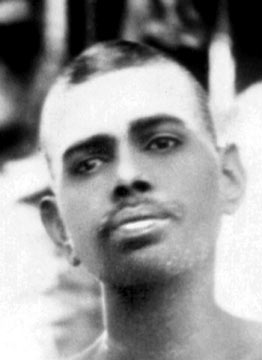
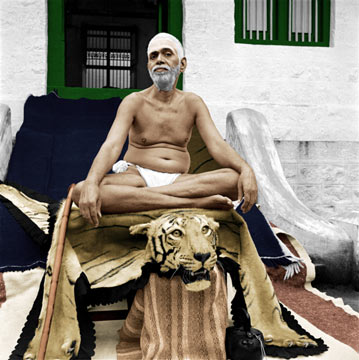
Bhagavan Ramana as a youth Bhagavan Ramana as a youth

The devotees know that Bhagavan Sri Ramana Maharshi had an intense experience of death in his seventeenth year. After the experience ended, he was established in the realisation of his true Self and the illusion of death died forever.

Here is in part Bhagavan’s description of what happened:

View original post 605 more words

Harsha's avatar

Professor and the Sage – Part 2

Professor and the Sage – Part 2

Harsha's avatarLuthar.com

Interview with Prof. N. R. Krishnamurthy Aiyer

Concluding from Part 1. Summary:

At the age 16, Professor N.R Krishnamurthy had darshan of Bhagavan Ramana. That was in 1914. Eight years later in 1922 Professor Krishnamurthy had completed his M.S. in Physics. He went and met Bhagavan again. By this time Professor Krishnamurthy was an agnostic and put a question to Bhagavan that he felt could not be answered. Bhagavan, however, answered with a counter question that transformed Professor Krishanmurthy but also created fear in him of Bhagavan. Professor Krishanamurthy did not go see Bhagavan Ramana for 12 years.  He was then a Physics Professor. Now the interview continues.
*************************************************

View original post 1,188 more words

Harsha's avatar

The Professor and the Sage – Part 1

The classic story of Professor Krishnamurthy Aiyer meeting with Bhagavan Ramana (Part 1)

Harsha's avatarLuthar.com

Professor N.R. Krishnamurthy Aiyer Speaks:

I am now ninety-two years old and I first met Sri Ramana Maharshi in the summer of 1914, when I was just a boy of sixteen. We were then on a pilgrimage to Tirupati and had halted in Tiruvannamalai, from where my grandmother hailed. We were not strangers to this town.

In the pilgrim party there were half a dozen boys, all of whom were about my age. We all decided to go up to Virupaksha cave. The Maharshi was then residing there and was attentive to all the activities of us youngsters. I noticed his gaze particularly focused on me.

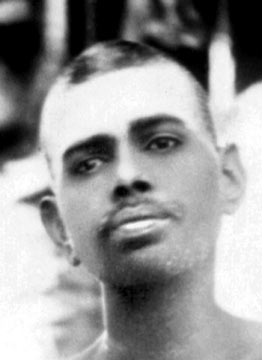
Bhagvan Ramana in his youth

We were all playing with the conch shell. The sadhus used to blow this shell like a horn when they went into town to beg for alms.

View original post 858 more words

Harsha's avatar

Spiritual Heart and Self-Realization: By Dr. Harsh K. Luthar

Spiritual Heart is an important topic in Bhagavan’s teachings and comes up again and again.

Harsha's avatarLuthar.com

Dear Harsha:

Arthur Osborne, a close devotee of Bhagavan Ramana said that while doing self-inquiry, he tried to focus on the spiritual Heart-center to the right of the chest. However, I have heard some scholars on Ramana’s teaching say that the Bhagavan did not recommend meditating on a specific location and that Arthur Osborne may have misunderstood the essential method and Bhagavan’s teaching.  Is it necessary to meditate on the Spiritual Heart center in order to become Self-Realized? Some well known people like Nisaragadatta Maharaj and Krishnamurthi never mention the Heart in the same way that Bhagavan Ramana does. What is the explanation for this?

Sincere Seekers (composite question)

View original post 793 more words

Harsha's avatar

Sage of Arunachala Sri Ramana Maharshi: By Dr. Harsh K. Luthar

Harsha's avatarLuthar.com

Over a period of more than half a century, some of the greatest yogis and sages of India and even a few Shankracharyas had the good fortune to visit the Sage of Arunachala, also known as Bhagavan Sri Ramana Maharshi. The list of luminaries who sought Bhagavan’s grace over a period of 53 years would be too long to recite in this short piece.

View original post 633 more words

Harsha's avatar

The Perfect Meeting_Ramana and Ramdas

Harsha's avatarLuthar.com

Papa Ramdas swamiramdasphoto

Swami Ramdas describes how he attained the Divine Vision through the Grace of the Bhagavan Sri Ramana Maharshi. Swami Ramdas was called “Papa” by his devotees.

View original post 960 more words

Harsha's avatar

Easy And Natural Is The Way: By Dr. Harsh K. Luthar

Harsha's avatarLuthar.com

Dear Friends,

Sahaj in Sanksrit means easy and natural.

There is saying in Hindi, “Sahaj pake so meetha hoy.”

It means that easy and natural cooking of food leads it to taste sweet.

It is something like the English saying that soup that simmers slowly or the cake that is baked slowly tastes best in the end.

These are metaphors for life. When we do something with care and love, the results are better. Sometimes we even say that, “this is a labor of love.” When we love what we do, it does not feel like work.

Everything has its nature. When we are true to our own nature, an easy authenticity takes over. Then we are not concerned about impressing others nor worried about how others are judging us.

Nature is showing us the way. Seasons are coming and going. Flowers bloom and then wither. We are breathing in…

View original post 640 more words

Harsha's avatar

Meeting Nisargadatta Maharaj: By Dr. Lakshyan Schanzer

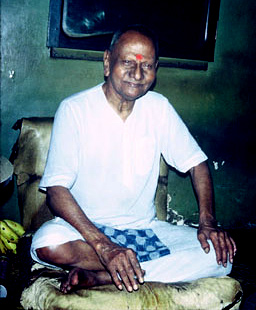
A classic and original article about meeting Nisargadatta Maharaj in 1978 by Dr. Lakshyan Schanzer. All the pictures of Nisargadatta Maharaj were taken by Dr. Schanzer. At the end, the author is shown sitting with Maharaj.

Harsha's avatarLuthar.com

By Dr. Lakshyan Schanzer

My name is Lakshyan Schanzer. I have been practicing and teaching yoga and meditation since 1971. I am also a psychologist and practice a meditative approach to psychotherapy. This is my first writing about my experiences with Nisargadatta Maharaj.

By 1978 I had been practicing and teaching for about 7 years (primarily Integral Yoga) and had reached a ‘wall’ in my practice. I was having wonderful experiences/results on a daily basis. Yet, for me, these experiences were just that; only experiences. Yes, they were important and healing ones, bringing revelations and insights into my history, release of deep feelings, or guidance about the coming day or accurate premonitions about the future.

However, as I became accustomed to ‘pushing the buttons’ that generated these experiences, I began to ask myself: “Was there any value beyond these temporary conditioning effects of regular practice? That is, if we experience…

View original post 1,525 more words