


Although it is referred to in many different ways the Kundalini Shakti plays a key role in all spiritual traditions. The principles are the same, the effects are the same; but the words and symbols used to express Kundalini differ. In the Judeo/Christian tradition Kundalini is known as the Holy Spirit, Living Water, Christ, the Anointing, the Word and by other terms as well.
But before exploring the details of Kundalini in the Judeo/Christian scriptures, I would like to introduce the subject by examining the authentic and original message of Jesus.
View original post 3,108 more words
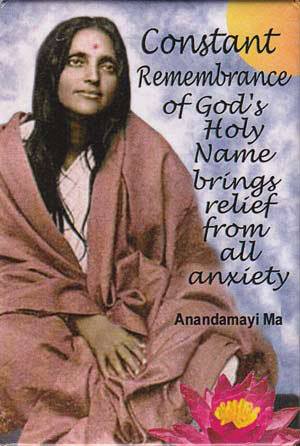
Gopi Krishna’s emphasis on Kundalini as a biological evolutionary force is a very limited view of the great Shakti.
Shakti is the fundamental Spiritual Principle and Force which has physical, mental, and psychic manifestations. These manifestations cannot indicate or capture the depth of this Great Power. Its ultimate nature is only realized when the Shakti completes its Journey to the end and reveals the deepest mystery of existence and the Self is Recognized.
Yes, the Shakti is Maha Sarswati, the Goddess of Wisdom. She makes one a poet, a scholar, and an orator. She bestows high intelligence. She is the teacher in both the earthly and subtle psychic realms.
View original post 103 more words
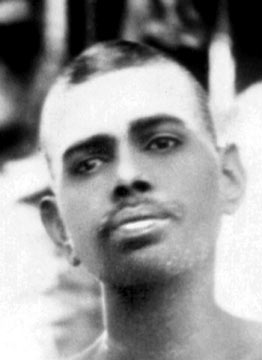 Bhagavan Ramana as a youth
The devotees know that Bhagavan Sri Ramana Maharshi had an intense experience of death in his seventeenth year. After the experience ended, he was established in the realisation of his true Self and the illusion of death died forever.
Here is in part Bhagavan’s description of what happened:
View original post 605 more words
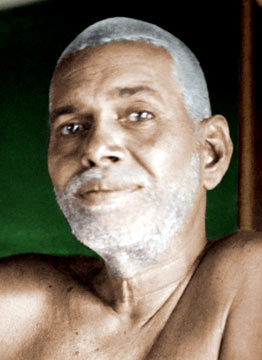
Professor and the Sage – Part 2
View original post 1,188 more words
The classic story of Professor Krishnamurthy Aiyer meeting with Bhagavan Ramana (Part 1)
I am now ninety-two years old and I first met Sri Ramana Maharshi in the summer of 1914, when I was just a boy of sixteen. We were then on a pilgrimage to Tirupati and had halted in Tiruvannamalai, from where my grandmother hailed. We were not strangers to this town.
In the pilgrim party there were half a dozen boys, all of whom were about my age. We all decided to go up to Virupaksha cave. The Maharshi was then residing there and was attentive to all the activities of us youngsters. I noticed his gaze particularly focused on me.
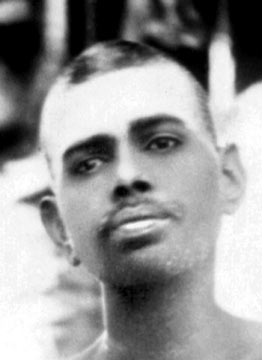 Bhagvan Ramana in his youth
We were all playing with the conch shell. The sadhus used to blow this shell like a horn when they went into town to beg for alms.
View original post 858 more words
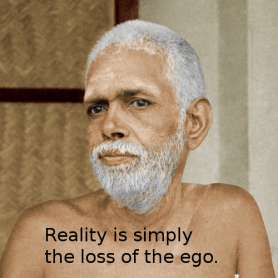
Spiritual Heart is an important topic in Bhagavan’s teachings and comes up again and again.
Dear Harsha:
Arthur Osborne, a close devotee of Bhagavan Ramana said that while doing self-inquiry, he tried to focus on the spiritual Heart-center to the right of the chest. However, I have heard some scholars on Ramana’s teaching say that the Bhagavan did not recommend meditating on a specific location and that Arthur Osborne may have misunderstood the essential method and Bhagavan’s teaching. Is it necessary to meditate on the Spiritual Heart center in order to become Self-Realized? Some well known people like Nisaragadatta Maharaj and Krishnamurthi never mention the Heart in the same way that Bhagavan Ramana does. What is the explanation for this?
Sincere Seekers (composite question)
View original post 793 more words
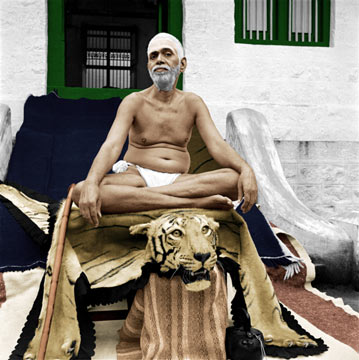
Over a period of more than half a century, some of the greatest yogis and sages of India and even a few Shankracharyas had the good fortune to visit the Sage of Arunachala, also known as Bhagavan Sri Ramana Maharshi. The list of luminaries who sought Bhagavan’s grace over a period of 53 years would be too long to recite in this short piece.
View original post 633 more words
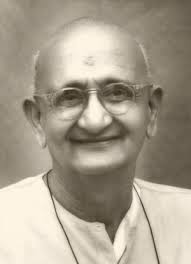
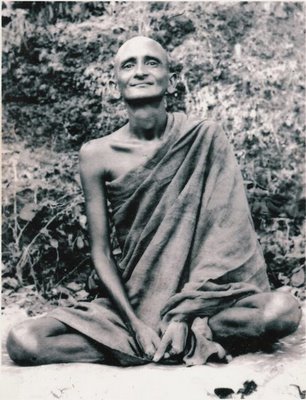
Swami Ramdas describes how he attained the Divine Vision through the Grace of the Bhagavan Sri Ramana Maharshi. Swami Ramdas was called “Papa” by his devotees.
View original post 960 more words

 Luthar.com
You must be logged in to post a comment.