Harsha's avatar

Sage Wisdom: By Alan Adam Jacobs

Whoever is awake to the material world
Is fast asleep to the spiritual world.
This wakefulness is far worse than sleep,
When our soul’s asleep to God, it’s a door
Closing, to prevent the entry of His grace.
All day we suffer from a host of fantasies,
Thoughts of loss, gain or degeneration.
For the Soul there is neither joy nor peace
Nor a way of progression heavenwards.
The sleeper has his hope in each vain fancy
And converses idly with these foolish voices.

The bird of the soul flies cheerily on high
While its shadow is speeding upon Earth,
Some fools hasten to chase their  shadow
And rushing hurriedly become exhausted,
Not understanding that it’s a reflection,
Nor knowing from where it originates.

They vainly shoot arrows at this phantom,
His quiver soon empties from the long quest.
The  contents of his worried life become a void,
Time passes in chasing after this grey shadow.
But when God’s shadow becomes a nurse maid.
It saves him from  fantasies and illusion.
God’s shadow is the true servant of God.

Dead to this  world yet living through Him.
Take hold of His hem quickly so your skirt
May also be saved at the end of your days.
Never enter this dark valley of the shadow
Without a guide who’s a true son of God.
Desert the grey shadow, gain the bright Sun
Hold the hem of the orb of Shams Tabriz.

If you don’t know the way to the bridal feast
Enquire into God’s radiance named l’Haqq.
If envy grabs you by the throat on the way
It is Satan who reaches beyond all bounds.
Because from green envy he hates Adam
And he’s at constant war with happiness.

On the way there’s no harder bridge to cross.
Happy is he who hasn’t made envy his friend.
The body is a mansion packed full of hate,
The family and  servants are all tainted.
Yet Almighty God made the body to be pure
So sweep clean His house. The purified heart
Is a true treasure and Earth’s gold talisman.

If you indulge in guile, deceit and envy
Against one who’s without a hint of blame,
Then black stains swell up in your heart.
So rest as dust under the feet of a Sage
Amd scatter the dust on envy’s bald head.

Any fool who mtorments his body is unfit
For comprehending the spiritual life .
The nose catches fragrance leading to truth
That scent is the God revealed religion.
If he’s whiffed this perfume with ingratitude,
It comes and destroys his organ of perception.

Give thanks! Be a slave to those who are grateful,
Be in their presence as one truly steadfast.

Please note that this is a versification I have made from Rumi's Mathnawi
The Complete Literal Translation by Reynard Nicholson 

Alan Jacobs
Harsha's avatar

Njanappaana by Poonthaanam Numidiri-1

 
translation and commentary by Smt. Savitri Puram 
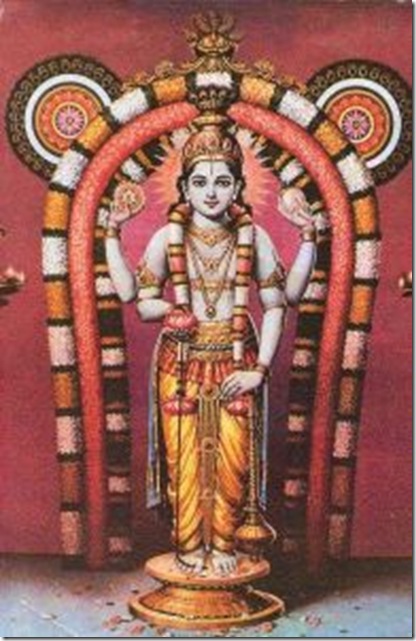
      duzvdh4anypjffvi_D0_guruvayurappa

Krishna! Krishna! Mukunda! Janaardana!
Krishna! Govinda! Naarayana! Hare!
Achyuthaananda! Govinda! Maadhava! 
Sachidaananda! Naarayana! Hare!

Introduction

Njanappaana can be considered as the Bhagavad Gita of Malayalees. This is a Darshanika kaavyam or philosophical poem expressed in the most simple Malayalam language for ordinary people. Poonthanam Nambudiri, an ardent devotee of Shri Guruvayurappan, transformed his unbearable sorrow from his infant son’s death into a “yogavishesham”. He used this sad experience to build his Bhakthi soudham or house of devotion and opened it for all devotees for all time. Even though the language is very simple, this njaanappana, or song of wisdom deals with the essence of all vedas and upanishads. May Bhagavan Guruvayurappan, Bhagavathy Sarswathi Devi and Sri Poonthaanam Nambudiri bless us to become wiser by going through this great Song of Wisdom!!boarder

Gurunaadhan thuNa chaika santhatham thirunaamangal naavinmel eppozhum
Piriyaatheyirikkanam nammude nara janmam saphalamaakkiduvaan

May my Gurunathan help me (thuna chaika) to keep the auspicious names of Lord continuously on my tongue (naavinmel eppozhum) and to make this human life (narajanmam) meaningful and fruitful!(saphalamaakkituvaan).

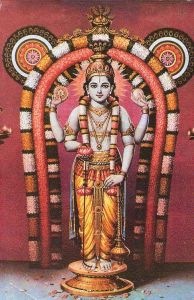
The only way to to make the human life fruitful and meaningful is to constantly chant the auspicious names of Lord. So, the poet is seeking the blessings of his Gurunaathan to help him retain the naamam on his tongue for ever. Who is Poonthanam’s Guru?  He is considering Guruvayurappan as his Guru because Lord is both the remover of the darkness of Anjaanam or avidya (Guru) and the protector and saviour of all (Naathan). After innumerable births in lower species,we finally got narajanmam in Kaliyuga. Kalisantharanopanishad and many other scriptures reinforce the importance of naamasankeerthanam in Kaliyuga. Naamasankeerthanam can be done any time anywhere.

Innaleyolam enthennarinjeela Ini naaleyum enthennarinjeela
Innikkanda thadikku vinaashavum Inna neramennaethumarinjeela

We really do not know what happened until yesterday or what would happen tomorrow. Neither we know when this body we see today will perish.

When we look at the literal meaning, we may feel like responding: “I know what happened until yesterday and I can roughly guess what will happen in the coming days. I am hail and healthy and unless I get into an accident or so I should be able to live many more years”.

Poonthaanam is putting his forefinger on his nose with an expression of “what a pity?” because he meant much more than the literal meaning of yesterday, tomorrow and our present body. He persuades us to think deep about the uncertainty of life. Yesterday and today also means previous janmaas and future janmaas. We do not know about our previous janmaas or good and bad karmaas we have accumulated. A great part of our good and bad experiences in this janma is the direct result of our past karmaas. We cannot undo the sins or suffering by anything other than sincere prayers. Bhagavaan is the only one who can change the results of our praarabdha karmaas and in Kaliyuga, naamasankeerthanam pleases Bhagavan more than anything. We do not know what is in store for us tomorrow. How can we make sure that our future is in safe hands? Only by offering ourselves in His strong and kind hands. Then what about today? At present we live in this body and the moment jeevathma leaves the body, it becomes lifeless like a log of wood. We have absolutely no idea when that will happen. Here Poonthaanam used the word “thati” for body to specifically tell us that body is like a log of wood or worse than a log of wood when it is lifeless. A dead body that is not preserved starts deteriorating in a few hours where as a log of wood may remain intact for several months or even years. Poonthaanam advises us to think deep about these truths and use every moment available to worship Lord with naamams. Chaitanya Mahaprabhu also said that there are no hard and fast rules for chanting naamaas. Anytime one can chant and under any circumstances one is allowed to chant. “Shuchir va ashuchir va sarva avasthaasu sarvada” meaning in any condition clean (purified) or dirty (impure) one can chant the auspicious names of Lord.

Kandukandangirikkum janangale  Kandillennu varuthunnathum bhavaan
Randu naalu dinam kondorutthane Thandiletti nadathunnathum bhavaan
Maalika mukaleriya mannante Tholil maaraappu kettunnathum bhavaan

If Bhagavan wishes, those people whom we see today may disappear (may be dead) by tomorrow. Again if Bhagavan decides, with in a few days (two or four days) a healthy man’s dead body may be carried to the funeral pyre. In the same way, by God’s wish, a king sitting in a palace (maalika) can become a beggar with a dirty bag (maaraappu) hanging from his shoulders (tholil).

Poonthaanam explains how transient is our life, wealth, poverty, sorrows and everything that we see in this world. A man walking and having fun this moment can embrace death the next moment. Everything is Lord’s wish! In Kerala, usually a dead body is tied to a wooden ladder or a piece of long wood and carried by relatives (normally by sons) to the funeral pyre. However hail and healthy one may be, when the time decided by Lord approaches, chaitanyam or jeevan disappears leaving the dead body to be carried to the funeral pyre. It can happen any time, in one day, two days or four days (randu naalu dinam kondoruthane). Here Poonthanam used the word “mannan” for king (mannante) because “mannan” also means “drushtan” or “aviveki”. He advises that those people who have money and power should have the vivekam to use both dharmically remembering that they came to this world with nothing and would go from this world with nothing. Bhagavan can take it any moment from anybody.

By Lord Krishna’s blessings, Kuchela or Sudama became wealthy overnight. What about Ravana? He lost everything that he held dear and finally he lost his life too at the hands of Lord Rama. Even if we are destined to go through sufferings due to our past karmaas, surrendering to Lord will lessen the negative effects and lead us to Satgathi. “Bagavan says in Gita: “na hi kalyaanakruth kashchid durgathim thaatha gacchathi” meaning “If you do good, it will definitely lead you to satgathi or protect you from any harm”. Poonthaanam tells this truth from his own experience of the tragic and sudden death  of his infant son.

I have heard several versions of the story. But the following is the one I heard from my parents. Poonthaanam’s son was 5 months old and anna praasham (giving rice for the first time is called “choroonu” in Malayalam and usually it is done either the 5th month or 7th month ) ceremony was fixed. He invited several relatives and that morning after feeding the baby his wife made a bed in the room next to the hall where the ceremony was to be conducted. Usually there will be an entrance to that room from the kitchen also. Baby was sleeping and his wife was busy with all the preparations. It was morning and one namboothiri lady finished her bath and put the wet clothes in the same room where the baby was sleeping. That room was dark even during day time and she did not see the baby and unfortunately wet clothes were put on the baby’s face. ( I can very well believe this because in my house, there is a room on the north side called Vatakkini which is very dark even in day time. So when our parents told us this story, we listened with tears in our eyes and we felt it could happen in any Nambudiri house.) Then the next lady came after bath and seeing the wet clothes in a corner she also put hers on the top of it. One after another a few ladies unknowingly put wet clothes on  and around the baby. Nobody noticed and it was about muhurttham time and Poonthaanam asked his wife to bring the baby. She was shocked to see what happened to her helpless baby and we can imagine the rest.

This sorrow gave birth to Njanappana and Poonthaanam advises us to realize the uncertainty of everything in this world and persuades us to think of God by continuous chanting of His auspicious names.

Kandaal ottariyunnu chilarithu Kandaalum thiriyaa chilarkkethumae
Kandathonnumae sathyam allennathu Mumbe kandangariyunnithu chilar

Some people see this truth, understand it or internalize the truth. But some people cannot comprehend the truth even when they see it everyday. But there are some others who know that all that they see are not real and it is all Maaya.

Here Poonthaanam divides humans into three categories. Utthama purushaas (or wise people or perfect human beings) are able to understand the transient nature of this world. People like Shankaraacharyar, Sreeraamakrishna Paramahasar are examples who belong to this category. Then there are Madhyama purushaas (or reasonably wise people) who understand it when they themselves or people near, dear and around them experience the ups and downs of life. Then the third category of people known as Adhama Purushaas (people with low level of wisdom) do not understand or even do not have the attitude to think more about it even if they or their beloved ones go through the negative as well as the positive experiences including successes, death, suffering and disease. Yudhishtira Maharaj says to the Yaksha who asks ” what is the biggest wonder in the world?”

Even though everybody who is born embraces death eventually, the living people refuse to believe that death will eventually embrace them also. What is more surprising than this? Even though we see it everyday we live as if death is only for somebody else.

Again Poonthanam indirectly tells us that only with Bhagavan’s blessings we can have this vivekam or power of discrimination. So we should pray Bhagavan to include us in that category of few people (the word “chilar” indicates that these kind of people are rare) who are capable of seeing the truth. In this Kaliyuga, the most doable form of worship is naamasnakeerthanam and he encourages everybody to chant auspicious names to purify our mind and elevate ourselves from the state of Adhama Purushas to the state of Uttama Purushas.

Palarkkum ariyenam ennittallo
Pala jaathi parayunnu saasthrangal

Many people (palarkkum) want to know (ariyenam)about all these (including the power of discrimination of human beings, about the mystery of God, how to go beyond Maya and attain salvation etc) and hence so many saasthraas (saathrangal) tells (parayunnu) about or explain these subjects in so many different ways (pala jaathi).

Which saasthra or which philosophy appeals to each one depends on each individual’s nature, attitude and circumstances. Some people like certain approach whereas others like a totally different approach. Saathraas contain so many different philosophies to satisfy the varied interests of ordinary people. Just like we all choose different professions or jobs for the sole purpose of survival, different people accept different saasthraas to advance spiritually and increase the awareness of parmaathma chaithanyam or God. There are Vaishnavaas, Shaivaas, Shaaktheyaas or another group who worship all 33 million gods alike etc. Goal is the same and only paths are different. There is a saying that “vitthamaeva param nrunaam janmaachaarakalodaya:” meaning people choose different ways and methods for the sole purpose of acquiring wealth.

Outwardly each and every philosophy may appear different, but once the essence is understood, the differences slowly disappear and all the paths unite to become one path. The word Saasthraas (saathrangal) is used because they advise to follow certain restrictions and rules to advance smoothly in the spiritual path. How is it possible to choose the right path and who will guide us through? Poonthanam has only one solution: chant the auspicious names of God and He will guide us through the right path.

Karmathiladhikaari janangalkku
Karma saasthrangalundu palavidham
Saankhya saasthrangal yogangal enniva
Sankhyayillyathu nilkkatte sarvavum

For those people (janangalkku) who are authorized to do karmaas like yaaga or yanja, homam, poojaas etc (karmaathil adikaari- it can even mean those who desire to do karmaas or those who are entrusted with the duty of performing karmaas) several different (palavidham) karma saashtraas are available (karma saasthrangalundu). Saankhya saasthra, yoga saasthra etc are among the innumerable or countless(sankhyayillya) saasthraas available. But for the time being, let us keep aside ( nilkkatte) all of them (athu sarvavum)

Just like the diversity of the world and its inhabitants, saasthraas also are diverse. Different types of yanjaas, poojaas, and homams are described very clearly in many scriptures. Initially even though devotees perform them with some specific desire, as the Bhakthi bhaavam matures, Bhagavan’s blessings help them to do Nishkaama karma or do karma with out expecting anything in return. There is a small conversation between Jabali Muni and a vartthaka or business man called Thulaadhaara. Even though Jabaali Muni was an embodiment of kindness, he was proud of his achievements and considered himself as the greatest Dharmishttan. Then he heard an ‘ashareeri” or wise words from God to visit Thulaadhaara. He visited him and Thulaadhaara explains to him how we all should do our swadharmam with out expecting anything in return. Thulaadhaara told him that Yanjaas and poojaas are done to show our gratitude to God, Forefathers, Rishis and other Maahaathmaas for what blessings they  have already bestowed on us. Renunciation of the results of the karma is nishkaama karma  and Nishkaama karma purifies our mind. God’s chaithanyam gets reflected only in pure minds.

Maharshi Kapila’s Saankhya philosophy regards Universe as consisting of two eternal realities Purusha and Prakriti. Pathanjali Maharshi’s yoga saasthra describes different types of yogas like Hatha yoga, Raja Yoga etc. They all lead one to the knowledge of Brahmam, but those paths are very difficult and with out an able Guru (in every sense of the word) it is impossible to follow those paths. But in this Kaliyuga, Bhaktha Kavi Poonthaanam advises us to set aside those difficult paths (which are as sharp and dangerous as the edge of a razor) and follow the most simple and enjoyable path of Bhakthi or devotion. What is the first and final step in the path of devotion? Naamasankeerthanam. Bhakthi starts with Naamam and ends with Naamam. It is for ordinary people as well as for self realized souls. No question of whether you are authorized, whether you have enough knowledge to pursue or whether you have the right comes into question in this way of worshipping Lord. Anybody can do naamajapam, anytime, anywhere. 


Krishna! Krishna! Mukunda! Janaardana!
Krishna! Govinda! Naarayana! Hare!
Achyuthaananda! Govinda! Maadhava! 
Sachidaananda! Naarayana! Hare!

Part One…To be continued…

boarder

Harsha's avatar

Is There Now A Choice But To Love? By Dr. Harsh K. Luthar

We are like candle lights
shining on each other
warming the air around us.

And wherever the wind of change
placed our flame
we would not do anything different.

Those whom life has broken
hear the unspoken truth
always from the Heart.

Is there now a choice
but to love
even if silently.

Harsha's avatar

First, The Lightning: By Dr. Harsh K. Luthar

First, the lightning,
then the lightening,
follows the OM of thunder!

Shattered, scattered
who can put together
pieces of space.

No point in trying
and asking why
all the atoms are dancing.

As if they hear nothing
but love songs
written for you.

Bhagavan Ramana

Harsha's avatar

AUGUST SUMMER by Alan Jacobs

4451_82082183499_623773499_1895176_3431332_n

 August summer from awesome meadow sings,
I never tire from commune with my Soul,
In silent wood’s enchanted shades, where broad
Shafts of sunlight fall in full accord
Gilding leaves of green. The dusty lane’s my goal,
Which ends where the higher path begins.
The air, the fair horizon, crystal springs,
Rosy lips of dawn, which one yearns to kiss
This hem of heaven’s robe in joyful bliss.
Come! let’s gaze at gleaming stars so chaste
They shine on Mother Earth through veils with haste.
Let pine trees imparting scented breath
Waft you along to life away from death,
To sapphire streams and fields of emerald green.
Let Nature’s radiance reveal her sheen
On the solemn beauty of your furrowed brow.
True love latent in your heart, here and now,
Will ever grace this sacred, monumental hour.


6020_96980203499_623773499_2115239_393586_n
       Photos courtesy of Trina Kavanagh

Harsha's avatar

Mangal Aaratee

Unsaved_Production 1


  Mangal Aaratee Priyaa Preetam kee, Mangal Preeti Reeti Doun kee
Blessed prayer of lover and Beloved,  Blessed  is the ritual of their union

Mangal Kaanti Hansani Dasanan kee, Mangal murlee Beena Dhun kee
Blessed is the light of His swanlike splendour,  Blessed is the sweet rhythm of His flute

Mangal Banik Tribhangee Hari kee, Mangal Sevaa Sab Sahachar kee
Blessed Hari, omnipresent knower of three worlds,  Blessed friend of all devotees

 Mangal Sir Chandrikaa Mukut kee, Mangal Chabi Nainan mein At kee
Blessed is His crown made of Peacock’s feather,  Blessed is His glance enslaving my eyes

Mangal Chataa Phabee ang ang kee, Mangal Gaur Syaam Ras Rang kee
Blessed beauty of ornaments on Shyam’s body, Blessed are  Krishna’s activities

 Mangal Ali kati peyare pat kee, Mangal Chitvan Naagar nat kee
Blessed love of Sweetheart Govinda , Blessed allure of that magical Krishna

Mangal Shobhaa kamal Nain kee, Mangal Maadhuri Mridul Bain kee

Blessed is the beauty of His lotus eyes,  Blessed the soft and sweet voice of His Flute

 Mangal Vrinidaavan Mag At kee, Mangal Kreedan Jamunaa Tat kee
Blessed husband of Vrindavan’s gopis,  Blessed is His play on the river  banks of Jamuna

Mangal Charan Arun Taruvan kee, Mangal Karani Bhagati hari Jan kee
Blessed are His Feet under the Arun tree of the forest ,  Blessed Lord, remover of obstacles

 Mangal Jugal Priyaa Bhavaan kee, Mangal Shree Raadha Jeevan kee
Blessed pair of beautiful charming lovers,  Blessed Hari, who is the life of Radha


To listen to this Aaratee, click on the link…
http://www.youtube.com/watch?v=oeOEW5bJUHE

Mangala Aaratee1

Arati (also called  Aarti, ãrti, arathi) is performed in many Hindu temples first thing in the morning, and several times throughout the day, with a final arati in the evening.  Arati is also performed after services such as puja.  The word is derived from the syllables “Aa” which means towards, and “rati” which means the highest love for God.  As the devotee waves the lamp before the deity, the frame of mind should be one of surrender and devotion, a prayer to Divinity to annihilate the ego in the flames of the sacred fire such that complete surrender is achieved.

At the Chinmaya Mission temple where I worship, following the monthly group chanting of the Vishnu Sahasranama, we sing a beautiful Mangal Aaratee to Lord Krishna, which glorifies the love of the Lord for Radha and for the gopis, thus symbolically glorifying the Oneness of the Paramatma and the atma as embodied in the living jiva.  Something about this Aaratee drew me the first time I heard it even though I could not really make out the melody as a small group of devotees sang it one night.  I later found out the language was Hindi, and one afternoon I drove over to the Temple to request Swamiji to sing it for me so I could record it and learn the melody for the monthly chanting.  Like some other bhajans have done, this one took me over and I needed to take it a step further, learning it on my harmonium and memorizing the words.  Still, something was missing…I knew the general gist of the words had to do with auspiciousness and Lord Krishna and Shrimata Radarani, but I wanted more. I wanted to know what all the words meant.

So, I posted photos of my lyric sheet in the Roman transliteration as well as the Hindi devanagari script on my Facebook page, asking my FB friends if anyone there knew Hindi and might be able to help.  One of them did, Shravanji Manyan, and he was kind enough to make an effort which was a great help.  But, there were some lines which he felt he could not quite make out and so there will still some missing lines.  I knew that if the Lord wanted it to happen, He would make it happen.  In the meantime, believing that God helps those who help themselves, I resolved to bring it to a few people at the Mission who I thought might be able to help. 

Before I had to do that, I met a woman who joined into a small yoga group which meets at the Mission.  When our practice was finished for the morning, I pulled it out for my friend, Lakshmi, to ask for her help.  Then a new member of our yoga group, Pushpa, spoke up to say that she had a Masters in Hindi and would be glad to take a look. We started to go over some words, when she offered to take it home.  As a result, she sent me an in depth translation, word for word in a prose like fashion, which gave me a thorough outline of the lyrics. But this was not in the flow of the poetic beauty which graced the Hindi lines. I rewrote the translation to at least try to give it more of a poetic feel and do poetic justice to the author, unknown, who penned these beautiful lines.  Both the lyrics and the melody are hauntingly beautiful, taking you to the banks of the Jamuna River where Radha, the human soul and Krishna, Divinity gracing us in human form,  eternally re-enact the holy union of  His Divinity within the human soul.  There is a certain mystery and wonder to the dance of the lover and the Beloved.  May we all know the glories of this sacred Oneness.

ln004

 Samo’ham sarvabhooteshu na me dweshyo’sti na priyah;
Ye bhajanti tu maam bhaktyaa mayi te teshu chaapyaham
Unsaved_Production 1 

 I look upon all creatures equally,
none are less dear to Me and none more dear.
But those who worship Me with love and affection live in Me,
I come to life in them.” 

BG 9.29

 ln004

Offered with gratitude to the Lotus Feet of my Guru, Shri Krishna, and my Lord, Shri Krishna,
for His Grace in allowing me to love Him, to serve Him and to be His devotee,
and for gifting me with Swami Siddhanandaji in my life, in so many ways,
and in particular, for singing this beautiful work of art for me to learn,
for Shravanji Manyan and for Pushpaji Gairola,
both of whom generously offered their time and talent in
reviewing the lyrics and translating them for me,
and for the unknown poet who wrote this Aaratee through His Grace.
It is said that the Vedas have no author since
they derive from Divinity itself…so too with this Aaratee.


Harsha's avatar

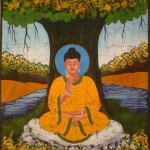
A Dance Ballet on Gautama Buddha: By Vinatha-ji

Buddham Sharanam Gachaami

under_the_bodhi_tree_bj20

(We seek the Lotus feet of the Enlightened ‘One ‘)

A Kuchipudi DanceDrama on the Life of Gautama Buddha , the Ninth Incarnation of Lord Maha Vishnu

Who else but Smt. Mrinalini Sadananda , a renowned  Kuchipudi Dancer , an excellent Choreographer and now the Director of Kalamandapam, a Washington based Dance School , could come up with such an Enchanting Evening of Pure Dance and Melodious Music  at the Kennedy Center on June 27th, 2009 ?  This  immaculate presentation on the Life of Gautama buddha entitled ‘ Buddham Sharanam Gachaami’   was narrated within 6 Acts and 15 scenes within a time span of Two and a half hours . From Start to finish, Mrinalini and her troupe of talented men, women and children held the huge audience spellbound with their mastery over this Art Form, Kuchipudi. The spirit of dedication, devotion and discipline that Mrinalini had invested in the production of this dance drama was evident from the first scene where the artists portrayed the ten incarnations of Sri Mahavishnu to the  final Climax scene ,when  DalaiLama took center stage with his Benevolent and Compassionate presence . That was an ingenious touch in choreography for it is Dalai Lama who says ” Kindness itself is a Religion’.

It is said that  Adi shankara bhagvadapada was a Buddhist in disguise and a Mayavadi  . Can we lightheartedly parody on this and say our beloved Vishistadvaitin Mrinalini  is also a Buddhist in disguise  and Lady Maha Maya herself ? ? In her   portrayal of Mayadevi , King Shudhodana’s Royal queen and Prince Siddarth’s mother , Mrinalini  totally stepped into the character of Mayadevi and portayed all the Navarasas beautifully – Mrinalini’s excellent abinaya , immaculate footwork and graceful hand gestures were  outstanding. A  proud grandma looked like an   agile gazelle on stage when she moved all around the stage dancing her way into the hearts of an appreciative audience .

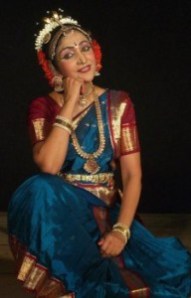
MRINALINI

Mrinalini , a Kuchipudi danseuse of Rare Charm and Exquisite Beauty

As the audience was not allowed to use video camera or any other device , i was unable to capture all this on Camera . But , i did manage to get a picture of Mrinalini off stage after the programme was over .  Here is one .

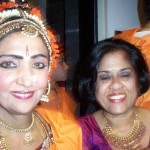
Picture 005

A Narthaki and Her Rasika ( A dancer and her fan.)

It would not be fair to give all credit to Mrinalini because a Dance Ballet’s success depends on the performance of all the participants .  I never knew ‘artistic’ talent  runs in the family . Dr. Keerthana , daughter of Mrinalini, proved that She is the wave of the Future Kuchupudi Scene in Washington DC.. Young and vivacious  Keerthana captivated the audience as Yashodhara ,  the abandoned wife of  prince Siddhartha .  Keerthana’s fluid and flexible body movements indicated that she has had wonderful  dance training from a young age .  Keertana was able to convey different moods such as love ,  Shyness, Coyness , Modesty ,  Grief , Disappointment , Detatchment , etc very effectively  on stage  with her waist movements , chest movements and eye movements . Keerthana’s role as Yashodhara and mother of young Rahul was a memorable performance for who else but a new mother and a young wife  like Keerthana could portray this role so perfectly ?

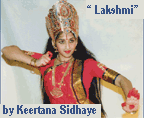
keerthana

Mrinalini’s daughter Keerthana performing the role of  sri ‘Lakshmi’ in another dance ballet

Picture 004

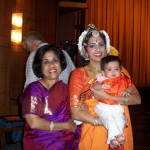
The three Shaktis – Adi, Keerthana and Laasya

( Iccha , Kriya and Jnana  )

The six month old granddaughter of Mrinalini appeared on stage with her mother Keerthana as Baby Rahul . It was well past 9 ‘o clock and  beyond bed time , Young  Laasya had no stage fright whatsoever and was calm , cool and collected and young Raul was so ‘still’ that you could hear his Father (young  Siddartha’s footsteps .  Only Mrinalini can perform brave feats like this .  In fact , Mrinalini put many child performers on stage in many of the scenes including the Raas lila , The Karate scene ,  the Birds and of course the dancing of Snakes . The children were from all  different age groups from infants to toddlers to pre teens and teens  and exhibited rare skill and prowess  and it is their  unique contributions which made the Show Lively , Vibrant  and Spectacular . Kamalkiran Vinjamuri , the 11 year old nephew of Mrinalini , was outstanding as the young Siddartha and Young Rahul and  was  impressive  in both roles.

How can we forget the main character Gautama buddha ? This role was performed by none other than Mrinalini’s niece,  Ramadivya Vinjamuri . Of all the Navasrasas , Karunyam ( compassion) , and Shantam ( Peace and Tranquility)   are hardest to portray  and these two expressions are best portrayed through eye movements , facial expressions and body language .  Divya came out with flying colors in all the scenes where as a Young Gautama she saved a bird from a hunter’s arrow , rescued the goat from being slaughtered at Kali’s altar , while witnessing the funeral procession of a dead man . and finally taking ‘Sanyasa’ .  Divya did not merely dance – she lived the role of Gautama buddha  and displayed the Buddha nature of compassion and kindness through her  luminous expressive eyes. This was a challenging role and Divya accepted the challenge with courage and confidence .

Divya as Gautama Buddha

Picture 008

A  Court dancer and a Mortal woman asking for Buddha’s Sangham ( Benediction)

All in all , it was an evening of Truth , Consciousness and Bliss – Sat- Chit- Ananda .  Mrinalini’s forte is her excellent choreographic skills and this was evident throughout the two and half hour performance and my favorite ones were  Scene 2 (Brindavana) , scenes 7 and 8 ( Wedding)  and scene 11 . ( Siddartha’s waking up to Reality) . Mrinalini’s choreography has sophistication , refinement and above all complexity and creativity .  The Costumes were well designed  and every dancer looked his/her part. Aniket Sidhaye , Keerthana’s husband , did a great job as a Master of Ceremonies – he had ready wit and humor and pronounced all the Sanskrit  words/names  correctly – lol:-)

This review  will not be complete if we do not mention about the excellent Live orchestra who gave wonderful support to Mrinalini and her troupe . Without a Live Orchestra and Melodious  Music ,  a dance performance is limp and lifeless. While the dance sequences were entertaining , the melodious music was enlightening.

We need to thank cultural ambassadors like Mrinalini Sadananda  who came to Washington as a young bride in 1971 and have taken a rare Art Form from a village in Andhra pradesh and has given the Art Form a new dimension by putting it on a world stage  like the Kennedy Center. Indeed, a Remarkable Achievement . Guru Vempatty Chinna Satyam has every reason to be proud of his sisya, Mrinalini.

Who  is behind the Success of Mrinalini, the dancer ?  None other than her Husband , Dr. Kuntimadi Sadanananda , well known in Washington circles as  Vedanta Teacher of Chinmaya Mission . While Sadaji is doing selfless service by preaching about Hinduism ( Santana Dharma ) to young and old alike through the platform of Chinmaya mission, his wife Mrinalini is engaGed in the task of exposing second generation immigrant Indians to HinduCulture and Art forms. Our Thanks to this Noble Couple .

Picture 007

A Vedanti and an Artharthi

What is the eternal message that comes out of this dance Ballet,   Buddham Sharanam Gachaami ? The following lines from Noble Laurette Rabindra Nath Tagore  comes to mind !

When I thought I would mould you, an image from my life for men to worship, I brought my dust and desires and all my coloured delusions and dreams.
When I asked you to mould with my life an image from your heart for you to love,
you brought your fire and force, and truth, loveliness and peace”
buddha_lotus01
Buddhahood

Srimad Bhagvad Gita ( chapter 14 , verse 20)

gunan etan atitya trin
dehi deha-samudbhavan
janma-mrityu-jara-duhkhair
vimukto ’mrtam asnute

Translation

When the embodied being is able to transcend these three modes associated with the material body, he can become free from birth, death, old age and their distresses and can enjoy nectar even in this life.

flying swans
SOHAM
Those of you who are interested in learning this rare Art Form called ‘ Kuchipudi ‘ please contact Smt. Mrinalini  at  http://kalamandapam.org/ and if you are interested in knowing about Vedanta , pl join  http://www.advaitaforum.org/

Harsha's avatar

Pilgrim Finds Friends on the Path: By Alan Adam Jacobs

shak36

1.  MOTHER DIVINE

Our Mother Divine lifts her sacred cup,
She pours pellucid, precious, potent balm,
Curing, healing, lifting pilgrim’s spirit up.

With power of Love, perfect, peaceful, calm,
She holds poor palsied pilgrim in her palm,
And plies him with pure nectar, honey sweet,

So pouring from her silver grail a potion warm,
To soothe all cares and salve his blistered feet,
With Love’s ointment: oh, perfect Paraclete!

2.  WHITE KNIGHT

Feeling his fiery steed between his knees,
He watches restless spirit’s breathing flow;
The stallion settles and he reins with ease.

Now tamed, he canters where he wants to go,
To Himalayan summits crowned with snow,
A pure white splendour glowing bright in light,

Above dark turmoil of dormant worlds below.
He arrives at awesome Selfhood, blazing bright,
Sun burst of splendour, ends soul’s dark night.

Now, White Knight hoists on high his pointed lance,
To joust with Death, a fierce Titanic tilt.
As he mounts his steed in martial prance

He strikes hard at dragon, up to the hilt,
To end all dark sorrow, fear and guilt.
Free from sense of doership, an act replete

With holy knowledge, a temple truly built
To worship God, he kneels to kiss the feet
Of Death’s slayer; such a sacred blessed feat.

3.  GOD LOVE SOLDIER

Wielding his spear of sharpest concentration,
The God-love soldier plunges its silver blade,
With mighty force of lucid sheer attention,

Deep into the dragon’s heart. Unafraid,
Delivering the coup de grace, vile ego’s laid!
Well honed with dispassionate discrimination,

Whetted with ardent zeal, no wavering shade
Of cowardice, his steel, with keen anticipation,
Slays his wayward mind of Self alienation.

4.  ARCHER

He twangs the bow of Self-Enquiry, to enter
A sharp arrow of clearly aimed insight,
Zinging to the bull’s eye of Truth at centre.

Dispelling all doubts in error free flight,
He finds Love, a beckoning beacon light,
Glowing within his inner cave of heart.

Such marksmanship is God-Warriors right,
To win this vision, the true martial art,
Holy war, waged ‘til soul and body part.

5. AQUARIUS

Water bearer draws deep from Rachel’s well,
A jar of truth for pilgrim’s thirst to slake.
Raising the cup he hears the temple bell

Which calls him home to pray and penance make
To God, whom he adores for His own dear sake
Alone, and free from lust for selfish boon.

His love showers rain of grace, and fills the lake
Where sails the white swan of devotion, soon
To glow beneath the golden harvest Moon.

6. PRIMORDIAL SAGE

Primordial Sage, in silence, takes his seat,
Emitting waves of God-like love to those
Who sit surrendered at his lotus feet.

His mystic vision’s sure, and truly knows
The sure destruction of all disciples’ woes,
That halt the climb to Self’s most blissful place.

His merciful love abundantly flows,
Ever granting pilgrim power to trace
His own Self ablaze, in a sea of grace.

7. BOLD PILGRIM

So bold pilgrim ascends the mountain path,
His friends are unconditional faith and trust.
Gentle compassion rains, a healing bath

Of grace, cleansing his feet of mundane dust,
Freeing him from greed, ego, anger, lust.
Fearless he walks, awakened, to his goal,

Unattached, discriminating, and so just,
‘Til attaining consummation with the Whole,
He finds, hidden deep at heart, Eternal Soul!

shak36

.

Harsha's avatar

Fait Accompli

052904 002

Fait Accompli

As the dawn blooms into the light of day
And the petals of flowers open to pray
So open your heart

As the day surrenders to the cloak of the night
In the eternal cycle of change
So too must you

As each breath you take fills you with the energy of life
Sustaining the body in which you are clothed
So you must be inhaled

As the sun shines effulgent dissolving the ethers
And the fire consumes the veils
So die to the fires

As the moon glows luminous
Softly bathing the naked earth
So stand before her

As the rain falls upon the earth
Nourishment to the soil, boon to the harvest
So drink of the nectar

As the path you walk seems laden with strife
Lessons to be learned in life
So embrace your sorrow

As the wind carries the fallen leaves
to wherever it wills
So offer no resistance

Just keep walking into the light
Sivuda:gjna le:nide: chi:maina: kuttadu
For without Ishwara’s will, Even an ant will not bite.

052904 008

“You say you offer your body,
soul and all possessions to God.
Were they yours that you could offer them?
At best, you can only say, ‘I falsely imagined
till now that all these which are yours were mine.
Now I realize they are yours. I shall no more act as if they are mine.’
This knowledge that there is nothing but God or Self,
that I or mine don’t exist and that only the Self exists, is jnana.
Thus there is no difference between bhakti and jnana.
Bhakti
is jnana mata or the mother of jnani).”

~ Ramana Maharshi~

Harsha's avatar

Body And The Universe: By Madathil Rajendran Nair

Close your eyes and still,
Feel your body
Part by part.

And, as you begin to drown
In slumber’s sweet hold,
Mountains pop up,
As do vales, waterfalls
Green trees, vast landscapes,
Stars and the Milky Way.

The body is all that,
Part by part!
The body is the Universe,
You are the body
And you are all!

A magnificent pulsation
Without parts and
Without a beyond!
Be just aware
And remain
Your own ecstatic self.

[Inspired by the poem “We Encountered The House Of Realization”  by Yunus Emre (1238 – 1320)]