Harsha's avatar

Hinduism and Vegetarianism: By Dr. K. Sadananda

image

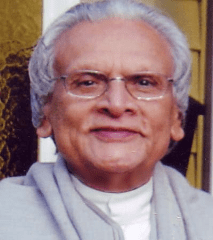
Editor’s note: Sada-Ji (Dr. K. Sadananda) is well known to the Hindu community in both the U.S. and in India. He is one of the most brilliant and thoughtful exponents of the Bhagavad Gita as well as the ancient philosophy of Advaita-Vedanta.

In this article, Sada-Ji discusses a practical question that frequently comes up among many students of Hinduism as well as many Westernized Hindus. The question is, “Should I become a vegetarian?”

I took the liberty to edit and restructure Sada-Ji’s original e-mail answer to this question for the purpose of this article to give it an easier reading flow. I hope that justice has been done to Sada-Ji’s explanations and that I have stayed within the limits of editorial license. Of course, any errors are mine and as soon as these are pointed out will be promptly corrected. Thank you for your understanding and patience.

***************************************************

Should I Become a Vegetarian?

Recently two questions were asked – Does Hinduism require one to believe in God? Does Hinduism require one to be a vegetarian?

In a recent article, I have addressed the first question. Here I will provide some thoughts for the second question. In relation to the first question, I have discussed what Hinduism stands for and who is truly a Hindu. In essence, Hinduism is Sanatana Dharma, and that Dharma is from time immemorial; it involves pursuit of Moksha through self-reflection, inquiry, and Self-Knowledge. Self-Knowledge in Hinduism is synonymous with Moksha (Liberation from the cycle of birth and death).

Therefore, the one who is seeking to understand the ultimate mystery of existence and thereby gaining salvation or release is a true Hindu, irrespective of the nationality, caste, creed or gender. With that catholic understanding, one can see that Hinduism becomes a way of life because the pursuit of the essential purpose of life is the goal of the ideal Hindu life. If you ask most Hindus whether they believe in God, you will get a firm “Yes”, in response.

With this perspective, it is easier to analyze all other questions including whether Hinduism requires one to be a vegetarian. Since the purpose of life is securing liberation or Moksha, until we reach that we need to maintain our body. Keeping the body healthy through proper nourishment is the Hindu Dharma. The human body is considered a temple of God. Therefore, it is sacred and should be treated with respect.

You asked whether a Hindu has to be a vegetarian. Well, it is a fact that not all Hindus are vegetarians. Hindu kings and princes and the warriors have eaten meat for thousands of years. So your question is not whether a Hindu should eat but whether you should eat meat. Since such a question has already arisen in your mind, perhaps you have developed a degree of sensitivity about harming other living forms to satisfy your physical hunger. If that is true, you may be better off not eating meat. That way you will be at peace with yourself. Since you are sensitive to this issue, your intellect may be directing you towards being a vegetarian. It is a possibility. However, your mind wants the pleasure of eating meat and your body may crave it due to past habits. So you have to reflect on this. Why has this question come up for you? What is the right thing for you to do?

Follow Your Self-Nature

When you go against your own intellect and good understanding of life you commit a sin. An act that is contrary to your SWADHARMA (your own nature) creates a conflict within you. So you have to reflect on whether being a vegetarian is natural to you or not. Now, of course, even the traditional non-vegetarians are choosing vegetarianism not because of any compassion to other animals but they are recognizing that meat is not good for their health.

I have already mentioned that Hinduism does not say to you “don’t do this and don’t do that”. You must determine your own actions based on your intellectual values, culture, education and primary goal in life. You will find that following your Swadharma (your own nature) will make you comfortable with yourself. It is not for others to judge what food is right for you! It is for you to decide.

While you are trying to decide whether to be a vegetarian do this experiment. Imagine your self to be a chicken or cow who is about to be slaughtered for food. Would you not advise the guy who wants to make a dinner out of you to be a vegetarian instead? The golden rule of “Do unto others as you would have them do unto you” can sometimes help shape our analysis.

Life Lives on Life

Life lives on life. That is the law of nature. Whether I eat an animal or plant, I am destroying a life in some form. Among all life forms, Man is different from the rest. He has the capability to discriminate right from wrong. That gives him the freedom of choice which animals and plants lack.

According to ancient teachings and our observations, plants have just a body and perhaps a rudimentary mind. Animals have both body and mind to express their feelings and suffering, but rudimentary intellect. Man has not only body and mind but also a well developed intellect to discriminate between good and bad, and to choose.

Man always has three choices: He can choose to do something, not to do it, or find another alternative way to do it that is more satisfactory. For animals and plants there is no freedom of choice. They are instinctively driven. The cow does not sit down before meals and inquires whether it should be a vegetarian or non-vegetarian. Same with the tiger or the eagle. They don’t say prayers before eating like we do. They just act according to their nature. No one can hold that against them.

Man and Sin

For a Man the discriminative intellect is much evolved. Plants and animals do not commit sin in their actions because there is no will involved in their actions. For a human, the story is different.

You may wonder why I brought sin in the argument. Let me explain. Sin is nothing but agitations in the mind. It is these agitations that prevent me in my journey to Moksha. Mind has to be pure (meaning un-agitated) for me to see the truth as the truth. (Bible also says blessed are those whose minds are pure).

To define sin more scientifically: It is the divergence between the mind and intellect. Intellect knows right from wrong. But we feel like doing things even though we know they are wrong . That is, the intellect says something but mind which should be subservient to the intellect rebels and does whatever it feels like. This divergence is sin.

After a wrong action is performed there is a guilt feeling. Intellect, although it was overruled, does not keep quiet. It keeps prodding “I told you it is wrong. Why did you do it?” With peace of mind gone, Man goes through a “Hell”. Man is not punished for the sin; he is punished by the sin! Think about it. All the Yoga schools, if you analyze clearly, are bringing this integration between the body, mind, and intellect so that there can be harmony. With harmony, there is peace.

For a true Yogi, what he thinks, what he speaks, and what he does are in perfect alignment. In our case, we think something but have no guts to say what we think. Our lips say something different from what we are thinking. Sometimes people say, “Watch My Lips or Read My Lips “. They mean to emphasize that what they say can be counted on. However, if you watch their lips as requested and follow their actions these are again different! There is no integration anywhere. Our lips and our hips have divergent paths. We live a chaotic life of freestyle dancing! Besides deceiving others, we deceive ourselves, and the worst thing is sometimes we don’t even realize that.

Animals and Sin

Now, when a tiger kills and eats, it does not commit a sin. Because its intellect is rudimentary, it does not go through any analysis before it kills and asks “should I kill or not kill this cute deer”? A tiger does not ask itself, “Should I be a non-vegetarian or a vegetarian?”. When it is hungry, to fill the natures demand, it kills its prey and eats what it needs and leaves the rest when it is full. A tiger does not overeat. There are no fat tigers in nature.

A tiger is not greedy either. It does not seek luxury beyond satisfying its needs. Animals and plants and birds and bees and insects and all living things follow a beautiful ecological system. It is only man who destroys the ecology by being greedy. But Man also has the beautiful instrument of the intellect and the ability to develop it and to meditate on the reality of the universe.

Should I be a vegetarian or non-vegetarian?

So yes, “Should I be a vegetarian or non-vegetarian?” is asked only by a man. Why does that question come? It comes due to reflection. Because man has a discriminative intellect, he can reflect on the nature of pain and suffering. Perhaps a man may think at some point in his life whether it is justifiable to harm and kill an animal to fill his belly. A person may reflect whether eating animals is consistent with the golden rule of “Do unto others as you would have them do unto you”. A man may consider whether this maxim applies to all forms of life or just other human beings.

Plants are life forms too. “Should one hurt them?” you may ask. If one can live without hurting any life forms that is the best, but that is not possible. Life lives on life – that is the law of nature. My role as a human being with discriminative intellect is to do the least damage to the nature for keeping myself alive and well.

At least, I am not consciously aware of suffering of the plants. That is why eating to live and not living to eat is the determining factor. In Bhagawad Geeta, Sri Krishna emphatically says that a Sadhaka (one who is in pursuit of Moksha) should have a compassion for all forms of life. There may come a point when it is advisable to be a vegetarian – only taking from nature what you need to keep the body in optimal health.

In one’s spiritual growth, one develops subtler and subtler intellect. That is, the mind becomes more sensitive, calmer, and self-contented. Your sensitivity to suffering of others also grows. Hence, the thought about becoming a vegetarian may come. Only you can decide what is right for you and not someone else. Any decision that is imposed on you from the outside does violence to your nature.

Many young people are now becoming vegetarians. They all have their own reasons. Fortunately vegetarianism is mainstream now and accepted. Most schools and universities offer vegetarian and even vegan meals and so the option to become a vegetarian is easier today than ever before.

Flowers grow in their own time. Whether you are vegetarian or not does not matter ultimately.

You are all flowers blooming in the light of the divine.

Hari Om and Tat Sat. – Sadananda
Harsha's avatar

Let This Feeling Never Part! By Dr. Harsh K. Luthar

In the 1960s, my Gurudev, Sri Chitrabhanu- Ji, wrote a poem called “Matiri Bhavanu” on friendship and universal love in his native tongue (Gujrati) that became famous in India. It was eventually recorded as a song by a well known Indian singer named Mukesh and was set to music by an eminent Indian composer. The poem was translated into English by Gurudev Chitrabhanu- Ji and that is the version of the poem that I was most familiar with. However, at the meditation center where Gurudev taught and lectured in the 1970s, we sometimes sang the poem Maitri Bhavanu in Gujrati with great feeling.

The scene shifts now to almost 30 years later to 1994. In 1994, the thought came to me that I should read the original Gujrati version of the poem by my teacher. Gujrati is not my native tongue and, in fact, I do not understand it at all. I cannot speak in Gujrati and cannot read it. However, the Gujrati alphabets are similar to Hindi which I do know. So somehow the feeling came over me and I started to try to read and understand my teacher’s poem. It was hard but I was staring at the Gujrati words as if through will power alone I could decipher them. After some difficulty, I switched to the English description of the Gujrati sounds that you can see on the Jain Meditation Center website.

http://www.jainmeditation.org/pages/song.html

After many attempts, I actually started to understand the first stanza, and then the second, and then the third, and then the fourth. It was so beautiful and full of the universal feeling that I went into ecstasy. The result was the following poem, “Let this feeling never part!” In a very real sense this poem is the spiritual offspring of that original poem written by my teacher in his youth as a Jain monk. Recently, I came across the poem again on my old computer files and had to smile. I was just a “kid” when I wrote it. Of course, it cannot reach the same level of poetic artistry as my teacher’s poem in original Gujrati which is a true masterpiece. But I tried because something came over me. Perhaps what I lacked in talent, I was trying to make up in enthusiasm and feeling. I dedicate this poem to my Gurudev, Sri Chitrabhanu-Ji, who taught me the meaning of Ahimsa, the philosophy of nonviolence.

Let This Feeling Never Part!

The sacred stream of love divine
sweeter than the sweetest wine
flowing into this vast sunshine
springs eternal from my heart.

I pray no one should be left out
from life’s blessings in their glory
and give way to tortured doubt
with unhappy endings to their story.

Never should they be turned away
suffering from the blows of life
the poor, the wretched of this world
caught helplessly in endless strife.

If ever anyone should be in need
of comfort or help in getting up
let me not run away from them
but plant kindness as my living seed.

Let me give hope where there is despair
and mend hearts considered beyond repair
like the gentle ocean breeze that
heals all wounds and gives a fresh start
Let this feeling never part!

I should always find delight
in the warmth of universal light
but if my heart must bleed at all
let it be so in the dark of night.

No one should see the tears that come
when the wicked and cruel come in my sight
let this hand forever be raised in peace
and the violence around us come to cease.

Always this thought should be kept alive
every sinner is a future saint
there should be a place for everyone
to swim in the pouring love divine
that flows eternal from my heart
Let this feeling never part!

Unaware, if someone is unkind
let forgiveness be on my mind
until no trace is left behind
of ill will, anger, or hostility.

If I should ever slip and fall
and no one to catch me is around
let me come down gently like a leaf
so other life is unhurt on the ground.

If I have to lay for some time
contented should be my smile
composing songs of love and friendship
and resting all the while.

I will be picked up by love divine
which springs eternal in my heart
for all the beings everywhere
Let this feeling never part!

Sages have sung the song of friendship
walking with them and in their shoes
the same melody plays on my lips
the feeling of reverence for life continues.

Involuntary poets, there have been many
who felt the thrill and saw the sign
whose hearts sang out in ecstasy
as their fountain bubbled with love divine.

The blessings of nature are bestowed
on those who are firm in their belief
who are harmless to others and easily bow
before anyone, seeing only divinity.

If I should be granted just one thing
let it be the vision of love
always rising from the spring
sacred and eternal in my heart
Let this feeling never part!

**********************
NAMASTE

I bow to the light in you
which is the same light in me.

Harsha's avatar

Sri Ramana and My Teacher Gurudev Sri Chitrabhanu-Ji: By Dr. Harsh K. Luthar

All of us come from different backgrounds, and we walk the path in our own unique way. Yet, we all have the same innermost longing to know the deepest mystery of our own nature and being. Reflecting on the purest teachings of the Self and on the nature of Ahimsa as nonmovement of the mind, we are bound to have experiences and openings in our consciousness.

When my teacher, Gurudev Sri Chitrabhanu-ji visited Sri Ramana, he was just a teenager. Chitrabhanu-Ji became a Jain monk in 1942 at the age of 20. Prior to that, he was searching and visiting different saints in the various traditions of India and asking them questions about the spiritual path and how to become Self-Realized.

Gurudev Sri Chitrabhanu

Chitrabhanu-Ji told me that of all the saints and sages he visited in India in his teen years, a few were unforgettable and stood out to him. Sri Ramana was one of them.

When I was 22 and studying with Chitrabhanu-Ji, he saw me carrying books of different spiritual teachers for my reading pleasure. He asked to see these books and thumbed through them. He knew most of the authors personally. Swami Rama of Himalayan Institute had come to our meditation center. One time I saw Swami Chidananda, the disciple of Swami Sivananda of Rishikesh, when he came to visit my teacher. Swami Chidananda was very thin even then and was leading a very pure and ascetic life.

After looking through my books, Chitrabhanu-Ji told me that I should read the dialogues with Ramana Maharshi and study his teaching. That is how I was led to Sri Ramana. Of course, after I read the classic, “Talks with Sri Ramana Maharshi”, it was indeed like magic and I knew deep in my heart that this was my way.

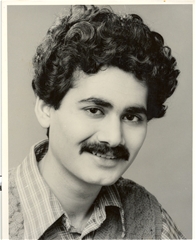
The Author at 21-22 studying With Sri Chitrabhanu-Ji

Going back to Chitrabhanu-Ji, he wanted to know the meaning of life at a very young age. He had lost his mother, his sister, and then his girl friend and so the world did not seem so attractive to him even at a young age. He wanted to know the mystery of life and death and what is beyond. In that quest, he started visiting many saints and sadhus and also visited Sri Ramana.

Continue reading

Harsha's avatar

What Is Meditation? By Dr. Harsh K. Luthar

The Art Of Doing Nothing

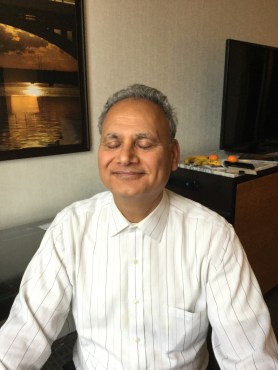
IMG_0141


My Dear Friends,

You have heard many things about meditation and perhaps there are questions in your mind about it. Today, there is no shortage of information on any topic having to do with meditation and yoga. There are literally thousands of books on meditation and yoga and self-help techniques. If you go on the Internet and put in a few key words, you will come across many views on meditation.

Some people equate repeating a mantra with meditation. Others say that if you focus on the in-going and out-going breath, that is meditation. There are people who believe that you must be able to sit cross-legged in the lotus position with a straight spine in order to meditate effectively.

Having meditated since early childhood, I can assure you that this is not true. Inviting aches and pains by sitting in a lotus position will not lead to a peaceful mind. Meditation, after all, is about relaxation and peace. Having peace, or recognizing the peace within, is meditation. What takes us away from being peaceful cannot be meditation. Whatever brings us peace is meditation.

Avoidance Of Stillness

It is my experience that people like to keep busy. In today’s world, being busy is considered a very high virtue. We want to keep busy and be productive in some way. Otherwise, we feel we are wasting time and feel guilty. Certainly, being active is a good thing and allows us to make a living and maintain relationships in the world.

Even Sri Krishna says to Arjuna in the Bhagavad Gita that one cannot avoid action. One is compelled to act according to one’s nature under the force of circumstances. That is the universal law of Karma.

But we have to understand the nature of action and our relationship to it. This is why Sri Krishna advises Arjuna to act according to his duty and dharma but without any expectation for any fruits of action. Our expectations undermine our peace when they do not come to fruition. Right conduct, according to one’s best understanding and judgement, brings peace. Therefore, it brings us to meditation.

Mental Experiments

Ancient Yogic and Advaitic sages gave methods and taught us to conduct mental experiments to find the nature of truth. These mental experiments can indirectly help us recognize the Pure Being within our center as our own Heart.

The techniques of meditation, such as mantra, chanting, yoga, pranayama, breath-awareness, etc., are simply mental and physical experiments. These practices start us on a journey with the potential for personal and spiritual growth.

However, real meditation is beyond visionary experiences and is the discovery of peace within. To reach there, we have to be quiet and learn the art of stillness. Once we know how to be still while doing nothing, we can carry this stillness into our actions as well. But first, we must discover the nature of this inner peace; and to do that we have to learn the art of doing nothing.

Are You Able To Do Nothing?

Are you able to do nothing? Absolutely nothing! The art of meditation is learned by seeing the value of doing nothing. If you can sit very still and quiet without mental disturbance, you have already come a long way towards the experience of meditation.

It is only a rare person that enjoys doing nothing. Doing nothing is not as easy as it may sound. Try it sometimes. Just sit on the sofa. Don’t go to sleep. Stay awake and think about nothing in particular.

You will soon find your mind racing here and there, thinking about your girl friend, your boy friend, your boss, your co-workers, your business, your friends, your family, tofu, pizza, chocolate… the sky is the limit!

The Mind Is A Monkey And A Donkey!

Yogic sages have compared the human mind to a monkey. Just like the monkey cannot be quiet and must be restlessly hopping here and there, so it is with the mind. It is the nature of the mind to be either brooding about the past (regrets, mistakes, guilt, lost opportunities, the roads not taken) or fantasizing about what the future will bring.

The burden of carrying the past and the future in this present moment is heavy. But the mind, like a donkey, gets used to carrying this load and plods along.

However, the mind that is always lost in memories (past) or hopes (the future) misses the most delicious feast of all that is taking place in the present.

The eternal reality, we can call it Self, Sat-Chit-Anand, God, the Supreme Being, the Supreme Goddess, Paramatman, Brahman, the Great Void, or the Kingdom of Heaven, always exists and is shining in the present right before our very eyes.

The Divine mystery is recognized when the mind is calm and awake and free from anger, hatred, and greed and thus not subjected to the pulls of the past and the future. This is why all major religions encourage human beings to be good and kind and compassionate. These virtues serve as the building blocks for the spiritual life because they remove the agitation of the mind.

Why Meditation Techniques Do Not Always Work

IMG_8889


Meditation techniques are fully effective only in a mind that already has some understanding and maturity. So really, laying the foundation or the groundwork for meditation is more important than the practice of meditation. Just like a seed grows naturally on fertile ground, meditation happens spontaneously in a reflective and a quiet mind.

When the mind is ready and ripe, meditation works and self-inquiry is fruitful in a short time.

When the mind is restless, anxious, and troubled, meditation becomes a forced activity and is not always helpful. At such times, one should take a walk, practice deep breathing, or go for running or do push-ups and other exercises. Those are more useful than meditation when the mind is not ready to be calm.

Pranayama, involving deep rhythmic breathing, is an ancient yogic method that can serve to calm and sedate the mind in a natural way. According to Hatha Yoga Pradipika and other classic yogic texts, one first has to master proper breathing in order to progress to meditation. This is the commonly held belief in the school of Hatha Yoga. However, the path of Jnana Yoga does not emphasize breathing exercises or Hatha Yoga Mudras and Kriyas and considers these to be irrelevant to Self-Knowledge.

Advanced Pranayama practices involving breath retention or awakening of Kundalini Shakti can be found in many yogic texts and modern books. However, these should be learned very cautiously from an experienced practitioner of pranayama.

Laying The Foundation For Meditation

In order to advance in meditation and learn it in depth, we have to understand the nature of the mind and learn to be alert and watchful of its activities. It is this constant watching, that is the key method behind all the techniques of meditation. A form of this is what Buddhist calls, “Mindfulness”. Jains call it Upa Yoga (Yoga of Awareness), Hindus refer to it as the “Inquiry into the Self” or Self-Remembrance.

A spiritual seeker is watchful.

The essence of this watchfulness is that with the mind one watches the mind.

If meditation is going to take place, if this recognition of Pure Being with clarity is to be gained, an inner silence must ensue. One cannot see one’s image clearly in the water, when the water is full of waves. In a still pool, our image is reflected and can easily be recognized. Similarly, in a still mind, we can see the nature of our being.

This inner watchfulness, the observer being aware of the observer, this self-inquiry can occur in a ripe mind that is calm, content, and ready.

We Are Dancing For Others!

The difficulty is that our minds are noisy. This is the nature of the mind that goes outward only. It is overcome by sensory experiences and is unable to see its origin. The worldly chatter overshadows and muffles the subtle divine music that is playing.

Friends, sometimes I think, we are dancing to the drum of other people’s expectations, which we have internalized.

There is no end to this dance. This dance has a stronger hold on us than rock and roll or disco or rap music. It keeps us hopping all our life doing this and doing that or achieving this and achieving that. Ultimately, it is exhausting.

Whole world guru


The whole life slips away in the blink of an eye as we keep busy in “doing” this dance making sure that the movement of our steps have the approval of others. We forget to “Be” who we are.

To Be Still is the true meditation. Meditation is simply Pure Being.

The art of recognizing yourself as Pure Being is meditation. Pure Being is Self-Awareness or Awareness.

A Powerful Intervention: Conduct This Experiment

The state of meditation is simple. The methods and techniques and the philosophy behind it are very complicated. That is why thousands of books are written on such things. But the aim of meditation is simply peace. Peaceful Awareness. Meditation is easy to understand. It is being peaceful without expectations.

Conduct the following experiment with being peaceful without expectations. Tell yourself this: “For the next one minute, I am not going to worry about anything and be bothered.”

Try to be free of all inner and outer conflicts for one minute. Give yourself this one minute as a holiday gift!

This is a powerful intervention. Can you be free from inner conflict for one minute? See what hinders your attitude to be worry free for one minute. If you can be peaceful and free from anxiety for one minute then you can do it for two minutes and then more.

To Be With Yourself

So dear friends, find some time to simply “Be” with yourself. To just “Be” is an amazing experience of the present moment. See what thoughts come to your mind. When you sit quietly, many visual images and thought patterns start emerging from the subconscious. This is referred to as “Surfacing” and it happens when your relax and your mind is at ease and free of tension.

If you remain awake and pay attention, you can gain insight into your own mind. These insights will teach you to not attach yourself to things that do not bring you peace. You will come to see that your nature is that of Pure Being which is associated with the many thoughts in your mind and yet is independent of these.

Sri Ramana Maharshi, the great Indian Sage of Arunachala, gave forth this method of reflective Self-Inquiry, that focuses on the question, “Who Am I?”

This investigation, when done with understanding and sincerity, brings us to the state of Being that is free from thoughts. This inquiry is really at the heart of the philosophy of Advaita Vedanta.

Always Be Gentle With Yourself

If you are not able to sit quietly right away and be completely still for even one minute, do not worry about it at all. The reason it is difficult for us to sit quietly and do nothing is because often there are wounds inside which we would rather not become aware of or deal with.

The process of living life can be very very painful and stressful. Over the years, we put temporary bandages on our hurtful experiences, which for a short time dull the pain.

My teacher Chitrabhanu-Ji taught me that when we try to relax and meditate, our anxieties and fears and past suffering sometimes bubble up from the unconscious. So we have to be alert and to accept and let these things go so we can renew ourselves and be fresh.

The ancient Yogic Sages of thousands of years ago left us with great works on the nature of human suffering and how to alleviate it. Sometimes when I read the Bhagavad Gita or Patanjali’s yoga sutras, Tao Te Ching, Buddha’s path or Mahavir’s philosophy of reverence for life and Ahimsa, I marvel at the depth of the insights contained in these.

The great Yogis of the past 5000 years have been really great psychologists who knew the nature of the human condition. They deeply understood what happens when spiritual seekers try to get insights into their mind and provided a path and guidance on how to walk it with the help of teachers and fellow students.

The Notion Of The Sangha

In India, some people meditate in Ashrams or in communities. The notion of a Sangha (community of spiritual seekers) is important. In such a community, meditation is easier, because people are able to encourage each other and share each other’s pain and burdens. When our mental or physical suffering is intense, we are not able to meditate. People turn to alcohol or drugs to numb themselves so that they do not feel their own suffering. This, however, cannot lead to any permanent solution and satisfaction. Indeed, it can weaken the body and the mind and makes matters worse.

Being part of a vibrant spiritual community, or to just be in the company of good people who care about one another, can exercise a protective influence on you.

As a general rule, in order to advance in meditation, you should keep the company of good people who allow you to be who you are.

I studied with Chitrabhanu-Ji who is one of the key figures in 20th and 21st century Jainism. Chitrabhanu-Ji, before he became a Jain monk, was part of Mahatma Gandhi’s movement to free India from the British through the peaceful means of Ahimsa (Nonviolence).

Ahimsa is the cardinal principle in Jainism. Chitrabhanu-Ji taught me that a mind becomes fully fit for meditation and Self-Realization through the practice of reverence for all life and amity towards all beings.

A genuine spiritual community has to be completely dedicated to the principle of Ahimsa in thought and action and be committed to alleviating suffering among all living beings. A teacher or a guru who does not understand or practice the principle of Ahimsa and is abusive to his or her students should be avoided. Such people are on power trips only and have their own problems to deal with.


Having A Personal Philosophy

20150724_174004

It is good to become aware of and think about fundamental life issues at any age, but particularly so if you are young. It allows one to develop a personal philosophy that helps to structure and interpret different experiences and put things into their proper perspective.

It is important to sit quietly and spend time with yourself in order to have an understanding of your own nature. Whatever philosophy one adopts, the following general rules are helpful in remaining calm and healthy.

Ten Tips From Yogic Texts And Sages

1. Eat nutritious foods that suit your constitution in moderate quantities (My New Year’s Resolution!)

2. Walk every day if possible (My Second New Year’s Resolution!).

3. Avoid people who are manipulative, loud, obnoxious, and destructive if at all possible.

4. Keep company of people who are pleasant, easy going, cheerful, and supportive.

5. Remain silent when you have the urge to be sarcastic or make fun of someone.

6. Help people who are in need within your capacity.

7. Take the time to be alone everyday and be with yourself.

8. Never give into peer pressure to drink or do drugs or go to wild parties (Tame and sober get together with good friends and Satsang with fun singing and chanting is OK!).

9. Develop confidence in your own ability to do what you need to do.

10. Engage in introspection at the end of the day. Mentally wishing everyone well, always go to bed with a clean slate.

20151016_141056


Even A Little Effort Helps!

Friends, even a little right effort is never wasted. Every journey must start with the first step. The journey that takes you inside your own Self is the most wondrous journey you can ever take as it reveals the mystery of existence itself. Start from this very moment and enjoy the wonders of your own nature and the sparkling reality that has been smiling and shining on you for the whole of eternity.

Chin Mudra - Jnana Mudra

Harsha's avatar

Ahimsa – The Antidote to Fear

By Dr. Harsh K. Luthar

Bhagavan Sri Ramana used to say, “Ahimsa Param Dharma”. It means that Ahimsa (Nonviolence) is the Supreme Dharma (Duty or Principle). Sri Ramana pointed out to the devotees and yogis that in Patanjali’s Yoga Sutras, Ahimsa is named as the highest virtue above all other virtues. If we are able to understand what Ahimsa means at the deepest level, that clarity itself guides us in discovering the nature of the Self as our own Being.

Continue reading

Harsha's avatar

Heart of the Light: By Dr. Harsh K. Luthar

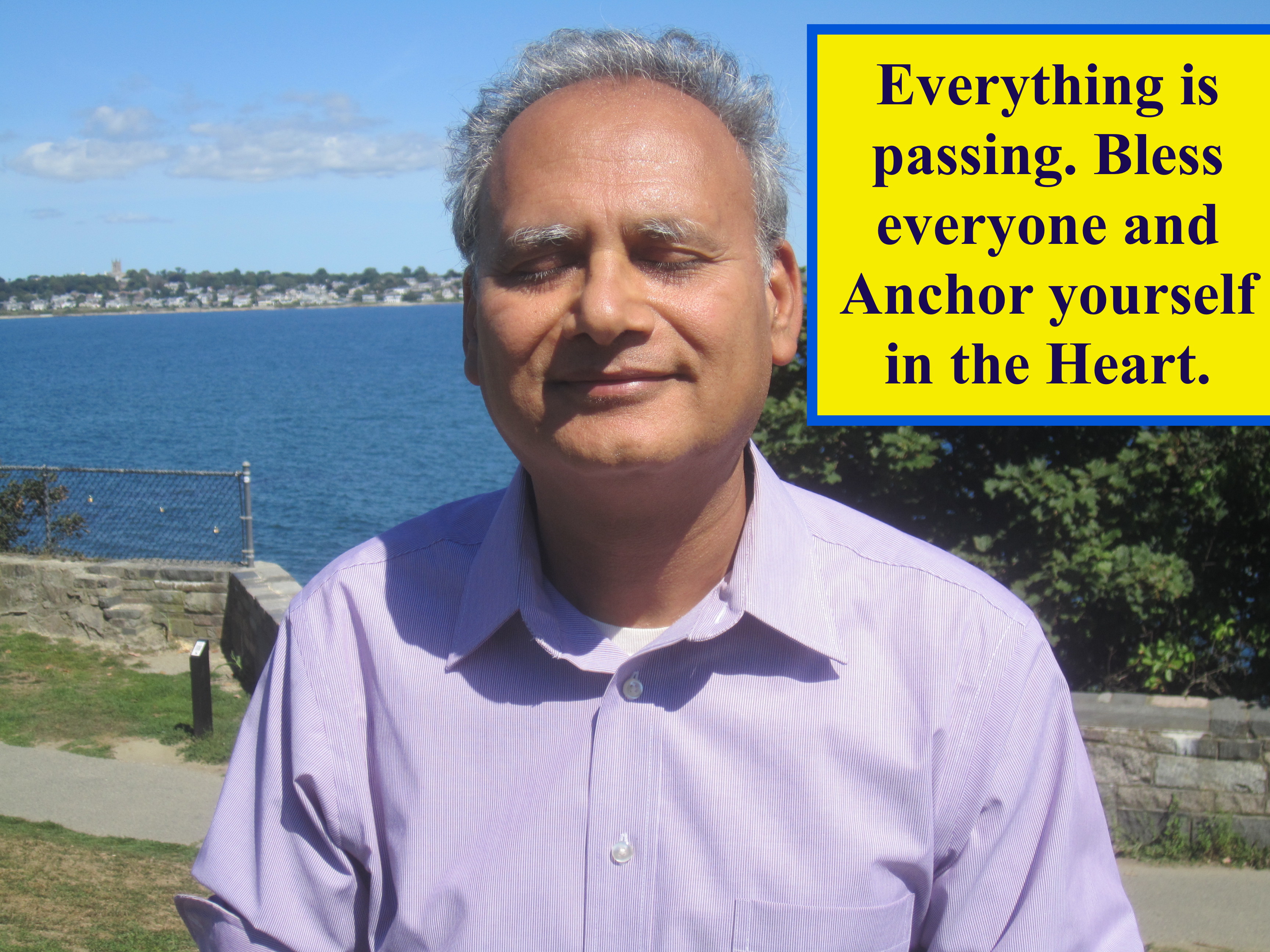
Anchor yourself in the Heart
Human life is a precious gift that is best utilized for the search of the sublime, the good, the beautiful, and the eternal reality which is joy itself. Such words may appear trite to some, true to some, and irrelevant to still others. Certainly, in the middle of the ups and downs of daily living it is easy to become cynical and bitter about the world around us. We have all endured loss in one form or another and there is no one who has not experienced some shock or tragedy at some point in his or her life.

If you listen to the T.V. news even a few times a week, it seems like the whole world is caught in a whirlpool of suffering. There are endless disputes and wars going on. Human beings are fighting, torturing, or killing each other in the name of religion, God, race, territory, politics, or just because of their inflated egos which have driven them crazy.

Continue reading

Harsha's avatar

Transformation Through Ahimsa: By Dr. Harsh K. Luthar

kurta
In this commercial age, everyone has to periodically run out and buy gifts and cards for their lovers, friends, and family on various occasions. However, true love from the heart remains the most practical gift which is suitable for giving on any holiday, be it Mother’s Day, Father’s Day, Thanksgiving, Christmas, Diwali, Easter, Eid, Hanukkah, Holi, or some other special occasion. It is the only gift which multiplies in value as it is sent out.

Continue reading

Harsha's avatar

Ahimsa and Self-Realization: By Dr. Harsh K. Luthar

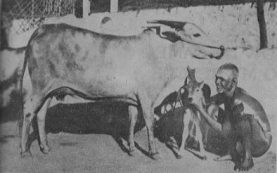
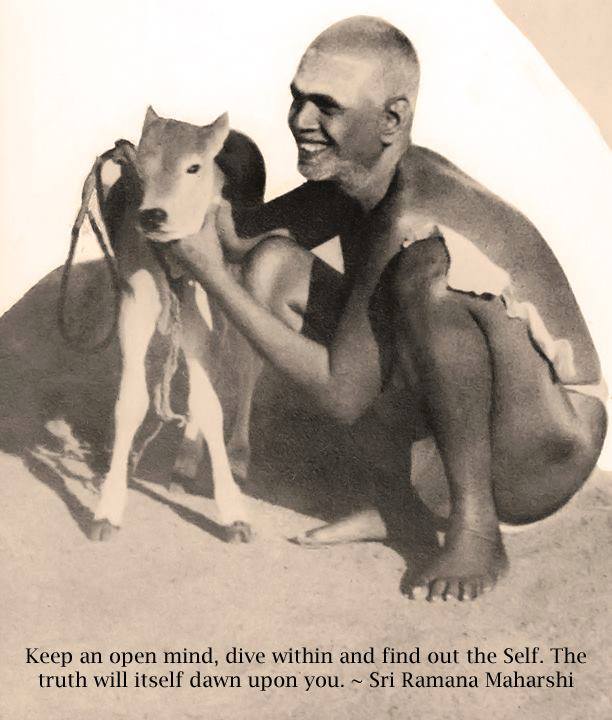
Bhagavan with calf

In Patanjali’s Yoga Sutras, Ahimsa (nonviolence) is considered the first principle of the spiritual life.

Ramana Maharshi, the great sage of Arunachala has clearly stated, “Ahimsa Param Dharma”. Translated this means that nonviolence is the supreme religion.

Perfect Self-Awareness is Ahimsa. Practice of nonviolence with awareness that the same life resides everywhere purifies the mind and allows for the deepest relaxation at the mental, physical, and spiritual level.

Continue reading