
‘If the blind lead the blind
both shall fall into the ditch.’
(Matt. 15:14,15)
We must be grateful to Dennis Waite and his excellent book, with its appendix, for sharply bringing this whole question to our attention. There can be no doubt that Dennis Waite’s ‘The Book Of One’ is a worthy introduction to the Ancient Teaching of Advaita. In a clear and erudite manner he summarizes the main points of this Great Philosophy and Spiritual Teaching. The book is in Sections with subsidiary chapters elucidating the chief principles. The Main Section Titles are as follows: The Unreal, The Spiritual Path, and the Real. The subsidiary 18 chapters within these Sections cover, amongst others, such topics as What I Am Not, the Nature of Man, What We Think We Can Know, Meditation, Appearance and Reality, Consciousness, the Nature of Self, Realisation, and the Direct Path.
Dennis Waite is a respected member of the Ramana Foundation UK, and there are many useful references to the Maharshi’s Teachings in the text. He has studied the subject for over fifteen years and has a working knowledge of Sanskrit. The book is definitely to be recommended for those who need a succinct overview to the whole Teaching in one medium size volume. It is easy to read and surveys the philosophy competently in an even handed way. This part of the book can well be regarded as a sound and valuable introduction to the whole field.
There is, however, a long Appendix of 24 pages packed with information on current Western Advaita Organisations, International Internet Sites, and a Reading List. This part of the book and the names contained in it raises an interesting and perplexing question of what exactly is happening to the hallowed and revered Teaching of Advaita in the Western World?
Many firm devotees of Sri Ramana Maharshi now rightly term this Western phenomenon as ‘Neo-Advaita’. The term is carefully selected because ‘neo’ means ‘a new or revived form’. And this new form is not the Classical Advaita which we understand to have been taught by both of the Great Self Realised Sages, Adi Shankara and Ramana Maharshi. It can even be termed ‘pseudo’ because, by presenting the teaching in a highly attenuated form, it might be described as purporting to be Advaita, but not in effect actually being so, in the fullest sense of the word. In this watering down of the essential truths in a palatable style made acceptable and attractive to the contemporary western mind, their teaching is misleading .
Let us examine this thesis in more detail. There are a great many so-called Advaita or Non-Dual Teachers both in Europe, America and Australasia. Dennis Waite lists numerous organisations, Internet sites, and modern books, many of which fall under this category. New teachers calling themselves ‘Awakened’ appear frequently. They are often long standing ex-students of the late Raj Neesh, or people who visited Lucknow with H.L.Poonja.
Obviously, styles, personalities, emphases, delineations, and content vary considerably. But there are enough common threads to identify this tendency as ‘Neo-Advaita’. First of all, the teaching are mainly presented by question and answer at meetings called ‘Satsangs’. The teacher invites questions, and then answers them in his or her own particular way. There is no overview of the basic Advaita principles. So those who attend are left with no full understanding of the complete bases on which the Teaching stands. One is dependent on what is said there and then; after many visits, which have to be paid for, one may appreciate what the self-appointed teacher is attempting to ‘put over’. The books they have published are in the main just edited transcripts of these ‘satsangs’, and are also often incomplete.
There is no doubt that many of these men and women in most cases are attractive, talented, gifted communicators. They often have a certain charisma and an intelligent quick wit. They handle concepts from an intellectual standpoint with dexterity and are often entertaining in an idiosyncratic way. Many seekers develop a psychological dependency on one favourite teacher; others move from one to another hoping to pick up some truth which will help them in their quest. But these satsangs tend to be fragmented, so many teachers and meetings need to be visited and this can lead to confusion. There is generally a lack of experiential understanding of the Real Self and its Power as deep, silent, unconditional love. When the vasanas are strong and rajistic even such rare glimpses may not happen at all.
Stated briefly, what has happened is that an advanced teaching pointer, normally give to the Sadhak by a fully Self Realised Guru, Jivan Mukta or Jnani, has been taken over as the preliminary step and is now given ‘piecemeal’ to any new adept. The suggestion that no further effort is necessary is only stated when the Sadhak has reached the point where effort is no longer possible .The mark of the true Guru is that peace, Love and Silence are palpably felt in his presence. What Neo-Advaita gives in fact boils down to the seductive formula that ”there is nothing you can do or need to do, all you have to know is that there is no one there.”
That the mind is a bundle of thoughts ,and that there is no entity called ‘me’ is ancient Upanishadic teaching, and not a new revelation as some purport. Paradoxically, and for a reason difficult to explain, all of the leading International Neo-Advaita teachers have themselves engaged in spiritual practices of one kind or another, sometimes over a long period, then they deny this necessity to their pupils.
The suggestion by the Neo-Advaitins that effort builds up the Ego giving it a sense of pride in its ability to meditate is only true in a small number of eccentric cases. In fact, the effort of developing one pointedness leading to Self Enquiry in order to discover the source of the ‘phantom me’, the root of all thoughts and feelings, actually undermines this recalcitrant ‘egotistical ghost’. Effort can give some modicum of necessary mind control, and one pointed attention. By sidelining Self Enquiry and treating it as an idea rather than a practice along with Devotion and the support practices for Self Enquiry, the student is left in a comfortable conceptual mental zone where it is stated cosily that ‘there is nothing to do and nowhere to go’. One can park in this space forever, coming once a month and paying for another satsang, hoping Grace will descend. It is like trying to win a major lottery prize, without ever having bought the ticket of turning deeply and persistently inward and enquiring into the source of the ‘phantom me’. Friendships are often made and a lifestyle developed which is psychologically rewarding. Retreats and intensives are held.
The charge is made that effort is trying to ‘get something’ and therefore suspect as coming from the ‘me’. In fact, the ‘ghost of the me’ doesn’t really exist as an entity. The notion of ‘the false me’ is very powerfully fuelled subconsciously by the selfish-will and compounded by the vital force. It has to be diligently enquired into to be destroyed. The Maharshi says emphatically that our only freedom as an ajnani is to turn inwards. It is not trying ‘to get something.’ It is rather trying to ‘get rid of something’, the sense of separation, i.e. identification with the thoughts, mind, and feelings. Otherwise, there is a permanent occlusion, the Granthi Knot, permanently screening off the tremendous power of the Real Self, which is the Absolute Unborn Deathless Consciousness, God, Unconditional Love, Dynamic Silence, and Oneness. Instead, the Neo-Advaitin pupil merely basks in his or her Reflected Consciousness, designated as follows: ‘All there is, is perfect, whatever manifests.’ The clear distinction between Absolute and Relative consciousness is not made, and possibly may not even be known about.
To summarise, the main Neo-Advaitin fallacy ignores the fact that there is an occlusion or veiling formed by the vasanas, samskaras, bodily sheaths and vrittis, and there is a Granthi Knot forming an identification between Self and mind which has to be severed . If this were not the case then the whole of humanity would be living from Absolute Consciousness. As it is, humanity still lives from Reflected Consciousness, including the Neo-Advaitin Teacher with his or her active vasanas, still identified with the mind. In effect Neo-Advaita gives the ego licence, without attenuation, to live on under the justification of a seductive, hedonistic argument.
The Maharshi’s remedy to this whole trap is persistent effective Self Enquiry, and/or Complete Unconditional Surrender of the ‘phantom ego’ to Self or God, until the Granthi Knot is severed, the Vasanas, Samskaras and Vrittis come out, and are rendered harmless like a burned out rope. Support practices and directions are given for those who find Self Enquiry too difficult to commence. Partial surrender is possible for all, leading to total surrender through Grace consequent on efforts made through earnest one pointedness. In his foundation Essay, Self Enquiry {Collected Works}, Bhagavan clearly draws a diagram which shows how the Ego, composed of thoughts, bodily sheaths, and tendencies, forms a mirrorisation which reflects Pure Absolute Consciousness through the door of the senses onto the world as Reflected Consciousness.
The Neo-Advaitin often says somewhat wryly that Awakening is actually very ordinary and nothing special. Obviously it will appear ‘grey’ if vasanas are still active. How can living in Sahaja Samahdi and from Absolute Consciousness with unconditional love, great peace and dynamic silence abounding, be called ‘ordinary’ ? For the Neo-Advaitin teacher, there is a process of cleverly intellectually deconstructing the ‘sense of doership’ or the ‘false sense of me’ or ‘phantom ego’ which can, if performed intensively, lead to an experience, usually temporary, that there is ‘nobody there’ and even making the sense of doership temporarily disfunctional. This is then termed as ‘ an awakening has happened’ or some such hyperbole and the aspirant rests content and may even develop a desire to teach the same technique to others. The subtle part of the ego believes itself to be ‘enlightened’ but the vasanas are still active, so the awakening is conceptual, and possibly imagined, rather like the ‘born again’ experience in evangelical Christianity. No Jnani ever claims to be Enlightened. It remains for others to recognise his qualities. To say ‘I am enlightened’ is a contradiction as the I which would make such an assertion is the ‘I’ which has to be destroyed before Enlightenment can happen.
The Neo-Advaita teacher is still talking from the mind in reflected Consciousness not from the ‘no mind’. To claim to have awakened others prematurely in this tentative way then becomes further proof of a teacher’s ability. This builds up a false sense of expectation in the mind of the naive and gullible adherents that they may become awakened too, if they are lucky. This then becomes a vocation, and in many cases a very successful means of earning a livelihood. Pupils gravitate to the teacher with this kind of agenda which confirms what he or she wants to believe, that no effort is needed. The result is that the Teacher, still living from the ordinary mind, with vasanas active, can never go back on the promise that he is ‘awakened’ and therefore forfeit the right to teach. That the vasanas have been accumulated and consolidated in previous ‘life dreams’ is not examined, and if raised, the teachings about ‘samsara’ , ‘maya’ , jiva, karma and re-birth, are often considered too metaphysical to explain or grasp. They are invariably dismissed as old superstitions. Teaching from the ‘no mindstate’ or ‘silence of the Sage’ can never happen while the powerful vasanas are active. They have to die down and become harmless, and this means self-enquiry and surrender, until the mind, through Grace, when the Real Self recognises the Jiva with a one pointed mind, has fully turned inwards. The nervous system has been prepared and The Self then draws the mind into the fully opened Heart. This is Self Realisation.
Many of the teachers claim Ramana Maharshi as their lineage, often displaying his photo prestigiously, but are not at all erudite in his Teaching. Often the Teaching is stripped of its devotional content. Some merely pass over him and are content to be the sole authority. To give ‘satsang’ in Arunachala gives some Teachers added credence. How has this fundamental fallacy come about? Why is it so attractive to mostly young contemporary Westerners, that they are content to by-pass Self Enquiry, Devotion and the Surrender of the ‘false self’ or ‘ego’ to the Real Self or God, and so hand over all the cares and responsibilities of their lives, with great faith, before entering the spiritual life?
This advanced teaching of ‘no effort needed’ drawn from advanced Advaita and Cha’an Buddhism [the Sudden Awakening School] has slipped in as the fundamental Neo-Advaita pointer. It is then easy for the radically skeptical Western mind to accept this lazy way in our micro wave culture of wanting instant gratification now, instead of having to work at studying the Teachings of the great Sources of the contemporary Advaita Renaissance, Sri Bhagavan Ramana Maharshi, Adi Shankara and other great Sages. Nor do they need to develop some power of attention and concentration. Nor does Hindu terminology have to be understood, and the traditional language assimilated even in translation. This demands study and effort. The making of an effort can arise without a sense of personal doership just as one makes efforts in life spontaneously when needed, from the vital energy. It is said that we are utterly helpless and there is nothing we can do, but this ignores the All powerful Self and the Grace which starts to flow as a response to the initial and persistent effort of Self Enquiry and Surrender. The idea that this ‘awakening’ may not be immediate does not appeal to the current desire for materialistic instant satisfaction. Hedonism, without pain, dominates Western culture, religious values are at a low ebb, and a humanistic teaching is much more appealing.
Besides it lets the Teacher off the hook. He can dispense with advising on Sadhana altogether. Peace and quiet is preferable to Sadhana as the prerequisite for Enlightenment. This has a therapeutic value. In addition the idea of a ‘living Teacher ‘is appealing. It is not understood that the Supreme Guru, the Jivan Mukti who has left the body, is still available both in the Heart as the Sat-Guru within or as Absolute Consciousness, the Deathless Unborn Self, beyond the mind. But to reach the Sat-Guru inwardly needs the effort of turning inwards and this is not a popular word to use, although effort is applicable in every other walk of life. The Neo-Advaitins claim there is no one there to make any effort. This is absurd. The energy for the wish for liberation arises and the intelligent part of the ‘phantom ego’ begins Self Enquiry and its support practices leading to one pointedness. If there was no one there to make effort, how does any work get achieved on this planet at all? Self Enquiry needs preparation, as David Frawley has pointed out in his excellent books on Advaita and articles in the Mountain Path. Self Enquiry may not yield an immediate perceivable result. It commences a graceful process of removing the obstacle of obscuration to the Realisation of the Real Self. To borrow metaphors from the Gospels, the Kingdom of Heaven within is the pearl of great price. It has to be earned by earnest enquiry and surrender. The real purpose of Life in this birth is not merely to enjoy oneself in sensual pleasure but to summon the necessary effort to remove the phantom ego’s sense of separation and identification with the mind, thoughts feelings and body. “If the blind lead the blind both shall fall into the ditch.” It is truly a marvel of Maya that some Neo-Advaita teachers can state personal views which suggest that their knowledge is more profound than that of the Maharshi.
It must be said that this Essay is a generalisation based on visiting the many Neo-Advaita teachers who come to or are resident in London, and seeing videos of others in the USA and elsewhere. My criticisms do not apply equally to all. Each one has his or her own emphases, angularities, and delineations, but the basic thrust of my reservations are generally applicable.
However, Neo-Advaita, no matter how faulty and incomplete, has a distinct advantage. It can serve as an introduction to the true Advaita Teaching. Flawed as Neo-Advaita may be, it undermines ‘the phantom ego’ intellectually at least, after several satsangs. At its best it is a partial surrender , but without full devotional content, and therefore cannot lead to total surrender when the mental occlusion is absorbed in the Heart . One can only accept that the Neo-Advaitin movement with its proliferating teachers and burgeoning web sites is here to stay, although some have prophesised that the tide is beginning to turn and that many are now beginning to earnestly enquire into Ramana’s Teaching. Nevertheless, Neo-Advaita is a necessary part of ‘what is’ and as an aspect of the divine plan has its place as a preliminary introduction. It is therefore a valid, if imperfect stepping stone, for those who are ready and mature enough to walk on to true Advaita, instead of just reclining half way up the Mount Arunachala.
Allow Sri Bhagavan to have the last word on this question….”There must be human effort to discard them [vasanas]….how could God be expected to be favourable towards you without your striving for it'” [Letters pg 151].
Life is a pure flame, and we live
by an invisible Sun within us.
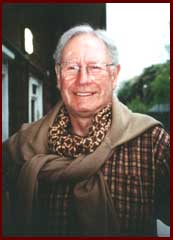
Alan Jacobs is Chairman of the Ramana Maharshi Foundation UK , A Moderator of Ramana Maharshi and Atma Vichara at Yahoo Groups, author of The Bhagavad Gita a Poetic Transcreation and The Principal Upanishads A Poetic Transcreation . He is also a professional Life Coach. You can find his website at www.creativelifecoaching.org
This article published with permission from The Mountain Path.
Image of entrance to Virupaksha Cave courtesy of Gabriele Ebert.


 Luthar.com
You must be logged in to post a comment.