Harsha's avatar

Lobsters and Crabs Feel Pain

Research to be published in two journals focusing on animal behavior suggests that virtually all animals, including lobsters, crabs, fish, shellfish, and insects, can suffer.

Chris Sherwin, a senior research fellow in the Clinical Veterinary Science division at the University of Bristol, commenting on the study told Discovery News, “The question of whether invertebrates experience pain is fundamental to our legislation that protects animals and our behavior, attitude and use of these highly complex organisms.”

Lobsters and crabs feel pain, study shows – Discovery.com- msnbc.com

Harsha's avatar

Ulladu Naarpadu (Reality in Forty Verses) :Verse #13

ULLADU NAARPADU
(Reality in Forty Verses)

The famous Vedantic poem in Tamil by Bhagavan Ramana Maharishi
(consisting of two preliminary verses called Mangalam,
40 verses which form the main text ,
and another 40 verses called the Appendix)
Detailed Commentary in Tamil by Lakshmana Sharma,
adapted into English by Profvk

(Continued from ULLADU NAARPADU – Verse No.12
See Post#48444 Of Harsha Satsangh

Lakshmana Sharma’s Introduction to Verse No.13

Now Bhagavan takes up the question of ‘What is Real?’ and ‘What is unreal?’. He answers the question about how the unreal appears to shine like real and establishes the advaita conclusions clearly. The Atman is the only Reality; taking that as its support (adhishhTAnam), the superposed universe appears as if it is real. – This is the advaita siddhAnta (Final Conclusive Verdict).

Verse No.13

jnAnam Am tAne mey; nAnA Am jnAnam ajnAnamAM;
poyyAm ajnanamume jnAnamAm tannai anRi inRu
aNikaL tAm palavum poy
meyyAm ponnai anRi uNDO ? puhal.

Translation (Lakshmana Sharma)

This Self, (here) declared to be Consciousness, is alone real, without a second; all knowledge which is manifold is only ignorance; this ignorance – which (being a negation) is non-existent – has no existence apart from the Self who is Consciousness. Say, do the unreal jewels exist apart from the gold which (alone) exists?

Translation (Prof. K. Swaminathan)

The Self that is Awareness, that alone is true. The knowledge which is various is ignorance. And even ignorance, which is false, cannot exist apart from the Self. False are the many jewels, for apart from gold, which alone is true, they cannot exist.

Translation (Osborne)

The Self, which is Knowledge, is the only Reality. Knowledge of multiplicity is false knowledge. This false knowledge, which is really ignorance, cannot exist apart from the Self, which is Knowledge-Reality. The variety of gold ornaments is unreal, since none of them can exist without the gold of which they are all made.
Word by Word

tAne : The Atman (the Self)
jnAnam Am : whose nature is Knowledge
mey: is the true Reality.
jnAnaM : the (worldly) knowledge
nAnA Am: which is multifold
ajnAnamAm: is only Ignorance.
ajnAnamume: And that Ignorance also,
poyyAm : which is non-existent
inRu : cannot be
tannai anRi :distinct from the Self
jnAnamAm: whose Nature is Consciousness.
aNikaDAm palavum : All the multi-formed ornaments
poy: are false
ponnai anRi: Apart from the gold
uNDO ? Is there anything?
puhal: Tell (me).

Commentary in Tamil by Lakshmana Sharma.

In the previous verse it was said “tAn aRivu Ahum” (The Self is Consciousness). This Self which is of the Nature of Consciousness is the only Reality – that was mentioned right in the beginning , namely, the Existent Reality (“uLLa poruL” – cf. Mangalam-1, 2nd line) , because it is One and remains unchanging. This is the meaning of “jnAnam Am tane mey”. In other words, the Self is Existence-Consciousness – sat-chit. therefore it is Brahman.

There is the question whether the multiple appearance of the world –the Individual, Ishvara and the universe – is true or not. The reply is given by the statement “nAnAvAM jnAnam ajnAnamAm”. The knowledge of multiplicity that is referred to here indicates only the manifoldness of the world’s appearance. For, other than knowledge – meaning, other than the thoughts created by the mind – there is no universe.

What is being said here is a definition of the discrimination between what is real and what is unreal. Being One is the characteristic of Reality. Appearing manifold is the characteristic of Unreality.
The purport of the statement that the world is Ignorance is to say that the world arose from Ignorance. And Ignorance is nothing but Ego. That is not something that is material; this is the truth that Bhagavan teaches as the fundamental truth in this work. Ignorance means the absence of Knowledge; and that again tells us that Ignorance is like Darkness. It is not a material substance. Darkness cannot be present in the presence of Light. So also Ignorance cannot persist in the face of the Light of the Self. How can such a destroyable Ignorance be the Existent Reality? This is what is meant by the words “poyyAm ajnAnamume”.
Ignorance is not a material substance – this is the conclusion of Vedanta. If it were so, then the universe and the bondage that arise from it would have an element of truth in them. An immature disciple is told as if there were an Ignorance that caused the bondage. In reality there is no such thing – this is the bottom line teaching. Therefore the question: “Wherefrom did I get this Ignorance?” is an absurd question. The question presumes there is a relationship between the Existence-Knowledge Brahman and the transmigratory cycle of samsAra. There is no such relationship. The Vedanta teaching is: “asango-hyayam purushah”, that is, the Atman that is Brahman is associationless and relationless. This is technically known as “ajAta-siddhAntaM”. It means that from the Absolute point of view there is no universe arising from Ignorance, no JIva, no bondage, no seeker, no mokshha. What is Real is an ever-pure, ever-knowing, ever-free Atman only (*nityashuddha, nityabuddha, nitya-mukta AtmA*). This is the experientially-confirmed Truth of the JnAnis who live in that experience. Bhagavan says that Sri Krishna in the Bhagavad Gita, right in the beginning of the second chapter, declared this truth to Arjuna but the latter was struggling to absorb it and that is why Krishna gave him several other teachings.

Though the relationship does not exist in reality, for the purpose of teaching, an imagined relationship has to be talked about. But this does not in any way affect the Reality that exists.

This universe – that is, the individual, the Ishvara and the universe – which is an expansion of Ignorance, appears as if it is real. The reason for this is that their adhishhTAnam (substratum, base) is that Existent Reality namely, the Atman. They have been superposed on the sat-chit Nature (svarUpa) of the Atman. From this it is clear that the universe has no existential reality of its own. Such an existential reality is there for the Atman; for, it shines in purity without the appearance of the universe, in the turIya that is Knowledge-experience (jnAna-anubhava). Therefore it is said that the Atman is real and the universe is mithyA.

‘The universe is mithyA’ means the differences of names and forms superposed on the substratum of the Atman are mithyA. After throwing off the differences what remains as the adhishhTAnam (support) is the real truth of the universe – this prompts us also to say that the universe is real. Thus the two statements ‘the universe is mithyA’ and ‘the universe is real’ are not contradictory. If one understands it this way without the contradiction, both the statements are true.

The analogy for this comes from the case of gold and golden ornaments. The golden ornaments are at all (three) times only gold; before they are made into ornaments, after they are made and are handled as ornaments, and when they are destroyed back into gold. In all three states of time the truth of the gold is unchanged. Further, gold is one whereas the ornaments are many. Therefore, as per the definitions indicated earlier, gold is more real than the ornaments; ornaments are unreal. In the two statements in the verse: namely, “aNigal tAm palavum poy” and “meyyAm ponnai anRi uNDO”, notice that the two words ‘poy’ (false) and ‘mey’ (true) are used in juxtaposition. When you look at it as gold, the ornaments don’t appear; therefore they are false. When you look at it as ornaments, their false names and forms hide the truth of the gold. The gold that is hidden is the truth. Worldly people say that both are the truth. If that were so, the analogy would not match the situation; so Bhagavan deliberately uses the two words here. The purport of this is: “The ornaments are many and (therefore) false, have as their adhishhTAnam the one, and (therefore) real, gold; so also, the knowledge, which is only Ignorance, that imparts an inherent nature of multiplicity, and (therefore) falsity, to the world, has as its adhishhTAnam the Atman, which is the One Reality-Consciousness and consequently appears as if it is real”.

If Bhagavan had not added the words ‘poy’ (false) and ‘mey’ (true) here, a wrong interpretation may be attributed to Bhagavan that in addition to the ornaments being dense with gold, their differences of forms and names are absolutely true; and this may be followed up by the analogous inference that in the same manner in addition to the world being dense with Brahman their differences of names and forms are also true in the absolute sense. In order to prevent such a wrong interpretation these two words appear here as said.

The same thought appears in Tirumoolar’s Tirumandiram in the verse:

Marattai maRaittadu mAmada yAnai,
Marattil maRaindadu mAmada yAnai;
Parattai maRaittadu pArmudal bhUtam,
Parattil maRaindadu pArmudal bhUtame.

Meaning,

The gigantic elephant hides the wood,
The gigantic elephant is (also) subsumed in the wood.
The earth and the elements hide the Absolute,
The earth and the elements are (also) subsumed in the Absolute.

In more explanatory words, in the wake of Ignorance, the Absolute is hidden by the five elements and appears as those elements and their ramifications. In the wake of Enlightenment, the elements do not appear, only the Absolute shines in all Glory.

Thus, what has been said is nothing but what the analogy of the rope and the superposed snake would have implied.

Thus the appearance of the world is false. This implies that even during the time of its appearance, it is not there. This meaning would become explicit in Verse No.37.

(To be continued in Verse No.14)

Harsha's avatar

Inner Path – “Trees”

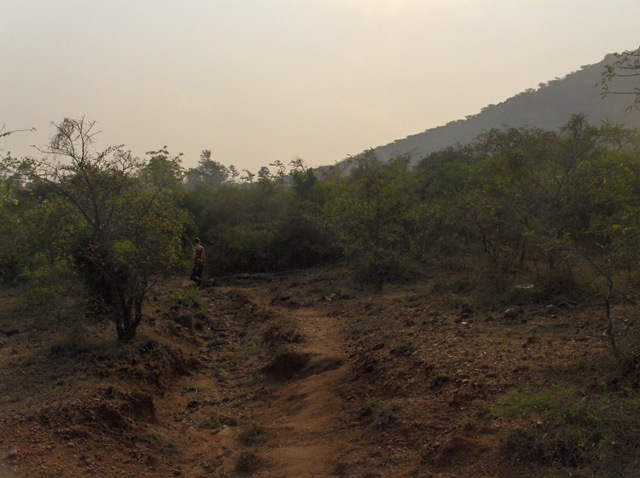
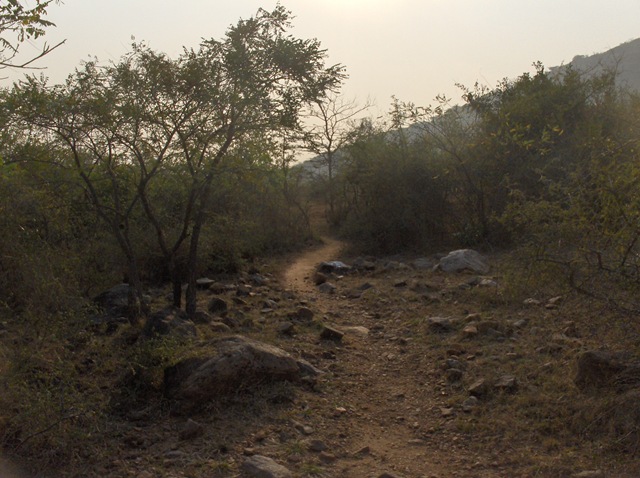
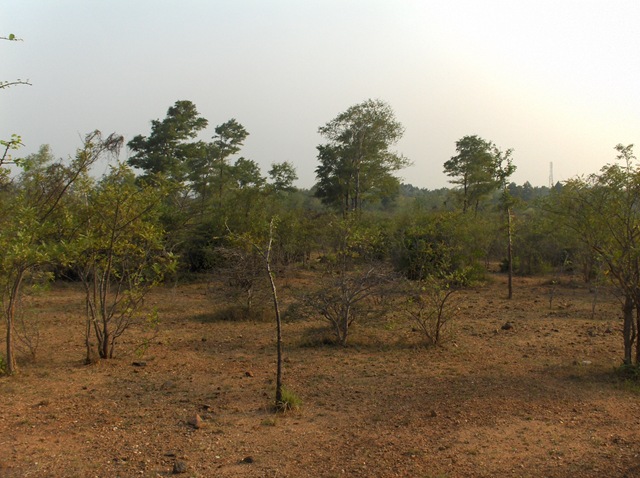
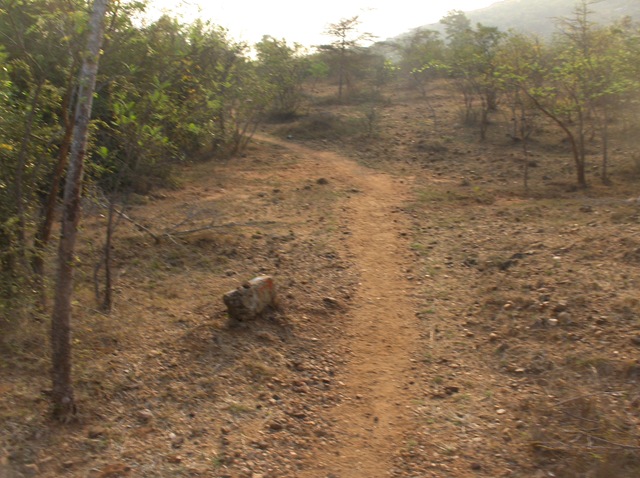
This post continues the series that show Arunachala’s Inner Path, used by devotees of Sri Bhagavan Ramana Maharshi for the sacred walk around this holy hill. This walking is called pradakshina, or in Tamil, girivalam.

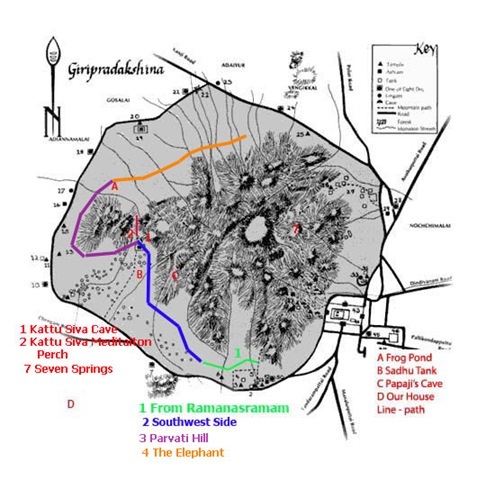
Part One shows the path from Ramanasramam. Part Two shows the walk around the southwest side of the hill.  Part Three details the section of the path around Parvati Hill, at the west end of Arunachala. Part Four shows the path on the north side, under the Elephant. This is Part Five.

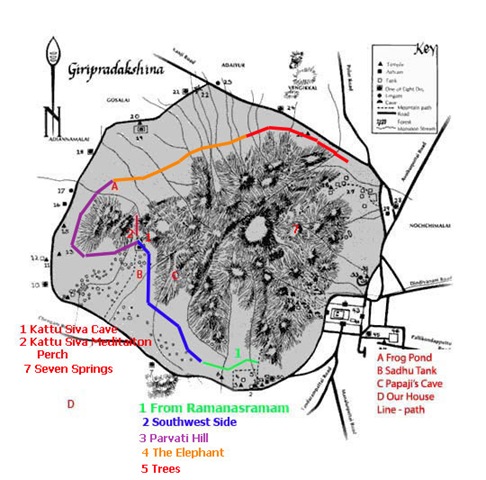
A map is below. The Trees section of the Inner Path is shown in red.

Arunachala Inner Path Trees

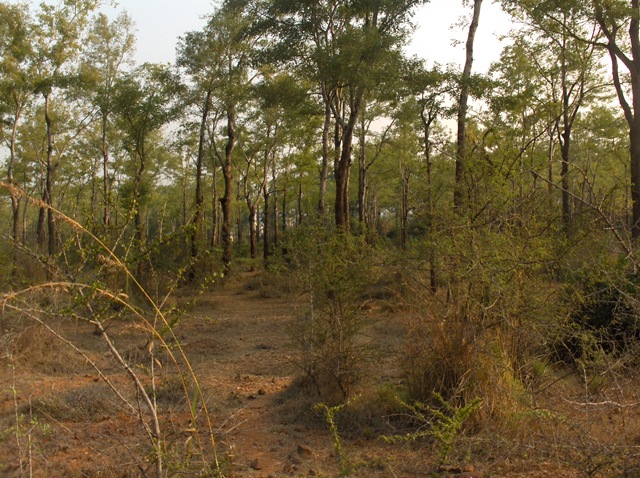
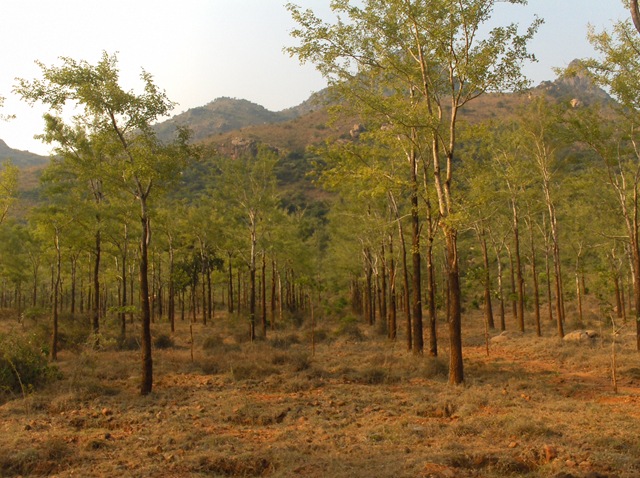
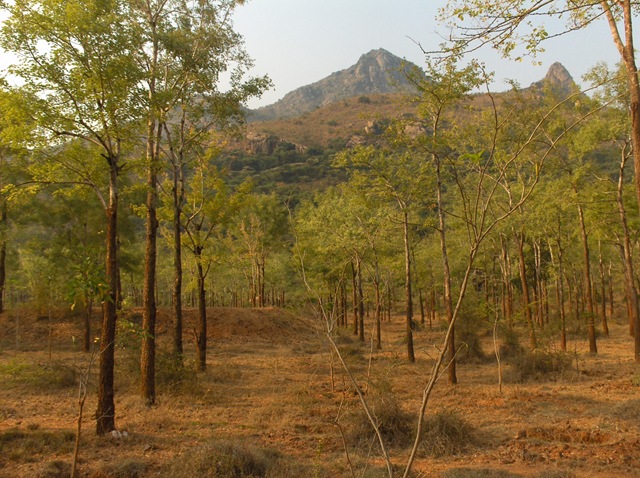
In this section of the Path, tall trees, planted about 20 years ago, are a main feature, first away from the Path, near the road, then next to the Path, then the Path goes through these trees. Also the Path gets closer to the road, and is  less quiet. 

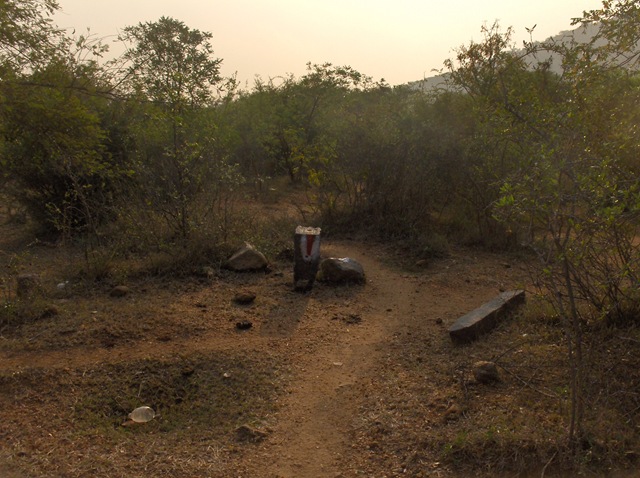
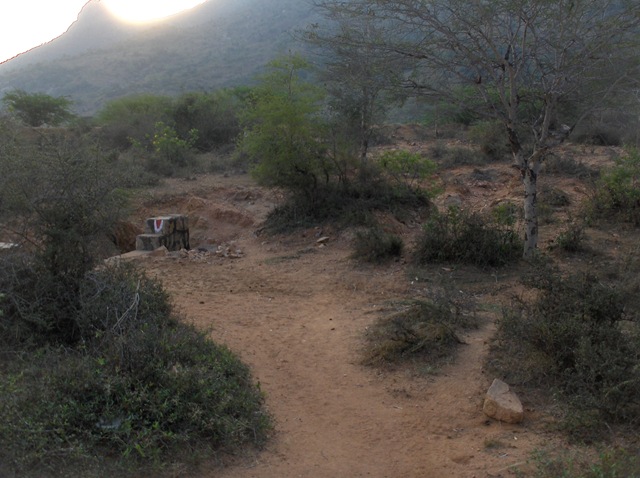
Starting from the Stone Post

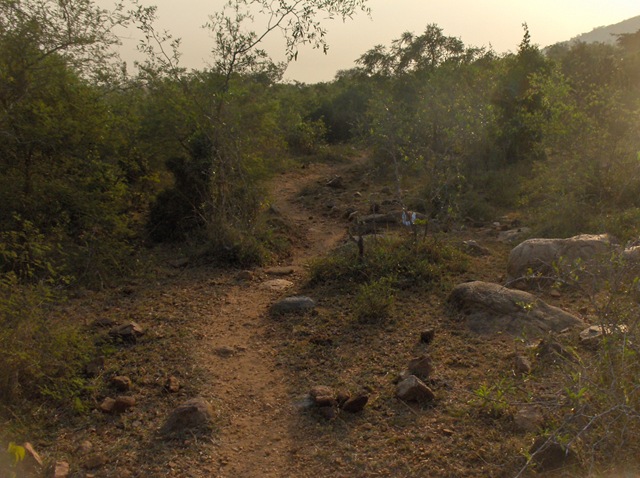
It is about 7:30 in the morning when we start from here. There is sunlight on the trail already. It is late March, and moving towards summer, so the plants are drying out. 

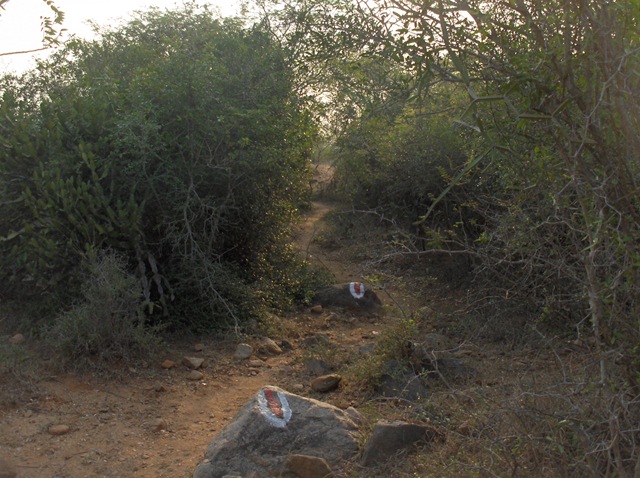
At this spot there are paths leading both towards and away from the mountain. Go straight: the Path is marked here.

Sometimes you will see camphor burning in a pit in this marker. If you brought camphor, you might want to light a piece of it here.

HPIM2056

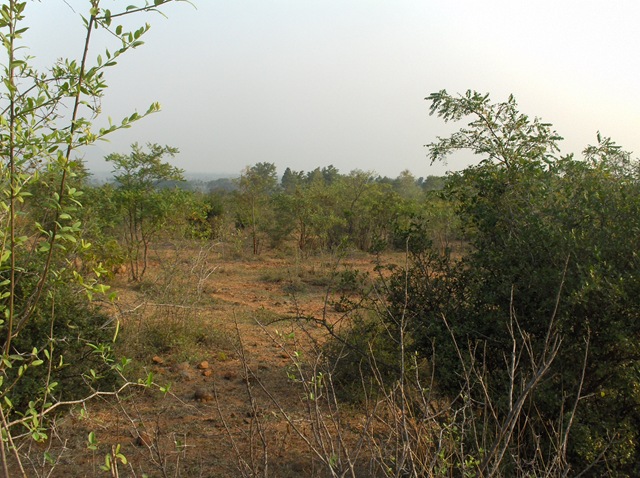
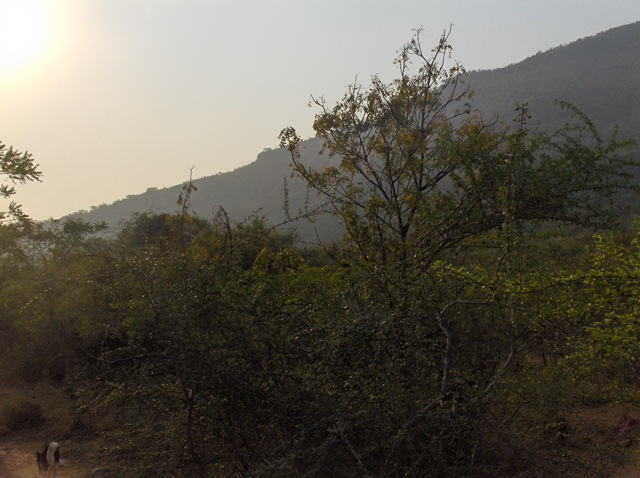
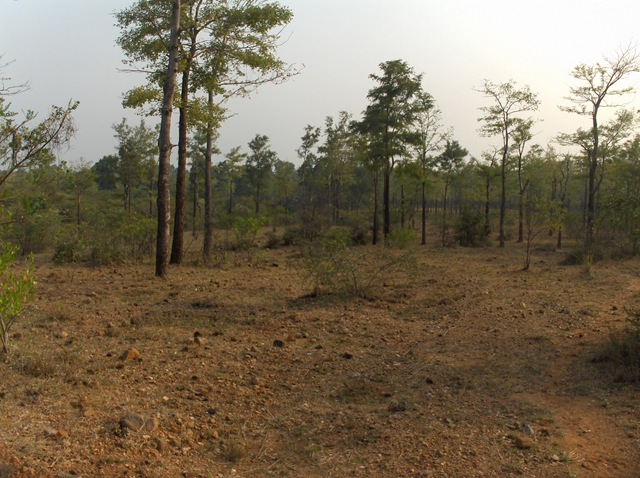
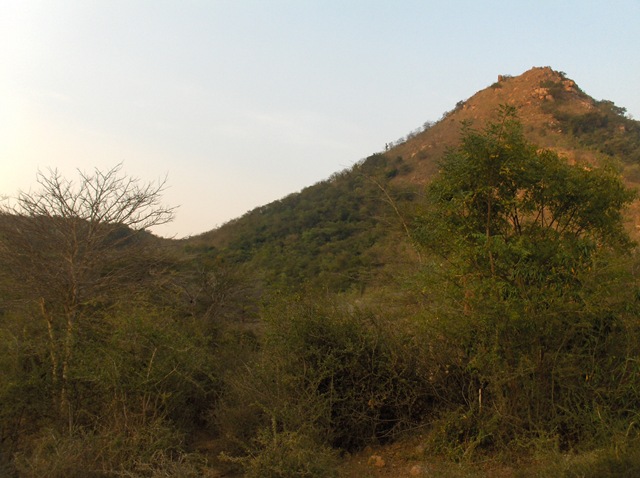
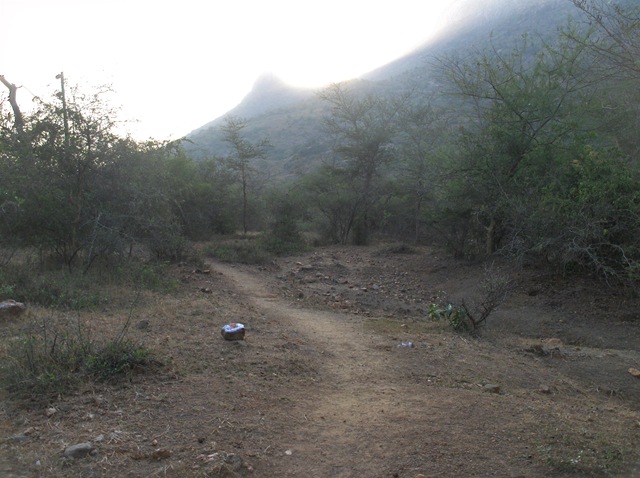
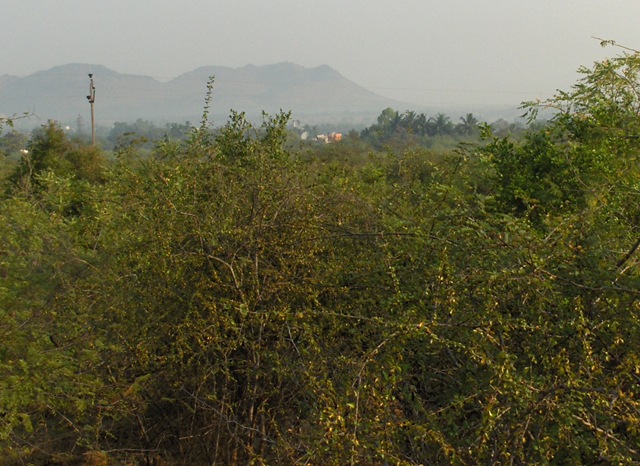
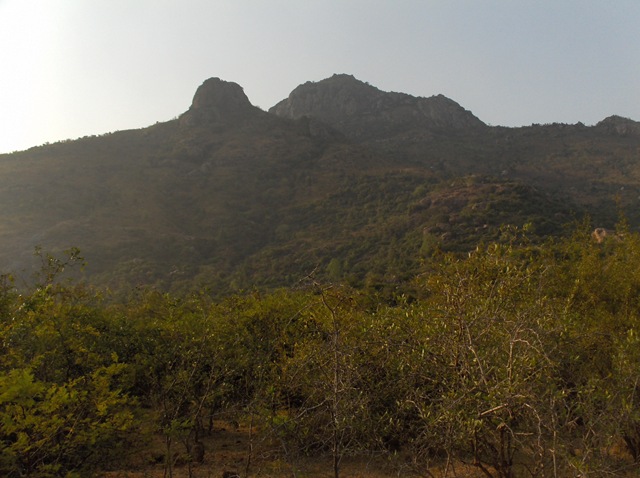
Looking  away from Arunachala, you can see trees rising far away.

HPIM2057

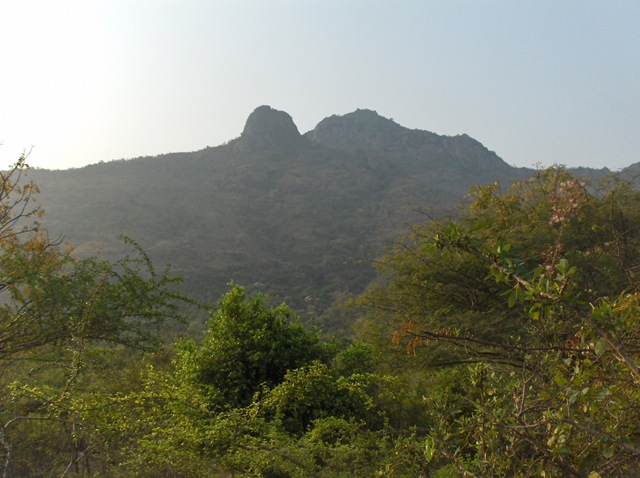
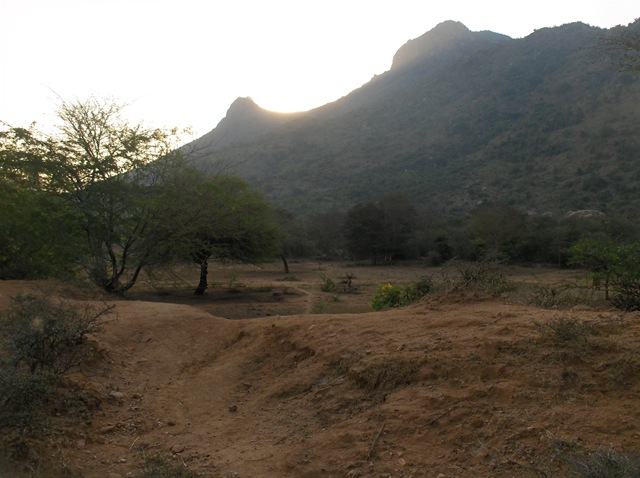
The Elephant ‘compass’ is now pointed almost directly at us.

HPIM2058

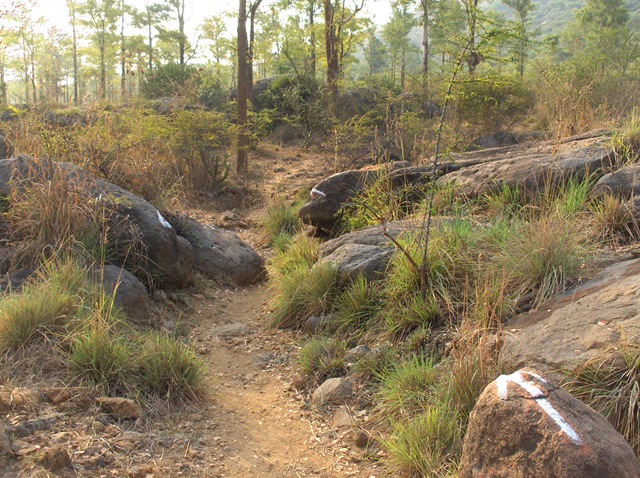
Ahead, there is a ridge that slants down towards the Inner Path. This is a landmark on this part of the path. When this ridge comes down to the Path, there is a nice place to sit, rest and have a drink of water. There is also a little-known feature of Arunachala at this spot, called by some the ‘Ringing Rock.’ 

HPIM2059

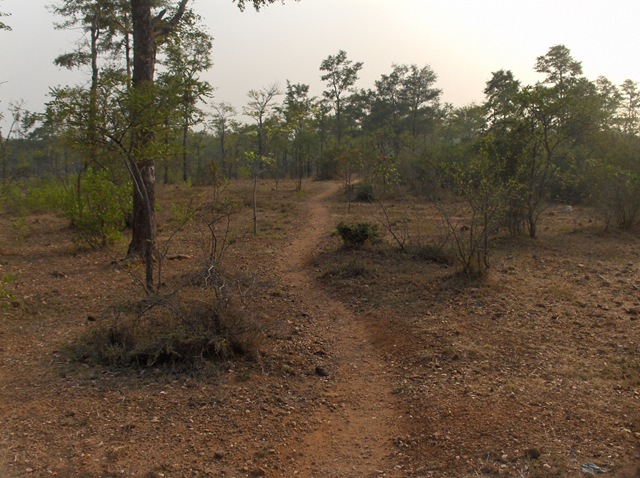
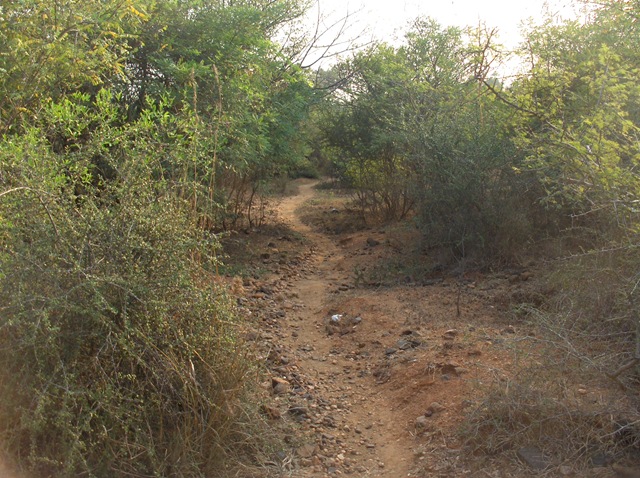
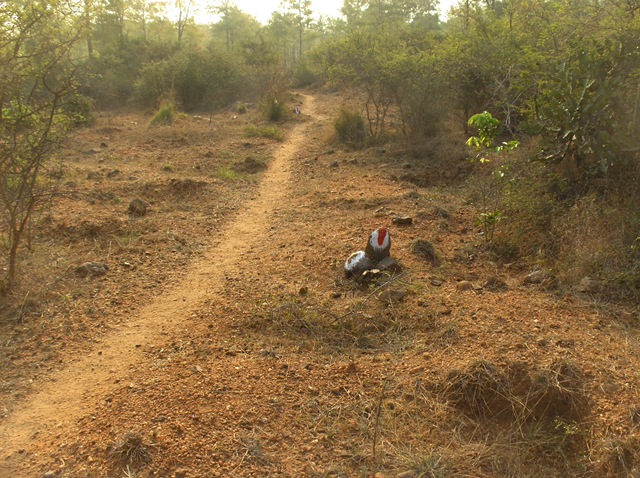
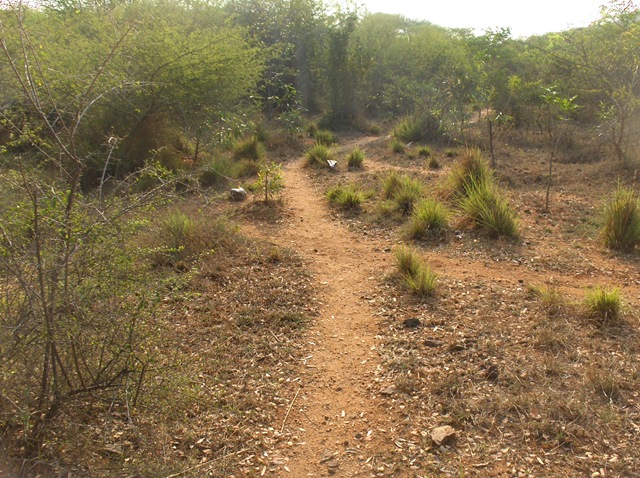
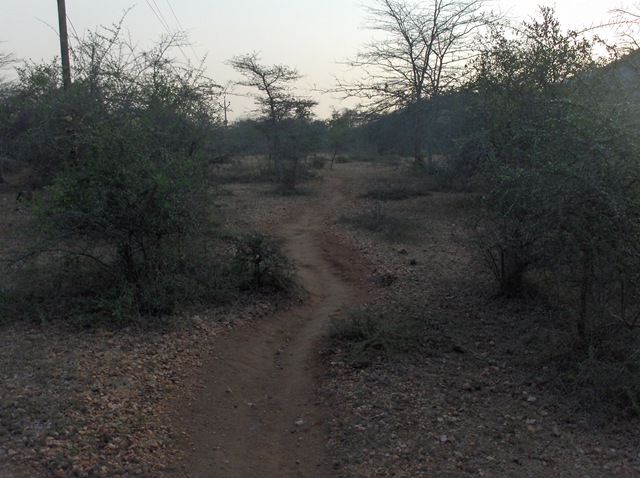
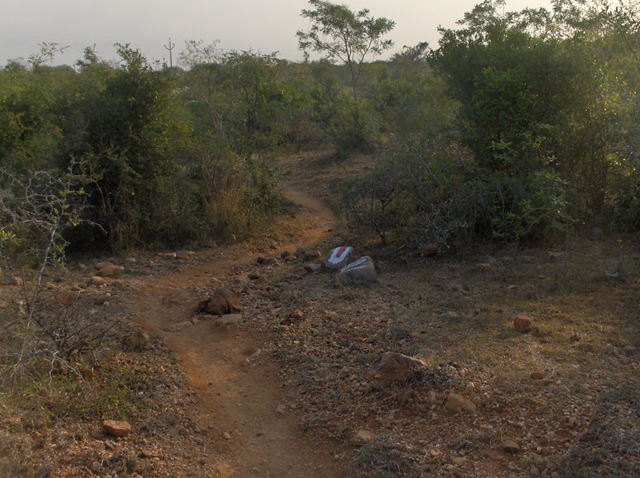
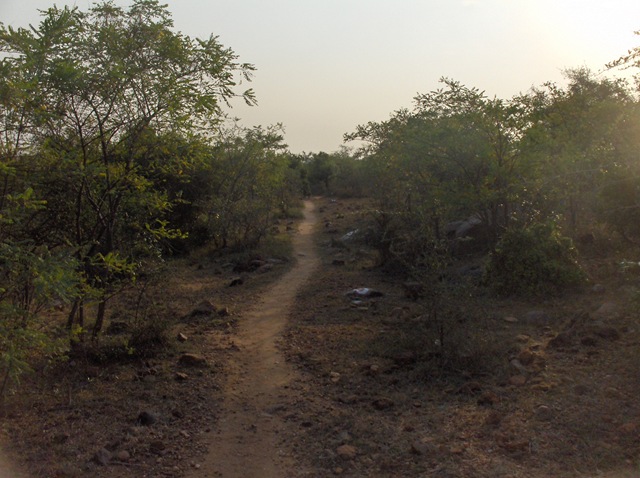
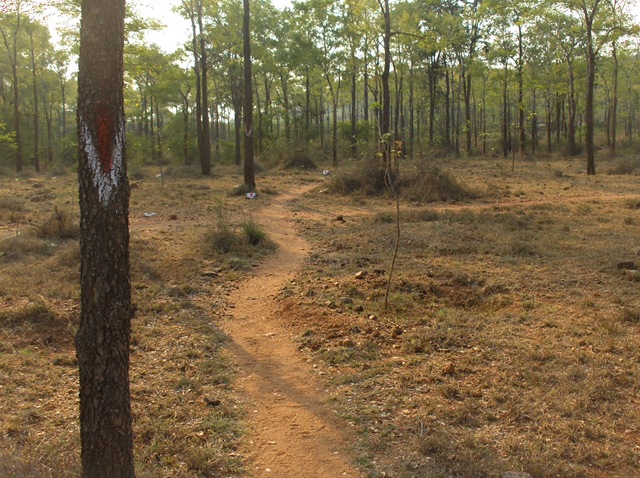
The path is well marked. Sometimes it goes through thickets.    

HPIM2062

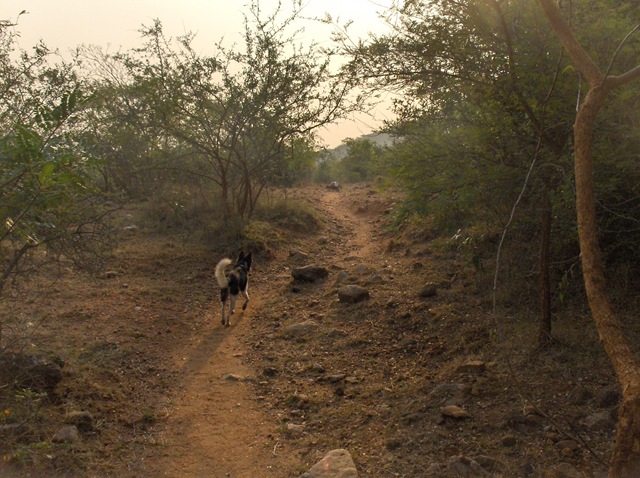
Sometimes through open scrub brush. There is a black and white dog walking with me today. He sometimes joins us on the walk. I bring doggie biscuits for him (and two other dogs that are friends).

HPIM2063

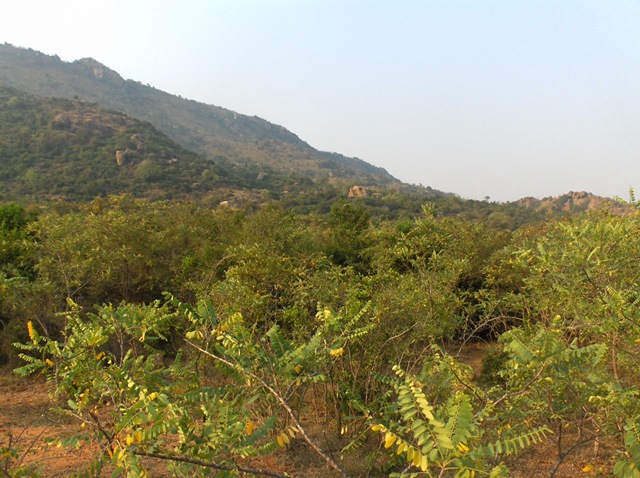
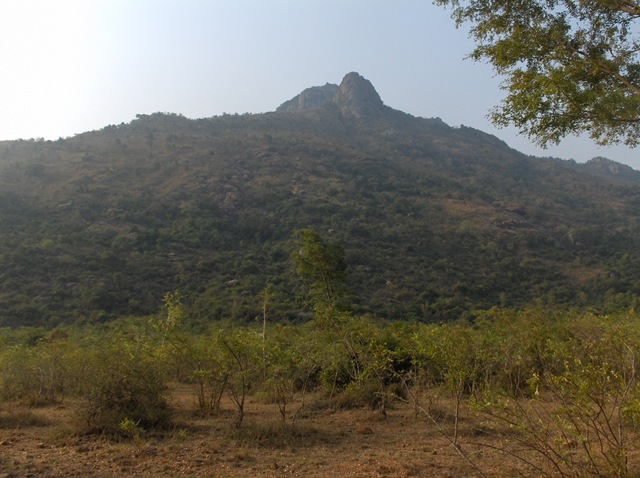
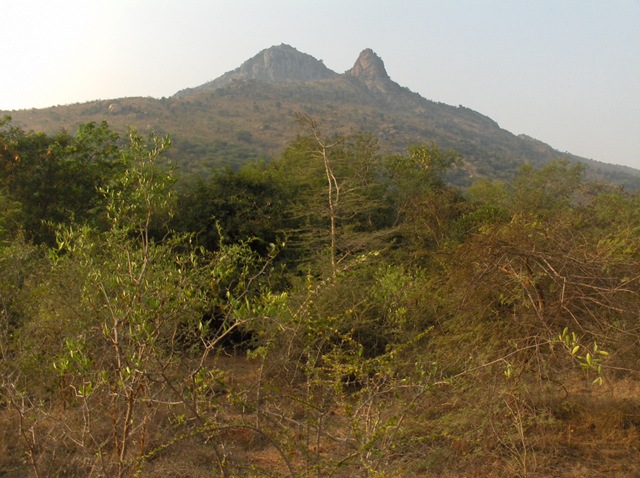
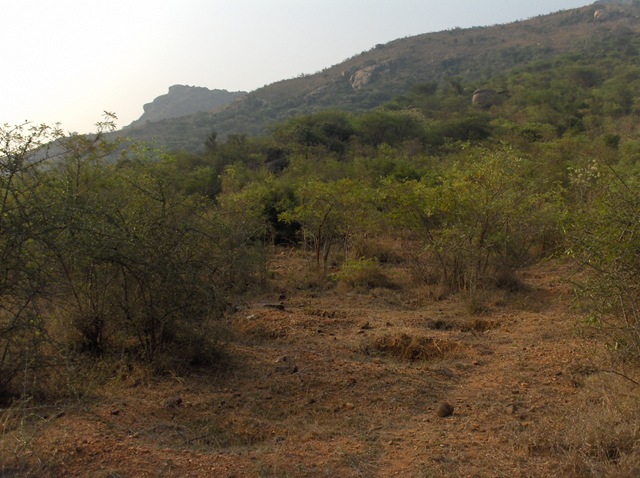
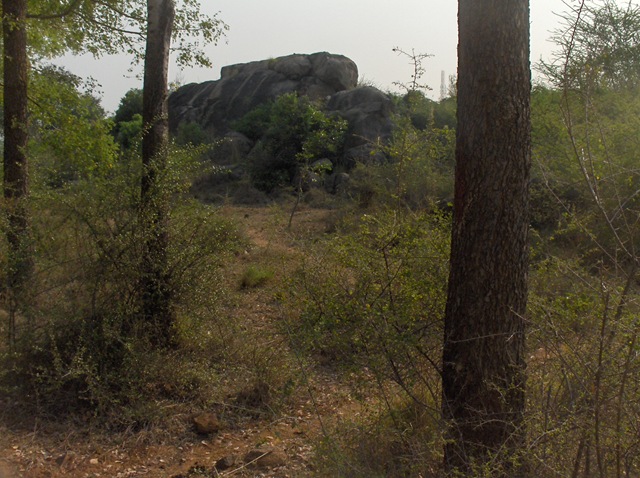
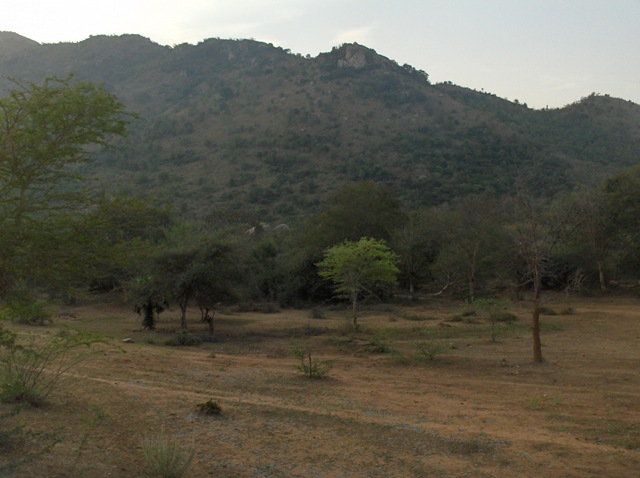
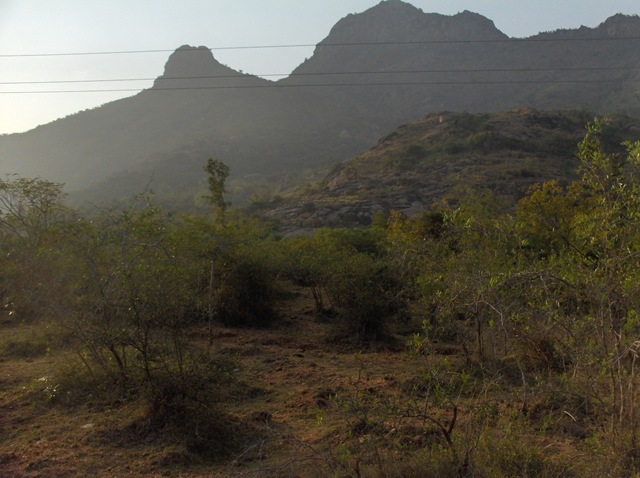
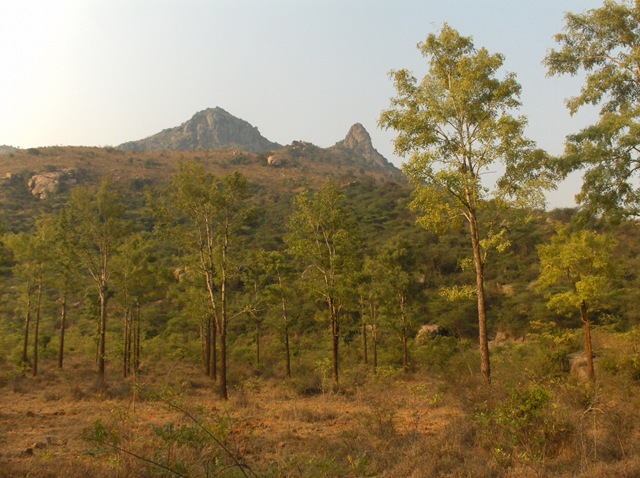
Looking back towards the mountain, the ridge seen when walking The Elephant rises to the right. In the center here you can see a low hill, where it will be worth exploration trips in the future.

HPIM2068

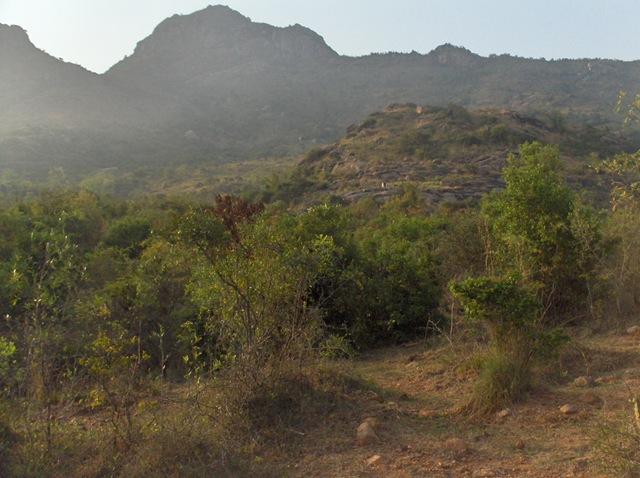
Ahead on the Path we see the ridge angling down to the Path.

HPIM2071

HPIM2075

Trees are now closer to the Path.

HPIM2077

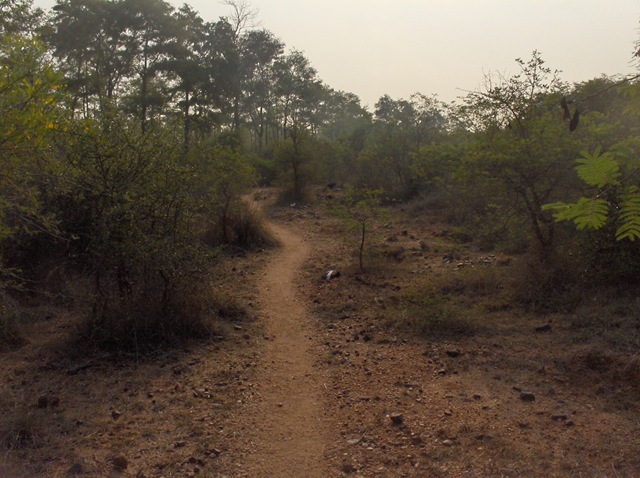
The Path continues through open brush.

HPIM2081

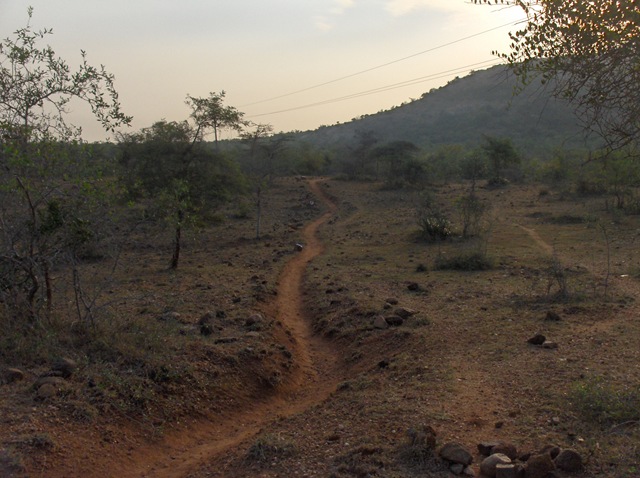
We pass a stone retaining wall intended to reduce erosion during the rainy season.

HPIM2082

Now  it looks  like we are heading into the trees.

HPIM2086

They are closer to the Path here.

HPIM2095

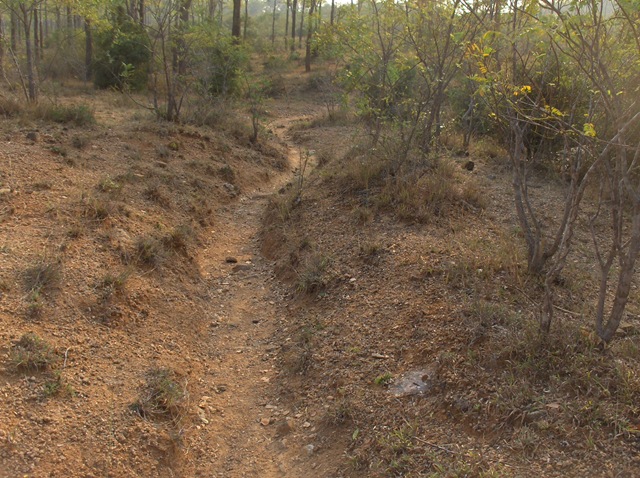
We wind down a small hill.

HPIM2097

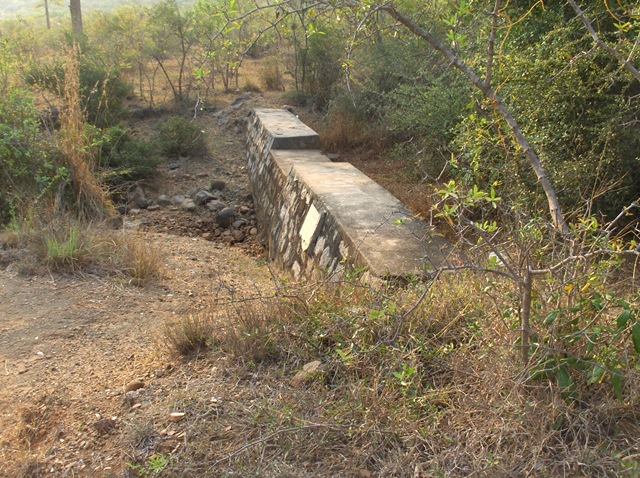
And come to a well-made rock-and-cement structure that is part of the system to slow down water running off the Holy Hill.

HPIM2098

Below, we have crossed to the other side of the Elephant ‘compass’.

HPIM2103

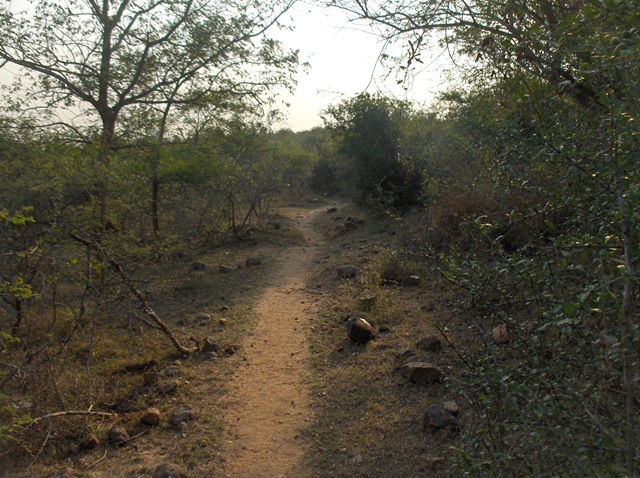
The path goes through trees for a short bit, then back into the brush.

HPIM2107

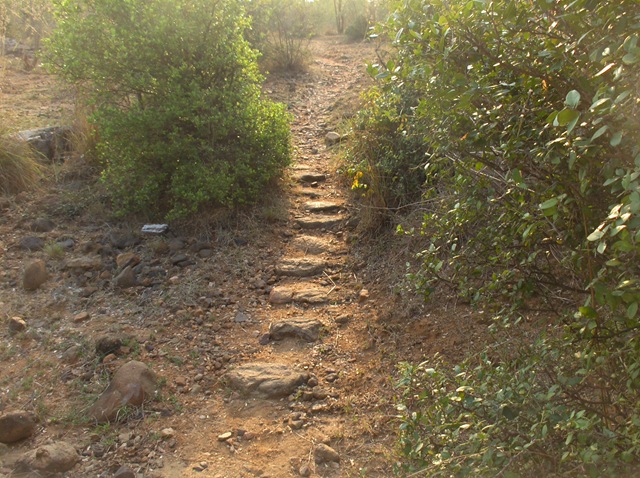
Here is a short set of stone stairs. Again and again we see work that has been done by someone who loves Arunachala, and provided some service to the mountain by working on the Inner Path. 

HPIM2110

Winding through the low trees and brush.

HPIM2116

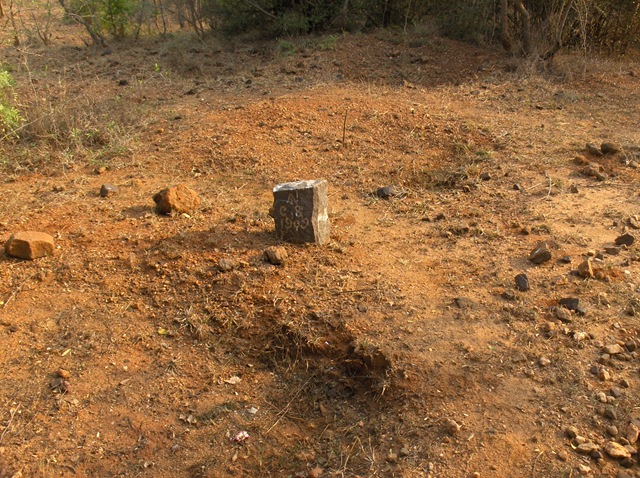
Here is a survey marker. The date is 1909.

HPIM2117

Now the Path is next to the trees.

HPIM2123

The Elephant ‘compass’ shows we are on the north east side of Arunachala.

HPIM2125

We see many trees to the right of the Path.

HPIM2132

In the foreground, notice the green ridge coming down towards the path.

HPIM2137

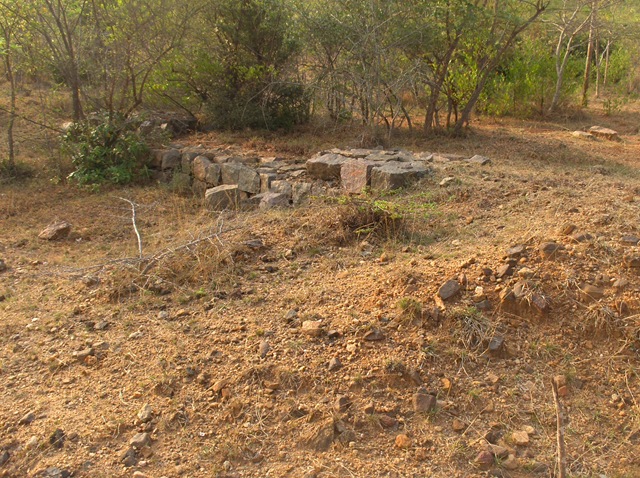
This two-rock marker also shows where we are. We are near a group of rocks were we can sit and rest.

HPIM2140

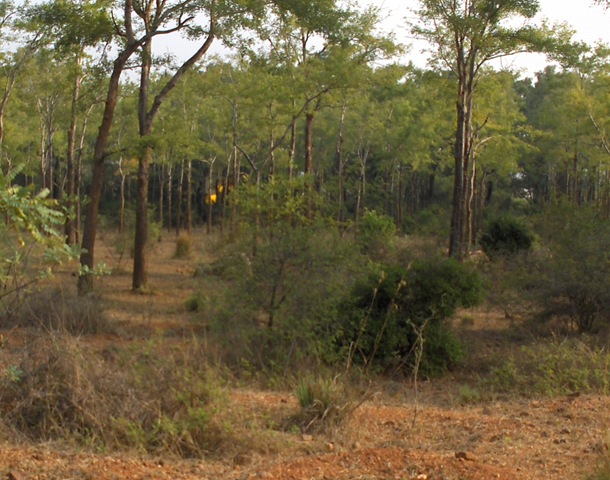
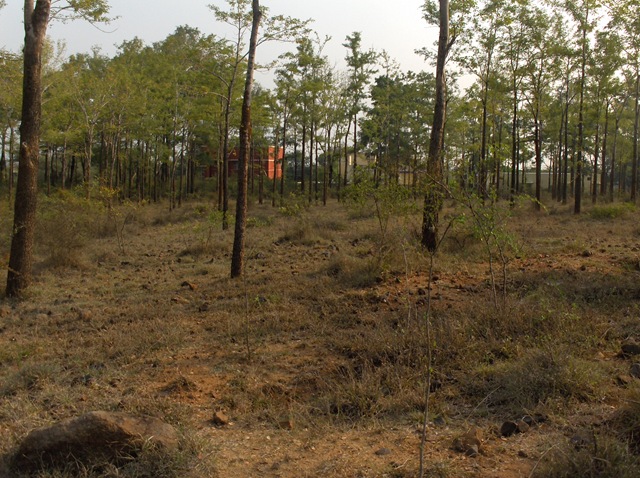
To the right, through the trees, we can see a spot of yellow color. This is from a house by the Girivalam Road. You can hear traffic  on the road now.

HPIM2141 crop

Here are the rocks. We usually sit here for a bit, and have a drink of water.

HPIM2153

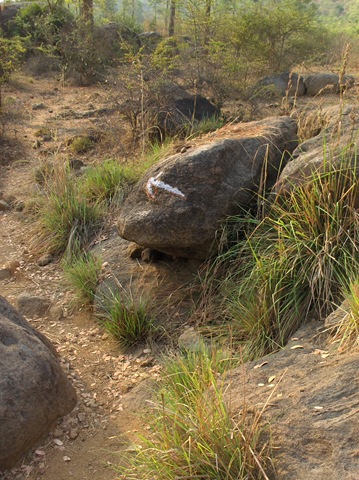
Off the right side of the Path is a rock with an arrow painted  on it. (In the photo above, it’s the rock to the right in the middle ground.) If you look closely, you will see that it is scuffed (above and to the right of the arrow). Grab a hand-sized stone and strike it in the scuffed area.

Listen and know why it is called ‘The ringing rock.’  Have you ever heard anything like this before?

HPIM2157

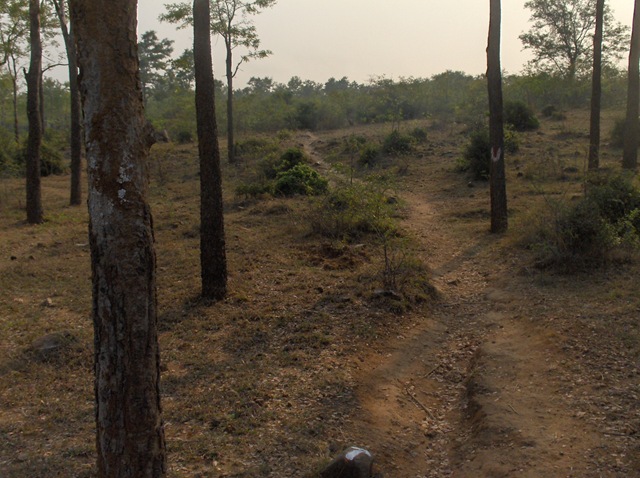
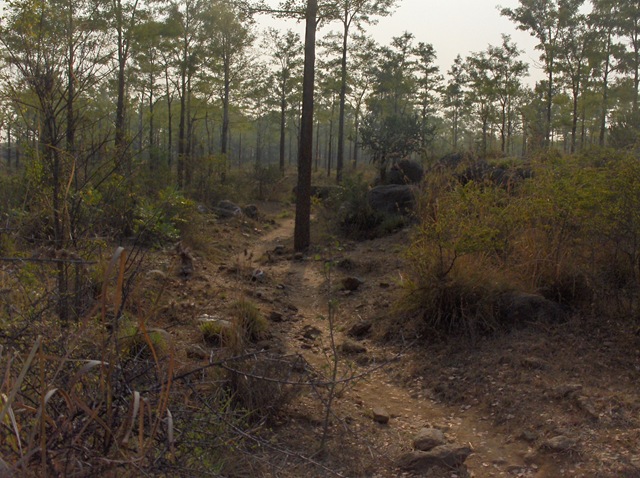
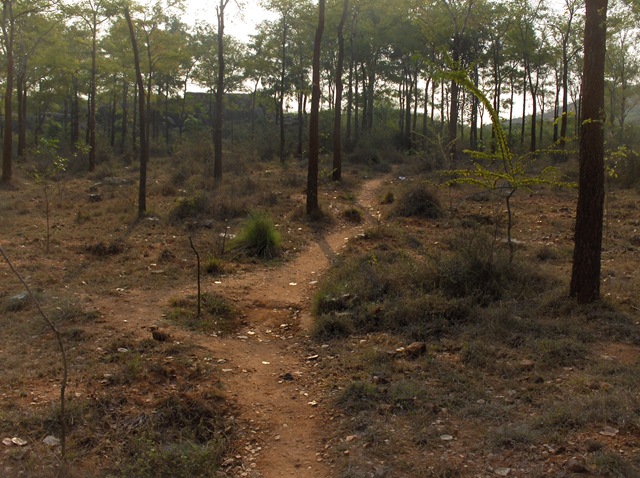
Now the Path continues through the trees.

HPIM2160

More houses and commercial buildings are visible to the right of the Path.

HPIM2164

The peak of Arunachala is behind us. We see The Elephant from the other side now.

HPIM2165

These trees are planted  in rows.

HPIM2175

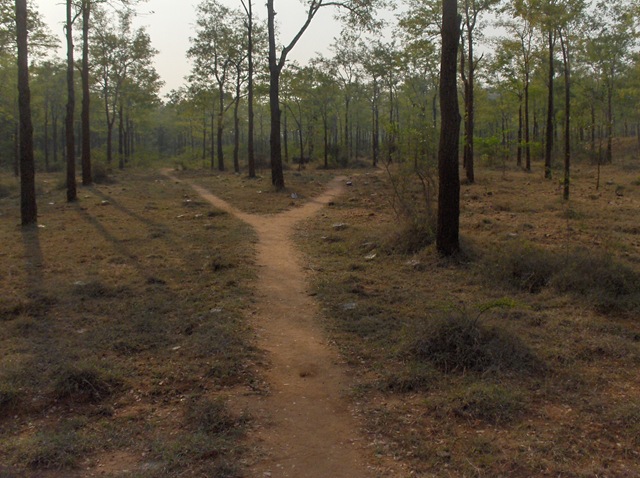
Take the right fork of the Path.

HPIM2176

Below is the peak through the trees.

HPIM2180

We cross a couple of paths.  The Inner Path is well marked. Go straight.

HPIM2183

Now a rock formation rises to the left of the Path.

HPIM2192

It is maybe 20 feet high. Recentlyl we saw a photographer here, having gone ahead of his group to get a shot from a great angle.

HPIM2197

We cross the path that goes by this rock. This  is the end  of this section of the Inner Path. 

HPIM2196

We will post the next and last section of the Inner Path soon.

Related Posts   

Inner Path – Southwest Side
I
nner Path – South Side from Ramanasramam
Inner Path – Around Parvati Hill
Inner Path – The Elephant

Harsha's avatar

ULLADU NAARPADU (Reality in Forty Verses): Verse #12.

ULLADU NAARPADU
(Reality in Forty Verses)

The famous Vedantic poem in Tamil by Bhagavan Ramana Maharishi
(consisting of two preliminary verses called Mangalam,
40 verses which form the main text ,
and another 40 verses called the Appendix)
Detailed Commentary in Tamil by Lakshmana Sharma,
adapted into English by Profvk

(Continued from ULLADU NAARPADU – Verse No.10 &11
See Post#48287 Of Harsha Satsangh
For the first post in this series see #47923)

Lakshmana Sharma’s Introduction to Verse No.12

If both Ignorance and Knowledge are gone, then what remains must be a void. Is it so? – is the question that arises. What so remains is not a void. The Consciousness that is the Nature of the Atman is what remains. This is the content of this verse. The Self-Realisation where there is neither knowledge nor ignorance is what is known as the (ultimate) Knowledge Supreme. It is the nature of the Atman; it is not a quality or attribute of Atman – so says this verse.

Verse No.12

aRivu aRiyAmaiyum aRRathu aRivAme;
aRiyum athu uNmai aRivu AhAthu.
aRithaRku aRivittaRku anniyam inRAy avirvathAl,
tAn aRivu Ahum; paazh anRu, aRi.

Translation (Lakshmana Sharma)

Know that that alone is true knowledge, in which there is neither knowledge nor ignorance; the (so-called) knowledge of objects, understand, is not at all true knowledge. The Real Self shines always alone, with neither things for Him to know, nor persons to know Him; therefore He is only Consciousness; do not think He is non-being.

Translation (Prof. K. Swaminathan)

True Knowledge is being devoid of knowledge as well as ignorance of objects. Knowledge of objects is not true knowledge. Since the Self shines self-luminous, with nothing else for It to know, with nothing else to know It, the Self is Knowledge. Nescience It is not.

Translation (Osborne)

That alone is true Knowledge which is neither knowledge nor ignorance. What is known is not true Knowledge. Since the Self shines with nothing else to know or to make known, It alone is Knowledge. It is not a void.

Word by Word

aRivAme: (True) Knowledge
aRRathu : (is) devoid of
aRivu: Knowledge
aRiyAmaiyum : and Ignorance.
aRiyum athu : What knows
AhAthu: will not be
uNmai aRivu: True Knowledge.
avirvathAL : Because it shines
inRAy: without (the necessity of the presence of)
anniyam: a distinct object
aRithaRku: for (either) to know
aRivittaRku: (or) to be known,
tAN : the Real Self
Ahum: is
aRivu: Consciousness (True Knowledge)
pAzh anRu: (It) is not a non-being or void.
aRi: Know (this).

Commentary (in Tamil) by Lakshmana Sharma.

‘Self Realisation is the only True Knowledge; all else is just Ignorance’ –this thought has already been said in Verse No. 10. The same thing is being reconfirmed here for emphasis. Knowledge and Ignorance subsist only when the Ego has its sway on samsAra. In the turIya there is only Pure Knowledge that is unmixed with Ignorance and which has no relationship with Ignorance. Therein there is no duality of knowledge and ignorance, nor there is the triad of knower, knowledge and the known.So there is no concept of ‘difference’ there. But the common knowledge-triad is full of concepts of difference and so is in relationship with Ignorance. Therefore it is nothing but Ignorance, says the second line of this verse.

One might ask: Why do Knowledge and Ignorance both get destroyed in turIya? Why not Ignorance alone meet with destruction and Knowledge survive? The knowledge that is being spoken of in this question is itself nothing but Ignorance – we have mentioned this already. The reason that both Knowledge and Ignorance do get destroyed in turIya is that the latter is the state of mokshha; there is no second thing there. This is what has been said in the third and fourth line of this verse. There is nothing distinct from the Supreme and so there is no question of the Supreme ‘knowing’ anything. So the knowledge that is spoken of in the knowledge-triad is not there in the Atman. Again in order that It, the Atman, may be shown to exist as the ‘known’ (an object of knowledge), there has to be a distinct intelligence other than the Atman. There is no such. Actually this truth was what was already meant through the second meaning of the very first line of Mangalam – 1: ‘What sense distinct from It makes explicit what exists as Real Consciousness? The Atman does not shine by an ‘outside’ something, but shines by its own self-effulgence, which is its natural state of Pure Knowledge. So it is not inert and by that very fact thre is no Ignorance there. It is the Complete totality which has neither ignorance nor the opposite of it.

By this very fact of Self-effulgence, it follows that the Atman’s very nature is the shine of True Knowledge. This is the conclusion of all Vedanta and this is stated here by the words “tAn aRivu Ahum” (The Real Self is Consciousness).

There are those who do not understand that what exists as Absolute reality is the Knowledge-Supreme and that whatever appears in the world is the mithyA that has as its support (adhishhTAnam) this Knowledge-Supreme. These are the ones who complain that the Atman is equivalent to a void. To guard against this pitfall of delusion, Bhagavan says “Understand that this is not a void”. What makes all this world exist, by what shine all this shines, that cannot be a void.

Those who believe that the Atman is a void, would consider the experience of the material bliss of the heavenly world as most desirable. They do not know the true nature of happiness. The heavenly bliss of happiness in the other world has many faults, and further, it has an end. So it cannot be permanent Bliss. On the other hand the Bliss that comes from Self Realisation has none of these faults and it is infinite.

Now we can understand what it means to say ‘Self-Knowledge’. It may mean two things: ‘Knowledge of Self’ and ‘Knowledge that is Self’. The first meaning implies the knowledge that knows the Self. But this will make the Self an object that is known or is to be known. In other words the Self becomes an object of knowledge and the knowledge that knows it as distinct from it. But the Self is non-dual and we already mentioned that it does not afford the triad of knower-knowledge-known. Thus the first meaning is to be discarded. The second meaning which says the Self itself is Knowledge indicates that the Self is of the nature of Knowledge. This is what Bhagavan says by the words ‘tAn aRivu Ahum’. Thus it follows that it is wrong to say either that we do not now know the Self or that we will one day know the Self. ‘Knowing the Self’ can only mean ‘Being the Self’. In fact this meaning will be made explicit in Verse No. 33.

(To be continued in Verse No. 13)

PraNAms to all advaitins.
PraNAms to Bhagavan Ramana Maharishi.
profvk

Harsha's avatar

What Is The Ultimate Truth? By Dr. Harsh K. Luthar

In discussions, we are often asked the question about the “Ultimate Truth”. It comes in different variations.

1. What is the ultimate Truth of Life

2. What is the ultimate Truth of Love?

3. What is the ultimate Truth of God?

4. What is the ultimate Truth of Bliss?

5. What is the ultimate Truth of Existence?

6. What is the ultimate Truth of the Universe?

I am sure there are other ways of framing similar questions.

Albert Einstein once suggested that sometimes a difficult problem or a question cannot be  answered at the  level that it is postulated. Indeed, there is a lot of support for that thought in mathematics and physics.

For example, to solve Fermat’s last theorem in geometry (for which  Fermat in 1637 claimed to have a simple proof) took over 350 years.  Many prominent mathematicians worked on it in their life times over several hundred years with no success.

Fermat’s Last Theorem

My own father worked on the Fermat’s theorem (off and on) most of his life and sent in his proof to various Math Journals. The referees found subtle flaws of logic in his papers.

In 1995, Andrew Wiles (Sir Andrew John Wiles), a British Mathematician and a Professor at Princeton released a lengthy and complex proof of Fermat’s theorem which withstood the analysis of the world’s best mathematicians.

Sir Andrew John Wiles

My father was very happy when finally the Fermat’s theorem was laid to rest.  He told me that he could not have solved it as the proof involved fields of mathematics with which he was not even familiar.

Andrew Wiles solution used very complex branches of mathematics that did not even exist when Fermat was alive and were developed hundreds of years after Fermat had passed away.  In a very real sense, the answer to Fermat’s theorem was discovered at a different level than it was proposed.

So can we answer the question about Truth at the level that it is raised? Indeed, if we investigate carefully, we are forced to instead examine assumptions implicit behind such a question. In order to answer the question of  “What is Truth?”, one has to inquire about the reality of the  level at which the question is raised.

We ask questions about the Ultimate Truth because our present condition is that of suffering. At some level, in every life, suffering is going on. There is suffering of the body, the suffering of the mind, suffering in emotions. Then there is the ultimate suffering of our not knowing where we come from, who we are, and where we are going. We are left only with the reality of our present moment to come to terms with. Running from this present moment is a futile attempt. The present moment follows us like our shadow because it is essentially our very existence.

My friends, Albert Einstein pointed out that sometimes the solution to a problem must take place at a different level than where the problem originated. Similarly, the problem of our suffering must be resolved at a different level than where the suffering originates.

We can all identify with the grief people feel and describe at the loss of their loved ones. Joy, grief, pleasure, pain, etc., are of the nature of  the body and hence unavoidable. If we meditate deeply on the nature of the Self, we can easily see that the conventional idea of Vairagya  (detachment or dispassion) has limitations.

Indeed, attempting to practice detachment from the world in a contrived way is highly problematic. Such efforts to be detached from everyday life can serve as resistance to that what is natural, and thus take our attention away from this, the present moment. Self is only found where you already are, in this very moment.

Suffering, if we can meet it without resistance, in a natural way, will have its effect but lose its power. One should be perfectly natural in self-awareness. That is the true meaning of Vairagya. Self as described in Advaita is by its very nature whole and complete and thus has nothing to attach to or detach from.

The body, on the other hand, has to go through its sorrows and joys and various experiences of pain and pleasure. One need not  judge oneself because of it. Too much judgment and self-criticism only adds another layer of suffering on top of everything else.

The state of the Self is referred to as  Sahaj or natural. Easy and natural. So if we are searching for the  truth, we are searching for that which is easy and natural.

Sri Ramana said to Paul Brunton that Sahaj Samadhi should be practiced from the very beginning by the aspirant. It means one should act and remain natural in self-awareness. All the virtues are hidden in self-awareness. The more we remain in the present moment with awareness, the separation between the perceiver and the perceived becomes thin. When Ahimsa (nonviolence) starts to dominate one’s being, the meaning of surrender to the Lord of the Heart becomes clear.

The fruit of Ahimsa with awareness is Self-Realization. It is actually only Self-Recognition. There is no new state to be realized or achieved. If Self is clearly recognized in the Heart as our own Being, we see that it is ever-new, ever full, perfect and clear stillness whose very nature is awareness that has nothing as its object.

In our natural state of wholeness, no questions or answers can arise. Hence the question of “What is Ultimate Truth?” becomes moot.

Harsha's avatar

Fait Accompli

052904 002

Fait Accompli

As the dawn blooms into the light of day
And the petals of flowers open to pray
So open your heart

As the day surrenders to the cloak of the night
In the eternal cycle of change
So too must you

As each breath you take fills you with the energy of life
Sustaining the body in which you are clothed
So you must be inhaled

As the sun shines effulgent dissolving the ethers
And the fire consumes the veils
So die to the fires

As the moon glows luminous
Softly bathing the naked earth
So stand before her

As the rain falls upon the earth
Nourishment to the soil, boon to the harvest
So drink of the nectar

As the path you walk seems laden with strife
Lessons to be learned in life
So embrace your sorrow

As the wind carries the fallen leaves
to wherever it wills
So offer no resistance

Just keep walking into the light
Sivuda:gjna le:nide: chi:maina: kuttadu
For without Ishwara’s will, Even an ant will not bite.

052904 008

“You say you offer your body,
soul and all possessions to God.
Were they yours that you could offer them?
At best, you can only say, ‘I falsely imagined
till now that all these which are yours were mine.
Now I realize they are yours. I shall no more act as if they are mine.’
This knowledge that there is nothing but God or Self,
that I or mine don’t exist and that only the Self exists, is jnana.
Thus there is no difference between bhakti and jnana.
Bhakti
is jnana mata or the mother of jnani).”

~ Ramana Maharshi~

Harsha's avatar

Inner Path – The Elephant

This post continues the series that show Arunachala’s Inner Path, used by devotees of Sri Bhagavan Ramana Maharshi for the sacred walk around this holy hill. This walking is called pradakshina, or in Tamil, girivalam.

Part One shows the path from Ramanasramam. Part Two shows the walk around the southwest side of the hill.  Part Three details the section of the path around Parvati Hill, at the west end of Arunachala. This post is Part Four of the series.

A map is below. The Elephant section of the Inner Path is shown in orange.

Arunachala Inner Path The Elephant

Note from the map that this section of the Path has many small streams that cross it. The terrain here features small ‘hills’ as you enter into and out of the creek bed. These creeks are all pretty small, and only have water when it rains.

It is in one of these that Sri Ramana found the banyan leaf, and followed the stream upstream, only to be stung by hornets, and then abandoned his search for the banyan tree.

Starting from the Frog Pond

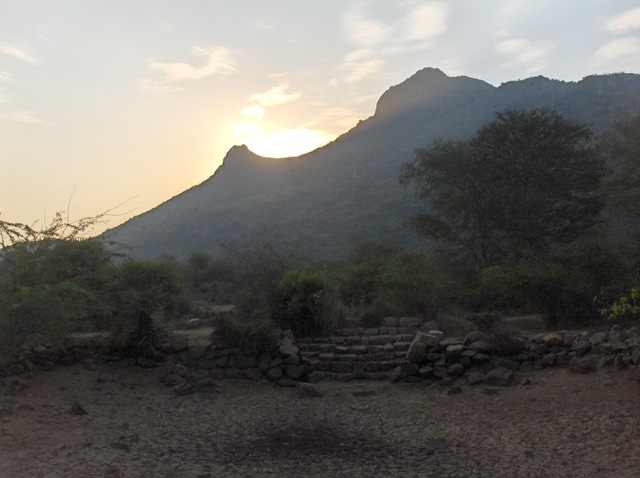
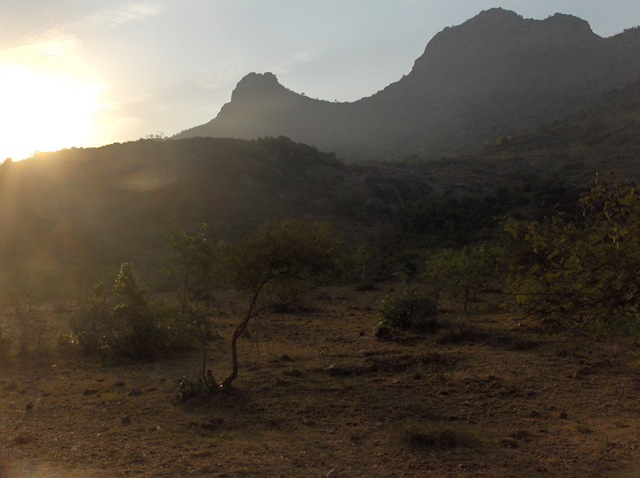
The Frog Pond is dry by mid March when these pictures were taken. The season is getting hot, so  we started early and were here by 7 AM, before the sun rises over Arunachala. The bright sun can be seen behind the ‘trunk’  of The Elephant. We will have sunlight in a few minutes.

HPIM1934

The Path starts off across an area pretty dry and flat.

HPIM1935

Looking to the right side, first you see the gap between Arunachala and a small hill. There is a path over this gap that is shown in A Path Across Arunachala.

HPIM1936

Looking behind is Parvati Hill, and the pass at the other end of the hill. This is where the original Path was. This is shown in the postings: Kattu Siva Path Renewal – Part 1 and Kattu Siva Path Renewal – Part 2 .

HPIM1937

Next the Path crosses the first of many creek beds …

HPIM1938

Then rises up to the Northside Catchment Basin. Notice that there is a path across the basin that is usable much of the year. Some people take this path here.

HPIM1940

The main route of the Path goes to the left, and follows along the dirt berm that makes up the retaining wall for the catchment basin.

HPIM1941

Walking across this berm, farmers’ fields come right up to the path. This is the only place where this occurs.

HPIM1945

In the photo below, looking over the basin, a big rock can just barely be seen rising through the trees. On the other side of the basin here is a trail nexus where a number of paths go towards and along the mountain side. This is shown better in Under the loving gaze of The Elephant.

There is an old small trail next to the mountain in this area that we call ‘The Inner-Inner Path.’ This will be detailed in subsequent postings. Easy exploration can be done here.

HPIM1948

Between the Path and the fields, the farmer has made ‘fences’ of dry thorny branches. This keeps cattle from entering the fields. 

HPIM1950

At the end  of the basin the Path crosses another dry stream bed …

HPIM1952

Then goes off across the gentle hills. 

HPIM1953

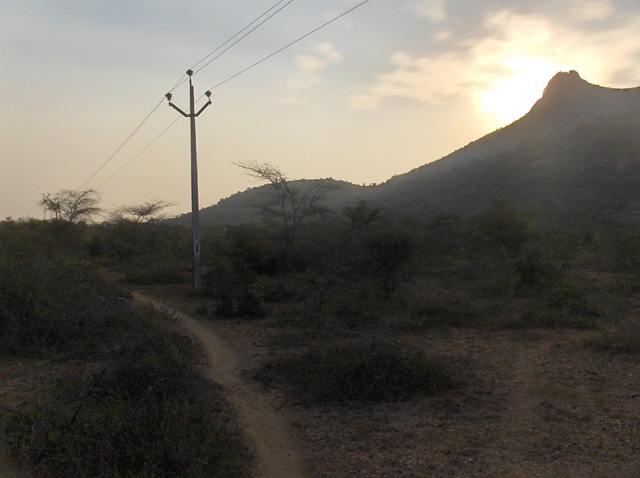
In this section a power line crosses the Path. This is the only place where this happens.

HPIM1957

Now the sun is starting to  rise above the Holy Hill, and there is better light for photography.

HPIM1961

The Path lights up …

HPIM1960

And crosses yet another creek bed. We walk down and up the little hill.

HPIM1963

Looking to the left, the gopuram of Adi Annamalai Temple rises through the trees.

HPIM1967 closeup

Often this man will be seen, asking for coins. Sometimes it looks like he is working, clearing rocks off the Path and doing other work to improve the Path. 

HPIM1968 closeup

Looking to the left of the Path, not a house can be seen. More mountains rise up on the horizon. There is no motor noise here; all we hear are bird songs.  

HPIM1974

The Path proceeds across the hillside.

HPIM1976

Looking towards Arunachala, a rocky hill can be seen in the foreground, rising from below. More places to explore. I have seen a group here, up on one of the rocks. It seems they were with a teacher and meditating.

HPIM1979

Past another creek bed. This on has a stone wall to prevent erosion. These are seen in other places as well. This is all a part of the task of protecting the hillside and bringing as much water into the water table as possible.

HPIM1987

The Elephant is in the background. A face of the hill rises in the foreground. Water can be seen flowing down rock faces during the rainy season.

HPIM1990

The Path winds on.

HPIM1992

And on.

HPIM2000

We are getting close to the face of the hill that rises here.

HPIM2007

Reminding us of the desert-like environment, here is another cactus, well protected from the heat that is soon to come.

HPIM2010 closeup

Just barely visible here on the hill face is a small white box. This once housed an idol. This idol has been taken by vandals. You can walk up to this spot and get a great overlook of the surrounding area.

HPIM2014

On the other side is a steeper area of the rock face. Back towards this hill it is greener, a sign of better water. There is a trail that leads into this greener area. Sometimes village women can be seen carrying bundles  of dried grasses down this trail.  The local people know the plants that can be used here, and make good use  of everything.

HPIM2020

Now the angle between the trunk and head of The Elephant has  become more acute. This means we are nearing the end this section of the Inner Path. I think of this as the ‘Elephant Compass’ and use the angle as a way to know where I am on the Path.

HPIM2021

The Path continues to wind through the countryside.

HPIM2023

HPIM2034

The ‘Elephant Compass’ gets yet more acute. Getting closer to the end the of the section. 

HPIM2035

Now, through the trees, houses can be seen far away. Road  noise is also sometimes heard.

HPIM2037 closeup

The Path continues through the dry brush. 

HPIM2039

Look at the ‘Elephant Compass’ now. Where are we? We’re reaching the end of this section.

HPIM2045

Looking back, we can see the hill face rising behind us. There is a  big area on this side of the hill that needs to be explored. This will be done in other posting, later.

HPIM2046

Down a bit more of the Path.

HPIM2048

A stone post with a painted Inner Path marker defines the end of The Elephant section of the path. Sometimes camphor will be seen burning in a pit on the top of this post. Notice that there are paths that lead both to the right and the left here. One set goes  towards the road, the other towards the mountain. The Inner Path goes straight, past the post.

HPIM2050 closeup

The next section of the path, we call ‘Trees.’ We will post this soon.                          

Related Posts   

Inner Path – Southwest Side
I
nner Path – South Side from Ramanasramam
Inner Path – Around Parvati Hill 
Under the loving gaze of The Elephant
Adi Anamalai Temple

Harsha's avatar

Body And The Universe: By Madathil Rajendran Nair

Close your eyes and still,
Feel your body
Part by part.

And, as you begin to drown
In slumber’s sweet hold,
Mountains pop up,
As do vales, waterfalls
Green trees, vast landscapes,
Stars and the Milky Way.

The body is all that,
Part by part!
The body is the Universe,
You are the body
And you are all!

A magnificent pulsation
Without parts and
Without a beyond!
Be just aware
And remain
Your own ecstatic self.

[Inspired by the poem “We Encountered The House Of Realization”  by Yunus Emre (1238 – 1320)]

Harsha's avatar

ULLADU NAARPADU (Reality in Forty Verses) – #s10 & 11.

ULLADU NAARPADU
(Reality in Forty Verses)

The famous Vedantic poem in Tamil by Bhagavan Ramana Maharishi
(consisting of two preliminary verses called Mangalam,
40 verses which form the main text ,
and another 40 verses called the Appendix)
Detailed Commentary in Tamil by Lakshmana Sharma,
adapted into English by Profvk

(Continued from ULLADU NAARPADU – Verse No.9
See Post #48214 Of Harsha Satsangh.
For the first post in this series see #47923)

Lakshmana Sharma’s Introduction to Verse Nos.10 & 11.

We have just said that duads and triads are all unreal. The most important duad is the pair ‘jnAnam-ajnAnam’. Among the triads the important one is: ‘knower, known and knowing’. These also are unreal. In addition to explaining that in the state of Self-Realisation these don’t survive, the main topic of this work is called ‘Self-Knowledge’ (Atma-jnAnam). Therefore the meaning of the word ‘jnAnam’ is taken up for explanation in the four stanzas 10 to 13.

Of these four, the first one below explains how all the knowledge that is accrued by an ajnAni is nothing but ajnAnam (ignorance), and not jnAnam (true knowledge). ‘Knowledge of the Self is the only Knowledge’ says Verse #10. So we get the meaning that any knowledge of non-Self is only ignorance. That except for the Self-Knowledge all other things are only ajnAnam is further clarified in verse #11.

Verses #10 & #11

aRiyAmai viTTu aRivu inRu Am;
aRivu viTTu avvaRiyAmai inRu Agum;
‘anda aRivum aRiyAmaiyum Arkku’ enRu
ammudalAm tannai aRiyum aRivE aRivu.

aRivu uRum tannai aRiyAdu;
ayalai aRivadu aRiyAmai anRi, aRivO?
aRivu ayaRku AdhArat-tannai aRiya
aRivu aRiyAmai aRum.

Translation (Lakshmana Sharma)

#10. Knowledge is never and nowhere in the world separate from ignorance, neither is ignorance at any time and for any one separate from knowledge. True knowledge is the awareness of the original Self, which becomes manifest by the Quest ‘Who is this I in the form of Ego to whom belong both of these’, nothing else.

#11. How can the knowledge of objects arising in relative existence, to one that knows not the truth of (himself) the knower, be true knowledge? If one rightly knows (the truth of) him in whom both knowledge and its opposite subsist, then along with ignorance (relative) knowledge also will cease once for all.

Translation (Prof. K. Swaminathan)

#10. There is no knowledge without ignorance; and without knowledge ignorance cannot be. To ask, `Whose is this knowledge? Whose this ignorance?’ and thus to know the primal Self, this alone is Knowledge.

#11. Without knowing the Self that knows, to know all objects is not knowledge; it is only ignorance. Self, the ground of knowledge and the non-Self, being known, both knowledge and ignorance fall away.

Translation (Osborne)

#10. Ordinary knowledge is always accompanied by ignorance, and ignorance by knowledge; the only true Knowledge is that by which one knows the Self through enquiring whose is the knowledge and ignorance.

#11. Is it not, rather, ignorance to know all else without knowing oneself, the knower? As soon as one knows the Self, which is the substratum of knowledge and ignorance, knowledge and ignorance perish.

#10. Word by Word

aRiyAmai viTTu : Separated from ignorance
aRivu : knowledge
inRu Am.:can never be
aRivu viTTu: Separated from knowledge
aRiyAmai: ignorance
inRu Agum. there never is.
Arkku: Whose (or, to whom)
anda aRivum: (belong) that knowledge
aRiyAmaiyum: (and) ignorance ?
enRu : (By questioning) thus,
aRivE :that knowledge alone
aRiyum : that knows
ammudalAmtannai: the ‘I’ in the form of Ego which is the source of everything
aRivu: is the (true) Knowledge.

#11. Word by Word

aRiyAdu: Without knowing
aRivu uRum tannai :the truth of the self who knows (tan, tAn: one’s own; self)
aRivadu: to know
ayalai : all else (foreign to Self; non-self)
aRivO? : Is it Knowledge
aRiyAmai anRi : other than Ignorance ?
aRiya : (Once we ) know
AdhArattannai : the root-source
aRivu ayaRku : For both knowledge and the non-self (the known thing)
aRivu aRiyAmai : (the duad of) knowledge and ignorance
aRum: will perish.

#10. Tamil Commentary by Lakshmana Sharma

The two words ‘knowledge’ and ‘ignorance’ refer to the knowledge and ignorance of worldly matters and things. These two arise from the Ego as pointed out in the last verse. They appear to be true so long as the Ego is live. But the Ego vanishes in the state of Self-Realisation; so knowledge and ignorance are unreal.

The worldly knowledge is not jnAnam, as we usually think. It is only ajnAnam (Ignorance). One reason for this is stated here; namely, knowledge and ignorance form a duad – one cannot be isolated from the other. Things that form a duad have this property of non-separability. In the same manner worldly knowledge and ignorance are inseparable. When we have knowledge of one thing there is ignorance of another thing. What is knowledge for one may be ignorance for another. In other words the concepts of knowledge and ignorance are impermanent. All such knowledge belong to the Ego which is the root of all Ignorance. So all these are only ajnAnam.

Two more reasons will come out in the next stanza. ‘I know, I don’t know’ –these are statements of the JIva; but they arise only in the state of non-realisation of the True state of the JIva which is the Atman. When the Atman is realised, the knowing and non-knowing disappear. Therefore they are both ajnAnam.

Further ajnAnam itself is a non-existing entity. It is our delusion that creates it. This will be explained in Verse #13.

Since now we have said that whatever we think as jnAnam (knowledge) is actually ajnAnam (ignorance), the question arises: What exactly then is jnAnam? Whose are these two kinds of ajnAnam? The reply to this will come as: “It is for me”. “Who is this I?” is the next question which is the basic question for the Self-Quest. If one makes his mind one-pointed in that quest, the result will be the destruction of the ego-centric I. This is jnAnam. The words ‘mudalAm tan’ of the verse mean this Ego. This is the one which is the source of all the body, mind and intellect. When this ego is destroyed, the ever effulgent pure experience of the Atman will manifest without any obstacle. This is the true state of jnAnam. It is by the destruction of the Ego that this state becomes one’s own: — this is explained in Verse #27.

‘Separated from Ignorance there is no Knowledge’ — In these words of the verse the word Ignorance may also mean the ‘I-am-the-body’ feeling that constitutes the Moola-ajnAnam (Root-Ignorance). From this one can interpret that worldly knowledge occurs only to those who have no knowledge of the Atman and that those who have the Self-Knowledge would not have the worldly knowledge.

#11. Tamil Commentary of Lakshmana Sharma

The ‘I’ that says “I know the things of the world” is the chid-AbhAsa, (relected Consciousness) the false feeling of ‘I’. It is like the snake seen on the rope, or the son of a barren woman. It is totally unreal – we saw this earlier itself. It will be again explained later. It is none other than the Ego. To quest in search of the source of this Ego is the means of attaining jnAna, that is mukti. He who does not know himself by this means is not the knower of the real Self. He thinks that this chid-AbhAsa is the Atman. This is the root-ignorance (moola-ajnAnam). Those who are subject to this do not know the world as it truly is; therefore whatever he knows as knowledge was said to be ignorance only.

A devotee asked Bhagavan: “How can we say the world that we see directly is unreal?”. Bhagavan replied to him: “The world laughs at you because it says ‘How can you, you who do not know yourself, know the truth of me?’”. The way the jnAni knows the world and the way the ajnAni knows the world are totally different – this will be known by the verse #18. The ajnAni ignores the groundbase-Brahman (adhishTAna-brahman) and cognizes the superposed (Aropitam) names and forms and their differences and takes them as real, thereby imprisoning himself in bondage. For the jnAni however, only the base-brahman manifests. So the jnAni does not incur any bondage.

Thus there are two kinds of ajnAnams in ajnAnis. One is the ignorance known as ‘Ignorance’. The other is the ignorance known as ‘knowledge’. Both these have to be eradicated. It is ignorance to think that one of them should go and the other should remain.

There is another reason for contending that both these are ajnAnam. Both are destroyed at the onset of Self-Realisation. This is the content of the last two lines of this verse.

In other words in the state of Self-Realisation, both these don’t exist.

In the text, the word ‘ayal’ which means ‘foreign’ has two interpretations. Ignorance is the opposite of Knowledge, is one. The other meaning is: ‘It is the known that is thought of as distinct from the knower’. The mind which takes the place of knower and the known worldly matter which is manifested by it — the source for both is the Ego. And its Truth goes back to the Atman.

(To be continued in Verse No.12)

Harsha's avatar

Ramana Maharshi: The Master of Silent Teaching: By Gabriele Ebert

Editor’s note: Because Gabriele Ebert’s native tongue is German, I had to edit the article. If there are any mistakes in the article, I accept complete responsibility. Please bring any such errors to my attention and these will be corrected right away.

Master and Disciple

The characteristics of a spiritual master is that he leads his disciple toward experience of the eternal truth by way of teaching. In Hinduism this is called upadesa (spiritual teaching, spiritual instruction). But master and disciple have to harmonize with each other, i.e. the master must be able to transmit his teaching whereas the disciple must be ready to grasp it and put it into practice. Otherwise, the relationship of master and disciple will bring no fruit.

In giving instructions to the student, medium of speech normally plays an important role. However, in spiritual instruction and transmission to the prepared student, according to Sri Ramana, speech is not the most potent means. Indeed, the sage of Arunachala is known as the great master of silent teaching.

A visitor said: “Bhagavan says, ‘The influence of the Jnani (Self-Realized one)steals into the devotee in silence.’ Bhagavan also says ‘Contact with great men, exalted souls, is one efficacious means of realising one’s true being.”

Ramana responded: “Contact with them is good. They will work through silence. By speaking, their power is reduced. Silence is most powerful. Speech is always less powerful than silence. So mental contact is the best.”

And on another occasion Ramana pointed out the potency of such teachings outside the verbal medium: “Such mouna [silence] is not inertness but great activity. It is the most powerful speech.”

Silent Teachings – Heart to Heart Instructions

The silence (mouna) Ramana talks about is not just absence of speech. It is when the mind/ego becomes silent, free from thought, and comes to rest in the Self.

If the ego/mind is fully absorbed in the Self, it will not appear anymore and assert itself as a separate identity. Such a one in whom the ego has been fully vanquished is called a Jnani. He will stay in the Self and will no more return to an ego-centered state. The ‘I’ working through him/herself is no more the little ego-I, but the Self of God. In his booklet “Who am I?” Ramana says: “It is this state, where there is not the slightest trace of the ‘I’-thought, that is the true Being of oneself. And that is called Quiescence or Mouna (Silence).”

Only who rests permanently in this silence can also transmit his teaching in silence. The disciple is not yet in this state, but he yearns for it above all. Through the silence of his teacher he is guided into his own heart, the source of the ego, to that ‘place’ from where this impermanent ego-I arises and submerges again.

In the beginning, the disciple will become silent, and enter for a short in the same state in which his master permanently rests. In this state, he finally experiences his own true nature. In this silence he starts to understand the truth. This is the Heart to Heart instruction.

This is a different path than the one of eloquent speeches and lectures of popular swamis and gurus.  This is the direct path of experience. This is the pathless path, and only suitable for mature seekers. Ramana states that for most seekers verbal instruction is needed.

“Silence is the best Upadesa (spiritual teachings), but it is suited only for advanced students. Others are unable to draw full inspiration from it, therefore they need words to explain the Truth. But Truth is beyond words. It does not admit of explanations. Lectures may entertain individuals for a few hours without having an effect upon them, whereas the result of silence is permanent and benefits all. Even though it is not understood, that does not matter. Oral lectures are not so eloquent as silence. It is unceasing eloquence. The primal master Dakshinamurti is the ideal and he taught in silence.”

Ramana and Dakshinamurti

Ramana was often identified with Dakshinamurti, who is the youthful Siva and represents his ascetic aspect. He is considered as the Guru of all Gurus, sitting under a Banyan-tree in silence. The four disciples, who seek his guidance, are “old”, i.e. they are ripe and Dakshinamurti teaches them in silence alone.

Ramana writes in his two verses on Dakshinamurti:

“Who is the youthful guru beneath the banyan tree?

Very old are the pupils who seek him.

The handsome teacher’s speech is silence.

Cleared are all the pupils’ doubts.

Under the wonderful banyan tree shines the youthful

guru. Aged pupils come to him. Silence is this teacher’s

speech. Gone are the doubts in the pupils’ minds.”

The following episode from Sundaresa Iyer’s reminiscences illustrates Ramana’s way of silent teaching:

“It was a Sivaratri Day. The evening worship at the Mother’s shrine was over. The devotees had their dinner with Sri Bhagavan, who was now on His seat, the devotees at His feet sitting around Him.

At 8 p.m. one of the Sadhus stood up, did pranam (offered obeisance), and with folded hands prayed: ‘Today is Sivaratri Day; we should be highly blessed by Sri Bhagavan expounding to us the meaning of the Hymn to Dakshinamurti (stotra).’ Says Bhagavan: ‘Yes, sit down.’

The Sadhu sat, and all eagerly looked at Sri Bhagavan and Sri Bhagavan looked at them. Sri Bhagavan sat and sat in His usual pose, no, poise. No words, no movement, and all was stillness! He sat still, and all sat still, waiting. The clock went on striking, nine, ten, eleven, twelve, one, two and three. Sri Bhagavan sat and they sat. Stillness, calmness, motionlessness – not conscious of the body, of space or time.

Thus eight hours were passed in Peace, in Silence, in Being, as It is. Thus was the Divine Reality taught through the speech of Silence by Bhagavan Sri Ramana-Dakshinamurthi.

At the stroke of 4 a.m. Sri Bhagavan quietly said: ‘And now have you known the essence of Dakshinamurti Hymn?’”

Ramana’s own Spiritual Experience

Ramana’s way of teaching in silence arose from his own spiritual experience. At the age of 16 he suddenly had a kind of death-experience, through which he spontaneously realized the Self.

One day, when he was all alone at home, unexpectedly and without reason an unmistakable fear of death caught hold of Ramana. But instead of seeking help from outside he turned within and asked, who was it, that is going to die and if death of the body means also death of himself. Suddenly the shell of the ego dropped off forever. From then on, he was certain, that in truth he was the Self (Atman, God, the Absolute, or whatever name one might like to give it). His attitude towards the world changed completely. Ramana had become silent in the deepest sense of the word.

Soon after he left his home in Madurai and went to the holy hill Arunachala, which he venerated since childhood. He settled down and stayed there until his death.

In the first few years at Arunachala Ramana was silent and completely absorbed in this truth, which was his inner most and real Being. Withdrawn from the world, Ramana remained in perpetual samadhi while the insects fed on his body. His body was kept alive by a few people who by the grace of God happened to be around and noticed this teenager doing what they believed was intense tapas (spiritual practice).

Ramana did not start teaching of his own accord. If people would not have noticed him and sought his company or advice, he perhaps never would have become known. But the spiritual seekers who came within his orbit felt instintcively that he was a great sage, a rishi, a Maharishi, the One, who was a great seer and who lived the truth and was completely authentic.

Sincere people started to come to Ramana with their questions. The silent Sage answered them, at first only by writing down his answers. But slowly in response to the aspirations of those around, Ramana returned gradually to speech, and using words to teach.

Ramana always emphasized that the highest teaching is transmitted in silence. Ramana never called himself a guru or Maharishi. In His view there were no master and disciples. However, the students who gathered around him were overwhelmed by the brillaint luster and the peaceful radiance of the great sage of Arunachala. Ganapati Muni, one of most powerful intellect and spiritual personalities of the time was the first to call Ramana a Maharishi (Great Seer).

As Ramana adapted to his surroundings, he  gradually became more and more open to talks.  In the Hall, where he could be met days and nights, philosophical topics were vividly discussed. Pundits came with their questions. His followers like Ganapati Muni, were superb adepts of the holy Hindu-scriptures – and the answers which Ramana gave fill many volumes. At times the Hall was also a workshop of artful peotry. Politics and themes of everyday life were discussed as well.

Though Sri Ramana was a master of silent teaching and silence (mouna) is seen as an important means in Hinduism, he dissuaded his devotees from taking a vow of silence. Nevertheless Major Chadwick, one of the Western devotees of Ramana made plans to do so.

This amusing story is found in Major Chadwick’s reminiscences: “During the war I decided that I would like to do so, chiefly to protect myself from the jibes of others. I went and asked Bhagavan’s permission. He was not enthusiastic and told me that it was useless to keep the tongue still but to continue to write messages on bits of paper which so many so-called Maunis (silent ones) continue to do. In this way only the tongue had a rest but the mind continued just as before. I said that I had no intention of doing this but would throw my pencil and paper away. I felt that I had obtained a reluctant consent as Bhagavan agreed that people were worrying me. So I made the necessary arrangements, installed a bell from my room to the kitchen so I should not have to call my servant, and fixed a lucky day to begin.

The night before I was to start, a friend of mine brought up the subject in the Hall after the evening meal when only a few of us were present. Bhagavan immediately showed his disapproval and said it was unnecessary and in fact not a good thing at all. I did not talk much anyhow. It was better to speak only when it was necessary, that it actually did no good to observe silence, that if one did so for twelve years one became dumb and might obtain some thaumaturgic powers, but who wanted them? Speech acted as a safety valve. Naturally after this talk I gave up the idea.”

The Power Of Silent Look (Darshan)

Many people came to be in Ramana’s silent presence, without asking him questions or talk to him. His look was extraordinary intense and penetrating directly into the hearts. The cook Shantamma reports the following example:

“One morning a European came in a horse carriage to the Ashram and went straight to Bhagavan. He wrote something on a piece of paper and showed it to Bhagavan. Bhagavan did not answer; instead he gazed at the stranger with unwinking eyes. The stranger was staring back at him. Then Bhagavan closed his eyes and the stranger also closed his. They stayed without moving. At mealtime the meals were served but Bhagavan would not open his eyes. Madhavaswami, the attendant, got Bhagavan’s water pot and stood ready to lead Bhagavan out of the Hall. Bhagavan would not stir. We felt afraid to go near, such was the intensity around him. His face was glowing with a strange light. The guests in the dining hall were waiting and the food before them was getting cold. Chinnaswami was talking loudly to attract Bhagavan’s attention. Even vessels were banged about, but all in vain. When the clock was striking twelve Bhagavan opened his eyes. They were glowing very brightly. Madhavaswami took up the water jug; the European got into the carriage and went away. It was the last we saw of him. We did not even get his name.”

Silence is the Eternal Stream of Speech

In “Talks” many quotes of the Maharshi can be found, which make clear, that silence is the actual, direct and eternal speech, which flows heart to heart.

“Silence is ever-speaking; it is a perennial flow of language; it is interrupted by speaking. These words obstruct that mute language. There is electricity flowing in a wire. With resistance to its passage, it glows as a lamp or revolves as a fan. In the wire it remains as electric energy. Similarly also, silence is the eternal flow of language, obstructed by words. What one fails to know by conversation extending to several years can be known in a trice in Silence, or in front of Silence – e.g., Dakshinamurti, and his four disciples.

That is the highest and most effective language.”

Elsewhere it is stated: “Silence is never-ending speech. Vocal speech obstructs the other speech of silence. In silence one is in intimate contact with the surroundings. The silence of Dakshinamurti removed the doubts of the four sages. Mouna vyakhya prakatita tatvam (Truth expounded by silence). Silence is said to be exposition. Silence is so potent.

For vocal speech, organs of speech are necessary and they precede speech. But the other speech lies even beyond thought. It is in short transcendent speech or unspoken word, para vak.”

On 20th July 1936 Ramana had the following talk:

A visitor asked: “What is mouna (silence)?”

M.: “Mouna is not closing the mouth. It is eternal speech.”

D.: “I do not understand.”

M.: “That state wich transcends speech and thought is mouna.”

D.: “How to achieve it?”

M.: “Hold some concept firmly and trace it back. By such concentration silence results. When practice becomes natural it will end in silence. Meditation without mental activity is silence. Subjugation of the mind is meditation. Deep meditation is eternal speech.”

D.: “How will worldly transaction go on if one observes silence?”

M.: “When women walk with water pots on their heads and chat with their companions they remain very careful, their thoughts concentrated on the loads of their heads. Similarly when a sage engages in activities, these do not distrub him because his mind abides in Brahman.”

Major Chadwick reports the following episode: “A gentleman from Kashmir came to the Ashram with his servant who could not speak a word of any other language except his native Kashmiri. One night when the Hall was almost dark except for the pale glimmer of a single hurricane lantern, the servant came into the Hall and stood before Bhagavan in a respectful manner jabbering something rapidly in his own language. Bhagavan said nothing, but lay quietly gazing at him. After a while the servant saluted and left the Hall. Next morning his master came to Bhagavan and complained, ‘Bhagavan, you never told me you could speak Kashmiri, was it fair?’

‘Why, what do you mean?’ asked Bhagavan. ‘I know not a single word of your language.’

Bhagavan aksed the gentleman how he had got hold of this absurd idea and the latter explained: ‘Last night my servant came to you and asked you several questions in his language. He tells me that you answered him in the same language and cleared his doubts.’

‘But I never opened my mouth,’ Bhagavan replied.”

Another story: “When Bhagavan Sri Ramana was staying in the Virupaksha Cave, a District Collector and a Deputy Collector went there for his darshan. After prostrations to Sri Bhagavan, the Collector began to speak, narrating at length all that he had read and done by way of sadhana [spiritual practice], and at the end confessed that in spite of all that, peace was as far from him as ever before. No sooner had he finished than the Deputy Collector started to tell his story and stopped only after saying all that he had to say. These two conversations took quite a long time, but Sri Bhagavan did not interrupt them even once, observing strict silence all throughout.

Seeing that neither of them got any reply from Sri Ramana, the Collector once again delivered a long harangue and stopped only when he was at the end of his resources. Yet not a word passed from the mouth of Sri Ramana. The Collector was a little put out at this, and drawled out: ‘We have been speaking to you since long, but you don’t open your lips at all! Will you please tell us something at least?”

Then, Sri Bhagavan spoke: ‘All the while I have been speaking in my own language. What can I do when you won’t listen to it?’

The Collector was intelligent and he caught the meaning of Sri Ramana’s cryptical reply. He was overpowered with devotion and fell down at the feet of Sri Bhagavan, chanting the following (Sanskrit) verse: ‘Strange (sight) under the banyan tree! The disciples are all old and the Guru is youthful; he expounds (the Truth) in Silence and the disciples are freed from doubts!’

Then both of them sat before Sri Bhagavan in silent meditation. They got the peace they were in search of and departed fully satisfied at the outcome of their visit.”

Silence and Inspiration

This silence of the Heart is no dead silence, but also the source of all inspiration. Sri Ramana inspired Ganapati Muni in his writing of the last part of his major poem ‘Uma Sahasram’ just by silently sitting with him. Sundaresa Iyer reports the story in detail:

“Sri Kavyakanta [Ganapati Muni] had composed 700 stanzas of Uma in some thirty different meters, and had announced to his devotees in various parts of the country that this poem would be dedicated on a certain Friday in the Shrine of Sri Uma in the great Temple of Sri Arunachaleswara. Over a hundered persons gathered at the Pachaiamman Temple so as to be present on the occasion. … At about 8 p.m. on the evening before the dedication day, after supper, Sri Maharshi asked Sri Kavyakanta whether the dedication would have to be postponed to some other Friday, as 300 verses were still to be composed to complete the thousand. But Sri Kavyakanta assured Bhagavan that he would complete the poem immediately.

The scene that followed can hardly be believed by one who did not actually witness it. Sri Maharshi sat silent and in deep meditation like the silent Lord Dakshinamurty. The eager disciples watched in tense admiration the sweet flow of divine music in Sanskrit verse as it came from the lips of the great and magnetic personality of Sri Kavyakanta. He stood there delivering the verses in an unbroken stream while disciples eagerly gathered the words and wrote them down. … The ‘Sahasram’ was finished in several meters. … For a while the disciples present enjoyed the deep ecstasy of the silence pervading the atmosphere, as Sri Kavyakanta concluded with the normal type of colophon. Then Sri Bhagavan opened His eyes and asked, ‘Nayana, has all that I said been taken down?’ From Sri Ganapati Muni came the ready and grateful response ‘Bhagavan, all that Bhagavan inspired in me has been taken down!’

Silence and Self-Inquiry (Atma Vichara)

Sri Ramana taught self-inquiry (atma vichara) as the most effective spiritual practice. For the spiritual practitioner both – atma vichara and silence – belong inseparably together. Atma vichara is the active spiritual practice, which leads – together with the influence of the guru, to this silence. Ideally both complement each other (practice and influence of the guru) – as is the case with devotees of Sri Ramana Maharshi.

Ramana has described the method of atma vichara in his booklet “Nan Yar?” (“Who am I?”). The I in the question relates to the original I-feeling of the human being. Ramana says, that this I is the first thought, on which all other thoughts and feelings are based.

But this I-feeling is no continuous entity, as there are also times, when it is absent, so for example in deep-sleep. Ramana explains, that the mind, i.e. this I-feeling arises from the Heart and submerges therein again. With the question “Who am i?” the mind turns to its own origin. But no answer, which the intellect might give can be accepted. Ramana assures us, that with continuous practice the ego will dissolve in the Self – though this is no more in the hands of the practitioner. One day the ego will be rooted out and just drop away. Ramana has repeatedly pointed out this path as the most effective among all.

Teaching in Silence is not bound to Time and Space

One might ask, if with the bodily death of the Maharshi his silent teaching of the Heart to Heart transmission as well came to an end. Does this kind of contact with Him continue or have we to go on search for another master?

Before his death Ramana said: “I am not going away, I am here!” Again and again he assured his devotees, that the body is not the guru and that it does not matter for the jnani, if he is in the body or not. So his bodily death did not end his spiritual guidance.

When in 1950 Sri Ramana died of cancer, his devotees scattered to the four winds. The Ashram was deserted, so that even in daylight thieves could break in and loot. Only slowly the truth of Ramana’s words dawned on the devotees. The power of the Silent Truth and transmission again brought the devotees together to Ramanashram.

This continues today. People are still drawn towards Ramana Maharshi and open themselves to his silent guidance and to self-inquiry as taught by him.

Sources

This article is the translation of: Ebert, Gabriele: Ramana Maharshi: Der Meister der schweigenden Belehrung, in: Wege der Stille, Hamburg 2008)

Iyer, T.K. Sundaresa: At the Feet of Bhagavan. – Tiruvannamalai, 1980

Mudaliar, A Devaraja: Day by Day with Bhagavan. – 3rd repint. – Tiruvannamalai, 1989

Ramana Maharshi: Collected Works. – 9th ed. – Tiruvannamalai, 2004

Ramana Maharshi: Words of Grace (Who am I?, Self-Enquiry, Spiritual Instruction) . – 3rd ed. – Tiruvannamalai, 1996

Ramana Smrti Souvenir: Ramana Maharshi Birth Centenary Offering 1980. – 1.ed. – Tiruvannamalai, 1980

Sadhu Arunachala (A.W. Chadwick): A Sadhus Raminiscences of Ramana Maharshi. – 4th ed. – Tiruvannamalai, 1994

Talks with Sri Ramana Maharshi. – 9th ed. – Tiruvannamalai, 1994


Mudaliar: Day by Day, 9.3.1946

dto., 29.4.1946

Words of Grace, p. 4

Sadhu Arunachala: A Sadhu’s Reminiscences of Ramana Maharshi, pp. 63f

Miracle of Dakshinamurit, in: Collected Works, p. 148

the „night of Siva“, high Siva-feast

Iyer: At the Feet of Bhagavan, pp. 29f

Sadhu Arunachala: A Sadhu’s Reminiscences, pp. 91f

Shantamma: Eternal Bhagavan in: Ramana Smrti, 1.ed., Ramanasram [p. 83]

from Talk 246

from Talk 68

Talk 231

Sadhu Arunachala: A Sadhu’s Reminiscences, p. 65

Silent Speech in: The Mountain path, 1995, p. 37

Recent Books by Gabriele Ebert are:

Ramana Maharshi: Sein Leben, Stuttgart, 2003

Sadhu Arunachala: Erinnerungen eines Sadhus, Berlin, 2004 (German transl.)

Both books are available at amazon.de and can be ordered from each German book-shop.

Gabriele Ebert is a well known  Ramana devotee. Gabriele is a German librarian, scholar, and a painter. Please go to the following link to see her beautiful article on icon paintings full of inspiring pictures.

https://luthar.com/icon-painting-as-a-spiritual-path-by-gabriele-ebert

Gabriele is a long term member of HarshaSatsangh (Harshasatsangh@yahoogroups.com) which is the largest Ramana Maharshi Internet Group on the web. Gabriele has been active in Sri Ramana groups for many years. She has served as an inspiration and a role model for all of us with her dedication to the interfaith approach to spirituality.