Harsha's avatar

Shriyah Karam!

Border_1

1

Om Namo Bhagwate Vasudevay
Shriyah-karam Shriyonaatham, Shridharam Shri-vara-pradam,
ShriVatsalDharam Saumya, Tam vande Shri Sureshvaram,
Om Namo Bhagwate Vasudevay
Yogishvaram Yagnapatim, Yashodaanand-daayakam,
Yamuna-jal Kallolam, Tam vande YaduNaayakam,
Om Namo Bhagwate Vasudevay
Shaaligramam Shila-shuddham, Shankh-chakrop-shobhitam,
Sur-asur-sada-sevyam, Tam Vande Saadhu-vallabham,
Om Namo Bhagwate Vasudevay
Trivikramam Tapo-murti, Trividha-aghaugh-naashanam,
Tristhalam Teerth-raajendram, Tam vande Tulsi-priyam,
Om Namo Bhagwate Vasudevay
Anantam Aadi-purusham, Achyutam Cha Vara-pradam,
Aanandam Cha Sadaa-aanandam, Tam vande Cha Agh-naashanam,
Om Namo Bhagwate Vasudevay
Leelaya-adbhut-bhoobhaaram, Lok-satvaik-vanditam,
Lokeshvaram Cha Shrikaantam, Tam Vande Laxman-priyam,
Om Namo Bhagwate Vasudevay
Harim Cha Harin-aaksham Cha, Harinaatham Haripriyam,
Halaayudham Sahaayam Cha, Tam Vande Hanumatpatim,
Om Namo Bhagwate Vasudevay

Border_1

Like Radha, the beautiful gopi whom the Lord chose to symbolize His eternal love for us, other simple things can also receive His darshan by way of becoming symbols of His glories. And so it came to pass for a lowly but beautiful wall calendar to become a murthi, to be blessed in a frame heralding His Divine visage, celebrating the coming of a new era on the eve of a New Year…

I waltz through the food market, picking out the spices, nuts, dal,  and the fresh curry leaves and mini green chillies, which make my face break out in a sweat every time I eat food enhanced with them.  These are things which I can only find here, a little Indian grocery store which opened in the past year near to my home.  Clean and closer to my home, it lured me away from the other store I used to patronize and I have shopped here since.

I have come to know the people who work there, as there are only a few who are there all the time.  “Why not?” I think to myself as one man who I have also seen there before checks my groceries out for me.  “Maybe someone here can translate this Shriyah Karam for me!!!” I have found a bhajan which I want to learn and I cannot find the English translation for the Sanskrit words. It is online on Youtube and sung by Pandit Jasraj, at this address:   http://www.youtube.com/watch?v=GKjJPSbBZys. (Author’s note…See bottom of page for final version with the translation-Yes, I did finally find it!!!)

“Do you know any Sanskrit, I ask?”  “A little,” he says, as he looks at me with a mixture of surprise and perhaps a bit of skepticism.  “Wait right here.”  I run out to my car and grab the sheet of paper I have with the words on it.  I put it down on the counter and almost fall over the counter trying to show him the words I want to know about.  So far, I have asked online, looked online and asked around at puja one night, and so far, I have no translation. I want one and I will get one, word by word if necessary.

I scan the page.  I spot a word which appears numerous times, and ask him what that means…cha…”It means the word and.”  he tells me.  Oh, I like this. This is easy!  We peek at a few more words and then he expresses to me that he feels he cannot put the words into English equivalents for me.  Hey, I thought this was going just fine, but he has had enough and has customers to take care of.  Happy to get just a few thoughts from him, I thank him and start to leave when he turns behind him on an apparent impulse and offers me a large wall calendar, with a beautiful image of Lord Krishna. My eyes open wide as I see this because I have been thinking that I would like some larger images than what I print out from my computer but had let go of the idea for other more immediate thoughts.  And I was not sure what to look for…I prefer that these things come looking for me.

And there He is-looking at me, the beautiful colors and the riveting image of Him almost jumping off the page.  It is hard to believe this is a calendar.  Quite pleased with my new gift, I go home. Perfect. A beautiful calendar for my wall, satisfying my basic needs for a linear point of reference for everyday life and an endless ocean of compassion and love for my soul.  A calendar for the year 2009, heralding my Lord Krishna in His endless glory and transcendence.

Krishna murthi

Meanwhile, back at home, other developments are taking place.  I was thinking that I was done with video bhajans until my next kirtan. Then, just before Christmas, I somehow found my convoluted way to a gift from Him by way of another bhajan to learn, Jaya Radha Madhava by Bhaktinoda Thakura and offered by Shri Jagjit Singh, who is now my favorite male bhajan singer:-).  This one is easy as far as words to learn and there are some translations online so that is not my challenge.  My challenge is to learn it so I can video it and upload it for Him before the end of the year. Before the end of the year? Well, that does not give me much time!  Before I know it, I am creating my pujya for the singing of the bhajan. I am to wear a salwar suit which is peridot green, the color of my birthstone, given to me as a gift by one of my friends at Chimaya Mission so I would not have to drive to Edison to spend money and buy clothes!  And a backdrop comforter fabric from my linen closet which is deep turquoise blue.  It seems a strange color combination to my eye, but you guessed it…He wanted it, so He got it.

Tonight I will record the bhajan. I begin to work on the pujya. I realize that I want to use my new calendar as part of my pujya.  I fold the bottom section of the calendar backward so you cannot see the calendar, only the image. I secure it under the speaker and lean the image against against it, sure that it will not fall back on me.  So, what does He do?  As I work on arranging the flowers and candles and other items, the image keeps falling forward.  I lift it and put it back against its leaning post, and two minutes later, it flutters forward again.  This happens a few times as I work, before I finally get the point.  He does not like my setup and He has a much better idea.

And so pops into my head the memory of an old frame downstairs, with a print given to me by a family member moving some old items from the family storage.  It had a rather mundane print in it of a bowl of fruit, tasteful but understated in an almost boring way but the frame was nice so I kept it.  I had propped it up behind some items on the top of a book shelf, out of the way and fading into the backround until I found a use for it.  I run downstairs and grab it, taking it up with me.  A few cuts and snips later, my Lord Krishna is beautifully framed, looking His Divine Self, gracing my personal pujya and the calendar is chopped up on the floor looking forlorn without its Divine guest of honor. So much for my linear point of reference. Who needs it anyway?

The next morning I am thinking about the two men at the store, and laughing as I think of what I did with the calendar.  I began to marvel at the way in which banality had been replaced with royalty, and how it was just a mundane picture of a bowl of fruit.  I had left the print inside the frame behind Him.  A bowl of fruit??? A bowl of fruit!!! Now quietly hidden behind His Holy image is an offering of prasad, waiting there for who knows how many years until He came to bless it.  For a moment, I wonder why.  Mine is not to question why, so I leave that question immediately to instead respond to my little Divine nudge.  What about the flowers?  Flowers?  He also needs us to offer Him flowers from our hearts.  He needs?  Yes, He longs for our love and devotion as much as we long for His.

I resolve to make my offering complete.  There is another man who works in the store who was also there when I was seeking translations of Shriyah-karam. He has helped me find items a few times while I shop. I have a tendency to wander around the store singing to Him as I shop and he has commented to me once or twice about it and we have chatted a few times. I know from talking to him that Lord Krishna is his Lord. I am so excited by my new Krishna murthi that I decide to take the framed visage to the store with me to show them the beautiful blessing which flowed from their small gift to me. Although this man is not the one who actually gave me the calendar, for some reason I feel as if he should be the one to offer the flowers.

We will be offering bhajans this evening, New Year’s Eve, at the Chinmaya Mission. I go to a local place where I buy my flowers.  I buy several bouquets of flowers which I know will look beautiful with His image.  Then I drive to the grocery store with my framed murthi and flowers in hand.  The man who gave me the calendar is not there today. But my friend is there, working.  There is also a young woman I know from the Mission working today, which is a blessing, because his English is limited and he will need help to understand what I am asking him to do.  I tell her about this and I explain to her that I will be taking the image with me to Chinmaya Mission and arranging a little pujya area for the evening (I am sure Swamiji, who knows nothing about this at the moment, won’t mind if Lord Krishna shows up tonight, although he might be a bit surprised, since I have spent the last six years worshipping Him as Lord Shiva.)

The store is busy and there is a continuous flow of customers coming to the register.  I scan the front of the store and decide to go over to the side of the store where there is a counter for me to temporarily place my pujya.  I go to the back area and pick out some fruit for tonight.  I had brought several flowers in with me from my bouquets in the car outside.  While I wait, I pluck some petals for him to offer.  As I look at the back of the frame, it occurs to me that I do not want the flower petals to cause any damage to the print from the moisture that was in them seeping through to His image in the front.  I looked around for something to place under the flowers for this protection.  The young woman offered me a plastic bag, which I folded up and put down.  NO!  This will not do.  I look around me, searching,  and my eyes fall upon the wall behind the counter where I stand.  It is full of small decals and other symbolic images of Sanatana Dharma…the OM, the swastika…little feet…little feet…Lotus Feet!  That is what I will place there to receive and embrace the offering of the petals and protect the image.

So, in between a busy flow of customers, and with the young woman who works there to translate to him what I am trying to tell him, he washes his hands and gingerly places the flower petals on His symbolic Lotus Feet which have now been attached to the back of the prints.  We reclose the little metal flaps embedded into the back of the frame to secure the picture one by one, chanting together Hare Krishna Hare Krishna Krishna Krishna Hare Hare Hare Rama Hare Rama Rama Rama Hare Hare Hare Krishna Hare Krishna Hare Krishna!!!  Ok, I led and he followed, with a smile on his face 🙂  I left him with a smile still on his face, and his own flowers from which I had plucked the petals, and some fruit which I had just picked out from the store. He was told how I came to frame the image and why, and he should offer the flowers and the fruit on his own personal pujya and they would be blessed that evening by Lord Krishna.  How do I know this?  I just do.  Does this man think I am off my rocker?  Yes, he do!  But he did what I asked without questioning me because it honored Lord Krishna.

Hari Tum Haro

My next stop is the Mission, where I want to drop off the flowers and fruit I just bought as well as the framed murthi for tonight.  Fortunately for me, Swamiji has always welcomed me into the Chinmaya family and has encouraged me to come there to worship.  I come barreling in to the kitchen and put the murthi on the table for him to see.  I also give him two of the calendars which I had just requested at the store. He recognizes the store name where I purchased and tells me that the man who owns it is a member of Chinmaya Mission.  He must be the man who actually gave me the calendar and helped me with some translations that day.  Then, as Swamiji is looking at the calendar,  he exclaims…”Oh, this is 2009.”   I cannot contain myself.  I walk closer to the calendar on the table and place my hand on His Holy image. “No, Swamiji, THIS is 2009.”

As we move into this new year, I have seen several appeals for peace and understanding, and love and compassion in our world, a world which is literally teeming with confusion, violence, and hatred. Where should we look for the answers to our pleas for peace and love in this world?  There is no one who acts without His impetus, so why not appeal to the very Source?  Has He not promised to redeem us from our suffering and to maintain Sanatana Dharma?  He is a Keeper of His Promises. So let us appeal to His mercy and love to Grace us with that which He has always promised and vowed to do when we need it most…to make His presence felt as He manifests to uphold dharma.  Let us call upon Him as Shriyah-karam…the One who can only bestow blessings for the highest good

There is a beautiful Mirabai bhajan called Hari Tum Haro,  which I am slowly learning.  Up until now, as much as I loved it, I had a certain hesitation to sing it because Mira seemed to be asking Him for something.  I do not like to ask Him for anything, as this seems inconsistent with my surrender to His will.  Now, I have come to see that all she is asking Him to do is to relieve the suffering of the world by upholding dharma, just as He did in the examples she gives in her bhajan.  And so, my New Year’s appeal to Him through her, brought to us by the exquisitely beautiful MS Amma, who surely rests safely in His arms as I write… Shriyah-karam!!! Border_1

Click here for hari Tum haro

Hari Tum Haro Jan ki piir

Hari, please remove the suffering of the people
(jan – people, piir, pronounced bhir – suffering, haro – please remove)

draupadi ki lAj rAkhyo tum badhAyo ciir

You preserved Draupadi’s honor by increasing the
length of the garment that covered her.
(You preserved (rAkhyO)  Draupadi’s  honor (lAj)  increasing (badhAyO)  the length of her garment.
The last word is ‘chir’ [or ciir, pronounced cheer] which means cloth.
Krishna kept on increasing the length of Draupadi’s sari until Dushasan was exhausted and gave up.)*

bhkat kAran roop narahari dharyO Ap sharir

For the sake of your devotee, you took on the form of Nrsimhadeva
(Based on your devotee’s (bhakat)  request (kAran – also reason),
you(Ap) took(dharyO) on the form (roop) of a human (nara).

Harinakashyapa mAra leenhO dharyO nAhina dhir

To kill the demon Hiranyakashyap,
you took on the form of a beast.

bhoodathe gaja rAja rAkhyO liyO bAhar neer
You dragged the elephant king out of the water and saved him from the crocodile’s jaws.

dAsa meera lal giridhar dukh jahAn tahAn piir
Your servant (dAsa) Meera (the saint and composer) is always with you and finds no sorrow when I’m with you.

*The translation above is from the comments section of the video link…I have incorporated and edited the suggestions contained in the comments.   http://www.youtube.com/watch?v=kCzxL5RMjUA&feature=channel_page

Border_1

TRANSLATION OF SHRIYAH KARAM

The verses in the God Is Love- OM Namo Bhagavate video by Pandit Jasraj are actually the last eight verses of the Hari Nama Mala Stotram, which contains 20 full verses.  I actually stumbled upon them in translation in the Yahoo group Guruvayur when someone posted it in its entirety.  As I scrolled down to read it I noticed some repetition of the “tam vande” phrase and continued down until the verse beginning with Shriyah karam jumped out at me!  Jai Shri Krishna!!!

Hari Nama Mala Stotram
[Composed by King Mahabali]
Translated by P. R. Ramachander

Video of God Is Love-OM Namo Bhagavate Vasudevaya:
http://www.youtube.com/watch?v=GKjJPSbBZys

Sriyakkaram sriyonadham,
Sreedharam, Sreevaraprdham,
Sreevatsa lasitham soumyam,
Tham vande Sri Sureswaram. 12

I salute him, who is the lord of all devas,
Who grants all forms of wealth,
Who is the consort of goddess of wealth,
Who carries Goddess Lakshmi on his chest,
Who grants boons requesting wealth,
Who shines because of Sreevatsa,
And who is embodiment of tranquility.

Yogeeswaram yagnapathim,
Yasodananda dayakam,
Yamuna jala sachayam,
Tham vande yadunayagam. 13

I salute him, who is the lord of all yadavas,
Who is the god of all yogis,
Who is the lord of all yagnas,
Who is the source of happiness to Yasoda,
And who has the same luster as the water of Yamuna.

Saligrama sila shuddham,
Sanka chakropa shobitham,
Surasura sada sevyam,
Tham vande sadhu vallabham. 14

I salute him, who is the darling of all good people,
Who is as clear as the Saligrama stone,
Who shines holding the conch and the wheel,
And who is always worshipped by devas and asuras.

Trivikramam tapomurthim,
Trividhagouga nasanam,
Tristhalam theertha rajendram,
Tham vande thulasi priyam. 15
I salute him, who holds the thulasi as dear,
Who took the giant form of Trivikrama,
Who is the object of meditation,
Who destroys the three types of sins,
Who holds all the three worlds,
And who is the greatest sacred water.

Anantham aadhi purusham,Achyuthm cha vara pradham,
Aanandam cha sadanandam,
Tham vande chaga nasanam. 18

I salute him, who cannot be destroyed,
Who does not have an end,
Who is the primeval man,
Who is one without change,
Who is the giver of boons,
Who is happiness,
And who is ever lasting bliss.

Leelaya Dhootha Bhoobaram,
Loka sathwaika vanditham,
Lokeswaram cha Sree kantham,
Tham vande Lakshamana priyam. 19

I salute him, who is dear to Lakshmana,
Who decreased the load of the world by simple play,
Who is worshiped by good people of the world,
Who is the Lord of the world,
And who is the consort of Goddess of wealth.

Harischa harinaksham cha,
Harinadham Hari Priyam,
Halayudha sahayam cha,
Tham vande Hanmathpathim. 20

I salute him, who is the lord of Hanuman,
Who is lord Hari,
Who has deer like eyes,
Who is the Lord of Hari,
Who is the darling of Hari,
And who was assisted by Lord Balarama.

Full stotram and translation at the link below:

http://www.celextel.org/stotrasvishnu/harinamamalastotram.html

Border_1

Visit my channel on youtube for the Jai Radha Madhava video in this story
Harsha's avatar

Obama Shines in the Strasbourg Town Hall with University Students: By Dr. Harsh K. Luthar

I wrote down the following observations as I watched on TV the live Town Hall meeting President Obama had with University students in Strasbourg, France on April 3, 2009.

In the Town hall meeting in Strasbourg with students from many universities and colleges, Obama established himself as a world leader who will listen and engage the Europeans and rest of the world as equal partners in moving towards the future.

French, German, Hungarian, and even American university students were in the audience asking questions. President Obama was comfortable and confident in the exchange. There was clearly a lot of affection shown towards the American President by the students. In the last question, a student told Obama that his name meant “Peach” in Hungarian.

Obama emphasized that one of the gifts of youth is that youth is unburdened by biases of the past.

Obama’s initial talk was peppered with complimentary references to leaders of other countries and their insights. He called the French President a “good friend”. He referred to the Prime Minister of India as a “good and wise man”.

Obama also talked about countries like India and China and stated that as these countries grow, they will become bigger markets for U.S. and European goods. Comfortable in speaking with the European students, Obama said that Americans needed to change their perspective on Europe and Europe needed to do the same in order to forge a new partnership for the 21st century.

Obama seems destined to become one of the most popular American President in history, all around the world.

The Associated Press: Obama urges Europe’s youth to rise up, show way

Harsha's avatar

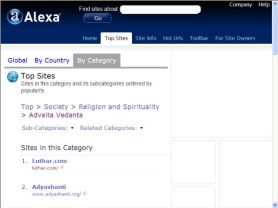
Alexa – Top Sites by Category: Top/Society/Religion and Spirituality/Advaita Vedanta

According to Alexa, Luthar.com is the top rated site for the Advaita Vedanta category under Religion and Spirituality. Capturing web statistics for sites is very difficult and there is plenty of room for error so there is no guarantee of accuracy of this information.  However, at the time of this writing Alexa Rankings had Luthar.com in front with adyashanti.org  and andrewcohen.org in second and third places respectively.

Harsha's avatar

ULLADU NAARPADU (Forty Verses on Reality): Verse No.15 & 16

ULLADU NAARPADU
(Reality in Forty Verses)

The famous Vedantic poem in Tamil by Bhagavan Ramana Maharishi
(consisting of two preliminary verses called Mangalam,
40 verses which form the main text ,
and another 40 verses called the Appendix)
Detailed Commentary in Tamil by Lakshmana Sharma,
adapted into English by Profvk

(Continued from ULLADU NAARPADU – Verse No.14
See Post#48596 Of Harsha Satsangh

Lakshmana Sharma’s Introduction to Verse No.15

Thus it is confirmed that this universe composed of both animates and inanimates is just mithyA. Men keep enquiring about the origin and end of this universe, and about the past and future births of the Chid-AbhAsa (included in this universe), who is just like the son of a barren woman. It is the Truth of the self that has to be enquired into and understood; people not only do not do any such enquiry but also misunderstand the Truth. Instead they pursue their worldly enquiries. Verse No.11 has already called such enquiries worthless. The same is being said here in this verse in a different way. These enquiries start under the fundamental assumption that there is a concept of time consisting of the three periods of time, namely, past, present and future. To speak of Time and to speak of (present) Event are both the same. One should go into the underlying truth rather than get into enquiries about other things. This is what this verse says.

Verse #15

nigazhvinai paRRi iRappu edirvu niRpa;
nigazhkAl avaiyum nigazhve; nigazhvu onRe;
inRu uNmai teRAdu, iRappu edirvu tEra unal,
‘onRu’ inRi eNNa unal.

Sanskrit version (by Lakshmana Sharma)

[Note by VK: Please note that,
since there has been an interest expressed
in the Sanskrit version,
hereafter I shall be giving
the corresponding shloka in Sanskrit also]

Samshrityaiva hi vartamAnam-ubhayaM bhUtaM bhavishyat sthitaM
svE kAle’pi ca vartamAnam-mubhayaM, tadvartamAnaM trayaM /
satyevam pravihAya bodham-adhunA sad-vastuno’nveshhaNAt
bhUtAgAmivichAraNaM syAdeka-sankhyAm vinA //

Translation (Lakshmana Sharma)

Both past and future exist only in their dependence on the present; each in its own time is only present. Threfore all the three are present. That being so, research into the past and the future, without experience of the Reality in the present time won by the Quest, is (absurd) like counting without the number ‘one’.

Translation (Prof. K. Swaminathan)

Past and future are dependent on the present. The past was present in its time and the future will be present too. Ever-present is the present. To seek to know the future and the past, without knowing the truth of time today, is to try to count without the number `One’.

Translation (Osborne)

Only with reference to the present can the past and the future exist. They too, while current, are the present. To try to determine the nature of the past and the future while ignoring the present is like trying to count without the unit.

Word by Word (of the Tamil verse)

nigazhvinai paRRi: With reference to the present
iRappu : the past
edirvu : (and) the future
niRpa: exist.
nigazhkAl : While happening
avaiyum : they too
nigazhvE : are only the present.
nigazhvu onRe : There is only one, the present.
inRu :Right now
uNmai tErAdu : without knowing the truth (of Self )
iRappu edirvu : past and future
tEra unal : seeking to know
eNNa unal : (is equivalent to ) trying to count
onRu inRi : without (counting) (the first) one.

Lakshmana Sharma’s commentary in Tamil

The present means what is experienced then and there. When it is experienced it is considered as ‘present’ experience. Experience does change, so when we remember what was experienced, we call it the past. And when we expect some experience to happen, we call it the future. Both are only about what happens; one is called the past, and the other, the future. These differences are only imagined, says Bhagavan: all of them are only about ‘the present’. The True Present, that is, the existing Reality, is only the Atman. It is the Self which is the truth of all the three periods. It is not to be circumscribed by Time. That Time itself is only a mental construct will be explained in the next verse.

Therefore it is proper to know that existing Reality right now. Instead of knowing WHAT IS, to be researching into the states of the past and the future, will not lead to the Truth. Those researches and enquiries proceed on the assumption that the present false appearances are true. So they are fruitless.

The analogy for this is the counting without the first one. All counting has to start with the number ‘one’. Numbers are only expansions of ‘one’. Just as number ‘one’ is important for Mathematics, so also, for all enquiries, the most fundamental one is the knowledge of the Self.

Somebody asked Bhagavan: ‘How to find out how I was in my previous birth? And Bhagavan replied: ‘Before you enquire into your previous lives, find out whether the present life is true. Why not see now what is the Truth of yourself?’.

It therefore follows that all the researches into the material worldly things – by chemists, astronomers (who enquire into the planets of the universe) and physicists (who enquire into matter) — are all waste. What was there before the appearance of the universe? When did man appear in this world? Were his ancestors monkeys or humans? How did his religious beliefs originate? Did the early Man worship trees, plants and ghosts? Did the present Faiths originate from those blind faiths? — None of these enquiries are necessary for a seeker of mokshha. Not only this. The researches that philosophers carry out are also of the same category. Same story with enquiries into Metaphysics. All these, being done by the strength of one’s intellect and worldly experience without listening to the words of the Released Person on his experience, only tantamount to Ignorance.
Lakshmana Sharma’s Introduction to Verse No.16

Time and Space are only expansions of the Ego. Therefore they too are unreal. The next verse shows they don’t exist in turIya.

Verse #16

nAm anRi nAL Edu? nADu Edu?
nADungAl nAm uDambEl, nAL nATTuL nAm paDuvam.
nAm uDambo? nAm inRu anRu, enRum onRu;
nAdu ingu angu engum onRAl, nAm uNDu, nAl nADu il nAm
.

Sanskrit version (by Lakshmana Sharma)

kAlo desha imau pRthak kimahamo?’dhInAstayo:smo vayaM
dehA: syAma yadi svayaM; kimu vayaM dehA bhavAmo vada /
sarvatrApi ca sarvadApi ca vibhAty-AtmA samAno yataH
tasmAt-santa-mavehi kevalam-amuM tau dvau nigIrya sthitaM //

Translation (Lakshmana Sharma)

Do Time and Space exist apart from the Ego? If we were bodies, then we would be sub ject to them. (But) say, are we bodies? Because the true Self is the same everywhere and at all times; therefore learn that He is the sole Reality, consuming both (time and space).

Translation (Prof. K. Swaminathan)

Without us there is no time nor space. If we are only bodies, we are caught up in time and space. But are we bodies? Now, then and always — here, now and everywhere — we are the same. We exist, timeless and spaceless we.

Translation (Osborne)

Apart from us where is time and where is space? If we are bodies, we are involved in time and space, but are we? We are one and identical now, then, and forever, here, and everywhere. Therefore we, timeless, and spaceless Being, alone are.

Word by Word (of the Tamil Verse)

nAm anRi : Apart from us
nAL Edu? : where is Time?
nADu Edu? : where is space?
nADungAl while we search
nAm uDambEl : if we are (only) bodies,
nAM : we
paDuvam. : are caught up
nAL nATTuL : in Time and Space.
nAm uDambo? : Are we bodies?
nAM : we
inRu : today
anRu : in the past days
enRum : always
onRu. Are of the same form
nADu place
ingu : here
angu : there
engum : and everywhere
onRAl : since we are same
nAm uNDu we exist
nAL nAdu il dateless, placeless
nAm we.

Lakshmana Sharma’s commentary in Tamil

Time and Space are dependent on our Ego. When we are in the egoless sleep state there is no awareness of Time or Space. Therefore, both time and space are only thoughts, dependent on the mind. The moment we get the fundamental concept that ‘I am this body’, all thoughts arise including the concepts of time and space. Even the modern researchers in the science of this material world of time and space do agree that Time and Space are concepts of the mind.

But there is an experience of being bound by time and space. Why is this so? We are not examining our ignorant ‘knowledge’ that ‘I am this body’. We have to examine this notion and then enquire into ‘Who or what am I?’. And then we have to identify (ourself) with the infinite Atman. Because we do not do this, the finiteness of the body is assumed to be our own finiteness and thus arises the bondage. This bondage will vanish once we pursue this enquiry.

Once we start this enquiry, we will find that the real ‘I’ is something which is unaffected by Time and Space. And then we shall discover that it is the Atman that is the Truth and it is not delimited by Time or Space. The bottom line is that these two do not subsist in the experience of jnAna.

It is not correct to say that the Atman exists at all times and everywhere. What is true is that the Atman is timeless and spaceless. So it is not accessible to mind or speech. What is accessible to the mind or speech has to be subject to Time and Space.

(To be continued in Verse No.17)

Harsha's avatar

HarshaSatsangh: The Sri Bhagavan Ramana Maharshi Group on Yahoo

Ramana Maharshi Devotees, please note that Harshasatsangh@yahoogroups.com is the largest Ramana Maharshi internet forum on yahoo with around 1500 members. It has been in existence since January 1999.  Lively discussions on Sri Ramana’s self-inquiry methodology as well as submissions of poetry, essays, and relevant postings by members keep Devotees in touch with Bhagavan Ramana’s teachings on a daily basis. The current moderator of the group is Sri Alan Jacobs, the President of the Ramana Maharshi Foundation UK. Ramana Maharshi Foundation UK website is given below.

http://www.ramana-maharshi.org.uk/

HarshaSatsangh is supported by luthar.com which is an e-magazine containing numerous important articles on Sri Ramana and his teaching of Self-Inquiry.  Luthar.com is one of the top Advaita-Vedanta sites on the Internet.  Sri Alan Jacobs and other authors have written a number of articles on Bhagavan’s teachings on luthar.com.

Articles are added to luthar.com on a monthly or a weekly basis by Bhagavan devotees and other authors writing on spirituality. The luthar.com site is Interfaith in its outlook, and people from many different religions and backgrounds write there.  Usually the themes of the topics center on God, Self-Realization, Enlightenment, and mysticism. Majority of the articles and essays focus on issues relevant to Yoga, Advaita, Inquiry, but there is flexibility to write on other topics as well such as lifestyles related to healthy living and vegetarianism. Articles on Buddhism, Christianity, Hinduism, Jainism, and Sufism can be found there as well. Scholar and sages from all spiritual traditions are welcome to write there.

The snapshot of luthar.com is given below. Please scroll down to read the history and a detailed description of the HarshaSatsangh group.
History of HarshaSatsangh
In order to build a spiritual online community devoted to the ancient traditions of Advaita-Vedanta and Yoga, centered around the Sage of Arunachala, Sri Bhagavan Ramana Maharshi, I founded HarshaSatsangh in January 1999. The group’s two main pillars have been the philosophy of Ahimsa (nonviolence) and Sri Ramana’s teachings of Self-Inquiry and Self-Realization.

I received my first teachings of Ahimsa from Gurudev Sri Chitrabhanu, with whom I studied after I finished college. Chitrabhanu-ji had been a Jain monk for 29 years.  Ahimsa is the cardinal principle in the Jaina philosophy. Chitrabhanu-ji and his wife Pramoda-ji have dedicated their life to spreading the message of Ahimsa, specifically focusing on the welfare of underprivileged people in India as well to stop the inhumane and cruel treatment of animals.

All Self-Realized sages spontaneously develop the feeling of reverence for life and embrace all living being regardless of age, race, ethnicity, gender, as their own.

Sri Ramana used to say that “Ahimsa Param Dharmo”. It means that Nonviolence is the first principle of the spiritual life. Ahimsa is also the first principle in Yogic Psychology of Self-Realization. In the classic Yoga work, Patanjali’s Yoga Sutras, Maharishi Patanjali puts Ahimsa at the top of the list above all other virtues. All other virtues follow from the principle of nonviolence.

Self-Realization and Ahimsa go hand in hand. It is only when the feeling of Ahimsa, reverence for all life, and amity towards all beings permeates one’s being can the deepest possible relaxation and letting go is possible for the mind to surrender to the Heart.

Sri Ramana was known for his immense kindness to people, animals, birds, and even plants growing in his vicinity. It came naturally to him. No one had to teach Sri Ramana to be compassionate to others. Self-Realization changes a person from the center.  For a Self-Realized Being, the same life runs through all living beings. Same Truth. Same Self.

With that as the background and context, HarshsSatsangh came into existence in January of 1999. The following description is taken from the yahoo groups.

Description of HarshaSatsangh

Harshasatsangh@yahoogroups.com is the largest Sri Bhagavan Ramana Maharshi on yahoo groups. It has been in existence since January 1999. It is supported by https://luthar.com/. The current moderator for the group is Sri Alan Jacobs, the President of the Ramana Maharshi Foundation UK.

Ramana Maharshi Devotees world wide are invited to apply for free membership.

http://groups.yahoo.com/group/HarshaSatsangh

General Information on HarshaSatsangh

Ramana Maharshi devotees should know that this is Sri Ramana’s Sangha. It is dedicated To Teachings of Self-Inquiry as given by Sri Ramana Maharshi. This is the Largest Yahoo Group for Sri Ramana Devotees. It is blessed by Sri Bhagavan Ramana, the Sage of Arunachala. The group was Started in January 1999.

Ramana Maharshi is known as the Sage of Arunachala. Sri Ramana spontaneously realized the Self at 16. After that he moved to the holy mountain of Arunachala and remained there for the rest of his life. Sri Ramana taught the method of self-inquiry which through Grace leads to Realization of our Self.

Blessings of Bhagavan Sri Ramana Maharshi do not require that one be from a particular school of yoga, meditation, or a follower of a certain religion, philosophy, or some esoteric school of thought.

The highest teaching of Sri Ramana is that of Self-Inquiry. Self-inquiry can be performed by anyone who has the maturity of mind to ask the ultimate question, “Who Am I?” and focus attention with patience and vigilance on one’s self-nature. If one can understand it and become aware of the awareness within, it is Grace at work.

Aspirants practicing Raj Yoga, Tantra, Kundalini Yoga, Hatha Yoga, Nada, Mantras, and Japa and belonging to any religion all came to see Sri Ramana. Sri Ramana always pointed them to their own Self, their own Heart, from which the consciousness sprouts up and world becomes visible. Finally, it is in the Heart where the Shakti, the mind, and all the paths merge, and the Absolute shines forth in its own nature.

Sri Ramana often quoted the Bhagavad Gita and said that the Lord sits in our Heart as our own Heart; indeed as our very own Self  (“I am in the Heart of all O’ Gudakesa”). So, it is nice to be in the company of the devotees of the Lord of the Heart.

This list is dedicated to the Sage of Arunachala, Sri Ramana Maharshi, and the pure teachings of the Self as taught in Advaita Vedanta. Sri Ramana taught that all spiritual practices (prayers, meditation, pranayama, japa) ripen the mind and make it suitable for self-inquiry. Ultimately, the Grace of Bhagavan leads the mind into the Heart for Self-Realization.

HarshaSatsangh Group Information – March 2009

  • Members: 1206
  • Category: Yoga
  • Founded: Jan 2, 1999
  • Language: English

HarshaSatsangh Group

  • Membership requires approval
  • Messages from new members require approval
  • All members can post messages
  • Email attachments are distributed, not archived
  • Members cannot hide email address
  • Listed in the Yahoo directory
Harsha's avatar

The Bhagavan Sri Ramana Maharshi website

This is the official website of Sri Ramanasramam.  A number of books on the teachings of the sage of Arunachala can be freely downloaded here.

Harsha's avatar

ULLADU NAARPADU (Reality in Forty Verses): Verse #14

ULLADU NAARPADU
(Reality in Forty Verses)

The famous Vedantic poem in Tamil by Bhagavan Ramana Maharishi
(consisting of two preliminary verses called Mangalam,
40 verses which form the main text ,
and another 40 verses called the Appendix)
Detailed Commentary in Tamil by Lakshmana Sharma,
adapted into English by Profvk

(Continued from ULLADU NAARPADU – Verse No.13)

Lakshmana Sharma’s Introduction to Verse No.14

The world, or the universe, consists of both the animate and the inanimate. Are all these unreal or probably only the animates are real – is the next question that arises. The reply is given by this verse.

Verse No. 14

tanmai uNDEl munnilai paDarkkaikaL tAm uLavAm;
tanmaiyin uNmaiyait tAn Ayndu tanmai aRin ,
munnilai paDarkkai muDivuRRu,
onRAy oLirum tanmaiyE tannilai tAn.

Translation (Lakshmana Sharma)

The two, namely ‘you’ and ‘he’ appear when the sense of ‘I’ has risen in respect of a body; if by the quest of the Self by oneself, by the question ‘What is the Truth behind this I’, the ego be extinguished, therewith are also lost the other two notions; that which then shines alone, understand, is the Real Self.

Translation (Prof. K. Swaminathan)

`You’ and `he’ — these appear only when `I’ does. But when the nature of the `I’ is sought and the ego is destroyed, `you’ and `he’ are at an end. What shines then as the One alone is the true Self.

Translation (Osborne)

If the first person, I, exists, then the second and third persons, you and he, will also exist. By enquiring into the nature of the I, the I perishes. With it ‘you’ and ‘he’ also perish. The resultant state, which shines as Absolute Being, is one’s own natural state, the Self.

Word by Word

tanmai uNDEl If there is the first person ‘I’
munnilai the second person ‘you’
paDarkkaikaL (and) the third person ‘he’
tAM uLavAm they also exist.
tAN (If) oneself
Ayndu researches into, enquires into
uNmaiyai the truth
tanmaiyin of oneself
tanmai (and) the first person ‘I’
aRin is extinguished
munnilai the second person ‘you’
paDarkkai (and) the third person ‘he’
muDivuRRu having come to an end
tanmaiyE that state (which)
oLirum shines
onRAy as One (by itself)
tan nilaimai tAn is one’s own natural Self

Commentary by Lakshmana Sharma

The feeling as the first person ‘I’ is what rises as the Ego. That is when one recognises the second person ‘you’ and the third person ‘he’. This third person includes ‘it’ also, that is, all the inanimates. Of these three it is the first person ‘I’ that arises first. Only when that rises, the others arise. When that ‘I’ is not there, there is no question of the others. So this shows that the Ego is the root source for the appearance of ‘I’, ‘You’ and ‘He’.

The second line of the verse indicates the Enquiry into the Self and its end, the extinction of the Ego. Self-enquiry means enquiring into the truth of the first person ‘I’. That enquiry ends with the destruction of the Ego and that is Self-realisation.

We already saw that self-realisation is nothing but simply remaining as the Self. In that state, the Jiva-differences of ‘I’, ‘You’ and ‘He’ don’t exist. There is something then which shines as ‘I’ alone. That is the Atman, says the last line of the verse.

One important objection arises here.

[Note by VK: All students of advaita should note carefully
the point that is being raised and explained now.
This is a standard objection that arises
in the all-too-intellectual mind of the seeker
and is seriously discussed (without end!)
among advaita-pursuers
and is also pointed out as a flaw by critics of advaita.]

If the Atman is one and second-less, then when one attains mukti by his Self-realisation, every one should also have attained that mukti. But it doesn’t seem to be so. The reply to this can only be: Even now there is no bondage for anybody; there is no one in bondage. The Self is eternally free and liberated. This is the conclusion of all Vedanta. Therefore, from the viewpoint of a jnAni there is no ajnAni!

There is also another explanation usually given for this. But this is not the Absolute truth. It is just offered for the purpose of clarification for those who are at a lower level of spiritual understanding. The vijnAna-maya kosha is one of the five koshas. The Pure and Eternal One Self gets reflected in this vijnAna-maya and that is what is called the JIva, also the chid-AbhAsa.

Note by VK: (Chid-AbhAsa simply means
the reflection in the chit, the intellect.
AbhAsa means reflection)

It is this JIva that is bound and that needs Release. There are several such Jivas (or Chid-AbhAsas). Among these one vijnAna-maya gets extinguished by Self-Realisation. So that reflection is gone. But nothing has happened to the ‘reflections in the other vijnAna-mayas’, that is, to the other chid-AbhAsas. The ajnAni goes about with the conviction that they are as ever before. As long as each vijnana-maya exists, so long does the reflection in that vijnana-maya persist. The analogy for this is the several reflections of the moon in different pots of water. These pots are the analogies for the several bodies. The water in them is the analogy for the various intellects in the vijnAna-mayas. And the single moon in the sky is the analogy for the unique Self. The one moon has several reflections; so also the one Self has reflections in the form of several Chid-AbhAsas. When the water in one pot gets dried up or poured out, the reflection in that pot is gone, but the other reflections are still there. Thus even if the Atman is one, for the purpose of our phenomenal understanding one can say there are several Jivas.

All this was said only for the inferior intellect. In actuality the question raised has no basis. The correct reply for the question is: “Find out who it is that is asking the question”. It is because of Ignorance that we think there are other sentient beings besides ourselves. In the dream we see different Jivas as if they are distinct from us; but they are not. In the same way the Jivas that appear as different from us in the waking state also are neither distinct from us, nor true.

(To be continued in Verse #15)

Harsha's avatar

Good Quotes From Famous People

I have been enjoying the quotes on this page collected by Professor Gabriel Robins for sometime now. Many of these are quite funny and insightful.

Here are just a few that I like. Go to the link below for more.

“Give me chastity and continence, but not yet.”
– Saint Augustine (354-430)

“I can write better than anybody who can write faster, and I can write faster than anybody who can write better.”
– A. J. Liebling (1904-1963)

“A lie gets halfway around the world before the truth has a chance to get its pants on.”
– Sir Winston Churchill (1874-1965)

“Don’t stay in bed, unless you can make money in bed.”
– George Burns (1896-1996)

“In theory, there is no difference between theory and practice. But in practice, there is.”
– Yogi Berra

“I’m living so far beyond my income that we may almost be said to be living apart.”
– e e cummings (1894-1962)

“Good people do not need laws to tell them to act responsibly, while bad people will find a way around the laws.”
– Plato (427-347 B.C.)

I’ve had a wonderful time, but this wasn’t it.”
– Groucho Marx (1895-1977)

“The nice thing about being a celebrity is that if you bore people they think it’s their fault.”
– Henry Kissinger (1923-)

“Anything that is too stupid to be spoken is sung.”
– Voltaire (1694-1778)

“Where are we going, and why am I in this hand basket?”
– Bumper Sticker

http://www.cs.virginia.edu/~robins/quotes.html

Harsha's avatar

Inner Path to Pachaiamman Koil

This concludes the series that shows details of Arunachala’s Inner Path used by devotees of Sri Bhagavan Ramana Maharshi for the sacred walk around this holy hill. This walking is called pradakshina, or in Tamil, girivalam.

This series shows the Inner Path in some detail all the way from Sri Ramanasramam, around Arunachala, and onto the streets on the Eastern side of  Arunachala.

Part One shows the path from Ramanasramam. Part Two shows the walk around the southwest side of the hill.  Part Three details the section of the path around Parvati Hill, at the west end of Arunachala. Part Four shows the path on the north side, under the Elephant. Part Five follows the path through the trees. This is part six, the final  section of the Inner Path.

Below is a map of the entire Inner Path, that shows the six sections as well as some other landmarks along the way. The final section is in yellow.

Arunachala Inner Path Pachaiamman Koil

The final section of the Path goes for a bit through trees and brush, near to (but not visible from) Pradakshina Road. It then goes behind a few houses of local villagers, then up a small hill to Pachaiamman Koil, then down the hill back to the road. And the way we walk, finally to Ramakrishna Hotel for breakfast of Indian coffee, vadas and dosas.

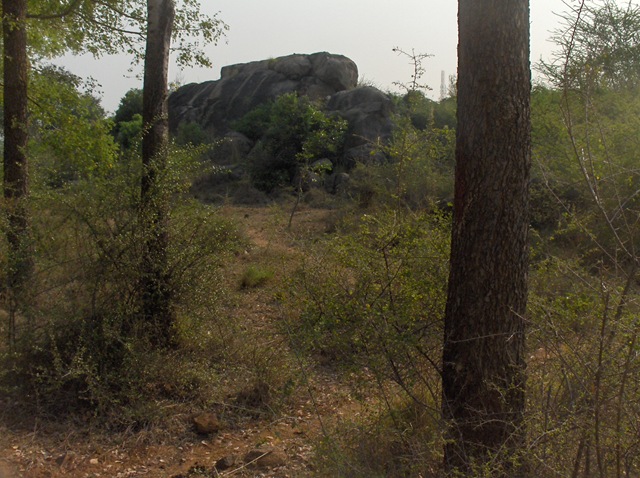
Starting from the Big Rock

HPIM2197

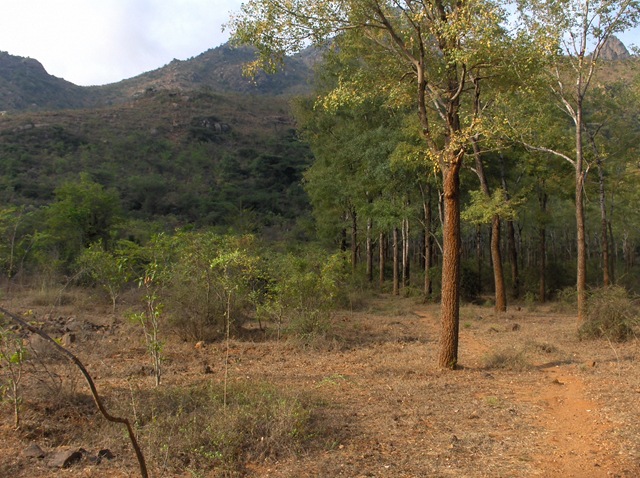
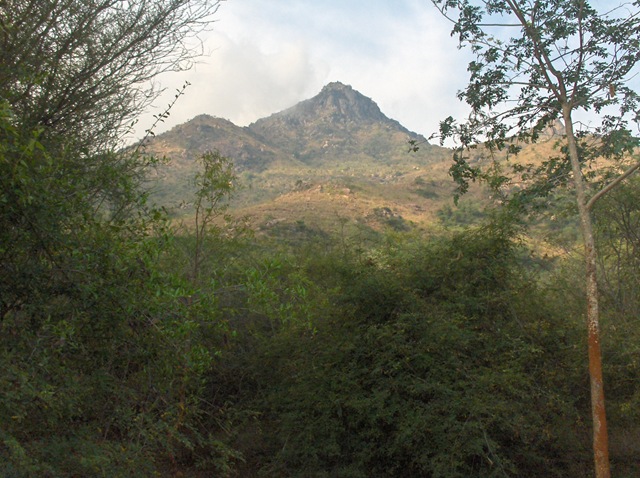
Looking towards Arunachala, the peak rises behind the trees.

HPIM2309

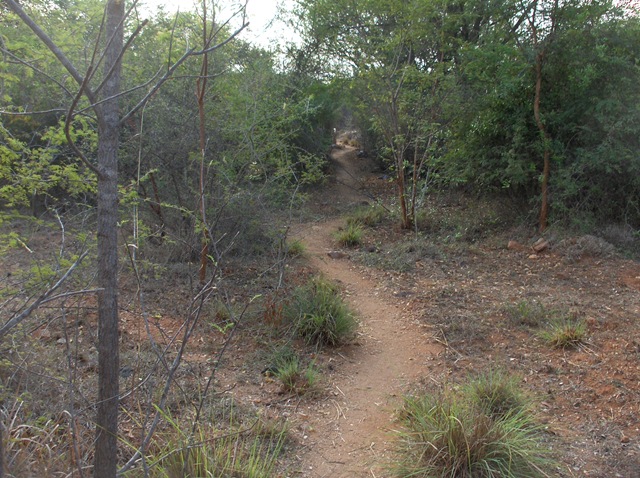
The Path continues straight ahead.

HPIM2311

HPIM2315

HPIM2320

Arunachala through the trees.

HPIM2321

Continue through the brush and small trees.

HPIM2322

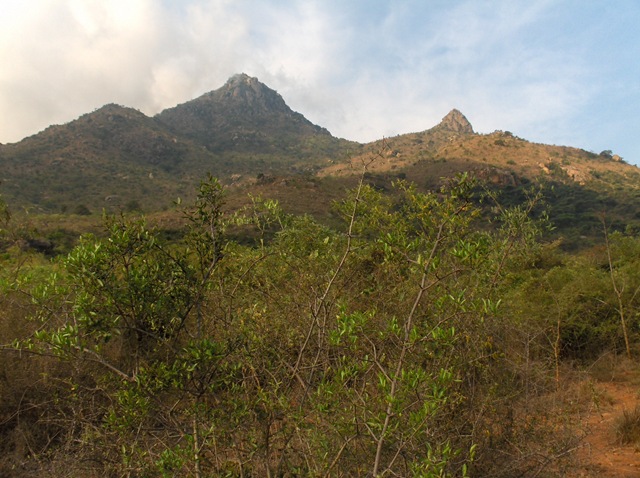
Here is a clearer view of the Arunachala peak. The trunk element of The Elephant rises on the right of the peak.

HPIM2323

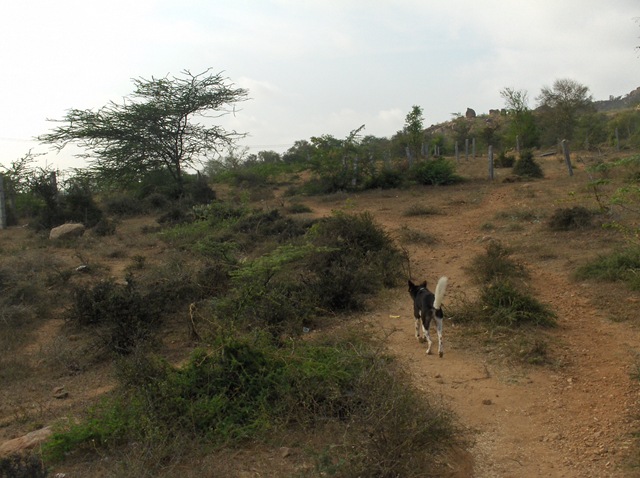
Continuing down the Path. This is a shortcut where Carol cleared the brush and now is the main part of the trail. Before only cows could get through here, and everybody else took a jog to the left.

HPIM2326

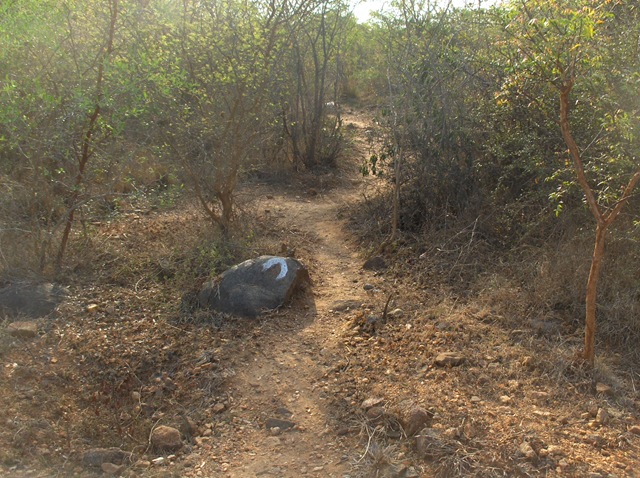
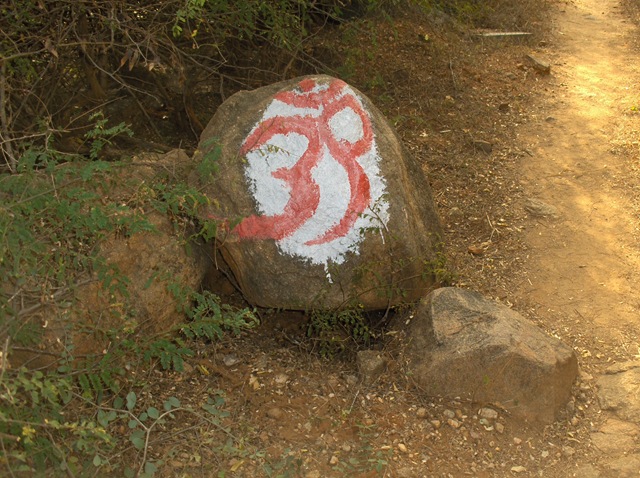
We turn a bit right and there is a nice red and white Om painted on a rock. By now there is quite a bit of road noise, but the road  is not yet visible.

HPIM2331

A village woman walks ahead, with a container of dry branches on her head. This is fuel for the day’s cooking fire. So much of this brush is gathered that it does not have a chance to compost back into topsoil. This is a long standing issue in India, where much of the soil has been depleted by the last 2000 years of continual use.

HPIM2335

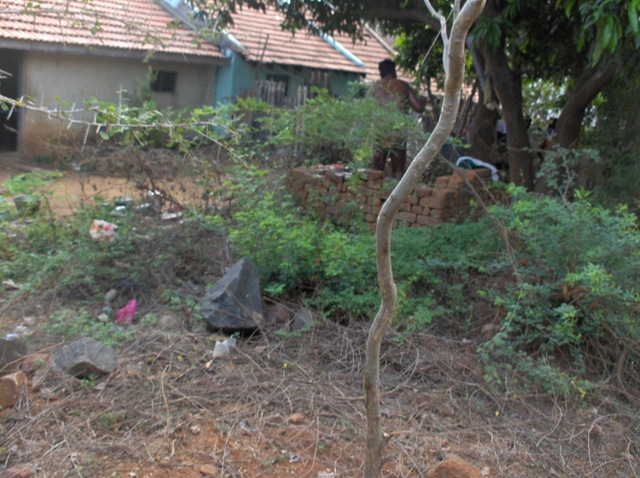
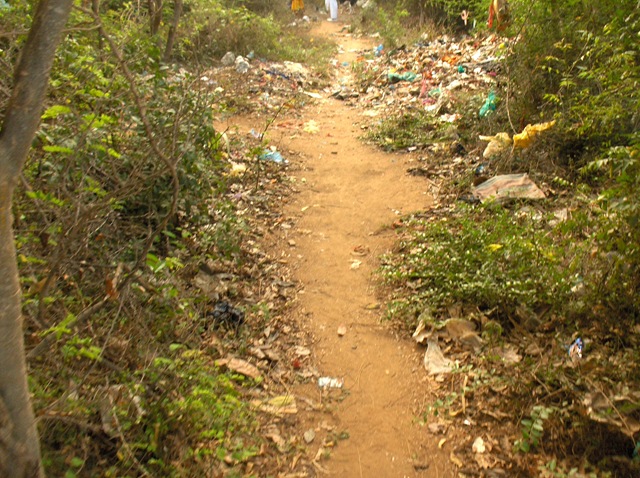
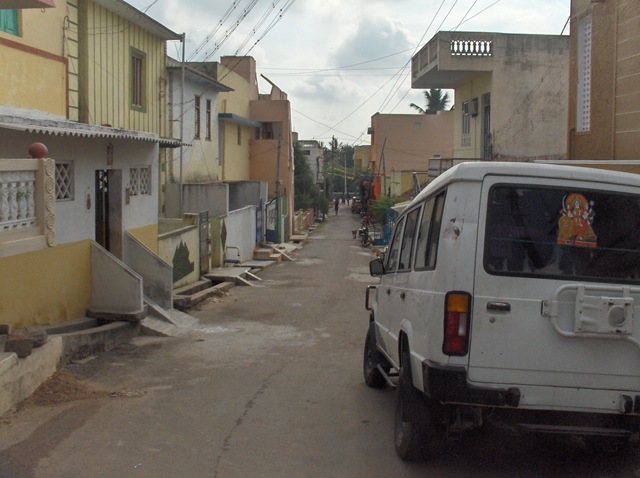
Trash heaps line the path. And sometime piles of human waste, since the typical houses here have no toilets, and the people are used to going outside their houses to do their business. Watch where you step!

HPIM2340

Behind these houses, you can see into their back yards. Here a man is standing in his undershorts in a brick-lined bathing area taking his morning bath.

HPIM2342

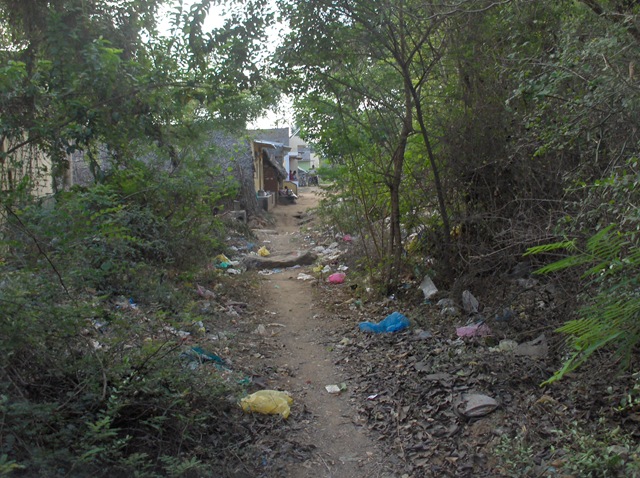
The Path continues through more refuse. Paper products are burned, but the ubiquitous plastics have nowhere to go. Some towns are beginning to address this serious problem by banning plastic bags. The real problem is to educate and sensitize the people to “littering.”

HPIM2345

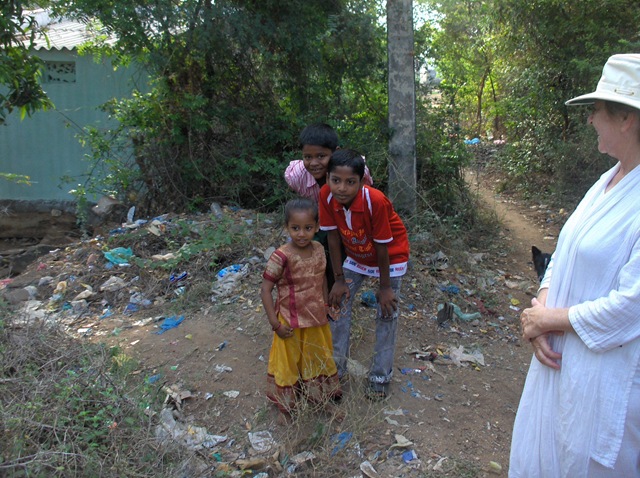
Village children start to greet us. We go through here often and are known by many of them. It seems that children always want their  picture taken. They will come and ask ‘photo’ or ‘camera.’ The children will often ask us for pens. Their schools don’t supply them, so there is no way to practice their writing skills. Amazingly, the little girl in the foreground here actually offered to give US two pens. What beautiful children, physically and spiritually.

HPIM2346

More path through more trash.

HPIM2348

Now we walk directly behind a few houses. Be respectful to the people here. This is their home. A silent smile is usually enough.

HPIM2350

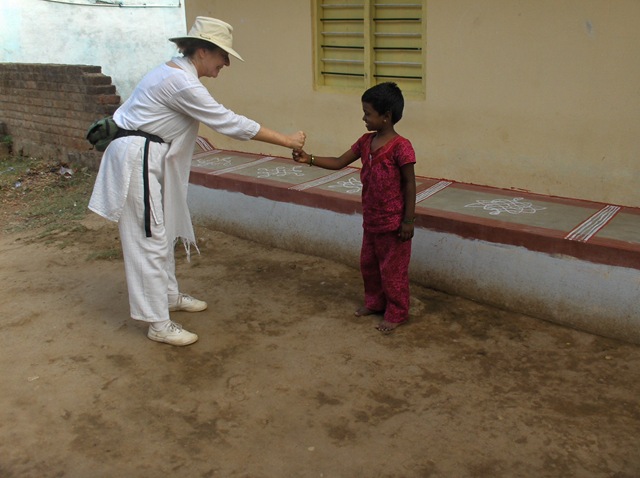
At this house Carol has been greeting the two kids with a ‘fist bump.’ She started doing this as a way to  divert the children’s request for a pen, etc. It really seems that what they want is just some kind  of contact, and the fist bumps provide an easy way. She calls them ‘Obama bumps’ after the photo of Obama and his wife taken during the election.

HPIM2354

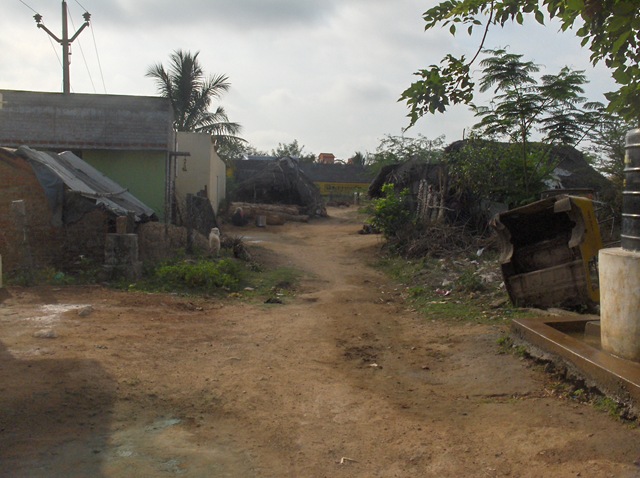
Proceeding  through the village.

HPIM2364

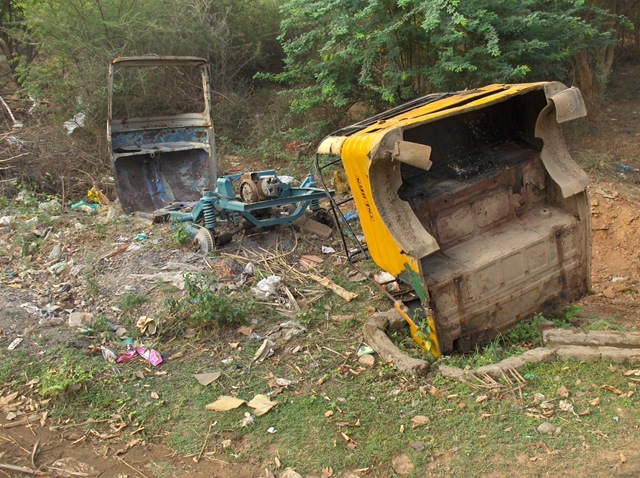
The skeleton of a dead  rickshaw sits  by the path.

HPIM2366

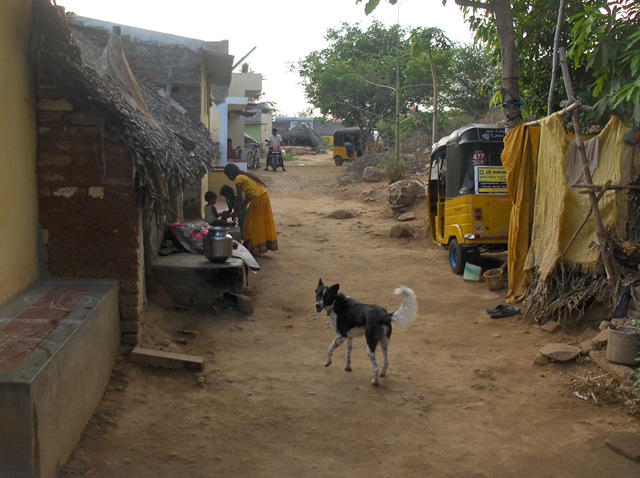
This is a small thatched hut, some family’s home.

HPIM2369

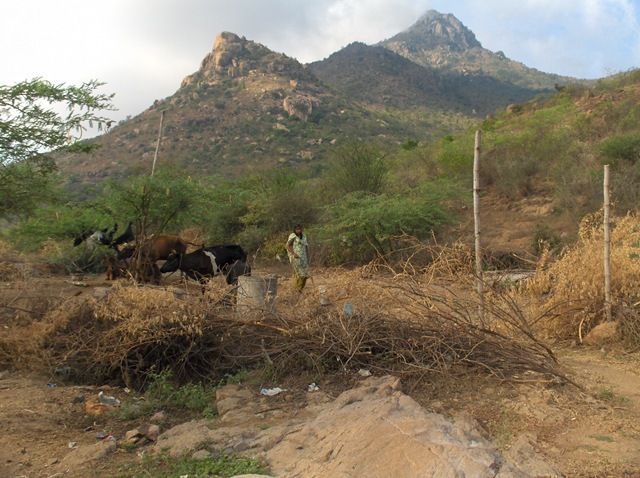
There are a number of cows here. Arunachala is in the background.

HPIM2372

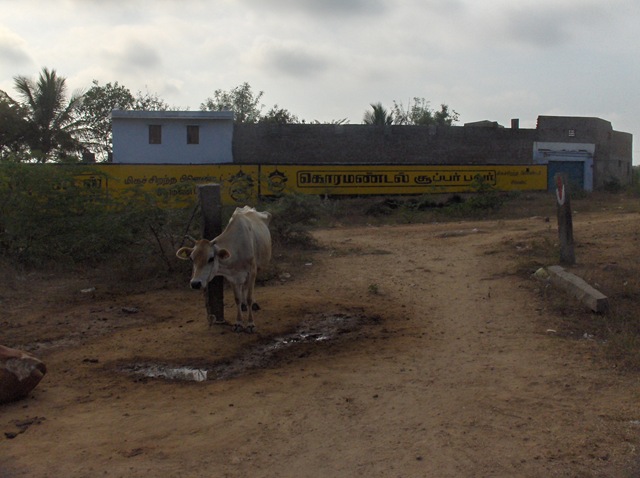
This long yellow sign is a predictable landmark. The Path turns to the right.

HPIM2376

Here is Arunachala again. Clouds are forming around the peak.

HPIM2377

The Path goes up and to the right.

HPIM2378

HPIM2383

Now Arunachala is shrouded in clouds. It is said that there are five faces of Siva that are visible in these eastern hillside rocks. This how you can be sure that it is Siva, since he, apparently, really has five faces.

HPIM2389

Near the Path are newly built homes, with bright paint jobs. Much care was taken with these houses. The bright colors conform to the principles of Vaastu, the Indian equivalent of Feng Shui.

HPIM2390 closeup

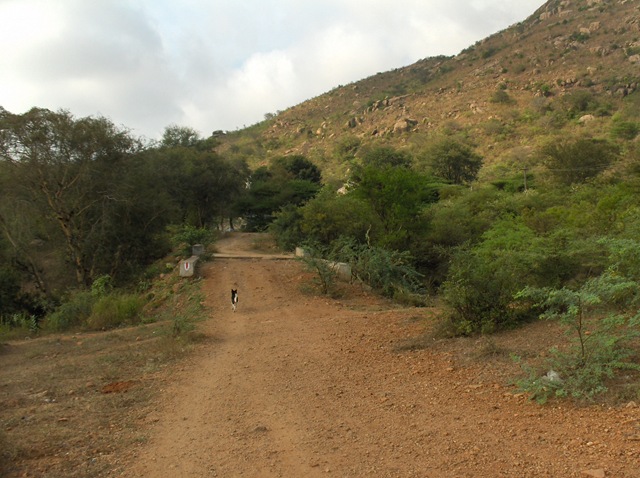
Now the Path goes over two concrete bridges.

HPIM2395

Arunachala is nearly hidden by the hill in the foreground.

HPIM2396

Below is the first glimpse of Panchiamman Koil, rising out of the trees.

HPIM2399

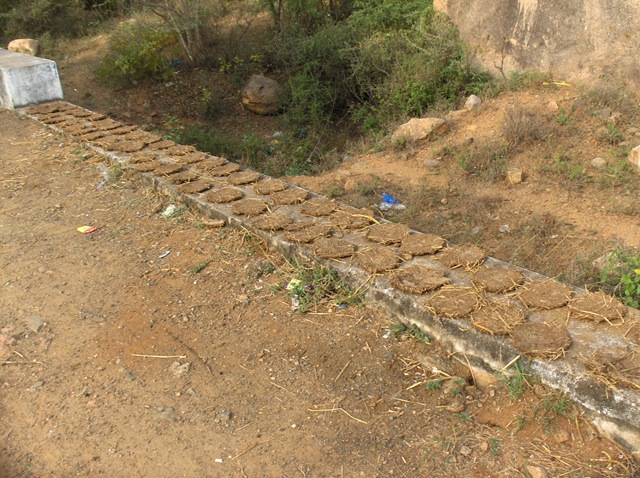
Patties of cow manure mixed with straw are drying here. They are used a fuel for cooking fires.

HPIM2400

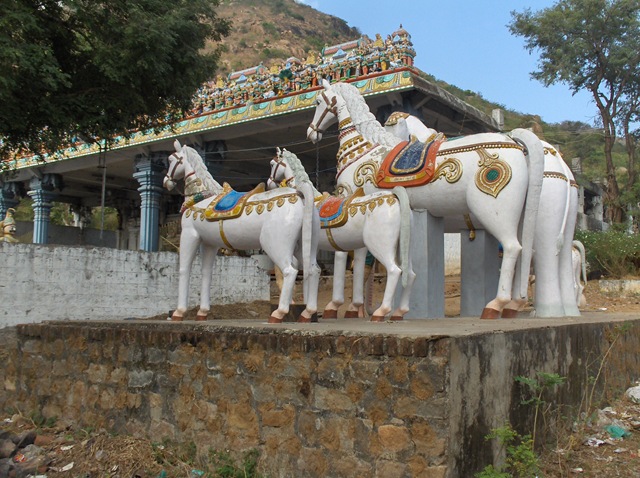
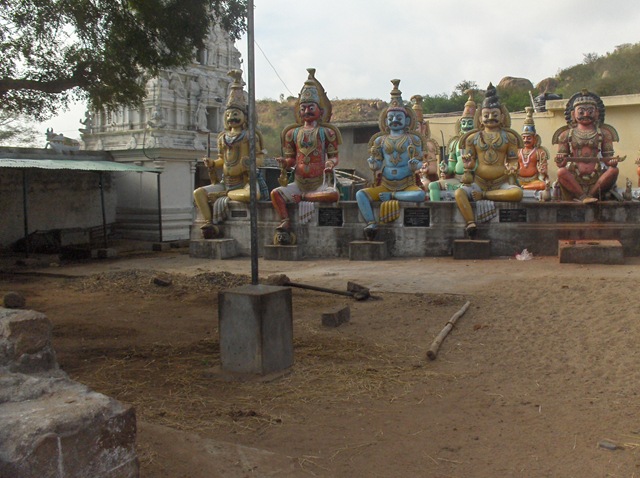
More Vediyappan mounts and guardians.

HPIM2404

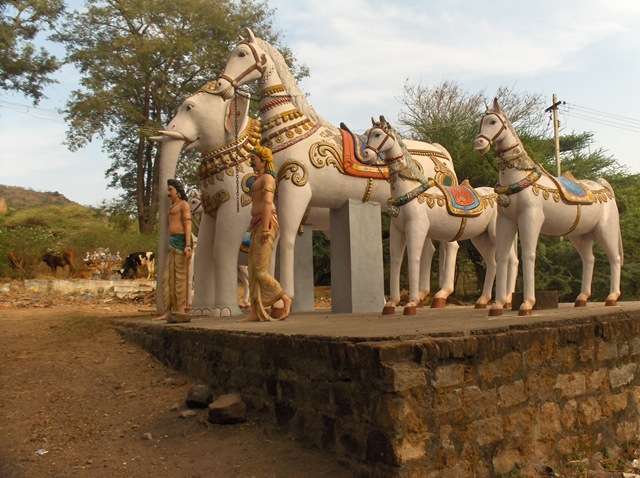
This group also has an elephant as a mount.

HPIM2406

In front of Panchaiamman Koil are two rows of Guardians. If you look closely, the two on the left are resting their feet on heads.

HPIM2409

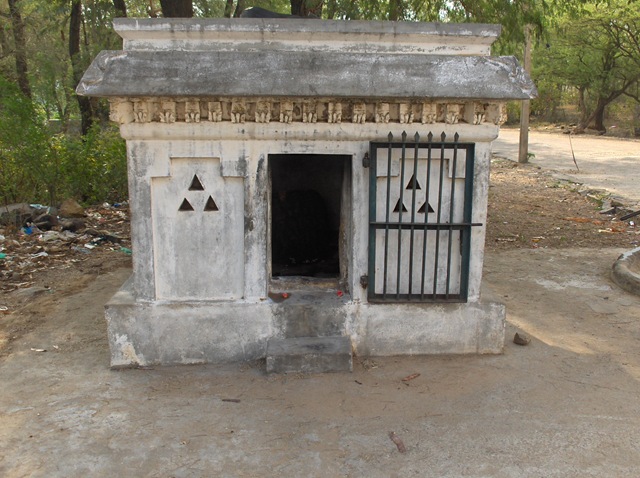
Outside Panchaiamman Koil is a small shrine.

HPIM2415

Inside is an ancient figure of a male and female. Siva and Parvati, maybe?

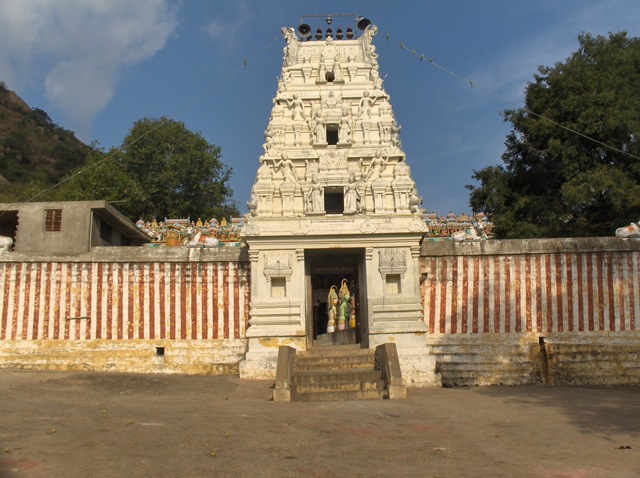
HPIM2414

Here is the front of Panchaiamman Koil. The vertical red and white stripe indicate that it is is temple. You will see these many times in South India, marking temples.

HPIM2417

The Arunachala peak is  entirely hidden here.

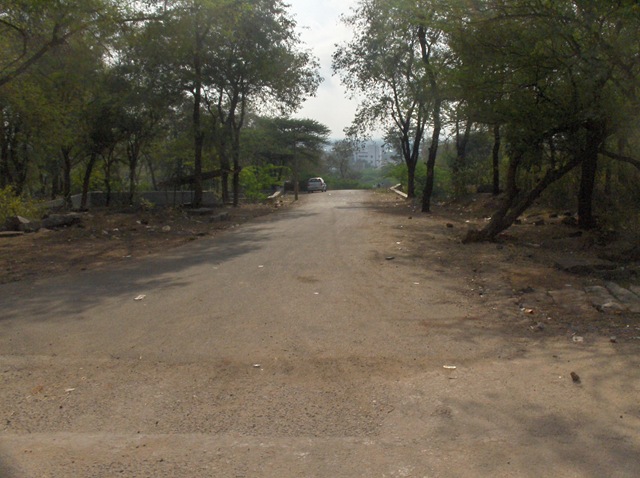
HPIM2421

The road down the hill to the main street.

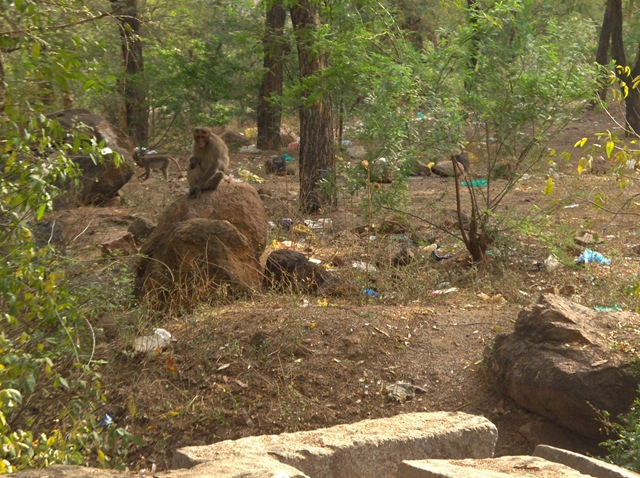
HPIM2419

There are monkeys here today. This  one is sitting on a rock. I wonder if monkeys meditate.

HPIM2425

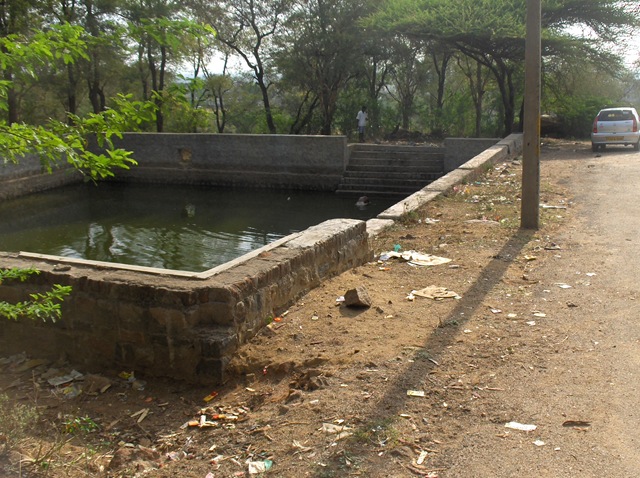
There is a tank down the hill from the temple. Usually in the morning there are men bathing in the tank.

HPIM2427

On the other  side of the road through the trees is another temple. There is a path here that goes a bit further around the mountain. After a rough bit and a scramble up a rock face, you come out to a small village built on the face of a very large hillside.

HPIM2429

Down the road.

HPIM2430

Often you will see this billy goat along the road  here. He seems like the king of this hill.

HPIM2200

We turn right at the first street. You could keep going straight down this hill. We think  of this as the ‘scenic route.’

HPIM2432

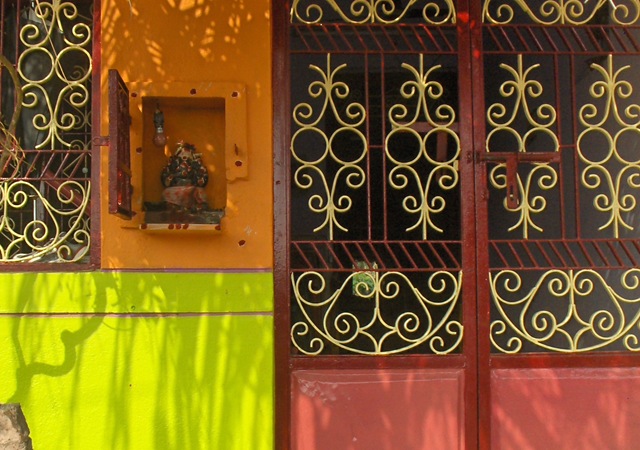
A nice Ganesh shrine in the doorway of this house insures that things go well within the house.

HPIM2434 closeup

In the mornings, many women with water jugs are gathered around this tank, getting their day’s supply of water. This is a hard job. Naturally it  is  mainly done by the women.

HPIM2437

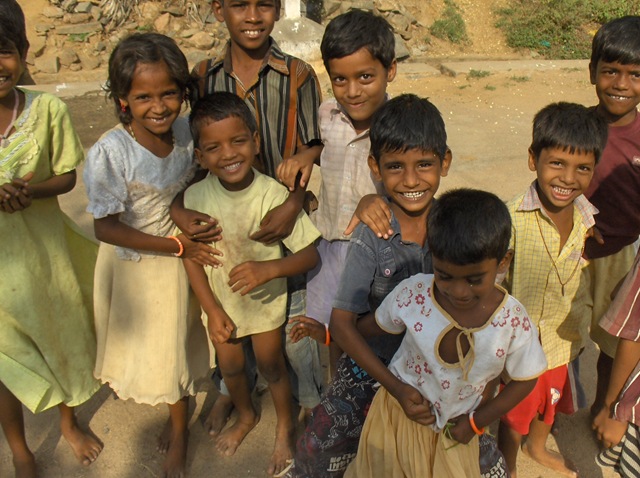
Kids gather, asking, ‘photo, photo, photo.’

HPIM2443

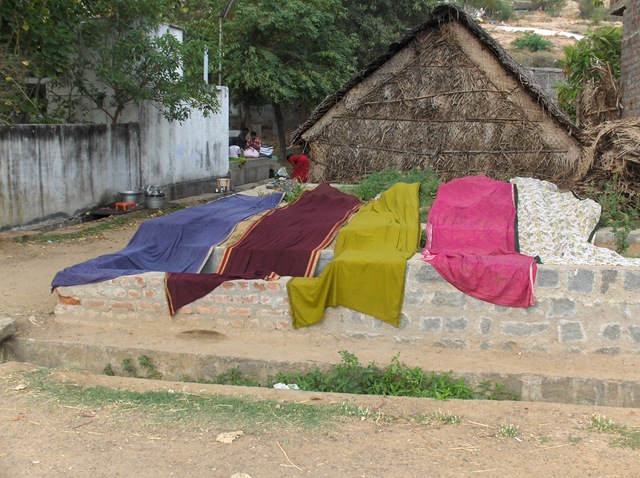
Sarees are spread out to dry.

HPIM2445

They were probably just washed in this community clothes washing area.

HPIM2446

Across the road  is a sweet little shrine.

HPIM2450

Many primitive Nagas (Snake Gods) are set out in front of the central shrine. All are dressed in their dhotis. This shrine is very well taken care of.

HPIM2452

The road continues on.

HPIM2453

We take the first left turn, down the hill.

HPIM2454

This is a nice clean street to walk down.

HPIM2459

It passes by a large tank. This has water year round.

HPIM2462

A Ganesh shrine is next to the road. It was  recently repainted, and is brightly colored.

HPIM2463

Down the hill we go.

HPIM2464

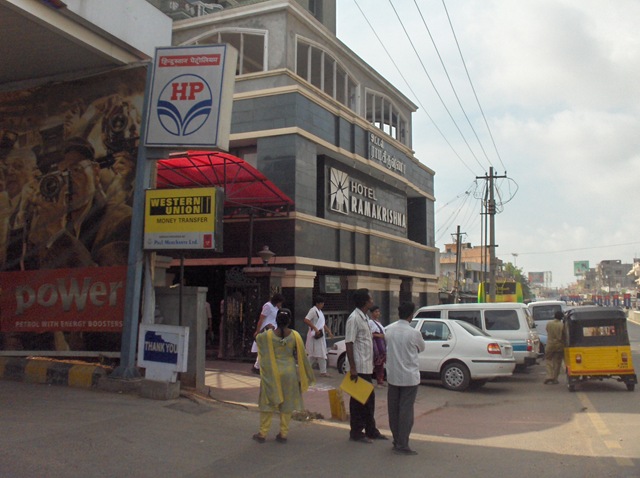
Now we come to the main street. Hotel Ramakrishna rises ahead.

HPIM2465

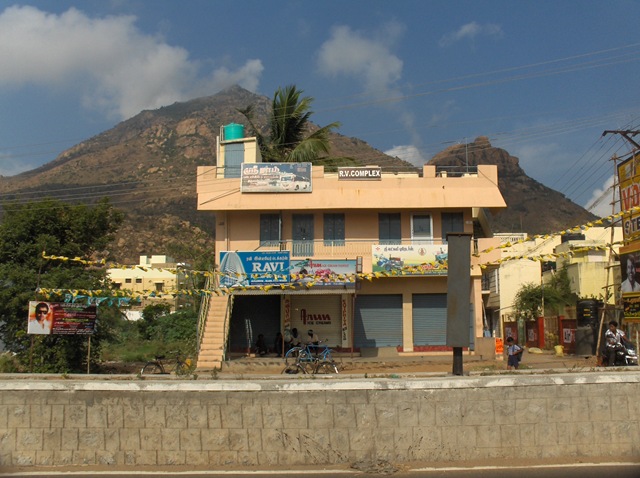
Arunachala is obscured by the main buildings and phone/electricity lines.

HPIM2467

Almost to the hotel. We can’t wait to eat breakfast!

HPIM2471

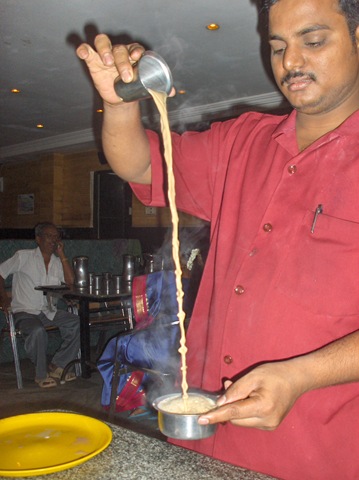
First is coffee. We have coffee before the meal. Indians have it after. The staff here know us, and  know to bring the coffee to begin with.

It is served in a metal cup and small pan. The waiter, Raja, pours it from one to the other to cool the coffee. If I tried it from this height, the coffee would be all over the table.

HPIM7318

Then the dosas and vadas are served. Since the staff knows that we LOVE the chutneys, they bring us big bowls of it.

HPIM2473

This concludes the inner path portion of Arunachala Pradakshina.

From here you can complete it by walking through town on the main street, or on back streets closer to the mountain. We usually have our rickshaw driver, Rajan, pick up us after breakfast and ride through town.

The Inner Path Pradakshina is something that gives many people a deep sense of the holy maintain, and its peace and tranquility. The walk can be made year round. In the summer months start as early as you can (6 am?) and take lots of water. Take your time. Be willing to explore. Near the path are many places of wonder, beauty and  peace. Savor it all, if you can.

Related Posts

Inner Path – Southwest Side
I
nner Path – South Side from Ramanasramam
Inner Path – Around Parvati Hill
Inner Path – The Elephant
Inner Path – Through the Trees

Harsha's avatar

What is God’s Name? By Dr. Harsh K. Luthar

Ramana Maharshi: “I am” is the name of God. Of all the definitions of God, none is indeed so well put as the Biblical statement “I am that I am” in Exodus (Chapter 3).

Words are used in various spiritual traditions to describe God or give God a name. Many people are convinced that their religion, their scriptures, and their way of worshipping God is the best way. Sometimes people argue and and fight over God as well. 

Our conception of God is to large extent a function of where we are born and in what religion. Our mental conditioning is often so strong that we are not able to see the diversity of perspectives in various spiritual traditions. Only the mystics in different religions, who have through self-reflections and meditation, gone beyond their mental conditioning offer a unified vision of God. 

Continue reading