Harsha's avatar

Garlands of Devotion-Introduction

gita-111

patram puspam phalam toyam
yo me bhaktya prayacchati
tad aham bhakty-upahrtam
asnami prayatatmanah

If one offers Me with love and devotion a leaf
a flower, fruit or water, I will accept it. BG 9.26

Within a few months of starting to attend puja, I found myself drawn to the music and the malas! It was not long before I began to pick up the needle to begin stitching and the notes to begin singing. There are many ways to express devotion to the limitless Self and I tend to be simple in my approach to it. I would much rather make a mala than analyze the nature of reality!!! And I would much rather sing the mantra than write a manuscript interpreting it. To me, everything is Brahman and I have little interest in deciding what level of Brahman it is…I embrace it all as such and leave it to the Grace of the Lord to direct my footsteps.

The videos on making malas or garlands in the links posted at the end of this article are a deviation from my usual music videos.  Still, they are grounded in devotion and my effort to share what I have learned over the last six years making malas for Rudrabishekam and other holidays.  I have also taken to making them at home and that is what led me to share.  I have been asked by others at Temple how to make garlands, and there never is enough time during puja to share this.  Plus, one does not talk while Panditji is chanting the puja.  So, I decided that I could make a home video of making malas at home.

When you make a mala, you need to take the time to assess the flowers you have to work with. And you need to asses the amount of time you have to make the mala. Sometimes I have help…sometimes there are not enough flowers to allow too many for the malas, as you need to reserve some of the flowers for the puja.  Summer is good, when gardens are flowing, including the ones on the Temple grounds which are slowly becoming more and more lush with perennials.  But the real challenge is when there are limited flowers to work with. 

One afternoon on Mahashivarati, when there were plenty of flowers, I spent well over an hour making two malas, using both intact flowers and petals to provide interest, contrast, and to connect the flowers and hide the green buds that day.    You can see it on Lord Shiva below and on the linga beneath Him. 

11

 Copy of 246069009503_0_ALB 

 Most of the time, I have to make three in less than an hour. So, I have to quickly assess the flowers coming in and include them as I can.  Sometimes, I make a mala with multicolored flowers, staggered throughout the malas in a cascade of colors.  Sometimes, I will choose only a few colors (sometimes I only have a few colors) and use them as my pattern. 

Variation in size of the flowers also provides for interest and beauty, as in the mala below.  It has spring flowers from my garden in it…violets, vinca, bluebells, a daffodil, and the really small purple sections which almost look like beads came from grape hyacinths.  I do not even know what all of the flowers are as the orange ones come from some bush which was already on the property and the yellow ones, I just don’t remember what they are called. 

Spring 002

 Then the azaleas came into bloom, and the one below shows what you can do with that.
These flowers are stitched from the side, except for the pendant, which are stitched from
the bottom through the top of the flowers to form a tassel.     mala 011

 The photographs of Lord Shiva were taken by Bharatji, our unofficial temple photographer.  You can see that I included the azaleas as well as roses someone brought in that evening.  the azaleas are stitched sideways and the roses are stitched upright.  This provides a beauty in variation of the direction of the flowers. I only made the mala shown on Lord Shiva’s chest.  Someone else helped with malas that night and made the one crowning His head. mala 024

 To view the videos on how to make the garland (mala)  and the pendant…

Garlands of Devotion-Part 1                                                                        


Garlands of Devotion-Part 2


To view photographs with brief commentary excerpted from the videos,
on making the mala and pendant…

 https://luthar.com/garlands-of-devotion-part-1

https://luthar.com/garlands-of-devotion-part-2


Harsha's avatar

Love Embracing the Beloved: By Swami Sadasivananda

By Swami Sadasivananda
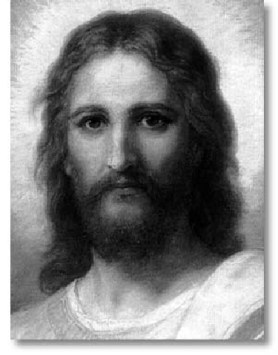
“In Thy Presence is fullness of joy,
The simplicity that is Christ.”
~
Brother Lawrence

This article contains the Spiritual Maxims of one Nicholas Herman of Lorraine, a lowly born and unlearned man; who, after having been a soldier and a footman, was admitted a lay brother among the Carmelites Deschausses (bare-footed) at Paris in 1666, where he served in the kitchen of the community. He was afterwards known by the name of Brother Lawrence. He died in February 1691, at the advanced age of eighty, after a life the true saintliness of which can be well realized from his words of guidance. ( Almost the entirety of this article is paraphrased or directly quoted from The Practice of the Presence of God, The Complete Book, by Brother Lawrence. )

“Herein you will not find set out a devotion which is merely speculative, or which can only be practiced in a cloister. No, there is an obligation laid on every man to worship God and to love Him, and we cannot carry out this solemn duty as we ought, unless our heart is knit in love to God, and our communion is so close as to constrain us to run to Him at every moment, just like little children, who cannot stand upright without their mother’s arms of love.”

Brother Lawrence, an earnest seeker of God, had a transforming experience at the age of 18. He was a changed person since then and till the last day of his life he was in commune with God to whom he surrendered himself entirely. His experience, and thus his guidance has a special significance as the theme is universal, and so is the endeavor to practice the Presence of God. The practice or sadhana explained herein is referred to thus in the Yoga Sutras of Patanjali; (I-23): “Isvarapranidhanadva”.

Brother Lawrence thus sought “Goodness”, in the highest sense of the word proclaimed by his Lord Jesus: “Only God is Good.” It is necessary to be good, but the good must then progress on to become godlike, to be a deva, a “shining one” filled with the Divine Light. Fixing their mind on God they make themselves living offerings. That is why the Manu Smriti (Laws of Manu) says that the greatest sacrifice is the offering of ourselves (purushamedha). And Patanjali says: “Samadhi is attained by offering our lives to God  (Isvarapranidhana).”

God is the essence and the apex of Consciousness, so Patanjali further says: “In Him is the highest limit of omniscience.” (Yoga Sutras 1:25) In seeking constant abidance with this highest limit of omniscience, Brother Lawrence eventually abandoned all previously set devotions except those prescribed to his station within the Carmelite Society. Often he said: “All that he had heard others say, all that he had found in books, all that he had himself written, seemed savorless, dull and heavy, when compared with what faith had unfolded to him of the unspeakable riches of God and of Jesus Christ. He alone can reveal Himself to us; we toil and exercise our mind in reason and in science, forgetting that therein we can see only a copy, whilst we neglect to gaze on the Incomparable Original. In the depths of our soul, God reveals Himself, could we but realize it, yet we will not look there for Him. We leave Him to spend our time in fooleries, and affect disdain at commune with Him, Who is ever present, Who is our King.”

Not only did Brother Lawrence perceive God as present in his soul by faith, but also in all events of life, whensoever they befell, instantly he could arise and seek the Presence of God. Yet he confessed that it was hard at first, that many a time he had been unmindful of this practice, but that, after humble prayer and confession to God of his failure, he had betaken himself to it again without trouble.

Of his life within God, his failures and attainments, he left a legacy of direction for those who would likewise seek “The Way, the Truth, and the Light (Life) in the Presence of God.” Thus his declaration most central to this undertaking was: “That the Presence of God can be reached rather by the heart and by love than by understanding. In the way of God thoughts count for little, love is everything.” mira30

“We search for stated ways and methods of learning how to love God, and to come to that love we disquiet our minds by I know not how many devices; we give ourselves a world of trouble and pursue a multitude of practices to attain to a sense of the Presence of God. And yet it is so simple. How very much shorter it is and easier to do our common business purely for the love of God, to set His consecrating mark on all we lay our hands to, and thereby to foster the sense of His abiding Presence by communion of our heart with His! There is no need either of art or science; just as we are, we can go to Him, simply and with a single heart.”

He no longer perplexed himself with thoughts of virtue, or of his salvation. He entirely forgot self; he never any longer thought of heaven or hell or his past sins or his deeds of striving for goodness and compassion. In the Presence of God he entered upon a perfect peace; after which he commended himself to God, as he used to say: “For life and for death, for time and for eternity – For we are made for God, and for Him alone.”

His one method of going to God and abiding in His Presence was to do all for the love of Him.

+++++++

When we enter upon spiritual life, we ought to consider thoroughly what we are, probing to the very depth. Though creatures made for God, we are prone to all manner of maladies and subject to countless infirmities, which distress us and impair the soul’s health, rendering us wavering and unstable in our humors and dispositions. We must believe steadfastly, never once doubting, that all such is from God and for our good; that it is God’s will to visit us therein.

“Good when He gives, supremely good;
Nor less when He denies.
Afflictions, from His sovereign hand,
Are blessings in disguise.”

Sri Ramana Maharshi, also declared this truth in conversation with Paramahansa Yogananda, evidenced in Talks #107:

Swami Yogananda: “Why does God permit suffering in the world? Should He not with His omnipotence do away with it at one stroke and ordain the universal realisation of God?”

Maharshi: “Suffering is the way for Realization of God.”

Swami Yogananda: “Should He not ordain differently?”

Maharshi: “It is the way.”

Brother Lawrence entreats us that we: “Must do all things thoughtfully and soberly, without impetuosity or precipitancy, with denotes a mind undisciplined. We must go about our labors quietly, calmly, and lovingly, entreating Him to prosper the works of our hands; thus keeping heart and mind fixed on God.

Sri Ramana Maharshi echoed this same truth when saying in Talks #91:

“The nature of the mind to wander. One must bring one’s thoughts to bear on God. By long practice the mind is controlled and made steady.”

“That useless thoughts spoil all: that the mischief began there; but that we ought to be diligent to reject them as soon as we perceived their impertinence to the matter at hand, or to our salvation; and return to our communion with God. When we are busied, as well as while meditating on spiritual things, even in our time of set devotion, whilst our voice is rising in prayer, we ought to cease for one brief moment, as often as we can, to worship God in the depths of our being, to taste Him though it be in passing, to touch Him though as it were by stealth. Since you cannot but know that God is with you in all you undertake, that He is at the very depth and center of your soul, why should you not thus pause an instant from time to time in your outward business, and even in the act of prayer, to worship Him with your soul, to praise Him, to entreat His aid, to offer Him the service of your heart, and give Him thanks for all His loving-kindness and tender-mercies?”

Brother Lawrence emphasizes that necessity is laid upon us to examine ourselves with diligence and to find out what are the virtues, which we chiefly lack, and which are the hardest for us to acquire. We should seek to learn the failures in virtue that most easily beset us, and the times and occasions, and through which associations we do most often fall. For the world, and association within it, is fraught with danger. So much so that reliance upon God’s grace is paramount.

“A soul is more dependant on grace, the higher the perfection to which it aspires; and the grace of God is the more needful for each moment, as without it the soul can do nothing. The world, the flesh and the association with evil join forces and assault the soul so straitly and so untiringly that, without humble reliance on the ever-present aid of God, they drag the soul down in spite of all resistance. Thus to rely seems hard to nature, but grace makes it become easy, and brings with it joy.”

In this same regard, Sanatana Dharma entreats us to “Seek satsanga…while abandoning dussanga.” (Narada Bhakti Sutras II: 42,43)

A proper understanding of the Sanskrit words satsanga (good association) and dussanga (evil association) is essential. Especially when applying them not only in the context of worldly associations, but as is more precisely scripturally intended, to associations within the mind. Here the spiritual maxim: “As above, so below… As without, so within” is applicable.

Copy (2) of radha-and-gopis-at-night

The gopis in satsangha with Radha, yearning for the Lord

While good association with others enables one to develop purity (sattwa) and is the gateway to Liberation, evil association intensifies distraction and inertia (rajas and tamas), and is the gateway to hellish conditions in life. But even more harmful to the soul is the effect of evil association. There is nothing so disastrous in an aspirant’s life as when evil association nourishes the mental impurities of anger, hate, greed, pride, egoism, selfishness, hypocrisy and passion. Once these mental impurities become strong through external nourishment, they become formidable enemies of the soul in and of themselves. They then no longer need to rely on external sustenance, for through mainly memory, imagination and fantasy they, as Brother Lawrence warns us, “assault the soul untiringly.”

+ + + + + + +

The Spiritual Maxims of Brother Lawrence systematically guides us through the means for attaining unto the Presence of God.

1. The first is a great purity of life; in guarding ourselves with care lest we should do or say or think on anything, which might be displeasing to God.

2. Second is a great faithfulness in the practice of His Presence, and in keeping the soul’s gaze fixed on God in faith, calmly, humbly, lovingly, without allowing an entrance to anxious cares and disquietude.

3. Make it your study, before taking up any task to look to God, be it only for a moment, as also when you are engaged thereon, and lastly when you have performed the same. And forasmuch as without time and patience this practice cannot be attained, be not disheartened at your many falls; truly this habit can only be formed with difficulty, yet when it is so formed, how great will be your joy therein.
4. Let us mark well, however, that this intercourse with God is held in the depth of our being; there it is that the soul speaks to God, heart to heart, and over the soul thus holding converse there steals a great and profound peace. All that passes without concerns the soul no more than a fire of straw, which the more it flares, the sooner burns itself out; and rarely indeed do the cares of the world ever intrude to trouble the peace that is within.

5. It is here therefore, in the heart, that we ought to strive to make a habit of this gaze on God; but that which is needful to bring the heart to this obedience we must do, as has been said, quite simply, without strain or study.

6. When the mind, for lack of discipline when first engaged in this practice, has contracted bad habits of wandering and dissipation, such habits are difficult to overcome, and commonly draw us, even against our will, to things of earth. One remedy for this is to humbly offer prayer to God. A multiplicity of words in prayer is not advised; discursive forms of prayer are often an occasion for wandering.

7. One way to recall easily the mind in time of prayer, and to preserve it more in rest, is not to let it wander too far at other times.

8. This practice of the Presence of God is somewhat hard at the outset, yet, pursued faithfully, it works imperceptibly within the soul most marvelous effects; it draws down God’s grace abundantly, and leads the soul insensibly to the ever-present vision of God, loving and beloved, which is the most spiritual and most real, the most free and most life-giving manner of prayer.

9. Remember that to attain this state, we must control the senses, inasmuch as no soul, which takes delight in earthly things above those in their Creator, can find full joy in the Presence of God; to be with Him we must leave behind the creature.

Thus, Brother Lawrence compassionately entreats us to ‘seek and find’, to ‘knock and the door will be opened unto us’, for his final guidance is:
“All things are possible to him who believes, they are less difficult to him who hopes, they are easier to him who loves, and still more easy to him who practices and perseveres in these three virtues…

Believe me, count as lost each day you have not used in loving God.”
Just prior to the final moment when this lover of the Beloved passed away in the embrace of His Lord, a brother asked him if he was at ease and what his mind was busied with? He said:

“I am doing what I shall do, through all eternity – blessing God, praising God, adoring God, giving him the love of my whole heart. It is our one business, my brethren, to worship Him and love Him, without thought of anything else.”

The brethren then begged him to entreat of God for them to possess the true spirit of prayer. Brother Lawrence, without pain or struggle, without losing in the slightest the use of any of his faculties, in perfect peace and calm replied:

“There was need of labor on his part also
to make himself worthy of such a gift.”

These were his last words.  untitle

You can access Swami Sadasivananda’s website at   http://www.ramanateaching.org/

Harsha's avatar

Kundalini Shakti and Spirituality: By Dr. Harsh K. Luthar

The awakening of Kundalini Shakti is one aspect of spiritual life on many of the yogic paths. It allows for the exploration of  manifesting consciousness at different levels of existence.

What yogis refer to as Kundalini Shakti in the East has different names in various religious traditions. I believe that in Christianity, this power is referred to as the Holy Spirit.

All these practices such as centering prayer, meditation, concentration, devotion, praying to the Lord with heart felt intensity over a period of time can evoke a powerful response from the fundamental primordial divine intelligence that sits at the base of all life and in our heart.

In Yoga (see Patanjali’s Yoga Sutras), the first principle is Ahimsa or nonviolence. That should be the proper foundation on which to build one’s life and to experience the manifestations of the divine intelligence which we refer to as the Kundalini Shakti.

Normal awakening of Kundalini Shakti allows one to balance the spiritual and the worldly aspects of life. Through Kundalini Shakti, one can come to understand the role of conditioned consciousness  in desiring, creating, and consuming various types of experiences, both of the spirit and of the world.

The spiritual life may integrate visions of angels, saints, the divine feminine as the Goddess, and other forms of  super conscious experiences.

However, the ultimate aim of a life that is lived well is to attain the “peace that passeth all understanding”. That perfect peace comes from knowing our original and pure nature and abiding effortlessly in that.

On the path of Kundalini Yoga, there are many gimmicks and also charlatans who pretend to be Kundalini masters and so forth. If your spiritual search is sincere and free from the greed to obtain various psychic and mental experiences, you can easily avoid such things.

Some people are attracted to telepathy, mind reading, fortune telling, astrology, and such phenomena. There is nothing wrong with such desires but where can these really lead us in the long run?

By remaining pure to the ideal of knowing deeply the truth of your being and existence, gradually you will lose your attraction to small and superficial things which dance in the mind and cause ripples.

Whatever religion or spiritual path you follow with Ahimsa (nonviolence) as the foundation of your life and gentle and kind awareness as your support, it will bring you to the destination which is here and now. The kingdom of heaven  exists in this very moment.

Harsha's avatar

Mother of the World

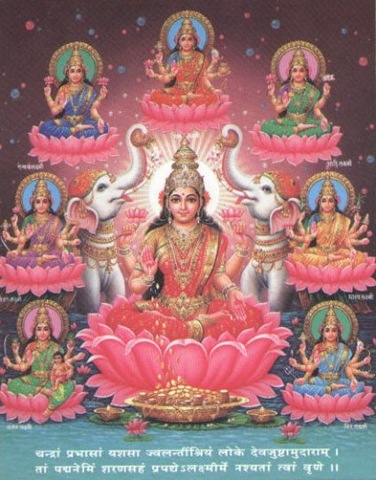
Maha Lakshmi

raga: Shivaranjani
thalam:  Adi 

ashtalakshmi 

Mahalakshmi jaganmatha
madhusudhana priya manamohini (jaganmohini)
Adilakshmi dhana dhaanya lakshmi
sowbhagya lakshmi santaana lakshmi
veera lakshmi dhairya lakshmi
shree varalakshmi paahimaam
sancala sumangala vasundara vasuprada
padmini sunandini niranjani bhargavi
amala kamala vimale harivallabhe shubhe
mandhahaasa chandravadana
shreedharaam namaamyaham 

HD Videos00156 07

Click here to listen to video of this bhajan


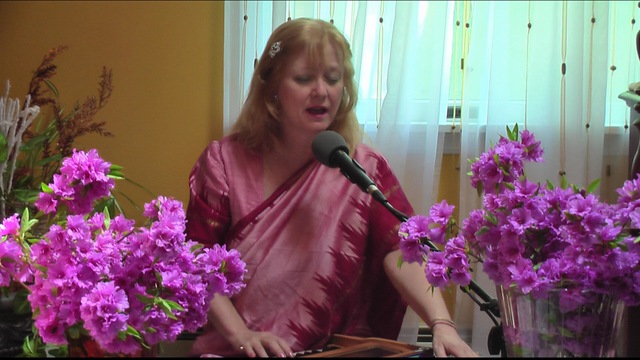
On this Mother’s Day, let us honor the Mother of the World.   The very first bhajan I learned in carnatic singing class was Maha Lakshmi. I can still remember being intrigued by it and the unusual sound of the raga, and the fact that the bhajan did not start on the Sa of the raga but on the Da, up the raga or scale, and a challenge to find at first.  I have done my best below to provide some translation of the lyrics and the source of the bhajan, which honors the Goddess Lakshmi in Her manifestations as Ashta Lakshmi.  I have also provided some excerpts from a lovely article written by Swami Adyhatananda below. 

From Wikipedia, I found the following explanations for some of the names given to Her in various manifestations included in the bhajan…

http://en.wikipedia.org/wiki/Ashta_Lakshmi

Maha Lakshmi , “The Great Lakshmi”) jaganmatha, mother of the world
Priya or loved one  of Madhusudhana Krishna, one who killed demon madhu 
mohini to bewitch; beautiful one; a female ioncarnation of vishnu which became a consort of Lord Shiva

Adi Lakshmi, “Premeval Lakshmi”)
Dhaana (wealth) Dhanya Lakshmi, “Money Lakshmi”): for money and gold or bounty in spirituality
Sowbhagya:  Giver of good Fortune”) : Giver of prosperity in general
Santāana Lakshmi, “Progeny Lakshmi”): Bestower of offspring
Veera  “Valourous Lakshmi”)
Dhairya Lakshmi,  “Courage Lakshmi”): Bestower of valour in battles and courage and strength for overcoming difficulties in life.
Vara Lakshmi,  “Boon Lakshmi”): “The lady who bestows Beautiful Boons

sumangala auspicious
vasundara profound relief 
vasuprada bestower of wealth

padmini full of lotusses
sunandini happy
kamala lakshmi lotus 

Excerpts from Sri Asta Lakshmi-God as the Mother of Prosperity by Swami Adhyatananda:

“Almighty Lord Sri Narayana or Mahavishnu is known for looking after the welfare and well being of the phenomenal world or the creation. The power or energy of Sri Narayana is Sri Lakshmi. Mother Lakshmi is always identified with the Lord, and hence they are known as Sri Lakshmi Narayana. Mother Lakshmi is a mother of prosperity, peace and illumination. Without Her grace one can’t have inner peace or perennial joy…

…Thus all these eightfold Sri Lakshmi is ultimately one single power only. That is Adishakti.
The perennial and unchangeable, ever lasting, eternal truth or the absolute is this Supreme blessedness, the mother Adishakti. She is the origin. She is the light. She is the power, the wisdom and the strength. She is the Supreme Joy, peace, bliss and illumination.
May Mother Adishakti’s and Sri Ashta Lakshmi’s grace be ever upon we all, to receive Her divine grace for being befitting servant of the mankind in Her cosmic kingdom. Om Shanti

Adi Lakshmi: Mother Lakshmi resides with Lord Narayana in the Vaikuntha, the abode of Lord Narayana. She is known as Ramaa, means bringing happiness to the mankind. She is also known as Indira (who holds lotus or purity in the hands or heart.) Divine Mother’s this form is normally seen serving Sri Narayana. Lord Narayana is omnipresent. Adi Lakshmi or Ramaa Lakshmi serves Sri Narayana is symbolic of her serving the whole creation. Though Sri Narayana is attended by innumerable devotees, still she personally loves to serve the Lord. Actually mother Adi Lakshmi and Narayana are not two different entities but one only. Many a place we see her form sitting in the lap of Sri Narayana. “

1149lakshmivishnusitting

 You can find this article and  more information at the following link:

www.divyajivan.org/ashtalakshmi/ashtalakshmi_adhyatma.htm

Harsha's avatar

On Prayer-From the Words of Mahatma Gandhi by Swami Sadasivananda

From a post by Swami Sadasivananda on http://blog.spiritualpracticeofbhagavan.org/

800px-Marche_sel

“If we had attained the full vision of Truth,
we would no longer be mere seekers,
but have become one with God, for truth is God…
Prayer has saved my life.
Without it I should have been a lunatic long ago.”

“The meaning of prayer is that I want to invoke the Divinity in me. You may describe it as a continual longing to lose myself in the Divinity which compels us all. Prayer really is a complete meditation and melting into the higher Self, though one may occasionally lapse into it, as a child would call out to its mother “Ah, Ma!” In such an instance, the greater the distance between the child and its Mother, the greater the longing within the heart of the child. Thus, in the mind of the child, the Mother is present in thought. And thought, you know, has a greater velocity than light. Therefore though the distance between Him and me is told to be so incalculably far, in truth He is so very near.

There is an eternal struggle raging in man’s breast between the powers of darkness and light, and he who has the sheet anchor of prayer to lay upon will not be overcome by the powers of darkness. The man of prayer will be at peace with himself, and with the whole world. The man who moves about the world without a prayerful heart will be miserable, and also will make the world miserable. It is a universal experience that every calamity brings the sensible man down on his knees. Millions of human beings call out for God through prayer, thus the calamities of the world are seen as a means for self-improvement.

Prayers are the only way of bringing about orderliness, peace and repose in our daily practice. He who hungers for the awakening of the Divine in him must fall back on prayer.  But it is not the recitation of a set formula. It is better in prayer to have a heart without words, than words without a heart. It must be in clear response for the Spirit that hungers for us. Even as a hungry man will relish a hearty meal, a hungry soul will relish a heartfelt prayer.

I will give you a bit from my own experience, and from that of my companions, that he who has experienced the magic of prayer may go days together without food, but not a single moment without prayer. For without prayer, there is no peace.  It is so needful for me. When it springs from the heart. prayer needs no speech. It is an unfailing means of cleansing the heart from passion. But it must be combined with an atmosphere of humility. Our prayer is our heart’s step that reminds us that we are helpless without God’s support. The greatest of human endeavor is of no effect if it has not God’s blessing behind it! Real prayer is an absolute shield and protection against evil. But God does not always assent by our very first effort through prayer. We have to strive against ourselves. We have to believe in spite of ourselves. We have, therefore, to cultivate inimitable patience, if we are to realize the efficacy of the prayer. There is the darkness, disappointments and even worse, but we must have courage in us to battle against all these and not succumb to cowardess. There is no such thing as retreat for the man of prayer.

It may take time for the recitation to come from the heart, even as the seed that is sown has to be nurtured and bears fruit only in due season. If the desire to have God within us is there, progress however slow, is bound to be. Man cannot be transformed from bad to good overnight. God does not exercise panic. He too is within His own law. His law is written on the tablets of the heart. There can be no fixed role laid down as to when a devotional act should take place. It depends on individual temperaments. There are precious moments in one’s daily life, these are exercises intended to soften and humble and enable us to realize that nothing happens without His will, and that we are but clay in the hands of the Potter. These are moments that one can use when one’s need confesses ones weakness, asks for forgiveness, and strength to be and to do better. One minute may be enough for some; 24 hours would be too little for others.  For those who are filled with the presence of God in them, to labor is to pray. Their life is one continuous prayer, or act of worship. For those who act only to sin, to indulge themselves, and to live for self, no time is too much.  If they are patient and have the will to be pure, they would pray until they feel the definite purifying presence of God within them.

For us ordinary mortals, there must be a middle path between these two extremes. We are not as exalted to be able to say that all of our acts are a dedication, nor perhaps are we so far gone as to live purely for self. Hence all religions have set apart time for general devotion. I believe that prayer is the very soul and essence of religion and therefore prayer must be the very core of the life of man.”

A note from Swamiji on the source of the quotes above:  ” This was from a transcription I was doing of a speech,
in which the speaker was reading from an unknown compilation of all 100 of Gandhiji’s volumes!
But the words of this saint, not just Mahatma, are unmistakably Divinely inspired.

Photo from http://en.wikipedia.org/wiki/File:Marche_sel.jpg

Harsha's avatar

Rekha Kalinda

Gandhi had his marriage arranged when he was 13.  His wife kasturba was then 12 years old.

My grandmother got married when she was 13 to my grandfather who was then 23.  Like most Indian marriages of those days, it was an arranged marriage. A 100 years ago, marriage of a girl at a young age before puberty was considered normal in India.

Today the legal age for marriage in India is 18 for girls and 21 for boys. However, according to researchers, the practice of early marriage still continues in some segments of Indian society. Studies have shown that almost a quarter of the girls are married before age 16. Almost half of all Indian women are married before turning the legal minimum age of 18.

The following is the story of a brave 12 year old girl, Rekha Kalinda, who said no to her parents when they tried to arrange her marriage. She told them that she wanted to stay in school and study.

“I was very angry,” says Rekha. “I told my father very clearly that this is my age of studying in school, and I didn’t want to marry.

Her protest reverberated through India and again brought this old custom in the spotlight.

Rekha says she wants to be a teacher when she grows up.

Is she open to marriage eventually? “Anything after 18,” she says, “but not before 18 at all.” You can read the whole story at the following link.

http://www.csmonitor.com/2009/0424/p06s07-wosc.html

Rekha Kalinda

Rekha Kalinda

Harsha's avatar

God Contact! by Swami Sadasivananda

great_commission

There must be implicit faith and trust in God in all that He guides us through. When we are sensitive and perceptive, through meditation, experiences that come to us seemingly from the realm of the Higher Mind – from the sixth ‘sense’ that we use to hear the whispers from Eternity – are in fact direct contact with God!

    In truth, when we experience that heartfelt Presence, it is not at all a “feeling” but a direct advent, a gift, from God to us. God teaches, God guides, God draws us unto Himself 24/7. This is His business, and His shop never closes. During our early morning meditations especially, everything is on sale at huge discounts. In fact the rules of the sale are: “What you can carry away in your cart (heart), is free for the taking!

    So what actually happens when we are taken up to heights of bliss that smother us within the embrace indescribable Love and Compassion? Just this, a revelation unfolds from within when the mind is rendered still and pure through the transforming power of meditation, especially on God’s Name. God manifests from the core of our being! The joy and the completeness felt is a gift that comes to us through the use of the Name of God, which in fact, in reality, caused inner vision. The Name invoked the Named! God was not wowing us, God was teaching us the way home.

     Let’s analyze what actually happens. We are pulled away from our repetitions of the Name of God, or purely Om, and given a glimpse and a taste of what lies beyond the sensual mind. We temporarily lose our lower form of individuality to worship and adore God! We possess, even for a moment, that which is our birthright. And God knows, we have struggled nearly a whole lifetime to see and taste That, which though ours by right, is daily assaulted by sorrow, doubt and unbelief.

    Where is the teaching in all this? Just this! We should begin experiencing this very thing outside of meditation – to invoke and dwell in loving union (yoga) with the Lord through the practice of the Presence of God. His Presence is the purest manifestation of love. Love itself is the actual form of God!

    “When we are busied, as well as while meditating on spiritual things, even in our time of set devotion, whilst our voice is rising in prayer, we ought to cease for one brief moment, as often as we can, to worship God in the depths of our being, to taste Him though it be in passing, to touch Him though as it were by stealth. Since you cannot but know that God is with you in all you undertake, that He is at the very depth and center of your soul, why should you not thus pause an instant from time to time in your outward business, and even in the act of prayer, to worship Him with your soul, to praise Him, to entreat His aid, to offer Him the service of your heart, and give Him thanks for all His loving-kindness and tender-mercies?

    “What offering is there more acceptable to God than thus throughout the day to quit the things of outward sense, and to withdraw to worship Him within the secret places of the soul? Besides, by doing so we destroy the love of self, which can subsist only among the things of sense, and of which these times of quiet retirement with God rids us well-nigh unconsciously.

    “In very truth we can render to God no greater or more single proofs of out trust and faithfulness, than by thus turning from things created to find our joy, though for a single moment, in the Creator. Yet, think not that I counsel you to disregard completely and forever the outward things that are around us. That is impossible. Prudence, the mother of all virtues, must be your guide. Yet, I am confident, it is a common error among religious persons, to neglect this practice of ceasing for a time that, which they are engaged upon, to worship and love God in the depth of their soul, and to enjoy the peace of brief communion with Him.” *

PTA39


“Just as the ankola fruit falling from the tree rejoins it, or a piece of iron is drawn to magnet, so also thoughts, after rising up, lose themselves in their original source. This is bhakti (Love of God). The original source of thoughts is the feet of the Lord, Isvara. Love of His Feet forms bhakti.”  (1)

“Know that the wondrous jnana vichara is only for those who have attained purity of mind by softening and melting within. Without this softening and melting away of the mind, brought about by thinking of the feet of the Lord, the attachment to the “I” that adheres to the body will not cease to be.”  (2)

“One must bring one’s thoughts to bear on God. By long practice the mind is controlled and made steady.”  (3)

“Love itself is the actual form of God.”  (4)


“In Thy Presence is fullness of Joy.

Good when he gives, supremely good;
Nor less when He denies.
Afflictions, from His sovereign hand,
Are blessings in disguise.
Believe me, count as lost each day
you have not used in loving God.” *


                                                                    –    Brother Lawrence

* All sections in quotes within the body of the text are excerpts from a rare publication of the “Spiritual Maxims of Brother Lawrence” on the Practice of the Presence of God.
_________________________   
(1) Talks with Sri Ramana Maharshi, recorded by Sri Munagala Venkataramiah, Sri Ramanashramam 2006, Talk 428.
(2) Padamalai, Teachings of Sri Ramana Maharshi Recorded by Muruganar, Avadhuta Foundation 2004, p. 186. (Reference is to Sri Ramana Jnana Bodham, vol. 7, verse 340).
(3) Talks with Sri Ramana Maharshi, recorded by Sri Munagala Venkataramiah, Sri Ramanashramam 2006, Talk 91.
(4) Letters from Sri  Ramanashramam, Suri Nagamma, Sri Ramanashramam 2006, Letter #179.

Posted by Swami Sadasivananda at http://blog.spiritualpracticeofbhagavan.org/

Harsha's avatar

The Highest Operation of Grace: Secret of God’s Smile

Posted by Swami Sadasivananda at http://blog.spiritualpracticeofbhagavan.org

Sri Muruganar, a close disciple of Sri Ramana Maharshi, read from the scriptures before Bhagavan:

“There is a secret language of silence and smiles understood by mutual lovers, but not noticed by onlookers. The operation of grace is secret and not spectacular.”

There is so much that can, and should, be said about the smile of a human. Indeed the exaltation and upliftment of a smile is essential even for saints. Saint Francis de Sales once said: “A saint that is sad, is a sad saint!” Yes, smiling opens the heart and lets your light shine into the world. Scientist say that it makes you healthy. It takes away stress, increases the endorphin flow (the inner happy drugs in the blood) and it is contagious. When people smile others are attracted – for unconsciously they think – “gosh that person is happy” – maybe I can become happy too by association with such happy folk. We learn from those who have unlocked the secret – and have found some "stillness, peace, happiness, and positive energy" and we know that this is God shining through them – because it’s all down to a "heart connection with the Divine.” A friend once conveyed to me that at a lecture at Alexander Palace in London some15 years the Dalai Lama was the keynote speaker.

After the talk he was walking along the park with all his bodyguards to get into his car and she just happened to be there by the car and he turned and gave her this huge smile – at once she received this amazing flow of loving kindness from him – she still remembers that his smile was absolutely full of grace, genuine and a huge gift. It was like he was carrying all the smiles of his linage.

Mother Teresa said: "Every time you smile at someone, it is an action of love, a gift to that person, a beautiful thing." (Mother Teresa’s smile upon mankind was seen through the compassionate labor of her hands!)

Everyone understands, in a totally intuitive way, what a smile means. It transcends language and cultural barriers. It is the clearest, simplest manifestation of the joy that lies within us. It is the quickest and most direct way to connect with another human being by touching that place of joy within them. A smile is shorthand for "I recognize and acknowledge the God within you.”
 

These truths are undeniable, and beyond the reach of debate. With a clear understanding of the ability of every human to communicate “stillness, peace, happiness, positive energy and uplifting compassion", let us attempt to consider what actually happens to humans when God, or someone whose complete awareness is saturated with the Presence of God, smiles upon them!


There is a beautiful saying from the scriptures of India:

Devi priya prahasant.
Devi prahasant priya.

The love of the Devi manifests as a smile,
therefore She loves to smile!


It is said in the Holy Bible: “God is glorious in His saints”. God is even more glorious in His smile!

The most learned scholars who have sought to plumb the depths of the Bhagavad Gita universally agree that the actual teaching from Lord Krishna begins in the eleventh verse of Chapter Two:  The Blessed Lord spoke:

“You have mourned those that should not be mourned,
and you speak as if with wisdom;
The wise do not mourn for the dead or for the living.

Many of the very wisest of these scholars, those who strive to comprehend the Gita in its highest mystical sense, profoundly declare that the Lord’s teaching to mankind actually begins with the tenth verse of Chapter Two. They boldly go further and declare that the Gita’s entire message is actually conveyed by the very first action Sri Krishna makes before Arjuna – and us!

As if assuming the manifestation of Lord Dakshinamurti, Sri Krishna being named as the “Lord of the Senses” (Hrishikesha), responds to the despondency of Arjuna in silence. From the uncompromisable position between the two opposing armies drawn for battle, the Lord smiles!

“The advanced devotee – who has found himself in an uncompromisable position between the sense soldiers of the ego and the discriminative warriors of the soul, which is lamenting the necessity for renouncing sense habits, and who has therefore become indecisively inactive,    “The advanced devotee – who has found himself in an uncompromisable position between the sense soldiers of the ego and the discriminative warriors of the soul, which is lamenting the necessity for renouncing sense habits, and who has therefore become indecisively inactive, surrendering himself passively to the infinite – beholds the Spirit, come to dispel the gloom of doubt with the gentle light of His smile and His voice of wisdom heard through intuition.
“Those devotees who, during the invasion of doubt, completely give themselves up to the Spirit in inner silence and submission are able to perceive the indescribable, all-purifying Light of God playing across the firmament of their inner perception.”

“This indescribable “Smile of the Spirit” is fully perceived only by those devotees whose spiritual lives are directed by ‘right action’. For as the Buddha demonstrated, through ‘right action’ alone does one cultivate ‘right perception’. There is little mystery, and even less theory (for the Buddha was not a theorist) behind this proclamation. It is simply a definitive declaration that one must lead a clean spiritual life; proper eating, right moral behavior and deep meditation!”

Arjuna was the epitome of a devotee on the verge of the highest spiritual revelation and attainment, for he had chosen the Lord Himself to direct the horses of his chariot, to be his Guiding Power. The name “Arjuna” mystically symbolizes self-control. The means of achievement of this is demonstrated by Arjuna’s ‘right action‘ of choosing Sri Krishna to hold the reigns that guide the five horses (five senses) of his chariot (his mind). (above quotes and paraphrases are excerpts from The Bhagavad Gita, God Talks with Arjuna, Paramahansa Yogananda, Yogoda Satsanga India Press 2002.)

Thus Arjuna’s mind was under control and still. His surrender was active and provocative, in that he was now fully empowered to arouse and encounter the sense solders of the ego. Furthermore, he was ready to fight under the shadow of the monkey-ensigned banner signifying devotion and discipleship.  In response to his submission and devotion he was transformed through the illuminating smile of the Lord, which attuned him to have “an ear to hear” the still small inner Divine voice of his Soul!
In our modern era, during the sojourn of Sri Ramakrishna, another soul was transfixed and transformed by a slight smile from the Face of a Living God.

Girish Chandra Ghosh was considered to be one of the closest and dearest disciples of Sri Ramakrishna, and unmistakably he was the most flamboyant and rowdy. In addition to having become irrevocably attached to Sri Ramakrishna, he was addicted to alcohol and frequent visits to houses of ill repute. On one occasion he was fully inebriated and reeling his way to visit one of his “ladies of the night” when instead he changed his mind and turned around to make a visit to his Lord and Master. Upon arrival at Sri Ramakrishna’s room he attempted to bow at the Master’s feet, only to collapse in a heap of reeking ‘pickled’ flesh. Sri Ramakrishna began to give him advice in a manner to persuade him to correct his behavior.

The truth is well known that “the Lord works in mysterious ways”, and what happened next ascended such heights of “mystery” that all present fell to their knees and wept. Girish, too drunk to stand, half-raised himself and tried to focus on the face of Sri Ramakrishna. His mind, his reasoning and his entire personality were numbed into oblivion. But upon beholding the living face of Sri Ramakrishna his heart burst forth with an all-consuming silent prayer for mercy. As the Master’s sweet words rained upon him even as nectar, Girish raised his hand up and said: “Stop! Don’t give me any advice, it will do no good. Please do something to change my life!”

In response to this soulful plea, the Master smiled!

All in the room said they saw only a very slight smile play across the lips of the Master. But the power and sweetness of that slight smile was so indescribable that in a wondrous flash, Girish Chandra Ghosh was completely transformed and purified.

Only at a later date could Girish attempt to speak of the wondrous event. And in doing so he proved that though now a completely changed being, he still retained a vivid sense of humor. All he could say was: “If I had known that there existed in the Master such a big pit that I could cast all of my sins into; I would have committed a lot more!”

In our own times divine embodiments of Grace have come forth to grant the heartfelt prayers of many who yearn to live a higher life.


Sri Anandamayi Ma was given the name “Joy–permeated Mother” mainly due to her lustrous smile that transformed onlookers by a mere glance.

As a young baby, the women in her village would line up early every morning to take turns holding her. They longed for a smile from the baby Goddess, which always came. From that smile, the women could endure the day’s bitterest hunger and direst labor, for their hearts were satiated with bliss and the love of God.


It was said of Sri Ramana Maharshi that he had “A look that pierced.” Such was the case that people had to avert or close their eyes when his look fell upon them. Nevertheless, when his look couched his divine smile, all were transfixed. Many have tried to communicate the wondrous experience of beholding the smile of Bhagavan; they all finally admitted that their words fell far short of the wonder. Here are a few instances of those who attempted to convey the smile that seemed to” burst open the very gates of heaven”.
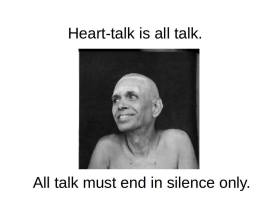
“You can imagine nothing more beautiful than his smile. There is no way of describing the radiance of his smile.”
A simple woman said: “I don’t understand the philosophy but when he smiles at me I feel safe, just like a child in its mother’s arms. I had never yet seen him when I received a letter from my five- year-old daughter: ‘You will love Bhagavan. When he smiles everyone must be so happy’.”

“And he would explain that it is the Guru not the disciple who sees the progress made; it is for the disciple to carry on perseveringly with his work even though the structure
being raised may be out of sight of the mind. It may sound a hard path, but the disciples’ love for Bhagavan and the graciousness of his smile gave it beauty.”

“The Maharshi with an ineffable smile which lit up His Holy Face and which was all-pervasive, shining upon the coterie around him, replied in tones of certainty and with the ring of truth; “Divine Grace is essential for Realisation. It leads one to God-realisation. But such Grace is vouchsafed only to him who is a true devotee or a yogin, who has striven hard and ceaselessly on the path towards freedom.” Talks with Sri Ramana Maharshi #29

“He sat motionless with a sparkling smile on his face like the foam on the waves of the ocean of ananda.”

“His gentle smile shone like the cool rays of the moon. His words simply rained amrit. We sat there like statues without consciousness of the body.”

“I saw him looking at me with large penetrating eyes, wreathed in smiles rendered divinely soothing by their child-like innocence.”

At the time of Bhagavan’s Mahanirvana (leaving the physical body: “Unexpectedly, a group of devotees sitting on the veranda outside the hall began singing ‘Arunachala-Siva’ (Aksharanamanamalai). On hearing it, Sri Bhagavan’s eyes opened and shone. He gave a brief smile of indescribable tenderness. From the outer edges of his eyes tears of bliss rolled down. One more deep breath, and no more. There was no struggle, no spasm, no other sign of death: only that the next breath did not come.”

Harsha's avatar

The Heart of God:The Nature of Self-Realization. By Dr. Harsh K. Luthar

Heart Talk is All Talk

The difficulty in many of our conversations about spiritual insight is that the true understanding is not intellectual or conceptual, but absolutely direct. It is clear and direct without the medium of the mind.

Truth has never been a monopoly of a particular religion or spiritual tradition. How can it be? Some may disagree, but in my view, God does not play favorites.

We cannot make Truth our personal property but only allow the quality of Truth to overtake us and shine in us. We cannot possess God but only surrender to the Divine Will and let God take over our life.

Continue reading

Harsha's avatar

What is Saguna and Nirguna Brahman? By Dr. Harsh K. Luthar

Harsh K. Luthar in Madison, WI

Questioner: What is meant in Hinduism by “Saguna Brahman” and how is that different from “Nirguna Brahman”

Answer: The term Saguna means “with attributes”. The term “Saguna Brahman” implies that God has a name and form and other attributes. Many Savikalpa Samadhis give rise to the (living) form of the Ishta Devata. Ishta Devta is one’s favored way of visualizing the divine. It might be Krishna, Jesus, Rama, the Goddess or some other Deity of choice.

Nirguna means “without attributes”. The term “Nirguna Brahman” implies that God as the Absolute Spirit and Pure Consciousness has no name and form or attributes. Nirvikalpa Samadhi reveals the Nirguna nature of the Self.

There are a number of books on Hinduism that discuss Saguna and Nirguna Brahman. Classic yoga texts like Patanjali’s yoga sutras explain various types of Samadhi states. All of such concepts and topics of discussion can also be found in the conversations Sri Ramana had with various visitors, scholars, and yogis for over 50 years.

The book I recommend for the devotees of Sri Ramana is “Talks with Ramana Maharshi” as it gives the context of the conversations and the flavor of the essential teaching of Sri Ramana. “Day by Day with Bhagavan” capturing the Ashram atmosphere in the 1940s is very good as well. In addition, the recollections of various devotees given in many books are quite good.

One sees that Sri Ramana was very flexible and open to people who came with a sincere desire for self-knowledge. A person’s religion, philosophy, background, race, all of that, made no difference to him. In his acceptance of all, even the monkeys and squirrels and animals who were always around him, Sri Ramana emanated a perpetual aura of kindness.

Those interested in Advaita Vedanta and Self-Realization will find the teachings of Sri Ramana Maharshi to be very helpful.

Namaste and Love to all