Harsha's avatar

Temples and Shrines along Arunachala’s Outer Pradakshina Route. by Richard Clarke

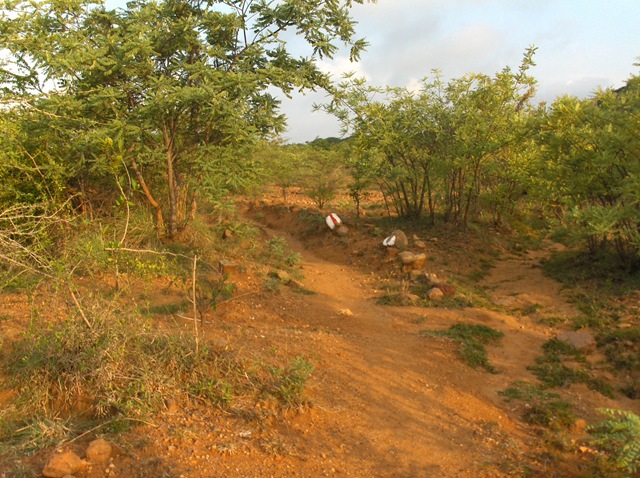
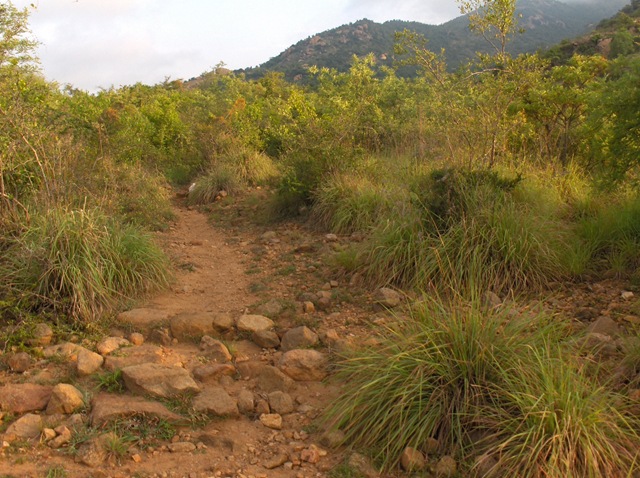
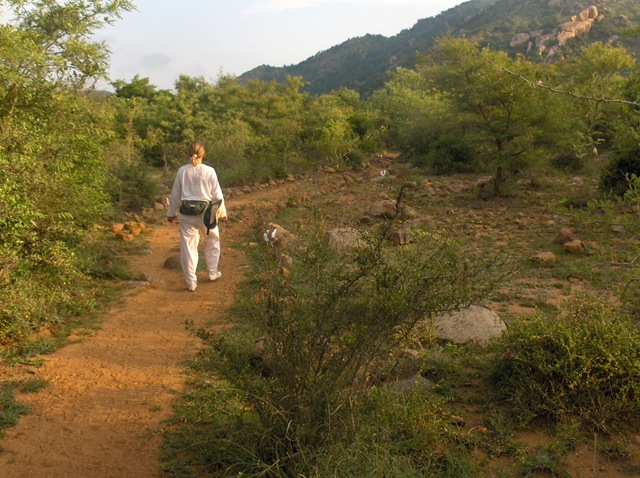
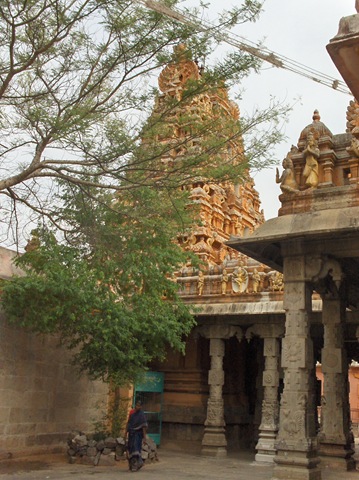
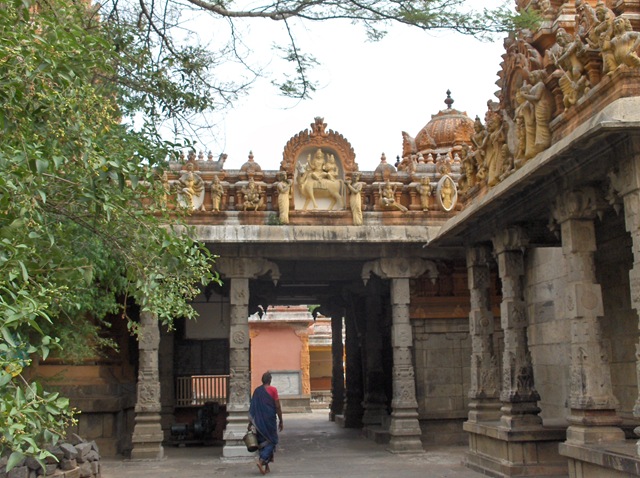
Arunachala’s ‘Outer Path’ is a place where you can visit many temples and shrines in one place while circumambulating this Holy Hill. Temples and shrines line the way of the 14 km pradakshina route. Circumambulating of holy sites – pradakshina – has long been a special spiritual experience in India. In the Skanda Purana, it is said:

The sins committed by the mind are destroyed by the first step (of pradaksina), the sins committed in speech by the second and the sins perpetrated by the body by the third step…

Skanda Purana Ch.9 v.28 Continue reading

Harsha's avatar

Papaji (H.W.L. Poonja): by Lisa Carneal

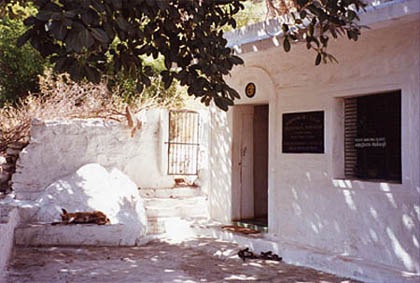
A friend asked me whom this Papaji is that I speak of so often. So here’s an attempt to express That in words: Continue reading

Harsha's avatar

Caves of Arunachala – July 2009 Update

As we have been exploring Arunachala we keep finding ‘caves,’ some already widely known, and some not. A friend suggested that we write about these caves in a blog. This seems a good idea, so here it is. We can find nothing like this available now.

Our exploration of Arunachala is ongoing, and any additional caves we find will be added. In this post 1 refer to other postings where there are more photos and information about each of the caves.

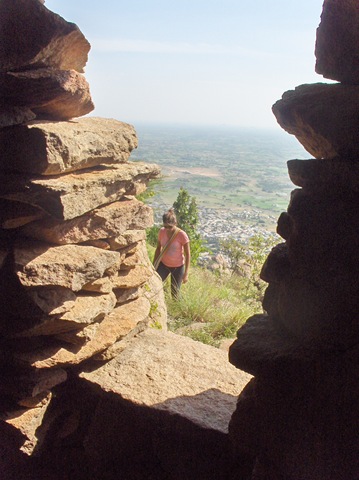
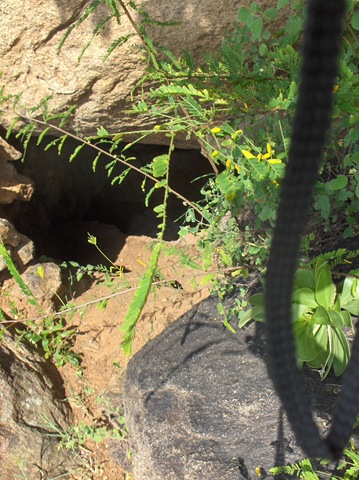
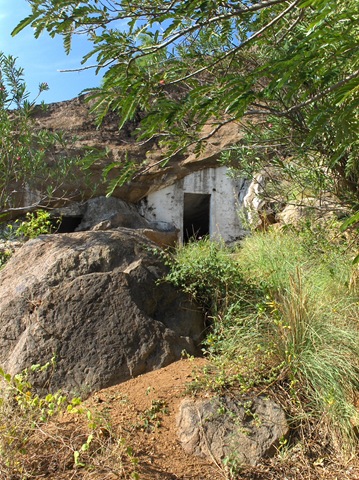
I put quotes around the first instance of ‘caves’ since what are called caves here are often nothing more than a sheltered space under a big rock. Some are natural, some have been improved, usually by building walls and adding a concrete floor. Some have been dug out under rocks.

Is some cases the individual caves already have names in common use. Most do not, and for the purposes of this listing I am calling these by names that I made up. If other caves are known, or names of caves shown are  known, let me know, so I can update this listing.

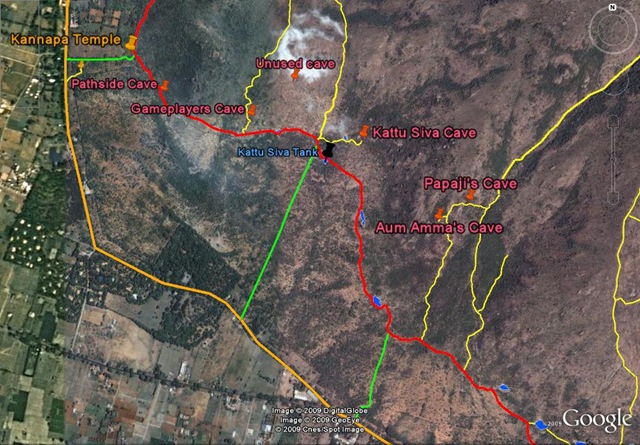
The December 2008 posting showed 18 caves. In July 2009, it now shows 23 caves. Maps, developed from GoogleEarth tm are also added that show the location of each of these caves.

Caves Associated with Sri Ramana Maharshi

Virupaksha Cave

bhagvans_cave

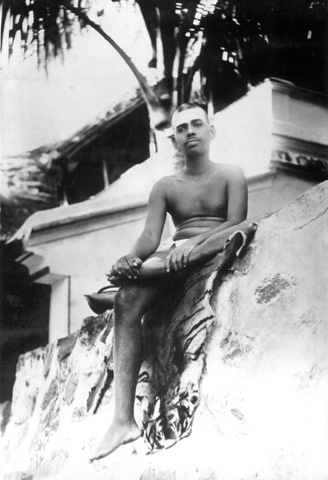
Virupaksha is, for most, deeply associated with Sri Ramana Maharshi. Ramana lived where he lived for 17 years [1899-1916].

Below is a famous photo of the young Ramana at Virupaksha cave.

rest-9_1

The cave is named for a famous saint, Virupaksha, who lived in this cave in the 1500’s, around the same time as Guhai Nama Shivaya lived nearby (see below). At Virupaksha’s demise, called here ‘maha samadhi,’ it is said that his body was transformed into vibhuti (sacred ash). In the interior of this cave there is a mound in the shape of Arunachala. It is said to be made of this vibhuti.

More on Virupaksha Cave  is in this post.

Mango Tree Cave

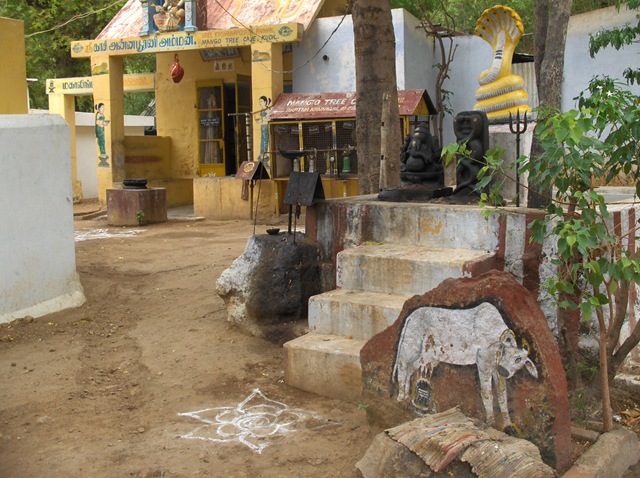
During the Virupaksha days, Sri Ramana would come down to Mango Tree Cave during the summer. It was cooler, and there was water here when there was none at Virupaksha Cave. Mango Tree Cave is on the common way up the hill to Virupaksha  Cave.

HPIM4609

Inside the building, to the back, there is the actual cave. I think the building has been added since Ramana’s time.

HPIM4621

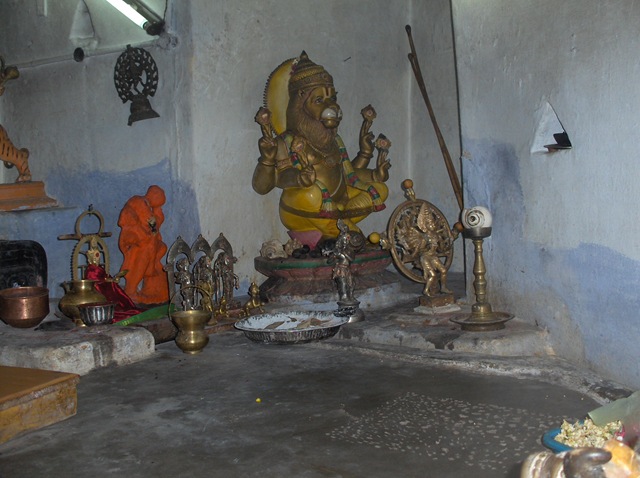
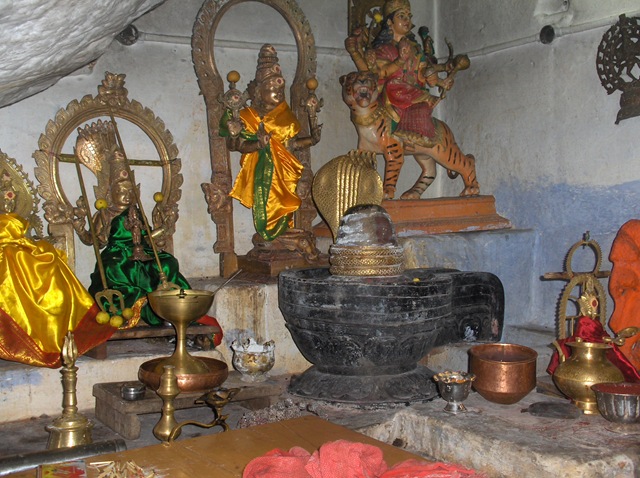
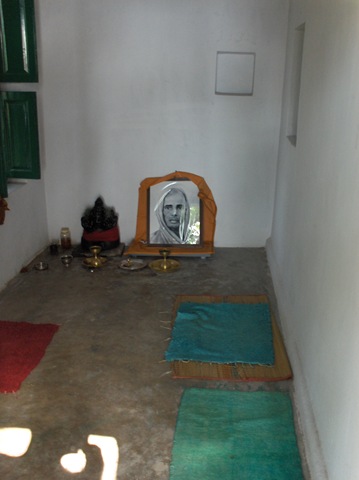
Now this small cave is filled with lingams and murtis of many gods.

HPIM4623

More on Mango Tree Cave can be round in this blog entry.  

Guhai Nama Sivaya

This is another cave in which Ramana lived in 1899. It is here that he wrote the notes which later because the pamphlet, Who am I?

A bit more on this cave is in the post New Access to Ramana Sites below Virupaksha.

HPIM4986

A short clip from Arunachala Grace Blog:

Guhai Namasivaya is known to have been born around the year AD 1548 in Karnataka to a pious Saiva couple. His spiritual nature became evident at an early age: he was virtuous in his conduct, adept at his studies and evinced no attachment to worldly matters.

He practised his system of yoga for many years and as a result of the dream guidance of Lord Mallikarjuna, the presiding deity of Sri Sailam, Guhai Namasivaya came to Arunachala and remained as a Guru, giving teachings to mature disciples who approached him.

Tortoise Cave / Tortoise Rock

Tortoise Cave (also called Turtle Cave) was frequented by Sri Ramana during the Virupaksha days. In those days, there were few trees on Arunachala, and not many places with shade. Tortoise Cave has a good flat stone at its entrance to sit on. Here you are in the shade, and there is often a breeze.

This is also the place made famous in the story of Sri Ramana’s ‘second death experience’. This happened when Ramana stopped at Tortoise Cave / Tortoise Rock on his way back from Pachiaimman Koil. More of Tortoise Cave and Rock, and Ramana’s second death experience is in this post. More about Tortoise Cave is also  in this post.

From places like Pavala Kundru, Tortoise Cave can be seen as a dark triangle up on the mountain. It is a bit of a climb to get up here. We think it is worth it. You will want to take a Mountain Guide the first time, I think.

HPIM4022

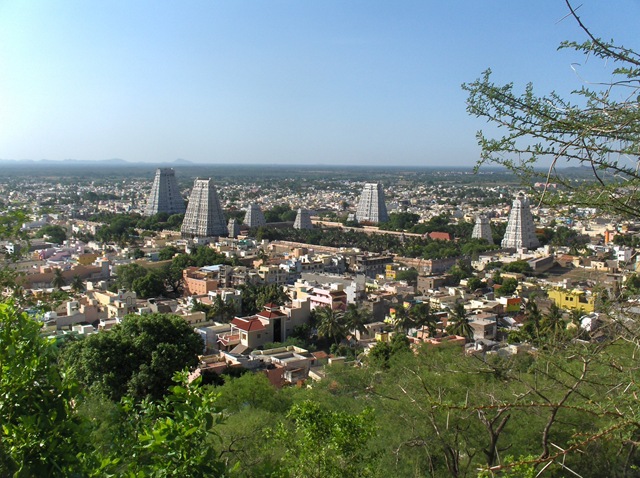
Arunachaleswara Temple for Tortoise Cave. A wonderful view.

HPIM5402

This rock at the entrance of the cave is where Sri Ramana would have sat and rested. And meditated.

HPIM4032

Pavala Kundru can be seen toward the left.

HPIM4045 

Here is a close up view of the face of the turtle on Tortoise Rock. Tiruvannamalai is in the background.

HPIM5427

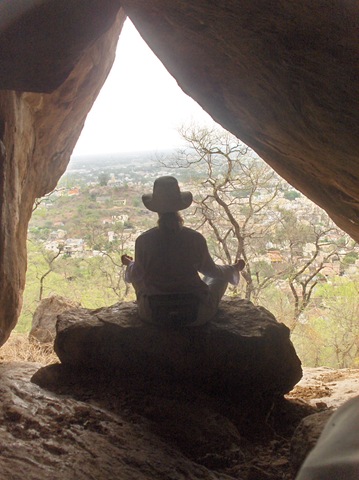
This cave is a great place to sit in the shade and meditate.

HPIM5441  

Skandashram

More on Skandashram is in the post Walking up to Skandashram.

HPIM4373

Sri Ramana lived at Skandashram from 1916 to 1922. His mother joined him during this period, and for the first time cooking was done there. This is where the mother had her maha samadhi in 1922. Her room is now a shrine.

HPIM4367

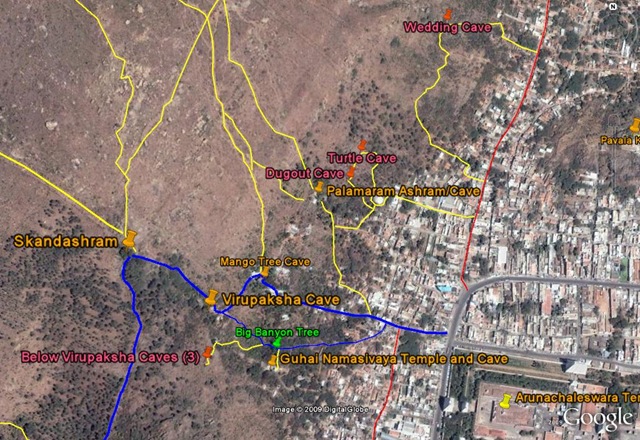
The map below shows all of the caves associated with Ramana, as well as other caves in the Virupaksha Cave area. Double click to expand.

screenhunter82

Seven Springs Caves

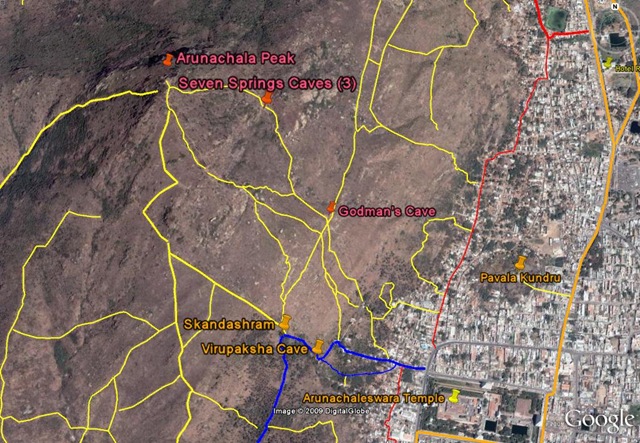
The next four caves are shown in the Seven Springs posting. They are all located on the hill above Skandashram, on one of the paths that goes to the top of the hill. Only one is associated with Ramana, the top one at Seven Springs. They are shown on this map:

screenhunter83

Godman’s Cave

This is a cave, said to be greatly improved by the work of David Godman in the 1980s. Maybe ten people can fit into this cave.

HPIM7886

Altar in the cave.

HPIM7891

Looking out the entrance. John, the archivist at Ramanasramam, stands outside  the entrance.

HPIM7897

Seven Springs 1

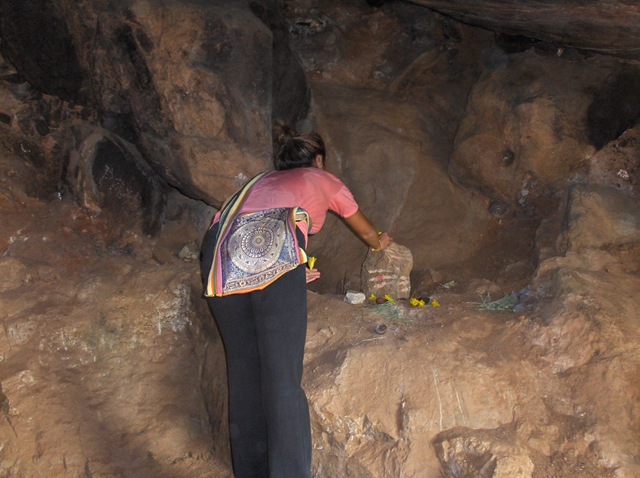
This is first of three caves found at Seven Springs. There is a stone entrance built, and a good altar in the cave. Maybe four people can fit in here.

Up the hill you can see stonework.

HPIM7933

The entrance, from the inside.

HPIM7953

Richard, offering incense to the altar.

HPIM7939

Carol, exiting the cave.

IMG_1702

Seven Springs 2

This is a small cave, behind Seven Springs 1. Maybe two people fit inside. Many stone and concrete improvements have been made.

HPIM7958

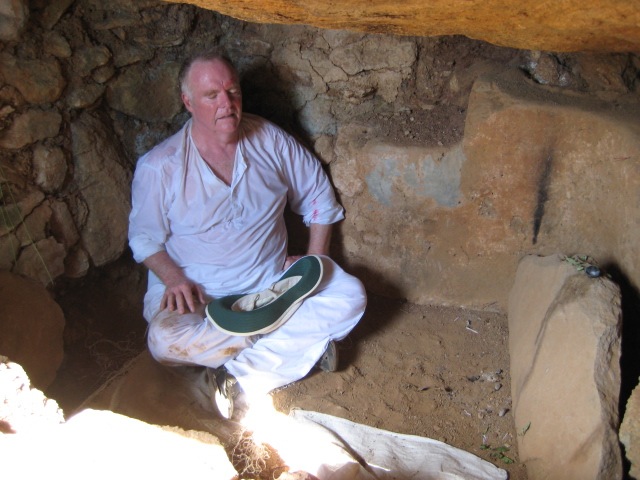
Richard, meditating in the cave.

IMG_1714

Ramana’s resting cave

HPIM7988

I call it ‘Ramana’s Resting Cave’ since this is the cave that is documented in writing about Ramana where he was known to rest, while others made the climb up to the top of Arunachala.

It is in the shade all day with a nice breeze through it, and a view out through green trees.

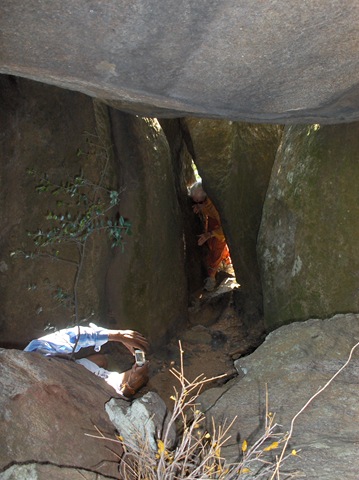
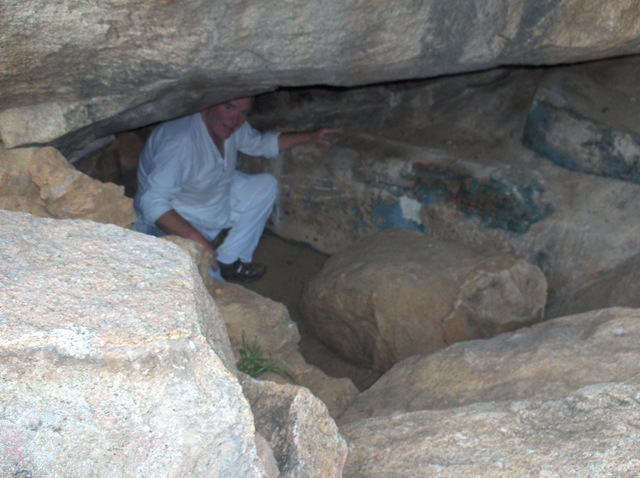
The entrance is a bit tight, though.

HPIM7993

Caves in Virupaksha Cave Area

(these are shown on the map at the end of the Ramana Caves section.)

Palamaram Ashram Cave

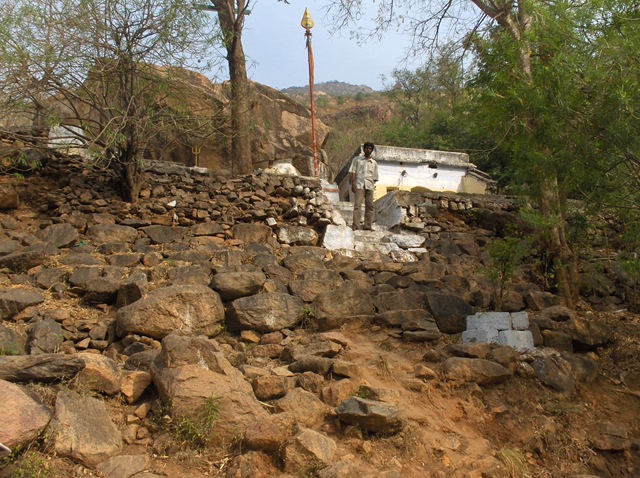
The Palamaram Ashram and is ‘generations’ old and has been run by one family for these generations. Palamaram is the Tamil word for ‘jackfruit’ (but we did not see a jackfruit tree). The guru who was most recently active here, per our mountain guide, was Palamaram Swamy, who was here for 40 years and for the last 15 years has been in the Himalayas.

Steps lead up the the ashram. The flag pole can be seen from down the hill.

HPIM3849

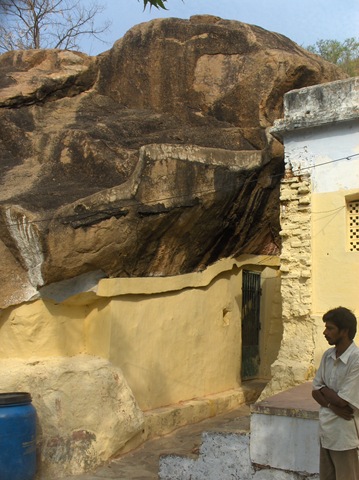
The cave is under this rock. The doors into the cave are locked, and you will have to see if you can find someone who can open them. Often you cannot find the person.

HPIM3833

For more on this place, see the Palamaram Ashram Post.

Wedding Cave

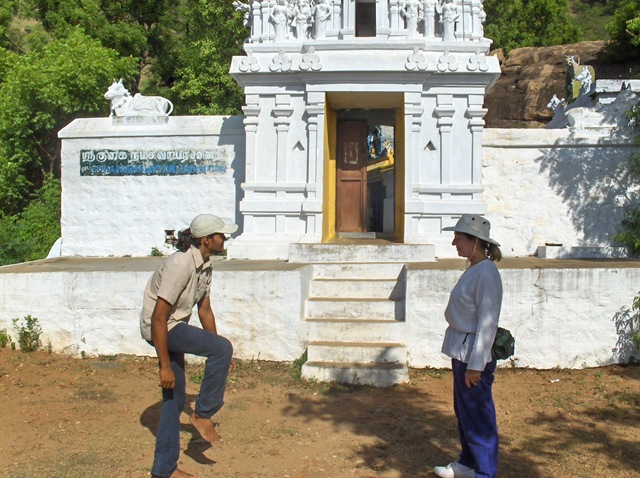
Wedding Cave is a small cave to the north of Virupaksha. It is rarely visited by westerners. We just discovered it by accident, looking for some other place.

It is at the base of the hill. You have to travel through residential areas, then up hillside trails to reach it.

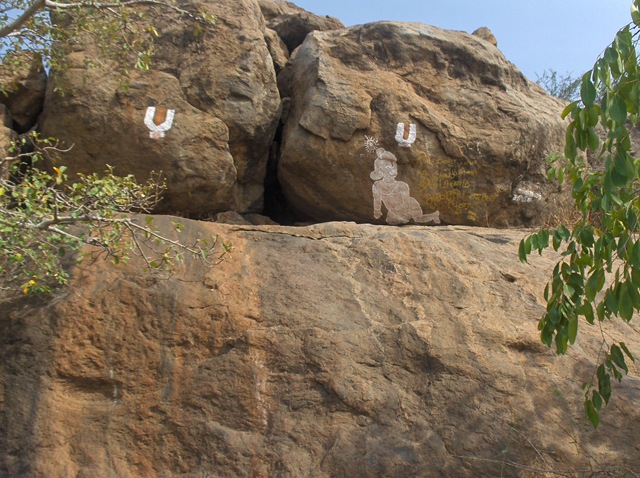
To get to the cave, you have to climb up the rock, to the right of what can be seen in this photo.

HPIM3931

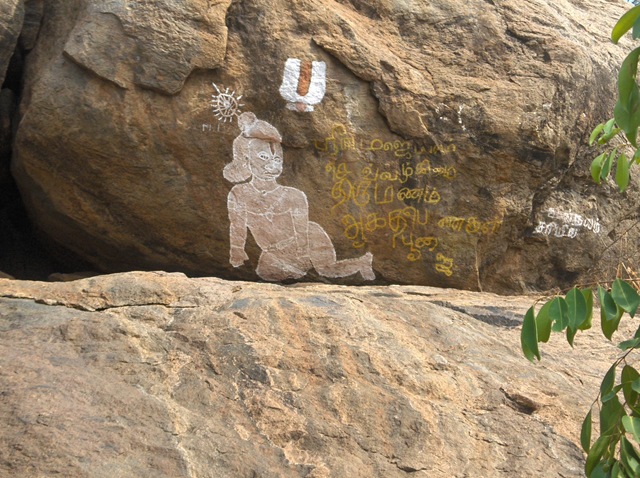
Krishna is painted on the rock, with a peacock feather on his head.

HPIM3932

A great view of Pavala Kundru can be seen from here.

HPIM3935

Arunachaleswara Temple, too.

HPIM3937  

More is found in Wedding Cave Post.

Dugout Cave

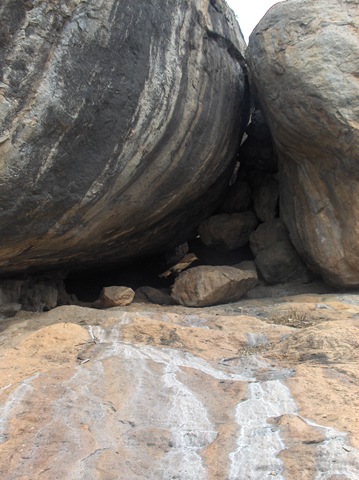
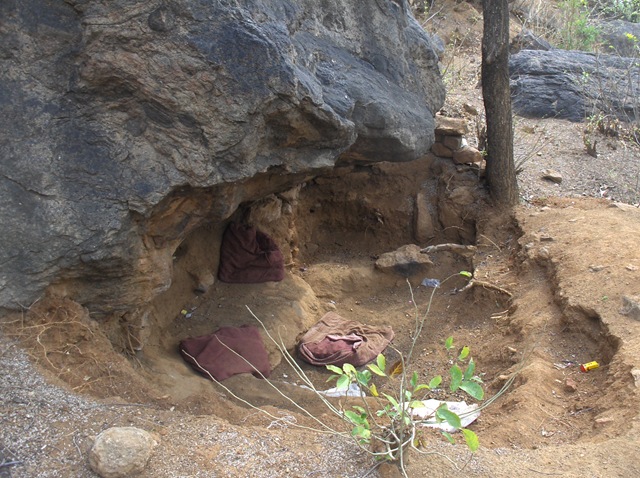
Dugout cave is a made made cave under a rock below Tortoise Cave.

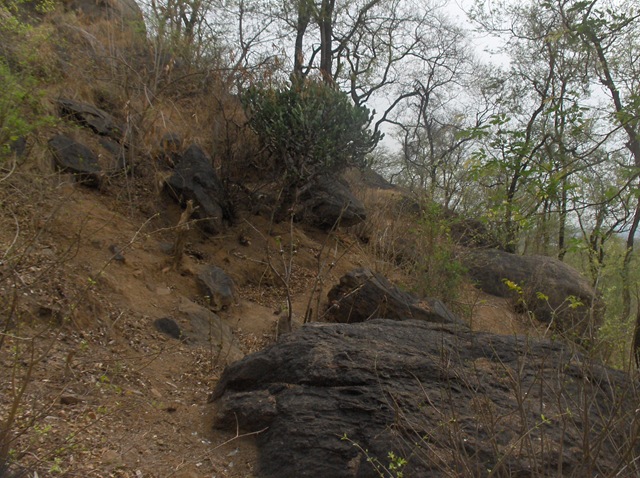
To get to it, you go through the hillside,m like  shown below.

HPIM3996

A nice spot has been bug out under this rock. There are several cushions laying in the cave. Maybe there was a smaller cave, that was ‘improved’ to make a better space. I know nothing of the history of this cave.

HPIM4000

Another  photo of the terrain around this cave.

HPIM4001  

This is seen as a part of this post.

Caves below Virupaksha Cave

These caves are described in the post New Access to Ramana Sites below Virupaksha.

Below Virupaksha 1

This cave is big enough that one or two people can sit in it.

HPIM4991

Below Virupaksha 2

This cave is very small. One person can lie down in it.

HPIM4997

Below Virupaksha 3 – Associated with Ramana?

This cave is said by local villagers to be one used by Ramana in the early days. Recently, people have built walls and a door and an altar in it.

HPIM5004

The altar.

HPIM5010

Southwest Side

This map shows (right to left) Papaji’s Cave, Aum Amma’s Cave, Kattu Siva Cave, Unused Cave, Gameplayers Cava (Mankala Cave), and Pathside Cave.

screenhunter85

Caves on Papaji’s Knoll

These caves are shown in the posts Papaji’s Cave and Aum Amma’s Cave.

Papaji’s Cave 1

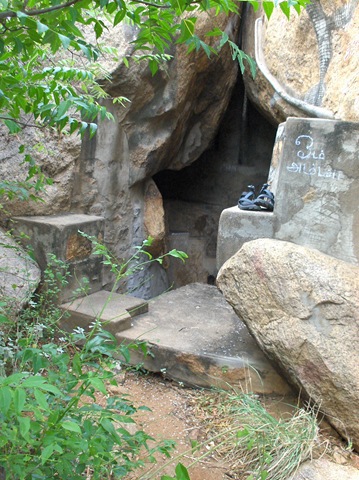
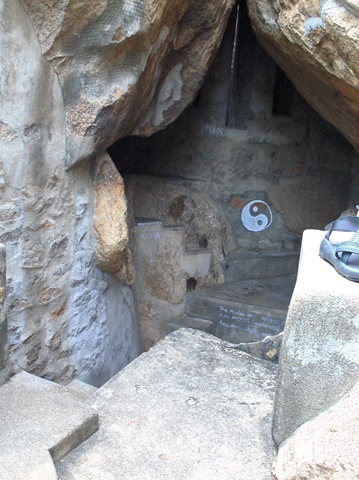
The first ‘cave’ of Papaji’s is in the area where part of his ashes were scattered. This is a nice place to sit and meditate at the altar that has been set up there.

HPIM3940

HPIM3980

Papaji’s Cave 2

The next of the caves named for Papaji, and one that he is said to have lived in, is near the first cave, down the rock and a bit up the path.

Carol enters the cave from the path.

HPIM5936

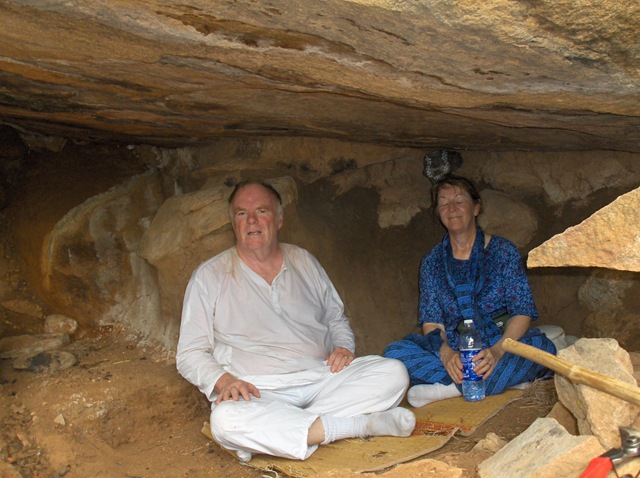
Richard and Carol, meditating in the cave.

HPIM5941

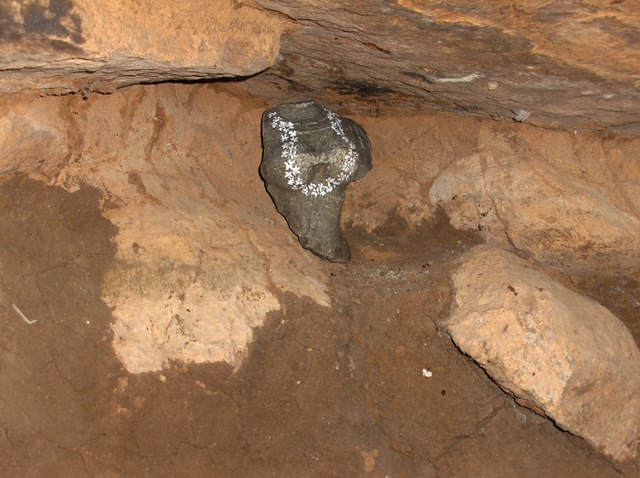
Below is part of a mother goddess statue, placed in this cave.

HPIM5944

Aum Amma’s Cave

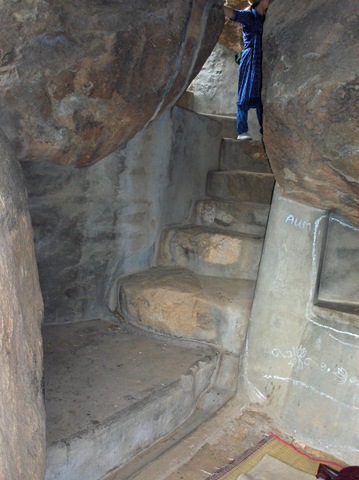
Aum Amma’s cave is the most developed of any cave we have found so far (except for those, like Virupaksha, which have had buildings constructed around them).

HPIM5873

Many bags of cement were carried up the hill to make these cave improvements. Aum Amma lived her for several years until just a few years ago.

HPIM5876

Stairs lead down into a main room.

HPIM5895

There is a good view out the “window” in the main room. It looks like sometimes that people sleep in this cave, though you are not supposed to, and if you stay too long, the Forestry Department people will chase you out.

HPIM5888

Caves in Kattu Siva area

Kattu Siva Cave

This cave is shown in the post Kattu Siva Cave.

There is a nice cleared area around the cave. this is good place to come during the heat of the day. There is plenty of shade.

HPIM8655

Climbing over the rocks at the end of the clearing, a hole in the rock appears.

HPIM8659

This is Kattu Siva’s cave. A big rock, in front of Richard, has fallen into the cave. Will someone be able to remove it?

HPIM8665

On the top of the rock over the cave, a cement water catching area was made. The photo below looks over this to the Arunachala hillside behind Kattu Siva’s cave.

HPIM8678

Cave Above Kattu Siva Meditation Perch – Unused Cave

Related posts are: Kattu Siva Meditation Perch and Kattu Siva path Renewal – Part 1.

This is a small unused cave. Rocks need to be cleared from the floor to make a good sleeping area.

HPIM8743

Mankala Cave (or Gameplayers Cave)

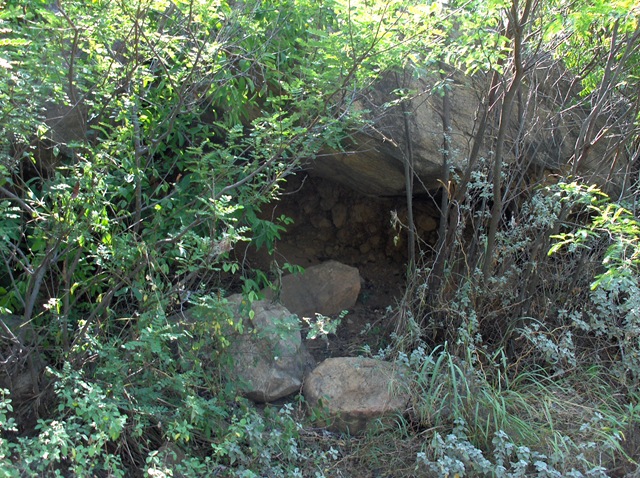
This cave is shown in the post Kattu Siva path Renewal – Part 1. It is under a rock that looks like a natural lingam as you approach this cave.

HPIM8804

Cave next to Inner Path near Kannappa Temple – Pathside Cave

This cave is shown in the post Inner Path – Around Parvati Hill.

A path leads to it from the Inner Path.

HPIM9659

This cave was improved with a stone and cement wall in front.

HPIM9669

A nice cement floor has been put in the cave.

HPIM9665

Caves on Northside  of Arunachala

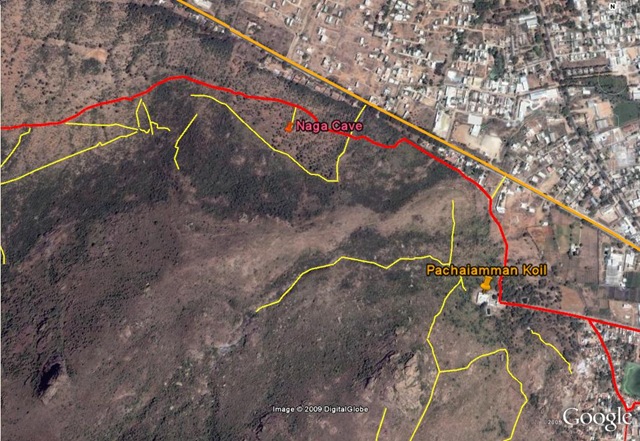
Naga Cave is shown in the map, below.

screenhunter84

Naga Cave

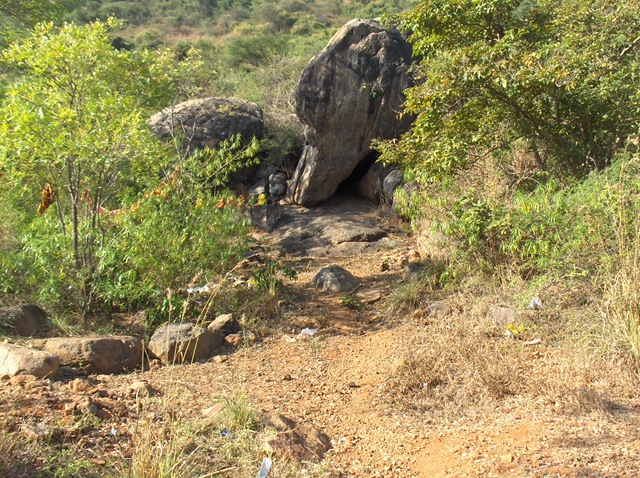
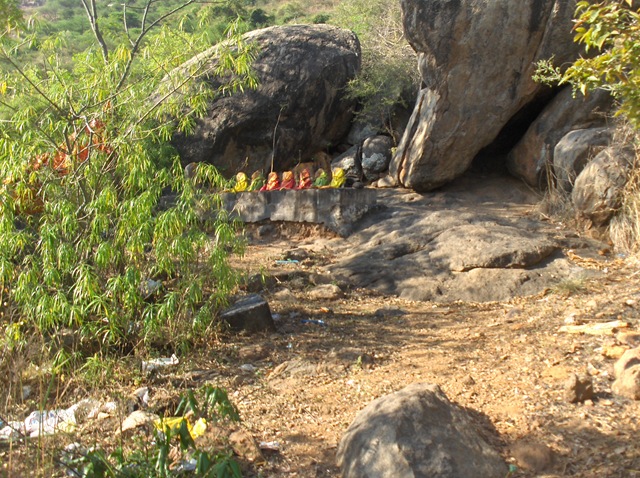
This is not too far from Pachaiamman Koil.  It is between the Inner Path and Arunachala, just barely visible from the path. You may notice a bit of color towards Arunachala.

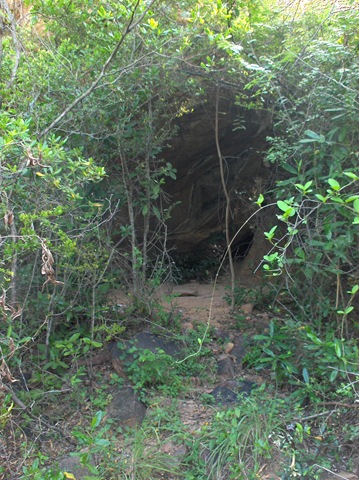
As you approach you see a small cave.  

HPIM2689

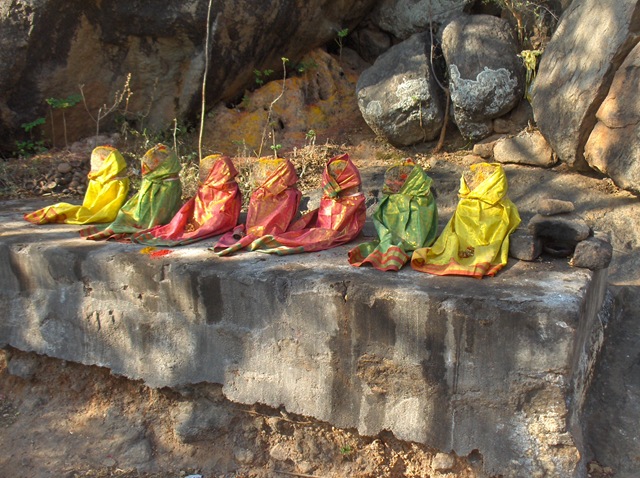
To the left is a primate altar, featuring Nagas, snake gods.

HPIM2690

The colors noticed from the path are the fine clothes that the Nagas are wearing.

HPIM2692

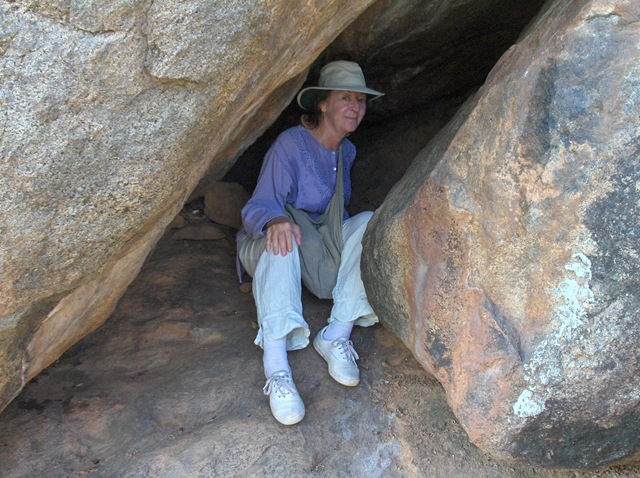
The cave is small. Only one person can sit in it. Not good for sleeping, either.

HPIM2696   

More is to be found in the Naga Cave Post. 

More caves to find, more of Arunachala to explore

I have heard of more caves. I have been told:

  • There are four caves on the hill above the Mountain of Medicine Arunachala reforestation facility.
  • There is another cave high above Papaji’s cave.
  • There are three caves on the north side.
  • There is a cave near Virupaksha occupied by a sadhu that does not like to be bothered.

What else is there? We have to explore to know more. If you know of any more caves that haven’t been listed, please let me know.

Harsha's avatar

Inner Path to Pachaiamman Koil

This concludes the series that shows details of Arunachala’s Inner Path used by devotees of Sri Bhagavan Ramana Maharshi for the sacred walk around this holy hill. This walking is called pradakshina, or in Tamil, girivalam.

This series shows the Inner Path in some detail all the way from Sri Ramanasramam, around Arunachala, and onto the streets on the Eastern side of  Arunachala.

Part One shows the path from Ramanasramam. Part Two shows the walk around the southwest side of the hill.  Part Three details the section of the path around Parvati Hill, at the west end of Arunachala. Part Four shows the path on the north side, under the Elephant. Part Five follows the path through the trees. This is part six, the final  section of the Inner Path.

Below is a map of the entire Inner Path, that shows the six sections as well as some other landmarks along the way. The final section is in yellow.

Arunachala Inner Path Pachaiamman Koil

The final section of the Path goes for a bit through trees and brush, near to (but not visible from) Pradakshina Road. It then goes behind a few houses of local villagers, then up a small hill to Pachaiamman Koil, then down the hill back to the road. And the way we walk, finally to Ramakrishna Hotel for breakfast of Indian coffee, vadas and dosas.

Starting from the Big Rock

HPIM2197

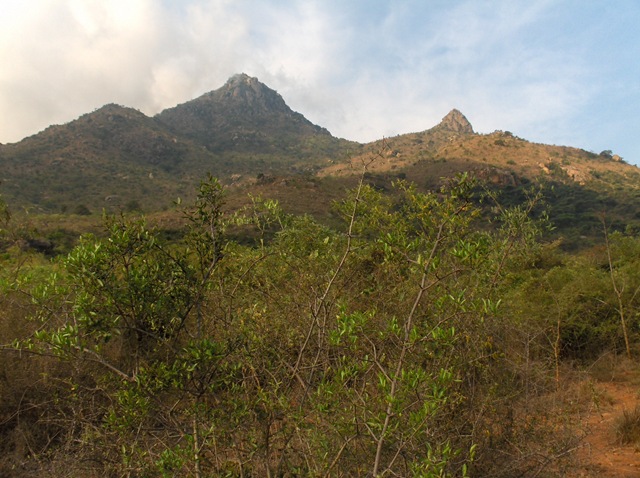
Looking towards Arunachala, the peak rises behind the trees.

HPIM2309

The Path continues straight ahead.

HPIM2311

HPIM2315

HPIM2320

Arunachala through the trees.

HPIM2321

Continue through the brush and small trees.

HPIM2322

Here is a clearer view of the Arunachala peak. The trunk element of The Elephant rises on the right of the peak.

HPIM2323

Continuing down the Path. This is a shortcut where Carol cleared the brush and now is the main part of the trail. Before only cows could get through here, and everybody else took a jog to the left.

HPIM2326

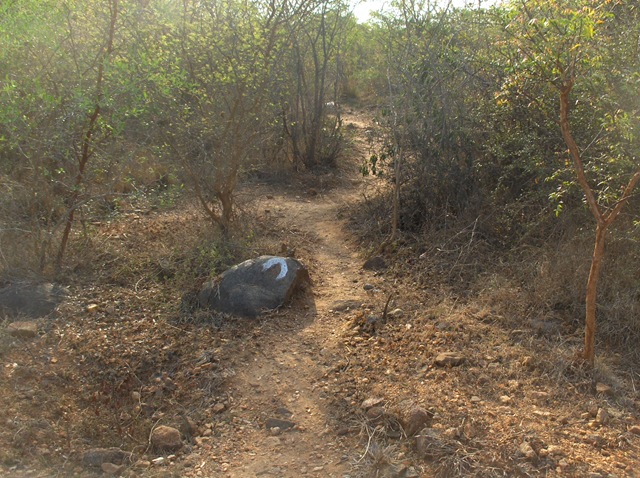
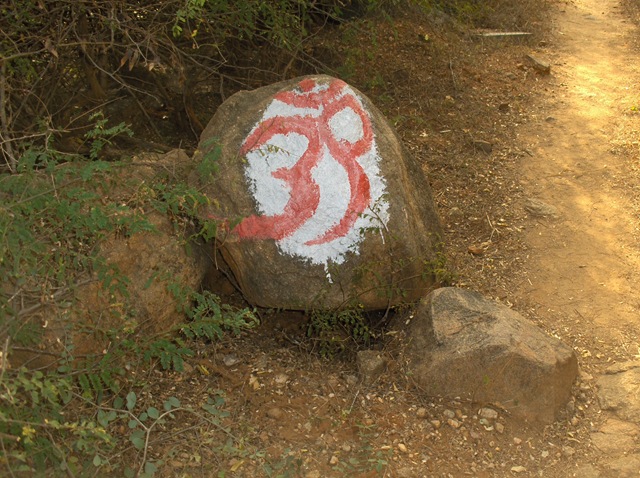
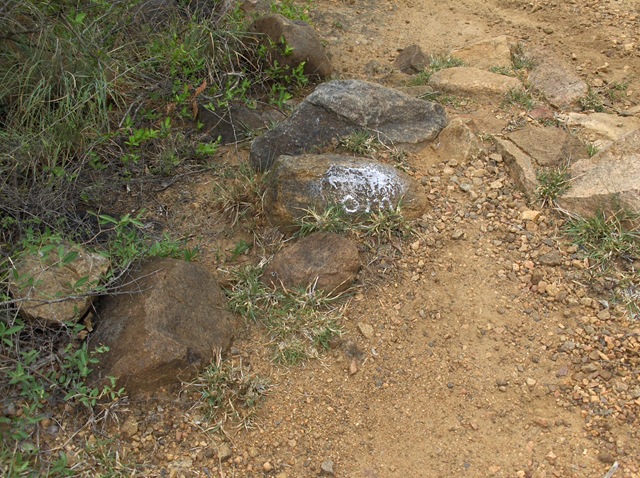
We turn a bit right and there is a nice red and white Om painted on a rock. By now there is quite a bit of road noise, but the road  is not yet visible.

HPIM2331

A village woman walks ahead, with a container of dry branches on her head. This is fuel for the day’s cooking fire. So much of this brush is gathered that it does not have a chance to compost back into topsoil. This is a long standing issue in India, where much of the soil has been depleted by the last 2000 years of continual use.

HPIM2335

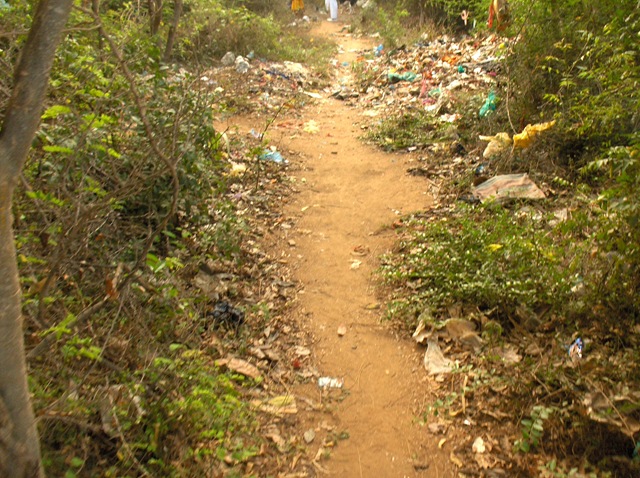
Trash heaps line the path. And sometime piles of human waste, since the typical houses here have no toilets, and the people are used to going outside their houses to do their business. Watch where you step!

HPIM2340

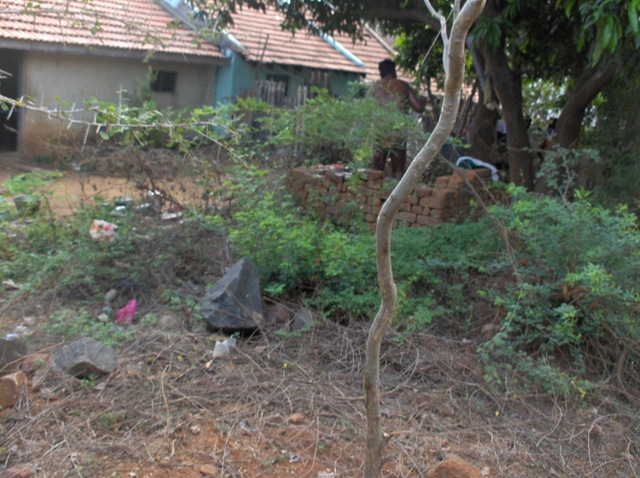
Behind these houses, you can see into their back yards. Here a man is standing in his undershorts in a brick-lined bathing area taking his morning bath.

HPIM2342

The Path continues through more refuse. Paper products are burned, but the ubiquitous plastics have nowhere to go. Some towns are beginning to address this serious problem by banning plastic bags. The real problem is to educate and sensitize the people to “littering.”

HPIM2345

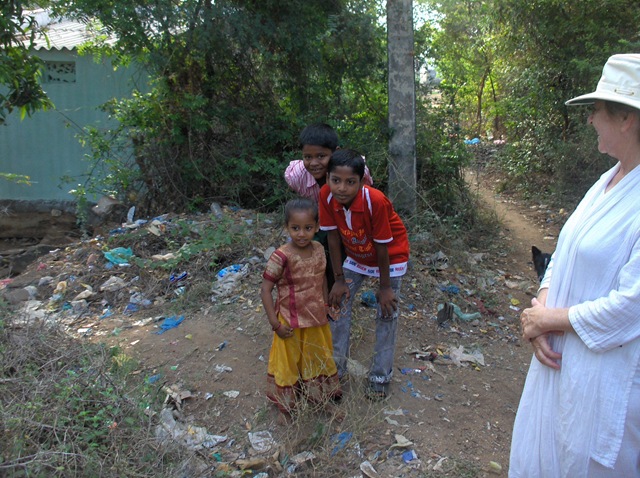
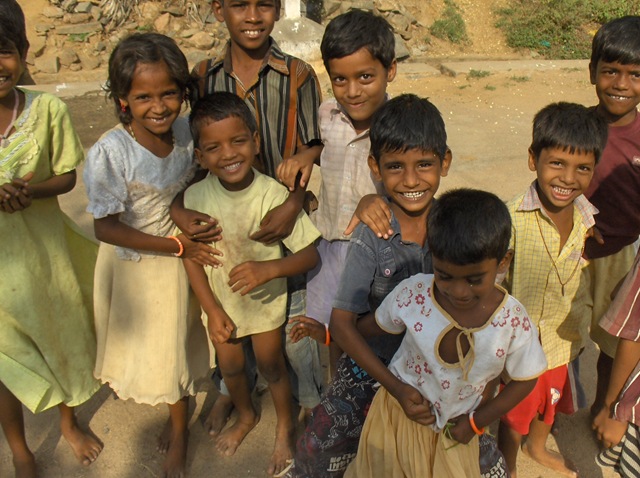
Village children start to greet us. We go through here often and are known by many of them. It seems that children always want their  picture taken. They will come and ask ‘photo’ or ‘camera.’ The children will often ask us for pens. Their schools don’t supply them, so there is no way to practice their writing skills. Amazingly, the little girl in the foreground here actually offered to give US two pens. What beautiful children, physically and spiritually.

HPIM2346

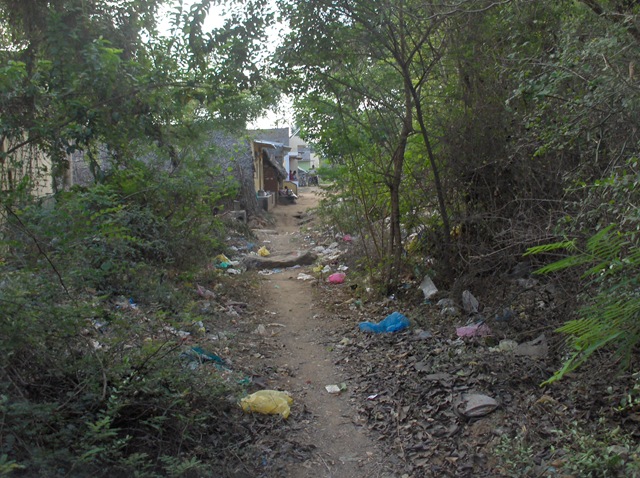
More path through more trash.

HPIM2348

Now we walk directly behind a few houses. Be respectful to the people here. This is their home. A silent smile is usually enough.

HPIM2350

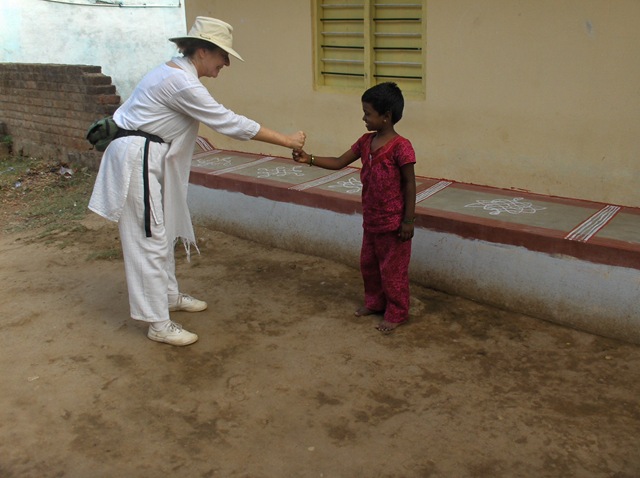
At this house Carol has been greeting the two kids with a ‘fist bump.’ She started doing this as a way to  divert the children’s request for a pen, etc. It really seems that what they want is just some kind  of contact, and the fist bumps provide an easy way. She calls them ‘Obama bumps’ after the photo of Obama and his wife taken during the election.

HPIM2354

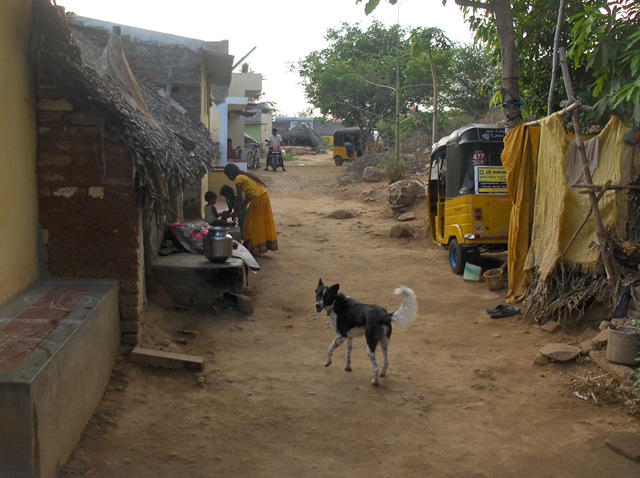
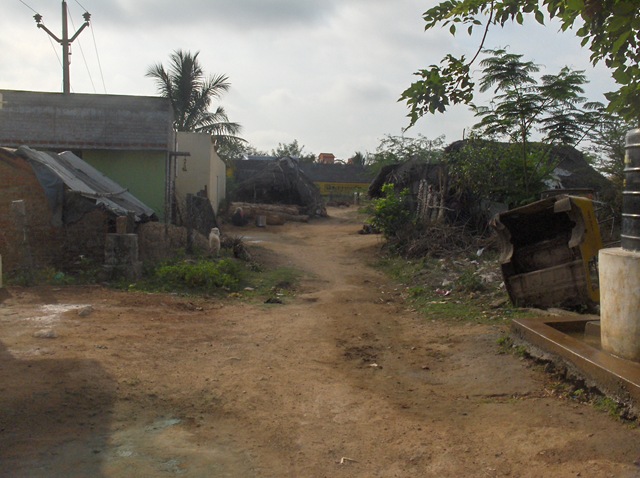
Proceeding  through the village.

HPIM2364

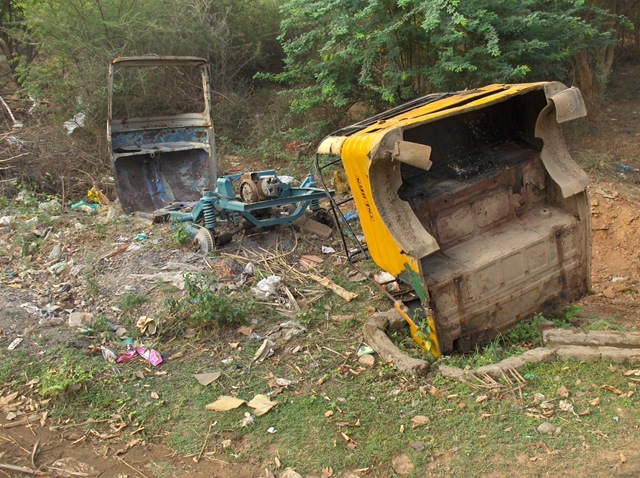
The skeleton of a dead  rickshaw sits  by the path.

HPIM2366

This is a small thatched hut, some family’s home.

HPIM2369

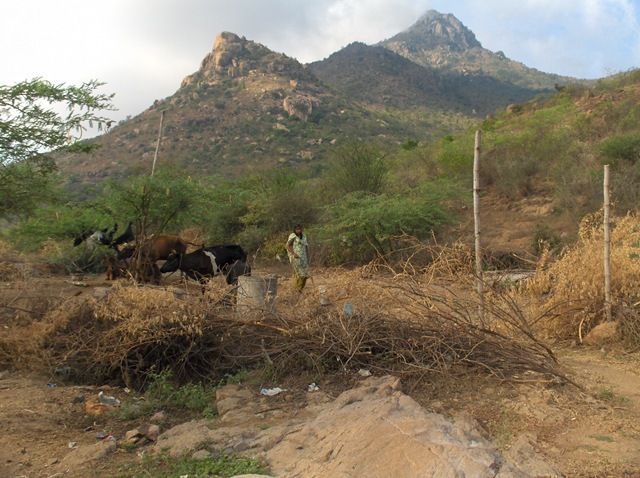
There are a number of cows here. Arunachala is in the background.

HPIM2372

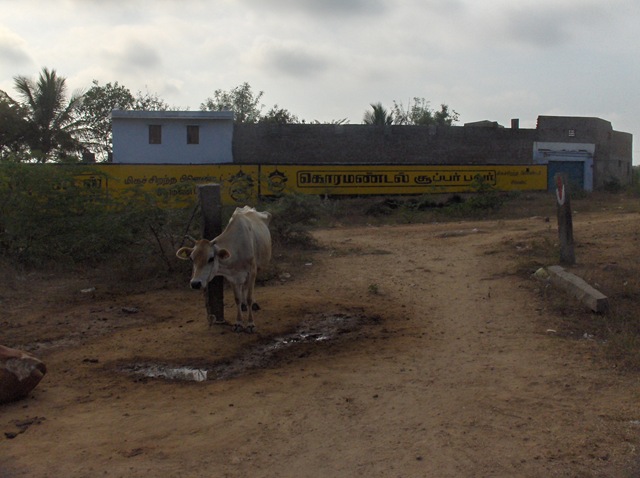
This long yellow sign is a predictable landmark. The Path turns to the right.

HPIM2376

Here is Arunachala again. Clouds are forming around the peak.

HPIM2377

The Path goes up and to the right.

HPIM2378

HPIM2383

Now Arunachala is shrouded in clouds. It is said that there are five faces of Siva that are visible in these eastern hillside rocks. This how you can be sure that it is Siva, since he, apparently, really has five faces.

HPIM2389

Near the Path are newly built homes, with bright paint jobs. Much care was taken with these houses. The bright colors conform to the principles of Vaastu, the Indian equivalent of Feng Shui.

HPIM2390 closeup

Now the Path goes over two concrete bridges.

HPIM2395

Arunachala is nearly hidden by the hill in the foreground.

HPIM2396

Below is the first glimpse of Panchiamman Koil, rising out of the trees.

HPIM2399

Patties of cow manure mixed with straw are drying here. They are used a fuel for cooking fires.

HPIM2400

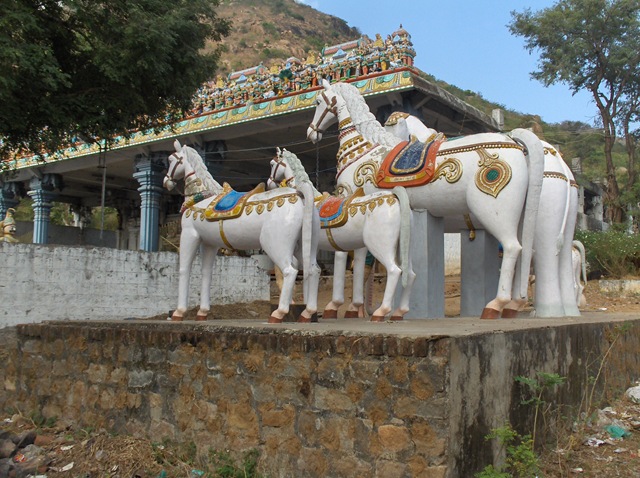
More Vediyappan mounts and guardians.

HPIM2404

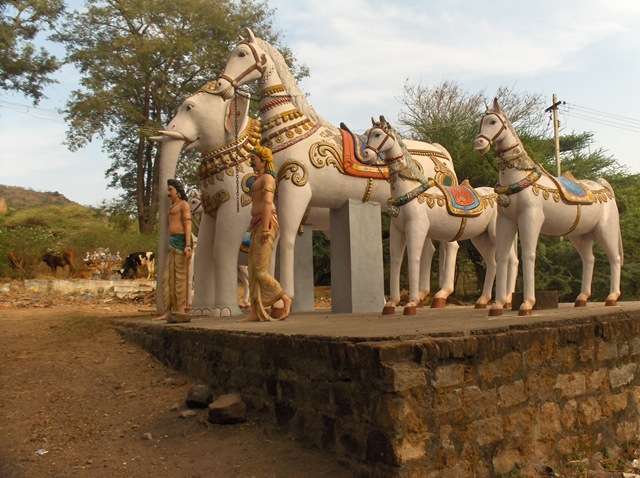
This group also has an elephant as a mount.

HPIM2406

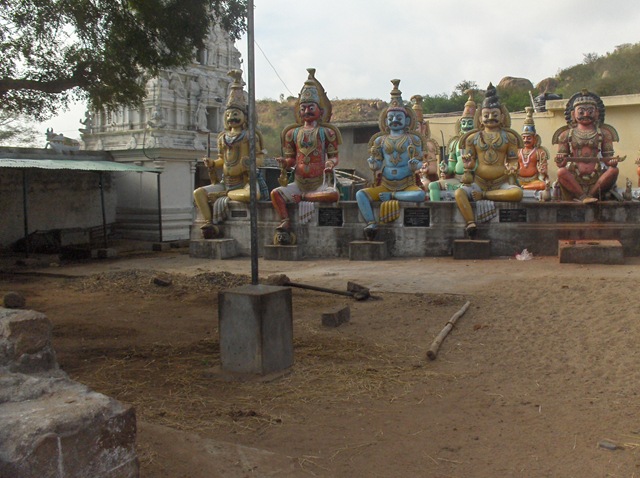
In front of Panchaiamman Koil are two rows of Guardians. If you look closely, the two on the left are resting their feet on heads.

HPIM2409

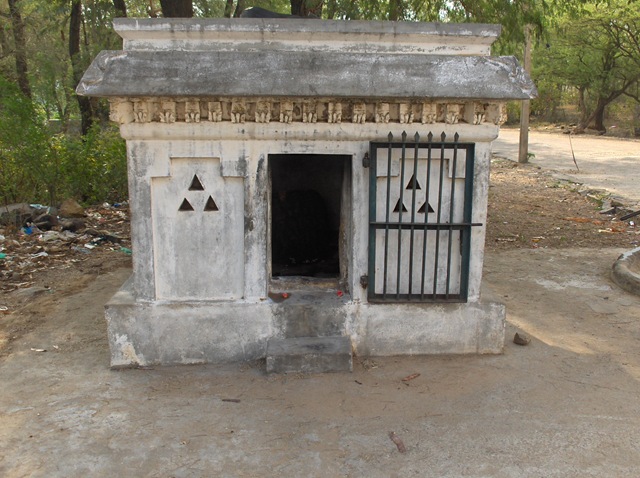
Outside Panchaiamman Koil is a small shrine.

HPIM2415

Inside is an ancient figure of a male and female. Siva and Parvati, maybe?

HPIM2414

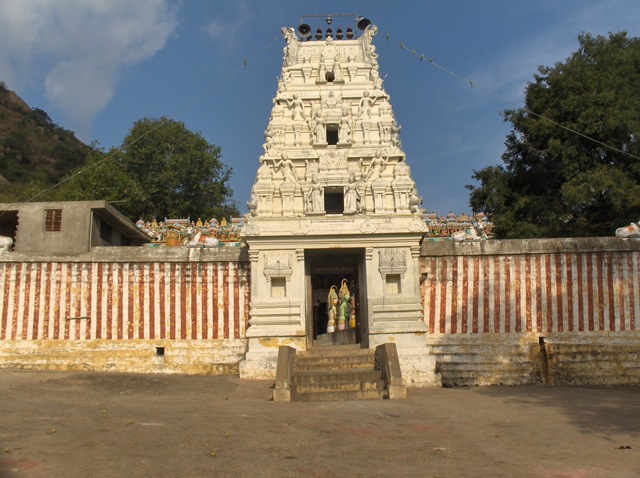
Here is the front of Panchaiamman Koil. The vertical red and white stripe indicate that it is is temple. You will see these many times in South India, marking temples.

HPIM2417

The Arunachala peak is  entirely hidden here.

HPIM2421

The road down the hill to the main street.

HPIM2419

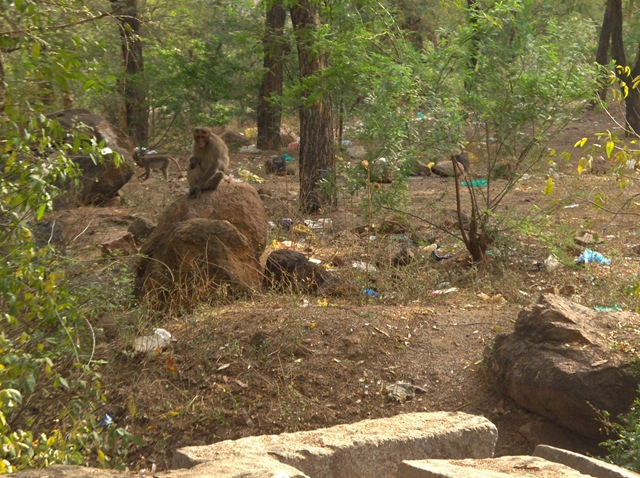
There are monkeys here today. This  one is sitting on a rock. I wonder if monkeys meditate.

HPIM2425

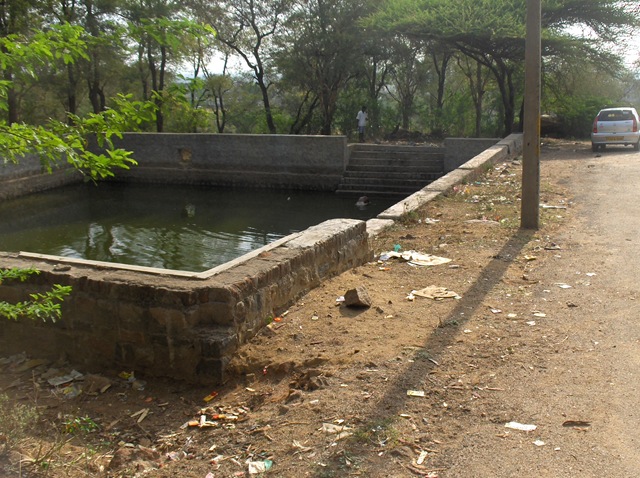
There is a tank down the hill from the temple. Usually in the morning there are men bathing in the tank.

HPIM2427

On the other  side of the road through the trees is another temple. There is a path here that goes a bit further around the mountain. After a rough bit and a scramble up a rock face, you come out to a small village built on the face of a very large hillside.

HPIM2429

Down the road.

HPIM2430

Often you will see this billy goat along the road  here. He seems like the king of this hill.

HPIM2200

We turn right at the first street. You could keep going straight down this hill. We think  of this as the ‘scenic route.’

HPIM2432

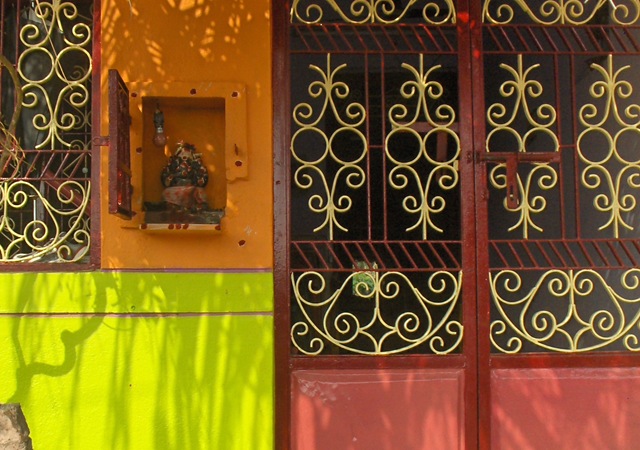
A nice Ganesh shrine in the doorway of this house insures that things go well within the house.

HPIM2434 closeup

In the mornings, many women with water jugs are gathered around this tank, getting their day’s supply of water. This is a hard job. Naturally it  is  mainly done by the women.

HPIM2437

Kids gather, asking, ‘photo, photo, photo.’

HPIM2443

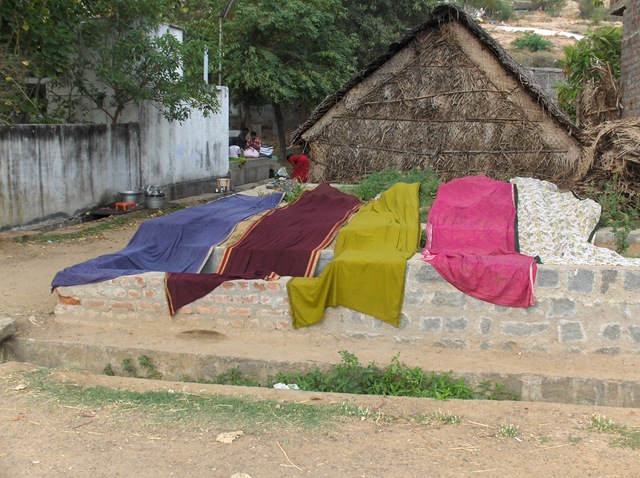
Sarees are spread out to dry.

HPIM2445

They were probably just washed in this community clothes washing area.

HPIM2446

Across the road  is a sweet little shrine.

HPIM2450

Many primitive Nagas (Snake Gods) are set out in front of the central shrine. All are dressed in their dhotis. This shrine is very well taken care of.

HPIM2452

The road continues on.

HPIM2453

We take the first left turn, down the hill.

HPIM2454

This is a nice clean street to walk down.

HPIM2459

It passes by a large tank. This has water year round.

HPIM2462

A Ganesh shrine is next to the road. It was  recently repainted, and is brightly colored.

HPIM2463

Down the hill we go.

HPIM2464

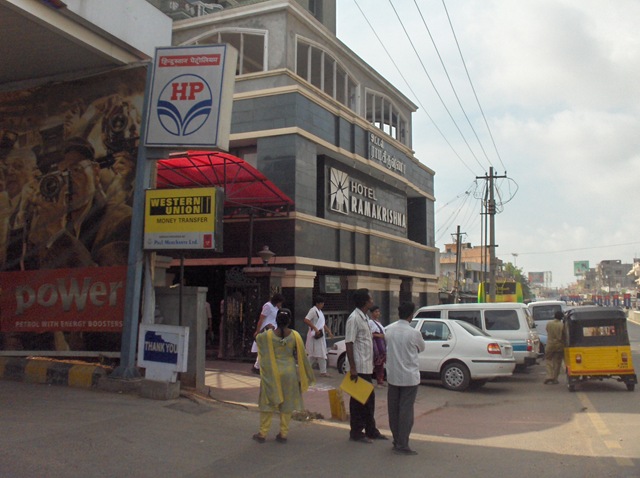
Now we come to the main street. Hotel Ramakrishna rises ahead.

HPIM2465

Arunachala is obscured by the main buildings and phone/electricity lines.

HPIM2467

Almost to the hotel. We can’t wait to eat breakfast!

HPIM2471

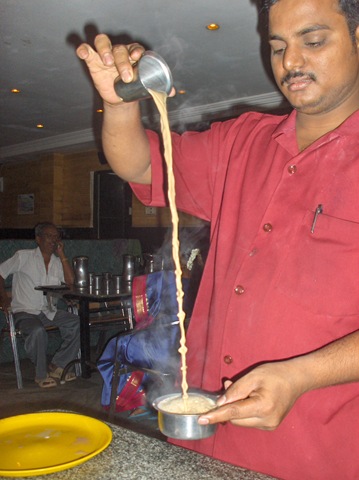
First is coffee. We have coffee before the meal. Indians have it after. The staff here know us, and  know to bring the coffee to begin with.

It is served in a metal cup and small pan. The waiter, Raja, pours it from one to the other to cool the coffee. If I tried it from this height, the coffee would be all over the table.

HPIM7318

Then the dosas and vadas are served. Since the staff knows that we LOVE the chutneys, they bring us big bowls of it.

HPIM2473

This concludes the inner path portion of Arunachala Pradakshina.

From here you can complete it by walking through town on the main street, or on back streets closer to the mountain. We usually have our rickshaw driver, Rajan, pick up us after breakfast and ride through town.

The Inner Path Pradakshina is something that gives many people a deep sense of the holy maintain, and its peace and tranquility. The walk can be made year round. In the summer months start as early as you can (6 am?) and take lots of water. Take your time. Be willing to explore. Near the path are many places of wonder, beauty and  peace. Savor it all, if you can.

Related Posts

Inner Path – Southwest Side
I
nner Path – South Side from Ramanasramam
Inner Path – Around Parvati Hill
Inner Path – The Elephant
Inner Path – Through the Trees

Harsha's avatar

Inner Path – “Trees”

This post continues the series that show Arunachala’s Inner Path, used by devotees of Sri Bhagavan Ramana Maharshi for the sacred walk around this holy hill. This walking is called pradakshina, or in Tamil, girivalam.

Part One shows the path from Ramanasramam. Part Two shows the walk around the southwest side of the hill.  Part Three details the section of the path around Parvati Hill, at the west end of Arunachala. Part Four shows the path on the north side, under the Elephant. This is Part Five.

A map is below. The Trees section of the Inner Path is shown in red.

Arunachala Inner Path Trees

In this section of the Path, tall trees, planted about 20 years ago, are a main feature, first away from the Path, near the road, then next to the Path, then the Path goes through these trees. Also the Path gets closer to the road, and is  less quiet. 

Starting from the Stone Post

It is about 7:30 in the morning when we start from here. There is sunlight on the trail already. It is late March, and moving towards summer, so the plants are drying out. 

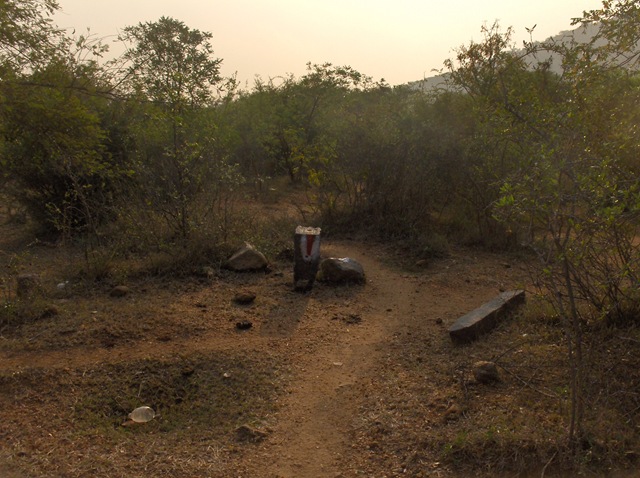
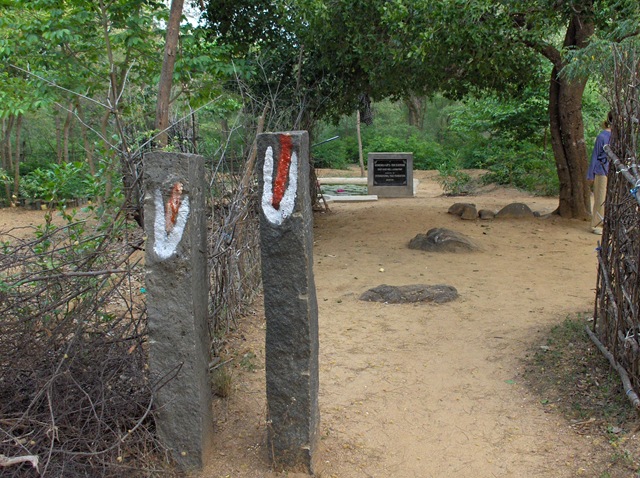
At this spot there are paths leading both towards and away from the mountain. Go straight: the Path is marked here.

Sometimes you will see camphor burning in a pit in this marker. If you brought camphor, you might want to light a piece of it here.

HPIM2056

Looking  away from Arunachala, you can see trees rising far away.

HPIM2057

The Elephant ‘compass’ is now pointed almost directly at us.

HPIM2058

Ahead, there is a ridge that slants down towards the Inner Path. This is a landmark on this part of the path. When this ridge comes down to the Path, there is a nice place to sit, rest and have a drink of water. There is also a little-known feature of Arunachala at this spot, called by some the ‘Ringing Rock.’ 

HPIM2059

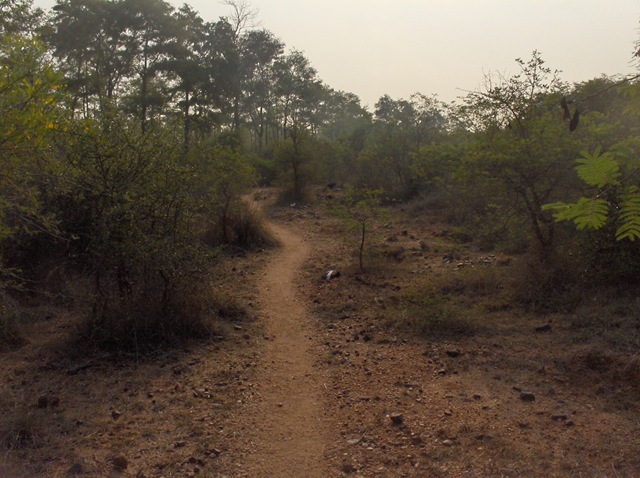
The path is well marked. Sometimes it goes through thickets.    

HPIM2062

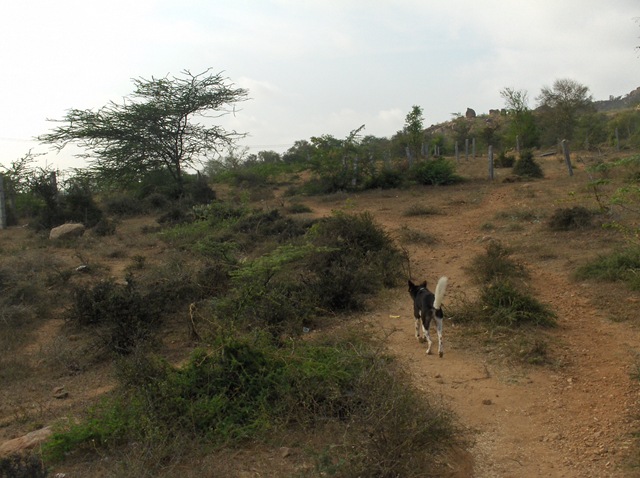
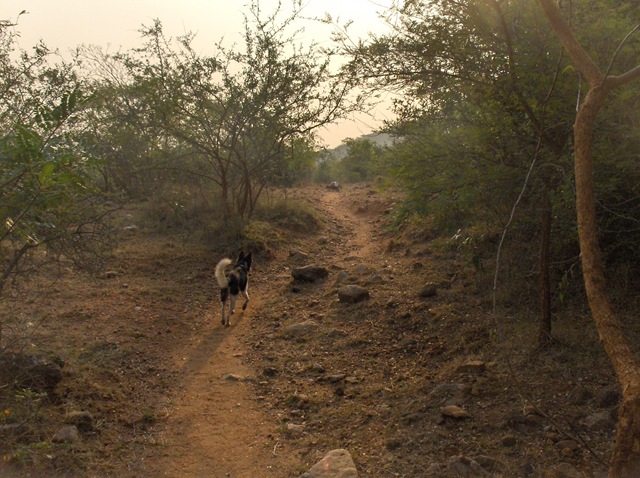
Sometimes through open scrub brush. There is a black and white dog walking with me today. He sometimes joins us on the walk. I bring doggie biscuits for him (and two other dogs that are friends).

HPIM2063

Looking back towards the mountain, the ridge seen when walking The Elephant rises to the right. In the center here you can see a low hill, where it will be worth exploration trips in the future.

HPIM2068

Ahead on the Path we see the ridge angling down to the Path.

HPIM2071

HPIM2075

Trees are now closer to the Path.

HPIM2077

The Path continues through open brush.

HPIM2081

We pass a stone retaining wall intended to reduce erosion during the rainy season.

HPIM2082

Now  it looks  like we are heading into the trees.

HPIM2086

They are closer to the Path here.

HPIM2095

We wind down a small hill.

HPIM2097

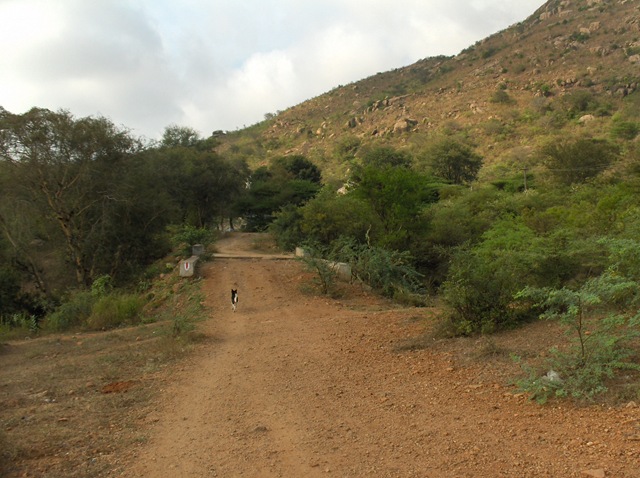
And come to a well-made rock-and-cement structure that is part of the system to slow down water running off the Holy Hill.

HPIM2098

Below, we have crossed to the other side of the Elephant ‘compass’.

HPIM2103

The path goes through trees for a short bit, then back into the brush.

HPIM2107

Here is a short set of stone stairs. Again and again we see work that has been done by someone who loves Arunachala, and provided some service to the mountain by working on the Inner Path. 

HPIM2110

Winding through the low trees and brush.

HPIM2116

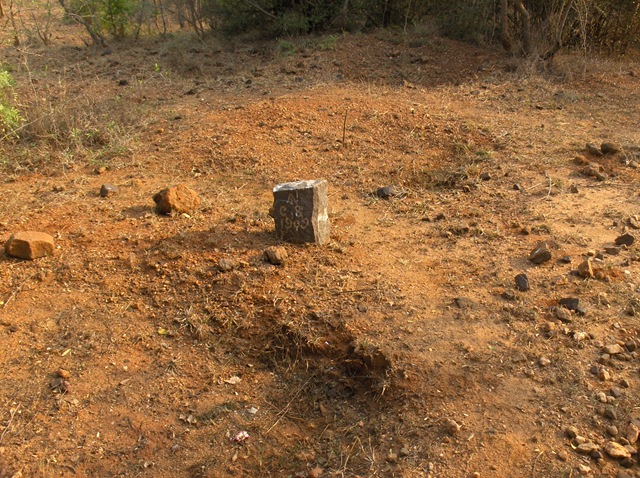
Here is a survey marker. The date is 1909.

HPIM2117

Now the Path is next to the trees.

HPIM2123

The Elephant ‘compass’ shows we are on the north east side of Arunachala.

HPIM2125

We see many trees to the right of the Path.

HPIM2132

In the foreground, notice the green ridge coming down towards the path.

HPIM2137

This two-rock marker also shows where we are. We are near a group of rocks were we can sit and rest.

HPIM2140

To the right, through the trees, we can see a spot of yellow color. This is from a house by the Girivalam Road. You can hear traffic  on the road now.

HPIM2141 crop

Here are the rocks. We usually sit here for a bit, and have a drink of water.

HPIM2153

Off the right side of the Path is a rock with an arrow painted  on it. (In the photo above, it’s the rock to the right in the middle ground.) If you look closely, you will see that it is scuffed (above and to the right of the arrow). Grab a hand-sized stone and strike it in the scuffed area.

Listen and know why it is called ‘The ringing rock.’  Have you ever heard anything like this before?

HPIM2157

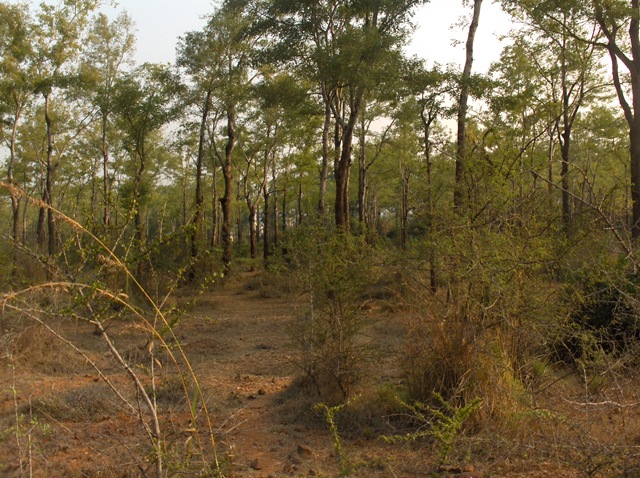
Now the Path continues through the trees.

HPIM2160

More houses and commercial buildings are visible to the right of the Path.

HPIM2164

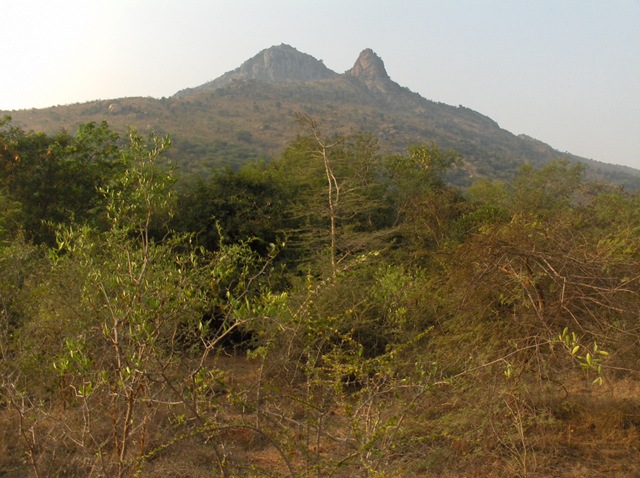
The peak of Arunachala is behind us. We see The Elephant from the other side now.

HPIM2165

These trees are planted  in rows.

HPIM2175

Take the right fork of the Path.

HPIM2176

Below is the peak through the trees.

HPIM2180

We cross a couple of paths.  The Inner Path is well marked. Go straight.

HPIM2183

Now a rock formation rises to the left of the Path.

HPIM2192

It is maybe 20 feet high. Recentlyl we saw a photographer here, having gone ahead of his group to get a shot from a great angle.

HPIM2197

We cross the path that goes by this rock. This  is the end  of this section of the Inner Path. 

HPIM2196

We will post the next and last section of the Inner Path soon.

Related Posts   

Inner Path – Southwest Side
I
nner Path – South Side from Ramanasramam
Inner Path – Around Parvati Hill
Inner Path – The Elephant

Harsha's avatar

Inner Path – The Elephant

This post continues the series that show Arunachala’s Inner Path, used by devotees of Sri Bhagavan Ramana Maharshi for the sacred walk around this holy hill. This walking is called pradakshina, or in Tamil, girivalam.

Part One shows the path from Ramanasramam. Part Two shows the walk around the southwest side of the hill.  Part Three details the section of the path around Parvati Hill, at the west end of Arunachala. This post is Part Four of the series.

A map is below. The Elephant section of the Inner Path is shown in orange.

Arunachala Inner Path The Elephant

Note from the map that this section of the Path has many small streams that cross it. The terrain here features small ‘hills’ as you enter into and out of the creek bed. These creeks are all pretty small, and only have water when it rains.

It is in one of these that Sri Ramana found the banyan leaf, and followed the stream upstream, only to be stung by hornets, and then abandoned his search for the banyan tree.

Starting from the Frog Pond

The Frog Pond is dry by mid March when these pictures were taken. The season is getting hot, so  we started early and were here by 7 AM, before the sun rises over Arunachala. The bright sun can be seen behind the ‘trunk’  of The Elephant. We will have sunlight in a few minutes.

HPIM1934

The Path starts off across an area pretty dry and flat.

HPIM1935

Looking to the right side, first you see the gap between Arunachala and a small hill. There is a path over this gap that is shown in A Path Across Arunachala.

HPIM1936

Looking behind is Parvati Hill, and the pass at the other end of the hill. This is where the original Path was. This is shown in the postings: Kattu Siva Path Renewal – Part 1 and Kattu Siva Path Renewal – Part 2 .

HPIM1937

Next the Path crosses the first of many creek beds …

HPIM1938

Then rises up to the Northside Catchment Basin. Notice that there is a path across the basin that is usable much of the year. Some people take this path here.

HPIM1940

The main route of the Path goes to the left, and follows along the dirt berm that makes up the retaining wall for the catchment basin.

HPIM1941

Walking across this berm, farmers’ fields come right up to the path. This is the only place where this occurs.

HPIM1945

In the photo below, looking over the basin, a big rock can just barely be seen rising through the trees. On the other side of the basin here is a trail nexus where a number of paths go towards and along the mountain side. This is shown better in Under the loving gaze of The Elephant.

There is an old small trail next to the mountain in this area that we call ‘The Inner-Inner Path.’ This will be detailed in subsequent postings. Easy exploration can be done here.

HPIM1948

Between the Path and the fields, the farmer has made ‘fences’ of dry thorny branches. This keeps cattle from entering the fields. 

HPIM1950

At the end  of the basin the Path crosses another dry stream bed …

HPIM1952

Then goes off across the gentle hills. 

HPIM1953

In this section a power line crosses the Path. This is the only place where this happens.

HPIM1957

Now the sun is starting to  rise above the Holy Hill, and there is better light for photography.

HPIM1961

The Path lights up …

HPIM1960

And crosses yet another creek bed. We walk down and up the little hill.

HPIM1963

Looking to the left, the gopuram of Adi Annamalai Temple rises through the trees.

HPIM1967 closeup

Often this man will be seen, asking for coins. Sometimes it looks like he is working, clearing rocks off the Path and doing other work to improve the Path. 

HPIM1968 closeup

Looking to the left of the Path, not a house can be seen. More mountains rise up on the horizon. There is no motor noise here; all we hear are bird songs.  

HPIM1974

The Path proceeds across the hillside.

HPIM1976

Looking towards Arunachala, a rocky hill can be seen in the foreground, rising from below. More places to explore. I have seen a group here, up on one of the rocks. It seems they were with a teacher and meditating.

HPIM1979

Past another creek bed. This on has a stone wall to prevent erosion. These are seen in other places as well. This is all a part of the task of protecting the hillside and bringing as much water into the water table as possible.

HPIM1987

The Elephant is in the background. A face of the hill rises in the foreground. Water can be seen flowing down rock faces during the rainy season.

HPIM1990

The Path winds on.

HPIM1992

And on.

HPIM2000

We are getting close to the face of the hill that rises here.

HPIM2007

Reminding us of the desert-like environment, here is another cactus, well protected from the heat that is soon to come.

HPIM2010 closeup

Just barely visible here on the hill face is a small white box. This once housed an idol. This idol has been taken by vandals. You can walk up to this spot and get a great overlook of the surrounding area.

HPIM2014

On the other side is a steeper area of the rock face. Back towards this hill it is greener, a sign of better water. There is a trail that leads into this greener area. Sometimes village women can be seen carrying bundles  of dried grasses down this trail.  The local people know the plants that can be used here, and make good use  of everything.

HPIM2020

Now the angle between the trunk and head of The Elephant has  become more acute. This means we are nearing the end this section of the Inner Path. I think of this as the ‘Elephant Compass’ and use the angle as a way to know where I am on the Path.

HPIM2021

The Path continues to wind through the countryside.

HPIM2023

HPIM2034

The ‘Elephant Compass’ gets yet more acute. Getting closer to the end the of the section. 

HPIM2035

Now, through the trees, houses can be seen far away. Road  noise is also sometimes heard.

HPIM2037 closeup

The Path continues through the dry brush. 

HPIM2039

Look at the ‘Elephant Compass’ now. Where are we? We’re reaching the end of this section.

HPIM2045

Looking back, we can see the hill face rising behind us. There is a  big area on this side of the hill that needs to be explored. This will be done in other posting, later.

HPIM2046

Down a bit more of the Path.

HPIM2048

A stone post with a painted Inner Path marker defines the end of The Elephant section of the path. Sometimes camphor will be seen burning in a pit on the top of this post. Notice that there are paths that lead both to the right and the left here. One set goes  towards the road, the other towards the mountain. The Inner Path goes straight, past the post.

HPIM2050 closeup

The next section of the path, we call ‘Trees.’ We will post this soon.                          

Related Posts   

Inner Path – Southwest Side
I
nner Path – South Side from Ramanasramam
Inner Path – Around Parvati Hill 
Under the loving gaze of The Elephant
Adi Anamalai Temple

Harsha's avatar

Wisdom and Action (No. 2) – by V. Ganesan

“Everything as they are, is perfectly all right” — Bhagavan Ramana.

“Accept things as they are” — Bhagavan Ramana.

“Have faith” — Bhagavan Ramana.

“Surrender the ‘me’ to the ‘I AM’ “ – Bhagavan Ramana.

God and Guru are one and the same. Guru is ‘God’ in human form. Guru knows what is best for you and what is to be given to you, including your emotional fulfillments. He anticipates as how best he could extend his help to you.

Read the following fascinating ‘story’ :–

In the far South India there is an area where the lady-inmates would never be permitted to go out of the house, at all. There, the usual joke was that no lady ever knew the shape of the front door of the house !

A teen-age girl came upon a book on Sri Ramakrishna Paramahamsa and was captivated by his life and teachings. She started reading books by Swami Vivekananda. Appreciating her deep interest in the lives of Saints, his uncle who had been to Arunachala, brought a book on the life and teachings of BHAGAVAN SRI RAMANA MAHARSHI, in Tamil [entitled: “Sri Ramana Vijayam”]. When she received the copy on her hands, she lost her body consciousness – the first time it was happening to her ! She kept the book in her Puja Room and whenever she wanted to open the book and read it, the very touch of it sent her into that state of ‘no body experience’. She understood that something great was contained in that book. At long last, she could succeed in opening the book. Lo ! The picture of the Maharshi in the frontispiece sent quivers of joy and ecstasy ! She then and there decided that Bhagavan Ramana was her Sadguru and that her place of residence was not that home but only at ARUNACHALA, at the Holy Feet of her Sadguru !

Her younger brother fully understood her spiritual aspirations and helped her to “run away” from home, without anyone’s knowledge. One dark night, he took her to the Railway station, bought her ticket to Tiruvannamalai and assured her that everything would be well. He had to stay back at home to tackle the terrible commotion that would be raised.

Safe did she reach Arunachala. But, her mind started haunting her with tremendous guilt of having ‘deserted’ her kith and kin and having run away from home like a ‘thief’ . She was crying all her way from station to the Ashram, uncontrollably. She suffered from great emotional trauma.

When she neared the Old Hall where her Sadguru Ramana was seated, she heard him talking loudly : “ I ran away from home, in the dark night, hiding myself behind trees and buildings. My brother had given me money to pay his school fees which I did not do, but ‘stole’ a portion of it. I was afraid all the way to the Railway Station lest any one should notice me, catch and hand me over to my uncle and brother. Inside the train compartment I hid myself till the train left the station. I was feeling terribly ‘guilty’ that I was deserting my kith and kin and was running away from home ‘like a thief’ ! But, no sooner the train left the station, there was total composure that ‘this was venturing only to fulfill a good cause’…….”

What a relief, what a blessing ! The pious girl’s ‘guilt’ took to flight ! She stepped into the Hall, prostrated to her Sadguru Ramana and when she looked up at Him, He was pouring His Blessings on her through His ‘Glance of Grace’ ! Was not the nod of His head total approval of her act ! To whom else she could totally surrender other than to her God, Guru Ramana ! Till she dropped her body at a ripe old age she lived at Arunachala, having a home in front of the Ashram – all her life, basking herself in His Glorious Presence ! Even after the Brahma Nirvana of Sri Bhagavan, she immersed herself in devotion to the teaching of her Sadguru.

Surrendering one’s “me” is the only ‘loss’ a seeker has to meet with. But, what a great gain it brings about : the Absolute Truth – “ I AM “ ! The Truth that is extolled in all scriptures and by all sages and saints !

Has not Jesus Christ proclaimed : “Only he who gives up his life [ ‘me’ ] will find it [ “I AM” ] ” ? Staying in the state of “I AM” brings about spontaneously the act of giving up the ‘me’. The ‘me’ is a never-existed state and “I AM” is the ever-existing state. Remember, Sri Bhagavan repeatedly said :”Affirm the Truth, the non-truth will drop off of itself” !

In this light, shift your attention from ‘work’ outside, to ‘Wisdom’ inside.

If you pay exclusive attention to ‘work’ , you will miss even tasting the ‘Wisdom’. Jesus Christ said: “Attain first the Kingdom of Heaven and all else shall be added to you”. Arthur Osborne, in one of his brilliant Editorials, wrote: “If one seeks to attain all else, the Kingdom of Heaven is not likely to be added !”

Bhagavan Ramana, on the very first day of his arrival at Arunachala, in 1896, declared before his Father – ARUNACHALA : “Thy Will be done”. The rest of his stay of 54 years, there was no ‘me’ for him to decide over ‘actions’ done, to say either ‘yes’ or ‘no’ . Actions happened in his presence – that’s all ! In a court case, when the Judge who came to the Ashram to examine him and asked him to sign the document, the Maharshi didn’t, as he had no name to sign, nor any form of identification as a ‘me’ to affix a signature as an individual ! All the time immersed, as he ever was in the Perfect State of “I AM”, where was any possibility of a ‘me’ to put out its hood !

One might say, ‘It is all right for the Great Maharshi. But how about me, an ordinary person ?’ For an answer to such a query, we have to turn once again only to the very same Great Maharshi’s life. Take up one cue from many of Maharshi’s utterances, say : “Everything stated in the ancient texts are word by word true.” Have complete ‘faith’ in those sacred words of the Great Master.

Look ! How and what happened in his life :–

__________________________________

During Bhagavan’s Virupaksha Cave days, many supernatural visions and experiences occurred. Generally, he disapproved of giving importance to visions and supernatural happenings. But where Arunachala was concerned he did not conceal anything – rather, he was ever jubilant in describing them.

When questioned about the Siddhas [ realised beings] residing on the Hill and inside the Hill, Bhagavan narrated the following scintillating experience of his : “I was wandering on the Hill and suddenly I found a big cave. When I entered the cave, I saw a number of waterfalls, beautiful gardens, tanks within those gardens, well-laid paths, fine lighting – everything there was most pleasing. As I went further and further I saw a Realised Person [ Siddha Purusha ] seated, like Lord Dakshinamurti under a tree on the bank of the tank. Around him, a number of saints [ munis ] were seated. They were asking questions and he was replying to them. That place appeared to me as a very familiar one. That is all. I opened my eyes ! Subsequently, when I saw “Arunachala Puranam” [ “Ancient History of Arunachala” ] in Sanskrit, I found two verses in this regard. That cave and that Siddha Purusha have been described in them and so I was surprised that what had appeared to me was to be found in “Arunachala Puranam”. So, I translated those two verses into Tamil :

O Arunachala ! Though you are in the Form of Fire, you have kept away the Fire and have taken the shape of a Hill mainly to shower your Blessings on people. You are always living here in the Form of a Siddha, in the interior of the cave. In you is Transcendental Glory, with all the enjoyments of the world, as well.”

Bhagavan continued : “Some time back, when the temple in Adi Annamalai was renovated, it has been reported that in the sanctum sanctorum of the temple, a large tunnel was found and when people tried to find out its extent they said that it was extending to the very centre of the Hill. I thought that which occurred to me and is in the Arunachala Purana appears to be true and that the tunnel was the way to the place I had seen. It is reported that the siddhas come from the cave inside to the temple through that tunnel !”

————————————————————

As a true seeker, one has to listen to the holy words of the Sadguru. Even a look, a gesture, a nod from the Guru is enough ! Look at how a wandering seeker “ Ramdas ” [ Swami Ramdas ] got enlightened in the presence of the Maharshi. And, listen to his words of spiritual advice to us, seekers :–

—————————————–

Ramdas went to Ramana Maharshi in a state of complete obliviousness of the world. He felt thrills of ecstasy in his presence. The Maharshi made the awakening permanent in Ramdas. How ?

Ramdas addressed Sri Bhagavan, thus : “ Maharaj ! Here stands before you a humble slave. Have pity on him. His only prayer to you is to give him

your Blessings.” The Maharshi turned his beautiful eyes towards Ramdas and looked intently for a few minutes into his eyes, as though he was pouring into Ramdas his Blessings through those orbs; then, shook his head to say he had blessed. A thrill of inexpressible joy coursed through the frame of Ramdas, his whole body quivering like a leaf in the breeze….

After many years, when Swami Ramdas was well-known, some people pleaded with Swami Ramdas : “You went to Ramana Maharshi and you got Illumination. Give us Illumination like that.” Swami Ramdas replied : “You must come to Ramdas in the same spirit and in the same state as he went to the Maharshi. Then, you will also get it. Where was his heart ? How intense was his longing ? What was world to him at that time ? If you come in that state, it is all right !”

—————————————-

We should conserve all our energies to help ourselves deeply spiritually

by again and again turning to the sacred words of the Maharshi. I quote here the words of guidance from another reputed mature soul, Swami Rajeswarananda :–

———————-

“ Sri Ramana Maharshi awakens in every one of us the dormant Divinity, the Potential Power, the Primary Principle, which is hidden behind the flow and flicker of our day-to-day, ordinary life. He sets before us, as the glory and goal of life, the Realisation of the Full Divine Consciousness of our own Self. The Self is not something to be created or attained, but which is fully aware of itself with an awareness that can neither begin nor end, as it is Eternal. He proclaimed the Absolute as the Self, the “I AM” in each individual life, ever being itself.”

—————————————————

In the last days of the Maharshi’s earthly life, the Ashram management sought his guidance as how they should conduct themselves in the future. They were intending to express as to what they should do after he dropped the body ! Bhagavan smiled at them and said : “ The same Higher Power which was running the Ashram till now, would also continue to take care of its further welfare.” The need for total surrender was the message !

How to give effect to total surrender in each one’s life ?

There is only one way and that is to put his direct teaching into effect. When a group of senior devotees, under the leadership of Muruganar, approached Bhagavan and prayed to give them his guidance, his crystal clear instruction was : “ Put my direct teaching into practice !”

Wisdom and Surrender are the two sides of the same coin. Without ‘Wisdon’, Surrender is impossible; and, without ‘Surrender’, Wisdom is incomplete !

In this regard, the following dialogue between Sri Bhagavan and a senior devotee, G.L.Narasimha Rao throws greater light :–

————————

Sri Bhagavan replied to G.L.Narasimha Rao, thus : “ You say that on final analysis all that I see or I think or I do is One. But, that really comprises two notions : the ‘all’ that is seen and the ‘I’ that does the seeing, thinking and doing, and says ‘I’. Which of these two is the more real, true and important ? Obviously, the ‘seer’, since the ‘seen’ is dependent on it. So, turn your attention to the ‘seer’ , who is the source of your ‘I’ and realize that.

This is the real task .

Up to now, you have been studying the ‘object’ , and not the ‘subject’ . Now, find out for what Reality this word ‘I’ stands. Find the entity which is the source of the expression of ‘I’ . That is the SELF — the SELF of all selves.

The simplicity of it made GLN burst out : “Then, Bhagavan ! ‘Self-Realisation’ is very easy, just as you say in your poem : ‘ Atma Vidhya [ ‘Song on Self-Knowledge’ ] ! “

Sri Bhagavan smiled and said : “Yes, yes ! It seems so at first, but there is difficulty too. You have to overcome your present false values and wrong identifications . Therefore, the quest requires concentrated effort and steadfast abidance in the Source when this is reached.”

While giving such a warning, Sri Bhagavan also added words of solace :

“But, don’t let that deter you. The rise of the urge to seek for the ‘I’ itself is an act of Divine Grace . Once this urge gets hold of you, you are in its clutches. The grip of Divine Grace never relaxes and finally devours you ,

just as the prey in a tiger’s jaws is never allowed to escape ! ”

Giving up of the ‘me’ is indicated when Sri Bhagavan said : “You have to overcome your present false values and wrong identifications”. The ‘me’ is nothing but a conglomeration of ‘false values’ and ‘wrong identifications’ !

Long for, pine for experiencing the “I AM” – that’s all that is needed ! Grace will flood one’s Heart that pines for “I AM” experience ! The Great Compassionate Guru Ramana assures our doubting minds, with these assertive words : “The rise of the urge to seek the ‘I’ itself is an act of Divine Grace” and adds : “The grip of Divine Grace never relaxes and finally devours you [ the ‘me’ ].”

All that is required of a seeker is to turn one’s attention within. Then, one can experience the splendour taking place within oneself – the ‘me’ dropping of its own accord and “I AM” spontaneously asserting itself !

The glorious words of Bhagavan Ramana : “Shift your attention from non-truth to Truth” , when adhered to, helps one to transcend the ‘me’ [drowned in one’s endless activities] and get established in “I AM” [the vibrant SELF] !

“Begin with the beginning”, commanded our Great Master. The beginning of the quest for Truth, can begin only in ‘you’; and, its ending also can take place only in ‘you’.

“There are no others”, is yet another powerful guidance from Sri Bhagavan.

How ?

One begins the quest only in oneself — with a ‘me’ — and ends up with the Truth – experience of “I AM” — also within oneself ! That is, one [ say, Ganesan ] begins the quest with a ‘me’ [body-mind] and ends it also in himself with the Illumination : “ I AM THAT I AM” ! The profound declaration made by GOD three thousand years ago !

The ‘me’ has a time and a history !

“I AM” is NOW !


************************************************

Related posts:

Satsang with Ganesan
Self nature, Faith and Attention
Wisdom and Action (No. 1)

V. Ganesan Bio

ganesan-1

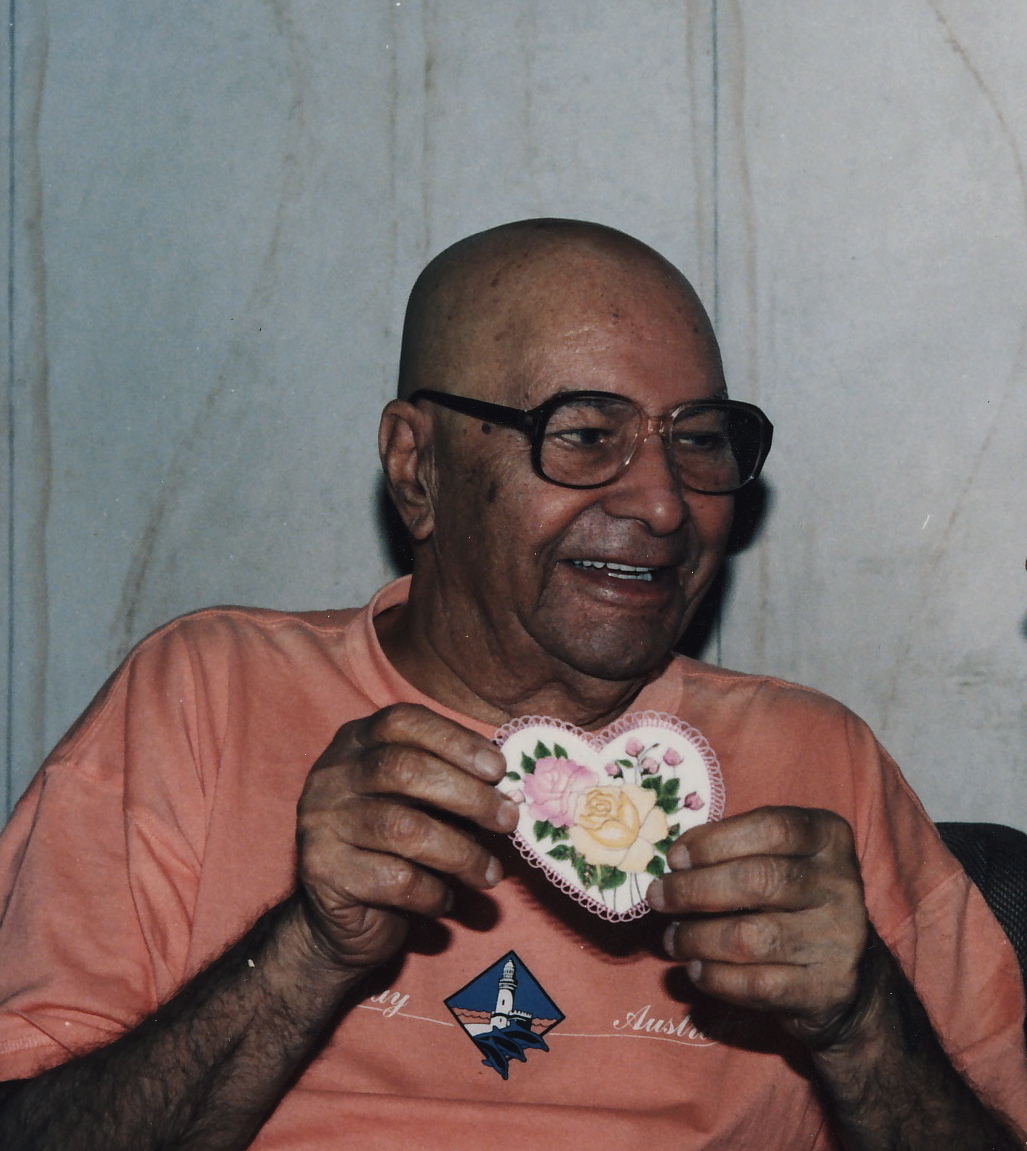
Born in 1936, up to the age of 14 years old, Ganesan grew up in the presence and proximity of Bhagavan Sri Ramana Maharshi. His sacred memory of the Great Master is rich in its content; and, even at that tender age he could see Sri Ramana as the greatest compassionate human being.

On April 14, 1950 – the day the Great Master chose to leave the body – the adolescent Ganesan stood near the entrance to the room where Sri Ramana was lying and was fortunate to witness the brilliant flash of Light that later moved towards the top of the Holy Hill – Arunachala.

Ganesan obtained a Master’s Degree in Philosophy; and, then came to stay permanently at “Sri Ramanasramam, Tiruvannamalai” – the sacred abode of Sri Ramana Maharshi – taking care of the Old Devotees of Sri Ramana. He did it as his sole sadhana (spiritual practice). In that way, he collected the reminiscences of Sri Maharshi from those Old Devotees which have never before been recorded.

His close contacts with sages and saints, including Swami Ramdas, Mother Krishnabai, J. Krishnamurti, Nisargadatta Maharaj and Yogi Ramsuratkumar, he says, have deepened and widened his understanding of the ‘Direct Teaching’ of the Maharshi. However, he feels himself to be an insignificant ‘dust’ at the Holy Feet of Bhagavan Ramana.

He has traveled widely and spread the ‘Direct Teaching’ of Sri Ramana Maharshi, in its pristine purity, wherever he was invited to give talks.

He has authored a few books on the life and teaching of Bhagavan Ramana. Among others, “Purushothama Ramana”, “Be the Self”, “Moments Remembered”, “Direct Teaching of Bhagavan Ramana” and “Practising Self-Enquiry” , are very popular.

At the veranda of his cottage – “Ananda Ramana” – he meets earnest seekers, every Monday and Thursday, between 9.30 and 11 a.m., sharing with them the spiritual treasure entrusted with him by all these holy and sacred souls.

Harsha's avatar

Wisdom and Action (No. 1): By V. Ganesan

This is the first part of three ‘sharings’ from Ganesan, at his house in Tiruvannamalai.

Today is the Happy Christmas day – 25th December,2008 !

When I opened the computer, the glorious, serene and the saintly picture of JESUS CHRIST blossomed before me, with the following powerful words written beneath Him :

“ TRUST in the Lord, with your Heart; and,
Don’t lean on your own understanding.
In all things acknowledge Him, and
He shall direct your way. ”

—– PROVERBS 3:5. 6

I felt blessed !

The Great Master: JESUS CHRIST thus was “directing” me the way of what with and how I should commence the ‘Morning Sharing’ with fellow-seekers !

In our last session, we quoted FOUR varied sayings of the Great Master : BHAGAVAN RAMANA, on which the mode of sharing would be taking place for a few more sessions. They are :

(1) In 1936, Paul Brunton asked the Maharshi : “Can a man of the world [ viz., one who is involved in worldly activities ] practice this Jnana Marga – Wisdom Path ? “

Sri Bhagavan’s cryptic answer was : “There is no contradiction between Work and Wisdom.”

(2) On another occasion, Sri Bhagavan said : “ The only purpose of life is to realize the SELF. All other activities are waste of time.“

(3) Yet another affirmative statement of Sri Bhagavan is : “ If one identifies oneself with the body, ‘Karma ’ [ destiny ] is inevitable
and unavoidable [ which means, one is ever bound, one is ever in bondage ]. If one’s attention is turned inwards, one is always free. One is ever a Free Man.”

(4) When asked whether his teachings could be put in one word,

Sri Bhagavan answered : “ATTENTION” [ “Unar]

* * * * * * * * * * * *

For clarity in spiritual striving, Sages and Saints of yore had conveniently classified the approach to spiritual attainment into four branches : ‘Jnana’ , ‘Bhakti’, ‘Yoga’ and ‘Karma . The “Bhagavad Gitadeals elaborately on all the four methods. Sri Bhagavan also refers to these four paths in his original composition : “Upadesa Sara . However, Sri Bhagavan’s ‘Direct Teaching ’ is “ To turn the outgoing mind inwards and merge it in the Inner Reality .” Any theory which gave emphasis on the ‘mind’ to move out or go outwards, Sri Bhagavan warned the seeker to be vigilant. He said : “ Constant vigilance is the price a seeker has to pay. ”

In that light, it is interesting to observe that Bhagavan gave greater importance only to TWO of the four methods : ‘JNANA’ and ‘KARMA’ . He further elucidated the reason for doing so. He said that ‘Bhakti’ and ‘Yoga’ are included, imbued into ‘Jnana’ and ‘Karma’.

Attention turned outwards is “KARMA” which is body-based and mind-based [ ‘Destiny’ ] .

Attention turned inwards is “JNANA” which is “Attention paying attention to Attention” [ “Ulladu Unar ” ] .

When one identifies with the body, one is bound by rules, regulations, do’s and don’t’s – that is ‘Karma’ . They are unavoidable if one is the body only. Sri Bhagavan raises the question : “Are you only the body ?”

Body is perceptible in the waking; and, vaguely and differently in the dreaming; and, totally absent in the deep sleep state. But, the inward awareness of “ I AM ” is continuous and uninterrupted.

Body is there, temporarily. Awareness is ever there !

Am I the body only ? The mind only ? Or, am I the awareness ? WHO AM I ? Vichara [ Enquiry ] results. Vichara takes one to the inner depths of Truth – to the threshold of TRUTH itself. All other methods are mind based. Vichara transcends mind. When Paul Brunton reported thus to Sri Bhagavan : “ I have been acquainting myself with the various teachings in India before coming to you.

Every one of them preaches the same truth. You also say the same. So, how is your teaching different from the others ?” Sri Bhagavan replied : “All other teachings are based on the ‘mind’ . Mine does not. It transcends the mind.”

Every spiritual practice is based on body & mind and thus only secondary — including meditation. Vichara alone transcends all borders of conditionings.

Listen to Bhagavan Ramana :

“ Devotee: Will Vichara alone do even in the absence of meditation ?

Sri Bhagavan : Vichara is the practice and the Goal also. “ I AM “ is the Goal and the final Reality. To hold to It with effort is ‘Vichara’ [practice] . When spontaneous and natural It is Realization [Goal] . “

— “TALKS” , No.390

The two paths that Sri Bhagavan emphasized are JNANA and KARMA. He classified them in unmistakable terms as well, which can be grasped from the following dialogue with a devotee :

“ Devotee : What is Aham Sphurana (shining) ?

Sri Bhagavan : Aham, Aham = “I AM” , “I AM” is the SELF. Aham Idam = ‘I am this’ or ‘I am that’ is the ego. Shining [ ‘I AM’ ] is there always. The ego [ body-mind ] is transitory. When the “I AM” is kept up as “I AM” alone it is SELF.

When it flies out at a tangent and says ‘this’ or ‘that’, it is the ego. “

— “TALKS” , No.363

* * * * * * * * * * * * * * * *

Now, let us go back to the last session, in a brief way :

In verses 26 & 27 of the Supplement to the Forty Verses [ Ulladu Narpadu ] Bhagavan translated the instruction given to Sri Rama by his preceptor, Sage Vasishta. The theme is the right relations between awareness and heroic action. In 1944 when the proofs of the third edition of Ulladu Narpadu was being corrected in Bhagavan’s presence, some of the English Professors who had accompanied Prof.K. Swaminathan, found fault with the introductory note by the author, Lakshmana Sarma [ “Who” ] :

“To the question how the sadhaka [aspirant] is to behave in the world till he succeeds in attaining Wisdom, the answer is given in the two following verses, taken from the Yoga Vasishta. “

* * * * * * * * * * * * * *

Verse 26 : Supplement to the Forty Verses on Reality :

“ Having understood, i.e., by consciously experiencing the various states – like, the waking, dreaming and the deep sleep – and yet always holding firmly at Heart to the Supreme State of Inner Silence, play your part, O Hero, ever in the world. Having thus realized the Inner Silence of the Heart as the underlying Truth behind all forms of appearances, never swerve from it. Thus, play your allotted part in the world, O Hero, acting as though attached to them all ! “

Verse 27 :

“ Outwardly pretending to have enthusiasm and delight, excitement and aversion, initiative, effort and perseverance, yet without any inner attachment at all, play, O Hero, in the world. Thus, releasing oneself from all forms of bondage [attachment ] and having equanimity of mind, act outwardly, in all situations, in accordance with the part one is endowed with, play your part as ordained, O Hero, in the world. “

* * * * * * * * * * * * * *

Now, the Professors pointed out to Sri Bhagavan the obvious absurdity of Sarma’s suggestion that Sri Rama – Incarnation of Lord Vishnu – a Self-Realized great soul — needed this teaching.

“Who has these doubts ?” enquired Sri Bhagavan. “Prof. K. Swaminathan !” said some one. The cool bright beam of the Maharshi’s glance of grace pierced through the entire being of Prof. K. Swaminathan. Sri Bhagavan said smiling : “ Look ! It is for you” [ Paar, Unakkuttaan ! ]

The “you” refers not only to Prof.Swaminathan, but so vibrantly to every one of us ! Remember, some time back, we shared how one of the Saints that I had met, had asked me to read “The Bhagavad Gita ” and actively guided me by saying : “To truly understand the import of this great spiritual masterpiece, one should read it assuming oneself to be Lord Krishna and never by identifying oneself with Arjuna !”

Likewise, one should read these two verses from the standpoint of Jnana [ Wisdom ] and never from the viewpoint of Karma. Notice how the verse begins : “ Having understood……and always holding constantly, firmly in the Heart to the Supreme State of Inner Silence, the “I AM ” ” . As a trapeze act in a circus, one is advised to keep a perfect balance between the outward and inward in one’s activities — a coherent unison — which can successfully be effected by one turning within and not having attachments to actions done.

How to do it ? Allow things to happen as it is. Do not “react” , just “act”. The Higher Power will make things happen “through” you and not “by” you. Give up the attitude of “by me”, at all times and under all circumstances ! The Vedas declare : “ Be a channel for the ‘White Light’ [ Higher Power ] to pass through.”

Look at the lives of Great Masters like the Buddha, Jesus Christ and Ramana Maharshi. How did they live ? Were they lazy ? Were they not more active than any one of us ? Was there not perfect correlation between what they taught and how they lived that very teaching themselves ? On the very first day of his arrival at Arunachala, the sixteen year old youth Ramana, declared : “THY WILL BE DONE”. Never after that there was there any ‘action’ done by himself ! “The same Higher Power which brought me from Madurai to here, has brought me from Skandashram to Sri Ramanasramam,” was Sri Bhagavan’s reply to a query: “Is it not ‘you’ who decided to climb down from Skandashram to here in 1922 ?”

In our own lifetime, we saw how Yogi Ramsuratkumar lived; very actively, yet, totally resigned to the Higher Power, which he chose to address as “Father” . Quite often he used to repeat : “This beggar died at the holy feet of his Guru in 1952.” “Yogi Ramsuratkumar is not this beggar’s name – it is Father’s Holy Name. Chant three times : ‘Yogi Ramsuratkumar’ ; my Father will rush to you and help you.” When Yogiji performed remarkable ‘miracles’

for me, as he had done to his innumerable devotees, and I attributed them to him, his invariable response, every time, was : “This dirty beggar knows nothing, does nothing Ganesha. It is Father ! Out of His abundant Grace and Compassion, He responds forthwith whenever His holy name is thus called.” After a few moments of silence, he would add : “Father alone exists here, there and everywhere. Nothing else. Nobody else. It is Father, Father,

Father alone ! ” “ ‘Yogi Ramsuratkumar’ is not this beggar’s name, Ganesha ! It is Father’s Sacred Name ! You know there is the “1008 Names of Lord Vishnu” which all Hindus chant – like that, this Name is also only Father’s Name !”

Plunge within and recognize the Higher Power guiding you and operating ‘through’ you. Giving up the falsehood of “by me” and holding firmly to the truth of Higher Power working “through me”, is to be “newly reborn”. The purport and significance of our celebrating the birthdays of Sages and Saints – like, our celebrating today the Birthday of the Great Master JESUS CHRIST, as “Christmas” – is to remind to ourselves that one has to be reborn to the truth : “God’s living in me and is operating through me” and to dying to the falsehood : “actions are done by a ‘me’ .” Jesus Christ said : “By dying one lives” . Die to the past and the future and live in the NOW !

Be reborn anew by dying to the age-old attachments to Karma [destiny]. Sri Bhagavan said : “ If you say that there is Karma [ prarabdha karma ] , there is Karma. If you say that there is no Prarabdha Karma, take it for certain, there is no Prarabdha Karma. ”

One is ever the SELF ; never either the body nor the mind ! Be a “Hero ” by diving within and being the SELF !

************************************************

Related posts:

Satsang with Ganesan
Self nature, Faith and Attention

V. Ganesan Bio

ganesan-1

Born in 1936, up to the age of 14 years old, Ganesan grew up in the presence and proximity of Bhagavan Sri Ramana Maharshi. His sacred memory of the Great Master is rich in its content; and, even at that tender age he could see Sri Ramana as the greatest compassionate human being.

On April 14, 1950 – the day the Great Master chose to leave the body – the adolescent Ganesan stood near the entrance to the room where Sri Ramana was lying and was fortunate to witness the brilliant flash of Light that later moved towards the top of the Holy Hill – Arunachala.

Ganesan obtained a Master’s Degree in Philosophy; and, then came to stay permanently at “Sri Ramanasramam, Tiruvannamalai” – the sacred abode of Sri Ramana Maharshi – taking care of the Old Devotees of Sri Ramana. He did it as his sole sadhana (spiritual practice). In that way, he collected the reminiscences of Sri Maharshi from those Old Devotees which have never before been recorded.

His close contacts with sages and saints, including Swami Ramdas, Mother Krishnabai, J. Krishnamurti, Nisargadatta Maharaj and Yogi Ramsuratkumar, he says, have deepened and widened his understanding of the ‘Direct Teaching’ of the Maharshi. However, he feels himself to be an insignificant ‘dust’ at the Holy Feet of Bhagavan Ramana.

He has traveled widely and spread the ‘Direct Teaching’ of Sri Ramana Maharshi, in its pristine purity, wherever he was invited to give talks.

He has authored a few books on the life and teaching of Bhagavan Ramana. Among others, “Purushothama Ramana”, “Be the Self”, “Moments Remembered”, “Direct Teaching of Bhagavan Ramana” and “Practising Self-Enquiry” , are very popular.

At the veranda of his cottage – “Ananda Ramana” – he meets earnest seekers, every Monday and Thursday, between 9.30 and 11 a.m., sharing with them the spiritual treasure entrusted with him by all these holy and sacred souls.
Harsha's avatar

Arunachala – On the Inner Path: Southwest Side

This posting is the second in a series in which I will show some of the experience of walking Arunachala’s ‘Inner Path.’

The first posting shows the start of the walk from Sri Ramanasramam.

This posting continues with the walk where the initial posting ended, from the path near the access point where Perumpakkam Road meets Bangalore Road. This is the place where many walkers enter onto the Inner Path. This part of the Inner Path goes by the path up to Aum Amma’s and Papaji’s caves, by the Sadhu Tank, and ends at the Arunachala Reforestation station.

Previous postings show areas that can be reached while on this part of the Inner Path. Postings about Papaji’s cave can be found here and here. Aum Amma cave is shown here.  A posting about the ‘Holy Feet of God’, Tiruvadi, South of the Sadhu’s Tank, can be found here.

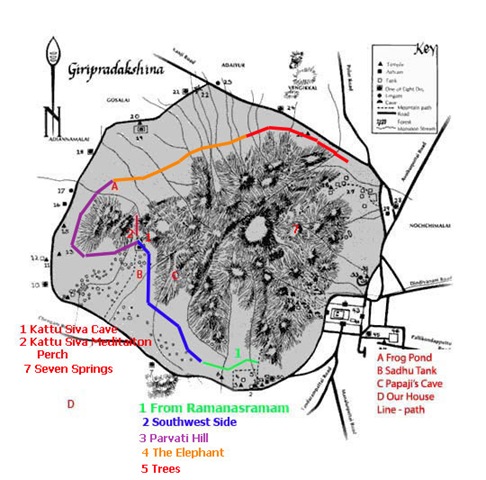
A map of Arunachala and the Outer Path is below. I have marked this map with a few landmarks we use, and with an approximate map of the first two sections of the Inner Path pradakshina (girivalam in Tamil) shown in this series.

The Southwest section of the path is in blue.

Arunachala markers and inner  path copy 2 copy

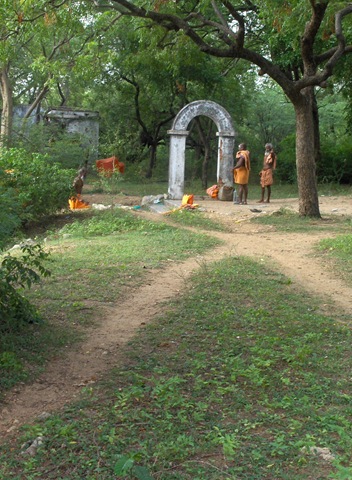
The path starts after you go through the stone ‘gate’ leaving the first section. There is a ditch you walk through on the other side where the path starts. If it is full of water, there is an alternate to the right.

HPIM8194

Looking to Arunachala through the trees before we start walking on this section.

HPIM6090

Most of these photos were taken on a Sunday, and there were a few other people walking the path, including an elderly Indian couple that have lived for the last 30 years in Saratoga California, near where I lived, and who have heard of my spiritual teacher, Nome.

Many times during the week we will not see another person walking the Inner Path.

The path start winding through an area where trees provide a canopy.

HPIM8198

The path branches to the right here. Do no go straight here; you will go back to Bangalore road.

HPIM8202

Arunachala, the peak enshrouded in clouds.

HPIM8203

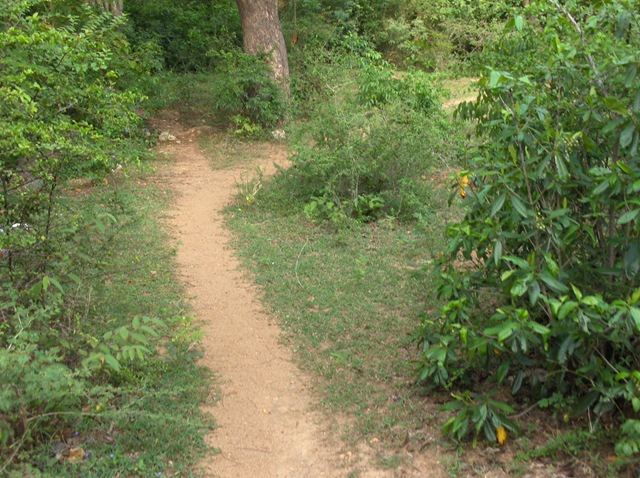
The path in gentle here, winding through trees towards the mountain.

HPIM8206

Now the path has turned East.  The tall trees on the right were planted I think 10 – 20 years ago. There were many of this kind of tree planted in this area, and on the Northeast side of the hill.

HPIM8208

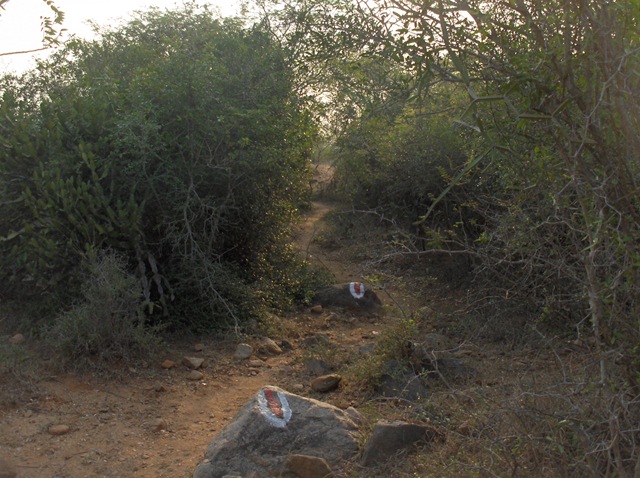
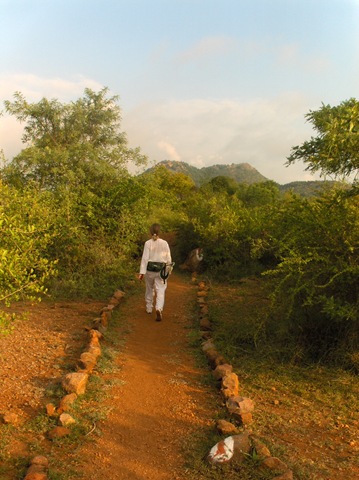
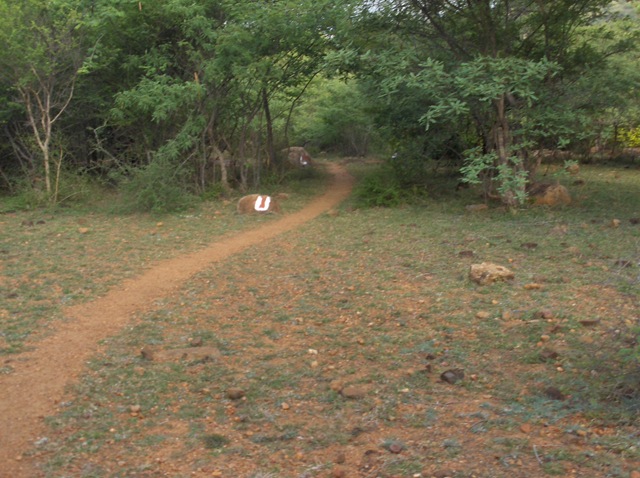
Winding through this countryside. The red and white paintings are trail markers painted on stones. These are found all the way around the mountain to mark the Inner Path. Following these one should not get lost – just keep Arunachala to your right and keep walking.

HPIM8213

Now the path has turned back towards the mountain. It is more rocky here.

HPIM8217

Carol walking ahead of me.

HPIM8234

Arunachala  from the Inner Path, clouds at the top.

HPIM8236

Here is a marker for the path to Aum Amma’s and Papaji’s caves. Follow the path up the hill. Have good shoes, this is rocky and steep in parts.

HPIM5850

Continuing along the Inner Path. Now Parvati Hill, the small hill on the East end of Arunachala, with its two small peaks, is visible.

Note the stones lining both sides of the path. These are common in this section of the path. You will see them in many of the photos.

HPIM8239

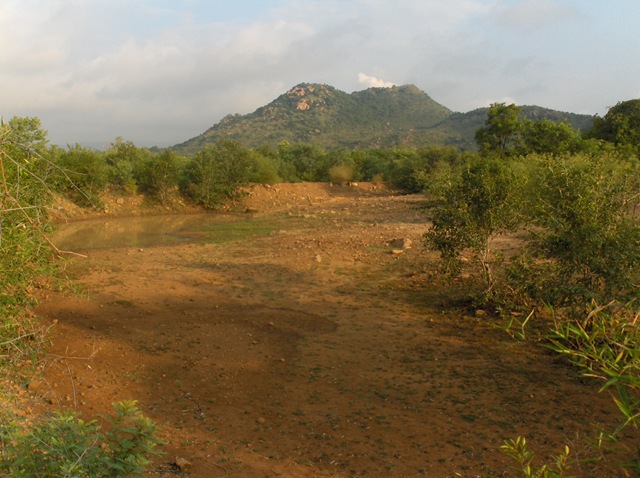
Parvati Hill, looking of one of the several small lakes found in this section of the path. These are behind earth berms, and I think are intended to help bring water back into the underground water table. It is early monsoon season now, and there is some water in this tank, which has been dry for the summer months (starting in April).

HPIM8243

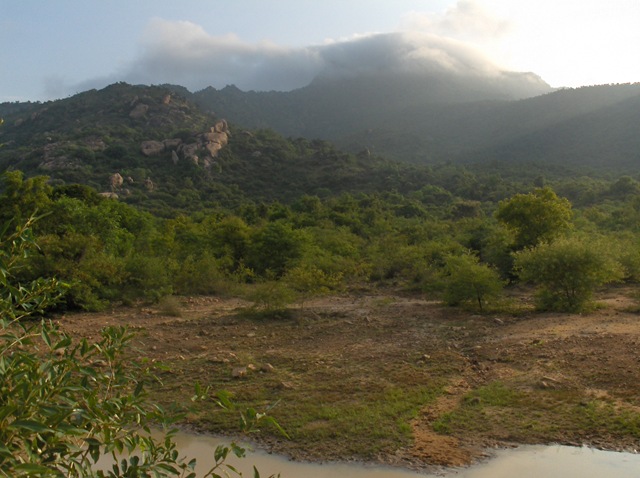
Again Arunachala in the clouds. This is from the berm shown above. Part way up the mountain, on the left side of the photo, a big rock formation is visible. This is where Aum Amma’s and Papaji’s caves are found.

HPIM8248

The path is pretty here, and lined with stones on both sides.

HPIM8258

Now winding through more trees. When the sun is out, these trees are much appreciated. Any shade is welcome. White and red trail markers are visible in the distance.

HPIM8262

Coming out of the trees, Parvati Hill is again visible.

HPIM8269

Back into the trees.

HPIM8274

HPIM8279

Now to the right of the trail is a big rock. Often, in the tourist season, you will see groups, sitting on this rock.

HPIM8282

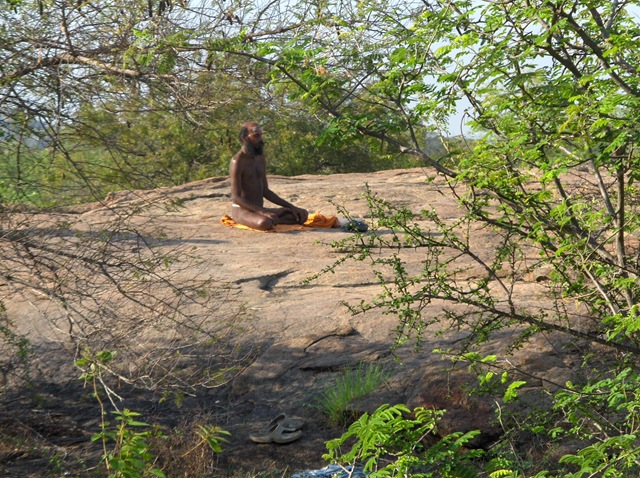
Early in the morning, you also may see a Sadhu, meditating.

HPIM4038

Walking through more trees.

HPIM8284

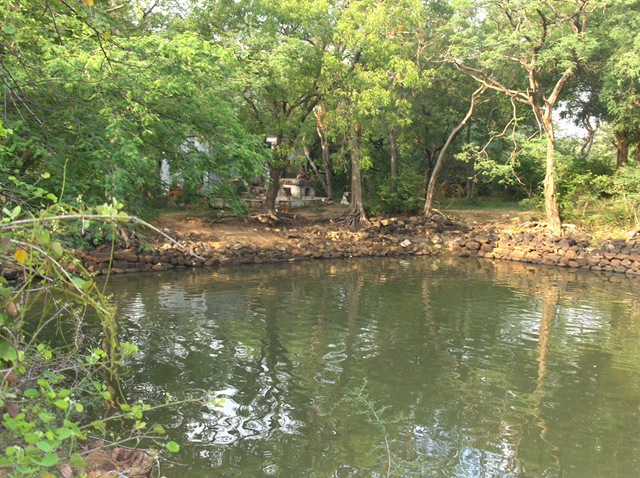
And finally we come to the Sadhu’s tank. This tank is, I am told, spring fed. What I have seen is that it has water all through the year, while most other tanks will dry out.

HPIM8287

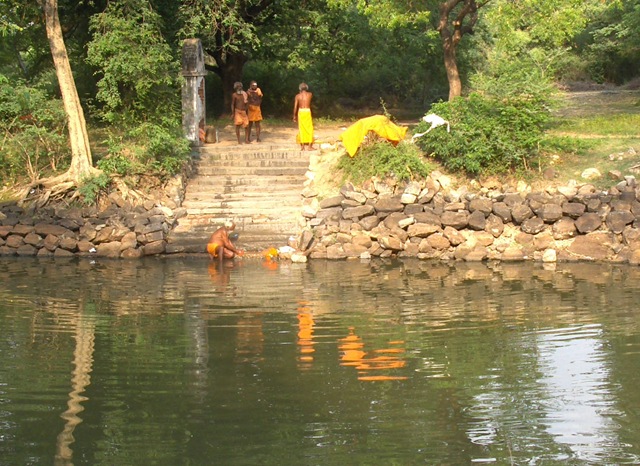
It is early in the morning, and there are Sadhu’s bathing, washing their saffron cloths and spreading them out to dry.

HPIM8286 close up

On the other side of the tank, there is a picturesque masonry arch, and a falling-down building.  This is where we saw the Sadhu bathing in the photo above.

HPIM8289 closeup

Now we follow the path once more through some trees.

HPIM8288

And we get to one of the Reforestation Project’s tree nurseries.

HPIM4197

Here is another stone gate, which marks the end of this section on the Inner Path.

HPIM4199

The next part of this series will start from here.

Harsha's avatar

Adi Annamalai Temple – North side of Arunachala: By Richard Clarke

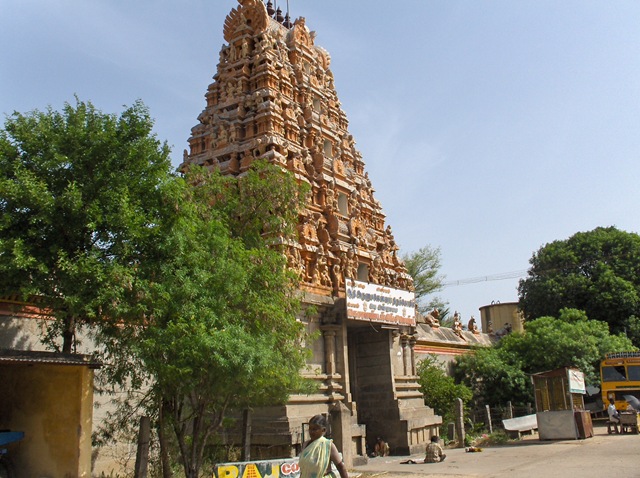
Adi Annamalai is the oldest temple around Arunachala. It was built hundreds of years before Arunachaleswarar Temple, which per Wikipedia, “The earliest known record of the temple is in the works of the poet Nakkirar of the third Tamil Sangam period. At that time, the temple might have been a simple wooden structure. The present masonry structure and gopurams (temple towers) date back approximately 1200 years.”

Adi Annamalai clearly predates Arunachaleswarar Temple, so is older than 2000 years. I suspect the gopuram is also about 1200 years old, from the same period as Arunachaleswarar Temple.

“The name of this Temple, Adi Annamalai means ‘first’ or ‘ancient’ Annamalai (Arunachaleshwarar). Its size is small and it occupies only 1/2 acre in size – compared with the 25-26 acre size of Arunachaleswarar Temple on the Tiruvannamalai side of the Hill. The legend of Adi Annamalai recounts that Brahma, after His dispute with Vishnu about the fiery column, made a lingam and went to the other side of the Hill to worship Shiva. Thus, this lingam is supposed to be the first, ancient and original lingam of Annamalai and hence the name Adi Annamalai.” This quote is from Arunachala Grace Blog. Here is a good article from them on Adi Annamalai.

There are many legends about this temple. The one I like the best is of a secret cave that goes from the temple to inside Arunachala, where all the Siddhis are.

You can see the temple in Google maps, click here.

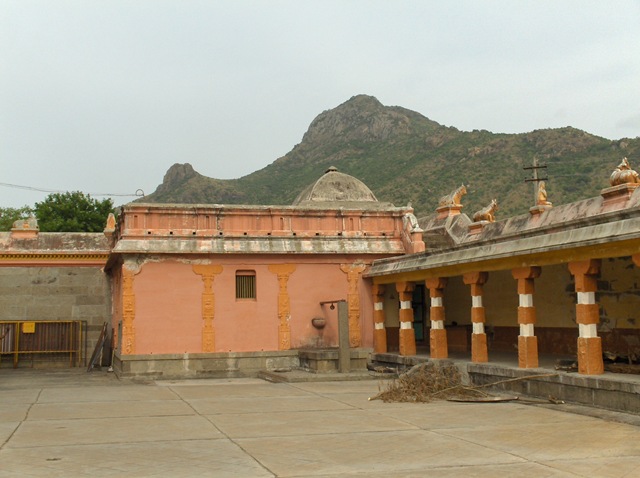
Turning off the Hill Round Road, going through the small village of Adi Annamalai, you come to the temple, with its tower visible from far away.

HPIM5100n

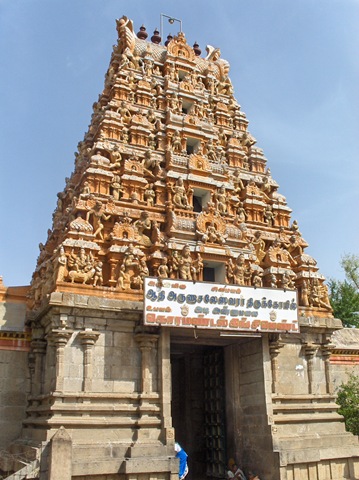
And enter through the gopuram.

HPIM5098

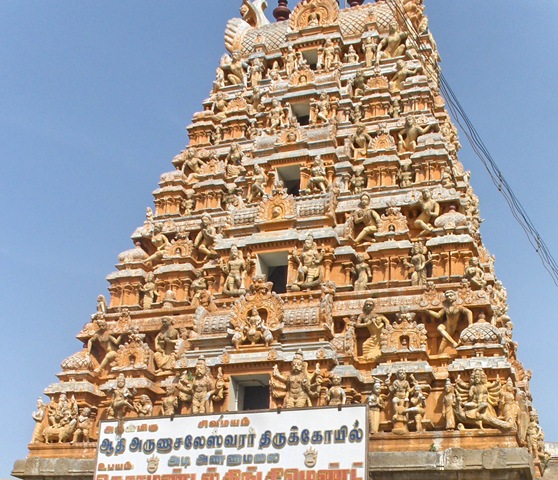
If you look closely at the gopuram, you will see images that illustrate many ancient stories of the gods. A repeated figure is that of a man, straining to hold up the tower. Since the wall has its own support all this effort is not needed. This image is to illustrate the futility of ego-driven action, ‘trying to hold up the universe’ when it is really God, Siva, Brahman, your Self, that is doing ‘all the work.’

Adi Annamalai goporum close up

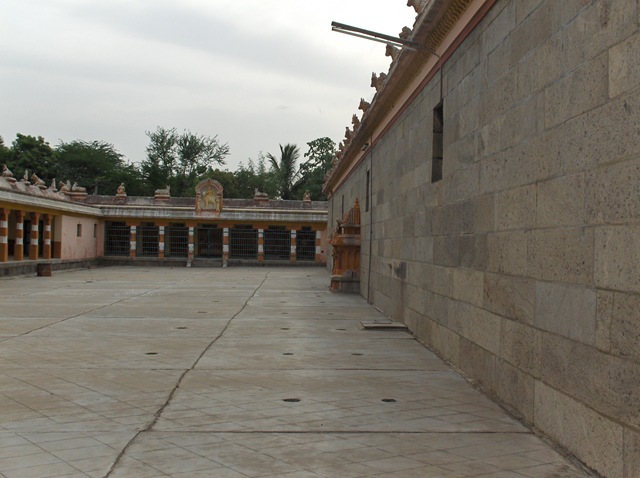
We are not allowed to take photos inside the main shrine. The photos below were taken walking around within the temple walls.
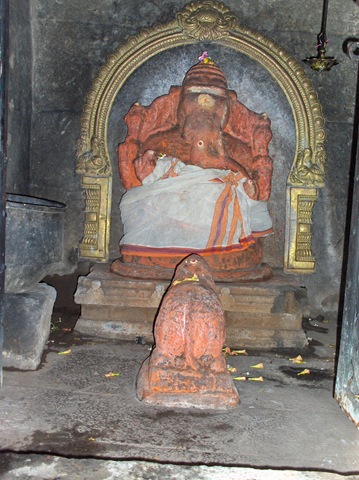
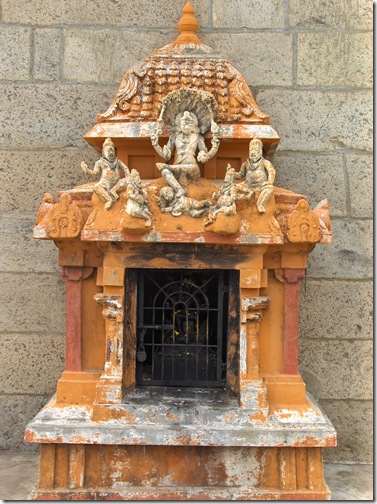
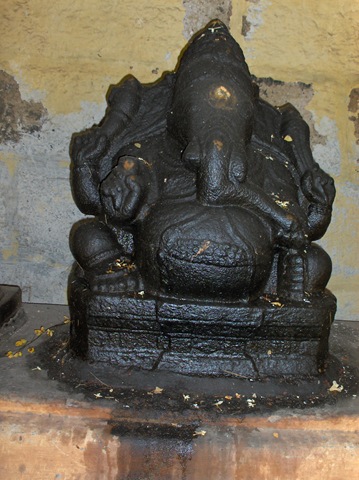
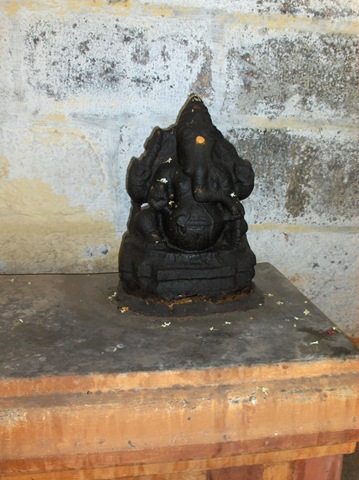
First is Ganesh, the remover of obstacles. This is the first god seen in the Siva temples. Here Ganesh is enclosed in a small shrine that is locked when the priest is not there.
HPIM5076

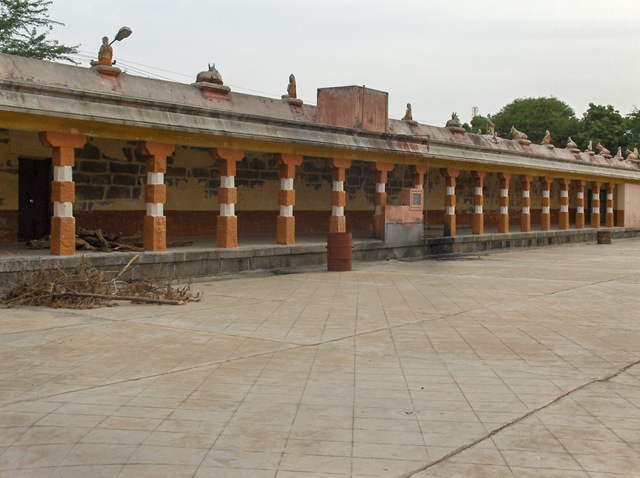
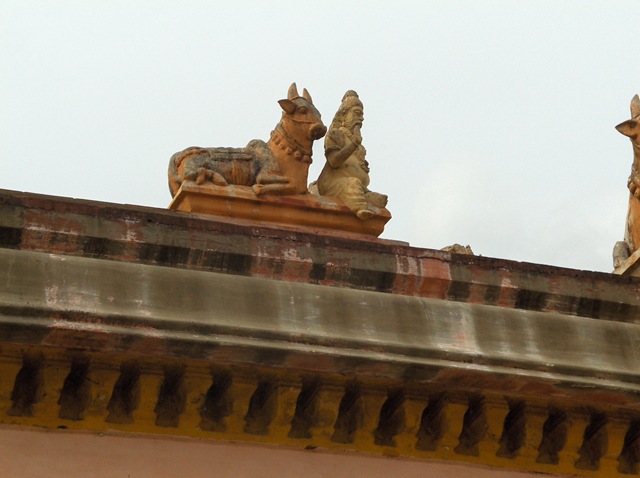
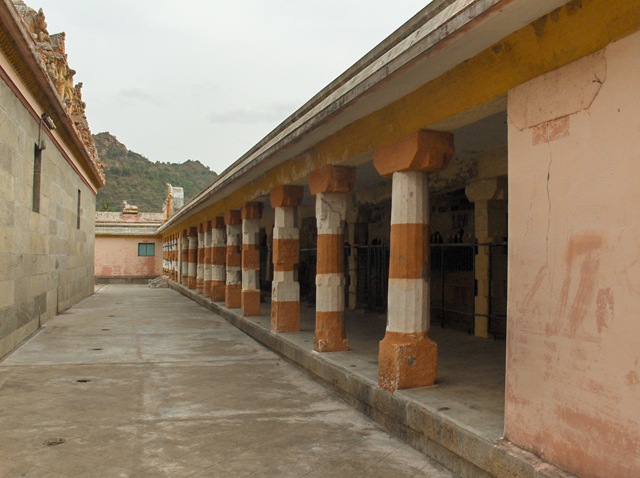
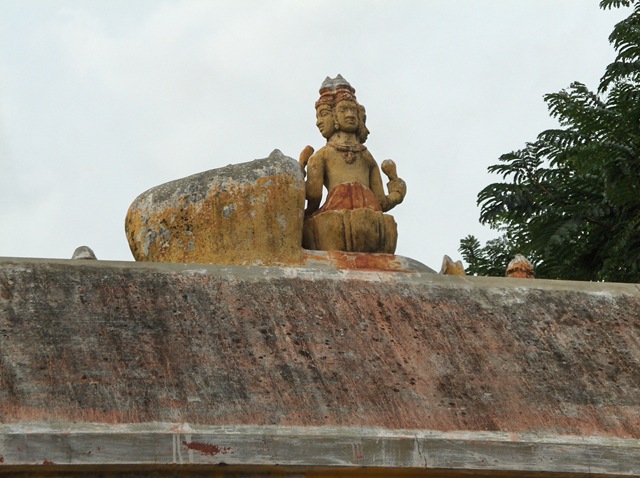
Walking in the usual clockwise direction, here is a hall of pillars. Note all the statues on top of the wall. Similar statues are on all four sides of the temple.

HPIM5077

Here is a close up of one on this wall:

HPIM5088

Looking to the back of the temple, we can see the Dakshinamurthy shrine protruding from the wall.

HPIM5078

Here is Dakshinamurthy, the Southward-facing god. From the Wikipedia entry, “Dakshinamurti literally means ‘one who is facing south (dak?i?a)’ in Sanskrit. South is the direction of Death, hence change. In every Siva temple the stone image of Dakshinamurthy is installed, facing south, on the southern circumambulatory path around the sanctum sanctorum.”

Dakshinamurthy has a special place in our hearts. Dakshinamurthy is said to be the primordial Guru. He is pictured as a young man, with four older disciples sitting with him. Dakshinamurthy taught only in silence. Sri Ramana Maharshi is spoken of comparing him to Dakshinamurthy. It is also said that Arunachala is Dakshinamurthy. Certainly both teach in silence. Ramana says that real silence is when no ego-‘I’ arises.

HPIM5079

Looking back from Dakshinamurthy, one can see Arunachala. Here is the face of ‘The Elephant.’ I wrote an entry about Arunachala in this area, see

.

HPIM5081

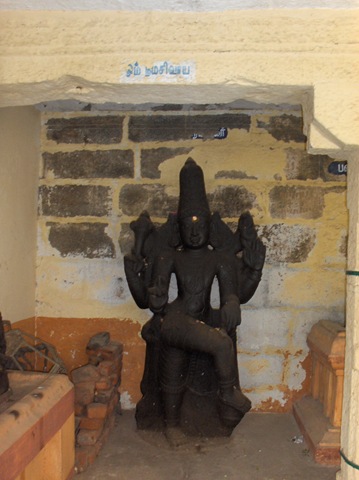
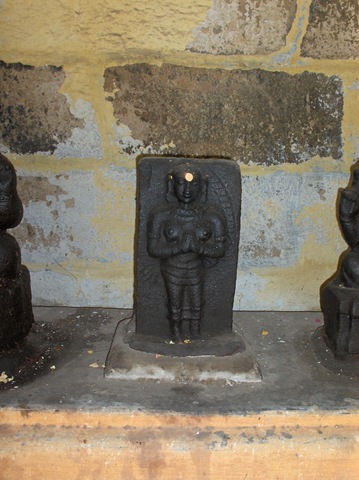
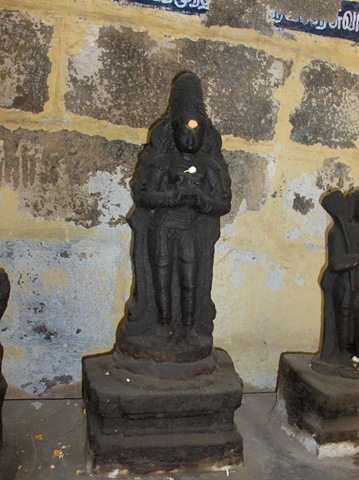
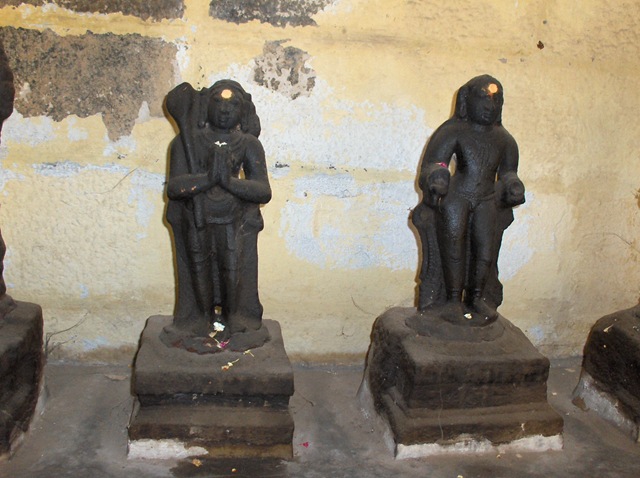
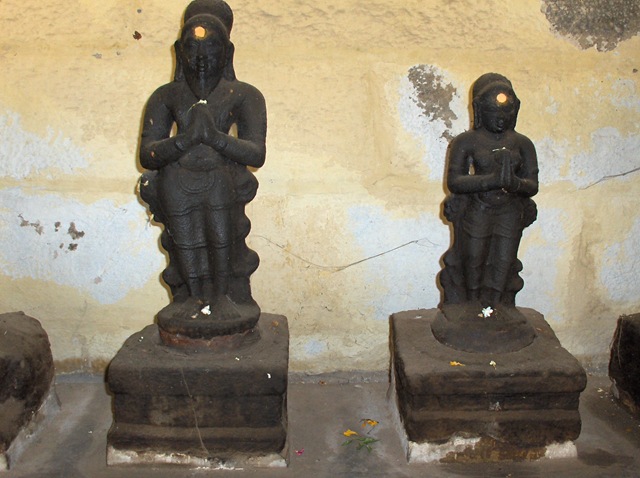
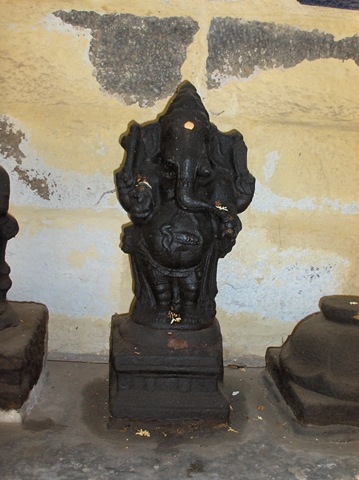
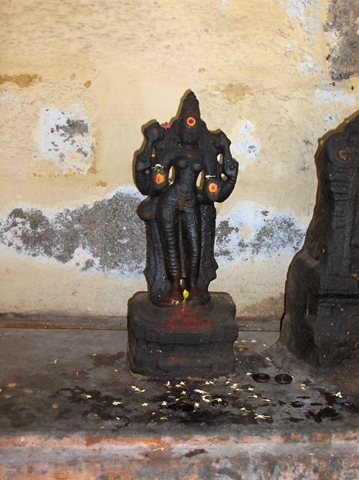
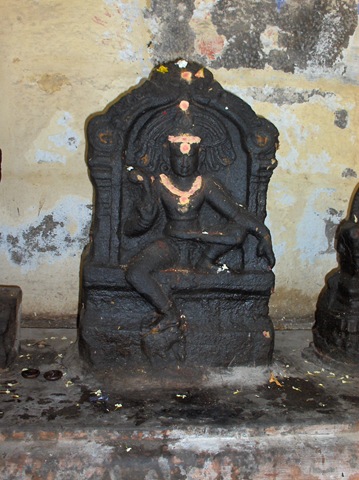
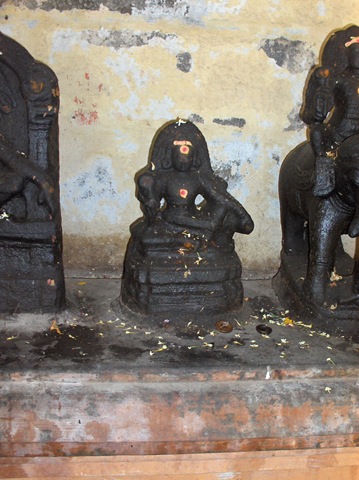
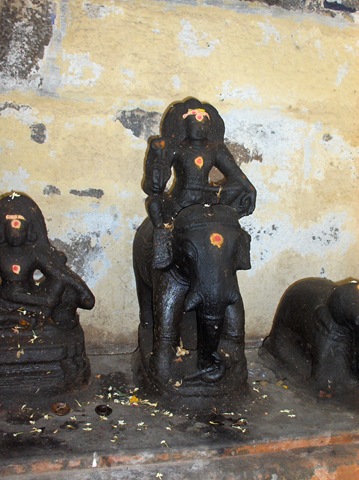
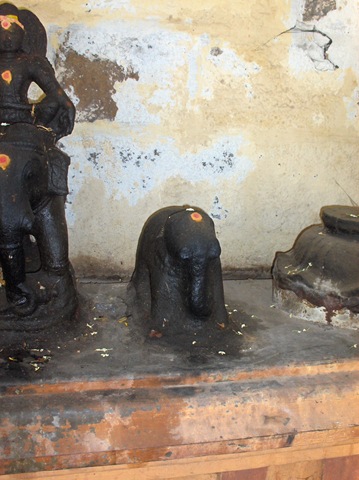
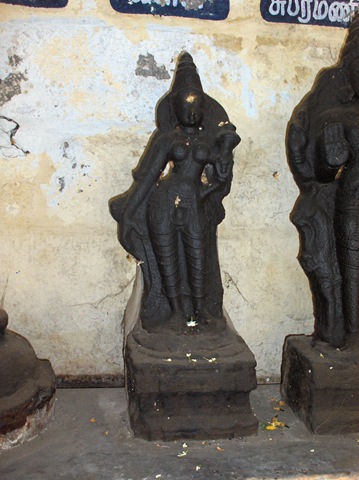
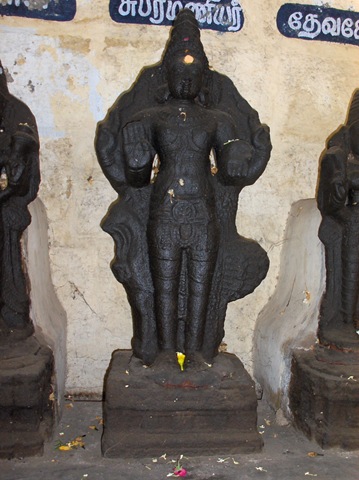
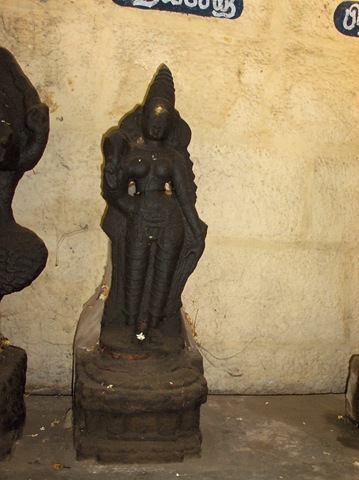
Behind the shrine, behind the pillars on the back wall of the temple, there are quite a number of statues, I think of various local gods, and gods of local significance. You can see, looking at the wear on some of these, just how ancient they must be, hundreds of years, certainly, thousands of years, probably.

Most of them I do not recognize. They have names, written in an archaic Tamil, above each statue. As I find out these names, I will add them to this post. Some are small, just a few inches tall. Others are several feel high.

HPIM5039

HPIM5040

HPIM5041

HPIM5043

HPIM5044

HPIM5045

HPIM5046

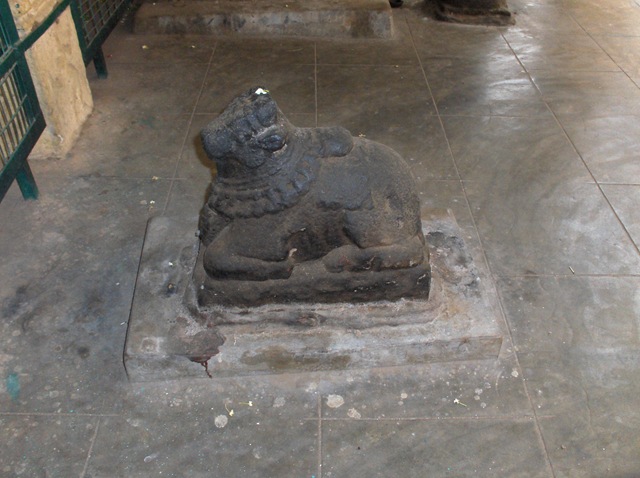
Here is one of three Nandis, guarding several ancient lingams behind the fence.

HPIM5047

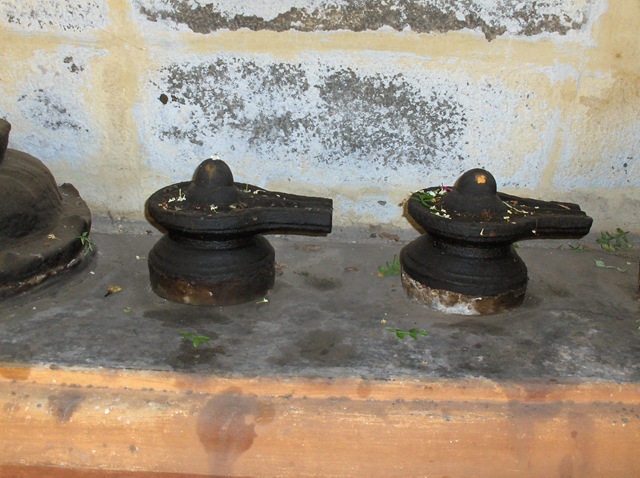
Here are the first two lingams.

HPIM5048

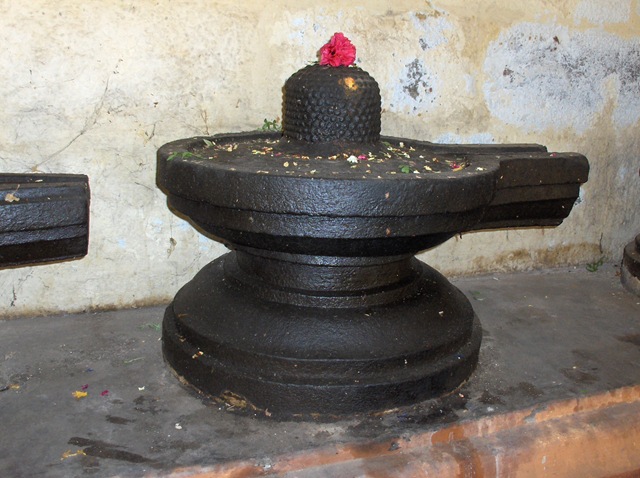
Here is the third. Note the additional carving on the upper part. Someone thought this was special. It is the only one that has a flower placed on top of it.

HPIM5051

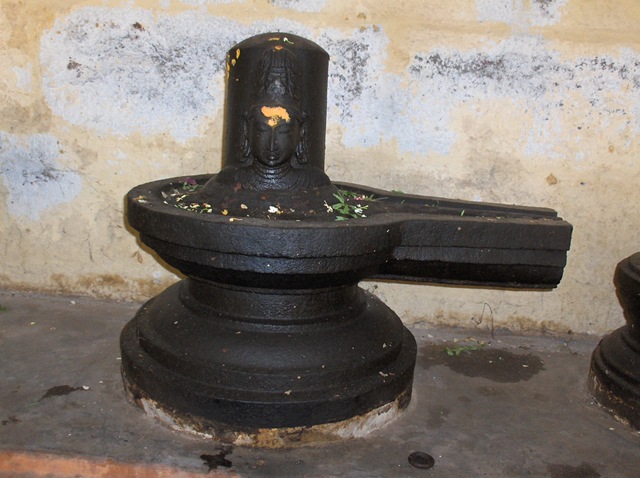
Here is the fourth. Notice that it has a face, surely Siva’s face, carved into it.

HPIM5052

HPIM5053

HPIM5054

HPIM5055

I love this one. Is that Siva on the elephant?

HPIM5056

Notice how old this elephant must be. The top of the statue has been rubbed away by countless hands touching it, probably over hundreds of years.

HPIM5057

HPIM5058

HPIM5059

HPIM5060

HPIM5061

HPIM5062

HPIM5064

HPIM5065

HPIM5063

Looking back at the hall of statues.

HPIM5067

We walk back toward the front of the Temple.

HPIM5070

Another statue. This god has three faces (that I can see).

HPIM5069

The gopuram, seen from within the temple walls.
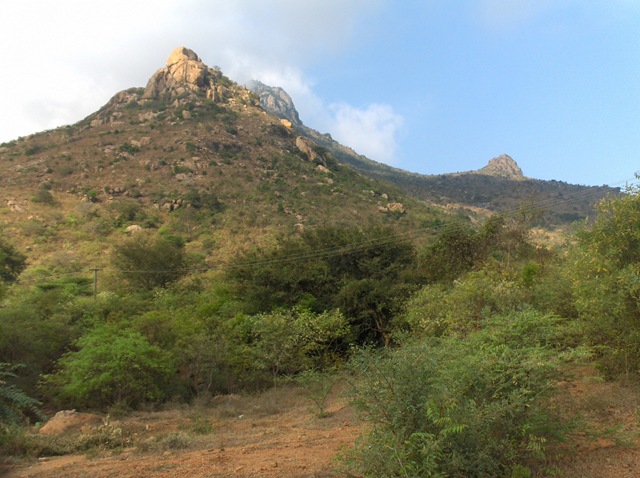
HPIM5071

The main entryway, from the North side. To the right is the inner temple. To the left, back outside.
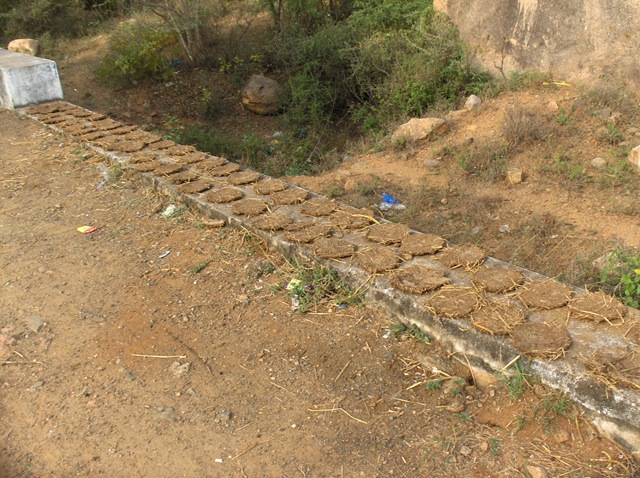
HPIM5073