
In Dog Yoga, the dog does not have to be as enthusiastic as the owner.

In Dog Yoga, the dog does not have to be as enthusiastic as the owner.
Dog Yoga is the latest trend. People doing yoga with their dogs.
Edtior’s Note: The following post appeared in the Advaitin list on Yahoo Groups and is reprinted with the permission of the author, Sri Venkata Sriram. In this article Venkat-Ji speaks about the idea of AHAM as the essence of Mantras, Vedas, and Upanishads. AHAM translated from Sanskrit means, “ME” or “I AM” and refers to the principle of I-NESS that is inherent in the existence of all beings as it is their core. Sri Bhagavan Ramana’s teaching involving the Inquiry, “Who Am I?” is essentially a meditation on AHAM, which in the Advaitic approach leads to Self-Realization. I have made only minor edits in the original version. Please bring to my attention any errors and these will be corrected right away.
It is to be noted that *who am I* is not a *intellectual* enquiry to be pursued. It is the upasana of *Aham* which is the upasana of Vak – the Great Goddess of Speech which is described in Vedas as Vak / Tripurasundari.
According to legend, the 14 Maheshwara Sutras were revealed to Panini, Vyaghrapada, Upamanyu and other sages by Shiva. Panini then composed his grammar called Ashtadhyayi which is based on the 14 Sutras that were revealed during the Cosmic Dance of Shiva. They are also called the Maheshvara Sutras. At the end of the Shiva’s Cosmic Dance, he sounded his Damaruka 14 times. And from these 14 Sounds of Damaruka, evolved 14 Sutras. These 14 sutras encompass the phonetics of the Sanskrit language.
The first 4 sutras cover all the vowels. They are :
1) a i u n
2) r l k
3) e o n
4) ai au ch.
Omit the last letter of the 4 sutras and they are a, i, u, r, l, e, o, ai, au. The entire 16 vowels from A to AHA have emanated from these letters.
The Last 10 sutras include all the consonants. They are :
5) h y v r t
6) l n
7) n m n n n m
8.) jh bh n
9) gh dh dh s
10) j b g d d s
11) kh ph ch th th ca t t v
12) k p y
13) s s s r;
14. h l.
Omit the last letter of these 10 sutras, they become entire 34 consonants ie., from K to HA. The SRICHAKRA is constructed keeping in view these entire set of 14 sutras. Ashtadhyayi divides these 14 formulae into 43 letters which become the 43 Angles of Sriyantra.
The entire Matrikas (letters) ie., 16 vowels and 34 consonants have evolved from these 14 Maheshwara Sutras.
The 16 Vowels and 34 Consonants have become 50 Matrikas of Letters.. They are the Saktha Pitas of Sridevi. Every Matrika has a distinct Power and Seat of Origin in our Body. These Matrikas are presided by a distinct and corresponding Devis that govern that particular seat of origin (Pita) in our Body. These Cosmic Powers that preside over each Matrika is invoked during the Antarmatrika and Bahir Matrika Nyasas.
It is to be noted that the Kamakala Akshara is derived from these 14 sutras. This *AHAM* is the essence of all the Mantras, Vedas, Upanishads as these fall in between A (WHICH IS 1ST VOWEL) AND H (WHICH IS THE LAST CONSONANT). From the first sutra, A is taken and from the last Sutra H is taken. Bindu is added and it becomes AHAM.
This is the AHAM swarupa or the I-NESS of Maheswara which is of the form of CHIT. It is from this AHAM of the Siva, the entire Cosmos in the form of Matrikas have evolved. This AHAM is the KAMAKALA. The entire vowels and consonants fall in between this A and H.
The Tantric script encodes this principle of AHAM and depicts as a INVERTED TRIANGLE which is a representation of Triputi or Triad in the form of External Object perceived, Knowledge or Perception, Observer or Perceiver otherwise called Jnatr-Jnana-Jneya.
Veda & Tantra paves the way for the piercing of this Triad which is called TRIPUTI-BHEDANA. And the methodology employed is *AHAMGRAHOPASANA* through Sagunopasana.
When Vashishta Ganapati Muni pleaded for guidance in sadhana, Bhagavan Ramana asked the Muni to enquire into the Source of the Panchakshari Mantra (NAMA SIVAYA) which is invariably collection of 5 letters in the form of Speech.
The root of all mantras in the form of Speech is *A-HA-Bindu*. A is the 1st vowel; Ha is the Last Consonant; M-the Bindu; which is AHAM. This is what is the essence of VAK Sukta in Rg Veda which starts with *Aham rudrebhir vasubhischarami……….*.
Bhagavan Ramana Maharishi wants us to catch hold of this AHAM as it is the source of Speech and which shines in the cave of our heart. (vide ref: Ramana Gita).
The speech has 4 stages of evolution whose order of evolution is : 1) Para 2) Pashyanti 3) madhyama 4) Vaikhari. Vaikhari is the Articular Sound what we hear. The source of this Articulate Sound is Para which originates from Heart Cave where throbs our consciousness in the form of *AHAM* (hridaya kuhara madhye aham aham iti sphurantam…). It is this throb or Antah sphurana, Bhagavan urges us to realise. It is this *Aham throb* or *Antah-sphurana* which is *Brahma*. Hence, Bhagavan Ramana says in ECSTASY *Aham* *Brahma* *Asmi*.
It is verily this *I* which shines in the heart cave as *Aham* which Bhagavn says is Brahman.
Now, what does Acharya Sankara say about the Upasana of *Aham*, let us see.
Acharya Sankara gives us a wonderful hymn for meditation, contemplation and reflection which is called *Dakshinamurthy Stotram* (DS). Acharya has divided the entire hymn into 3 principles : Jiva, Jagat & Ishwara. Later, he gives a clue for the Upasana which is quite *mandatory* for those who are into the upasana of the *aham* principle. What exactly is this *aham*, is wonderfully given in the sloka *bAlyAdiShvapi…….AHAM iti antahsphurantam sadA….* of DS.
Now, how should we enquire into the root of this *aham* or *I-ness*? Acharya has hinted in the subsequent sloka and the type of upasana to be undertaken. It is the *ahamgrahopasana* along with Sagunopasana which is suggested here. When this upasana reaches the state of culmination, it is the realisation in *ECSTASY* that this *aham* or *antah-sphuraNa* is Brahman which is the essence of Mahavakya *aham brahmasmi*.
Mahavakyas are the *GREAT UTTERANCES IN ECSTASY* by our vedic seers.
Even in deep reflection and sadhana, when the upasaka reaches the highest pinnacle of spiritual illumination, both the terms *aham* and *brahma* drops off and what remains is ASMI. And this state is wonderfully explained in the Rg veda in the *Hymn of Creation or *Nasadiya Sukta*.
I repeat: Mahavakyas are the *GREAT UTTERENCES IN SPIRITUAL ECSTASY*.
Acharya Sankara also hints in his Sutra Bhashya about the sagunopasana.. He says:
“apratyAkhyAyaina kAryaprapancham, PARINAMAPRAKRRIYAM CHA shrayati SAGUNESHuPASANESHUP AYOKSHYA te iti”.
Also, in the 1st adhyaya for the sutra “tad adhInatvA darthavat”, Acharya Sankara explains the principle of Sakti to be the upAdana kAraNa for paramEshwara in the Creation. Acharya Sankara emphatically says that it is the Parinamavada to be adopted to achieve the Sagunopasana Siddhi and not for kArya-prapancha (jagat) siddhi.
Acharya Sankara in his sutra bhashya says that parinamavada (theory of transformaton) can be adopted for the purpose of saguna upasana which is the upasana of maya-sabala brahman where the substratum is Brahman only. When the upasana is ripe, and upon the dawn of right knowledge, the “reality” which the “ignorant” people perceive WOULD BECOME an “illusion”.
So, what i conclude is that Bhagavan Ramana’s Teaching is not new and is not an *Intellectual Enquiry*. It is verily the *Veda Vidya* handed down to us. Bhagavan embodies in himself the *Spirit of Vedic Seer*. Bhagavan’s teaching is the upasana of Vak.
Bhagavan was verily the form of Dakshinamurthy who taught the Upasana of Vak in the form of *Silence*. It is this *silence* which is called Para-vak. It is this Para-Vak which sports in the deep chasms of our heart as *I* or *Aham*.
The vedas and Tantra declare this Para-Vak as Tripurasundari – which is the Great Triangle in Sriyantra and the substratum of this Para-Vak is the Absolute Principle in the Form of Shiva which is depicted as Circle or Bindu in Sriyantra.
Sriyantra is the diagrammatic representation of AHAM and Srividya is the Upasana of Vak in the form of *Ahamgrahopasana*. Hence, to evolve a method for this *ahamgrahopasana*, Srividya Tantra came into being.
It is interesting to note that Bhagavan Ramana himself did the prana pratishta of Sriyantra at the samadhi of His mother.
tamai shri gurumurtaye namah idam shri dakshinamurthaye.
with regards,
sriram
ULLADU NAARPADU
(Reality in Forty Verses)
The famous Vedantic poem in Tamil by Bhagavan Ramana Maharishi
(consisting of two preliminary verses called Mangalam,
40 verses which form the main text ,
and another 40 verses called the Appendix)
Detailed Commentary in Tamil by Lakshmana Sharma,
adapted into English by Profvk
(Continued from ULLADU NAARPADU – Verse No.17
See Post#48692 Of Harsha Satsangh)
Lakshmana Sharma’s Introduction to Verse No.18
Bhagavan explains here how, though both the jnAni and the ajnani may say the same statement “The world is real”, each of them take its meaning differently. The ajnAni takes the superposed world as absolute truth, without knowing the truth of the substratum; whereas the jnAni ignores the superposed world and takes the substratum as the absolute truth.
Verse #18
ulagu uNmai Ahum, uNarvu illArkku, uLLArkku;
ulagaLavAm uNmai uNarArkku;
ulaginukku AdhAramAy uru aRRu Arum uNarnthAr uNmai;
Idu Ahum bEdam ivarkku; eN.
Sanskrit Version
satyaM hyeva jagadvayoH avidushho vijnAta-tatvasya ca
satyaM yAvad-idaM jagat tu manute sajnAna-hIno janaH /
jnasy-AkAra-vihInam-asya nikhilasy-AdhArabhUtaM hi sat
bhAtyevaM mahatI bhidAsti hi tayos-sajnasya cAjnasya ca //
Translation (Lakshmana Sharma)
The world is real both to the non-knower and to the knower of the Real. He that lacks knowledge of the Real believes the Real to be coextensive with the world. To the Knower the Real shines as the formless One, the basic substance of the world. Great indeed is the difference between the Knower of That and the non-knower.
Translation (Prof. K. Swaminathan)
To those who do not know and to those who do, the world is real. But to those who do not know, Reality is bounded by the world; while to those who know, Reality shines formless as the ground of the world. Such is the difference between them.
Translation (Osborne)
To those who have not realized (the Self) as well as to those who have, the world is real. But to those who have not realized, Truth is adapted to the measure of the world, whereas to those that have, Truth shines as the Formless Perfection, and as the Substratum of the world. This is all the difference between them.
Word by Word (of the Tamil Verse)
ulagu : The world
uNmai Ahum, will be real
uNarvu illArkku, to those who do not know (the Self)
uLLArkku; and to those who know.
uNarArkku To those who have not realized
uNmai : Truth
ulagaLavAm : is up to the measure of the world.
uNarnthAr : (For) those who know (the Self)
uNmai Truth
AdhAramAy as support
ulaginukku for the world
uru aRRu (is) without form
Arum : ?
Idu Ahum bEdam : This is the diffcerence
Ivarkku : between these two
eN. Know (it) thus.
Commentary in Tamil by Lakshmana Sharma
When the ajnAni says ‘The world is real’, for him the world is real as world, along with its names and forms and all the consequent multiple differences.
From what the Bhagavan has said so far, it is clear that, for the jnani, all these different names and forms are all a mithyA.
Because of the above, the truth of the ajnAni does not go beyond the world; for the true Brahman has been hidden for him by the world. Names and forms have become the truth for him, and so the Existence-Knowledge Atman, which is nameless and formless, and which is inaccessible by the mind and speech, has become a void for him. Thus he is a nAstika (atheist); the Upanishads fault him by saying that he has killed the Atman by making it consist of the world.
[Note by VK: Recall Ishopanishad (Mantra 3) here:
asurya nAma te lokAH andhena tamasAvRtAH;
tAnste pretyAbhigacchanti ye ke cAtma-hano janAH
meaning, Those worlds of devils are covered by blinding darkness;
those people that kill the Self go to them after giving up this body.
Each object in the world has a nature of its own.
This is called its svabhAva.
Our use of it has to be concordant with it.
Otherwise we are supposed to have killed it.
Having an attachment to things external to the Atman
is equivalent to the killing of the Atman.
Those who have not understood the real nature of the Self
are classified as murderers of the soul, killers of the Self.
They are discordant with the svadharma of the Self
and so they involute after death, to dark blind worlds, having
lived their life in spiritual darkness and blindness, totally unillumined.]
Bhagavan used to emphasize this often. This applies not only to ordinary laymen but to those Pandits who proclaim advaita Vedanta. They are also only nAstikas. They speak of Brahman as the only absolute Truth but behave in the world, like every one else, as if that statement is not true. Only the jnAni is the Astika; he never behaves as if there is no Self.
When the jnAni says that the world is real, he actually means ‘Whatever that appears as the world is all nothing but the Existence-Knowledge substratum; it is not distinct from It. This is what the third line of the verse says. The words ‘uruvaRRu Arum’ mean the jnAni does not see the forms or the differences. When the forms are not seen, it also means the world is not seen. How can he say whether the unseen world is true or false? Therefore the words ‘The world is real’ mean something different for the jnAni. The meaning is: ‘The base-substratum of the world is the Truth’.
When the difference between a jnAni and ajnAni is so much, some people, who do not know and are unable to know this, try to measure the jnAni by their limited intellect and come to absurd conclusions. ‘The jnAni sees difference in non-difference, and non-difference in difference’ is a description of this kind. In truth, the jnAni neither sees difference nor non-difference. Non-difference is not something that is observed. Then what does it mean to say that the jnAni has a sight of unity? Bhagavan says that the very fact he has no awareness of difference is mentioned as the sight of unity.
That the jnAni does not see the world-forms was already mentioned in Verse #4. In third and fifth verses of his Arunachalaashtakam he mentions the same idea lucidly.
Further, by the logic that the substratum (‘adhishhTAnaM’) and the superpositions (AropitaM) hide each other, it is clear that they cannot be seen simultaneously – just as the rope and the snake cannot be seen together ever.
The ajnAni who has not known his Self sees the world; for him the Self is hidden. For the jnAni who has known his Self, obviously the Self shines for him, it actually means that the world-appearance is destroyed for him. Only the Self shines for him.
In the phenomenal world a Jivanmukta appears to see the world and act accordingly. This is only in the view of the rest of the world. For him they are not true. We shall enquire into this later. We shall say only this much here. In other’s view he has a body and mind; however, there is no doubt that the kAraNa-sharIra which is Ignorance – Anandamaya-kosha – is not there for him.
[Note by VK: For the explanation of the five koshas see Verse #5]
He (the JIvan-mukta) exists as the pure Self without any contact with the physical or the subtle body. Whatever he does in the world is like what God Himself as the resident of every one’s body keeps doing. Since there is no Ego there, the power of God works wonderfully without any obstacle. That this is the way of the goings-on of a JIvanmukta will be explained in the appendix to this work.
Tirumoolar’s Tirumandiram verse, ‘Marattai maRaittadu mAmada yAnai’ quoted under the commentary on Verse #13, is of relevance here. The wooden elephant shines as a real elephant for a child. The child revels in the form of the elephant. The child will not agree that it is all wood; in fact it will resent the comment. In the same manner an ajnAni takes pleasure in seeing the forms of the world. If you tell him that all this is only the nameless formless brahman, he does not like it.
The five elements earth, water, fire, air and space hide the Absolute. In the state of jnAna the Absolute shines, all others vanish.
In the viewpoint of an ajnAni the existence aspect of the things of the world appears as a ‘quality’. But in reality existence is not a quality of the thing. Existence is the thing. That thing itself is existence. For the existing reality, existence is not a quality. Existence itself is its svarUpa (nature). In that nature, by the mAyA of the mind the world forms appear. By right knowledge they all vanish and it becomes pure.
Thus we have seen the meanings of the statements ‘The world is real’ and ‘The world is unreal’. Of these, the meaning of ‘The world is real’ is not understood by the ajnAni. In the way in which the ajnAni understands the world as real, in that way it is not real; it is only unreal. The true meaning of ‘The world is real’ cannot be easily understood by ajnAnis without the Grace of a JIvan-mukta Guru. Therefore, it is better to think of the world as unreal, turn the mind away from it and do one’s sAdhanA.
Here ends the analysis of the dualities and triads of jnAna and ajnAna. The sum and substance of what we have said so far is: “Knowledge or jnAna is ‘being’ the Atman, — not ‘knowing’ the Atman –. Ignorance is seeing the same Atman as this false body and world”.
(To be continued in Verse#19)
This posting is from a series of ‘sharings’ given by V Ganesan in the winter of 2008/2009 in Tiruvannamalai.
=================================================================================================
How to give up the “me” ? Even to contemplate on its being given up, poses us with an enormous hurdle. No theoretical methods, postulated throughout the past centuries seem to have helped us, at all. The only solution to this Herculean problem, perhaps, lies on a practical, experiential approach to it.
Who will guide us with a direct and simple, yet natural experience-oriented practical solution to the dissolution of the “me” ? Most assuredly, Bhagavan Ramana has already solved the insoluble conundrum !
ANNAMALAI SWAMI had elicited it from the Great Guru, Bhagavan Ramana ; and, years later, he shared it with fellow-seekers. Annamalai Swami came to Sri Bhagavan in 1928 and was made an attendant to the Master. Noticing the potentiality in him as a hard worker, he was entrusted with the supervision of all important construction projects of the then growing up ‘Sri Ramanasramam’ . He did it with an exemplary zeal, under the direct stewardship of Sri Bhagavan, for ten years — from 1928 to 1938.
In 1938, he had a great spiritual awakening through an embrace of him by Sri Bhagavan.** That totally changed him. Then on, he wanted to dedicate his whole time in meditation and contemplation. He sought the guidance of the Master. He approved of his living alone outside the Ashram. Sri Bhagavan encouraged him to construct a dwelling at the adjacent ‘Palakottu’, helping him with practical advices during the construction. Bhagavan gave a few personal advices, as well; for instance, not to move out towards the southern side of his tenement, but should wander about only towards the north, at the foot of the Hill. Annamalai Swami studiously put that instruction into daily practice to its very letter – he had not stepped into the road, which lay on the southern side, the rest of his life ! He had not also moved out of Arunachala, even for a single day !
In Annamalai Swami’s own words : “I went to Bhagavan’s bathroom to help him with his morning bath. Madhava Swami and I gave him the usual oil bath and massage. When the bath was over, Madhava Swami asked a question : ‘ Bhagavan ! The people who take Ganja Lehiyam [ an Ayurvedic medicine whose principal ingredient is cannabis ] experience some kind of Ananda [ bliss ] . What is the nature of this Ananda ? Is it the same Ananda the scriptures speak of ? Bhagavan replied: “Eating this Ganja is a very bad habit”. Then, laughing loudly, he came over to me, hugged me and called out : Ananda ! Ananda ! This is how these Ganja-taking people behave ! It was not a brief hug. After the first few seconds I completely lost all awareness of my body and the world. Initially, there was a feeling of bliss and happiness, but this soon gave way to a state in which there were no feelings and no experiences. I did not lose consciousness, I just ceased to be aware of anything that was going on around me…..This experience completely changed my life. As soon as I regained normal consciousness I knew that my working life at the Ashram had come to an end.”
Sri Bhagavan told him to lead a quiet, reclusive life and to meditate continuously on the Self. After many years of arduous and unremitting effort, he was able to stabilize himself in Self-Awareness, uninterruptedly and with effortless ease. Annamalai Swami pleaded with the Maharshi as how to give up the ‘me’ . He used the term ‘the little self’ instead of the ‘me’ . The Master not only gave him an answer but also totally eradicated the ‘me’ in him. This is well brought out through a dialogue a Westerner had had with Annamalai Swami, long after the Master had dropped the body.
Question : What is the easiest way to be free of ‘the little self ’ ?
Annamalai Swami : Stop identifying with it. If you can convince yourself, ‘This little self is not really me ’ , it will just disappear.
Q : But, how to do this ?
AS : The ‘little self’ is something which only appears to be real. If you understand that it has no real existence it will disappear, leaving behind it the experience of the real and only Self. Understand that it has no real existence and it will stop troubling you.
Consciousness is universal. There is no limitation or ‘little self’ in it. It is only when we identify ourselves with and limit ourselves to the body and the mind that this false self is born. If, through enquiry, you go to the Source of this ‘little self’ , you find that it dissolves into nothingness.
Q : But, I am very accustomed to feel ‘ I am this little self ’ . I cannot break this habit merely by thinking ‘ I am not this little self ’ .
AS : This ‘little self’ will give way to the real Self only when you meditate constantly. You cannot wish it away with a few stray thoughts. Try to remember the analogy of the rope which looks like a snake in twilight. If you see the rope as a snake, the real nature of the rope is hidden from you. If you see only the rope, the snake is not there. Not only that, you know that there never was a snake there. When you have that clear and correct perception that the snake never at any time existed, the question of how to kill the snake disappears. Apply this analogy to the ‘little self’ that you are worrying about. If you can understand that this ‘little self’ never at any time had any existence outside your imagination, you will not be concerned about ways and means of getting rid of it.
* * * * * * *
Bhagavan Ramana clearly points out that there is only one way not to be affected by the miseries caused by the ‘me’ :
Talks No.532 :
Devotee : Is there no way of escape from the miseries of the world ?
Maharshi : There is only one way and that consists in not losing sight of one’s Self, under any circumstances.
To enquire “Who Am I ?” is the only remedy for all the ills of the world. It is also perfect Bliss.
**************************
Why has Sri Bhagavan been consistent in insisting on one experiencing the Self ?
Talks No.536 :
“The person soaked in the “I-am-the-body” idea is the greatest sinner and he is a suicide. The experience of “I-am-the-Self” is the highest virtue. Even a moment’s dhyana to that effect is enough to destroy all the stored up age-old tendencies [ sanchita karma ] . It works like the Sun before whom darkness is dispelled. If one remains always in dhyana , can any sin, however heinous it be, survive his dhyana ? ”
*************************************
Bhagavan Ramana not only explained why one should do dhyana but also insisted that one should constantly be in touch with one’s Self.
Talks No.540 :
Once Annamalai Swami asked : There is more pleasure in dhyana than in sensual enjoyments. Yet, the mind runs after the latter and does not seek the former. Why is it so ?
M : Pleasure or pain are aspects of the mind only. Our essential nature is happiness. But we have forgotten the Self and imagine that the body or the mind is the Self. It is that wrong identity that gives rise to misery. What is to be done ? This vasana [tendencies] is very ancient and has continued for innumerable past births. Hence it has grown strong. That must go before the essential nature, viz., happiness, asserts itself.
***************************
Talks No.541 :
A certain visitor asked Sri Bhagavan : There is so much misery in the world because wicked men abound in the world. How can one find happiness here ?
M : All are gurus to us. The wicked say by their evil deeds, ‘ Do not come near me ’ . The good are always good. So then, all persons are like gurus to us.
****************************
Should one not run away to solitude to obtain peace ?
Talks No.542 :
Annamalai Swami asked : I often desire to live in solitude where I can find all I want with ease, so that I may devote all my time to meditation only. Is such a desire good or bad ?
M : Such thoughts will bestow a janma (another birth) for their fulfillment. What does it matter where and how you are placed ? The essential point is that the mind must always remain in its source. There is nothing external which is not also internal. The mind is all. If the mind is active, even solitude becomes like a market place. There is no use closing your eyes. Close the mental eye and all will be right. The world is not external to you. The good persons will not care to make plans previous to their actions. Why so ? For, God who has sent us into the world has His own plan that will certainly work itself out.
******************
In the day-to-day working, one generally experiences that doing good to others one suffers. On the other hand, one doing wicked deeds enjoys happy environments and success. How is it ? This is a common doubt, to all !
Talks No.546 :
Annamalai Swami asked : A person does something good but he sometimes suffers pain even in his right activities. Another does something wicked but is also happy. Why should it be so ?
Maharshi : Pain or pleasure is the result of past karma (past actions) and not of the present karma. Pain and pleasure alternate with each other. One must suffer or enjoy them patiently without being carried away by them. One must try to hold on to the Self. When one is active one should not care for the results and must not be swayed by the pain or pleasure met with occasionally. He who is indifferent to pain or pleasure can alone be happy.
******************************
Why did Sri Bhagavan repeatedly emphasize the efficacy of “Self-enquiry” ?
Talks No.551 :
A man asked Sri Bhagavan : “How is it that Atma Vidya is said to be the easiest ?”
M : Any other vidya (learning) requires a knower, knowledge and the object to be known; whereas this does not require any of them. It is the Self. Can anything be so obvious as that ? Hence it is the easiest. All that you need do is to enquire, “Who Am I ?”.
A man’s true name is Mukti (Liberation) .
******************
The topic chosen for this session’s “Sharing” is entitled : “All Is One” . What is the significance ? “All Is One” is an old Tamil publication commended by Sri Bhagavan. This tiny book incorporates ideas of immense use to spiritual aspirants, at every level and of any faith. Sri Bhagavan himself had gone through it and given chapter headings for the benefit of seekers. He told Annamalai Swami to read it “if he desired Moksha (Emancipation) ” .
In our next session, we will further deal with it, perhaps, bringing out the worth and greatness of the work.
———————————————————————————————————————————————
***********************************************
Related posts:
Satsang with Ganesan
Self nature, Faith and Attention
Wisdom and Action (No. 1)
Wisdom and Action (No. 2)
Wisdom and Action (No. 3)
V. Ganesan Bio
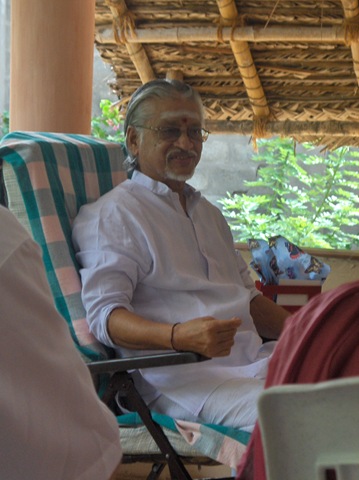
Born in 1936, up to the age of 14 years old, Ganesan grew up in the presence and proximity of Bhagavan Sri Ramana Maharshi. His sacred memory of the Great Master is rich in its content; and, even at that tender age he could see Sri Ramana as the greatest compassionate human being.
On April 14, 1950 – the day the Great Master chose to leave the body – the adolescent Ganesan stood near the entrance to the room where Sri Ramana was lying and was fortunate to witness the brilliant flash of Light that later moved towards the top of the Holy Hill – Arunachala.
Ganesan obtained a Master’s Degree in Philosophy; and, then came to stay permanently at “Sri Ramanasramam, Tiruvannamalai” – the sacred abode of Sri Ramana Maharshi – taking care of the Old Devotees of Sri Ramana. He did it as his sole sadhana (spiritual practice). In that way, he collected the reminiscences of Sri Maharshi from those Old Devotees which have never before been recorded.
His close contacts with sages and saints, including Swami Ramdas, Mother Krishnabai, J. Krishnamurti, Nisargadatta Maharaj and Yogi Ramsuratkumar, he says, have deepened and widened his understanding of the ‘Direct Teaching’ of the Maharshi. However, he feels himself to be an insignificant ‘dust’ at the Holy Feet of Bhagavan Ramana.
He has traveled widely and spread the ‘Direct Teaching’ of Sri Ramana Maharshi, in its pristine purity, wherever he was invited to give talks.
He has authored a few books on the life and teaching of Bhagavan Ramana. Among others, “Purushothama Ramana”, “Be the Self”, “Moments Remembered”, “Direct Teaching of Bhagavan Ramana” and “Practising Self-Enquiry” , are very popular.
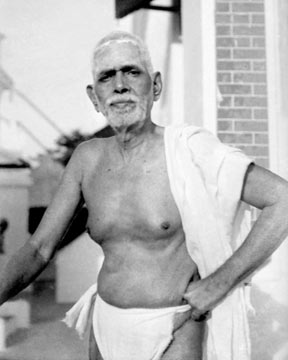
The practice of advanced yoga methods and pranayama with discipline along with meditation on the Chakras (Energy Centers in the body) leads to various mental and spiritual experiences. Sri Ramana’s teaching, however, views such yogic and meditative practices as preliminary to the real quest into the investigation of the nature of the “I”.
Visions of angels, deities, super conscious states, and various types of psychic abilities do manifest on the spiritual path. But fascinating as such things are to the human mind, these do not resolve the fundamental question about the nature and mystery of existence.
People say, “I like this”, “I dislike this”, “I am a doctor”, “I am a professor”, “I am a psychic”, “I am a student”, “I am good”, “I am a husband”, “I am a wife”, “I went here”, “I am strong”, “I am weak”, “I am happy”, “I am sad”, etc. The commonality in all we do and how we view our self is this, “I”
The method of Self-Inquiry is to ask oneself “KOHUM”. KOHUM in Sanskrit translated literally means “Who Is Me?” In English, we use the question, “Who Am I?” or Who is this “I” that is a constant reference point for us?
What is this sense of identity that engages in all these activities and has a variety of experiences, perceptions about the world and itself?
Who is the I that sees, dreams or has visions. According to Sri Ramana, without understanding the nature of the I and resolving the mystery of existence, permanent satisfaction and peace are not gained.
It is for this reason that great sages say that one should aspire for Self-Knowledge above all else.
Everything, absolutely without exception, is transient. One is born, one grows old, one has many experiences in the world, and then one dies.
Things have a beginning and then an inevitable end. All physical and mental abilities and powers eventually fade. Psychic abilities and every kind of experience, supernatural or otherwise meets the same fate. It ends.
What remains always present is simply the sense of existence, this sense of I. The method of self-inquiry involves a focus on this I, an awareness of this awareness, until the quality of self-awareness is known as the inner essence of our existence. The words cannot fully capture this approach. It is understood only with effort and practice.
Therefore, the aspirant should with confidence maintain the inner gaze focusing the “I” on “I”. Remaining in stillness with awareness aware of itself is the practice. Remaining with the sense of “I AM” is the practice.
It is this practice which is known as the direct path. It leads to the “I” merging into its Source. Immediately, it is seen that the Source is the Self, that the ancients called Sat-Chit-Ananda. There are no words to describe it fully. It knows nothing else other than It Self, there being nothing else to know.
It is only this that the sages have referred to as the Supreme and the Absolute Beauty, the Core of Being that is Reality itself which sits in the heart of all beings as their support. It is Knowledge, Existence, Bliss as one whole which animates existence and gives light and life to the mind.
Namaste
Note from the Editor: The following article appeared last year on the Advaitin list at Yahoo groups and was written by Sri S.N. Sastri, one of the moderators of the Advaitin list. It appears here with very minor edits. Sastri-ji is a brilliant and respected scholar of many schools within Hinduism with a special interest, focus, and expertise on Advaita-Vedanta. Some biographical information and the names of books Sastri-ji has written is given at the end of the article.
There has been a lot of ill-informed criticism of the Tantra with the result that it has been very much misunderstood.
Those who wish to know what Tantra really is, are advised to study the works of Sir John Woodroffe (also known as Arthur Avalon) on this subject.
Sri John Woodroffe was a Judge of the Calcutta High Court during the British rule in India. He made a thorough study of Tantra and came to be accepted as an authority on the subject by even traditional Indian Pandits.
Here are some points from his Introduction of the work entitled “Principles of Tantra”.
In India, philosophy and religion are mingled in a way which the West has not known since the age when philosophy was held to be Ancilla Theologiae.
We have in the Tantra the recognition of the fine principle that this doctrine and its expression in ritual are for all, whatever be their race, caste or sex.
The Hindu Shudras (so called untouchable caste) and woman are under none of the Vaidik bans in the Tantric approach to spirituality.
The Tantra calls woman ‘Shakti’. Shakti is the Goddess. To ill-treat a Shakti is a crime. On this ground the mahAnirvANa Tantra forbids sati (the self-immolation of the wife in the funeral pyre of her husband). It says:” O kuleshAnI, a wife should not be burnt with her dead husband. Every woman is Thy image. That woman who in her delusion ascends the funeral pyre of her lord shall go to hell”. (Ch.X, verses 79-80).
A woman can be a Guru, and initiation by her achieves increased benefit.
The main subjects of Tantra are mantra and sAdhana in all its forms. The kulArNava Tantra says: “For each yuga a suitable shAstra is given– in satyayuga shruti; in treta smRiti; in dvApara the purANas; in kali the Tantra.
Tantra has been said to exist in the Veda as the perfume exists in the flower. While the theoretical portion of the gAyatri tattva is contained in vedanta, the practical and ritualistic portion is in the Tantra.
If it be argued that the Tantra is of recent origin because it provides for the worship of shakti, then the same would apply to the purANas, mahAbhArata, and even the vedas and upanishads. In the veda there is the sarasvati sUkta, in the yajurveda the lakShmi sUkta and in the Rigveda the devi sUkta.
MAdhavAcharya, the commentator on the vedas, has, in dealing with the Patanjali darshana quoted passages from the Tantra shAstra with reference to the ten forms of samskAras prescribed therein. The bala and atibala mantras mentioned in rAmAyaNa, bAlakANDa, are tantrik and the mode of acquiring them is given in the Tantra shAstra.
Just like the vedas, the Tantras have no author, but have emanated from the mouths of shiva and His consort pArvatI. Those which came from shiva are known as ‘Agama’ and those that came from pArvati are known as ‘nigama’.
The worship performed in temples is mainly Tantrik.
shruti is of two kinds— Vaidik and Tantrik.
Best wishes,
S.N.Sastri
Shri S.N.Sastri is a former member of the Indian Revenue Service. He retired as Member, Central Board of Direct Taxes, Government of India.
He has authored the following books:–
1. Commentary in English on Narayaneeyam, a devotional work in Sanskrit by the devotee-poet Melpathur Narayana Bhattatiri who lived in Kerala in the 16th century A.D– Published by Central Chinmaya Mission Trust, Mumbai- 72.
Second Edition- Jan 2005. Pages 761. Price Rs. 160. Contains the slokas in Devanagari script, word-by-word meaning, and detailed explanatory notes. Available at all the centres of Chinmaya Mission all over the world.
2. Commentary in English on Satasloki of Sri Adi Sankaracharya– Published by the author. Price Rs. 80.
3. Commentary in English on Hastamalakiyam of Hastamalaka, one of the four disciples of Sri Adi Sankara– Published by the author. Price Rs. 25.
Books 2 and 3 can be had from Jayalakshmi Indological Book House, 6, Appar Swamy Koil Street, (opp. Sanskrit College), Mylapore, Chennai- 600 004. Tel: 24990539.
He has edited the English translation of a monumental commentary in Malayalam on Narayaneeyam, published by The Bhaktaranjini Trust, Bangalore-94. Price Rs.800.
He has written articles on Vedantic topics which have been published in various journals.
Some of the articles written by him are posted on his website.
http://www.geocities.com/snsastri/
. These articles are written in simple language, avoiding all technical jargon. They can be easily understood even by persons who have not had any exposure to Vedanta.
Shri S.N.Sastri can be contacted at snsastri@yahoo.com and at sn.sastri@gmail.com.
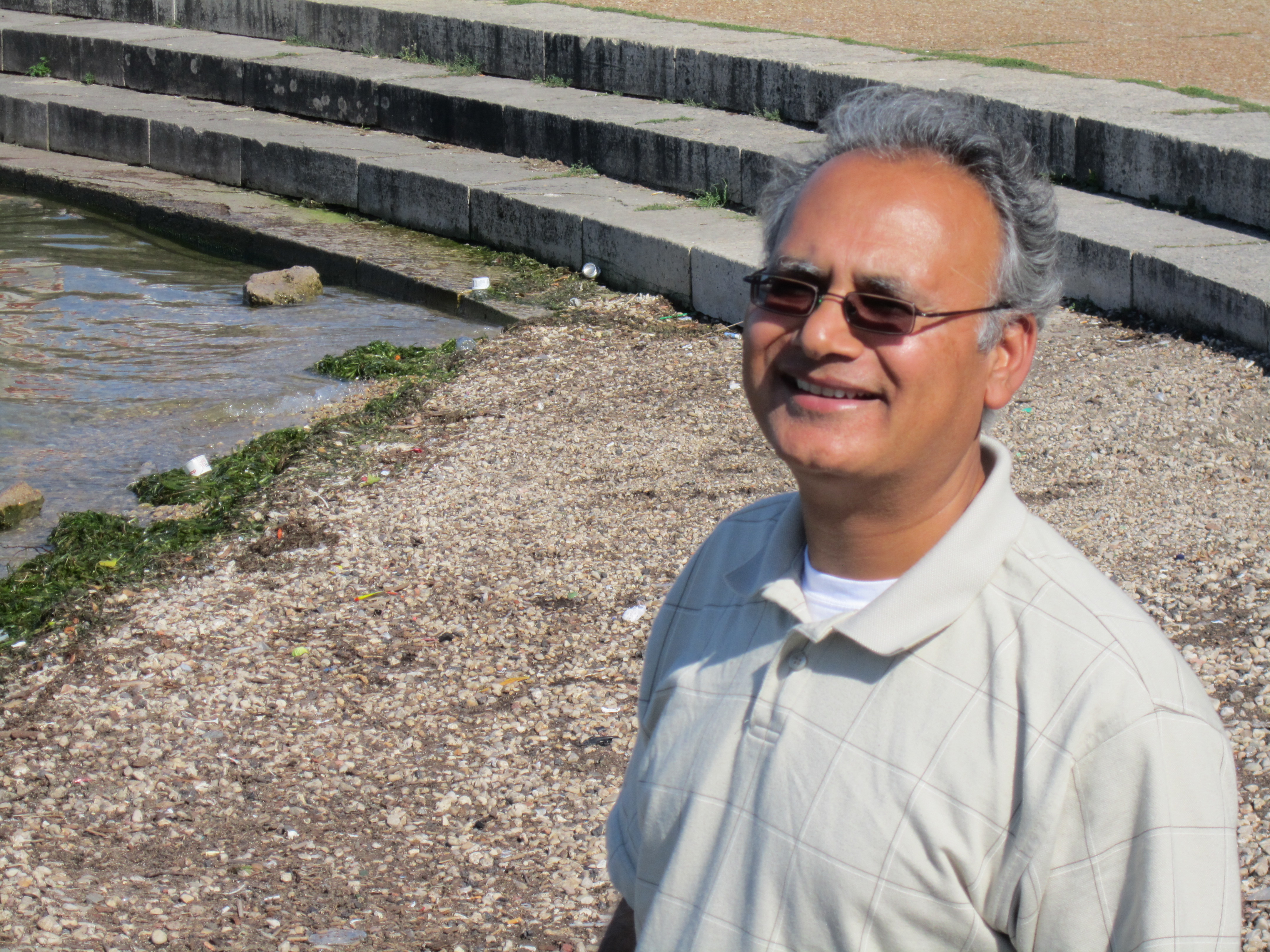
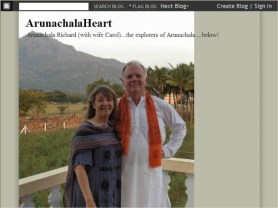
The exploration of Arunachala by Richard Clarke and his wife Carol and gracing us with their gift of writing from India are being celebrated by lovers of the holy mountain of Arunachala. Our brother and friend Richard has been writing on luthar.com off and on for several years now. He also has his own blog “Living in the Embrace of Arunachala” at richardarunachala.wordpress.com.
We wish Richard and Carol continued happiness at achieving their goal of being at Arunachala where Sri Ramana spent over 50 years. We all also express our gratitude to them for their generous and wonderful sharing of pictures and stories from Arunachala and letting us have a glimpse of their joyful living.
ULLADU NAARPADU
(Reality in Forty Verses)
The famous Vedantic poem in Tamil by Bhagavan Ramana Maharishi
(consisting of two preliminary verses called Mangalam,
40 verses which form the main text ,
and another 40 verses called the Appendix)
Detailed Commentary in Tamil by Lakshmana Sharma,
adapted into English by Profvk
(Continued from ULLADU NAARPADU – Verse No.16
See Post#48650 Of Harsha Satsangh
Lakshmana Sharma’s Introduction to Verse No.17
As of now the Jiva-Ishvara-Universe have been shown to be mithyA. Without contradicting it, it is also shown that they are not absolutely unreal in the sense in which a hare’s horn is; on the other hand they are real as a part (amsha) of the adhishhTAna. In the coming two verses, it is explained how the ajnAni, without recognising the adhishhTAna (substratum), wrongly thinks of the superposed world as real, whereas the jnAni knows it truly as is.
The jnAni mentioned here is the JIvan-mukta who appears for the world to be with a body.
How the two, jnAni and ajnani, cognise the body, is taken up in Verse #18.
Verse #17
uDal nAne, tannai uNarArkku, uNarnthArkku;
uDalaLave nAn, tan(nai) uNarArkku;
uDaluLLe tan(nai) uNarnthArkku ellai aRat tAn oLirum nAn
iduve innavartam bEdam ena eN.
Sanskrit Version
svo deho bhavati dvayor-avidushho vijnAta-tatvasya ca
svaM dehAvadhikaM pRthak paravibhor-ajno jano manyate /
jnasya svo vapushho’ntarahito’bhinnaH parasmAd-vibhoH
bhAty-evaM mahatI bhidAsti hi tayoH svajnasya cAjnasya ca//
Translation (Lakshmana Sharma)
The body is the Self, both to him that does not know the Self and to him that knows. The one that knows not believes himself to be limited to the body and distinct from God the All. To the knower of the Real Self within, He shines as the Infinite Being, not other than God. Great indeed is the difference between the knower of the Self and the non-knower!
Translation (Prof. K. Swaminathan)
To those who do not know the Self and to those who do, the body is the `I’. But to those who do not know the Self the `I’ is bounded by the body; while to those who within the body know the Self the `I’ shines boundless. Such is the difference between them.
Translation (Osborne)
To those who have not realized the Self, as well as to those who have, the word ‘I’ refers to the body, but with this difference, that for those who have not realized, the ‘I’ is confined to the body whereas for those who have realized the Self within the body the ‘I’ shines as the limitless Self.
Word for word (Tamil verse)
uDal nAne : The body is the ‘I’
tannai uNarArkku: to those who have not realized the Self;
tannai uNarnthArkku: (and) to those who have realized the Self.
tan(nai) uNarArkku: For those who have not realized the Self,
uDal aLave nAn: the ‘I’ is limited to the body, (whereas)
tan(nai) uNarnthArkku: for those who have realized the Self,
uDaluLLe : within the body
tAn oLirum nAn : it is the ‘I’ that shines as the Self (that is)
ellai aRa : limitless; infinite.
iduve: It is this that is
bEdam: the difference
innavartam: between these two.
ena eN: Know it thus.
Commentary in Tamil by Lakshmana Sharma
Both the jnAni (the enlightened) and the ajnAni (the unenlightened) call this body as ‘I’, the Atman. But the two have different meanings.
When the ajnAni refers to the body as ‘I’, he does not distinguish between the body and the Atman; he thinks that there is no self other than the body. And he moves about in the world as per that conception. This is the dehAtma-buddhi – the notion that the body is the Atman. It is Ego. It is Ignorance.
When the jnAni calls the body as ‘I’, he feels the Self as the Infinite Existence-Knowledge which is the reality as the substratum for everything including the body. The body is a false appearance on that Existence-Knowledge and so is not foreign to it. In his view there is nothing that is foreign to that Existence-Knowledge. This will come out in Verse 31. Because of this insight he does not think of the body as non-self. The Self is everything; therefore, the body also is the Self. In other words, for the jnAni, it is not the ‘body’. If you think of it as the body it is unreal. But since he thinks of it as the Self that is the substratum, it is real. Thus for the jnAni the body is not ‘body’. Nor does he have any attachment to it. By this it is clear that the viewpoint of the jnAni and that of the ajnAni are totally different.
Why do the two views appear to be the same? It is because the Self is everything.
Because of the dehAtma-buddhi of the ajnAni, the Real Self is hidden by the body and he confusedly thinks that the body is the Atman. On the other hand by the clarity of Self Realisation, for the jnAni, the false body becomes false and only the Infinite Atman shines before him. This is what Bhagavan is saying.
(To be continued in Verse # 18).

 Luthar.com
You must be logged in to post a comment.